
Technology
PayPal’s New Chief Promises New Services for a Mobile World


The eBay/PayPal offices in San Jose, Calif. (Paul Sakuma/AP Photo)
BRANDON BAILEY, AP Technology Writer
SAN FRANCISCO (AP) — As PayPal prepares to split from its corporate parent, its new chief executive is promising to expand the popular online payment system, adding a variety of services for consumers to use when shopping on their phones or in traditional stores.
PayPal will be spinning off from parent company eBay later this year at a time when it’s facing new competitive challenges. Alibaba, Amazon and even Facebook are promoting online payment systems, while Apple Pay and Google Wallet are competing to handle transactions in stores and on mobile devices.
Veteran executive Dan Schulman, who will be CEO of the new PayPal, says his company will compete by positioning itself as a “full-service” payments partner for consumers and merchants, handling mobile transactions, credit purchases and even customer loyalty rewards programs.
PayPal was best known for many years as a payment method for purchases made on desktop computers. But consumers are increasingly using mobile phones to shop online and even when they make purchases in traditional, brick-and-mortar stores. Almost a third of transactions handled by PayPal are now made on mobile devices.
“Those worlds are blurring,” Schulman told The Associated Press in an interview Thursday. “When you go into a store environment, and you have your mobile phone with you, it should be a simple step to do a checkout from that device.”
Schulman spoke after an event where PayPal announced new partnerships with companies that help merchants sell goods online around the world, including in India and China. PayPal also touted a recent partnership with Burger King that lets consumers pay for their meals with a smartphone app.
“We want to be more than just a button on a merchant’s website,” Schulman said. “We really want to provide a full suite of services and products.”
That includes expanding a PayPal credit service that lets shoppers spread payments over time and the Venmo mobile app that lets individuals exchange small sums when they split a bill or repay a debt. PayPal is also extending a service for websites and mobile apps that remembers an individual’s account information and shipping address, so they don’t have to be re-typed with every new purchase.
PayPal, which is based in San Jose, California, has stumbled in one arena. Without admitting wrongdoing, the company agreed this week to pay $25 million over U.S. regulators’ allegations that it signed up some customers for credit they didn’t want.
“Sometimes you try and do things and they’re not always perfect. We want to fix them as much as any regulator wants to fix them,” Schulman said.
Copyright 2015 The Associated Press. All rights reserved. This material may not be published, broadcast, rewritten or redistributed.












Black Press
OP-ED: Closing the Next Digital Divide — Communities of Color Must Have a Voice in the AI Future
As artificial intelligence reshapes the global economy, leaders are warning that communities of color risk falling behind if they lack access to critical training. Following the push to bridge the pandemic-era digital divide, new initiatives like the AI Fluency Initiative in Houston are providing practical exposure to these tools for small business owners and students. Ensuring Black and Brown communities are not the last to benefit from this technological transformation requires a combination of literacy programs and developer accountability to prepare workers for an evolving landscape. Read more.
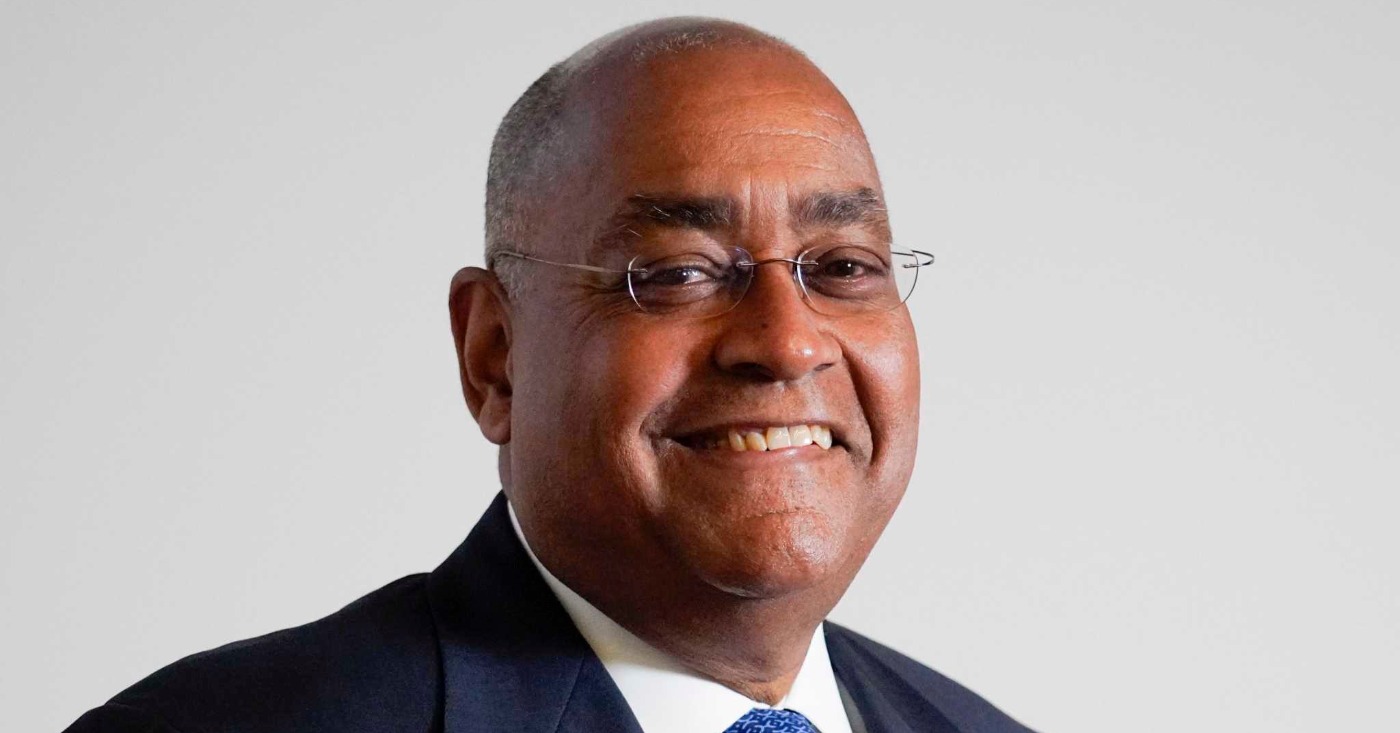
Technology has long shaped who has access to opportunity. As artificial intelligence begins reshaping our workplaces, schools, and daily lives, we must ensure communities of color are not left catching up once again.
In 2020, the pandemic risked widening a digital divide that has put people of color at a disadvantage for years. Access to the technologies that are shaping the world should be available to all. When the internet emerged as the technology of note, children needed access for their education. Adults needed access to find work and succeed in their jobs. Increasingly, upward mobility and economic opportunity depend on having the skills to use the tools transforming our economy.
In Harris County, we worked to make sure our residents were not on the wrong side of that vast digital divide. Through the Office of Broadband, we distributed thousands of hotspots, established more than 100 public Wi-Fi locations, and invested in infrastructure to increase internet availability for under-resourced families.
Today, another divide is emerging. In 2020, the challenge was whether families could get online. Now, communities need to learn to navigate a world increasingly influenced by AI or risk being left behind. More than access, responsible AI requires thinking critically about the technology, its outputs, and the companies behind it. AI literacy builds a foundation for that reflection. We cannot allow Black and Brown communities to be the last to benefit from another technological transformation.
That is why I was proud to partner with Reverend Al Sharpton and the National Action Network (NAN) in September to bring the AI Fluency Initiative to Houston. The program seeks to provide people with practical exposure to AI and show how these tools can be used in jobs, education, small business, and more. Open to the public, programs like this give residents the knowledge to participate in a changing economy and shape the systems developing around them.
Technology companies also have a role to play in making information accessible. OpenAI partnered with NAN on AI literacy in Houston and has supported practical training across the country through OpenAI Academy. Local businesses, older adults, and educators are among the groups the company has targeted through these efforts. This kind of engagement matters. The organizations building AI tools must equip communities with the skills and confidence to use them effectively. When people understand its capabilities and limitations, AI can help them address problems they are already facing.
Entrepreneurs like Kaija Pack are already putting that potential into practice here in Texas. As she built Break Life Houston, she leveraged ChatGPT to develop business strategies and expand her customer base, ultimately growing her business enough to open a second location.
Small business owners like Kaija should understand how AI can help them compete. Workers should understand how it may change their industries. Students should learn how to use these tools responsibly. Communities should understand AI so they can have a meaningful voice when decisions about the technology affect them.
This principle has guided much of my public service. Earlier this year, Commissioner Lesley Briones and I championed Harris County’s first worker Consultation Policy because workers deserve a say in the choices that will impact their livelihoods. Those voices are amplified when we understand their means of empowerment.
AI literacy is a path to that understanding. A seat at the table is most powerful when people have the knowledge they need to advocate for themselves.
Understanding includes risks as well as opportunities. We need to learn how to use these tools safely, and developers have the responsibility to build safety into their systems. OpenAI, for example, has invested in external testing, safeguards, and publicly documented standards for model behavior. Developers should pair innovation with accountability.
Closing the AI divide will be a collaborative effort. Harris County already has networks like our Digital Navigators that connect residents with technology and digital skills. We should build on initiatives like these and make practical AI education accessible at a greater scale.
Too often, people of color have been asked to adapt to new systems after they were built and the rules were already written. With AI, we have an opportunity to be involved from the outset.
The future should not simply happen to us. We should have a hand in shaping it.
Black History
New NAACP Report Warns AI Could Deepen Health Disparities in Black Communities
The NAACP and Sanofi’s ACE Your Health StoryMap was released during AfroTech 2026, finding that healthcare deserts, broadband gaps, and distrust could keep Black Americans from benefiting from the AI boom in medicine. Read more.

Every day, Americans put about 50 million health questions to Microsoft’s Copilot and Bing. More than eight in 10 physicians say they already use AI in their work and believe that proof of safety for these tools is essential. According to a new NAACP report, the emerging technology has quietly become part of how healthcare gets delivered in this country. But the nation’s largest civil rights organization is warning that Black communities may be at risk of being left behind or even harmed by it.
The NAACP and the pharmaceutical company Sanofi released “AI Fluency is a Challenge on Both Sides of the Exam Room” during the AfroTech Conference 2026 in Houston. It is the third installment of the groups’ ACE Your Health StoryMap series, an interactive, data-driven look at how AI, internet access and long-standing healthcare inequities are shaping the future of health in Black America.
The report warns that new technology does not instantly erase old gaps on its own.
“Too many Black communities continue to face healthcare deserts, provider shortages, clinic closures, inadequate internet access, and concerns about racial bias,” said Dr. Chris T. Pernell, Director of the NAACP Center for Health Equity. “If these gaps remain unaddressed, AI could inadvertently widen existing healthcare disparities instead of helping close them. Equity and fairness must be intentionally designed into the future of healthcare AI from the very beginning, not as patchwork fixes.”
The numbers show why. Nineteen percent of people who use AI for health information say they turned to it because they could not afford to see a provider, according to the report. Black adults are significantly more likely than White adults to use AI for mental health advice.
Meanwhile, the report finds, the health system many Black Americans rely on remains hard to reach. One in three Americans lives in a healthcare desert. In the Mississippi Delta, all 154,000 Black residents live more than 25 miles from a hospital rated four or five stars. About 3.8 million Black Americans live in homes without a broadband subscription, which limits their access to digital health tools and AI-enabled resources. Safety-net providers are likewise concerned about having access to these tools due to limited funding and training in their systems.
Trust may be the toughest barrier, says the NAACP. Nearly two-thirds of Black adults believe racial bias remains a major problem in healthcare, the report found, and one-third expect AI to make that bias worse.
The findings draw on the ACE Your Health initiative, national datasets and input from nearly 23,000 community members across 47 states, the District of Columbia and Puerto Rico. The initiative launched in 2024 as a collaboration between the NAACP and Sanofi, which describes itself as an R&D driven, AI-powered biopharma company. The StoryMap follows the NAACP’s AI White Paper on designing AI for health equity and its Policy Framework for Equitable Health AI.
“Scientific innovation is transforming healthcare in ways that were unimaginable just a few years ago, but innovation must be matched by intentional efforts to expand access, build trust, and address barriers that prevent communities from fully benefiting from these advances,” said Tanisha M. Sullivan, Head of External Engagement & Health Equity Strategy at Sanofi.
She added that pharmaceutical companies should do more than develop breakthrough medicines and technologies. “Pharmaceutical companies have an important role to play, not only in developing breakthrough medicines and technologies, but also in partnering with community organizations, healthcare providers, and policymakers to ensure those innovations reach the people who need them most, ensuring no community gets left behind.”
The report also lays out steps communities can take, including expanding broadband adoption, building AI fluency and digital skills, strengthening community-based health education and advocating for equitable technology policies. It also invites community members to add their voices to the StoryMap.
The full report and other ACE Your Health resources are available at naacp.org.
Advertising
PRESS ROOM: AutoNetwork.com Launches a Free Auto Section for Newspapers, Credit Unions, Banks, Churches, Schools and Nonprofits
BLACKPRESSUSA NEWSWIRE — Right now, someone who reads your paper, banks with you, sits in your pews, or attends your school is signing a car deal. Too often, they leave with a high-cost loan, old trade-in debt rolled into a new one, add-ons they never asked for, or a repair bill they didn’t understand. Most of those losses happen because no one gave them the facts first.

One line of code puts free, sourced car-buying and car-repair lessons in front of the people you serve. No cost. No contract. No staff needed.
AutoNetwork.com, which has served car buyers since 1986, today launched the Auto Section: a free, ready-made car-money education section that any organization can add to its website by pasting one line of code. Its message is simple: Know Before You Go To A Dealer.
The people you serve are paying for what no one told them
Right now, someone who reads your paper, banks with you, sits in your pews, or attends your school is signing a car deal. Too often, they leave with a high-cost loan, old trade-in debt rolled into a new one, add-ons they never asked for, or a repair bill they didn’t understand. Most of those losses happen because no one gave them the facts first.
Every organization on this list exists to look out for its people. The facts are now free and take minutes to add. Not sharing them means letting the next family learn the hard way, at the dealer’s desk or the repair counter.
One Auto Section, five ways to serve
- Newspapers: a reader-service section you don’t have to staff, write or pay for. You keep 100% of the ad space around it and 100% of any sponsor line you sell, such as “Auto Section sponsored by…” on your own page.
- Credit unions and banks: member education that reaches people before they sit down in the dealer’s finance office, where the loan terms get decided.
- Churches: a stewardship and money ministry for families. A car is one of the biggest purchases most households make.
- HBCUs and schools: first-car, first-loan and first-repair lessons for students and their families.
- Nonprofits: a ready-made addition to financial-empowerment programs, with no added cost or staff.
- What your people learn
- Financing: leasing vs. buying, who should lease, mileage limits, wear charges and GAP coverage.
- Trade-in debt: how owing more than a car is worth happens, and how to get out.
- Depreciation: how fast a car can lose value, with a free calculator.
- Add-ons and fees: what to get in writing before signing.
- Warranties: what the factory covers, and when extended coverage may not pay off.
- Credit: rights and steps for buyers with low or no credit, plus a first-time buyer guide.
- Service costs: how to choose a repair shop, ask for a written estimate, know your rights and spot a padded bill, plus factory maintenance schedules and estimated ownership costs so routine service is never a surprise.
- Plus: Ask AI Roosevelt for answers to car questions, and new-model walkaround videos.
Every guide links to its sources. The Auto Section teaches what to ask and what is normal; it never quotes local shop prices or sells repairs.
Built to be safe, simple, and yours
- Easy: copy one line from the free setup page, paste it where you want the section, and you’re done. New guides and videos appear by themselves.
- Safe: it runs in a sealed frame that cannot read or change your site, your logins or your ad accounts. It collects no reader names or emails.
- Clean: only AutoNetwork.com education appears inside the section. No outside ads. Guides and videos open inside it, so readers stay on your page.
- No strings: no cost and no contract. Delete the line, and it’s gone.
A word from the founder
“For forty years I’ve watched good people pay too much for cars and repairs simply because nobody told them what to ask,” said Roosevelt Gist, founder of AutoNetwork.com. “The organizations people already trust are the best messengers. We built the Auto Section so they can share the facts without spending a dime or hiring anyone.”
The next car deal or repair bill in your community is happening now. Add the free Auto Section today and make sure your people walk in knowing the facts:
https://autonetwork.com/autosection?src=press-release
If you can paste a link into your website, you can install it. Questions? Email [email protected].
About AutoNetwork.com
AutoNetwork.com has served car buyers since 1986 with free, sourced consumer education, vehicle reviews, and the free AutoNetwork.com app. The Auto Section is general education, not legal or financial advice. Learn more at autonetwork.com.
Black History
Alabama HBCU Founders Win Nearly $20,000 at 2026 HBCU Business Pitch Competition
BIRMINGHAM TIMES — The Alabama Collective and Digitalundivided recently awarded $20,000 in cash prizes to student and alumni founders during the 2026 HBCU Business Pitch Competition. Held at Topgolf Birmingham during Magic City Classic week, the event featured 51 participants representing 10 different Alabama institutions.

Bryson Hannah celebrates his first-place finish in the 2026 HBCU Business Pitch Competition in Birmingham, earning $5,000 for Internably LLC, his networking platform connecting college interns across the country. (Alabama A&M) ” data-large-file=”https://www.birminghamtimes.com/wp-content/uploads/2026/11/pitchbryson1edit-1024×685.jpg” />
Special to the Times
The Alabama Collective and co-host Digitalundivided awarded $20,000 in cash prizes to HBCU student and alumni founders at the 2026 HBCU Business Pitch Competition, held Thursday, October 29, at Topgolf Birmingham as part of Magic City Classic week.
Fifty-one founders representing 10 Alabama institutions competed in a booth-style format, delivering three-minute pitches with no slides or audiovisual aids, followed by three minutes of questions from a panel of industry judges. Top scorers at each booth earned $1,000 and advanced to a live Pitch Finale.
Internably, LLC, founded by Bryson Hannah of Alabama A&M University, took first place and $4,000. Internably is a networking platform that connects college students, interns, and early career professionals by company, school, city, and career interests.
“I was blown away by these innovative business ideas and the go-to-market strategies,” says Modupe Rouse, Digitalundivided Chair and Pitch Finale Judge. “These student founders took the START program skills and leveled up. I cannot wait for the economic impact of their businesses in Alabama,” added Rouse.
“What we witnessed at this year’s competition was a powerful reminder of the incredible talent, creativity, and entrepreneurial potential emerging from Alabama’s HBCUs,” said Charisse Stokes, Executive Director of The Alabama Collective. “These 51 founders didn’t just show up with ideas — they showed up with vision, determination, and the confidence to turn those ideas into businesses. We’re especially proud that this year’s partnership with Digitalundivided allowed us to expand beyond the competition itself, equipping entrepreneurs with business skills to launch their businesses, coaching, and connections that will serve them long after the prizes are awarded. Our goal is not simply to celebrate great pitches, but to help build the next generation of successful entrepreneurs and business owners across Alabama.”
“Digitalundivided is delighted to partner with TAC in its work with Alabama HBCUs and in supporting the innovation and talent of students here,” says Leah D. Williams, CEO of Digitalundivided. “These student founders are the business leaders of tomorrow. We are excited to add the Digitalundivided network lifting them up as they climb towards their future achievements.”
2026 Pitch Finale Winners
First Place, $4,000: Internably, LLC — Alabama A&M University
Second Place, $3,000: FuelTrip — Alabama A&M University
Third Place, $2,000: NexU — Alabama A&M University
Top-Scoring Booth Winners, $1,000 each
• VARA — Talladega College
• Yardly — Alabama State University
• AccessBelt — Alabama State University
• Nightshift — Talladega College
• FuelTrip — Alabama A&M University
• NexU — Alabama A&M University
• Internably, LLC — Alabama A&M University
• Mobile Therapy Office/Unlimited Potential — Alabama State University
• BeVerified — Alabama State University
• The Vent Avengers — Trenholm State Community College
A New Path to the Stage
The 2026 competition introduced two entry tracks. Members of The Alabama Collective community were invited to apply to START, Digitalundivided’s flagship pre-revenue incubator, a three-week virtual program grounded in Lean Startup methodology. Selected participants built a working Business Model Canvas, earned an automatic slot in the Round 1 pitch booths, and received a $250 completion stipend on event day. Alabama HBCU students, recent graduates, faculty and staff filled the remaining booths and brought in founders new to the organization.
Alongside the competition, the day included entrepreneurship training, small group mentoring with industry leaders, and a Lunch and Learn fireside chat.
The 2026 competition was supported by JPMorgan Chase, HBCU CARES and NEBIUS.
About The Alabama Collective
The Alabama Collective is a statewide nonprofit organization dedicated to elevating tech talent and entrepreneurs across Alabama. Through partnerships with HBCUs, industry leaders, and innovation hubs, The Alabama Collective builds programs that expose, educate, engage, and empower underrepresented communities in tech, entrepreneurship, and innovation.
About Digitalundivided
For over a decade, Digitalundivided has increased visibility and access for founders. Beginning with groundbreaking research and expanding into founder-centric training programs, strategic partnerships, and a vibrant founder community, Digitalundivided champions an equitable entrepreneurial landscape and provides founders at every stage with the space to improvise and innovate.
Based on reporting by Birmingham Times.
Black History
New Computer Lab Adds to MLK Catholic Student Center’s Sense of Home
SOUTHERN UNIVERSITY – SOUTHERNDIGEST — The Martin Luther King Jr. Catholic Student Center at Southern University has opened a new computer lab to provide students with essential academic resources and a sense of community. The project, which began in August 2023 and opened in October, was funded by an anonymous private benefactor.
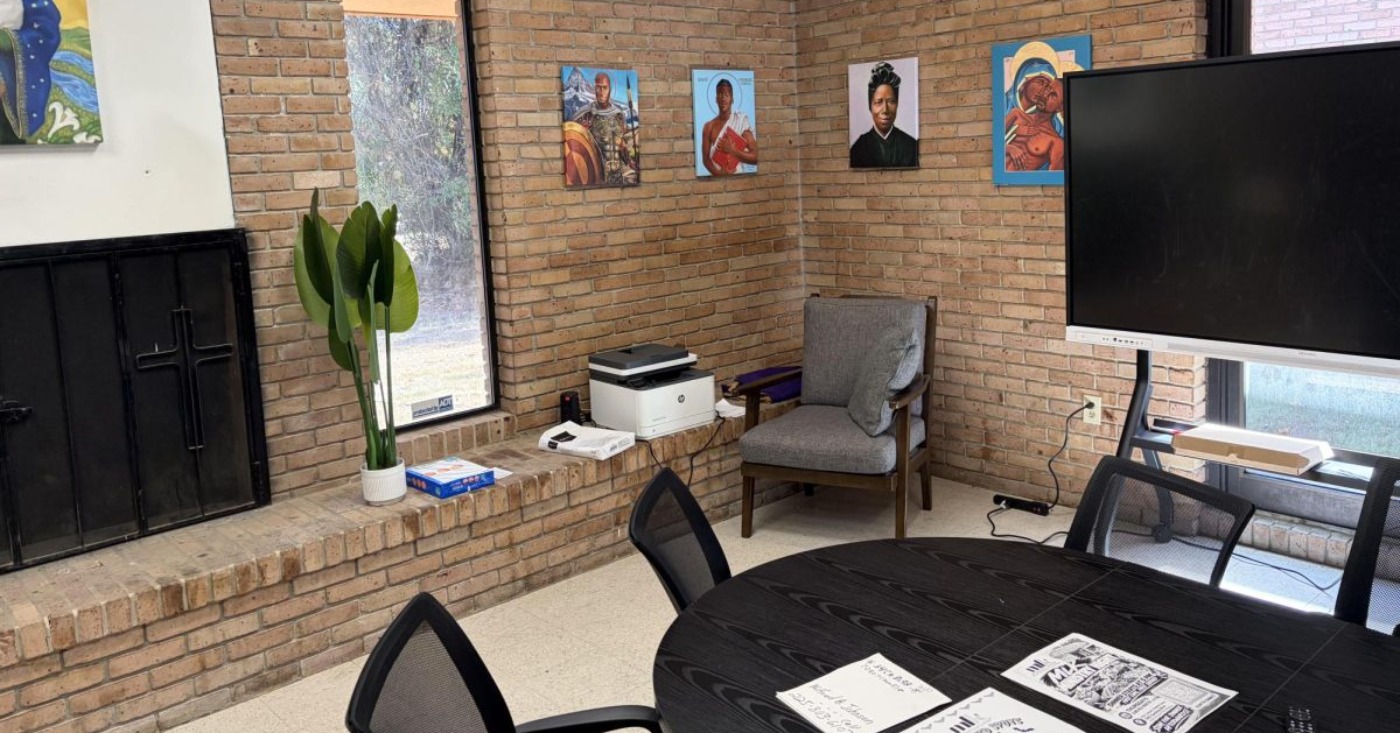
Madison Holmes wanted to leave Southern University. Now, she calls the Martin Luther King Jr. Catholic Student Center home.
The center’s new computer lab has become one of the places where Holmes feels calm, supported and connected to campus life. Holmes said she struggled with being away from her support system in Pass Christian, Mississippi, while also managing difficult classes. At the time, transferring closer to home seemed like a better option.
She recalled going to the library one day to print a lab report and finding a long line at the printer. “I was like, ‘Oh, wait. I know where I can go,’” Holmes said. “So, I came here and printed out my lab report, and then I took it to class.” Her experience is one example of how the center provides students with a place to turn when they need support.
The computer lab opened in October after the project began in August 2026. An anonymous private benefactor provided funding that helped pay for the lab and other improvements throughout the building.
The Rev. Thomas F. Clark, chaplain of the Martin Luther King Jr. Catholic Student Center, said the center aims to support students as they adjust to college life away from home. “You realize that when you’re away from home for the first time, you’re trying to make your way,” Clark said.
According to Clark, students often expressed the need for additional study space. Others shared concerns about unreliable laptops or computer crashes, concerns that ultimately helped shape the decision to add a computer lab.
The lab is one of several resources available to students. The center also provides Wi-Fi, study space and approximately 50 meals every Thursday at 5 p.m. Located across from Bethune Hall, the Martin Luther King Jr. Catholic Student Center has served Southern University students for decades.
According to the Roman Catholic Diocese of Baton Rouge, Father Rawlin B. Enette advocated for a stronger Catholic presence at Southern in the late 1960s. Construction on the center began in 1969 after land was donated by a university official.
Originally known as the Newman Center, the building was later renamed the Martin Luther King Jr. Catholic Student Center. Southern University art professor Frank Hayden also created religious artwork for the facility.
While the center provides practical resources, it also offers students a place to slow down, reflect and feel supported. For Holmes, Clark is part of that support system. “I do think that Father Clark is a safe space and a person I could go to,” Holmes said.
That sense of availability is intentional. Clark said students sometimes stop by with personal concerns or during times of stress. They talk and, in some cases, pray together as he helps students navigate the semester.
“We just feel that we can add to that support by being available and providing a warm and friendly place,” Clark said. As students navigate the challenges of college life, the Martin Luther King Jr. Catholic Student Center continues to offer a place of support, community and encouragement. For Holmes, it has become a home away from home.
Gallery • 3 Photos Brianna Meeks Interior shots of the newly create computer lab.
Based on reporting by Southern University – SouthernDIGEST.
Black Press
Check out These Smart Ways Tech Companies Can Speed up Project Timelines Today
CONTENTMANAGERIO — Tech companies face significant pressure to meet software development deadlines, as research from firm ZS indicates that early launch performance is often highly volatile. To mitigate the risk of delays and ensure products are ready for market on time, firms are increasingly turning to strategic process improvements.

Smart ways tech companies can speed up timelines for developing software include automating repetitive tasks to free up time and using AI-powered tools to accelerate development and decision-making. They can also improve team collaboration with centralized project management platforms and adopt continuous integration and delivery to reduce deployment delays.
Management consulting and technology firm ZS found that early launch performance is highly volatile, so it’s important that you have your products ready and launched on time.
Developing software is easier said than done, though, and it’s common to experience delays. Speed things up and streamline operations, so you launch as planned.
Can You Automate Repetitive Tasks to Free Up Time for High-Value Work?
Many project bottlenecks come from repetitive tasks that pile up, and in reality, these don’t need much human judgment. It’s much better to automate these tasks so that human workers can focus on high-value work instead.
Things you can automate include:
- Testing
- Code deployment
- Report generation
- Routine data entry
Automating these tasks also ensures better consistency and accuracy. Just make sure to only automate work where processes are already well-defined.
Use AI-Powered Tools to Accelerate Development and Decision-Making
Agile development should involve AI, as it can reduce the time spent on coding, research, documentation, and troubleshooting. With analytic tools, you can analyze large amounts of data to find key issues such as bottlenecks and tasks that may fall behind schedule.
Do note that these outputs will still need human review. Without it, you may be following erroneous reports, and this can put your project even further behind.
Improve Team Collaboration With Centralized Project Management Platforms
Engineering efficiency hugely depends on good communication, and this can be difficult when there are these stakeholders:
- Developers
- Designers
- Product managers
You may even need staff augmentation in software development to help in areas where you have a lack of people, and this adds to the chaos.
The best way to handle communication is to use centralized project management platforms. Your teams can easily see which tasks need to be done, as well as which ones are already complete. The platforms will also show what dependencies there are and who’s responsible for which tasks.
In addition, you can take it a step further and integrate these platforms with development tools and communication platforms.
Should You Adopt Continuous Integration and Delivery to Reduce Deployment Delays?
Continuous integration and continuous delivery (CI/CD) practices are vital if you want to speed up your timelines. They can reduce the risks that come with large and infrequent releases, as well as reduce the manual work required.
Implementing these practices can shorten feedback loops, as you can catch defects earlier. As a result, software delivery will be more efficient and faster.
Stay on Track When Developing Software
Developing software can be a monumental task, especially when you have multiple people on the job. If you stay organized, though, and use the right tools, you’ll be able to deliver a quality product exactly when you want to.
Check out more of our pages now to find additional informative articles.
Content provided through ContentManagerIO.


OP-ED: And Then What?

OP-ED: Closing the Next Digital Divide — Communities of Color Must Have a Voice in the AI Future

Which Car Comfort Features Are Worth Paying For? #shorts

Choosing a Truck Bed? Test Your Gear Before You Buy #shorts

Black Resilience: The Powerful Story of George Wallace’s Redemption

From The Desk of The Editor 11/11/26

Credit Builder Loans Offer a Fresh Start #shorts

Small Savings Build Lasting Financial Peace #shorts

Help Another Black Family Buy a Car—Leave a Review #shorts

New NAACP Report Warns AI Could Deepen Health Disparities in Black Communities

Practitioners of African Traditional Spirituality Offer Ancestral Reverence Ritual Oct. 31

Tamiko Armstead | 2026 Lifetime Achiever in Education

HISTORY MADE: Keisha Lance Bottoms Becomes First Black Woman Elected Governor in American History

OP-ED: The Black Church Writes AI’s Next Chapter

OP-ED: If the ‘Cornell 7’ Were Black Men at an HBCU — America Wouldn’t Be This Sympathetic

Inside 820 S. Michigan: New Book Captures the Lost World of Ebony and Jet

Kickstarter CEO Everette Taylor Shares Tips on Creating and Growing a Business

While Black Families Pay More for Power, Some Attorneys General Fight to Save High-Cost Coal

BLACK MEN VOTE: Mobilizing 100,000 Black Men Ahead of the Midterms 📱

NFN live presents 🎙️ THE ROAD TO BEYOND IWDM 50: WE CANNOT STOP NOW! 8-Week Podcast
Which Car Comfort Features Are Worth Paying For? #shorts
Choosing a Truck Bed? Test Your Gear Before You Buy #shorts
Black Resilience: The Powerful Story of George Wallace’s Redemption
From The Desk of The Editor 11/11/26
Credit Builder Loans Offer a Fresh Start #shorts
Small Savings Build Lasting Financial Peace #shorts
Help Another Black Family Buy a Car—Leave a Review #shorts

Brett McNeal on Becoming a College AD and the State of Minneapolis Sports | Blacklight on Sports

Kern County Veterans Day Parade Honors Veterans in Downtown Bakersfield

How Fleet Purchases Build Black Community Wealth #shorts
-
 Black History1 week ago
HISTORY MADE: Keisha Lance Bottoms Becomes First Black Woman Elected Governor in American History
-

 Black History1 week ago
Hundreds of Black Christian Leaders Arriving in Israel for Martin Luther King-Inspired Mission
-

 Black History6 days ago
Keisha Lance Bottoms to Govern State Where Her Great-Great-Grandfather Was Enslaved
-

 Black History1 week ago
IN MEMORIAM: Marcia Ann Gillespie, Editor of Essence and Ms. Magazines, Dies at 82
-

 Black History4 days ago
Don’t Pass the Torch. Expand the Circle.
-
Black Press6 days ago
What It Actually Takes to Convert Potential Customers Quickly and Consistently
