
Art
Inside 820 S. Michigan: New Book Captures the Lost World of Ebony and Jet
CHICAGO DEFENDER — A new photography book offers a rare look inside the former Johnson Publishing Company headquarters at 820 S. Michigan Ave., the longtime home of Ebony and Jet magazines. Titled 820 Ebony/Jet: Visions of the Johnson Publishing Company, an American Icon, the book features photographs by Barbara Karant documenting the building’s interiors.


A new photography book is giving readers a rare look inside one of the most important buildings in Black media history.
820 Ebony/Jet: Visions of the Johnson Publishing Company, an American Icon, published Tuesday by MW Editions, features photographs by Chicago photographer Barbara Karant documenting the former Johnson Publishing Company headquarters at 820 S. Michigan Ave., the longtime home of Ebony and Jet magazines. Pasted markdown
The 240-page book preserves the building’s striking interiors, many of which no longer exist in their original form, while also examining the larger cultural legacy of Johnson Publishing Company and its influence on Black media, design, photography and American culture.
Designed by architect John W. Moutoussamy and completed in 1972, the building was the first, and remains the only, high-rise in downtown Chicago designed by an African American architect. Built for publisher John H. Johnson, the headquarters became a physical expression of the ambition and influence of one of the nation’s most important Black-owned media companies.
While the building’s exterior reflected Moutoussamy’s restrained modernist style, the inside told a very different story.
Designers Arthur Elrod and William Raiser filled the headquarters with bold colors, geometric patterns, mirrored surfaces, rich textures and dramatic materials across 11 floors. The result was a workplace that looked unlike the traditional corporate offices of its era. Pasted markdown
Karant began photographing the building after Johnson Publishing sold the property in 2010 and relocated in 2012. Between 2013 and 2015, and again in 2018, she documented the largely vacant interiors after employees and much of the furniture had been removed.
What remained were the colors, patterns and architectural details that had helped define the company’s visual identity.
Her photographs capture spaces ranging from the cafeteria’s orange, purple and gold designs to Eunice Johnson’s cream-and-honey office, mirrored dressing rooms and the executive floor’s expansive views of Lake Michigan and Grant Park. Pasted markdown
Among the building’s most memorable spaces was the famed Ebony Test Kitchen.
Known for its vivid colors, psychedelic patterns and distinctive cabinetry, the kitchen became a visual reflection of Ebony magazine’s influence on food, lifestyle and Black culture. Karant photographed the kitchen as part of the larger architectural story of the headquarters. Pasted markdown
“The building was almost like a portrait of Johnson Publishing Company itself,” Karant said. “Even after the people and furnishings were gone, the colors, patterns, textures and spaces still conveyed the creativity, confidence and extraordinary cultural presence of the company.”
The photographs have taken on even greater significance because much of what Karant documented has since disappeared.
Following the building’s conversion, substantial portions of the original interiors were removed. The Ebony Test Kitchen was dismantled and preserved separately, making Karant’s images one of the most extensive visual records of how the headquarters looked during Johnson Publishing Company’s decades on Michigan Avenue. Pasted markdown
The book also includes photographs of sculptor Richard Hunt’s Expansive Construction, a work commissioned for the building’s lobby, as well as images of the company’s in-house photography studio and archival views of the original interiors.
But 820 Ebony/Jet goes beyond architecture.
The book includes a foreword by photography historian Deborah Willis, six scholarly essays and personal reflections from former Johnson Publishing Company employees. Together, the contributions explore the company’s role in Black visual representation, media, photography, art and design, while offering firsthand accounts of what it was like to work inside the building. Pasted markdown
For generations, Ebony and Jet helped shape how Black America saw itself and how the country saw Black America.
The magazines documented everything from politics and the civil rights movement to fashion, entertainment, family life and culture. Johnson Publishing Company also became an influential force in photography, beauty, design and popular culture.
That legacy extended well beyond the pages of its magazines.
The new book examines Johnson Publishing Company’s continuing influence on artists including Theaster Gates, Hank Willis Thomas, Kwame Brathwaite, Lorna Simpson, Martine Syms and David Hartt. Pasted markdown
For Chicago, the book serves as both an architectural record and a cultural archive. It preserves a place where Black entrepreneurship, media, art and design converged at a scale rarely seen before or since.
820 Ebony/Jet: Visions of the Johnson Publishing Company, an American Icon is available now from MW Editions. The hardcover volume includes 150 photographs and is priced at $65. Pasted markdown
Karant is also scheduled to present the book during Modernism Week at the Palm Springs Art Museum on Feb. 15, 2027, where she will discuss the connection between the Johnson Publishing Company headquarters and the design legacy of Arthur Elrod and William Raiser.
The post Inside 820 S. Michigan: New Book Captures the Lost World of Ebony and Jet appeared first on Chicago Defender.
Based on reporting by Chicago Defender.






Art
The Afrikan Restoration Project Marks 60 Years of Kwanzaa With New Book and Expanded Focus
THE AFRIKAN RESTORATION PROJECT FOR IMMEDIATE RELEASE | November 24, 2026 Media contact: Shujaa Baker | [email protected] | (949) 257-7133 | Media Kit – https://bit.ly/3X2tSlz The Afrikan Restoration Project Marks 60 Yea

The Afrikan Restoration Project Marks 60 Years of Kwanzaa With New Book and Expanded Focus
Events in San Diego, Detroit, and online will honor the holiday’s origins and prepare for the next sixty years of the Nguzo Saba.
The Afrikan Restoration Project (TARP) announces its 2026 Kwanzaa anniversary season, Dec. 26–Jan. 1, marking sixty years of the African American and Pan-African holiday first observed in Los Angeles in 1966. Under the theme “Celebrating the First Sixty Years of Kwanzaa… and the Next!” the programs share an expanded understanding of the Kwanzaa creation story and thoughtfully promote year-round practice of the Nguzo Saba (Seven Principles).
Central to the celebration is the worldwide debut of the new book titled “Kwanzaa – FOR KIDS (and everybody else!),” written by Shujaa Baker, illustrated by Thad Lavalais, and based on the firsthand accounts of Kinamo and Karama Damu about the first Kwanzaa. The book traces how ten-year-old Kinamo’s questions about African holidays in 1965 inspired the creation of Kwanzaa while recounting the children’s experiences leading up to the first celebrations in 1966. Learn more at kwanzaaforkids.org.
60th Anniversary Events
Dec. 26 | San Diego | 1–4:30 p.m. PT — WorldBeat Cultural Center, Balboa Park. The children’s Kwanzaa Camp celebration and book debut features Karama Damu, a participant in the first Children’s Kwanzaa, along with a Kwanzaa Essentials lesson and lessons from the new book, art, music, drumming, and dance. Instructional content by Imagiread.
Dec. 26 | San Diego | 6–9 p.m. PT — WorldBeat Cultural Center. Umoja (Unity) Night program celebrating the First Sixty Years of Kwanzaa… and the Next! recognizes the first sixty years of Kwanzaa and the work ahead to teach the Nguzo Saba more broadly
Dec. 27 | Detroit | 2–5 p.m. ET — Charles H. Wright Museum of African American History. The Kujichagulia (Self-Determination) program explores Kwanzaa’s past, present, and future, and the role of self-determination in Elevating Blackness.
Dec. 29 | Online | 5–7 p.m. PT — Kwanzaa Then and Now: Celebrating the First Sixty Years and Preparing for the Next. TARP introduces its new book and announces the return of its study group on Jan. 10, 2027 – examining Ujamaa (Cooperative Economics) in the age of AI and robotics.
TARP is merging our work to promote African culture, S.T.E.M., manufacturing, and principled daily practice into a new online program called The Elevating Blackness Online Academy. Launching on December 5th, this site offers educational resources that build character, including curricula for Kwanzaa – FOR KIDS, the STEM ’n ’Nem children’s book series, and partner content.
Visit https://elevatingblackness.com for more info. (For beta test access – TESTER / Innovationary2026!).
TARP also invites public discussion of three position statements on Kwanzaa’s origins, the responsibilities of the next sixty years, and the daily practice of the Seven Principles found here.
Event details and registration: https://kwanzaa.org/events.html and https://tarpie.org/events. Contact Shujaa Baker for interviews, the media kit, and high-resolution images. See tarpie.org for full details.
About The Afrikan Restoration Project
TARP is an African-centered educational and cultural development initiative advancing cultural knowledge, practical capabilities, and principled community development through publications, programming, and collaborative education.
Art
BOO REVIEW: Upcoming Book Revisits Dr. King’s 1957 Visit to St. Paul
MINNESOTA SPOKESMAN-RECORDER — A new book by researcher Jeff Olson titled “Gathering at the Rivers: Martin Luther King Jr. and Civil Rights in Minnesota” will chronicle the historic first visit of Dr. King to the state.
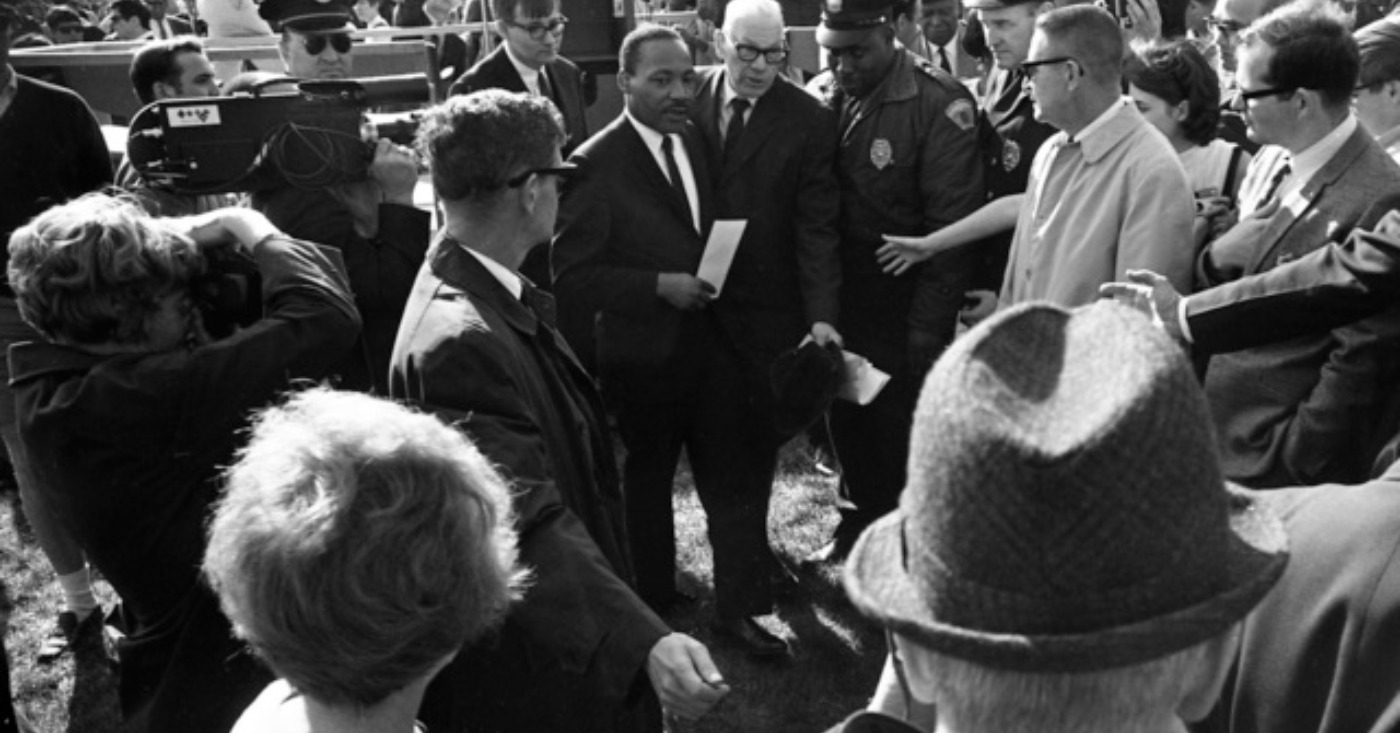
New Book Will Tell the Story of Dr. King’s First Visit to Minnesota and St. Paul’s Civil Rights Pioneers
“Gathering at the Rivers: Martin Luther King Jr. and Civil Rights in Minnesota,” by researcher Jeff Olson, will chronicle King’s Jan. 21, 1957, sermon at Gloria Dei Lutheran Church in St. Paul, his first Minnesota visit, just after the Montgomery Bus Boycott. The Rev. Dr. Floyd Massey Jr. of Pilgrim Baptist Church helped bring King to the state and hosted a reception at his Rondo home. The book’s “Twenty Treasures” chapter profiles figures including Roy Wilkins, Dred Scott, Cap Wigington, Nellie Francis, Nellie Stone Johnson and MSR founder Cecil Newman. Afton Press plans a late 2027 or early 2028 release and is seeking donor support for the $100,000 project.
On Jan. 21, 1957, the Rev. Dr. Martin Luther King Jr. stepped into the pulpit at Gloria Dei Lutheran Church in St. Paul on his first visit to Minnesota. Nearly 70 years later, a book from Minnesota publisher Afton Press aims to tell the story of that night and of the people and places that shaped it.
“Gathering at the Rivers: Martin Luther King Jr. and Civil Rights in Minnesota,” by researcher and author Jeff Olson, is in the early stages of publishing, with a release planned for late 2027 or early 2028. Former St. Paul Mayor Melvin Carter III, the city’s first Black mayor, is writing the foreword.
The book frames the visit as a turning point. King, who had turned 28 just days earlier, was fresh off the Montgomery Bus Boycott and stepping into a national leadership role. In St. Paul, Olson writes, King found himself in the hometown roots of two of his biggest supporters: NAACP leader Roy Wilkins, who grew up in St. Paul’s Frogtown neighborhood, and Ralph Helstein, president of the United Packinghouse Workers of America. Both organizations gave major support to the boycott.

The visit itself came together through local clergy. According to the book, the Rev. Dr. Floyd Massey Jr., pastor of Pilgrim Baptist Church and program chair of the Minnesota Pastors Conference, played a central role in bringing King to the state. After King’s evening sermon at Gloria Dei, Massey and his wife, Ethel, hosted a reception for him at their home in the Rondo neighborhood.
At the heart of the book is a chapter Olson calls the “Twenty Treasures of Civil Rights in Saint Paul,” profiles of the people, places and institutions that made the city fertile ground for King’s message. The list stretches from Dred Scott, who married Harriet Robinson at Fort Snelling in 1837 and later took his fight for freedom to the U.S. Supreme Court, to Pilgrim Baptist Church, founded in 1863 as Minnesota’s first Black church.
It includes architect Clarence “Cap” Wigington, who Olson notes was the nation’s first Black municipal architect; Nellie Francis, who led the campaign for Minnesota’s 1921 anti-lynching law; attorney Frederick McGhee; labor and civil rights leader Nellie Stone Johnson; and Carl Rowan, whose civil rights reporting for the Minneapolis Tribune won national journalism honors in the 1950s. It also includes Cecil Newman, who founded the Minneapolis Spokesman and St. Paul Recorder in 1934 and led the papers until 1976.
Olson argues that these civil rights firsts are striking given Minnesota’s small Black population at the time, compared with states and cities whose Black communities were many times larger.
Olson said he became fascinated by the research because he kept uncovering stories that had gone untold.
Ian Graham Leask, Afton Press’ publisher, told the MSR the book matters at a time when literacy rates are declining. A book that shows readers from marginalized communities the history of the very streets they walk today could give schools and institutions a way to spark engagement, he said, especially because the story has never been told this way before.
Bringing the book to print is expected to cost about $100,000, Leask said, and Afton Press is open to support from donors.
Afton Press has a long record of publishing Minnesota stories about people, places and events, including “Overcoming: The Autobiography of W. Harry Davis” (2002), the memoir of the prominent Black civic leader from Minneapolis.
Olson is the author of several books on hockey history and of “Kindred Spirits,” about the conservation work of Theodore Roosevelt and John Muir.
For more information or to support the book, visit https://aftonpress.com/. You can also contact Afton directly at [email protected] or 651-436-8443.
Jasmine McBride welcomes reader responses at[email protected].
Jasmine McBride is an Editor at the Minnesota Spokesman-Recorder More by Jasmine McBride
Based on reporting by Minnesota Spokesman-Recorder.
Art
Brooklyn Roots and Artistic Genius
THE POSITIVE COMMUNITY — Jean-Michel Basquiat emerged from Brooklyn to become one of the most influential artists of the late twentieth century. Born in 1960 to a Haitian father and a mother of Puerto Rican descent, his upbringing was defined by a rich blend of Caribbean cultural traditions and the linguistic diversity of New York City.

Jean-Michel Basquiat was one of the most influential artists to emerge from New York City during the late twentieth century. Born on December 22, 1960, in Brooklyn, New York, he transformed his experiences growing up in the city into a distinctive artistic language that combined painting, poetry, history, music, and social commentary. His work explored Black identity, racism, power, and the experiences of people whose stories had often been overlooked by mainstream institutions. Although his career lasted only a few years, Basquiat left a lasting mark on contemporary art.
Basquiat grew up in a family that exposed him to several cultural influences. His father, Gérard Basquiat, was born in Haiti, while his mother, Matilde Andrades, was born in New York to Puerto Rican parents. Through his parents, Jean-Michel was connected to Haitian, Puerto Rican, and broader Caribbean cultural traditions. Growing up in Brooklyn, he experienced the diversity of New York City, where different languages, communities, musical styles, and artistic expressions existed side by side. These influences would later become visible in his paintings, which frequently incorporated historical references, handwritten words, and symbols.
His mother played an important role in encouraging his early interest in art. Matilde recognized her son’s artistic ability and introduced him to museums, books, and cultural experiences. One important childhood event occurred when Basquiat was seven years old and was struck by a car while playing in the street. During his recovery, his mother gave him a copy of Gray’s Anatomy, a medical reference book that illustrated the human body in considerable detail. Its anatomical drawings influenced his lifelong interest in skeletons, skulls, and the internal structures of the human body. These images later became recurring features in his artwork.
Basquiat was one of four children born to Gérard and Matilde, although the family had experienced the loss of an older son before his birth. He had two younger sisters, Lisane and Jeanine, with whom he shared his early family life. His parents eventually separated, and his mother experienced periods of serious personal difficulties that affected the family. These circumstances formed part of a complicated childhood that included both encouragement and hardship. Although his family relationships were not always easy, his mother’s early support for his artistic interests remained an important influence on his development.
Basquiat’s upbringing was also shaped by language and cultural diversity. He grew up speaking English, French, and Spanish, reflecting the backgrounds of his parents and the environment in which he was raised. In 1974, his family moved to Puerto Rico for a period before returning to Brooklyn in 1976. These experiences exposed him to different cultural perspectives and helped establish the broad historical and cultural interests that later appeared in his work. His paintings often included words and references drawn from different languages, histories, and communities, creating a visual expression of his multicultural identity.
As a teenager, Basquiat became increasingly connected to Manhattan’s downtown art and music scenes. He eventually left home and supported himself through various activities, including selling handmade postcards and painted T-shirts. Along with his friend Al Diaz, he began creating cryptic graffiti under the name SAMO, short for “Same Old.” Their messages appeared on walls around Lower Manhattan and attracted attention for their wit, unusual phrasing, and criticism of established social and cultural conventions. This early work helped Basquiat develop a reputation as an original voice in New York’s underground creative community.
By the early 1980s, Basquiat had moved from street-based expression into the world of professional painting. His work attracted attention through exhibitions that introduced his distinctive style to collectors, critics, and fellow artists. His paintings combined bold colors, rough lines, repeated symbols, handwritten phrases, and images of human figures. Rather than following traditional expectations of polished painting, he created works that appeared energetic, fragmented, and emotionally direct. His artistic approach reflected the rhythms of New York City, where street culture, hip-hop’s emerging influence, punk music, and experimental art intersected.
A central theme in Basquiat’s work was the experience of Black people in a society shaped by racial inequality. He frequently portrayed historical figures, athletes, musicians, and other individuals whose achievements deserved recognition. Crowns appeared throughout his paintings as symbols that could suggest dignity, authority, and the importance of people who had been marginalized. His work also challenged colonialism, racism, and the unequal distribution of power. Rather than presenting history as a distant collection of events, Basquiat brought it into the present, encouraging viewers to consider whose stories were celebrated and whose were neglected.
Music was another important element of Basquiat’s creative life. He played in a band that eventually became known as Gray, exploring experimental sounds alongside his visual art. He was influenced by jazz and the broader musical culture of New York, and his paintings often possess a rhythm that resembles improvisation. Words, marks, and images seem to compete for attention while creating an overall composition. His artistic process shared something with jazz musicians who build a performance through experimentation, repetition, and unexpected changes. This connection between music and painting helped distinguish Basquiat from many of his contemporaries.
Basquiat also developed a significant relationship with Andy Warhol, one of the most recognizable artists of the twentieth century. The two artists collaborated on paintings during the 1980s, combining different approaches to imagery, color, and popular culture. Their relationship brought Basquiat into contact with an influential figure in the established art world, although it also highlighted the tensions between artistic creativity, celebrity, and commercial success. As his reputation grew, Basquiat had to navigate an industry that increasingly treated his identity and personal story as part of the appeal of his work. Nevertheless, he continued to produce paintings that expressed his individual perspective and challenged conventional ideas about art.
Despite his extraordinary success, Basquiat’s life was tragically short. He died in New York City on August 12, 1988, at just 27 years old, from an accidental drug overdose. His death ended a remarkably productive period in which he had moved from an underground artist in Brooklyn and Manhattan to an internationally recognized painter. His final years have also encouraged broader discussions about the pressures faced by young artists, the demands of celebrity, and the difficulties of maintaining personal well-being while working in a highly competitive industry. His death remains a painful reminder of the distance between public recognition and the private struggles a person may experience.
Today, Jean-Michel Basquiat’s legacy extends far beyond the galleries in which his paintings are displayed. His work is held by major museums, studied by scholars, and admired by artists across generations. His Brooklyn upbringing, Haitian and Puerto Rican heritage, family experiences, and encounters with New York’s streets all contributed to the development of an artistic vision that was unmistakably his own. Basquiat demonstrated that an artist did not need to follow traditional academic pathways to create work of lasting significance. His paintings continue to speak about identity, inequality, history, and the power of creative expression. From the streets of New York to the world’s leading museums, Basquiat remains a symbol of artistic independence and the enduring influence of Black creativity.
Based on reporting by The Positive Community.
Art
Capturing Black Life’s Beauty
THE POSITIVE COMMUNITY — Deana Lawson is an acclaimed American photographer and visual artist whose work explores Black identity, family, and spirituality through powerful portraiture. Born in Rochester, New York, in 1979, Lawson developed a distinctive aesthetic that blends carefully arranged compositions with emotionally compelling subjects.
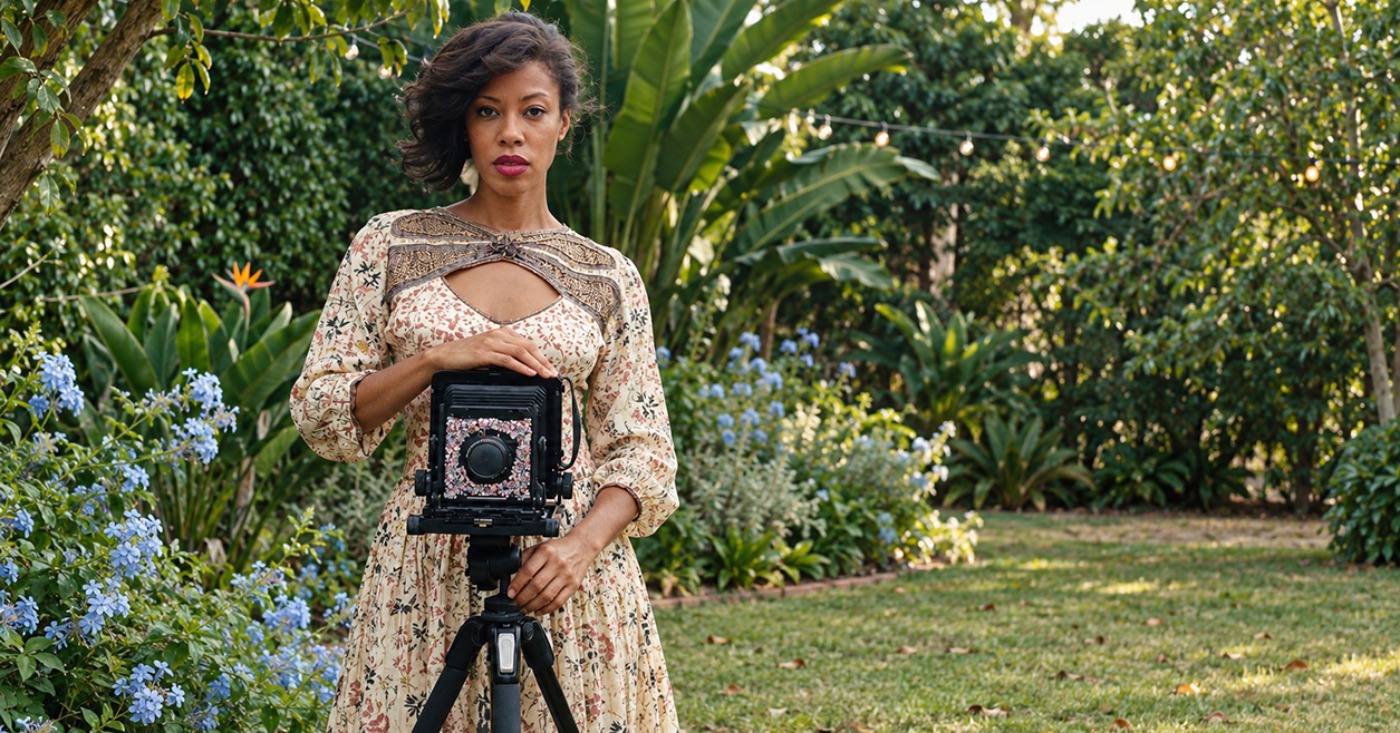
Deana Lawson is an acclaimed American photographer and visual artist whose powerful portraits explore Black identity, family, spirituality, intimacy, and the complexities of everyday life. Born in 1979 in Rochester, New York, Lawson has developed a distinctive approach to photography that combines carefully arranged compositions with emotionally compelling subjects. Her images often resemble scenes from family photo albums, yet they possess a theatrical quality that encourages viewers to look beyond the surface. Through her work, Lawson challenges conventional representations of Black people and presents images that celebrate their humanity, individuality, beauty, and cultural richness.
Lawson’s interest in photography developed partly through her family’s relationship with the medium. Her father was an enthusiastic family photographer, and the photographs he collected helped shape her understanding of how images preserve memories and communicate identity. Growing up surrounded by family pictures gave her an appreciation for the significance of documenting everyday experiences. She recognized that family photographs do more than record appearances; they capture relationships, traditions, aspirations, and moments that become part of a family’s history. These early influences would eventually become central to her artistic practice, inspiring her to examine how photographs shape our understanding of ourselves and the people around us.
Her formal education provided the foundation for a successful career in the visual arts. Lawson earned a Bachelor of Fine Arts degree in photography from Pennsylvania State University in 2001 before completing a Master of Fine Arts degree at the Rhode Island School of Design in 2004. During her studies, she developed the technical and conceptual skills necessary to create photographs that communicate complex ideas. Rather than concentrating exclusively on conventional documentary photography, Lawson explored the possibilities of staging, portraiture, lighting, and composition. Her work demonstrates that photography can occupy a space between reality and imagination, documenting actual people while constructing carefully considered scenes that communicate broader emotional and cultural truths.
One of the most recognizable characteristics of Lawson’s photography is her attention to detail. She carefully considers the positioning of her subjects, the arrangement of furniture, the colors within a room, and the relationship between people and their surroundings. Bedrooms, living rooms, and other domestic spaces frequently become important settings in her photographs. Everyday objects, including mirrors, religious items, toys, clothing, and household decorations, help establish a sense of personal history. These details give viewers the impression that they are entering an intimate environment, while the deliberate composition encourages them to consider what the image communicates about family, identity, and belonging.
Lawson frequently photographs Black individuals, couples, and families in poses that communicate dignity, confidence, vulnerability, and emotional complexity. Her subjects often look directly into the camera, establishing a powerful connection with the viewer. Their expressions may appear serious, mysterious, or quietly contemplative. This direct gaze gives the people in her photographs a strong visual presence, making it difficult to treat them as passive subjects. Instead, they appear self-possessed and fully aware of their place within the image. Lawson’s approach challenges stereotypes that have historically influenced the representation of Black people in photography and popular culture, replacing simplistic narratives with images that emphasize individuality and humanity.
Her photographs also explore spirituality, a theme that adds another dimension to her artistic vision. Religious imagery, symbolic objects, unusual gestures, and carefully controlled lighting sometimes give her compositions an almost sacred atmosphere. Lawson’s images may resemble familiar domestic scenes while simultaneously suggesting something mysterious or otherworldly. This combination encourages viewers to consider the spiritual dimensions of ordinary life and the ways people seek meaning through relationships, traditions, and personal beliefs. Her photographs do not always offer clear explanations, allowing ambiguity to become part of their emotional power. The viewer is invited to interpret the scene and consider how visible appearances may conceal deeper experiences.
Although Lawson is deeply interested in African American life, her artistic vision extends throughout the African diaspora. A Guggenheim Fellowship in 2013 supported travel that included destinations such as Haiti, Jamaica, Ethiopia, and the Democratic Republic of the Congo. These experiences expanded her perspective on the relationships connecting Black communities across different countries and cultural traditions. Her photographs explore similarities and differences in how people express identity, beauty, family, spirituality, and social belonging. Rather than suggesting that Black experiences are identical everywhere, Lawson’s work acknowledges the richness and diversity of Black life. Her international perspective places individual portraits within a broader conversation about history, migration, ancestry, and cultural connection.
Among her notable works is Roxie and Raquel, New Orleans, Louisiana (2010), a portrait featuring twin sisters positioned together on a bed. The carefully arranged composition emphasizes both their resemblance and their individuality, while the surrounding furnishings and colors contribute to the photograph’s visual balance. Another important work, Nation (2018), demonstrates Lawson’s interest in constructing images that carry symbolic and cultural significance. Her photographs often invite extended examination because their meaning emerges through the relationship between the subjects, their gestures, and the surrounding environment. These images illustrate her ability to transform seemingly ordinary moments into compositions that feel monumental, mysterious, and emotionally resonant.
Lawson’s achievements have brought her work to some of the most respected institutions in the art world. In 2020, she became the first photographer to receive the prestigious Hugo Boss Prize, an award recognizing significant contemporary artistic achievement. The recognition led to Centropy, an exhibition at the Solomon R. Guggenheim Museum in New York in 2021. Her work has also been presented at the Museum of Modern Art, MoMA PS1, the Institute of Contemporary Art in Boston, and the High Museum of Art in Atlanta. In 2022, she received the Deutsche Börse Photography Foundation Prize. Beyond her exhibitions, Lawson has contributed to art education through her work at Princeton University, where she serves as the inaugural Dorothy Krauklis ’78 Professor of Visual Arts.
Ultimately, Deana Lawson’s significance lies in her ability to make photography a powerful vehicle for cultural affirmation and artistic exploration. Her portraits challenge viewers to reconsider familiar assumptions about Black identity while celebrating the beauty, complexity, and emotional depth of Black communities. By combining elements of documentary photography, family albums, staged portraiture, and symbolic imagery, she has created a visual language that is unmistakably her own. Her work reminds audiences that photographs are never simply records of what appears before a camera; they can also express dreams, histories, relationships, and aspirations. Through her remarkable vision, Lawson continues to expand the possibilities of contemporary photography and ensure that the lives and experiences of Black people occupy a central place in the visual record of our time.
Based on reporting by The Positive Community.
Art
Statue of ‘La Catrina,’ a Beloved Symbol of Dia de Los Muertos, Visits Oakland
Oakland is hosting a monumental 34-foot-tall sculpture of La Catrina at the Fruitvale Transit Village to mark the 31st annual Día de Los Muertos Festival. Handcrafted by master artisans from Mexico City, the massive figure traveled 2,000 miles to serve as a centerpiece for the city’s cultural celebrations. The statue, adorned with marigolds and monarch butterflies, symbolizes the migrant experience and the enduring connections between generations. The installation will remain on public display through early November, offering visitors a unique opportunity to engage with this iconic symbol of remembrance. Read more.
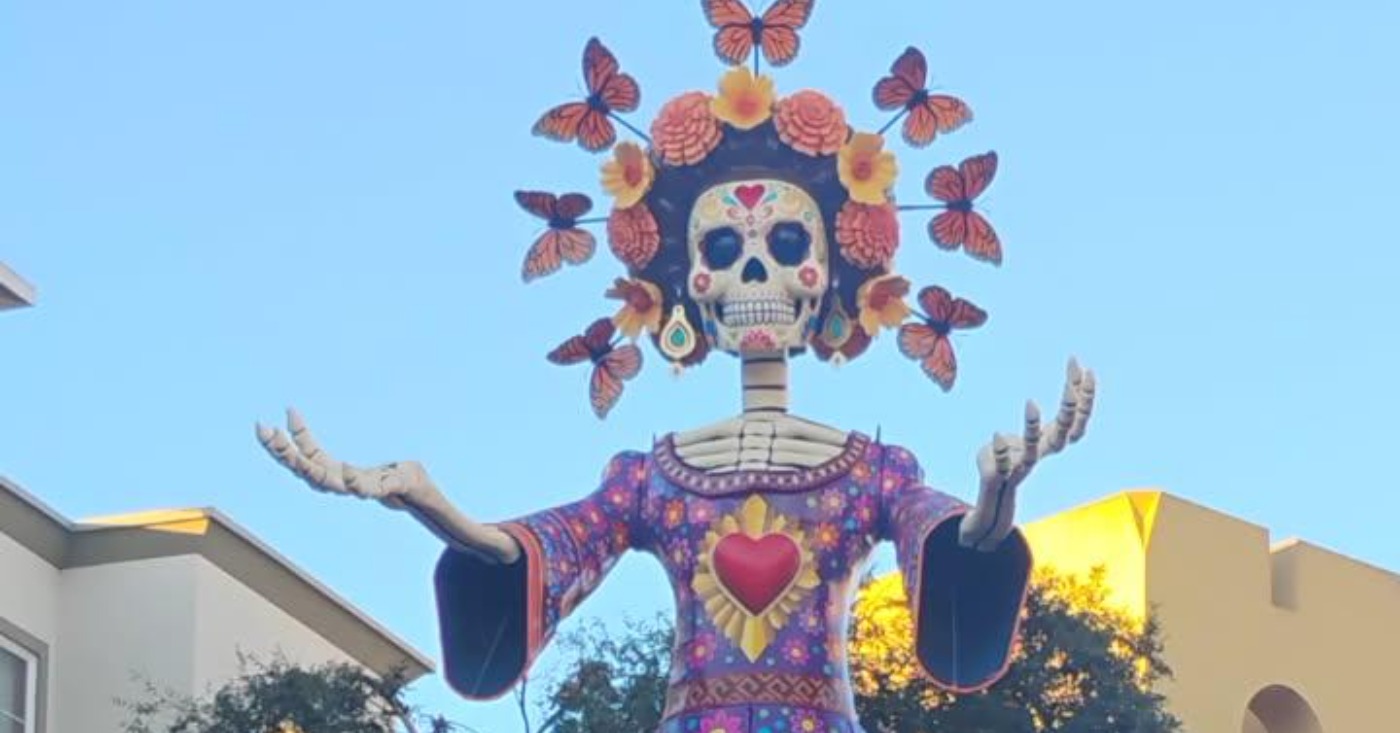
Every year, the Día de Los Muertos Festival brings people together in Oakland to honor those who came before us and to celebrate the bonds that unite the living and the dead.
For the festival’s 31st observation, the Unity Council, Visit Oakland, the City of Oakland, the Consulate of Mexico, renowned artist Romain Greco of Artsumex, and cultural leaders from Mexico City, commissioned a monumental 34-foot-tall sculpture of ‘La Catrina,’ handcrafted by master artisans from the Mexican capital.
The statue that arrived in pieces was unveiled on Sept. 22 and stands at the Fruitvale Transit Village, where she rises as an impressive symbol of Mexican culture, art, and the connection between Oakland and Mexico.
She will remain on display until Nov. 5, welcoming visitors and community members during various events, before becoming one of the main attractions of the Día de Los Muertos Festival on Nov. 1.
What does La Catrina symbolize?
La Catrina is one of the most recognized symbols of Día de Los Muertos. She represents the remembrance of our loved ones, the celebration of life, and the lasting connection between generations. Wearing a crown of orange marigolds, poppies, and monarch butterflies, the Oakland sculpture has her arms outstretched, as if she wants to embrace everyone who approaches her. This gesture symbolizes a warm welcome to the migrants who arrive in the Fruitvale community and expresses shared values such as inclusion, care, a sense of belonging, and cultural pride.
La Catrina also represents another kind of journey. She reflects the experiences of many families who have traveled north to the United States in search of safety, opportunity, and a better future. Her 2,000-mile journey from Mexico City to Oakland becomes a powerful metaphor for these migration experiences. Across borders, the sculpture carries memories, culture, and identity with her.
This story is deeply connected to the history of immigration in the United States, where generations of newcomers have sought opportunity while also helping to build and sustain their communities.
In California, migrants work in the fields, care for our families, build our neighborhoods, and enrich the cultural and economic life of the region. Their contributions are an essential part of the society we live in.
That is why La Catrina is much more than an impressive work of art. She reminds us of the journeys people make, the sacrifices they make, and the lasting contributions they offer to their communities. Her presence in Oakland celebrates Mexican roots, recognizes the migrant experience, and invites us to reflect on the essential role we all play in building a shared future.
The theme for this year’s festival is “La Lucha Continúa: Aquí estamos y no nos vamos” (The Struggle Continues: We Are Here and We’re Not Leaving). The free, family friendly festival is from 10 a.m. to 5 p.m. Sunday Nov. 1 along International Boulevard between Fruitvale and 34th avenues.
Art
OP-ED: Is Creativity a Superpower in Early Education?
BLACKPRESSUSA NEWSWIRE — “This is not anything new, knowing that play is so critical to children, whether it’s dramatic play, building play, creative arts play or physical play,” said Hoisington, a STEM expert who taught preschool for decades. “But as soon as they hit kindergarten and first grade, there’s this dichotomy that sets in. Play is something you get to do after you do the learning when, in fact, we know that play is an incredible vehicle for learning.”
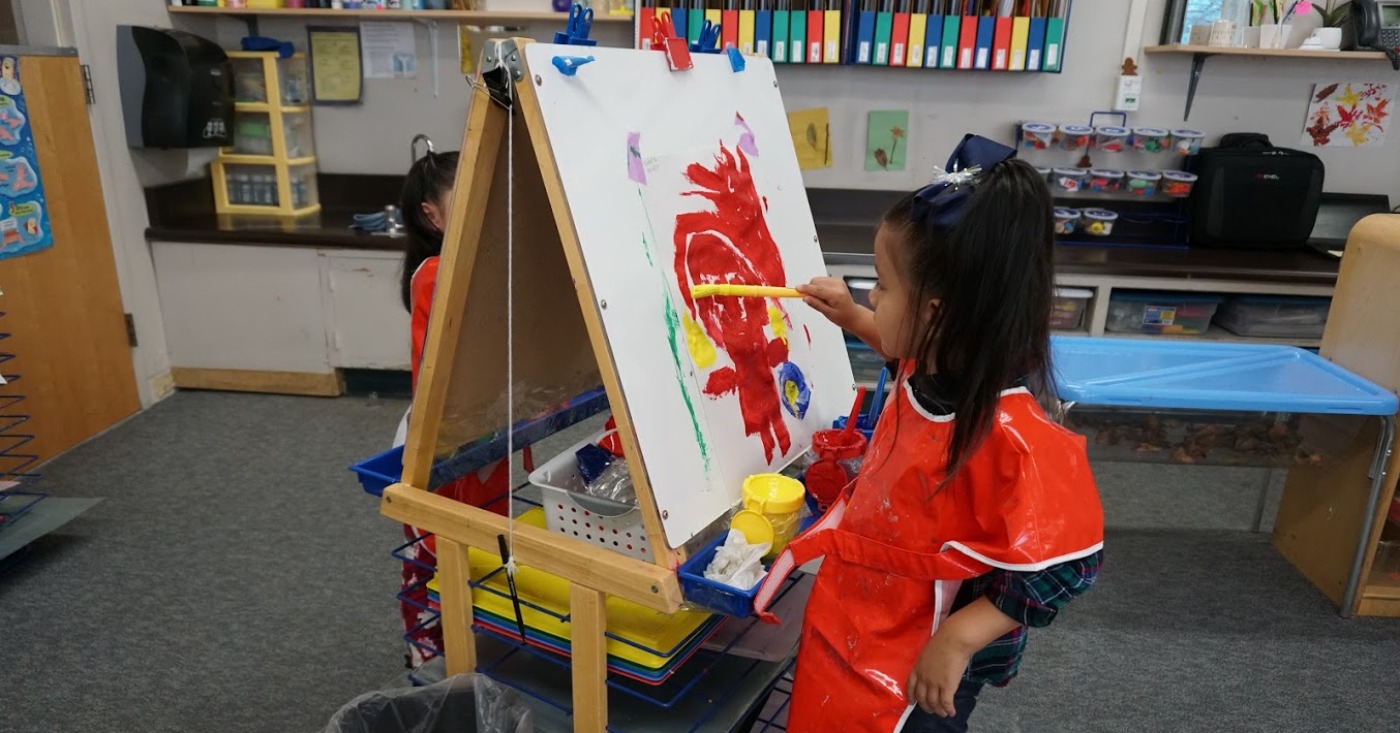
Singing the ABC song. Learning the days of the week from a nursery rhyme. Making a finger-painted collage of little handprints.
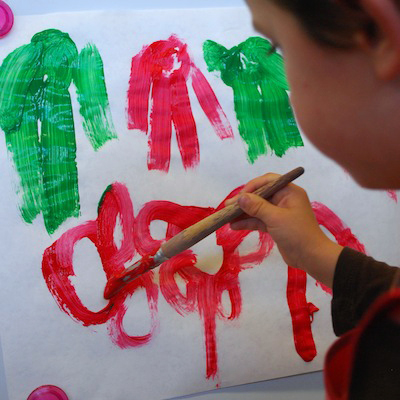
Arts education has always been center stage in early education because little children are naturally creative, filled with wonder and the burning desire to express themselves. Arts and crafts not only help nurture a child’s natural imagination, they also boost small motor skills, sharpen hand-eye coordination and feed the insatiable need to play.
“Children don’t just play, they learn fundamental skills through play,” said Daniel Mendoza, a California visual artist and specialist in early childhood education art practices. “Children are in a creative mindset all the time.”
While this may well be as true for teenagers as it is for toddlers, there is far more time and space allotted for playfulness in the early grades, when the crucial role of play in particular and creativity in general has long been a matter of common sense.
“Really, I’m just a common-sense professor, and somehow it became rogue,” said Kathryn Hirsh-Pasek, a professor of psychology at Temple University and an expert in the key role of play in learning. “What if we taught children the way we know the brain learns?”
Bringing joy back into the classroom is also what motivates Cindy Hoisington, an early childhood expert who specializes in reaching out to children from historically marginalized communities at the Education Development Center (EDC), a national education nonprofit.
“This is not anything new, knowing that play is so critical to children, whether it’s dramatic play, building play, creative arts play or physical play,” said Hoisington, a STEM expert who taught preschool for decades. “But as soon as they hit kindergarten and first grade, there’s this dichotomy that sets in. Play is something you get to do after you do the learning when, in fact, we know that play is an incredible vehicle for learning.”
Play, some experts suggest, may be the superpower of the young. A growing body of research suggests that play may even be a way to help close achievement gaps. One report, analyzing 26 studies from 18 countries, found that in communities from Rwanda to Ethiopia, children got higher learning boosts in literacy, motor skills and social-emotional development when attending child care centers that use a mix of instruction and free play as opposed to those focused solely on academics.
“Children are so naturally, intuitively ready with their curiosity, their motivation to explore the world and everything in it, to the point where that’s why the twos are so terrible, because you’re constantly chasing after them,” said Hoisington, who helps evaluate digital media for PBS. “Science, for instance, tends to have a bad rap as this dry body of knowledge that we have to learn, but really it’s a process of exploration that is very much integral with play.”
Tapping into that spirit of discovery with hands-on experiences is often best, experts say. Curiosity burns brightest in the early years, so letting kids loose to investigate the world is part of building a rich, play-based learning environment.
“Where young children are free to investigate by observing, touching and acting on the objects in their world,” said Deborah Stipek, an expert in early childhood at Stanford University. “This is how they learn about the world — for example, that some objects float and some sink. Through their own experimentation and observation, they may even arrive at hypotheses about the qualities that differentiate the two.”
From “The Wheels on the Bus” to “Baby Shark,” kiddos love to sing and love to learn, so why not teach through music? Singing the “Old MacDonald had a Farm” song can be educational, experts say, as well as a ritual for community building. Children can take turns deciding on which animal to pick, which builds vocabulary as well as sharing skills.
“Young children learn best by doing,” said Stipek. “Counting objects is better than counting dots on a worksheet because they can move the objects to help them keep track of how many they have counted. Worksheets are not all bad. They can provide opportunities to practice and consolidate skills. But children don’t develop new skills doing worksheets, and they are typically not nearly as engaging and fun.”
Tracing the alphabet in shaving cream or making tin-foil sculptures may seem like basic exercises, but they often teach sophisticated concepts. Playing make-believe games can teach numerous skills at once. Pretend restaurants need someone to write a menu, calculate a bill and greet diners, fostering literacy, numeracy and special-emotional learning all in one game, Hoisington notes.
Songs are a clever way to remember stuff because they make memorization easy and fun for little ones. Melodies and rhymes make the most of our limited working memory to help children embed basic facts into their long-term memory, bolstering depth of cognition.
“I still sing the ABC song in my head sometimes, if I want to know which letter comes before which letter,” admits Hoisington.
What’s often missed in the discussion of the role of play is that older children also need time for creativity and free play, as well as the arts. While there is much talk about the need to engage students, there is little focus on low-hanging fruit like increasing time for arts, sports and recess. Putting too much emphasis on academic skills in isolation undercuts the love of learning, some warn.
“Kids try to buck it, but certainly by first grade we’ve started to ruin them,” said Hirsh-Pasek. “We pound the curiosity right out of kids.”
Mendoza firmly believes teachers should be guides to adventure instead of taskmasters.
“You don’t have to be a dictator,” as he puts it, “you can be a Sherpa.”
So, why doesn’t the role of play get more respect in education? Why do we emphasize test scores over deep learning?
“We got to this place because people are scared,” said Hirsh-Pasek. “They’re feeling like they’re losing control, and they want to make sure their kid is ahead. We push it younger and younger and younger, and as we do that, we’re creating a situation where our kids are anxious wrecks and the parents are anxious wrecks.”
Some experts suggest that children need more time for play and creativity in the wake of the pandemic, not less. Credit: Lillian Mongeau / EdSource
Too few teachers and parents are aware that play helps build the architecture of the growing brain, experts say.
“Play is not frivolous; it enhances brain structure and function and promotes executive function (i.e., the process of learning, rather than the content), which allow us to pursue goals and ignore distractions,” as an American Academy of Pediatrics report put it. “When play and safe, stable, nurturing relationships are missing in a child’s life, toxic stress can disrupt the development of executive function and the learning of prosocial behavior; in the presence of childhood adversity, play becomes even more important.”
Some experts fear that the laser focus on falling test scores in recent years has led to a decrease in playful learning. They suggest that children need more time for play in the wake of the pandemic, not less. Amid the crisis of chronic absenteeism, engaging students on a compelling level may be more vital than ever.
Creativity is the secret formula, experts say, in a world where machines will always compute faster than humans. Drill and kill won’t help children master high-level intellectual inquiry and conceptual analysis.
“You have to ask yourself, what’s it going to take to outsmart the robots?” as Hirsh-Pasek put it. “We need kids who don’t just memorize and take tests well, which AI will do better than our kids ever will. We need kids to be explorers and problem solvers.”


Remembering Moses Newson and the Power of the Black Press During the Civil Rights Movement

An HBCU Is Training Doulas to Help Combat Childbirth Risks

The Afrikan Restoration Project Marks 60 Years of Kwanzaa With New Book and Expanded Focus

How EDUCATION Evolved Her Business Since 2020 #shorts

Jamal’s Take: Cowboys Send a Message With Dominating Win Over Tennessee Titans

Twin Cities Radio: Why I Finally Joined The Current #shorts

I Made Six Figures—But Lost Money Building My Business #shorts

How Hip-Hop’s Evolution Made Us Fall in Love Again #shorts

Conscious Hip Hop: Why Great MCs Still Go Unheard #shorts

Check These Driving Impressions Before Buying #shorts

HISTORY MADE: Keisha Lance Bottoms Becomes First Black Woman Elected Governor in American History

Retirement Triggers Doctor to Pen Book for Young Audience

Capturing Black Life’s Beauty

Multi-Faith Leaders Representing 10 Million People Launch National Anti-Authoritarian Initiative

Christianity’s Racial History

Hundreds of Black Christian Leaders Arriving in Israel for Martin Luther King-Inspired Mission

Message from the Associate Editor: Blindness, Hurts, Cops

Michael Shiner: The Enslaved Man Who Wrote His Way into American History

Keisha Lance Bottoms to Govern State Where Her Great-Great-Grandfather Was Enslaved

Don’t Pass the Torch. Expand the Circle.
How EDUCATION Evolved Her Business Since 2020 #shorts
Jamal’s Take: Cowboys Send a Message With Dominating Win Over Tennessee Titans
Twin Cities Radio: Why I Finally Joined The Current #shorts
I Made Six Figures—But Lost Money Building My Business #shorts
How Hip-Hop’s Evolution Made Us Fall in Love Again #shorts
Conscious Hip Hop: Why Great MCs Still Go Unheard #shorts
Check These Driving Impressions Before Buying #shorts

Car Buying Tips: 4 Steps to Avoid Costly Dealer Friction #shorts

Super Cruise or Rear Screens? Choose What Matters #shorts

This BOUNDARIES Bag Is Connecting Women Beyond the Purchase #shorts
-

 Black Press1 week ago
COMMENTARY: Thank You, Trump, for Making America Great Again!
-

 Black Press1 week ago
Black Men Encouraged to Start Prostate Cancer Screening at 45
-

 Black History1 week ago
Mississippi Congressman Bennie Thompson Congratulates Scott Colom on Historic Victory
-

 Black History5 days ago
Black Barbershops Have Long Given Neighborhood Politics a Place to Unfold.
-

 Black Press1 week ago
Oakland City Council Extends AI Data Center Moratorium for 10 Months.
-
 Black Press1 week ago
Computational Thinking and Young Children: It’s Not What You Might Think!
