
NNPA Special - NNPA Black Voter Drive
OP-ED: Black Dollars Matter: It’s Time for Blacks to Pull the Trigger on Politics
Jeffrey Boney says that in order for change to take place, Black people must get engaged in the political process.










Black History
OP-ED: From Selma to South Los Angeles: An Unsung Voting Rights Foot Soldier Says the Fight Isn’t Over
BLACKPRESSUSA OP-ED : Leatha Davis was a teenager when she marched in Selma, survived violent attacks and testified in a federal case that helped clear the way for the Selma-to-Montgomery march. Now 81, she says the fight for voting rights is not over, and neither is the responsibility to vote.


More than 60 years after marching for voting rights, Leatha Davis says the sacrifices of Selma still carry a warning for a generation at risk of disengaging.
By Stephen Oduntan
(Updated Jul 31)
More than six decades after risking her life in the fight for voting rights, 81-year-old Leatha Davis still remembers the sound of billy clubs striking peaceful demonstrators, the screams of marchers under attack, and the sacrifices that defined the Civil Rights Movement.
Today, as recent Supreme Court decisions have narrowed key protections under the Voting Rights Act and battles over congressional redistricting continue, Davis believes the struggle she joined as a teenager is far from over. But she worries the greatest threat is not only the legal battles over voting rights—it is also the growing number of people who choose not to exercise them.
“It makes me really angry when I think about we did all of that and people stay at home and don’t try to vote,” Davis said. “Every vote counts.”
For Davis, those debates are deeply personal.
She joined the movement in the days surrounding Bloody Sunday, when Alabama state troopers brutally attacked peaceful demonstrators attempting to cross the Edmund Pettus Bridge in Selma with billy clubs, tear gas, cattle prods, and attack dogs.
“We thought John Lewis was dead,” Davis recalled. “They beat him to the ground. And if you ran to help him, they cracked you upside the head too. It was horrific.”
Days later, Davis marched carrying a sign reading “One Man, One Vote.” During the demonstrations, she said she was struck with a cattle prod. She later testified under her maiden name, Leatha Mae Stover, in the landmark federal case Williams v. Wallace, describing before U.S. District Judge Frank M. Johnson Jr. the violence peaceful demonstrators had endured. Johnson’s ruling allowed the Selma-to-Montgomery march to proceed.
The trauma of those days has never left her. Davis said she still has nightmares about Bloody Sunday and hopes to walk across the Edmund Pettus Bridge one more time before she dies. “I’m going to walk across that bridge one day before I die,” she said.
“We were the foot soldiers,” Davis said.
“And we’ve been forgotten.”
Born into a sharecropping family in rural Alabama, Davis said she was picking cotton from sunrise to sunset by the age of five. After months of labor, her father would haul the family’s harvest to the white landowner.
“He’d tell my father he only broke even,” Davis recalled. “For all the work we did, he only gave my father three dollars and a one-gallon bucket of syrup.”
Watching her father remain trapped in poverty convinced Davis there was no future in sharecropping.
But economic exploitation was only part of life under Jim Crow. Black residents were expected to lower their eyes, answer “yes sir” and “no sir,” and accept humiliation as a way of life. Refusing, Davis said, could invite violence—or worse.
Davis said the lessons that shaped her activism began even earlier, listening to her grandmother describe life just after slavery.
“My grandmother used to say she was born the third year after slavery ended,” Davis recalled. “That’s how she told her age.”
Those experiences taught her that the struggle for voting rights was never just about casting a ballot.
It was about dignity.
It was about freedom.
“When I marched,” Davis said, “I wasn’t just marching so I could vote. I was marching because I wanted to be free.”
As the Selma-to-Montgomery march approached, Davis wanted her younger brother to march beside her and asked her father for permission.
“No,” he said. “One is enough.”
Only years later did she understand why.
“That means he didn’t know whether I would come back or not,” she said.
Today, Davis worries many younger Americans have never been taught those stories or the sacrifices behind the right to vote.
“We have lost a generation of people who don’t care because they were never told,” Davis said. “What they did to us was unspeakable. We lost some lives. It hurt.”
Voting rights advocates say Davis’ concern reflects a challenge they encounter across the country.
Eric Hall, co-founder of Black Lives Matter Birmingham and a voting rights organizer in Alabama, said many younger Black voters question whether voting still makes a difference.
“We don’t have a voter registration problem,” Hall said. “We have a voter participation problem.”
Hall said many young people believe the political system no longer works for them, but organizers remind them that “the sacrifice of the people was about getting those rights. Today it’s about keeping those rights.”
Hall said organizers across Alabama are working to reconnect younger voters with the stories of civil rights foot soldiers like Davis, arguing that understanding those sacrifices is essential to protecting voting rights today.
The Rev. Dr. James M. Thomas, president of the NAACP San Fernando Valley Branch, said younger Americans often see the sacrifices of the Civil Rights Movement through a different lens.
“I don’t think they do,” Thomas said when asked whether younger generations understand what civil rights foot soldiers endured. “They’re looking at older generations and asking, ‘What have you done with the vote?’ That’s the question young people ask.”
Still, Thomas urged people not to disengage.
“Vote in the name of your ancestors,” Thomas said. “Even if you feel like you have nobody to vote for, still vote. Someone your ancestors knew died because they wanted to give you the right to vote.”
For Davis, preserving those stories is as important as preserving the vote itself. She believes thousands of ordinary people helped build the Civil Rights Movement, even if history rarely remembers their names.
“We were the foot soldiers,” Davis said.
“And we’ve been forgotten.”
Professor Marcus Hunter, a sociologist at UCLA, said Davis’ story demonstrates why ordinary people like her remain central to understanding the Civil Rights Movement.
“History often remembers the microphone and forgets the multitude,” Hunter said. “Dr. King and John Lewis were essential leaders, but movements are built by thousands of people whose names never appear in textbooks. Preserving the stories of foot soldiers restores the true architecture of social change and reminds us that democracy is made by participation, not spectatorship.”
More than six decades after Selma, Davis remains convinced that change begins with ordinary people willing to act.
“I can’t change the world,” she said. “But I can make a difference where I stand. And I’ve done that.”
#BuyBlack
Agape Movement Recommended as Development Partner for the People’s Way Project in South Minneapolis
MINNESOTA SPOKESMAN RECORDER — “This moment is bigger than any one individual or organization,” said Bridgette Stewart of Agape Movement. “The People’s Way project represents an opportunity to build something lasting for the community, centered on healing, unity, economic opportunity, and honoring the significance and legacy connected to this space.”


A Milestone for South Minneapolis
By MSR News Online | Minnesota Spokesman Recorder
Agape Movement has been recommended as the development partner for the People’s Way project in South Minneapolis, marking a significant milestone in a years-long community effort to shape the future of one of the city’s most historically significant spaces.
Rooted in Community Voice
The recommendation follows years of advocacy, organizing, relationship-building, and community conversations centered on ensuring the future of the space remains rooted in the voices and needs of the people who call South Minneapolis home. The People’s Way project is built around a vision of healing, economic empowerment, culture, and long-term community investment.
“This moment is bigger than any one individual or organization,” said Bridgette Stewart of Agape Movement. “The People’s Way project represents an opportunity to build something lasting for the community, centered on healing, unity, economic opportunity, and honoring the significance and legacy connected to this space.”
Gratitude and Collaboration
Agape Movement expressed gratitude to the City of Minneapolis, residents, faith leaders, local businesses, organizers, and supporters who have remained engaged throughout the process. The organization also acknowledged the other finalists who participated in the proposal process, including P3, Urban League, Rise and Remember, and others who have remained committed to the future of the space.
As the project moves forward, Agape Movement may collaborate with outside consultants or professionals for fundraising guidance, technical support, financial strategy, and project advising at various phases of development.
What Comes Next
“Our commitment is to transparency, collaboration, and keeping the community at the center of every step of this process,” Stewart said. “We know this project carries deep meaning for many people, and we welcome continued engagement as we move forward together.”
Additional project updates and community engagement opportunities will be shared as the process continues.
Black History
‘Whites Only’ Signs Were Haunting Reminders of America’s Racism
LOS ANGELES WAVE — The Jim Crow system was undergirded by beliefs that formerly enslaved Black people and their descendants were inferior to white people in fundamental ways, including intelligence, morality and behavior. Allowing white and Black people to coexist as equals, the system’s supporters believed, might encourage interracial sexual relations and spur the rise of an abominable race that would destroy the racial purity of the nation’s superior white populace.

By Aaron Morrison, Contributing Writer | Los Angeles Wave
NEW YORK (AP) — “No dogs, no Negros, no Mexicans.” “Colored served in rear.” “For whites only.”
It’s the type of signage that hung from the doors and windows of establishments across much of the American South for many years.
The words, like screaming headlines from Page One of a broadsheet newspaper, were the most visible, daily reminder of the subordinate status of Black people who lived life alongside and yet separate from people who, regardless of class, were considered white.
After the Civil War, and upon the collapse of Reconstruction, the Jim Crow system of public etiquette and laws regulated the free movement of both Black and white people for generations until the civil rights movement began chipping away at legalized racial discrimination.
The Jim Crow system was undergirded by beliefs that formerly enslaved Black people and their descendants were inferior to white people in fundamental ways, including intelligence, morality and behavior. Allowing white and Black people to coexist as equals, the system’s supporters believed, might encourage interracial sexual relations and spur the rise of an abominable race that would destroy the racial purity of the nation’s superior white populace.
Spatial segregation first was culturally accepted, then enforced violently or through threat of re-enslavement via incarceration. After the 1896 Supreme Court decision Plessy v. Ferguson established the “separate but equal” doctrine, Jim Crow segregation signs were more statutory than strongly worded warnings.
Ritualized humiliation became constitutional subjugation. Railway cars, buses, water fountains, restrooms, hotels, lunch counters and swimming pools were among a long list of the public facilities segregated by signage. Black people were forced to use substandard facilities. Schools, churches and cemeteries had long been racially divided. By design, it kept many Black men away from white women and stripped Black people of their dignity, sense of citizenship and social and political belonging.
The Civil Rights Act of 1964 ended legalized racial separatism, although many in the American South resisted desegregation after signs were pulled down and placed into museums. Steven Reich, a history professor and author of an encyclopedia on the Jim Crow era, says one lasting impact of legalized segregation remains evident in the modern American workforce.
Segregation divided the working class and compelled white workers to identify more with their employers than with their Black co-workers, Reich says. That continues to stifle opportunities for Black and white workers to organize and work together on common issues, including diversity and inclusion.
Aaron Morrison writes for the Associated Press. This story was featured in the Los Angeles Wave, an NNPA member publisher, and is part of a recurring series, “American Objects,” marking the 250th anniversary of the United States.
Black History
Thousands Celebrate Culture with ‘Around the World Embassy Tour’
THE AFRO — The 19th annual Around the World Embassy Tour in Washington, D.C. showcased diverse cultures with over 69 embassies participating and 50,000 attendees.
By Patricia McDougall | Special to the AFRO
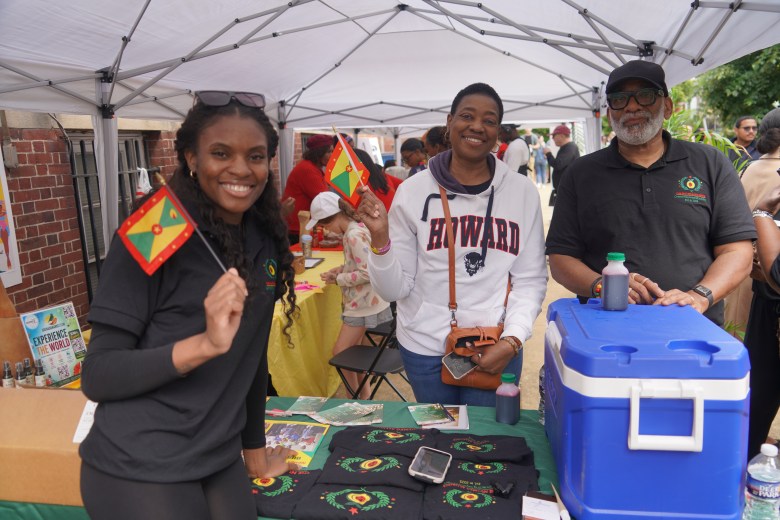
On May 2 the 19th annual Around the World Embassy Tour was held in Washington, D.C., with over 69 Embassies welcoming over 50,000 people. The University District of Columbia (UDC), a historically Black institution, hosted several of the embassies.
The Embassy Tour is one of the biggest events in D.C. with music, live performance, dancers, singers, cultural food, vendors and more. People lined the streets to tour inside of the embassies. Each year, visitors come from all around the world to take part in the event.
[imagely id=”1″]
Black History
IN MEMORIAM: State Rep. G.A. Hardaway Sr. Dies at 71 After Short Illness
NEW TRI-STATE DEFENDER — Memphis mourns the passing of State Representative G.A. Hardaway, a dedicated legislator and outspoken advocate for nearly two decades, remembered for his commitment to community and justice.
By Lee Eric Smith | New Tri-State Defender
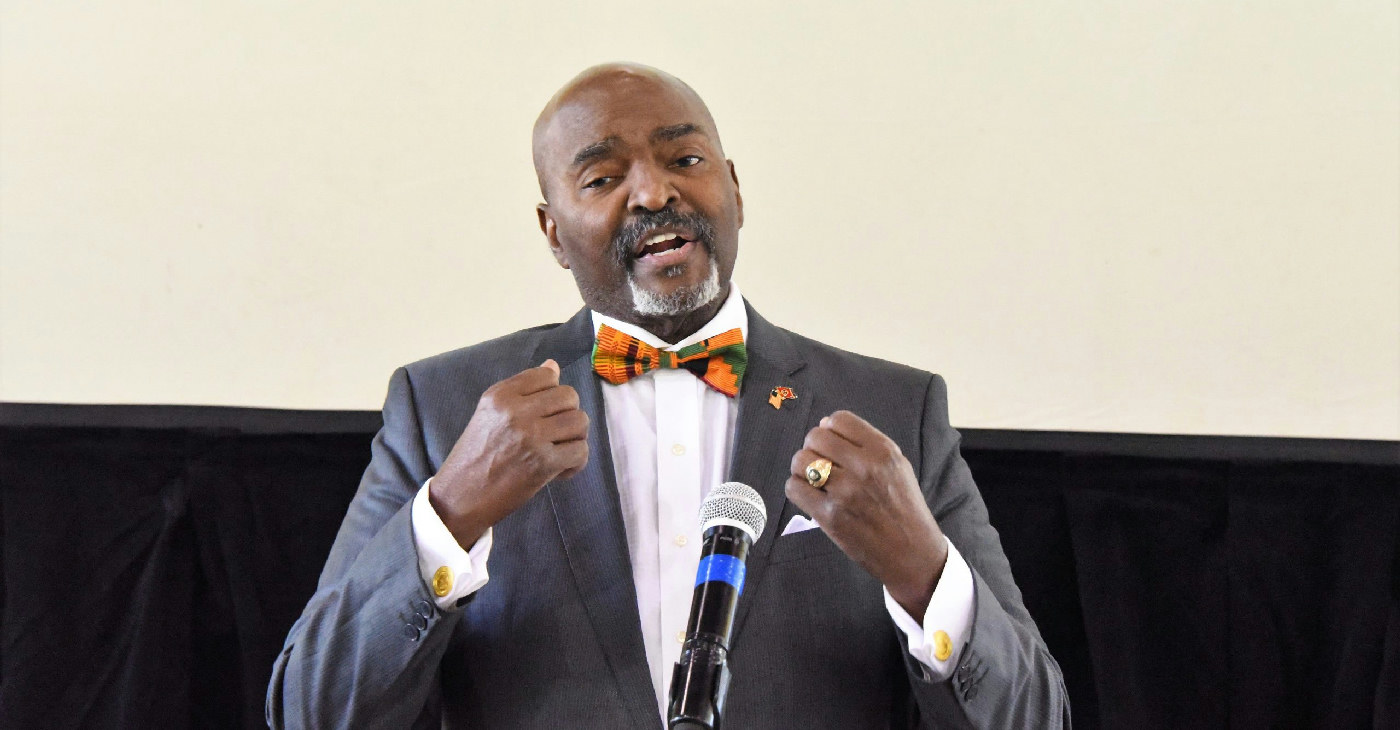
Memphis leaders, community members and colleagues across Tennessee are reacting with shock and reflection following the death of state Rep. G.A. Hardaway, a longtime legislator and outspoken advocate whose presence in the community spanned nearly two decades.
Hardaway, 71, died at 5:22 a.m. Friday after a brief illness at Vanderbilt University Medical Center in Nashville, according to a statement released by his family.
A Democrat, Hardaway represented District 93 in the Tennessee House of Representatives for 19 years. He also served as chair of the Shelby County Legislative Democratic Caucus and previously led the Tennessee Black Caucus of State Legislators.
Even in recent months, Hardaway remained active on issues affecting Memphis. He was a plaintiff in a lawsuit challenging the deployment of the Tennessee National Guard in the city and continued to advocate for criminal justice reform, police accountability and expanded opportunity in the communities he represented.
A loss felt at every level
Paul Young, mayor of Memphis, was among the first to publicly reflect on Hardaway’s passing, describing him as both a personal friend and a defining civic figure.
“I am deeply saddened by the passing of Representative G.A. Hardaway,” Young said in a statement. “He has been a friend to me and my family for many years. G.A. was a true Memphis leader.”
Meanwhile, Shelby County Mayor Lee Harris and Judge Tarik Sugarmon responded to the news during an appearance on WREG’s Live at 9, just hours after Hardaway’s death.
“I served with G.A. from 2014 to 2018 in the General Assembly, and he was a remarkable legislator—one of the most active,” Harris told WREG’s Kontji Anthony.
“He was also a charismatic gentleman—one of the ‘Billy Dee Williams’ of our state legislature—and he will be missed,” Harris continued. “He really poured into the community—from baby showers in Orange Mound to programs for fathers. He was always working to make a difference.”
For Sugarmon, the loss was deeply personal as well as civic. He and Hardaway grew up together in Orange Mound.
“Both of us lived on Worthington (Street),” Sugarmon said. “The Orange Mound community has lost a leader. District 93 has lost a representative who served that community for 19 years. He was one of our most effective representatives. As a friend and as a community member, we’re really going to miss him.”
Pearson: ‘I served better being near him’
State Rep. Justin J. Pearson, who served alongside Hardaway in the legislature, described him as a mentor, confidante and steady presence.
“G.A. Hardaway was my rock, my compass, my friend, my mentor and my seatmate in the Tennessee House of Representatives,” Pearson said in a statement. “I served better being near him.”
“He was one of the first elected officials to say, ‘I’m with you, Justin J.,’ when I announced my run for Congress,” Pearson added. “Nothing could happen anywhere near Orange Mound without him knowing about it, working on it and standing up to make it better.”
Pearson said Hardaway never avoided difficult conversations.
“He never chose the complicit comfort of silence over the tension that consciousness brings into the conversation,” he wrote.
Reflecting on his legacy, Pearson described Hardaway as both a source of wisdom and hope.
“There are people who are both mighty oaks of wisdom in our community and also bright lights of hope,” he wrote. “G.A. was both.”
Cohen: A strong voice for his constituents
U.S. Rep. Steve Cohen, who represents Memphis, recalled Hardaway’s community activism. “In my time in the state Senate, G.A. lobbied me on the issue of fathers and child custody. His activism led to his election to the state House where he was a strong voice for his constituents,” Cohen said.
“I’ll always remember him for having the intersection of East Parkway and Union named in honor of Judge Russell Sugarmon, who was a mentor for each of us. I appreciate that legislative act which he said was intended to bring the city together and I think of my late friend every time I pass it.”
Lowery: ‘It was in the way he showed up’
For Shelby County Commissioner Mickell Lowery, Hardaway’s legacy was defined not by titles, but by action.
“Memphis lost a giant today,” Lowery wrote. “G.A. Hardaway spent nearly two decades fighting for the people of District 93, but the measure of the man was never in the titles he held. It was in the way he showed up.”
Lowery recalled a moment during the 2025 fire at Clayborn Temple that, for him, captured Hardaway’s character.
“The fire was still going when my phone rang. It was G.A.,” Lowery wrote. “He didn’t call to make a statement or send a press release. He called to ask if he could come help me feed the firefighters who were out there trying to save a piece of our history.”
“That was G.A. Hardaway,” he added. “Just a man who saw his neighbors working and wanted to stand with them.”
Fisher: ‘Rooted in people, not performance’
The Rev. Earle J. Fisher of Abyssinian Missionary Baptist Church framed Hardaway’s work in moral and movement terms.
“Rep. Hardaway was one of those rare public servants whose politics were rooted in people, not performance,” Fisher wrote. “Memphis and Black people across this state have lost a faithful fighter, a principled advocate, and a brother who never forgot who sent him or who he was sent to serve.”
Fisher also pointed to Hardaway’s role in pushing for accountability, including support for a federal “pattern and practice” investigation into the Memphis Police Department.
“We have lost a strong elder in the struggle,” Fisher wrote. “We will carry it forward.”
Sawyer: A personal loss felt widely
Shelby County General Sessions Court Clerk Tami Sawyer reflected on the loss in simple, personal terms.
“I loved me some G.A. Hardaway Sr.,” Sawyer wrote. “I’ll miss hearing ‘Hardaway’ when he answered his phone. He always showed up for me. Always.”
“Rest well, servant leader,” she added. “You’ve earned it, and I will miss you.”
A legacy of service, a fighter for justice
The Shelby County Democratic Party described Hardaway as a “devoted public servant” whose work strengthened the community.
“Representative Hardaway dedicated decades to advocating for working families, expanding opportunity and giving voice to those too often unheard,” the party said in a statement.
Kermit Moore, president of the NAACP Memphis Branch, said in a statement Hardaway was one of the organization’s faithful members. “Rep. Hardaway was one of the fiercest fighters for justice and the residents of District 93 and the state of Tennessee, and he will be missed,” Moore said.
The family has asked for privacy. Funeral arrangements are expected to be announced in the coming days.
Excerpt:
Photo Captions:
- A candid shot of State Representative G.A. Hardaway engaged in a community event.
- State Representative G.A. Hardaway addressing a crowd, advocating for his constituents.
- A portrait of State Representative G.A. Hardaway, reflecting his dedication to public service.
- State Representative G.A. Hardaway interacting with community members, exemplifying his grassroots involvement.
Website Tags and SEO Keywords:
Twitter (X) Tags and Handles:
@NNPA_BlackPress @TSDMemphis @UMLeeSmith @NAACP
Black History
WATCH: VOTING RIGHTS IMPACT | BlackPressUSA TV
NNPA NEWSWIRE — This discussion examines the real‑world consequences of voting laws and redistricting efforts, highlighting how communities of color are disproportionately affected. Through informed conversation and community‑centered reporting, the program underscores why protecting voting rights remains essential to democracy.

The right to vote remains one of the most critical civil rights issues facing Black communities across the country. In this episode of Voting Rights Impact, Black Press USA takes a closer look at how current policies, legal challenges, and political decisions continue to shape access to the ballot.
This discussion examines the real‑world consequences of voting laws and redistricting efforts, highlighting how communities of color are disproportionately affected. Through informed conversation and community‑centered reporting, the program underscores why protecting voting rights remains essential to democracy.
🗳️ Key topics include:
- Voting access and election protections
- The impact of legislation on communities of color
- Ongoing efforts to safeguard democracy
- Why voting rights remain a central civil rights issue
Voting Rights Impact is part of Black Press USA’s commitment to amplifying Black voices and providing coverage that informs, empowers, and holds leaders accountable.
About Black Press USA TV
Black Press USA TV is the broadcast platform of the National Newspaper Publishers Association (NNPA), representing more than 200 Black‑owned newspapers across the United States.
📅 Programming airs Monday–Friday
🎙️ Covering news that reflects and impacts the Black experience
🔔 Subscribe for more powerful conversations, breaking news, and community‑focused journalism.
#BlackPress #NNPA #ForTheCulture #VotingRights #CivilRights #Democracy #BlackPressUSATV #BlackMedia #BeInformed #ProtectTheVote #CommunityJournalism


Headline: FAMU Homecoming Injuries, Discarded Ballots & Rising Holiday Costs 📱

Headline: FAMU Homecoming Injuries, Discarded Ballots & Rising Holiday Costs

OTR @ Par 365

OTR w LeBrent Speed

OTR w Terresa Moses @ Black Garnett Books

Stay Focused: Make Your Vote Count This Election

Confused by Your Ballot? Joy Reid’s Tips for Houston Voters

Confused by Your Ballot? Joy Reid’s Tips for Houston Voters

Oakland Probate Dispute Raises Questions About Court-Ordered Property Transfer and Missing Notice

‘Raising a Child Shouldn’t Break the Bank’: California Is Helping Families Save on Childcare Costs

OP-ED: Haiti TPS: Have We Lost Sense of Humanity?

Remembering Chauncey Bailey as Student Journalists Face Threats to Truth-Telling

All Skinfolk Ain’t Kinfolk

Poll: Becerra Widens His Lead Over Hilton; Californians Split on Wealth Tax

Rulings Leave Questions Lingering in Nolan Wells Case

Latinas Deserve Equal Pay. Unions Help Make It Happen.

Zakiya Jendayi Arrested, Locked Out of Home by Sheriff’s Deputies

COMMENTARY: The Audacity of Joyce Beatty

Why Black Artists Struggle to Sell Tours

A $2.1 Trillion Wellness Industry Never Built a Daily Practice for Black Children. So This Atlanta Family Did.
Headline: FAMU Homecoming Injuries, Discarded Ballots & Rising Holiday Costs 📱
Headline: FAMU Homecoming Injuries, Discarded Ballots & Rising Holiday Costs
OTR @ Par 365
OTR w LeBrent Speed
OTR w Terresa Moses @ Black Garnett Books
Stay Focused: Make Your Vote Count This Election
Confused by Your Ballot? Joy Reid’s Tips for Houston Voters
Confused by Your Ballot? Joy Reid’s Tips for Houston Voters

Black Men for Angie Nixon

When to Quit Your Day Job for a Growing Business #shorts
-

 Black History1 week ago
OP-ED: The Black Church Writes AI’s Next Chapter
-

 Featured6 days ago
Tamiko Armstead | 2026 Lifetime Achiever in Education
-
 Black History1 week ago
Practitioners of African Traditional Spirituality Offer Ancestral Reverence Ritual Oct. 31
-

 Black Press1 week ago
OP-ED: If the ‘Cornell 7’ Were Black Men at an HBCU — America Wouldn’t Be This Sympathetic
-

 Art1 week ago
Inside 820 S. Michigan: New Book Captures the Lost World of Ebony and Jet
-

 Black Press1 week ago
While Black Families Pay More for Power, Some Attorneys General Fight to Save High-Cost Coal
