
HBCU
Florida A&M University and the Medical Marijuana Education and Research Initiative announce Recipients of Medical Marijuana Research Grants
THE WESTSIDE GAZETTE — Florida A&M University (FAMU) today awarded 14 grants totaling $98,000 to more than 20 faculty members to conduct research on marijuana as it impacts diverse minority communities. This research is a component of the University’s Medical Marijuana Education and Research Initiative (MMERI), which was launched in response to the Florida Legislature’s funding allocation to educate “minorities about marijuana for medical use and the impact of the unlawful use of marijuana on minority communities.”

By Carma Henry
TALLAHASSEE, FLA. – Florida A&M University (FAMU) today awarded 14 grants totaling $98,000 to more than 20 faculty members to conduct research on marijuana as it impacts diverse minority communities. This research is a component of the University’s Medical Marijuana Education and Research Initiative (MMERI), which was launched in response to the Florida Legislature’s funding allocation to educate “minorities about marijuana for medical use and the impact of the unlawful use of marijuana on minority communities.” As part of the 2017 legislation, FAMU receives $10 for every $75 identification card purchased by individuals approved to buy medical marijuana.
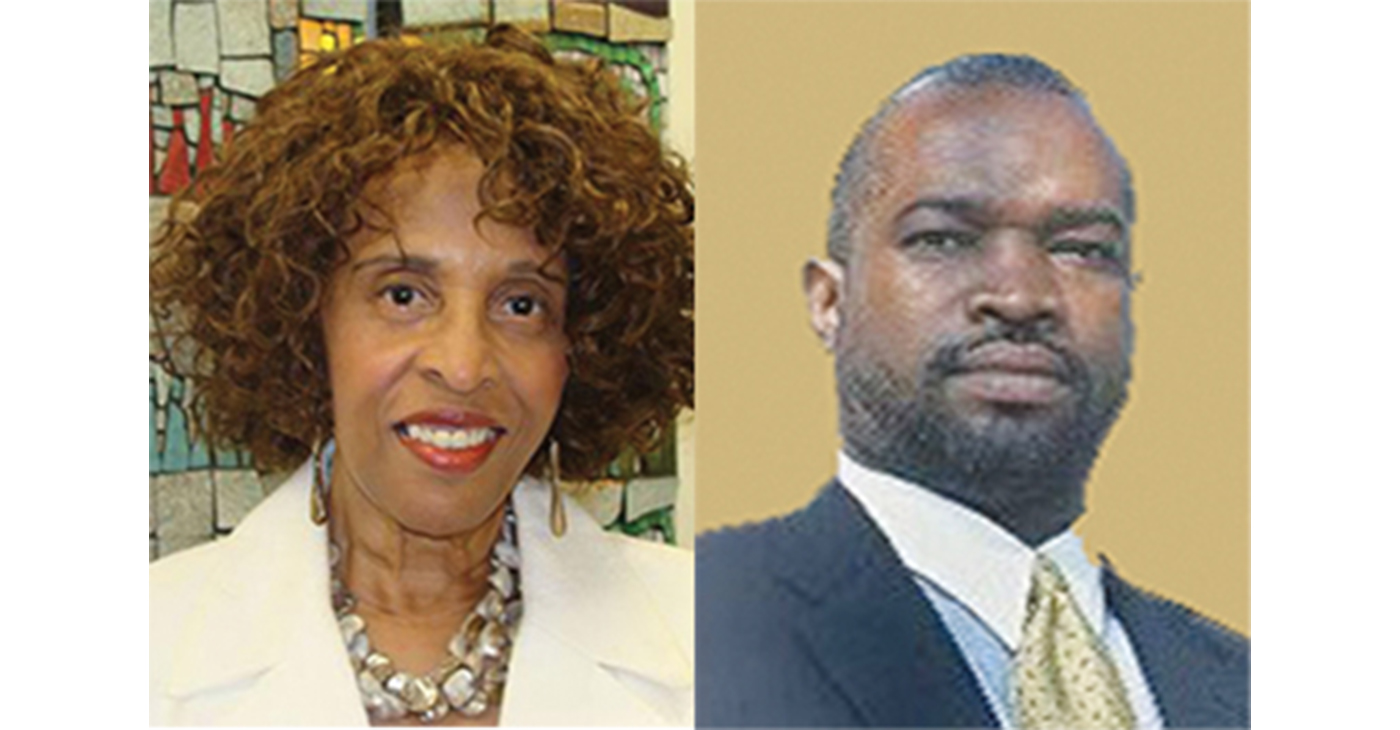
MMERI Director Peter Harris, JD. says, “when it comes to Florida’s diverse minority communities, this is a critical initiative. FAMU is unique in this space and our research will guide policy in Florida. We are fortunate that the Florida Legislature understands the vital role FAMU can play.”
MMERI Research Chair and Dean of the School of Allied Health Sciences, Cynthia Hughes-Harris, Ph.D. says, “As the use of both prescribed and illegal marijuana becomes more prevalent in our society, many questions have arisen as to how marijuana can and should be used. These questions are particularly important to marijuana use in minority communities. The primary approach to answering these questions is through formal research processes conducted by experienced researchers. FAMU is particularly qualified to address these issues due to the talents and skills of FAMU faculty, as researchers and as educators, combined with our understanding of the target communities throughout the state of Florida.”
This first round of research funding will enable FAMU to build a repository of information for medical marijuana education and research. Among the objectives of the repository are to establish the University as a touchstone center for marijuana information, fill in the gaps in medical marijuana research particularly as it relates to diverse communities and to inform public policy, in Florida and beyond, about the impact and issues presented by the developing marijuana industry.
Faculty members from such disciplines as agriculture, allied health, architecture, law, pharmacy, business, and social sciences will conduct funded research. The grantees were selected by an impartial panel of experienced FAMU researchers and content experts who rated each application on objective criteria appropriate to the goals of the grant. Each grant award is $7,000. The research projects are expected to be completed by June 30, 2020.
The research focus and the awardees are:
- Knowledge and Perception of Pediatric Cancer Patients and Caregivers on Medical Marijuana, Aksal Ali, Ph.D., Assistant Professor, College of Pharmacy.
- Assessing Disparate Impacts: The Legalization of Medical Marijuana in Florida and the Legal Implications for Florida’s African American Communities, Jeffrey Brown, J.D., Associate Professor, College of Law.
- Marijuana, Mental Health, and FAMU, DeAnna Burney, Ph.D., Associate Professor, Department of Psychology and Huijin Li, Ph.D., Associate Professor and Assistant Director, Center for Ethnic Psychological Research and Application, Department of Psychology.
- Medical Marijuana Dispensary Locations and Neighborhood Crime, Andrew Chin, Interim Dean, School of Architecture and Engineering Technology.
- Exploring Black Entrepreneurs’ Access to Opportunities in the Medical Marijuana Industry, Jennifer Collins, Ph.D., Assistant Dean and Associate Professor, School of Business and Industry and LaTanya White, MBA, Instructor, School of Business and Industry.
- The Effects of Medical Marijuana Use by Multiple Sclerosis Patients on Select Measures of Muscular Strength and Endurance, Dr. Brian Hickey, Ph.D., Assistant Professor, Department of Health and Physical Education.
- Assessing the Knowledge and Perceptions of Community Members Specific to the Compassionate Use of Marijuana, Marisa Lewis, Pharm.D., MPH, Associate Professor, School of Allied Health Sciences and Lon’Tejuana Cooper, Ph.D., Assistant Professor, School of Allied Health Sciences.
- Mixed Methods Study of Medical Marijuana Use Among Minority Patients, John Luque, Ph.D., MPH, Associate Professor, College of Pharmacy and Pharmaceutical Sciences and Arinzechukwu Okere, PharmD, MS, MBA, BPCS, Associate Professor, College of Pharmacy and Pharmaceutical Sciences.
- Assessing African Americans Preference and Willingness to Pay Values for Medical Marijuana as a Treatment for Cancer…a Minority Perspective, Carmen Lyttle-Nguessa, Ph.D., College of Agriculture and Food Sciences, Gilbert Queely, Ph.D., Research Associate, College of Agriculture and Food Sciences and Cassel Gardner, Ph.D., Professor, College of Agriculture and Food Sciences.
- Increasing Minority Access to Medical Marijuana (MM): Simplifying the Process Through Research, Outreach, and Education, Gilbert Queely, Ph.D., Research Associate, College of Agriculture and Food Sciences
- An Investigation on Marijuana Consumption in the Construction Industry in Florida, Behnam Shadravan, Ph.D., Assistant Professor, School of Architecture and Engineering Technology
- To What Extent Do Mental Health and Psychosocial Factors Predict Risk for Misuse and Neuropsychological Impairment in African American Marijuana Users, Gwendolyn Singleton, Ph.D., Associate Professor and Chair, Department of Psychology.
- Marijuana Wellness Intervention for Community, Coping, Substance-Awareness, Self-Efficacy, and Self-Regulation Enhancement via Education, Novell Tani, Ph.D., Assistant Professor, Department of Psychology and Arie Christon, Department of Psychology.
- Investigating Levels of Awareness of Medical Marijuana and the Correlation to Post Traumatic Stress Symptoms Within the Criminal Justice System, Gari Tookes, Ph.D., Assistant Professor, Department of Social Work.
This article originally appeared in The Westside Gazette.









Art
Kickstarter CEO Everette Taylor Shares Tips on Creating and Growing a Business
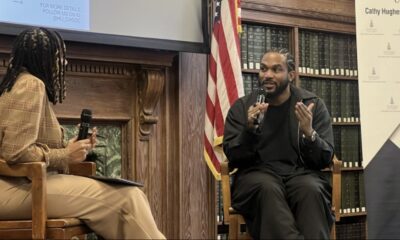
HOWARD UNIVERSITY NEWS SERVICE — Everette Taylor, the CEO of the global crowdfunding platform Kickstarter, recently visited Howard University to serve as the inaugural guest for the Cathy Hughes School of Communications’ new speaker series. Addressing students at the Founders Library, Taylor emphasized that the future of business belongs to those who are bold enough to take risks.
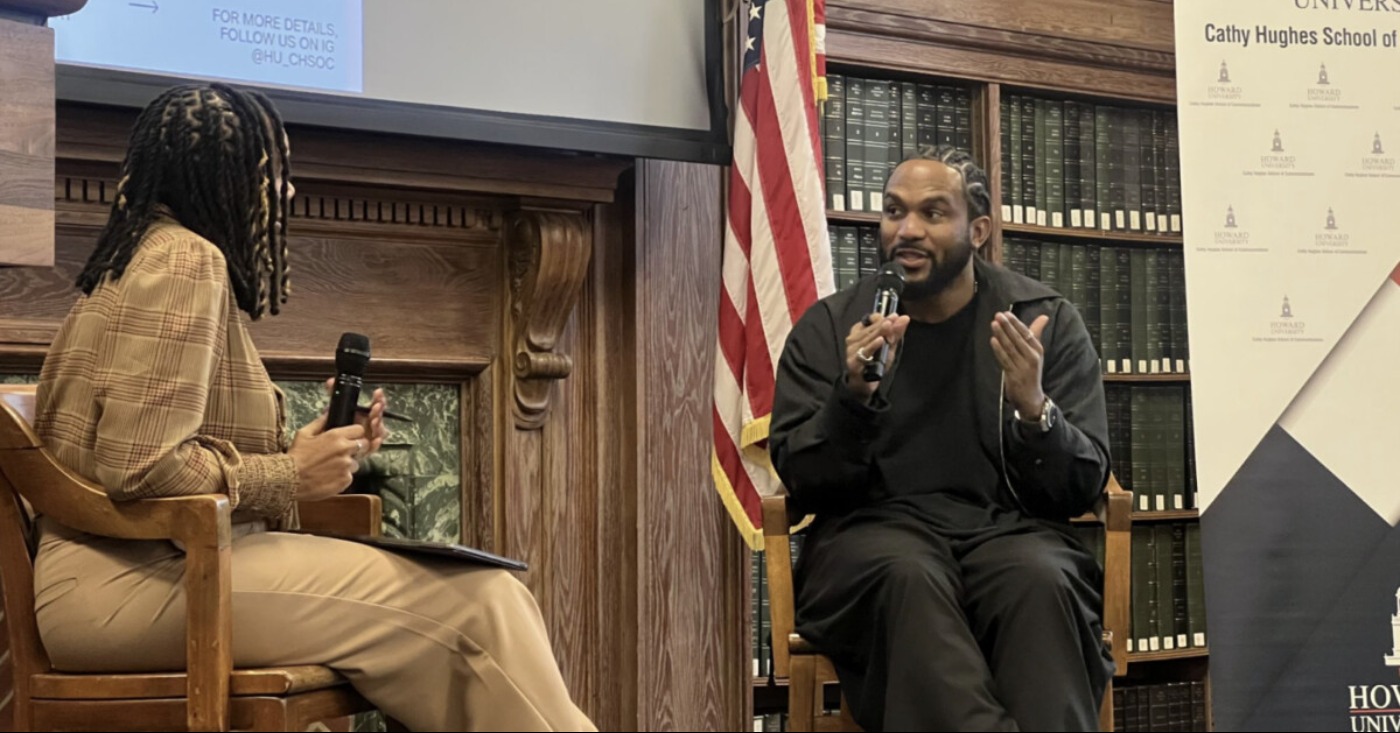
WASHINGTON (HUNS) — “The future belongs to creators who are bold,” Everette Taylor, CEO of crowdfunding platform Kickstarter, told students at Howard University during a recent visit.
As Taylor discussed his journey, he tested the boldness of students by inviting them to share their ideas during an impromptu pitch session at the Cathy Hughes School of Communications’ new speaker series in the Browsing Room of Founders Library. The inaugural speaker then shocked one group of students by pledging to invest in their thesis film, paying forward the opportunities that have lifted him as he struggled to pursue his dreams.
Taylor grew up in a low-income neighborhood in Richmond, Virginia, where he frequently encountered gang violence and drug dealing amid periods of homelessness.
Not feeling as if he conformed to conventional ideas of success, he eventually found inspiration in Jay-Z who balanced being an artist and an entrepreneur. Similarly, Taylor carved his own route, launching and growing various businesses.
He gained enough recognition to land on the 2018 Forbes’ 30 Under 30 list in marketing and advertising. In 2022, Forbes also named him as one of the top 50 most entrepreneurial CMOs when he was chief marketing officer of Artsy, an online art gallery and marketplace. That same year he took over Kickstarter, and the company reported a year-over-year revenue increase of 50% in the first quarter of 2026.
Taylor encouraged the audience through his story, but he also gave practical advice to help students who share his zeal to create and grow their business.
He explained that his mentor, Artsy CEO Mike Steib, helped him make the transition from being a CMO to becoming CEO at Kickstarter.
“These opportunities I don’t take for granted,” Taylor said, adding that Steib was “the first leader I had to take me under his wing.”
When he began his position at Kickstarter, Taylor said, “I had zero imposter syndrome, because I felt like I was ready for it, and it was because this person invested in me over the past few years.”
“A lot of my journey was me just hustling and being bold enough to ask for what I want, but I also need people to give me an opportunity.”
This idea of giving people opportunity impacts his business philosophy, as Taylor estimates that the number of African American employees grew exponentially since he’s been in leadership.
“Kickstarter was I think less than 2% Black, and at our peak I had gotten it to 20-something percent Black,” Taylor said.
Even then, Taylor also saw a need for representing other perspectives. “We still serve people globally, so we need people from different countries and cultures,” he said. “If you’re building a global company, it’s important to build a diverse base of people.”
“I always want to impact more lives, and that always leads to more results.”
Everette Taylor, CEO of Kickstarter
With the success Taylor had after becoming CEO of Kickstarter, he also found a need to prioritize his health.
“This is the first year that I’ve started the year with zero business goals,” he said. “For the first time, my goals have been centered around my health.”
He cites the illness of a friend who appeared to be healthy. Seeing his friend, who is also a successful entrepreneur, endure illness pushed him to prioritize his health.
“Business, I can do that in my sleep, but for me right now I’m so much more focused on setting goals for myself, and I know that’s going to impact the work that I do by feeling healthier and being a better version of myself.”
Samantha Housen, a sophomore public relations major and interior design minor from Harlem, attended the event to gain knowledge to grow her non-profit and for-profit businesses.
“I’m here because I want to explore more of the details of entrepreneurship from an actual professional,” Housen said, and to “see how his mindset could help me in my entrepreneurship.”
“My biggest takeaway is that I’m bold, and it’s OK to be bold,” she said. “I very much have the authority to do whatever I seek to do.”
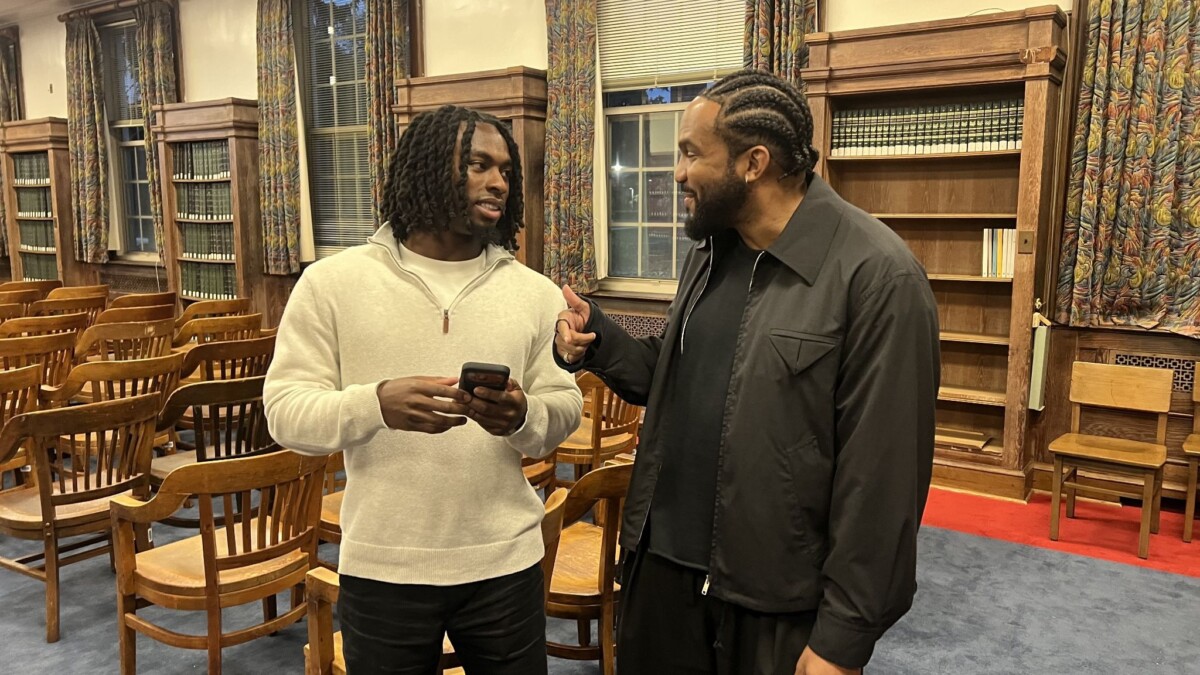
Kimberly Moffitt, Ph.D., dean of the Cathy Hughes School of Communications and host of the event, said she was excited about the speaker series.
“It’s because of students,” Moffitt said. “They felt like they weren’t hearing enough from people who are already post-graduation and successful. They wanted to hear those voices. So, this is an opportunity for me to bring folks to campus so they could reach out, talk and interact with folks that they aspire to be like or will be inspired by.”
Moffitt was excited for students to see someone who looked like them and carried themselves authentically in a position of high acclaim.
“He is showing you a different path, and letting you know that it’s OK to be who you are and show up in that space and not have to apologize,” Moffitt said of Taylor.
Moffitt also wants to encourage students to make the most of the speaker series. She gives details on upcoming speakers and the importance of hearing these people tell their stories.
“Those of you who want to be in TV and film, those jobs are different now,” she said. “You have to hustle in a different way.”
“I need our students to think about entrepreneurship in all that they do,” Moffitt added. “I want students to leave with that so that they have it in their back pocket should they need to draw on it.”
After the event. Taylor explained why boldness is essential to his success at Kickstarter.
“It’s for the grind and the ambition — not settling for status quo and mediocrity, and really going for it,” he said. “I always want to impact more lives, and that always leads to more results.”
Solomon Goins is a reporter for HUNewsService.com.
Based on reporting by Howard University News Service.
Black Press
OP-ED: If the ‘Cornell 7’ Were Black Men at an HBCU — America Wouldn’t Be This Sympathetic
ATLANTA DAILY WORLD — This article examines how the national conversation surrounding serious allegations against fraternity members might change if the incidents occurred at an HBCU involving Black men, rather than an Ivy League institution. It references recent high-profile cases at Cornell, Penn State, Baylor, and Stanford, prompting a re-evaluation of media scrutiny and public sympathy.
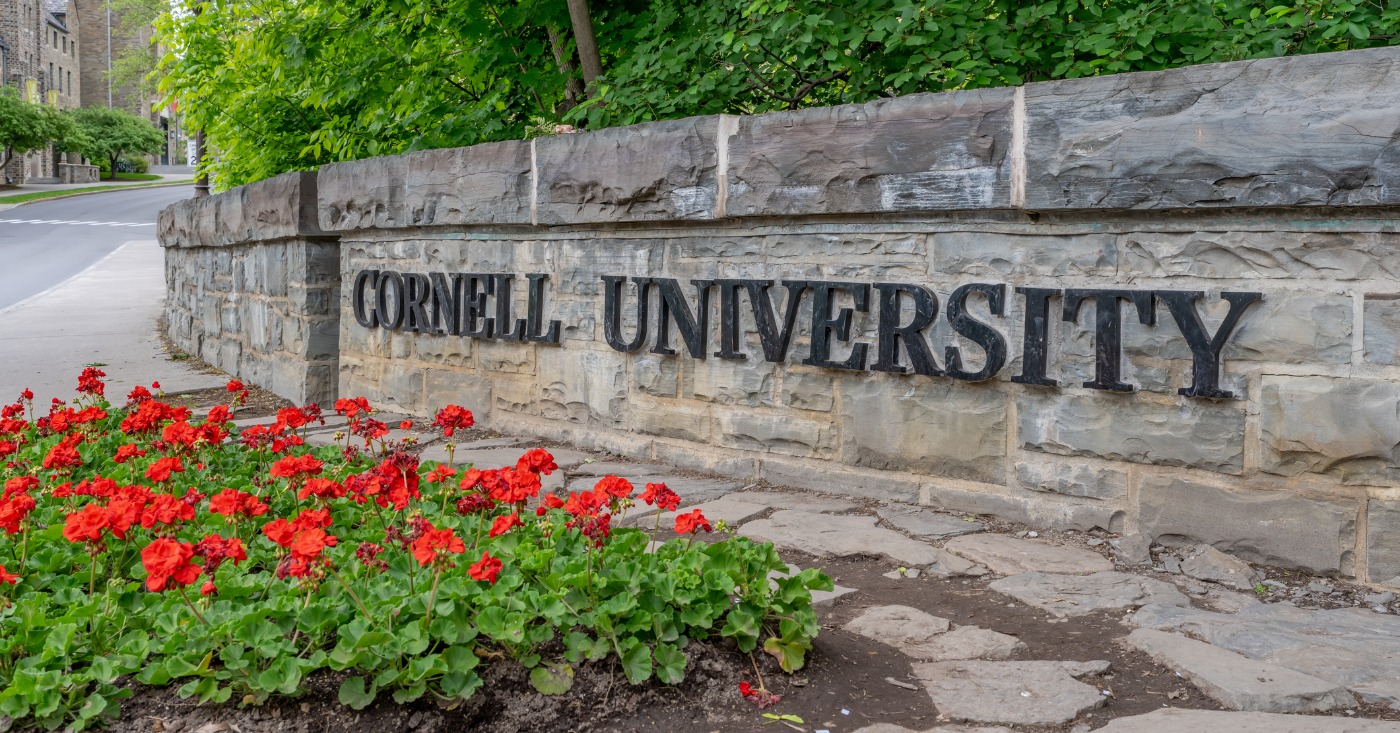
Instead of it taking place at an Ivy League school in Ithaca, New York, what would it look like if a national story concerning rape allegations from fraternity members took place on an HBCU campus in Atlanta, Washington, D.C., or Nashville?
Would President Donald Trump still feel “badly” for the alleged?
Do you think the Kappas, Sigmas, and Alphas would face the same scrutiny?
Might people use more compassionate language when discussing the case’s legalities?
We already know the answers to those questions.
Sunny Hostin from “The View” recounted a call she received from actress Cynthia Erivo, who said, ‘Sis, I know you, and I know your heart and your life’s work has been about protecting women and children. But the clip that I saw doesn’t reflect who you are.” Hostin’s initial remarks about the case focused on its legal aspects, lacking compassion for the alleged victims and other survivors who might have been affected. Hostin reflected, “Instead of leading with the law, I need to lead with empathy so that people can receive the message about the law. I was accused of defending these young men and victim-shaming, which is something I would never do since I spent the majority of my career prosecuting sex crimes.”
If you’re reading this, then you are already aware of the allegations against the “Cornell 7.” The news comes just weeks after 14 people were charged in connection with the alleged trafficking of kilos of cocaine on Penn State’s campus by members of white fraternities. A decade ago, the rape scandal at Baylor University dominated the news, which was around the same time as the Brock Turner case at Stanford.
I ask again: how would the news coverage, social media chatter, and podcast conversations differ if such incidents happened on HBCU campuses and included members of Black Greek-letter organizations?
Based on reporting by Atlanta Daily World.
Black Press
NCCU Ramping up for the 89th Ultimate Homecoming Experience
NORTH CAROLINA CENTRAL UNIVERSITY – CAMPUS ECHO — N.C. Central University is preparing for its 89th Ultimate Homecoming Experience, a week-long celebration. Thousands of students, family, friends, and alumni are expected to gather on campus for festivities including the Homecoming Countdown, parade, Miss and Mister NCCU Coronation, concerts, and the football game.

This Saturday N.C. Central University will kick off its 89th Ultimate Homecoming Experience — a week-long celebration bringing thousands of students, family, friends and alumni to campus.
This year’s festivities include the Homecoming Countdown, parade, Miss and Mister NCCU Coronation, concerts and the football game.
The number of visitors to the football game on Saturday, Oct. 10 is expected to reach at least 10,000 — O’Kelly Riddick Stadium’s capacity, with NCCU’s recent enrollment increase of more than 10,000 students.
The Eagles will face William & Mary after playing against the Campbell University’s Fighting Camels on Oct 3.
Students are already expressing excitement for the upcoming festivities.
“I’m excited for homecoming because I can meet alumni and go outside and party with my fellow eagles,” Digital Filmmaking junior Rhese Gardner said. “I’m also really looking forward to the Greek Bowl because there’s a lot going on.”
He added that even though he’s disappointed this semester’s Oil Spill was canceled, he’s still excited for the other events like the parade and concerts.
Here is a list of the week’s on-campus events:
- Oct. 3 – Homecoming Countdown
- Oct. 4 – Gospel Concert
- Oct. 5 – Coronation of Miss and Mister NCCU
- Oct. 6 – 10:40 Break
- Oct. 6 – Homecoming Experience Showcase
- Oct. 7 – Fried Chicken Wednesday
- Oct. 7 – Festival Block Party
- Oct. 7 – Late Night Breakfast
- Oct. 8 – Back to the Nest Young Alumni Mixer
- Oct. 8 – Old School Greek Stroll Off
- Oct. 8 – Hip-Hop Concert
- Oct. 9 – Step Show
- Oct. 10 – Football Game
The post NCCU ramping up for the 89th Ultimate Homecoming Experience first appeared on Campus Echo Online.
Based on reporting by North Carolina Central University – Campus Echo.
Black History
Morehouse School of Medicine Fall Convocation Has Strong Ties to Nashville
TENNESSEE TRIBUNE — Morehouse School of Medicine recently held its 42nd Fall Convocation and White Coat and Pinning Ceremony, which highlighted strong connections to Nashville. Dr. Valerie Montgomery Rice, in her 12th year as president and CEO, leads the institution, which welcomed 355 new students.
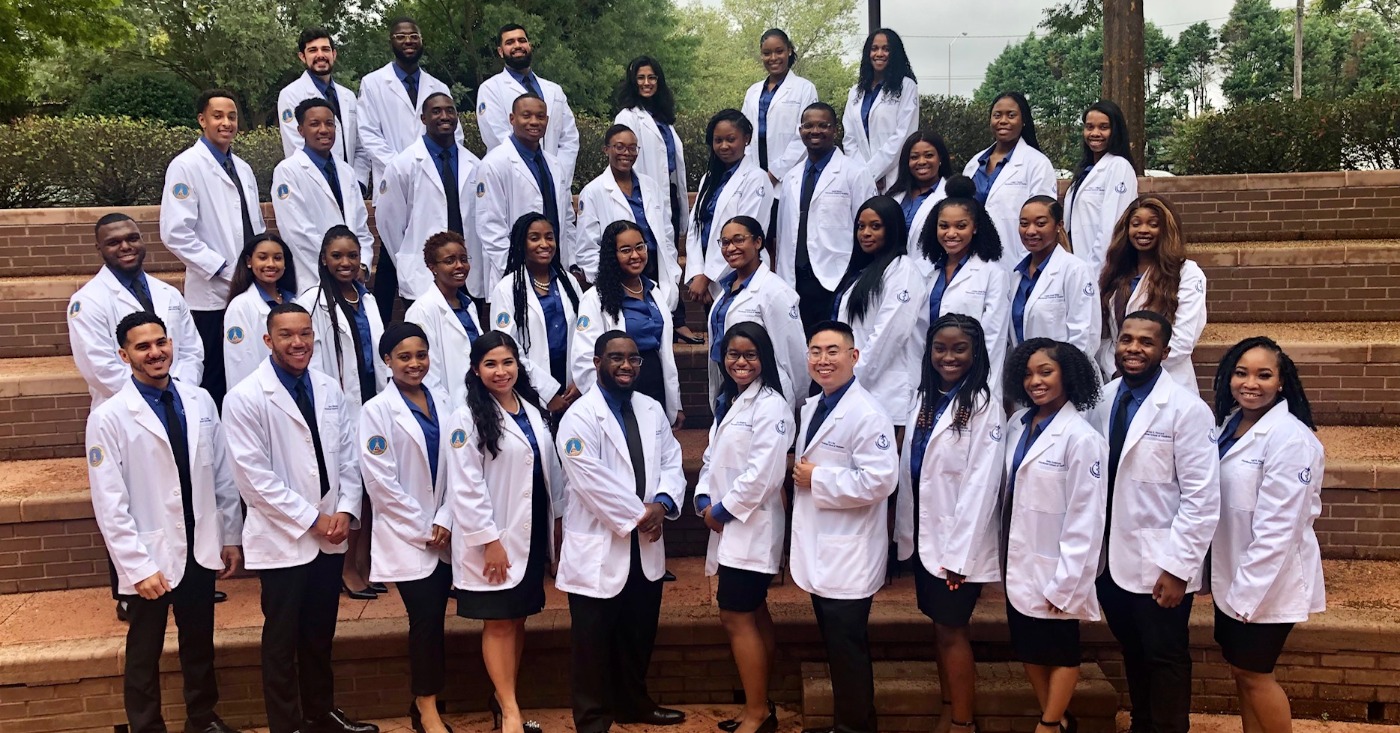
Morehouse School of Medicine held its 42nd Fall Convocation and White Coat and Pinning Ceremony on September 18, and it featured strong ties to Nashville. Dr. Valerie Montgomery Rice is completing her 12th year as president and CEO of Morehouse School of Medicine (MSM). The school boasts 355 students seeking degrees and certificates in the medical field.
“This entering class represents the future of medicine, science, public health and health care leadership,” said Valerie Montgomery Rice, MD, and FACOG. “As these students begin their journeys at Morehouse School of Medicine, they join a community grounded in excellence, service and our shared commitment to advancing health equity. We look forward to supporting their development as leaders who will transform the health and well-being of the communities they serve.”
Infectious diseases physician and scientist Dr. Barney S. Graham, MD, and PhD, served as the keynote speaker. He serves as the director of the David Satcher Global Health Equity Institute, professor of Medicine and Microbiology, Biochemistry and Immunology at Morehouse School of Medicine. He is an inventor of vaccines and monoclonal antibodies approved for human use to prevent or treat RSV, COVID-19 and Ebola. He joined MSM in 2022. He served in various positions at Vanderbilt University for 21 years.
Dr. Graham told the audience to “Embrace the Unseen” and focused on three points: Do the Best You can with what’s in front of you, Do what makes you come alive and Do the right thing even when no one is looking. He added, “Anything you do to improve mental and physical wellness and promote disease prevention will reduce health disparity by reducing the resources needed for treatment.”
His remarks commanded a roaring applause from the audience, which included his wife, Dr. Cynthia Turner Graham, and the former First Lady of Tennessee State University, Mrs. Edwina Hefner, a close friend to the family.
Based on reporting by Tennessee Tribune.
Black Press
Jaguars Do Better: Top of Ladder or Resting at the Bottom
SOUTHERN UNIVERSITY – SOUTHERNDIGEST — Southern University received a No. 48 ranking in the U.S. News annual HBCU rankings for 2027, tying with Bethune-Cookman University, Philander Smith College, Savannah State University, Stillman College, and West Virginia State University.

On September 22, U.S. News released its annual HBCU rankings for 2027. Southern University was ranked No. 48, tying with Bethune-Cookman University, Philander Smith College, Savannah State University, Stillman College, and West Virginia State University. When I first saw the ranking, I had mixed feelings about where Southern was ranked. Did I feel like Southern needed to be ranked No. 48? Yes and no. On one hand, I understand how the university received that ranking based on the factors U.S. News uses for their rankings. On the other hand, when I look at some of the other schools that ranked higher than Southern, in my humble opinion, we should have been ranked higher.
To understand why Southern was ranked No. 48, it is important to look at the factors U.S. News uses for their rankings. The rankings consider graduation rates, freshman retention rates, financial resources, faculty information, peer assessments, and student outcomes after graduation. I understand why these factors matter because they can indicate how well a university supports its students, prepares them for life after college, and how students can benefit from attending that institution.
One of the biggest factors affecting our ranking is our graduation rate. The graduation rate measures how many first-time, full-time, degree-seeking students complete their degree within four years. Based on my research, the newest official data available from Southern lists the four-year graduation rate at about 10%. Even though that number is concerning, I believe that number needs more context. Some of Southern’s major programs, including Engineering, can take students five years to complete because of their demanding requirements and how their degree flowcharts are set up. So, while the four-year graduation rate is something Southern needs to improve, I don’t think it tells the whole story of how long it takes every Southern student to graduate.
Another issue is admissions. Southern University talks frequently about the “Southern Standard,” but I think there needs to be more consistency between the standard we expect and the students we admit. Southern should continue providing the opportunities it already provides, but I also believe the university should try to recruit more students who have already shown that they can uphold a certain academic, personal, and professional standard. Additionally, students who are admitted should receive the support and resources they need to succeed.
Overall, I understand why Southern was ranked No. 48, but in my opinion, we could and should be higher. The ranking shows areas where Southern needs to improve, but it should not define the university as a whole. Instead, it should encourage Southern to look at admissions, student support, graduation rates, career opportunities, and whether every major receives the attention it deserves. Southern is more than just a number, but if we want that number to change, we have to be willing to look honestly at what is behind it, including making sure that strong programs like Nursing and Engineering continue to provide opportunities while majors such as Agriculture, Criminal Justice, Education, and Social Sciences receive the same attention and opportunities for their students. At the end of the day, the goal should not only be to move up in the rankings, but to ensure every student at Southern has the support, accessibility to opportunities, and resources they need to succeed, not only while attending Southern, but in their future post graduation careers.
Based on reporting by Southern University – SouthernDIGEST.
Black Press
Students from Stonecrest Help Families Grow Food
THE CHAMPION NEWSPAPER — Two Georgia college students from Stonecrest are utilizing agriculture, technology, and community education to help families across Georgia grow their own food, even without traditional farming spaces. Mason Wright, a Morris Brown College student and founder of Plant It Georgia Vertical Institute, and Kosey Henley, a University of Georgia student, developed a mobile agricultural laboratory.
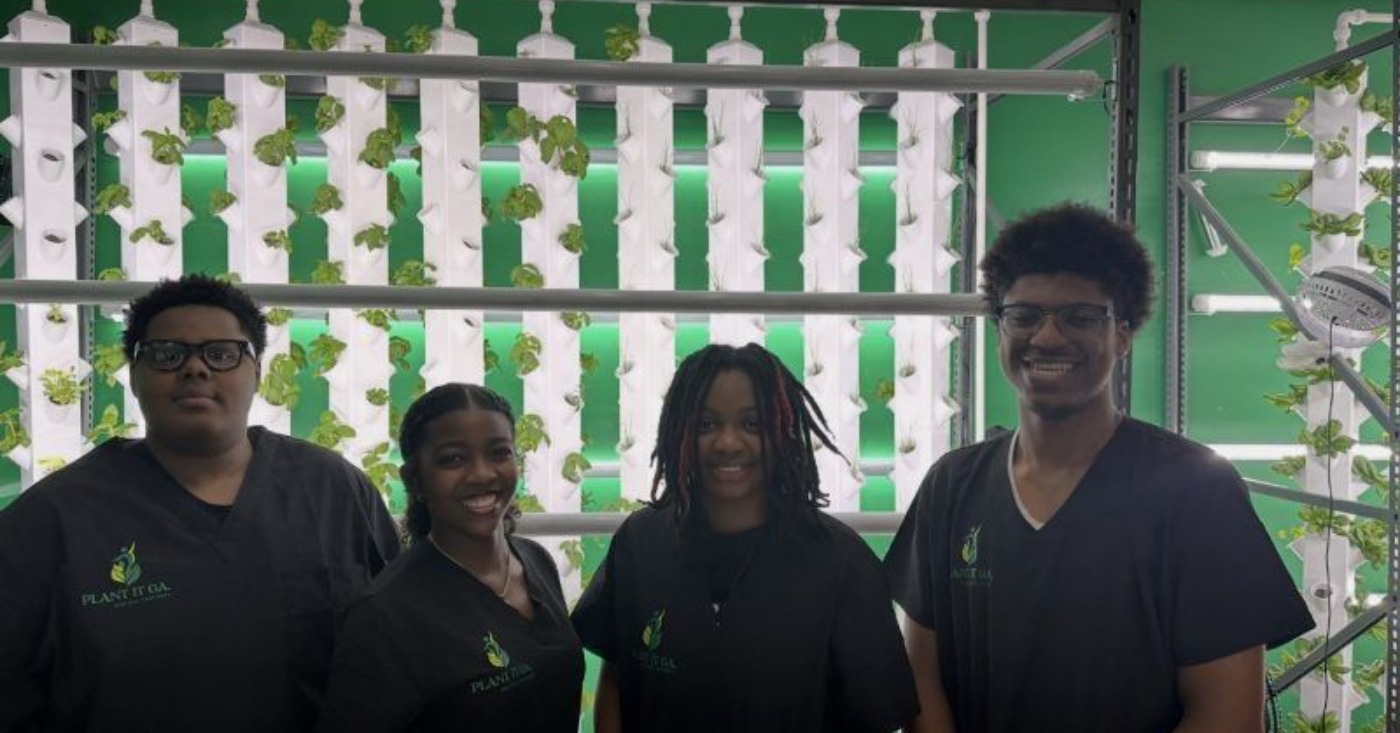
Two Georgia college students from Stonecrest are combining agriculture, technology, and community education to help families throughout Georgia grow their own food — even those without access to traditional growing spaces and equipment.
The two students recently completed the first prototype of Plant It Georgia’s mobile agricultural laboratory, which they said is an enclosed trailer equipped to introduce young people and families to growing food without relying on traditional farmland.
Mason Wright—a youth entrepreneur and a student at Morris Brown College—is the founder of Plant It Georgia Vertical Institute. The institute is an “educational initiative created to train young people in vertical farming, hydroponics, and other modern agricultural technologies,” according to Wright. Kosey Henley, a student at the University of Georgia, worked alongside Wright on the mobile lab.

The students said the idea came in response to an obstacle challenging many communities: transportation. Instead of requiring students to travel to the Plant It Georgia Vertical Institute, the program can take its lessons and growing systems directly into neighborhoods, schools, recreation centers, and other community spaces to teach students and their families about growing food in urban communities.
Inside the prototype, visitors will find hydroponic growing channels, lighting, and other equipment that show them how plants can grow in controlled environments. The laboratory aims to support hands-on lessons covering seed germination, water circulation, plant nutrition, lighting, harvesting, and the technology used to manage indoor crops, according to Wright.
The project comes as Georgia and the nation face an aging agricultural workforce.
According to the U.S. Department of Agriculture’s 2022 Census of Agriculture, Georgia had 63,492 agricultural producers, but only 4,770 were younger than 35. Nationally, the USDA counted 296,480 producers younger than 35, approximately 9 percent of all U.S. producers.
At the Plant It Georgia Vertical Institute, students are taught that farming does not always require acres of open land or heavy machinery. Vertical farming allows crops to grow upward in stacked systems while hydroponics uses nutrient-rich water instead of soil to feed the plants. These tactics make food production possible in classrooms, buildings, trailers, and densely populated urban communities, according to Wright.
Plant It Georgia’s growing systems can cultivate lettuce, tomatoes, collard greens, peppers, and a variety of culinary herbs, according to the news release. Students are taught the entire growing process — from placing seeds into starter materials and monitoring water and nutrients to caring for mature plants and harvesting fresh produce.
The program also introduces participants to careers connected to agricultural technology, plant science, environmental sustainability, food systems, and entrepreneurship.
Wright’s role as a Morris Brown College student and founder represents the connection between HBCU leadership, entrepreneurship, and community service, according to a news release. Wright also made headlines for opening Mason’s Super Dogs in Stonecrest in 2020 — which he now also operates on the Atlanta Beltline’s Eastside Trail. Henley brings another important academic connection through the University of Georgia, one of the state’s leading institutions in agriculture and agricultural research, according to the news release.
For event locations and more information, follow Plant It Georgia on Instagram (@plantitGA).
13 total views
Based on reporting by The Champion Newspaper.


Can You See Clearly in Bright Sunlight? Check These 2 Reflections #shorts

Master Your State: 5 Keys to Well-being #shorts

Black Girl Walk with Damenica Ellis and Tracey Williams-Dillard: The Center for Performing Arts.

Vince Wright on Sports Done Wright | Blacklight on Sports

OP-ED: For Us It’s Feel-a-Nomics

Truck Power Liftgate & Bed Liner: Smart Features Explained #shorts

OP-ED: Is Creativity a Superpower in Early Education?

Congresswoman Omar Secures Crucial Earmark Funding #shorts
Informing, empowering and connecting our community

Would You Still Want a Manual After a Tiring Commute? #shorts

The Youngest American Killed in the Vietnam War

OP-ED: Haiti TPS: Have We Lost Sense of Humanity?

Remembering Chauncey Bailey as Student Journalists Face Threats to Truth-Telling

Peter Magubane: a Camera Against Apartheid

All Skinfolk Ain’t Kinfolk

Poll: Becerra Widens His Lead Over Hilton; Californians Split on Wealth Tax

Rulings Leave Questions Lingering in Nolan Wells Case

Latinas Deserve Equal Pay. Unions Help Make It Happen.

Zakiya Jendayi Arrested, Locked Out of Home by Sheriff’s Deputies

HBCU Leaders, Corporate Partners Convene in D.C. to Strengthen Support for Black Colleges’ Athletic Programs
Can You See Clearly in Bright Sunlight? Check These 2 Reflections #shorts
Master Your State: 5 Keys to Well-being #shorts
Black Girl Walk with Damenica Ellis and Tracey Williams-Dillard: The Center for Performing Arts.
Vince Wright on Sports Done Wright | Blacklight on Sports
Truck Power Liftgate & Bed Liner: Smart Features Explained #shorts
Congresswoman Omar Secures Crucial Earmark Funding #shorts
Would You Still Want a Manual After a Tiring Commute? #shorts

Green Book: Uncovering the Truth Behind the Myth #shorts

BLACK MEN VOTE: Mobilizing 100,000 Black Men Ahead of the Midterms 📱

Jack Yates vs Sterling
-
 Black Press1 week ago
All Skinfolk Ain’t Kinfolk
-

 Black Press1 week ago
Oakland Awarded More than $14 Million in State Funding
-

 Black Press1 week ago
Jendayi Arrest Raises Community Concerns Regarding Sheriff’s Chain of Command
-

 African American News and Issues1 week ago
Black History: Gladys West Mathematics Helped Make GPS Possible
-

 Black History4 days ago
OP-ED: The Black Church Writes AI’s Next Chapter
-
 Black Press1 week ago
Democrats, Community Groups Back Measure EE to Change How Oakland Is Governed
