
Black Press
Jendayi Arrest Raises Community Concerns Regarding Sheriff’s Chain of Command
Judge Sandra K. Bean ordered a legally inherited home to be taken from beneficiary Jendayi, citing “undue influence,” and gave it to Court Administrator Phillip Campbell, who Jendayi believes will quickly sell the house and pay himself more than $600,000 in court fees. The disinherited sisters will get the remainder of the proceeds of the sale.

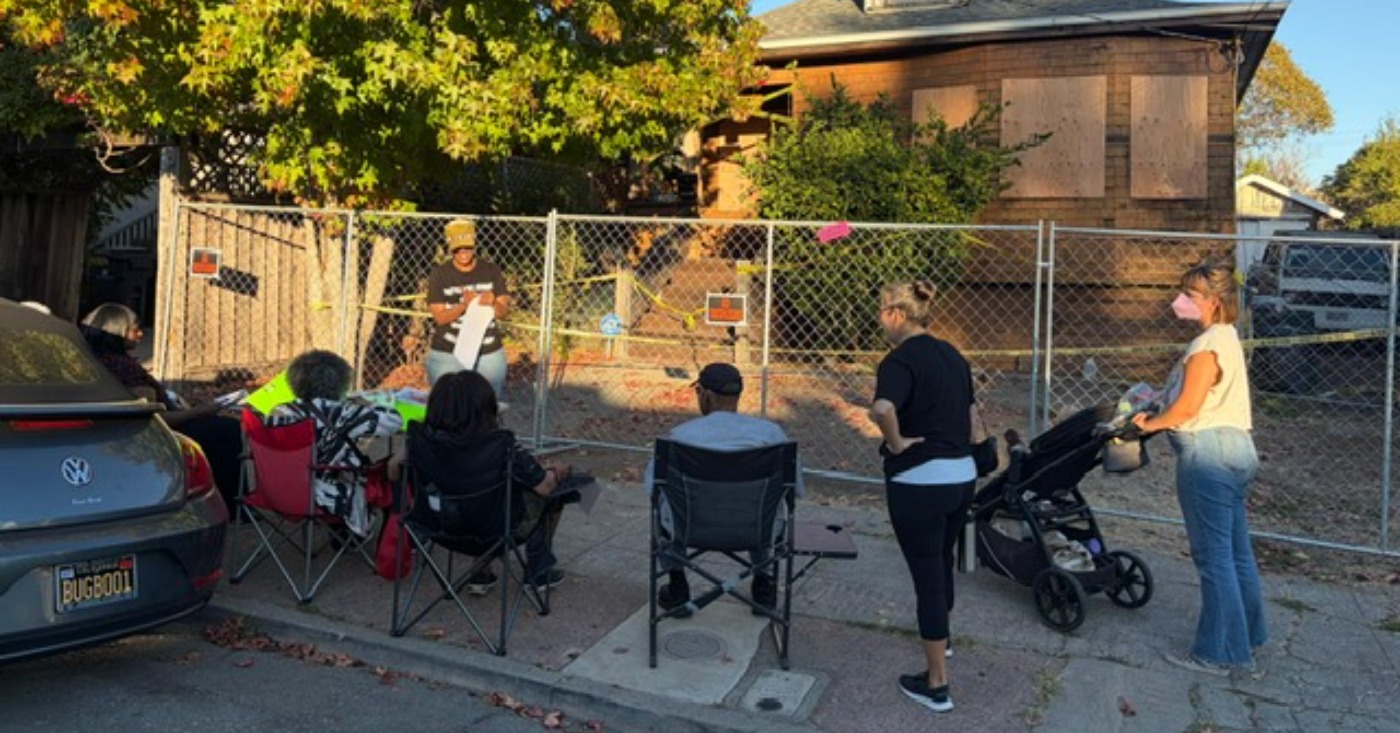
Last Thursday, Zakiya Jendayi parked on the side of the René C. Davidson Courthouse in Oakland to file an emergency stay request in what Jendayi asserts was the “legal” theft of her home of 13 years by a court administrator in her ongoing battle for her rightful inheritance in a probate battle.
But before she could fully emerge from the car at 12th and Oak streets, she was arrested by Alameda County Sheriffs for disobeying a court order and obstruction.
According to observers who have read the transcripts, the Hamlin v. Jendayi case, now in its sixth year, has resulted in what they describe as a gross miscarriage of justice.
Judge Sandra K. Bean ordered a legally inherited home to be taken from beneficiary Jendayi, citing “undue influence,” and gave it to Court Administrator Phillip Campbell, who Jendayi believes will quickly sell the house and pay himself more than $600,000 in court fees. The disinherited sisters will get the remainder of the proceeds of the sale.
Dr. Laura Dean Head named Jendayi as the beneficiary and executor over her estate after Jendayi took care of her during the last months of her life. Head’s disinherited sisters, Della Hamlin and Helaine Head, challenged the validity of Head’s will and trust, despite not being able to recognize Head in a photo during the trial, and Della stating she hadn’t spoken to her sister since 1997 or 1998 and would not have taken care of her during her hospice.
The appellate court upheld Bean’s ruling, which Jendayi asserts was based on a failure to fully consider the transcripts. “They never read the transcripts because if they had, they would have seen the truth,” Jendayi said.
Accompanied by Alameda Couty Sheriff’s Department deputies, Campbell arrived unannounced at Jendayi’s home on Oct. 1 – at the same time Jendayi was being arrested – to change the locks, board up the windows, and place a fence around the property.
Neither Jendayi, nor her supporters who had been in touch with Alameda County leadership and the Sheriff’s Department and been given the impression that nothing would happen without warning had been told Campbell was coming.
“I went to the courthouse to file an emergency stay document, and while getting out of the car, a sheriff immediately approached me and put handcuffs on me before I could stand up,” Jendayi said in recounting the events of Oct. 1. “I asked him if he had a warrant. He said ‘yes,’ and seven other officers immediately approached and surrounded me, with an additional three sheriffs standing back observing.
“I asked why it was necessary to have 10 officers to arrest me. They would not answer. I asked if the sergeant was there and asked if I could speak to him, but the sergeant refused to approach while another officer started taunting me over and over, stating, ‘I was at your house. I was at your house when you refused to surrender. We got you now.’
“The officer put the handcuffs on tight. I asked him to please loosen them. He refused and said they weren’t too tight. Then a Black, female deputy named Lewis, came over and asked him to loosen the handcuffs. Three times the white male officers were overly aggressive with me, and each time Deputy Lewis would step up and they would fall back. They said I was under arrest for refusing to surrender the house on Aug. 25.
“I asked them if I could file my paperwork, and they said, ‘No.’ Several officers asked me if I was on drugs. I felt like my life was in danger. I asked to speak to Deputy Lewis, and she came. I said, ‘Please tell my mother and Joyce Gordon that I would never kill myself.’ I did not want to end up like Sandra Bland, who was murdered by police officers in a Texas jail.”
Zendayi said they then took her to a section in the basement of the courthouse, placed her in a holding cell, and confiscated her belongings around 3 p.m. “They went through everything, took both cell phones, and asked if they could turn off my phones. I said ‘no,’ so they placed them in airplane mode.”
Then she was taken in a van to Santa Rita Jail in Dublin, which, because of traffic took almost two hours. “They asked me if I was on drugs and asked me to give a urine sample. I refused. They took a mug shot, and I was told it would be Monday before I could go to court. They put me in a cell with feces on the wall.
An hour after being detained, a deputy asked Jendayi if she knew someone who worked for the county and then asked if knew someone from the Sheriff’s Office and answered ‘no’ to both questions. He said, “You must know someone because we received orders to release you immediately. You’ll be out of here in about 40 minutes.”
“Rev. Raymond Langford of the Oakland Private Industry Council has been helping me to negotiate for more time to stay in my home,” Jendayi said. “I have an appeal with the Northern District Court of Appeals, where I’ve been promised they will review my case based on its merits. I was hoping to stay (in my home) until they reached a determination.
Rev. Langford reached out to Alameda County Supervisor Nikki Fortunata Bas and Chief Administrator David Brown, and they’ve been in contact with Sheriff Yesenia Sanchez.
“They weren’t going to give me the time I requested, but they did say that I would have time to move my belongings and would also be notified when they were coming,” Jendayi said. “None of that occurred.”
Langford said he spoke to Brown, Fortunato Bas and Sanchez right after the first attempt to evict Jendayi on Aug. 25 as well as the Alameda County Counsel and others to negotiate a time for Jendayi to move her belongings.
“There is no truth to the statement that there was no contact [with court and law enforcement officials.] There was an obvious miscommunication between Sanchez and her officers. They don’t have to inform the public of their actions, I understand that, but Zakiya and the community were concerned after they confiscated her guns.”
(Jendayi relinquished her weapons on Aug. 25 when sheriff’s deputies came to forcibly evict her while her petition for bankruptcy was still pending and should have interrupted the eviction process.)
“The Sheriffs have their own trust issues, and they need to work on that. They are not following the chain of command. David Brown, Fortunato Bas’s chief of staff, was puzzled also. He was told they would be informed when they would be returning. He was also blindsided like all of us.”
“(The Sheriffs’ Department) can come to the supervisors and get millions of dollars, but they can’t exhibit the courtesy to inform a citizen when she needs to move.”
“We, our group, ‘Friends of Zakiya,’ took a letter to Sanchez’s office citing Zakiya’s health issues, asking for more time just last week. Sanchez was a person who ran on the platform that she would not run the Sheriff’s Department on a military strategy, which they did on an African American senior in a comfortable, safe community.
“We understand they have to do their job, but we don’t want them targeting and profiling seniors. There has to be some accountability to the community,” Lankford said.
Supervisor Nikki Bas, deeply concerned with what has occurred, is joining with Supervisor Nate Miley to request a meeting with Attorney General Rob Bonta to request an independent investigation.






Black Press
Former Trustee Alena Maunder Seeks Reelection to Sausalito Marin City School District Board
Alena Maunder, a third-generation Marin City resident and registered nurse with over 20 years of healthcare experience, is seeking reelection to the Sausalito Marin City School District Board. Having previously served as a trustee from 2020 to 2024, Maunder highlights her background in governance, fiscal oversight, and community advocacy as key qualifications for the role. Her platform focuses on academic excellence, mental health supports, and special education. She remains committed to fostering stronger relationships between families and educators to ensure student success. Read more about her campaign priorities.
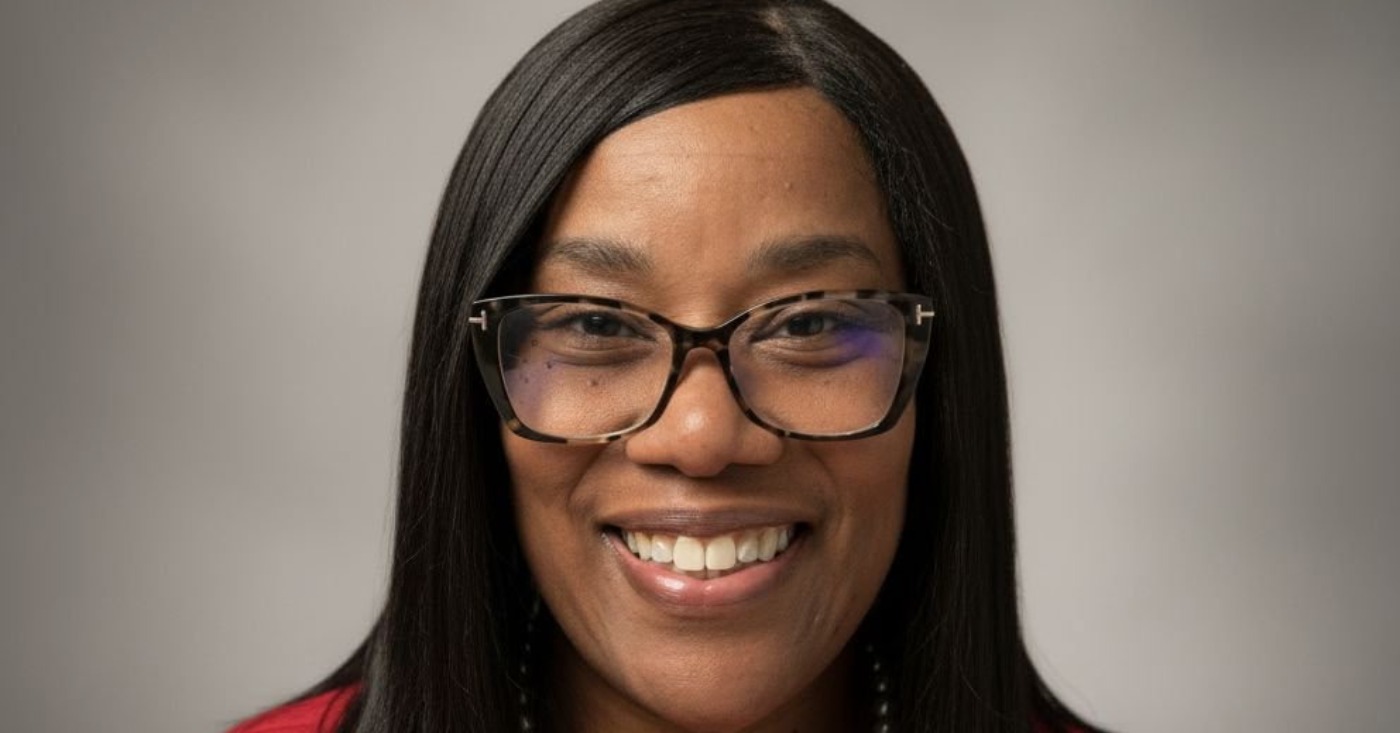
Alena Maunder is a third-generation Marin City resident, parent, community advocate, and former Sausalito Marin City School District Trustee who served from 2020 to 2024.
Professionally, Alena is a registered nurse with more than 20 years of healthcare experience and nine years in leadership. She holds degrees in Psychology and Nursing, as well as a Master of Science in Nursing.
With school board experience, she brings a strong understanding of governance, fiscal oversight, accountability, and the importance of stable district leadership.
Alena has also remained actively involved in Marin City through community service, youth programs, and initiatives focused on strengthening opportunities and resources for children and families.
Maunder is seeking to return to the Board to continue advocating for academic excellence, fiscal responsibility, strong special education and mental-health supports, and meaningful community engagement. She is committed to strengthening relationships among students, educators, families, and the Marin City and Sausalito communities while ensuring every student has the opportunity to succeed.
Her campaign reflects her commitment to “Experienced Leadership. Students First.”
Learn more at www.electalenasmcsd.com.
Black Press
Becerra Urges Black Leaders to Turn Out the Vote in Record Numbers
Former U.S. Secretary of Health Xavier Becerra recently visited Oakland to meet with prominent Black leaders just one week before the upcoming November election. Joined by Oakland Mayor Barbara Lee and Sacramento Observer Publisher Larry Lee, Becerra emphasized the importance of high voter turnout at Oakstop, a local Black-owned business. The meeting focused on community protection and collective efforts to support California’s diverse populations as the campaign for the governorship enters its final days. Visit our website to read more.
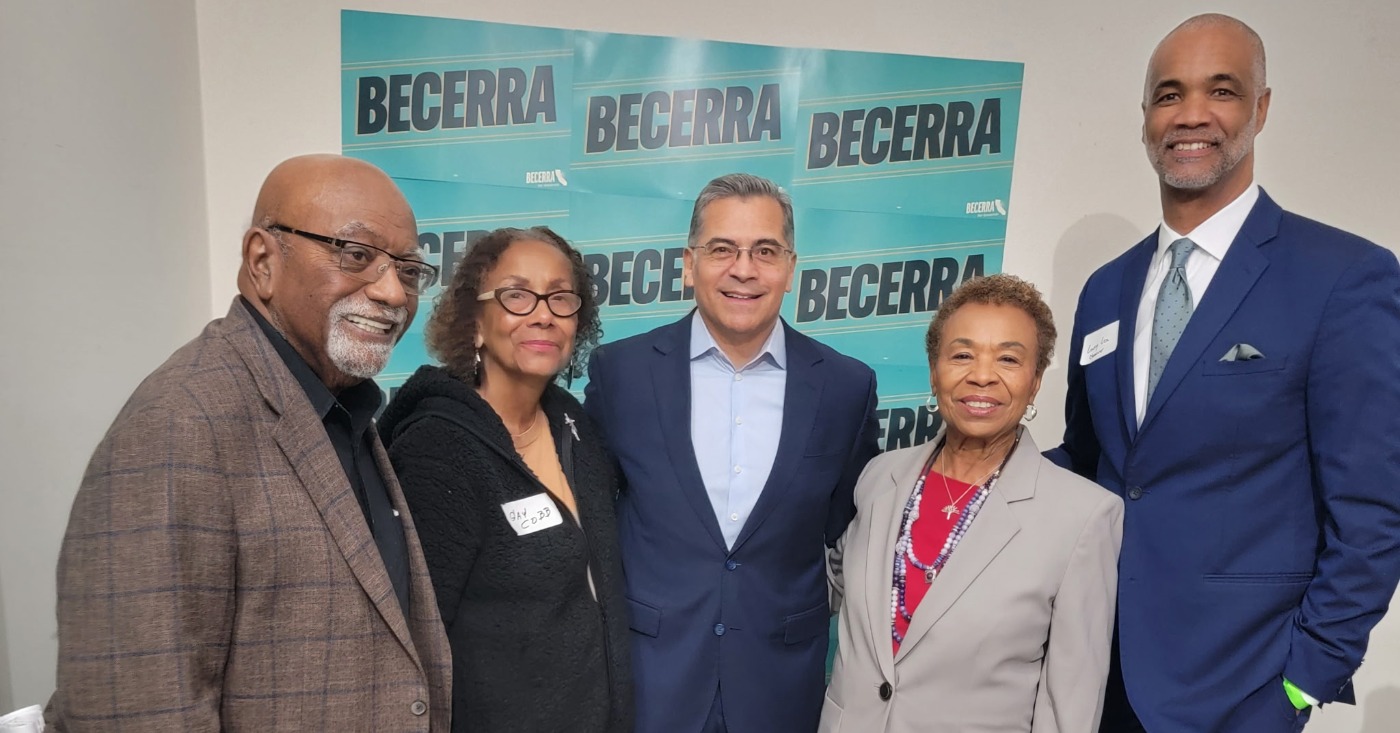
Becerra Urges Black Leaders to Turn Out the Vote in Record Numbers
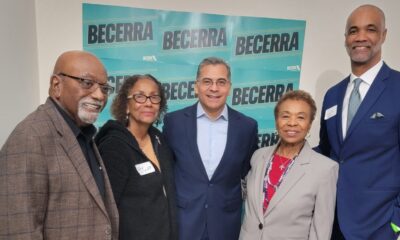
A week before the Nov. 3 election where he hopes to succeed Gov. Gavin Newsom as the next democratic governor, former U.S. Secretary of Health Xavier Becerra (center) stopped in Oakland to meet with Black leaders. Welcomed by Oakland Mayor Barbara Lee (center right), who is seeking reelection herself, Becerra said he was proud to stand with Black leaders in Oakland as Election Day grows closer. “Thank you to the elected officials, faith leaders, civic and community leaders who joined us at Oakstop, a Black-owned business that supports local entrepreneurs, artists, and community organizations. This election is about protecting all of California’s communities,” he said. “Let’s finish together.” They were joined by constituents Paul and Gay Cobb (left) and Sacramento Observer Publisher Larry Lee (right). Photo by Jonathan ‘Fitness’ Jones.
Black Press
20 Years of California Climate Law: Gov. Newsom and Former Gov. Schwarzenegger Lead Milestone Celebration
Gov. Gavin Newsom and former Gov. Arnold Schwarzenegger recently gathered at the California Economic Summit to mark the 20th anniversary of the Global Warming Solutions Act. The bipartisan celebration highlighted how the landmark law established a framework for reducing greenhouse gas emissions through the state’s cap-and-invest program. While the governors credited these policies with fostering clean-energy innovation and driving economic growth, critics continue to raise concerns regarding the impact of environmental regulations on energy affordability for residents. Read more to learn about the state’s climate milestones.

California Gov. Gavin Newsom and former Gov. Arnold Schwarzenegger celebrated two decades of the state’s landmark climate law on Wednesday, Oct. 14, highlighting California’s efforts to reduce greenhouse gas emissions while growing its economy and expanding clean-energy investment.
The Democratic governor and Republican former governor appeared together at the 15th annual California Economic Summit in Long Beach to mark the 20th anniversary of Assembly Bill 32, the Global Warming Solutions Act, which Schwarzenegger signed in September 2006. The law established a framework for reducing California’s greenhouse gas emissions and helped lay the groundwork for the state’s cap-and-invest program.
“We’ve shown the world what a state can accomplish,” Schwarzenegger said, highlighting California’s climate leadership.
Newsom credited Schwarzenegger’s decision to sign AB 32 with helping create the state’s cap-and-invest program, which requires companies to reduce their emissions, purchase allowances, or fund projects that offset pollution. Revenue from the program supports climate initiatives, affordable housing and transportation projects, as well as electricity bill credits for residents.
Newsom said California has reinvested $16 billion to offset residents’ electricity costs since the program began and expects to receive another $8 billion over the next four years.
He also argued that predictable climate policies encourage businesses to invest in California’s clean-energy economy, pointing to Tesla as an example of the opportunities the state’s regulatory framework created.
“There’s no Elon Musk without what Gov. Schwarzenegger did because there would be no Tesla,” Newsom said.
Schwarzenegger agreed that long-term policy certainty helps attract investment, arguing that California’s climate initiatives demonstrate that environmental protections and economic development can advance together.
The state extended its cap-and-invest program through 2045 last year, giving businesses a longer-term framework for planning investments and meeting emissions requirements.
However, California’s approach continues to face criticism over energy affordability and regulatory costs. Wayne Winegarden, a senior fellow at the Pacific Research Institute, argued that assessments of the state’s climate policies should better account for the high energy costs Californians face. Critics have also questioned how much of the state’s economic growth can be directly attributed to its environmental regulations.
The governors’ joint appearance underscored their shared support for climate action despite their political differences. Schwarzenegger has criticized Newsom’s support for Proposition 50, the 2025 redistricting measure that temporarily allowed California lawmakers to redraw congressional districts.
The anniversary comes as California continues to pursue emissions reductions and clean-energy investment while facing questions about the cost of its climate policies for households and businesses.
Black Press
Becerra Hosts Meet-and-Greet With Black Leaders in L.A.
Democratic gubernatorial candidate Xavier Becerra recently met with Black elected officials and community leaders in South Los Angeles to outline his platform for California’s future. Introduced by L.A. County Supervisor Holly Mitchell, Becerra detailed his priorities for expanding affordable housing, protecting healthcare access, and defending diversity and inclusion initiatives. The discussion addressed immediate challenges such as homelessness accountability, the impact of federal funding cuts, and the rising role of artificial intelligence in public life. Read more to learn how Becerra plans to address these issues.

Democratic gubernatorial candidate Xavier Becerra outlined his priorities for housing, health care, education and civil rights during an Oct. 15 meeting with Black elected officials and community leaders in South Los Angeles.
Los Angeles County Supervisor Holly Mitchell introduced Becerra, citing his experience in the Legislature, Congress and federal government.
“We need people who have walked where we have walked and understand the communities that we all live in, come from, and represent,” Mitchell said.
Becerra pledged to defend diversity, equity and inclusion programs against federal opposition and criticized voter identification requirements as barriers to voting.
“If there’s a fight for that diversity, that strength, that inclusion, that equity, count me in, and let me use the governor’s office to make it clear,” he said.
Identifying housing and health care as immediate priorities, Becerra said more than 40,000 housing units are awaiting financing. He cited Proposition 1, a housing bond measure on November’s ballot, as a potential funding source.
“Prop 1 would give us the money to help start getting those moving,” he said. “And the more you build, the more you relieve the pressure, the demand for housing, which means you can probably see the price stabilize as well.”
On homelessness, he demanded measurable results from cities and counties receiving state funding.
“We will demand accountability when it comes to homelessness,” he said. “I’m not willing to let $1 from the state, from taxpayers, go to a city or a county unless they can show me how they’re going to use the dollar and what the results will be.”
He advocated temporary shelter, mental health and substance use treatment, and intervention before families lose their homes.
Becerra warned that federal Medicaid cuts could leave millions without coverage and threaten hospitals and clinics.
“If these families lose their insurance and still go in for care, now the doctors and the hospitals won’t get paid,” he said. “I want to make sure neither the patients nor the providers feel like Trump’s cuts are going to undermine our health care system.”
He said he is consulting providers and insurers but offered no financing plan.
Addressing surveillance and artificial intelligence, Becerra urged safeguards against discriminatory tracking and dangerous technology, including possible government authority to shut down unsafe AI systems.
“Once you give up your privacy, you can’t get it back,” he said.
He also criticized federal immigration enforcement and advocated comprehensive immigration reform, citing uncertainty for families and employers dependent on immigrant labor.
On education, Becerra supported expanded early childhood learning, tutoring, stronger academic standards and experienced teachers in underperforming schools. He opposed directing public education funding toward for-profit private schools.
“Keep your taxpayer dollars in our public community schools,” he said. “Don’t let those tax dollars go to for-profit private schools first, because it’s already tough enough as it is.”
He said schools must address learning gaps early rather than advancing students without grade-level skills.
“Too many of our kids are starting even kindergarten, and they’re not ready to learn,” he said. “And is it surprising that by the third grade they’re not reading or doing math at grade level?”
He also urged districts to assign skilled teachers to schools with the greatest needs, working with unions to address compensation.
Black Press
Early Childhood Nonprofit Celebrates a Century of Success
BLACKPRESSUSA NEWSWIRE — “Our work has never been more urgent,” said NAEYC CEO Michelle Kang. “We need systems that truly value children and the people who care for and educate them. Early childhood educators are the workforce behind the workforce—skilled, dedicated professionals whose impact reaches children, families, businesses, and communities nationwide. By recognizing these educators’ expertise, investing in their compensation, and elevating their contributions, we invest in our collectiv

The National Association for the Education of Young Children (NAEYC) commemorates its 100th anniversary this year, marking a century of advocacy, innovation, and leadership in early childhood education (ECE).
Founded in 1926 as the National Association for Nursery Education, NAEYC began with a simple but powerful belief: young children deserve better, and the people who care for them deserve a voice. Today, NAEYC stands as the nation’s largest early childhood education association, with tens of thousands of members, 50 affiliates in nearly every state, more than 5,800 accredited early learning programs serving over half a million children and nearly half a million families, and nearly 180 accredited higher education programs teaching the next generation of early childhood educators.
“Our work has never been more urgent,” said NAEYC CEO Michelle Kang. “We need systems that truly value children and the people who care for and educate them. Early childhood educators are the workforce behind the workforce—skilled, dedicated professionals whose impact reaches children, families, businesses, and communities nationwide. By recognizing these educators’ expertise, investing in their compensation, and elevating their contributions, we invest in our collective future.”
A Century of Progress
Over the past 100 years, NAEYC has created the foundational infrastructure of the early childhood education field. Key milestones include:
- Publishing the first professional standards in 1929
- Collaborating to develop the Child Development Associate (CDA) credential in the 1970s
- Launching the first voluntary national accreditation system in 1985
- Establishing Developmentally Appropriate Practice guidelines in 1987 to promote each child’s optimal development and learning
- Creating the field’s first Code of Ethics in 1989
More recently, NAEYC convened Power to the Profession (2017–2020), a national collaboration of 15 organizations and 11,000+ educators that developed the “Unifying Framework,” which defines shared career pathways, qualifications, and compensation recommendations for the early childhood workforce.
A Crisis of Today
While the science is clear that high-quality early childhood education changes trajectories for children, families, and communities, today’s early childhood educators remain undervalued and under-supported. Early childhood educators currently earn a median wage of $15.41 per hour, even as families pay an average of $13,128 per year for child care.
“Families can’t afford to pay more, educators can’t afford to earn less,” said Kang. “Our entire nation suffers as parents can’t find or afford the high-quality care they need, pulling themselves out of the workforce in the process.”
A Year of Reflections and Events
As the centerpiece of its centennial commemoration, NAEYC has launched A Year of Reflections, a storytelling initiative inviting educators, families, and advocates to share the moments, mentors, and milestones that have shaped their journeys in early childhood education. Monthly themes throughout 2026—from beginnings to workforce advocacy to a vision for the future—aim to not only surface important stories and storytellers in the field but will help inform NAEYC’s next chapter.
Black History
Together Building Back Better
AFRICAN-AMERICAN NEWS AND ISSUES – DALLAS — For more than 57 years, the SHAPE Community Center has served as a cornerstone of Houston’s Third Ward, providing essential programs based on principles of unity and collective responsibility. Known as “The United Nations of The ‘Hood,” the center recently faced its most difficult challenge following a devastating electrical fire at the Nia Becnel Family Center.

I’m going through the most challenging experience of my life with SHAPE,” said Deloyd Parker. He has served as the executive director of the historic SHAPE Community Center for over 57 years and is still energetic and driven by the love of serving the people. Known as “The United Nations of The ‘Hood,” SHAPE is a precious cornerstone of Houston’s Third Ward, serving generations of families through programs and activities, with emphasis on Unity, Self-Determination, Collective Work & Responsibility, Cooperative Economics, Purpose, Creativity, and Faith.
January 2027 will mark two years since a devastating electrical fire took place at SHAPE’s Nia Becnel Family Center, located at 3815 Live Oak. The building and priceless historical items were significantly damaged and lost. That included the “Wall of Fame” photo collection that adorned the interior walls. Nedzra Ward, President of the Board of Directors, shared how the fi rst few days aft er the fire were very trying for everyone who loved SHAPE and those who visited the sacred grounds were in shock and silence. “We knew we had to start working to get things back up,” said Ms. Ward who has been apart of SHAPE’s staff and board for decades. In the aftermath, Ms. Ward called the insurance company and then reached out to Charles Cave to be the lead project manager. They also reached out to engineers Brian Smith, Barbara Smith and Frank Brown, and other experts to formulate the group known as Together Building Back Better (TBBB).
The team met weekly at the Harambee Admin Building located at 3903 Almeda Rd. And to continue serving the people, Mr. Parker and team worked to get that building certified and operational, especially for the children. “Deloyd never stopped. He was the driving force for everything. He made sure that someone was taking care of licenses and that this place was being refigured. His whole goal was to have these kids back and in a safe environment,” said Ms. Ward. “We have served the people for 57 years and as a result of serving the people, the people are coming through,” said Mr. Parker. “It’s going to take more than a fi re to put us out.
Volunteers from the community stepped up to help at Harambee Admin Building. Many programs, events and activities have resumed including the weekly Elders Institute of Wisdom and enrollment is now open for the 2026-2027 After School Enrichment Program. Soft opening scheduled for November The desire was to reopen the gutted Live Oak location within a year but Ms. Ward and Mr. Cave described the many challenges SHAPE has faced in this rebuilding effort. The insurance did not cover everything that’s needed and tariffs
The post TOGETHER BUILDING BACK BETTER appeared first on African American News and Issues.
Based on reporting by African-American News and Issues – Dallas.


Multi-Faith Leaders Representing 10 Million People Launch National Anti-Authoritarian Initiative

Multi-Faith Leaders Representing 10 Million People Launch National Anti-Authoritarian Initiative

Former Trustee Alena Maunder Seeks Reelection to Sausalito Marin City School District Board

Becerra Urges Black Leaders to Turn Out the Vote in Record Numbers

Cómo publicar su DBA en el condado de Kern o Los Ángeles desde su teléfono

The Buckner Family on Building Moltron Builders Together | On The Radar | Powered by JPMorganChase

Test the Third Row Before You Buy This SUV #shorts

From ‘Why Not Us?’ to Reimagining North Commons #shorts

Publish your DBA from your phone in 5 minutes (Kern & LA County) #shorts

How to Publish Your DBA (Fictitious Business Name) in Kern or LA County From Your Phone

All Skinfolk Ain’t Kinfolk

Practitioners of African Traditional Spirituality Offer Ancestral Reverence Ritual Oct. 31

Latinas Deserve Equal Pay. Unions Help Make It Happen.

A $2.1 Trillion Wellness Industry Never Built a Daily Practice for Black Children. So This Atlanta Family Did.

Zakiya Jendayi Arrested, Locked Out of Home by Sheriff’s Deputies

Oakland Awarded More than $14 Million in State Funding

Tamiko Armstead | 2026 Lifetime Achiever in Education

Montclair Brewery: Brewing Culture, Community, History

Listening as a Lifeline: A Doula’s Witness to Black Maternal Health

Should You Have to Pay to Hear the Gospel?
Cómo publicar su DBA en el condado de Kern o Los Ángeles desde su teléfono
The Buckner Family on Building Moltron Builders Together | On The Radar | Powered by JPMorganChase
Test the Third Row Before You Buy This SUV #shorts
From ‘Why Not Us?’ to Reimagining North Commons #shorts
Publish your DBA from your phone in 5 minutes (Kern & LA County) #shorts
How to Publish Your DBA (Fictitious Business Name) in Kern or LA County From Your Phone

Sports Build Safe Spaces: Intentional Youth Programs Matter! #shorts

Invest in Kids’ Minds: Save Families & Build Stronger Communities #shorts

L I V E | MIP on 89.3

Federal EV Credits Ended—These State Rebates Still Save You Money #shorts
-
 Black Press1 week ago
Secretary of State Shirley Weber Pushes Back Against DOJ Demands Over California Voter Rolls
-

 Art6 days ago
Capturing Black Life’s Beauty
-

 Black History6 days ago
Retirement Triggers Doctor to Pen Book for Young Audience
-

 Black History1 week ago
Oakland Honors 60 Years of the Black Panther Party at the All Power to the People Gala
-

 Black Press6 days ago
Fatigue, Bloating, and Inflammation: Spotting the Subtle Signs of MASLD
-

 Black Press6 days ago
When Your Faith Is Put to the Test
