
HBCU
It Will Take Partnerships to Dismantle Criminal Injustices
HOUSTON FORWARD TIMES — The overrepresentation of Blacks in the criminal justice system is widely acknowledged. Unfortunately, there are few Historically Black Colleges and Universities (HBCUs) producing the necessary research to support the criminal justice reform movement. A quick Google search on the role of HBCUs in criminal justice reform produces few results. Limited resources and no directed marketing approach – issues not unique to HBCUs – make it difficult for HBCUs to be part of the reform.


By David Baker and Howard Henderson
The overrepresentation of Blacks in the criminal justice system is widely acknowledged. Unfortunately, there are few Historically Black Colleges and Universities (HBCUs) producing the necessary research to support the criminal justice reform movement. A quick Google search on the role of HBCUs in criminal justice reform produces few results. Limited resources and no directed marketing approach – issues not unique to HBCUs – make it difficult for HBCUs to be part of the reform. However, if we are going to ensure that we participate in the necessary changes to the criminal justice system, there must be more collaboration between HBCUs, the government and private organizations.
Partnerships between universities and foundations have existed for decades and is ever more necessary today (for recent examples see Center for Advancing Opportunity and the Charles Koch Foundation). The growing complexity of problems in our criminal justice system demands an interdisciplinary approach. HBCUs are positioned to solve the complex challenges in creating a more equitable justice system. These partnerships are especially helpful to institutions traditionally limited in research dollars and human capital. Research grants are becoming more difficult to acquire as a result of greater competition and fewer funding opportunities. Public universities used to thrive entirely on government funding. These days, higher education is receiving less and less of this funding, particularly in those areas researching social ills.
As government funding for social science research continues to decline, with the majority of available research dollars slanted toward STEM-based programs, criminal justice reform research has had to take an interdisciplinary approach. HBCUs are equipped to embrace both collaborative efforts and traditionally siloed disciplines, creating evidence-based solutions for the countless members of resilient communities. After all, research conducted at universities should be focused on improving everyday life for members of the community. Thus, amid the growing presence of research funded by foundations, every partnership provides its own nuanced distinction. If HBCUs are to remain relevant, we must take advantage of these necessary partnerships. In fact, the National Research Council notes that “Strengthening Partnerships with Business” is a top ten recommendation for competitive universities most likely to overcome the budget reductions of the state and federal government.
Contemporary Model
The Center for Justice Research (CJR) at Texas Southern University uses a multi-pronged funding approach to address social ills, motivate faculty research, and train the next generation of researchers respective of a culturally sensitive approach. There is a need to ensure criminal justice reform embraces the cultural and personal impact of those processed through the system. The value of this multi-pronged funding model lies in its ability to foster interdisciplinary reform-based research that has the potential to mature into a long-term university and community benefits.
CJR is a contemporary example of an HBCU – foundation partnership necessary to address a contemporary concern. This partnership model has the ability to change policy using locally accessed research, allowing agencies in need of research to maintain a link with the university as their programming matures. Providing a residence for start-up research in criminal justice reform within the HBCU academic space allows professionals to become embedded in the research setting with access to much needed information. At the same time, giving researchers and students direct access to professionals builds a network of knowledge and collaboration that is mutually beneficial.
However, long-term strategic alliances, focused around a specific area of study such as criminal justice reform efforts, has a great potential for immediate impact. Opportunities exists for HBCUs to partner with foundations at a variety of levels as they embrace a common set of objectives. This has indispensable efficiencies, such as breaking down barriers to intellectual data rights, creating transparency between entities, pooling resources, and streamlining the process of bringing research results from intellectual positions to stakeholders. Thus, the CJR model creates a framework for the rapid and open exchange of information between parties with shared vision and goals. Integrating an evidence-based, culturally responsive approach further expands the reach of the criminal justice reform movement.
This model can also inspire democratic innovation and discovery by linking together academia, government agencies, philanthropic organizations, non-governmental organizations, private investors and individuals who would otherwise remain disconnected.
Along these lines, any success of a partnership depends largely on several key factors, including:
- research and funding collaborations;
- mentoring the next generation of researchers;
- developing a shared vision that identifies the purpose, framework and goals of the partnership;
- identifying leaders who are capable of navigating that sensitive space between public and private entities;
- creating a shared platform for the exchange of ideas and information that contribute to the overall goals of the partnership;
- investing in long-term relationships.
By fostering more partnerships between HBCUs and foundations, we are better able to develop meaningful research and reforms intended to improve life chances for the countless members of resilient communities.
David Baker is a Research Fellow in the Center for Justice Research & Associate Professor and Howard Henderson, Director of the Center for Justice Research & Professor School of Public Affairs at Texas Southern University
This article originally appeared in the Houston Forward Times.








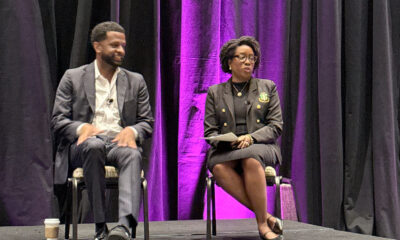

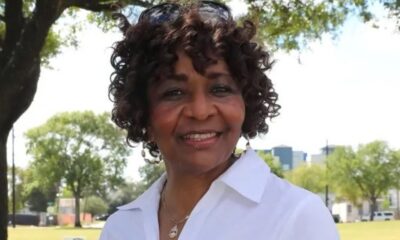



Black History
“Blue Tsunami” Sweeps Georgia, Bottoms Makes History
MOREHOUSE COLLEGE – THE MAROON TIGER — A political shift described as a “Blue Tsunami” has transformed the landscape of Georgia leadership following the recent election. Keisha Lance Bottoms made history when the race was called on Nov. 3, becoming the first woman and the first Black person elected as governor of Georgia.

The race was called on Nov. 3 at 9:24 p.m., which is much earlier than most elections. The atmosphere of the Marriott Marquis located in downtown Atlanta was only a mere sample of the excitement statewide. The event hall could barely hold the guests as the line for access passes extended across the entire lobby floor. Everyone came in some of their best attire, sporting unmistakable blue diamond pins with the words, “Keisha Lance Bottoms for governor.”
Now, Bottoms will become Georgia’s first woman and first Black governor when she takes office in January, making her the first Black woman to serve as governor of any U.S. state.
She described her campaign as reaching every corner of the state, “from the red hills of Georgia to the Blue Ridge Mountains of the Piedmont,” as cameras crowded in to capture the moment.
Joining her onstage were her mother, her children and her husband, Derek Bottoms, whom she met while attending Georgia State University College of Law and married in October 1994.
Supporters who had campaigned alongside Bottoms for 578 days shed tears of joy at her election watch party. Among those near the stage were U.S. Sen. Raphael Warnock ‘91, D-Ga., the senior pastor of Ebenezer Baptist Church, and the Rev. Jamal Harrison Bryant ‘94, the senior pastor of New Birth Missionary Baptist Church.
Eight Black women, many firsts
In 2025, Black women experienced disproportionate employment losses as the Trump administration implemented federal workforce cuts and rolled back diversity, equity and inclusion initiatives.
The losses disproportionately affected Black women across the country. In 2026, Georgia voters elected eight Black women to statewide office, marking a historic shift in the state’s political leadership. The South had something to say.
Georgia’s eight major statewide executive offices are the governor, lieutenant governor, attorney general, secretary of state, agriculture commissioner, insurance commissioner, labor commissioner and state school superintendent.
When the newly elected officials take office in January, Black women will hold seven of Georgia’s eight statewide executive offices, a first for the state, with Lt. Gov.-elect Josh McLaurin holding the eighth seat.
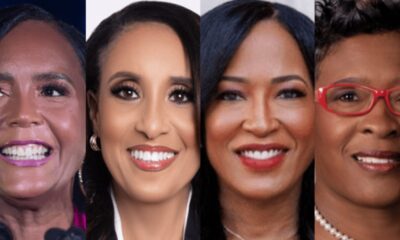
Several broke barriers of their own. Tanya Miller will become Georgia’s first elected woman attorney general. Penny Brown Reynolds, a former Fulton County judge, will become the first Black person elected Georgia secretary of state. Keisha Sean Waites, a former Atlanta City Council member, will become Georgia’s first Black woman insurance commissioner. Educator Lydia Powell will become its first Black woman state school superintendent, while Nikki Porcher will become its first Black woman labor commissioner.
Agriculture Commissioner-elect Katherine Juhan-Arnold founded Baby Katie’s Pharm & Kitchen, a nonprofit farm that provides fresh produce and agricultural education to underserved communities. Shelia Edwards, who won the District 5 race, will join Alicia Johnson as one of only two Black women on the Georgia Public Service Commission. Johnson became the first Black woman elected to a statewide partisan office outside the judiciary in Georgia after winning her commission seat in 2025.
“Georgia chose competence,” Brown Reynolds told The 19th. “We were not selected because we were Black women. I believe that we were selected because all of us bring something that Georgia desperately needs.”
Andra Gillespie, a political science professor at Emory University, told USA Today that the number of Black women elected to leadership positions in Georgia is unprecedented.
“Black women have definitely reached a point where they can not only run and be taken seriously for leadership positions in major parties,” she said.
The wins reached Congress too. State Rep. Jasmine Clark, D-Ga, became the first Black woman with a doctorate in science elected to Congress, winning Georgia’s 13th Congressional District seat, while U.S. Reps. Lucy McBath and Nikema Williams won reelection.
“Georgia has shown up”
Warnock said Georgia voters showed the power of organizing this election cycle and pledged to keep fighting for historically Black colleges and universities.
“I’m proud of Georgia. Georgia has shown up,” Warnock said. “Some 3 million of them early voted.”
He said churches played a key role in that turnout.
“What we saw, among other things, in this election cycle is the power of organizing, and the faith community has always been an important part of that,” he said.
When asked about the legislative priorities he plans to pursue with Keisha Lance Bottoms, Warnock highlighted his efforts to secure federal funding for historically Black colleges and universities.
Warnock pointed to a recent $97.1 million federal award supporting STEM programs at 10 historically Black colleges and universities and other minority-serving institutions, including Clark Atlanta University. His office has also reported securing more than $17 billion for HBCUs nationwide since he began his full Senate term.
With Governor-Elect Bottoms being an HBCU graduate of Florida A&M University, Georgia will have two HBCU alumni representing the people of the state.
“My own life is a testament to how these schools perform way above their weight,” he said. “And so I’ll continue to fight for them.”
His advice for current students was simple: “Morehouse gave me everything I needed to get ready,” he said. “I want the students to look at someone like me, and many others in various fields, and know that we sat in those same desks that they sit in. And so the sky is the limit.”
“Money doesn’t make you a success; character does”
Bryant said the win was personal, crediting Black men and Black churches for helping elect Bottoms.
“Super excited to know history was made, and to know that Black men supported a Black woman to get to this place,” he said.
The biggest hurdle, Bryant said, was getting Black churches involved and engaged, which he described as a return to the church’s tradition from the civil rights movement.
His advice for young men at Morehouse and across Georgia was direct.
“The takeaway lesson for all of us is money doesn’t make you a success,” Bryant said. “Character does.”
When the officials-elect take office in January, Black women will lead nearly every corner of Georgia’s executive branch. Bottoms announced her transition team Friday, Nov. 6. She and the seven other statewide officials-elect will be sworn in in January.
This site uses Akismet to reduce spam. Learn how your comment data is processed.
Based on reporting by Morehouse College – The Maroon Tiger.
Black History
“Blue Tsunami” Sweeps Georgia, Bottoms Makes History
MOREHOUSE COLLEGE – THE MAROON TIGER — A political shift described as a “Blue Tsunami” has transformed the landscape of Georgia leadership following the recent election. Keisha Lance Bottoms made history when the race was called on Nov. 3, becoming the first woman and the first Black person elected as governor of Georgia.

The race was called on Nov. 3 at 9:24 p.m., which is much earlier than most elections. The atmosphere of the Marriott Marquis located in downtown Atlanta was only a mere sample of the excitement statewide. The event hall could barely hold the guests as the line for access passes extended across the entire lobby floor. Everyone came in some of their best attire, sporting unmistakable blue diamond pins with the words, “Keisha Lance Bottoms for governor.”
Now, Bottoms will become Georgia’s first woman and first Black governor when she takes office in January, making her the first Black woman to serve as governor of any U.S. state.
She described her campaign as reaching every corner of the state, “from the red hills of Georgia to the Blue Ridge Mountains of the Piedmont,” as cameras crowded in to capture the moment.
Joining her onstage were her mother, her children and her husband, Derek Bottoms, whom she met while attending Georgia State University College of Law and married in October 1994.
Supporters who had campaigned alongside Bottoms for 578 days shed tears of joy at her election watch party. Among those near the stage were U.S. Sen. Raphael Warnock ‘91, D-Ga., the senior pastor of Ebenezer Baptist Church, and the Rev. Jamal Harrison Bryant ‘94, the senior pastor of New Birth Missionary Baptist Church.
Eight Black women, many firsts
In 2025, Black women experienced disproportionate employment losses as the Trump administration implemented federal workforce cuts and rolled back diversity, equity and inclusion initiatives.
The losses disproportionately affected Black women across the country. In 2026, Georgia voters elected eight Black women to statewide office, marking a historic shift in the state’s political leadership. The South had something to say.
Georgia’s eight major statewide executive offices are the governor, lieutenant governor, attorney general, secretary of state, agriculture commissioner, insurance commissioner, labor commissioner and state school superintendent.
When the newly elected officials take office in January, Black women will hold seven of Georgia’s eight statewide executive offices, a first for the state, with Lt. Gov.-elect Josh McLaurin holding the eighth seat.
Several broke barriers of their own. Tanya Miller will become Georgia’s first elected woman attorney general. Penny Brown Reynolds, a former Fulton County judge, will become the first Black person elected Georgia secretary of state. Keisha Sean Waites, a former Atlanta City Council member, will become Georgia’s first Black woman insurance commissioner. Educator Lydia Powell will become its first Black woman state school superintendent, while Nikki Porcher will become its first Black woman labor commissioner.
Agriculture Commissioner-elect Katherine Juhan-Arnold founded Baby Katie’s Pharm & Kitchen, a nonprofit farm that provides fresh produce and agricultural education to underserved communities. Shelia Edwards, who won the District 5 race, will join Alicia Johnson as one of only two Black women on the Georgia Public Service Commission. Johnson became the first Black woman elected to a statewide partisan office outside the judiciary in Georgia after winning her commission seat in 2025.
“Georgia chose competence,” Brown Reynolds told The 19th. “We were not selected because we were Black women. I believe that we were selected because all of us bring something that Georgia desperately needs.”
Andra Gillespie, a political science professor at Emory University, told USA Today that the number of Black women elected to leadership positions in Georgia is unprecedented.
“Black women have definitely reached a point where they can not only run and be taken seriously for leadership positions in major parties,” she said.
The wins reached Congress too. State Rep. Jasmine Clark, D-Ga, became the first Black woman with a doctorate in science elected to Congress, winning Georgia’s 13th Congressional District seat, while U.S. Reps. Lucy McBath and Nikema Williams won reelection.
“Georgia has shown up”
Warnock said Georgia voters showed the power of organizing this election cycle and pledged to keep fighting for historically Black colleges and universities.
“I’m proud of Georgia. Georgia has shown up,” Warnock said. “Some 3 million of them early voted.”
He said churches played a key role in that turnout.
“What we saw, among other things, in this election cycle is the power of organizing, and the faith community has always been an important part of that,” he said.
When asked about the legislative priorities he plans to pursue with Keisha Lance Bottoms, Warnock highlighted his efforts to secure federal funding for historically Black colleges and universities.
Warnock pointed to a recent $97.1 million federal award supporting STEM programs at 10 historically Black colleges and universities and other minority-serving institutions, including Clark Atlanta University. His office has also reported securing more than $17 billion for HBCUs nationwide since he began his full Senate term.
With Governor-Elect Bottoms being an HBCU graduate of Florida A&M University, Georgia will have two HBCU alumni representing the people of the state.
“My own life is a testament to how these schools perform way above their weight,” he said. “And so I’ll continue to fight for them.”
His advice for current students was simple: “Morehouse gave me everything I needed to get ready,” he said. “I want the students to look at someone like me, and many others in various fields, and know that we sat in those same desks that they sit in. And so the sky is the limit.”
“Money doesn’t make you a success; character does”
Bryant said the win was personal, crediting Black men and Black churches for helping elect Bottoms.
“Super excited to know history was made, and to know that Black men supported a Black woman to get to this place,” he said.
The biggest hurdle, Bryant said, was getting Black churches involved and engaged, which he described as a return to the church’s tradition from the civil rights movement.
His advice for young men at Morehouse and across Georgia was direct.
“The takeaway lesson for all of us is money doesn’t make you a success,” Bryant said. “Character does.”
When the officials-elect take office in January, Black women will lead nearly every corner of Georgia’s executive branch. Bottoms announced her transition team Friday, Nov. 6. She and the seven other statewide officials-elect will be sworn in in January.
This site uses Akismet to reduce spam. Learn how your comment data is processed.
Based on reporting by Morehouse College – The Maroon Tiger.
Black History
MHU Commemorates ASCORE and Anniversary of Desegregation
THE URBAN NEWS — UNC Asheville and Mars Hill University are collaborating to host a series of commemorative events marking the 65th anniversary of their desegregation. The programming honors Etta Mae Whitner Patterson and Oralene Anderson Graves Simmons, two former members of the Asheville Student Committee on Racial Equality (ASCORE) who became the first Black students at their respective institutions in 1961.
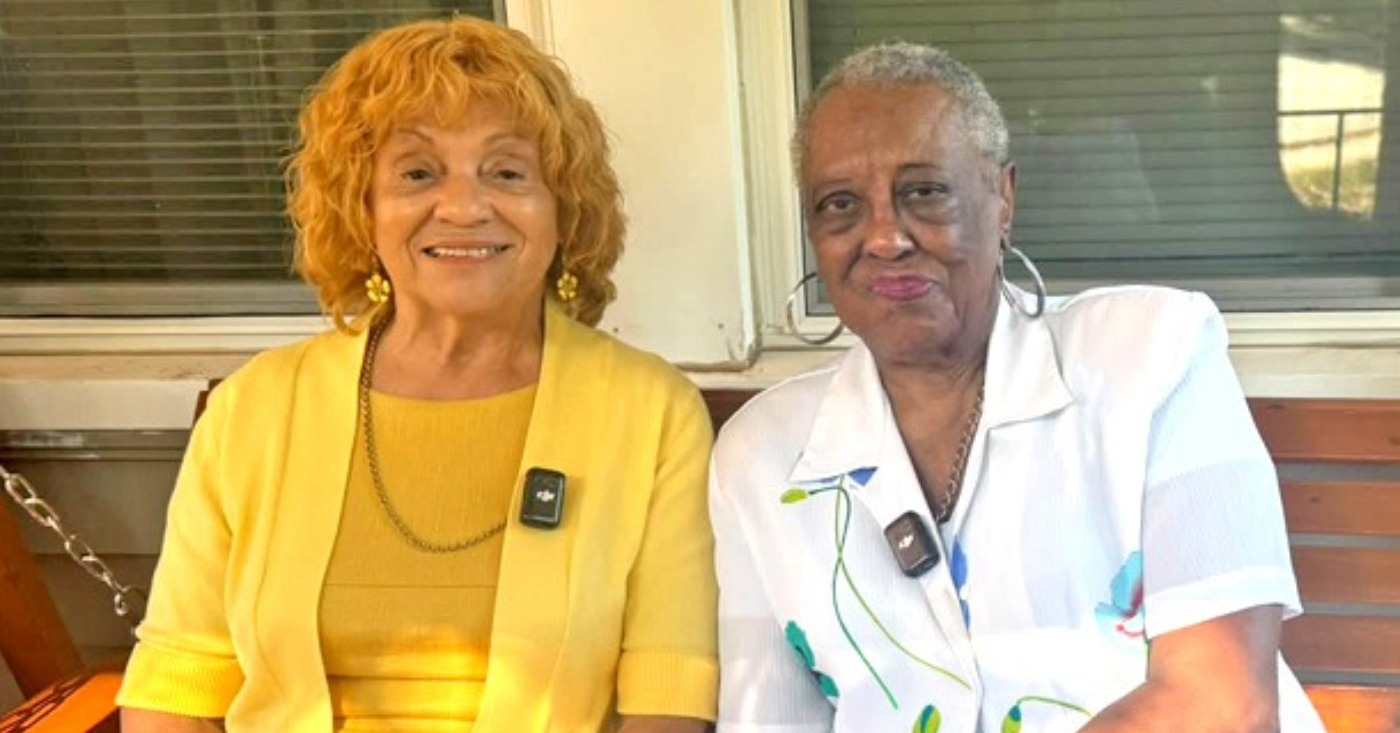
A week of events at UNC Asheville, Mars Hill University, and downtown Asheville.
In 1961, two young women broke the color barrier to become the first African American students at two Western North Carolina colleges: Etta Mae Whitner Patterson at UNC Asheville and Oralene Anderson Graves Simmons at Mars Hill University (then Mars Hill College).
Both women were students at Asheville’s Stephens-Lee High School, where they were members of the Asheville Student Committee on Racial Equality (ASCORE). Through nonviolent protest, ASCORE led efforts to desegregate many Asheville stores and businesses.
Patterson and Simmons, who later founded the Martin Luther King Jr. Association of Asheville and Buncombe County, have since received honorary doctorates from their alma maters in recognition of their achievements and lifelong service to their communities.
To commemorate ASCORE, honor the leadership of Etta Patterson and Oralene Simmons, and mark the 65th anniversary of the desegregation of UNC Asheville and Mars Hill University, UNC Asheville’s Department of History and Mars Hill University’s Liston B. Ramsey Center for Appalachian Studies invite the public to attend “Stories of ASCORE: Lessons in Courage, Desegregation, and Community Activism.”
The program will feature two panel discussions with Drs. Patterson and Simmons, along with other former members of ASCORE. Panelists will discuss how their experiences integrating Asheville’s businesses and institutions prepared them for their college careers, professional lives, and continued community activism.
The first panel discussion will take place at 6 p.m. on Tuesday, November 10, 2026, in the Blue Ridge Room of Highsmith Union at UNC Asheville. The event will feature a presentation by Dr. Patterson and a panel discussion with Dr. Simmons, Marvin Chambers, Jesse Ray, and Al Whitesides. The panel will be moderated by Deborah Miles, retired director of the former UNC Asheville Center for Diversity Education.
This event is sponsored by UNC Asheville’s Department of History and Africana Studies Program, with generous support from King and Pam Prather. A free visitor parking permit is required for the UNC Asheville event. Please visit the university’s parking website for instructions on obtaining a permit for the evening’s program.
The second panel discussion will take place at 5 p.m. on Thursday, November 12, 2026, in the Tony and Terry Floyd Conference Center in the Mars Hill University Campus Center. The event will feature Dr. Simmons, Annette Coleman, and Elizabeth Colton. The panel will be moderated by Jonathan McCoy, professor of history at Mars Hill University.
This event is sponsored by the Liston B. Ramsey Center for Appalachian Studies, with generous support from the university’s Provost’s Office.
In addition, at 12 noon on Wednesday, November 11, 2026, in Pack Square in downtown Asheville, Mayor Esther Manheimer and the Buncombe County Commission Chair will proclaim ASCORE Day and present honors to Etta Patterson and Oralene Simmons. Holly Jones of the North Carolina Governor’s Office will also participate in the ceremony.
For more information, contact Leila Weinstein at Mars Hill University ([email protected]) or Ellen Holmes Pearson at UNC Asheville ([email protected]).
Based on reporting by The Urban News.
Black History
HBCU Love: Spelman’s Dr. Letitia Plummer Makes History as Harris County’s First Black Elected County Judge
TEXAS METRO NEWS — Former Houston City Council member Dr. Letitia Plummer has made history as the first Black person elected to serve as the Harris County Judge. The Spelman College alumna defeated Republican Orlando Sanchez in the general election for Texas’ most populous county, receiving approximately 62% of the vote.
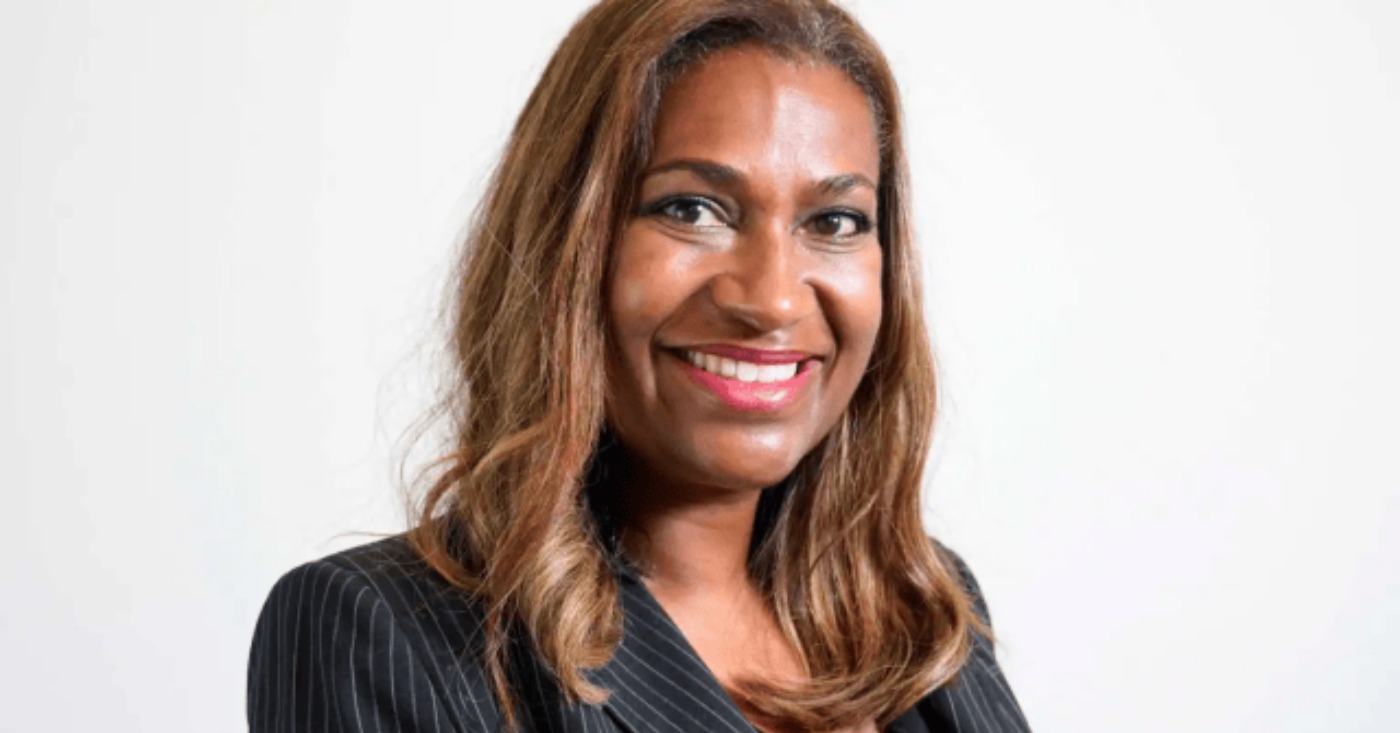
Letitia Plummer is the next Harris County judge, and the Spelman College alumna made history in Texas’ most populous county. On Tuesday night, the former Houston City Council member defeated Republican Orlando Sanchez. As a result, she becomes the first African American elected to lead Harris County.
Early unofficial results showed Plummer with about 62% of the vote to Sanchez’s 38%. Shortly after 9 p.m., Sanchez called Plummer to concede. He then asked his supporters to back her once she takes office.
The win also makes her the first Muslim elected to the post. According to the Houston Chronicle, that makes her the highest-ranking Muslim executive official in Texas history.
A Historic Night in Houston
Plummer succeeds Lina Hidalgo, who chose not to seek another term. Now, a Spelman woman takes over the top job in a county of nearly 5 million people.
ADVERTISEMENT
In Texas, the county judge is not a courtroom role. Instead, the job leads the Commissioners Court, which runs the county’s budget, roads, flood control and public health. So the seat carries real power over daily life in the Houston region.
The general election was never especially close. However, the road to November was brutal. In the March 3 primary, Plummer finished second behind former Houston Mayor Annise Parker. Parker took about 47% to Plummer’s 37%, sending the race to a runoff.
Then Plummer flipped the script. On May 26, she beat Parker in the runoff with about 51% of the vote. From there, she turned to Sanchez and never looked back. Houston Public Media has full coverage of election night.
Letitia Plummer’s Road From Linkwood to Harris County Judge
Plummer grew up in Linkwood, a neighborhood south of Brays Bayou near Buffalo Speedway. Her family history runs deep in Houston. Her grandfather was a Tuskegee Airman flight instructor. After the war, he became the first African American investigator for the Harris County district attorney.
ADVERTISEMENT
Her father, Matthew Plummer Jr., studied dentistry at Harvard. Later, he served in the Peace Corps, where he met her mother in Africa. Her mother brought Yemeni and Indian roots to the family. As a result, Plummer grew up in a multicultural household that shaped her outlook.
As a teen, she attended what is now DeBakey High School for Health Professions. Then she headed to Atlanta for Spelman. There, she joined Alpha Kappa Alpha Sorority, Inc.
After Spelman, she came home to Texas for dental school at Baylor College of Dentistry. Like her father, she became a dentist. She went on to own dental practices in the Houston area, including in Pearland.
From Dental Chair to City Hall
Plummer’s political career started with a 2018 run for Congress. She made the Democratic runoff in Texas’ 22nd District but lost to Sri Preston Kulkarni. Still, the campaign put her on the map.
A year later, she won Houston City Council At-Large Position 4. She took office in January 2020. In doing so, she became the first Muslim woman elected to the Council.
On the Council, she focused on police reform, food deserts and apartment inspections. She also chaired the Government Operations Committee. Notably, fellow Spelman alumna Carolyn Evans-Shabazz served alongside her on the Council.
In 2025, she launched her campaign for county judge. Then she timed her exit from the Council so the city could fill her seat during a regular election. That move saved Houston the cost of a standalone special election.
What She Ran On
Plummer pitched herself as a unifier for a Commissioners Court that has often split along party lines. She promised to build stronger working relationships among its members.
She also called for better county services and changes to the county’s Flock camera contract. In addition, she pushed back on state leaders for exerting authority over Harris County.
On election night, she spoke about her personal struggles with surrogacy. She said that experience helped inspire her decision to run.
Why Letitia Plummer’s Win Matters for Spelman
Spelman women had a big night across the country Tuesday. In New York, alumna Adrienne Adams won the lieutenant governor’s race. Now Plummer will run one of the largest counties in America.
Together, the wins show how far the Spelman network reaches in politics. Both women built careers outside government before winning office. And both broke barriers on the way up. For more on the school, check out our Spelman College coverage. You can also follow our Keisha Lance Bottoms coverage for more HBCU wins from election night.
What Comes Next
Plummer will take office in January. Between now and then, she will build her team and prepare for the county budget fight. For more on her path, the Houston Chronicle tracked her rise through a political roller coaster year.
Stay with HBCU Buzz for continued coverage of Harris County Judge-elect Letitia Plummer as she prepares to take office.
In this article:HBCU LOVE, Letitia Plummer, Spelman’s Dr. Letitia Plummer Makes History as Harris County’s First Black Elected County Judge
Based on reporting by Texas Metro News.
Black History
Superb Woman: Destiny B. Sadler
TEXAS METRO NEWS — Destiny B. Sadler is a dynamic entrepreneur and empowerment coach who serves as a Top Executive with the global beauty brand LimeLife by Alcone. A graduate of Southern University, Sadler leverages her background in leadership and community impact to mentor others on the transformative power of confidence.
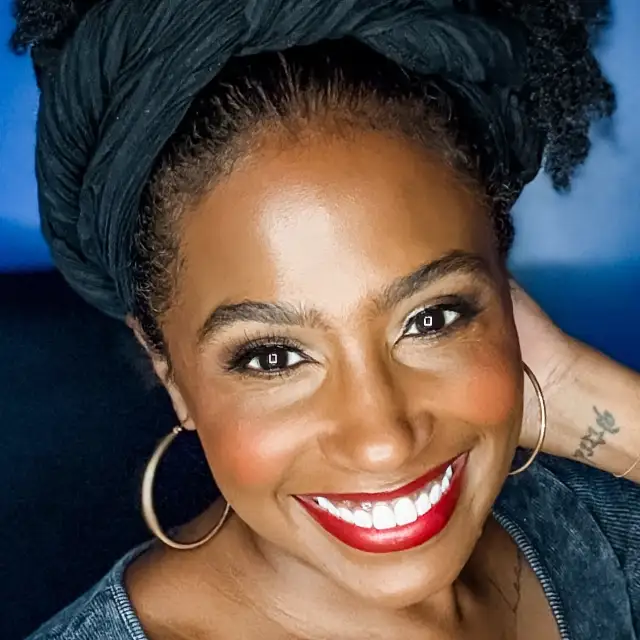
Destiny B. Sadler is a dynamic entrepreneur, digital creator, and empowerment coach dedicated to helping individuals look, feel, and live at their absolute best. With a background rooted in leadership and community impact, she serves as a Top Executive with the global beauty brand LimeLife by Alcone, where she mentors a growing network of beauty guides and champions the transformative power of confidence.
Driven by a passion for personal development and education, Destiny founded YSTBYOU and You’re Simply the Best Kids, an educational services organization focused on building foundational confidence and leadership skills in youth. She’s a graduate of Lamar High School and Southern University. Destiny’s life work centers on a simple, powerful philosophy: embracing who you are is the ultimate key to success.
Based on reporting by Texas Metro News.
Black Press
Campus Accountability: Universities Must Do More to Address Sexual Assault
SOUTHERN UNIVERSITY – SOUTHERNDIGEST — Colleges and universities are meant to be safe environments for learning and personal growth, yet recurring reports of sexual assault continue to challenge the effectiveness of institutional protections.
College campuses are supposed to be places where students can learn, grow and feel safe. However, reports of sexual assault at universities across the country continue to raise questions about whether institutions are doing enough to protect their students and hold individuals accountable.
From Louisiana State University to Harvard University and Cornell University, campus sexual assault cases have brought renewed attention to how colleges investigate allegations, discipline students and support survivors. For many, the concern is not only the actions of students accused of sexual misconduct but also how university administrators respond when these situations occur.
At LSU, recent reporting has raised questions about the effectiveness of the university’s Title IX process. According to WBRZ, more than 300 sexual assault reports were made through LSU’s Title IX process between 2022 and 2025, with three resulting in disciplinary action. Although not every report results in a finding of responsibility, the numbers raise important questions about how institutions communicate outcomes and address reports of misconduct.
Cornell University has also faced scrutiny following allegations involving seven students and an alleged sexual assault at a fraternity house in 2024. The university’s investigation resulted in different disciplinary actions, including expulsions and suspensions. However, questions about one student’s return to campus and housing arrangements have continued to draw criticism.
These cases highlight a larger issue: University accountability cannot stop at having a Title IX office or publishing policies in a student handbook.
Title IX prohibits sex-based discrimination in federally funded education programs and addresses sexual harassment and sexual violence. Universities must have procedures for responding to complaints, conducting investigations and providing supportive measures. However, having policies in place means little if students do not understand them or believe reports will be handled appropriately.
Students who are found responsible for sexual misconduct should face consequences that reflect the seriousness of their actions. Universities should also examine whether their investigative procedures are timely, whether survivors receive adequate support and whether disciplinary decisions are consistently enforced.
Accountability must also include university administrators. Institutions should be transparent about their procedures, provide clear reporting options and regularly review whether their policies are working.
At the same time, every student involved in a disciplinary proceeding deserves a fair investigation and an opportunity to respond to allegations. Protecting survivors and respecting due process should not be treated as competing priorities.
Ultimately, universities have a responsibility that extends beyond academics and athletics. Students deserve to know that their safety matters and that misconduct will be taken seriously. A university’s commitment to student safety should be measured not only by the policies it publishes but also by the actions it takes when those policies are tested.
Based on reporting by Southern University – SouthernDIGEST.


Sterling vs. North Forest (9-12-26) | Houston High School Football

Westbury vs. Dulles (9-4-26) | Houston High School Football

Yates vs. Madison (9-5-26) | Houston High School Football

Yates vs. Worthing (9-8-26) | Houston High School Volleyball

Black Veterans’ Fight for Equality…The Forgotten Cost of Service

“Blue Tsunami” Sweeps Georgia, Bottoms Makes History

“Blue Tsunami” Sweeps Georgia, Bottoms Makes History

OP-ED: And Then What?

OP-ED: Closing the Next Digital Divide — Communities of Color Must Have a Voice in the AI Future

Which Car Comfort Features Are Worth Paying For? #shorts

Practitioners of African Traditional Spirituality Offer Ancestral Reverence Ritual Oct. 31

Tamiko Armstead | 2026 Lifetime Achiever in Education

HISTORY MADE: Keisha Lance Bottoms Becomes First Black Woman Elected Governor in American History

OP-ED: The Black Church Writes AI’s Next Chapter

OP-ED: If the ‘Cornell 7’ Were Black Men at an HBCU — America Wouldn’t Be This Sympathetic

Inside 820 S. Michigan: New Book Captures the Lost World of Ebony and Jet

Kickstarter CEO Everette Taylor Shares Tips on Creating and Growing a Business

While Black Families Pay More for Power, Some Attorneys General Fight to Save High-Cost Coal

BLACK MEN VOTE: Mobilizing 100,000 Black Men Ahead of the Midterms 📱

NFN live presents 🎙️ THE ROAD TO BEYOND IWDM 50: WE CANNOT STOP NOW! 8-Week Podcast
Sterling vs. North Forest (9-12-26) | Houston High School Football
Westbury vs. Dulles (9-4-26) | Houston High School Football
Yates vs. Madison (9-5-26) | Houston High School Football
Yates vs. Worthing (9-8-26) | Houston High School Volleyball
Black Veterans’ Fight for Equality…The Forgotten Cost of Service
Which Car Comfort Features Are Worth Paying For? #shorts

Choosing a Truck Bed? Test Your Gear Before You Buy #shorts

Black Resilience: The Powerful Story of George Wallace’s Redemption

From The Desk of The Editor 11/11/26

Credit Builder Loans Offer a Fresh Start #shorts
-
 Black History7 days ago
Keisha Lance Bottoms to Govern State Where Her Great-Great-Grandfather Was Enslaved
-

 Black History1 week ago
IN MEMORIAM: Marcia Ann Gillespie, Editor of Essence and Ms. Magazines, Dies at 82
-
 Black History5 days ago
Don’t Pass the Torch. Expand the Circle.
-
 Black Press7 days ago
Eight Black Women Win Georgia Statewide Offices
-
 Black History6 days ago
Meet Scott Colom, the Mississippi Democrat Leading Tight Mississippi Senate Race
-
Black Press7 days ago
What It Actually Takes to Convert Potential Customers Quickly and Consistently
