
Uncategorized
COMMENTARY: What Parents and Students Should Know about Charter Schools


By Anitra Brown (Managing Editor, The New Orleans Tribune)
Late last year, “The New York Times” and “The Washington Post” criticized the National Association for the Advancement of Colored People (NAACP) for its call for a moratorium on charter schools. Editorial writers at The Post even got all clever with their Oct. 11 headline, “The NAACP opposes charter schools. Maybe it should do its homework.”
Of course, the pun was intended. And it was cute, off beam, but cute.
To be sure, it is both media outlets that need to do a little extra studying when it comes to the question of putting the brakes on charter schools.
First, let’s be abundantly clear. When the board of NAACP called for a temporary stop on the opening of additional charter schools nationwide, they suggested only that the impact of the publicly-funded, privately-operated institutions on both equity and excellence in education deserved further scrutiny before another dollar was spent or another public school student was sacrificed in the name of so-called education reform.
They have not asked for a permanent end to charters.
They have not asked that all existing charters be shutdown.
They have asked, as best as we can surmise, only that we stop, take a collective breath, and actually determine what has been accomplished or damaged in public education as a result of the proliferation of charter schools across the nation before another charter is granted by a state or local education agency until the following demands are met:
1. Charter schools are subject to the same transparency and accountability standards as public schools.
2. Public funds are not diverted to charter schools at the expense of the public school system.
3. Charter schools cease expelling students that public schools have a duty to educate.
4. Charter schools cease to perpetuate de facto segregation of the highest performing children from those whose aspirations may be high, but whose talents are not yet as obvious.
That seems fair enough. In fact, it is more than fair, especially when we consider the impact of this corporate-driven education reform model and the proliferation of charter schools here in New Orleans. And we are especially angry as the architects of the fake reform movement put their money and power behind convincing Black people that the NAACP is wrong and trying to hurt them. Scratch that. We are mad as hell at all the Black folk falling for that narrative.
Indeed, it’s the editorial writers at both The Post and The Times that need to go straight to the principal’s office for attempting to thump the NAACP without having a deep understanding of how the littering of the public education landscape with charter schools has adversely impacted disenfranchised and marginalized communities.
Make no mistake, New Orleans—home to the nation’s first and only all-charter school district and the epi-center of a corporate-driven reform effort—serves as the example of why a stop, temporary or otherwise, to charters is needed.
Despite grand claims to the opposite, the results of charter schools are hardly remarkable.
According to recent school performance measures, the 50 schools currently under control of the all-charter Recovery School District for which school performance data is available have earned letter grades as follows:
A’s – 0
B’s – 7
C’s – 19
D’s – 16
F’s – 6
T’s – 2
Let’s analyze this. Two of the 50 are graded “T”, meaning they are in transition from one charter operator to another and have been given additional time before SPS scores and grades are applied to the campus.
Nineteen (19) of the schools have earned a “C”; and last we checked, a “C” meant that a performance level was not perfect, not great, just average. So, “average” traditionally-operated public schools have been replaced by “average,” privately-managed, publicly funded charter operations with non-elected boards that do not have to answer to voters or taxpayers. For the record, that’s like going to your phone service provider to upgrade your gold colored iPhone 6s Plus and getting stuck with a silver colored iPhone 6s Plus…with a Siri app that doesn’t respond to your voice commands. To be sure, there are charter school boards operating in New Orleans for years that have only in recent months begun to follow state law as it relates to the public posting of their meetings and minutes. Now, if that wasn’t enough to make folk want to pump the brakes on charter schools, consider this: A full 22 of the 50 charter schools operated by the all-charter RSD in New Orleans are either D or F schools, meaning they are close to failing or have failed.
Of course, it’s not all bleak. There are seven charter schools overseen by the RSD that earned school performance scores that gave them a “B” letter grade. Wait, before you blow up the balloons, hang streamers and cut the cake, let’s get a few more facts straight as to how the school closures, takeovers, so-called reform and the charter explosion happened in New Orleans in the wake of Hurricane Katrina.
With a city decimated and its residents scattered across the country, the state education leaders and state legislature—pushed, no doubt, by the masterminds of the corporate-driven reform movement—met in Baton Rouge to authorize the takeover of Orleans Parish Public Schools, a plan that had been designed and put in place long before Katrina. In order to facilitate the wholesale takeover of public education in New Orleans, the legislature had to amend state law to raise the minimum school performance score from 60.0 to 87.4. Before this, only five schools in Orleans Parish had scores that designated them as failing. After amending the law, more than 100 schools were deemed failing. In short, the takeover was manufactured by slight of pen.
Of course, there is inherently nothing wrong with raising the bar—if the plan is to keep it high. But it wasn’t. When it became evident that charter schools weren’t performing miracles, keeping the higher standard did not work for the architects of the reform. So they went back to their buddies in the state legislature, who were happy to amend the law again to lower the minimum SPS a school needed to have in order to hide the failure of the very reform it ushered in. Today, elementary and middle schools only need to have a 66.2 SPS to earn a “C.” The SPS for a high school can be as low as 70 to earn a “C” letter grade. This sort of legislative maneuvering makes measuring real progress or any regression impossible.
But this much is clear—as of right now only five of the charter schools under the all-charter RSD have school performance scores higher than 87.4—the score used to declare public schools as failures and hand them over to charter operators more than 10 years ago. To put it another way, most all of these campuses—now being heralded as the answer to all that was wrong with public education—would have been taken over by the state after Hurricane Katrina. Of course, that’s a lot like giving someone a one dollar bill, but trying to convince him it’s worth $5 by taking a magic marker and writing a big “5” on George Washington’s face.
Now add to all of this mayhem, the fact that charter schools in New Orleans and elsewhere have developed notorious reputations for their failure to adequately serve special needs students; or that the loss of neighborhood schools and bussing students all over the city has wreaked havoc on families that have had to send their children to bus stops as early at 5:30 in the morning to go to a “C” (if they are lucky) school 20 miles away from their homes; or that with the proliferation of charter schools has come the promulgation of non-elected charter school boards that use the people’s money without the people’s oversight effectively resulting in taxation without representation; or that with this so-called reform has come the same mismanagement and misappropriation of public dollars under the control of some charter operators for which the elected school board and public school system were often criticized and denigrated prior to the takeover; or that the billions in funding that came to Louisiana to stabilize public education after Katrina was doled out as grants to private charter management companies and used to provide Teach for America recruits with signing bonuses while more than 7,000 veteran educators and school employees were fired without cause or due process; or that this entire reform is funded by major corporations with their eyes fixed on profiting from our children as opposed to serving them and providing a quality education.
It is worth noting that all of this started under the watch of a Democrat governor, Kathleen Blanco, and has been sustained and heavily funded at both the federal and state levels under the executive or legislative leadership of Democrat officials, who must be held responsible for their continued role in undermining public education.
Did we mention that only five of the charter schools in the all charter RSD-New Orleans actually have SPS scores higher than the scores of the schools taken over by the state after Katrina?
These schools, the so-called miracles are failing—the numbers say so. How much more homework does The Post need us to do?
Even when we look at the performance of the handful of public schools—both traditional and charter—currently under control of the Orleans Parish School Board, we perceive their claims of tremendous success with a jaundice eye, recognizing that the local school system—after being pilfered of its schools by the state—was left with those schools that were its top-performing academies and magnet campuses prior to Hurricane Katrina. We have also watched as this local school board—all but co-opted by pro-charter, pro-reform advocates—has abandoned its role in creating more traditional public schools.
Yet, The Post and The Times can’t seem to understand why a freeze on more charters is in order. Well, there may be some pretty decent writers at these fine publications, but they obviously failed all their math classes if they can’t discern that something just isn’t adding up with the frenzied and furious push to put a charter school on every corner despite little or no real evidence of their success. In fact, here in New Orleans—ground zero for all things charter school—the evidence tells that most of these schools are performing as bad or worse than the traditional public schools they replaced.
So yes, it is high time the farce ends.
And this is just what we know is happening in New Orleans. We at The New Orleans Tribune know because we have been talking and writing and fighting about it for more than a decade now. And what has and is happening here in New Orleans, Louisiana should be enough for every state board of education and local education agency across America to think twice before approving another charter.
But, the folks at the NAACP and Black Lives Matter have examined the charter school situation across the nation and found legitimate reasons why the rollout of more charters needs to come to come to halt—at least for a while. If our tales of woe weren’t enough, there are the concerns being raised across the country.
They are looking at what has been in happening—the targeting of low-income communities for the closure of traditional public schools, the selective admissions practices that often result in extreme segregation, the fiscal mismanagement, the diversion of and lack of accountability for taxpayer funds, and the violation of civil and educational rights—in places like North Carolina, Georgia, Ohio, New York and California, as well. They want evidence of the success of charters—not empty claims of success or examples of artificial achievement like we’ve seen here. What is so wrong with that?
Give us one real reason charters can’t wait.
Here at The Tribune, we applaud the NAACP and Black Lives Matter for the courageous leadership and independent voices on the issue of charter schools. We know exactly what it is like to speak the truth on this topic and the misuse of charter schools to what seems like no avail. We hope that adding their voices to the chorus will force others to pay attention.
To be sure, it’s about time someone called for a moratorium on charter schools. Maybe if The Post and The Times did their homework or at least decided that they weren’t going to be swayed by the all the big money and big names pushing this reform, they would see that too.
Here at The Tribune, we applaud the NAACP and Black Lives Matter for the courageous leadership and independent voices on the issue of charter schools.
Anitra Brown is the managing editor at The New Orleans Tribune. You can reach Anitra by email [email protected].










BlackPressUSA
RODNEY PERRY JOINS BLACK PRESS USA’S MORNING SHOW AS WEEKLY CONTRIBUTOR
ATLANTA — Veteran comedian, actor, and television personality Rodney Perry is joining Black Press USA’s morning show, hosted by Niele Anderson, as a weekly contributor.


ATLANTA — Veteran comedian, actor, and television personality Rodney Perry is joining Black Press USA’s morning show, hosted by Niele Anderson, as a weekly contributor.
Beginning this season, Perry will appear every Wednesday, delivering his signature blend of comedy, cultural commentary, and honest conversation. Drawing from more than 30 years in entertainment, Perry will bring a humorous and thought-provoking perspective to current events, relationships, entertainment, and the issues affecting the Black community.
“I’m excited to join Niele Anderson and the Black Press USA family,” said Perry. “Comedy has always been my way of helping people talk about real life. Every Wednesday, we’re going to laugh, tell the truth, and have some fun with what’s happening in the world.”
A former co-host of BET’s The Mo’Nique Show, Perry has built an accomplished career as a stand-up comedian, actor, director, and producer. His energetic storytelling and authentic point of view have made him a respected and recognizable voice in comedy and entertainment.
Viewers can catch Rodney Perry every Wednesday on Black Press USA’s morning show with host Niele Anderson.
Rodney Perry is a veteran comedian, actor, director, and television personality with more than three decades in the entertainment industry. Known for his quick wit, dynamic storytelling, and relatable observations, Perry has appeared in numerous television and film productions and performed on stages around the world.
BlackPressUSA
OP-ED: One by One: The Slow Disappearance of Black Voices in Mainstream Media
BLACKPRESSUSA OP-ED: Stephen A. Smith has no problem finding words. But when Ryan Clark left ESPN, all he could say was: “It hurts. It really does.” Clark’s exit follows Joy Reid, Don Lemon and others—each departure different, but the pattern impossible to ignore


Stephen A. Smith rarely struggles for words. One of the most recognizable voices in sports media, he has built a career on passionate opinions and unfiltered commentary. But when ESPN parted ways with Ryan Clark, Smith’s reaction was strikingly simple.
“It hurts. It really does,” Smith said.
Smith called Clark “arguably the best NFL analyst in America“ and said he opposed ESPN’s decision. At the same time, he acknowledged that layoffs have become an unavoidable reality across the television industry.
“The bosses know I’m not happy about this decision,” Smith said. “But it’s also important that myself and anybody else in the world of business be grown-ups and understand that these are the kind of things that happen when layoffs happen.”
Clark’s departure followed the exits of several nationally recognized Black media personalities, including Joy Reid at MSNBC and Don Lemon at CNN. It also came after Clark publicly reflected on his years at ESPN, saying there were times he felt he “couldn’t be too Black.” While each departure occurred under different circumstances, together they have renewed questions about the future of Black representation in mainstream media and whether the industry’s changing landscape is reducing the number of Black voices on the nation’s most influential platforms.
Networks have cited restructuring, layoffs or, in some cases, declined to publicly explain personnel decisions. Some journalists have pointed to workplace culture, while others argue the changes reflect broader economic forces reshaping the media business.
Dr. Al Reynolds, a communications professor who studies both media and business, said the conversation cannot begin with race alone. Before examining who is leaving mainstream media, he said, it is necessary to understand the economic forces transforming the industry itself.
“From the business side, there are three things they can’t argue,” Reynolds said. “One is the economic contraction of traditional television. People aren’t going to their traditional sources to be entertained anymore.”
Audiences have increasingly shifted away from traditional broadcast and cable television to streaming and digital platforms such as Netflix, Paramount+, BET+, YouTube and TikTok, Reynolds said. As viewers have migrated, advertisers have followed, reducing the revenue that once supported large television news operations.
“Because of the economic contraction, you have corporate consolidation and cost-cutting,” Reynolds said. “If your viewers aren’t there, your advertisers aren’t there. If your advertisers aren’t there, then you can’t pay your talent to be on those platforms anymore.”
Those financial realities help explain why media companies are making difficult personnel decisions, Reynolds said. But they do not fully explain why those departures matter.
“It doesn’t matter whether they fired [Clark] or whether they laid him off,” Reynolds said. “The effects of it are the same.”
As prominent Black personalities disappear from major platforms, Reynolds said the consequences extend far beyond the careers of individual journalists.
“When there are fewer prominent Black personalities with authority, as well as the resources, to be on these large platforms that have natural distribution to shape the mainstream conversation, then you have less of a voice in those spaces,” he said.
Award-winning entertainment journalist Keith L. Underwood agreed that economics is reshaping the media industry. But he said an equally important transformation is taking place among audiences themselves. Rather than relying on a handful of nationally recognized journalists and civil rights leaders, Black Americans now consume information across countless digital platforms, creating a media landscape that is more fragmented—and, in many ways, more difficult for any single voice to influence.
“I think the landscape is changing,” Underwood said. “People have so many different ways of getting their news, whether it be television, radio, social media, or word of mouth.”
“It’s not like it used to be when you had civil rights leaders who were the generalized voice of the people,” he said. “That’s gone.”
Underwood said that fragmentation has increasingly given way to celebrity-driven news and viral culture.
“It’s become more focused on the gossip,” Underwood said. “Celebrity scandal has become our news because those same voices are not there.”
At the same time, Underwood said major media organizations continue to influence which stories and perspectives reach the broadest audiences.
“If you’re dealing with mainstream outlets, then you also have to take into consideration what they’re allowing you to say,” he said, pointing to former MSNBC host Tiffany Cross as an example of someone who believed she would have greater editorial latitude than she ultimately experienced.
When asked specifically about Clark’s remarks that he often felt he “couldn’t be too Black” while working at ESPN, Underwood declined to speculate about Clark’s personal experience.
“I can’t speak to his specific situation because that’s his truth,” Underwood said.
Still, Underwood said professionalism and authenticity are not mutually exclusive. He pointed to former NFL star and television host Michael Strahan as someone who has successfully navigated mainstream media without losing his identity.
“I don’t think Michael Strahan has become less Black,” Underwood said. “He’s still Michael Strahan. He’s just learned how to communicate in different spaces.”
Underwood said the larger challenge is preserving authenticity while working within institutions that often shape how stories are told and who gets to tell them.
The picture, however, is more nuanced than a simple decline in Black representation. Fox News continues to feature prominent Black anchors, including Harris Faulkner and Lawrence Jones, both of whom have built long careers on one of cable television’s highest-rated news networks. Their continued prominence suggests the conversation is not simply about whether Black journalists remain on television, but how newsroom decisions, audience demand and editorial culture shape which voices endure and influence the national conversation.
For Underwood, however, the future of Black journalism may depend less on the decisions made inside corporate boardrooms than on the willingness of Black journalists and entrepreneurs to build platforms of their own.
“I think that too often Black folks are reactionary as opposed to being proactive,” Underwood said, arguing that the community should invest more aggressively in creating and supporting independent Black-owned media rather than waiting for opportunities from legacy institutions.
He pointed to YouTube, podcasts, streaming services and emerging artificial intelligence tools as technologies making it easier than ever for journalists to reach audiences without relying on traditional gatekeepers.
“If you create your own platform and you’re speaking truth to the news, you can be your authentic self,” Underwood said.
Looking ahead, Underwood believes the next generation of influential Black journalists will be defined not only by where they work, but by the platforms they own.
“Black folks need to start embracing these tools that are available to us in order to have a voice, in order to share our creativity and in order to benefit and enrich our communities,” he said.
As legacy media continues to evolve, the debate sparked by Ryan Clark’s departure suggests the future of Black journalism may depend not only on who is hired by major networks but also on who builds the next generation of platforms.
BlackPressUSA
An Ousted Clayton County Judge Is Suing to Throw Out 25,000 Votes—and Declare Himself the Winner
BLACKPRESSUSA – After losing by nine points, Clayton County Judge Aaron Mason sued to throw out 25,000 votes and declare himself the winner. The public can’t read the case.
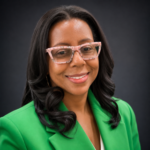

By Danielle Bess
Danielle Bess is a trial attorney based in the Clayton Judicial Circuit of Georgia.
Three days after Clayton County voters removed Judge Aaron Mason from the Superior Court bench in a nine-point loss, he filed a lawsuit asking a court to disqualify the winner, Judge-elect Deitra Burney-Butler, and to throw out the more than 25,000 votes cast for her and declare him the winner instead.
He filed it in the Superior Court of Clayton County, where Judge Mason presides.
Over the past ten weeks, no news outlet has reported that the case exists.
That points to a second problem, one that affects anyone who uses Georgia courts. The Petition, the only document that explains what the case is about, has never been publicly viewable. It appears on re: SearchGA, Georgia’s statewide court-records portal, but that listing shows only the lawyers’ entries of appearance, even though later filings in the same case were promptly posted.
To get a copy, I went to the Clayton County Superior Court Clerk’s office in person. The clerk could not find the Petition; a search for the paper file came up empty. Only after a supervisor stepped in did a clerk locate the case in an internal system and print a copy, minus the exhibits it references. No one explained to me why I couldn’t have it or why it wasn’t online.
“Weird” is how Bryan Sells, an Atlanta election law attorney who has practiced in this field for 28 years and litigated candidate-eligibility cases, described the Petition’s absence from the public docket.
A judge’s lawsuit, filed from a judge’s chambers
The Petition to Contest Election was filed pro se by Judge Mason on May 22, 2026. It lists his address as 9151 Tara Boulevard, the Clayton County Judicial Complex, where he keeps his chambers. The email address on the filing is his official judicial email. And the sworn verification at the back was notarized by an employee of the Clayton County court administration office. Records produced by the Secretary of State show the same court administration employee also notarized Judge Mason’s own qualifying paperwork when he entered the race back in March.
Mason has been a judge for 16 years. He was appointed to the State Court of Clayton County in 2010 by Governor Sonny Perdue, a milestone his campaign website says made him “the first African American to serve on that bench.” In December 2016, Governor Nathan Deal elevated him to the Superior Court, where he ran unopposed in 2018 and 2022. May 19, 2026, was the first time Clayton County voters were ever offered a choice about Judge Aaron Mason.
They chose someone else.
Deitra Burney-Butler spent 14 years on the Clayton County juvenile court bench and, before that, prosecuted cases in the Clayton County District Attorney’s and Solicitor’s offices. In 2023, Judge Robert Mack rescinded her reappointment, ending her tenure. Reporting at the time said the rescission cited concerns about her ability to serve. Burney-Butler has received no public discipline by the State Bar or the Judicial Qualifications Commission. Eight months after her removal, she challenged Judge Mack at the polls and lost. She came back in 2026, ran against Judge Mason, and won 25,414 votes to his 20,948.
Judge Robert Mack, who now serves as Chief Judge, will be the only man on the Clayton County Superior Court bench if the election results stand.
The theory: Her State Bar Status
The Petition alleges that Burney-Butler was never qualified to run at all. Georgia law, at O.C.G.A. § 15-6-4(a), requires that a Superior Court judge “is a member in good standing with the State Bar of Georgia.” According to the Petition, at the time of her candidacy, the State Bar directory listed Burney-Butler as an “Inactive Member in Good Standing,” a status that does not permit the practice of law. From there, the Petition reasons: she could not practice, so she was ineligible; her candidacy affidavit was false; the votes cast for her were void; and because Mason was the only other candidate on the ballot, he received the only legal votes and should be declared the winner.
For that last step, Mason cites Haynes v. Wells, a 2000 Georgia Supreme Court case that itself originated in Clayton County, holding that votes cast for an ineligible candidate are “void and ineffective.”
“Usually, people challenge during the qualification period,” Sells told me. Georgia law gives any constituent a window of roughly 10 days after qualifying to challenge a candidate’s eligibility. Waiting until after the election, he said, is unusual but not unheard of.
The bigger problem, in Sells’s view, is the theory itself. “I don’t see any requirement in the qualification statute that someone be an active member,” he said. The statute requires good standing, and as Sells put it, “there is no dispute that she is in good standing.” The difference between active and inactive status, Sells explained, largely comes down to dues and continuing education: inactive members pay less, skip the CLE requirements, and cannot practice law. Returning to active status requires little more than filing a form with the State Bar and paying fees.
The State Bar’s own rules back that up. The Bar officially publishes counts of “inactive members in good standing” as a category, and Bar Rule 1-204 defines good standing in terms of being current on fees and free of suspension or disbarment, not by whether a member is actively practicing.
A check of the Georgia State Bar directory on August 5, 2026, shows Deitra Burney-Butler as an Active Member in Good Standing.
What the affidavit actually says
I have now read the affidavit that Judge Mason’s lawsuit condemns as false. The Secretary of State produced it in response to my open records request, and it never mentions the State Bar at all. The sworn Notice of Candidacy and Affidavit Burney-Butler signed on March 5, 2026, is a standard state form. It attests to her name, residence, citizenship, the absence of disqualifying convictions and tax defaults, and to one general statement: “I am eligible to hold such office.” There is no line about bar membership, active status, or good standing. Her occupation is disclosed in her handwriting: “Hearing Officer.”
Whether a general oath of eligibility can be “false” when the State Bar itself classified her as a member in good standing is precisely the question Mason’s theory must survive.
‘He started too soon, a race against time
Mason brought his case under O.C.G.A. § 21-2-524(a), which gives a defeated candidate five days to file, beginning after the election results are certified.
Mason did not wait for the clock to start, and records from the Secretary of State laid out his morning, timestamp by timestamp. At 10:37 a.m. on May 22, Mason submitted his own open records request to the Secretary of State, asking for Burney-Butler’s Notice of Candidacy, affidavit, and complete qualifying file. At 11:45 a.m., 68 minutes later, his Petition was stamped in at the Clayton County Clerk’s office. The Petition promises to supplement with the affidavit itself “upon receipt.” Ten weeks later, nothing in the accessible court record shows that the supplement was ever filed. And at 5:30 that evening, the Board of Elections convened to certify the election results that Mason was already contesting.
The government’s own inboxes also document the afternoon as part of the same open records response. A copy of the Petition bearing a second stamp shows it reached the county elections office at 1:21 p.m. Three minutes later, Clayton County Elections Director Shauna Dozier sent it to Blake Evans, the Elections Director for the Georgia Secretary of State. Evans asked when the county planned to certify. “We are set to certify today at 5:30 PM,” Dozier replied. At 1:36 p.m., Evans forwarded the petition to the Secretary of State’s general counsel with his read: because a Superior Court judgeship is a state-level office, Mason “needs to wait until after state certification” to file a contest, a certification even further away than the county vote scheduled for that evening.
At 6:58 that night, about an hour and a half after Clayton certified, General Counsel Charlene McGowan responded. “I believe you are correct that this is premature,” she wrote. But because Mason had not named the Secretary of State as a respondent, there was “nothing for us to do at this point.” The state’s top election lawyer identified a possible defect the day the case was filed, concluded it was not the state’s problem, and moved on. Nothing in the records suggests anyone ever told Judge Mason or the court.
The contest statute is built for speed: the clerk is directed to issue process immediately, the defendant must answer within days of service, and the State Election Board must be notified. Mason did prepare that certificate. The elections office’s copy of the Petition includes a certificate of service addressed to the State Election Board’s chairman and recites that a copy was mailed to Burney-Butler. But that page was not in the copy of the court file the clerk’s office produced to me, and nothing in the accessible court record shows it was ever filed. More than 10 weeks after the filing, the accessible court file reflects that essentially nothing has happened.
“I would have expected it to be done by now. It should be done,” Sells said.
When I returned to the clerk’s office for a second look at the file, the answers got stranger. The “-99” now attached to the case number, a deputy clerk explained in a recorded conversation, is “just the judge code”: every judge of the Clayton Judicial Circuit had recused. Mason is their colleague; Chief Judge Mack removed Burney-Butler from her judgeship, and she challenged him just two years ago. The case now awaits a judge of the Sixth Judicial Administrative District, one who, as far as the public record shows, has not been appointed. “It’s not, like, one of our normal cases,” she told me.
Then I asked for the rest of the file: a sheriff’s entry of service, exhibits, certificates of service, anything beyond the petition, and the three entries of appearance. There was nothing else they could provide, I was told. When I pressed, the deputy clerk offered an explanation: “Certain things are sealed. And when it’s sealed, we are unable to see certain stuff.”
But “sealed” is a legal term with specific implications. It means a judge held a hearing and signed an order. So I asked to see the sealing order, and to the staff’s credit, they corrected themselves. There is no order. What they meant, they explained, is that when a case goes to the Sixth District after a bench-wide recusal, it is “automatically under lock and key under administration.” Even the clerk’s own staff can see only “the bare minimum”: party names, attorneys, and what appears online.
The court file in an active election contest, which seeks to overturn the votes of more than 25,000 Clayton County citizens, is locked away not by any judge’s order but automatically by administrative default, so thoroughly that the office legally responsible for maintaining the record cannot open it. Despite asking, I was not told what policy supports this process. As of this reporting, the most important document in this case cannot be read on any website, and the file cannot be inspected at any courthouse counter in Clayton County.
This administrative rule appears to contradict Georgia law. Under the Uniform Superior Court Rules, every court record is presumed public, and access can be restricted only by a judge’s order after a hearing, supported by written findings that privacy clearly outweighs the public’s interest. The clerks confirmed that no such order was issued in this case. No judge has entered any publicly available order. Indeed, based on the public record, no judge has even been assigned. Sells said a delay in designating a judge when a full bench recuses is normal. “But that shouldn’t explain all this.”
County residents weigh in
Clayton County voters have had no way of knowing about the lawsuit except through rumors circulating in the community. I spoke to Clayton County resident Timothy Vondell Jefferson, who calls himself ‘Mr. Clayton County’ and describes himself as a supporter of Judge Mason. He had heard a rumor that someone was contesting an election, but he did not know who it was or any of the details. “Voters in Clayton County should know about this lawsuit,” Jefferson said.
When asked if he agreed with Judge Mason trying to have Burney-Butler disqualified and himself declared the winner, he stated, “If there is a valid reason, she should be removed, but if it’s just throwing mud against the wall hoping it will stick, I don’t agree with that, or if he is coming from a sore loser’s point of view, I don’t agree with none of that.”
Other members of the community expressed disappointment that Judge Mason filed a lawsuit. “It’s really disappointing that he would file a lawsuit to get a position back that he was clearly voted out of,” said Attania Jean-Funny, a Clayton County resident and former candidate for county commission. She described the inability to access this lawsuit as the “type of underhanded things we are trying to get out of our political system.”
When I described the petition to another Clayton County voter who asked to be identified only by her last name, Chambers, her reaction was to first process it. “We want people to operate within a process,” she said. “The process allowed for questions about her eligibility at the very beginning. It would be different if there were no other avenue—but there was.” Mason waited until three days after he lost. Chambers suspects she knows why: “He probably operated from some degree of arrogance—to think this woman could not unseat you.”
Chambers expressed concern that this case could affect voters’ willingness to engage in the electoral process in the future. “Voters served their civic responsibility,” she said, “and to now make it seem like that’s all for naught—it just concerns me about the precedent it sets,” particularly with midterm elections approaching and particularly in a predominantly Black county whose votes are the ones a court is being asked to void.
Chambers summed up her feelings in one sentence, “Don’t have me as a voter go through this whole process, and then with the stroke of a pen, you call it into question—when you didn’t do that in the beginning.”
The lawyers arrive
The docket does reveal some movement. A lawyer for Burney-Butler, Aryka Moore, entered an appearance on July 2. Then, on July 28, with an updated filing on July 30, Judge Mason went from pro se to retaining Ronald Freeman and Patrise Perkins-Hooker. Perkins-Hooker is a former president of the State Bar of Georgia. To argue about what State Bar membership means, Judge Mason has hired the woman who once ran the State Bar.
Moore said her client had no comment at this time. Attorneys for Judge Mason did not respond to detailed written questions by the deadline. Neither did Clerk of Superior Court Chanae Q. Clemons, who received written questions about the handling of the file. This story will be updated if they do.
The clock is running
Judge-elect Burney-Butler’s term begins January 1. Litigation may yet answer the question of whether an attorney who is an Inactive Member in Good Standing can be elected to the Superior Court bench in Georgia. But somewhere between Jonesboro and McDonough sits a case with no assigned judge, no hearing date, and no public paper trail, a case that was supposed to be decided in days but has now drifted for months, waiting to determine whether the choice made by more than 25,000 Clayton County voters will stand.
The statute’s clock was designed to run in days. It has been running since May.
BlackPressUSA
How Angel Reese and ‘Barbie Night’ Reminded Fans Why Representation Matters
Angel Reese and Atlanta Dream’s “Barbie Night” became a bigger statement about identity, inspiration, and the power of seeing yourself reflected.


Over 16,000 people, mostly wearing pink, filled Atlanta’s State Farm Arena as the Atlanta Dream and Las Vegas Aces battled on the court.
The fans wore pink jerseys and dresses, and a few sported vibrant pink hair. Celebrities such as Mariah The Scientist, Aniya Harvey, “Love Island,” Monalea, Flo Milli, and actress Crystal Renee Hayslett were all in attendance to support the Atlanta Dream’s “Barbie Night.” The pink theme celebrated Angel Reese’s new collaboration with Barbie, which debuted in retail stores during WNBA All-Star Weekend.

Angel Reese and a fan with a Barbie Signature Role Model Angel Reese Doll Photo by A.R. Shaw
But beyond the fun theme of women and girls wearing all-pink on “Barbie Night,” it proved to be a powerful moment of representation.
Dolls are not just toys kids use to pass the time; they reflect how kids see themselves within the broader framework of society.
“I didn’t have dolls that really looked like me much, and that’s why I really wanted to make sure this was super intentional,” Reese said prior to the game. “Because now they have a doll that looks like you, with nails and hair. That was something that was important for me when getting the doll.”
Reese became known as the “Bayou Barbie” during her college years at Louisiana State University. The nickname followed her to the WNBA, and she also held two “Barbie Nights” while playing with the Chicago Sky in 2024 and 2025. But this year’s “Barbie Night” has a bit more history involved, considering that Reese is now the first WNBA player with a Barbie doll.
“Being a first always means a lot,” Reese said, now known as the ATL Barbie. “There are a lot of women that have come before me that have walked so I can run. So many of the legends of this game have reached out to me and just poured into me, and it really just means a lot to me.”

Kennedy Saulsberry, Shirley Saulsberry, Kameren Saulsberry—Photo by A.R. Shaw
Thousands of young girls at State Farm Arena held the Angel Reese Barbie doll while watching Reese play on the court. Atlanta Dream fan Alexis Mosley attended the game with her 6-year-old daughter, Nevaeh Jones, who held her Angel Reese Barbie doll in hand from start to finish.
“My daughter absolutely thinks the Angel Reese Barbie doll is magical,” Mosley said. “She loves Black Barbie dolls and to have one that she can hold, see on TV, and can come to the game, that’s everything to her. I hope she remembers this moment so she can grow up and make something great of herself as well.”
Adult fans also found inspiration. Kameren Saulsberry, an attorney, has collected dolls since childhood and brought her Angel Reese Barbie doll to the game.
“It means a lot to me, my whole life, having a doll that could represent me as a Black woman and being raised by a strong Black woman,” Saulsberry said. “I always wanted to look up to role models as a kid, so having a doll who could symbolize a strong role model of a strong Black woman is phenomenal and amazing. It teaches us that we can be what we want to be. You can be a WNBA star, a lawyer, a doctor, a pharmacist, a teacher, or an astronaut.”

Alexis Mosley and daughter Nevaeh Jones—Photo by A.R. Shaw
Reese echoed those sentiments about the role she plays in inspiring the next generation.
“If you see it, you can be it. You can believe it,” Reese said. “Hopefully, the young girls are inspired. They see a Barbie that looks like them. Knowing that there’s no limitation. Anything you want to do, you can put your mind to.”
When asked what she would say to her younger self, Reese took a moment to reflect on her childhood. From not having many dolls that looked like her to having her own Barbie, Reese has come a long way, and her journey is just beginning.
“[My childhood self] would probably be proud of me and where I am right now,” Reese shared. “It hasn’t been an easy journey for me. I would tell her to just continue to push through, drive through, and there’s always going to be a light down the tunnel.”
BlackPressUSA
Connecting the Dots: Mississippi’s AI Boom Leaves Communities Searching for Answers
BLACKPRESSUSA—AI data centers promise jobs and tax revenue for Mississippi. But in Jackson’s majority-Black neighborhoods, residents are asking a harder question — who bears the cost, and whether they’ll have any say before the deals are signed.


Behind closed doors, developers are fast-tracking AI data centers into Mississippi’s majority-Black neighborhoods. Residents want to know the cost and whether the boom will bring generational wealth or generational harm
By Azia Cimone | BRAINchild Media
Over 70 concerned citizens settle into the openness of Warren Hall, a vibrant student life center on the campus of historically Black Tougaloo College. It’s the perfect space for a diverse, multigenerational group of community members to become a classroom as Mississippi For A Just World (MSJW) organizers guide them through the evening’s theology: “People Over Politics: Stop Data Centers Edition.”
Pops of orange and blue adorn each table with materials and notebooks containing a workbook reviewing community agreements, presentation slides, and a glossary of related terms: Artificial Intelligence, Generative AI, Data Center, Hyperscale. The folder also includes a data center fact sheet, a thorough local decision-making guide, interactive worksheets like “stop data centers” bingo, word search, and a crossword puzzle, and a POP pen.
Cassandra Bennett, who lives in Ward 2 close to the college, said that she signed up for the community-hosted training on July 16, 2026, because she wanted to learn more about data centers. “There was little to no information out there. I came here to learn whatever is being provided and take it back to my church.”
Evelyn Rankin lives in Clinton, Miss., where a data center was put near her home before the community was informed. Now she feels more in touch with what’s happening. “I have a lot of fear now ‘cause I think this is going to severely impact the community as a whole,” Rankin said. “Our environmental structure will change, seems like drastically, and I don’t know if we’re prepared for it.”
Bennett also agreed that the training was informational and was shocked to hear what was happening in Southaven, where residents have been plagued since February 2026 by constant noise and vibration pollution from methane gas turbines powering one of Elon Musk’s xAI data centers, Colossus 2, in Memphis, Tenn. “It hit home…I didn’t even know about that.”

Matt Casteel, founder of Wurmworks, speaks during Mississippi For A Just World’s People Over Politics: Stop Data Centers community training. Casteel shared concerns about Saxum Investment Company’s proposed 230-acre data center development near his neighborhood in north Jackson. Photo credit: Azia Cimone
She also brought up Matt Casteel, founder of Wurmworks, who described how the New Jersey-based developer, Saxum Investment Company, is working to develop 230 acres into a data center that would potentially be right in his backyard, just a few miles from Tougaloo, in a predominantly Black neighborhood. “That’s personal,” Bennett emphasized. “That’s how personal this is, and this is some need to know information at this point.”
Searching for Answers, Information Gap Emerges
Conversations about AI data centers have been happening in silos all across the state. Major industries and developers discuss how Mississippi is ripe for investment with endless opportunities across its expansive rural land tracts. State and local elected officials champion the promise of data centers, quickly adding millions of dollars of tax revenue and providing high-paying jobs to their constituents. Utilities discuss infrastructure needs and possibilities. Environmental advocates work to build awareness of concerns around air and noise pollution, water, and energy use. Technology Experts continue to research and educate communities on what’s coming next down the AI pipeline as they build on the foundation of an already rapidly growing industry.
Residents find themselves caught in the crossfire of closed-door meetings, non-disclosure agreements, and fast-tracked data center developments being built near their neighborhoods. Vulnerable communities are trying to make sense of it all while fearing for the livelihood of their families, viscerally concerned about the impact these decisions will have on future generations. To many, this is the same environmental injustice, just repackaged within a different industry at a different time.

Mississippi has become a target for large-scale AI data center development as technology companies seek available land, energy capacity, and infrastructure to support the industry’s rapid growth. Photo credit: Angie Julian via Canva.com
After attending public hearings and data center forums and speaking with AI experts, community leaders, economic development practitioners, elected officials, and residents, an information gap emerged, leaving residents with little agency over the outcomes in their own communities. Speculation, misinformation, fear, and polarized opinions based on self-interest are widespread, while an important question remains: How can Mississippi ensure that this AI boom creates economic development equitably to induce generational wealth—not generational harm—for Black and Brown communities?
Understanding Data Centers
So what is a data center? It is a physical room or facility that houses IT infrastructure for building, running, and delivering digital applications and services, including support for AI workloads. These facilities run continuously to convert electricity into reliable computing capacity for AI cloud and internet-based industries such as health care, education, logistics, and entertainment. Data centers also store and manage the information associated with those applications and services.
Data centers have been in the U.S. since the 1940s, and there are now over 2,000 across the country. Most of them are in Virginia and California, followed by Texas, New York, and Illinois. However, due to the current AI boom, technological advancements have drastically increased server demand. In turn, it requires data centers to be built across the country to meet demand, as AI has been woven into various aspects of everyday life for the past 10 years.

Hyperscale data centers house thousands of computer servers that power artificial intelligence, cloud computing, and other digital services, while requiring significant amounts of electricity, water, and supporting infrastructure. Photo credit: CNV Studio via Canva.com
Although data centers come in various sizes, the current debate centers on the push to build extremely large facilities operated by companies such as xAI, Meta, Google, Amazon, and Microsoft. These hyperscale data centers require significant amounts of electricity, water, and supporting infrastructure, including existing electrical grids and natural gas pipelines. Regardless of size, people have the right to know how data centers are designed, powered, and integrated into their communities.
Why Mississippi?
Tech leaders have set their sights on developing large-scale data centers in Mississippi since January 2026. “Mississippi is an attractive place for people who want to build data centers, especially the hyperscale ones,” said Dr. Nashlie Sephus, founder and CEO of The Beanpath and an active AI Scientist. “One, because those developers see Mississippi as a very prime piece of real estate because it’s underdeveloped in many respects.”
Mississippi also has a surplus of traditional energy. “There’s a lot of room left on our energy grid, more so than other states. We’re looking at the ratios of people to the energy grid,” Sephus explains. “Jackson itself has access to geothermal energy, being that we actually sit on the top of a volcano. So that’s an opportunity for a lot of creative, innovative things that data centers are looking for.”

The Jackson Volcano is an extinct volcano located nearly 2,900 feet beneath the Mississippi Coliseum in Jackson, Miss. The uplifted terrain surrounding the volcano forms the Jackson Dome, a geologic structure containing dense rock formations, naturally occurring carbon dioxide used in oil production, and potential geothermal energy—features researchers say could make Mississippi attractive for future AI data center development. Photo credit: CRobertson via Canva.com
Gov. Tate Reeves published a press release on January 8, announcing that Elon Musk’s artificial intelligence company xAI has invested over $20B in Southaven, Miss., to retrofit the former Duke Energy plant with 27 methane gas turbines to power Colossus 2, Musk’s second data center in Memphis, Tenn. Gov. Reeves said this was the largest economic development in Mississippi’s history, touting that a project this size would transform the region and bring amazing opportunities to DeSoto County residents for generations to come. Plaintiffs have since sued xAI over the constant noise pollution, emotional distress, and loss of property value, representing over 10,000 affected neighbors.
This was the first red flag to Mississippi communities of how data centers plan to invest in the state, as leaders aggressively pursue data centers through tax incentives, fee-in-lieu agreements, and utility partnerships. There are now four large-scale data centers being built in the Jackson Metropolitan area, with a total of seven being developed statewide.
Five Weeks of Public Debate
Over five weeks, Jacksonians and concerned citizens across the metropolitan area have engaged in a Data Center Public Education Forum at Jackson State University on June 12; two city council public hearings on June 22 and July 6; a city council meeting on July 14; followed by a Mississippi Department of Environmental Quality (MDEQ) public hearing on the draft air construction permit proposed for Entergy’s Traceview Advanced Power Station, a gas-fired power plant in Madison County, later that same evening.

A flyer advertises the Data Centers: A Public Education Forum held at Jackson State University on June 12, 2026, one of several public events aimed at educating residents about proposed AI data center developments in Mississippi. Photo credit: Azia Cimone
Engineer, researcher, and public health professional Dr. Erin Shirley Orey volunteers at the Environmental Advocates of Mississippi, a grassroots nonprofit focused on empowering residents through advocacy and education to fight environmental harm, particularly in Hinds and Madison counties. The local nonprofit was established earlier this year as a response to the data center and proposed energy site in Ridgeland. “I just started getting involved in this work because I was seeing how community members just had no idea what was going on, were not aware of what’s coming, and had no input in what’s coming.” Orey admitted she was unfamiliar with data centers and what other states were dealing with across the country, so she started researching.
At the June 22 public hearing at city hall, Orey made a public comment encouraging the city council to take a step back and slow down. She told leaders to be proactive and conduct the necessary assessments to protect communities. Orey also lifted up that the Saxum development had quietly expanded from 190 to 230 acres, exemplifying the lack of transparency residents have spoken out about.
“One of the things I would like to ask any data center developer is, why so much secrecy?” Orey said during an interview with BRAINchild Media. “Why do they feel like that is an appropriate way to approach this when you come into our community?”

Dr. Erin Shirley Orey delivers public comments during a Mississippi Department of Environmental Quality hearing on a proposed gas-fired power plant at Greater Pearlie Grove Missionary Baptist Church in Jackson, Miss., on July 14, 2026. Photo credit: Azia Cimone
She mentioned how close some of these data centers are to homes, and pondered the long-term cumulative effects of adding a data center and a gas power plant to an area that already has a landfill, all within half a mile of each other. “It’s just too much,” Orey sighed. At the MDEQ public hearing, she challenged the moderators: “What does it mean to live next to a gas plant? Would you live next to it?”
Kadin Love is the Gulf South manager for the Dogwood Alliance, an environmental justice nonprofit organization. He believes that Jackson is not ready for any data centers, saying they will exacerbate the city’s crumbling water infrastructure, putting even more pressure on families battling persistent poverty, lack of health care, food deserts and increased gun violence.
“Innovation is not liberation,” Love said. “We are often put in the position where we have to sacrifice our humanity, sacrifice our lives in order for a promise of something that often doesn’t happen. And so, if we’re moving forward, then we have to be able to invest in things that are Black. And when I say invest in things that are Black, I’m not talking about businesses, I’m talking about people.”
As an experienced organizer and strategist working closely with the Gloster community in Amite County, there’s much for Mississippi to learn from their decade-long community battles and scars with the Drax Biomass Bioenergy plant. The facility has faced multiple fines over air pollution violations, and residents have named the wood pellet plant responsible for their worsening air quality and widespread health problems in the majority-Black town of approximately 900 people.
“Initially, the majority of the community was not aware that there was a plant there that was causing issues, but they were seeing shifts in their health,” Love explained. Gloster residents began to notice an increase in lung issues, coughing spells, nosebleeds, headaches, and more dust on their properties. In 2021, MDEQ fined Drax $2.5M for overpolluting by three times the legal limit. Instead of justice being served on behalf of the community, Drax paid the fine and continued business as usual.
“When we’re talking about an industry that brings in billions of dollars, they set aside money every year to pay fines. Those fines go directly to the state and don’t go to the communities, so there’s no actual recourse,” Love said. “They’re not actually paying back for the harm they caused. We’re still currently in the midst of that fight of trying to get the community some justice, essentially, and also some accountability.”
Bishop Ronnie Crudup, Sr., the chair of the Downtown Jackson Partners and the Diocese Bishop for the Fellowship of International Churches, also attended the public hearings and the city council meeting on July 14. He believes a data center in Jackson will bolster economic development and help the Capital City compete with surrounding cities that are already reaping the benefits from the added tax revenue their data centers bring.
“They’re gonna become even more attractive while we become less attractive. We’re staying in place,” Crudup protested. “Those folks are progressing and moving forward. You get to the place where you can’t compete.”
When asked why he was pro-data center, Crudup made it clear that he is pro-economic development. “I want to see this city prosper, and it cannot prosper without strong economic development vehicles. Data centers are one of those vehicles that can even the playing field real, real quick.”
Moratorium Granted: What’s Next?
At the city council meeting on July 14, the session opened up with several public comments before voting on the moratorium. Casteel reminded everyone of the current zoning rules, saying that his neighbor, Saxum, is already in violation. Sabir Abdul-Haqq, MSJW’s director of public engagement, cited real-life examples of the negative effects of data centers in Oregon and Virginia, encouraging Jackson to pass the moratorium so the city can take time to develop responsibly.
Robert Ireland, the attorney representing Saxum’s interest in building a data center on the Forest Avenue Extension, shared a draft ordinance with the city council clerk, stating it addresses the community’s expressed needs. He also mentioned that Madison County will see $1.6B in ad valorem tax per year over the next 10 years, bringing in over $5B from their data center over the next 30 years.

Community members pack the Jackson City Council chambers ahead of a vote on a 183-day moratorium on AI data center-related decisions on July 14, 2026. The council approved the measure 5–2, creating additional time for research and public engagement. Photo credit: Azia Cimone
Soon after the public comments, the council passed a 183-day moratorium on data center-related decisions with a 5-2 vote. Ward 1 Councilman Ashby Foote and Ward 5 Councilman Vernon Hartley, who is the Council’s newly elected president, opposed the moratorium.
Tension began to fade away in the city hall as community members relaxed slightly at this new window of opportunity. That same day, New York Governor Kathy Hochul signed an Executive Order establishing the nation’s first moratorium on new hyperscale data centers and setting the strongest standards for data center development as a blueprint for the rest of the nation.
The moratorium has created what Jacksonians haven’t had for several months: time. What should communities, elected officials and industry leaders do now?
Crudup believes there should be transparency and regulations for all industries coming to the state, even though he doesn’t agree with the extended moratorium. Jackson has to remember its own assets, self-interest, and community standards, while understanding that these industries are coming to the city because Jackson has something they want.
“You negotiate that up front, don’t leave it to happenstance, good luck or prayer,” Crudup insisted, adding that there’s no need to burn bridges or be uncivil to one another, despite having differing opinions.
“It’s communication. You talk to people. Now, you can’t malign folks from the very beginning and expect to get everything you want from them. It’s how you approach the circumstance. Whoever’s on the opposite side of me in this, that is their opinion. I could be wrong in my opinion. They could be wrong in their opinion.”
Love says there should be a ban on data centers in Jackson altogether due to its vulnerable position, but understands it should be a community decision. Now is the time to ask the hard questions about power, energy, water, and pollution to create boundaries that all industries must respect if they want to do business in Jackson.
“What are the specifics around these data centers that they’re trying to put in our community? Where are they coming from? Which entity is doing it?” Love continued, stating that the Capital City should learn from Gloster because history shows how hard it is to stop a major industry once they’re established in a community.
For Orey, this moratorium is an opportunity to put together the right team consisting of advocates, organizers, scientists, lawyers, realtors, elected officials and residents to learn from other similarly sized municipalities and even other countries on how to do this in a way that benefits communities.
Orey would also like to see the added tax revenue directly invested into Jackson to fortify the city’s water and energy infrastructure, fully fund public schools, and beautify its communities, along with intentional community engagement and regular updates from these tech industries. “I just think that they should be more engaging throughout the process. Throughout the entire process, not just at the end.
Sephus believes that this moratorium gives Jackson an opportunity to position itself as the standard for how a predominantly Black city works together to make sure their communities are not exploited, but equitably invested in.
“One thing that I’ve seen from my research is that the elected officials put together a task force and they can also acquire certain service level agreements,” Sephus said. “This happens anytime anybody builds something of that magnitude in your community. This is the time to ramp up the research team, ramp up the plans, allocate the budgets. This is the time to do some scouting. I hope that another 180 days from now, we’re not just back at the same place.”
At the end of a packed community training session, Candace Abdul-Tawwab, the executive director of MSJW, reflected on what moved her to advocate against data centers in the first place.
“I am a Black Southern woman, and I am a descendant of the most oppressed people in this country,” Abdul-Tawwab stated confidently. “I have a unique lens to identify oppression and brutality and terror. I’ve been watching data centers and AI for a while, and in January, I remember saying, ‘I know this is coming to our state. Why wouldn’t it come to our state? We need to get prepared.’” Abdul-Tawwab believes that this moratorium is not a time for rest. It’s time for deeper organizing in Jackson ward by ward to keep pressure on legislators and city council members.
Abdul-Tawwab and Love both acknowledge that technology is going to continue to advance, and that they are not anti-progress. “I’m not going to sit here and act like I don’t use my phone, act like I don’t use the internet,” Love clarified. “I also understand and am well acquainted with the Black blood that it took for us to have these things. This is a country built on blood. We don’t have to continue to build on blood. We can build on a stronger foundation.”
However, once all of the necessary questions have been asked, information has been researched, and public engagement has been intentional with transparency, at the end of the day, if the community decides against developing data centers in their respective communities, industries and elected officials must respect it.
“Success to me looks like we have people in [office] that really believe in cooperative governance,” Abdul-Tawwab said. “Success looks like they bend to the will of the people. If the people do not want data centers, then we don’t get data centers. The end.”
BlackPressUSA
Beyond Breakthroughs: Sickle Cell Advocates Say the Fight for Better Care Is Far From Over
BLACKPRESSUSA – Gene therapies have brought new hope to the sickle cell community, but patients and advocates at Warrior Con 2026 say medical breakthroughs have not ended the fight for respectful care, stronger support systems and greater public awareness.

By Stephen Oduntan
To most people, Scott Soliz looks healthy.
But appearances, he says, can be deceiving.
“It’s an invisible disease,” said Soliz, 35, who has lived with sickle cell disease since birth. “People think we’re okay because we look okay, but inside we’re not.”
That invisible struggle became one of the defining themes at Warrior Con 2026, where patients, caregivers, physicians, researchers and advocates from across the United States—and as far away as the United Kingdom—gathered in Los Angeles to celebrate scientific progress while confronting the barriers that continue to shape life with sickle cell disease.
The conference came at a pivotal moment for the sickle cell community. Gene-editing therapies have ushered in a new era of treatment, offering hope that was unimaginable just a decade ago. People with sickle cell disease are living longer than previous generations, and researchers say advances in molecular medicine are transforming what may be possible for future patients.
Yet for many attendees, the greatest obstacles are no longer found in the laboratory.
They are found in emergency rooms, where patients say they are too often viewed with suspicion when seeking treatment for excruciating pain. They are found in persistent misconceptions that sickle cell disease affects only Black people or that those living with the condition “look fine” and therefore cannot be seriously ill. And they are found in longstanding disparities in funding, access to specialized care and public awareness.
“Many people would say the biggest advancement is gene therapies and the ability to alter the DNA to correct the sickle cell mutation,” said Dr. Lakiea Bailey, founder and executive director of the Sickle Cell Community Consortium, who has lived with the disease since childhood. “It is a great advancement.”
But, she cautioned, scientific breakthroughs alone are not enough.
“I think we also need advancements in just basic standards of care, which is still greatly lacking,” Bailey said. “We are definitely living much longer than we used to. However, we are still not the recipients of support the way many other diseases are.”
Bailey, who was diagnosed with sickle cell disease at age 3 and earned a doctorate in molecular hematology and regenerative medicine, said one of the greatest barriers patients continue to face is how their pain is perceived.
“Once we go in for treatment, we’re often accused of drug seeking instead of offered the help that we need,” she said. “People are sent away while still quite ill. After a while, it gets difficult, and when you find yourself having to choose between death and dignity, after a while dignity starts to win out.”
Her comments echoed those of attendees throughout the convention, many of whom described living with an illness that remains largely misunderstood despite decades of medical progress.
While researchers continue pushing the boundaries of treatment, longtime advocate Dr. Joyce El, founder and CEO of the nonprofit Journey By Grace, said the promise of new treatments must be matched by greater support for the everyday realities of living with sickle cell disease.
El praised advances in gene therapy and research but said patients continue to face challenges that cannot be solved in a laboratory.
“People still have to live,” she said. “They still need services such as transportation, housing and food. We can’t get so caught up in spending money on conventions and research that we forget people still have to live.”
She also said families need better support as young people transition from pediatric to adult care, a period she described as one of the most overlooked stages of living with sickle cell disease.
“When they turn 18, everything changes,” El said. “Their doctors change. Their benefits change. If families aren’t preparing them, they’re not ready.”
For El, improving public understanding remains just as important as advancing medical treatment.
“Sickle cell is a real disease,” she said. “Warriors are not drug-seeking individuals. They experience real pain.”
“It’s a hidden disease,” said Vashti-Iona Beckford, a sickle cell trait carrier and advocate from London. “A lot of people don’t understand how someone could be in pain if they don’t look like they’re in pain.”
For Beckford, Warrior Con offers something that medicine alone cannot provide: community.
It helps to be around people that know it’s a hidden disease. You’re not isolated in your feelings.”
That sense of belonging is what continues to draw hundreds of families, patients and advocates together each year—not only to learn about the latest treatments, but to remind one another that no one should face the disease alone.
For former NFL wide receiver Devard Darling, the consequences of misunderstanding sickle cell trait are deeply personal.
In 2001, Darling’s identical twin brother, Devaughn, collapsed and died during an offseason football conditioning workout at Florida State University after complications related to sickle cell trait. The tragedy, which drew national attention to the condition, transformed Darling into an advocate for greater awareness among athletes, coaches and medical professionals.
“Back then, we had no idea,” Darling said. “We didn’t know the complications of having the trait or how deadly it could be in certain situations.”
The brothers had dreamed of playing football together at Florida State. Instead, Devaughn’s death became the catalyst for a lifelong mission to educate others through the As One Foundation, which promotes awareness of both sickle cell disease and sickle cell trait.
“If we knew how to prepare our athletes, our coaches and our trainers, things might have been different,” Darling said.
He points to one of the major changes that followed his brother’s death: in 2010, the NCAA began requiring Division I athletes to be tested for sickle cell trait or sign a waiver acknowledging the risks before participation.
Still, Darling believes significant misconceptions remain.
“People think sickle cell trait doesn’t matter because many carriers never experience symptoms,” he said. “But that’s where it begins.”
One misconception he is determined to challenge is the belief that sickle cell affects only Black people.
“It’s not a skin disease,” Darling said. “It’s a blood disease.”
While sickle cell disease is most common among people whose ancestry traces to regions where malaria has been prevalent—including parts of Africa, the Mediterranean, the Middle East and India—it can affect people of many racial and ethnic backgrounds.
“The medical field has to change,” Darling said. “That’s what we need the funding for—research. Knowledge is power.”
His message echoed throughout Warrior Con, where education was viewed not simply as awareness, but as a way to save lives.
For many attendees, however, Warrior Con is about more than the latest research or policy discussions. It is about finding a community that understands what life with sickle cell disease actually feels like.
Scott Soliz said Warrior Con gives people living with the condition something many struggle to find elsewhere: a community that understands their experiences.
“When you come to an event like this, you’re talking to different warriors about similar experiences,” Scott said. “It’s a breath of fresh air to know that you’re not alone.”
His twin brother, Steve Soliz, said one of the biggest challenges is combating misconceptions about people living with the disease.
“People mistake lazy with being tired or fatigued,” Steve said. “We’re not lazy at all. We’re very talented people. We just have to take time to heal and focus on our health.”
Bailey said that sense of community is exactly what Warrior Con was created to foster.
“I want everyone living with sickle cell and caregivers to leave here feeling seen and empowered,” she said. “I want others who don’t know much about sickle cell to leave here knowing a lot more and how to support the people in their lives.”
Looking to the future, Bailey said she is encouraged by the next generation of patients and advocates.
“They have more access to treatments than we ever have. They’re more knowledgeable than previous generations, and they’re more willing to fight for what is right,” she said. “I’m very excited about these kids.”


Optimize Your Seating: Essential Household Setup Guide #shorts

Brake Pedal Test Drive: Smooth Stops for Your Truck! #shorts

Life Lessons Learned Through Adversity: My Journey #shorts

From Claflin Alum to ColorBlind Artist

Turning Abolitionist Design Research Into Real-World Business #shorts

Black Journalists: Community, Excellence, and Lifting Up #shorts

NFN Exclusive: Muslims in AI

NFN Live presents The State of the Westward

Alliance of Civil Rights Orgs launch Week of Action; National Black Man Voter Day set for Oct. 24

MC’ing a Gala: A Night of Love & Black Excellence #shorts

The Youngest American Killed in the Vietnam War

Passing for White, Fighting for Black America: The Courage of Walter White

OP-ED: Haiti TPS: Have We Lost Sense of Humanity?

NFL: Week Two Recap | Jalen Hurts did not fold; Caleb Williams exits game with injury

Remembering Chauncey Bailey as Student Journalists Face Threats to Truth-Telling

Peter Magubane: a Camera Against Apartheid

Mayor Lee Announces $1 Million Kaiser Permanente Grant for Pilot Program to Address Homelessness, Clean Up Public Spaces throughout Oakland

OP-ED: How Head Start Also Helps Parents

Community Action Group ‘Friends of Zakiya’ Ask Sheriff for Time

Poll: Becerra Widens His Lead Over Hilton; Californians Split on Wealth Tax
Optimize Your Seating: Essential Household Setup Guide #shorts
Brake Pedal Test Drive: Smooth Stops for Your Truck! #shorts
Life Lessons Learned Through Adversity: My Journey #shorts
From Claflin Alum to ColorBlind Artist
Turning Abolitionist Design Research Into Real-World Business #shorts
Black Journalists: Community, Excellence, and Lifting Up #shorts
NFN Exclusive: Muslims in AI
NFN Live presents The State of the Westward
MC’ing a Gala: A Night of Love & Black Excellence #shorts

Entrepreneurship Needs a Plan—and a Life Beyond Work #shorts
-
 BlackPressUSA1 week ago
Latinas Deserve Equal Pay. Unions Help Make It Happen.
-

 Black Press5 days ago
All Skinfolk Ain’t Kinfolk
-

 Black Press4 days ago
Oakland Awarded More than $14 Million in State Funding
-

 African American News and Issues3 days ago
Black History: Gladys West Mathematics Helped Make GPS Possible
-

 Black Press4 days ago
Jendayi Arrest Raises Community Concerns Regarding Sheriff’s Chain of Command
-

 Black Press4 days ago
Allen Temple Baptist Church Hosts Free Prostate Cancer Screenings on Oct. 17
