
BlackPressUSA
Connecting the Dots: Mississippi’s AI Boom Leaves Communities Searching for Answers
BLACKPRESSUSA—AI data centers promise jobs and tax revenue for Mississippi. But in Jackson’s majority-Black neighborhoods, residents are asking a harder question — who bears the cost, and whether they’ll have any say before the deals are signed.


Behind closed doors, developers are fast-tracking AI data centers into Mississippi’s majority-Black neighborhoods. Residents want to know the cost and whether the boom will bring generational wealth or generational harm
By Azia Cimone | BRAINchild Media
Over 70 concerned citizens settle into the openness of Warren Hall, a vibrant student life center on the campus of historically Black Tougaloo College. It’s the perfect space for a diverse, multigenerational group of community members to become a classroom as Mississippi For A Just World (MSJW) organizers guide them through the evening’s theology: “People Over Politics: Stop Data Centers Edition.”
Pops of orange and blue adorn each table with materials and notebooks containing a workbook reviewing community agreements, presentation slides, and a glossary of related terms: Artificial Intelligence, Generative AI, Data Center, Hyperscale. The folder also includes a data center fact sheet, a thorough local decision-making guide, interactive worksheets like “stop data centers” bingo, word search, and a crossword puzzle, and a POP pen.
Cassandra Bennett, who lives in Ward 2 close to the college, said that she signed up for the community-hosted training on July 16, 2026, because she wanted to learn more about data centers. “There was little to no information out there. I came here to learn whatever is being provided and take it back to my church.”
Evelyn Rankin lives in Clinton, Miss., where a data center was put near her home before the community was informed. Now she feels more in touch with what’s happening. “I have a lot of fear now ‘cause I think this is going to severely impact the community as a whole,” Rankin said. “Our environmental structure will change, seems like drastically, and I don’t know if we’re prepared for it.”
Bennett also agreed that the training was informational and was shocked to hear what was happening in Southaven, where residents have been plagued since February 2026 by constant noise and vibration pollution from methane gas turbines powering one of Elon Musk’s xAI data centers, Colossus 2, in Memphis, Tenn. “It hit home…I didn’t even know about that.”

Matt Casteel, founder of Wurmworks, speaks during Mississippi For A Just World’s People Over Politics: Stop Data Centers community training. Casteel shared concerns about Saxum Investment Company’s proposed 230-acre data center development near his neighborhood in north Jackson. Photo credit: Azia Cimone
She also brought up Matt Casteel, founder of Wurmworks, who described how the New Jersey-based developer, Saxum Investment Company, is working to develop 230 acres into a data center that would potentially be right in his backyard, just a few miles from Tougaloo, in a predominantly Black neighborhood. “That’s personal,” Bennett emphasized. “That’s how personal this is, and this is some need to know information at this point.”
Searching for Answers, Information Gap Emerges
Conversations about AI data centers have been happening in silos all across the state. Major industries and developers discuss how Mississippi is ripe for investment with endless opportunities across its expansive rural land tracts. State and local elected officials champion the promise of data centers, quickly adding millions of dollars of tax revenue and providing high-paying jobs to their constituents. Utilities discuss infrastructure needs and possibilities. Environmental advocates work to build awareness of concerns around air and noise pollution, water, and energy use. Technology Experts continue to research and educate communities on what’s coming next down the AI pipeline as they build on the foundation of an already rapidly growing industry.
Residents find themselves caught in the crossfire of closed-door meetings, non-disclosure agreements, and fast-tracked data center developments being built near their neighborhoods. Vulnerable communities are trying to make sense of it all while fearing for the livelihood of their families, viscerally concerned about the impact these decisions will have on future generations. To many, this is the same environmental injustice, just repackaged within a different industry at a different time.

Mississippi has become a target for large-scale AI data center development as technology companies seek available land, energy capacity, and infrastructure to support the industry’s rapid growth. Photo credit: Angie Julian via Canva.com
After attending public hearings and data center forums and speaking with AI experts, community leaders, economic development practitioners, elected officials, and residents, an information gap emerged, leaving residents with little agency over the outcomes in their own communities. Speculation, misinformation, fear, and polarized opinions based on self-interest are widespread, while an important question remains: How can Mississippi ensure that this AI boom creates economic development equitably to induce generational wealth—not generational harm—for Black and Brown communities?
Understanding Data Centers
So what is a data center? It is a physical room or facility that houses IT infrastructure for building, running, and delivering digital applications and services, including support for AI workloads. These facilities run continuously to convert electricity into reliable computing capacity for AI cloud and internet-based industries such as health care, education, logistics, and entertainment. Data centers also store and manage the information associated with those applications and services.
Data centers have been in the U.S. since the 1940s, and there are now over 2,000 across the country. Most of them are in Virginia and California, followed by Texas, New York, and Illinois. However, due to the current AI boom, technological advancements have drastically increased server demand. In turn, it requires data centers to be built across the country to meet demand, as AI has been woven into various aspects of everyday life for the past 10 years.

Hyperscale data centers house thousands of computer servers that power artificial intelligence, cloud computing, and other digital services, while requiring significant amounts of electricity, water, and supporting infrastructure. Photo credit: CNV Studio via Canva.com
Although data centers come in various sizes, the current debate centers on the push to build extremely large facilities operated by companies such as xAI, Meta, Google, Amazon, and Microsoft. These hyperscale data centers require significant amounts of electricity, water, and supporting infrastructure, including existing electrical grids and natural gas pipelines. Regardless of size, people have the right to know how data centers are designed, powered, and integrated into their communities.
Why Mississippi?
Tech leaders have set their sights on developing large-scale data centers in Mississippi since January 2026. “Mississippi is an attractive place for people who want to build data centers, especially the hyperscale ones,” said Dr. Nashlie Sephus, founder and CEO of The Beanpath and an active AI Scientist. “One, because those developers see Mississippi as a very prime piece of real estate because it’s underdeveloped in many respects.”
Mississippi also has a surplus of traditional energy. “There’s a lot of room left on our energy grid, more so than other states. We’re looking at the ratios of people to the energy grid,” Sephus explains. “Jackson itself has access to geothermal energy, being that we actually sit on the top of a volcano. So that’s an opportunity for a lot of creative, innovative things that data centers are looking for.”

The Jackson Volcano is an extinct volcano located nearly 2,900 feet beneath the Mississippi Coliseum in Jackson, Miss. The uplifted terrain surrounding the volcano forms the Jackson Dome, a geologic structure containing dense rock formations, naturally occurring carbon dioxide used in oil production, and potential geothermal energy—features researchers say could make Mississippi attractive for future AI data center development. Photo credit: CRobertson via Canva.com
Gov. Tate Reeves published a press release on January 8, announcing that Elon Musk’s artificial intelligence company xAI has invested over $20B in Southaven, Miss., to retrofit the former Duke Energy plant with 27 methane gas turbines to power Colossus 2, Musk’s second data center in Memphis, Tenn. Gov. Reeves said this was the largest economic development in Mississippi’s history, touting that a project this size would transform the region and bring amazing opportunities to DeSoto County residents for generations to come. Plaintiffs have since sued xAI over the constant noise pollution, emotional distress, and loss of property value, representing over 10,000 affected neighbors.
This was the first red flag to Mississippi communities of how data centers plan to invest in the state, as leaders aggressively pursue data centers through tax incentives, fee-in-lieu agreements, and utility partnerships. There are now four large-scale data centers being built in the Jackson Metropolitan area, with a total of seven being developed statewide.
Five Weeks of Public Debate
Over five weeks, Jacksonians and concerned citizens across the metropolitan area have engaged in a Data Center Public Education Forum at Jackson State University on June 12; two city council public hearings on June 22 and July 6; a city council meeting on July 14; followed by a Mississippi Department of Environmental Quality (MDEQ) public hearing on the draft air construction permit proposed for Entergy’s Traceview Advanced Power Station, a gas-fired power plant in Madison County, later that same evening.

A flyer advertises the Data Centers: A Public Education Forum held at Jackson State University on June 12, 2026, one of several public events aimed at educating residents about proposed AI data center developments in Mississippi. Photo credit: Azia Cimone
Engineer, researcher, and public health professional Dr. Erin Shirley Orey volunteers at the Environmental Advocates of Mississippi, a grassroots nonprofit focused on empowering residents through advocacy and education to fight environmental harm, particularly in Hinds and Madison counties. The local nonprofit was established earlier this year as a response to the data center and proposed energy site in Ridgeland. “I just started getting involved in this work because I was seeing how community members just had no idea what was going on, were not aware of what’s coming, and had no input in what’s coming.” Orey admitted she was unfamiliar with data centers and what other states were dealing with across the country, so she started researching.
At the June 22 public hearing at city hall, Orey made a public comment encouraging the city council to take a step back and slow down. She told leaders to be proactive and conduct the necessary assessments to protect communities. Orey also lifted up that the Saxum development had quietly expanded from 190 to 230 acres, exemplifying the lack of transparency residents have spoken out about.
“One of the things I would like to ask any data center developer is, why so much secrecy?” Orey said during an interview with BRAINchild Media. “Why do they feel like that is an appropriate way to approach this when you come into our community?”

Dr. Erin Shirley Orey delivers public comments during a Mississippi Department of Environmental Quality hearing on a proposed gas-fired power plant at Greater Pearlie Grove Missionary Baptist Church in Jackson, Miss., on July 14, 2026. Photo credit: Azia Cimone
She mentioned how close some of these data centers are to homes, and pondered the long-term cumulative effects of adding a data center and a gas power plant to an area that already has a landfill, all within half a mile of each other. “It’s just too much,” Orey sighed. At the MDEQ public hearing, she challenged the moderators: “What does it mean to live next to a gas plant? Would you live next to it?”
Kadin Love is the Gulf South manager for the Dogwood Alliance, an environmental justice nonprofit organization. He believes that Jackson is not ready for any data centers, saying they will exacerbate the city’s crumbling water infrastructure, putting even more pressure on families battling persistent poverty, lack of health care, food deserts and increased gun violence.
“Innovation is not liberation,” Love said. “We are often put in the position where we have to sacrifice our humanity, sacrifice our lives in order for a promise of something that often doesn’t happen. And so, if we’re moving forward, then we have to be able to invest in things that are Black. And when I say invest in things that are Black, I’m not talking about businesses, I’m talking about people.”
As an experienced organizer and strategist working closely with the Gloster community in Amite County, there’s much for Mississippi to learn from their decade-long community battles and scars with the Drax Biomass Bioenergy plant. The facility has faced multiple fines over air pollution violations, and residents have named the wood pellet plant responsible for their worsening air quality and widespread health problems in the majority-Black town of approximately 900 people.
“Initially, the majority of the community was not aware that there was a plant there that was causing issues, but they were seeing shifts in their health,” Love explained. Gloster residents began to notice an increase in lung issues, coughing spells, nosebleeds, headaches, and more dust on their properties. In 2021, MDEQ fined Drax $2.5M for overpolluting by three times the legal limit. Instead of justice being served on behalf of the community, Drax paid the fine and continued business as usual.
“When we’re talking about an industry that brings in billions of dollars, they set aside money every year to pay fines. Those fines go directly to the state and don’t go to the communities, so there’s no actual recourse,” Love said. “They’re not actually paying back for the harm they caused. We’re still currently in the midst of that fight of trying to get the community some justice, essentially, and also some accountability.”
Bishop Ronnie Crudup, Sr., the chair of the Downtown Jackson Partners and the Diocese Bishop for the Fellowship of International Churches, also attended the public hearings and the city council meeting on July 14. He believes a data center in Jackson will bolster economic development and help the Capital City compete with surrounding cities that are already reaping the benefits from the added tax revenue their data centers bring.
“They’re gonna become even more attractive while we become less attractive. We’re staying in place,” Crudup protested. “Those folks are progressing and moving forward. You get to the place where you can’t compete.”
When asked why he was pro-data center, Crudup made it clear that he is pro-economic development. “I want to see this city prosper, and it cannot prosper without strong economic development vehicles. Data centers are one of those vehicles that can even the playing field real, real quick.”
Moratorium Granted: What’s Next?
At the city council meeting on July 14, the session opened up with several public comments before voting on the moratorium. Casteel reminded everyone of the current zoning rules, saying that his neighbor, Saxum, is already in violation. Sabir Abdul-Haqq, MSJW’s director of public engagement, cited real-life examples of the negative effects of data centers in Oregon and Virginia, encouraging Jackson to pass the moratorium so the city can take time to develop responsibly.
Robert Ireland, the attorney representing Saxum’s interest in building a data center on the Forest Avenue Extension, shared a draft ordinance with the city council clerk, stating it addresses the community’s expressed needs. He also mentioned that Madison County will see $1.6B in ad valorem tax per year over the next 10 years, bringing in over $5B from their data center over the next 30 years.

Community members pack the Jackson City Council chambers ahead of a vote on a 183-day moratorium on AI data center-related decisions on July 14, 2026. The council approved the measure 5–2, creating additional time for research and public engagement. Photo credit: Azia Cimone
Soon after the public comments, the council passed a 183-day moratorium on data center-related decisions with a 5-2 vote. Ward 1 Councilman Ashby Foote and Ward 5 Councilman Vernon Hartley, who is the Council’s newly elected president, opposed the moratorium.
Tension began to fade away in the city hall as community members relaxed slightly at this new window of opportunity. That same day, New York Governor Kathy Hochul signed an Executive Order establishing the nation’s first moratorium on new hyperscale data centers and setting the strongest standards for data center development as a blueprint for the rest of the nation.
The moratorium has created what Jacksonians haven’t had for several months: time. What should communities, elected officials and industry leaders do now?
Crudup believes there should be transparency and regulations for all industries coming to the state, even though he doesn’t agree with the extended moratorium. Jackson has to remember its own assets, self-interest, and community standards, while understanding that these industries are coming to the city because Jackson has something they want.
“You negotiate that up front, don’t leave it to happenstance, good luck or prayer,” Crudup insisted, adding that there’s no need to burn bridges or be uncivil to one another, despite having differing opinions.
“It’s communication. You talk to people. Now, you can’t malign folks from the very beginning and expect to get everything you want from them. It’s how you approach the circumstance. Whoever’s on the opposite side of me in this, that is their opinion. I could be wrong in my opinion. They could be wrong in their opinion.”
Love says there should be a ban on data centers in Jackson altogether due to its vulnerable position, but understands it should be a community decision. Now is the time to ask the hard questions about power, energy, water, and pollution to create boundaries that all industries must respect if they want to do business in Jackson.
“What are the specifics around these data centers that they’re trying to put in our community? Where are they coming from? Which entity is doing it?” Love continued, stating that the Capital City should learn from Gloster because history shows how hard it is to stop a major industry once they’re established in a community.
For Orey, this moratorium is an opportunity to put together the right team consisting of advocates, organizers, scientists, lawyers, realtors, elected officials and residents to learn from other similarly sized municipalities and even other countries on how to do this in a way that benefits communities.
Orey would also like to see the added tax revenue directly invested into Jackson to fortify the city’s water and energy infrastructure, fully fund public schools, and beautify its communities, along with intentional community engagement and regular updates from these tech industries. “I just think that they should be more engaging throughout the process. Throughout the entire process, not just at the end.
Sephus believes that this moratorium gives Jackson an opportunity to position itself as the standard for how a predominantly Black city works together to make sure their communities are not exploited, but equitably invested in.
“One thing that I’ve seen from my research is that the elected officials put together a task force and they can also acquire certain service level agreements,” Sephus said. “This happens anytime anybody builds something of that magnitude in your community. This is the time to ramp up the research team, ramp up the plans, allocate the budgets. This is the time to do some scouting. I hope that another 180 days from now, we’re not just back at the same place.”
At the end of a packed community training session, Candace Abdul-Tawwab, the executive director of MSJW, reflected on what moved her to advocate against data centers in the first place.
“I am a Black Southern woman, and I am a descendant of the most oppressed people in this country,” Abdul-Tawwab stated confidently. “I have a unique lens to identify oppression and brutality and terror. I’ve been watching data centers and AI for a while, and in January, I remember saying, ‘I know this is coming to our state. Why wouldn’t it come to our state? We need to get prepared.’” Abdul-Tawwab believes that this moratorium is not a time for rest. It’s time for deeper organizing in Jackson ward by ward to keep pressure on legislators and city council members.
Abdul-Tawwab and Love both acknowledge that technology is going to continue to advance, and that they are not anti-progress. “I’m not going to sit here and act like I don’t use my phone, act like I don’t use the internet,” Love clarified. “I also understand and am well acquainted with the Black blood that it took for us to have these things. This is a country built on blood. We don’t have to continue to build on blood. We can build on a stronger foundation.”
However, once all of the necessary questions have been asked, information has been researched, and public engagement has been intentional with transparency, at the end of the day, if the community decides against developing data centers in their respective communities, industries and elected officials must respect it.
“Success to me looks like we have people in [office] that really believe in cooperative governance,” Abdul-Tawwab said. “Success looks like they bend to the will of the people. If the people do not want data centers, then we don’t get data centers. The end.”













By Fred Redmond
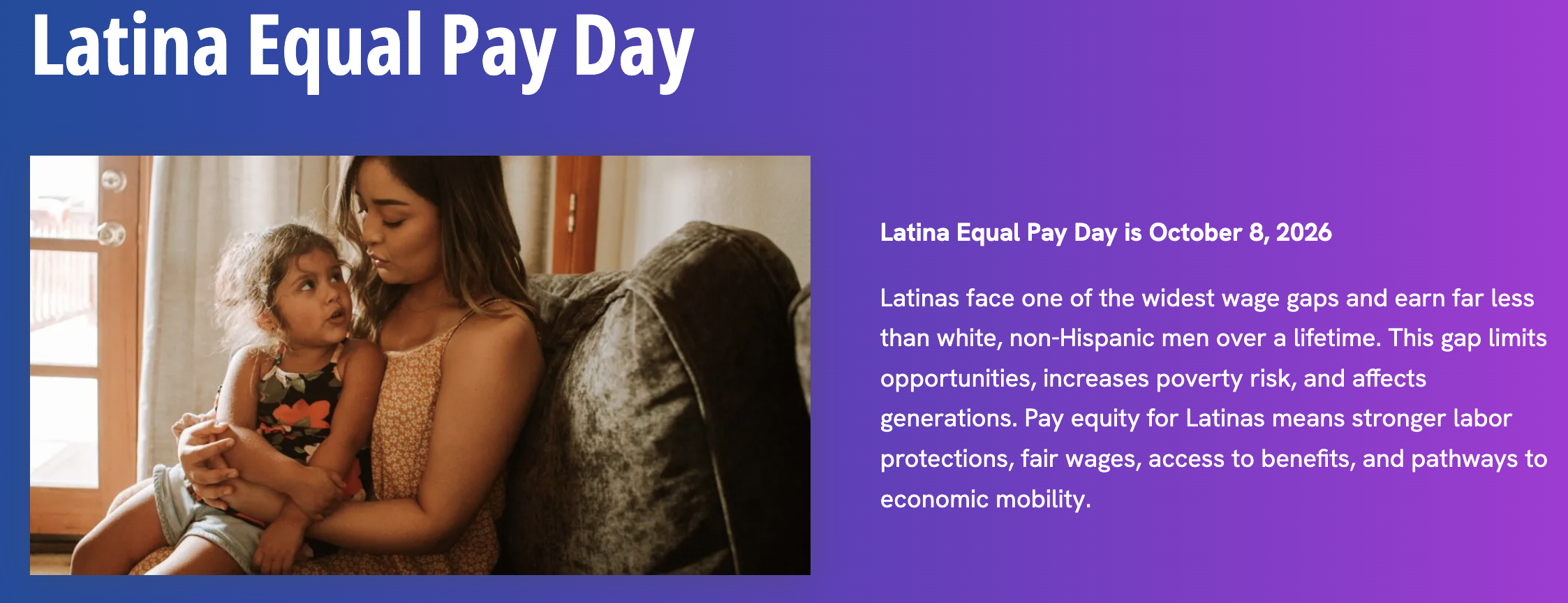
Everywhere you look, everything costs too much. Families are stretching every paycheck to cover soaring grocery bills. Too many are struggling to make rent. Child care, health care and gas bills continue to strain household budgets. Working people are doing everything right, yet too many are still falling behind.
For Latina workers, this crisis is compounded by a persistent and unjust pay gap. That’s why we observe Latina Equal Pay Day on Oct. 8 this year. It brings attention to the fact that among full-time, year-round workers, Latinas earned just 60 cents in 2025 for every dollar earned by white men. That wage gap isn’t just a statistic—it means smaller paychecks, fewer opportunities to build wealth, less financial security and harder choices about how to provide for their families.
Latinas deserve equal pay for equal work. Full stop. Anything less hurts working families and weakens our economy. A union contract can help level the playing field.
The evidence is clear. Hispanic workers overall receive a large wage boost from union membership, with a 16.4% wage premium compared with nonunion Latino workers. Latinas in a union earn about $15,288 more per year than Latinas who are not in a union. Most importantly, union contracts also help narrow the gender pay gap: Women working full time in union jobs earn 86.2 cents for every dollar earned by men who are union members—a significantly smaller gap than among nonunion workers.
Negotiated contracts replace arbitrary decisions with clear wage scales, transparent pay systems and enforceable workplace standards. Instead of leaving pay to bias or favoritism, union contracts establish fair standards that workers can enforce.
A report from the Economic Policy Institute finds that strengthening workers’ rights to organize and increasing union density would significantly reduce racial wage gaps while strengthening our economy and our democracy. Communities with higher union membership invest more in public education, are more likely to expand access to health care and provide stronger unemployment protections when people lose their jobs.
Our labor movement has always understood that civil rights and workers’ rights are inseparable. Dr. Martin Luther King Jr. recognized that truth when he stood with striking sanitation workers in Memphis, Tennessee. Today, we carry that legacy forward by fighting for workplaces where every worker is respected, protected and paid fairly.
Latina Equal Pay Day should not simply remind us how far we still have to go. It should remind us that we already know how to make progress. Progress happens when workers organize. It happens when we bargain together. And it happens when we stand in solidarity with one another. That’s why we must elect leaders who will fight to protect workers’ rights, strengthen unions and defend our democracy.
We must recommit ourselves to building an economy where every worker is valued, every paycheck reflects the dignity of work and every Latina receives the equal pay she has long deserved. Because when Latinas are paid fairly, every family can afford to build a better future.
Fred Redmond, the highest-ranking African American labor official in history, is the secretary-treasurer of the AFL-CIO, the nation’s largest labor federation representing 65 unions and nearly 15 million workers.
Art
Houston’s ‘call Me Mother’ Exhibit Opens Today, Spotlighting Black Maternal Health
AFRICAN-AMERICAN NEWS AND ISSUES – DALLAS — The Health Museum in Houston today opens “The Call Me Mother Experience,” an exhibition spotlighting Black maternal health through art and personal storytelling. Curated by Houston’s first Black poet laureate, Deborah D.E.E.P. Mouton, the project originated from her own poem written during a miscarriage.


HOUSTON — A new exhibition opening Sunday, Oct. 4, at The Health Museum is bringing Black maternal health into public view through art and personal storytelling.
The Call Me Mother Experience will be on display through Feb. 28, 2027. The museum lists a preview reception today from 3 to 5 p.m. at 1515 Hermann Drive, with tickets priced at $5 for members and $15 for nonmembers.
A personal story becomes a community conversation
According to the museum, founder, curator and lead artist Deborah D.E.E.P. Mouton developed the project from a poem she wrote during a miscarriage. The installation combines films, recorded interviews, visual artwork and contributions created with community members.
Mouton, Houston’s first Black poet laureate, discussed the exhibition and her connection to its subject in an Oct. 1 appearance on KPRC’s Houston Life. The station described the project as addressing the unequal burden of pregnancy-related illness and death faced by Black women in Harris County.
An announcement distributed by the Call Me Mother Experience says the initiative will also reach community locations and faith-based organizations across Greater Houston. Those additional settings are intended to extend the conversation beyond a museum visit.
What visitors can expect
The museum says reception guests can explore the exhibit, hear the curator and meet participating artists. Reception admission includes general museum entry; refreshments are available while supplies last.
The featured image accompanying this article is an original illustrative concept, not a photograph of the exhibition or its artwork.
Sources and visitor information:The Health Museum exhibition listing; preview reception details and tickets; KPRC Houston Life; organizer announcement.
The post Houston’s ‘Call Me Mother’ Exhibit Opens Today, Spotlighting Black Maternal Health appeared first on African American News and Issues.
Based on reporting by African-American News and Issues – Dallas.
Black Press
Should You Have to Pay to Hear the Gospel?
ST. LOUIS AMERICAN — Pastor Philip Anthony Mitchell of Atlanta’s 2819 CHURCH and Tim Timberlake of Celebration Church in Jacksonville, Florida, are at the center of a social media debate. The controversy stems from ticket prices for their “Street Preachers” podcast tour, with general admission tickets reportedly costing around $60 and VIP options up to $200.

For generations, the Black church has passed the offering plate to keep the lights on, pay the preacher, help the poor and carry the Gospel beyond its walls. But what happens when the preacher leaves the sanctuary, takes a popular Christian podcast on tour — and charges admission?
That question has placed Pastor Philip Anthony Mitchell, founder and lead pastor of Atlanta’s fast-growing 2819 CHURCH, at the center of a heated social media debate.
Mitchell and Tim Timberlake, senior pastor of Celebration Church in Jacksonville, Florida, host “Street Preachers,” which its official website describes as a “raw, unfiltered podcast” committed to spreading the Gospel.
‘A brood of vipers’
The controversy began after ticket prices for the podcast’s 2026 tour circulated online. General admission tickets reportedly cost about $60 before fees, with premium options, including a VIP meet-and-greet package, priced at $200. Critics questioned whether ministers should charge people to hear the Gospel.
Others defended the pastors, arguing that Christian events require venues, transportation, security, equipment and staff.
Mitchell answered critics from the pulpit last month, calling them “a brood of vipers.” He said the podcast is a separate, personal project and that neither his church nor Timberlake’s is bankrolling it.
“Now we have decided to go on a tour to take the gospel to cities, and because that’s not funded by 2819, and it’s not funded by Celebration Church, Tim and I gotta do that with our own pockets,” Mitchell said. “It’s why there is tickets. We have to pay for venues and security and productions and staff from our own pockets.”
Mitchell called some critics “ignorant” and said they did not know that a child was healed through faith during one of the events.
“And you want to complain about a 60 ticket?” he said. “So hate on!”
Worship service vs. media event
Mitchell maintains that “Street Preachers” is an independently produced podcast tour, not a worship service, and that ticket revenue helps cover production costs.
Yet the presence of pastors, Scripture and Gospel language makes the distinction less clear to some believers.
The official tour website lists all eight 2026 stops as sold out. Promotional material announcing additional dates promised, “Better ticket options. Same Gospel. Same move of God.”
Corporate prayer gathering
The language gets to the heart of the dispute. Some Christians argue that no one should be kept outside because they cannot afford a ticket. Others say the Gospel remains free even when people pay for the venue and experience surrounding its presentation.
The paid podcast tour, however, is not Mitchell’s only large-scale gathering. On Oct. 10, 2819 CHURCH will host “ACCESS — That Powerful Hour of Prayer” at AT&T Stadium in Arlington, Texas. Admission is free.
2819 CHURCH has said 80,000 free tickets were claimed before registration reopened.
The contrast raises another question: What makes one Gospel-centered event a ministry supported by donors and another a production supported by customers?
Unfiltered preaching, youth appeal
Mitchell’s congregation, composed largely of young Black adults, grew from fewer than 200 weekly worshippers in 2023 to about 6,000, according to the church. Some worshippers arrive before sunrise to secure a place inside.
His appeal rests partly in an intense, vulnerable and raw preaching style.
“I’m preaching without watering that down, without filtering out things that we think might be too controversial,” Mitchell told The Associated Press.
That visibility has also brought scrutiny of his theology, associations, travel, security and the businesses surrounding his ministry.
But the controversy reaches beyond Mitchell and Timberlake. Christian music concerts charge admission. Seminaries charge tuition. Religious publishers sell Bibles, books and devotionals. Churches pay musicians, media teams and guest preachers. Money becomes particularly uncomfortable, however, when an event is presented simultaneously as ministry and entertainment.
Ministry vs. entertainment
Supporters should not assume every dollar collected becomes personal profit. Critics, however, question whether lower-cost seats, sponsored tickets or free admission for people who cannot pay should be part of a Gospel-centered event.
The Black church always has required resources for ministry. It also has carried a sacred responsibility to make room for people with little or nothing to give.
The sold-out “Street Preachers” tour shows people are willing to pay to attend. The free ACCESS gathering offers a different model. The challenge is preserving that open door as Christian ministry increasingly adopts the machinery — and economics — of popular entertainment.
The post Should you have to pay to hear the Gospel? appeared first on St. Louis American.
Based on reporting by St. Louis American.
Black Press
NCCU Ramping up for the 89th Ultimate Homecoming Experience
NORTH CAROLINA CENTRAL UNIVERSITY – CAMPUS ECHO — N.C. Central University is preparing for its 89th Ultimate Homecoming Experience, a week-long celebration. Thousands of students, family, friends, and alumni are expected to gather on campus for festivities including the Homecoming Countdown, parade, Miss and Mister NCCU Coronation, concerts, and the football game.

This Saturday N.C. Central University will kick off its 89th Ultimate Homecoming Experience — a week-long celebration bringing thousands of students, family, friends and alumni to campus.
This year’s festivities include the Homecoming Countdown, parade, Miss and Mister NCCU Coronation, concerts and the football game.
The number of visitors to the football game on Saturday, Oct. 10 is expected to reach at least 10,000 — O’Kelly Riddick Stadium’s capacity, with NCCU’s recent enrollment increase of more than 10,000 students.
The Eagles will face William & Mary after playing against the Campbell University’s Fighting Camels on Oct 3.
Students are already expressing excitement for the upcoming festivities.
“I’m excited for homecoming because I can meet alumni and go outside and party with my fellow eagles,” Digital Filmmaking junior Rhese Gardner said. “I’m also really looking forward to the Greek Bowl because there’s a lot going on.”
He added that even though he’s disappointed this semester’s Oil Spill was canceled, he’s still excited for the other events like the parade and concerts.
Here is a list of the week’s on-campus events:
- Oct. 3 – Homecoming Countdown
- Oct. 4 – Gospel Concert
- Oct. 5 – Coronation of Miss and Mister NCCU
- Oct. 6 – 10:40 Break
- Oct. 6 – Homecoming Experience Showcase
- Oct. 7 – Fried Chicken Wednesday
- Oct. 7 – Festival Block Party
- Oct. 7 – Late Night Breakfast
- Oct. 8 – Back to the Nest Young Alumni Mixer
- Oct. 8 – Old School Greek Stroll Off
- Oct. 8 – Hip-Hop Concert
- Oct. 9 – Step Show
- Oct. 10 – Football Game
The post NCCU ramping up for the 89th Ultimate Homecoming Experience first appeared on Campus Echo Online.
Based on reporting by North Carolina Central University – Campus Echo.
Black Press
Botham Jean’s Killer Granted Parole 7 Years After His Murder
MICHIGAN CHRONICLE — Former Dallas police officer Amber Guyger has been granted parole, seven years after her conviction for murdering Botham Jean inside his Dallas apartment. The Texas Board of Pardons and Paroles approved her release on October 1, seven years to the day after her murder conviction. Guyger was convicted in 2019 and sentenced to 10 years in prison for Jean’s 2018 death.
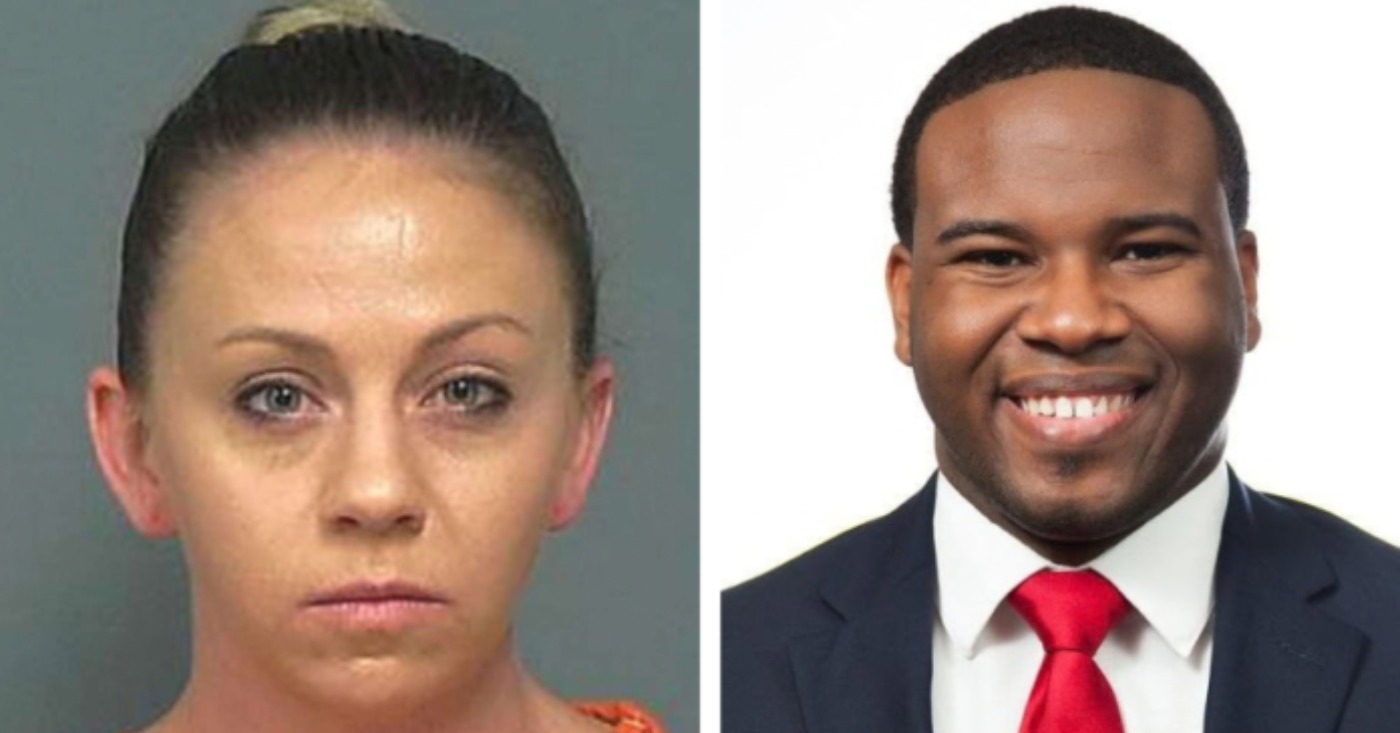
Former Dallas police officerAmber Guyger has been granted parole seven years after she was convicted of murdering her neighbor,Botham Jean, inside his Dallas apartment.
The Texas Board of Pardons and Paroles approved Guyger’s release Thursday (October 1), seven years to the day after Guyger was convicted of Jean’s murder, according to NBC News.
In 2019, a jury convicted Guyger of murder and she was sentenced to 10 years in prison for Jean’s 2018 death. Her conviction and 10-year sentence were upheld on appeal in 2022.
Geyger’s first parole request was denied in 2024, NBC Dallas-Fort Worth reported.
The Dallas Police Department fired her after the shooting. During her trial, Guyger testified that she mistakenly entered Jean’s apartment after returning home from work, believing it was her own apartment one floor below.
She said she saw Jean inside and fired her weapon because she believed he was an intruder, according to NBC News.
Jean was a 26-year-old Black man from St. Lucia who worked as an accountant. He was inside his home eating ice cream when Guyger entered and shot him, NBC DFW reported.
The parole board cited Guyger’s prison record in approving her release. According to NBC DFW, officials said she did not have a documented pattern of violent or assaultive arrests or convictions, maintained a satisfactory adjustment while incarcerated, and completed programs intended to help her obtain and maintain employment.
Jean’s family opposed the parole decision and had asked that Guyger serve her full 10-year sentence, according to NBC DFW.
Civil rights attorney Lee Merritt, who represents the family, told NBC DFW that the decision was deeply disappointing.
“They stood up again and again to ask that the full sentence be served,” Merritt said.
The Dallas Police Department told NBC DFW that the parole decision was outside its authority and that the department had no role in determining whether Guyger would be released. The department said its thoughts remained with Jean’s family and others affected by his death.
Guyger’s conviction and 10-year sentence were upheld on appeal in 2022.
A civil jury ordered Guyger to pay Jean’s family $98.6 million in damages in 2024, according to NBC DFW.
Guyger’s release date has not been announced. NBC News reported that the Texas Department of Criminal Justice will determine when she is released.
The Black Information Network is your source for Black News! Get the latest news 24/7 on The Black Information Network. Listen now on the iHeartRadio app or click HEREto tune in live.
Based on reporting by Michigan Chronicle.
Black History
Morehouse School of Medicine Fall Convocation Has Strong Ties to Nashville
TENNESSEE TRIBUNE — Morehouse School of Medicine recently held its 42nd Fall Convocation and White Coat and Pinning Ceremony, which highlighted strong connections to Nashville. Dr. Valerie Montgomery Rice, in her 12th year as president and CEO, leads the institution, which welcomed 355 new students.
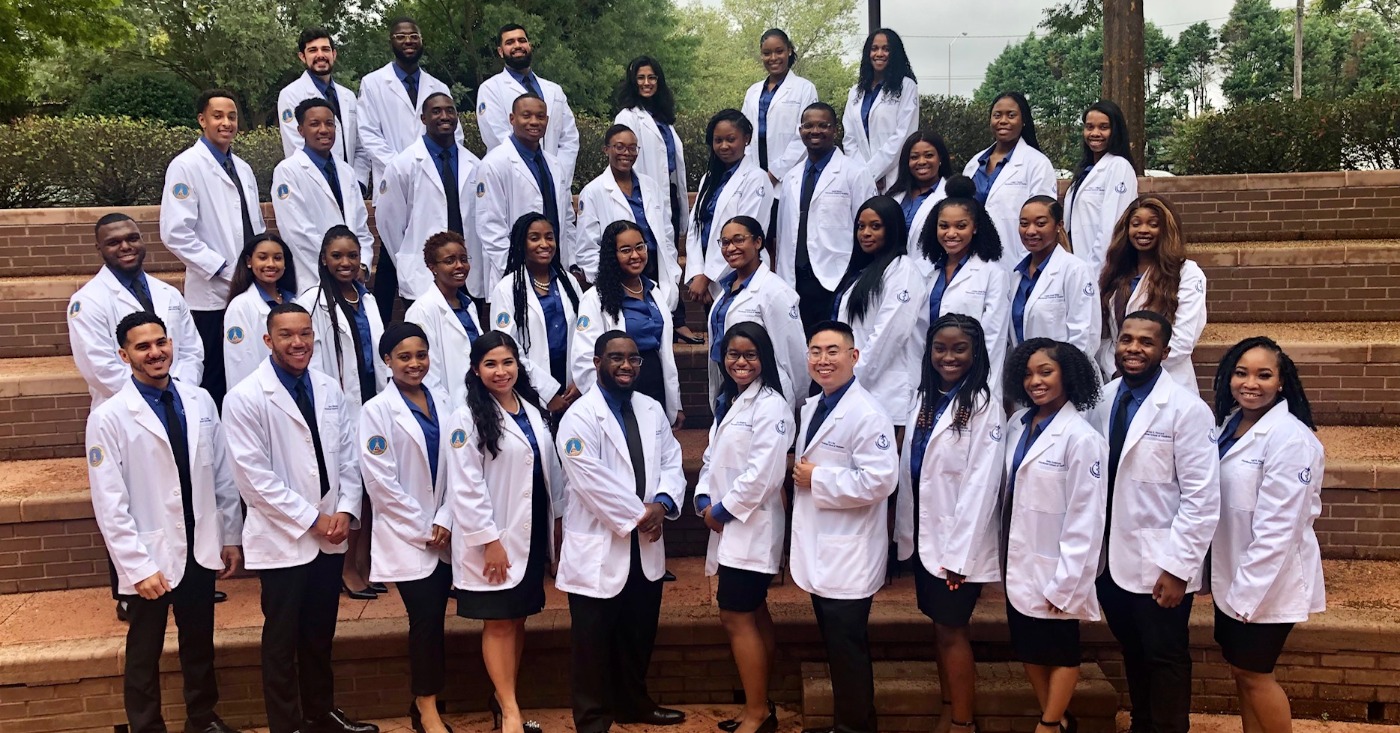
Morehouse School of Medicine held its 42nd Fall Convocation and White Coat and Pinning Ceremony on September 18, and it featured strong ties to Nashville. Dr. Valerie Montgomery Rice is completing her 12th year as president and CEO of Morehouse School of Medicine (MSM). The school boasts 355 students seeking degrees and certificates in the medical field.
“This entering class represents the future of medicine, science, public health and health care leadership,” said Valerie Montgomery Rice, MD, and FACOG. “As these students begin their journeys at Morehouse School of Medicine, they join a community grounded in excellence, service and our shared commitment to advancing health equity. We look forward to supporting their development as leaders who will transform the health and well-being of the communities they serve.”
Infectious diseases physician and scientist Dr. Barney S. Graham, MD, and PhD, served as the keynote speaker. He serves as the director of the David Satcher Global Health Equity Institute, professor of Medicine and Microbiology, Biochemistry and Immunology at Morehouse School of Medicine. He is an inventor of vaccines and monoclonal antibodies approved for human use to prevent or treat RSV, COVID-19 and Ebola. He joined MSM in 2022. He served in various positions at Vanderbilt University for 21 years.
Dr. Graham told the audience to “Embrace the Unseen” and focused on three points: Do the Best You can with what’s in front of you, Do what makes you come alive and Do the right thing even when no one is looking. He added, “Anything you do to improve mental and physical wellness and promote disease prevention will reduce health disparity by reducing the resources needed for treatment.”
His remarks commanded a roaring applause from the audience, which included his wife, Dr. Cynthia Turner Graham, and the former First Lady of Tennessee State University, Mrs. Edwina Hefner, a close friend to the family.
Based on reporting by Tennessee Tribune.


Second Row Fold: Cargo Space Impact Explained #shorts

Planting seeds of economic mobility for St. Louis students

Revitalizing Civics: Reclaiming Our Constitution

FDIC Study: Minority Banks & Lending for Communities #shorts

Car Seat Access: Test Your Third Row Layout! #shorts

CeCe Winans and friends turn Chaifetz Arena into a house of praise

Unitarian Universalist Congregation of Montclair | Preacher: Rev. Mark Thompson 10.11.26

Black-Owned Banks: FDIC Data Reveals Shocking Truth #shorts

2026 Defender 130X: Is The $110k SUV Worth It? #shorts

Mastering the Used Car Market ep11

Latest Massacre in Haiti Reveals Cruelty U.S. Deportations

The Youngest American Killed in the Vietnam War

OPINION: Nolan Wells’ Death One of Several Signifying Racial Terror Lives on in U.S. South

Passing for White, Fighting for Black America: The Courage of Walter White

OP-ED: Haiti TPS: Have We Lost Sense of Humanity?

OP-ED: If AI Is the New Language of Power, Then NAN Wants Black Communities Fluent

OP-ED: How Does Your State Rank for Pre-K?

Henry O. Flipper: A Trailblazer at West Point and Beyond

Asm. Smallwood-Cuevas’s Bill Repealing ‘Racist’ CalWORKs ‘Man-in-the-House’ Rule Clears Legislature

NBA All-Star Damian Lillard Returns Home for 15th Annual Backpack Giveaway
Second Row Fold: Cargo Space Impact Explained #shorts
Planting seeds of economic mobility for St. Louis students
Revitalizing Civics: Reclaiming Our Constitution
FDIC Study: Minority Banks & Lending for Communities #shorts
Car Seat Access: Test Your Third Row Layout! #shorts
CeCe Winans and friends turn Chaifetz Arena into a house of praise
Unitarian Universalist Congregation of Montclair | Preacher: Rev. Mark Thompson 10.11.26
Black-Owned Banks: FDIC Data Reveals Shocking Truth #shorts
2026 Defender 130X: Is The $110k SUV Worth It? #shorts
Mastering the Used Car Market ep11
-

 Black Press1 week ago
Zakiya Jendayi Arrested, Locked Out of Home by Sheriff’s Deputies
-

 Black Press6 days ago
A $2.1 Trillion Wellness Industry Never Built a Daily Practice for Black Children. So This Atlanta Family Did.
-

 Art6 days ago
Montclair Brewery: Brewing Culture, Community, History
-

 Black History1 week ago
Listening as a Lifeline: A Doula’s Witness to Black Maternal Health
-
 BlackPressUSA4 days ago
Latinas Deserve Equal Pay. Unions Help Make It Happen.
-

 Black Press6 days ago
COMMENTARY: But God!
