
BlackPressUSA
City to Give Up More Than 100 Shelter Beds Without a Fight


By Joe Dworetzky
Bay City News
In a city struggling under the weight of a federal injunction that prevents removal of tent encampments because of a shortage of shelter beds, one might think that the threat of losing more than 100 existing beds would raise an outcry.
Apparently, not so.
On Tuesday, the Commissioners of the Port of San Francisco will hear a staff presentation about a proposal that would give the city 10 months to wind down operations of a site near Pier 94 where currently 118 people experiencing homelessness live in trailers.
If that proposal is approved, new intake will end on Sept. 30 and people living in the camp will be required to leave by Nov. 31.
Emily Cohen, Deputy Director for Communications & Legislative Affairs for the city’s Department of Homelessness and Supportive Housing (HSH), is hopeful that the proposal will be approved.
The location – called “Site F” – was spun up in April of 2020, just after the coronavirus pandemic hit. The port agreed to accommodate the trailers – 94 provided by the state 29 leased by the city – while the health emergency lasted.
The emergency ended on Feb. 28, and, according to Cohen, the agreement between the city and the port ended the arrangement at that time. “No one’s pulling a fast one on us here,” Cohen said. “This is something that was always a part of the agreement, always a part of the understanding.”
Cohen said that port lands are dedicated for maritime uses and Site F was only allowed because of the COVID-19 emergency. According to Cohen, “The port’s hands are tied here. I don’t think they have the authority to allow this.”
Cohen says that the department would be thrilled to stay longer but will be thankful to get 10 months to close things up in a gradual and responsible way. The department hopes that it will be able to get a significant number of individuals into permanent housing and promises to work with the remainder to find shelter beds.
Most of the people living at Site F are from Bayview. Gwendolyn Westbrook, the controversial CEO of United Council of Human Services, has been involved with Site F since its inception. (UCHS has a contract with the city to operate the site, although according to an April 7 port staff report, “During the winddown, HSH will be changing site operators so there will be no subcontractor role with United Council after June 30, 2023.”)
In an interview Wednesday with Bay City News, Westbrook expressed concern over what would happen to the people at Site F if it were to close.
Westbrook says that despite the city’s hopes, many Site F residents will be back on the streets if Site F closes. She says Bayview is their home and many would rather be on the streets in Bayview than in a city shelter or navigation center elsewhere.
“They don’t want to go to the navigation center,” she said. “Navigation center has been there before these [trailers] were here, but they were living on the street. They could have went to the navigation center there…. They’re not going to no nav center. They are not.”
Westbrook wishes that city would fight to keep assets like Site F that benefit the Bayview community she serves. She asks, “Why would you close shelter places?”
Cohen isn’t as concerned. She said that the department has heard similar concerns before the closing of shelter-in-place sites but, when closure was imminent, residents were often willing to accept housing. But she acknowledges that “people do have strong ties to their neighborhoods.”
The seemingly genial closure of Site F comes despite a series of events that have made the availablity of shelter beds a matter of urgency.
A federal judge in December of 2022 enjoined the city from continuing to close tent encampments on city streets while there is a shortage of shelter beds.
According to testimony in the federal case, the city is short 4,397 shelter beds. The shortfall is so acute that the city has closed the shelter system to anyone unless referred by city workers.
This has created a situation in which the handful of beds that free up on a given day (as individuals exit the shelter system for housing or hospitalization or to return to the streets, etc.) are doled out bed-by-bed when city workers visit encampments.
Between the profound bed shortage and the injunction, conditions on the street have triggered an outcry from neighbors and businesses, and the languid pace at which HSH – the city’s lead agency on homelessness – is addressing the shortage of shelter beds has become an issue itself.
The City Board of Supervisors held a hearing on March 21 to consider what was supposed to have been a plan from HSH to end unsheltered homelessness.
The department declined to submit a plan because even with an additional $1.45 billion (a sum HSH reduced to $992 million hours before the hearing) and three years to spend it, the goal could not be achieved. (Public records reviewed by Bay City News showed that in earlier versions of the department’s report, it had proposed a nine-year effort to the same end but dropped the alternative from the final draft.)
District 8 Supervisor Rafael Mandelman so outraged by the department’s response that he said it was time to consider if HSH was the right agency to lead the city’s effort to deal with the problem of unsheltered homelessness.
At a press conference called by Mandelman before the hearing, resident groups and business owners talked in harsh terms about the impact that homelessness and crime are having on the city.
Perhaps the harshest words came from Barbara Perzigian, general manager of Hotel VIA, which is located near Oracle Park in the city’s South Beach neighborhood.
She said that San Francisco has “become the city where no one wants to go.”
In her opinion, unsheltered homelessness must be addressed with urgency. “We don’t have three years to wait because we’re all going to be out of business. We need to clean up the streets,” she said.
Beyond the loss of beds, the closure of Site F is another blow to the efforts of the city to test potential alternatives to traditional shelter models.
While Site F has not been without its share of problems, it has provided residents with personal space and autonomy that are missing in other models. Cohen says that more 300 people have been served at the site over the three years of operation and 38 have moved on to permanent housing.
She said, “it’s something we would certainly consider replicating if we could find the property for it… [but] finding a site appropriate for this stuff is incredibly hard.”
Each trailer at Site F contains a kitchen and bathroom and is powered by 24/7 electric service. There is a small medical clinic at the site.
Although the location is remote, there is a limited shuttle bus service. Many of the residents have cars and, according to program manager DeShawn Waters, many use them to get to work.
The impact of losing a site with three years of up-and-running operation is sharply evident when compared to the city’s difficulties in creating “Vehicle Triage Centers.”
After a pilot VTC with space for 29 vehicles closed in 2021, the city set out to create two more but only one has been implemented because despite months and months of searching, the city has not been able to find a suitable site for the second.
The one that has been put in place – the Bayview VTC – has been a parade of mistakes.
Despite a plan to create safe parking for 150 RVs, each connected to electric service, the city is 15 months into a 24-year lease without power and a site that only accommodates 49 vehicles.
A Bay City News analysis in February showed that the city spent a staggering annual $170,000 per person at the site in the first year of operations.
Given that experience, a site that has been in operation for three years would seem particularly valuable.
While the decision to extend the current arrangements beyond ten months is made by the port commissioners, the city is not without influence: the mayor appoints the port’s five commissioners and the supervisors approve their appointments.
The contention that Site F can only be sited on port land during a period of emergency appears open to question.
The Embarcadero Navigation Center is also on port lands and the supervisors recently approved a further extension of its operation to 2027. While that extension is subject to port commission approval, it seems unlikely that the supervisors would have bothered with the extension if the port was truly powerless to allow the use.
While the Burton Act and the public trust doctrine limit the use of port lands, the commission has found flexibility in the past to approve a wide variety of uses over the 800 acres it manages.
The greatest flexibility seems to be reserved for “interim uses” that pay market rate rent, only use temporary structures and do not prevent ultimate long-term development of the site. Interim uses need not be used for trust purposes.
The city’s Waterfront Plan says the area where Site F is located (Seawall Lot 344) can be made available for “interim uses” for up to 10 years.
But even if an emergency were required to use the port space, it would not seem unreasonable to conclude that the combination of the city’s lack of shelter beds and the federal injunction have created an emergency situation. (When the court order was entered, City Attorney David Chiu said publicly that the city was in “an impossible situation.”)
The question of whether HSH is pulling out all the stops to preserve the beds at Site F is likely to be of interest to at least some of the supervisors.
At a March 15 hearing of the supervisor’s Budget and Finance committee, Mandelman and District 11 Supervisor Ahsha Safai were very focused on whether HSH was doing all it could to get additional shelter beds in operation.
The supervisors called out the fact that the Embarcadero Navigation Center was only operating with 120 beds even though it was authorized for 200.
When Safai pressed for an explanation of why the city has left 80 possible shelter beds empty, HSH spokesperson Dylan Schneider said the city did not have the beds.
Having just heard about the authorization for 200 beds, Safai expressed confusion.
Schneider said the problem was the city had run out of beds — actual beds, the sort with four legs.
She blamed the supply chain.
Clearly troubled by her answer, Safai said, “with the crisis on the street, to have beds sitting empty for as long as they have been, we have to come up with a better solution, we have figure something out.”
He continued, “I understand that the supply chain is real, but that doesn’t feel like an acceptable answer.”
It remains to be seen if HSH’s 10-month winddown at Site F is any more acceptable.
Copyright © 2023 Bay City News, Inc. All rights reserved. Republication, rebroadcast or redistribution without the express written consent of Bay City News, Inc. is prohibited. Bay City News is a 24/7 news service covering the greater Bay Area.
The post City to Give Up More Than 100 Shelter Beds Without a Fight first appeared on Post News Group. This article originally appeared in Post News Group.










By Fred Redmond
Everywhere you look, everything costs too much. Families are stretching every paycheck to cover soaring grocery bills. Too many are struggling to make rent. Child care, health care and gas bills continue to strain household budgets. Working people are doing everything right, yet too many are still falling behind.
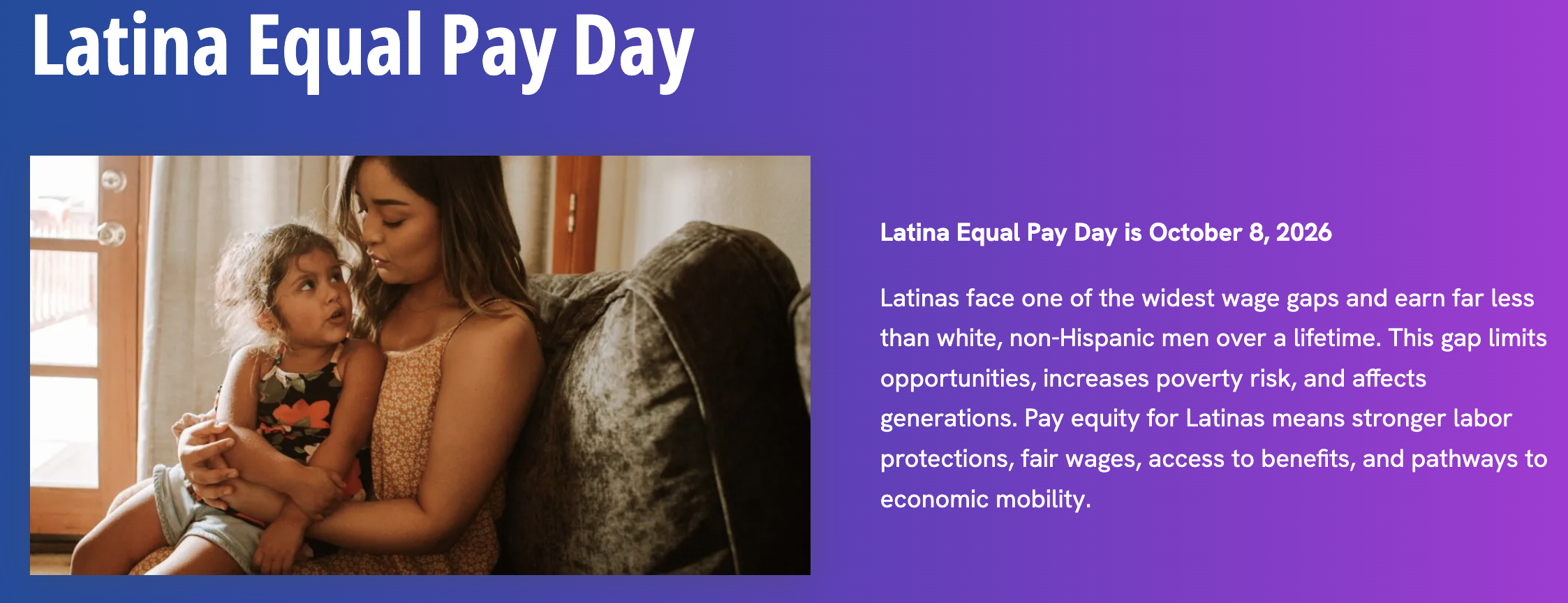
For Latina workers, this crisis is compounded by a persistent and unjust pay gap. That’s why we observe Latina Equal Pay Day on Oct. 8 this year. It brings attention to the fact that among full-time, year-round workers, Latinas earned just 60 cents in 2025 for every dollar earned by white men. That wage gap isn’t just a statistic—it means smaller paychecks, fewer opportunities to build wealth, less financial security and harder choices about how to provide for their families.
Latinas deserve equal pay for equal work. Full stop. Anything less hurts working families and weakens our economy. A union contract can help level the playing field.
The evidence is clear. Hispanic workers overall receive a large wage boost from union membership, with a 16.4% wage premium compared with nonunion Latino workers. Latinas in a union earn about $15,288 more per year than Latinas who are not in a union. Most importantly, union contracts also help narrow the gender pay gap: Women working full time in union jobs earn 86.2 cents for every dollar earned by men who are union members—a significantly smaller gap than among nonunion workers.
Negotiated contracts replace arbitrary decisions with clear wage scales, transparent pay systems and enforceable workplace standards. Instead of leaving pay to bias or favoritism, union contracts establish fair standards that workers can enforce.
A report from the Economic Policy Institute finds that strengthening workers’ rights to organize and increasing union density would significantly reduce racial wage gaps while strengthening our economy and our democracy. Communities with higher union membership invest more in public education, are more likely to expand access to health care and provide stronger unemployment protections when people lose their jobs.
Our labor movement has always understood that civil rights and workers’ rights are inseparable. Dr. Martin Luther King Jr. recognized that truth when he stood with striking sanitation workers in Memphis, Tennessee. Today, we carry that legacy forward by fighting for workplaces where every worker is respected, protected and paid fairly.
Latina Equal Pay Day should not simply remind us how far we still have to go. It should remind us that we already know how to make progress. Progress happens when workers organize. It happens when we bargain together. And it happens when we stand in solidarity with one another. That’s why we must elect leaders who will fight to protect workers’ rights, strengthen unions and defend our democracy.
We must recommit ourselves to building an economy where every worker is valued, every paycheck reflects the dignity of work and every Latina receives the equal pay she has long deserved. Because when Latinas are paid fairly, every family can afford to build a better future.
Fred Redmond, the highest-ranking African American labor official in history, is the secretary-treasurer of the AFL-CIO, the nation’s largest labor federation representing 65 unions and nearly 15 million workers.
Art
Houston’s ‘call Me Mother’ Exhibit Opens Today, Spotlighting Black Maternal Health
AFRICAN-AMERICAN NEWS AND ISSUES – DALLAS — The Health Museum in Houston today opens “The Call Me Mother Experience,” an exhibition spotlighting Black maternal health through art and personal storytelling. Curated by Houston’s first Black poet laureate, Deborah D.E.E.P. Mouton, the project originated from her own poem written during a miscarriage.

HOUSTON — A new exhibition opening Sunday, Oct. 4, at The Health Museum is bringing Black maternal health into public view through art and personal storytelling.
The Call Me Mother Experience will be on display through Feb. 28, 2027. The museum lists a preview reception today from 3 to 5 p.m. at 1515 Hermann Drive, with tickets priced at $5 for members and $15 for nonmembers.
A personal story becomes a community conversation
According to the museum, founder, curator and lead artist Deborah D.E.E.P. Mouton developed the project from a poem she wrote during a miscarriage. The installation combines films, recorded interviews, visual artwork and contributions created with community members.
Mouton, Houston’s first Black poet laureate, discussed the exhibition and her connection to its subject in an Oct. 1 appearance on KPRC’s Houston Life. The station described the project as addressing the unequal burden of pregnancy-related illness and death faced by Black women in Harris County.
An announcement distributed by the Call Me Mother Experience says the initiative will also reach community locations and faith-based organizations across Greater Houston. Those additional settings are intended to extend the conversation beyond a museum visit.
What visitors can expect
The museum says reception guests can explore the exhibit, hear the curator and meet participating artists. Reception admission includes general museum entry; refreshments are available while supplies last.
The featured image accompanying this article is an original illustrative concept, not a photograph of the exhibition or its artwork.
Sources and visitor information:The Health Museum exhibition listing; preview reception details and tickets; KPRC Houston Life; organizer announcement.
The post Houston’s ‘Call Me Mother’ Exhibit Opens Today, Spotlighting Black Maternal Health appeared first on African American News and Issues.
Based on reporting by African-American News and Issues – Dallas.
Black Press
Should You Have to Pay to Hear the Gospel?
ST. LOUIS AMERICAN — Pastor Philip Anthony Mitchell of Atlanta’s 2819 CHURCH and Tim Timberlake of Celebration Church in Jacksonville, Florida, are at the center of a social media debate. The controversy stems from ticket prices for their “Street Preachers” podcast tour, with general admission tickets reportedly costing around $60 and VIP options up to $200.

For generations, the Black church has passed the offering plate to keep the lights on, pay the preacher, help the poor and carry the Gospel beyond its walls. But what happens when the preacher leaves the sanctuary, takes a popular Christian podcast on tour — and charges admission?
That question has placed Pastor Philip Anthony Mitchell, founder and lead pastor of Atlanta’s fast-growing 2819 CHURCH, at the center of a heated social media debate.
Mitchell and Tim Timberlake, senior pastor of Celebration Church in Jacksonville, Florida, host “Street Preachers,” which its official website describes as a “raw, unfiltered podcast” committed to spreading the Gospel.
‘A brood of vipers’
The controversy began after ticket prices for the podcast’s 2026 tour circulated online. General admission tickets reportedly cost about $60 before fees, with premium options, including a VIP meet-and-greet package, priced at $200. Critics questioned whether ministers should charge people to hear the Gospel.
Others defended the pastors, arguing that Christian events require venues, transportation, security, equipment and staff.
Mitchell answered critics from the pulpit last month, calling them “a brood of vipers.” He said the podcast is a separate, personal project and that neither his church nor Timberlake’s is bankrolling it.
“Now we have decided to go on a tour to take the gospel to cities, and because that’s not funded by 2819, and it’s not funded by Celebration Church, Tim and I gotta do that with our own pockets,” Mitchell said. “It’s why there is tickets. We have to pay for venues and security and productions and staff from our own pockets.”
Mitchell called some critics “ignorant” and said they did not know that a child was healed through faith during one of the events.
“And you want to complain about a 60 ticket?” he said. “So hate on!”
Worship service vs. media event
Mitchell maintains that “Street Preachers” is an independently produced podcast tour, not a worship service, and that ticket revenue helps cover production costs.
Yet the presence of pastors, Scripture and Gospel language makes the distinction less clear to some believers.
The official tour website lists all eight 2026 stops as sold out. Promotional material announcing additional dates promised, “Better ticket options. Same Gospel. Same move of God.”
Corporate prayer gathering
The language gets to the heart of the dispute. Some Christians argue that no one should be kept outside because they cannot afford a ticket. Others say the Gospel remains free even when people pay for the venue and experience surrounding its presentation.
The paid podcast tour, however, is not Mitchell’s only large-scale gathering. On Oct. 10, 2819 CHURCH will host “ACCESS — That Powerful Hour of Prayer” at AT&T Stadium in Arlington, Texas. Admission is free.
2819 CHURCH has said 80,000 free tickets were claimed before registration reopened.
The contrast raises another question: What makes one Gospel-centered event a ministry supported by donors and another a production supported by customers?
Unfiltered preaching, youth appeal
Mitchell’s congregation, composed largely of young Black adults, grew from fewer than 200 weekly worshippers in 2023 to about 6,000, according to the church. Some worshippers arrive before sunrise to secure a place inside.
His appeal rests partly in an intense, vulnerable and raw preaching style.
“I’m preaching without watering that down, without filtering out things that we think might be too controversial,” Mitchell told The Associated Press.
That visibility has also brought scrutiny of his theology, associations, travel, security and the businesses surrounding his ministry.
But the controversy reaches beyond Mitchell and Timberlake. Christian music concerts charge admission. Seminaries charge tuition. Religious publishers sell Bibles, books and devotionals. Churches pay musicians, media teams and guest preachers. Money becomes particularly uncomfortable, however, when an event is presented simultaneously as ministry and entertainment.
Ministry vs. entertainment
Supporters should not assume every dollar collected becomes personal profit. Critics, however, question whether lower-cost seats, sponsored tickets or free admission for people who cannot pay should be part of a Gospel-centered event.
The Black church always has required resources for ministry. It also has carried a sacred responsibility to make room for people with little or nothing to give.
The sold-out “Street Preachers” tour shows people are willing to pay to attend. The free ACCESS gathering offers a different model. The challenge is preserving that open door as Christian ministry increasingly adopts the machinery — and economics — of popular entertainment.
The post Should you have to pay to hear the Gospel? appeared first on St. Louis American.
Based on reporting by St. Louis American.
Black Press
NCCU Ramping up for the 89th Ultimate Homecoming Experience
NORTH CAROLINA CENTRAL UNIVERSITY – CAMPUS ECHO — N.C. Central University is preparing for its 89th Ultimate Homecoming Experience, a week-long celebration. Thousands of students, family, friends, and alumni are expected to gather on campus for festivities including the Homecoming Countdown, parade, Miss and Mister NCCU Coronation, concerts, and the football game.

This Saturday N.C. Central University will kick off its 89th Ultimate Homecoming Experience — a week-long celebration bringing thousands of students, family, friends and alumni to campus.
This year’s festivities include the Homecoming Countdown, parade, Miss and Mister NCCU Coronation, concerts and the football game.
The number of visitors to the football game on Saturday, Oct. 10 is expected to reach at least 10,000 — O’Kelly Riddick Stadium’s capacity, with NCCU’s recent enrollment increase of more than 10,000 students.
The Eagles will face William & Mary after playing against the Campbell University’s Fighting Camels on Oct 3.
Students are already expressing excitement for the upcoming festivities.
“I’m excited for homecoming because I can meet alumni and go outside and party with my fellow eagles,” Digital Filmmaking junior Rhese Gardner said. “I’m also really looking forward to the Greek Bowl because there’s a lot going on.”
He added that even though he’s disappointed this semester’s Oil Spill was canceled, he’s still excited for the other events like the parade and concerts.
Here is a list of the week’s on-campus events:
- Oct. 3 – Homecoming Countdown
- Oct. 4 – Gospel Concert
- Oct. 5 – Coronation of Miss and Mister NCCU
- Oct. 6 – 10:40 Break
- Oct. 6 – Homecoming Experience Showcase
- Oct. 7 – Fried Chicken Wednesday
- Oct. 7 – Festival Block Party
- Oct. 7 – Late Night Breakfast
- Oct. 8 – Back to the Nest Young Alumni Mixer
- Oct. 8 – Old School Greek Stroll Off
- Oct. 8 – Hip-Hop Concert
- Oct. 9 – Step Show
- Oct. 10 – Football Game
The post NCCU ramping up for the 89th Ultimate Homecoming Experience first appeared on Campus Echo Online.
Based on reporting by North Carolina Central University – Campus Echo.
Black Press
Botham Jean’s Killer Granted Parole 7 Years After His Murder
MICHIGAN CHRONICLE — Former Dallas police officer Amber Guyger has been granted parole, seven years after her conviction for murdering Botham Jean inside his Dallas apartment. The Texas Board of Pardons and Paroles approved her release on October 1, seven years to the day after her murder conviction. Guyger was convicted in 2019 and sentenced to 10 years in prison for Jean’s 2018 death.
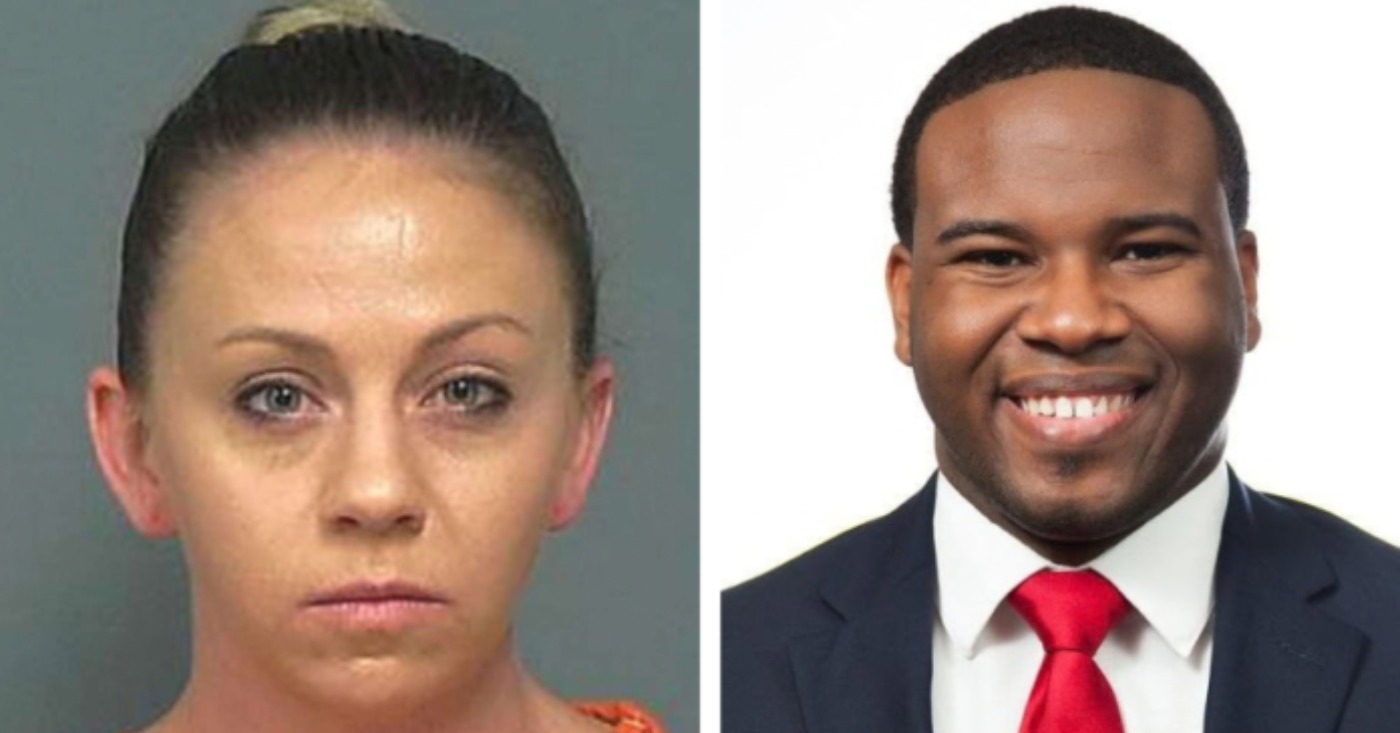
Former Dallas police officerAmber Guyger has been granted parole seven years after she was convicted of murdering her neighbor,Botham Jean, inside his Dallas apartment.
The Texas Board of Pardons and Paroles approved Guyger’s release Thursday (October 1), seven years to the day after Guyger was convicted of Jean’s murder, according to NBC News.
In 2019, a jury convicted Guyger of murder and she was sentenced to 10 years in prison for Jean’s 2018 death. Her conviction and 10-year sentence were upheld on appeal in 2022.
Geyger’s first parole request was denied in 2024, NBC Dallas-Fort Worth reported.
The Dallas Police Department fired her after the shooting. During her trial, Guyger testified that she mistakenly entered Jean’s apartment after returning home from work, believing it was her own apartment one floor below.
She said she saw Jean inside and fired her weapon because she believed he was an intruder, according to NBC News.
Jean was a 26-year-old Black man from St. Lucia who worked as an accountant. He was inside his home eating ice cream when Guyger entered and shot him, NBC DFW reported.
The parole board cited Guyger’s prison record in approving her release. According to NBC DFW, officials said she did not have a documented pattern of violent or assaultive arrests or convictions, maintained a satisfactory adjustment while incarcerated, and completed programs intended to help her obtain and maintain employment.
Jean’s family opposed the parole decision and had asked that Guyger serve her full 10-year sentence, according to NBC DFW.
Civil rights attorney Lee Merritt, who represents the family, told NBC DFW that the decision was deeply disappointing.
“They stood up again and again to ask that the full sentence be served,” Merritt said.
The Dallas Police Department told NBC DFW that the parole decision was outside its authority and that the department had no role in determining whether Guyger would be released. The department said its thoughts remained with Jean’s family and others affected by his death.
Guyger’s conviction and 10-year sentence were upheld on appeal in 2022.
A civil jury ordered Guyger to pay Jean’s family $98.6 million in damages in 2024, according to NBC DFW.
Guyger’s release date has not been announced. NBC News reported that the Texas Department of Criminal Justice will determine when she is released.
The Black Information Network is your source for Black News! Get the latest news 24/7 on The Black Information Network. Listen now on the iHeartRadio app or click HEREto tune in live.
Based on reporting by Michigan Chronicle.
Black History
Morehouse School of Medicine Fall Convocation Has Strong Ties to Nashville
TENNESSEE TRIBUNE — Morehouse School of Medicine recently held its 42nd Fall Convocation and White Coat and Pinning Ceremony, which highlighted strong connections to Nashville. Dr. Valerie Montgomery Rice, in her 12th year as president and CEO, leads the institution, which welcomed 355 new students.
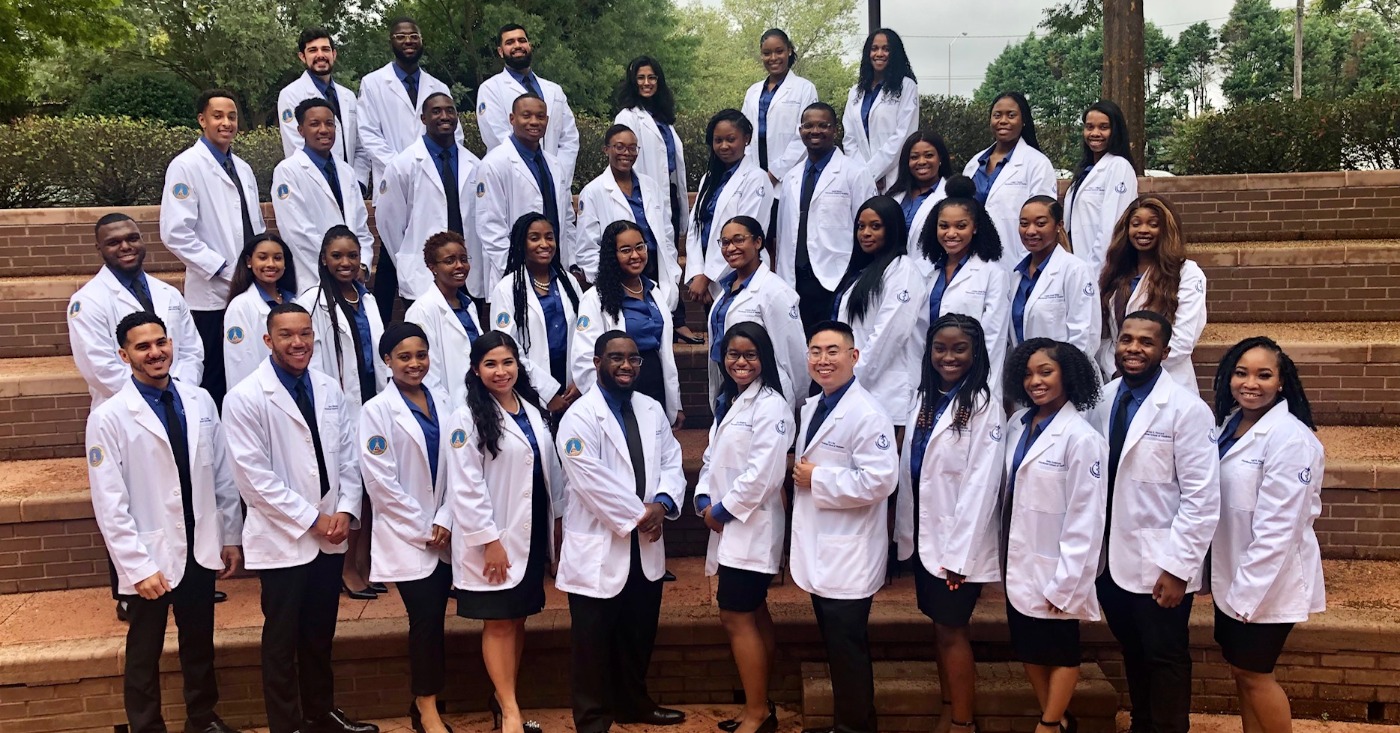
Morehouse School of Medicine held its 42nd Fall Convocation and White Coat and Pinning Ceremony on September 18, and it featured strong ties to Nashville. Dr. Valerie Montgomery Rice is completing her 12th year as president and CEO of Morehouse School of Medicine (MSM). The school boasts 355 students seeking degrees and certificates in the medical field.
“This entering class represents the future of medicine, science, public health and health care leadership,” said Valerie Montgomery Rice, MD, and FACOG. “As these students begin their journeys at Morehouse School of Medicine, they join a community grounded in excellence, service and our shared commitment to advancing health equity. We look forward to supporting their development as leaders who will transform the health and well-being of the communities they serve.”
Infectious diseases physician and scientist Dr. Barney S. Graham, MD, and PhD, served as the keynote speaker. He serves as the director of the David Satcher Global Health Equity Institute, professor of Medicine and Microbiology, Biochemistry and Immunology at Morehouse School of Medicine. He is an inventor of vaccines and monoclonal antibodies approved for human use to prevent or treat RSV, COVID-19 and Ebola. He joined MSM in 2022. He served in various positions at Vanderbilt University for 21 years.
Dr. Graham told the audience to “Embrace the Unseen” and focused on three points: Do the Best You can with what’s in front of you, Do what makes you come alive and Do the right thing even when no one is looking. He added, “Anything you do to improve mental and physical wellness and promote disease prevention will reduce health disparity by reducing the resources needed for treatment.”
His remarks commanded a roaring applause from the audience, which included his wife, Dr. Cynthia Turner Graham, and the former First Lady of Tennessee State University, Mrs. Edwina Hefner, a close friend to the family.
Based on reporting by Tennessee Tribune.


Mastering the Used Car Market ep11

2026 Defender 130 X Is It Worth $110,110 for Your Family?

“Money, Power, and Respect,” (SEIU) President April Verrett

Car Takeoff Hesitation? Daylight Test Drive Guide #shorts

Your Vote Matters…Protect Your Freedoms!

The Black Bank That Survived the 1893 Panic #shorts

Why A Black Bank Started From A House #shorts

Defender ONE-on-ONE: U.S. Rep. Christian Menefee

How To Manage Conflict at Work

How To Overcome Financial Setbacks and Win

Latest Massacre in Haiti Reveals Cruelty U.S. Deportations

The Youngest American Killed in the Vietnam War

Booked and Unbound: The Legacy of Black Women’s Literary Circles

Passing for White, Fighting for Black America: The Courage of Walter White

OPINION: Nolan Wells’ Death One of Several Signifying Racial Terror Lives on in U.S. South

OP-ED: Haiti TPS: Have We Lost Sense of Humanity?

OP-ED: If AI Is the New Language of Power, Then NAN Wants Black Communities Fluent

OP-ED: How Does Your State Rank for Pre-K?

Henry O. Flipper: A Trailblazer at West Point and Beyond

NFL: NFC Preview | The Rams will NOT make the Super Bowl
Mastering the Used Car Market ep11
2026 Defender 130 X Is It Worth $110,110 for Your Family?
“Money, Power, and Respect,” (SEIU) President April Verrett
Car Takeoff Hesitation? Daylight Test Drive Guide #shorts
Your Vote Matters…Protect Your Freedoms!
The Black Bank That Survived the 1893 Panic #shorts
Why A Black Bank Started From A House #shorts
Defender ONE-on-ONE: U.S. Rep. Christian Menefee
How To Manage Conflict at Work
How To Overcome Financial Setbacks and Win
-

 Black Press5 days ago
A $2.1 Trillion Wellness Industry Never Built a Daily Practice for Black Children. So This Atlanta Family Did.
-

 Black Press7 days ago
Zakiya Jendayi Arrested, Locked Out of Home by Sheriff’s Deputies
-

 Black History7 days ago
Listening as a Lifeline: A Doula’s Witness to Black Maternal Health
-
 BlackPressUSA3 days ago
Latinas Deserve Equal Pay. Unions Help Make It Happen.
-

 Black Press5 days ago
COMMENTARY: But God!
-

 Black Press7 days ago
‘We Don’t Talk Trash — We Pick Up Trash!’
