
Black Press
Why Childhood Memories Are Still Being Framed Through School Portaits
NNPA NEWSWIRE — Families keep buying them, and schools keep scheduling them for a reason. Structured, annual photos are far more likely to be printed and displayed than everyday snapshots, giving them a permanent place in homes.


By Billie Pollisotto
School portraits still shape childhood memories because they offer a consistent, year-by-year snapshot of growth that families return to. They capture milestones in a structured way that everyday photos rarely match. That repetition turns simple images into lasting reference points.
The photo might be awkward, the smile a little forced, the backdrop unmistakably “school.” Still, it ends up framed, saved, and revisited years later. School portraits have a way of outlasting every casual photo on your phone.
Families keep buying them, and schools keep scheduling them for a reason. Structured, annual photos are far more likely to be printed and displayed than everyday snapshots, giving them a permanent place in homes.
Why Do School Portraits Hold Emotional Value?
School portraits hold emotional value because they capture more than appearance; they reflect a specific moment in a child’s life that cannot be recreated. Each image becomes tied to memories of friendships, routines, milestones, and personal growth that defined that year.
The emotional connection often deepens over time. What starts as a simple photo can later represent a full chapter of childhood, bringing back details that might otherwise fade without a visual reminder for emotional storytelling.
Photography companies like Shooting Stars Productions help shape this experience by creating a setting where those moments feel intentional and preserved. The structure of a formal portrait session gives the image a sense of importance, making it more likely to be kept, revisited, and shared by families.
Printed Vs. Digital Pictures
Printed and digital pictures both preserve memories, but they offer very different experiences over time. School portraits often highlight this difference because families tend to treat printed photos as lasting keepsakes rather than temporary files.
Printed photos create a stronger physical connection. They are placed in frames, added to albums, shared during family visits, and displayed in areas where they are regularly seen. That visibility keeps memories active and easier to revisit without needing to search through devices.
Digital pictures offer convenience and volume. Families can store thousands of images without worrying about space, and share them across devices immediately. This accessibility makes it easier to capture everyday moments that might otherwise be missed.
The long-term difference comes down to how each format is used. Printed photos are more likely to be preserved and passed down, while digital images can become buried in storage if they are not intentionally revisited.
Documenting Milestones With Nostalgic Photography
School portraits make it easier to document milestones by tying each image to a specific year, grade, and developmental stage. Instead of relying on scattered memories, families get a clear visual record that shows how a child changes over time.
These photos quietly mark important transitions. The following can all be seen in a single frame:
- A new school
- A growth spurt
- A shift in confidence
- A move into a different phase of childhood
Even small details like posture, expression, and style choices help tell a larger story.
Building Family Connections
School portraits play a quiet but consistent role in building family connections. These photos are often:
- Shared across households
- Mailed to relatives
- Displayed in common spaces
- Added to family albums and keepsake boxes
- Included in holiday cards or yearly updates
That all keeps extended family members involved in a child’s growth, even from a distance.
They also create moments of interaction. Families revisit these images during gatherings, compare them across years, and use them to spark conversations about:
- Childhood experiences
- School memories
- Personal milestones
- Friendships and social circles
- Favorite teachers and classroom moments
Getting Kids Ready For Picture Day
Getting kids ready for picture day starts with keeping things simple and familiar. Children tend to feel more relaxed when they are not rushed or overwhelmed, so preparing outfits and discussing the plan the night before can help set the tone.
Comfort plays a big role in how the photo turns out. Clothes should fit well and feel natural to wear, since discomfort often shows in posture and expression. A good night’s sleep and a calm morning routine can also make a noticeable difference in confidence.
Small details matter, but they do not need to feel stressful. Checking hair, making sure clothes are clean, and offering reassurance can help kids feel prepared without pressure.
Frequently Asked Questions
What Color To Wear for School Photos?
The best colors for school photos are solid, balanced tones that keep attention on the face instead of the outfit. Shades like navy, deep red, forest green, soft blue, and muted pastels tend to photograph well because they create contrast without overwhelming the image.
Very bright neon colors, heavy patterns, and large logos can become distracting under studio lighting. Lighter neutrals, such as white or beige, can still work, especially when paired with texture or layering to avoid a flat look.
Should Kids Dress up for Picture Day?
Kids do not need to dress formally for picture day, but putting in a little extra effort can help create a clean, timeless photo that families will keep for years. The focus should be on neat, well-fitting clothing that feels comfortable and reflects the child’s personality rather than something overly formal or unfamiliar.
Outfits in solid colors tend to photograph better than those with busy patterns, and simple layering, like a sweater or jacket, can add depth without distraction. Clothes should feel natural to wear, since discomfort often shows in posture and expression.
How To Pose for School Pictures?
Posing for school pictures works best when it feels natural but slightly intentional. A small shift in posture, a relaxed expression, and a bit of confidence can make a big difference in the final image.
Students can improve their school portrait with a few simple adjustments:
- Relax shoulders
- Angle the body slightly instead of facing straight on
- Keep the chin slightly down and forward
- Practice a natural smile in advance
- Focus your eyes directly on the camera
- Avoid stiff or forced expressions
- Sit or stand tall with good posture
Childhood Memories and School Photos: Now You Know
School photos are an important part of childhood memories.
Are you looking for more ways to document your kids? Explore some of our other posts.






Black Press
Jaguars Do Better: Top of Ladder or Resting at the Bottom
SOUTHERN UNIVERSITY – SOUTHERNDIGEST — Southern University received a No. 48 ranking in the U.S. News annual HBCU rankings for 2027, tying with Bethune-Cookman University, Philander Smith College, Savannah State University, Stillman College, and West Virginia State University.


On September 22, U.S. News released its annual HBCU rankings for 2027. Southern University was ranked No. 48, tying with Bethune-Cookman University, Philander Smith College, Savannah State University, Stillman College, and West Virginia State University. When I first saw the ranking, I had mixed feelings about where Southern was ranked. Did I feel like Southern needed to be ranked No. 48? Yes and no. On one hand, I understand how the university received that ranking based on the factors U.S. News uses for their rankings. On the other hand, when I look at some of the other schools that ranked higher than Southern, in my humble opinion, we should have been ranked higher.
To understand why Southern was ranked No. 48, it is important to look at the factors U.S. News uses for their rankings. The rankings consider graduation rates, freshman retention rates, financial resources, faculty information, peer assessments, and student outcomes after graduation. I understand why these factors matter because they can indicate how well a university supports its students, prepares them for life after college, and how students can benefit from attending that institution.
One of the biggest factors affecting our ranking is our graduation rate. The graduation rate measures how many first-time, full-time, degree-seeking students complete their degree within four years. Based on my research, the newest official data available from Southern lists the four-year graduation rate at about 10%. Even though that number is concerning, I believe that number needs more context. Some of Southern’s major programs, including Engineering, can take students five years to complete because of their demanding requirements and how their degree flowcharts are set up. So, while the four-year graduation rate is something Southern needs to improve, I don’t think it tells the whole story of how long it takes every Southern student to graduate.
Another issue is admissions. Southern University talks frequently about the “Southern Standard,” but I think there needs to be more consistency between the standard we expect and the students we admit. Southern should continue providing the opportunities it already provides, but I also believe the university should try to recruit more students who have already shown that they can uphold a certain academic, personal, and professional standard. Additionally, students who are admitted should receive the support and resources they need to succeed.
Overall, I understand why Southern was ranked No. 48, but in my opinion, we could and should be higher. The ranking shows areas where Southern needs to improve, but it should not define the university as a whole. Instead, it should encourage Southern to look at admissions, student support, graduation rates, career opportunities, and whether every major receives the attention it deserves. Southern is more than just a number, but if we want that number to change, we have to be willing to look honestly at what is behind it, including making sure that strong programs like Nursing and Engineering continue to provide opportunities while majors such as Agriculture, Criminal Justice, Education, and Social Sciences receive the same attention and opportunities for their students. At the end of the day, the goal should not only be to move up in the rankings, but to ensure every student at Southern has the support, accessibility to opportunities, and resources they need to succeed, not only while attending Southern, but in their future post graduation careers.
Based on reporting by Southern University – SouthernDIGEST.
Black Press
Master P Encourages Norwood Elementary Students to Dream Big, Work Hard
BIRMINGHAM TIMES — Music mogul Percy Miller, known as Master P, visited Norwood Elementary School on Friday alongside his mascot sidekick, Captain Ace. Teachers and students, dressed in school colors, welcomed Miller, who shared lessons on education, consistency, networking, and the importance of not letting circumstances define one’s future.

Music mogul Percy Miller, better known as Master P, visited Norwood Elementary School on Friday with his mascot sidekick, Captain Ace. (Birmingham City Schools) ”
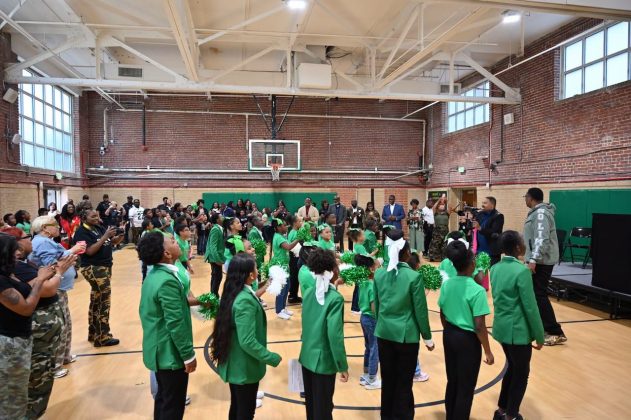
The sounds of students singing filled Norwood Elementary School Friday morning as teachers dressed in camouflage and students wearing their school colors of green welcomed a special guest whose career has been built on music, entrepreneurship and perseverance.
Before taking the stage at the Birmingham-Jefferson Convention Complex (BJCC) Friday night, music mogul and entrepreneur Percy “Master P” Miller spent the morning with Birmingham students, sharing lessons about education, consistency, networking and the importance of refusing to let circumstances determine their futures.
Miller was joined by Captain Ace, the blue-dog mascot and educational character associated with his school visits and assemblies. Together, they turned the celebrity appearance into a lesson centered on positive choices, learning, and believing in one’s potential.
The visit also brought together Birmingham city and school leaders, including Mayor Randall L. Woodfin, Birmingham City Schools Superintendent Dr. Mark Sullivan and members of the school system’s staff and leadership.
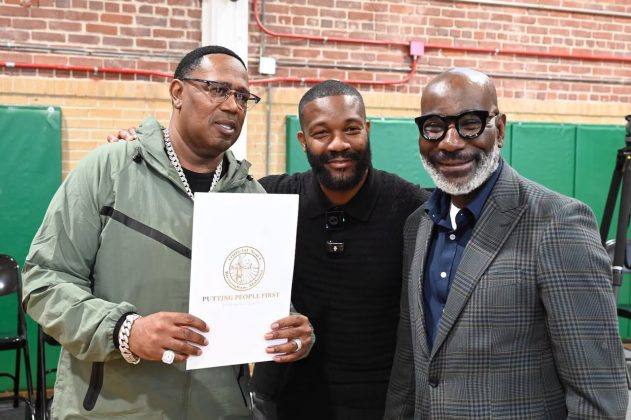
At the conclusion of the assembly, Woodfin and Sullivan presented Miller with a proclamation honoring his visit to Norwood Elementary.
For Miller, however, the morning was less about recognition and more about the children sitting in front of him.
“I love the kids,” Miller told the students. “Even though I got a show, I’m like, no, I got to come and touch the kids because that’s the future.”
Miller said his focus is on what he described as “saving the next generation” and educating young people so they can recognize their potential.
“I want these kids to know that they can fly over all this negative,” he said.
That message became personal when Miller reflected on his own childhood.
He told students he grew up living with his grandparents, who had 12 children. His family lived in a three-bedroom housing project, but Miller said he refused to allow his circumstances to define what was possible for him.
“I didn’t let my condition stop me, and I don’t want you guys to let your condition stop you,” he told the students.
Miller repeatedly returned to the idea that dreams require action.
“There’s no limit to your dreams,” he said, emphasizing that success requires work and that students cannot “cheat the game of life.”
He then asked the students how many of them wanted to be successful. The room responded.
Miller used a familiar example to explain one of his central lessons: McDonald’s.
After asking students what the restaurant sells, he shifted the conversation from hamburgers to consistency.
“McDonald’s is selling consistency,” Miller said.
He explained that a Big Mac is expected to taste the same wherever it is purchased, using that familiarity as an analogy for persistence.
“Keep doing something, not giving up,” he told the students. “Keep chasing your dreams, doing something every day to get that, even when it don’t look like it’s gonna happen.”
“Somebody’s gonna make it big.”
Miller also challenged the students to think about the relationships they are building now. He asked whether they understood what networking means before explaining that the people sitting beside them today could become important figures in their lives tomorrow.
Miller shared a story about a girl he knew when he was in school — someone he said other people did not like or treated negatively. Years later, she became a bank president. When Miller needed a loan, he said, she remembered how kind he had been to her when they were younger.
“You never know who’s gonna be what in here,” Miller said.
He encouraged students to introduce themselves to others, learn their names and treat people well.
“That’s networking,” he said.
For Miller, the lesson went beyond professional connections. He encouraged students to recognize the possibility within one another.
“Who’s gonna be a doctor? Who’s gonna be a lawyer? Who gonna be a teacher?” he asked. “Who gonna be the president of the bank? Who gonna be the mayor? Who gonna be the superintendent?”
Miller said students cannot know where their classmates will end up, which makes how they treat one another today important.
“Somebody’s gonna make it big,” he said. “And it could be all you guys.”

Moments of Celebration
The visit was also filled with moments of celebration. Before Miller addressed the students, Norwood teachers and scholars welcomed him with a robust singalong to “The Affirmation Song,” creating an energetic introduction to the morning’s message.
The appearance of Captain Ace added another layer to the program. The character is part of Miller’s educational work with children, with school assemblies and musical programs addressing topics including anti-bullying, stranger danger and mental health awareness.
Miller said he has spent years making time for young people because he sees them as the future.
The message aligned with the presence of Birmingham’s education and civic leadership throughout the morning. Woodfin and Birmingham City Schools leadership have increasingly emphasized connecting children with educational, enrichment and career opportunities across the city. Earlier this year, the city announced its Children and Youth Commission’s Cradle-to-Career Roadmap, a strategy designed to connect the systems and resources influencing children from early education through adulthood.
For Norwood students, however, the morning offered a more immediate lesson: the opportunity to see someone who built a career from a childhood that did not necessarily predict the future he ultimately created.
As Miller prepared to leave, he encouraged students to keep working, keep learning and keep believing in themselves.
“I kept going,” he told them, reflecting on the people who once told him he would not succeed. “That’s what I want you guys to do. Keep going, no matter what your conditions is. No matter what your environment is.”
Based on reporting by Birmingham Times.
Black Press
New York Prosecutors Reopen Alleged Cornell University Gang Rape Case
NEW YORK BEACON — Prosecutors in Tompkins County, New York, have reopened an alleged gang rape case from 2024 involving Cornell University. The decision follows a civil lawsuit filed by the alleged victim, Jane Doe, against several fraternity members. District Attorney Matthew Van Houten confirmed his office is examining conflicting claims and intends to present the case to a grand jury.

Cornell University is at the center of a developing matter involving an alleged gang rape case that took place in 2024. Prosecutors are reopening the matter after the alleged victim filed a civil lawsuit against a group of fraternity members at Cornell University.
ABC News reports that prosecutors in Tompkins County in Central New York State are examining the claims made by a Jane Doe, the alleged victim of the assault. According to Tompkins County District Attorney Matthew Van Houten, his office is examining whether or not to bring charges but did share that there are two conflicting claims at the heart of the matter.
“It’s our intention to present the case to the Tompkins County grand jury with Jane Doe’s cooperation,” Van Houten told the outlet. “We want to reexamine whether there’s additional evidence that we were not aware of in November of 2024, that exists now that would change our assessment of the case and would result in the grand jury finding that there was criminal conduct.”
Back in 2024, the Jane Doe and former student accused seven current and former members of the Chi Phi fraternity of assaulting her, leading to the chapter’s expulsion from Cornell University. The school conducted an investigation, and initially, Doe did not say she was drugged and forced into acts. Doe’s lawsuit is now alleging the fraternity members drugged and assaulted her.
“She never says that she was drugged without her knowledge. She admits to taking drugs and alcohol voluntarily and with knowledge. She does not allege that she was forced to engage in any acts. She does not say that she was physically helpless or unconscious or incapacitated at any point during the time at the fraternity house,” Van Houten added.
Based on reporting by New York Beacon.
Black Press
Latanya Orr Expands Vision After Goldman Sachs Program
CHICAGO CRUSADER — Chicago entrepreneur LaTanya Orr has completed the Goldman Sachs One Million Black Women: Black in Business program, an experience she states has refined her business growth strategies and deepened her commitment to supporting women entrepreneurs. Orr founded The FoundHERS Suite, a collaborative space for women business owners.

Chicago entrepreneur LaTanya Orr has graduated from the Goldman Sachs One Million Black Women: Black in Business program, a milestone she says has helped sharpen her approach to business growth while expanding her work supporting women entrepreneurs.
Orr, an author and business strategist, is the founder of The FoundHERS Suite, a collaborative workspace and entrepreneurial community designed to help women business owners develop their companies through education, connections and shared opportunities.
She participated in the Spring 2026 cohort of Goldman Sachs’ Black in Business program, which provides business education and resources to Black women sole proprietors. Orr said the experience strengthened her understanding of enterprise growth, financial stewardship and long-term business strategy.
“The program didn’t hand me a blueprint—it challenged me to rethink the one I already had,” Orr said. “It strengthened my thinking around enterprise, stewardship, and long-term impact while reaffirming the work I’ve been called to do.”
Her participation in the program came during a period of transition for The FoundHERS Suite. Earlier this year, an unexpected incident involving the building where the Suite operated forced the business to temporarily close its physical location.
Rather than abandon the concept, Orr said the interruption provided an opportunity to reassess how the organization could continue serving women entrepreneurs while she considered the future of the physical workspace.
Part of that evolution is BridgeWRX, Orr’s strategic advisory and thought leadership platform. The venture is designed to help women entrepreneurs move beyond developing brands and focus on building sustainable businesses through strategy, leadership development and intentional growth.
Orr emphasizes that BridgeWRX is not intended to replace The FoundHERS Suite. Instead, she sees it as an extension of the broader mission, providing additional ways for entrepreneurs to receive information, build relationships and strengthen their businesses while she explores the Suite’s next chapter.
Since completing the Goldman Sachs program, Orr has expanded that work through strategic advisory services, educational programs, publishing and community-centered initiatives.
Among those efforts is ShiftShop, a workshop series focused on practical business development. Another initiative, Gather & Shift, brings entrepreneurs together for networking, collaboration and shared learning.
Orr is also developing an editorial component to her work. Through The Bridge, her Substack publication, and HERspectives, a LinkedIn thought leadership series, she writes about entrepreneurship, leadership, business growth and the challenges established founders encounter as they attempt to move from operating individual businesses toward building larger enterprises.
Her developing BridgeWRX Leadership Library is expected to include books, tools and other resources drawn from more than two decades of Orr’s experience as an entrepreneur.
“I’ve come to realize that the assignment was always bigger than the building,” Orr said. “BridgeWRX allows me to extend the mission of The FoundHERS Suite in new ways while continuing to prepare for its next chapter. My passion has always been helping women discover what’s possible, build with intention, and create something that lasts.”
The Goldman Sachs One Million Black Women initiative was launched as part of the financial institution’s broader effort to invest in Black women and address economic disparities. Black in Business focuses specifically on Black women sole proprietors, providing participants with business education, access to resources and opportunities to develop strategies for growth.
For Orr, completing the program comes as she works to bring several parts of her entrepreneurial experience under a broader strategy.
Through BridgeWRX, she plans to continue offering advisory services, educational experiences, publishing and community programming. At the same time, Orr said she remains committed to The FoundHERS Suite and its original goal of creating opportunities for women entrepreneurs to connect and grow.
The result, she said, is an expanded vision centered not simply on operating a business, but on helping entrepreneurs create enterprises capable of producing long-term impact.
Based on reporting by Chicago Crusader.
Black Press
Students from Stonecrest Help Families Grow Food
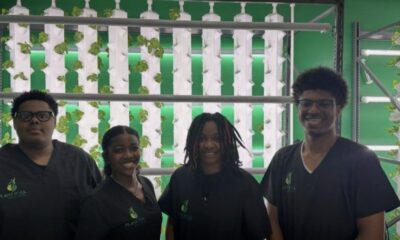
THE CHAMPION NEWSPAPER — Two Georgia college students from Stonecrest are utilizing agriculture, technology, and community education to help families across Georgia grow their own food, even without traditional farming spaces. Mason Wright, a Morris Brown College student and founder of Plant It Georgia Vertical Institute, and Kosey Henley, a University of Georgia student, developed a mobile agricultural laboratory.
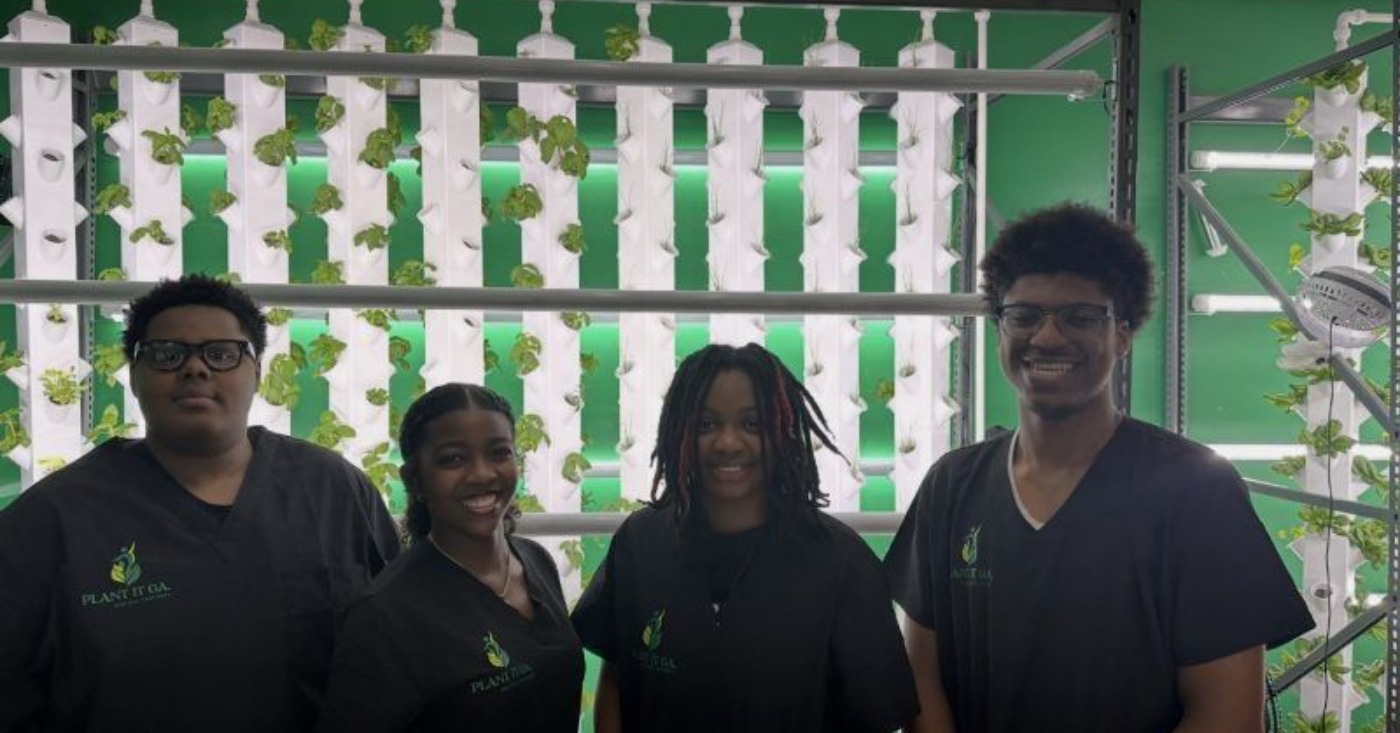
Two Georgia college students from Stonecrest are combining agriculture, technology, and community education to help families throughout Georgia grow their own food — even those without access to traditional growing spaces and equipment.
The two students recently completed the first prototype of Plant It Georgia’s mobile agricultural laboratory, which they said is an enclosed trailer equipped to introduce young people and families to growing food without relying on traditional farmland.
Mason Wright—a youth entrepreneur and a student at Morris Brown College—is the founder of Plant It Georgia Vertical Institute. The institute is an “educational initiative created to train young people in vertical farming, hydroponics, and other modern agricultural technologies,” according to Wright. Kosey Henley, a student at the University of Georgia, worked alongside Wright on the mobile lab.

The students said the idea came in response to an obstacle challenging many communities: transportation. Instead of requiring students to travel to the Plant It Georgia Vertical Institute, the program can take its lessons and growing systems directly into neighborhoods, schools, recreation centers, and other community spaces to teach students and their families about growing food in urban communities.
Inside the prototype, visitors will find hydroponic growing channels, lighting, and other equipment that show them how plants can grow in controlled environments. The laboratory aims to support hands-on lessons covering seed germination, water circulation, plant nutrition, lighting, harvesting, and the technology used to manage indoor crops, according to Wright.
The project comes as Georgia and the nation face an aging agricultural workforce.
According to the U.S. Department of Agriculture’s 2022 Census of Agriculture, Georgia had 63,492 agricultural producers, but only 4,770 were younger than 35. Nationally, the USDA counted 296,480 producers younger than 35, approximately 9 percent of all U.S. producers.
At the Plant It Georgia Vertical Institute, students are taught that farming does not always require acres of open land or heavy machinery. Vertical farming allows crops to grow upward in stacked systems while hydroponics uses nutrient-rich water instead of soil to feed the plants. These tactics make food production possible in classrooms, buildings, trailers, and densely populated urban communities, according to Wright.
Plant It Georgia’s growing systems can cultivate lettuce, tomatoes, collard greens, peppers, and a variety of culinary herbs, according to the news release. Students are taught the entire growing process — from placing seeds into starter materials and monitoring water and nutrients to caring for mature plants and harvesting fresh produce.
The program also introduces participants to careers connected to agricultural technology, plant science, environmental sustainability, food systems, and entrepreneurship.
Wright’s role as a Morris Brown College student and founder represents the connection between HBCU leadership, entrepreneurship, and community service, according to a news release. Wright also made headlines for opening Mason’s Super Dogs in Stonecrest in 2020 — which he now also operates on the Atlanta Beltline’s Eastside Trail. Henley brings another important academic connection through the University of Georgia, one of the state’s leading institutions in agriculture and agricultural research, according to the news release.
For event locations and more information, follow Plant It Georgia on Instagram (@plantitGA).
13 total views
Based on reporting by The Champion Newspaper.
Black History
Annika Ashton First Black Woman and Jamaican Broward County Attorney
SOUTH FLORIDA TIMES — Annika E. Ashton is the new Broward County Attorney, becoming the first Black woman and Jamaican American to hold the position. Ashton, 42, was sworn in last month, replacing Andrew Meyers who retired after eight years.
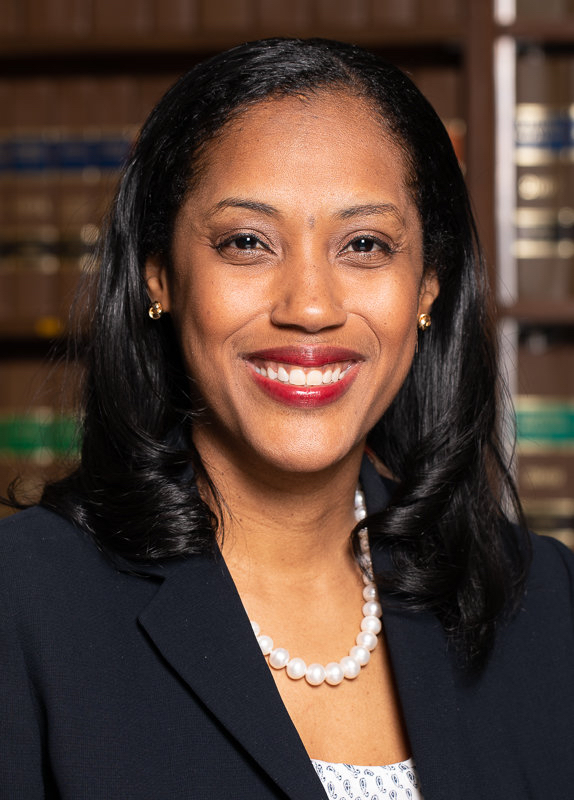
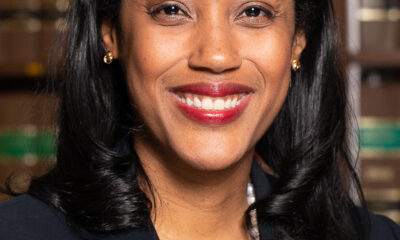
FORT LAUDERDALE, Fla. – Annika E. Ashton is the new Broward County Attorney, becoming the first Black woman and Jamaican American to assume the role.
Ashton, 42, was sworn in last month to replace Andrew Meyers who retired after eight years at the helm.
The Broward County Commission unanimously appointed Ashton, who was the Deputy Broward County attorney, in April 2026 and she took over on September 10, 2026 the official last day of Meyers’ tenure.
She will oversee more than 50 attorneys and a support staff.
Ashton’s appointment reflects overcoming racial and gender barriers to become the chief legal advisor for the county.
The Coral Springs resident thanked the commission and Broward County legal department for their support.
“I’m very excited to work with a really great office of people and have the support of the Broward County Commission,” Ashton said.
Broward County Commissioner Nan Rich called Ashton “the most qualified person to lead the County Attorney’s Office,” noting the county attorney position is one of only three the board is responsible for appointing
Ashton has worked for Broward County since 2014, starting as an assistant county attorney and rose to senior assistant county attorney before becoming deputy county attorney in 2019.
She graduated from Princeton University and Columbia Law School and clerked for the Hon. Adalberto Jordan on the U.S. District Court for the Southern District of Florida and the U.S. Court of Appeals for the Eleventh Circuit.
Ashton’s county work has included litigating federal court cases, drafting ordinances and contributing to the $1 billion expansion of the Broward County Convention Center in Fort Lauderdale.
She previously did private practice in New York and Miami.
According to her bio, Ashton was born in Spanish Town, Jamaica and raised with deepy family roots in Clarendon, particularly Palmer Cross.
She migrated to the U.S. and graduated from Ft. Lauderdale Boyd Anderson High School, earned her bachelor’s degree from Princeton University and law degree from Columbia Law School.
As the new chief attorney for Broward County, Ashton will provide legal counsel for commissioners and administrators, represent the county in litigation, drafting legal documents including preparing ordinances, government contracts and oversight of zoning issues.
Ashton will also advise commissioners on legal aspects of county projects, developments and public services, including environmental, transportation, and consumer protection issues in Broward County.
She is also a Past President of the Caribbean Bar Association.
Ashton credits her Jamaican upbringing for a stellar legal career.
She said women leadership in Jamaica helped her thrive, studying successful women in business and public service, as well as community figures like Cathy Levy, founder of the iconic Little People and Teen Players Club, who has been a stalwart of youth arts education in Jamaica for decades.
These early influences, along with the cultural ethos of resilience captured in the popular Jamaican refrain, “Wi likkle but wi tallawah,” she notes, helped shape her ambition and belief that she could make a meaningful impact on the world around her.
The post Annika Ashton first Black woman and Jamaican Broward County Attorney appeared first on South Florida Times.
Based on reporting by South Florida Times.


Jaguars Do Better: Top of Ladder or Resting at the Bottom

Master P Encourages Norwood Elementary Students to Dream Big, Work Hard

New York Prosecutors Reopen Alleged Cornell University Gang Rape Case

Latanya Orr Expands Vision After Goldman Sachs Program

Students from Stonecrest Help Families Grow Food

Annika Ashton First Black Woman and Jamaican Broward County Attorney

Cuts and Conversations Turns Barber Chairs into Space for Lifesaving Dialogue

NFL: Bryce Young is Proving “Patience is a Virtue”

EV Home Charging: Don’t Buy Until You Ask This! #shorts

National Civil Rights Museum Freedom Award Honors the Relentless Fight for Equality

Latest Massacre in Haiti Reveals Cruelty U.S. Deportations

Black Americans Have Doubts About the U.S. Food System

When Praises Go Up: SUGC Nominated for Prestigious Stellar Award.

Booked and Unbound: The Legacy of Black Women’s Literary Circles

The Youngest American Killed in the Vietnam War

U.S. Sole Nation to Oppose U.N. Resolution Correcting Africa’s Size on World Maps

COMMENTARY: Big Mama Said ‘Don’t Let Grief Break the Bank’

Passing for White, Fighting for Black America: The Courage of Walter White

U.S. Open Influencers Spark Backlash over Ring Lights, Filming as Gauff and Osaka Speak Out

Outnumbered: Elbert Cox’s Equation for Greatness
EV Home Charging: Don’t Buy Until You Ask This! #shorts

The Conversation with Al McFarlane

The Conversation with Al McFarlane 📱

Introduction, 2027 VW Atlas SEL Premium R Line Worth $58,135?

Welcome, 2027 VW Atlas SEL Premium R Line Worth $58,135?

Smart Car Buying: Ask These Questions Before You Buy! #shorts

2027 VW Atlas SEL Premium R Line Worth $58,135?

Unlock Auto Loans: Black-Owned Banks & Credit Unions #shorts

Find Black-Owned Banks & Auto Loan Pre-Approval Easily #shorts

Car Warranty Explained: Powertrain, Basic & Roadside! #shorts
-

 Black Press5 days ago
OP-ED: Haiti TPS: Have We Lost Sense of Humanity?
-
 Black History1 week ago
Remembering Chauncey Bailey as Student Journalists Face Threats to Truth-Telling
-

 Black Press1 week ago
Poll: Becerra Widens His Lead Over Hilton; Californians Split on Wealth Tax
-

 Black History1 week ago
COMMENTARY: The Audacity of Joyce Beatty
-

 Black History1 week ago
Rulings Leave Questions Lingering in Nolan Wells Case
-

 Black History1 week ago
Baptist Minister Says Black Church Champions for Civil Rights to Reign but Hesitates to Let Black Women Lead
