
Black Press
Trump Lost. Vote Suppression Won. Here are the numbers…

by Greg Palast
Trump lost. That is, if all legal voters were allowed to vote, if all legal ballots were counted, Trump would have lost the states of Wisconsin, Michigan, Pennsylvania and Georgia. Vice-President Kamala Harris would have won the Presidency with 286 electoral votes.
And, if not for the mass purge of voters of color, if not for the mass disqualification of provisional and mail-in ballots, if not for the new mass “vigilante” challenges in swing states, Harris would have gained at least another 3,565,000 votes, topping Trump’s official popular vote tally by 1.2 million.
Stay with me and I’ll give you the means, methods and, most important, the key calculations.
But if you’re expecting a sexy story about Elon Musk messing with vote-counting software from outer space, sorry, you won’t get that here.
As in Bush v. Gore in 2000, and in too many other miscarriages of Democracy, this election was determined by good old “vote suppression,” the polite term we use for shafting people of color out of their ballot. We used to call it Jim Crow.
Here are key numbers:
- 4,776,706 voters were wrongly purged from voter rolls according to US Elections Assistance Commission data.
- By August of 2024, for the first time since 1946, self-proclaimed “vigilante” voter-fraud hunters challenged the rights of 317,886 voters. The NAACP of Georgia estimates that by Election Day, the challenges exceeded 200,000 in Georgia alone.
- No less than 2,121,000 mail-in ballots were disqualified for minor clerical errors (e.g. postage due).
- At least 585,000 ballots cast in-precinct were also disqualified.
- 1,216,000 “provisional” ballots were rejected, not counted.
- 3.24 million new registrations were rejected or not entered on the rolls in time to vote.
If the purges, challenges and ballot rejections were random, it wouldn’t matter. It’s anything but random. For example, an audit by the State of Washington found that a Black voter was 400% more likely than a white voter to have their mail-in ballot rejected. Rejection of Black in-person votes, according to a US Civil Rights Commission study in Florida, ran 14.3% or one in seven ballots cast.
There are also the uncountable effects of the explosive growth of voter intimidation tactics including the bomb threats that closed 31 polling stations in Atlanta on Election Day.
America’s Nasty Little Secret
The nasty little secret of American democracy is that we don’t count all the votes. Nor let every citizen vote.
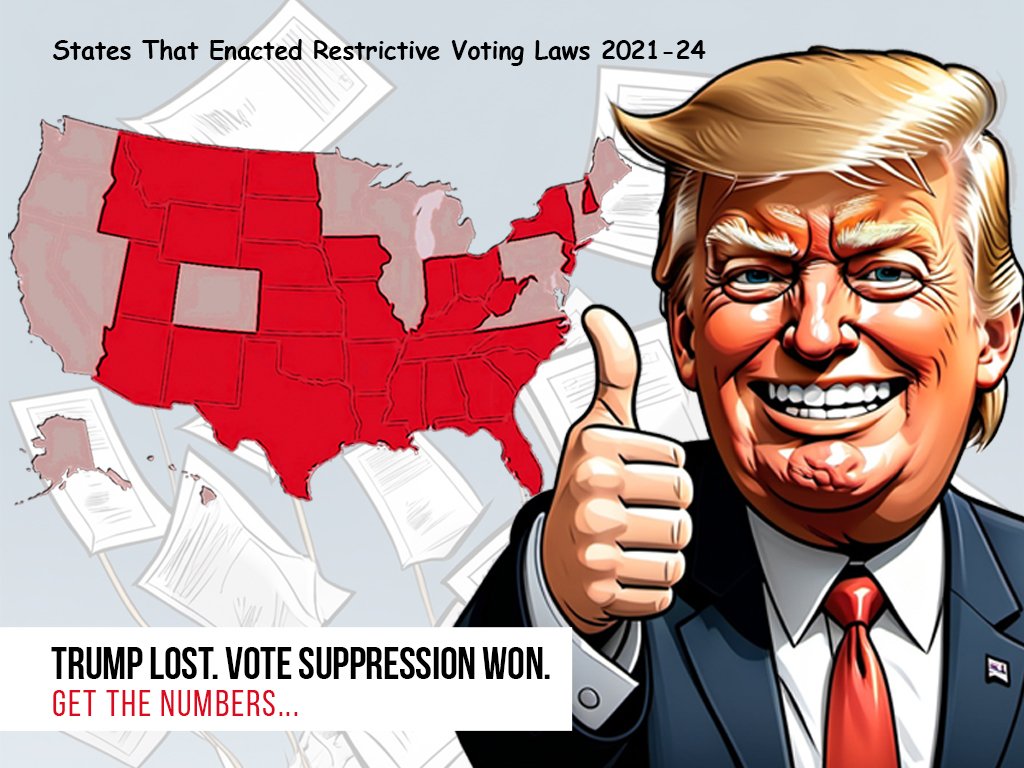
In 2024, especially, after an avalanche of new not-going-to-let-you-vote laws passed in almost every red state, the number of citizens Jim Crow’d out of their vote soared into the millions. According to the Brennan Center for Justice, since the 2020 election, “At least 30 states enacted 78 restrictive laws” to blockade voting. The race-targeted laws ran the gamut from shuttering drop boxes in Black-majority cities to, for the first time, allowing non-government self-appointed “vote fraud vigilantes” to challenge voters by the hundreds of thousands.
Throughout election seasons, The New York Times and NPR and establishment media write stories and editorials decrying vote suppression tactics, from new ID requirements to new restrictions on mail-in voting. But, notably, the mainstream press never, ever, not once, will say that these ugly racist attacks on voters changed the outcome of an election.
Question: If these vote suppression laws — notorious example: Georgia’s SB 202 — had no effect on election outcomes, then why did GOP legislators fight so hard to pass these laws? The answer is clear on the Brennan Center’s map of states that passed restrictive laws. It’s pretty much Trump’s victory map.
America Goes Postal
Let’s look at just one vote suppression operation in action.
In 2020, during the pandemic, America went postal. More than 43% of us voted by mail.
But it wasn’t easy. Harris County, Texas, home of Houston, tried to mail out ballots during the COVID epidemic on the grounds that voters shouldn’t die waiting in lines at polling stations. But then, the state’s Republican Attorney General Ken Paxton stopped this life-saving measure.
Why wouldn’t this GOP official let Houstonians vote safely? Maybe it’s because Houston has the largest number of Black voters of any city in America. Indeed, on Steve Bannon’s podcast, Paxton proudly stated, “Had we not done that [stopped Houston from sending out ballots], Donald Trump would’ve lost the election” in Texas. Texas!
Before the 2024 election, prompted by Trump’s evidence-free attack on mail-in ballots as inherently fraudulent, 22 states, according to the Brennan Center, imposed “38 new restrictions on the ability to vote absentee that were not in place in 2020…likely to most affect or already have disproportionately affected voters of color.” You’re shocked, right?
Texas’ requirement to add ID numbers to an absentee ballot caused the rejection rate to jump from 1% to 12%.
So, here’s the question we need to ask. If restrictions on mail-in balloting swung Texas to Trump, how did all these new restrictions affect the outcome of the vote in other states?
In 2020, an NPR study found the mail-in ballot rejection rate hit 13.8% during the Democratic primaries—a loss of one in seven ballots.
Take Georgia, where the Palast Investigative Fund spent months in on-the-ground investigations.
Here are photos of a Georgia voter, career military officer and Pentagon advisor Major Gamaliel Turner (Ret), demonstrating for young voters how to fill out an absentee ballot, emphasizing that it must be mailed in promptly. He did, seven days before the deadline. But we only recently learned that Georgia officials disqualified his ballot as received too late.
In 2008, even before the majority of Democrats began voting by mail, when absentee balloting was much rarer, the federal government reported 488,136 mail-in ballots were rejected, almost all on picayune grounds (i.e. middle initial on signature missing etc.). An MIT study put the number of rejected mail-in ballots at 2.9%.
That’s the low-end of MIT’s estimate of mail-in ballots tossed out. Charles Stewart, Distinguished Professor of Political Science, author of the report, notes mail-in ballots requested and never received nor returned could raise the total mail-in ballot loss rate to 21%.
For 2024, that would total 14.1 million ballots that, effectively, vanished from the count.
The “failure to return” ballot was exacerbated in this election by the steep cut in ballot drop boxes, a method favored by urban (read, “Democratic”) voters. Black voters in Atlanta used ballot drop boxes extensively because they feared, with good reason, relying on the Post Office [see Major Turner’s story above].
In response, the Republican Governor of Georgia, Brian Kemp, signed SB 202 which slashed the number of drop boxes by 75% only in Black-majority counties and locked them away at night. These moves slashed mail-in and drop box balloting, used by the majority of Democrats in 2020, by nearly 90% in the 2024 race.
Even if deemed “on time,” ballots still face rejection. Marietta, Georgia, first-time voter Andrian Consonery Jr. told me his mail-in ballot was rejected because his signature supposedly didn’t match that on his registration. (I needn’t add, Consonery is Black.) In effect, Consonery was accused of forgery — a federal crime — not by the FBI but by self-appointed amateur sleuths. This challenge to mail-in ballots, part of a right-wing campaign, has gone viral.
In 2020, the federal government reported that 157,477 ballots were rejected for supposedly “mis-matched” signatures. That’s quite a crime wave — but without criminals.
And that’s before we get to the dozens of other attacks on voting that were freshly minted for the 2024 election, attacks aimed at voters of color.
The crucial statistic is that not everyone’s ballot gets disqualified. One study done for the United States Civil Rights Commission found that a Black person, such as Maj. Turner, will be 900% more likely to have their mail-in or in-person ballot disqualified than a white voter.
Now, let’s do some arithmetic. If we take the lowest end of the MIT ballot rejection rate, and only a tenth of the “lost” ballot rate, and then apply it to the number of mail-in and drop-box ballots, we can conservatively estimate that 2,121,000 mail-in votes went into the electoral dumpster.
Whose ballots? Democrats are 51% more likely than Republicans to vote by mail; and, given the racial disparity in ballot rejections, Trump’s swing-state margins begin to look shaky.
The KKK Plan and the New Vigilantes
In 2020, the Palast Investigative Fund uncovered a whole new way to bring Jim Crow back to life: challenges to a citizen’s right to vote by a posse of self-proclaimed vote-fraud hunters.
Four years ago, the GOP took this new suppression method out for a test ride in Georgia when 88 Republican operatives — remember, these are not government officials — challenged the rights of over 180,000 Georgians to have their ballots counted. These vigilantes based their scheme on the program originally used by the Ku Klux Klan in 1946.
One challenged voter: Major Turner, the same voter whose mail-in ballot was disqualified in a later election.
In 2020, the Major’s ballot was challenged by the county Chairman of the Republican Party in Southern Georgia, Alton Russell. (Russell likes to dress up as infamous vigilante Doc Holliday, with a loaded six-gun in a holster.) In a (polite) confrontation we filmed between the Major and Russell, the GOP honcho admitted he had no evidence that Maj. Turner, nor any of the 4,000 others he challenged, should be denied the right to have their ballots counted.
Note: The Palast Fund contacted a sample of 800 of these challenged voters and found that, overwhelmingly, they were Americans of color.
In 2020, this KKK plan, adopted by the Trump organization, proved its value. In that election, Trump almost won Georgia, falling short by just 11,779 votes — only because local elections officials rejected most of the challenges. But for 2024, the Georgia’s Republican-controlled legislature changed the law to make it very difficult for officials to deny the challenges.
That emboldened the Trump-supported organization True the Vote to roll out the challenge to every swing state. In 2024, True the Vote signed up over 40,000 volunteer vigilantes. The organization crowed proudly that, by August of 2024, they’d already challenged a mind-blowing 317,886 voters in dozens of states. By Election Day this November, True the Vote projected it would have challenged over two million voters. In addition, Trump’s lawyer, Cleta Mitchell, founded Eagle AI to challenge hundreds of thousands more including in swing state Pennsylvania.
How many voters ultimately lost their ballots? Almost all voting officials we’ve contacted have refused to answer.
Placebo Ballots
Those voters who’d been challenged but mailed in their ballot would be unlikely to know their vote had been lost. Others who showed up in person at a poll would be told they could not vote on a regular ballot. These voters were sent away or forced to vote on a “provisional” ballot.
If you’ve been challenged or find you’ve been purged off the registration rolls, you’ll be offered one of these provisional ballots, paper ballots you place in a special envelope. Typically, you’ll be promised your registration will be checked and then your ballot will be counted. Bullshit. If you’re challenged, unless you personally contact or go into your county clerk’s office with ID and proof of address, your ballot goes into the electoral dumpster.
A better name for a “provisional” ballot would be “placebo” ballot. You think you’ve voted, but chances are, you did not, that is, your ballot wasn’t counted.
Here’s an ugly number: According to the US Elections Assistance Commission (EAC), in 2016, when 2.5 million provisional ballots were cast, a breathtaking 42.3% were never counted. Think about that. Over a million Americans lost their vote — though, notably, not one was charged attempting to vote illegally. And that was in 2016, before the vigilante challenges and before millions more had been purged from the rolls leading up to the 2024 election.
And here’s the statistic that matters most. Black, Hispanic or Asian-American voters are 300% more likely than white voters to be shunted to a “placebo” provisional ballot.
The Great Purge and the Poison Postcard
The polite term in government agencies is, “List Maintenance.” It’s best known as The Purge — when voters’ registrations are wiped off the rolls. The EAC keeps track of The Purge. It’s a big business. For example, before the 2022 election, when the data was last available, swing state North Carolina wiped 392,851 voters off the rolls.
The majority of removals were based on questionable, indeed, shockingly faulty information that a voter had moved their residence. I’m not talking about the 4.9 million voters purged because they’re dead, or eight million others whose residential move could be verified, nor those serving time in prison nor those ruled too crazy to vote.
I’m talking about a trick that has been perfected by politicians of both parties to eliminate voters of the wrong persuasion: the Poison Postcard. Here’s how it works: Targeted voters are mailed postcards by state elections officials. (Let’s remember, state voting chiefs, “Secretaries of State,” are almost to a one partisan hacks.) Voters who don’t sign and return the cards, which look like junk mail, will be purged.
The Poison Postcard response rate is close to nothing. In Arizona, according to the EAC, just one in ten postcards are returned. And in Georgia, the vote-saving response is barely above 1%. And that’s the way our partisan voting officials like it.
Were the millions of Americans purged before the 2024 election all fraudsters who should lose their right to vote? Direct marketing expert Mark Swedlund told us, “This only means that most people, especially young people, the poor and voters of color, simply ignore junk mail.”
With the help of Swedlund and the same experts used by Amazon — and believe me, Amazon knows exactly where you live — we took a deep dive into two states’ purge operations for the ACLU.
The state of Georgia had purged hundreds of thousands from the voter rolls on grounds they’d moved from their voting addresses. Our experts, going name by name through Georgia’s purge list, working from special data provided us by the US Postal Service, identified 198,351 Georgians who had been purged for moving had, in fact, not moved an inch from their legal voting address. The state’s only evidence these 198,351 voters had moved? They failed to return the Poison Postcard.
In 2020, I testified in federal court for the NAACP and RainbowPUSH, presenting our expert findings to get those voters, overweighted with minorities and young Georgians, back on the rolls. Unfortunately, the Trump’d-up court system now gives huge deference to a state’s voting operations, a trend which first took off in 2013 when the US Supreme Court defenestrated the Voting Rights Act.
The results have been devastating. According to the EAC data, before the 2024 election, 4,776,706 registrants were removed nationwide simply because they failed to return the postcard.
Also in 2020, the Palast Investigative Fund produced a technical report for Black Voters Matter Fund on a proposed purge of 153,779 voters in Wisconsin, a plan pushed by Wisconsin Institute for Law and Liberty, a group financed by right-wing billionaires. For Black Voters Matter, we brought back our team of location experts who proved, name by name, that the proposed purge was wildly riddled with errors.
Notably, we found that the purged was aimed almost exclusively at African-Americans in Milwaukee and at students in Madison. The non-partisan Elections Board agreed with us, allowing those voters to cast ballots, with the result that Biden squeaked by Trump in Wisconsin by 20,682 votes. (Note: It was not our intention to elect Biden, but to allow the voters, not some Purge’n General, to pick our President.)
Unfortunately, before the 2024 election, the Poison Postcard Purge accelerated. This time, a new Elections Board in Wisconsin (10 electoral votes) decided to use the same discredited purge list to knock off 166,433 voters which, this time, we could not stop. Kamala Harris lost that state by just 29,397 votes. In Pennsylvania (19 electoral votes), the Poison Postcards wiped out 360,132 voters, three times Trump’s victory margin.
And before the vote this year, Georgia ramped up the purge, targeting an astonishing 875,000 voters, earning it the #1 ranking for “election integrity” by the ultra-right-wing Heritage Foundation.
I saw the purge in action in Savannah, Georgia, this October, where 900 Savannah voters, most of them Black, were challenged by one single “vigilante,” according to voting expert Carry Smith. Smith, who wrote her doctoral thesis on wrongful purges in Georgia, was herself on the hit list.
And more
We haven’t even touched on other ways that voters of color, college students and urban voters have come under attack. These include the rejection of new registrations and rejection of in-person votes as “spoiled” (i.e. rejected as unreadable), costing, according to the EAC, more than a million votes — rejections which our 25 years of investigations have found are way overweighted against the Democratic demographic.
After the 2012 election, I was able to calculate, with cold certainty, that 2,383,587 new voters had their registrations rejected; 488,136 legitimate absentee ballots were disqualified, and so on. In that election, a total of 5,901,814 citizens were blocked from voting or had their ballots disqualified. These stats were based on the hard data from the EAC which gathers detailed reports from the states.
Today, with new, sophisticated, and well-financed vote suppression operations, the number of voters purged and ballots disqualified are clearly far higher than the suppression count of 2012. Unfortunately, the EAC won’t release data, if it does at all, for at least a year. We’ve put in Open Records requests to the states, but today’s officials are stonewalling and slow-walking our requests for the data. In no other democracy are the vote totals — or, to be clear, the uncounted ballot totals — a state secret.
America deserves an answer to this question: Excluding a boost from Jim Crow vote suppression games, did Donald Trump win?
From the shockingly huge numbers we’ve discussed here of provisional and mail-in ballots disqualified, the postcard purge operation, the vigilante challenges and so on, we can say, with reasonable certainty, Trump lost — that is, would have lost both the Electoral College and popular vote totals absent suppression.
By how much?
For those who can’t sleep without my best estimate, let me apply the most conservative methodology possible, as I would do in a government investigation.
I’ve updated the 2012 suppression numbers with the newest available data. Not surprisingly, the suppression number has soared, in part because the number of voters has increased by 41.3 million since 2012. But principally, the votes “lost” also zoomed upward because of the massive increase in mail-in balloting by Democrats since 2012, and crucially, the effect of new Jim Crow voting restrictions. Given a minimum two-to-one racial and partisan disparity in voters purged and ballots disqualified, the 2024 “suppression factor” is no less than 4.596% of the total vote.
Those familiar with data mining will note that there is some double-counting in the 9 million voters and their ballots disqualified that I cited at the top of the article. In addition, we must recognize that many voters caught up in the purges and challenges would have cast their ballot for Trump. Therefore, I’ve conservatively cut in half the low end of the range of the calculation of votes suppressed to 2.3% to isolate the effect on Trump’s official victory margin.
In other words, vote suppression cost Kamala Harris no less than 3,565,000 votes. Harris would have topped Trump’s official total by 1.2 million. Most important, this 2.3% suppression factor undoubtedly cost Harris the states of Wisconsin, Michigan, Pennsylvania and Georgia. If not for the wholesale attack on votes and voters, Harris would have won the election with 286 Electoral votes.
Tech note from a numbers guy — and Martin Luther King
Until the Elections Assistance Commission gets updated figures from the states next year (and, under Trump, I doubt we will ever get those numbers), 3,565,000 votes lost to Harris is the estimate I would present in my role as a forensic expert in a courtroom as the lowest conceivable suppression factor.
I rarely make a big deal about my own credentials but, since the election, the Web has been flooded by amateur, arithmetic-defying speculation about computer hacking and other unsupported twaddle. Best to stick to hard, verifiable data. And that’s what I do.
For two decades, I was a forensic economist for government agencies including the US Justice Department; taught statistics at Indiana University; provided expert calculations of vote suppression for the ACLU, NAACP, and RainbowPUSH and won the Global Editors Award for my data journalism on vote suppression measurements for reports done for Al Jazeera, BBC, Rolling Stone and The Guardian. The numbers you get here are exactly what I’d present to a Federal court. In other words, kids, don’t do this at home…calculating the “un-count” requires expertise.
I make this point for another reason: The theory that “Elon Musk messed with the voting machines” is, unconsciously, unintentionally racist. With few exceptions, these silly speculations come from those who simply ignore not just the millions of votes officially reported as suppressed, their theories also ignore the horrifically painful experience of Black people turned away from the polls.
Here is a photo of Jessica Lawrence in tears, moments after her 92-year-old grandmother was tossed out of an Atlanta polling station, into a storm, because she’d been wrongfully purged. Any speculation about the nefarious cause of Trump’s must not leave out Jessica’s grandma nor the millions of other citizens of color who were wrongly barred from their ballot.
Now here’s the good news
We saw that in 2020 when, despite extreme, even felonious actions by Trump supporters to block, challenge and disqualify voters and ballots, the theft by suppression was defeated.
That was the work of voting rights groups challenging these attacks. The work was done in the courts and, more important, in the precincts, re-registering the purged, challenging the challenges, “curing” disqualified ballots.
The road is long but victory is certain. After the 2016 election, the Palast team uncovered a cruel, racist purge program called, “Interstate Crosscheck” that cost nearly a million voters, overwhelmingly minorities, their rights. This motivated the Rev. Jesse Jackson to launch a campaign that successfully shut down Crosscheck. Unquestionably, Joe Biden could not have won in 2020 without the Reverend saving literally hundreds of thousands of votes. The point is, they can’t suppress all the votes all the time.
In other words, Democracy can win, despite the 2.3% suppression headwind.
And that’s our job as Americans: to end the purges, the vigilante challenges, the ballot rejections and the attitude that this is all somehow OK.
Martin Luther King gave us our marching orders in 1965, in words just as important today.
“Let us march on ballot boxes, march on ballot boxes until race-baiters disappear from the political arena. I want to say to the people of America and the nations of the world, that we are not about to turn around. We are on the move now.”
Greg Palast is a forensic economist and data journalist Palast covered vote suppression for The Guardian, BBC Television and Rolling Stone. He is the author of New York Times bestsellers on the topic including The Best Democracy Money Can Buy.


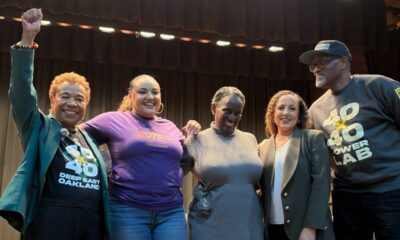


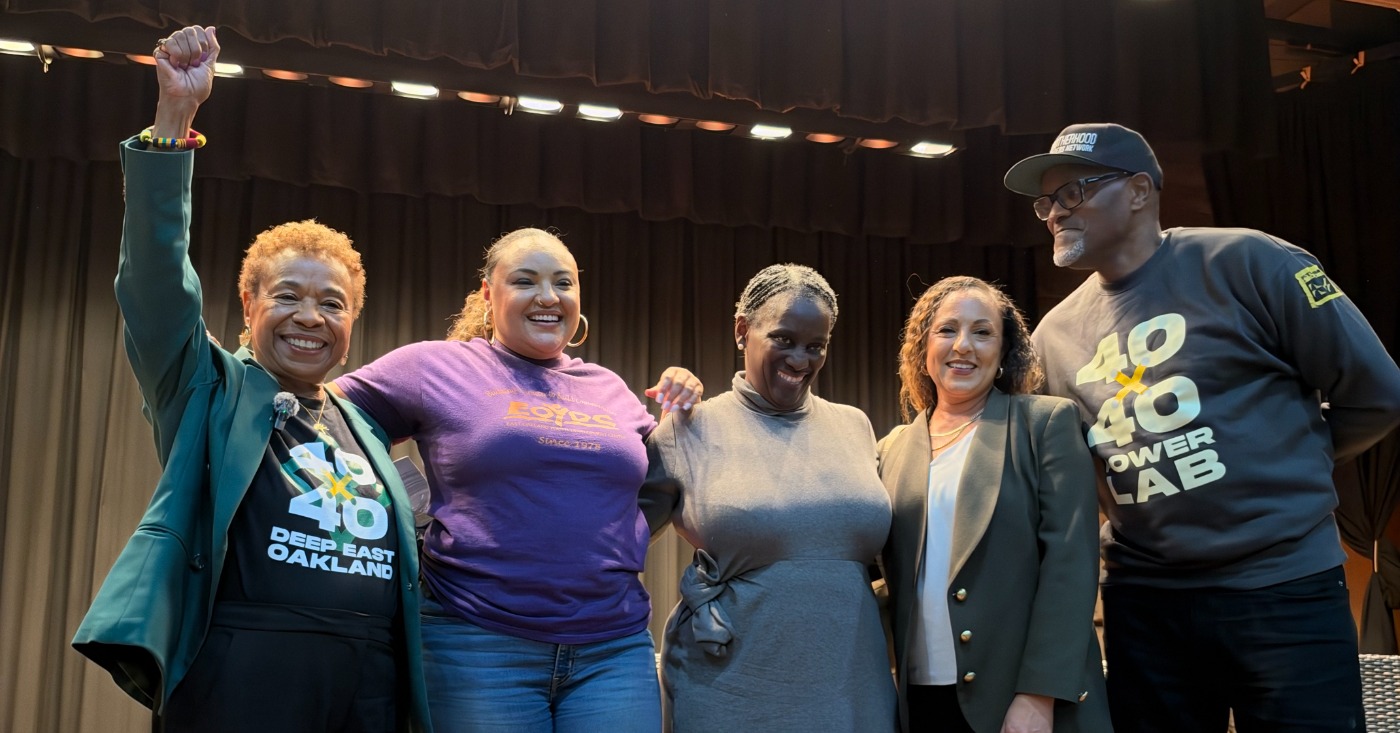
In partnership with Rise East and the 40×40 Council, Oakland Mayor Barbara Lee held a special 2026 State of the City East Oakland community conversation on Oct. 14.
The purpose of bringing a State of the City address directly to the community was to celebrate East Oakland, highlight the work underway, and look ahead to what neighbors, local businesses, youth, funders, community organizations, and partners can accomplish together.
Held at the Roots Community Health/Parker Elementary School Campus at 7929 Ney Ave., the event was emceed by special guest Mark Curry, Oakland native, comedian, and actor.
Lee shared how Rise East and the 40×40 Council have brought together the knowledge, relationships, and resources of people and organizations committed to East Oakland.
Residents bring lived experience, community organizations bring trusted relationships and philanthropy, and businesses bring resources and opportunity, she said, then turned to the government’s role: public investment, services and policy.
But, Lee intoned, City Hall has a responsibility to help connect those efforts.
“I am committed to listening to residents, working across departments and sectors, and helping open doors to opportunity. We must connect neighborhood priorities to the decisions we make about housing, economic development, safety, health and our young people.
City Hall “must be accountable for the results,” Lee said. “The measure of success is what families experience: greater stability, more opportunity and a stronger sense that they belong and have a future here.
“Tonight is an opportunity to listen to the leaders doing this work, learn what is making a difference and identify where we can do more together,” the mayor said.
Lee went on to moderate a ‘fireside chat’ on the theme: Building Oakland’s Future Together — From Neighborhood Investment to Community Empowerment with:
- Selena Wilson, CEO, East Oakland Youth Development Center
- Greg Hodge, CEO, Brotherhood of Elders
- Carolyn “CJ” Johnson, CEO, Black Cultural Zone
- Dr. Noha Aboelata, CEO, Roots Health Center
Mayor Barbara Lee’s media relations department provided this report.
Black History
Practitioners of African Traditional Spirituality Offer Ancestral Reverence Ritual Oct. 31
The Council for Global Ancestral Reverence will host “Ancestral Souls Rising” from Oct. 31 to Nov. 2, featuring a three-day gathering of prayer and discussion. Led by elders and priests across the African diaspora, the seventh annual ritual honors those lost without traditional rites while addressing current social challenges. This year’s event connects ancestral wisdom with contemporary issues, including a two-day conversation inspired by Afro-Beat music focused on Black community solidarity and the sacred importance of voting. Read more for details on the ritual schedule and participants.


The Council for Global Ancestral Reverence (C4GAR), a group of elders who practice African traditional spirituality, will lead a three-day gathering of prayer and discussion from Oct. 31-Nov. 2.
Called ‘Ancestral Souls Rising,’ the council members and 21 priests will lead the prayers from many parts of the African diaspora: Africa, Portugal, and across the U.S. from Maryland to the Bay Area.
Now in its seventh year, the annual ritual began during the 2020 pandemic when hundreds of thousands of people died alone and were buried in mass graves without rites and rituals according to loved ones’ traditions.
This prayer event was and is intended to give peace to the departed and comfort for the living who still mourn. Each year, we gather names of new ancestors from living elders to elevate them into the “Great Hall of the Titans.”
In ensuing years, C4GAR added themes to the prayer gathering that referenced current events. In 2024, before the consequential presidential election, C4GAR called on people to vote, invoking the memory of Civil Rights Movement heroes and heroines like John Lewis, who urged “Good Trouble,” and Fannie Lou Hamer, who famously declared that she was “sick and tired of being sick and tired.”
The day of global Prayer on Oct. 31 will be followed by a two-day conversation inspired by “The Blueprint,” an Afro-Beat song by UyiosaEl, to write our new blueprint that supports solidarity and action in the Black community.
“Our elders have, for many generations, known the power of prayer, ritual and breath,” the council said in a statement.
It was and is their intention, then, to use the cultural wisdom, the gift of prayer “and the most sacred thing we have, our breath, to send energy into the world that invokes and honors our ancestors,” the council statement continued.
“Doing this creates a vibration that protects us and employs their ancient wisdom for the well-being of our communities,” the elders said.
The councilmembers, all over the age of 60, recognize that what is now history for so many was once their lived experience. And that history, those joys and sorrows, are now in their bodies.
To them, the uttered prayer and the sacred breath are oaths to an unfolding future that people can still shape.
The council members are Dr. Iyabeji Cathy Royal, Iyalocha Jennifer Dillard, Manbo Charlene Desir (Florida), Nana Sula Spirit (Louisiana), Baba Obafemi Feyemi, Ohen Nedra T. Williams, and Iyalocha Wanda Ravernell-Stewart Emeritus (Oakland).
This year, they also encourage everyone within their reach to VOTE because it is not only a secular and political act, but a sacred one. Remember, the ancestors were denied that right and died for it.
For tickets, go to:
Black Press
It’s Time to Lose Weight Before the Holidays
Licensed internist Dr. H. Geoffrey Watson has joined gastroenterologist Dr. Ralph Peterson at Oakland’s MacArthur GI to address the rising obesity epidemic. With U.S. obesity rates reaching 42.4%, the clinic offers supervised weight-loss programs and screenings for fatty liver disease. Treatments include dietary counseling and various medications, such as GLP-1 receptor agonists, which regulate digestion and appetite. As certain populations continue to be disproportionately affected by chronic health conditions, medical experts are highlighting new tools available to help patients reach their goals before the holiday season. Read more.
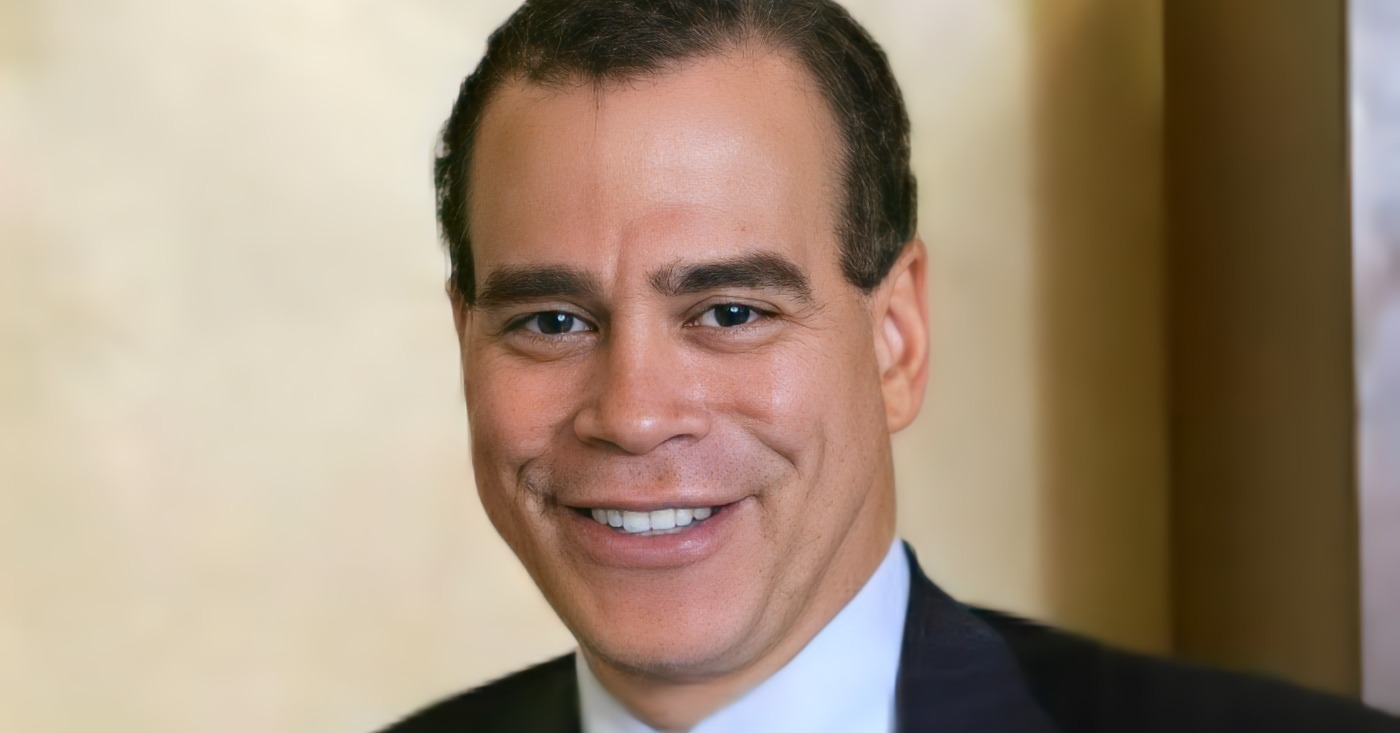
Dr. H. Geoffrey Watson, a licensed internist, has joined renowned gastroenterologist Dr. Ralph Peterson at MacArthur GI in Oakland to address obesity, provide supervised weight-loss programs including GLP-1 therapy, and screen for and treat fatty liver disease.
The Obesity Epidemic
Obesity is associated with numerous chronic health problems, including hypertension, diabetes, heart disease, sleep apnea, asthma, depression, joint disorders, fatty liver disease, and high cholesterol. Its causes include genetics, environment, stress, medication side effects, hormonal imbalances, and other factors.
Since 1999, the prevalence of obesity in the United States has risen from 30.5% to 42.4%. Childhood obesity rates are also climbing, with approximately 19.3% of children and adolescents now affected.
Measuring Obesity: Body Mass Index
Obesity is measured using a formula called the Body Mass Index (BMI). You can calculate your own BMI on most smartphones by searching “BMI calculator” and entering your height and weight. A BMI of 25 to 29.9 is classified as overweight, and a BMI of 30 or greater is classified as obese.
Populations Disproportionately Affected
Obesity affects certain populations at higher rates. Among U.S. adults, obesity prevalence is 49.9% in Black adults, 45.6% in Hispanic adults, 41.4% in White adults, and 16.1% in Asian adults.
Treatment Options
A variety of treatments are available for obesity, including dietary counseling, exercise programs, bariatric surgery, and anti-obesity medications.
Common oral medications include:
• Adipex (phentermine): A stimulant that works by suppressing appetite.
• Contrave (bupropion/naltrexone): A combination of an antidepressant and an anti-addiction medication that helps control appetite and cravings.
• Qsymia (phentermine/topiramate): A combination of a stimulant and an anti-seizure medication that reduces appetite and cravings.
GLP-1 Receptor Agonist Therapy
Glucagon-like peptide-1 (GLP-1) receptor agonists were originally approved to treat type 2 diabetes. GLP-1 is a hormone produced naturally by the body that regulates digestion, blood sugar, and appetite by communicating with GLP-1 receptor cells throughout the digestive tract. These medications reduce cravings, appetite, and food intake by influencing the hunger hormones ghrelin, which stimulates hunger, and leptin, which signals fullness.
What We Offer
Drs. Peterson and Watson provide FDA-approved tirzepatide injections, a GLP-1 receptor agonist medication indicated for weight management. Each patient receives a comprehensive history and physical examination to ensure the safety and appropriateness of the medication as part of an overall weight-loss protocol. Dr. Peterson also offers ultrasound screening for fatty liver disease.
We look forward to helping you reach your weight-loss goals and feel your best this holiday season.
H. Geoffrey Watson, M.D., runs the MacArthur GI Clinic at 10520 MacArthur Blvd., Oakland, CA. He can be reached at (510) 562-7467.
Black Press
Trader Vic’s Returns to Its Oakland Roots
Trader Vic’s, the internationally recognized brand and birthplace of the original Mai Tai, has officially returned to its roots in Oakland. Originally founded in 1934 on San Pablo Avenue before moving to Emeryville, the hospitality giant has launched Trader Vic’s Outpost at Oakland International Airport’s Terminal 2. The new full-service location offers travelers breakfast, lunch, dinner, and cocktails in a 108-seat space designed to celebrate the city’s status as a top national food destination. Visit the website to read more.
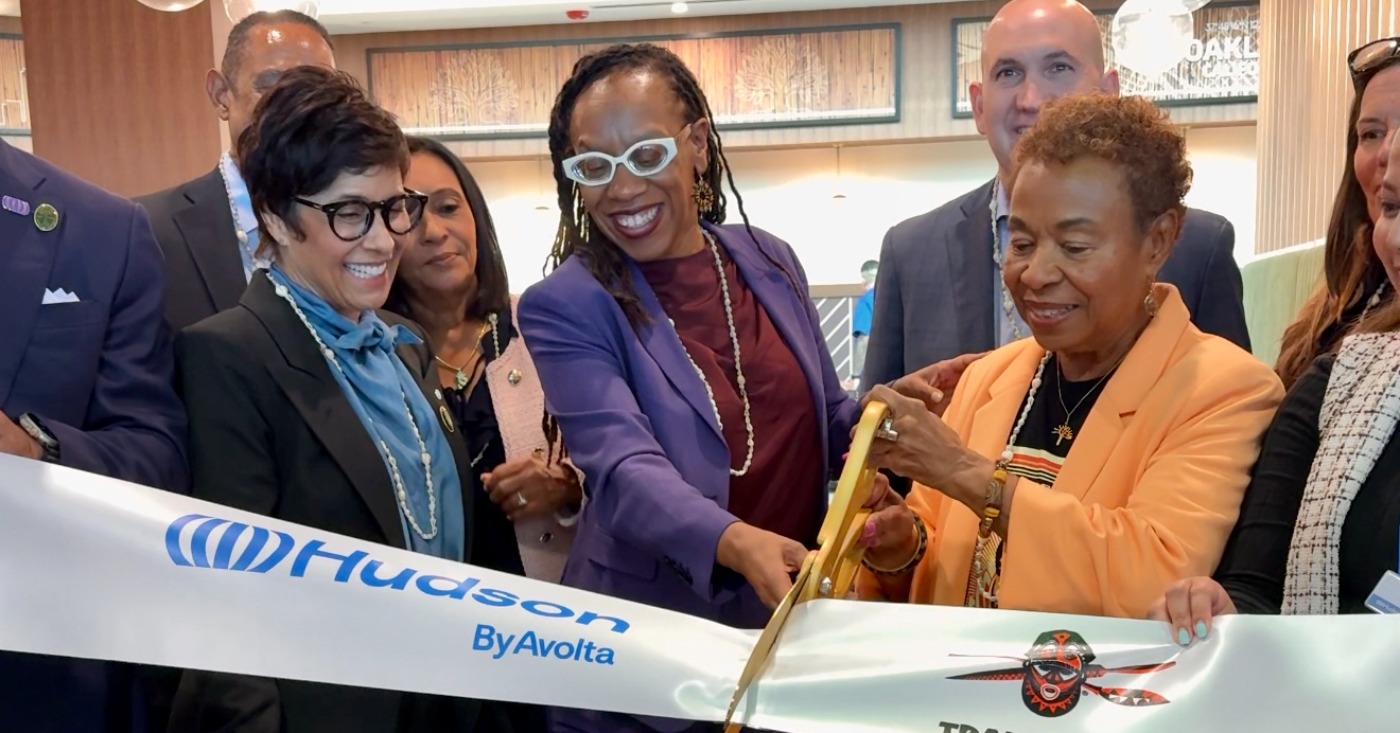
Oakland has always been a city of innovators, entrepreneurs, visionaries, and world-class hospitality. Trader Vic’s—the birthplace of the original Mai Tai – first opened in Oakland back in 1934 on San Pablo Avenue, long before becoming an internationally recognized global brand.
More than 50 years after it moved to Emeryville, Trader Vic’s is returning to its roots. Oakland Mayor Barbara Lee touts the return as another victory for Oakland.
“My administration is deeply committed to backing businesses like Trader Vic’s and Plum Market—partners who invest in our city, uplift our local workforce, and support thousands of local jobs,” Lee said.
The latest Trader Vic’s – called Trader Vic’s Outpost – is located at the Oakland International Airport in Terminal 2 near Gate 25 and had a soft opening in August.
With 108 dining seats, 28 bar seats and a counter for standing-room customers, travelers from around the world can have a full-service restaurant and bar experience or take-out for those with planes to catch.
Open from 6 a.m. to 10 p.m., breakfast, lunch, dinner, cocktails will be served.
Trader Vic’s returning to its roots confirms Condé Nast’s decision to name Oakland the #1 Food City in America two years in a row, and just earlier this month, ranked Oakland #6 on their list of Best Cities in the U.S.!
“The opening at OAK is incredibly meaningful for us,” said Rhett Rosen, CEO of Trader Vic’s Hospitality Group, according to the company website. “Trader Vic’s was born in the Bay Area, and this new location gives us the chance to welcome travelers with a taste of that original spirit before they take off. It brings together everything people love about Trader Vic’s — great cocktails, flavorful food, warm hospitality and a little sense of escape — in a place that connects Oakland to the world.”
Trader Vic’s is an Oakland institution and one of the region’s most recognizable hospitality brands, said Port of Oakland Director of Aviation Craig Simon on the web site.
“Travelers are increasingly seeking dining options that are memorable, locally rooted, and uniquely representative of the communities they are visiting. Trader Vic’s delivers all of that while providing a high-quality food and beverage experience for our guests. We are proud to welcome this hometown favorite to Terminal 2,”
The original Trader Vic’s in Oakland:
In 1934, with an investment of $500, Bergeron opened his initially small restaurant at 65th Avenue and San Pablo, serving comfort foods for lunch and dinner and beers and whiskeys. As his clientele grew, so did his restaurant, expanding space and menu options. After visiting this establishment, famed San Francisco Chronicle columnist Herb Caen proclaimed that the “best restaurant in San Francisco is in Oakland.”
There were as many as 25 franchises worldwide, including the U.S. Trader Vic’s is now headquartered in Martinez.
Black Press
Oakland Coal Terminal Backed by Trump Would Be Bigger, Dirtier Than Promised, Says Report
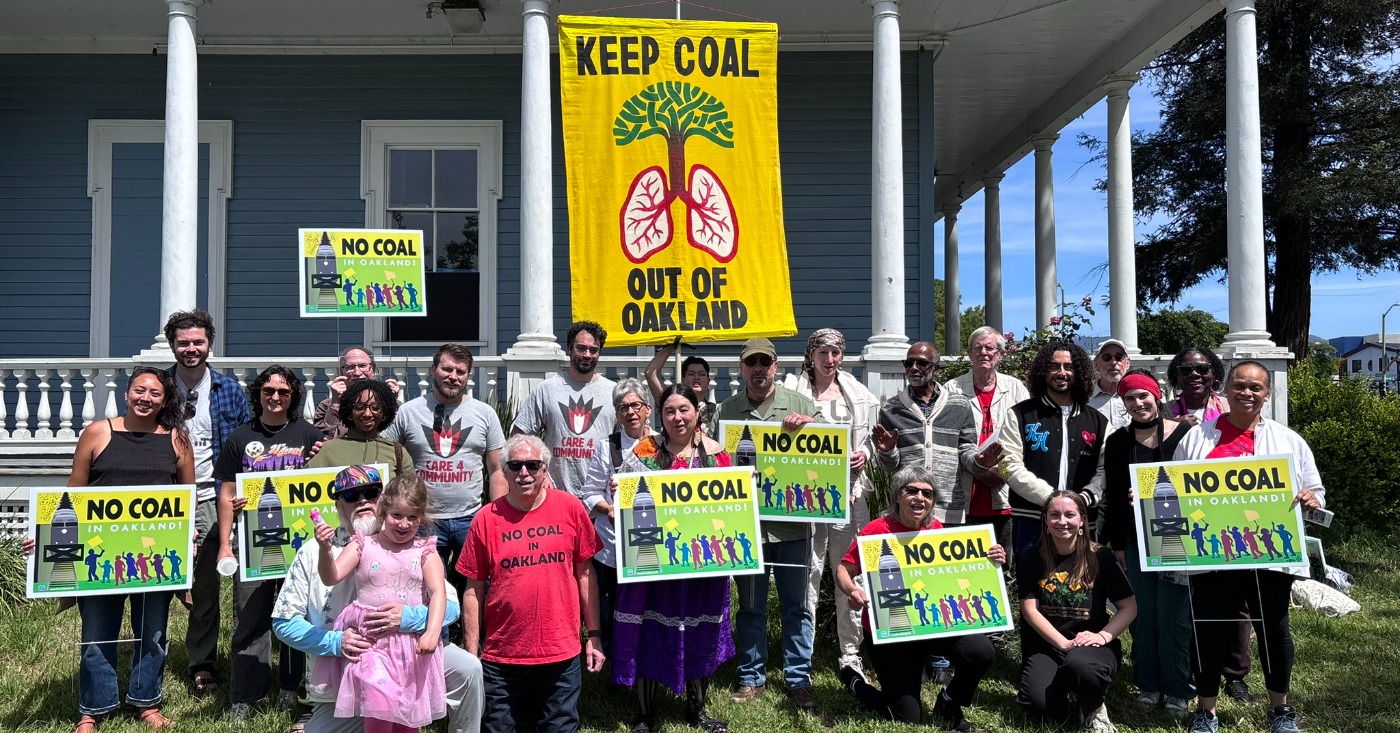
A recent feasibility study commissioned by potential investors says an Oakland coal terminal backed by President Donald Trump could export 13 million tons a year — three times the amount estimated in an earlier environmental review.
Surprisingly, the report also contradicts developers’ and project advocates’ repeated pledges that the coal would be stored in a covered terminal. Instead, the millions of tons of coal shipped annually from inland states to the West Gateway terminal in Oakland would be stored in “two open-air bunkers,” with about 150,000 tons of coal per stockpile, before being sent overseas, according to the recent report cited by the L.A. Times. (https://ruic.utah.gov/wp-content/uploads/2026/09/Port-Study-RUIC-Bulk-Commodity-Ocean-Terminals-Study.pdf)
Residents and clean air advocates have long expressed concerns that coal dust would worsen pollution in West Oakland and throughout the East Bay.
The proposed site of the Oakland Bulk and Oversized Terminal (OBOT) is located at the former Army base near the Port of Oakland, which developer Phil Tagami has been trying for years to turn into a shipping terminal despite determined community opposition.
Trump announced a $75-million investment in the project in June, about a third of its estimated cost. The new terminal would be the largest coal export site on the West Coast, transporting coal to Japan, South Korea, Taiwan, Vietnam and Malaysia, according to the Trump administration.
Opponents say a new terminal would undermine years of progress cleaning up the air in West Oakland, which has a history of disproportionate pollution and high asthma rates due to its proximity to the port and other industry.
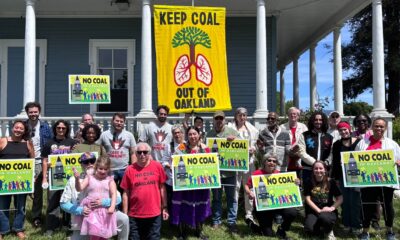
According to No Coal in Oakland organizer Ted Franklin, who has been active for 11 years in the fight to stop the coal terminal, the report indicates that investors may be looking for a cheaper way to build the terminal.
“We were shocked but not surprised” by the report, Franklin said. “Basically, it seems that the plan now is to store open piles of coal, which is a less expensive project than creating a completely enclosed facility.”
The threats that the project poses are real, but it faces a lot of economic and legal hurdles, he said.
Coal production is in permanent decline worldwide, he said, wondering who was going to “invest money in an industry that has no future.”
Further, the project has not yet attracted big investors. “There’s no bank, no financing, no financial institution backing this,” he continued.
A major legal hurdle facing the project is the passage of Assemblymember Mia Bonta’s bill, AB 40, the Community-First Coal Review Act, signed into law by Gov. Gavin Newsom on Sept. 30.
The law requires developers of large-volume bulk coal facilities to complete a full Environmental Impact Report (EIR) under the California Environmental Quality Act (CEQA) before they can operate.
The law was specifically designed to block or delay the coal terminal project.
The report to potential developers was produced by consulting groups Norda Stelo and Wood Mackenzie in July and released this month. It was commissioned by the Rural Utah Infrastructure Coalition, made up of eight Utah counties that are considering investing about $43 million into the terminal to receive Utah coal.
The consultants produced their findings after visiting Oakland, examining engineering documents and holding discussions with Savage Cos., a Utah-based transport and logistics company selected to operate the facility
Research has shown that coal terminal operations can be dangerous to public health. The ports of Los Angeles and Long Beach moved away from open-air coal and petroleum coke storage three decades ago.
The report says that the site could process 12 million metric tons, or 13.2 million tons, of coal each year, three times more than the terminal’s approved environmental impact report from 2002 and its 2012 addendum. Neither document mentions coal specifically, but rather bulk commodities.
The coal arriving in Oakland could also be dirtier then had been previously stated, according to the report. Project officials previously said the terminal would handle only high-grade western bituminous coal from Utah, but the recent report says it will also handle Powder River Basin coal from Wyoming and Montana, known to be much dustier.
Nor does the report mention plans to cover the rail cars to prevent pollution, though project officials previously promised they would only utilize coal transported in covered rail cars.
“It appears the developers want to build something much bigger and more polluting than anything they previously revealed, either in court or to the West Oakland community,” said Colin O’Brien, deputy managing attorney at the nonprofit Earthjustice, speaking to the L.A. Times.
The report indicates that the project may be much more expensive and take longer to complete than anticipated. The Energy Department estimates the terminal will cost about $231 million, but the report places the price at between $430 million and $625 million.
The terminal will take 53 months to complete according to the report, significantly longer than Trump’s promise of exports beginning in 2028.
Ted Franklin’s column, “Utah Study Blesses Investment in Oakland Coal Terminal but Leaves Key Questions Unanswered” is available at https://nocoalinoakland.info/utah-study-blesses-investment-in-oakland/
Black Press
Opponents Smear Effective African American Transit Director as Election Nears
Incumbent Joel Young is defending his seat on the AC Transit Board against allegations of harassment stemming from a public interaction in late 2024. Supporters of the director cite his record of securing $600 million for bus services and leading civil rights initiatives as evidence of his effectiveness. They argue the accusations regarding a group photo interaction have been politically weaponized by opponents to influence the Ward 3 election. The controversy has sparked a debate over candidate character versus transit performance. Learn more about the investigation and the upcoming vote.
I am an academic and a community activist. I take women’s issues, including workplace harassment and discrimination, seriously. I have been following the AC Transit Ward 3 election and have become concerned about what I believe is a serious injustice.
Joel Young is an effective AC Transit director. He has secured more than $600 million for local bus service and fare affordability. He led the Freedom Bus Project, integrating civil rights history, art and transit. He was presiding over the board of AC transit when it won the 2023 Outstanding Public System Award, and he raised $1 million for the hydrogen fuel cell bus program. These are just a few of his accomplishments.
I reviewed the allegations of unwanted physical contact and harassment made by AC Transit Director Sarah Syed against Director Joel Young, I believe the events of Sept. 24, 2025, have been characterized in a way that does not accurately reflect what occurred.
That interaction took place during a group photo after celebrating the life of a longtime Board member who passed away. From the video I reviewed, it appears that individuals were consoling one another and exchanging hugs in a public setting surrounded by numerous witnesses.
Young’s interaction with Syed appears consistent with those expressions of sympathy and it appears that Young was attempting to extend a gesture of goodwill toward Syed.
I am concerned by how this incident has been recently used as a political tool to influence the outcome of the AC Transit Ward 3 election and support Young’s opponent.
Syed and her supporters launched a targeted political campaign, first through the Alameda County Democratic Party and subsequently by organizing a letter from a group of majority-white elected officials who have endorsed Young’s opponent against Young, who is Africa American.
Furthermore, this manufactured controversy distracts voters from the critical issues facing AC Transit. The public deserves a substantive debate on service reliability, ridership recovery, passenger and operator safety, financial stability, regional equity, and future transportation infrastructure. The electorate should be evaluating which candidate possesses the judgment, experience, and vision to lead AC Transit forward – not reacting to a distorted personal interaction.
Regardless of one’s political views or preferred candidate, allegations of harassment should never be weaponized for electoral purposes. We all know that exaggerated or unsupported accusations can undermine public understanding of, and trust in, efforts to address genuine sexual harassment and violence.


Mayor Barbara Lee Holds Special State of the City Address in Deep East Oakland

Practitioners of African Traditional Spirituality Offer Ancestral Reverence Ritual Oct. 31

It’s Time to Lose Weight Before the Holidays

Trader Vic’s Returns to Its Oakland Roots

Oakland Coal Terminal Backed by Trump Would Be Bigger, Dirtier Than Promised, Says Report

Opponents Smear Effective African American Transit Director as Election Nears

COMMENTARY: BIG MAMA SAID: Don’t Throw Away the Gift Just Because It Came Wrapped Wrong

Columbus’s Oldest Businesses Still Open: 10 That Have Lasted 75+ Years

Lawyer-Turned-Contractor Hones Focus on Redeveloping Properties for Housing

NFL Round-Up: Caleb Williams strikes back, Panthers, Browns and Titans secure victories

The Youngest American Killed in the Vietnam War

Passing for White, Fighting for Black America: The Courage of Walter White

OP-ED: Haiti TPS: Have We Lost Sense of Humanity?
NFL: Week Two Recap | Jalen Hurts did not fold; Caleb Williams exits game with injury

Remembering Chauncey Bailey as Student Journalists Face Threats to Truth-Telling

Peter Magubane: a Camera Against Apartheid

Mayor Lee Announces $1 Million Kaiser Permanente Grant for Pilot Program to Address Homelessness, Clean Up Public Spaces throughout Oakland

OP-ED: How Head Start Also Helps Parents

Poll: Becerra Widens His Lead Over Hilton; Californians Split on Wealth Tax

Community Action Group ‘Friends of Zakiya’ Ask Sheriff for Time

Luxury SUV: Heated Seats & Captain’s Chairs Review #shorts

Black-Owned Banks: Compliance to Community Business #shorts

FDIC Study: African American Banks Disappearing Rapidly #shorts

Car Buying Tip: Check Windshield Glare & Interior Space! #shorts

St. Louis Celebrates Excellence at The St. Louis American’s 39th Annual Salute to Education Gala

‘No King: Vote Early’ protest for democracy in St. Louis

Optimize Your Seating: Essential Household Setup Guide #shorts

Brake Pedal Test Drive: Smooth Stops for Your Truck! #shorts

Life Lessons Learned Through Adversity: My Journey #shorts

From Claflin Alum to ColorBlind Artist
-

 Black Press7 days ago
All Skinfolk Ain’t Kinfolk
-
 Black Press6 days ago
Oakland Awarded More than $14 Million in State Funding
-

 Black Press6 days ago
Jendayi Arrest Raises Community Concerns Regarding Sheriff’s Chain of Command
-

 African American News and Issues4 days ago
Black History: Gladys West Mathematics Helped Make GPS Possible
-

 Featured1 week ago
2026 Voting Guide: Every Candidate and Proposition Explained!
-

 Black Press6 days ago
Allen Temple Baptist Church Hosts Free Prostate Cancer Screenings on Oct. 17
