
Technology
Stolen Emails Reveal Lapses in Sony Security Practices

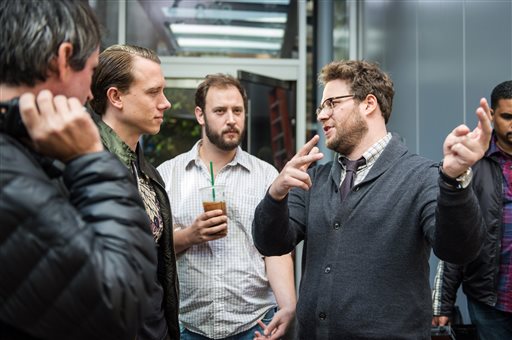
This photo provided by Columbia Pictures – Sony shows, from left, 1st AD Jonathan Watson, DP Brandon Trost, Evan Goldberg, and Seth Rogen on the set of Columbia Pictures’ “The Interview.” (AP Photo/Columbia Pictures – Sony, Ed Araquel)
TED BRIDIS, Associated Press
WASHINGTON (AP) — In the weeks before hackers broke into Sony Pictures Entertainment, the studio suffered significant technology outages it blamed on software flaws and incompetent technical staffers who weren’t paying attention, even as hackers targeted executives to trick them into revealing their online credentials.
Its chief executive was regularly reminded in unsecure emails of his own secret passwords for his and his family’s mail, banking, travel and shopping accounts, according to a review of more than 32,000 stolen corporate emails circulating on the Internet.
Scrutiny of Sony’s stolen computer data hasn’t yet revealed exactly how hackers managed to slip inside to steal such an enormous cache, when it happened, who was behind the theft or their motives.
But late Wednesday, a U.S. official told The Associated Press that federal investigators have now connected the Sony hack to North Korea. The official was not authorized to discuss an ongoing criminal case openly, and spoke on condition of anonymity.
Confirmation of the North Korean link came just after Sony cancelled plans for the Dec. 25 release of “The Interview,” which had been one of the hackers’ public demands due to its depiction of the fictional assassination of North Korean leader Kim Jong-un.
The stolen files expose lax Internet security practices inside Sony such as pasting passwords into emails, using easy-to-guess passwords and failing to encrypt especially sensitive materials such as confidential salary and revenue figures, strategic plans and medical information about some employees. Experts say such haphazard practices are common across corporate America.
“Most people who say they’re not doing that are lying,” said Jon Callas, co-founder and chief technology officer for Silent Circle Inc., a global encrypted-communications service.
The emails show CEO Michael Lynton routinely received copies of his passwords in unsecure emails for his and his family’s mail, banking, travel and shopping accounts, from his executive assistant, David Diamond. Other emails included photocopies of U.S. passports and driver’s licenses and attachments with banking statements. The stolen files made clear that Diamond was deeply trusted to remember passwords for Lynton and his family and provide them whenever needed.
“I still need the password to your Amazon account,” Diamond wrote to Lynton in August.
Sony spokeswoman Jean Guerin did not respond to a phone message left with an assistant in her office and email from The Associated Press on Wednesday.
In an October email, the company’s chief financial officer, David C. Hendler, complained to Lynton that Sony Pictures had experienced months of “significant and repeated outages due to a lack of hardware capacity, running out of disk space, software patches that impacted the stability of the environment, poor system monitoring and an unskilled support team.” Hendler also blamed a company rule that required employees to keep too many old emails.
“Sloppy, really sloppy,” said Kevin Mitnick, a former hacker who served five years in federal prison and now runs Mitnick Security Consulting LLC. But Mitnick was quick to acknowledge that other top chief executives are “probably doing it, too.” Companies can use password-management software, which can store dozens or hundreds of encrypted passwords to various accounts behind one protected password.
“It’s pretty ordinary for CEOs and executive assistants to share confidential information by email,” he said. “They feel that their email is secure and they have nothing to worry about.”
The fact that Lynton regularly received emails with his passwords was particularly a problem for Sony because hackers who steal corporate data often will immediately search for the word “password” or a variation of the word across thousands of messages.
“If I’m trying to get credentials, that’s the first search I’m going to run,” said Mitnick, who is hired by companies to test their internal security.
The October email inside Sony, among tens of thousands of messages stolen in the crime, described specific software and hardware upgrades and plans to hire an outside consulting firm to improve the company’s network, plus new rules to limit the amount of old emails that would be stored on servers. Lynton received it roughly three weeks before employees reported signs that hackers were rummaging inside Sony’s computer network.
___
Associated Press writer Eric Tucker contributed to this story.
Copyright 2014 The Associated Press. All rights reserved. This material may not be published, broadcast, rewritten or redistributed.










Art
Kickstarter CEO Everette Taylor Shares Tips on Creating and Growing a Business
HOWARD UNIVERSITY NEWS SERVICE — Everette Taylor, the CEO of the global crowdfunding platform Kickstarter, recently visited Howard University to serve as the inaugural guest for the Cathy Hughes School of Communications’ new speaker series. Addressing students at the Founders Library, Taylor emphasized that the future of business belongs to those who are bold enough to take risks.
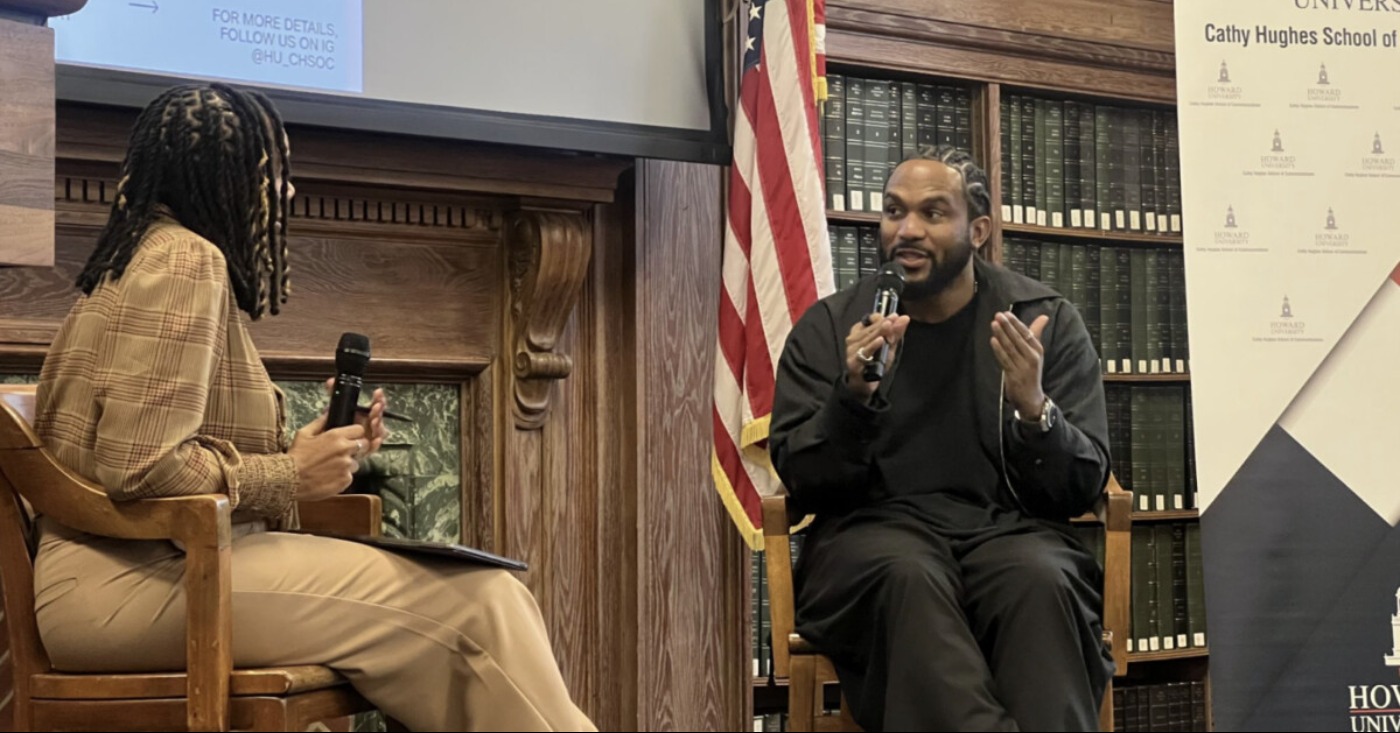
WASHINGTON (HUNS) — “The future belongs to creators who are bold,” Everette Taylor, CEO of crowdfunding platform Kickstarter, told students at Howard University during a recent visit.
As Taylor discussed his journey, he tested the boldness of students by inviting them to share their ideas during an impromptu pitch session at the Cathy Hughes School of Communications’ new speaker series in the Browsing Room of Founders Library. The inaugural speaker then shocked one group of students by pledging to invest in their thesis film, paying forward the opportunities that have lifted him as he struggled to pursue his dreams.
Taylor grew up in a low-income neighborhood in Richmond, Virginia, where he frequently encountered gang violence and drug dealing amid periods of homelessness.
Not feeling as if he conformed to conventional ideas of success, he eventually found inspiration in Jay-Z who balanced being an artist and an entrepreneur. Similarly, Taylor carved his own route, launching and growing various businesses.
He gained enough recognition to land on the 2018 Forbes’ 30 Under 30 list in marketing and advertising. In 2022, Forbes also named him as one of the top 50 most entrepreneurial CMOs when he was chief marketing officer of Artsy, an online art gallery and marketplace. That same year he took over Kickstarter, and the company reported a year-over-year revenue increase of 50% in the first quarter of 2026.
Taylor encouraged the audience through his story, but he also gave practical advice to help students who share his zeal to create and grow their business.
He explained that his mentor, Artsy CEO Mike Steib, helped him make the transition from being a CMO to becoming CEO at Kickstarter.
“These opportunities I don’t take for granted,” Taylor said, adding that Steib was “the first leader I had to take me under his wing.”
When he began his position at Kickstarter, Taylor said, “I had zero imposter syndrome, because I felt like I was ready for it, and it was because this person invested in me over the past few years.”
“A lot of my journey was me just hustling and being bold enough to ask for what I want, but I also need people to give me an opportunity.”
This idea of giving people opportunity impacts his business philosophy, as Taylor estimates that the number of African American employees grew exponentially since he’s been in leadership.
“Kickstarter was I think less than 2% Black, and at our peak I had gotten it to 20-something percent Black,” Taylor said.
Even then, Taylor also saw a need for representing other perspectives. “We still serve people globally, so we need people from different countries and cultures,” he said. “If you’re building a global company, it’s important to build a diverse base of people.”
“I always want to impact more lives, and that always leads to more results.”
Everette Taylor, CEO of Kickstarter
With the success Taylor had after becoming CEO of Kickstarter, he also found a need to prioritize his health.
“This is the first year that I’ve started the year with zero business goals,” he said. “For the first time, my goals have been centered around my health.”
He cites the illness of a friend who appeared to be healthy. Seeing his friend, who is also a successful entrepreneur, endure illness pushed him to prioritize his health.
“Business, I can do that in my sleep, but for me right now I’m so much more focused on setting goals for myself, and I know that’s going to impact the work that I do by feeling healthier and being a better version of myself.”
Samantha Housen, a sophomore public relations major and interior design minor from Harlem, attended the event to gain knowledge to grow her non-profit and for-profit businesses.
“I’m here because I want to explore more of the details of entrepreneurship from an actual professional,” Housen said, and to “see how his mindset could help me in my entrepreneurship.”
“My biggest takeaway is that I’m bold, and it’s OK to be bold,” she said. “I very much have the authority to do whatever I seek to do.”
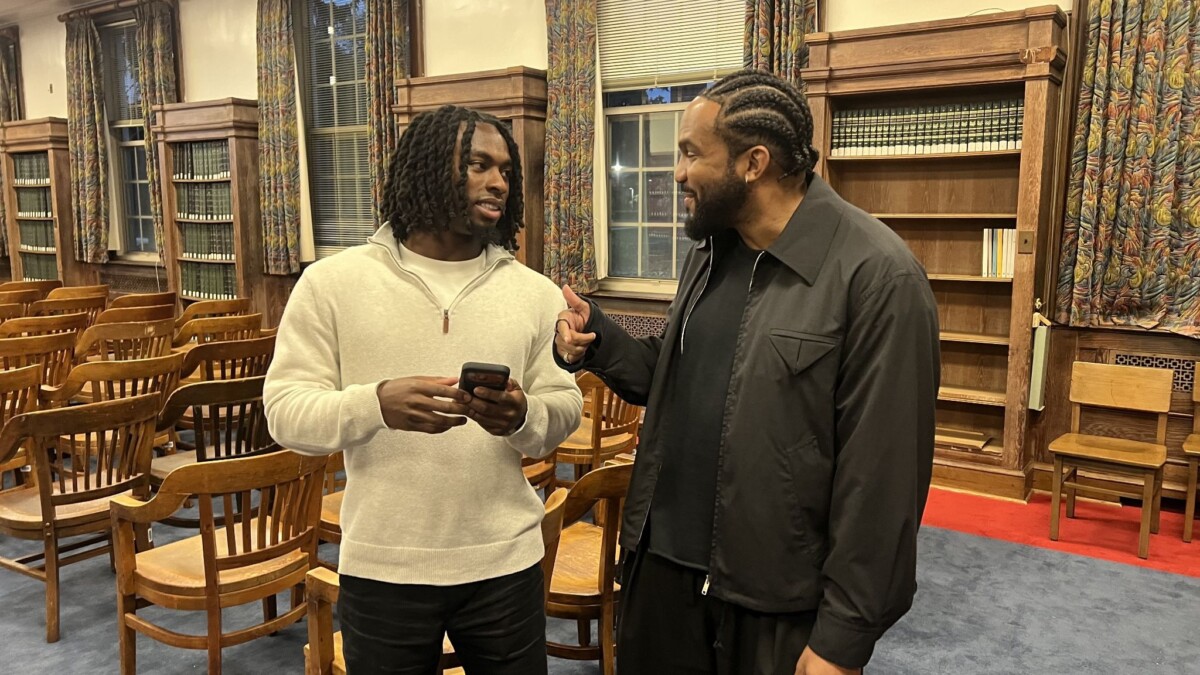
Kimberly Moffitt, Ph.D., dean of the Cathy Hughes School of Communications and host of the event, said she was excited about the speaker series.
“It’s because of students,” Moffitt said. “They felt like they weren’t hearing enough from people who are already post-graduation and successful. They wanted to hear those voices. So, this is an opportunity for me to bring folks to campus so they could reach out, talk and interact with folks that they aspire to be like or will be inspired by.”
Moffitt was excited for students to see someone who looked like them and carried themselves authentically in a position of high acclaim.
“He is showing you a different path, and letting you know that it’s OK to be who you are and show up in that space and not have to apologize,” Moffitt said of Taylor.
Moffitt also wants to encourage students to make the most of the speaker series. She gives details on upcoming speakers and the importance of hearing these people tell their stories.
“Those of you who want to be in TV and film, those jobs are different now,” she said. “You have to hustle in a different way.”
“I need our students to think about entrepreneurship in all that they do,” Moffitt added. “I want students to leave with that so that they have it in their back pocket should they need to draw on it.”
After the event. Taylor explained why boldness is essential to his success at Kickstarter.
“It’s for the grind and the ambition — not settling for status quo and mediocrity, and really going for it,” he said. “I always want to impact more lives, and that always leads to more results.”
Solomon Goins is a reporter for HUNewsService.com.
Based on reporting by Howard University News Service.
Black History
OP-ED: The Black Church Writes AI’s Next Chapter
BLACKPRESSUSA NEWSWIRE — I implore my fellow faith leaders to use these tools. Start now and use them with wisdom. We count on each and every one of you to make sure our communities help write the next chapter of this story. This rapid change is not as unfamiliar as it may sound. My first understanding of AI came from using a calculator for the first time in grade school. We did not call it AI, but it was a tool that helped me work through mathematical equations hours more efficiently.

For generations, the Black church has stood strong in our communities through every historical change this country has experienced. During the civil rights movement and in recent times, faith leaders have helped uplift Black sanctuaries to register voters, keep food pantries open for people in need, and sit with families in hospital rooms in their most desperate moments. When our people faced new trials, they could always look to our faith leaders and the church to lean in to help us be included in these transformative changes.
Artificial intelligence is the latest revolutionary change to impact our society, and much like other transformations before us, underserved communities often get left behind.
I was recently featured in a report entitled “Faith, Community & AI” and it found that people send ChatGPT more than 70 million messages a week about religion. Nearly 22 million involve studying sacred texts, and 16 million ask about religious practices and holy days. Our members make up part of those numbers. They bring questions of faith to these tools every day.
Pastors have noticed, and according to a September 2025 Lifeway Research survey of 1,003 Protestant pastors, 42 percent said they use or experiment with AI in ministry. I count myself among them.
I write my sermons by hand, through prayer and study. When I finish a draft, I ask ChatGPT this question: “Where might this sermon become unclear or difficult to follow for someone early in their walk of faith?” It shows me gaps in my preparation, like where I incorrectly assumed everyone would know the context of who the Pharisees were. Then, change comes from my own pen, not the robot. The tool helps me reach the person in the back pew while the message still comes from me.
If I could have my wish, our whole community would take a similar posture. We must use these tools, understand them, and most importantly be present to help shape them if we want to be included in the coming change.
I implore my fellow faith leaders to use these tools. Start now and use them with wisdom. We count on each and every one of you to make sure our communities help write the next chapter of this story. This rapid change is not as unfamiliar as it may sound. My first understanding of AI came from using a calculator for the first time in grade school. We did not call it AI, but it was a tool that helped me work through mathematical equations hours more efficiently.
It starts with training; there is no involvement without understanding. Free AI trainings have begun in our churches and community centers across the nation. Every faith leader should sign up and, when possible, encourage members of your congregations to join you. By learning how to use AI, we can better understand what it can do, make up our own minds about its impact, and have a say in how it shapes our communities.”
Next, we must be at the tables where the builders of these tools make decisions. Presence is the first step toward understanding, and that gap is only bridged through a coordinated effort. How can any tool serve a community well if that community is not part of the conversation? Our traditions, needs, and concerns must be accounted for, and Black faith leaders are already making that happen. OpenAI’s recent Faith report states plainly that AI should never become an arbiter of religious truth. I fully intend to hold the company to its word, and the most effective way I can do that is from inside.
I will close with this––we must diligently protect what only the church can give. A believer in Seoul, Korea quoted in the report warned, “if you pour every struggle into a private chat, your pastor and your friends may never learn you need help.” A chatbot will not sit with a grieving family or pray with you at two in the morning. As we adopt this technology, it is up to us to ensure it keeps people connected to each other and to their church.
Rev. Dr. Adolphus Lacey is senior pastor of Bethany Baptist Church in Brooklyn, New York.
Black History
Can Black Houston Create a Black Tech Corridor?
HOUSTON DEFENDER — Black professionals remain significantly underrepresented in the American technology sector, holding only 7.4% of high-tech jobs despite making up 12.7% of the U.S. workforce in 2025. This disparity is even wider for Black women, who constitute less than 3% of the tech workforce.
For years, technology has been one of America’s fastest-growing economic sectors—and one where Black professionals remain significantly underrepresented.
In 2025, Black workers made up 12.7% of the U.S. workforce, according to the U.S. Bureau of Labor Statistics, but only 7.4% of the high-tech workforce, according to the U.S. Equal Employment Opportunity Commission. Their share of high-tech employment had remained essentially stagnant since 2005. Black workers also represented just 5.7% of high-tech managers.
For Black women, the gap is even wider. A 2023 Kapor Foundation report found Black women represented less than 3% of the tech workforce, with even fewer in decision-making and ownership roles.
So, instead of waiting for the broader technology industry to solve its representation problem, could Black Houston build something of its own?
The answer: Yes—but not simply by drawing a line on a map.
Houston has the pieces
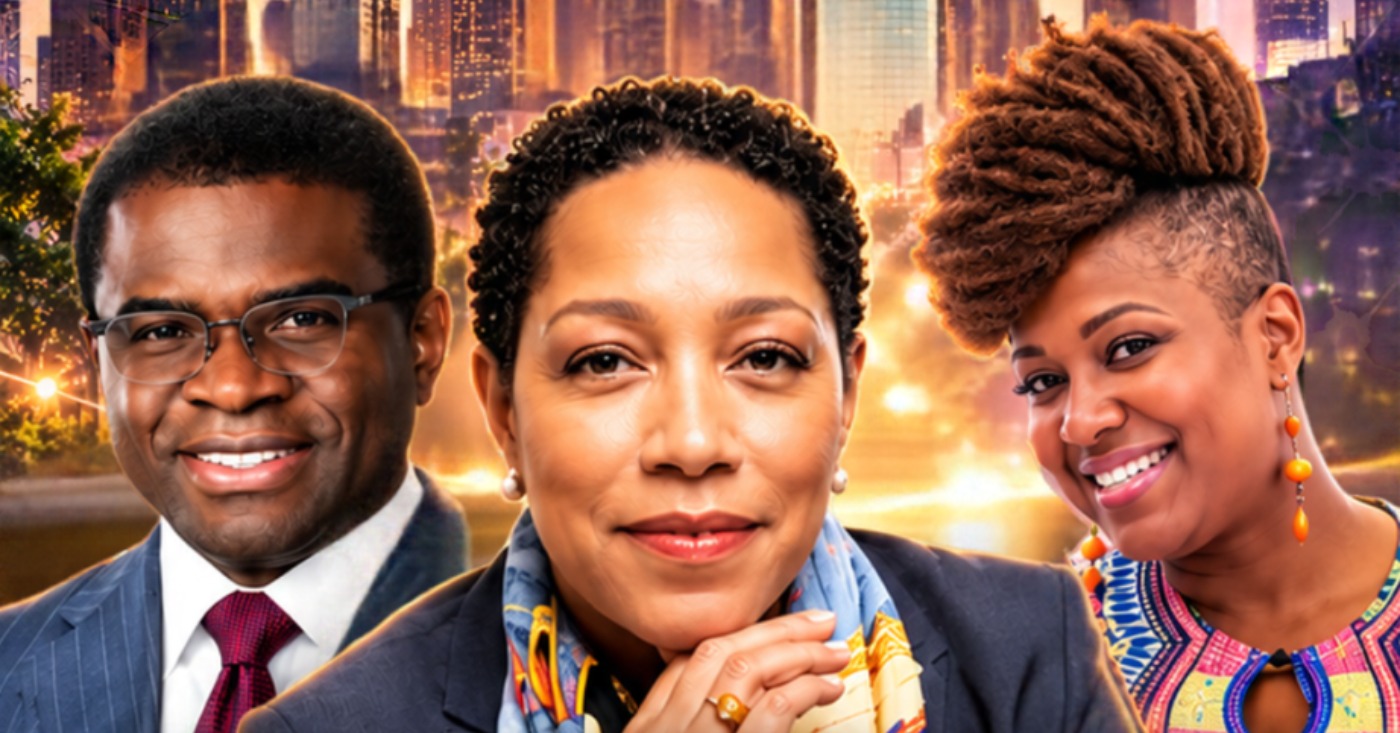
Dr. Reagan Flowers, founder of C-STEM and Education Consulting Services, believes Houston already possesses many of the building blocks needed for a Black Tech Corridor.
“What I have not seen is the intentionality to connect, capitalize, and organize assets into an ecosystem where Black Houstonians can create, own, and scale technology companies and participate meaningfully in the wealth those companies generate,” said Flowers.
She contends Houston already offers examples of what a technology ecosystem can look like.
The Texas Medical Center’s innovation infrastructure demonstrates the power of institutional partnerships, specialized facilities, and venture funding. The Ion District demonstrates how universities, corporations, entrepreneurs, real estate, and capital can converge. TXRX Labs shows the value of community-accessible maker and technical-skills infrastructure.
Flowers argues Black Houston can learn from all three without simply copying them. The goal, she said, should be a hybrid public-private-community ownership model.
Third Ward makes sense
If there is a geographic spine for such an ecosystem, Flowers points to Third Ward—particularly Emancipation Avenue. Its location is difficult to ignore.
Third Ward sits near Texas Southern University, the University of Houston, and Houston Community College, and connects to Midtown, the Ion District, and the Texas Medical Center.
UH already has a commercialization platform that takes innovations through invention, prototyping, licensing, venture creation, investor connections, and market expansion. Its Technology Bridge provides a large innovation park with laboratories, offices, and space for technology companies.
“To the west is Rice’s Ion District,” shared Flowers. “To the southwest is the Texas Medical Center and its health-tech commercialization engine.”
In other words, Black Houston would not have to build an ecosystem from scratch.
“The pieces are already on the board,” said Flowers. “They have not been organized around Black technology ownership and wealth creation.”
Is there already one?
Parts of a Black tech ecosystem clearly exist. Houston has Black technology professionals, Black-owned startups, STEM nonprofits, workforce development programs, minority business organizations, Black founders and investors, universities that produce diverse talent, and historically Black fraternities and sororities that support innovation.

But Kara Branch, founder and CEO of Black Girls Do Engineer, cautions against defining success by geography alone.
“I think the conversation needs to be bigger than creating a physical ‘corridor,’” said Branch. “A successful technology ecosystem should be measured by what it produces for the community—not simply where it is located or who occupies the space.”
Loretta Williams Gurnell, founder and CEO of SUPERGirls SHINE Foundation, agrees.
“I believe we have one, yet a successful Black tech corridor cannot simply be viewed as a geographic location. It must function as an ecosystem,” offered Gurnell.
That ecosystem would connect K-12 STEM education, colleges and universities, workforce development, entrepreneurs, startups, corporations, investors, innovation hubs, government, faith communities, and civic organizations.
The objective: Create a seamless pathway from classroom to career to entrepreneurship.
Ownership is the point
Why does Black Houston need a Black-centered technology ecosystem? Because access doesn’t automatically equal ownership.
“As AI, automation, cybersecurity, data analytics, robotics, and emerging technologies continue reshaping the economy, we must ask: Who is building the technology? Who owns the companies? Who owns the intellectual property? Who receives the investment capital? Who benefits economically?” pondered Gurnell.
Those questions matter because technology increasingly drives wealth creation.
Laolu Davies-Yemitan, founding principal of Five Woods Realty, similarly argues that participation alone is insufficient.

“If the Black community is going to capture a meaningful share of the wealth generated by the next generation of technological innovation, the pathway must increasingly include ownership—ownership of companies, intellectual property, real estate, investment capital, and the institutions that support entrepreneurial growth,”
– Laolu Davies-Yemitan, founding principal of Five Woods Realty
“If the Black community is going to capture a meaningful share of the wealth generated by the next generation of technological innovation, the pathway must increasingly include ownership—ownership of companies, intellectual property, real estate, investment capital, and the institutions that support entrepreneurial growth,” shared Davies-Yemitan.
Real barriers
Building the corridor—or innovation district—will not be easy. Capital is perhaps the biggest obstacle. Black founders receive a disproportionately small share of venture funding, making it harder to scale companies, hire workers, and conduct research.
Then there is fragmentation. Houston has organizations doing valuable work in STEM education, entrepreneurship, workforce development, and innovation, but many operate independently rather than as parts of a coordinated ecosystem.

Talent pipelines also require attention. Young people in underserved communities can face limited exposure to STEM, limited access to technology resources, mentorship, and professional networks, and limited knowledge of technology careers. Gurnell’s philosophy is straightforward: Exposure creates aspiration; information drives preparation; preparation creates access.
Digital inequity remains another challenge, including disparities in broadband access, devices, digital literacy, and training in advanced technology. And then there’s social capital.
“Deals are made through trusted relationships,” Gurnell said. “Therefore, those relationships have to be exposed, nurtured, and strengthened.”
Branch adds another warning: Houston cannot confuse activity with impact.
“There can be a lot of panels, events, programs, announcements, and conversations,” she said. “But doing the work means consistently showing up after the spotlight is gone.”
Build talent before buildings
That may be the most important lesson.
“The conversation should not begin with buildings,” said Gurnell. “It should begin with talent.”
That means investing in early STEM exposure, workforce readiness, mentorship, entrepreneurship, capital access, and collaboration among nonprofits, corporations, universities, philanthropies, government, and industry.
Branch points to Black Girls Do Engineer’s STEMXUS EdTech infrastructure as an example of building rather than merely discussing solutions.
“We don’t want a young person to simply hear that engineering, technology, or innovation are possible careers,” Branch said. “We want them to build something, solve a problem, use the technology, meet professionals, develop skills, and understand what their next step can be.”
Branch’s litmus test asks, did someone gain a skill, get a job, launch a business, discover a career, or secure capital or customers? Did a family gain access to opportunity?
From corridor to economy
Flowers suggests thinking beyond a traditional corridor and toward a Black Innovation District; one that connects Third Ward, TSU, UH, and HCC with the Ion, TMC, and Houston’s manufacturing and maker infrastructure.
Rather than competing with Houston’s existing innovation centers, it could become connective tissue between those institutions and Black Houston.
“The pieces are already on the board. They have not been organized around Black technology ownership and wealth creation.”
Dr. Reagan Flowers
Gurnell envisions additional benefits.
“The greatest opportunity before us is not simply creating a Black tech corridor,” Gurnell said. “It is creating a Black innovation economy.”
The infrastructure for such a corridor/economy exists. The question is whether Black Houston can summon the intentionality, investment, collaboration, and ownership required to make it happen.
Based on reporting by Houston Defender.
Black Press
Students from Stonecrest Help Families Grow Food
THE CHAMPION NEWSPAPER — Two Georgia college students from Stonecrest are utilizing agriculture, technology, and community education to help families across Georgia grow their own food, even without traditional farming spaces. Mason Wright, a Morris Brown College student and founder of Plant It Georgia Vertical Institute, and Kosey Henley, a University of Georgia student, developed a mobile agricultural laboratory.
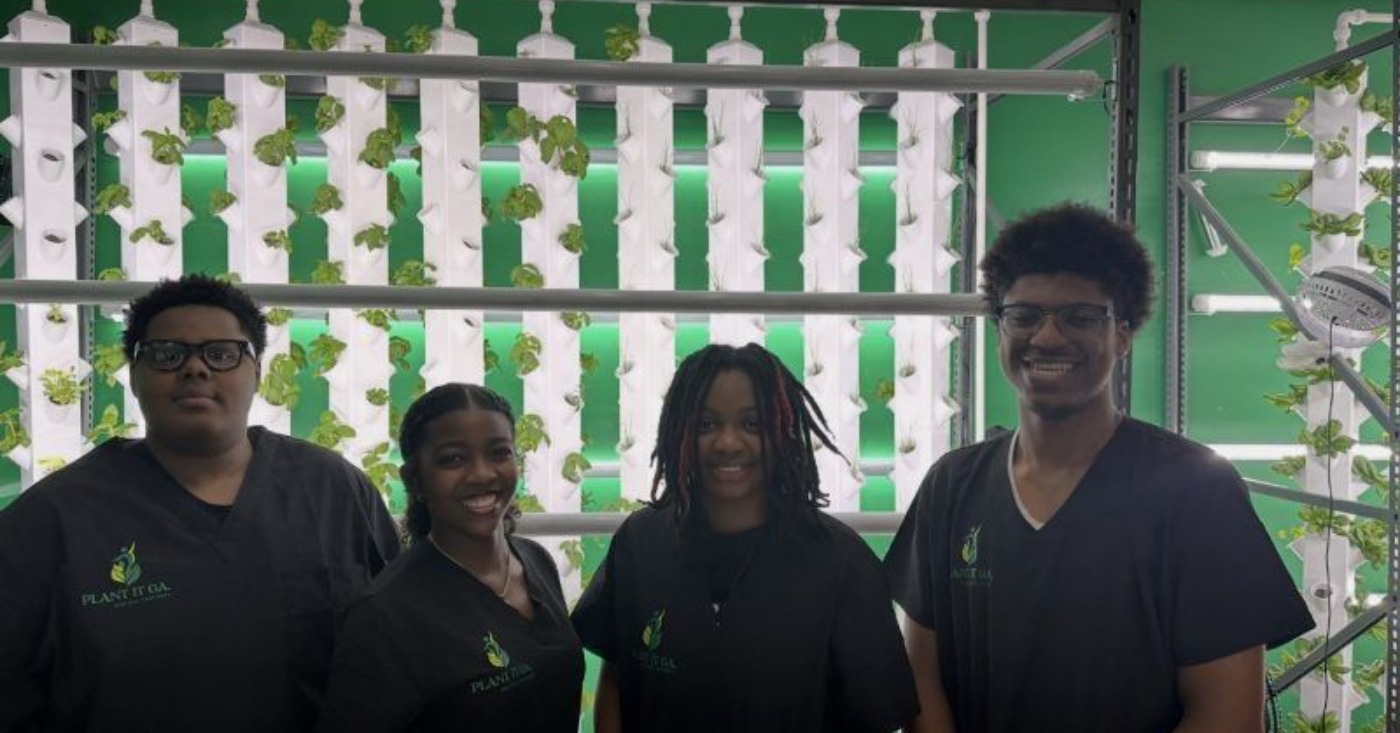
Two Georgia college students from Stonecrest are combining agriculture, technology, and community education to help families throughout Georgia grow their own food — even those without access to traditional growing spaces and equipment.
The two students recently completed the first prototype of Plant It Georgia’s mobile agricultural laboratory, which they said is an enclosed trailer equipped to introduce young people and families to growing food without relying on traditional farmland.
Mason Wright—a youth entrepreneur and a student at Morris Brown College—is the founder of Plant It Georgia Vertical Institute. The institute is an “educational initiative created to train young people in vertical farming, hydroponics, and other modern agricultural technologies,” according to Wright. Kosey Henley, a student at the University of Georgia, worked alongside Wright on the mobile lab.

The students said the idea came in response to an obstacle challenging many communities: transportation. Instead of requiring students to travel to the Plant It Georgia Vertical Institute, the program can take its lessons and growing systems directly into neighborhoods, schools, recreation centers, and other community spaces to teach students and their families about growing food in urban communities.
Inside the prototype, visitors will find hydroponic growing channels, lighting, and other equipment that show them how plants can grow in controlled environments. The laboratory aims to support hands-on lessons covering seed germination, water circulation, plant nutrition, lighting, harvesting, and the technology used to manage indoor crops, according to Wright.
The project comes as Georgia and the nation face an aging agricultural workforce.
According to the U.S. Department of Agriculture’s 2022 Census of Agriculture, Georgia had 63,492 agricultural producers, but only 4,770 were younger than 35. Nationally, the USDA counted 296,480 producers younger than 35, approximately 9 percent of all U.S. producers.
At the Plant It Georgia Vertical Institute, students are taught that farming does not always require acres of open land or heavy machinery. Vertical farming allows crops to grow upward in stacked systems while hydroponics uses nutrient-rich water instead of soil to feed the plants. These tactics make food production possible in classrooms, buildings, trailers, and densely populated urban communities, according to Wright.
Plant It Georgia’s growing systems can cultivate lettuce, tomatoes, collard greens, peppers, and a variety of culinary herbs, according to the news release. Students are taught the entire growing process — from placing seeds into starter materials and monitoring water and nutrients to caring for mature plants and harvesting fresh produce.
The program also introduces participants to careers connected to agricultural technology, plant science, environmental sustainability, food systems, and entrepreneurship.
Wright’s role as a Morris Brown College student and founder represents the connection between HBCU leadership, entrepreneurship, and community service, according to a news release. Wright also made headlines for opening Mason’s Super Dogs in Stonecrest in 2020 — which he now also operates on the Atlanta Beltline’s Eastside Trail. Henley brings another important academic connection through the University of Georgia, one of the state’s leading institutions in agriculture and agricultural research, according to the news release.
For event locations and more information, follow Plant It Georgia on Instagram (@plantitGA).
13 total views
Based on reporting by The Champion Newspaper.
Black Press
New Protections for Ticket Buyers: Gov. Newsom Signs Assemblymember Isaac Bryan’s Bill
OAKLAND POST — Assembly Bill 1349 expands state regulation of original ticket sellers, resellers and online resale marketplaces. The law targets deceptive sales practices, ticket-buying software and speculative listings — tickets advertised for sale by sellers who do not possess them or have authorization to sell them.
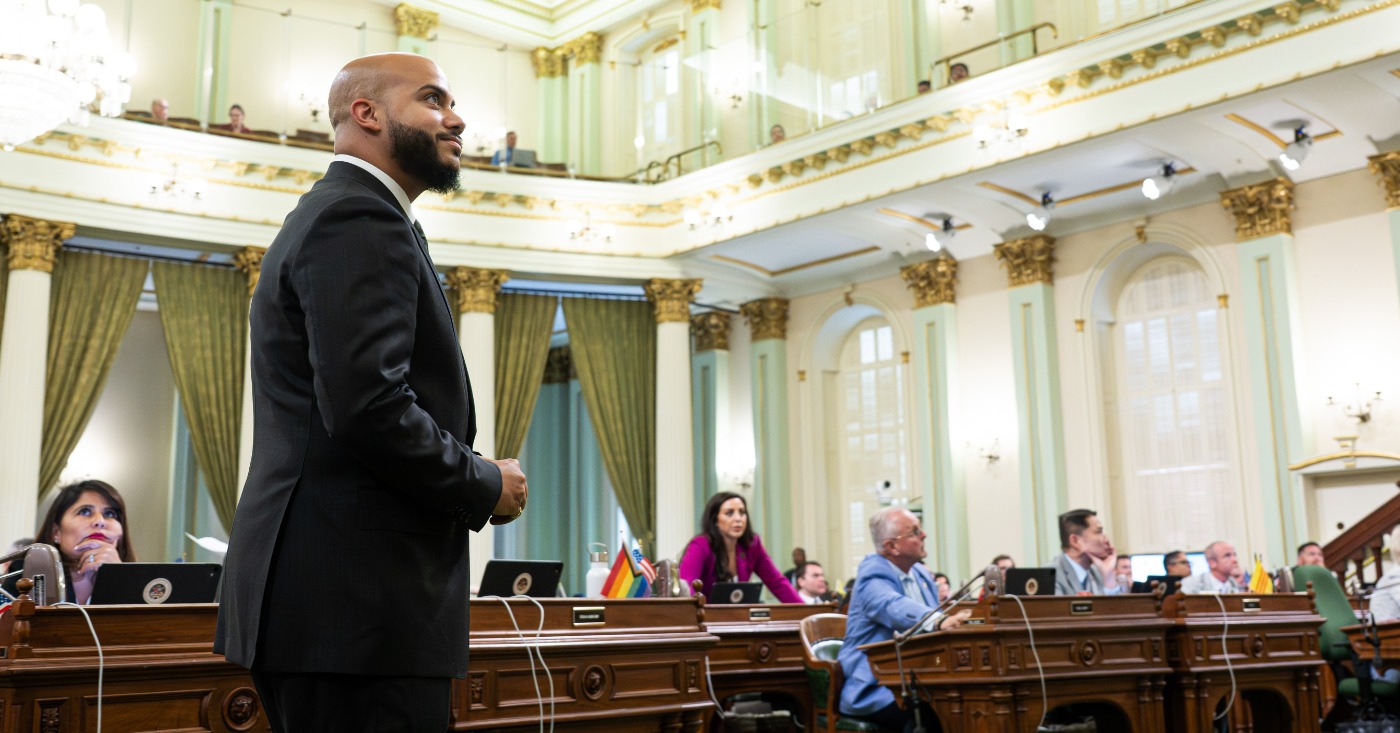
Gov. Gavin Newsom signed legislation on Sept. 27 authored by Assemblymember Isaac Bryan (D-Ladera Heights) that strengthens consumer protections for Californians purchasing tickets to concerts, sporting events and other live entertainment.
Assembly Bill 1349 expands state regulation of original ticket sellers, resellers and online resale marketplaces. The law targets deceptive sales practices, ticket-buying software and speculative listings — tickets advertised for sale by sellers who do not possess them or have authorization to sell them.
“Buying a ticket shouldn’t come with hidden risks or unfair practices,” Newsom wrote on social media after signing the measure.
Under AB 1349, ticket sellers are prohibited from listing tickets before they have been officially released unless they have authorization or a legally enforceable right to receive them. Online marketplaces must also take reasonable steps to prevent speculative ticket sales on their platforms.
The law prohibits sellers from using bots, multiple accounts, email addresses or internet protocol addresses to circumvent ticket limits, presale restrictions, electronic queues and other controls. It also bans websites and advertisements designed to mislead buyers into believing they are purchasing tickets from an authorized seller, venue or event organizer.
Sellers who violate certain provisions and fail to provide a promised ticket may be held liable for twice the ticket’s contracted price. Buyers may also recover nonrefundable expenses incurred while attempting to attend an event, along with reasonable attorney’s fees and court costs.
Pastor Tecoy Porter Sr., president of the National Action Network’s Sacramento chapter, said the law establishes needed accountability.
“Buying a ticket to a concert or show shouldn’t mean entering a marketplace where the rules are stacked against you. This year, we worked with a coalition of consumers, civil rights advocates, community groups, and businesses to make AB 1349 stronger. Consumers deserve enforceable rules that protect them. We thank Assemblymember Bryan for his leadership, and we will keep working to make ticketing fair for every Californian.”
Jose L. Barrera, national vice president for the Far West Region of the League of United Latin American Citizens, also praised the measure.
“Californian families deserve certain protections when they buy tickets. Assemblymember Bryan listened to communities across California and delivered a bill that puts fans first. We thank him and Governor Newsom for making it law.”
Art
From Ma Rainey to AI: New Technology Amplifies an Old Fight over Artist Control
HOWARD UNIVERSITY NEWS SERVICE — August Wilson’s “Ma Rainey’s Black Bottom” explores Ma Rainey’s struggle for control over her music during a 1920s recording session, highlighting conflicts over art, money, and power dynamics between musicians and business interests. Round House Theatre’s production, running through October 18 in Bethesda, Maryland, stages this historical fight, drawing parallels to contemporary issues.

In August Wilson’s “Ma Rainey’s Black Bottom,” Ma Rainey fights to control what happens to her music once she enters the recording studio. Today, musicians are confronting a new question: What happens when artificial intelligence can profit from the identity attached to their music?
Round House Theatre’s production of “Ma Rainey’s Black Bottom,” which runs through Oct. 18 in Bethesda, Maryland, brings an older struggle over artistic control to the stage. Set during a recording session in 1920s Chicago, Wilson’s play follows Ma and her band as conflicts over art, money and control expose the imbalance between the musicians creating the work and the people conducting the business around it. That same question of who can profit from an artist’s value is now being tested in a very different setting nearly a century later.

Musicians Jason Isbell, David Lowery, Guy Forsyth and Eduardo Calle filed a class-action lawsuit on Aug. 31 against AI music company Suno. They allege that the company commercially exploits artists through an AI system capable of generating music imitating artists’ identities and styles without permission. Suno disputes the allegations.
The U.S. Copyright Office has also studied AI-generated digital replicas and recommended federal legislation to address gaps in protections against unauthorized replicas of a person’s voice or appearance. Its broader AI inquiry received more than 10,000 public comments.
For Nicole Michelle Haskins, who portrays Ma Rainey in the Round House production, the struggle over power begins with understanding Ma as more than a demanding recording star.
“She is the only advocate she has,” Haskins said. “The choices presented to her are to surrender or fight. Ma chooses to fight.”

Haskins said Ma enters the recording studio knowing the value that she brings, even as the people around her repeatedly challenge her decisions. She exercises her leverage and pushes back when others attempt to dictate how the session will proceed.
The real Gertrude “Ma” Rainey was one of the earliest Black women to record blues commercially. Between 1923 and 1928, she made more than 100 recordings for Paramount Records, according to the Smithsonian.
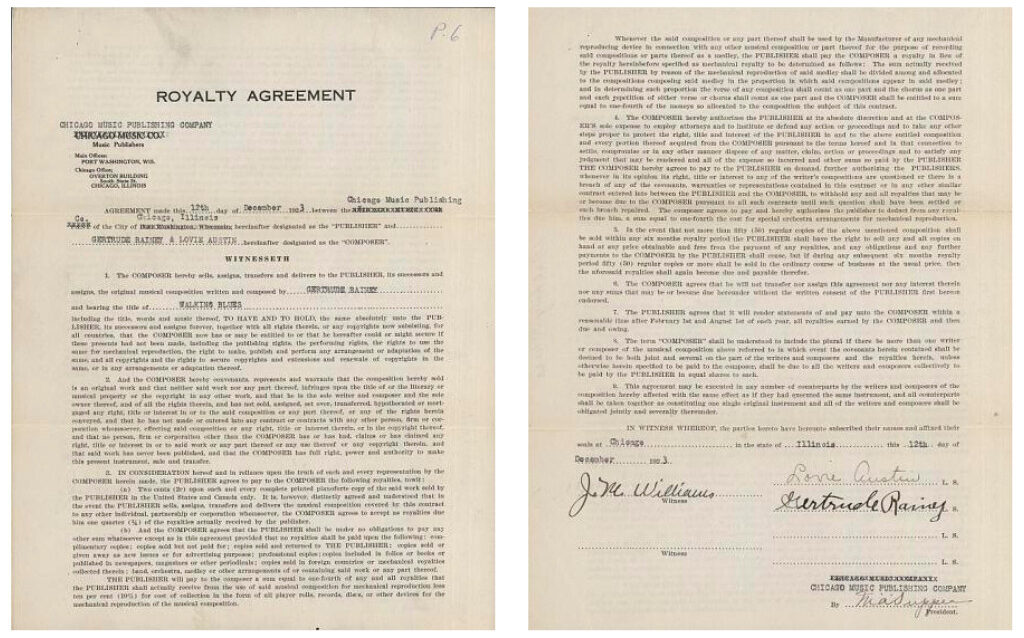
One surviving agreement shows how at least part of that business worked. A Dec. 12, 1923, royalty agreement for “Walking Blues,” signed by Rainey and composer Lovie Austin, provided them two cents for each printed piano copy sold in the United States and Canada. They were also entitled to one-fourth of the royalties the publisher received from mechanical reproductions, minus a 10% collection cost.
For Haskins, portraying a character negotiating those relationships does not feel entirely removed from being an artist today.
“The life that I live as an artist is not that dissimilar from the world that August Wilson has written,” Haskins said.
The technology surrounding artists, however, has changed dramatically.
The scale of AI-generated music has grown quickly. In July, streaming service Deezer said it was receiving about 90,000 fully AI-generated tracks a day, more than half of its daily uploads. Those tracks accounted for less than 3% of all streams.
The lawsuit against Suno is not primarily a traditional copyright case about whether an AI-generated song copied a particular recording. Instead, the musicians rely largely on state right-of-publicity laws, which concern the commercial use of a person’s identity.
According to the complaint, users can enter musicians’ names and use them as a retrieval key for AI-generated music drawing on characteristics associated with those artists. The plaintiffs argue that an output does not have to copy a specific song or perfectly reproduce an artist’s voice for the artist’s commercial identity to be exploited.
Suno disputes that characterization of its technology. The company has said it does not use artists’ names as training metadata and does not permit users to prompt its system for specific artists. Suno says references to artists are filtered and redirected toward descriptions of musical characteristics. Its own prompting guide, for example, encourages users to describe features such as tempo, vocals and instrumentation, using phrases like “bright pop track,” “110 BPM,” “female vocals” and a “big synth hook.”
The Suno dispute centers on more than ownership of a particular song or recording. It raises the question of whether an artist’s name, likeness and other identifying characteristics can be used commercially to generate new music without permission.
Haskins resists describing that underlying conflict as merely contemporary.
“I don’t think they feel contemporary,” Haskins said of Ma’s concerns. “I think they feel worldly.”
For Haskins, AI is one setting for a larger struggle over who has power over creative work. She said the problem of Black people being separated from control of things they created has existed far longer than the technology now raising those questions. The Library of Congress notes that early record companies sometimes used white performers to record music associated with Black artists rather than hire the Black performers themselves, while Black musicians remained rare on early commercial recordings.
“It just hasn’t stopped happening,” she said.
That interpretation shapes the way Haskins portrays Ma’s fight for control. She pointed to a brief moment in the second act when Ma’s manager attempts to steer her toward a different song. Ma refuses and proceeds with the recording she intends to make.
Haskins said the moment stands out precisely because Ma does not need a dramatic confrontation to establish who has the final say.
“She’s not demanding control. She’s not asserting control,” Haskins said. “She is simply positioning herself in correct order.”
La Tetra Metts-Owens is a reporter forHUNewsService.com. She covers Prince George’s County and theater.
Based on reporting by Howard University News Service.


OTR @ Par 365

OTR w LeBrent Speed

OTR w Terresa Moses @ Black Garnett Books

Stay Focused: Make Your Vote Count This Election

Confused by Your Ballot? Joy Reid’s Tips for Houston Voters

Confused by Your Ballot? Joy Reid’s Tips for Houston Voters

Oakland Probate Dispute Raises Questions About Court-Ordered Property Transfer and Missing Notice

‘Raising a Child Shouldn’t Break the Bank’: California Is Helping Families Save on Childcare Costs

Secretary of State Shirley Weber Pushes Back Against DOJ Demands Over California Voter Rolls

Chase Launches Fraud & Scam Prevention Month

OP-ED: Haiti TPS: Have We Lost Sense of Humanity?

Remembering Chauncey Bailey as Student Journalists Face Threats to Truth-Telling

All Skinfolk Ain’t Kinfolk

Poll: Becerra Widens His Lead Over Hilton; Californians Split on Wealth Tax

Rulings Leave Questions Lingering in Nolan Wells Case

Latinas Deserve Equal Pay. Unions Help Make It Happen.

Zakiya Jendayi Arrested, Locked Out of Home by Sheriff’s Deputies

COMMENTARY: The Audacity of Joyce Beatty

Why Black Artists Struggle to Sell Tours

A $2.1 Trillion Wellness Industry Never Built a Daily Practice for Black Children. So This Atlanta Family Did.
OTR @ Par 365
OTR w LeBrent Speed
OTR w Terresa Moses @ Black Garnett Books
Stay Focused: Make Your Vote Count This Election
Confused by Your Ballot? Joy Reid’s Tips for Houston Voters
Confused by Your Ballot? Joy Reid’s Tips for Houston Voters

Black Men for Angie Nixon

When to Quit Your Day Job for a Growing Business #shorts

Before You Buy This Crossover, Test These 3 Things #shorts

1888 Bank’s First Day: A Financial Milestone! #shorts
-

 Black History1 week ago
OP-ED: The Black Church Writes AI’s Next Chapter
-

 Featured6 days ago
Tamiko Armstead | 2026 Lifetime Achiever in Education
-

 Black History1 week ago
Practitioners of African Traditional Spirituality Offer Ancestral Reverence Ritual Oct. 31
-

 Black Press1 week ago
OP-ED: If the ‘Cornell 7’ Were Black Men at an HBCU — America Wouldn’t Be This Sympathetic
-

 Art1 week ago
Inside 820 S. Michigan: New Book Captures the Lost World of Ebony and Jet
-

 Black Press1 week ago
While Black Families Pay More for Power, Some Attorneys General Fight to Save High-Cost Coal
