
Law
Milwaukee attorney defends police in Sterling Brown arrest, asks for dismissal of federal suit
MILWAUKEE TIMES — Milwaukee police officers did nothing wrong when they used a stun gun on Bucks’ guard Sterling Brown during his arrest over a parking violation in January, a city attorney said Friday, contradicting the police chief and mayor who condemned the officers’ actions.

Milwaukee police officers did nothing wrong when they used a stun gun on Bucks’ guard Sterling Brown during his arrest over a parking violation in January, a city attorney said Friday, contradicting the police chief and mayor who condemned the officers’ actions.
Grant Langley said in a court filing on August 24, 2018, in response to a federal lawsuit that Brown was at least partially to blame for what happened on Jan. 26 during his 2 a.m. encounter with police outside a Walgreens store at South 26th Street and West National Avenue.
“The plaintiff’s injuries, if any, were not caused by any policy, practice, or custom of the City of Milwaukee or any of its officers, agents or employees acting in their individual or official capacities,’ the 51-page court filing reads, in part.
The filing asks that the lawsuit alleging “excessive force” be dismissed. The case got national attention.
Police Chief Alfonso Morales apologized to Brown and in May announced that 11 of the officers involved in the rookie guard’s arrest were disciplined or retrained.
Milwaukee Mayor Tom Barrett said Sunday that what happened to Brown was wrong.
“I think right now you’ve got the legal wrangling going on and I don’t think anybody benefits by having legal wrangling going on. What I’m looking for is a resolution to this that will be a positive for the community and for Mr. Brown,” he said.
Brown had been talking with officers while waiting for a citation for illegally parking in a disabled spot outside the store when officers took him down because he didn’t immediately remove his hands from his pockets as ordered.
He was never charged for the parking violation.









Black History
Federal Agents Search Ilhan Omar’s Home Just 22 Days Before Election
WASHINGTON INFORMER — Federal agents searched the D.C.-area home of Rep. Ilhan Omar (D-Minn.) on Monday, 22 days before Election Day. This extraordinary step involved executing a criminal search warrant against a sitting member of Congress.

Federal agents searched the D.C.-area home of Rep. Ilhan Omar (D-Minn.) on Monday, taking the extraordinary step of executing a criminal search warrant against a sitting member of Congress just 22 days before Election Day, as the Trump administration investigates allegations involving her family’s immigration records.
The search immediately drew accusations of political intimidation from Omar’s supporters, who pointed to President Donald Trump’s repeated attacks on the Minnesota congresswoman and questioned the timing of an investigation targeting one of his most outspoken critics.
“Representative Omar is a dedicated public servant and a true ally for working families, and Donald Trump has done nothing but use racist tropes and stereotypes to attack her,” said Joel Payne, MoveOn’s chief communications officer. “Now, he’s abusing his power to physically intimidate and harass her.”
A Justice Department spokeswoman acknowledged that Homeland Security Investigations agents, part of Immigration and Customs Enforcement, searched a District residence as part of an ongoing federal criminal investigation.
The spokeswoman declined to provide additional information or publicly identify the person under investigation.
According to published reports, the warrant identified possible violations involving false statements, immigration document fraud and conspiracy. Federal investigators have also examined questions concerning Omar’s finances, campaign funds and interactions with foreign citizens.
No criminal charges against the congresswoman were identified, but Monday’s search occurred less than four weeks before voters decided whether to return Omar to Congress.
The investigation follows months of public accusations from senior Trump administration officials, including Vice President JD Vance, who previously claimed that Omar committed immigration fraud.
In an interview with conservative commentator Benny Johnson, Vance asserted, without publicly presenting evidence, that the administration believed Omar had broken immigration laws. He also said he and White House deputy chief of staff Stephen Miller had discussed how to pursue the allegations.
“What are the legal remedies now that we know that she’s committed immigration fraud?” Vance asked during the interview. “How do you go after her? How do you investigate her?”
Omar has repeatedly rejected the accusations, including claims that she married her brother to facilitate immigration fraud. Her office dismissed Vance’s allegations in March as fabricated and defamatory.
Questions about the investigation intensified in August when Immigration and Customs Enforcement refused to release records sought under the Freedom of Information Act concerning allegations surrounding Omar’s 2009 marriage to Ahmed Nur Said Elmi.
The agency cited an exemption allowing law enforcement authorities to withhold records when disclosure could interfere with enforcement proceedings. The refusal did not establish that Omar committed fraud or, at the time, confirmed that she was personally under investigation.
Omar, who came to the United States as a refugee from Somalia, was elected to Congress in 2018 and became one of the first two Muslim women to serve in the House. She represents Minnesota’s 5th Congressional District, which includes Minneapolis, and has frequently challenged Trump over immigration enforcement, civil rights, and his administration’s treatment of immigrant communities.
Her confrontations with the administration have made her a recurring target of the president’s political attacks. The criminal investigation also follows a frightening incident earlier this year in which Omar was physically attacked during a public appearance.
On Jan. 27, a man attacked Omar during a town hall meeting at the National Urban League’s Twin Cities headquarters in Minneapolis. The incident prompted condemnation from the National Coalition on Black Civic Participation and its Black Women’s Roundtable, which demanded accountability and warned against political violence.
“We are shocked and extremely disturbed by the attack on Rep. Ilhan Omar yesterday while she attempted to address the critical issues and chaos swirling around in Minneapolis,” Melanie L. Campbell, president and CEO of the coalition and national convener of the Black Women’s Roundtable, said in a Jan. 28 statement.
Campbell praised Omar for continuing to speak out despite threats against her.
“We believe that NO public official should be threatened or physically attacked, especially when they are serving in the best interests of their constituents,” Campbell said. “Political violence and intimidation have no place in our democracy.”
MoveOn, the progressive advocacy organization, accused Trump of using federal law enforcement to intimidate a political opponent and urged voters to respond at the ballot box.
“On Nov. 3rd, we get our chance to fight back and hold him and his corrupt administration accountable,” Payne said.
Based on reporting by Washington Informer.
Black History
‘We Are Ready’: NAACP Launches Voter Protection Hub Ahead of Midterms
ATLANTA DAILY WORLD — The NAACP is launching a voter protection hub to protect voting rights ahead of the midterm elections. Voters can report intimidation and suppression via phone and online, with NAACP attorneys and legal volunteers investigating complaints and seeking emergency court intervention.
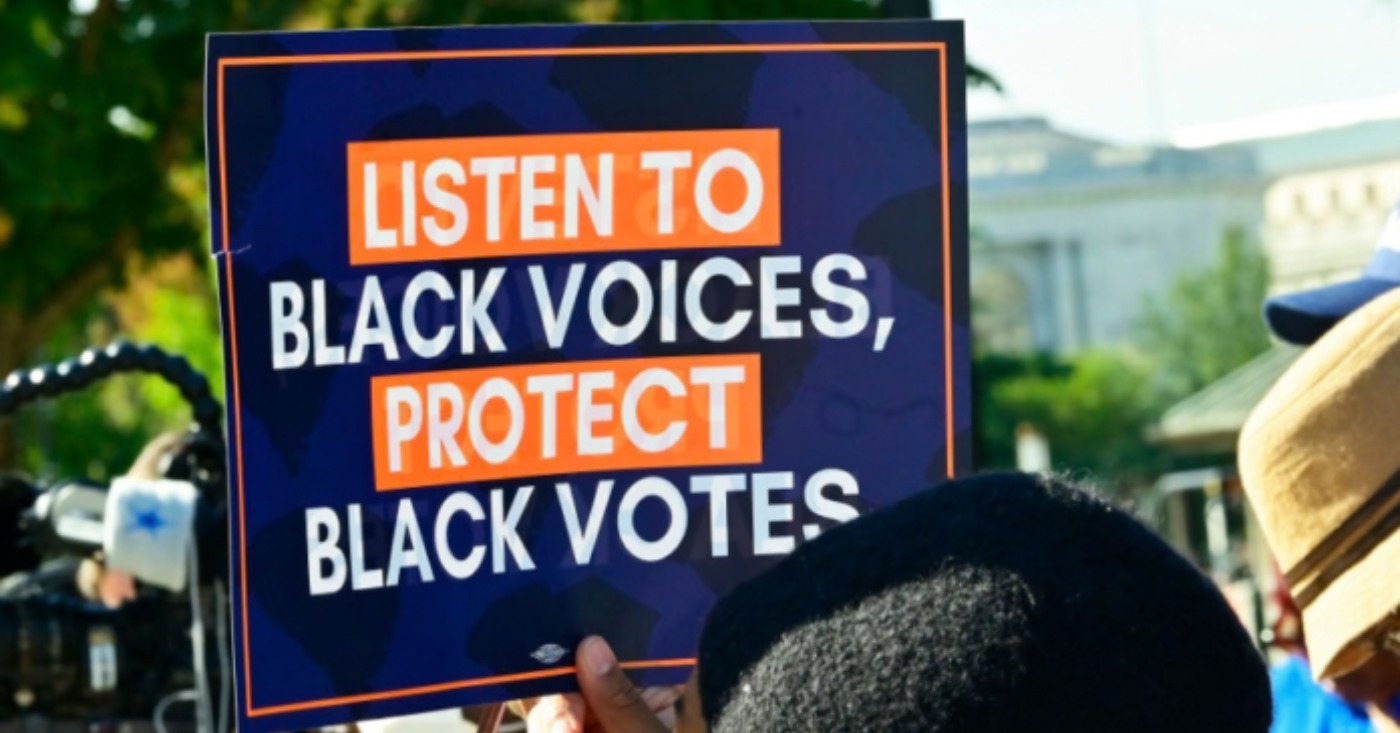
The NAACP is launching a voter protection hub ahead of the 2026 midterm elections as voting rights groups prepare for potential challenges at the polls.
Voters will be able to report allegations of intimidation and suppression by phone and through online submissions, while NAACP attorneys and legal volunteers investigate complaints and seek emergency court intervention when necessary.
According to The Washington Post, the hub is scheduled to launch October 24.
“We are ready,” NAACP General Counsel Kristen Clarke told The Washington Post. “We have an army of legal volunteers across the country and are prepared to activate and seek emergency relief on Election Day where necessary.”
The effort comes as organizations are also working to increase Black voter participation ahead of the midterms. BIN reported in September that the Congressional Black Caucus Institute launched its “SO VOTE” campaign, which plans to spend at least $4.5 million registering and mobilizing Black voters, young voters and rural voters.
The Associated Press reported that the campaign is targeting Georgia and Mississippi statewide, along with 16 congressional districts.
The NAACP is particularly focused on voter intimidation, changes to election rules and the impact of redistricting on Black voting power.
The organization filed a lawsuit against Justice Department Assistant Attorney General Harmeet Dhillon on Friday (October 2), seeking records about the department’s plans to deploy election monitors at polling places during the midterm elections.
“To be clear, there is no federal statute that gives the U.S. Department of Justice the right to send their so-called ‘election monitors’ to polling sites across the country,” Clarke said in a statement.
The NAACP’s voter protection hub will give voters a centralized way to report problems and connect with the organization’s legal team during the election.
The Black Information Network is your source for Black News! Get the latest news 24/7 on The Black Information Network. Listen now on the iHeartRadio app or click HEREto tune in live.
Based on reporting by Atlanta Daily World.
Black Press
OP-ED: If the ‘Cornell 7’ Were Black Men at an HBCU — America Wouldn’t Be This Sympathetic
ATLANTA DAILY WORLD — This article examines how the national conversation surrounding serious allegations against fraternity members might change if the incidents occurred at an HBCU involving Black men, rather than an Ivy League institution. It references recent high-profile cases at Cornell, Penn State, Baylor, and Stanford, prompting a re-evaluation of media scrutiny and public sympathy.

Instead of it taking place at an Ivy League school in Ithaca, New York, what would it look like if a national story concerning rape allegations from fraternity members took place on an HBCU campus in Atlanta, Washington, D.C., or Nashville?
Would President Donald Trump still feel “badly” for the alleged?
Do you think the Kappas, Sigmas, and Alphas would face the same scrutiny?
Might people use more compassionate language when discussing the case’s legalities?
We already know the answers to those questions.
Sunny Hostin from “The View” recounted a call she received from actress Cynthia Erivo, who said, ‘Sis, I know you, and I know your heart and your life’s work has been about protecting women and children. But the clip that I saw doesn’t reflect who you are.” Hostin’s initial remarks about the case focused on its legal aspects, lacking compassion for the alleged victims and other survivors who might have been affected. Hostin reflected, “Instead of leading with the law, I need to lead with empathy so that people can receive the message about the law. I was accused of defending these young men and victim-shaming, which is something I would never do since I spent the majority of my career prosecuting sex crimes.”
If you’re reading this, then you are already aware of the allegations against the “Cornell 7.” The news comes just weeks after 14 people were charged in connection with the alleged trafficking of kilos of cocaine on Penn State’s campus by members of white fraternities. A decade ago, the rape scandal at Baylor University dominated the news, which was around the same time as the Brock Turner case at Stanford.
I ask again: how would the news coverage, social media chatter, and podcast conversations differ if such incidents happened on HBCU campuses and included members of Black Greek-letter organizations?
Based on reporting by Atlanta Daily World.
Black Press
While Black Families Pay More for Power, Some Attorneys General Fight to Save High-Cost Coal
OUR WEEKLY LOS ANGELES / OUR WEEKLY ANTELOPE VALLEY — Black families are disproportionately affected by rising electricity costs nationwide, with residential prices projected to increase. Low-income households spend three times more of their income on energy, and Black households spend 43 percent more than white households, according to the American Council for an Energy-Efficient Economy.

Families across the country are opening their monthly utility bills with a growing sense of dread. Groceries cost more. Rent costs more. Now electricity has become one more expense pushing household budgets to the breaking point, and for many in the Black community – as usual – the squeeze is being felt hardest of all.
Residential electricity prices are expected to average more than 18 cents per kilowatt-hour in 2026, about 5 percent higher than last year, according to the U.S. Energy Information Administration. At the same time, demand for power is climbing fast as the nation adds data centers, factories, and other large energy users. And consumers remain exposed to a market rattled by global conflict and swings in fuel prices.
These costs do not land on everyone equally. For a family with little left over at the end of the month, even a modest jump in the light bill means less for food, transportation or medicine. Low-income households spend three times more of their income on energy than other households, and Black households spend 43 percent more than white households, according to the American Council for an Energy-Efficient Economy.
The question every public official should be asking, then, is simple: How does America add the reliable electricity it needs while keeping costs down for the families least able to absorb them?
Instead, a group of state attorneys general has chosen a very different fight.
In November 2024, Texas Attorney General Ken Paxton sued three of the nation’s largest asset managers, BlackRock, State Street and Vanguard, and was joined by a coalition of other states. The lawsuit claims the firms bought up large stakes in major coal producers and then used their influence as shareholders to pressure those companies to cut production in pursuit of climate goals. The attorneys general argue this restricted coal supply, raised coal prices and, in the end, raised electricity prices for consumers.
Paxton and his colleagues have presented the case as a way to bring down power bills. But when Paxton’s office announced its settlement with Vanguard, it billed the deal as an agreement “to protect the coal industry.” That wording tells us a great deal about whose interests are really at the center of this case.
Attorneys general have only so much time, staff, and money. Every hour spent on litigation against investment firms is an hour not spent on the problems that actually drive up household energy costs: transmission bottlenecks, permitting delays, an aging grid, energy efficiency and the shortage of new power generation.
There is actually an even deeper problem with making coal the centerpiece of an affordability strategy. Coal has been losing ground in the marketplace for decades.
Around 1990, coal supplied more than half of the nation’s electricity. By 2025, its share had fallen to about 17 percent. Most of that decline came from competition, chiefly cheaper natural gas, along with the growth of renewable energy and tougher environmental rules. In the first three months of 2026 alone, coal plant output fell 11 percent from a year earlier, while renewable generation grew. And this summer, Lazard’s annual analysis found renewables remain the lowest-cost option for new power plants, even as existing plants have become more competitive and continue to provide real value to the grid.
Coal’s decline did not begin with Wall Street, investment policies or the climate movement. It is the result of decades of change in America’s energy economy. Where a coal plant remains affordable and necessary to keep the lights on, utilities should keep running it. But keeping a useful plant open is very different from treating the survival of an entire industry as public policy. If other sources can provide power more cheaply, government has no business shielding coal from that competition.
For Black communities, the cost of coal does not stop at the utility bill. Burning coal produces air pollution and coal ash that must be managed, and the Environmental Protection Agency notes that coal ash contains contaminants like mercury, cadmium, and arsenic. A landmark NAACP study found that the roughly 6 million people living near coal plants had lower average incomes than the nation as a whole, and that people of color made up a majority of those living near the worst polluters. Too many of our neighborhoods carry both burdens at once: high energy bills and a greater share of the pollution. Any policy that claims to help consumers should account for both sides of that ledger.
The truth is that families do not much care whether the power running their refrigerator comes from a coal plant, a natural gas facility, or a wind farm. They care that it is there when they need it and that they can afford to pay for it.
Critics of environmental policy often complain that government should not pick winners and losers in energy markets. That principle should apply evenly. Financial firms should not be allowed to break antitrust laws in pursuit of climate goals. But government should be just as cautious about using its power to guarantee coal a permanent place in the market. Coal, natural gas, nuclear, wind, solar, battery storage, and new technologies should all compete on cost, reliability, and what the grid needs.
The real challenge before the nation is building enough reliable power, and building it quickly. Clinging to coal’s past, especially through the courts, does nothing to solve that.
At a time when so many Americans are struggling just to pay bills, it is fair to ask why state officials are pouring so much energy into protecting one industry. Attorneys general should be working to make power more plentiful and more affordable. Families facing economic hardships deserve more than to be invoked as props in a political fight between government officials and some of the world’s largest financial institutions.
Based on reporting by Our Weekly Los Angeles / Our Weekly Antelope Valley.
Black Press
Jendayi Arrest Raises Community Concerns Regarding Sheriff’s Chain of Command
Judge Sandra K. Bean ordered a legally inherited home to be taken from beneficiary Jendayi, citing “undue influence,” and gave it to Court Administrator Phillip Campbell, who Jendayi believes will quickly sell the house and pay himself more than $600,000 in court fees. The disinherited sisters will get the remainder of the proceeds of the sale.
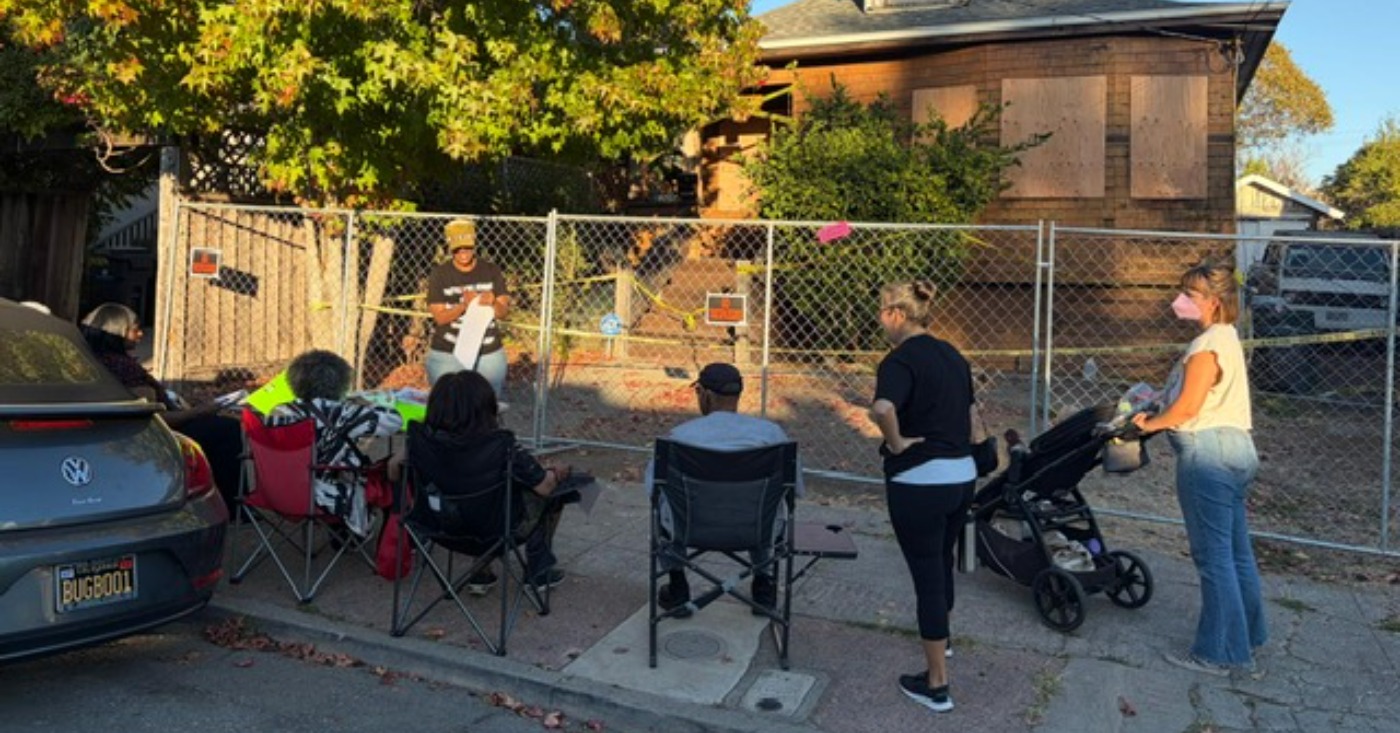
Last Thursday, Zakiya Jendayi parked on the side of the René C. Davidson Courthouse in Oakland to file an emergency stay request in what Jendayi asserts was the “legal” theft of her home of 13 years by a court administrator in her ongoing battle for her rightful inheritance in a probate battle.
But before she could fully emerge from the car at 12th and Oak streets, she was arrested by Alameda County Sheriffs for disobeying a court order and obstruction.
According to observers who have read the transcripts, the Hamlin v. Jendayi case, now in its sixth year, has resulted in what they describe as a gross miscarriage of justice.
Judge Sandra K. Bean ordered a legally inherited home to be taken from beneficiary Jendayi, citing “undue influence,” and gave it to Court Administrator Phillip Campbell, who Jendayi believes will quickly sell the house and pay himself more than $600,000 in court fees. The disinherited sisters will get the remainder of the proceeds of the sale.
Dr. Laura Dean Head named Jendayi as the beneficiary and executor over her estate after Jendayi took care of her during the last months of her life. Head’s disinherited sisters, Della Hamlin and Helaine Head, challenged the validity of Head’s will and trust, despite not being able to recognize Head in a photo during the trial, and Della stating she hadn’t spoken to her sister since 1997 or 1998 and would not have taken care of her during her hospice.
The appellate court upheld Bean’s ruling, which Jendayi asserts was based on a failure to fully consider the transcripts. “They never read the transcripts because if they had, they would have seen the truth,” Jendayi said.
Accompanied by Alameda Couty Sheriff’s Department deputies, Campbell arrived unannounced at Jendayi’s home on Oct. 1 – at the same time Jendayi was being arrested – to change the locks, board up the windows, and place a fence around the property.
Neither Jendayi, nor her supporters who had been in touch with Alameda County leadership and the Sheriff’s Department and been given the impression that nothing would happen without warning had been told Campbell was coming.
“I went to the courthouse to file an emergency stay document, and while getting out of the car, a sheriff immediately approached me and put handcuffs on me before I could stand up,” Jendayi said in recounting the events of Oct. 1. “I asked him if he had a warrant. He said ‘yes,’ and seven other officers immediately approached and surrounded me, with an additional three sheriffs standing back observing.
“I asked why it was necessary to have 10 officers to arrest me. They would not answer. I asked if the sergeant was there and asked if I could speak to him, but the sergeant refused to approach while another officer started taunting me over and over, stating, ‘I was at your house. I was at your house when you refused to surrender. We got you now.’
“The officer put the handcuffs on tight. I asked him to please loosen them. He refused and said they weren’t too tight. Then a Black, female deputy named Lewis, came over and asked him to loosen the handcuffs. Three times the white male officers were overly aggressive with me, and each time Deputy Lewis would step up and they would fall back. They said I was under arrest for refusing to surrender the house on Aug. 25.
“I asked them if I could file my paperwork, and they said, ‘No.’ Several officers asked me if I was on drugs. I felt like my life was in danger. I asked to speak to Deputy Lewis, and she came. I said, ‘Please tell my mother and Joyce Gordon that I would never kill myself.’ I did not want to end up like Sandra Bland, who was murdered by police officers in a Texas jail.”
Zendayi said they then took her to a section in the basement of the courthouse, placed her in a holding cell, and confiscated her belongings around 3 p.m. “They went through everything, took both cell phones, and asked if they could turn off my phones. I said ‘no,’ so they placed them in airplane mode.”
Then she was taken in a van to Santa Rita Jail in Dublin, which, because of traffic took almost two hours. “They asked me if I was on drugs and asked me to give a urine sample. I refused. They took a mug shot, and I was told it would be Monday before I could go to court. They put me in a cell with feces on the wall.
An hour after being detained, a deputy asked Jendayi if she knew someone who worked for the county and then asked if knew someone from the Sheriff’s Office and answered ‘no’ to both questions. He said, “You must know someone because we received orders to release you immediately. You’ll be out of here in about 40 minutes.”
“Rev. Raymond Langford of the Oakland Private Industry Council has been helping me to negotiate for more time to stay in my home,” Jendayi said. “I have an appeal with the Northern District Court of Appeals, where I’ve been promised they will review my case based on its merits. I was hoping to stay (in my home) until they reached a determination.
Rev. Langford reached out to Alameda County Supervisor Nikki Fortunata Bas and Chief Administrator David Brown, and they’ve been in contact with Sheriff Yesenia Sanchez.
“They weren’t going to give me the time I requested, but they did say that I would have time to move my belongings and would also be notified when they were coming,” Jendayi said. “None of that occurred.”
Langford said he spoke to Brown, Fortunato Bas and Sanchez right after the first attempt to evict Jendayi on Aug. 25 as well as the Alameda County Counsel and others to negotiate a time for Jendayi to move her belongings.
“There is no truth to the statement that there was no contact [with court and law enforcement officials.] There was an obvious miscommunication between Sanchez and her officers. They don’t have to inform the public of their actions, I understand that, but Zakiya and the community were concerned after they confiscated her guns.”
(Jendayi relinquished her weapons on Aug. 25 when sheriff’s deputies came to forcibly evict her while her petition for bankruptcy was still pending and should have interrupted the eviction process.)
“The Sheriffs have their own trust issues, and they need to work on that. They are not following the chain of command. David Brown, Fortunato Bas’s chief of staff, was puzzled also. He was told they would be informed when they would be returning. He was also blindsided like all of us.”
“(The Sheriffs’ Department) can come to the supervisors and get millions of dollars, but they can’t exhibit the courtesy to inform a citizen when she needs to move.”
“We, our group, ‘Friends of Zakiya,’ took a letter to Sanchez’s office citing Zakiya’s health issues, asking for more time just last week. Sanchez was a person who ran on the platform that she would not run the Sheriff’s Department on a military strategy, which they did on an African American senior in a comfortable, safe community.
“We understand they have to do their job, but we don’t want them targeting and profiling seniors. There has to be some accountability to the community,” Lankford said.
Supervisor Nikki Bas, deeply concerned with what has occurred, is joining with Supervisor Nate Miley to request a meeting with Attorney General Rob Bonta to request an independent investigation.
Black Press
‘ICE-Free Marin’ Supporters Press Supervisors as County Drafts Enforcement Restrictions
“County resources are to never be used in the furtherance of federal immigration enforcement,” Johnson said, of the policy which is still in development. “The policy will require all county employees to notify the county executive within 24 hours of any immigration enforcement activity in which they become aware on county property.”
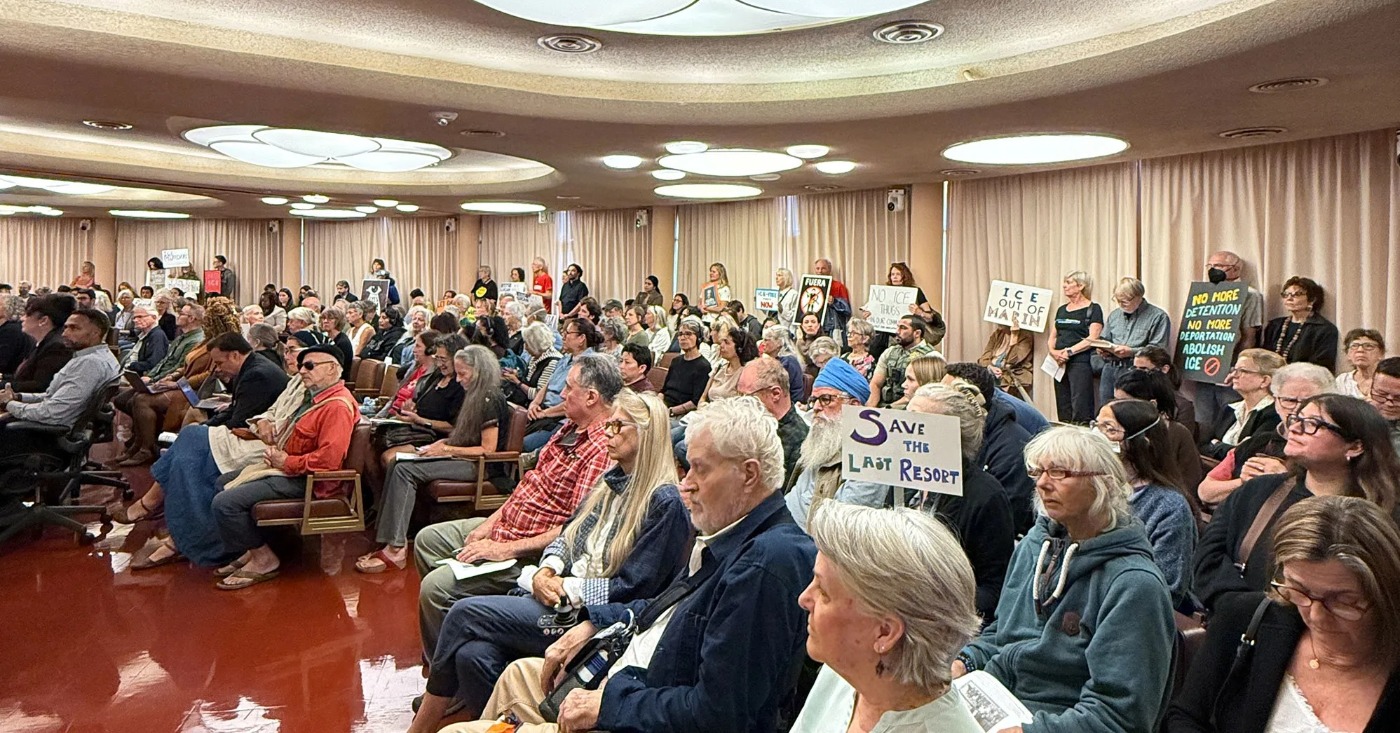
More than 100 protesters packed the Marin County Board of Supervisors chamber Sept. 29, urging supervisors to consider an ordinance restricting the actions of U.S. Immigration and Customs Enforcement officers.
County and state officials are already advancing some measures that overlap with demands the protesters have made for the past year.
“I want to share that the immigration subcommittee has been hard at work drafting important board policy as directed by the Board of Supervisors,” said Marin County Executive Derek Johnson, referring to policy that will prevent the use of county property for federal immigration enforcement activities.
“County resources are to never be used in the furtherance of federal immigration enforcement,” Johnson said, of the policy which is still in development. “The policy will require all county employees to notify the county executive within 24 hours of any immigration enforcement activity in which they become aware on county property.”
Those policy goals align with the two central provisions proposed by the No ICE in Marin Coalition, which filled the room at Tuesday’s meeting.
Their policy proposal, called ICE-Free Marin, prohibits ICE from using county property, resources or personnel without a judicial warrant and establishes clear reporting requirements whenever county department staff observe or communicate with federal immigration authorities. Those interactions may include the service of subpoenas and warrants, as well as attempts to access county facilities.
The ICE-Free Marin ordinance would require the county to post signs and barriers restricting ICE from entering county property, with county staff denying ICE officials entry and refusing to provide information and assistance. If ICE disregards directives, the county counsel would seek a court order to stop them, and if ICE unlawfully detains someone, they can be challenged in court, according to the ordinance.
Last year, the group protested the county’s participation in the State Criminal Alien Assistance Program, administered by the U.S. Department of Justice in conjunction with ICE and the U.S. Department of Homeland Security.
SCAAP funds are used to reimburse costs incurred for jailing immigrants lacking permanent legal status who have at least one felony or two misdemeanor convictions and are incarcerated for a minimum of four consecutive days.
In February, the county announced its 2026-28 budget does not include SCAAP funding.
State Takes Action on Immigrant Protections
Also on Sep.t 29, California Gov. Gavin Newsom signed a package of more than 20 bills aimed at increasing state oversight of federal immigration enforcement and protecting immigrant communities, according to a news release from the governor’s office.
The state legislation creates a 25% tax on private detention centers, expands health and safety oversight in those centers, requires additional public input and planning approvals for new facilities, and strengthens the role of state Attorney General Rob Bonta in inspecting them.
The measures also ban law enforcement from using wearable electroshock “shock gloves,” restrict flash-bang grenades and explosive breaching charges, limit the use of state-owned property for federal immigration operations, and require temporary identification decals on rental vehicles used by law enforcement.
The legislation expands access to public records involving private detention facilities and restricts former federal immigration officers who committed serious misconduct from becoming California peace officers or public employees.
Other measures allow people to sue federal officials for alleged violations of their constitutional rights and protect people traveling to and from courthouses from civil immigration arrests.
“We may not be able to dictate federal immigration enforcement policy, but we can make clear that activities taking place in California will be subject to California law,” the governor said in a video message announcing the bills.
The group leading the local campaign for the ICE-Free Marin ordinance is the Democratic Socialists of America. DSA spokesperson Courtney Sadowski said in an email that the group has spoken with supervisors Eric Lucan, Mary Sackett, Dennis Rodoni and Stephanie Moulton-Peters.
“But none have committed to introducing the ICE-Free Marin ordinance,” Sadowski said.
The group has attended numerous meetings of the Civilian Oversight Commission of the Sheriff’s Office asking for their support, she said.
“We cannot afford to wait the months or years it would take them to review and consider this item,” she said. “Even if they moved more quickly, all they can do is issue a recommendation.”
Speakers Weigh In
Hector Garcia, a community library specialist with the Marin County Free Library, spoke to the supervisors. He said that he recently completed an intense Department of Justice certification that will allow him to provide immigration services at the library.
The Recognition and Accreditation program allows qualified non-attorney staff working for eligible nonprofit organizations to legally provide immigration services for low-income and indigent individuals who cannot afford private attorneys.
“It would be impossible for me to fulfill this job with the presence of ICE,” Garcia said. “A fascist police force, they disregard the law, terrorize, assassinate and separate Black indigenous people of color and their families.”
Lisa Bennett with the Marin Rapid Response Network, a nonprofit that helps families locate detained relatives and provides other support services, said families go into shock when the major breadwinner is detained.
“Basic things like money for food, utilities, even driving are no longer a given,” she said. “They worry about their parent’s medical needs. They worry about themselves being next. They worry about what happens if the remaining parent is taken. This is what our government is doing to its own people. Silence is complicity.”


Optimize Your Seating: Essential Household Setup Guide #shorts

Brake Pedal Test Drive: Smooth Stops for Your Truck! #shorts

Life Lessons Learned Through Adversity: My Journey #shorts

From Claflin Alum to ColorBlind Artist

Turning Abolitionist Design Research Into Real-World Business #shorts

Black Journalists: Community, Excellence, and Lifting Up #shorts

NFN Exclusive: Muslims in AI

NFN Live presents The State of the Westward

Alliance of Civil Rights Orgs launch Week of Action; National Black Man Voter Day set for Oct. 24

MC’ing a Gala: A Night of Love & Black Excellence #shorts

The Youngest American Killed in the Vietnam War

Passing for White, Fighting for Black America: The Courage of Walter White

OP-ED: Haiti TPS: Have We Lost Sense of Humanity?

NFL: Week Two Recap | Jalen Hurts did not fold; Caleb Williams exits game with injury

Remembering Chauncey Bailey as Student Journalists Face Threats to Truth-Telling

Peter Magubane: a Camera Against Apartheid

Mayor Lee Announces $1 Million Kaiser Permanente Grant for Pilot Program to Address Homelessness, Clean Up Public Spaces throughout Oakland

OP-ED: How Head Start Also Helps Parents

Community Action Group ‘Friends of Zakiya’ Ask Sheriff for Time

Poll: Becerra Widens His Lead Over Hilton; Californians Split on Wealth Tax
Optimize Your Seating: Essential Household Setup Guide #shorts
Brake Pedal Test Drive: Smooth Stops for Your Truck! #shorts
Life Lessons Learned Through Adversity: My Journey #shorts
From Claflin Alum to ColorBlind Artist
Turning Abolitionist Design Research Into Real-World Business #shorts
Black Journalists: Community, Excellence, and Lifting Up #shorts
NFN Exclusive: Muslims in AI
NFN Live presents The State of the Westward
MC’ing a Gala: A Night of Love & Black Excellence #shorts

Entrepreneurship Needs a Plan—and a Life Beyond Work #shorts
-

 BlackPressUSA1 week ago
Latinas Deserve Equal Pay. Unions Help Make It Happen.
-

 Black Press5 days ago
All Skinfolk Ain’t Kinfolk
-

 Black Press4 days ago
Oakland Awarded More than $14 Million in State Funding
-

 African American News and Issues3 days ago
Black History: Gladys West Mathematics Helped Make GPS Possible
-

 Black Press4 days ago
Jendayi Arrest Raises Community Concerns Regarding Sheriff’s Chain of Command
-

 Black Press4 days ago
Allen Temple Baptist Church Hosts Free Prostate Cancer Screenings on Oct. 17
