
Birmingham Times
Josh Carpenter: ‘Moving Science’ to a Brighter Future at Southern Research
THE BIRMINGHAM TIMES — “Moving Science” is the essence of where we have been, and it is also the north star that guides where we are going. In celebration of our new look and vision, we recently released our Moving Science Report that showcases the organization’s legacy of scientific breakthroughs alongside the team’s modern achievements.


By Josh Carpenter, PhD, is president and CEO of Southern Research | The Birmingham Times
Since our founding in Birmingham more than 80 years ago, Southern Research has played a pivotal role in Birmingham’s economy and in the scientific advances that have transformed our world.
In the past year, we’ve updated our brand and refreshed our website, but we are still doing today what we’ve always done: We are “moving science.”
“Moving Science” is the essence of where we have been, and it is also the north star that guides where we are going. In celebration of our new look and vision, we recently released our Moving Science Report that showcases the organization’s legacy of scientific breakthroughs alongside the team’s modern achievements.
We are moving science to discover new treatments for the diseases that threaten our families and friends, to identify innovative solutions for the challenges that confront our world, and to create jobs for our community.
While our goals have not changed, our team has developed a new, more focused strategy that allows us to double down on our strengths in life sciences.
We have systematically corralled our assets to pave the way for a strategic expansion of our core operations in Birmingham, where 250 scientists and support staff currently work, mostly in biomedical research.
We have laid the foundation for a $108 million investment to expand and upgrade our facilities, doubling our lab space, creating room to add 150 scientists to our team, and multiplying our efforts to address devastating diseases like cancer, cystic fibrosis, Alzheimer’s, COVID-19 and Monkeypox.
Alongside UAB, we are actively working to develop a corridor that not only will foster jobs and economic growth on Birmingham’s Southside but will also become the premier biotech commercialization hub in the Southeast as a whole.
If our ambitions seem big, it may be helpful to remember our track record of accomplishments, which is anything but small.
Southern Research is responsible for nearly 700 patents in 59 countries or regions. Many of these patents resulted in products that have shifted industry perspectives and revolutionized medicine.
Years ago, Howard Skipper’s experiments with chemotherapy at Southern Research essentially ended the practice of radical mastectomies. Since then, we have developed, tested or refined more than 50% of active chemotherapies in the world. We developed seven FDA-approved cancer drugs, two of which are on the World Health Organization’s list of essential medicines.
These numbers rival any research institute in the country.
As we work to move science, what moves us are the real people who desperately need the new treatments and cures we are looking to find.
For every discovery and breakthrough, there are real people whose lives are changed. In just one example, our scientists invented the drug Clolar® to treat acute lymphoblastic leukemia in children like Frances Grace Hirs and 3,000 other children in the U.S. who are diagnosed with this disease every year.
COVID-19 also called newfound attention to the work we do, and we played a role on every level of our nation’s pandemic response, from testing, to developing new treatments and developing vaccines.
The Southern Research team carries this part of our mission with energy and resolve. We know our community has serious health needs and suffers disproportionately poor health outcomes. It is an honor to be the bridge between science and society, taking a new treatment from the point of being discovered in a test tube to the moment it enters an individual’s body through a shot or a pill that alleviates suffering, improves quality of life, and prevents unnecessary deaths.
We are also proudly carrying the mission we were assigned at our founding – to create jobs for our region. In an area often overlooked by venture capitalists and lagging the nation in job creation, Southern Research continues to create jobs that bolster our city and state economy.
Building on a long history of accomplishments, Southern Research is moving science to an even brighter future, for Birmingham, Alabama, and the Deep South.
Josh Carpenter, PhD, is president and CEO of Southern Research, a nonprofit scientific research organization founded in Birmingham in 1941.
This article originally appeared in The Birmingham Times.







#BuyBlack
Naila Jackson Helps Greater-Birmingham Entrepreneurs Navigate Business Resources
BIRMINGHAM TIMES — Throughout the year Network Navigator hosts entrepreneur-focused workshops, networking events, and roundtables, as well as community conversations that help entrepreneurs understand policies, systems, and opportunities that impact their businesses. Additionally, through the CORE Program, entrepreneurs can get hands-on business support for marketing and branding, human resources, bookkeeping, and more.

By Javacia Harris Bowser | The Birmingham Times
In May 2024, Naila Jackson launched Network Navigator as a one-day event designed to connect Greater Birmingham-based small business owners with the resources they needed to grow their companies. But she couldn’t stop there. Today, Network Navigator is an independent nonprofit organization serving local entrepreneurs year-round with an online platform of resources and a variety of educational programming.
“I am really hyper-focused on access,” Jackson said, explaining the mission of her nonprofit. “I think access is where our biggest gap is. People think it’s funding, but it’s actually access, so that’s my goal. Network Navigator is the access point for entrepreneurs.”
Network Navigator Small Business Week
Right now, Jackson is gearing up for Network Navigator Small Business Week. For more than 60 years, the U.S. Small Business Administration has celebrated National Small Business Week to recognize the contributions of entrepreneurs and small business owners. Network Navigator Small Business Week will coincide with the national observance, which is set for May 3-9.
The week will begin Sunday, May 3, at 5 p.m. at The Fennec with the Network Navigator Small Business Awards, which will recognize local business leaders shaping the city’s economic future. A portion of proceeds will support the launch of the Navigator Startup Fund, which will provide early-stage financial assistance to individuals entering entrepreneurship after a layoff or other financial disruption.
“I want to make sure that these people, who are going to have to pour the last that they have into something, start off right and start off strong,” Jackson said.
On Tuesday, May 5, Network Navigator will partner with the Birmingham Public Library to launch the NavigateBHM Kiosk, an initiative designed to embed business resources within the city’s public library system.
On Wednesday, May 6, Network Navigator Day will return for its third year at the Auburn University Urban Studio in downtown Birmingham. With the theme “Tech Meets Main Street,” the free all-day summit will feature hands-on workshops, live demonstrations, industry roundtables and opportunities to connect directly with capital providers and technical assistance organizations.
“Network Navigator Day gets bigger and bigger every year,” Jackson said.
A key component of this year’s event is Capital Connect, an initiative designed to address barriers to funding. The program will match entrepreneurs with capital providers for focused 10- to 15-minute sessions, offering real-time feedback on funding readiness, introductions to lending and investment opportunities and guidance on next steps.
“My goal is for everybody to walk away with something so that they’ve moved the needle in some way in their business,” Jackson said. “They walk away with new ideas, new resources, new tools, something so they can say, ‘I came today and it was worth my time.’”
Resources and Understanding
Network Navigator was born out of an idea Jackson had in 2020 during the height of the COVID-19 pandemic.
“It was birthed out of Covid and just witnessing what it looked like for our culture and our people to struggle with the world shutting down,” she recalled. “A lot of them didn’t have their businesses legalized. They didn’t understand what it meant or how important it was to actually have federal documentation, state documentation, business bank accounts. They didn’t understand the importance of the structure.”
And they couldn’t apply for federal funding or other resources being allocated to small businesses in need. At first, Jackson wanted to create a directory of Black-owned small businesses. But she realized that entrepreneurs needed more.
“I started to understand more about the needs for the resources and understanding,” said Jackson, who previously worked for the Birmingham Business Alliance.
Initially supported by a grant from the City of Birmingham, Network Navigator was incubated at Prosper, a nonprofit dedicated to building the most inclusive and thriving economy in the Southeast. In January 2026, Network Navigator became an independent nonprofit that powers an online resource platform for entrepreneurs across Birmingham and the Greater Metropolitan Area and hosts a variety of programming.
Throughout the year Network Navigator hosts entrepreneur-focused workshops, networking events, and roundtables, as well as community conversations that help entrepreneurs understand policies, systems, and opportunities that impact their businesses. Additionally, through the CORE Program, entrepreneurs can get hands-on business support for marketing and branding, human resources, bookkeeping, and more.
Servant Leaders
The only child of Robert and Clara Jackson, Naila Jackson says she was raised in a “God-fearing household” of servant leaders.
Her mother worked for the social security administration for 43 years and her father worked in sales. Through the years they both kept busy serving at church – first at New Hope Baptist Church and later at The Worship Center.
“It was their goal to make sure that if it was your very first time, or if you had chosen this church, that you were going to feel welcome, there was something there for you and there was somebody there for you,” Jackson said of her parents. “They were always available and accessible.”
Jackson’s mother passed away in 2017, and she can still recall the touching comments from the funeral.
“Several people at her service came up to me and said, ‘Your mom was my mom. She was my second mom. She was my work mom. She was my champion.’ That really made me feel good that she left a legacy with other people.”
Jackson feels her passion for helping others is in her blood. At first, she thought she’d do this as an educator. After graduating from Midfield High School, she went to Alabama State University to study education. But instead, she’s teaching a different kind of student.
“I feel like I was called to serve entrepreneurs,” she said.
Collaboration Over Competition
One thing she hopes to teach entrepreneurs is the power of collaboration.
“I think people don’t understand the value and the power in collaboration and partnering with someone else who’s in your industry,” she said. “I think people are not aware that there’s enough for everyone.”
Jackson wants more Black entrepreneurs to consider taking over already established businesses.
“I wish our people would look more into mergers and acquisitions,” she said. “There’s no shame in just taking over where somebody else left off because the dollar is still green, and you may actually start off with more green dollars than you would if you were starting from scratch.”
She also wants entrepreneurs to let go of fear.
“Fear of not being enough, not measuring up, because there’s so much out here that makes you believe that you should be a certain way, look a certain way, have a certain thing, and so people feel like they won’t be accepted,” Jackson said. “So, they stay out of the circle of where that information might be or where that access might come from.”
All Eyes on Birmingham
Jackson believes now is a great time to build a business and build a life in Birmingham.
“Everybody’s eyes are on Birmingham right now,” she said. “Birmingham is a hot market, so it’s a beautiful place to be.”
When she’s not working, Jackson loves taking advantage of all the live music Birmingham has to offer. “I feel like I’ve been to every single concert we’ve had this year,” she said. She also enjoys spending time with her sons – Khalil, 24, and Jason, 10. And she loves to travel. But there’s no place like home.
“The beauty of Birmingham is its culture and its community,” she said. “And I think it’s just a beautiful place to be because there’s so much that’s happening here. There’s so much growth here, and there’s so much opportunity.”
Learn more at www.navigatebhm.com. To register for Network Navigator Day, visit www.networknavigatorday.com.
Birmingham Times
‘I Was Confident in Myself and Her Answer. I Knew She Would Say Yes … We Had Spent a Lot of Time Together’
BIRMINGHAM TIMES —Andrea and Jamal McCaskey’s love story began at a church service in 1991, leading to a 1992 wedding and a lifetime of shared experiences.

By Mia Watkins | The Birmingham Times
Andrea & Jamal McCaskey
Live: Irondale
Married: September 25, 1992
Met: Meeting each other almost didn’t happen for the McCaskeys. The two met entirely by chance at a special Fifth Sunday service at Sixth Avenue Baptist Church.
“It was a Sunday that I almost didn’t go,” said Jamal. “I’d been out partying all night. I decided to get up and go to church, and she just happened to come in and sit next to me. I noticed she was a visitor, and we struck up a conversation. After church, I saw her in the parking lot, and we talked some more and exchanged numbers.”
Andrea remembers it a little differently.
“He gave you the short version,” she laughed. “It was Fifth Sunday in August 1991. On Fifth Sunday, the male chorus sings, and so every female in Birmingham and all the surrounding counties came to church that day. By the time I got there, I had to park in the neighborhood somewhere. I walked into the church and ended up sitting in the back. He came and sat by me; I did not sit by him. He did notice that I had a visitor card. After church, he said, ‘Hey, I notice you have a visitor card. I usually go to some restaurant to eat. Would you like to eat?’ I was like, ‘Yeah, I would love to, but I have family at home. I’m not able to go this Sunday. Thank you for asking.’ He leaves.’”
Andrea said she was actually visiting the church to meet someone else.
“The reason I even came to church that Sunday was because a student that I’d been working with said, ‘Hey, I have someone I want you to meet.’ I go to church and wait for my student to show up so that he can introduce me to whoever this is that he wants me to meet. Well, I waited for about 10 minutes, and he never showed up. So, I got out into the parking lot and ran into Jamal again, and Mayor Arrington was there campaigning, so we struck up a conversation ‘Hey, are you going to vote for Mayor Arrington.’ ‘No, I don’t live in the city limits, what about you?’ ‘I don’t live in the city limits either.’ Well, we learned that we lived about a half mile from each other on 280. We exchanged numbers, and he called me the next Tuesday. He always says he wanted to make me wait a couple of days.”
First date: The two don’t remember the details of their first date besides eating at Ruby Tuesday’s, but they remember what led up to the date and how they felt about each other.
“The Tuesday that he called, he asked me what I was doing, and I had just moved to Birmingham the month before,” she recalled. “When they hooked up my washer, they installed the hot water to the cold water and the cold water to the hot water. I was trying to use some tool that wasn’t the correct tool to make the change. He said, ‘Oh, I have the tool that you need. I’ve got a meeting to go to, but I can drop the tool off.’ He came and dropped the wrench or whatever it was, and that was the first time we saw each other after church.
Andrea remembers finding Jamal intriguing.
“The things I remember about him are that he was someone who was interesting to talk to,” she said. “He could talk about current events, he could talk about himself and things that he liked. He had a job. He had a car and he had his own place to live. All of those things were important.”
Jamal remembers finding Andrea intriguing too.
“She seemed very professional,” he said. “She kind of struck me as a person who I would want to get to know more about.”
The turn: Jamal remembers telling his brother that Andrea was the one.
“We used to joke about ‘this is the one, this is the one,” he said. “One day, I said to him that she might be the one.”
Andrea said it didn’t take her long to realize Jamal was her person.
“I probably knew pretty quickly,” she said. “Both of us were a little older. We were both 29 at the time. I had dated my fair share of knuckleheads, and I could tell he was not a knucklehead. I was probably all in from the beginning. One thing that I’ll always remember is that most of my friends who came from Nashville to visit me or called from Nashville would spend more time talking to him than they would talk to me. He was always able to just be a good friend to all my friends.”
Jamal said he could tell a lot about Andrea from her friend group.
“I’ve always heard that you look at people’s friends, you could tell a lot about them,” he said. “I could tell that her friends liked her a lot and were the kind of people I want to be around, too. That was a plus in my book.”
Jamal said his favorite thing about Andrea is her conviction.
“She speaks her mind, she says what she believes and she doesn’t tell you one thing and mean something else,” he said.
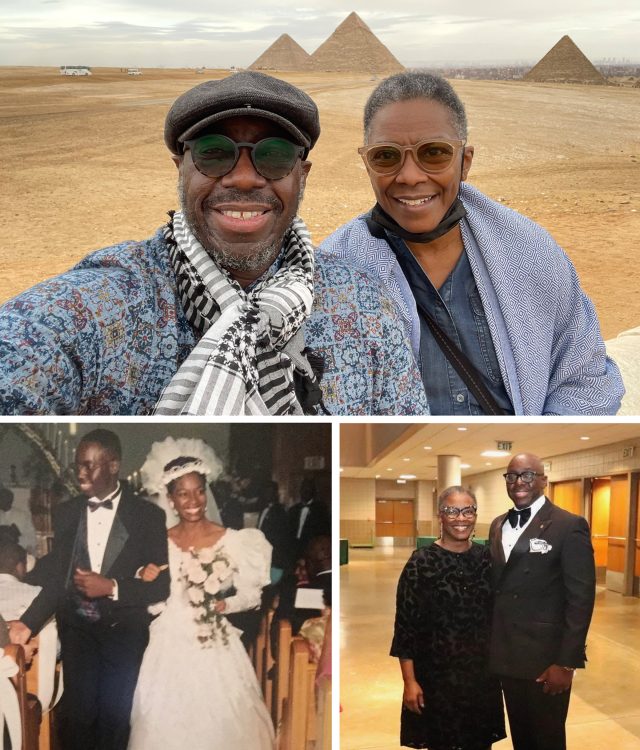
Andrea and Jamal McCaskey met at a special Fifth Sunday service at Sixth Avenue Baptist Church. The couple married in 1992. (Provided)
Andrea and Jamal McCaskey met at a special Fifth Sunday service at Sixth Avenue Baptist Church. The couple married in 1992. (Provided)
The proposal: The two got engaged in January of 1992 on MLK Day.
“He had been out chopping wood, I don’t even know why he was out cutting down wood,” she remembered. The apartment I was in had a wood-burning fireplace, so he brought some wood to me for the fireplace. After he came in, he said, ‘Hey, what would you say if I asked you to marry me?’ I said, ‘Don’t play with me because I ain’t to be played with with that question.’ I told him, ‘If you’re serious, then, yes, I will marry you.’”
Jamal said he doesn’t remember chopping wood, but he does remember not being nervous to propose.
“I don’t remember bringing wood, and I certainly don’t remember chopping,” he said. “That was the day I decided that this was the one, and it was time to make a move. I was confident in myself and her answer. I knew she would say yes. I don’t mean sound conceited, but we had spent a lot of time together during that time period.”
The wedding: The wedding took place at Andreas’s home church in Nashville. It was presided over by Dr. Clement Fugh and her childhood pastor, Reverend Reed, who travelled from Indianapolis to marry the McCaskeys.
Their colors were peach, cream and a medium shade of blue. The church was filled with loved ones from both their life in Birmingham and from her hometown of Nashville.
“The church was full, and it was just a beautiful ceremony,” she said. “It was just a beautiful time.
Andrea said the memory from that day that she still carries is what Jamal said when she reached him at the altar.
“When I got down the aisle and got to where he was, he said, ‘You look so beautiful,’” she said. “I have remembered that all these years.
Jamal just remembers it being a happy day.
“I remember winking at her mom,” he said. “I remember smiling when Andrea came down the aisle. I remember a spring in my step the whole day. It was just a great day.”
The honeymoon: The two went on a cruise to the Bahamas for their honeymoon, a trip they are about to recreate.
“We did a ballroom dancing class, that’s the one thing I remember about it,” Andrea said.
Jamal said they met other married couples who shared pearls of wisdom.
They brought back a memento, a Lladro figurine of a Black bride and groom, to remember the occasion.
Words of wisdom: Andrea said that newer couples should keep in mind that love is an action.
“Love is more than a feeling,” she said. “Yes, there are days when we disagree and days when we just like, ’Who are you and what have you done with the person I married?’ And you continue to work. Do the work, put in the work and remember what it is that’s important.”
Jamal agreed.
“Keep the main thing the main thing,” he said. “You’ve got to find somebody who’s a friend, not just feeling butterflies in your stomach. You need somebody you can match you.”
Happily ever after: The McCaskeys have two adult children: a 29-year-old son who lives in Grayson Valley with his wife of two years, and a 27-year-old daughter who lives in Brooklyn, New York. Andrea is a retired HR professional who worked for the Inroads and Momentum programs. Jamal is a retired Deputy Chief of the Birmingham Police Department. He now works in real estate.
“You Had Me at Hello’’ highlights married couples and the love that binds them. If you would like to be considered for a future “Hello’’ column, or know someone, please send nominations to [email protected]. Include the couple’s name, contact number(s) and what makes their love story unique.
Birmingham Times
Midweek Magic: How Sloss Furnaces Brings History to Life for Students
BIRMINGHAM TIMES — Sloss Furnaces offers immersive Wednesday field trips for students to learn Birmingham’s history, from industrial science to the people behind the iron industry.
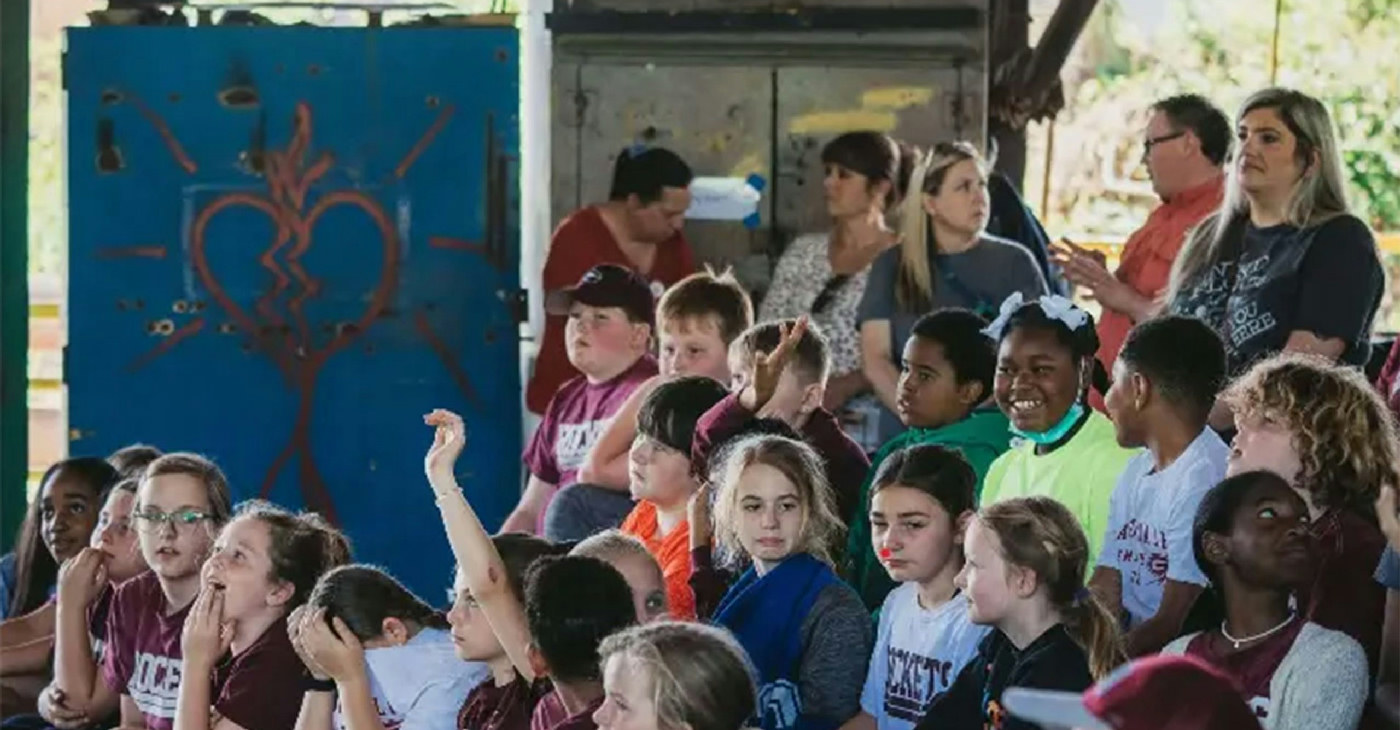
If you think Sloss Furnaces is only a place to visit on special occasions, here’s a little insider knowledge: Every Wednesday, the historic site comes alive with the energy of students discovering Birmingham’s roots in a hands-on, unforgettable way.
Learning Where It Actually Happened
There’s something powerful about standing in the very place where history unfolded. For students visiting Sloss Furnaces on field trips, this isn’t just another lesson from a textbook, it’s a full-on experience.
They walk beneath towering iron structures, see the massive furnaces up close, and learn how raw materials were transformed into the iron that helped build a city. It’s immersive, a little gritty, and way more memorable than reading about it in class.
Why Wednesdays Matter
Wednesdays at Sloss are dedicated to education. School groups from across the region come through the gates to explore everything from industrial science to local history. Guided tours break down complex processes like how blast furnaces worked into engaging, easy-to-understand stories.
And it’s not just about machinery. Students also learn about the people behind the industry, the workers, the challenges they faced, and the role Sloss played in shaping Birmingham’s identity.
More Than a Field Trip
What makes these visits special is how they connect the past to the present. Kids don’t just hear about Birmingham becoming the “Magic City”—they see why it happened.
Students watch as talented metal artists pour their artwork in molten iron and prepare it for students to take home the same day. For many students, it’s their first time realizing that history isn’t distant or abstract. It’s local. It’s tangible. It’s right here.
While weekends and events often get the spotlight, these midweek field trips are a reminder that Sloss Furnaces is an active learning space year-round. It’s not just preserved history. It is a place where new generations come to understand and appreciate it.
So next time you’re nearby on a Wednesday, don’t be surprised to see groups of students exploring, asking questions, and maybe even imagining what it was like when the furnaces first roared to life.

A metal artist pours molten iron during a demonstration for students at Sloss Furnaces.
A Hidden Gem in Action
While weekends and events often get the spotlight, these midweek field trips are a reminder that Sloss Furnaces is an active learning space year-round. It’s not just preserved history. It is a place where new generations come to understand and appreciate it.
So next time you’re nearby on a Wednesday, don’t be surprised to see groups of students exploring, asking questions, and maybe even imagining what it was like when the furnaces first roared to life.
Home schools, Private schools, and Public schools groups are welcome. Tours and Pours are free for Birmingham City Schools. Educators, email Sloss Furnaces Historian, Ty Malugani to schedule your school tour.
Birmingham Times
South Hampton K-8 Students Among Top 10 Finalists for Samsung’s ‘Solve for Tomorrow’ Competition
BIRMINGHAM TIMES — Samsung’s “Solve for Tomorrow” competition gives students in grades 6-12 the opportunity to work together and explore how science, technology, engineering and math can be used to create change in their communities.
Birmingham Times
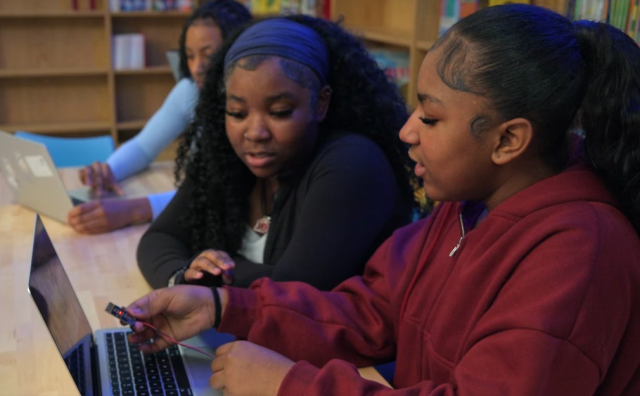
Students at South Hampton K-8 School have placed among the top 10 national finalists for Samsung’s 2025-2026 “Solve for Tomorrow” competition.
Samsung’s “Solve for Tomorrow” competition gives students in grades 6-12 the opportunity to work together and explore how science, technology, engineering and math can be used to create change in their communities.
“We believe that technology should protect people,” said James Speights, a South Hampton K-8 7th grader.
Details on South Hampton’s project can be found here. For this project, the Birmingham City Schools students focused on tornado preparedness, developing a solar-powered and sensor-based tornado monitoring and alert system.
Their project, Storm Sentinels, would use Raspberry Pi technology to send out early warning text messages to over 1,000 families in a tornado’s path. The plan would add valuable time for people to take shelter.
“We can’t stop the storms, but we can prevent tragedy,” said Areille Judkins, an 8th grader. “We are proud to be a part of solutions that can help strengthen communities and save lives,” she added.
Voting is now open for the Community Choice Award on Samsung’s competition website.
South Hampton K-8 student Jason Walton, an 8th grader, talks about their “Solve for Tomorrow” project. (Samsung)
Samsung “Solve for Tomorrow” is open to public school students in grades 6-12. Only schools that are at least 50% publicly funded are eligible to compete. Students work together to come up with a project plan, and teachers submit the team’s application.
Birmingham Times
Mayor Randall Woodfin Criticizes Central Alabama Water After 135 Employees Unexpectedly Laid Off
THE BIRMINGHAM TIMES — “The water works as a utility is not a private sector company. How we treat our employees, how we treat working class people should always be paramount in any decision making,” said Mayor Randall Woodfin. “I’m not sure if thought went into these actions.”

The Birmingham Times
Randall Woodfin is speaking out after Central Alabama Water laid off 135 employees, raising concerns about how the decision impacts both workers and the community.
At a Friday press conference, Woodfin shared a personal story about a recent interaction with an employee who had lost her job. The woman, a mother whose child attends the same school as his son, told the mayor that she and her husband worked for the water board and were both laid off.
“The water works as a utility is not a private sector company. How we treat our employees, how we treat working class people should always be paramount in any decision making,” said Woodfin. “I’m not sure if thought went into these actions.”
The mayor said the conversation stuck with him.
“I personally met and saw the pain, saw the genuine fear in her own eyes of how she and her husband are going to simply take care of their family,” he said.
According to Woodfin, the woman worked in customer service, and nearly her entire department was let go. He said that raises concerns about how residents, especially older adults in Birmingham, will access services, such as paying their water bills in person.
“This public organization — it doesn’t seem they have to answer to anybody,” said Woodfin. “They should be answering to the customers.”
Woodfin also criticized how the layoffs were handled, saying “shame on you” to CAW and questioning whether enough thought was given to the broader impact on both employees and customers.
He went on to raise concerns about water quality, noting that some of the employees responsible for monitoring it were among those laid off.
“If you get rid of the team that’s responsible for managing that, verifying that every day, what are we left with?” asks Woodfin.
Birmingham Times
Pete Buttigieg to Join Mayor Randall Woodfin for Community Town Hall in Birmingham
THE BIRMINGHAM TIMES — “Secretary Buttigieg has been one of the leading voices in the country on infrastructure investment, economic development, and the future of American communities,” Blueprint Alabama stated in a Facebook announcement. “We are proud to welcome him to Birmingham for this important conversation alongside Mayor Woodfin.”
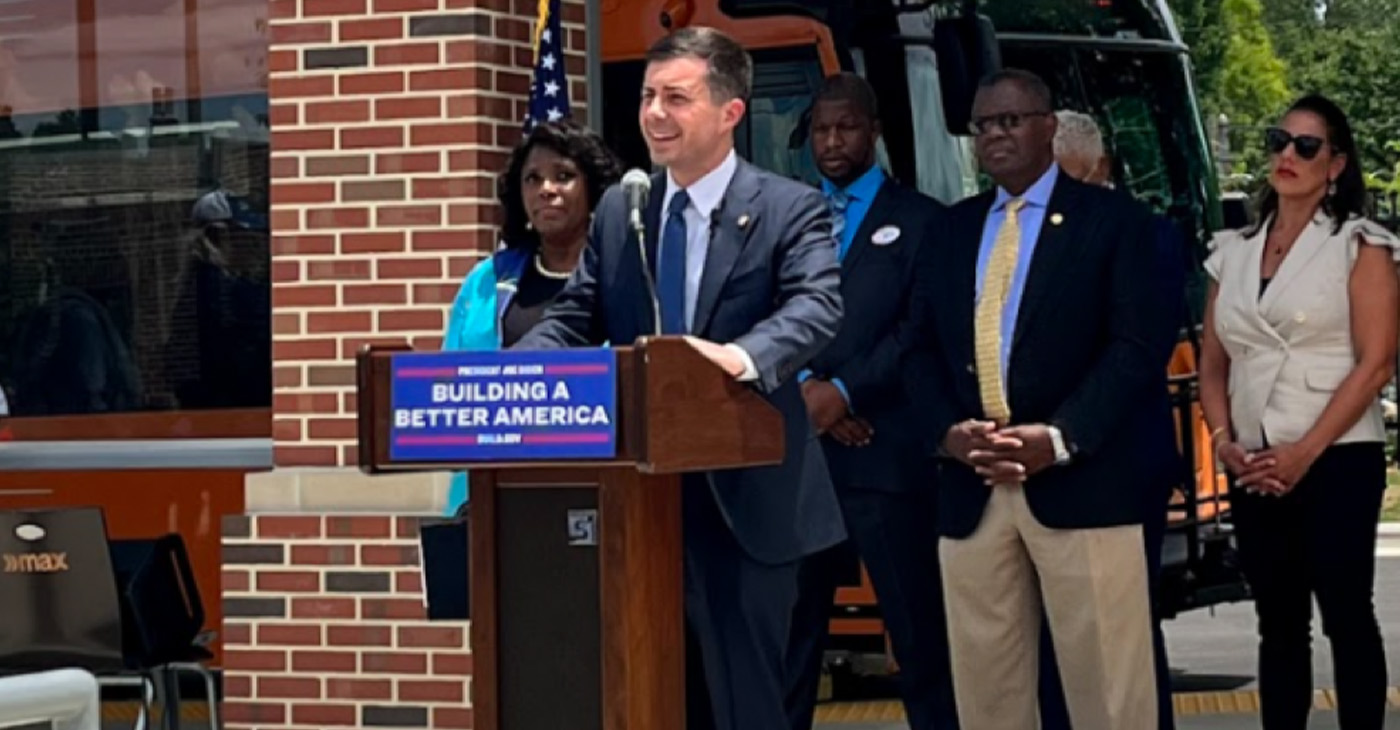
The Birmingham Times
Former U.S. Transportation Secretary Pete Buttigieg will join Birmingham Mayor Randall L. Woodfin for a community conversation on Monday, March 9, at 11 a.m. at the historic Carver Theatre.
The event, organized by Blueprint Alabama, will cover a range of topics including economic opportunity, infrastructure, neighborhood priorities, and the current political climate.
“Secretary Buttigieg has been one of the leading voices in the country on infrastructure investment, economic development, and the future of American communities,” Blueprint Alabama stated in a Facebook announcement. “We are proud to welcome him to Birmingham for this important conversation alongside Mayor Woodfin.”
Admission is free, but reservations are required. Doors open at 10:30 a.m.
This won’t be Buttigieg’s first visit to the Magic City. When the Biden-Harris Administration awarded more than $21.6 million to pay for street infrastructure in Birmingham’s Civil Rights District, Buttigieg came to deliver the news. In 2024, Buttigieg returned to Birmingham to further discuss ways street improvements could strengthen the community.
Blueprint Alabama hopes the listening session will bring together residents, advocates, students, and community leaders from across Alabama.
Event Details
Location: Carver Theatre, Birmingham, Alabama
Date: Monday, March 9
Doors Open: 10:30 AM
Program Begins: 11:00 AM
Admission: Free (RSVP required)


Stacey Abrams Talks Democracy, Voting and Leadership at Harris Stowe State University

Brett Buckner on North Commons and Community | Blacklight on Sports

From Ministry Mistakes to a Resonant Message #shorts

LaBrent Speed on Building B3 and Serve Before You Sell | On The Radar | MSR

LaBrent Speed on Building B3, Serve Before You Sell and The Transformation Code | On The Radar | MSR

North Commons Park: A Regional Destination for Community #shorts

62 Years of the Washington Informer: Our Origin and Mission #washingtoninformer #shorts

From Christies to Bali: The Birth of 11Eleven gallery #washingtoninformer #shorts

Nicola Charles on 11 Providing a Space for Artistic Expression and Cultural Engagement | Let’s Talk

Thomas Jackson on Building Par365 | MSR On the Radar

The Youngest American Killed in the Vietnam War

Passing for White, Fighting for Black America: The Courage of Walter White

OP-ED: Haiti TPS: Have We Lost Sense of Humanity?

Remembering Chauncey Bailey as Student Journalists Face Threats to Truth-Telling

Peter Magubane: a Camera Against Apartheid

OP-ED: How Head Start Also Helps Parents

All Skinfolk Ain’t Kinfolk

Poll: Becerra Widens His Lead Over Hilton; Californians Split on Wealth Tax

Rulings Leave Questions Lingering in Nolan Wells Case

Latinas Deserve Equal Pay. Unions Help Make It Happen.
Stacey Abrams Talks Democracy, Voting and Leadership at Harris Stowe State University
Brett Buckner on North Commons and Community | Blacklight on Sports
From Ministry Mistakes to a Resonant Message #shorts
LaBrent Speed on Building B3 and Serve Before You Sell | On The Radar | MSR
LaBrent Speed on Building B3, Serve Before You Sell and The Transformation Code | On The Radar | MSR
North Commons Park: A Regional Destination for Community #shorts
62 Years of the Washington Informer: Our Origin and Mission #washingtoninformer #shorts
From Christies to Bali: The Birth of 11Eleven gallery #washingtoninformer #shorts
Nicola Charles on 11 Providing a Space for Artistic Expression and Cultural Engagement | Let’s Talk
Thomas Jackson on Building Par365 | MSR On the Radar
-
 Black Press1 week ago
All Skinfolk Ain’t Kinfolk
-

 Black Press1 week ago
Oakland Awarded More than $14 Million in State Funding
-

 African American News and Issues7 days ago
Black History: Gladys West Mathematics Helped Make GPS Possible
-
 Black Press1 week ago
Jendayi Arrest Raises Community Concerns Regarding Sheriff’s Chain of Command
-

 Black History4 days ago
OP-ED: The Black Church Writes AI’s Next Chapter
-
 Black Press1 week ago
Democrats, Community Groups Back Measure EE to Change How Oakland Is Governed
