
Crime
For LaTisha Nixon, latest death is more than deja vu
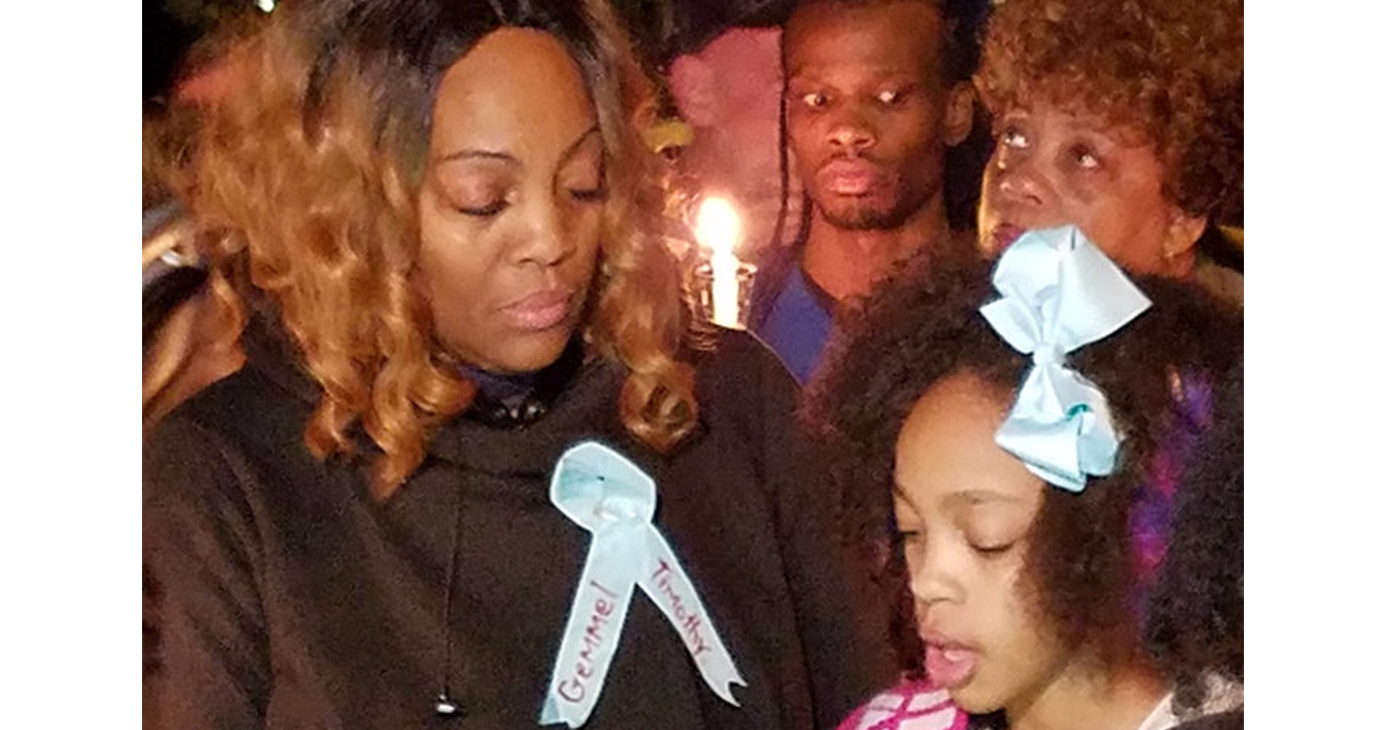
WAVE NEWSPAPERS — LaTisha Nixon’s trip to Los Angeles was supposed to be a commemoration of what would have been her son Gemmel Moore’s 28th birthday.

By Cynthia Gibson
WEST HOLLYWOOD — LaTisha Nixon’s trip to Los Angeles was supposed to be a commemoration of what would have been her son Gemmel Moore’s 28th birthday. Instead, it turned into her worst nightmare all over again.
Moore was found dead at the home of Ed Buck, a prominent Democratic Party donor, in July 2017. An autopsy concluded that Moore’s death was caused by an overdose of methamphetamine. Due to a lack of evidence, the county district attorney’s office did not press charges against Buck for Moore’s death.
Eighteen months following Moore’s overdose, paramedics responded to another 911 call from Buck’s apartment regarding an unconscious man who was not breathing. Timothy Dean was pronounced dead in the early morning hours of Jan. 7. The cause of death has not been released.
Friends, co-workers and neighbors were shocked and saddened to hear about Dean’s death.
Ottavio Taddei, Dean’s roommate for the past three years, said Dean stayed away from narcotics and was very neat with “everything in a specific spot and nicely folded.”
“I’ve never seen him doing drugs or taking drugs,” Taddei said. “He doesn’t even smoke weed or cigarettes. … If he drank something, it was at the end of the day, after work. Not someone who had a problem.”
At a candlelight vigil in front of Buck’s apartment Jan. 11, Dean’s longtime friend Mark Chambers felt compelled to speak up for his friend.
“I’ve known Tim for 30 years,” Chambers said. “He’s not an angel and he’s not a devil. He is in between, just like everybody else.”
In the past, Dean performed in adult films. An online database of adult films credits Dean with more than a dozen roles.
“I knew he did it, but when we were coming up, a lot of people did it. It was like, OK, so what?” Chambers said. “Just because he did porn doesn’t equal a drug addict.”
According to Dean’s friends, he had turned his life completely around. He was a fashion consultant at Saks Fifth Avenue in Beverly Hills, had joined a church and was baptized. He had even gone back to school and earned his associates degree from Santa Monica College.
Dean also played in the Lambda Basketball League and last summer traveled with Chambers and others to Paris to compete in the Gay Games.
Buck’s attorney, Seymour Amster, says his client had nothing to do with Dean’s death.
According to Amster, Buck and Dean been friends for 25 years. Dean had “ingested some type of substance” before arriving at Buck’s apartment Jan. 7 and Buck had tried to perform CPR after Dean fell unconscious.
“This is not a situation where Mr. Buck had caused the death,” the attorney said. “This is a situation where Mr. Buck has had longtime friends who, unfortunately, do not handle their life well then succumb when they are in the apartment of Mr. Buck.”
Dean’s death has put a spotlight on the issues of wealth and privilege — specifically white privilege — that some say exists even within the liberal gay community of West Hollywood.
Following the vigil in from of Buck’s apartment, West Hollywood resident and queer artist Lex Ryan posted on Instagram:
“White people — and especially those white queer folx who live in West Hollywood and party in West Hollywood — let this be a wake up. West Hollywood is not safe for everyone. It is not the progressive, inclusive place we like to believe it is. It is a place where two black men can die of overdoses in a wealthy white man’s apartment — a man known to pay black men so that he can inject them with meth — while the white man walks free. This is West Hollywood. This is where we celebrate Pride. Pride in what? Pride that only white lgbtq folx are safe? This is unacceptable. We can do better. We need to do better.”
For Latisha Nixon, the death of Timothy Dean conjures up painful similarities to her son’s death.
Moore and Dean died in the apartment of Ed Buck and he had been present at the time of their deaths. Both men were black and gay. Buck, 64, is white, gay, wealthy and politically connected.
According to the personal testimony of several escorts who say they have had experiences with Buck, he intentionally seeks out gay black men who are financially vulnerable and pays them to do drugs with him, specifically methamphetamine.
Dean’s death is also the realization of the dire prediction Nixon made in front of the West Hollywood Sheriff’s Station on the first anniversary of her son’s death, one day after prosecutors declined to file charges against Buck.
“The media always refers to my son as a homeless black gay prostitute,” Nixon said at the time. “He wasn’t homeless. He wasn’t a prostitute.
“They call Ed Buck a ‘wealthy white Democratic donor.’ He’s a predator. He preys on vulnerable black men. If they don’t stop him, he’ll do it again and the blood will be on their hands.”
This article originally appeared in the Wave Newspapers.












Black Press
Botham Jean’s Killer Granted Parole 7 Years After His Murder
MICHIGAN CHRONICLE — Former Dallas police officer Amber Guyger has been granted parole, seven years after her conviction for murdering Botham Jean inside his Dallas apartment. The Texas Board of Pardons and Paroles approved her release on October 1, seven years to the day after her murder conviction. Guyger was convicted in 2019 and sentenced to 10 years in prison for Jean’s 2018 death.
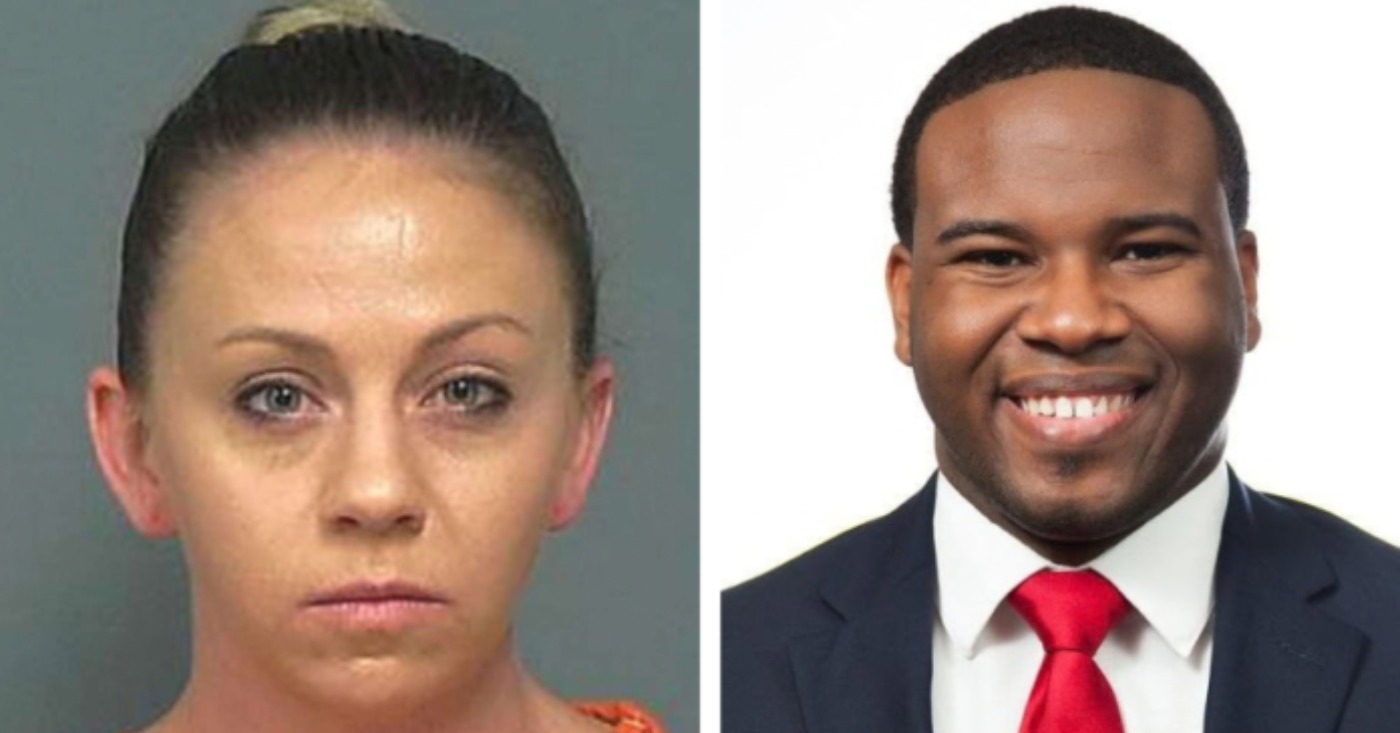
Former Dallas police officerAmber Guyger has been granted parole seven years after she was convicted of murdering her neighbor,Botham Jean, inside his Dallas apartment.
The Texas Board of Pardons and Paroles approved Guyger’s release Thursday (October 1), seven years to the day after Guyger was convicted of Jean’s murder, according to NBC News.
In 2019, a jury convicted Guyger of murder and she was sentenced to 10 years in prison for Jean’s 2018 death. Her conviction and 10-year sentence were upheld on appeal in 2022.
Geyger’s first parole request was denied in 2024, NBC Dallas-Fort Worth reported.
The Dallas Police Department fired her after the shooting. During her trial, Guyger testified that she mistakenly entered Jean’s apartment after returning home from work, believing it was her own apartment one floor below.
She said she saw Jean inside and fired her weapon because she believed he was an intruder, according to NBC News.
Jean was a 26-year-old Black man from St. Lucia who worked as an accountant. He was inside his home eating ice cream when Guyger entered and shot him, NBC DFW reported.
The parole board cited Guyger’s prison record in approving her release. According to NBC DFW, officials said she did not have a documented pattern of violent or assaultive arrests or convictions, maintained a satisfactory adjustment while incarcerated, and completed programs intended to help her obtain and maintain employment.
Jean’s family opposed the parole decision and had asked that Guyger serve her full 10-year sentence, according to NBC DFW.
Civil rights attorney Lee Merritt, who represents the family, told NBC DFW that the decision was deeply disappointing.
“They stood up again and again to ask that the full sentence be served,” Merritt said.
The Dallas Police Department told NBC DFW that the parole decision was outside its authority and that the department had no role in determining whether Guyger would be released. The department said its thoughts remained with Jean’s family and others affected by his death.
Guyger’s conviction and 10-year sentence were upheld on appeal in 2022.
A civil jury ordered Guyger to pay Jean’s family $98.6 million in damages in 2024, according to NBC DFW.
Guyger’s release date has not been announced. NBC News reported that the Texas Department of Criminal Justice will determine when she is released.
The Black Information Network is your source for Black News! Get the latest news 24/7 on The Black Information Network. Listen now on the iHeartRadio app or click HEREto tune in live.
Based on reporting by Michigan Chronicle.
Black Press
New York Prosecutors Reopen Alleged Cornell University Gang Rape Case
NEW YORK BEACON — Prosecutors in Tompkins County, New York, have reopened an alleged gang rape case from 2024 involving Cornell University. The decision follows a civil lawsuit filed by the alleged victim, Jane Doe, against several fraternity members. District Attorney Matthew Van Houten confirmed his office is examining conflicting claims and intends to present the case to a grand jury.

Cornell University is at the center of a developing matter involving an alleged gang rape case that took place in 2024. Prosecutors are reopening the matter after the alleged victim filed a civil lawsuit against a group of fraternity members at Cornell University.
ABC News reports that prosecutors in Tompkins County in Central New York State are examining the claims made by a Jane Doe, the alleged victim of the assault. According to Tompkins County District Attorney Matthew Van Houten, his office is examining whether or not to bring charges but did share that there are two conflicting claims at the heart of the matter.
“It’s our intention to present the case to the Tompkins County grand jury with Jane Doe’s cooperation,” Van Houten told the outlet. “We want to reexamine whether there’s additional evidence that we were not aware of in November of 2024, that exists now that would change our assessment of the case and would result in the grand jury finding that there was criminal conduct.”
Back in 2024, the Jane Doe and former student accused seven current and former members of the Chi Phi fraternity of assaulting her, leading to the chapter’s expulsion from Cornell University. The school conducted an investigation, and initially, Doe did not say she was drugged and forced into acts. Doe’s lawsuit is now alleging the fraternity members drugged and assaulted her.
“She never says that she was drugged without her knowledge. She admits to taking drugs and alcohol voluntarily and with knowledge. She does not allege that she was forced to engage in any acts. She does not say that she was physically helpless or unconscious or incapacitated at any point during the time at the fraternity house,” Van Houten added.
Based on reporting by New York Beacon.
Black Press
Safety Concerns at Southern University
SOUTHERN UNIVERSITY – SOUTHERNDIGEST — Students at Southern University express growing concerns about safety after dark due to poor lighting conditions across campus. Areas such as walking paths, the street near the bandroom, and streets by dorms are described as “terrifyingly pitch black” due to dying or non-existent lights.
Spending time across Southern University’s campus during the day, you feel the rich history and great energy that make the Bluff special. But once the sun goes down, that feeling shifts into a familiar sense of unease.
Returning home from a late-night study session in the library or walking back from your dorm can often feel like a game of avoiding the darkness. There are areas across campus that are terrifyingly pitch black with dying or non-existent lights posted along walking paths meant for students to walk alone. If you find yourself constantly having to squint to see while walking around campus, you can see why safety is such a big issue in students’ minds. The darkest parts of campus are the street where the bandroom is and the streets by dorms. I was driving back to my apartment on campus late one night when suddenly there was someone walking near the road. If my bright headlights weren’t on, I might not have seen them soon enough, and it could have caused an unsafe situation.
The darkness creates daily hazards that go far beyond a simple lack of visibility. Pedestrians are forced to walk directly in the street because sidewalks fade into pitch-black shadows, dodging cars while barely being able to see where they are stepping. At the same time, people are flying by on electric scooters moving through the dark, completely invisible to drivers and walkers because many of their rides lack proper headlights or reflectors. Nagging worry in the back of your mind about whether your car is even going to be in the parking lot or if it’s going to be stolen by morning, and campus life after dark feels entirely too stressful.
When looking at how Southern ranks for safety among HBCUs, Southern often lands in the lower tiers on various college safety and crime-reporting databases, frequently penalized for property concerns and lacking resources. According to PlainCampus, using the U.S. Department of Education Clery data, ranked Southern #1,287 out of 2,072 institutions based on its 2024 reported crime rate, with burglary identified as its largest reported criminal offense category.
A dark campus isn’t just an inconvenience; it’s a hazard that puts students at risk every single night. We shouldn’t have to dodge silent scooters in the middle of the road or cross our fingers every time we look toward the parking lot. It is time for the administration to step up, fix the lights, and make student safety a visible priority.
Based on reporting by Southern University – SouthernDIGEST.
Black Press
New Shoes, Stronger Steps: Milwaukee Initiative Takes Aim at Gun Violence
MILWAUKEE TIMES WEEKLY — The “Stompin’ Out Gun Violence” initiative is using sought-after sneakers to engage young people with a message about preventing gun violence. Led by the Latroy V. Harris Initiative, “I Will Not Die to Gun Violence,” the program provides free shoes in Milwaukee while fostering conversations aimed at a safer future.
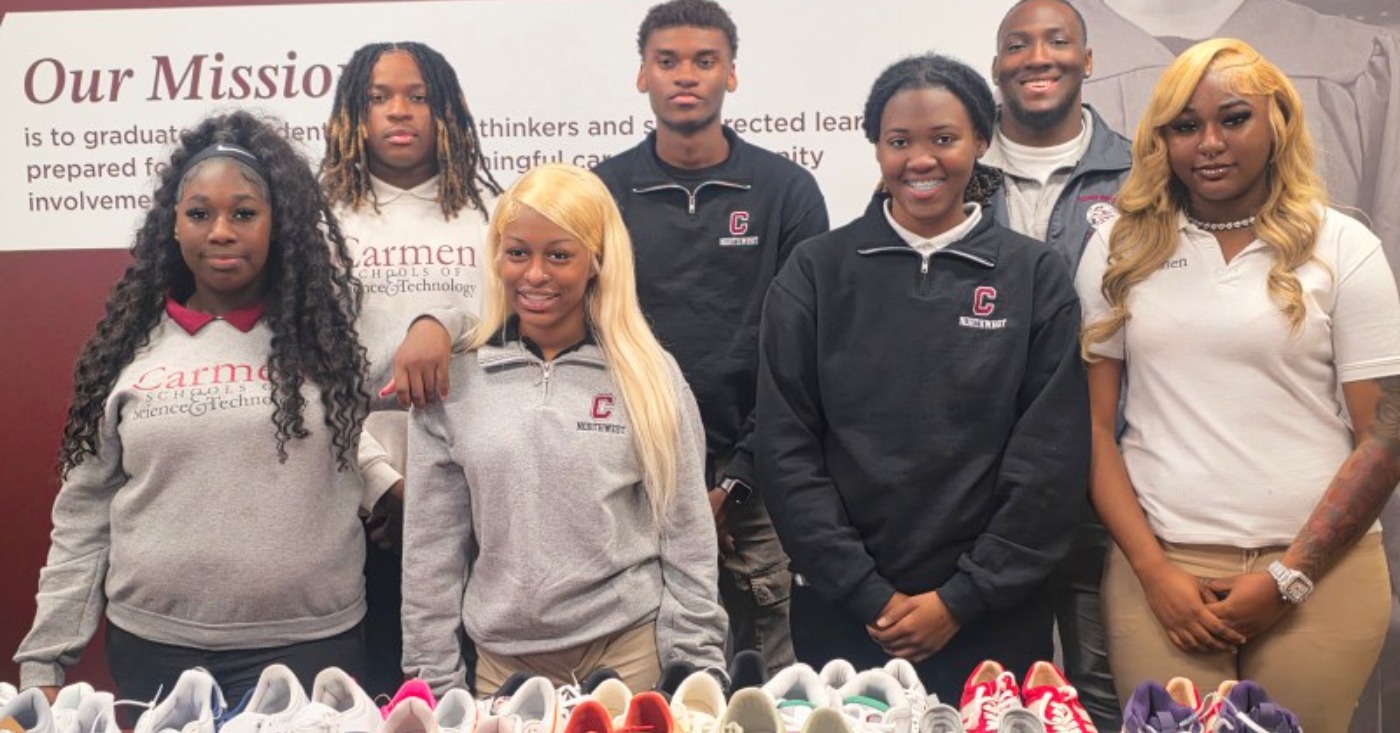
“Stompin’ Out Gun Violence” uses sought-after sneakers to open the door to a life-saving message for young people.
A new pair of shoes can do more than complete an outfit—it can help a young person step toward a safer future. That is the idea behind “Stompin’ Out Gun Violence,” a traveling shoe giveaway led by the Latroy V. Harris Initiative, “I Will Not Die to Gun Violence.”
Founder Monte Mabra says the work comes with no paycheck. Its reward is measured instead in smiles, gratitude, and the chance to turn a potentially negative outcome into a positive one. By pairing free shoes with conversations about gun violence, organizers hope to reach young people with a message that stays with them long after the event ends.
“I like what Monte is doing to change the course of violent crime,” said Michael F. Hupy of personal injury law firm Hupy and Abraham, S.C. and leading sponsor “The shoes carry them in the door, and the message follows them out.”
Students at Carmen School of Science and Technology, 3215 Dr. Martin Luther King Jr. Drive, received Nike, Adidas, and Jordans. Principal Miller said she looks forward to next year and to continuing to build a relationship with the Latroy V. Harris Initiative.
The initiative honors Latroy V. Harris, who was lost to gun violence on Dec. 15, 2025. His family and loved ones are keeping his memory alive by working to prevent other families from experiencing the same loss.
The campaign’s next stop is Bruce Elementary School on Sept. 30. Organizers plan to give away shoes, gun- and domestic-violence awareness and prevention coloring books, and educational books.
For the young people reached by the initiative, each pair of shoes carries more than a brand name. It carries a reminder: their lives matter, their futures are worth protecting, and every step away from violence counts.


Based on reporting by Milwaukee Times Weekly.
Black History
Rulings Leave Questions Lingering in Nolan Wells Case
CHICAGO CRUSADER — The Crusader’s ongoing “Lynchings By Suicide” investigation began after Demartravion “Trey” Reed, a 21-year-old Delta State University student, was found hanging from a tree on the Cleveland, Miss., campus on Sept. 15, 2025. The state medical examiner ruled Reed’s death a suicide within days, a finding his family continues to dispute.

A grand jury declines charges in the Nolan Wells case, a Jackson man pleads not guilty in Tasia Fortune’s hanging death, and a Maryland suicide ruling lands on raw nerves.
A Mississippi grand jury has declined to charge anyone in the death of Nolan Xavier Wells, the 18-year-old Black college football player who disappeared during a July Fourth boat trip with a group of white friends and was found dead two days later off Horn Island. His parents rejected the decision on Sept. 22, telling reporters they do not believe their son simply drowned and vowing to keep fighting for answers.
The grand jury’s report was made public late on Sept. 21, the same week a Jackson man pleaded not guilty to murder in the hanging death of Tasia Fortune and Maryland officials ruled that a Black man found hanging from a tree in Prince George’s County died by suicide.
All three cases now join the Crusader’s ongoing “Lynchings By Suicide” investigation, which began after Demartravion “Trey” Reed, a 21-year-old Delta State University student, was found hanging from a tree on the Cleveland, Miss., campus on Sept. 15, 2025. The state medical examiner ruled Reed’s death a suicide within days, a finding his family continues to dispute.
Nolan Wells: ‘We’ll Never Stop’
Wells, a wide receiver at Southwest Mississippi Community College, went to Horn Island, a barrier island reachable only by boat, with high school friends on July 4. When the group returned to the mainland that afternoon, Wells was not with them. A park ranger found his body in the water off the island on July 6.
Investigators have long said Wells chose to stay behind. His family never believed it, and an independent autopsy that attorney Ben Crump released in July at the NAACP National Convention in Chicago found an unexplained area of discoloration at the back of Wells’ head and ruled the cause of death undetermined.
The grand jury, which heard from 43 witnesses, found Wells’ death “consistent with drowning.” Jackson County District Attorney Angel Myers McIlrath said there is “absolutely no evidence” that race played a role, according to NBC News. The state medical examiner, however, also ruled the cause and manner of death undetermined.
“Elmore and I do not believe that Nolan simply and accidentally drowned,” Christine Wonsley, Wells’ mother, said, according to CNN. His father, Elmore Wonsley, reminded supporters that his son is “not a hashtag, he’s our son.”
Crump said the district attorney wants the public to accept “We’ll never know,” while the family answers, “We’ll never stop.” The family is asking the U.S. Department of Justice to investigate and demanding release of the full case file and the state’s autopsy report. Mississippi has no statute of limitations on homicide.
Tasia Fortune: An Arrest, Not an Ending
Fortune, a 29-year-old mother of four, was found Aug. 3 hanging from a tree behind a vacant house on Road of Remembrance in west Jackson. From the start, her family insisted she did not take her own life.
After the state medical examiner ruled her death a homicide on Sept.10, Jackson police arrested Jarques “Jock” Ratliff, 51, the next day as he walked along Capitol Street and charged him with murder. Ratliff is African American, as was Fortune, according to Mississippi Today. Police said the two knew each other but have not said how.
Ratliff pleaded not guilty on Sept. 14 and was denied bond as a flight risk. His attorney, Toney Baldwin, called him “a pillar of the community” and said his client made no confession.
Jackson Police Chief RaShall Brackney called the arrest “not the conclusion” and said more arrests are expected. “We understand this case is being viewed through a broader lens, a global lens,” Brackney said, according to ABC News.
Christy Spivey, Fortune’s mother, said that when police told her about the arrest, “I just started crying and told them ‘thank you, thank you, thank you.’”
Activists want more. Byron Brumfield of Medgar Evers Reloaded: A Mission and a Movement said Ratliff “should be charged with a hate crime also, just like anybody else,” according to WLOX. Ward 3 Jackson City Councilman Kenneth Stokes has asked U.S. Attorney Baxter Kruger’s office for federal assistance.
Prince George’s County: A Ruling in Hours
In Upper Marlboro, Md., a Black man was found hanging from a tree outside a business on D’Arcy Road on the morning of Sept. 20. Within hours, the state medical examiner ruled his death a suicide with no other signs of trauma. He has not been publicly identified.
Police Chief George Nader said the man’s family agrees with the ruling. Relatives asked that his name be withheld and said the public attention had made his death “more unbearable,” according to the Maryland Daily Record.
County Executive Aisha Braveboy urged residents not to share images or spread speculation online. “This is a tragedy. A person is dead,” Braveboy said, according to WUSA9.
A Pattern the Crusader HasTracked
Mississippi is where Emmett Till, a 14-year-old Chicago boy, was abducted and murdered in 1955, and where Mack Charles Parker was dragged from a Poplarville jail and lynched in 1959.
In February, JULIAN, the civil rights organization founded by attorney Jill Collen Jefferson, released “A Crimson Record,” a report documenting more than 70 suspected modern-day lynchings across seven Southern states since 2000. The report calls the federal Emmett Till Anti-Lynching Act, signed in 2022, “toothless.”
The Wells family is pressing for a federal investigation. Jackson police have promised more arrests in Fortune’s killing, and activists are calling for hate crime charges. More than a year after Trey Reed was found on the Delta State campus, his family is still waiting on answers of its own.
Across these cases, families and advocates have made the same demand: release the grand jury findings, the autopsy reports and the evidence behind every ruling.
Based on reporting by Chicago Crusader.
Black Press
St. Louis Officials Form Pro Bono Task Force to Fight Fraud Against Tornado Survivors
ST. LOUIS AMERICAN — St. Louis Mayor Cara Spencer has announced the formation of a pro bono task force aimed at combating contractor fraud against victims of last year’s May tornado. This initiative expands the city’s legal aid efforts for residents in the tornado zone, which saw an EF3 tornado damage and destroy thousands of homes in the city’s north and west.
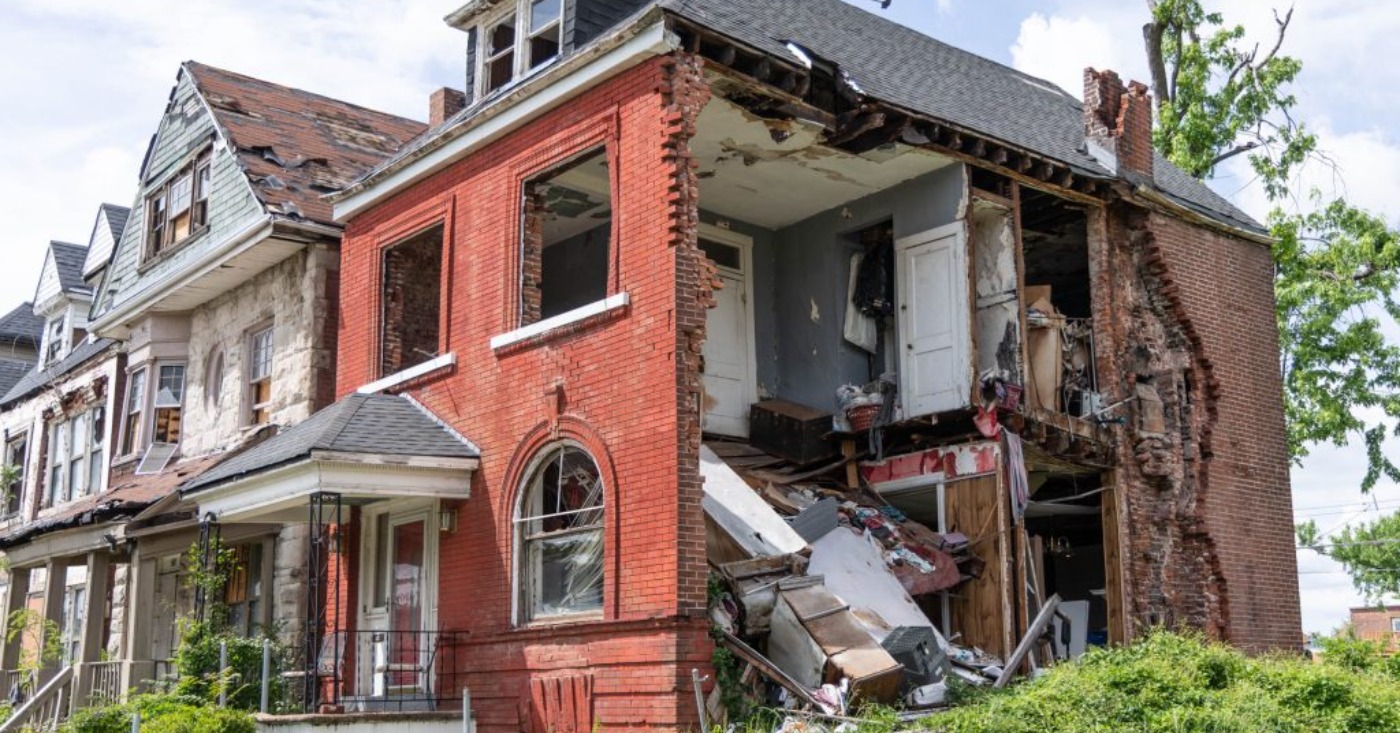
A volunteer-led task force of St. Louis-based lawyers will go after contractors who take advantage of victims of last year’s May tornado.
Mayor Cara Spencer announced the creation of the task force on Thursday as an expansion of the city’s effort to provide legal aid to victims in the tornado zone. The EF3 tornado damaged and destroyed thousands of homes in the north and west parts of the city.
The task force will be composed of area lawyers and Legal Services of Eastern Missouri, a legal aid group that often works with the city on housing and other legal issues.
Together, the litigators will provide free legal expertise and representation to eligible homeowners who believe they were defrauded by a contractor, including by receiving shoddy or partial work.
Spencer said she hopes the task force sends a “clear and unambiguous message” to fraudsters looking to victimize homeowners impacted by the tornado.
“I’ve just heard over and over again some truly heartbreaking stories of folks that have been taken advantage of by contractors, some of which are local,” Spencer said.
In May, a High Ridge contractor was charged with defrauding victims of the tornado by Missouri Attorney General Catherine Hanaway’s office.
Homeowners seeking legal aid will go through a two-stage screening process to evaluate their claims. Then, if selected, an attorney will be matched with the homeowners. The intake form can be found here.
Celeste Vossmeyer, an attorney who has worked with Spencer’s administration on several other projects, helped assemble the task force. She said the city’s north and west sides need extra eyes while recovery efforts continue.
“We’re hoping that this is also going to be a deterrent as other money flows into the tornado disaster area and to other scammers that may try to take advantage of these individual homeowners,” she said.
Spencer said the city will also partner with the attorney general’s consumer protection office. The office will forward complaints from homeowners in the tornado zone to the task force.
Spencer said that without the help of the volunteers, Legal Services of Eastern Missouri and the attorney general, the city could not offer this type of help.
Shawn Caruso, a senior attorney at Legal Services of Eastern Missouri, called on other lawyers in the area to consider joining the pro bono team.
“Every lawyer who volunteers expands our ability and our capacity to provide more free legal aid to our residents,” Caruso said.
Published with permission as part of a content partnership between The St. Louis American and St. Louis Public Radio. Click here to view original story.
The post St. Louis officials form pro bono task force to fight fraud against tornado survivors appeared first on St. Louis American.
Based on reporting by St. Louis American.


Coach Tremaine Jackson Urgent Mindset- ‘Fourth and One’

Michael Jackson Returns to the Super Bowl Spotlight, Druski Heads to SNL, and Gas Drops Below $1!

Michael Jackson Returns to the Super Bowl Spotlight, Druski Heads to SNL, and Gas Drops Below $1! 📱

Secure growth by funding business expansion without taking on bad debt

Save money on storm damage repairs by addressing your property hurricane risk early in the season

Sunset Loft – The Crystal

HISD takeover “diminished, degraded, destroyed” schools – Citizen commission report

Everything You Need to know before you Vote

From Doubts to Calling: My Wife Saved My Career #shorts

HBCU Homecoming: A never-miss annual tradition

The Youngest American Killed in the Vietnam War

Passing for White, Fighting for Black America: The Courage of Walter White

OP-ED: Haiti TPS: Have We Lost Sense of Humanity?

OP-ED: How Does Your State Rank for Pre-K?

NFL: Week Two Recap | Jalen Hurts did not fold; Caleb Williams exits game with injury

Remembering Chauncey Bailey as Student Journalists Face Threats to Truth-Telling

Headlines and Hot Topics 📱

NEWSOM, KAMALA & 2028: THE POLITICAL CALCULUS BEGINS 📱

Obama Urges Democrats to make AI a Priority 📱

Peter Magubane: a Camera Against Apartheid
Coach Tremaine Jackson Urgent Mindset- ‘Fourth and One’
Michael Jackson Returns to the Super Bowl Spotlight, Druski Heads to SNL, and Gas Drops Below $1!
Michael Jackson Returns to the Super Bowl Spotlight, Druski Heads to SNL, and Gas Drops Below $1! 📱
Sunset Loft – The Crystal
HISD takeover “diminished, degraded, destroyed” schools – Citizen commission report
Everything You Need to know before you Vote
From Doubts to Calling: My Wife Saved My Career #shorts
HBCU Homecoming: A never-miss annual tradition

How Community Builds the Confidence to Start a Business #shorts

2026 Silverado High Country What $82,004 Gets Right—and Wrong
-

 Black Press1 week ago
Zakiya Jendayi Arrested, Locked Out of Home by Sheriff’s Deputies
-

 Black Press1 week ago
A $2.1 Trillion Wellness Industry Never Built a Daily Practice for Black Children. So This Atlanta Family Did.
-

 Art1 week ago
Montclair Brewery: Brewing Culture, Community, History
-
 BlackPressUSA6 days ago
Latinas Deserve Equal Pay. Unions Help Make It Happen.
-

 Black History1 week ago
Listening as a Lifeline: A Doula’s Witness to Black Maternal Health
-

 Black Press1 week ago
COMMENTARY: But God!
