
Food
Changing Your Diet
MISSISSIPPI LINK — This time of year everybody wants to get next year off to a good start by changing old bad habits. One of the biggest changes most people start is changing their diet. To succeed you need a good plan.


By Vince Faust, Special to The Mississippi Link Newspaper,
This time of year everybody wants to get next year off to a good start by changing old bad habits. One of the biggest changes most people start is changing their diet. To succeed you need a good plan.
Changing your diet takes patience, persistence and behavior modification. Just losing weight should not be your goal. You want to lose body fat. There’s no simple or quick way to get rid of excess body fat. Once you get rid of it the only way to keep it off is to continue a program, which incorporates healthy eating with aerobic activities and resistance exercises.
Approximately 47.8 percent of African Americans are obese compared to 32.6 percent of whites. 35.1 percent of African-American children ages 2 to 19 are overweight. We need to change our diets to change these numbers.
Changing your diet to help your health takes patience, persistence and behavior modification. There’s no simple or quick way to change your diet.
To change or modify your behavior takes commitment. You must modify or get rid of old habits and develop new positive behaviors. Changing your eating habits is probably the most difficult part of developing good health.
The first ingredient to modify your eating behavior is the desire to do so. The reasons for change must be more important than those for carrying on your present lifestyle patterns. If a sincere commitment is made the chances for success become much greater.
Once you’ve made the commitment to change you must then set realistic goals. These goals should be long term and short term. Most people with a weight problem want to lose it all on a miracle program within a months or even a few days. This is unrealistic because weight problems don’t happen in a few weeks it occurs over a long period of time. Your long-term goal should be your ultimate goal. Your short-term goals should include the small accomplishments it takes to reach your long-term goal.
Developing healthy eating habits takes meal planning. You cannot change your eating habits if you leave your diet to chance. To do this you must shop wisely. Always have a list of the foods you need when you shop and never shop on an empty stomach. You also have to learn to differentiate between hunger and appetite. Hunger is the actual physical need for food. Appetite is a desire for food, usually triggered by factors such as stress, habit, boredom, smell, depression, food availability or the thought of food itself. Sticking to a regular meal plan will help control hunger and appetite.
The best way to change poor eating habits is to do it one meal at a time. Give yourself a week to ten days for each meal change. Since breakfast is the first meal of the day, start there. Instead of donuts, coffee and snack foods on the run have a piece of fresh fruit and a glass of juice to start your day. Have a glass of juice and one or two pieces of fruit when you get up. After a shower and getting dressed have something more substantial like a bowl of whole grain cereal such as oatmeal or wheat flakes. Vanilla flavored soy drink is a good substitute drink to pour on cereal especially if you have a problem with milk. Whole grain wheat or corn muffins and pancakes are also good breakfast foods. Whole grain means 100% wheat, corn or rice products. These can be found in health food stores or in the health food section of your supermarket.
Give yourself a week to ten days to change breakfast then move onto lunch. By lunchtime your body will need a protein such as baked or broiled chicken or fish, beans, egg whites or tuna. If you eat red meat limit your intake to once or twice a week and have only lean cuts of beef. You’ll also need to have one or two servings of green vegetables. One serving equals about half a cup. Romaine lettuce salads (iceberg lettuce has little nutritional value) steamed broccoli, string beans, cabbage; collard greens and kale are all excellent choices.
Later in the afternoon have a carbohydrate food like whole grain bread, a baked potato or air popped popcorn. This will replace that late afternoon bag of chips or candy bar.
Change your dinner meal in a few more weeks. You can even make dinner two small meals. Have some protein and a vegetable for your first small dinner meal. Later have a light meal of brown rice pilaf or pasta with a vegetable on the side.
Drink water at least fifteen minutes before you eat instead of with your meal. Use less butter, salt, dressings and condiments on your foods so that you gradually learn to enjoy the natural taste of food. Once you do, those fast foods and junk foods won’t be so appealing. Trust me, my favorite meals once included macaroni and cheese, biscuits or even a Stromboli. I can pass on all of them now because my body craves healthier choices. This is not to say I will never indulge in these foods but when I do they taste as good as they used to.
Many people associate certain activities with eating. Examples of automatic eating include eating while cooking, watching television, talking on the telephone and reading. These patterns are hard to break but you can satisfy that habit of nibbling by drinking a glass of herbal tea or water when these situations occur. When you do nibble while reading or watching a movie make sure the snack is wholesome like air popped popcorn seasoned with herbs.
Social gatherings like holiday outings, luncheons, cookouts and guest can sabotage the most well thought out plan. Instead of eating everything in sight once you get there have several small meals earlier in the day. This will keep you from binging at those social gatherings. Eat slowly. This will give your body time to realize you’re full and you’ll be less likely to overeat.
Your Daily Basics
Protein – 2 servings
Vegetables-4 To 6 servings
Fruit – 3 To 6 Servings
Grain — 2 To 4 servings
Dairy Products – 2 servings
This menu is low in fat, sodium and sugar. If you don’t add the fat, sodium or sugar, they won’t be part of this menu. Use herbs and other vegetables, such as onions, bell peppers and celery to season your food.
What Counts As A Serving?
Grain
Whole grain bread, cereal, rice, pasta, bagels and muffins
• 1 slice of whole grain bread
• 1/2 bagel
• About 1 cup of ready-to-eat cereal
• 1/2 cup of cooked cereal, rice, corn grits, oatmeal, cream of wheat or pasta
• 1 pancake
Vegetables
• 1 cup of raw leafy vegetables
• 1/2 cup of other vegetables cooked or raw
• 3/4 cup of vegetable juice
Fruit
• 1 medium apple, banana, orange, pear
• 1/2 cup of chopped, cooked, or canned fruit
• 3/4 cup of fruit juice
Dairy Product
Milk, Yogurt, and Cheese Group
• 1 cup of milk or yogurt
• 1 1/2 ounces of natural cheese (such as Cheddar)
• 2 ounces of processed cheese (such as American)
Protein
Beef, fresh pork, poultry, fish, dry beans, eggs, and nuts
• 2-3 ounces of cooked lean meat, poultry, or fish
• 1/2 cup of cooked dry beans# or 1/2 cup of tofu
• 2 1/2-ounce soyburger or 1 egg counts as 1 ounce of lean meat
• 2 tablespoons of peanut butter or 1/3 cup of nuts counts
Fats
• Butter, oil, margarine: 1 teaspoon
• Salad dressing: 2 tablespoons
For example:
• Meat, chicken, fish: 3 ounces or the size of a deck of cards, or the palm of a woman’s hand
• Pasta, rice, oatmeal, potatoes, cooked vegetables: half a cup, or the size of a tennis ball
• Bagel or muffin: 1 ounce, or the size of a ping-pong ball
• Cheese: 1 ounce, or the size of a woman’s thumb
• Butter, oil, margarine: 1 teaspoon, or the size of a stamp
• Salad dressing: 2 tablespoons, or the size of a standard ice cube
• Raw vegetables: 1 cup, or the size of a baseball
Here are a few tips that can help your diet change:
- Eat fruit and/or drink juice when you wake up instead of coffee and donuts. You should eat or drink 3 servings of fruit daily.
- Have whole grain pancakes with pure maple syrup or other whole grain cereals instead of bacon and eggs for breakfast. You need no less than 2 servings of a whole grain daily.
- Carry your lunch instead of eating out everyday.
- Visit your health food store to see the alternative products they now stock.
- Make sure you have 4 to 6 servings of vegetables daily.
- Drink water between meals instead of soda pop.
- Limit fried foods to once or twice a week.
- Plan your menu for each week, make a shopping list and stick to it.
- Use canola oil instead of vegetable oil for cooking.
- Eat at least 1/3 of your food before late day.
- Eat 4-6 small meals throughout the day (it’s impossible to get what your body needs on 1 meal a day).
- Exercising 3-4 times a week will help you develop a healthy body.
- Sometimes you will eat foods you shouldn’t. This happens to everyone. The important thing to remember is that you have to eat healthy on a regular basis for the small slip ups not to affect you. It takes time to develop good lifetime habits.
- Regular exercise should also be a part of any good weight loss program.
- Learn to eat to live instead of live to eat.
- Before starting your fitness program, consult your physician.
Watch “Tips to be Fit” on www.lifeandspiritonline.com and www.GoodDayGoodHealth.com.
If you have a fitness question or concern you would like addressed write to “Tips to be Fit” P O Box 53443 Philadelphia PA 19105, or [email protected]
This article originally appeared in the Mississippi Link.











Black Press
Students from Stonecrest Help Families Grow Food
THE CHAMPION NEWSPAPER — Two Georgia college students from Stonecrest are utilizing agriculture, technology, and community education to help families across Georgia grow their own food, even without traditional farming spaces. Mason Wright, a Morris Brown College student and founder of Plant It Georgia Vertical Institute, and Kosey Henley, a University of Georgia student, developed a mobile agricultural laboratory.
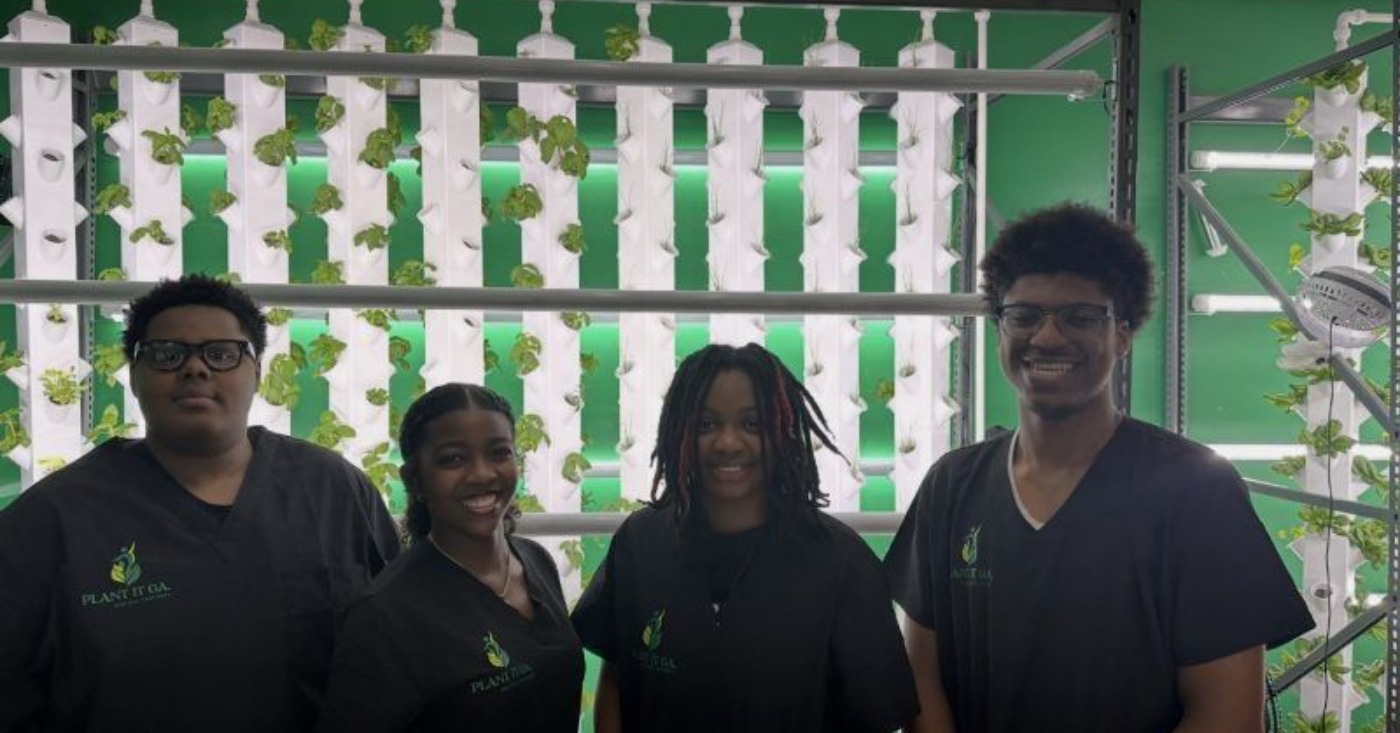
Two Georgia college students from Stonecrest are combining agriculture, technology, and community education to help families throughout Georgia grow their own food — even those without access to traditional growing spaces and equipment.
The two students recently completed the first prototype of Plant It Georgia’s mobile agricultural laboratory, which they said is an enclosed trailer equipped to introduce young people and families to growing food without relying on traditional farmland.
Mason Wright—a youth entrepreneur and a student at Morris Brown College—is the founder of Plant It Georgia Vertical Institute. The institute is an “educational initiative created to train young people in vertical farming, hydroponics, and other modern agricultural technologies,” according to Wright. Kosey Henley, a student at the University of Georgia, worked alongside Wright on the mobile lab.

The students said the idea came in response to an obstacle challenging many communities: transportation. Instead of requiring students to travel to the Plant It Georgia Vertical Institute, the program can take its lessons and growing systems directly into neighborhoods, schools, recreation centers, and other community spaces to teach students and their families about growing food in urban communities.
Inside the prototype, visitors will find hydroponic growing channels, lighting, and other equipment that show them how plants can grow in controlled environments. The laboratory aims to support hands-on lessons covering seed germination, water circulation, plant nutrition, lighting, harvesting, and the technology used to manage indoor crops, according to Wright.
The project comes as Georgia and the nation face an aging agricultural workforce.
According to the U.S. Department of Agriculture’s 2022 Census of Agriculture, Georgia had 63,492 agricultural producers, but only 4,770 were younger than 35. Nationally, the USDA counted 296,480 producers younger than 35, approximately 9 percent of all U.S. producers.
At the Plant It Georgia Vertical Institute, students are taught that farming does not always require acres of open land or heavy machinery. Vertical farming allows crops to grow upward in stacked systems while hydroponics uses nutrient-rich water instead of soil to feed the plants. These tactics make food production possible in classrooms, buildings, trailers, and densely populated urban communities, according to Wright.
Plant It Georgia’s growing systems can cultivate lettuce, tomatoes, collard greens, peppers, and a variety of culinary herbs, according to the news release. Students are taught the entire growing process — from placing seeds into starter materials and monitoring water and nutrients to caring for mature plants and harvesting fresh produce.
The program also introduces participants to careers connected to agricultural technology, plant science, environmental sustainability, food systems, and entrepreneurship.
Wright’s role as a Morris Brown College student and founder represents the connection between HBCU leadership, entrepreneurship, and community service, according to a news release. Wright also made headlines for opening Mason’s Super Dogs in Stonecrest in 2020 — which he now also operates on the Atlanta Beltline’s Eastside Trail. Henley brings another important academic connection through the University of Georgia, one of the state’s leading institutions in agriculture and agricultural research, according to the news release.
For event locations and more information, follow Plant It Georgia on Instagram (@plantitGA).
13 total views
Based on reporting by The Champion Newspaper.
Art
Montclair Brewery: Brewing Culture, Community, History
THE POSITIVE COMMUNITY — Montclair Brewery, located in Montclair, New Jersey, has evolved beyond a craft beer destination into a community gathering place. Founded by husband-and-wife team Leo and Denise Sawadogo, the brewery connects its beers to African, Caribbean, and African American history and culture.
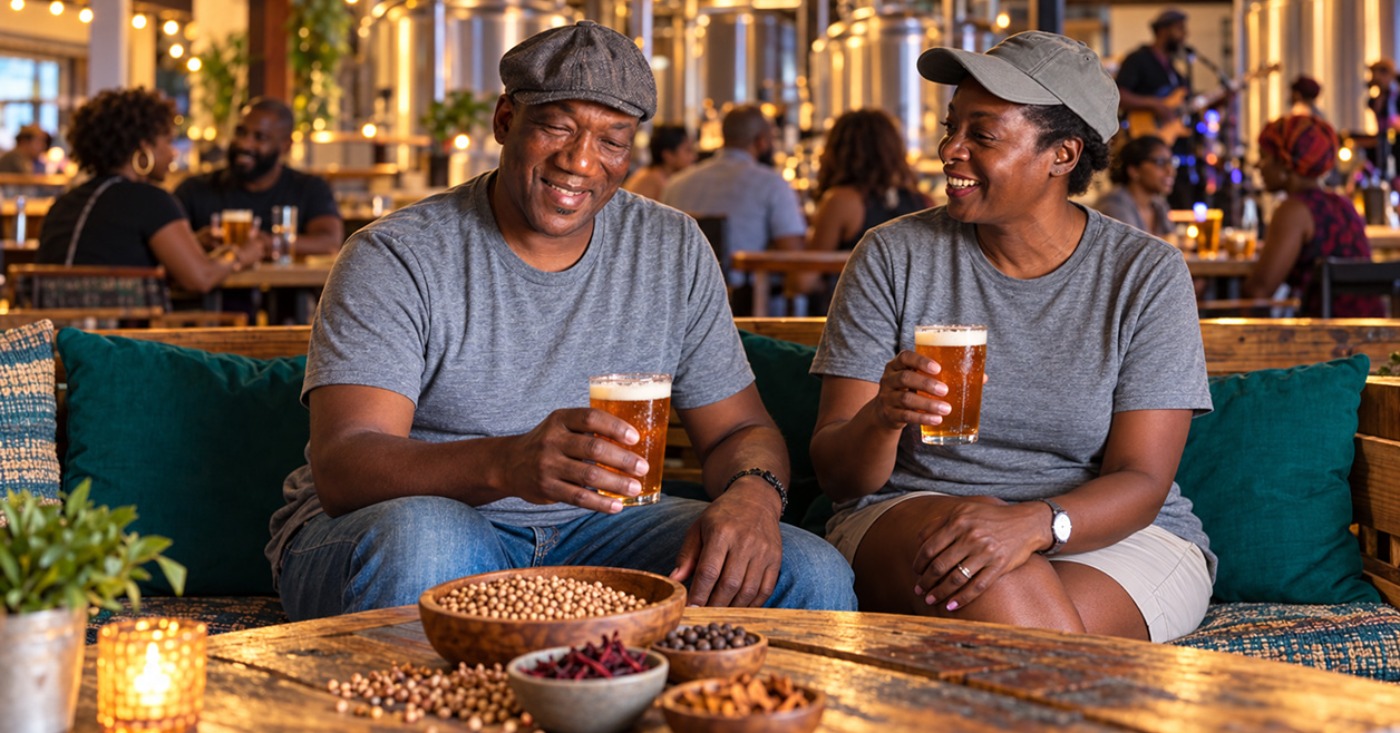
Montclair Brewery has become much more than a place to enjoy a craft beer. Located on Walnut Street in Montclair, New Jersey, the family-owned microbrewery has developed into a gathering place where beer, music, culture, history and community come together. Founded by husband-and-wife team Leo and Denise Sawadogo, the brewery has established a distinctive identity by connecting its beers to African, Caribbean and African American history and culture.
The story began with Leo Sawadogo’s passion for home brewing. Originally from Burkina Faso in West Africa, Leo grew up watching his mother brew traditional beverages using grains, herbs and spices. Brewing was part of his cultural experience long before craft beer became a major American trend. After years of making beer at home and sharing it with friends and family, Leo and Denise began imagining how they could transform that passion into a business. The company was established in 2014, and after years of planning and nearly a year of construction, Montclair Brewery opened its doors in October 2018.
The brewery represented an important milestone for Montclair because it became the town’s first microbrewery. But its significance extended beyond being a new business. Leo and Denise brought together two different cultural backgrounds: Leo’s West African heritage and Denise’s Jamaican roots. Those influences became part of the brewery’s personality and, importantly, part of the beers themselves. Instead of treating culture as something separate from the business, the couple made it an essential ingredient in their approach to brewing.
One of the brewery’s most distinctive traditions is its annual Black History Month beer series. These beers are often inspired by prominent figures, historical events and cultural traditions. Over the years, the brewery has created beers honoring people such as Harriet Tubman, Larry Doby, Maya Angelou, Chadwick Boseman and journalist Gil Noble. The brewery has also used its beers to celebrate African heritage and important moments in Black history. In 2026, for example, its series included beers inspired by Patrice Lumumba and Larry Doby.
The story behind each beer is almost as important as the beer itself. Montclair Brewery demonstrates how food and beverages can become vehicles for storytelling. A beer named for Larry Doby can introduce customers to the history of the baseball pioneer who broke the American League’s color barrier and later made Montclair his home. A beer inspired by Patrice Lumumba can encourage people to learn about African independence and the history of the Democratic Republic of Congo. In this way, the brewery turns a visit to a taproom into an opportunity for cultural discovery.
Montclair Brewery has also connected its business to local history. One example is the Howe House, one of Montclair’s historic homes associated with the town’s African American history. The brewery created a Belgian-style ale honoring James Howe and committed a portion of sales from the beer toward efforts to preserve the historic property. This illustrates a larger philosophy behind the brewery: its identity is not simply based on selling beer, but on using the business as a platform to recognize people, places and stories that deserve greater attention.
The brewery’s importance also comes from its role as a community gathering place. Its taproom offers indoor and outdoor seating and hosts a variety of events and activities. Music, entertainment, cultural programs and community gatherings have helped make the brewery part of Montclair’s social landscape. During the COVID-19 pandemic, when gathering in public spaces became difficult, the brewery adapted its business model by shifting toward bottling and outdoor operations. Its ability to adapt helped it survive a period that was devastating for many small businesses.
Another important part of Montclair Brewery’s story is representation within the craft-beer industry. Black-owned breweries remain a small portion of the American craft-brewing landscape, making the visibility of businesses like Montclair Brewery particularly significant. Denise has also become an important voice for women in the brewing industry, while Leo’s background and approach have helped challenge traditional ideas about who a brewer is supposed to be. Together, they demonstrate that the craft-beer industry can reflect a much broader range of cultures and experiences.
The brewery’s success has also allowed its reach to extend beyond Montclair. Its beers have received attention from regional and national media, and the company has participated in collaborations with other breweries and cultural organizations. One collaboration celebrated the 50th anniversary of hip-hop with the legendary DJ duo Awesome 2. Other beers have incorporated ingredients such as baobab fruit, sorghum and spices connected to African and Caribbean traditions. These collaborations and unusual ingredients help distinguish Montclair Brewery from breweries whose identities are based primarily on conventional beer styles.
Ultimately, Montclair Brewery represents an example of how a small business can become part of the cultural fabric of a community. Leo and Denise Sawadogo created a brewery from a personal passion, but they built something larger than a place to drink. Their beers tell stories about Africa, the Caribbean, Black America and Montclair itself. The brewery demonstrates that entrepreneurship can preserve history, celebrate culture and bring people together. In Montclair, every pint can become part of a larger conversation about heritage, creativity, community and the continuing evolution of Black-owned businesses in America.
Based on reporting by The Positive Community.
Black History
Tradition Comes to the Streets in 11th Annual Black-Eyed Pea Festival at the Freedom Farmers Market
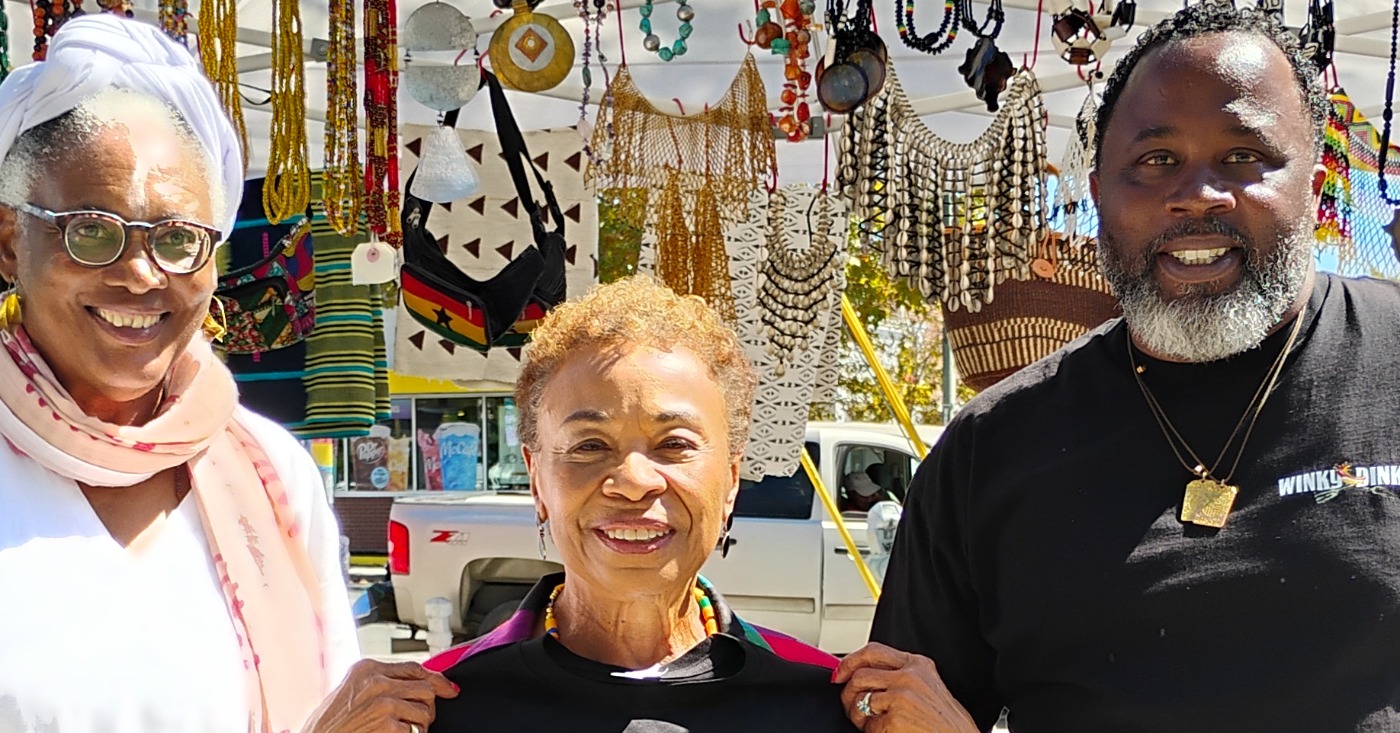
Mayor Barbara Lee stops by to support vendors, Winky Dinky Dogs owner Tyranny Allen
A streamlined Oakland Black-Eyed Pea Festival took place on Sat. Sept. 12 in the lower Temescal neighborhood on the blocked off street that connect Shattuck and Telegraph avenues.
An early start brought together vendor regulars from festival partner, the Freedom Farmers’ Market, and vendors who have supported the festival at its previous location at Marston Campbell Park.
Wanda Ravernell, the festival producer/director was on the verge of cancelling the festival because of funding limitations in May before reaching out to Elaine Smith, president of Farms to grow, Inc., which supervisors the market.
From its start in 2014, the festival has focused on the traditions of African American culture through music, food and art. That emphasis included fresh food vendors, particularly growers of African American legacy crops like black-eyed peas, yams, watermelon, collard greens and okra, which all originate in Africa.
To Fresno farmer Will Scott of Scott Family Farms, the Freedom Farmers’ Market allows him to bring those crops to the inner city – and support the nutrition of African Americans.
Shortly after the festival opened Saturday morning with prayers and salutes to the ancestors by Wakan Wiya Two-Spirit Drum and Awon Ohun Omnira, led M. Zamora and Otobaji Stewart respectively, 86-year-old Scott, the son of a sharecropper, announced that he will put other endeavors aside to dedicate the rest of his life to raise those foods.
Smith shared that Farms to Grow assists Black farmers in helping them overcome one of their main impediments to success – distribution – while creating alliances to help Black people maintain farmland and make it prosperous for younger generations to keep farming and farmland in the family.
As the morning progressed to afternoon, a steady stream of visitors drifted from booth to booth, chatting with vendors and each other.
Scott noted that a market day like this was what he was accustomed to in his youth, where the market was not just about buying things but also a place for valuable social exchange.
The social aspect became even pronounced shortly after midday when Oakland Mayor Barbara Lee stopped by to shop and visit with some of the vendors, including Ellen Bimpeh of Sankofa, and Ravernell who was selling T-shirts designed by Stewart.
Lee is also a fan of Winky Dinky Dogs, an eatery owned by Tyranny Allen whose second brick-and-mortar venture further anchors a hub of businesses at that corner.
As he has in previous years, Andre Thierry of Accordion Soul, closed the festival with a 90-minute set that brought young and the young-at-heart on their feet to dance in a line or as impromptu couples.
And, surprisingly, the man Allen refers to as the mayor of 45th Street, came out on cane and chair to sit by the curb in the sun and listen to music reminiscent of his Louisiana roots. His appearance seemed to echo Scott’s observance about the market: to bring people together.
The Freedom Farmers’ Market is located at 4521 Telegraph Avenue in Oakland and is open on the second and fourth Saturdays of each month until Nov. 14. For more information and to apply to be a vendor, go to https://www.farmstogrow.org/freedomfarmersmarket
Art
At This Black Church Cafe, Your Brunch Helps Feed Someone Else
SEATTLE MEDIUM — A popular brunch spot inside a historic Black church in South Philadelphia is helping to revive a community soup kitchen that has served the neighborhood since the 1920s. Tindley Tea Cafe, located within the educational building of Tindley Temple United Methodist Church, draws visitors with its freshly prepared meals, live jazz, local artwork, and welcoming atmosphere.
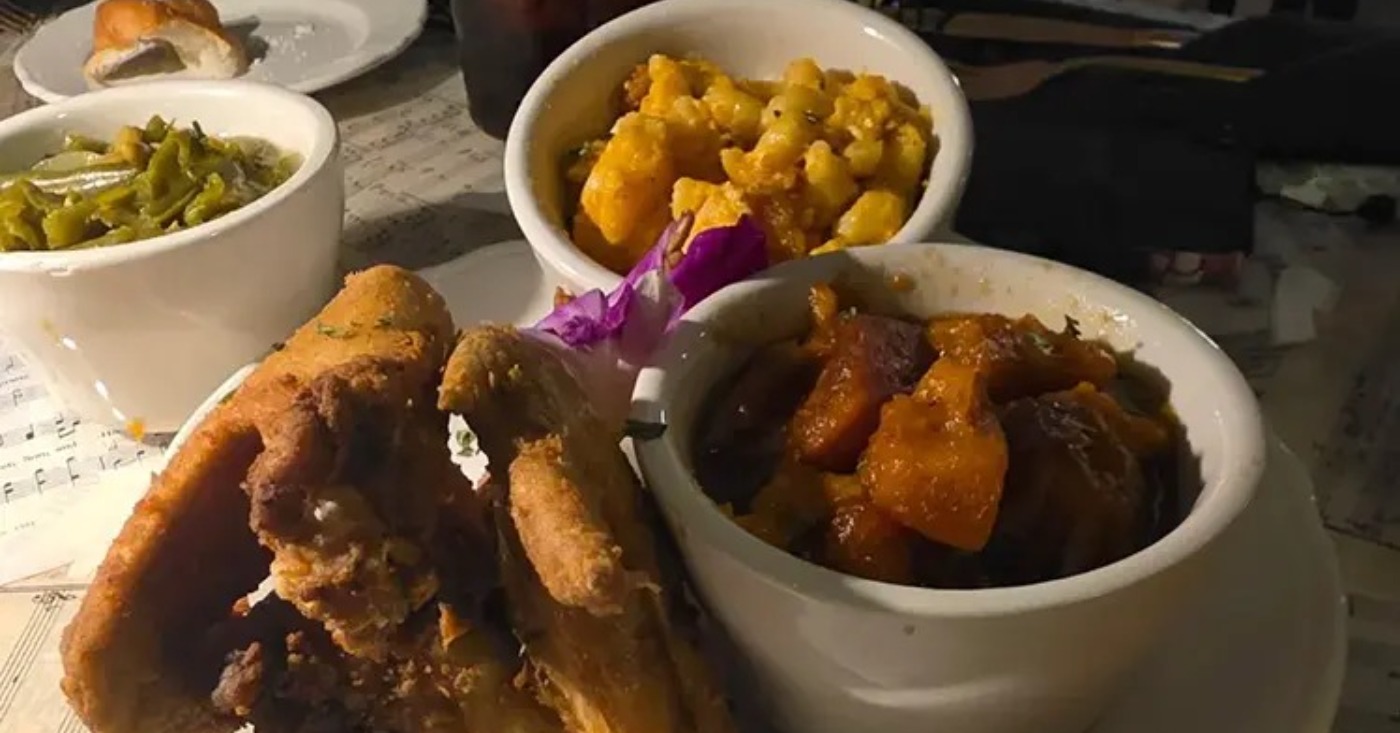
In a neighborhood where conversations about food insecurity often center on scarcity, Philadelphia’s Tindley Tea Cafe offers a different narrative: abundance with purpose.
Located inside the educational building of historic Tindley Temple United Methodist Church in South Philadelphia — named after a pioneering Black minister, scholar, and theologian — the cafe is a popular brunch destination. Freshly prepared meals, live jazz, local artwork, and a welcoming atmosphere draw foodies from across the city.
But behind every reservation, every cup of tea and every plate served is a singular mission. The profits from Tindley Tea Cafe help fund a ministry that feeds neighbors experiencing hunger.
– Advertisement –
Pioneering Namesake

Vicki Baker, business manager for Tindley Temple and a retired educator, says the cafe is the brainchild of Pastor John T. Bryce, the temple’s lead minister.
Two years ago, Bryce and church leaders realized two things about food in their community. First, they recognized that few quality, sit-down dining options existed in the neighborhood south of South Street — a majority-Black community that had suffered from underinvestment and been overlooked for decades. They also noted that hunger was a big problem in the community.
“We decided as a leadership team that we wanted to select people that we could bless in some way every month,” Baker told Word In Black in a recent interview. “So we chose those with food insecurity.”
Rather than simply opening a restaurant, Baker says, Tindley’s brain trust repurposed underused church space into a community gathering space with music, art, and food good enough to entice Philadelphia’s foodies. It then paired that enterprise with a mission to provide free, high-quality meals to the hungry—what could be called the church’s “food ministry.”
We decided as a leadership team that we wanted to select people that we could bless in some way every month. So we chose those with food insecurity.”
Vicki Baker, Business Manager, Tindley Temple
– Advertisement –
“Tindley Temple’s soup kitchen actually started in the 1920s under Dr. Tindley and had run continuously until the pandemic,” Baker says, referring to the church’s program to feed the homeless and food-insecure. “We wanted to bring it back, and one of the ministries the cafe supports is that soup kitchen.”
Proceeds from Tindley Tea Cafe help support the church’s twice-weekly soup kitchen, which resumed full operations after the pandemic and now serves dozens of people each Tuesday and Thursday evening. The ministry has expanded through partnerships with local organizations, grants addressing food insecurity, and a growing network of volunteers who sign up online to prepare and serve meals.
Art, Jazz, Legacy
The cafe itself reflects the church’s commitment to community.
Artwork showcases Philadelphia artists, and tables feature musical scores honoring the legacy of Tindley, a formerly enslaved man who taught himself scripture and wrote hymns. Visitors often arrive because they’ve heard about the food, only to discover the history of one of America’s most remarkable pastors and influential Black churches.
That history continues to grow. Tindley Temple recently completed construction of the Charles Albert Tindley Legacy Preservation Center, an archive and exhibition space designed to preserve nearly two centuries of church history while introducing new generations to Tindley’s life and ministry.
Word In Black’s interview with Baker has been edited for length and clarity.
Word in Black: What’s your position with the cafe?
Vicki Baker: So I am the business administrator, business manager for the church. So I do a little bit of everything, in everything. I don’t run the cafe, but through the beauty of technology, the church’s phone rings on a special phone that I have, so we never have to miss a call. I do get a lot of calls for bookings at the cafe or even if people just want a reservation.
WIB: How did the idea for Tindley Tea Cafe come about?
Baker: About two years ago the cafe opened. When Pastor John [Bryce] looked at what was available in South Philadelphia as far as eating establishments, we found that when you got south of South, there weren’t a lot of places. We thought this is an area where we could provide service.

The building that it’s in is the educational building. It was built in 1964. The floor where the cafe is was the general meeting room. Pastor Bryce and First Lady Ebony [Brice] really had the vision. They painted, brought in artwork from Philadelphia artists, and created a very comfortable space. It’s become a place for jazz, poetry, community meetings, worship and so much more.
WIB: Who’s doing the cooking? My foodie friend said the food was fabulous.
Baker: We have a team that works. There are two or three chefs, depending on the day, and sous chefs that do the prep. Food is made to order. It’s not pre-done or reheated or bought. They fix the food there and serve it.
WIB: Tell me how the cafe funds are used for the community.
Baker: We decided as a leadership team that we wanted to select people that we could bless in some way every month. So we chose those with food insecurity. The soup kitchen actually started in the 1920s under Dr. Tindley and had run continuously until the pandemic. We wanted to bring it back and one of the ministries the cafe supports is that soup kitchen.
WIB: How did the church rebuild the soup kitchen ministry?
Baker: When the [city transit] strike was being threatened and SNAP benefits were changing, we decided to push up our timetable to reopen the soup kitchen because we knew there would be a need.
We partnered with Broad Street Love to learn best practices. Through them we connected with Carversville Farm, which delivers meat and vegetables every week. Then the chef figures out the menu based on what arrives. We also received a grant from the District Attorney’s Office for food insecurity, which has helped us augment the ministry.
WIB: What would visitors see today that reflects Bishop Tindley’s legacy?
Baker: The soup kitchen is still his legacy. During his time, there was a soup kitchen, a clothes closet and people even slept in the sanctuary during the Depression and the Great Migration while they got established.
We’ve also just completed construction on the Charles Albert Tindley Legacy Preservation Center. We received a grant to build an archive and exhibition center. We have nearly 100-year-old artifacts that are now being preserved in a temperature- and humidity-controlled archive. We hope to open it in the fall so people can learn about Tindley’s life and the church’s history.
WIB: Why is it important to keep telling Charles Tindley’s story?
Baker: “Our children need to hear these stories because many of them don’t know who they are or who they’ve come from. They hear about famous people who hit it big, but they don’t always hear about the work and grit.
Charles Tindley taught himself to read and write. He taught himself Greek and Hebrew. He was born free, but because his mother died and his father was enslaved, he lived as a slave. That’s an amazing story. There’s nothing God can’t do. We want to keep telling that story.
Based on reporting by Seattle Medium.
Black Press
Black Americans Have Doubts About the U.S. Food System
HOUSTON DEFENDER — A new report from Word In Black’s Insights & Research Division reveals that Black Americans recognize the link between food and health but encounter economic and structural challenges impacting their dietary choices.

Black Americans are intensely aware of the connection between food and health but face economic and structural barriers that limit what they can actually put on the table, according to a new report from Word In Black’s Insights & Research Division.
The report, At The Table: Food & Health In Our Community, published September 3, finds that Black Americans have major concerns about the nation’s food safety and their ability to access healthy food choices at prices they can afford.
Among the starkest findings: Six in 10 don’t trust that the food they buy in grocery stores is safe, and rising grocery prices are pushing families toward cheaper, less nutritious options.
“What we found is a community that knows exactly what it needs to eat well and simply cannot get there on the current terms,” said Christa Mahlobo, Ph.D., Insights & Research Director for Word In Black. Mahlobo is a research scientist who works independently from the newsroom.
When it comes to healthier eating, “The barrier isn’t awareness,” Mahlobo says. “It’s price, proximity, and a food system that too often asks Black families to choose between what they can afford and what will keep them healthy.”
Price, food safety concerns
The report draws findings from a survey of 1,249 Black Americans conducted between April 22 and June 8, 2026. Respondents were readers of Word In Black and 10 partner publishers, legendary Black news outlets operating nationwide. Roughly one-third of the respondents have postgraduate or professional degrees, and the largest group had annual incomes of $100,000 or more.
Respondents also want to see improvements in the nation’s food quality and availability, as well as better access to nutrition education. Roughly 3 out of 4 respondents said prices for healthy foods such as fresh fruits and vegetables need to be lowered. Forty-two percent of respondents want more grocery stores in their neighborhoods, while 38% want more nutrition education.
The barrier isn’t awareness. It’s price, proximity, and a food system that too often asks Black families to choose between what they can afford and what will keep them healthy.
–Dr. Christa Mahlobo, Insights & Research Director, Word In Black
More than 60% of respondents reported concerns about the nation’s food safety, reflecting a broader erosion of confidence in the American food system. In July, a Quinnipiac University poll of likely voters found 55% of respondents have little or no confidence in the government’s oversight of food safety. A KFF survey found that less than half of voters approve of the Trump administration’s handling of food policy.
This comes as news headlines have been filled with weekly reports of food recalls due to salmonella, E. coli, and the continued cyclospora outbreak that has killed two people and sickened more than 11, 000.
KEY FINDINGS
Health vs. affordability
While many respondents did not report being food insecure, the survey found that rising grocery prices are forcing difficult trade-offs.
Respondents described “trading down” — swapping higher-priced foods or brands for cheaper alternatives, such as buying store brands or swapping chicken for steak. They also look for manager’s specials, use coupons, and use mobile apps for additional savings. Some also rely on local food pantries.
Although the most recent government figures estimate that it’s possible to meet federal fruit and vegetable recommendations for roughly $2.50–$3.00 per day, that report—using data from 2022—seems out of step with current conditions.
A noticeable segment of WIB survey respondents reported that they’ve begun buying fewer fresh fruits, vegetables, or meat, and are bypassing organic foods. They’re also more willing to accept lower-quality food, or skip healthier options altogether.
One respondent described her mindset while grocery shopping: “Put it back or find a cheaper unhealthy version.”
The report warns this practice could signal a widening gap in Black Americans’ access to healthy food, which appears to be affecting the larger population.
A Pew Research Center survey conducted last year found that 90% of U.S. adults said healthy food has gotten more expensive in recent years. Seventy-seven percent of lower-income adults report it’s now harder to eat healthier, while at the same time, 46% of lower-income adults said it’s “a lot” harder to eat healthy, versus 15% of upper-income adults saying the same.
Price also shapes where people shop.
Two in five respondents said reasonably priced food is the most important factor in choosing a grocery store — ahead of taste, convenience, and healthfulness. This differs from national survey findings, where taste has been the leading driver of food and beverage purchases since 2006.
The Word In Black survey found it’s common for respondents to eat out, especially among younger adults.
More than one in three respondents reported dining out—including fast food, takeout, or restaurants—three or more times per week. But this finding skewed younger, with 41 % of respondents aged 18 to 34 saying they were more likely to eat at a restaurant three or more times per week than respondents aged 55 and older.
Food is life— and culture
The survey found Black Americans remain strongly tied to their food heritage.
Roughly 32% said their knowledge of food came from how they were raised and what their family cooked at home, while 29% said their current food knowledge was shaped by their own research and expanding their food horizons as adults.
When asked whether they still want to eat the way they were taught, roughly 47% said they try to balance traditional foods with healthier choices. But a quarter of respondents said they still eat mostly the same foods they grew up with, and about 12% have moved away from their traditional diet for health reasons.
Meanwhile, 46% of survey respondents strongly agreed that food in the U.S. contributes to diet–related diseases such as type 2 diabetes, high blood pressure, and heart disease.
Many say their diet is in a good place
When grading the healthfulness of their own diets, a little more than half of respondents gave themselves a B. That’s around the same percentage as the 51% of respondents in a broader survey who gave themselves the same grade. Nine in 10 agreed that what they eat affects their mental and emotional well-being.
Self-reporting diet grades also tracked closely with respondents’ impressions of their overall health. Among respondents who gave their diet an A, more than 85% rated their general health as excellent or very good, compared with 48% who gave their diet a B, 10% a C, and 5% a D.
Low awareness of the “MAHA” program
While the Trump administration’s Make America Healthy Again program is reportedly having some success among Republican voters, it is not so successful among WIB survey respondents. Nearly half of them either heard very little about the official government-approved food and nutrition guidelines, had heard of the guidelines but were unaware that Health and Human Services Secretary Robert F. Kennedy Jr. had them updated in 2025, or had never heard of them at all.
But survey respondents are having conversations with healthcare providers: 73% said a doctor, nutritionist, or other caregiver had spoken with them regularly or occasionally about their diet or eating habits.
What people say would help
Asked what would help them eat healthier, respondents pointed to structural changes.
Seventy-three percent want lower prices for fresh fruits, vegetables, and whole foods, while 42% want more grocery stores or fresh food markets in their neighborhoods. But 38% also want more public education about food and nutrition—an appetite for knowledge the report calls an important entry point for public health interventions.
The report concludes by calling on policymakers, community health organizations, and food retailers to expand access to healthy foods through subsidies, invest in culturally relevant nutrition programs, and partner with trusted community leaders to deliver health education where Black Americans already live, work, worship, and gather.
At The Table: Food & Health In Our Community was produced by the Word In Black Insights & Research Division, which launched in 2025 with support from the MacArthur Foundation and the Knight Foundation. The MacArthur Foundation made the research possible.
Based on reporting by Houston Defender.
Art
Chicago Native Creates Artwork for Snoop Dogg’s Dr. Bombay Ice Cream
CHICAGO DEFENDER — Chicago native Malachi Wright, a 24-year-old artist and UCLA graduate currently pursuing a master’s degree at California State University Long Beach, has created a new mural for Snoop Dogg’s Dr. Bombay ice cream brand. The artwork, located near LAX, is designed to attract taste testers for the company.
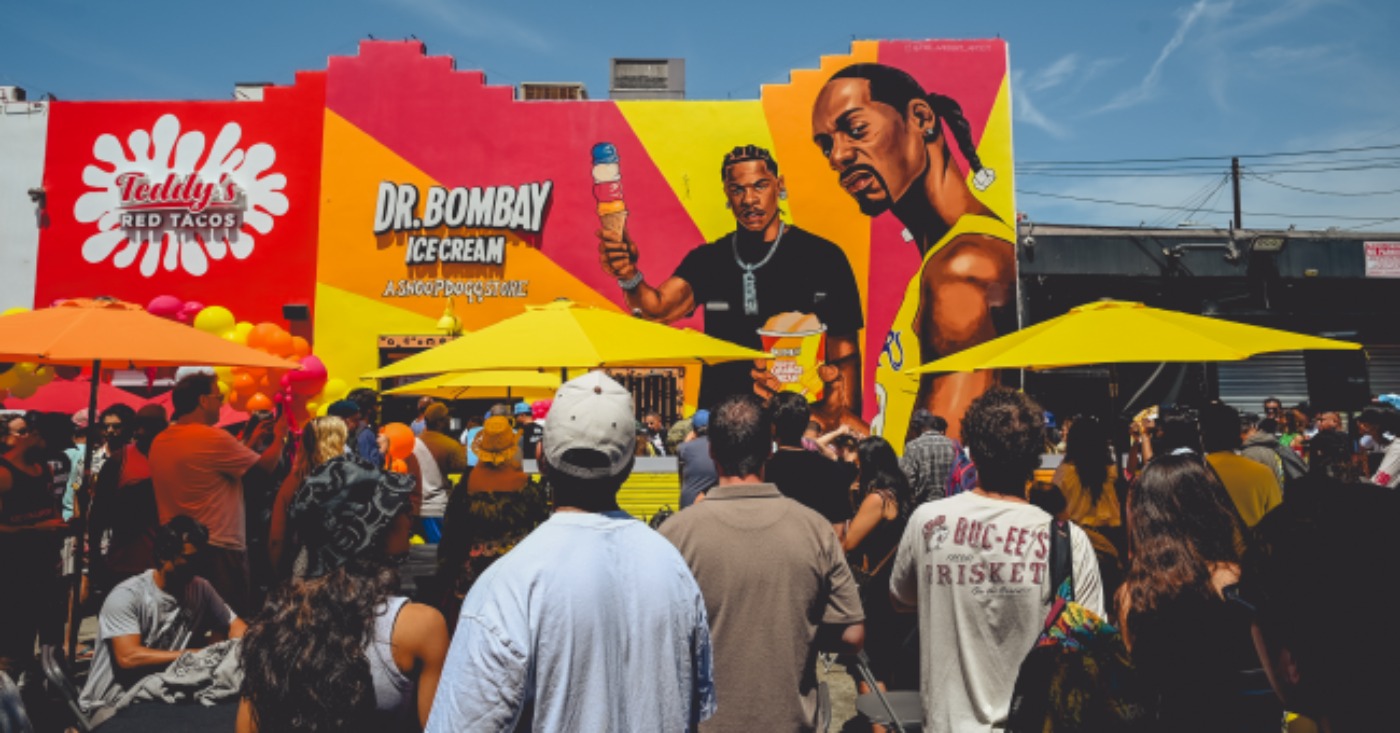
Malachi Wright, a 24-year-old artist from the Chicago area, has created a new mural for Snoop Dogg’s ice cream brand, Dr. Bombay. Located near LAX, the mural is designed to attract the company’s ice cream taste testers. Wright graduated from UCLA with a B.A. in Design & Media Arts in 2024 and is currently completing a master’s degree in fine art at California State University Long Beach.
Wright is available for interviews before and during the mural’s unveiling on Saturday, August 29. The exact time of the unveiling is to be confirmed. He can discuss the meaning behind the mural’s design, his creative process, and what it has meant to work with Snoop Dogg and his son at this stage in his career.
The mural depicts Snoop Dogg driving a colorful convertible with his son, Cordell, and his dog in the back seat. Cordell is holding a Dr. Bombay ice cream cone. Wright depicts both Snoop Dogg and Cordell at age 29—Cordell’s current age—imagining father and son spending time together as peers. Both are looking toward the viewer to directly engage the audience.
The mural also features the words “Dr. Bombay, Snoop’s Hiring” in the top left corner and “Powered by Deel” in the bottom right corner. Deel is collaborating with Dr. Bombay to hire ice cream taste testers.
The project marks another chapter in Wright’s continuing creative relationship with Snoop Dogg and his family. While still in high school, Wright designed the cover for Snoop Dogg’s 2019 album, I Wanna Thank Me. He later collaborated with Snoop’s son, Cordell Broadus, on an NFT project and designed a mural for the rapper’s Dr. Bombay brand in Venice Beach.
This latest mural continues a creative relationship that has evolved alongside Wright’s career, from his beginnings as a young artist in the Chicago area to his established practice in Los Angeles.
The mural is a project of Golden Street, LLC, a company Wright co-owns with his brothers Amoz and Ira. Amoz and Ira, along with their close friend/artist Lamar Hawkins, who flew in from Chicago to collaborate on the mural.
Golden Street completed two other murals this summer —one for the Chicago Park District and the other for Harvey City Hall in Illinois. Golden Street’s work centers on creating meaningful experiences in public spaces through art, storytelling and community-driven projects.
The mural is located at The Coffee Company, a popular restaurant in Los Angeles’ Westchester neighborhood. Address: 8751 La Tijera Blvd, Los Angeles, CA 90045
Based on reporting by Chicago Defender.


NEW INVESTIGATION INTO FEDERAL RESERVE GOVERNOR

NEW INVESTIGATION INTO FEDERAL RESERVE GOVERNOR 📱

2024 Luxury SUV: Price, MPG & Fuel Cost Analysis #shorts

Ballot Breakdown Your Vote Explained by Expert

All Skinfolk Ain’t Kinfolk

All Skinfolk Ain’t Kinfolk

Banking Black: A Smart Strategy for Your Money #shorts

All Skinfolk Ain’t Kinfolk

Car Seat Comfort: Rear Space vs. Front Seat Support #shorts

395 HP Turbo 6-Cyl: Smooth Power for Merging & Passing! #shorts

The Youngest American Killed in the Vietnam War

Latest Massacre in Haiti Reveals Cruelty U.S. Deportations

OPINION: Nolan Wells’ Death One of Several Signifying Racial Terror Lives on in U.S. South

Passing for White, Fighting for Black America: The Courage of Walter White

OP-ED: Haiti TPS: Have We Lost Sense of Humanity?

OP-ED: If AI Is the New Language of Power, Then NAN Wants Black Communities Fluent

OP-ED: How Does Your State Rank for Pre-K?

Henry O. Flipper: A Trailblazer at West Point and Beyond

Asm. Smallwood-Cuevas’s Bill Repealing ‘Racist’ CalWORKs ‘Man-in-the-House’ Rule Clears Legislature

NBA All-Star Damian Lillard Returns Home for 15th Annual Backpack Giveaway
NEW INVESTIGATION INTO FEDERAL RESERVE GOVERNOR
NEW INVESTIGATION INTO FEDERAL RESERVE GOVERNOR 📱
2024 Luxury SUV: Price, MPG & Fuel Cost Analysis #shorts
Ballot Breakdown Your Vote Explained by Expert
Banking Black: A Smart Strategy for Your Money #shorts
Car Seat Comfort: Rear Space vs. Front Seat Support #shorts
395 HP Turbo 6-Cyl: Smooth Power for Merging & Passing! #shorts

Nearly 1 in 4 Third Ward voters in ‘suspense.’ Here’s why you can still vote

HBCU Homecoming: A never-miss annual tradition

Jamika Phillips, Founder of Shades The Nail Bar
-

 Black Press1 week ago
Zakiya Jendayi Arrested, Locked Out of Home by Sheriff’s Deputies
-

 Black Press1 week ago
A $2.1 Trillion Wellness Industry Never Built a Daily Practice for Black Children. So This Atlanta Family Did.
-
 BlackPressUSA5 days ago
Latinas Deserve Equal Pay. Unions Help Make It Happen.
-
 Art7 days ago
Montclair Brewery: Brewing Culture, Community, History
-

 Black History1 week ago
Listening as a Lifeline: A Doula’s Witness to Black Maternal Health
-

 Black Press7 days ago
COMMENTARY: But God!
