
BlackPressUSA
Bonds for the 385 Drake Development Halted


By Godfrey Lee
Below is a summary of the recent Save Our City press release.
In a ruling that marks a major milestone for affirming the concerns of Marin City residents, a Marin County judge has issued a preliminary injunction to halt public funding for the construction of a 5-story, 74-unit housing development at 825 Drake Avenue in Marin City, a historically Black community that already holds a disproportionate number of public and affordable housing in the wealthy enclave of Marin County.
Because the 825 Drake development was approved under SB 35, a law intended to fast-track affordable housing projects without public notice or hearings, the residents of Marin City were not given notice of the development until after it was approved by the Marin County Board of Supervisors.
While SB 35 was adopted to sideline wealthy enclaves that have historically stonewalled affordable housing projects in their communities, it has been used in Marin City to create even more housing density in the County’s most racially diverse, economically disadvantaged, and politically disempowered community.
The well-intentioned law failed to carve out adequate protections for low-income California communities that already have a grossly disproportionate share of their region’s affordable and public housing options, and it has failed to ensure that the term “affordable” takes into account low-income communities like Marin City that are embedded within regions with the highest Average Median Income levels in the state.
On Sept. 6, Marin County Superior Court Judge Stephen P. Freccero entered a Limited Preliminary Injunction on behalf of a Marin City organization, Save Our City (SOC), temporarily halting public funding approved by the Marin County Board of Supervisors (Board) for the construction of a 5-story, 74-unit housing development at 825 Drake Avenue in Marin City.
SOC had filed suit on May 18 to invalidate the Board’s approval of the bonds, arguing that the Board had improperly failed to exercise its discretion in deciding whether to approve the bonds. Transcripts of Board proceedings showed that Board members erroneously believed that a recent state law allowing expedited approval for certain housing developments had stripped the Board of the power to decide whether funding such a development was in the community and County’s best interests.
The Court agreed with SOC, finding that Board approval of the bonds did require that “the [local authority] decide the matter [at issue] after considering local residents’ views, and by clear implication requires the [local authority] to consider city priorities and housing needs, the wisdom of preferential financing for the project, and all other relevant considerations to which elected representatives normally give weight in executing their office.”
Given these considerations, the Court stated that the Board’s refusal “to consider or exercise its lawful discretion may be grounds to invalidate the resolution.”
Save Our City was formed to stop this large-scale development from being forced on the small, historically Black community of Marin City, which is already densely saturated with affordable housing and has only one park in the entire city. The proposed development would encroach on that limited open space available to Marin City residents and block sunlight, particularly from the seniors living in existing affordable housing directly next to the proposed site.
Meanwhile, the wealthy and predominantly white surrounding communities in Marin County offer little to no affordable housing options for Marin County residents and have ample open green and recreational spaces for their community.
The Marin County Board of Supervisors is responsible for overseeing affordable and public housing options in unincorporated Marin. To address the housing shortages in California, state law requires each region to supply housing to meet its Regional Housing Needs Allocation (RHNA).
The RHNA is intended to promote several objectives including: (1) increase housing supply and the mix of housing types in an equitable manner; (2) discourage housing development patterns that segment communities, (3) affirmatively further fair housing. Marin County’s approval of the 825 Drake project in Marin City violates all of these principles:
The 825 Drake Development will not be affordable for Marin City residents. Because Marin County has one of the nation’s highest Average Median Income (AMIs), the “affordable” 825 Drake housing development will not be affordable to the vast majority of the residents in Marin City and will perpetuate further gentrification of this community.
Marin County has repeatedly denied Marin City residents the courtesy of notice or an opportunity to be heard concerning the County’s approval of the 825 Drake project. During the County’s March 21 hearing to consider approval of $40 million in non-taxable bonds to support developer Caleb Roope’s construction of 825 Drake, the residents raised their concerns about inequity and the project’s impacts on the community. Upon five days posted notice for the hearing, community members scrambled to provide substantive feedback during the limited minutes of public comment. However, their comments fell upon deaf ears.
SOC co-founder Bettie Hodges observed that “The County has failed to represent Marin City throughout this process. First, we are told that they were not legally required to give us notice of 825 Drake’s approval, then in the bond hearing they tell us that they did not have discretion to consider our comments.
“We have been completely silenced at every turn. Our elected representatives could and should have given us the courtesy of notice and an opportunity to be heard, especially given the inequities in Marin City that are a direct result of Marin County’s history of discriminatory housing practices.”
Marilyn Mackel, co-founder of SOC, stated that “I was disappointed to see that even in the preliminary injunction hearing, the County stood silent. They did not defend their approval of the bonds, but also did not have the moral fortitude to concede that they failed to consider our concerns when they approved the bonds. Their repeated choice to stand silent is not just an abdication of responsibility, it is a perpetuation of economic and racial segregation in Marin County.”
Save Our City’s lawsuit seeks to preserve this small piece of open space in Marin City. Marin County is known for its green and open spaces, including hiking trails, streams, open fields and waterways. While the rest of unincorporated Marin County is characterized by these copious green spaces, Marin City has only one small park that is made of concrete and astro-turf.
For more information, please contact: Bettie Hodges at [email protected], or Marilyn Mackel at [email protected]
The post Bonds for the 385 Drake Development Halted first appeared on Post News Group. This article originally appeared in Post News Group.






Black History
Black Barbershops Have Long Given Neighborhood Politics a Place to Unfold.
BLACKPRESSUSA NEWSWIRE — For generations, Black barbershops have served as more than just places for grooming; they have functioned as essential hubs for political debate, neighborhood news, and civic connection. During the era of segregation, these community-owned spaces provided a rare environment where Black residents could gather freely to discuss matters affecting their daily lives.
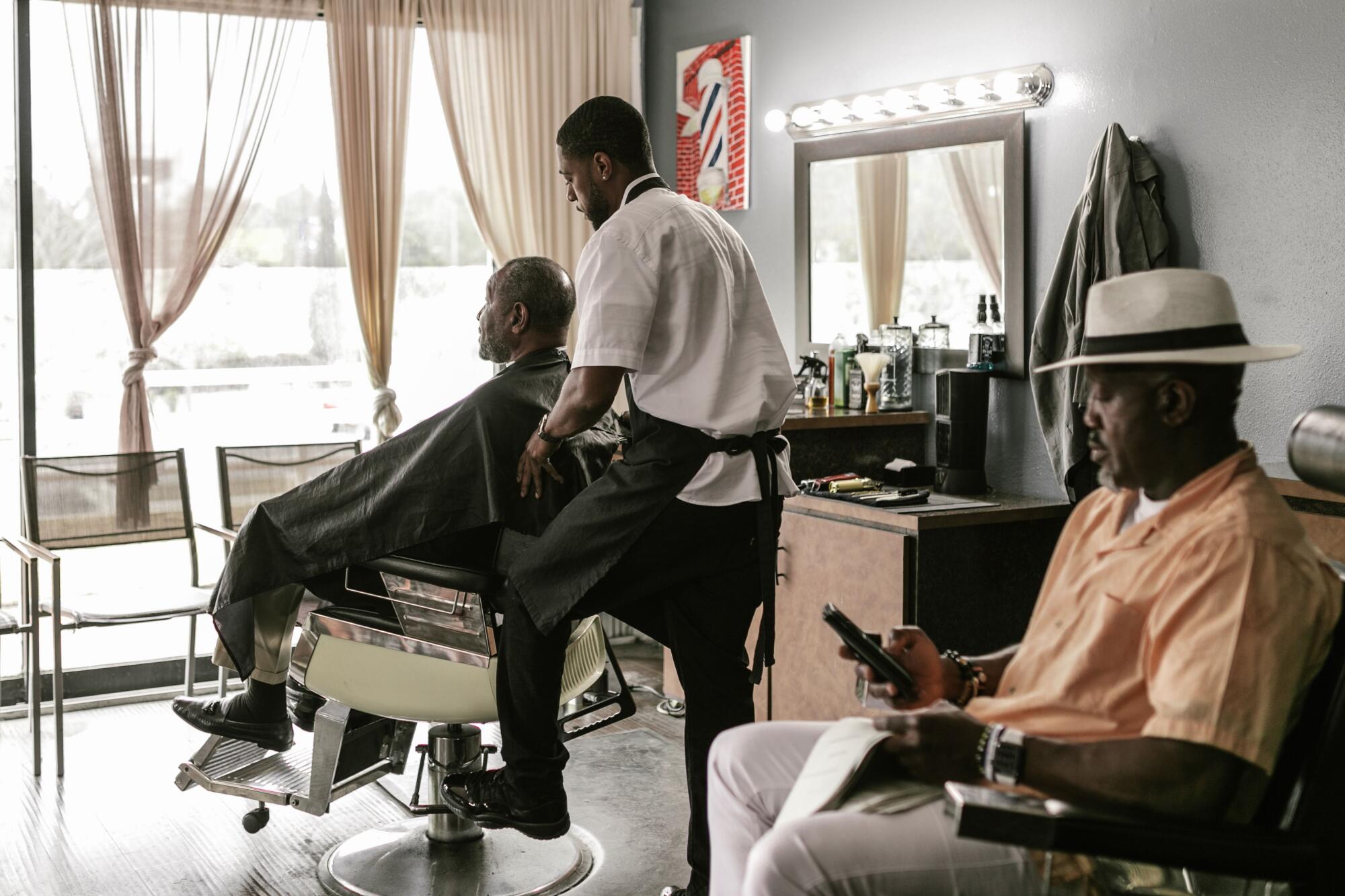
Black barbershops offer space for political debate, neighborhood news, and civic ties. The black barbershop also preserves local stories often missing from official records.
A haircut might bring you through the door. A conversation about a school closing, a city election, or a struggling business might keep you there. Inside a neighborhood shop, people can challenge opinions without needing a microphone.
A familiar storefront can hold decades of public life. Studying its past reveals people who earned a living, debated decisions, and helped neighbors interpret events.
Why Have Black Barbershops Been Important to Their Communities?
An African American barbershop has often combined a practical service with a gathering place. Under segregation, Black residents faced barriers in many public settings. Community-owned shops could offer more room for conversation and connection.
The National Museum of African American History and Culture describes barber and beauty shopsas places where customers discuss matters affecting their lives. Regular visits built relationships across generations.
Barbers often knew which families needed help or which businesses had opened. Waiting customers heard different viewpoints.
The importance of the shop came from trust built over many ordinary visits. A young customer might meet an older neighbor who understood the area’s past. Such relationships gave local conversations staying power and helped turn a routine appointment into a shared community experience.
How Did Black Barbershops Become Places for Political Discussion?
Politics often started with questions about rent, schools, jobs, or fair treatment. Customers connected those problems to elected leaders.
A University of Chicago report examined conversations inside a South Side Chicago shop. Researchers found that patrons debated:
- Political power
- Economic choices
- Leadership
They also disagreed with one another. A black barbershop did not require agreement. Customers could test ideas against those of neighbors.
Some shops supported voter registration and civic groups through personal relationships. Notices on counters or conversations with regulars could bring public issues into daily life. Yet lively debate was not the same as organized activism, and each shop had its own culture.
Black Barbers Built Businesses That Reached Beyond Haircuts
Enslaved and free Black men worked as barbers when many trades were restricted. Ownership later gave some black barbers a path toward greater financial independence, even under unfair laws.
Alonzo Herndon offers one example. According to the Georgia Historical Society, he operated Atlanta barbershops, including the Crystal Palace, and later built a major insurance business. His shops served white customers, reflecting segregation and unequal access.
Herndon’s success was unusual. Black business owners could still turn skilled work into jobs and property. Not all black companies grew large. Neighborhood shops kept commerce local.
Owners also faced rent, competition, and the challenge of building a steady customer base. Their business records can reveal how Black enterprise survived major shifts in the local economy.
Photographs and Newspapers Reveal Neighborhood History
Shop photos show storefront signs, neighboring businesses, clothing, and names painted on windows. Those clues help date images.
City directories can connect a shop name to an address, while maps show whether its block later changed. Each clue adds a piece to neighborhood history without requiring a famous owner or landmark.
Next, try the Library of Congress’s Chronicling America resources. Historic newspapers hold:
- Ads
- Openings
- Local events
- Owners’ names
Older records may use dated language. A useful starting checklist includes:
- Shop names and former street addresses
- Advertisements and business listings
- Photographs with dates or handwritten notes
- Local reporting about civic meetings
Compare records. An ad can confirm a shop’s address, not what customers discussed. Good neighborhood history separates documented facts from personal memories.
Customers’ Memories Fill Gaps in the Public Record
Customers may remember an owner’s nickname. Former barbers can explain busy hours or changes after a nearby factory closed.
Ask about routines and memorable events. Distinguish firsthand knowledge from secondhand stories.
When possible, interview more than one person. Different memories may show how workers and customers experienced the same event.
A recording can be useful, but permission comes first. Explain whether an interview will be shared publicly, kept privately, or donated to a library. Take note of:
- The date
- Place
- Speaker’s preferred name
Differences between memories are clues worth checking, not reasons to dismiss an account.
Modern Grooming Changes, but the Community Role Remains
Today’s African American barbershop operates amid appointment apps and new grooming services.
Some men also explore treatments beyond conventional haircuts. Many who are comparing long-term hair reduction with other grooming choices can learn more here.
A shop’s social value goes beyond its services. Many black barbers still:
- Listen to customers
- Pass along local information
- Create space for people of different generations to meet
The work of black business owners remains part of the wider story of black companies and community investment.
Frequently Asked Questions
How Can You Tell Whether an Old Barbershop Moved?
Start with city directories from several years. Match the owner’s name, phone number, and shop name at each address.
Property records or historical maps may show whether a street was renamed or a building was replaced. Moves may reflect development or shifting customers. Record each address and source.
Can You Share a Historic Barbershop Photo Online?
Owning a print does not guarantee copyright. Identify the:
- Photographer
- Date
- Source collection
A library may allow research access while limiting reuse. Copyright rules can vary by image and age, so avoid assuming that an old photo is free to publish.
Ask about permission when rights remain unclear. Credit the photographer and people pictured when their names are known. Respect requests from families who prefer sensitive images to remain private.
How Can You Preserve a Shop’s History After It Closes?
Collect photos, business cards, notices, and interviews. Label digital files and protect originals.
A local library, historical society, or community archive may help preserve the collection. Include the stories of workers and customers, not only the owner.
Public access can keep a vanished storefront connected to the people who remember it. A short exhibit or digital collection can help younger residents discover that history.
Keep the Black Barbershop Story Alive
A black barbershop can hold pieces of a town’s political, economic, and cultural history. Preserving those pieces starts with listening carefully and checking the record.
Continue exploring our other guides and articles for more stories about Black history, local businesses, and the communities they serve.
Content provided through ContentManagerIO.
BlackPressUSA
REBROADCAST! — HE SAID, HE SAID, HE SAID: “RUTHLESS!: Love Shouldn’t Hurt,” — FRI. 11.20.26 7PM EST
Join us this Friday at 7pm EST for a raw conversation on trauma and healing. We’re going deep into the uncomfortable truths of intimate partner violence.


Tune in Friday, November 20, 2026 @ 7pm EST/4pm PST/6pm CST for the next “He Said, He Said, He Said Live!” A Look at the World from A Seasoned Black Man’s Perspective…because one perspective isn’t enough!” for “RUTHLESS!: Love Shouldn’t Hurt, A Conversation on Trauma, Intimate Partner Violence & Healing” with special guest Author, Journalist, and Podcaster Wyatt O’Brian Evans www.wyattevans.com
THIS FRIDAY, AUGUST 21ST, WE’RE HEATING THINGS UP. 🔥 And this conversation is going somewhere we don’t always want to go—but absolutely NEED to go. RUTHLESS!: LOVE SHOULDN’T HURT. What if the person you love is also carrying wounds you can’t see?
What happens when trauma follows you into love… when secrets threaten everything you’ve built… and when the relationship that looks perfect from the outside is fighting battles behind closed doors?
Join He Said, He Said, He Said Live for a powerful, provocative, and deeply personal conversation with Wyatt O’Brian Evans—award-winning journalist, author, podcaster, intimate partner violence and abuse subject-matter expert, advocate, and Renaissance man.
Wyatt joins us to talk about his explosive new psychological drama/thriller, “RUTHLESS!”, the latest installment in his Nothing Can Tear Us Apart series, released August 18 by Rainbow Advocacy Press. But make no mistake… This isn’t just a conversation about a book.
It’s a conversation about INTIMATE PARTNER VIOLENCE. And the complicated, sometimes painful journey toward loving—and being loved—whole.
New Episodes of “He Said, He Said, He Said” – Live stream Fridays, 7 p.m. EST on all these links: https://linktr.ee/hesaidhesaidhesaid FACEBOOK: facebook.com/hesaidhesaidhesaidlive RELIVE and SHARE special moments from “He Said, He Said, He Said” here: SHOW CLIPS youtube.com/channel/https://www.youtube.com/channel/UCV0MtJCazNWVBSaj1JFHITg FOLLOW US —- CLICK LIKE and SUBSCRIBE to us @hesaidhesaidhesaidlive on YouTube and Instagram!
#HeSaidHeSaidHeSaid #Ruthless #LoveShouldntHurt #WyattOBrianEvans #NothingCanTearUsApart #IntimatePartnerViolence #IPVAwareness #TraumaHealing #MentalHealthAwareness #HealthyRelationships #HealingJourney #BlackLGBTQ #BlackLGBTQVoices #BlackAuthors #BlackStories #Ruthless #LoveShouldntHurt
#WyattOBrianEvans #IPVAwareness
🎙️ New to streaming or looking to level up? Check out StreamYard and get $10 discount! 😍
🎙️ New to streaming or looking to level up? Check out StreamYard and get $10 discount! 😍 https://streamyard.com/pal/d/6551970446311424
Black History
OP-ED: Black voters made history. They laid the groundwork for a Third Reconstruction.
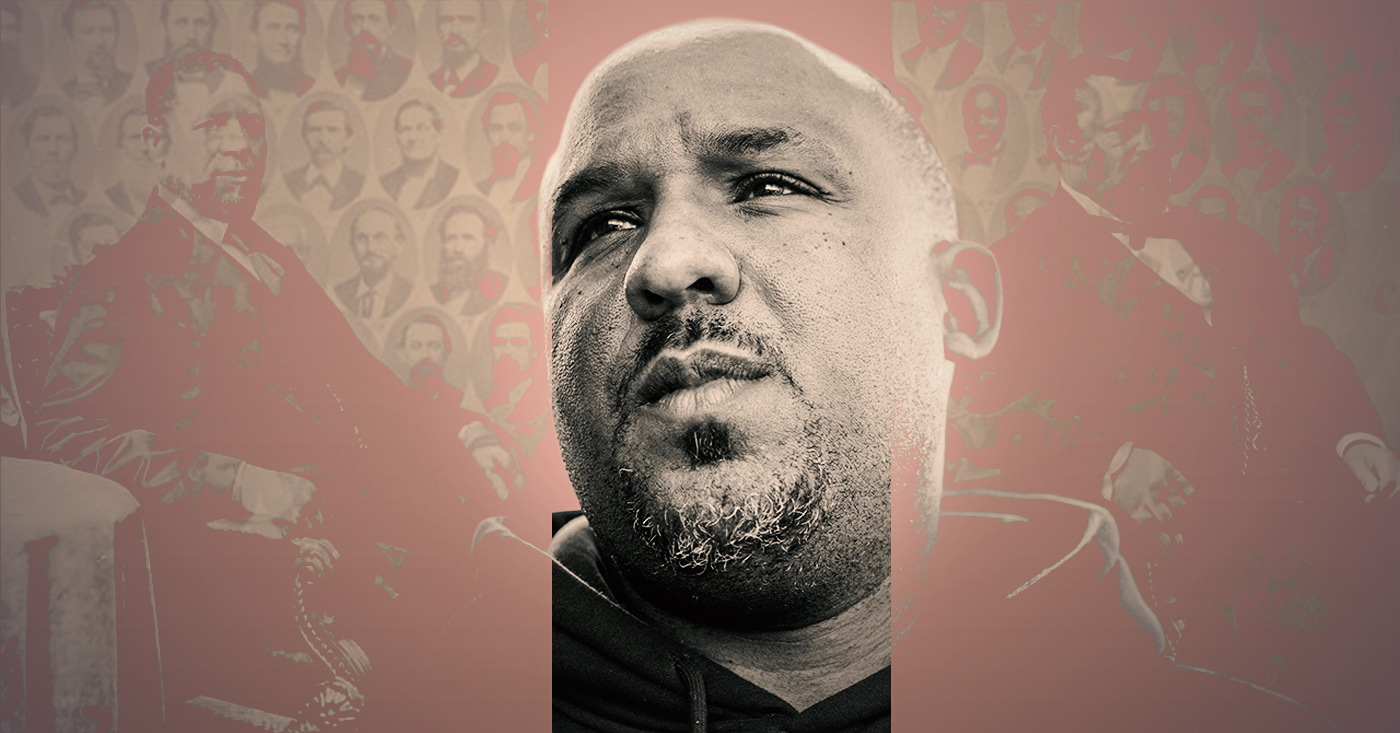
BLACKPRESSUSA NEWSWIRE—Mississippi’s election of Scott Colom was the crown jewel of a Southern mobilization led by Black women and black-led organizations. The new governing majorities must use their power to protect fair representation, expand the right to vote, and deliver on the issues that brought people to the polls.

Black Press
COMMENTARY: Money Matters — AI Can Help Your Small Business — But Is It Helping Your Bottom Line?
CHICAGO DEFENDER — Artificial intelligence has transitioned from a science fiction concept to a common resource for researching topics and developing content. While small businesses face increasing pressure to adopt these tools to save time and reduce expenses, experts warn that speed does not always guarantee accuracy.
Not long ago, most of us associated artificial intelligence with science fiction movies or technology companies in Silicon Valley. Today, its emergence in our everyday lives and business operations is impossible to ignore.
From organizing ideas and researching topics to developing content, AI has become an increasingly useful resource. But just because it can produce an answer in seconds doesn’t mean it’s always the right answer.
There’s growing pressure for small businesses to embrace AI. Everywhere you turn, another tool promises to save time, reduce expenses, attract customers or improve productivity, emerges.
But before jumping on the bandwagon, business owners should ask an important question:
Is this technology going to help my business make money, save money, or operate more efficiently?
After all, that’s what business decisions should ultimately come down to.
AI is rapidly becoming part of the small-business landscape in Michigan and across the country. A recent survey of 70 Michigan small businesses participating in Goldman Sachs’ 10,000 Small Businesses program found that 86% use AI, although many are still experimenting with its capabilities.
Clearly, interest is growing. But adoption doesn’t necessarily translate into profitability.
For small-business owners, every dollar counts. Whether investing in employees, marketing, equipment, or technology, you need to understand what you’re getting in return. AI should be no different.
Consider the possibilities. Small businesses can use AI to develop marketing campaigns, generate social media content, draft customer communications, conduct research, and streamline administrative tasks.
For an entrepreneur wearing multiple hats, those capabilities can be valuable.
Imagine reclaiming several hours each week that could instead be spent developing new business, strengthening customer relationships or pursuing sales opportunities.
Time is money, particularly when you’re running a small business.
However, purchasing an AI subscription doesn’t automatically improve your bottom line. Business owners need to evaluate its actual return on investment.
How much time is it saving? Is it reducing expenses? Helping generate sales? Improving customer retention? Making employees more productive?
Those are the measurements that matter.
A recent Federal Reserve survey found that while 46% of employer firms reported using AI, only 7% of those using it said the technology was fully integrated into their business processes. Many companies are still figuring out how to translate AI into measurable results.
My recommendation is to start small.
Identify one area where your business is spending too much time or money. Find an AI tool that might address the challenge. Test it, monitor the results and determine whether the investment makes financial sense.
You don’t need multiple subscriptions or an overhaul of your entire operation to get started.
There’s another consideration: AI is a tool, not a replacement for sound business judgment.
Accuracy, privacy and security matter. Be careful about sharing confidential customer information or proprietary business data. Always review AI-generated information before using it in customer communications or important business decisions.
A faster process isn’t necessarily better if it creates mistakes or damages customer relationships.
There’s also a competitive consideration.
Small businesses have traditionally distinguished themselves through personal service, flexibility, creativity and relationships. Those advantages shouldn’t be sacrificed in the pursuit of automation.
If every business uses AI to produce the same generic marketing messages, what makes one company stand out?
The answer should still be its people, its service and its ability to connect with customers.
AI can help develop the message, but you provide the personality. It can organize information, but you provide the judgment. It can make your operation more efficient, but you determine where the human touch remains essential.
Ultimately, AI could help level the playing field by giving smaller companies access to capabilities that once required larger budgets and bigger teams. That’s an opportunity worth exploring.
But don’t confuse keeping up with technology with running a better business.
Before investing in another AI platform, set clear objectives and decide how you’ll measure success. If it isn’t saving time, reducing costs, improving service, or contributing to revenue growth, reconsider whether you need it.
Artificial intelligence may be changing the way we do business, but the fundamentals haven’t changed. You still need customers, revenue, sound expense management, and smart investment decisions.
At the end of the day, the best technology isn’t necessarily the newest or most expensive. It’s the technology that delivers a measurable return on your investment.
That’s not just smart technology adoption. That’s smart business.
We invite readers, business owners and future entrepreneurs to follow along, ask questions and engage. If you have story ideas or questions, email Lee at [email protected] or visit leegroupinnovation.com.
The post Money Matters: AI Can Help Your Small Business—But Is It Helping Your Bottom Line? appeared first on Chicago Defender.
Based on reporting by Chicago Defender.
Black History
California Legislative Black Caucus Grows to 14, Women Hold 12 Seats
SAN DIEGO VOICE & VIEWPOINT — SAN DIEGO VOICE & VIEWPOINT — The California Legislative Black Caucus (CLBC) is preparing for a historic expansion following the Nov. 3 general election, with its membership set to grow from 12 to 14 members. This shift marks a significant milestone for political representation in the state, as Black women are expected to hold 12 of the 14 seats in the upcoming legislative session.
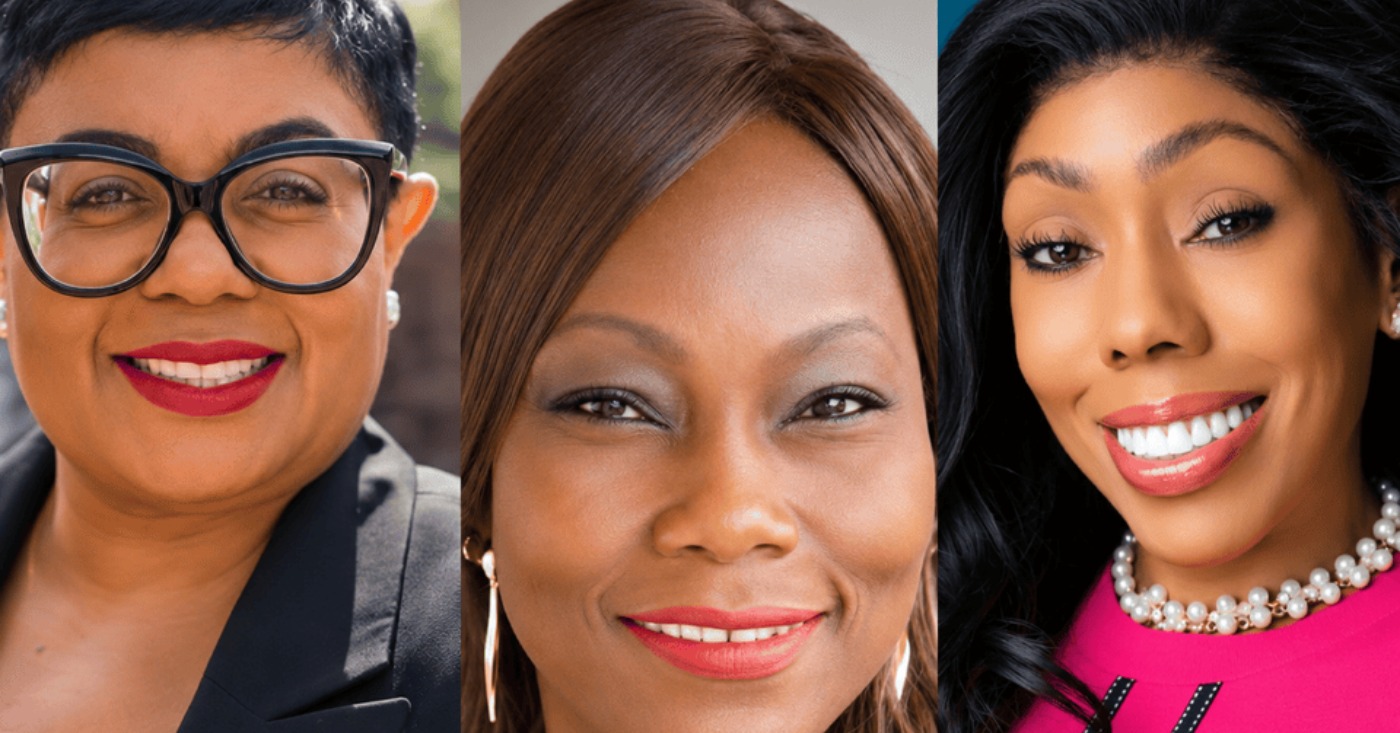
The California Legislative Black Caucus (CLBC) is preparing for a historic expansion, growing from 12 to 14 members following the Nov. 3 general election.
Black women are expected to hold 12 of the caucus’s 14 seats. The shift marks a significant milestone for Black women’s political representation in California and creates new opportunities to influence legislation, state resources and public policy.
Three incoming assemblymembers — Ayanna Davis (D-Compton), Jackie Elward (D-Rohnert Park) and Paula Swift (D-Westminster) — are expected to join the caucus when the new legislative session begins. Their victories, coupled with the departure of longtime Assemblymember Mike Gipson (D-Carson), will reshape the caucus’s membership and further elevate the role of Black women in the Legislature.
Davis, who won the 65th Assembly District seat representing Compton and surrounding communities, previously served on the Compton Unified School District Board of Education. An educator and former school principal with the Los Angeles Unified School District, Davis has focused much of her public service on education and opportunities for children and families. She will succeed Gipson, who is leaving the Legislature because of term limits.
Elward, who won the 12th Assembly District race in the North Bay, is a first-generation immigrant from the Democratic Republic of Congo. An educator, labor organizer and former mayor of Rohnert Park, she became the first Black woman elected to the city’s council in 2020. Her local government experience included policy related to affordable housing, homelessness and environmental justice, among other issues.
Swift defeated Republican incumbent Tri Ta in the 70th Assembly District race in Orange County. An educator and small business owner with a doctorate in Organizational Change and Leadership from the University of Southern California, Swift brings experience across nonprofit, government and private-sector organizations.
Although Davis replaces Gipson, Elward and Swift add two seats to the caucus, bringing its membership to 14. With all three incoming members being women, the caucus will move from nine women among its current 12 members to 12 women among next session’s 14 members.
The achievement builds on a milestone reached at the beginning of the 2025-26 legislative session, when women first became the majority of the CLBC. At that time, nine of the 12 members were Black women, the highest number in the organization’s history.
For LaNiece Jones, state president and CEO of Black Women Organized for Political Action (BWOPA-CA), the election results reflect generations of organizing and advocacy that have helped create opportunities for Black women in politics.
“We are celebrating an exciting moment for Black women’s political leadership across California. From local and regional offices to statewide leadership, these victories represent generations of Black women who have organized, advocated, mentored and opened doors for others to follow,” Jones told California Black Media (CBM).
Jones emphasized that electoral victories must translate into tangible improvements for Black communities.
“Winning elections is an important milestone, but building and sustaining political power is the greater mission. Representation must translate into meaningful influence, equitable policies, expanded opportunities, and tangible improvements in the lives of Black women, families, and our communities,” she said.
Jones also pointed to persistent barriers facing Black women seeking political leadership, including campaign financing, access to political networks, institutional support and opportunities for advancement.
The challenges extend beyond electoral politics, according to Black women leaders.
The 2025 State of Black Women in California Report, published by the California Black Women’s Collective Empowerment Institute (CBWCEI), founded by Kellie Todd Griffin, documents persistent disparities in economic opportunity and social outcomes for Black women. Its findings reinforce the importance of ensuring that increased political representation addresses issues such as economic mobility, housing stability, health care and opportunities for Black women and girls.
“The number of Black women elected to public office across California in 2026 represents more than electoral victories.” said Todd Griffin, who is also president and CEO of CBWCEI.
“From city halls and school boards to the State Capitol and beyond, Black women are claiming their rightful place at decision-making tables,” continued Todd Griffin. “Every victory expands representation, strengthens our communities, and opens doors for the next generation of leaders. When Black women lead, California’s democracy grows stronger.”
The caucus is also preparing for a leadership transition. State Sen. Dr. Akilah Weber Pierson (D-San Diego), its outgoing chair, will pass the leadership position to Assemblymember Corey Jackson (D-Moreno Valley) for the 2027-28 legislative session.
In August, the caucus announced its incoming executive leadership team. State Sen. Laura Richardson (D-Inglewood) will serve as vice chair, Assemblymember LaShae Sharp-Collins (D-San Diego) as secretary, and Assemblymember Mia Bonta (D-Oakland) as treasurer.
Reflecting on her tenure, Weber Pierson said she was proud of the caucus’s work both inside and outside the Capitol.
“Serving as chair of the California Legislative Black Caucus has been an incredible honor. I am proud of the difference we have made not only through legislation, but by showing up in our communities and creating meaningful change for Black Californians,” Weber Pierson said in the caucus’s August announcement.
Founded in 1967, the CLBC was established to give Black lawmakers a unified voice in California government. Over nearly six decades, the caucus has helped advance legislation addressing racial equality, economic security, health care and criminal justice.
For BWOPA-CA, which has spent more than five decades developing Black women leaders and strengthening civic participation, the moment represents both progress and responsibility.
“Our success is not measured simply by how many seats we win, but by how many doors we open, how much opportunity we create, and how effectively we use our collective power to advance our communities,” Jones said.
Based on reporting by San Diego Voice & Viewpoint.
Black History
Ramon G. Griffin: A Morehouse Man on a Mission
WASHINGTON INFORMER — Ramon G. Griffin, an African-American history instructor at Thurgood Marshall Academy Public Charter School in Southeast D.C., was recently named the 2027 D.C. Teacher of the Year.
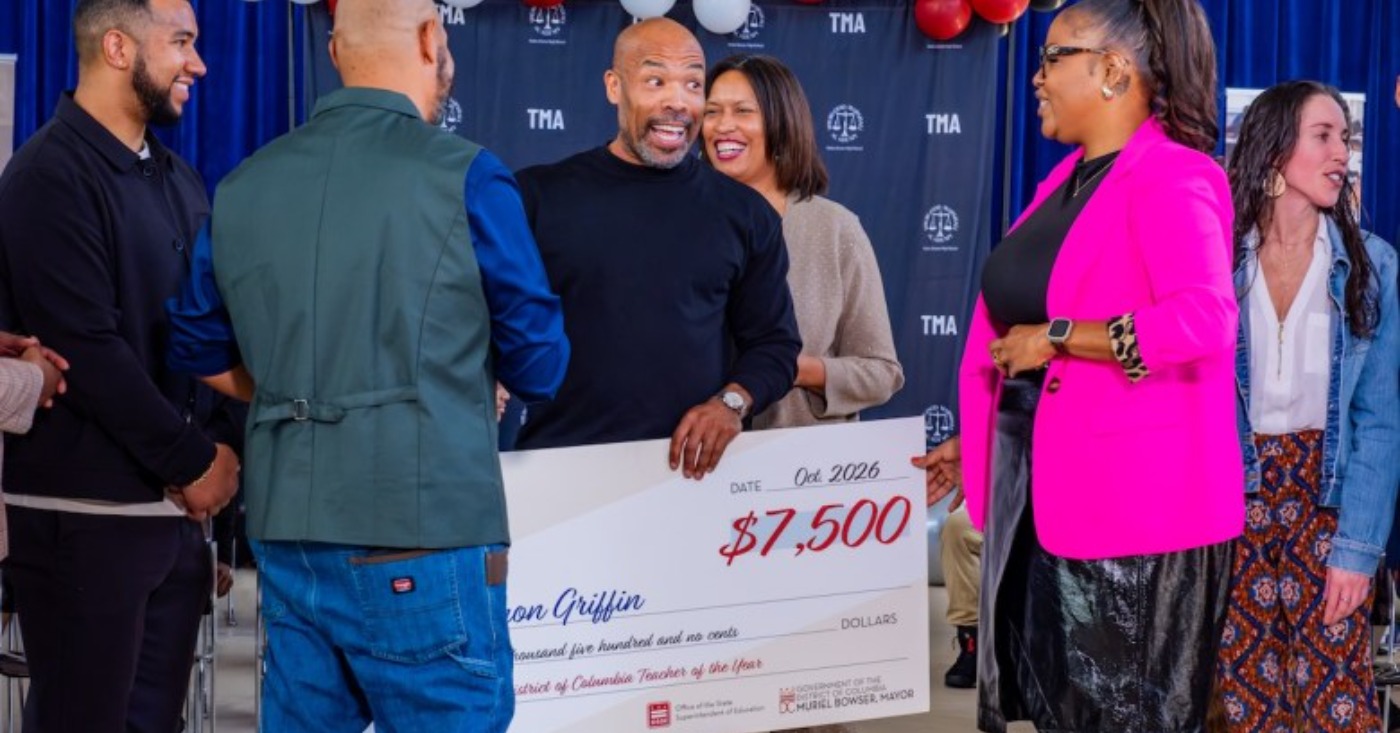
Shortly after becoming 2027 D.C. Teacher of the Year, Ramon G. Griffin appeared on WHUR 96.3 FM, where his story reached thousands of listeners, including a mother who he said later wrote him a two-page letter in request of guidance for her teenage son.
“I look forward to reaching out to her and assisting her in that process and that goal,” said Griffin, an African-American history instructor at Thurgood Marshall Academy Public Charter School in Southeast. “The meaning of this Teacher of the Year award is that I am able to have a voice and representation on a larger scale so that others can be inspired and so that I can help individuals. It’s my objective to work more closely with young teachers to aid them in their skill set, to make sure our children are being educated properly and effectively.”
On Oct. 26, D.C. Mayor Muriel Bowser — flanked by D.C. State Superintendent Dr. Antoinette Mitchell, Ward 8 D.C. State Board of Education Representative Dr. LaJoy Johnson Law, and others — announced Griffin as 2027 D.C. Teacher of the Year during what several students, faculty and staff at Thurgood Marshall Academy PCS thought was an assembly organized in celebration of the school’s 100% college acceptance rate since its inception.
“In my spirit, I can honestly say I knew I won,” Griffin told The Informer. “When she switched it up and said ‘I’m here for a teacher,’ the first thing that came to mind was that this may be it. Then she stated a quote from a documentary that was done on me last year, and she stated where I originate from, and I said I’m about to be awarded D.C. Teacher of the Year. That’s when it set in.”
Griffin, a self-described griot, has 13 years of teaching under his belt, seven of which have been at Thurgood Marshall Academy PCS. That’s where he currently serves as an instructor of AP African-American Studies and African American History through Film and Music. Both courses, he told The Informer, allow him to engage students in storytelling.
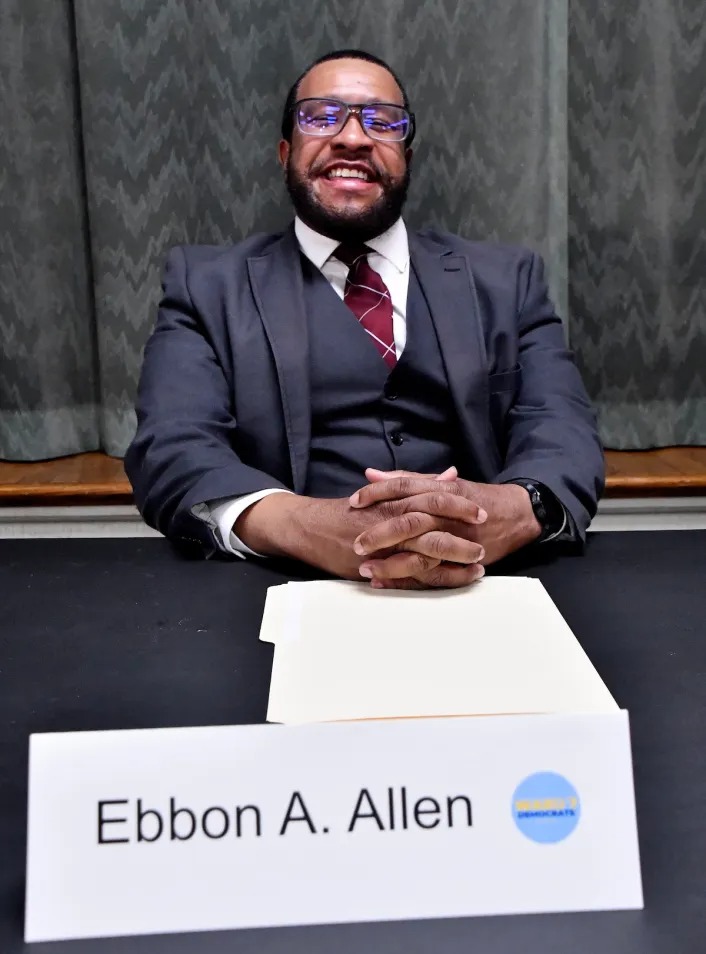
Within a couple of months, Griffin’s endeavor to shape the minds of youth continues when Thurgood Marshall Academy PCS hosts yet another “Morehouse Day.” This event, held at several District schools, connects male students with members of the Morehouse Alumni Association Washington, DC Chapter, many of whom graduated from District public and public charter schools before pursuing higher education.
“We have Morehouse men who come in: those who are elders to me, those who were there during my tenure and those who are younger,” said Griffin, a member of Morehouse’s Class of 1998 and key influence in at least three Thurgood Marshall Academy PCS alumni’s matriculation to the HBCU. “What it shows is that we as Black men are not what they portray in the news. We’re not about bringing each other down. We’re about standing out, building, and making sure that our race is looked upon proudly, not for others, but for self and for the next generation.”
An Inside Look: ‘Morehouse Day’ at Thurgood Marshall Academy PCS
The upcoming “Morehouse Day” at Thurgood Marshall Academy PCS is scheduled to take place on Jan. 15, which would’ve been the 98th birthday of Morehouse alumnus the Rev. Dr. Martin Luther King Jr. This intergenerational gathering also happens around the same time that Howard University men’s basketball team plays its home game against Morehouse College.
For Morehouse alumnus and “Morehouse Day” brainchild Ebbon Allen, it was a perfect storm that only Griffin could help make happen.
“Before we even knew that Ramon was going to be awarded and honored, we’ve been on ‘Morehouse Day’ as teammates for the last two years,” Allen told The Informer. “We definitely had a meeting within the last two or three months to designate ‘Morehouse Day’ for MLK’s birthday weekend. Ramon just shows the epitome of a Morehouse man: well-versed, well-traveled, and definitely educated.”
Speaking more about his fellow Morehouse alumnus, Allen said that Griffin has long put in the work to boost college enrollment among young Black men.
“He’s had a lot of young men going to attend Morehouse College,” Allen told The Informer. “We’re still trying to work on a pipeline to send more young men from Thurgood Marshall Academy down to Atlanta.”
Since the inception of “Morehouse Day” in 2021, Allen and other members of the Morehouse Alumni Association Washington, DC Chapter have spoken to more than 2,000 young men attending: Calvin Coolidge High School; Dunbar High School; Eastern Senior High School; Friendship Technology Preparatory High School; H.D. Woodson High School; Kelly Miller Middle School; and Ron Brown College Preparatory High School.
The upcoming “Morehouse Day” at Thurgood Marshall Academy PCS will be the second seminar of its kind on school grounds. Allen said that students will delve into violence prevention, entrepreneurship, college and career readiness, and the scholarship application process. His goal, he said, centers on providing them space to imagine how to achieve their dreams.
“We wanted young Black men to understand that they can learn about self-advocacy and learn the value of being a Black male in today’s society,” Allen told The Informer. “There’s going to be a new [mayoral] administration so our young men need to get well-versed and become well-educated about their rights and the opportunities to create a space of learning about strong advocacy.”
Allen, who followed in his three uncles’ footsteps to attend Morehouse College, credited the HBCU with exposing him to the different caliber of Black men. He told The Informer that, like him and other Morehouse men, Griffin has embedded in him a passion for working hard and laying a foundation for those coming after him.
“Ramon Griffin sets the bar for other Black male educators about how much of an impact and difference they can make,” Allen told The Informer. “By coming to Thurgood Marshall Academy in Southeast Washington, D.C., he’ll make more young Black men…find out what it takes to get back in a positive light. You don’t always have to be an entertainer. You don’t always have to be in athletics, but you can take an education pathway and still be awarded for your service, commitment and dedication.”
Out of the Mouths of Babes
C’khai Morgan, a senior at Thurgood Marshall Academy PCS, said he counts Morehouse College among his top choices for business management and human resource management, thanks to Griffin.
“He literally embodies the meaning of a Morehouse Man,” C’khai told The Informer. “You go in any classroom he ever had, you’re going to see something Morehouse. You catch him on a good day, he’s probably wearing a Morehouse sweater.”
C’khai, who also applied to Fayetteville State University, North Carolina Agricultural & Technical State University, and Temple University in Philadelphia, was a student in Griffin’s AP African-American Studies course last school year. On his way to scoring a 4 on the Advanced Placement exam and clinching college credits, he participated in Thurgood Marshall Academy PCS’ “My Brother’s Keeper” program, where he got to learn more about the man he now regards as an uncle.
“I started seeing a different side of Mr. Griffin that I never heard of,” C’khai said. “He always wants the best for somebody, but other students who lack maturity or just lack the understanding of his purpose would be like ‘Mr. Griffin be trying hard. He be pressed to get somebody in trouble.’ It reminded me that you can’t let somebody else’s opinions refer to someone as such.”
Students who take Griffin’s African-American History through Film and Music course take a trip through the Jim Crow, the Great Migration, and Harlem Renaissance, among other time periods, to understand how the blues genre originated from Africa, came into form during enslavement, and traveled with African Americans who moved into northern U.S. cities.
Although Griffin has a curriculum, he often deviates from it, as Thurgood Marshall Academy PCS student Kailani Marshall noted, by recounting his family history. She told The Informer about learning African-American history through stories of Griffin’s grandmother who migrated from Mississippi to Detroit, where he was born and raised.
“He makes sure that students actually retain the information and it’s entertaining as well,” said Kailani, a senior who hopes to study sociology either at Georgetown University, Howard University, Spelman College, or Temple University. “I can’t say that about a lot of classes. The way he teaches really allows students to understand topics fully.”
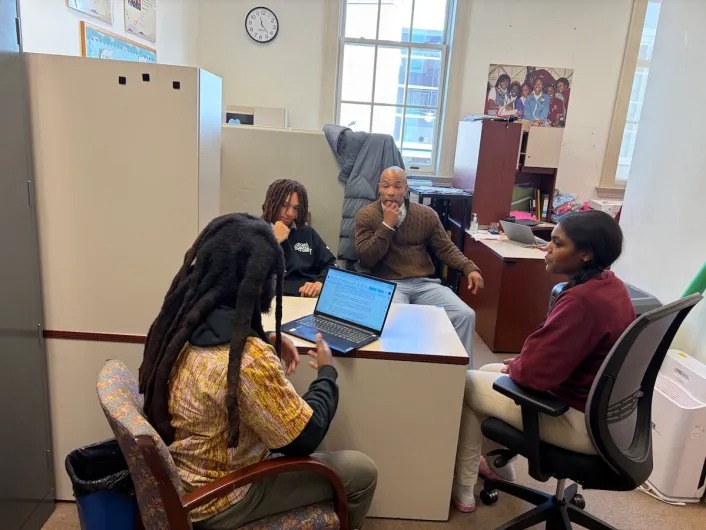
During her junior year, Kailani took Griffin’s AP African-American Studies and African-American History through Film and Music courses. She, too, scored a 4 on her AP exam, due to what she called Griffin’s demand for excellence.
“You can’t be mediocre. It’s not an option,” Kailani said about Griffin. “He’s passionate about instilling confidence and success into students. You can’t say that about a lot of teachers. He really is one of the few teachers who actually care for their students and care for their future.”
During Griffin’s first year of teaching AP African-American Studies at Thurgood Marshall Academy PCS, 87.5% of his students passed the AP exam. This feat follows other achievements at Dunbar High School, where he directed climate and culture, and at Kingman Academy Public Charter School, where he served as a founding member.
Even with Thurgood Marshall Academy PCS’ 100% college acceptance rate, Griffin acknowledged that it takes great effort to earn a bachelor’s degree. That’s what he said he emphasizes to his students as he shares his coming-of-age story and integrates writing and math enrichment into his assignments.
“You don’t want to be a 20-year-old counting on your fingers. You don’t want to be a 20-year-old starting a sentence and ending it at the end of the page with one period,” Griffin said. “You just have to put in the work, and I give them examples of times during my high school years and during my college years. Whatever you want in life, you can have. You definitely will accomplish it, but you have to have a plan. It’s not going to be given to you.”
Based on reporting by Washington Informer.


How to Rob a Bank

Healthcare Legend Dr. L. Natalie Carroll Continues to Shine

The African Cultural Film Festival Returns to Houston

Athlete of the Week – Gabe Sampson

NSA Hacked; A Wake Up Call About Intelligence Security

Derrick “Delite” Stevens on 40 Years in Radio, MC Skat Kat & Twin Cities Hip-Hop

Car Buying Checklist: 6 Steps to Shop Smarter #shorts

Chevy Tahoe Entry Test: Is the Driver’s Grab Handle Awkward? #shorts

Las Vegas GP: Ferrari Struggles During Qualifying; Verstappen Captures Pole

NBA: 3 Teams Flying Under the Radar in the East

HISTORY MADE: Keisha Lance Bottoms Becomes First Black Woman Elected Governor in American History

Secretary of State Shirley Weber Pushes Back Against DOJ Demands Over California Voter Rolls

Retirement Triggers Doctor to Pen Book for Young Audience

Capturing Black Life’s Beauty

Multi-Faith Leaders Representing 10 Million People Launch National Anti-Authoritarian Initiative

Christianity’s Racial History

Hundreds of Black Christian Leaders Arriving in Israel for Martin Luther King-Inspired Mission

Oakland Honors 60 Years of the Black Panther Party at the All Power to the People Gala

Message from the Associate Editor: Blindness, Hurts, Cops

Michael Shiner: The Enslaved Man Who Wrote His Way into American History
Healthcare Legend Dr. L. Natalie Carroll Continues to Shine
The African Cultural Film Festival Returns to Houston
Athlete of the Week – Gabe Sampson
NSA Hacked; A Wake Up Call About Intelligence Security
Derrick “Delite” Stevens on 40 Years in Radio, MC Skat Kat & Twin Cities Hip-Hop
Car Buying Checklist: 6 Steps to Shop Smarter #shorts
Chevy Tahoe Entry Test: Is the Driver’s Grab Handle Awkward? #shorts

How Sick Must America Get Before Saying Enough to RFK

Tahoe 6.2L EcoTec3 V8: Surprising Acceleration in a Full-Size SUV #shorts

From The Desk of The Editor 11/18/26
-
 Black Press1 week ago
OP-ED: Closing the Next Digital Divide — Communities of Color Must Have a Voice in the AI Future
-

 Black History1 week ago
New NAACP Report Warns AI Could Deepen Health Disparities in Black Communities
-

 Black Press5 days ago
COMMENTARY: Thank You, Trump, for Making America Great Again!
-

 Black History1 week ago
“Blue Tsunami” Sweeps Georgia, Bottoms Makes History
-

 Black Press4 days ago
Black Men Encouraged to Start Prostate Cancer Screening at 45
-

 Black Press1 week ago
OP-ED: And Then What?
