
BlerdBinder
BLERD BINDER: Racebending in live action adaptations.
NNPA NEWSWIRE — In this article, we will talk about Zoe Kravitz’s casting, times when racebent casting was awesome, times when racebent casting failed, why it is an important conversation to have, and how it affects the audience and fans.


“Holy Cow Batman! Aquaman is Catwoman’s stepfather!!!”
Blurb: The Blerd Binder covers nerdy news for the Black nerds of the world. We welcome all as we talk about subjects ranging from Movies to Music and Tech to Toys. Today, we will talk about racebent casting in the movie industry.
By Noah Washington, NNPA Newswire Contributor
HOLY COW! Last week, a historic moment happened in Nerd Culture: the casting of Catwoman for director Matt Reeves The Batman.
As far as Blerd Culture is concerned, the casting of Zoe Kravitz (Aquaman, Jason Moama’s stepdaughter) as Catwoman is big news on a number of different levels.
Racebending of fictional characters (changing of a character’s perceived race or ethnicity during the adaptation of a work from one medium to another) has become a hot topic in today’s age of comic book renaissance.
Sometimes, it heavily divides fans. Sometimes, it has fans screaming for joy. Sometimes, nobody cares. But each time the decision is met with commentary.
In this article, we will talk about Zoe Kravitz’s casting, times when racebent casting was awesome, times when racebent casting failed, why it is an important conversation to have, and how it affects the audience and fans.
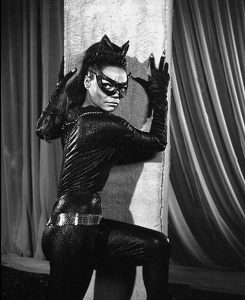 Zoe Kravitz’s Catwoman casting brings me a feeling of nostalgia as I can’t help but think of Eartha Kitt’s turn as Catwoman from the Batman ‘66 show. Based on what Matt Reeves has said about his interpretation of Batman and his surrounding characters, the film will be a story that harkens back to the Dark Knight’s detective roots.
Kitt was one of the earliest actors who racebent a character when she took over the role from White actress Julie Newmar in the third season of the iconic TV show. The casting change was reportedly made because Newmar was filming another movie at the time.
It’s worth noting that Kitt was one of the most recognizable actors to appear the role during the show’s run. Her personification of the character is as close to perfect and unique as she could have gotten without literally plucking the illustrated character from the pages of a comic book.
 Another example of racebending was Marvel’s casting of Samuel L. Jackson as Nick Fury, even though the race of the character has already been changed in the comics before Jackson was even cast.
According to the site, comicbook.com, “I still buy comic books, so I go to this store in L.A., Golden Apple, and I was in there one day and I’m passing the rack and I see this thing, The Ultimates, and I go, ‘Wow, it looks like me,'” Jackson recalled. “So I started looking, and it’s like, Nick Fury looks just like me, and I’m reading, and he goes, ‘Well, if they make a movie about us, who do you want to play you?’ and Nick Fury goes, ‘Samuel L. Jackson.’ I go, ‘I didn’t give anybody my permission to use my image in a comic book.'”
Jackson goes on to explain that, after calling his agent and explaining how and where he discovered his likeness in a comic book, “She said, ‘Let me call somebody,'” the actor shared. “So she calls Marvel and they say, ‘Well, we are thinking about making these movies and, hopefully, if we make them, he would play Nick Fury.’ I’m like, ‘For real?'”
When the news of Jackson being cast was revealed to the public, the internet went into a frenzy. However, after more than 10 years of playing the character, Nick Fury has become indelibly associated with Mr. Jackson.
Eartha Kitt and Samuel L. Jackson are just two examples of how racebending a character with the right actor can deliver amazing results for a television show or feature film.
These two performances were met with the type of acclaim and mainstream success that is indicative of blockbuster hits. Not because they look different from the original presentations of the characters they portrayed, but because they were the right actors to embody the characters transition from 2D comics to television and film.
However, Kitt and Jackson’s success hasn’t changed the underlying controversy and question: Why not just create new diverse characters?
While purists may always have issues with new interpretations of legendary characters, there’s often a business reason driving the decision to change an existing character instead of developing new characters with a focus on diversity.
At a time when comic book properties are seemingly optioned for television, film and theater projects on a weekly basis, the reason that producers and others don’t just go and make new characters is a matter of economics: Financing these projects is expensive, and to ensure adequate return on investment, the most popular characters with highest consumer awareness are usually chosen as the centerpiece of the show or film franchise.
Some existing characters are so popular that it’s almost be impossible to develop a new character with any reasonable hope of achieving a similarly high level of popularity without significant investment.
Investing to make a completely new character popular enough to be a box office draw, just to cast an actor of color in a role, when there is an existing character that is perfect for the story, makes no sense. Especially since, in many cases, the goal is to find the best actor for the role and, frequently, an actor of color is cast that perfectly embodies role.
Of course, there are times when a racebending isn’t only controversial, it’s also wrong. I am talking about in cases of White Washing, where instead of replacing a white character with a minority actor, a minority character is played by a white actor.
I have two very good examples of this.
A significant portion of the cast of M.Night Shyamalan’s The Last Airbender, and the controversial casting of Tilda Swinton as the ‘Ancient One’ in Marvel’s Doctor Strange.
 I’ll start with Doctor Strange. I do not have any problem with Swinton’s performance as The Ancient One. I thought the spin on the character was alright, but I did not appreciate the opportunity it took away from casting an Asian actor who could have been the live-action representation.
This signals a problem because most of the time, in fantasy films where magic is involved, the mystical and powerful elder has always been an old White man. I know that Swinton as a woman, is also a minority, so that is a plus, but what does this say to other minorities? Can only elderly White men hold great power and wisdom?
I love Dumbledore from Harry Potter, The Doctor from Doctor Who, Gandalf from Lord of The Rings, and Professor X from X-Men. But there comes a point when all of these characters tend to blend together. You need diverse casting, like in the case of Djimon Hounsou as “The Wizard Shazam” from Shazam to keep things interesting.
And now that most dreaded moment when the entire collective nerd community cringes: Whenever The Last Airbender is brought up in conversation.
 Nearly all of the anime’s/cartoon’s superb characters — heavily based in Asian culture — were replaced with White actors that did not represent those original characters in characteristics, appearance, or even name.
When none of these qualities are present, then they might as well be new characters. This was one case of racebent casting that served no purpose and is insulting to the original material, the creators and the fans that truly love Avatar: The Last Airbender.
 This is an issue that shouldn’t be happening in the 21st century. Scarlett Johannson’s casting in Ghost in the Shell should never have happened. I understand that actors should be able to do what they were hired to do and “act.” but some roles were not meant for certain people. We have to be inclusive of the actors that might not be able to find work outside of the roles that are in their perceived purview.
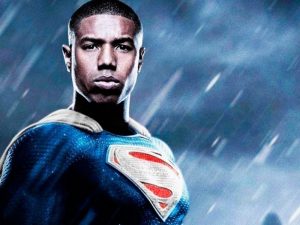 One of the most iconic rumors that ended with rage and fury is when Micheal B.Jordan was rumored to be cast as Superman after Henry Cavill supposedly left the role (these are just internet rumors that have not been made official by DC or Warner Bros).
The internet broke out in such a frenzy that somebody would have thought the world had ended. Numerous online fans said, “Superman can’t be Black.”
All I have to say to that is that Superman has had a history where he indeed was Black so it’s not a stretch to say that one day, we may see a live action adaptation. Calvin Ellis was a black Superman modeled after Barack Obama from the comics, as well as more recently, Val-Zod, who was created in 2014.
On the other side of things, there are times where storyline and lore of the original source material would truly stop a character’s race from being changed. One of the most notable examples is the iconic character, Bruce Wayne.
The Wayne family is said to have had a hand in bringing Gotham City to life and had wealth going back generations as early as the 1700s in America. It would be very hard for an audience to believe that an African American had Wayne family wealth in the 1700s during the period of slavery. That doesn’t mean that Batman can’t be black, but that Bruce Wayne shouldn’t be black.
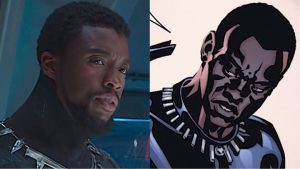 There is also the old argument that “if you make a character who was already White suddenly Black, why can’t Black Panther be White?” I will happily give you the answer to that question. Some character’s lore and location make the character who they are. T’Challa, the Black Panther, is an African King who is native-born and, similar to the case with Bruce Wayne, it would be very hard to write that character as any other race.
We should save our criticism of racebent casting to situations where the casting excludes marginalized groups that would not have been represented otherwise.
We in nerd culture tend to make judgments before we see the final product. Good or bad, casting choices usually come down to the ability of the actors cast in the role and how they well they embody the interpretation of the character the director envisions.
This is an important discussion as we should just allow these actors to show us their interpretation of these iconic characters before we make judgments. But we also need to have cultural awareness so that we know when a culture is taken advantage of or appropriated, as is too often the case with white washing.
I hope that you keep this in mind the next time you watch a TV show or movie where a familiar character looks a little different. Remember, this is about who the younger generation can look up to with pride and see themselves in.
We now live in an age where superhero Films and TV shows are released in droves. There is plenty of room at the table for everyone to feel welcomed.







Black Press
‘Married to Real Estate’: Building Dreams Together
The success of “Married to Real Estate” involves family, business, celebrity, industry, and many moving parts. At the core of their endeavors is a commitment to purpose. “Success isn’t just about what you have—it’s about who you can bring along the way,” Egypt concludes. Through their work, they aim to help others build lives rooted in purpose, proving that love, legacy, and community can indeed flourish together.

By Nsenga K. Burton, Ph.D, BlackPressUSA Newswire’s Culture and Entertainment Editor
In the realm of real estate and television, few duos embody the spirit of collaboration and love quite like Egypt Sherrod and Mike Jackson, the hosts of HGTV’s “Married to Real Estate.” Their journey is not just about flipping houses; it’s about flipping narratives and creating a legacy that resonates deeply with their audience.
Egypt’s path to real estate was somewhat circuitous. Initially starting her career in radio, she was always surrounded by the world of real estate, thanks to her uncles, who were brokers and investors. “It was in my DNA,” she reflects. After experiencing the empowerment of flipping homes, Egypt realized that real estate was her true calling.
Mike’s path to real estate was also in his DNA. “I’ve always been drawn to building and creating,” says Mike. “As a kid, if I wasn’t on the road touring and homing in on my DJ chops, I was on a construction job site with my grandfather and uncle, sharpening my builder skills, which later in my life turned into a career in construction and renovation.” Mike became a successful general contractor, securing his future in construction. Initially, not sure of a career in real estate, he decided to give it a try after Egypt made it more intriguing with the possibility of working together. “Watching my wife flip homes and seeing the impact she had on people’s lives made me want to be a part of it,” Mike explains. “She encouraged me to get my license so we could keep everything in-house, and it’s one of the best decisions I’ve made. ‘Married to Real Estate’ came from us living this life every day—we just invited the cameras in.”
The invitation was productive, with the power couple building a following and reputation for great work and great television. “Married to Real Estate” is a show that aims to inspire others by showcasing the beauty of homeownership and the collaborative journey of building a life together as a couple and family.
In its fourth season, viewers tune in on Wednesdays to see Egypt and Mike hard at work making real estate dreams come true. Complementary strengths make Egypt and Mike’s on-screen chemistry compelling. Egypt brings a creative vision and emotional storytelling, while Mike provides structure and calm craftsmanship. Their genuine respect for one another shines through, making their interactions relatable and authentic. “We bicker, we laugh, we get the job done—but most importantly, we respect each other,” Egypt shares.
Balancing business, marriage, and parenting has not been without its challenges. The couple emphasizes the importance of faith, grace, and mutual support. “We remind ourselves often: this is bigger than us. We’re building a legacy, not just a brand,” Mike adds. Their journey is a testament to the idea that love and business can coexist beautifully, even amidst the chaos of life. “Egypt’s the visionary—she sees the finished product before we even start. I’m more technical. I make sure the structure is sound, the permits are in place, and everything meets code without compromising design,” he offers. “That’s the balance we bring. And being a couple, there’s a trust that runs deeper than business. We know how to push each other and also when to pull back. Our relationship sets the tone for how we show up on set and with our clients.”
Through “Married to Real Estate,” Egypt and Mike aim to convey that wealth, love, and legacy can be built while having fun. They want their audience to understand that a home is more than just a transaction; it’s a place where stories unfold. “We hope everyone sees themselves in us,” says Egypt, highlighting the importance of representation, particularly for Black families who have historically been underrepresented in media.
For couples considering working together, it’s not for the faint of heart. Egypt offers sage advice: “Know your lane and respect each other’s gifts,” she advises. “Clear communication and defined roles are crucial but so is making time for each other outside of work to maintain a healthy relationship,” she adds. Finding balance in their busy lives involves setting boundaries and being intentional about family time. “Our kids keep us grounded,” Egypt explains, emphasizing the importance of emotional check-ins alongside logistical ones. “Marriage takes work, and so does self-care.” Mike agrees. “We’ve had to be intentional about checking in, communicating openly, and protecting our peace,” he explains. “The wins are great, but the real triumph is still liking each other at the end of it all. That takes work.”
Looking ahead, Egypt is excited about launching her Indigo Road home collection in JCPenney stores and continuing to support women entrepreneurs through her nonprofit, 1000 Women Owned. Meanwhile, Mike is focused on expanding his renovation company and mentorship programs. “I’m focused on growing Jackson Draper Renovations and creating a space where I can mentor young men in construction,” says Mike. “I want to create more apprenticeships, more opportunities, and more representation behind the walls—not just on camera. I also have a few projects in development that highlight skilled trades in a way that’s never been done before,” he adds. Together, the entrepreneurs and community servants are committed to building meaningful projects, both on and off the screen.
Being part of HGTV has provided Egypt and Mike a platform to inspire others. “It’s one thing to renovate homes—it’s another to inspire people to see what’s possible for their own lives,” Egypt states, highlighting the responsibility they feel as role models. “We hope ‘Married to Real Estate’ continues to inspire people around the world through the streaming platforms for years to come,” adds Mike.
The success of “Married to Real Estate” involves family, business, celebrity, industry, and many moving parts. At the core of their endeavors is a commitment to purpose. “Success isn’t just about what you have—it’s about who you can bring along the way,” Egypt concludes. Through their work, they aim to help others build lives rooted in purpose, proving that love, legacy, and community can indeed flourish together.
As “Married to Real Estate” continues to inspire viewers, Egypt Sherrod and Mike Jackson remind us that home is not just a place; it’s a journey filled with love, laughter, and limitless possibilities.
“Married to Real Estate” airs Wednesdays at 9/8c p.m. on HGTV and MAX.
This article was written by Nsenga K. Burton, Ph.D., editor-at-large for NNPA and founder & editor-in-chief of The Burton Wire.

BlackPressUSA
THE BLERDBINDER FILM REVIEW: Sin La Habana
NNPA NEWSWIRE — Director Kaveh Nabatian creates a magical atmosphere filled with creative camera movements and an ethereal score that transports you to a truly magical reality filled with the complexity and tragedy of life.

A Spiritual Wonderland for All to See
The BlerdBinder covers nerdy news for the Black nerds of the world. We welcome all as we talk about subjects ranging from Movies to Music and Tech to Toys.
The Atlanta Jewish Film Festival is showcasing some unique and exciting films. One of these superstar films is Sin La Habana. It seems commonplace for films set in the diaspora or located in the South-American Esque countries to have themes of escapism or a pseudo (or perverted) version of Manifest Destiny. Sin La Habana does not differ from this. Sin La Habana follows a young Afro-Cuban Couple Leonardo (played by Yonah Acosta) and Sara (Evelyn O’Farrill). Leonardo is an aspiring ballet dancer while Sarah is a determined lawyer who is striving for greater things. When it becomes apparent that their quality of life isn’t improving, they decide to enlist the help of one of the tourists who come to Leonardo’s dance lessons while on vacation to help them obtain immigration rights in Canada. Nasim (Aki Yaghoubi), an Iranian-Canadian who is trying to escape an abusive husband back home.
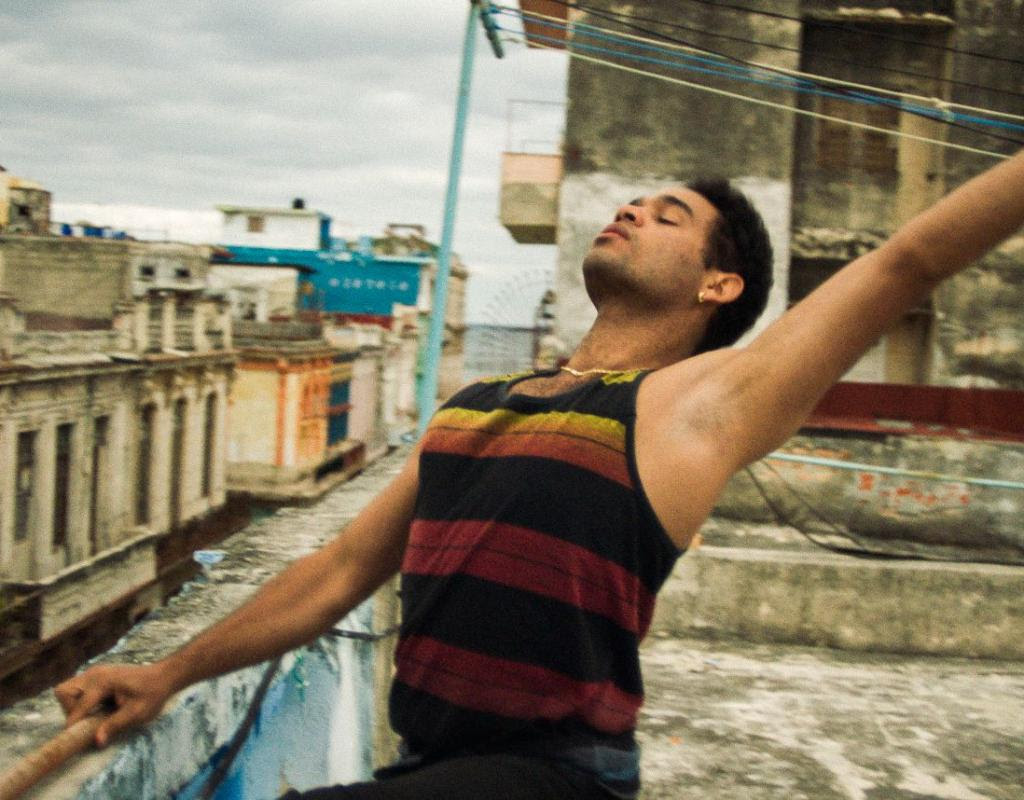
Director Kaveh Nabatian creates a magical atmosphere filled with creative camera movements and an ethereal score that transports you to a truly magical reality filled with the complexities and tragedy of life. Leonardo’s lonely excursions through the cold metropolis of Montreal are mixed with glimpses of Cuban spiritual activities. The three leads give outstanding performances in the three primary roles. In the midst of this rather dramatic situation. The emotion that these three give is truly palpable while remaining unattainable.
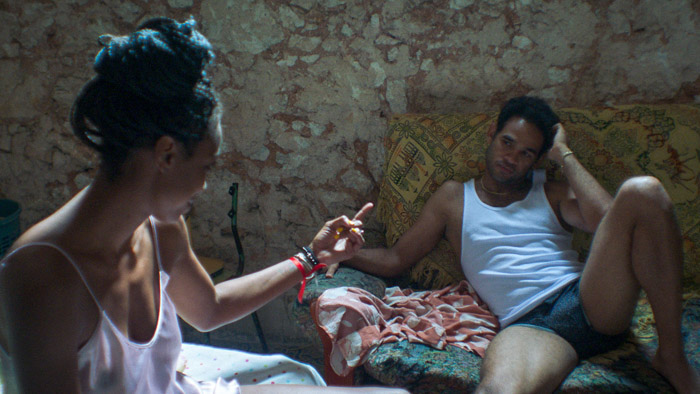
This remarkable journey is one that you won’t to miss. Especially if you are spiritually inclined. Leonardo and Sara of Sin La Habana represent a large number of people who are now living in Cuba and wanting to find a way out. The people are willing to take severe measures to escape political persecution, harassment, and significant economic suffering, no matter how difficult it is. This film’s examination of this event is heartbreaking and depressing, but he counteracts the film’s gloomy tone by showcasing the colorful culture of music and dance that Cubans first fell in love with and the reason they chose to call it home.
The film is still playing at the Atlanta Jewish Film Festival so don’t forget to check it out along with their other films playing from February 16-27. 2022
Black History
IN MEMORIAM: Andre Léon Talley, Fashion Titan, Dies at 73
NNPA NEWSWIRE — Introduced to trailblazing fashion editor Diana Vreeland by a classmate, Talley would meet Andy Warhol, which is how he began work at Interview Magazine. Talley also worked for Women’s Wear Daily as their Paris Bureau Chief and briefly at the New York Times, before landing at American Vogue, where his career and status as a pioneering and influential fashion journalist was cemented. Talley would work closely with legendary editor Anna Wintour, serving as Creative Director and editor-at-large for the iconic publication.
By Nsenga K. Burton, Ph.D, NNPA Newswire Culture and Entertainment Editor
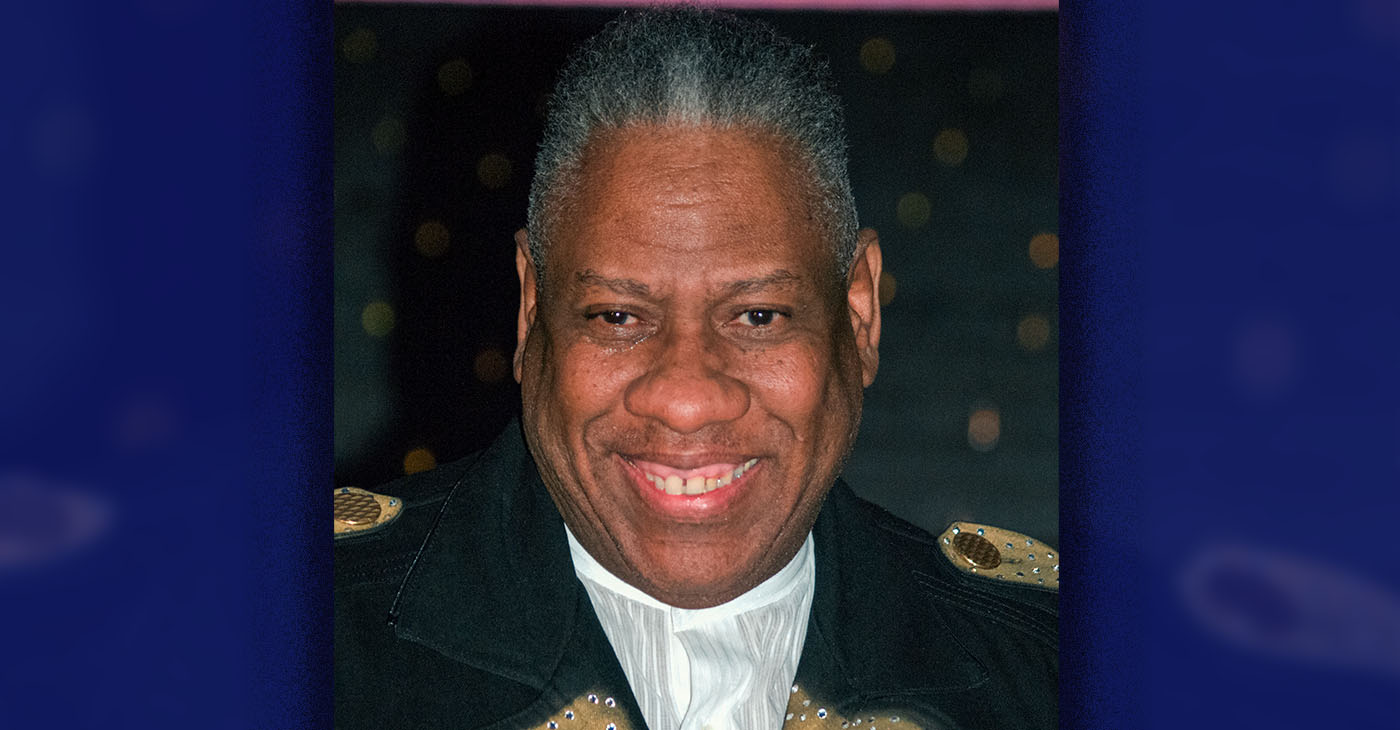
Andre Léon Talley, a trailblazing figure in fashion journalism has died. Talley was born in Washington, DC and raised by his grandmother Bennie Frances Davis in Durham, NC. According to his memoir A.L.T.: A Memoir, Talley’s grandmother worked as a housekeeper for Duke University. To escape the oppressive climate of the segregated American South and the sexual abuse and bullying he experienced as a child, Talley would escape into the pages of Vogue which he would purchase on the “white” side of town. Coupled with the fashion influences of the Black church, Talley would develop his signature style as he grew into an adult. Talley graduated from Hillside High School in 1966 and North Carolina Central University, an HBCU, where he majored in French literature in 1970. Talley also earned a M.A. degree from Brown University and moved to New York for an apprenticeship at the Museum of Modern Art (MOMA).
Introduced to trailblazing fashion editor Diana Vreeland by a classmate, Talley would meet Andy Warhol, which is how he began work at Interview Magazine. Talley also worked for Women’s Wear Daily as their Paris Bureau Chief and briefly at the New York Times, before landing at American Vogue, where his career and status as a pioneering and influential fashion journalist was cemented. Talley would work closely with legendary editor Anna Wintour, serving as Creative Director and editor-at-large for the iconic publication.
A force, Talley wrote two memoirs (A.L.T. and The Chiffon Trenches – May 2020), books on fashion and played a major role in advancing the careers and opportunities for African American models and photographers.
Talley also worked closely with Karl Lagerfeld, Tom Ford, Diane Von Furstenberg and Marc Jacobs.
Talley starred as a judge on America’s Next Top Model and wrote an influential 2018 op-ed for the Washington Post entitled, “The Historic Blackness of Tyler Mitchell and Beyoncé’s Vogue Cover.” At the time of his death, Talley had been involved in a protracted legal battle over a home he had rented since 2004 from George Malkemus, the former CEO of Manolo Blahnik and his partner.
Vogue is reporting Talley died of a heart attack. He was 73.
Black History
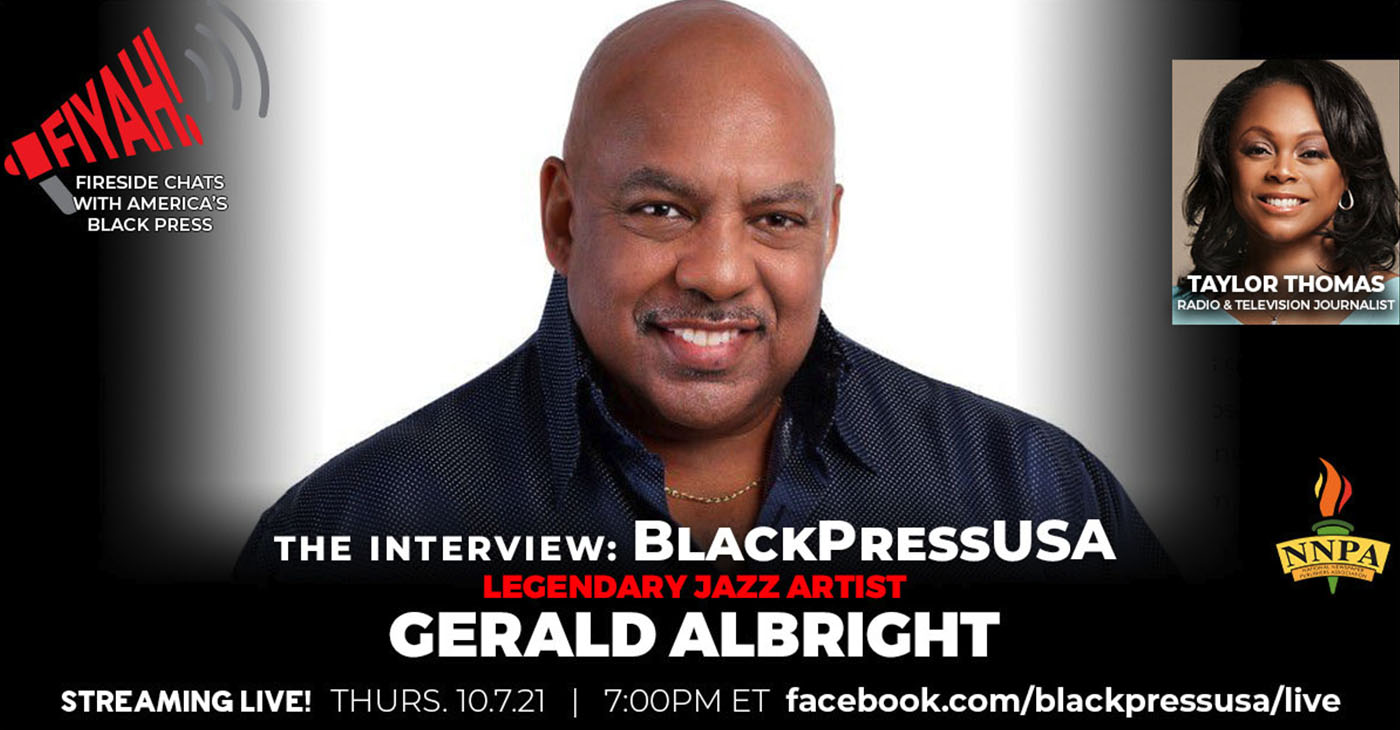
#FIYAH! The Live Interview with Jazz Legend Gerald Albright
NNPA NEWSWIRE — Gerald Albright launched his solo career in the infancy of what became the smooth jazz format, with Just Between Us in 1987 and has been a core part of the genre with chart-topping albums, countless radio hits and as a member of many all-star tours, including Guitars & Saxes and Groovin’ for Grover.



Coach Tremaine Jackson Urgent Mindset- ‘Fourth and One’

Michael Jackson Returns to the Super Bowl Spotlight, Druski Heads to SNL, and Gas Drops Below $1!

Michael Jackson Returns to the Super Bowl Spotlight, Druski Heads to SNL, and Gas Drops Below $1! 📱

Secure growth by funding business expansion without taking on bad debt

Save money on storm damage repairs by addressing your property hurricane risk early in the season

Sunset Loft – The Crystal

HISD takeover “diminished, degraded, destroyed” schools – Citizen commission report

Everything You Need to know before you Vote

From Doubts to Calling: My Wife Saved My Career #shorts

HBCU Homecoming: A never-miss annual tradition

The Youngest American Killed in the Vietnam War

Passing for White, Fighting for Black America: The Courage of Walter White

OP-ED: Haiti TPS: Have We Lost Sense of Humanity?

OP-ED: How Does Your State Rank for Pre-K?

NFL: Week Two Recap | Jalen Hurts did not fold; Caleb Williams exits game with injury

Remembering Chauncey Bailey as Student Journalists Face Threats to Truth-Telling

Headlines and Hot Topics 📱

NEWSOM, KAMALA & 2028: THE POLITICAL CALCULUS BEGINS 📱

Obama Urges Democrats to make AI a Priority 📱

Peter Magubane: a Camera Against Apartheid
Coach Tremaine Jackson Urgent Mindset- ‘Fourth and One’
Michael Jackson Returns to the Super Bowl Spotlight, Druski Heads to SNL, and Gas Drops Below $1!
Michael Jackson Returns to the Super Bowl Spotlight, Druski Heads to SNL, and Gas Drops Below $1! 📱
Sunset Loft – The Crystal
HISD takeover “diminished, degraded, destroyed” schools – Citizen commission report
Everything You Need to know before you Vote
From Doubts to Calling: My Wife Saved My Career #shorts
HBCU Homecoming: A never-miss annual tradition

How Community Builds the Confidence to Start a Business #shorts

2026 Silverado High Country What $82,004 Gets Right—and Wrong
-

 Black Press1 week ago
Zakiya Jendayi Arrested, Locked Out of Home by Sheriff’s Deputies
-

 Black Press1 week ago
A $2.1 Trillion Wellness Industry Never Built a Daily Practice for Black Children. So This Atlanta Family Did.
-

 Art1 week ago
Montclair Brewery: Brewing Culture, Community, History
-
 BlackPressUSA6 days ago
Latinas Deserve Equal Pay. Unions Help Make It Happen.
-
 Black History1 week ago
Listening as a Lifeline: A Doula’s Witness to Black Maternal Health
-

 Black Press1 week ago
COMMENTARY: But God!
