
Business
From Black Wall Street to the Black Dollar Project


by Jeffrey L. Boney
Special to the NNPA from the Houston Forward Times
Despite historically high unemployment rates, African Americans have shown resiliency in their ability to persevere as consumers.
In 2013, the National Newspaper Publishers Association (NNPA) collaborated with Nielsen to create a report and compile Nielsen’s third installment called, “The African American Consumer Report,” which showed the spending habits of the African American consumer. Most importantly, the report revealed and calculated the annual buying and spending power of African Americans in the United States.
According to the report, the African American population in the United States reached almost 43 million in 2012, representing approximately 13.7% of the U.S. population. Black buying power continues to increase, rising from its current $1 trillion level to a forecasted $1.3 trillion by 2017, which keeps Black consumers at the forefront of social trends and media consumption.
Many retailers and Fortune 500 companies have developed African American advertising teams and have also dedicated significant amounts of resources towards tapping into the steadily increasing buying power of Black consumers. These major institutions and corporate juggernauts have the resources and totally understand the importance of advertising to Black consumers; however the majority of African American businesses, here in the United States, cannot boast the same successes and ability to effectively reach the African American consumer.
One of the biggest complaints that Black businesses have is that Black consumers don’t support them. One of the biggest responses that Black consumers give is that they would possibly support a Black business if they knew who they were and where to find them. All in all, there has been a tremendous disconnect between the Black business community and Black consumers since the days of Black Wall Street.
Black Wall Street was the name given to Greenwood Avenue, located in Tulsa, Oklahoma, where starting in 1910, this 35 square block area was both admired and envied by many individuals because the circulation of Black dollars within the Black community produced a tremendously prosperous and wealthy group of Black families and a vibrant Black community. What made Black Wall Street so powerful is that the Black dollar circulated anywhere from 36 to 1000 times, sometimes taking a whole year before the money left the community.

Cheryl Pearson-McNeil, Senior VP, US Strategic Community Alliances and Consumer Engagement – Nielsen
By 1921, the population of Black Wall Street had reached 11,000 and the community had its own bus line, thirteen churches, four hotels, three drug stores, two high schools, two theaters, two newspapers, one hospital and a public library. In addition to that, they built nearly 200 two- and three-story brick commercial buildings that housed professional offices for lawyers, doctors and dentists, clothing stores, grocery stores, nightclubs, restaurants and motels. Black Wall Street had become a strong commercial community.
African Americans had been subjected to segregationist policies during the early 1900’s, therefore Black people were forced to live amongst each other, shop and spend money with one another. Since African Americans could not live with White people or patronize White businesses in Tulsa, this forced interaction caused Black Wall Street to thrive to the point where Blacks had to develop a completely separate business community. Investing African American dollars back in their own community, and seeing their community become the envy of America, produced a sense of accomplishment, pride and self-sufficiency.
Sadly, the worst act of racial violence in American history occurred on June 1, 1921, when Black Wall Street was burned to the ground by a mob of angry Whites, after newspaper reports wrongly claimed that a Black shoeshine boy by the name of Dick Rowland had sexually assaulted a 17-year-old White girl named Sarah Page in the lift of the office block where they both worked. A White lynch mob decided they would take matters in their own hands and tried to kill Rowland, which ultimately led to a confrontation between the Black and White communities and one of the most intentional genocides of Black people in American history.
The attack left more than 3,000 African Americans dead and nearly 600 African American successful business destroyed. Roughly 10,000 Black people were left homeless and more than 1,000 houses burnt to the ground. After the Tulsa riot, the White inhabitants tried to buy the property from the African Americans and force them out of town. No bank or lending institution would make loans to the African American residents of Black Wall Street and the city of Tulsa refused to allow anybody from the outside to offer them any assistance. Seeking to rebuild and restore their once prosperous neighborhood, many of the owners refused to sell and most of the buildings along the first block of Greenwood Avenue were rebuilt within one year.
Unfortunately, no other African American community has been able to consistently replicate the economic strength and fortitude exhibited during the times of Black Wall Street, although many attempts have been made.
In order to get back to the same level of strength, as that of Black Wall Street, Black businesses must change their current business model and seek to establish meaningful connections with Black consumers, many of which have no dedicated loyalty with their dollars.
The average income for African American households nationwide is $47,290, with 35% of those African American households earning $50,000 or more. Sadly, according to an analysis of 2009 Census data provided by the Pew Research Center and cited by the Associated Press, the median wealth of White U.S. households in 2009 was 113,149, compared to $5,677 for Blacks. The wealth gap between White Americans and Black Americans is the widest that it has been in a quarter-century, with White households having over 20 times the net worth of Black households.
The dollar circulates almost ten (10) times within the Jewish community before it reaches the outside. The dollar circulates almost six (6) times within the Asian community before it reaches the outside. The dollar circulates an infinite number of times within the White community; more than all other groups. Sadly, the African American dollar does not even circulate one time within its own community. As a matter of fact, the Black dollar only stays in the Black community less than six (6) hours. This must change if we hope to address the issues of high unemployment, recidivism, crime and other critical issues impacting the African American community.
The Nielsen report found that if African Americans in the United States had their own country, their over $1 trillion in annual buying power would make them the 16th largest country in the world. The lack of Black consumer’s financial support of African American businesses should help everyone understand why the wealth disparity numbers exist within the Black community the way they do. Small businesses are the backbone of America. They create jobs and support communities. Black people must support Black businesses to ensure long-term sustainability.
As a Black consumer, these wealth disparity figures should serve as a wake-up call, as well as an opportunity to use these statistics to better understand the power that they possess with their Black dollar. Black people play a powerful role in the overall economic infrastructure of the United States and each purchasing decision Black consumers make has an impact on the bottom line of every company in America.

Irvin Ashford, Jr., Senior VP – Comerica Bank
On the flip-side, African American businesses must invest in themselves in order to strengthen their brand and effectively reach the Black consumer by creating an advertising budget and joining a branded network that helps Black businesses and Black consumers better understand the shopping, buying, viewing, digital, and mobile trends of the African American consumer.
Since the times of Black Wall Street, and as a result of slumping revenues, many African American businesses that once gainfully employed Black people and kept the communities strong, have since closed their doors for a variety of reasons. For many African American businesses, they were forced to sell off their business because of a lack of adequate revenue or simply because their children refused to carry on the torch, considering it easier to cash out instead of continuing the legacy.
In order for any Black business to survive in today’s economy, they must have a consistent stream of revenue, as well as continued support from the community and customers they serve, if they hope to be around more than a few years.
In a famous speech in 1925, President Calvin Coolidge said, “The chief business of the American people is business.”
While Black people have the right, as American citizens, to spend their money where they want and how they choose, making the decision not to support Black businesses contributes to the extinction of those Black establishments. The same thing applies to African American businesses. There are so many Black consumers who want to spend their money with African American businesses, but they don’t know how to locate them, primarily because most Black businesses don’t advertise or market their products and services. If Black consumers don’t know where Black businesses are located and how to patronize them, then they are hurting themselves.
Having a collective voice and a systematic approach to bridging the gap between Black consumers and the Black business community is the key. The Black Dollar Project is that vehicle.
The Black Dollar Project is a business initiative that was created to address the need for stronger business relationships and alliances through commerce in the African American community between business owners and consumers that spearheads steady economic growth and empowerment. Studies show that when a community chooses to participate in a conscientious initiative to support businesses in their own community by purposefully spending money with those businesses and stimulating economic growth, then the community is positively affected.
The Black Dollar Project’s primary goal is to assist in creating meaningful and beneficial economic empowerment in the African American Community that leads to exceptional growth and sustainability. Black businesses and Black consumers will be educated and empowered through forums and seminars and African Americans businesses will finally be able to advertise and target the African American consumer the same way that Fortune 500 companies do, without having to have a significant advertising budget.
Through a solid partnership with business organizations, such as the Texas Business Alliance and many others, along with partnerships with media outlets such as the Houston Forward Times, the initiative will drive Black consumers to become more conscious about spending their money and supporting Black businesses and allow Black consumers to receive better services to their community without waiting or asking someone else to assist in bettering that community.
Be sure to register for the Black Dollar Project Launch Event on June 5, 2014 at Texas Southern University’s Jesse H. Jones School of Business Auditorium (www.blackdollarproject.com) and find out more about this powerful economic movement starting in the city of Houston, Texas. It is time for African Americans to rebuild the economic wall they once built as a successful blueprint for us to follow and begin to support and run our own stores and no longer depend on the government or social programs to build and strengthen our own communities.











Black History
COMMENTARY: Battling Black Voter Distrust
HOUSTON DEFENDER — Black voters have long been a reliable base for the Democratic Party, but political strategists and voters indicate that years of inconsistent engagement and unfulfilled expectations have created a trust gap.
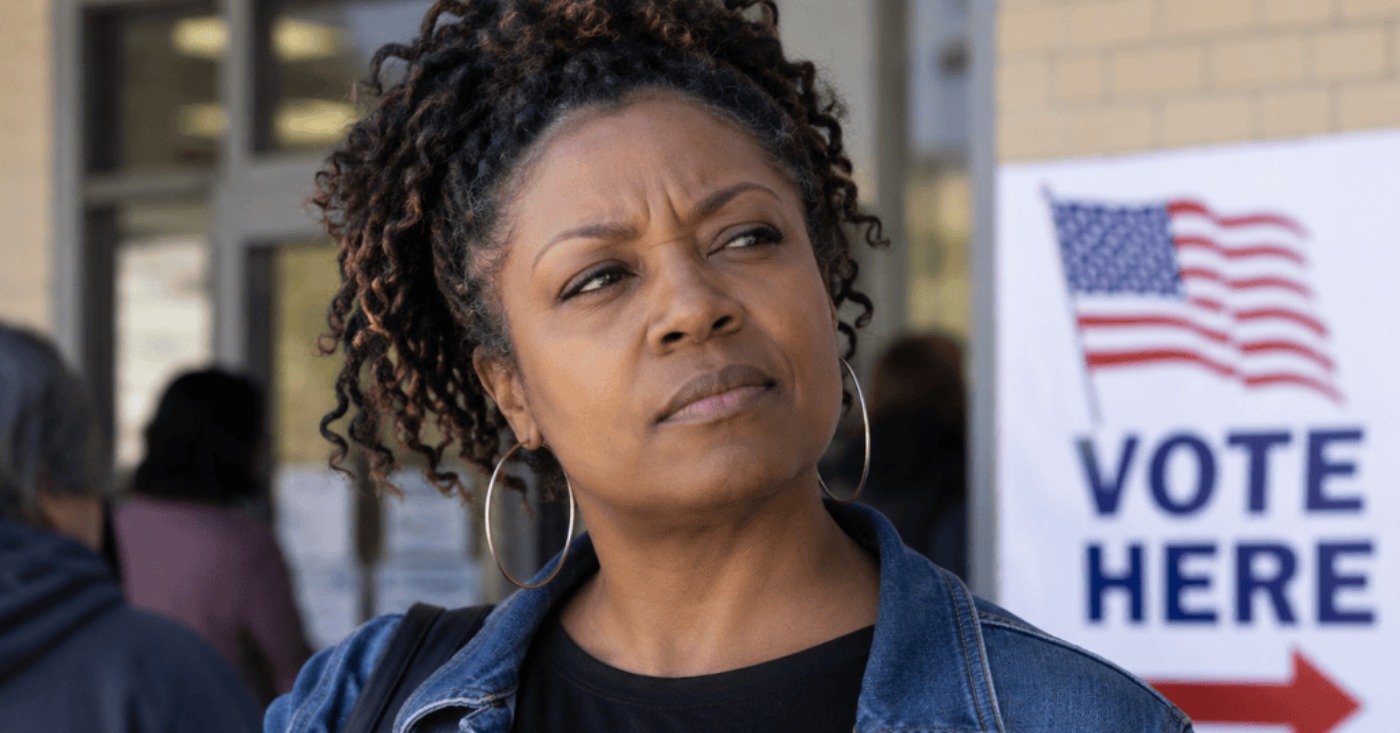
Black voters have been among the Democratic Party’s most dependable supporters for generations. But loyalty and trust are not the same thing.
With less than a month to go before the midterm elections, Black voters and political strategists say years of inconsistent engagement and unmet expectations have left some voters questioning whether the party has earned their continued support. The challenge now is bigger than winning votes. It’s convincing distrustful voters that staying politically engaged is worth it.

Communications strategist Ashley Etienne argues that Democrats have spent years taking one of their most reliable voting blocs for granted, creating a widening trust gap that threatens the party’s long-term prospects in Texas and nationally.
“Trust is the currency of persuasion,” she said. “We’re seeing distrust at an all-time high, especially with Black voters … distrust of the media, institutions, the Democratic Party, self-agreement. Campaigns don’t lose because they fail to talk to voters. They lose because they fail to listen.”
Etienne, who served as a senior adviser to Presidents Barack Obama and Joe Biden and communications director for Vice President Kamala Harris, said repairing that relationship requires something considerably more difficult than another campaign advertisement. It requires listening.
Black support remains strong, but not absolute
Recent polling suggests Democrats continue to hold a substantial advantage among Black voters heading into November, but that support isn’t universal.
A July 2026 Pew Research Center survey found 68% of Black registered voters said they would support the Democratic candidate for U.S. House in their district, compared with 8% who favored the Republican. Another 25% said they were either unsure or would support another candidate.

That uncertainty follows some erosion in Democratic support among Black voters in the 2024 presidential election. A Pew analysis of validated voters found 83% of Black voters supported Kamala Harris in 2024, compared with 92% who supported Joe Biden in 2020.
Pew found that shift was driven less by individual voters switching from one party to another than by differences in who turned out to vote.
The findings don’t suggest Black voters have abandoned Democrats. They do raise questions about whether longstanding party loyalty is enough to guarantee participation.
“We’ve been making that same argument decade after decade,” Etienne said. “Those are becoming less persuasive arguments.”
Why is trust disappearing?
The distrust isn’t necessarily about one candidate or one election. For some Black voters, frustration comes from feeling heavily courted during election season without seeing enough progress afterward on the issues affecting their daily lives.
Housing costs remain a concern. So do education, economic opportunity, neighborhood investment, and the cost of everyday necessities.
That creates a difficult dynamic for campaigns: Asking voters to participate in a political system that some believe has not delivered enough for them.
It also raises a separate question. What happens when frustration with political parties becomes disengagement from the political process altogether?
What happens when voters stay home?
The answer can become particularly consequential in local elections, where races can be decided by hundreds of votes rather than thousands.
Harris County Democratic Party Chair Traci Gibson has pointed to several 2024 judicial races decided by narrow margins. District judge candidate Elaine Palmer lost by 304 votes, while Jeralynn Manor lost by 647 votes.
Gibson also warned about voters who begin Harris County’s lengthy ballot but don’t finish it.
“If you go into these polls and you vote for the first five people and then you leave, that’s how we get Elaine Palmer losing by about 300 votes,” Gibson said.
The larger issue extends beyond any candidate or political party. Judges are elected. School boards make decisions affecting students and families. City and county officials determine how public dollars are spent. State lawmakers decide which bills become state law.
Those decisions are made regardless of how many eligible voters participate.
“We have to have strategies, we have to have plans, we have to have a mechanism in place for people to feel they are heard.”
Karla West
For voters distrustful of political parties or government institutions, political participation also doesn’t have to mean unquestioning loyalty to either party.
Voters can research candidates individually, compare their positions, attend or watch candidate forums and examine an incumbent’s record against previous campaign promises. They can also learn what the often-overlooked offices farther down the ballot actually control.
In that sense, distrust can become a reason for greater scrutiny rather than disengagement.
Candidates have work to do, too
Responsibility for rebuilding participation doesn’t fall solely on voters.
At a recent Third Ward town hall hosted by state Rep. Jolanda “Jo” Jones, Harris County Precinct 7 Constable James “Smokie” Phillips and Houston Black American Democrats, voters and political strategists called for more sustained campaign engagement.
“Investment drives outcomes. If you don’t invest in it, it doesn’t work,” Etienne said.
She argued that campaigns spend heavily on polling, consultants and advertising while directing too little money toward Black-led political infrastructure and organizations with established relationships in Black communities.
Shamier Bouie, chair of Houston Black American Democrats, said organizing cannot begin a few months before Election Day.
“It’s all about year-round organizing, and increased investment in Black voter outreach … more funding for Black-led organizations that have relationships, infrastructure, and experience in effectively engaging Black communities,” Bouie said.
The question of investment also surfaced in July when Democratic U.S. Senate candidate James Talarico pledged $25 million toward Black voter outreach. Some voters wanted specifics about where and how that money would be spent.
“We still need our kids, we still need our schools equitably funded,” said Augie Cahee, vice president of marketing web delivery at JPMorgan Chase & Co. “So, we want to know what you’re going to do with the money. Don’t stand up and tell me $25 million and you don’t have a plan.”
The exchange illustrated the larger trust problem: Voters aren’t simply asking candidates to talk to them. They want to know what happens after the conversation.
From distrust to accountability
Karla West, a precinct chair for downtown’s Precinct 16, said responsibility ultimately belongs on both sides.
“We fell asleep at the wheel,” West said of voter turnout.
But she also challenged political leaders.
“The Democratic Party did not say what they would do for you,” West said. “We haven’t heard a plan for years. I’m sick of it. We have to have strategies, we have to have plans, we have to have a mechanism in place for people to feel they are heard.”
Defender Reporter Tannistha Sinha contributed to this report.
Based on reporting by Houston Defender.
Black History
Why Black Artists Struggle to Sell Tours
HOUSTON DEFENDER — Recent industry reports and artist comments indicate that Black artists are struggling to sell concert tickets, highlighting a larger crisis in the touring business. This trend, dubbed “blue dot fever,” refers to empty seats at venues and has led to major touring acts canceling or postponing shows since spring 2026.

The internet chatter about Black artists struggling to sell concert tickets points to a much larger crisis reshaping the touring business, according to recent industry reporting and artists’ own comments.
Since spring 2026, a wave of major touring acts across genres have canceled or postponed shows due to sluggish ticket sales, a trend some in the industry have dubbed “blue dot fever,” a reference to the blue markers that indicate empty seats on Ticketmaster’s venue maps.
The phenomenon is not limited to Black performers, but several recent examples involving Black artists have fueled online conversation about whether Black touring acts face extra hurdles. For a market like Houston, home to a large hip-hop and R&B fan base and a steady stream of major tour stops, the debate carries added weight.
Here are five reasons the touring business has gotten tougher for artists trying to fill seats.
Blue dot fever is spreading industrywide
Black hip-hop megastars like Ludacris, T.I., Rick Ross, and BigXThaPlug felt the impact of Blue Dot Fever after struggling to sell tickets. Industry watchers say many artists are being booked into venues too large for their current draw, leaving sections visibly empty, discouraging last-minute buyers. The trend cuts across genres, but it has compounded challenges already facing some Black touring artists this year.
Fans keep comparing every artist to music’s biggest superstars
Grammy-winning singer Melanie Fiona recently weighed in on the online conversation about canceled shows and slow sales, explaining that most artists do not have the resources or reach of music’s top-tier headliners. The trade outlet Ticket News has made a similar point, noting that few artists can match the pricing structure or demand generated by superstar-level tours. When any artist falls short of that bar, fans and social media users are quick to call it a flop, even when the artist is still performing at a healthy level for their career stage.
Stadium bookings are outpacing actual demand
A hip-hop stadium concert set to take place in Louisville in October 2026, featuring Ludacris, T.I., Rick Ross, and BigXThaPlug, reportedly had nearly 47,000 seats still available as showtime approached. The example illustrates a broader booking problem. Venues sized for arena or stadium crowds do not always match the number of fans willing or able to buy tickets, regardless of an artist’s streaming numbers or name recognition. Some promoters are now facing pressure to book smaller, more intimate venues that better match an act’s current draw.
Rising costs are squeezing fans’ entertainment budgets
Housing, groceries, and everyday expenses have climbed for many households, and live music is often one of the first expenses fans cut. Older or legacy acts leaning on nostalgia appear to be hit hardest, since higher ticket and fee prices make attending a bigger financial decision than it once was. Newer or lower-profile Black artists competing for the same limited entertainment dollars face an uphill climb, especially when fans have to choose between one or two shows a year instead of several.
Social media shape who gets mainstream exposure
Does TikTok Dominate the music industry.
Black artists in hip-hop and R&B often compete for airplay and playlist placement within genre-specific categories rather than mainstream ones, which can limit the crossover exposure that turns streaming success into ticket sales. Artists working outside those two genres, including gospel, jazz, and Afrobeats-influenced acts, face a similar challenge in reaching audiences beyond their dedicated fan bases. Whether that structural gap is driving today’s sales slump remains an open question that industry analysts and artists are actively debating.
Based on reporting by Houston Defender.
Black Press
COMMENTARY: Property Is Power! What Is a Gift of Equity and What Could It Mean for Black America?
MICHIGAN CHRONICLE — For many Black families, a significant hurdle to homeownership is not the monthly mortgage payment, but rather the initial costs such as down payments, closing costs, and other cash requirements. This can delay homeownership for years, even for individuals with stable careers, good income, and reasonable credit.
For generations, the conversation about Black wealth has focused on what we do not have: not enough savings, not enough access to capital, not enough homeownership and not enough inherited wealth. Those realities matter, and the disparities behind them are real but there is another question worth asking: What are we doing with the wealth we already have?
That question deserves more attention because one of the greatest barriers to homeownership is often not the ability to make a monthly mortgage payment. It is the ability to get through the front door the down payment, closing costs and cash required to purchase a property in the first place. For many Black families, that initial hurdle can delay homeownership for years, even when someone has a stable career, good income, reasonable credit and the financial capacity to sustain a mortgage.
Yet in some families, part of the solution may already be sitting within the family itself.
Across Black America, there are parents, grandparents, sisters, brother, aunt and uncles who may not consider themselves wealthy but who own something extraordinarily valuable equity. They purchased homes decades ago, made mortgage payments month after month, raised families in those homes, maintained them through recessions and difficult economic periods and, over time, watched those properties appreciate. A house purchased for $50,000 or $75,000 may today be worth $250,000, $300,000 or considerably more.
That difference represents more than appreciation on a financial statement. It represents years of work and sacrifice converted into an asset and therein lies a tremendous opportunity.
A gift of equity allows a homeowner, typically in a transaction involving family, to sell a property for less than its appraised market value and transfer some of the difference to the buyer as equity. Subject to the requirements of the mortgage program, that equity can potentially be used toward the buyer’s down payment and, in some circumstances, closing costs.
Example. Suppose a mother owns a home that appraises for $300,000. She wants to sell it to her daughter for $240,000. The $60,000 difference between the appraised value and the sales price can potentially become a gift of equity. The mother does not have to withdraw $60,000 from a bank account and hand it to her daughter. The wealth is already there it has been accumulating inside the property.
That is what makes this strategy so important to understand. We frequently talk about the difficulty of saving a down payment without asking whether a family may already possess an asset capable of helping overcome that barrier. A son or daughter could spend another five or ten years attempting to save enough money to purchase a home while a parent or grandparent is sitting on substantial equity accumulated over several decades.
The family has wealth it simply may not be liquid.
A gift of equity can create a bridge between those two realities. The previous generation may have spent 30 years building equity so that the next generation does not have to begin at zero. That is one of the deeper meanings of generational wealth. It is not simply about leaving something behind after we die. It is about understanding whether the assets one generation has built can improve the economic starting position of the generation that follows.
For Black families, that distinction is especially important we have spent generations fighting for access to property and the opportunity to own it. As more Black families acquire homes and build equity, the conversation must eventually expand beyond the question of how we create more first-generation homeowners. We must also ask how the ownership already achieved by one generation can help create ownership in the next.
This requires us to think differently about inheritance. We often imagine inheritance as an event that occurs at the end of someone’s life, when assets pass through a will, trust or estate. But property gives families another possibility. Under the right circumstances, real estate can be used to transfer economic opportunities while parents and grandparents are still alive to participate in the process and see what the asset they spent decades building can do for the next generation.
A parent may not have $100,000 sitting in a savings account that does not mean the parent has nothing substantial to give. The family home may be the largest asset that person owns, and this points to a distinction that is essential to any serious conversation about wealth income is what we earn; wealth is what we own.
A family can have relatively modest income and still possess meaningful wealth because a home purchased decades earlier has appreciated while its mortgage has steadily been paid down. This matters for Black America because the racial wealth gap cannot be understood solely as a question of wages and income. It is also a question of ownership, assets and whether those assets successfully move from one generation to another.
Return to the mother with the $300,000 home. She could sell the property on the open market, receive the proceeds and allow the house to leave the family. There is nothing inherently wrong with that decision. She earned that equity, and her own financial security must matter. But suppose her circumstances allow another choice. She sells the property to her daughter for $240,000 and provides $60,000 through a gift of equity.
Her daughter may now be able to purchase a home she otherwise could not have acquired because she lacked sufficient cash. More importantly, she does not necessarily begin her ownership journey at zero. She enters it with equity. If she manages the property responsibly, makes the mortgage payments, maintains the home and allows time and amortization to work, the economic value accumulated by one generation has the potential to continue growing in another.
The mother has therefore transferred more than a house she has transferred a financial head start.
That is when property becomes more than shelter it becomes capital.
None of this means that a gift of equity eliminates financial responsibility or the normal requirements of obtaining a mortgage. The buyer still has to qualify. A lender will evaluate credit, income, debt and the ability to repay the loan. The property generally must be appraised, title requirements must be satisfied and the transaction must comply with the rules of the mortgage program.
There is documentation as well. A lender will generally require a gift-of-equity letter identifying the parties, their relationship, the amount of the gift and confirmation that repayment is not expected. That final requirement matters because a gift cannot secretly be another loan. If a parent provides $50,000 in equity but expects the child to repay the $50,000 later, it is not a true gift for mortgage purposes.
The larger issue, however, is not the paperwork. It is what happens to Black-owned property over time. For much of American history, Black families faced enormous barriers to acquiring property in the first place. Redlining, restrictive covenants, discriminatory lending and unequal access to mortgage credit limited where Black Americans could purchase homes and whether they could obtain the financing necessary to do so. Against that history, when a Black family has managed to acquire property, pay for it, preserve it and accumulate substantial equity over decades, we should understand what has been created.
It is not simply a house it is an asset, and assets require strategy.
Before a family property is simply listed for sale, there should be a deeper conversation around the kitchen table. What is the property actually worth? How much equity has accumulated? Is there someone in the next generation who wants the home and is financially capable of maintaining it? Could that person qualify for financing? Could a gift of equity help make the transaction possible? And perhaps most importantly, what do we want this asset to accomplish for our family?
Generational wealth rarely happens by accident. Someone has to think beyond today’s transaction and understand that the equity accumulated over 20, 30 or 40 years represents stored economic power.
A gift of equity will not be appropriate for every family, and it is certainly not a solution by itself to the racial wealth gap. But it illustrates a much larger principle. We should not spend all of our time discussing the wealth Black America has yet to build while overlooking the wealth that millions of Black families have already spent generations creating.
That is what it means to turn ownership into legacy.
Property is Power. And when property passes from one generation to the next with knowledge, planning and purpose, that power can outlive us.
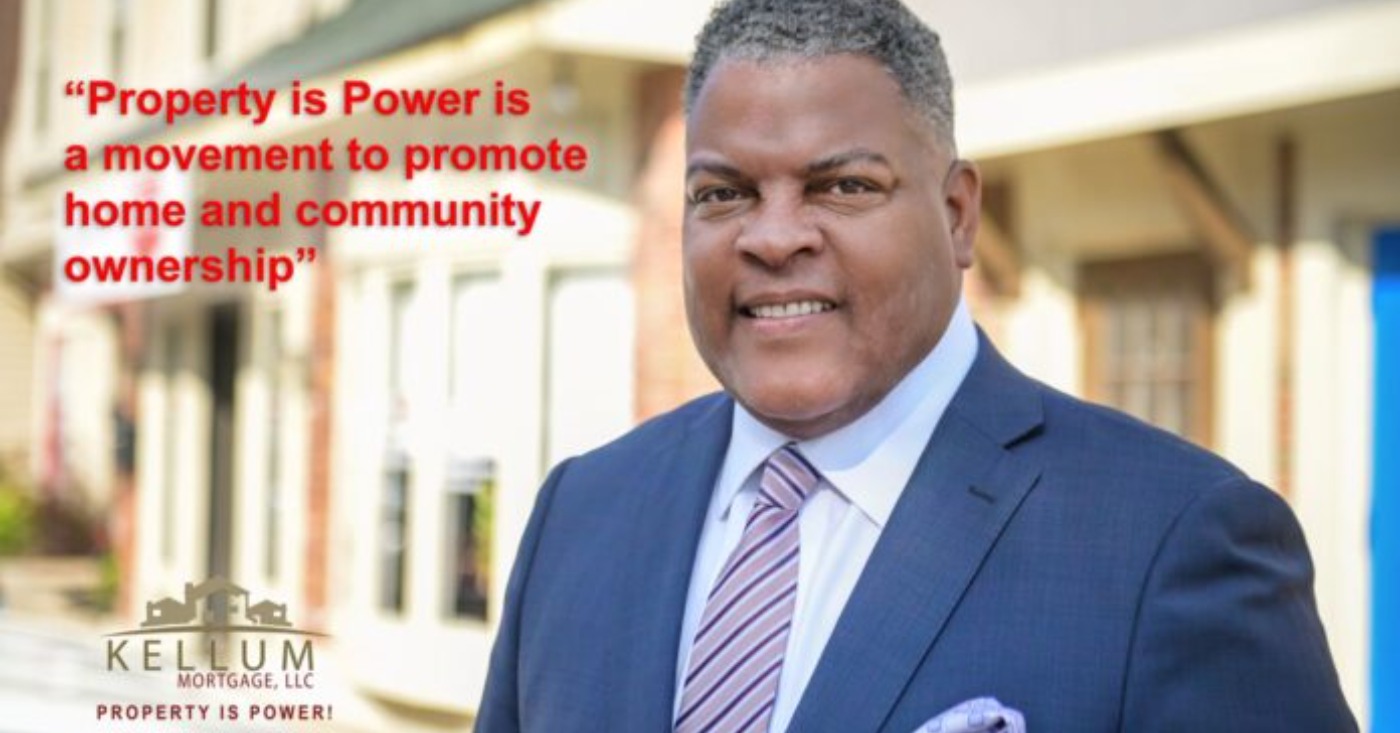
Property is Power! is a movement to promote home and community ownership. Studies indicate homeownership leads to higher graduation rates, family wealth, and community involvement.
Based on reporting by Michigan Chronicle.
Auto
Consumers and States Awarded $694 Million After Predatory Auto Lender Settles Lawsuit
WASHINGTON INFORMER — A class-action settlement involving predatory auto lender Credit Acceptance Corporation (CAC) has resulted in $694 million in relief for an estimated 55,000 consumers. Attorneys general from 40 states and the District of Columbia announced the settlement with one of the nation’s largest subprime auto lenders on September 18.

An estimated 55,000 consumers will benefit from a $694 million class-action settlement against a predatory auto lender reached by attorneys general in 40 states and the District of Columbia.
The settlement announced on Sept. 18 with Credit Acceptance Corporation (CAC), one of the nation’s largest subprime auto lenders, will provide the following financial relief for affected consumers:
- $630 million in debt relief for consumers — $388 million to consumers whose cars have been repossessed; the remaining $246 million for those whose vehicles have not been repossessed and will now keep their autos.
- $60 million in restitution to thousands of additional consumers who were misled and lost their cars within months of taking out their loans.
- $15.5 million in reimbursement to each state office that comprised the multistate working group, and the National Association of Attorneys General.
“CAC preyed on consumers in New York and across the nation with false promises of affordable loans, only to exploit them with outrageous interest rates that ruined their credit and cost them their cars,” said New York Attorney General Letitia James, who led the multi-state effort. “While their customers struggled to make payments, CAC made millions. By continuing our case to hold CAC accountable, we secured hundreds of millions of dollars in debt relief and restitution for all those who were taken advantage of by their schemes.”
The lawsuit, originally filed in 2023, alleged that CAC projected, down to the penny, how much money it could extract from borrowers through loan payments, late fees, repossession and auction, debt collection, and wage garnishment, without considering a consumer’s ability to repay their loan, according to James. CAC then offered to split the projected collections with its affiliated dealers.
Low-income borrowers with either low credit scores or little credit history were routinely pushed into purchasing vehicles that were worth far less than their loans. CAC states on its own website: “Approval decisions are typically available in 30 seconds or less, and nearly 80 percent of deals are approved for funding within 24 hours.”
Further, CAC misstated key terms on loan agreements, including the principal and interest amounts, and did not disclose thousands of dollars in credit charges. Although the average loan carried an annual interest rate of more than 38%, other rates reached over 100%. These predatory debt trap loans soon defaulted within 12 or 18 months.
“Credit Acceptance Corporation set car buyers up to fail by making loans it knew they would never be able to afford, and by allowing dealers to inflate the cost of financing agreements with hidden add-ons. As a result, the company profited, even while customers lost their cars and continued to struggle with debt,” said District of Columbia Attorney General Brian L. Schwalb.
Other state officials had similar reactions to the settlement.
“Credit Acceptance Corporation closed its eyes to deceptive origination practices and made predatory, high-cost auto loans that were likely to result in repossession and leave consumers trapped in a cycle of debt,” said California Attorney General Rob Bonta.
Consumers eligible for restitution will be notified by a claims administrator. Consumers with questions about the settlement can call CAC’s customer service number at 800-634-1506.
The settlement also provides additional terms that will free affected consumers from many of the other financial harms inflicted, while other stipulations carry long-term, consumer-friendly reforms.
In the short term, CAC must contact and clearly inform consumers of any products they purchased and offer them a process to cancel those products while keeping their vehicles. It must also notify all affected consumers that their car loan accounts have been closed, no further payments are owed, any lien held has been released, and the certificate of title has been sent. Credit bureaus will also be notified of these actions.
For the next five years, CAC is required to submit written reports that demonstrate how it is complying with all aspects of the consent order. Any failure or shortcomings related to the order will prompt a mandatory remediation plan with details that identify how compliance will be achieved.
Other long-term settlement stipulations that CAC must observe:
- Providing consumers with pre-loan disclosures about the risks of default and the value of the vehicle.
- Limiting a price cap for vehicle prices to no more than 109% of retail book value for certain consumers.
- Implementing procedures that prevent dealers from raising car prices due to creditworthiness or above advertised prices.
Comments in a report released earlier this year by the Center for Responsible Lending showed how consumers with subprime credit scores, most of whom are Black, were left reeling from the effects of predatory car loans.
As Nicole, one participating consumer, noted, “You pay that and nothing, nothing ever changes.”
As CAC faces court-ordered reforms and restitution, Nicole and similar consumers can finally receive well-earned financial fairness.
Charlene Crowell is a senior fellow with the Center for Responsible Lending. She can be reached at[email protected].
Based on reporting by Washington Informer.
Art
From Ma Rainey to AI: New Technology Amplifies an Old Fight over Artist Control
HOWARD UNIVERSITY NEWS SERVICE — August Wilson’s “Ma Rainey’s Black Bottom” explores Ma Rainey’s struggle for control over her music during a 1920s recording session, highlighting conflicts over art, money, and power dynamics between musicians and business interests. Round House Theatre’s production, running through October 18 in Bethesda, Maryland, stages this historical fight, drawing parallels to contemporary issues.
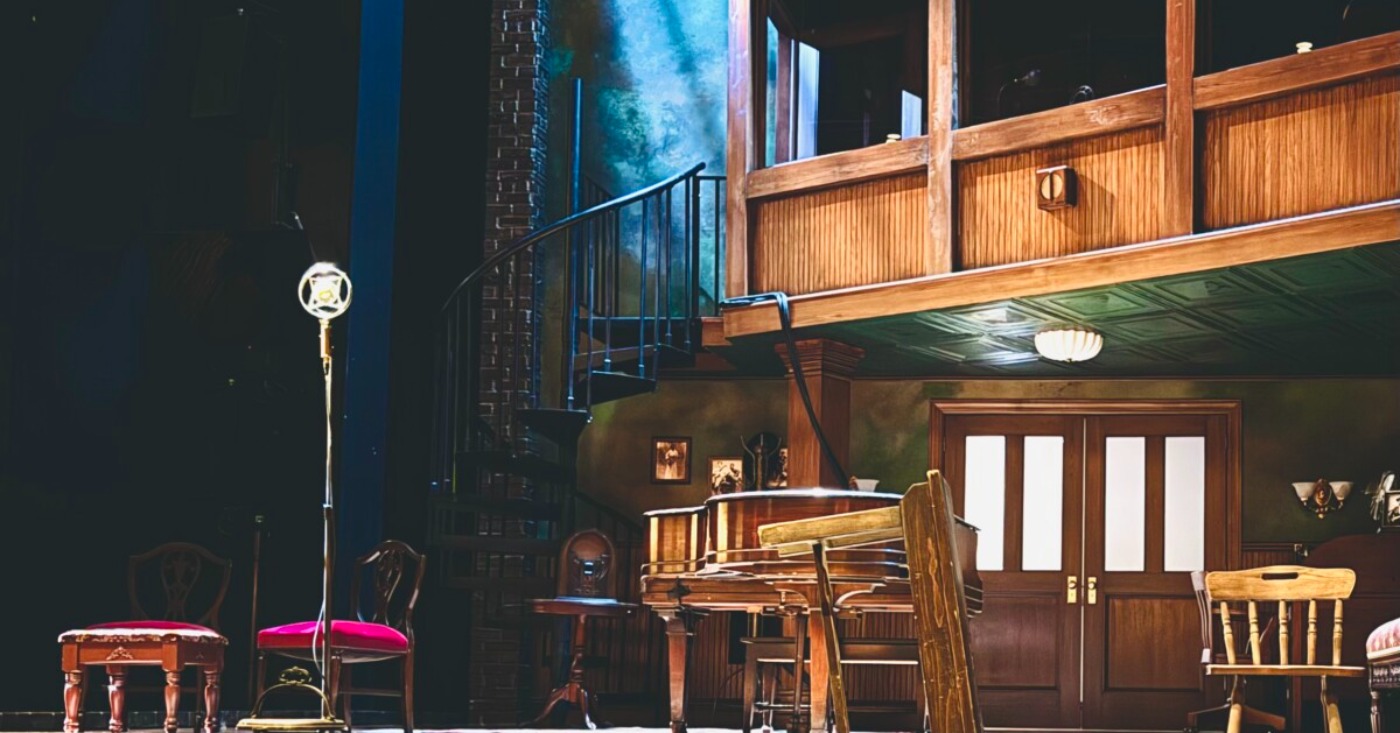
In August Wilson’s “Ma Rainey’s Black Bottom,” Ma Rainey fights to control what happens to her music once she enters the recording studio. Today, musicians are confronting a new question: What happens when artificial intelligence can profit from the identity attached to their music?
Round House Theatre’s production of “Ma Rainey’s Black Bottom,” which runs through Oct. 18 in Bethesda, Maryland, brings an older struggle over artistic control to the stage. Set during a recording session in 1920s Chicago, Wilson’s play follows Ma and her band as conflicts over art, money and control expose the imbalance between the musicians creating the work and the people conducting the business around it. That same question of who can profit from an artist’s value is now being tested in a very different setting nearly a century later.

Musicians Jason Isbell, David Lowery, Guy Forsyth and Eduardo Calle filed a class-action lawsuit on Aug. 31 against AI music company Suno. They allege that the company commercially exploits artists through an AI system capable of generating music imitating artists’ identities and styles without permission. Suno disputes the allegations.
The U.S. Copyright Office has also studied AI-generated digital replicas and recommended federal legislation to address gaps in protections against unauthorized replicas of a person’s voice or appearance. Its broader AI inquiry received more than 10,000 public comments.
For Nicole Michelle Haskins, who portrays Ma Rainey in the Round House production, the struggle over power begins with understanding Ma as more than a demanding recording star.
“She is the only advocate she has,” Haskins said. “The choices presented to her are to surrender or fight. Ma chooses to fight.”

Haskins said Ma enters the recording studio knowing the value that she brings, even as the people around her repeatedly challenge her decisions. She exercises her leverage and pushes back when others attempt to dictate how the session will proceed.
The real Gertrude “Ma” Rainey was one of the earliest Black women to record blues commercially. Between 1923 and 1928, she made more than 100 recordings for Paramount Records, according to the Smithsonian.
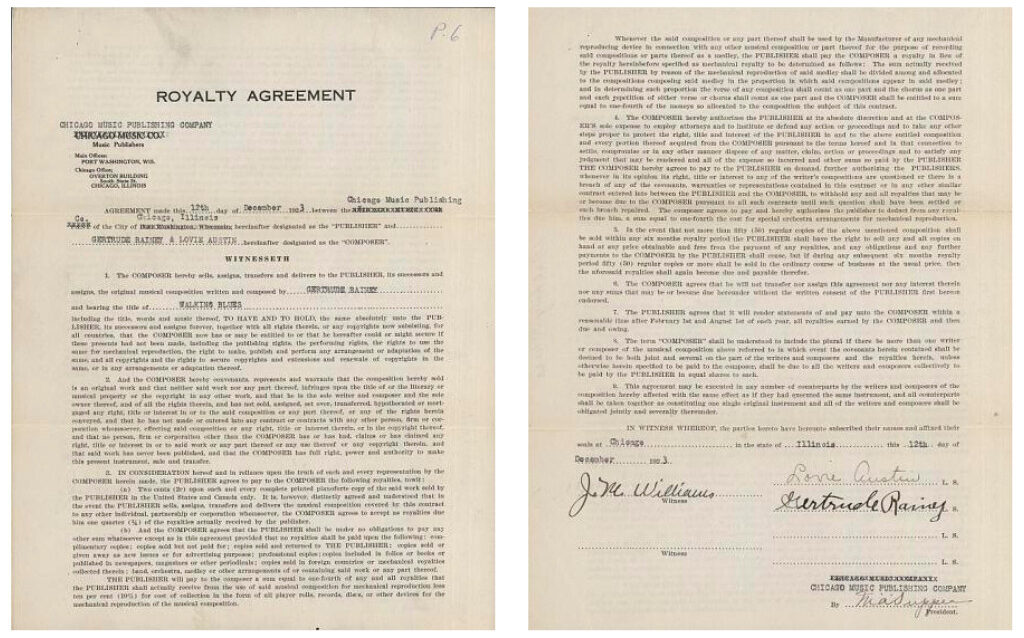
One surviving agreement shows how at least part of that business worked. A Dec. 12, 1923, royalty agreement for “Walking Blues,” signed by Rainey and composer Lovie Austin, provided them two cents for each printed piano copy sold in the United States and Canada. They were also entitled to one-fourth of the royalties the publisher received from mechanical reproductions, minus a 10% collection cost.
For Haskins, portraying a character negotiating those relationships does not feel entirely removed from being an artist today.
“The life that I live as an artist is not that dissimilar from the world that August Wilson has written,” Haskins said.
The technology surrounding artists, however, has changed dramatically.
The scale of AI-generated music has grown quickly. In July, streaming service Deezer said it was receiving about 90,000 fully AI-generated tracks a day, more than half of its daily uploads. Those tracks accounted for less than 3% of all streams.
The lawsuit against Suno is not primarily a traditional copyright case about whether an AI-generated song copied a particular recording. Instead, the musicians rely largely on state right-of-publicity laws, which concern the commercial use of a person’s identity.
According to the complaint, users can enter musicians’ names and use them as a retrieval key for AI-generated music drawing on characteristics associated with those artists. The plaintiffs argue that an output does not have to copy a specific song or perfectly reproduce an artist’s voice for the artist’s commercial identity to be exploited.
Suno disputes that characterization of its technology. The company has said it does not use artists’ names as training metadata and does not permit users to prompt its system for specific artists. Suno says references to artists are filtered and redirected toward descriptions of musical characteristics. Its own prompting guide, for example, encourages users to describe features such as tempo, vocals and instrumentation, using phrases like “bright pop track,” “110 BPM,” “female vocals” and a “big synth hook.”
The Suno dispute centers on more than ownership of a particular song or recording. It raises the question of whether an artist’s name, likeness and other identifying characteristics can be used commercially to generate new music without permission.
Haskins resists describing that underlying conflict as merely contemporary.
“I don’t think they feel contemporary,” Haskins said of Ma’s concerns. “I think they feel worldly.”
For Haskins, AI is one setting for a larger struggle over who has power over creative work. She said the problem of Black people being separated from control of things they created has existed far longer than the technology now raising those questions. The Library of Congress notes that early record companies sometimes used white performers to record music associated with Black artists rather than hire the Black performers themselves, while Black musicians remained rare on early commercial recordings.
“It just hasn’t stopped happening,” she said.
That interpretation shapes the way Haskins portrays Ma’s fight for control. She pointed to a brief moment in the second act when Ma’s manager attempts to steer her toward a different song. Ma refuses and proceeds with the recording she intends to make.
Haskins said the moment stands out precisely because Ma does not need a dramatic confrontation to establish who has the final say.
“She’s not demanding control. She’s not asserting control,” Haskins said. “She is simply positioning herself in correct order.”
La Tetra Metts-Owens is a reporter forHUNewsService.com. She covers Prince George’s County and theater.
Based on reporting by Howard University News Service.
Black Press
A Viral Moment with Purpose: Keep Your Head Up Gives Back
JACKSONVILLE FREE PRESS — An encouraging exchange between Jacksonville Editor Lynn Jones and Jaguars Coach Liam Coen quickly went viral, gaining national and international attention. The Jacksonville Free Press transformed this moment into an opportunity, creating “Keep Your Head Up” T-shirts.

What began as a few encouraging words to Jacksonville Jaguars Head Coach Liam Coen has grown into a community message – and a way to help nurture the next generation of journalists.
Earlier this year, Jacksonville Editor Lynn Jones offered spontaneous encouragement, telling him to ‘keep your head up’ and ‘keep it going.’ The exchange quickly went viral, gaining national and international attention across television sports programs, podcasts, social media and online video platforms.
The Jacksonville Free Press turned the unexpected attention into an opportunity to give back, creating “Keep Your Head Up” T-shirts inspired by Jones’ words. Hundreds of shirts have since been sold, with proceeds benefiting the Jacksonville Free Press Journalism Fund, which supports efforts to nurture, encourage and develop future journalists.
For Hammock and Bolden, the words extend beyond football. They said the message also serves as a reminder to their families to remain positive and keep moving forward through life’s victories and setbacks.
The shirts have allowed a fleeting viral moment to produce a more lasting impact. Proceeds from sales are helping support a fund focused on creating opportunities for aspiring journalists and encouraging young people to learn the importance of storytelling, community news and documenting history.
Based on reporting by Jacksonville Free Press.


Angel Reese Wins 2026 WNBA Defensive Player of the Year

What happens when purpose, leadership and resilience come together?

Car Dealer Add-Ons: What Protections Still STAND? #shorts

Defender Athlete Interview – John Rangel

Defender Athlete Interview – Elijah Eche

Inside a Century of Black Press Archives

The Defender Goes One on One with Congressman Christian Menefee

Demystifying the Retail Installment Sale Contract: Your Guide #shorts

CalAIM Helped Alfred Flores Rebuild His Life. Why Can’t More Californians Access Its Benefits?

Kia Seltos: Advanced Safety & Tech Features Explained #shorts

Latest Massacre in Haiti Reveals Cruelty U.S. Deportations

Black Americans Have Doubts About the U.S. Food System

When Praises Go Up: SUGC Nominated for Prestigious Stellar Award.

Booked and Unbound: The Legacy of Black Women’s Literary Circles

U.S. Sole Nation to Oppose U.N. Resolution Correcting Africa’s Size on World Maps

Prostate Cancer is Twice as Likely to Kill Black Men. Talking to Your Doctor Could Help Save Your Life

COMMENTARY: Big Mama Said ‘Don’t Let Grief Break the Bank’

Outnumbered: Elbert Cox’s Equation for Greatness

U.S. Open Influencers Spark Backlash over Ring Lights, Filming as Gauff and Osaka Speak Out

Passing for White, Fighting for Black America: The Courage of Walter White
What happens when purpose, leadership and resilience come together?
Car Dealer Add-Ons: What Protections Still STAND? #shorts
Defender Athlete Interview – John Rangel
Defender Athlete Interview – Elijah Eche
Inside a Century of Black Press Archives
The Defender Goes One on One with Congressman Christian Menefee
Demystifying the Retail Installment Sale Contract: Your Guide #shorts
Kia Seltos: Advanced Safety & Tech Features Explained #shorts

Carmen Meeks Turns Teachers’ Lessons Into a Legacy | 2026 Education Salute

2 Crucial Bolt EV Interior Details You MUST Inspect! #shorts
-
 Black History1 week ago
The Youngest American Killed in the Vietnam War
-
 Black History5 days ago
Remembering Chauncey Bailey as Student Journalists Face Threats to Truth-Telling
-

 Black Press2 days ago
OP-ED: Haiti TPS: Have We Lost Sense of Humanity?
-

 Art1 week ago
Peter Magubane: a Camera Against Apartheid
-

 Featured1 week ago
Headlines and Hotlines 📱
-

 Black Press5 days ago
Poll: Becerra Widens His Lead Over Hilton; Californians Split on Wealth Tax