
Law
Waters, Scott, Brown & Murray: ‘SEC, Increase Investor Protections’
NNPA NEWSWIRE — “For far too long, certain financial professionals have been able to game the system and choose a standard of care that allows them to put their interests and profit motives ahead of their retail clients…”


WASHINGTON — Congresswoman Maxine Waters (D-CA), Ranking Member of the House Committee on Financial Services; Congressman Bobby Scott (D-VA), Ranking Member of the House Committee on Education and the Workforce; Senator Sherrod Brown (D-OH), Ranking Member of the Senate Banking Committee, and Senator Patty Murray (D-WA), Ranking Member of the Senate Health, Education, Labor and Pensions Committee, sent a letter to Securities and Exchange Commission (SEC) Chairman Jay Clayton urging the SEC to revise its proposed regulations (Regulation BI) governing the standards of care owed by broker-dealers when providing retail investors with personalized investment recommendations. This would require brokers to abide by the same high standard that currently applies to investment advisers so that all advice to retail investors is provided without regard to the financial or other interests of the adviser.
“For far too long, certain financial professionals have been able to game the system and choose a standard of care that allows them to put their interests and profit motives ahead of their retail clients,” the Ranking Members wrote. “As a result, hardworking Americans have lost out on millions of dollars that could have been used to save for their children’s college, buy a home, or save for retirement. While we are pleased that the SEC is finally acting to address this issue, Regulation BI falls woefully short.”
Read the full letter below.
The Honorable Jay Clayton
Chairman
U.S. Securities and Exchange Commission
100 F Street, NE
Washington, DC 20549Dear Chairman Clayton:
We write to urge the Securities and Exchange Commission (SEC) to put retail investors first and revise its proposed regulations governing the standards of care owed by broker-dealers when providing retail investors with personalized investment recommendations (referred to herein as “Regulation BI”).
For far too long, certain financial professionals have been able to game the system and choose a standard of care that allows them to put their interests and profit motives ahead of their retail clients. As a result, hardworking Americans have lost out on millions of dollars that could have been used to save for their children’s college, buy a home, or save for retirement. While we are pleased that the SEC is finally acting to address this issue, Regulation BI falls woefully short.
The best way for the SEC to protect investors and reduce confusion is require all brokers and advisers, regardless of their titles, to comply with the same fiduciary standard that puts their clients’ interests first. In passing Section 913(g) of the Dodd-Frank Wall Street Reform and Consumer Protection Act of 2010, Congress provided the SEC with the authority to do this so that the standard of conduct for a broker or dealer would be the same high fiduciary standard applicable to an investment adviser. Under Section 913(g) brokers, dealers and investment advisers would be required to “act in the best interest of the customer without regard to the financial or other interest of the broker, dealer, or investment adviser providing the advice.” That section was motivated by clear evidence that the current standards were confusing to investors, unfair to professionals, and not sufficiently protective of investors.[i] [ii] [iii][iv]
However, the SEC has proposed Regulation BI under Section 913(f), a less specific subsection that authorizes the SEC to conduct rulemaking on the standards of care for advisers considering the results of the mandatory study under Section 913(b). This decision has led to a less protective proposal for investors that applies two distinct standards: a “best interest” standard for brokers and a “fiduciary” standard for investment advisers, neither of which, as described by the Commission, matches the strong, enforceable standard set by Congress in 913(g). This is not what Congress intended and undermines the compromise that the House and Senate reached in Dodd-Frank.[v]
Moreover, it appears that the SEC did not adequately consider the results of its own study, as required by Section 913(f). As you know, that study specifically recommended that the SEC conduct rulemaking under Section 913(g).[vi]Instead, the proposal would impose some ill-defined best interest standard on brokers that requires them to act “without placing the financial or other interest . . . ahead of the interest of the retail customer.” This phrasing may seem similar to the language in Section 913(g), but its actual meaning and impact on brokers’ conduct is unclear. The SEC explains its decision on this aspect of the draft proposal based on the concern that brokers may inappropriately interpret the requirement in Section 913(g), to act “without regard to the financial or other interest,” to require broker-dealers to eliminate all conflicts of interest. That was clearly not Congress’s intent since, as the SEC acknowledges, Section 913(g) expressly provides that neither commission-based compensation nor offering only proprietary products would alone violate any uniform fiduciary standard.
We urge the SEC to revise its proposal consistent with Section 913(g) and require brokers to abide by the same high standard that currently applies to investment advisers so that their advice to retail investors is provided without regard to their financial or other interests. That standard must require brokers and investment advisers to put their clients’ best interests first under a duty of loyalty, and disclosure, while important, should not relieve them of this duty. Regulation BI for brokers and the SEC’s interpretation of the “fiduciary” obligation owed by investment advisers fail to clearly do this, enabling investors to “consent” to harmful conduct in complex and legalistic disclosures that most will never read and would not understand if they did.
While the proposal makes clear that the “best interest” standard is not the same as the detailed standard Congress set forth in Section 913(g), it fails to adequately explain just what it would require of brokers that is different from the status quo. Instead, the proposal suggests that a broker would violate its standard “if any recommendation was predominantly motivated by the broker-dealer’s self-interest.” Nowhere does the proposal define either “best interest” or “predominantly motivated.”
If the SEC intends to adopt a “best interest” standard, that standard should clearly differ from the current “suitability” standard, which has also been interpreted to require “that a broker make only those recommendations that are consistent with the customer’s best interest [and] prohibits a broker from placing his or her interests ahead of the customer’s interest.”[vii] In any final rule, the SEC must clearly explain the standard, what it requires and prohibits, and how it differs from the status quo. Without that clarification, retail investors will not be able to understand the difference between a fiduciary standard and a weaker “best interest” standard.
We appreciate that the proposal requires all brokers to have written policies and procedures reasonably designed to identify and disclose and mitigate, or eliminate, material conflicts of interest arising from financial incentives associated with such recommendations. However, the SEC should make clear that these policies and procedures should reduce the impact of conflicts in order to ensure that conflicts of interest do not undermine compliance with the best interest standard.
We are also concerned that proposed Regulation BI relies heavily on disclosures to investors without any evidence suggesting that these disclosures would be effective. At best these disclosure forms may further confuse investors; at worst they could lead to a false sense of security that the advice is in their best interest. While the various proposed forms summarizing the adviser-client relationship will be subject to investor testing to ensure their understanding, this must be an iterative process and language changes should be retested and subject to public notice and comment. These changes must inform and be incorporated into any final rule.
Finally, we welcome the SEC’s attempt to address investor confusion by prohibiting professionals that are not registered investment advisers from calling themselves “adviser” or “advisor.” However, the proposed approach is too narrow of a fix that fails to address the numerous other titles professionals use, including wealth manager, financial consultant, financial manager, money manager, investment manager, financial planner, or investment consultant. These titles are often used interchangeably between investment advisers, broker-dealers, and dual registrants. As a result, most retail investors cannot easily distinguish between financial advisers who are mere salespeople and those that are investment advisers that must provide advice that is in the best interests of the investor. To address this, we urge the SEC to adopt a more principles-based approach to preclude brokers from holding themselves out as investment advisers or acting in an advisory capacity.
For all of the foregoing reasons, we believe the SEC needs to amend proposed Regulation BI before it is finalized to ensure that investors’ hard-earned savings are protected and their interests are put first. If the SEC believes that it would be necessary to re-propose the rulemaking to make the changes discussed above, the Commission should do so.
Sincerely,
Maxine Waters
Ranking Member
Committee on Financial Services
U.S. House of RepresentativesRobert C. “Bobby” Scott
Ranking Member
Committee on Education and the Workforce
U.S. House of RepresentativesSherrod Brown
Ranking Member
Committee on Banking, Housing, and Urban Affairs
U.S. SenatePatty Murray
Ranking Member
Committee on Health, Education, Labor, and Pensions
U.S. SenateSen. Elizabeth Warren
Sen. Kirsten Gillibrand
Sen. Jeffrey A. Merkley
Sen. Catherine Cortez Masto
Sen. Cory A. Booker
Sen. Richard J. Durbin
Sen. Jack Reed
Sen. Robert Menendez
Sen. Dianne Feinstein
Sen. Tammy Duckworth
Sen. Bernard Sanders
Rep. Suzanne Bonamici
Rep. Michael E. Capuano
Rep. David N. Cicilline
Rep. Yvette D. Clarke
Rep. Elijah Cummings
Rep. Mark DeSaulnier
Rep. Keith Ellison
Rep. Adriano Espaillat
Rep. Al Green
Rep. Raul M. Grijalva
Rep. Pramila Jayapal
Rep. Hakeem Jeffries
Rep. Marcy Kaptur
Rep. Barbara Lee
Rep. Stephen F. Lynch
Rep. Carolyn B. Maloney
Rep. Marcia L. Fudge
Rep. Eleanor Holmes Norton
Rep. Jan Schakowsky
Rep. Nydia M. Velázquez
[i] See Statement of Denise Voigt Crawford, Texas Securities Commissioner and President of North American Securities Administrators Association, before the House of Representatives Committee on Financial Services (Oct. 6, 2009), available at https://www.gpo.gov/fdsys/pkg/CHRG-111hhrg55810/pdf/CHRG-111hhrg55810.pdf (“This is such an important issue for investors that Congress should explicitly direct the SEC to adopt rules no later than 1 year from passage of the Act mandating compliance by broker-dealers with the fiduciary duty standard established by the 1940 Investment Advisers Act.”); Statement of Richard G. Ketchum, Chairman and CEO, the Financial Industry Regulatory Authority (FINRA), before the House of Representatives Committee on Financial Services (Oct. 6, 2009), (“The Administration has proposed that the SEC write rules establishing consistent fiduciary standards of care for investment advisers and brokers providing investment advice. FINRA stands in agreement with numerous interested parties that the standard of care in both channels should be a fiduciary standard for the provision of advice. . . there should be no question that the requirement should be to put the customer first, and we believe that a fiduciary standard is the right way to do that.”); Statement of Mercer E. Bullard, Associate Professor, University of Mississippi School of Law, and President of Fund Democracy, before the House of Representatives Committee on Financial Services (Oct. 6, 2009), (“I strongly support the Act’s position that brokers should be subject to a fiduciary duty with respect to retail personalized investment advice.”); Statement of John Taft, Head of U.S. Wealth Management, on behalf of the Securities Industry and Financial Markets Association, before the House of Representatives Committee on Financial Services (Oct. 6, 2009), (“We are not proposing to water down or narrow the fiduciary standard. Quite the opposite. What we are proposing to do is extend its reach from the small set of activities it applies to, investment advisory activities, to all the activities and services we provide to individual investors.”); Statement of David G. Tittsworth, Executive Director and Executive Vice President, Investment Adviser Association, before the House of Representatives Committee on Financial Services (Oct. 6, 2009), (“I wish to reiterate our strong support for the Administration’s recommendation to require broker-dealers who provide investment advice to be subject to the same fiduciary standard as investment advisers.”); Statement of Stuart Kaswell, Executive Vice President and General Counsel, Managed Funds Association, before the House of Representatives Committee on Financial Services (Oct. 6, 2009), (“Investment advisers are subject to an existing, robust fiduciary standard with respect to their clients. We support extending that standard to broker-dealers . . .”).
[ii] Statement of Fred J. Joseph, President, North American Securities Administrators Association, before the Senate Committee n Banking, Housing, and Urban Affairs (Mar. 26, 2009), available at https://www.gpo.gov/fdsys/pkg/CHRG-111shrg53176/pdf/CHRG-111shrg53176.pdf (“NASAA also urges Congress to apply the fiduciary duty to all financial professionals who give investment advice regarding securities—broker-dealers and investment advisers alike. This step will enhance investor protection, eliminate confusion, and even promote regulatory fairness by establishing conduct standards according to the nature of the services provided and not the licensing status of the provider.”); Prepared Statement of Barbara Roper, Director of Investor Protection, Consumer Federation of America, before the Senate Committee on Banking, Housing, and Urban Affairs (Mar. 26, 2009), (“All those who offer investment advice should be required to place their clients’ interests ahead of their own, to disclose material conflicts of interest, and to take steps to minimize those potential conflicts.”); Prepared Statement of David G. Tittsworth, Executive Director and Executive Vice President, Investment Advisers Association, before the Senate Committee on Banking, Housing, and Urban Affairs (Mar. 26, 2009), (“[W]e believe any ‘harmonization’ of laws and regulations governing brokers and investment advisers should extend the investor protection benefits of investment adviser fiduciary standards to anyone who offers investment advice.”).
[iii] Statement of the Honorable William Francis Galvin, Secretary of the Commonwealth of Massachusetts, before the House of Representatives Committee on Financial Services (Mar. 20, 2009), available at https://www.gpo.gov/fdsys/pkg/CHRG-111hhrg48871/pdf/CHRG-111hhrg48871.pdf(“I urge the committee and the Congress to require that brokerages be in a fiduciary relationship with their customers, at least with respect to individual retail customers.”).
[iv] Prepared Statement of Paul Schott Stevens, President and Chief Executive Officer, Investment Company Institute, before the Senate Committee on Banking, Housing, and Urban Affairs (Mar. 10, 2009), available at https://www.gpo.gov/fdsys/pkg/CHRG-111shrg51395/pdf/CHRG-111shrg51395.pdf (“ The Capital Markets Regulator should have explicit authority to harmonize the regulatory regimes governing investment advisers and broker-dealers. . .We recommend that both types of intermediaries be held to a fiduciary duty to their clients.”); Statement of Mercer E. Bullard, Associate Professor, University of Mississippi School of Law, and President of Fund Democracy, before the Senate Committee on Banking, Housing, and Urban Affairs (Mar. 10, 2009), (“Congress should enact legislation that imposes a fiduciary duty on any persons who provide individualized investment advice or sell products pursuant to their providing of such individualized investment advice. Americans who naturally expect those providing fiduciary services to act solely in their clients’ best interests are entitled to nothing less.”); Prepared Statement of T. Timothy Ryan, Jr., President and Chief Executive Officer, Securities Industry and Financial Markets Association, before the Senate Committee on Banking, Housing, and Urban Affairs (Mar. 10, 2009), (“SIFMA has long advocated the modernization and harmonization of the disparate regulatory regimes for investment advisory, brokerage and other financial services in order to promote investor protection.”).
[v] Changes to the standards of conduct applied to broker-dealers and investment advisers were present in both the House and the Senate versions of financial regulatory reform. However, the House and the Senate had different approaches to this issue. The House approach was to harmonize the fiduciary standard for brokers, dealers, and investment advisers. The Senate approach was to have the SEC conduct a study to evaluate the effectiveness of existing standards of conduct for brokers, dealers, and investment advisers; submit a report of the study, with conclusions and recommendations, to the Senate Committee on Banking, Housing, and Urban Affairs and the House Committee on Financial Services; and begin rulemaking concerning any gaps or overlaps found by the study. Dodd-Frank forged a compromise between the House and Senate approaches.
[vi] SEC, Study on Investment Advisers and Broker-Dealers (Jan. 2011), https://www.sec.gov/news/studies/2011/913studyfinal.pdf
[vii] FINRA Regulatory Notice 12-25.













Black Press
Oakland Probate Dispute Raises Questions About Court-Ordered Property Transfer and Missing Notice
A legal dispute over an Oakland property has intensified following a tentative ruling that favored occupant Zakiya Jendayi, who claimed she was not properly notified before a judge ordered the property transferred into an estate. After the ruling, the estate’s administrator successfully challenged the presiding judge and requested the case be returned to the judge who signed the original transfer order. The First District Court of Appeal has now intervened to review the disqualification process and recent changes to the court docket. Read more.


Opinion and documentary analysis | Part 2 of 2
A tentative ruling found that Oakland property occupant Zakiya Jendayi had not received notice before a judge ordered its transfer into an estate.
The ruling was not final. Attention shifted to the assigned judge.
The estate’s special administrator, Phillip Campbell, invoked California Code of Civil Procedure Section 170.6 to disqualify Judge Stephanie Sato. The trial court granted the challenge Sept. 9, 2026.
Five days later, Campbell requested reassignment specifically to Judge Sandra Bean, who had signed the property order Jendayi sought to overturn.
The sequence raises questions about procedural fairness.
A Challenge After an Unfavorable Ruling
Sato’s Sept. 8 tentative ruling concluded that California’s notice requirement protected Jendayi as an occupant, regardless of whether Jendayi held a valid ownership interest.
Her proposed decision would have vacated Bean’s Oct. 8, 2025, order.
Section 170.6 permits challenges under certain circumstances. Whether Campbell’s challenge was timely was disputed.
On Sept. 14, Campbell sought Bean’s reassignment, citing her familiarity with related trust litigation, judicial economy and consistency. Jendayi opposed the request the following day.
The timing invites serious public scrutiny but does not establish misconduct.
The Appellate Court Intervenes
In Kaiser Foundation Hospitals v. Superior Court (1987), a California appellate court examined the danger of allowing litigants to learn a judge’s likely decision before seeking disqualification.
The decision also recognized that changed assignments and insufficient notice can affect when a challenge is permissible.
On Sept. 17, 2026, the First District Court of Appeal stayed the order granting Campbell’s challenge and requested briefing addressing Kaiser.
That intervention did not vacate Bean’s property order, restore the invalidated trust or conclusively decide whether Campbell’s challenge was improper.
It did place the reassignment dispute under appellate review.
Questions in the Docket
Two versions of the court docket present another unresolved issue.
A printout preserved through Sept. 15 lacked reassignment entries that appeared in a later version. The later docket listed reassignment to Bean and a clerk’s notice under Sept. 9.
The difference warrants an explanation of when the entries were created, entered and made publicly accessible.
It does not establish deliberate backdating.
Accountability Beyond an Order
Judges generally enjoy immunity from damages claims arising from judicial acts, even when serious error is alleged. That protection does not make their decisions immune from review.
Appellate courts can correct legal errors; California’s Commission on Judicial Performance can investigate misconduct but cannot reverse judgments.
For Jendayi, the central concern remains practical: How much litigation must an occupant undertake to enforce a notice requirement intended to protect participation before property rights are adjudicated?
The U.S. Supreme Court’s decision in Mullane v. Central Hanover Bank & Trust Co. underscores the importance of meaningful notice and an opportunity to object.
The record establishes contested filings, a tentative ruling and appellate intervention, not anyone’s private motives.
The public deserves a transparent, documented explanation of this consequential judicial process.
A judge’s signature should resolve a lawful dispute, not silence legitimate questions about how the decision was reached.
The case is Estate of Laura Dean Head, Alameda County Superior Court case RP20066047. Records are available through the court’s eCourt Public Portal.
Black Press
Lawyer-Turned-Contractor Hones Focus on Redeveloping Properties for Housing
BAY STATE BANNER — Donald Donnalson spent his childhood summers assisting his stepfather with contractor work, a job he initially disliked and vowed to never pursue professionally. After earning degrees from Boston College and Northeastern University Law School, Donnalson practiced law for several years before a return to contracting reignited his interest in the field. In 2011, he launched Beantown Builders, Inc.

Banner Business Sponsored by The Ujima Project
At a young age, Donald Donnalson helped his stepfather with contractor work during his summers off. He always hated it back then and vowed to never go into the profession.
After earning degrees from Boston College and Northeastern University Law School, he practiced law for a number of years. But when his stepfather asked for help with contracting as an adult, Donnalson “caught the bug.” He launched Beantown Builders, Inc. in 2011, which now focuses on housing builds including multifamily conversions, redevelopment of underutilized properties, and accessory dwelling units throughout Greater Boston and eastern Massachusetts.
“There are a lot of contractors in Massachusetts, and discovering what your niche is — for any entrepreneur, but especially in this industry — is super important,” he said, adding that their housing niche is important for its impact on the community.
“Greater Boston faces significant housing affordability and availability challenges, and we think that existing properties represent an opportunity to create additional housing without always requiring entirely new developments,” he said.
Donnalson started his company with incredible personal investment. He left his role as a finance manager for Audi Natick and liquidated his 401k to jumpstart the business.
“I basically just bet on myself. I didn’t have a project. I didn’t have anything. I was just like, I’m gonna go do this because if I don’t do it now, I’m never gonna do it,” he explained.
Today his minority-owned business is addressing the need for more housing while helping dispel broader distrust of contractors.
“Seeing a company like ours in the community that’s willing to learn more, do more, take on these experiences, and fill the gap where there seems like there’s not enough of us around is a big help,” he said, later adding that, “as an MBE [Minority Business Enterprise], we’re focused on building more than a successful construction company. We’re developing the people, systems and capabilities to take on increasingly complex projects while contributing to housing opportunities, economic development and the communities we serve.”
For Director of Marketing Alicia Zuniga, their mission helps guide the work and build trust with customers. Beantown’s clients are a mix of homeowners, families and property investors.
The team “understands construction is about much more than buildings. Behind every project are people with goals, expectations and important decisions to make,” Zuniga said.
Donnalson said one of the biggest obstacles he currently faces is attracting and keeping the best talent to help on projects, which have taken the team as far south as Fall River and North Attleboro and as far north as Lynn.
They recently supported The Guild nonprofit in constructing a community-oriented urban space, turning a hillside into public green space with paths and areas to gather. Landscape architects at Landworks Studio designed the urban forest project while Beantown supported the build, including masonry and permeable paving.
“Projects like this reflect our belief that construction can do more than improve individual properties; it can also contribute to the neighborhoods and communities around them,” Donnalson said
Based on reporting by Bay State Banner.
Black Press
Birmingham on Pace for Fewest Homicides in 75 Years
BAKERSFIELD NEWS OBSERVER — Birmingham, Alabama, is currently on track to record its lowest annual homicide total in approximately 75 years. According to the Birmingham Police Department’s third-quarter briefing, the city recorded 34 homicides through October 1, representing a significant decrease from the 61 reported at the same time last year and the 129 reported by October 2024.

Birmingham, Alabama, is on pace to close 2026 with its fewest homicides in roughly 75 years — a turnaround for a majority-Black city that for decades made national headlines for its murder rate.
Birmingham police counted 34 homicides through Oct. 1, down from 61 at the same point in 2025 and 129 at the same point in 2024, Police Chief Michael Pickett said at the department’s third-quarter briefing. The city’s lowest annual total on record is 44, set in 1951. Just two years ago, Birmingham recorded 152 homicides, its deadliest year.
“I did not think that we would have this much of a reduction but of course that’s always the goal,” Pickett said. He put the drop at 74% compared with 2024 and said the department has cleared 91% of this year’s cases.
“Birmingham is on track for our fewest homicides in 75 years,” Mayor Randall Woodfin wrote on Facebook this month, crediting the officers of the Birmingham Police Department, Pickett, and the city’s community violence intervention workers.
The city’s bet runs on two tracks. On the policing side, Pickett has pointed to the department’s crime reduction plan, enforcement targeting illegal firearms, and cooperation with federal agencies. On the community side, Birmingham has put about $5.4 million in American Rescue Plan money into violence intervention programs: a hospital-based partnership with UAB Hospital, the Jefferson County Department of Health, the Offender Alumni Association, and Violence Intervention and Prevention Partners that places specialists at the bedsides of people wounded by gunfire; a street outreach team run with the Urban League of Alabama; a Group Violence Reduction Strategy with the National Institute for Criminal Justice Reform; and One Hood. With the one-time federal dollars expiring, the city council extended the hospital-linked program through June 2027 with $1.15 million and put $3 million for community violence intervention — a $1.5 million increase — into the city’s fiscal 2027 budget. Whether every program is fully covered once the federal money runs out remains unclear.
The honest caveats: murders are falling across the country, too — crime analyst Jeff Asher projects the lowest U.S. murder rate ever recorded in 2026, after the FBI reported the national homicide rate hit a 75-year low in 2025 — and nobody can prove which piece of Birmingham’s approach drove the drop. One category is moving the wrong way: domestic violence offenses are up 18.3% this year, the chief said. “This is not something the police department can handle alone,” Pickett said of the domestic violence increase.
Two accounting notes readers deserve: the mayor’s latest post says homicides are down 46% from last year, while the police department’s own Oct. 1 numbers work out to about 44% — and a May fact-check by ABC 33/40 found an earlier Woodfin figure slightly overstated. Separately, Bhamwiki counts 38 homicides as of Oct. 1 because it includes police-involved and justified cases; the police count is 34. And the pace math matters: 34 homicides through Oct. 1 projects to roughly 45 for the full year — just above the 1951 record of 44. So “fewest since 1951” is within reach; a new all-time low likely isn’t.
What’s working to make your neighborhood safer? Tell us.
Drafted by News Observed Editorial AI, human reviewed and published.
Based on reporting by Bakersfield News Observer.
Black Press
Ancestral Responsibility: Young Native Voters Fight Political Invisibility
NORTH DALLAS GAZETTE — Native American communities are mobilizing ahead of the November election to challenge long-standing systemic barriers and political invisibility. Recent data from the First Nations Development Institute refutes media narratives regarding Native voting patterns, showing that a majority of self-identified Native voters supported Kamala Harris in the 2024 election.

A mobilization is unfolding across tribal nations ahead of the November election. Driven by real data and a rising wave of young organizers, Native American voters are challenging systemic barriers to political power.
For generations, Native Americans have been treated as an invisible constituency in public life. Michael Roberts, president and CEO of the First Nations Development Institute, said that misrepresentations about native voters have clouded media narratives over recent years. Following the 2024 presidential election, relying on flawed national exit poll data, media placed some blame on Native Americans for the political shift.
“So while the media was trying to find a brown boogeyman on why Mr. Trump was in office … we had real data to show just the opposite,” noted Roberts.
A First Nations sample of 500 to 1,000 self-identified native voters revealed that 57 percent voted for Kamala Harris.
Roberts said the data showed attitudes reflective of the general public. Native voters are deeply concerned with inflation, the economy, affordability, and housing access. Yet they are also uniquely driven by tribal sovereignty, native languages, and cultural traditions. These cultural issues often drive them to the polls more than everyday pocketbook concerns.
Politically, Native Americans are not a monolith. With 475 tribes spread across 38 states and territories, traditional party lines are difficult to find. Roberts noted that analysts cannot view native voters through a simple black-and-white, Republican-or-Democrat lens.
Despite their potential to swing critical regions like Michigan and Alaska, native communities are largely ignored by major campaigns. First Nations data indicates that 50 percent or more of native voters have never been contacted by election campaigns. And nonprofit groups representing these communities remain severely underfunded.
Systemic barriers compound the neglect. Melissa Rogers, a professor of politics and policy at Claremont Graduate University, said upwards of 50 percent of native populations live within 20 miles of tribal homelands, debunking the myth of a sharp urban-rural Indian divide. Yet sadly, voting costs and distance barriers remain high on tribal lands.
Many reservations are so rural that residents must travel to distant county seats to collect mail or to register and vote. In Nevada, Duck Valley Reservation residents historically faced a 100-mile one-way drive to the Elko County seat just to cast a ballot or register in person.
Rogers noted that academic research shows tribal voting surges when registration and polling places are established directly on tribal lands.
Alternative options like mail-in voting face severe trust issues due to recent political attacks. Additionally, strict voter identification laws disproportionately disenfranchise native voters who often lack traditional physical addresses or state driver’s licenses.
In North Dakota, where the native vote is vital to a current Senate race, the state abruptly disallowed non-traditional addresses and post office boxes. Rogers warned that restrictive ballot deadlines, such as Arizona’s requirement that ballots arrive by election night, threaten to disenfranchise voters on the Navajo Nation due to slow rural mail delivery.
A historical skepticism remains, tied to past trauma. Rogers said federal government workers knocking on doors historically meant taking children, land, and resources from native households. The distrust extends to the census, which has long undercounted reservation populations.
A new crisis unfolds as federal proposals threaten to eliminate the American Indian and Alaska Native racial designations from official counts. Policy and funding decisions rely on these figures. Rogers warned that excluding native counts would devastate federal tribes.
In response, Native Organizers Alliance Executive Director Judith LeBlanc, a citizen of the Caddo Tribe of Oklahoma, said a national survey of 16,000 native people showed a fierce commitment to cultural continuity and essential human services.
When Congress pushed to try to make Big Cyprus into a wilderness area, which would have destroyed 11 traditional villages, burial grounds and medicine collection areas, her organization stood up for the rights of natives.
They also stood up for the rights of nature, and with the help of environmental groups, were able to document and mitigate the damage done by Alligator Alcatraz.
The organization’s surveys are fueling a new urgency among young voters. In Maine, Sage Phillips, co-coordinator of the Wabanaki Policy Youth Initiative, is leading youth to register voters, educate elders, and lobby the state house.
Wabanaki youth are pressuring candidates in gubernatorial, congressional, and local races to amend the 1980 Maine Indian Land Claims Settlement Act, which currently blocks local tribes from accessing beneficial federal laws.
Activists say the movement is about fulfilling an ancestral responsibility to protect sovereignty, lands, and future generations. But, the final hurdle rests on the integrity of the polling places themselves.
Over the last decade, targeted attacks on the voting system have made access significantly harder, Rogers said.
For information regarding local polling place availability, hours of operation, and rules ensuring a secure voting environment, citizens should check with official county election authorities and state election boards.
Ensuring that future elections remain open, equitable, and free of intimidation is critical for all citizens—especially American Indian voters.
The post Ancestral Responsibility: Young Native Voters Fight Political Invisibility appeared first on North Dallas Gazette.
Based on reporting by North Dallas Gazette.
Black History
Federal Agents Search Ilhan Omar’s Home Just 22 Days Before Election
WASHINGTON INFORMER — Federal agents searched the D.C.-area home of Rep. Ilhan Omar (D-Minn.) on Monday, 22 days before Election Day. This extraordinary step involved executing a criminal search warrant against a sitting member of Congress.

Federal agents searched the D.C.-area home of Rep. Ilhan Omar (D-Minn.) on Monday, taking the extraordinary step of executing a criminal search warrant against a sitting member of Congress just 22 days before Election Day, as the Trump administration investigates allegations involving her family’s immigration records.
The search immediately drew accusations of political intimidation from Omar’s supporters, who pointed to President Donald Trump’s repeated attacks on the Minnesota congresswoman and questioned the timing of an investigation targeting one of his most outspoken critics.
“Representative Omar is a dedicated public servant and a true ally for working families, and Donald Trump has done nothing but use racist tropes and stereotypes to attack her,” said Joel Payne, MoveOn’s chief communications officer. “Now, he’s abusing his power to physically intimidate and harass her.”
A Justice Department spokeswoman acknowledged that Homeland Security Investigations agents, part of Immigration and Customs Enforcement, searched a District residence as part of an ongoing federal criminal investigation.
The spokeswoman declined to provide additional information or publicly identify the person under investigation.
According to published reports, the warrant identified possible violations involving false statements, immigration document fraud and conspiracy. Federal investigators have also examined questions concerning Omar’s finances, campaign funds and interactions with foreign citizens.
No criminal charges against the congresswoman were identified, but Monday’s search occurred less than four weeks before voters decided whether to return Omar to Congress.
The investigation follows months of public accusations from senior Trump administration officials, including Vice President JD Vance, who previously claimed that Omar committed immigration fraud.
In an interview with conservative commentator Benny Johnson, Vance asserted, without publicly presenting evidence, that the administration believed Omar had broken immigration laws. He also said he and White House deputy chief of staff Stephen Miller had discussed how to pursue the allegations.
“What are the legal remedies now that we know that she’s committed immigration fraud?” Vance asked during the interview. “How do you go after her? How do you investigate her?”
Omar has repeatedly rejected the accusations, including claims that she married her brother to facilitate immigration fraud. Her office dismissed Vance’s allegations in March as fabricated and defamatory.
Questions about the investigation intensified in August when Immigration and Customs Enforcement refused to release records sought under the Freedom of Information Act concerning allegations surrounding Omar’s 2009 marriage to Ahmed Nur Said Elmi.
The agency cited an exemption allowing law enforcement authorities to withhold records when disclosure could interfere with enforcement proceedings. The refusal did not establish that Omar committed fraud or, at the time, confirmed that she was personally under investigation.
Omar, who came to the United States as a refugee from Somalia, was elected to Congress in 2018 and became one of the first two Muslim women to serve in the House. She represents Minnesota’s 5th Congressional District, which includes Minneapolis, and has frequently challenged Trump over immigration enforcement, civil rights, and his administration’s treatment of immigrant communities.
Her confrontations with the administration have made her a recurring target of the president’s political attacks. The criminal investigation also follows a frightening incident earlier this year in which Omar was physically attacked during a public appearance.
On Jan. 27, a man attacked Omar during a town hall meeting at the National Urban League’s Twin Cities headquarters in Minneapolis. The incident prompted condemnation from the National Coalition on Black Civic Participation and its Black Women’s Roundtable, which demanded accountability and warned against political violence.
“We are shocked and extremely disturbed by the attack on Rep. Ilhan Omar yesterday while she attempted to address the critical issues and chaos swirling around in Minneapolis,” Melanie L. Campbell, president and CEO of the coalition and national convener of the Black Women’s Roundtable, said in a Jan. 28 statement.
Campbell praised Omar for continuing to speak out despite threats against her.
“We believe that NO public official should be threatened or physically attacked, especially when they are serving in the best interests of their constituents,” Campbell said. “Political violence and intimidation have no place in our democracy.”
MoveOn, the progressive advocacy organization, accused Trump of using federal law enforcement to intimidate a political opponent and urged voters to respond at the ballot box.
“On Nov. 3rd, we get our chance to fight back and hold him and his corrupt administration accountable,” Payne said.
Based on reporting by Washington Informer.
Black History
‘We Are Ready’: NAACP Launches Voter Protection Hub Ahead of Midterms
ATLANTA DAILY WORLD — The NAACP is launching a voter protection hub to protect voting rights ahead of the midterm elections. Voters can report intimidation and suppression via phone and online, with NAACP attorneys and legal volunteers investigating complaints and seeking emergency court intervention.
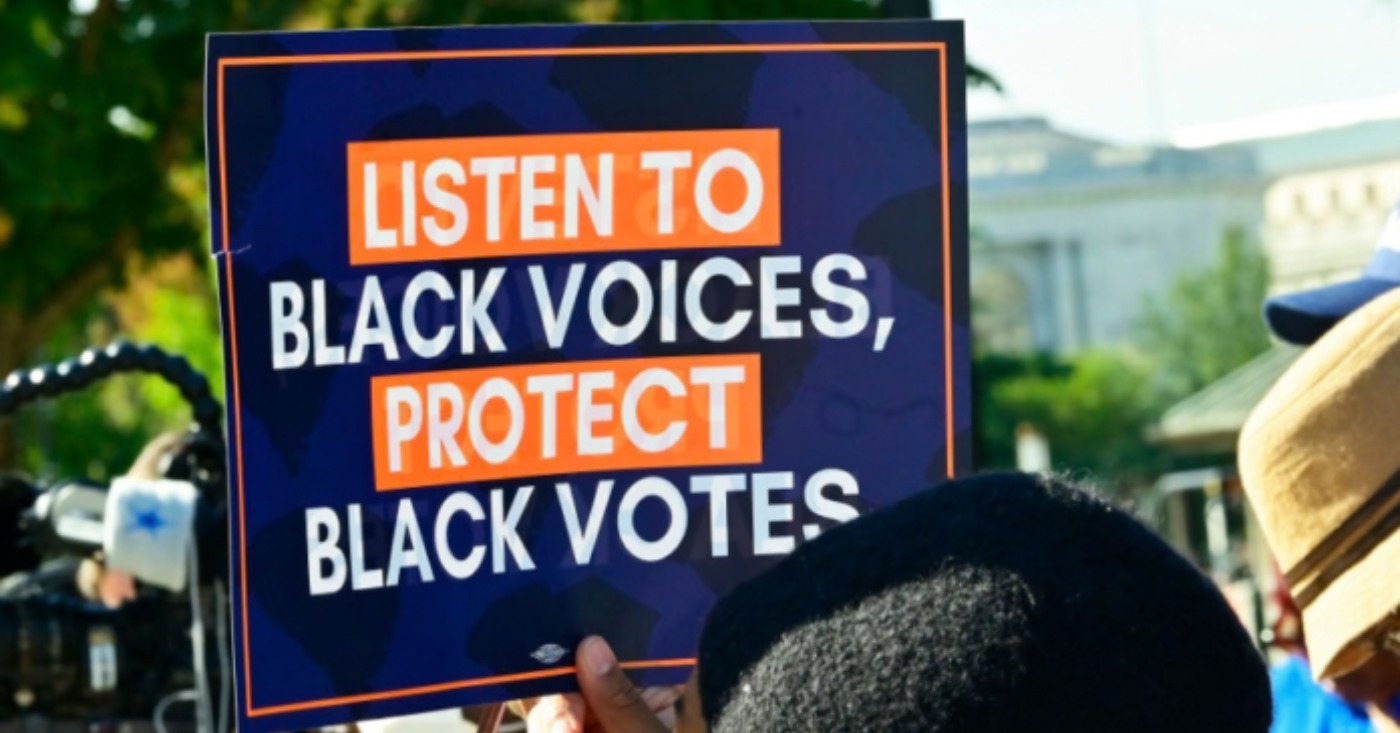
The NAACP is launching a voter protection hub ahead of the 2026 midterm elections as voting rights groups prepare for potential challenges at the polls.
Voters will be able to report allegations of intimidation and suppression by phone and through online submissions, while NAACP attorneys and legal volunteers investigate complaints and seek emergency court intervention when necessary.
According to The Washington Post, the hub is scheduled to launch October 24.
“We are ready,” NAACP General Counsel Kristen Clarke told The Washington Post. “We have an army of legal volunteers across the country and are prepared to activate and seek emergency relief on Election Day where necessary.”
The effort comes as organizations are also working to increase Black voter participation ahead of the midterms. BIN reported in September that the Congressional Black Caucus Institute launched its “SO VOTE” campaign, which plans to spend at least $4.5 million registering and mobilizing Black voters, young voters and rural voters.
The Associated Press reported that the campaign is targeting Georgia and Mississippi statewide, along with 16 congressional districts.
The NAACP is particularly focused on voter intimidation, changes to election rules and the impact of redistricting on Black voting power.
The organization filed a lawsuit against Justice Department Assistant Attorney General Harmeet Dhillon on Friday (October 2), seeking records about the department’s plans to deploy election monitors at polling places during the midterm elections.
“To be clear, there is no federal statute that gives the U.S. Department of Justice the right to send their so-called ‘election monitors’ to polling sites across the country,” Clarke said in a statement.
The NAACP’s voter protection hub will give voters a centralized way to report problems and connect with the organization’s legal team during the election.
The Black Information Network is your source for Black News! Get the latest news 24/7 on The Black Information Network. Listen now on the iHeartRadio app or click HEREto tune in live.
Based on reporting by Atlanta Daily World.


Test Subaru’s 11.6-Inch Screen in REAL Daylight #shorts

EV Range Anxiety? Your Daily Commute Needs Just One Overnight Charge #shorts

Headline: FAMU Homecoming Injuries, Discarded Ballots & Rising Holiday Costs 📱

Headline: FAMU Homecoming Injuries, Discarded Ballots & Rising Holiday Costs

OTR @ Par 365

OTR w LeBrent Speed

OTR w Terresa Moses @ Black Garnett Books

Stay Focused: Make Your Vote Count This Election

Confused by Your Ballot? Joy Reid’s Tips for Houston Voters

Confused by Your Ballot? Joy Reid’s Tips for Houston Voters

OP-ED: Haiti TPS: Have We Lost Sense of Humanity?

Remembering Chauncey Bailey as Student Journalists Face Threats to Truth-Telling

All Skinfolk Ain’t Kinfolk

Poll: Becerra Widens His Lead Over Hilton; Californians Split on Wealth Tax

Rulings Leave Questions Lingering in Nolan Wells Case

Latinas Deserve Equal Pay. Unions Help Make It Happen.

Zakiya Jendayi Arrested, Locked Out of Home by Sheriff’s Deputies

Why Black Artists Struggle to Sell Tours

COMMENTARY: The Audacity of Joyce Beatty

A $2.1 Trillion Wellness Industry Never Built a Daily Practice for Black Children. So This Atlanta Family Did.
Test Subaru’s 11.6-Inch Screen in REAL Daylight #shorts
EV Range Anxiety? Your Daily Commute Needs Just One Overnight Charge #shorts
Headline: FAMU Homecoming Injuries, Discarded Ballots & Rising Holiday Costs 📱
Headline: FAMU Homecoming Injuries, Discarded Ballots & Rising Holiday Costs
OTR @ Par 365
OTR w LeBrent Speed
OTR w Terresa Moses @ Black Garnett Books
Stay Focused: Make Your Vote Count This Election
Confused by Your Ballot? Joy Reid’s Tips for Houston Voters
Confused by Your Ballot? Joy Reid’s Tips for Houston Voters
-

 Black History1 week ago
OP-ED: The Black Church Writes AI’s Next Chapter
-

 Featured6 days ago
Tamiko Armstead | 2026 Lifetime Achiever in Education
-

 Black History1 week ago
Practitioners of African Traditional Spirituality Offer Ancestral Reverence Ritual Oct. 31
-
 Art1 week ago
Kickstarter CEO Everette Taylor Shares Tips on Creating and Growing a Business
-

 Black History1 week ago
Columbus’s Oldest Businesses Still Open: 10 That Have Lasted 75+ Years
-

 Black History1 week ago
COMMENTARY: BIG MAMA SAID: Don’t Throw Away the Gift Just Because It Came Wrapped Wrong
