
Religion
VISION: Catch the Vision and Run With It

By Pastor E.A. Deckard
Special to the NNPA from the Houston Forward Times
“The first step toward creating an improved future is developing the ability to envision it. VISION will ignite the fire of passion that fuels our commitment to do WHATEVER IT TAKES to achieve excellence. Only VISION allows us to transform dreams of greatness into the reality of achievement through human action. VISION has no boundaries and knows no limits. Our VISION is what we become in life. ” ― Tony Dungy
“A vision we give to others of who and what they could become has power when it echoes what the spirit has already spoken into their souls.” ― Larry Crabb
Forward Thinkers, as we continue to explore the importance of living with a God given vision, today we will unpack several key points with the desire to become vision carriers. We must first be able to envision the vision before we can set our thoughts on believing the vision; after we start believing it we will be in position to receive it and that step will allow us to begin running with the vision.
Isaiah 61:4 New International Version (NIV)
4 They will rebuild the ancient ruins and restore the places long devastated;
they will renew the ruined cities that have been devastated for generations.
Forward Thinkers, it is clear Isaiah’s vision is to see his community rebuilt, renewed, and restored. One of the greatest joys in life is to be operating under a God given vision aimed at rebuilding, renewing, and restoring others.
Forward Thinkers, once again it’s time to sound the alarm and equip ourselves to become vision carriers and restore our broken communities. God has called us to a vision just like He called Isaiah over the broken hearted, the hurt, the let down, the despaired, the oppressed and the depressed living in darkness.
Forward Thinkers, we must declare at all times the good news of Jesus Christ which has the power to encourage, empower, and equip the lost no matter what their issues are.
Forward Thinkers, God has left us with a winning playbook to overcome and recover from every set back in life. Psalm 34:19 (NIV) 19 “The righteous person may have many troubles, but the LORD delivers him from them all.” Forward Thinkers we can win and we can coach others how to win but we must first hear the vision, see the vision, catch the vision, and run with the vision.
Mark 5:25-34 (NLT)
25 A woman in the crowd had suffered for twelve years with constant bleeding. 26 She had suffered a great deal from many doctors, and over the years she had spent everything she had to pay them, but she had gotten no better. In fact, she had gotten worse. 27 She had heard about Jesus, so she came up behind him through the crowd and touched his robe. 28 For she thought to herself, “If I can just touch his robe, I will be healed.” 29 Immediately the bleeding stopped, and she could feel in her body that she had been healed of her terrible condition.
30 Jesus realized at once that healing power had gone out from him, so he turned around in the crowd and asked, “Who touched my robe?”
31 His disciples said to him, “Look at this crowd pressing around you. How can you ask, ‘Who touched me?’”
32 But he kept on looking around to see who had done it. 33 Then the frightened woman, trembling at the realization of what had happened to her, came and fell to her knees in front of him and told him what she had done. 34 And he said to her, “Daughter, your faith has made you well. Go in peace. Your suffering is over.”
Vs 25: Forward Thinkers, here in verse 25 we see a woman that has had an ISSUE for twelve years, not twelve seconds, not twelve days, not twelve months, but twelve long years. It appears her issues have her desolate, broken, hurting, bent over in a losing position in life, and sometimes in life we look like we are losing the game of life.
Forward Thinkers, sometimes in life it looks like our marriages are losing, our families are losing, our children are losing, our financing are losing, and it may even look like sometimes our faith walk is even losing. Forward Thinkers, we must believe that just because it looks like we are losing in life does not mean we have lost the game called life.
Forward Thinkers, remember the vision is for us to be victorious so we must not quit in the first quarter of life. We must always remember it is not how we start the game but how we finish the game that counts the most.
Vs 26-27: Forward Thinkers in verses 26-27 this woman clearly needs to be rebuilt. Forward Thinkers like many of us she has become physically tired dealing with her issues and like a tired running back in football she fumbles the ball and to make matters worse she even gets penalty on the play. Forward Thinkers we must continue to give God praise for allowing grace and mercy to recover our fumbles.
Forward Thinkers, whenever we look at the scoreboard of life and find ourselves down on the score with must continue to believe the vision says we “Win”. Matthew 19:26 (NIV) 26 Jesus looked at them and said, “With man this is impossible, but with God all things are possible.”
Forward Thinkers, after several unsuccessful plays this woman called the right play. Mark 5:26-27 (NIV) 26 She had suffered a great deal under the care of many doctors and had spent all she had, yet instead of getting better she grew worse. 27 When she heard about Jesus, she came up behind him in the crowd and touched his cloak. Forward Thinkers we must keep the vision centered around Jesus if we are going to be strong enough to keep pressing our way through.
Forward Thinkers, we must change our way of thinking if we are going advance after recovering all we lost in like during the first quarter. Notice what transpires in verse 28. Mark 5:28-29 (MSG) 28 She was thinking to herself, “If I can put a finger on his robe, I can get well.” The moment she did it, the flow of blood dried up. She could feel the change and knew her plague was over and done with.
Forward Thinkers, this woman showed us once again the power of our renewed thoughts; once she renewed his mindset her vision changed and her condition was corrected. We must operate with renewed minds daily if we desire to be vision carriers and live in total victory.
Forward Thinkers, let’s not forget to operate out of the winning playbook. Romans 12:2 (NIV) 2 Do not conform to the pattern of this world, but be transformed by the renewing of your mind. Then you will be able to test and approve what God’s will is—his good, pleasing and perfect will.
Forward Thinkers, now that this woman has been rebuilt and renewed its time for her to be restored back into her God ordained position of victory. Are you ready to be restored? Forward Thinkers after all this woman had experienced even being told by doctors her situation was hopeless she still pressed her way to Jesus, the great physician.
Mark 5:29 (NIV) 29 Immediately her bleeding stopped and she felt in her body that she was restored from her suffering.
Forward Thinkers notice when she changed her thinking it changed her actions and her situation changed immediately. Forward Thinkers God desires to do something about your situation but we must first renew our thinking and our actions must line up with our renewed thoughts. The Father, Son, and Holy Spirit is waiting on us to catch the vision so they can give us the victory.
Mark 5:30 (MSG) 30 At the same moment, Jesus felt energy discharging from him. He turned around to the crowd and asked, “Who touched my robe?”
Forward Thinkers Jesus is still waiting on us to touch Him; so He can restore our lives.
Mark 5:31-34 (MSG) 31 His disciples said, “What are you talking about? With this crowd pushing and jostling you, you’re asking, ‘Who touched me?’ Dozens have touched you!” 32-33 But he went on asking, looking around to see who had done it. The woman, knowing what had happened, knowing she was the one, stepped up in fear and trembling, knelt before him, and gave him the whole story. 34 Jesus said to her, “Daughter, you took a risk of faith, and now you’re healed and whole. Live well, live blessed! Be healed of your plague.”
Forward Thinkers, in conclusion this woman’s goes to play was her faith and in order for you to be rebuilt, renewed, and restored you are going to have to live by faith and not by sight. We saw this woman suffer for twelve long years but her faith keep her pressing until her breakthrough occurred. Forward Thinkers, don’t give up and remember Jesus said to this woman ‘your faith has healed you’ and that Jesus is waiting to restore you on today.
Pastor E. A. Deckard is the Senior Pastor/Founder of the Green House International Church now located, in both Houston, Texas, and the Woodlands, Texas. To contact Pastor Deckard for speaking engagements contact him at [email protected] or the church website www.ghic.net










Black History
Pleasant Zion Missionary Baptist Church Celebrates 100 Years of Spiritual, Mind, Body, and Soul Ministries
LOUISIANA WEEKLY — Pleasant Zion Missionary Baptist Church, located at 3317 Toledano Street in uptown New Orleans, is celebrating its 100th anniversary with a Centennial Weekend on October 17-18.
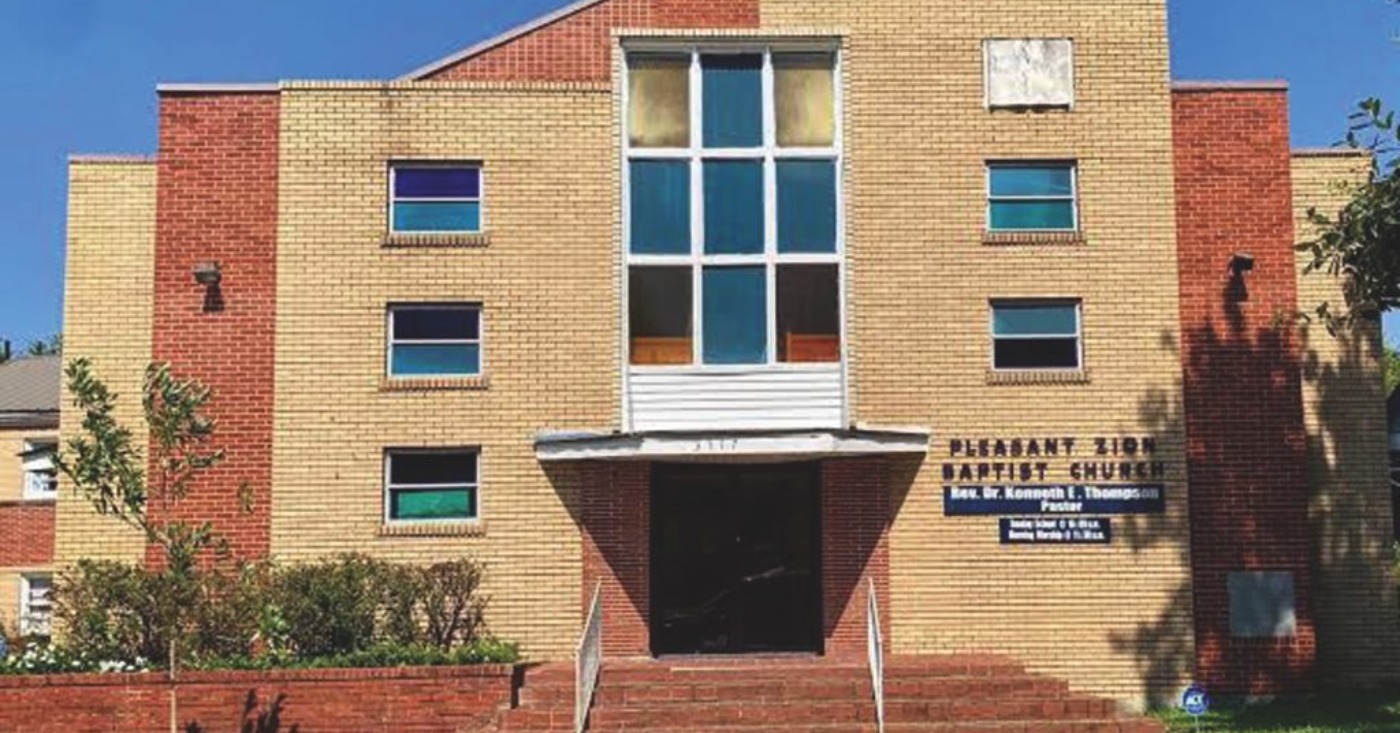
The legacy of the African-American church in the United States is that of a refuge, a caring and welcoming institution, a port in the storm, that has fed African Americans spiritually, economically, mentally and physically, and has nurtured the souls of people of African ancestry throughout their existence in America.
Pleasant Zion Missionary Baptist Church has carried on that legacy for the past 100 years. Established in 1926, Pleasant Zion MBC, located at 3317 Toledano Street, is a cornerstone of faith in uptown New Orleans and a beacon of hope for the Hoffman Triangle/Central City neighborhood.
Pleasant Zion MBC continues its mission of faith, education and empowerment for future generations. The church celebrates its 100th anniversary with a forward-looking Centennial Weekend, October 17-18.
Throughout its long history, Pleasant Zion has served its community by providing religious training and cultural, educational and recreational activities for children and adults. For decades, PZMBC has worked with neighborhood leadership to address issues such as neighborhood blight, housing and safety concerns.
Many have sought Pastor Kenneth E. Thompson’s confidential, wise counsel and comfort.
Pleasant Zion Missionary Baptist Church’s Centennial Celebration focuses on youth. “Our Centennial is not just about looking back – it’s about investing in our youth and building the future of our community,” Pastor Thompson affirms.
For decades, PZMBC has worked with neighborhood leadership to address issues such as neighborhood blight, housing, and safety concerns, Pastor Thompson adds.
During the summer, PZMBC sponsored summer enrichment camps for children with a range of activities, including culinary arts, STEM, music and field trips to museums and Black historic sites such as Armstrong Park.
The church has provided free food baskets, placed homeless women in hotel rooms, and provided financial assistance to people at risk of eviction or homelessness.
“Throughout its long history, Pleasant Zion has served the needs of its community by providing religious training, cultural, educational and recreational activities for both children and adults.
This upcoming Centennial Celebration honors a century of spiritual leadership while investing in the next generation, uplifting youth voices, education and sacred music.
Special guests at the celebration include the famous Zion Harmonizers. The world-renowned gospel group celebrated 87 years in gospel music with a special anniversary performance in March 2026 at St. John Institutional Missionary Baptist Sanctuary.
The program also features acclaimed Bishop Tyrone Jefferson, Voices of SUNO and the NORD Choir.
This article originally published in the October 12, 2026 print edition of The Louisiana Weekly newspaper.
Based on reporting by Louisiana Weekly.
Black Press
Allen Temple Baptist Church Hosts Free Prostate Cancer Screenings on Oct. 17
The summit’s mission is to reduce the impact of prostate cancer through education, early detection, research, and support. It is presented in partnership with The Oakland Institute of Health, Inc., SCAN, Brotherhood of Elders Network, UCSF Helen Diller Family Comprehensive Cancer Center, Alameda County Public Health Department, Stanford Medicine Cancer Center, Impact Oakland Now, Bay Area Umoja Health, Bay Area Black Nurses Association, Inc., and 100 Black Men of the Bay Area, Inc.
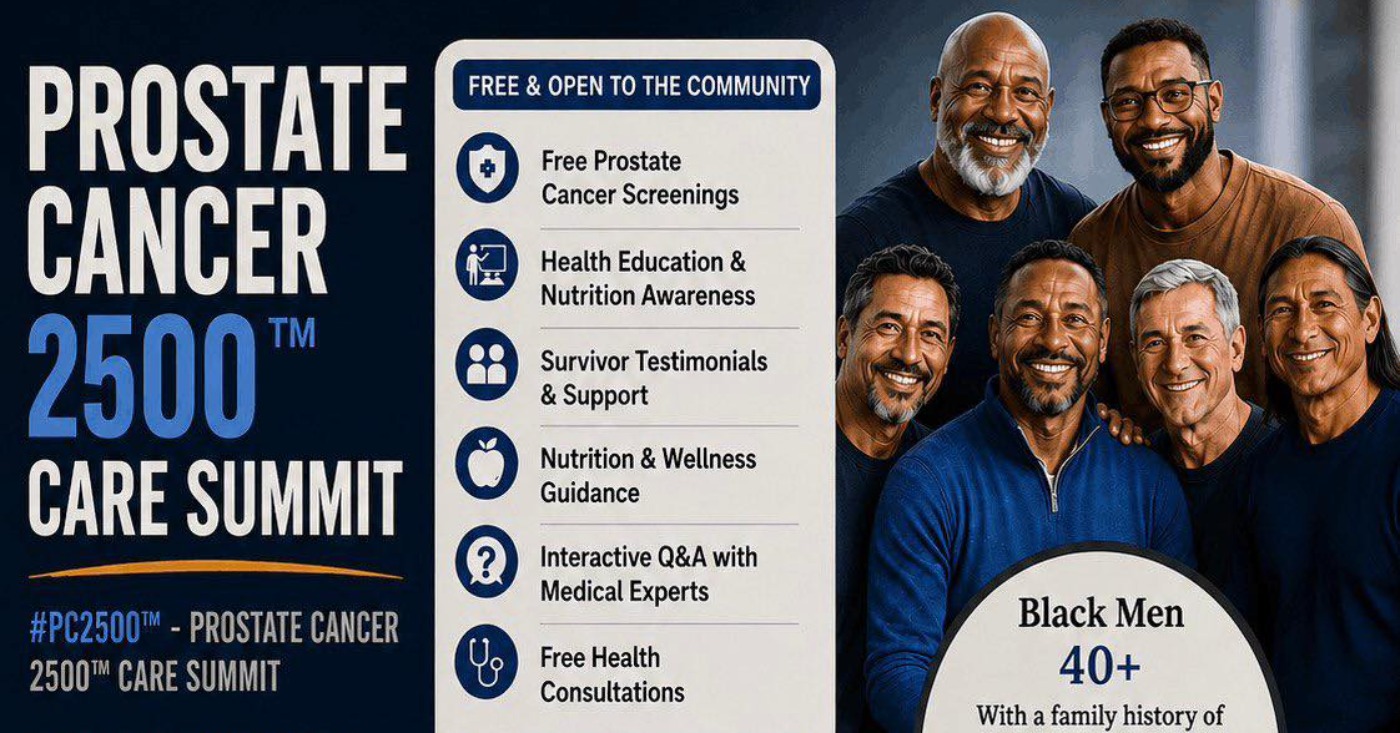
The Prostate Cancer 2500™ Care Summit brings together health systems, community organizations, and survivors to put early detection within reach
Black men in America are diagnosed with prostate cancer more often than other men and are about twice as likely to die from it. Early detection changes that outcome.
On Saturday, Oct. 17 from 10 a.m. to 2 p.m., Allen Temple Baptist Church will host the Prostate Cancer 2500™ Care Summit (#PC2500), a free event open to the entire community.
. Attendees can receive prostate cancer screenings and health consultations on site, learn about prevention and nutrition, ask medical experts questions in an interactive Q&A, and hear from survivors who will share their stories and offer support.
Screening is recommended beginning at age 45, and at age 40 for Black men with a family history of prostate cancer. All men are welcome, and families are encouraged to attend.
The summit’s mission is to reduce the impact of prostate cancer through education, early detection, research, and support. It is presented in partnership with The Oakland Institute of Health, Inc., SCAN, Brotherhood of Elders Network, UCSF Helen Diller Family Comprehensive Cancer Center, Alameda County Public Health Department, Stanford Medicine Cancer Center, Impact Oakland Now, Bay Area Umoja Health, Bay Area Black Nurses Association, Inc., and 100 Black Men of the Bay Area, Inc.
For more information prior to the event, reach out to Rev. Charlotte Y. Williams at (510) 604-5242 | [email protected]
For more information on the day of the event, reach out to Deacon Dwight Williams (510) 501-1650 [email protected]. The church is located at 8501 International Blvd., Oakland, CA 94621 The service is free and free parking and refreshments will be provided. The site is accessible to persons with disabilities. To pre-register, go to Allen-Temple.org
Allen Temple Baptist Church was organized in 1919 in Oakland. For 107 years, ATBC has served as a bright beacon of faith, hope, and love beyond its’ four walls. Allen Temple is committed to sharing the love of God and the message of Good News throughout the world. We welcome people of all ages and cultural backgrounds as we joyfully celebrate worship and fellowship, and carry out ministries of evangelism, discipleship, education, community outreach, and global missions. Allen Temple’s holistic, prophetic and social justice ministries address the needs of the whole person as well as the whole community. Dr. Jacqueline A. Thompson.
Rev. Charlotte Y. Williams is the minister and director of Communications at Allen Temple Baptist Church.
Black Press
Should You Have to Pay to Hear the Gospel?
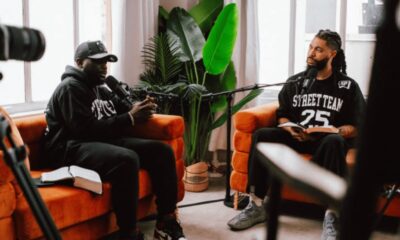
ST. LOUIS AMERICAN — Pastor Philip Anthony Mitchell of Atlanta’s 2819 CHURCH and Tim Timberlake of Celebration Church in Jacksonville, Florida, are at the center of a social media debate. The controversy stems from ticket prices for their “Street Preachers” podcast tour, with general admission tickets reportedly costing around $60 and VIP options up to $200.

For generations, the Black church has passed the offering plate to keep the lights on, pay the preacher, help the poor and carry the Gospel beyond its walls. But what happens when the preacher leaves the sanctuary, takes a popular Christian podcast on tour — and charges admission?
That question has placed Pastor Philip Anthony Mitchell, founder and lead pastor of Atlanta’s fast-growing 2819 CHURCH, at the center of a heated social media debate.
Mitchell and Tim Timberlake, senior pastor of Celebration Church in Jacksonville, Florida, host “Street Preachers,” which its official website describes as a “raw, unfiltered podcast” committed to spreading the Gospel.
‘A brood of vipers’
The controversy began after ticket prices for the podcast’s 2026 tour circulated online. General admission tickets reportedly cost about $60 before fees, with premium options, including a VIP meet-and-greet package, priced at $200. Critics questioned whether ministers should charge people to hear the Gospel.
Others defended the pastors, arguing that Christian events require venues, transportation, security, equipment and staff.
Mitchell answered critics from the pulpit last month, calling them “a brood of vipers.” He said the podcast is a separate, personal project and that neither his church nor Timberlake’s is bankrolling it.
“Now we have decided to go on a tour to take the gospel to cities, and because that’s not funded by 2819, and it’s not funded by Celebration Church, Tim and I gotta do that with our own pockets,” Mitchell said. “It’s why there is tickets. We have to pay for venues and security and productions and staff from our own pockets.”
Mitchell called some critics “ignorant” and said they did not know that a child was healed through faith during one of the events.
“And you want to complain about a 60 ticket?” he said. “So hate on!”
Worship service vs. media event
Mitchell maintains that “Street Preachers” is an independently produced podcast tour, not a worship service, and that ticket revenue helps cover production costs.
Yet the presence of pastors, Scripture and Gospel language makes the distinction less clear to some believers.
The official tour website lists all eight 2026 stops as sold out. Promotional material announcing additional dates promised, “Better ticket options. Same Gospel. Same move of God.”
Corporate prayer gathering
The language gets to the heart of the dispute. Some Christians argue that no one should be kept outside because they cannot afford a ticket. Others say the Gospel remains free even when people pay for the venue and experience surrounding its presentation.
The paid podcast tour, however, is not Mitchell’s only large-scale gathering. On Oct. 10, 2819 CHURCH will host “ACCESS — That Powerful Hour of Prayer” at AT&T Stadium in Arlington, Texas. Admission is free.
2819 CHURCH has said 80,000 free tickets were claimed before registration reopened.
The contrast raises another question: What makes one Gospel-centered event a ministry supported by donors and another a production supported by customers?
Unfiltered preaching, youth appeal
Mitchell’s congregation, composed largely of young Black adults, grew from fewer than 200 weekly worshippers in 2023 to about 6,000, according to the church. Some worshippers arrive before sunrise to secure a place inside.
His appeal rests partly in an intense, vulnerable and raw preaching style.
“I’m preaching without watering that down, without filtering out things that we think might be too controversial,” Mitchell told The Associated Press.
That visibility has also brought scrutiny of his theology, associations, travel, security and the businesses surrounding his ministry.
But the controversy reaches beyond Mitchell and Timberlake. Christian music concerts charge admission. Seminaries charge tuition. Religious publishers sell Bibles, books and devotionals. Churches pay musicians, media teams and guest preachers. Money becomes particularly uncomfortable, however, when an event is presented simultaneously as ministry and entertainment.
Ministry vs. entertainment
Supporters should not assume every dollar collected becomes personal profit. Critics, however, question whether lower-cost seats, sponsored tickets or free admission for people who cannot pay should be part of a Gospel-centered event.
The Black church always has required resources for ministry. It also has carried a sacred responsibility to make room for people with little or nothing to give.
The sold-out “Street Preachers” tour shows people are willing to pay to attend. The free ACCESS gathering offers a different model. The challenge is preserving that open door as Christian ministry increasingly adopts the machinery — and economics — of popular entertainment.
The post Should you have to pay to hear the Gospel? appeared first on St. Louis American.
Based on reporting by St. Louis American.
Black History
Ghana’s Ministry of Foreign Affairs Publishes Global Circle’s Vatican Reparations Call in Special Edition Alongside Heads of State
GLOBAL CIRCLE FOR REPARATIONS AND HEALING — Ghana’s Ministry of Foreign Affairs has published the Global Circle for Reparations and Healing’s submission, “From Accra to the Vatican,” in a special edition of The Ghanaian Envoy. This marks the first time a sovereign state has incorporated the Reparations Presentment to the Holy See into its official record. The 175-page edition, titled “Creating A New World,” also documents Ghana’s campaign that led to UN Resolution A/RES/80/250, which recognized the trafficking and enslavement of Africans as the gravest crime against humanity.

“From Accra to the Vatican” appears in The Ghanaian Envoy Special Edition on UN Resolution A/RES/80/250 — the first time a sovereign state has carried the Reparations Presentment to the Holy See into its official record
ACCRA, Ghana / CHICAGO, Illinois — October 7, 2026 — The Global Circle for Reparations and Healing today announced that its submission to Ghana’s Ministry of Foreign Affairs, “From Accra to the Vatican: A Call for a Global Plan of Action on Catholic Church Redress”, has been published in the Special Edition of The Ghanaian Envoy, the official newsletter of the Ministry of Foreign Affairs of the Republic of Ghana. The 175-page edition, titled “Creating A New World,” documents the Ghana-led campaign that culminated on March 25, 2026, in United Nations General Assembly Resolution A/RES/80/250, which declared the trafficking of enslaved Africans and the racialized chattel enslavement of Africans the gravest crime against humanity.
The Global Circle’s submission, authored by Co-Convener Kamm Howard, appears in Part V of the edition, “What Repair Must Now Mean,” at page 161. It shares the volume with statements by President John Dramani Mahama of Ghana, President Joseph Nyuma Boakai Sr. of Liberia, President Netumbo Nandi-Ndaitwah of Namibia, President Bassirou Diomaye Diakhar Faye of Senegal, President Carlos Manuel Vila Nova of São Tomé and Príncipe, President Emmanuel Macron of France, Prime Minister Mia Amor Mottley of Barbados, United Nations Secretary-General António Guterres, Foreign Minister Samuel Okudzeto Ablakwa, African Union Commissioner Amma Twum-Amoah, CARICOM Reparations Commission Chair Sir Hilary Beckles, Nobel Laureate Wole Soyinka, Dr. Julius Garvey, and Congressional Black Caucus Executive Director Vincent Evans, among others.
The submission traces the Global Circle’s delivery of the Reparations Presentment to the Holy See in Vatican City on July 18, 2022, the document’s subsequent use by the former Vice President of Costa Rica and the Vice President of Colombia in their engagements with Pope Francis, and the partial response contained in Pope Leo XIV’s May 2026 encyclical Magnifica Humanitas. It argues that while three of the Presentment’s seven demands have entered the Church’s official language in diluted form, four remain wholly unmet: rescission of the papal bulls that authorized African enslavement, the Church’s call upon other offending Western nations to make redress, the establishment of a joint Vatican–African Diaspora–African Papal Commission on Reparations and Healing, and a substantial financial commitment to repair. The submission asks Ghana to adopt the Presentment as the reference instrument for a Vatican track within the Accra Next Steps Commitments and to convene a first meeting of Global African reparationists toward a collective response.
“For four years the Presentment has been a civil society document carried by civil society hands,” said Kamm Howard, Co-Convener of the Global Circle and Commissioner of the National African American Reparations Commission. “Ghana has now placed it in the official record of a sovereign state, in a volume that opens with a President’s address to the General Assembly and closes by asking what repair must mean. That is not a courtesy. It is a signal to every government, every reparations commission, and every African Catholic that the claim against the Holy See belongs on the state agenda, and that the state which broke the deadlock at the United Nations is prepared to see it there.”
The significance of the publication extends beyond the Vatican file. The Presentment was created as a legal claims instrument by Howard in 2014 and first delivered to corporations and institutions in the United States, where it secured significant concessions. Its appearance in a foreign ministry’s official publication, translated and distributed in English, French, Portuguese, Spanish, and Italian, establishes the reparations presentment as a recognized instrument of international reparatory diplomacy, one that other states and descendant communities can adopt without drafting a new framework of their own. The Global Circle has described this catalytic potential as the “N’namba Effect,” after the Evanston, Illinois, reparations initiative – led by N’nanba Robin Rue Simmons – that gave municipalities across the United States the model, permission, and courage to act.
“The Vatican told us in 2022 that it moves in fifteen-year increments,” Howard added. “Ghana has just demonstrated at the United Nations that a determined state can compress that timeline to a single vote. We are asking Ghana to do for the Church what it did for the General Assembly, and we are asking Global Africa to organize behind that ask with one document, one voice, and one set of demands.”
The Global Circle has written to President Mahama and Foreign Minister Ablakwa to express its gratitude and to propose that its Vatican and Interreligious Actors Working Group lead the first meeting on a collective Vatican response under the auspices of the Government of Ghana. The Global Circle has also formally advised the Congressional Black Caucus of the publication in connection with its pending request that the Caucus recognize the Presentment as the foundational document for reparations engagement with the Roman Catholic Church and join the Government of Ghana in this global call to action.
###
About the Global Circle for Reparations and Healing
The Global Circle for Reparations and Healing was convened in 2022 to help build united global reparations front across Africa and its worldwide diaspora. In July 2022 the Global Circle delivered the Reparations Presentment to the Holy See in Vatican City. It co-organized Accra Summit I in August 2022 with the Government of Ghana and the Africa Transitional Justice Legacy Fund, and led the organization of Accra Summit II: Centering Healing Across Global Africa in March 2025 in partnership with the African Union. The Reparations Presentment to the Holy See is available in English, French, Italian, Portuguese, and Spanish at gcrh.org.
Media Contact
Global Circle for Reparations and Healing
Kamm Howard, Co-Convenor
[email protected] 773 520 0369
gcrh.org
Black Press
COMMENTARY: But God!
THE POSITIVE COMMUNITY — Reverend J. Loren Russell discusses the concept of unmerited grace, drawing from Ephesians 2:1-10 CEV. The passage highlights that humanity was once separated from God due to sin, following worldly ways and selfish desires, which made them deserving of punishment.

Ephesians 2:1–10 CEV
“In the past you were dead because you sinned and fought against God. You followed the ways of this world and obeyed the devil. He rules the world, and his spirit has power over everyone who doesn’t obey God. Once we were also ruled by the selfish desires of our bodies and minds. We had made God angry, and we were going to be punished like everyone else. But God was merciful! We were dead because of our sins, but God loved us so much he made us alive with Christ, and God’s gift of undeserved grace is what saves you. God raised us from death to life with Christ Jesus, and he has given us a place beside Christ in heaven. God did this so in the future world he could show how truly good and kind he is to us because of what Christ Jesus has done. You were saved by faith in God, who treats us much better than we deserve. This is God’s gift to you, and not anything you have done on your own. It isn’t something you have earned, so there is nothing you can brag about. God planned for us to do good things and to live as he has always wanted us to live. This is why he sent Christ to make us what we are.”
If it were not for the love of God, none of us would be worth anything. In fact, we would be walking dead, looking for a grave to lay down in.
These are not my words. Paul tells the Ephesian church that we were all dead because of our sins. But God brought us to life through His undeserved grace. In other words, we did not then, and we do not now, deserve His grace. The reason we were then, and are now, eligible to be made alive is not because we deserve it, but because the Lord is truly good and kind to us because of what Christ Jesus has done.
Notice the conjunction, or antithesis, “but.” It serves as a directional signal. It changes the direction of the conversation and points us toward unmerited favor. We were dead—but God! We were sinners—but God! We were undeserving—but God! We were headed in the wrong direction—but God!
Although we do not deserve God’s grace, He extends it to us anyway. The Apostle John told us, “For God so loved the world that He gave His only begotten Son, that whoever believes in Him should not perish…” And here we go again—“but” has everlasting life.
That “but” symbolizes God’s grace, God’s favor, and God’s love for undeserving people who, by no merit of their own, are pardoned in this life and given a place in the Lord’s Kingdom yet to come.
When we see or say “But God,” it should force us to recognize both our unworthiness and the Lord’s sovereignty over all things—including us. The truth is that we cannot take credit for what only God could do. We didn’t save ourselves and we didn’t earn His grace. We didn’t deserve His mercy. But God!
I don’t know about you, but I thank God every day for the opportunity to look at my own life and say:
“BUT GOD!”
If God has ever stepped into your situation and changed the direction of your story, you ought to be able to say it with me:
BUT GOD!
Be Blessed!
Rev. J. Loren Russell is an associate minister at Goodwill Baptist Church and is the clergy officiant of the Evangelical Church of God, all in the Bronx, President/CEO of The JLR Company for Church Financial & Strategic Consulting (718-328-8096), and hosts “Matters of Faith – The Radio Show” on Monday nights from 8:00 – 10:00 PM on Facebook Live. Be sure to Friend “Matters of Faith” on YouTube and email us at [email protected]. Order your copy of Matters of Faith: The eBook at www.smashwords.com/books/view/993177.
Based on reporting by The Positive Community.
Black History
Baptist Minister Says Black Church Champions for Civil Rights to Reign but Hesitates to Let Black Women Lead
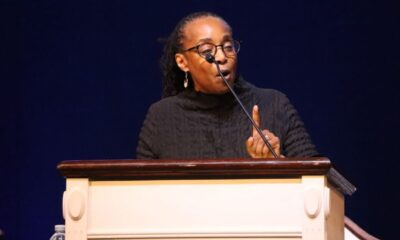
HOWARD UNIVERSITY NEWS SERVICE — During a recent service at Howard University’s Andrew Rankin Memorial Chapel, Rev. Judy Fentress-Williams called on the Black church to be more steadfast in elevating Black women to the pulpit. The renowned biblical scholar noted that while she experienced less pushback in her specific context, many women delay answering a call to ministry due to a lack of acceptance for women in leadership roles.
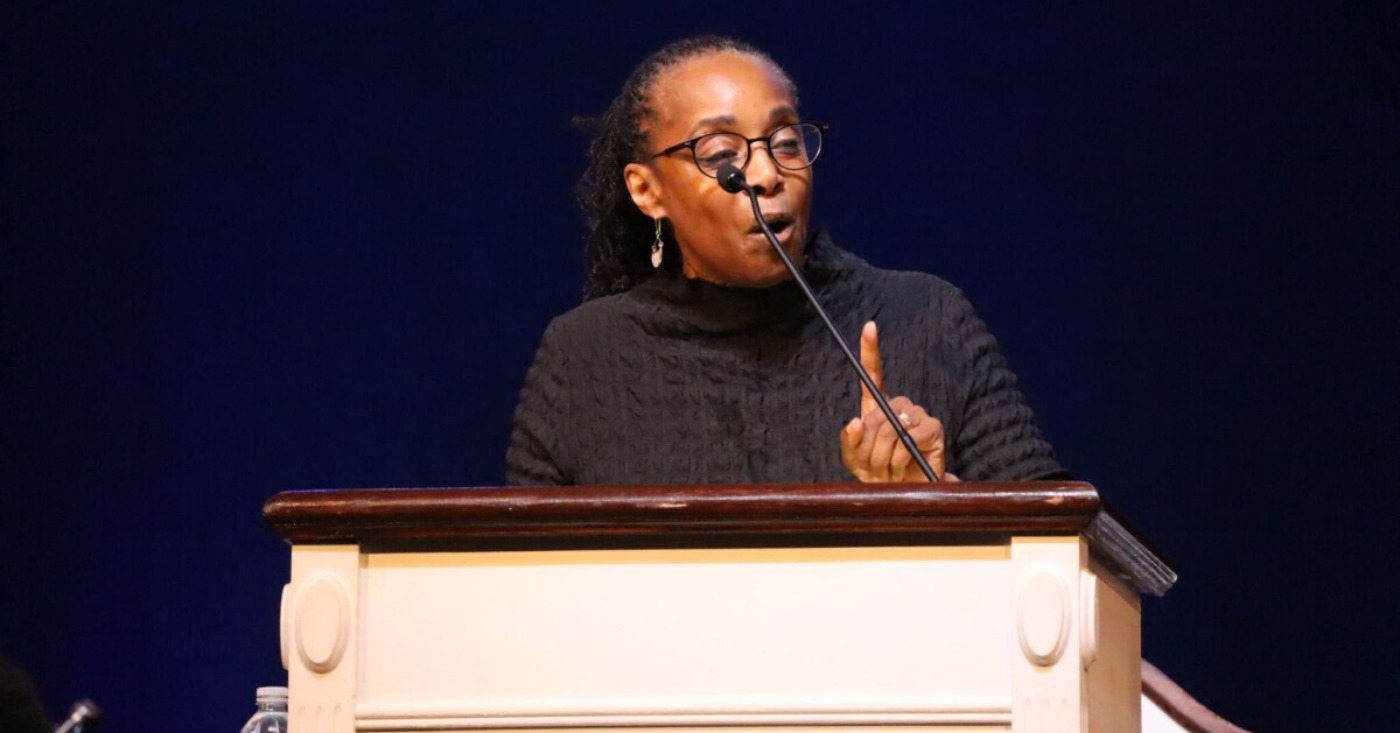
WASHINGTON (HUNS) – On the second Sunday service of the semester at the Andrew Rankin Memorial Chapel at Howard University, Rev. Judy Fentress-Williams, called on the Black church to be more steadfast in its efforts to elevate Black women to the pulpit.
On August 30, the renowned biblical scholar and senior teaching assistant of the Alfred Street Baptist Church in Alexandria, Virginia, spoke on the Biblical parable of the mustard seed with her sermon titled “Think Small”. Her sermon urged young people not to abandon their purpose in pursuit of accolades, but instead to pursue freedom and belonging without having to prove themselves. This sentiment is difficult for Black women who want to become senior leaders.
“Because of the unique context that was Alfred Street Baptist Church, I didn’t get pushback because I was a woman,” Rev. Fentress-Williams said. “What I will say is that I think I was slow to answer my call to ministry, and that’s typical for many women. Many women hear a call to ministry and say, no, that’s called a teacher.”
Despite teaching for 20 years, her journey into ministry illustrates the lack of acceptance for women to fully pursue their calling.
According to the Pew Research Center, 73% of Black adults identify as Christians (65% being Protestant, 4% being Catholics, and the other 4% associated with the Church of Jesus Christ of Latter-day Saints and Jehovah’s Witnesses). However, Black women who make up 64% of congregations within the Protestant faith only account for 1% of senior leadership.
The disparity highlights how the Black church remains patriarchal in its authority. Rev. Kelly U. Farrow, founder of the Circle of Sacred Fire, a non-profit initiative that connects the 1% and dismantles those patriarchal beliefs.
Since 2018, the organization has curated teachings in sermon design and sisterhood for Black women. The organization has 58 circles nationwide, including collegiate chapters.
“[It] is critical because representation matters. We need to see every diversity, every gift, every voice, every shade, every age group in leadership at this time. Without representation, we are only singing and sharing half the song.” Rev. Farrow said.
Representation remains critical for younger generations already experiencing the pushback. Andrea Pool, president of Howard’s Community Gospel Choir, says being a young woman holding the highest position in the organization has made others question her ability to lead.
“I think coming to D.C. definitely just exposed me to a lot because with me being raised by people who were in the church, with my mom being a minister,” Pool said. “I didn’t realize there was another world out there that didn’t appreciate having females in leadership.”
The choir forges an acceptance of many Christian beliefs amongst members to stand on biblical principles. However, Pool is adamant about leaning on women leaders, like her mother, to remind her that identity and relationships alone are not what will make her a great leader.
“I think women in leadership can take younger generations, honestly, everywhere. I think in [the] church it is important to understand that men aren’t the only people who can lead. They aren’t the only people who can bring people to Christ.” Pool said.
Based on reporting by Howard University News Service.


Life Lessons Learned Through Adversity: My Journey #shorts

From Claflin Alum to ColorBlind Artist

Turning Abolitionist Design Research Into Real-World Business #shorts

Black Journalists: Community, Excellence, and Lifting Up #shorts

NFN Exclusive: Muslims in AI

NFN Live presents The State of the Westward

Alliance of Civil Rights Orgs launch Week of Action; National Black Man Voter Day set for Oct. 24

MC’ing a Gala: A Night of Love & Black Excellence #shorts

Entrepreneurship Needs a Plan—and a Life Beyond Work #shorts

Towing Limits Explained: Match Your Trailer to Your Vehicle #shorts

The Youngest American Killed in the Vietnam War

Passing for White, Fighting for Black America: The Courage of Walter White

OP-ED: Haiti TPS: Have We Lost Sense of Humanity?

NFL: Week Two Recap | Jalen Hurts did not fold; Caleb Williams exits game with injury

Remembering Chauncey Bailey as Student Journalists Face Threats to Truth-Telling

Obama Urges Democrats to make AI a Priority 📱

Peter Magubane: a Camera Against Apartheid

Mayor Lee Announces $1 Million Kaiser Permanente Grant for Pilot Program to Address Homelessness, Clean Up Public Spaces throughout Oakland

OP-ED: How Head Start Also Helps Parents

Community Action Group ‘Friends of Zakiya’ Ask Sheriff for Time
Life Lessons Learned Through Adversity: My Journey #shorts
From Claflin Alum to ColorBlind Artist
Turning Abolitionist Design Research Into Real-World Business #shorts
Black Journalists: Community, Excellence, and Lifting Up #shorts
NFN Exclusive: Muslims in AI
NFN Live presents The State of the Westward
MC’ing a Gala: A Night of Love & Black Excellence #shorts
Entrepreneurship Needs a Plan—and a Life Beyond Work #shorts
Towing Limits Explained: Match Your Trailer to Your Vehicle #shorts

Black Woman Makes History at KARE 11 #shorts
-
 BlackPressUSA1 week ago
Latinas Deserve Equal Pay. Unions Help Make It Happen.
-

 Black Press4 days ago
All Skinfolk Ain’t Kinfolk
-

 Black Press4 days ago
Oakland Awarded More than $14 Million in State Funding
-

 Featured1 week ago
Headlines and Hot Topics with Rodney Perry 📱
-
 African American News and Issues2 days ago
Black History: Gladys West Mathematics Helped Make GPS Possible
-
 Black Press4 days ago
Jendayi Arrest Raises Community Concerns Regarding Sheriff’s Chain of Command
