
Economy
Teachers and School District Face Off as Contract Showdown Looms
OAKLAND POST — Teachers picketed at most Oakland public schools on November 15 after months of bargaining and six sessions with an outside mediator failed to break the deadlock in negotiations.


By Post Staff
Teachers picketed at most Oakland public schools on November 15 after months of bargaining and six sessions with an outside mediator failed to break the deadlock in negotiations between the Oakland Unified School District and the Oakland Education Association (OEA).
The two sides will soon move into the statutory process of fact-finding, bringing Oakland a step closer to a potential teachers’ strike.
“Unfortunately, we did not settle our contract through the mediation process. The reality is that Oakland has a teacher retention crisis, and our students are suffering because of it,” said OEA 1st Vice President Ismael Amendariz.
“Across this city, there are unacceptable learning conditions, and we as teachers have the responsibility to fight for our students,” he said.
According to the union, a growing teacher shortage and “retention crisis” mean that there were 571 teacher vacancies posted in the 2017-2018 school year.
Forty of those positions are still vacant, and there are many students across the district who are in classrooms with teachers with emergency credentials, said the union in a media release.
“We are uniting for Oakland’s kids to say our most vulnerable students will no longer be under-served,” said Keith Brown, president of OEA. “We unite to make our students the priority, not administrators and consultants. We are fighting to end Oakland’s teacher crisis and to bring stability for our students through district investments in a living wage, lower class size, and increased student supports.”
The teachers are asking for a 12 percent raise over three years, and the district has responded so far with barely 2 percent, according to the union.
“Our students also need smaller class sizes so they can receive more one-on-one attention and adequate resources so that they can succeed. That is what this contract fight is about,” said Bethany Meyer, Inclusion Specialist at Piedmont Avenue Elementary School.
The teachers’ contract proposal seeks to prioritize school sites with more students who are low-income and English Language Learners.
“We know that inequity exists in our district. Students who live in the Oakland hills areas are getting a different educational experience than students in flatland schools. This contract is the one tool we have to fight that inequity,” said Becca Rozo, teacher at Coliseum College Prep Academy.
This article originally appeared in the Oakland Post.







Black Press
COMMENTARY: Who Can Afford to Be Generous Anymore?
CHICAGO DEFENDER — Generosity has long been a cornerstone of life for Black Chicagoans, serving as a vital support system when traditional resources are scarce. From neighbors shoveling snow for the elderly to grandmothers stretching grocery budgets to feed grandchildren, these acts of kindness are ingrained in the city’s culture.
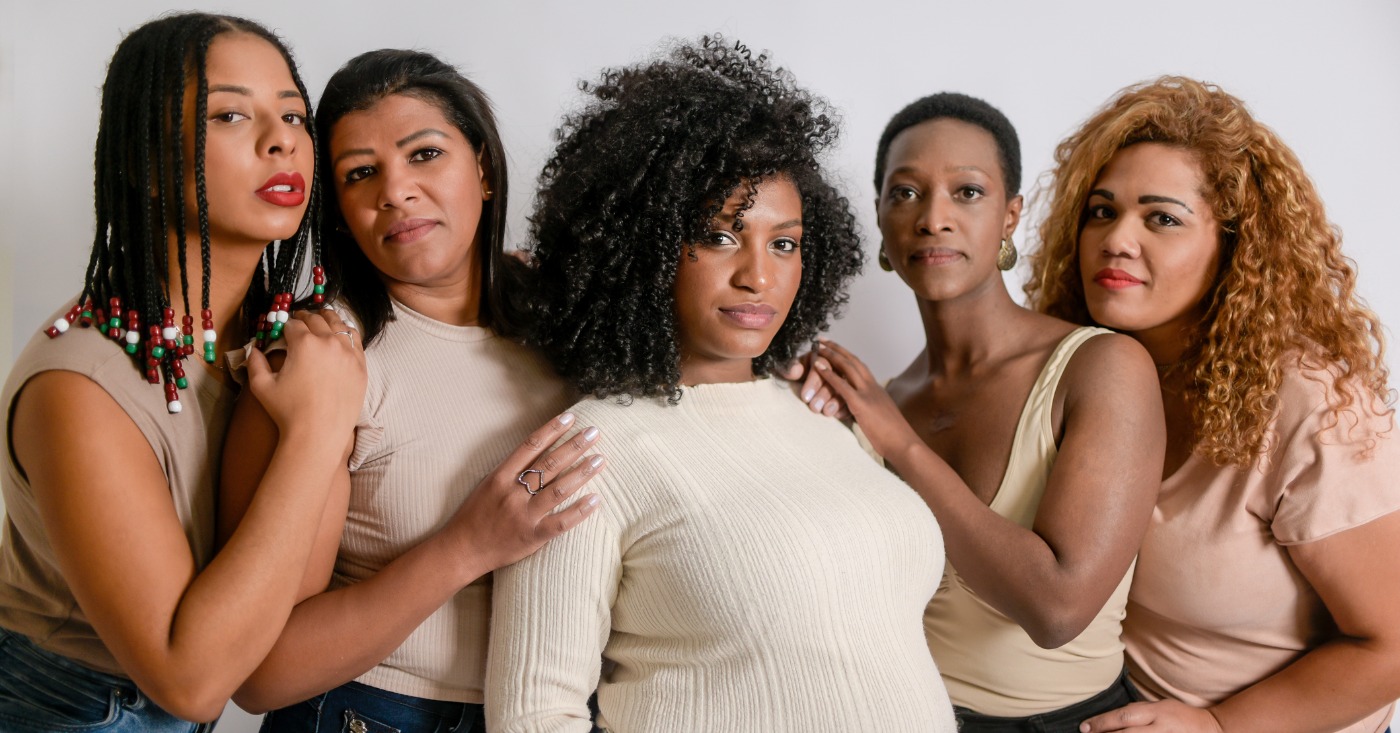
As Chicagoans struggle to make ends meet, those who have always shown up for others are wondering who will show up for them.
Monique Newburn, a special education teacher in Chicago, had been paying someone else’s rent and utilities to help them get back on their feet.
Eventually, the person returned to work. But the requests for money didn’t stop. Three months later, Newburn was still being asked to help.
By then, she had begun looking at her own bank account differently. She was giving away money she needed to cover her rent, car payment and insurance. If something happened to her income, she wouldn’t have enough saved to get through two months.
Then came another call.
“Absolutely not,” she told the person.
Newburn had spent years being the person people could depend on. Helping wasn’t something she thought twice about. Her family had always cooked for others, opened their doors and shown up when someone needed something.
But what happens when the person everyone calls for help needs some herself?
In Chicago, generosity shows up as love.
It’s supporting a Black-owned business, even if it means driving farther or paying a little more.
It’s a parent sharing information about getting a child into one of the city’s top-performing schools.
It’s the barber giving a young man a free haircut before a job interview, the neighbor shoveling an elderly resident’s sidewalk after a snowstorm or the grandmother stretching her grocery budget to make sure her grandchildren have something to eat. It’s somebody slipping a friend $20 to get through the week, knowing they might be a little short themselves.
For generations, Black Chicagoans have leaned on one another, sharing what they had and finding ways to make things work when resources were scarce.
That practice is reflected in research from the Financial Health Network. Its 2022 Financial Health Pulse Chicago Report found that approximately 56% of Black households in Cook County had provided financial assistance to friends or family members outside their household in the preceding 12 months.
The 2025 Financial Health Pulse Chicago Trends Report found that 33% of Black Cook County residents were financially vulnerable, down from 39% in 2022.
There’s a difference between wanting to help someone and feeling responsible for them. And sometimes the person being asked to give is barely getting by, too.
When Being Helpful Becomes Who You Are
La’Keisha Gray-Sewell, an author, community liberator and founder of the Girls Like Me Project NFP, has spent years connecting people with resources and responding when she sees a need.
“Seeing a need and responding to it, making sure things are in order. That’s my superpower,” she said.
She remembers discovering that ability as a little girl. Helping others brought her attention, affection and a sense of being appreciated. Without it, she sometimes questioned whether she mattered.
“I became a person who got used to giving as a way to receive love, affection, attention, recognition,” Gray-Sewell said.
Her desire to help was genuine, but giving also became a way for her to connect with people.
She compares it to a lighthouse: When you keep signaling that you’re available, people come toward you. And when you make it look easy, they may not see the effort involved.
“Generosity has a price tag,” she said.
“Generosity is not free for anyone.”
Sometimes the cost is obvious: money for someone’s bills, groceries or a donation.
Other times, it’s gas to drive across town, time spent coordinating resources or showing up for an event when you’ve already got a full day of responsibilities.
Gray-Sewell said people don’t always consider what it costs someone to give, particularly when that person has always been available.
“You just cannot show up. You just cannot hit that link anymore. You cannot be the answer and the solution,” she said.
When that happens, she said, people sometimes become resentful or move on to the next person who can help.
“Very, very seldom do people take the time to say, ‘How can I give to you? What do you need?’” she said.
Jennifer Beckham understands the pressure of being the dependable one. A licensed clinical social worker and therapist, Beckham has spent much of her life helping others. There was a time when she struggled to tell people no, even when saying yes meant putting her own needs aside.
She’s learned to set boundaries. But being the strong friend can still be lonely.
“Sometimes I don’t want to be the strong, reliable friend. Sometimes, I want to be the friend who can come to them in my time of need,” Beckham said.
She’s also learned that stepping away from people doesn’t necessarily mean there’s a problem between them. Sometimes she just needs space.
“My silence isn’t anger; it’s self-preservation,” she said.
And she has a request for the people who reach out when they need something.
“Before asking me for something, check on me!”
The People Who Didn’t Show Up
Newburn knows what that feels like.
Her mother died three years ago. In their family, cooking for people and bringing everyone together had been part of life. Her mother was the best cook, Newburn said.
After her mother died, Newburn found herself needing the kind of support she had given others.
She made calls, sent text messages and asked for help. Some people never responded. Others attended the funeral services but left before the repast.
She remembers that period as the point when her willingness to say no began to change.
Then, earlier this year, her house caught fire.
People she’d helped over the years didn’t offer her a coat, socks or shoes, she said. Some directed her to her insurance instead. One friend she’d known for more than 40 years took nine days to call.
When Newburn didn’t want to share every detail of what had happened, the friend accused her of acting differently, she recalled.
“Now I’m not acting weird. I’m acting accordingly. You’re just not my person,” she said.
Months later, some tried calling again with the same kinds of requests.
She let the calls go to voicemail. Her phone doesn’t ring as much these days.
“My peace is priceless,” she said.
Newburn said she has developed stronger relationships with people who showed up for her after the fire.
Still, she hasn’t stopped believing in generosity.
“It will never change my heart posture to be a giver,” she said.
What has changed is whom she chooses to help.
A Different Way to Say No
For Iya Pilar Audain, setting boundaries doesn’t mean abandoning the responsibility to look out for one another.
A Chicago community organizer, wellness coach and executive director of Truth, Racial Healing and Transformation (TRHT Greater Chicago), Audain has spent years creating spaces for women to gather.
She grew up in a West Indian family where giving was simply part of life. Her grandmother always had food for people. They didn’t have a lot of money, Audain remembers, but they made sure there was something to share.
That example still shapes how she lives. Audain gives financially when she can. She helps connect people with resources. She’s organized gatherings for women for more than two decades, sometimes without having a budget dedicated to the work.
Over the years, people have come to expect those things from her. When she’s had to miss gatherings or couldn’t provide what people expected, some expressed disappointment.
“I can be a help to you. I just can’t do it all,” she said.
Audain said she could use stronger boundaries herself. But she doesn’t believe every no has to end the conversation. Sometimes, she says, the answer is to find another way to help.
She remembers a man who used to come into a shop she owned. He would stand around without buying anything, making some customers uncomfortable. Other business owners in the area were frustrated by similar visits.
Audain decided to talk to him. She asked what he was looking for.
Incense, he told her. He wanted some but didn’t always have the money. So Audain offered him a deal. Every Monday, he could come in for a dollar’s worth of incense.
For months, he’d knock on the glass, collect his incense and leave. Audain could keep her business operating without turning the man away empty-handed.
“Sometimes we have to teach people how to treat us. We have to teach people what we’re able to do,” she said.
Audain believes that even when people need boundaries, they still have a responsibility to contribute what they can. She has given when she wanted to. She’s also given because people expect it. Sometimes, she admits, it’s both.
What Happens After the Turkey Giveaway?
With Thanksgiving approaching, the familiar efforts are underway across Chicago. Churches are collecting donations. Community organizations are preparing meals. Families are planning to feed relatives, friends and anyone else who might need a plate.
Beckham plans to spend Friday morning volunteering to serve people experiencing homelessness.
According to the Greater Chicago Food Depository’s 2026 Hunger in Chicago report, released in September, an estimated 36% of Chicago households were experiencing food insecurity as of June 2026.
For Gray-Sewell, the holiday brings another concern.
“What will be here long after the turkey giveaway?” she asked.
She isn’t criticizing the people or organizations providing meals. She understands the need. She’s participated in mutual aid efforts herself. But she wants people to consider what happens after the food is gone.
“What happens next Thursday?” she asked.
For Gray-Sewell, the concerns extend beyond whether a family will have enough food the following week. There are also needs involving clothing, transportation, utilities and mental health services.
She believes organizations could do more by working together instead of responding to one need at a time.
She remembers Thanksgiving 2020, when she, her sister and a neighbor helped a family whose circumstances went far beyond not having enough food. The mother was unemployed and the family was struggling with basic household needs. The home lacked essential furniture.
The women visited the family and asked the mother what she needed. She gave them a list.
Within days, they helped furnish the home, obtain groceries and laptops, arrange personal care for the family, and connect them with employment and educational resources. They also made sure the family had a Thanksgiving meal.
Gray-Sewell had always planned to return to school, but that Thanksgiving experience helped her decide what she wanted to study: social work.
The family needed dinner. But the problems they were facing wouldn’t disappear after Thanksgiving.
Gray-Sewell remembers a time when someone could go next door for a cup of sugar or turn to a church, a school or a neighbor for support. Now, she sees people facing financial hardship alongside isolation and mental health struggles.
“When we have to depend on the generosity for our basic needs, it becomes complicated,” she said.
She would like to see more room for another kind of giving: bringing someone flowers because they crossed your mind, offering a compliment or sitting down for tea.
Spending time with somebody without needing to solve a problem.
The post Who Can Afford to Be Generous Anymore? appeared first on Chicago Defender.
Based on reporting by Chicago Defender.
Art
Bennett College Pockets $12 Million for Aaron Douglass Harriet Tubman Painting Sale at Sotheby’s
THE CAROLINIAN — A masterpiece that hung inside a Greensboro dining hall for nearly a century has rewritten American art-market history. During a recent Modern Evening Auction at Sotheby’s New York, the 1931 oil-on-canvas mural “Harriet Tubman” by Harlem Renaissance luminary Aaron Douglas fetched a final price of $14.48 million.

Greensboro, NC – With a starting bid of two million dollars, a masterpiece that hung quietly inside a Greensboro dining hall for nearly a century has rewritten American art-market history.
More than 80 years after Harlem Renaissance luminary Aaron Douglas painted Harriet Tubman in 1931, the monumental oil-on-canvas mural shattered expectations at Sotheby’s New York on November 18, fetching 14.48million(12 million hammer price plus a $2.5 million buyer’s fee). Consigned by Bennett College, one of only two historically Black women’s colleges in the nation, the piece had never been traded on the open market before Tuesday’s Modern Evening Auction.
The final sale price soared to more than five times its low pre-auction estimate and eclipsed Douglas’s previous auction record—$600,000, set in 2008—by a staggering 2,300 percent. For observers across the arts and academic worlds, the moment stood as a commanding testament to what long-overdue cultural and financial recognition looks like when it finally arrives.
Commissioned in 1930 by Chicago philanthropist Alfred K. Stern and completed in 1931, Douglas’s Harriet Tubman captures the abolitionist icon breaking free from shackles, rendered in the artist’s signature geometric, concentric light waves that bridged African heritage with modernist design. For generations of Bennett Belles, the canvas was not merely an artifact behind museum glass, but a daily visual anchor on campus.
In an exclusive statement shared with The Carolinian, Bennett College Acting President Dr. Ronald L. Carter emphasized the broader cultural triumph behind the historic auction result.
“The exceptional result achieved for Aaron Douglas’ Harriet Tubman is a fitting tribute to one of the most influential artists of the Harlem Renaissance,” Dr. Carter said. “This sale reflects not only the enduring significance of the painting itself, but also the growing recognition of Aaron Douglas’ profound contributions to American art, history, and culture. We are honored that Bennett College has been a steward of this remarkable work and are pleased to see Douglas’ extraordinary legacy celebrated at the level it so richly deserves.”
While the decision to part with such a treasured campus heirloom drew debate and criticism from some alumnae, college leadership framed the sale as a strategic investment in Bennett’s future as the institution marks its centennial as a women’s college.
According to Board of Trustees Chair Cassandra Jones Havard, proceeds from the sale—purchased by an anonymous buyer—will directly fuel major campus priorities, headlined by a comprehensive new women’s health initiative.
“We are entering our second century as a women’s college, so we are looking forward to all the different ways in which we will now serve our student population,” Havard noted following the auction. Dr. Carter confirmed that tangible progress is already underway, with refurbishments to a dedicated campus women’s center already in motion as part of the health initiative.
By transforming nearly a century of careful stewardship into transformational capital for student wellness, Bennett College has ensured that Aaron Douglas’s vision of liberation and empowerment continues to uplift future generations of Black women in Greensboro—even as the canvas itself steps onto the global stage.
Based on reporting by The Carolinian.
Black Press
Harlem Neighbors Feed Neighbors, Senator Cleare’s Thanksgiving Giveaway Brings Hope to the Table
HARLEM COMMUNITY NEWSPAPERS — State Senator Cordell Cleare partnered with local businesses and community activists to host her annual Turkey and Produce Giveaway on Friday, Nov. 22. Held at the Adam Clayton Powell Jr.
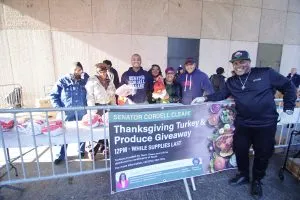
The spirit of Thanksgiving came alive in Harlem on Friday, November 20, as State Senator Cordell Cleare and community partners brought neighbors together for her annual Turkey and Produce Giveaway at the Adam Clayton Powell Jr. State Office Building Plaza.
Beginning at noon, residents visited the plaza at 163 West 125th Street to receive free food on a first-come, first-served basis. The holiday distribution included hundreds of donated turkeys and boxed meals, along with hot turkey dinners, fresh produce and traditional fixings to help families prepare for Thanksgiving.
For households working to stretch their budgets, the giveaway offered practical support during a season when grocery bills and other necessities can place added pressure on family finances.
“Times are particularly harsh economically, there is a lot of anxiety and uncertainty, and if we can help in any way, this is what we do,” Cleare said.
The senator credited local businesses, community organizations and activists with answering her office’s call for donations and assistance. Their contributions helped provide constituents of the 30th District with food for their holiday tables.
“Typically once again, we have Harlem neighbors helping fellow Harlemites,” Cleare said, highlighting the community cooperation behind the annual effort.
Beyond distributing turkeys, the event offered several forms of food assistance, including prepared meals for residents seeking an immediate dinner and produce and fixings for those planning to cook at home.
Cleare expressed gratitude for the partners who contributed, describing the gathering as an opportunity to ease financial strain while helping residents enjoy the upcoming holiday.
With neighbors leaving the plaza carrying bags of food, the giveaway reflected Harlem’s enduring tradition of mutual support. Through donated meals, shared resources and community commitment, Cleare and her partners helped bring Thanksgiving comfort to local households, demonstrating how collective generosity can make a meaningful difference for families.
Based on reporting by Harlem Community Newspapers.
Black Press
Native American Health Center Connects 140 Community Members to Career Opportunities During Native American Heritage Month
The Native American Health Center recently hosted its Career Connect job fair at the Flicker Building and Cultural Center in Oakland, welcoming 140 community members in honor of Native American Heritage Month. Organized through the federally funded Strong Native Workforce Program, the event aimed to promote economic stability by connecting American Indian, Alaska Native, and Native Hawaiian residents with local career pathways. A diverse group of employers from the healthcare, technology, and government sectors attended to provide attendees with information regarding job openings and professional training programs. Read more.
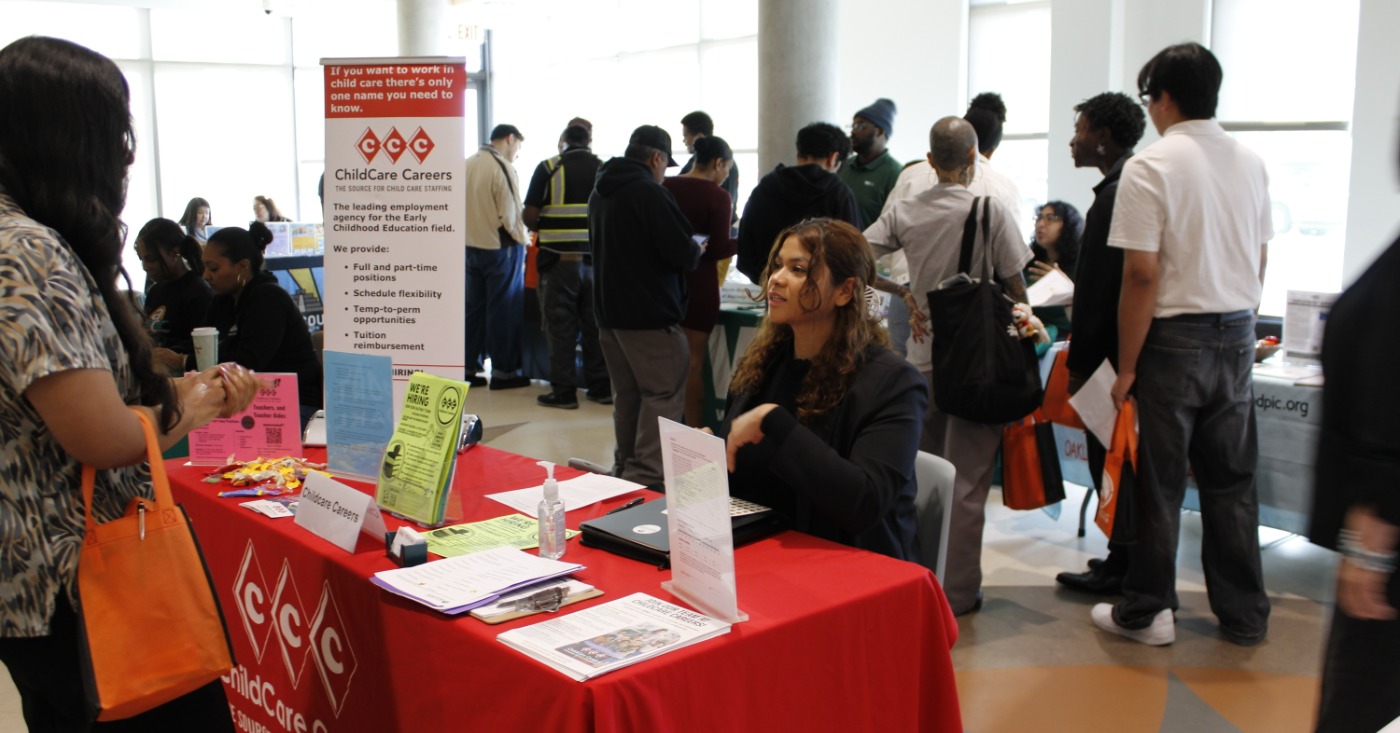
In celebration of Native American Heritage Month, the Native American Health Center (NAHC) welcomed 140 community members to its Career Connect: Community Job & Career Fair on Friday, Nov. 6.
Held at NAHC’s Flicker Building and Cultural Center in Oakland, the event connected American Indian, Alaska Native, Native Hawaiian, and other community members with employers, career pathways, workforce development programs, and family resources throughout the San Francisco Bay Area.
The event was organized through NAHC’s Strong Native Workforce Program, a federally funded initiative supported by the U.S. Department of Labor through the Workforce Innovation and Opportunity Act (WIOA). The program helps Native community members pursue meaningful employment and long-term economic stability through career counseling, job placement assistance, skills training, and supportive services.
The Career Connect Job Fair was coordinated with support from Gallo Advantage Consulting, a Native American woman-owned consulting firm specializing in strategic planning, community engagement, and workforce development. Working alongside NAHC, the firm supported employer outreach, event coordination, and partnerships with local businesses and community organizations.
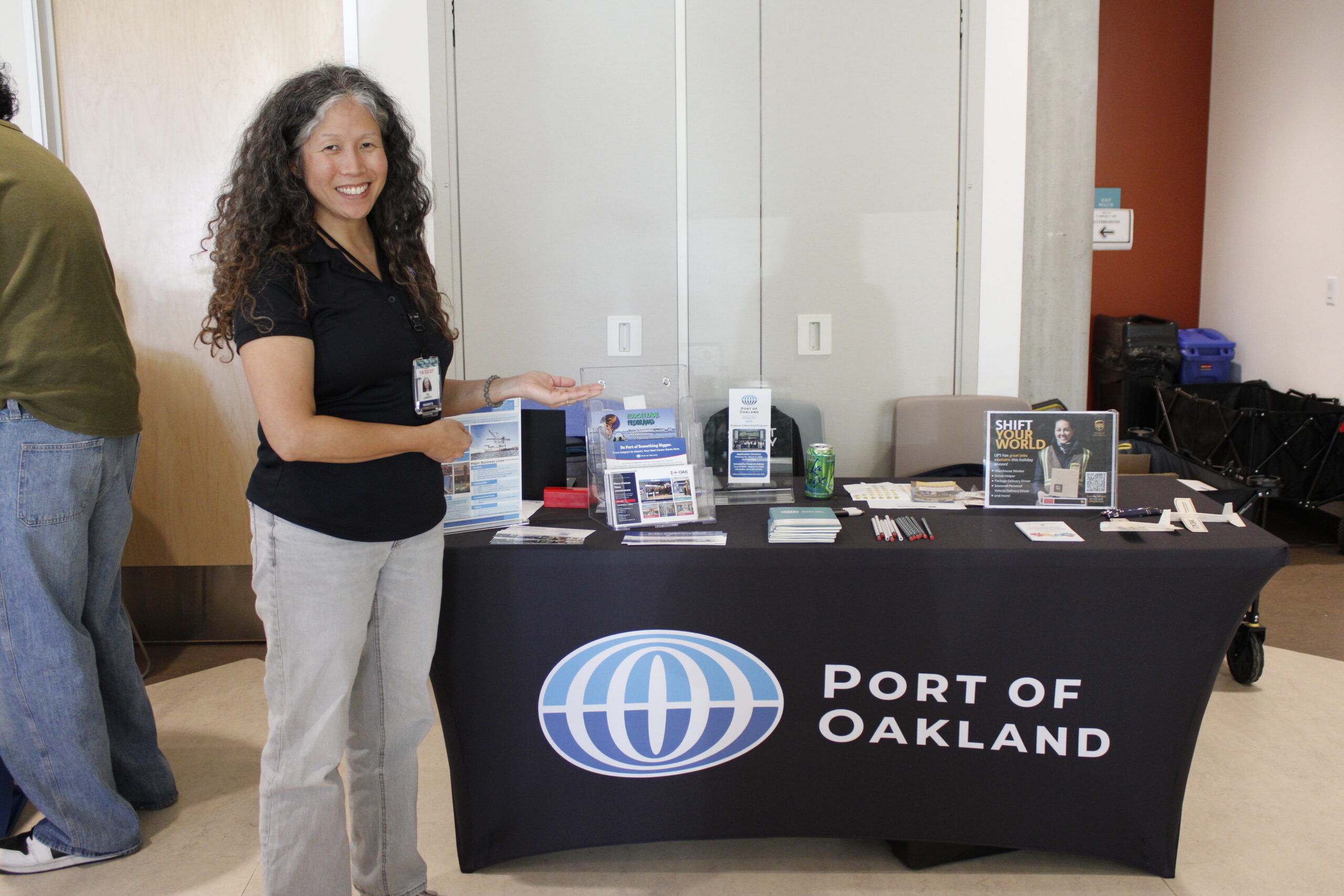
“Native American Heritage Month is an opportunity to celebrate the strength, resilience, and contributions of our communities while investing in their future,” said Natalie Aguilera, CEO of NAHC. “Employment is an important part of health and well-being, providing economic stability, purpose, and opportunities for individuals and families to thrive. Through our Strong Native Workforce Program and events like Career Connect, we are helping community members build meaningful careers and create stronger futures for generations to come. We are grateful to the employers and community partners who joined us in this effort.”
The job fair featured employers across healthcare, technology, government, transportation, education, and other industries. Participating organizations included Cisco Systems, the City of Oakland, East Bay Regional Park District, Kaiser Permanente, Port of Oakland, Sutter Health, Balance Staffing, MANOS Homecare, Inc., Childcare Careers, AC Transit, Samuel Merritt University, Waste Management of Alameda County, Inc., CareBuilders at Home – East Bay, East Bay Municipal Utility District, Patelco Credit Union, and Code Tenderloin.
Workforce development and community partners who shared their resources with participants included the Oakland Private Industry Council, Lao Family Community Development, The Unity Council, West Oakland Jobs Resource Center, Friendship House Association of American Indians of San Francisco, the Washoe Tribe of Nevada and California’s Alameda County Native TANF Program, as well as NAHC’s own Community Wellness Department.
Throughout the event, attendees connected with employers, explored job openings, and learned about apprenticeships, certification programs, training opportunities, and community resources.
Held during Native American Heritage Month, Career Connect highlighted the importance of investing in Native communities through education, employment, and economic opportunity. The event demonstrated the value of bringing employers and community organizations together to support career advancement and build a stronger Native workforce.
About Native American Health Center
Founded in 1972, the Native American Health Center (NAHC) is a nonprofit community health center serving American Indians, Alaska Natives, and surrounding communities throughout the San Francisco Bay Area. NAHC provides culturally responsive healthcare, behavioral health services, and community wellness programs, including workforce development initiatives that support employment and economic opportunity. All individuals are welcome at NAHC. NAHC provides care for 15,000 members annually. NAHC employs almost 300 staff across 17 sites in three counties: Alameda, San Francisco, Contra Costa.
For more information, visit www.nativehealth.org.
About Gallo Advantage Consulting
Gallo Advantage Consulting is a Native American woman-owned consulting firm specializing in strategic planning, community engagement, workforce development, and partnership development. The firm works with public agencies, nonprofits, and community organizations to strengthen programs, build partnerships, and expand opportunities for the communities they serve.
For more information, visit www.galloadvantage.com
Black Press
COMMENTARY: Historic Elections Bring Joy to an Embattled Nation
BLACKPRESSUSA NEWSWIRE — Despite federal rollbacks in diversity and inclusion, fair housing, voting rights and more, when 2027 arrives, the nation’s elected leaders in states and in Washington will more closely resemble the country’s diversity in race, gender, and ethnicity. Beyond this year’s lengthy list of historic wins, when new officials assume their duties in January, America will have:

Despite economic challenges, civil rights leaders see hope
The glowing aftermath of November’s historic midterm elections not only usher in an annual season of hope and faith but also provide an encouraging sign that our democracy will now address the needs of millions of people who have been either pushed out or locked out of economic opportunity.
Despite federal rollbacks in diversity and inclusion, fair housing, voting rights and more, when 2027 arrives, the nation’s elected leaders in states and in Washington will more closely resemble the country’s diversity in race, gender, and ethnicity. Beyond this year’s lengthy list of historic wins, when new officials assume their duties in January, America will have:
- A Black Speaker of the House of Representatives
- 5 Black governors serving in Florida, Georgia, Maryland, Nevada and Wisconsin
- 7 Black state attorneys general protecting consumers in Georgia, Illinois, Maryland, Massachusetts, Minnesota, New York and Washington state
- 7 Black U.S. Senators representing Delaware, Georgia, Illinois, Maryland, Mississippi, New Jersey and South Carolina
- 66 or more members in the Congressional Black Caucus, depending upon final election certifications.
A chorus of civil rights advocates herald both the victories and opportunities for the nation.
“Voters didn’t just decide in this election,” stated Maya Wiley, president and CEO of the Leadership Conference on Civil and Human Rights. “They demanded! They demanded a very different future from the one offered from the current administration and its allies… Across race, gender, sexuality, identity, nation of origin, age, religion, disability, income, and geography, the majority of this country showed what they hold most sacred — their rights and freedoms that are tied to their opportunities and well-being…We cannot just tinker with a past that made progress but proved too fragile and resulted in dreams deferred.”
While Janai Nelson, Legal Defense Fund (LDF) President and Director-Counsel, applauded voters’ efforts in the November midterm elections, she also quickly noted that the quest for freedom and economic inclusion continues.
“The work of rebuilding our democracy begins now and we must be bold and visionary,” said Nelson. “LDF will continue its work with Black communities to hold elected officials accountable to address the very real issues facing our communities: ending the thuggery that has been unleashed by the president’s reckless deportation forces, ensuring strong and effective educational opportunities for all students, making health care and housing affordable, and creating fair economic opportunities that give everyone a chance to thrive — not just those at the top. Our vote was not the final word.”
The depth and breadth of the nation’s financial challenges is underscored in an updated report entitled, State of Personal Finance in America Q3 2026, a quarterly research study conducted by Ramsey Solutions that tracks personal finance behaviors and attitudes of everyday Americans.
According to the update, an estimated 94 million U.S. adults say they’re struggling or in crisis financially. The study also found that more than half of Americans – 53 percent – are living paycheck to paycheck.
“When more than half of Americans are cutting back on Christmas gifts, it shows just how much families are feeling the pressure,” said Rachel Cruze, personal finance expert and co-host of “The Ramsey Show” and “Smart Money Happy Hour.” “Christmas should be a time of joy, not a
financial burden that follows you into the new year.”
For some federal lawmakers, resurrecting the Consumer Financial Protection Bureau’s (CFPB) to its rightful regulatory role is a priority. In published comments appearing in a recent article by The Guardian, Representative Bill Foster of Illinois and Senators Raphael Warnock of Georgia and Catherine Cortez Masto of Nevada plan to aggressively scrutinize what has happened at the CFPB in recent years.
“Next Congress, my colleagues on the Financial Services Committee and I will investigate the unconstitutional dismantling of the CFPB,” Foster said, adding that he and other committee members will pursue “subpoenas, investigations, hearings, and, ultimately, legislative action to restore consumer protections in this country and hold accountable those who seek to profit off the most vulnerable Americans.”
Massachusetts Senator Elizabeth Warren, a former Harvard professor credited as being CFPB’s ‘brainchild’ is also speaking up for the embattled agency.
“Accountability is coming,” said Warren. “If you’re a Wall Street executive, Big Tech CEOs, giant corporations that have been cheating people, you should be worried. And government officials who have put their own interests ahead of the public interest, should be worried too.”
Hopes for future consumer-friendly reforms also include relief for the 42.6 million student loan borrowers who collectively struggle with $1.7 trillion of debt.
“Borrowers expect the newly elected Congress to address the student debt crisis and work to make student loan payments more affordable,” said Natalia Abrams, Student Debt Crisis Center President. “The 120th Congress has an opportunity and a responsibility to fulfill their promises of affordability. Student loan borrowers deserve a seat at the table and real solutions that address the financial burden they carry every day.”
Now, before new terms of office begin, is a season for Black America to celebrate our hope, joy, and faith in the future.
As Derrick Johnson, the NAACP President and CEO noted, “Once again, Black voters have proven that we are not bystanders in this country, we are its builders.”
Charlene Crowell is a senior fellow with the Center for Responsible Lending. She can be reached at [email protected]
Black Press
Holiday Hosting Guide: Wines for Fried Turkey, Ham, Seafood and More
BLACKPRESSUSA NEWSWIRE — Adventurous types serving turducken this holiday might consider an earthy Oregon pinot noir. This meat trifecta deserves the soft tannins that will bring out the richness of the duck. Ham can be both salty and sweet. A dry rosé will pair with savory ham, and a zinfandel offers the fruit forwardness needed with a honey baked ham.
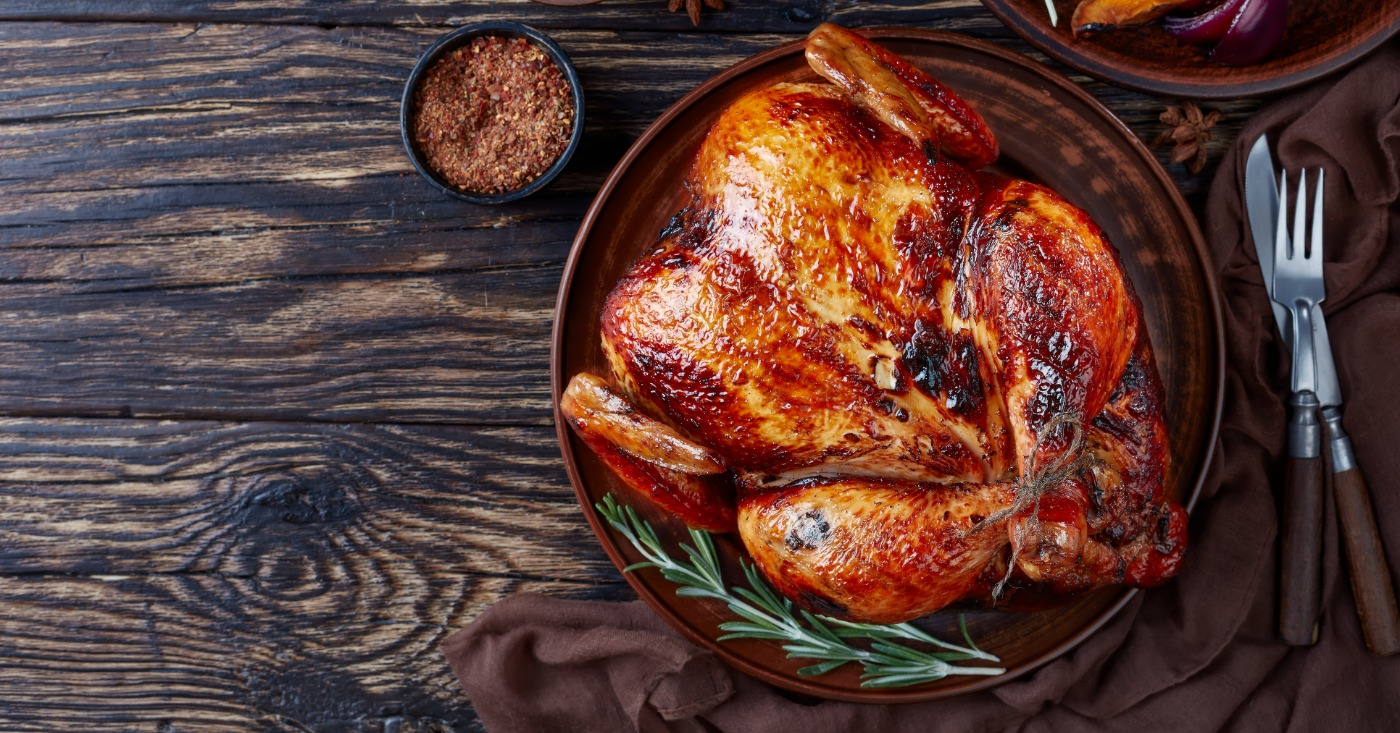
It’s that time of year to express gratitude for continual blessings and to stuff our faces with the legendary fried turkey. It might take more work to deep-fry a whole turkey than to roast it in a conventional oven. However, the sacrifice is worth it for the moist, succulent meat and that irresistible crisp crackling skin.
Wines That Pair well with fried turkey
* Beaujolais- light, very dry red wine from France
*Carricante–spicy dry white wine from Italy
*Champagne-versatile sparkling wine from France
*Chardonnay-unoaked version
*Cinsault-light dry red wine from France
*Gewurztraminer-dry spicy white wine from Germany
*Grenache Blanc–dry white wine from Spain
* Grüner Veltliner–savory dry white wine from Austria
* Lambrusco- sweet, bubbling red wine from Italy
*Pinot noir-light elegant dry red wine
* Rosé Prosecco- versatile, sparkling rosé, easy-drinking Italian wine
*Late Harvest Riesling-sweet white wine from Washington State
When a Fried Turkey isn’t on the menu
A classic turkey dinner with all the trimmings is a Thanksgiving Day feast.
Adventurous types serving turducken this holiday might consider an earthy Oregon pinot noir. This meat trifecta deserves the soft tannins that will bring out the richness of the duck. Ham can be both salty and sweet. A dry rosé pairs well with savory ham, and a zinfandel offers the fruit-forwardness needed for honey-baked ham.
Seafood dishes prepared with light sauces taste incredible with Sauvignon Blanc from New Zealand. Prime rib is an elegant showstopper; an aged Cabernet Sauvignon is a great choice when serving rich red meat. Look at the meal as a complete composition and try not to pair each dish with a separate wine. Experiment with wines you’ve never tried and choose quality products.
Budget-Friendly Options
Let’s keep it real, family: grocery prices are through the roof for all of us.
A couple of pounds of ground turkey, egg yolks, breadcrumbs, and poultry seasonings make excellent meatballs. A whole chicken is much less than a whole turkey and looks amazing on a platter. Simple, inexpensive desserts can be gelatin with fresh fruit, sugar cookies, and a mug of hot chocolate.
Are you invited to a neighbor’s home for Thanksgiving Day dinner? Take them up on it and bring a great bottle of wine or ask the hostess what she needs to complete the meal.
Enjoy the holidays and be happy with what you have; stay focused on good food, delicious wine, and those people you value most.



Cardinal Ritter is headed back to the state championship!

COMMENTARY: My Truth — We Can Realize the Dream Together

‘i Hope It Makes People Want to Be 100 Percent Themselves’

COMMENTARY: What’s the Best Meal Served During Thanksgiving?

Queen Latifah Turns Affordable Housing Mission into New Doc

Three Black Physicians Lead Women’s Health Care

COMMENTARY: Who Can Afford to Be Generous Anymore?

A Brief History of the San Francisco Bay View National Black Newspaper

Bennett College Pockets $12 Million for Aaron Douglass Harriet Tubman Painting Sale at Sotheby’s

IN MEMORIAM: Andrea Stewart-Cousins, New York’s First Woman Senate Leader, Dies at 76

HISTORY MADE: Keisha Lance Bottoms Becomes First Black Woman Elected Governor in American History

Multi-Faith Leaders Representing 10 Million People Launch National Anti-Authoritarian Initiative

Christianity’s Racial History

Hundreds of Black Christian Leaders Arriving in Israel for Martin Luther King-Inspired Mission

Michael Shiner: The Enslaved Man Who Wrote His Way into American History

Keisha Lance Bottoms to Govern State Where Her Great-Great-Grandfather Was Enslaved

Don’t Pass the Torch. Expand the Circle.

Superb Woman: Destiny B. Sadler

DOJ Fights to Keep Rep. Ilhan Omar’s Search Warrant Sealed: Report

COMMENTARY: Thank You, Trump, for Making America Great Again!
Cardinal Ritter is headed back to the state championship!

How We’ve Kept Our Events Fresh Since 2009 #shorts

How Mentorship Made Sustainable Real Estate Development Possible #shorts

The Missing Link That Brought Playprofessionals Together #shorts

Preparation: The Key to Sustaining Success #shorts

Why Strong Connections Matter in the Black Business Ecosystem #shorts

Life After Football: How I Rediscovered the Joy of Learning #shorts

Chevy Tahoe: What’s Worth Keeping—and What Isn’t? #shorts

Car Buying Takes 14 Hours—What’s Your Time Worth? #shorts

Cadillac VISTIQ Road Noise: Test This Before You Buy #shorts
-

 Black History1 week ago
Black Barbershops Have Long Given Neighborhood Politics a Place to Unfold.
-

 Featured1 week ago
How Sick Must America Get Before Saying Enough to RFK
-

 Black History6 days ago
Hoodoo Heritage Month Celebrates Origins of African American Folk Medicine
-

 Black History6 days ago
PRESS ROOM: Donalds Transition Website Now Open to All Floridians Who Want to Serve
-

 Featured6 days ago
Scott Colom’s Nike Challenge Goes National, Freshman Democrats Get a Surprise 📱
-

 Featured1 week ago
How to Rob a Bank
