
Defender News Network
Rev. Christopher Johnson: Millennial ministers speak out in honor of Dr. King
DEFENDER NEWS NETWORK — The Defender sought out four millennial members of the clergy to get their take on the big issues of the day

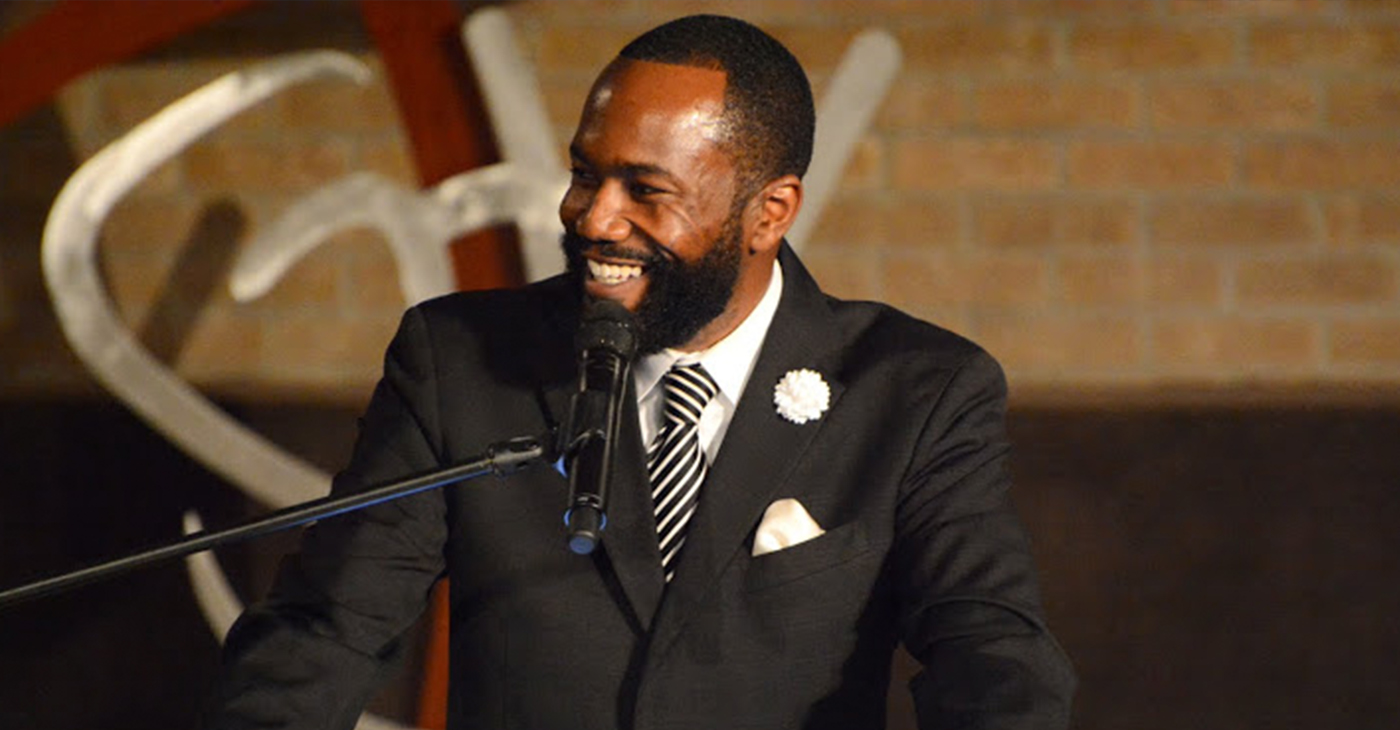
Dr. Martin Luther King Jr. began his socially conscious ministry at 26, an age we now consider a millennial. With that in mind, the Defender sought out four millennial members of the clergy to get their take on the big issues of the day, and how those issues impact how they do ministry.
Rev. Christopher Johnson with Good Hope Missionary Baptist Church shares his thoughts.
Defender: What are the challenges unique to a young minister?
Christopher Johnson: There are many challenges that are unique to the young millennial minister but there are three that immediately come to mind.
The first unique challenge is how to communicate God’s eternal truth to this generation. The millennial generation has been bombarded with countless research-driven surveys that criticizes and labels them. After reading these assessments a person might think that there is no hope for our generation. God’s plan of salvation is the same for this generation as it was for those before them. How does the 21stcentury young preacher communicate God’s truth in their own unique way? A way of communication that their generation can relate to so that they can be all that God would have them be?
The second unique challenge is, will the young millennial preacher actually make an attempt to live out the very Gospel that they preach? In a time where social media is so vital how do we as ministers balance our personal and public lives? We must be committed to transparency and accountability.
The third unique challenge is how do we identify and meet the needs of God’s people in 2019? What worked 20-30 years ago will not work today. Are we willing to be creative and innovative not only in our stratagems but also in our thinking and approach? People are looking for a real and authentic encounter with not only God but with His people as well. What does that look like in the 21stcentury? These are only a few unique challenges that come to mind.
Defender: What are the opportunities unique to a young minister?
Johnson: In my humble opinion the young minister has the unique opportunity to serve people faster and more efficiently than ever before. Social media has given ministries and ministers the opportunity to get information in and out quicker. Technology allows us to gather data, process it and come up with prayerful evidence based solutions. Another opportunity that we have as young ministers is the ability to speak to our culture and influence it. I believe that people are hungry for God’s truth and His way of living. God’s truth leads to the betterment of His people. The end result is always the glory of God being manifested in the life of His people. Because of technology, we no longer have to wait until Sunday or Wednesday to touch the community. We can do it in a matter of minutes. We are able to connect quicker than ever before. Because we are at the dawn of the new technological age the church as to be ahead of the curve instead of behind it (technologically speaking)
Defender: How do politics and social issues (police brutality, Black Lives Matter, immigration reform, #Me-too, LGBTQ issues, healthcare access, etc.) frame and/or impact your approach to ministry?
Johnson: In addition to teaching/preaching the word, the job of the Pastor/Preacher is to serve the people. The word Pastor means shepherd. The image of the shepherd and sheep is an important one. In the time of the Bible the primary job of the shepherd was to take care of their flock of sheep. This means that they had to be intimately familiar with the needs of the flock. They also had to be just as familiar with the needs and potential dangers and threats to the flock as well. The shepherd is placed over a flock (people/community/congregation) for their holistic guidance according to God’s truth. Our job is to know what affects the people so that we can prayerfully, lovingly, and strategically guide our people through those issues. All of the aforementioned issues are very important in our lifetime. The Pastor must be sensitive yet strategic when addressing these issues. I’m really concerned and passionate about all of the issues mentioned above. Because we are all created in God’s image, we all are entitled to our God-given right of life, liberty and the pursuit of happiness (as long as it’s aligned with God’s plan for our life). One of the biggest strengths of the African-American church has been the ability and willingness to speak truth to power. The Black Pastor/Preacher must begin to speak truth to power again. That truth must to be told in a spiritually and culturally unapologetic way. I think these issues must be on the agenda for the Pastor/Preacher/Church to address from the perspective of God’s word.
Defender: What is the biggest (most important) political issue impacting the U.S. and/or members of your congregation? That’s difficult to say.
Johnson: I serve under Dr. D.Z. Cofield, senior Pastor of Good Hope Missionary Baptist Church in Third Ward Houston, Texas. We see and are engaged in so many political issues that impact our community and congregation. If I had to choose one it would have to be police brutality/community violence. I believe that we have to expand our definition of police brutality. Police brutality is not only the physical attack by Law enforcement on people of color. Police brutality is also when Law enforcement refuses to police minority neighborhoods in a way that is fair and addresses the criminal element in that community.
On the south side of Houston, we are in the midst of the worst pandemic of community violence this city has seen in almost 40 years. When I listen to residents there is the belief that police just don’t care. There are many residents that believe the biggest form of police brutality is the absence of police protection in their communities.
Defender: What are your thoughts and positions on the current president, his administration and his policies?
Johnson: President Trump is who he said he would be. My concern is not only his xenophobic rhetoric but also the large population of White-Americans who support his race-baiting and fear-mongering. Our white brothers and sisters can no longer claim ignorance of racism and intolerance as an excuse. Unfortunately, 55 years after the March on Washington and the Voting Acts Bill being passed, we are dangerously close to going back to a time where civil and human rights mean nothing. What makes President Trump most unsettling is the lethal triadic combination of ignorance, arrogance, and white-entitlement. His policies only speak to a segment of people who want to see people of color only as second class citizens. His lack of care and concern for the environment is evident with his stance on coal, the Keystone Pipeline and climate change. His withdrawal of Troops in Syria has only weakened us on the world stage. I believe that his presidency is meant to be a wake-up call to those of us who say we are change agents for our generation.
Defender: How big or small a role does your blackness (Black history, pride and heritage) and attacks upon your blackness (white supremacy/racism) have in your approach to ministry?
Johnson: One of the ways the Gospel is told is through the context of culture. There is no dichotomy in my spirituality and my culture. By definition, Christianity is a North African spiritual practice. The handprint of African people and its diaspora is all over Christianity. We have to teach our people how to find our contributions to Christianity. In regards to America’s Christianity, I quote the words of Fredrick Douglass “I am against the Christianity of America but me love, practice and follow the Christianity of Jesus Christ”. When we read the writings of our ancestors like Fredrick Douglass, Reverend JWC Pennington (Pastor of the Amistad slaves), Phillis Wheatley, James Gronniosaw, John Marrant, and others it gives me hope. They were attacked more harshly than we are being attacked now. However, they all endured and persevered because of their faith and trust in God. The black church was birthed in pain but it has progressed because of it. I realize that as we struggle, God struggles with us. Jesus tells us that because we follow Him we will be persecuted. The same sticks used to attack us are only logs that fuel our fire for God and His ministry here on earth. Our history has proven our people are strong mentally, emotionally, spiritually, and physically. Our blackness uniquely gives us an insight and perspective that otherwise I don’t think we would have. Because of our struggles past, present, and future Black people in this America know God in a way that is unique all unto itself.
Defender: For Rev. Dr. MLK Jr., a young minister who became a pastor at 26, fighting for civil rights and later economic equality were big drivers of his ministry. Is there one or two political or social or cultural issues that drive your ministry?
Johnson: Socially it would be Community Violence and Community Restoration with an emphasis on Human, Civil, and Community Rights. Politically it would be voter suppression, with an emphasis on voter awareness and registration.
Defender: How do you balance commitment to your ministry with parenting?
Johnson: It is difficult. I have an 8yr old son his name is Christopher Johnson II. I am constantly working be a better Father in all aspects. I’m constantly reminded that He is my first ministry commitment.
Defender: With society in general becoming less religious (less committed to a particular denomination; less committed to one specific church home; etc.), how does this impact your ministry?
Johnson: I believe this is a great opportunity. A recent Barna survey revealed that most Americans across racial and ethnic lines consider themselves spiritual and not religious. I think that there is a great desire and need that many people have to know God personally. Personally, I’m always interested in talking and listening to people and finding out why people are less committed to one specific church home or why there is a shift in society toward God or the church. The main job of any pastor/teacher is to equip his/her congregation for the work of God in their daily lives. If there’s no congregation to equip then in my mind the question is where are the people; what are they being equipped with and for; and who’s equipping them. I think these issues provide us the opportunity to engage people in a meaningful way.
Defender: How do you respond to the criticisms many millennials voice about religion in general, and the Christian church in particular? (i.e. it is anti-intellectual; often treats women like second class citizens; ignores or downplays culture and social issues, etc.)
Johnson: I would first by saying that many of these criticisms of religion and some churches are true. I am an older millennial myself. I didn’t grow up in the church like some of my friends. I had to learn that the church is not a perfect place. The people in the church are not perfect people. They are fragile, flawed, deficient, hurt, and in the process of becoming just like everyone else. I was in the music industry for thirteen years. I worked for some of the most successful music CEO’s in the business. I managed some of the biggest artists in the world at that time. When I left that culture and came to God, the church was (and still is) a culture shock. The talk is different. The lifestyle is different. America has commercialized the church to look like a place where everything is perfect. Sadly that’s not the case because the church is not a perfect place. God is perfect. Jesus Christ is perfect. People are not perfect. We are an imperfect people in the processing of being perfected by a perfect God. People are the total sum of their experiences. Some people have been to churches and have not had good experiences and for that I am truly sorry for them. The majority of people go to church looking for an authentic worship experience and to encounter with God. Every church isn’t bad, nor is every church sexist, or anti-intellectual, and not every church is behind the curve socially and politically.
One of the biggest criticisms that my friends have of the church is that it feels like a business. By that they mean that they don’t feel any level of connectivity with the people, pastor or worship experience. One friend shared with me that after growing up in church all her life she just didn’t feel as if her place of worship was authentic enough. She said it was the same old routine. There was no passion in the worship service she said. Basically she felt as if the mood of the worship environment was manufactured and not authentic. Another friend told me that his issue was the lack of political and social activity. He was upset because of what he perceived to be the unwillingness of some black churches and Pastors to speak out regarding the shooting of unarmed black men. Another friend was upset about the lack of cultural recognition in black churches. She felt that the form of Christianity practiced in most black churches has been whitewashed. All of these are important issues. I believe God has earmarked this generation to be change agents in their communities, churches, workplaces, and families. My response is to listen carefully when I have these conversations and ask questions. The Church has to begin to listen to what the younger generation says it needs spiritually, relationally, emotionally, socially, politically, and economically. When those things begin to happen I believe that there will be a change in the attitude of some toward the church.
This article originally appeared in the Defender News Network.









Black History
Rockets getting more than Silas name
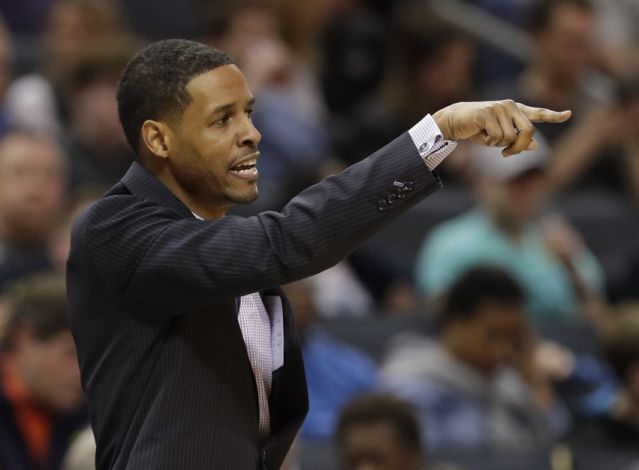
NNPA NEWSWIRE — “Basketball has been a huge part of my life since the day I was born, and this is the moment I’ve strived for,” Stephen Silas said. “I’ve been fortunate to have coached some great players over the course of my career and am excited to work with this incredibly talented team as we build upon the success they have established.”

By Terrance Harris, Defender News Network
Some might think Stephen Silas is just another coach with the right last name and lineage.
But the Rockets’ new head coach is much more than the son of one of the best coaches the NBA has known. The 47-year-old Silas has built a worthy assistant coaching career that is worthy of taking on one of the top head coaching jobs in the league.
“He has been doing this a long time. He has been doing a lot. He was with me a long time,” Paul Silas said in a recent conversation with The Defender. “Stephen knows exactly what to do. I’m just so happy, I think it’s going to be great. I really believe it. He knows just what to do.”
Silas began working with his father in 1999 as a scout with the Charlotte Hornets. By the time he was 27, he had joined his father on the bench, becoming the youngest NBA assistant coach at the time.
Silas also joined his dad in Cleveland from 2003-2005 where they started out the career of a fresh out of high school LeBron James. He and his dad also coached together again back in Charlotte from 2010-2012.
But prior to coming back to Charlotte, Silas spent some time as an assistant with the Washington Wizards from 2005-2006 and Golden State Warriors from 2006-2010. Additionally, he has been an assistant coach in Dallas on Rick Carlisle’s staff since 2018.
Along the way, Silas has been instrumental in the development of young star guards such as Kemba Walker, Steph Curry and Luka Doncic. It’s likely his work with top-level guards is what caught the eye of the Rockets’ brass this time around with the tandem of James Harden and Russell Westbrook as the centerpieces of the team.
“Basketball has been a huge part of my life since the day I was born, and this is the moment I’ve strived for,” Stephen Silas said. “I’ve been fortunate to have coached some great players over the course of my career and am excited to work with this incredibly talented team as we build upon the success they have established.”
His father couldn’t be more proud of the opportunity his son has earned.
“He has done a great job,” the elder Silas said. “When he was with Dallas he did really good. Now he is a lot better now. He is going to be good. I tell you. He’s going to be really good, there is no question. I really believe it.”
But that isn’t to say, Silas wasn’t a little worried that this time might now work out with the Rockets. He interviewed four years ago when the Rockets went with Mike D’Antoni and names like Tyronn Lue, Jeff Van Gundy, Doc Rivers and John Lucas had been mentioned prior to the Rockets officially hiring Silas last week.
“I talked to him last week and I told him it’s a feeling that it’s going to happen,” Paul Silas said. “He said, `Dad I don’t think it’s going to happen at all.’ But I said okay, I think it will and it did.
“It was outstanding. I’m so happy that it happened.”
Stephen Silas
Age: 47
College: Brown University
Assistant coaching stops: Charlotte, New Orleans, Cleveland, Washington, Golden State, Charlotte and Dallas.
Top players he has coached: LeBron James, Steph Curry, Kemba Walker and Luka Doncic.
Black History
PRESS ROOM: Fabian Broaden — Making statements through photos
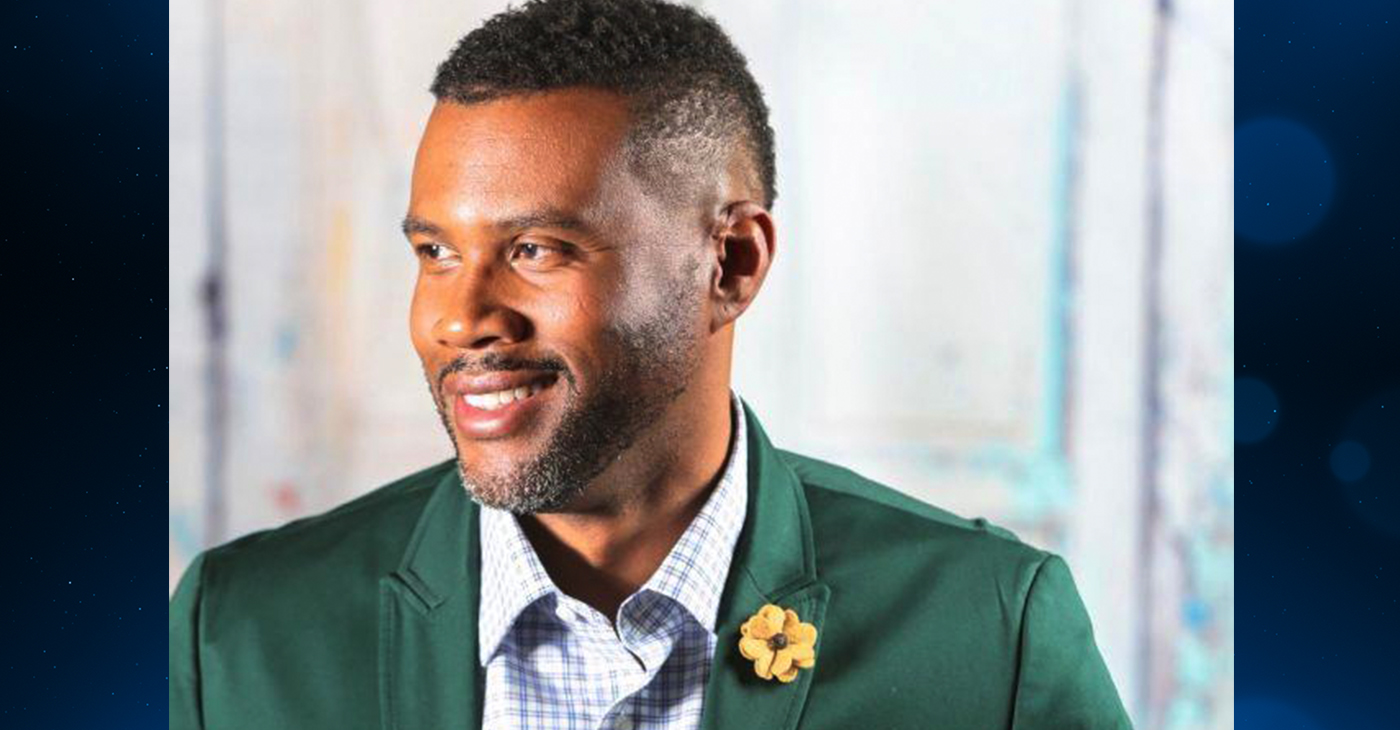
NNPAP NEWSWIRE — Houstonian Fabian Broaden has ignited social media with his thought-provoking political and social statement photo shoots. As a member of Kappa Alpha Psi Fraternity, Inc., he often called on his frat brothers to help him do shoots that celebrated Black men.
By ReShonda Tate Billingsley, Defender News Network
When Houstonian Fabian Broaden graduated from college at Southern University, he began a successful career as an architect here in Houston. It’s a job he loved, but one day while listening to his pastor, Kirbjon Caldwell at Windsor Village United Methodist Church, preach about impact, he felt he had a higher calling.
He found it through the camera lens.
Broaden has ignited social media with his thought-provoking political and social statement photo shoots. As a member of Kappa Alpha Psi Fraternity, Inc., he often called on his frat brothers to help him do shoots that celebrated Black men. When Kamala Harris, a member of Alpha Kappa Alpha Sorority, Inc. received the vice-presidential nomination, he decided to take his political activism one step further, adding other members of the Divine Nine (the consortium of ten Black fraternities and sororities) into the mix. He’s produced photo shoots celebrating everything from breast cancer to Black history.
He talks with the Defender about the motivation behind his passion.
Defender: Your recent Divine Nine photo encouraging people to vote went viral. How did you come up with the idea for that?
Fabian Broaden: I wanted to do something to motivate people that look like me to get out and stroll to the polls. When I reached out to the other members of the Divine Nine, everybody was just so excited and motivated. They understood my vision. They were all excited and they were just ready to run with it, to get other people energized to vote.
Defender: How did you get started?
Broaden: My first shoot I did was a video shortly after Trayvon Martin was murdered and we got to all watch what happened in society when George Zimmerman got off. I wanted to empower and make Black men feel good about themselves because, at that time, a lot of Black people like myself just felt very discouraged. So, I wanted to do something to uplift the Black men in our community. I did a shoot with my fraternity brothers and I just showed that we’re from all different types of backgrounds and we have graduated and we’re all professional.
Defender: What message were you trying to get across?
Broaden: That Trayvon shoot was titled, “There’s millions just like us.” I wanted to show that we’re Black men, we went off to college. We all have different careers. We like to dress nice. But also, during the weekend, we’re just regular guys and you won’t know us from any different than Trayvon Martin. We all just looked like just average guys out in society. That’s how people view us. They don’t know our background; they don’t know our stories. They just see us as men with no credibility. So, the shoot was just to capture that. I was shocked when it went viral and social media was very excited about it and it made a lot of people feel good.
Defender: What are some of the other shoots you’ve done?
Broaden: I did a shoot in honor of Colin Kaepernick, when he was being scrutinized by the NFL. When Nike picked him up, we wanted to celebrate Colin and Nike, so we all had on Nike tennis shoes, we were all dressed up in suits and we had our Black sons and that was a powerful piece as well, where we just want to support Colin and just energize the Black community. We did another shoot called “Don’t think about voting, just do it.” We also did a photo shoot celebrating breast cancer awareness.
Defender: How do you go from architecture to statement photo shoots? Is this something you want to pursue professionally?
Broaden: It’s just a passion. I’m not looking for attention. I’m not looking to make any money. I just want to make Black and Brown people feel good about themselves.
Education: Southern University
Occupation: Architectural Sales
Organizations: Kappa Alpha Psi Fraternity, Inc.
Favorite pastime: Serving with the Cub Scouts as a Den Leader, working with my various church ministries at WVUMC and quiet family time at home.
Hometown: Baton Rouge
Motto: I’ve committed my life to be a civil rights activist for people of color since 2018.
Facebook: www.Facebook.com/FabianBroaden
Black History
Let the People Be Heard
NNPA NEWSWIRE — “Still can’t believe that people voted for a man who has done nothing, but spit hate verbally, mentally, and physically (children being detained), and the reason behind many deaths because he did not take COVID seriously. The US will never be an equal country….it will always be divided because of the mindset of many. I see now why people choose to move out of the country!” — Donyalla R. Manns

Defender News Services
Voters weigh in on what the results of the election mean for Black America.
“That all this ‘this is not who we are’ rhetoric is bullsh*t. The exit poll numbers are showing EXACTLY who they are, and Orange Satan has given them license for 4 years to let their true colors come out. And if anyone thinks the next four years are going to be a smooth ride once we park walk this grifter out of office think again: now the real attacks are going to begin. Oh, and that Black men were a huge factor in those numbers which is SO sad. – Julie O. Griffith
“That white people gonna white.” – Sonia Johnston
“It says to me that despite all that has happened in this country, if something does not personally affect a person (such as racism, inequality and COVID-related deaths) people don’t care. America lacks empathy.” – MarKesha Brown-Currin
“It says this country is as racist as we ever thought it was and they no longer care who knows it.” – Antoinette Holsey
“It says approximately 50% of America is perfectly fine with an openly racist and sexist authoritarian running the country as long as the economy is good…for them.” – Nyna Hurt
“Still can’t believe that people voted for a man who has done nothing, but spit hate verbally, mentally, and physically (children being detained), and the reason behind many deaths because he did not take COVID seriously. The US will never be an equal country….it will always be divided because of the mindset of many. I see now why people choose to move out of the country!” – Donyalla R. Manns
“It says that many don’t want what’s best for all and work together to achieve a middle ground. It says people use the idea of God to justify things that are suppressive, and it also says that to many are fueling and building up ideas that will destroy them and calling it good. But I also see people who refuse to just sit by and let those things continue to happen they at least trying to build towards better for all. But I’m disappointed to see so many vote for someone who has clearly proven he dgaf about America.” – Eric Jamal
“It says that the threat of losing power has been a focal point for many white people. And some are willing to sacrifice our democratic way of life in order to preserve white privilege. These are not all bad people and many of them are probably Democrats who are already having a difficult time adjusting to the browning of America.” – Bettie V. Beard
“America will forever be divided, and racism is very well accepted by many Americans including the very ones it’s directed toward.” – Chrystal Killebrew
“The inevitable restructuring of relationships – this can’t be walked back when it’s over, no matter who wins. Also, it became obvious toward Election Day that many people who didn’t even want Trump to win were voting against having an African American woman, possibly any woman, that close to the Oval Office. People voted against their own interest to try to ensure this didn’t happen. Overall, we have not come as far as people like to boast that we have.” – Leslie Kaye
“That hatred, entitlement and bigotry is in the DNA of white Americans. Some have worked to overcome it but when their superiority and entitlement are threatened, the true colors shine thru.” – Pam Gaskin
“That we must get rid of this Electoral College. That racism has never left this country.” – Sandra Dumes
“That Americans really do not have a problem with racists or mysogynists or the deaths of 200,000 fellow Americans. They see nothing wrong with inhumane treatment of immigrants and children, and they are more committed to a politcal party than to their moral standard.” – Stephanie Bullock Ferguson
“America in 2020 is really no different than America in 1960. We have no allies, especially white women, and they don’t care about us.” – Yolanda Davis Turner
“That white evangelical women overwhelmingly are more interested in keeping their proximity to white patriarchal power (and misrepresent this as adhering to their Christian belief systems) than they are in gaining equality for themselves, and most definitely not for people that don’t look like them. But it’s not shocking considering that there were white women that protested the women’s suffrage movement which also excluded women of color.” – Brynn Canney Markham
“That the cause of the American Civil War has NEVER been resolved. It’s the exact same as it was 150 years ago. This nation is just as divided as it was then. We have made absolutely NO progress. And the addition of other minorities (Latinos) has not helped the civil rights movement one single bit. Racism is ALIVE and WELL.” – Kimberly Hardison
“The electoral college should be abolished. Black lives and voices don’t matter to many more than we think. So much of this country is still okay with the levels of oppression in place for a number of communities.” – Ivy Jo
“That the soul of America needs to be checked. People will value the economy and abortion over human decency. Our country is broken. The people in rural America thinks it’s us against them.” – Renea Ford Forrest
Black History
COMMENTARY: NATION DIVIDED — Where do African Americans go from here?
NNPA NEWSWIRE — Our nation has a problem that we only pass significant legislation if we have one party that has the House, the Senate and the White House – if you think about it. Trump Administration’s biggest legislation was the tax bill. How was that passed? Because he had the House, the Senate and the White House? The Obama Administration’s biggest piece of legislation was the ACA (Obamacare), because he had the House, the Senate and the White House… It means that American citizens are addicted to getting duped by the system.
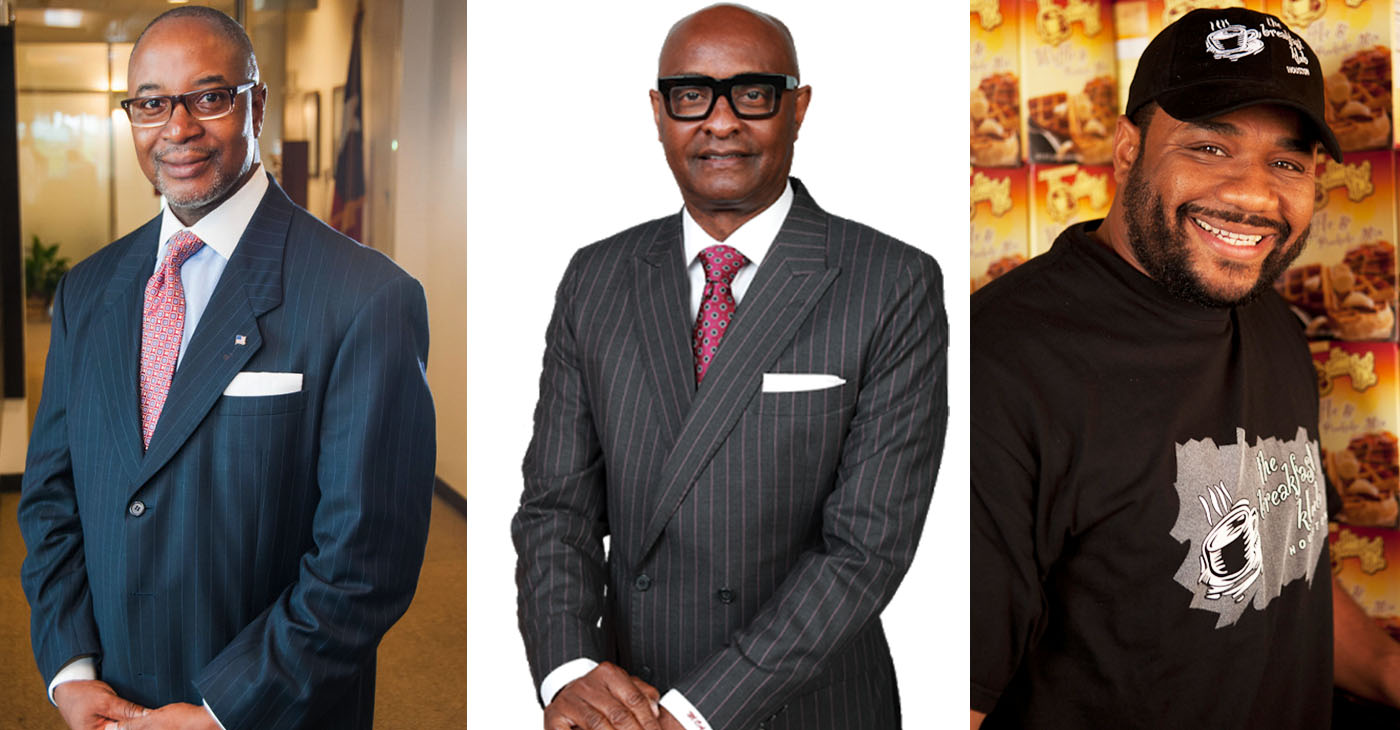
By Aswad Walker, Defender News Network
With the popular vote split nearly right down the middle, the 2020 Presidential Election revealed to some and reminded others that America is truly a nation divided. The Defender spoke to two political science professors, Carroll Robinson and Michael O. Adams, and Marcus Davis, host of Fish, Grits & Politiks, to get their takes on where the country is headed post-election.
Defender: What does this tight race for the presidency mean for the national political scene?
Dr. Michael O. Adams: if Biden were to win – it’s a very close election- I think that it would impact governance because the Democrats were not able to control the Senate. [Mitch] McConnell is coming back. And we know that he was a very powerful person, and able to get judicial appointments and basically, to stonewall even the impeachment process of Trump. So, if Biden is in, you’ll still have to contend, and you have to work with that. So, anything progressive, in terms of legislation, it would be very difficult to get something passed in the Senate.
Carroll Robinson: What it means is the country is not as center left as people thought. It’s not the land of progressivism. But more importantly, what it shows is the importance of Black voters. That if you turn out Black voters, Biden probably wins Wisconsin, Michigan and maybe even Georgia. And that will be the three states that gets him to 270 (Electoral College votes) and wins the White House. And if you’re paying attention to it politically, Black America has saved Joe Biden once again, and Black America has saved the Democratic Party. And it’s gonna deliver the White House to Joe Biden and the Democratic Party. And Black folks need to be a priority. Period.
Marcus Davis: It means that we’ve got some issues in our nation that we need to fix. Everything from the Electoral College to this cycle of electing one party versus the partisan politics, needs to be addressed too. It means there’s a ***load uncertainly in the nation. We have an issue with media. We have an issue with polling. It means we’ve got a whole bunch of issues that we need to try to figure out. And it also means specifically, that ain’t nobody coming to save Black folks.
Defender: Moving forward, how will the 2020 election results impact state and local politics?
Davis: Our nation has a problem that we only pass significant legislation if we have one party that has the House, the Senate and the White House – if you think about it. Trump Administration’s biggest legislation was the tax bill. How was that passed? Because he had the House, the Senate and the White House? The Obama Administration’s biggest piece of legislation was the ACA (Obamacare), because he had the House, the Senate and the White House… It means that American citizens are addicted to getting duped by the system.
Robinson: Black people showed up, showed out and delivered, but not enough focus was put on winning the state by driving up Black voter turnout… What last night showed is we have to build the future of the Democratic Party, or the Texas Democratic Party on Black voter turnout. The idea that you’re going to build the future of the Texas Democratic Party on Hispanic voters and white women, that’s just not a solid enough foundation. You’ve got to maximize Black turnout.
Defender: What does this election say about us as a country?
Adams: I’m overjoyed that so many people turned out to vote. That’s the beauty of a democracy. Because, you want people to participate, regardless of where you stand or what’s your party affiliation. However, it was kind of ugly where you play into dog whistle politics. It only seeks to divide the country. I’m a little afraid. They tried to kidnap the governor of Michigan. Man, who knows what these people will do.
Davis: This election says that we are the divided states of America, not the United States… This concept of the United States of America is failing… It means that the pledge of allegiance is a lie. That’s what it means. Because we are not one nation. We are not indivisible. We damn sure ain’t under God. And we damn sure ain’t got justice and liberty for all.
Black History
Karen Jackson, Sisters Network Founder inspires others in new Book
NNPA NEWSWIRE — Four-time breast cancer survivor Karen Jackson’s new book, In the Company of My Sisters: My Story, My Truth, speaks about her life dedicated to assisting other breast cancer survivors. She talked with the Defender about the book, Sisters Network Inc. and her motto in life.
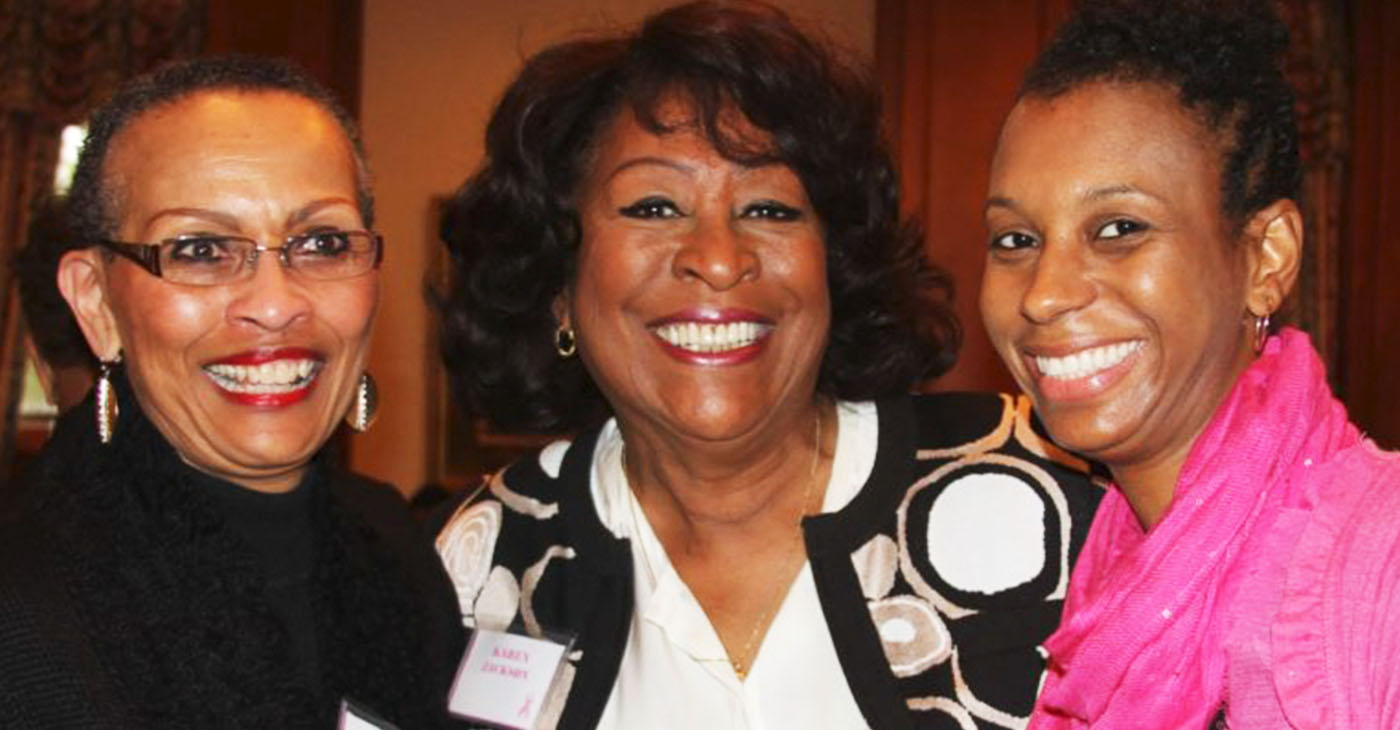
By Dominique Talbert, Defender News Network
When four-time breast cancer survivor, Karen Jackson was first diagnosed with breast cancer, she had no experience nor knowledge of the disease. Jackson felt alone and knew the importance of having people around during this difficult time. That was the reasoning behind her founding Sisters Network Inc. in 1994. And it’s why she’s detailing her journey in a new book, In the Company of My Sisters: My Story, My Truth.
Jackson’s new book speaks about her life dedicated to assisting other breast cancer survivors. She talked with the Defender about the book, Sisters Network Inc. and her motto in life.
Defender: What do you hope people walk away with after having read the book?
Karen Jackson: Well, the biggest thing is that there is no need for women to die of breast cancer. They don’t need to be alone. I share my story in hopes that people will be educated and inspired by my battling – and surviving – breast cancer four times.
Defender: Is this just for those diagnosed with breast cancer, or does it contain information for others?
Jackson: It is for African American breast cancer advocates, so that includes people who have breast cancer, those who know someone battling it, or those who just want to educate themselves.
Defender: Why did you decide to write In the Company of My Sisters?
Jackson: It gave me an opportunity to speak on my story and my truth. When I was first diagnosed, I had little knowledge of the disease, so I immersed myself in information. It didn’t take me long to discover that finding information was difficult due to the limited amount of culturally sensitive material. You learn quickly how to become your own best advocate and sometimes even your own best friend. And as I educated myself, the fire was fueled to educate others. In retrospect, my need to make a difference in the lives of Black breast cancer survivors was my total focus. This memoir is a culmination of my journey through breast cancer – from my personal experiences and observations as a survivor, to my life’s path and commitment to increasing local and national attention, to the devastating impact that breast cancer has in the African American community.
Defender: A lot of people would give up after being diagnosed four times. How did you find strength to go on?
Jackson: I have inner strength that developed over the years. I needed to know what my body was trying to tell me. I had to pay attention and it saved my life. I call it my inner spirit.
Defender: What is your motto in life?
Jackson: To live the best life. A purposeful life.
Defender: How does it feel to be an inspiration to countless African American women?
Jackson: I never thought of it that way. I feel knowledge is power and when you gain that power, you should share that with others. It’s just second nature for me to give back.
Defender: Did you ever think the Sisters Network would expand to this extent to help numerous African American women?
Jackson: Yes. I was wondering when it would happen. It took a long time. I never doubted but I didn’t think it would take so long.
Defender: Did you experience any struggles when starting the Sisters Network Inc?
Jackson: Black non-profits were not taken seriously and there was little funding. The Sisters Network shines bright because we were doing the work but we didn’t have the funding or support. We never were able to spend money on advertising. So we would have to post on social media or word-of-mouth. Black women, breast cancer is real and should be a priority.
Books
Defender Book Corner: 5 questions with… Tiffany L. Warren
DEFENDER NEWS GROUP — I don’t think I’m able to not write. I’ve been writing since I learned how to read. I write because I love the thrill of creating characters and their outcomes, and I love a good story. My avid reading and prolific writing are two aspects of the same love for the written word.
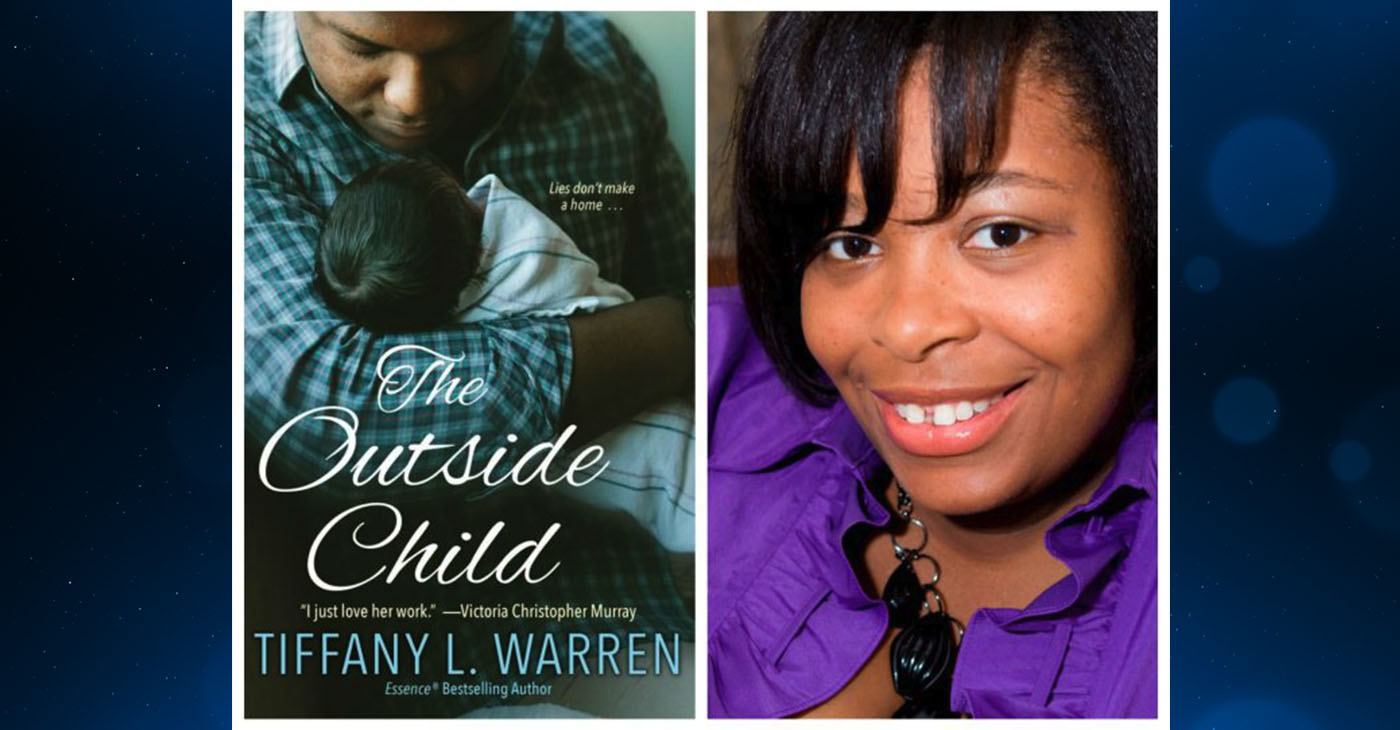
By Defender News Service
What’s the book about?
The Outside Child started off as a romance – Chenille, the girl who has issues with trust falls for an NFL player, Brayden, they kind of guy it’s impossible to trust. But, we follow this couple after the happily ever after. Their vows are tested by a sick child, competing careers, and choices made after a tragedy. The Outside Child asks readers to examine the cliché, love conquers all. Does it?
Any truth in your fiction?
There’s truth in all fiction. I always say that fiction writers observe the world in a way that most don’t. A writer may observe two strangers having an argument and give it a backstory, motive, and resolution. The argument was truth – the rest – fiction.
Why do you write?
I don’t think I’m able to not write. I’ve been writing since I learned how to read. I write because I love the thrill of creating characters and their outcomes, and I love a good story. My avid reading and prolific writing are two aspects of the same love for the written word.
What’s your dream job?
I’d love to be a Broadway musical producer. I have loved theatre since elementary school, when they’d make us get all dressed up and take us to see matinees at The Ohio Theatre.
Where would you like to be professionally in 5 years?
I want to publish a sci-fi novel. That is my favorite genre to read, and I’d love to create in that space as well.
What would people be shocked to know is on your playlist? The Phantom of the Opera Soundtrack and The Bee Gees!
*If you’d like your book featured in the Defender’s Book Corner, email us at [email protected].
This article originally appeared in the Defender Network.


2026 Defender 130 X Is It Worth $110,110 for Your Family?

“Money, Power, and Respect,” (SEIU) President April Verrett

Car Takeoff Hesitation? Daylight Test Drive Guide #shorts

Your Vote Matters…Protect Your Freedoms!

The Black Bank That Survived the 1893 Panic #shorts

Why A Black Bank Started From A House #shorts

Defender ONE-on-ONE: U.S. Rep. Christian Menefee

How To Manage Conflict at Work

How To Overcome Financial Setbacks and Win

How To Overcome Financial Setbacks and Win

Latest Massacre in Haiti Reveals Cruelty U.S. Deportations

The Youngest American Killed in the Vietnam War

Booked and Unbound: The Legacy of Black Women’s Literary Circles

Passing for White, Fighting for Black America: The Courage of Walter White

OPINION: Nolan Wells’ Death One of Several Signifying Racial Terror Lives on in U.S. South

OP-ED: Haiti TPS: Have We Lost Sense of Humanity?

OP-ED: If AI Is the New Language of Power, Then NAN Wants Black Communities Fluent

OP-ED: How Does Your State Rank for Pre-K?

Henry O. Flipper: A Trailblazer at West Point and Beyond

NFL: NFC Preview | The Rams will NOT make the Super Bowl
2026 Defender 130 X Is It Worth $110,110 for Your Family?
“Money, Power, and Respect,” (SEIU) President April Verrett
Car Takeoff Hesitation? Daylight Test Drive Guide #shorts
Your Vote Matters…Protect Your Freedoms!
The Black Bank That Survived the 1893 Panic #shorts
Why A Black Bank Started From A House #shorts
Defender ONE-on-ONE: U.S. Rep. Christian Menefee
How To Manage Conflict at Work
How To Overcome Financial Setbacks and Win
How To Overcome Financial Setbacks and Win
-
 Black Press1 week ago
OP-ED: Haiti TPS: Have We Lost Sense of Humanity?
-
 Black Press6 days ago
Zakiya Jendayi Arrested, Locked Out of Home by Sheriff’s Deputies
-

 Black Press5 days ago
A $2.1 Trillion Wellness Industry Never Built a Daily Practice for Black Children. So This Atlanta Family Did.
-
 Black History6 days ago
Listening as a Lifeline: A Doula’s Witness to Black Maternal Health
-

 Black Press4 days ago
COMMENTARY: But God!
-
 BlackPressUSA3 days ago
Latinas Deserve Equal Pay. Unions Help Make It Happen.
