
BlackPressUSA
PRESS ROOM: Billy Horschel APGA Tour Invitational presented by Cisco announces field, purse, sponsors and Korn Ferry Tour event exemption
NNPA NEWSWIRE — The event will include an initial day of a pro-am, a trip to PGA TOUR Superstore to help the players with equipment and other needs, seminars and other development opportunities all with key partners and industry leaders.


May 4 – 6 event at TPC Sawgrass will include a field of 18 players with the largest purse in APGA Tour history, will focus on competition, promoting diversity and player development opportunities.
Ponte Vedra Beach, Fl. – Six-time PGA TOUR winner and 2021 BMW PGA Championship winner Billy Horschel today announced that the Billy Horschel APGA Tour Invitational presented by Cisco will return to THE PLAYERS Stadium Course at TPC Sawgrass on May 4-6. Inside the ropes, the second-year event on the Advocates Professional Golf Association (APGA) Tour will include an 18-player field competing for a $125,000 total prize purse, the largest in APGA Tour history, with the winner also receiving an exemption into the Korn Ferry Tour’s BMW Charity Pro-Am. Outside the ropes, the tournament will provide business development opportunities for the players as well as opportunities for business leaders to learn from the players and their stories of perseverance and determination.
“My goal last year was to create a tournament that not only gave these young players an opportunity to compete on a world-class golf course for a substantial prize, but to also connect them with leaders in the business community,” Horschel said. “With the vision and support from Cisco, we hoped to help support each player’s journey, provide them with resources, and create an experience that I hoped would benefit each player on their path in the professional game. What I didn’t expect is how much of an impact the event would have on me, on the players and on the attendees. The success of year one has only fueled my desire to do more and this year’s event is going to be even better. We are fortunate to have companies like Cisco, Velocity Global, PGA TOUR Superstore, Polo Ralph Lauren and The Concession Golf Club who have returned and many more who have joined to support this event who share my passion in making golf better resemble the world we live in. To have Korn Ferry provide a sponsor exemption to the BMW Charity Pro-Am is a massive opportunity for the winner not only to gain experience on that stage, but sometimes one week can change a player’s career.”
The event will include an initial day of a pro-am, a trip to PGA TOUR Superstore to help the players with equipment and other needs, seminars and other development opportunities all with key partners and industry leaders. The list of companies and partners who are supporting the event and/or will be a part of the business development efforts includes: Cisco, BDO USA, Body Armor, Duvel Moortgat USA, Farmers Insurance, Garden of Life, PGA Tour Superstore, PGA TOUR, Polo Golf Ralph Lauren, Spartan Investment Group, The Concession Golf Club, The Exeter Group, Titleist and Velocity Global. The competition will challenge the players with 36 holes at THE PLAYERS Stadium course, home of THE PLAYERS Championship.
“We are thrilled to continue our support of this APGA event and build on the success it had last year,” said Mark Patterson, SVP and Chief of Staff to the Chair and CEO at Cisco. “We are focused on supporting individuals like Billy Horschel and organizations like the APGA who are acting boldly and deliberately to accelerate fairness, inclusion, and equitable access to opportunity. Together, we will take another step forward toward achieving our purpose to power a more inclusive future for all.”
“It is exciting to offer an exemption into the Korn Ferry Tour’s BMW Charity Pro-Am presented by TD SYNNEX for the winner of the Billy Horschel APGA Tour Invitational presented by Cisco,” said Korn Ferry Tour President Alex Baldwin. “Our Tour prides itself in providing a pathway for professional golfers to achieve their dreams and reach the PGA TOUR, and we’re honored to work alongside Billy Horschel and the APGA Tour in an effort to provide meaningful playing opportunities to help diversify the golf landscape. Thank you to our partners at Korn Ferry for their commitment to this mission and providing the sponsor exemption, and we look forward to welcoming the winner of the event to the Thornblade Club in South Carolina in June.”
The APGA Tour was established in 2010 as a non-profit organization with the mission to bring greater diversity to the game of golf. The APGA Tour Board of Directors works to accomplish this by hosting and operating professional golf tournaments, player development programs, mentoring programs and by introducing the game to inner city young people. In addition to conducting up to 17 tournaments awarding more than $500,000 in prize money and nearly $100,000 in bonus money in 2022, the APGA has organized a Player Development Program to aid young minority golfers as they work to chase their goals in professional golf.
“Last year’s event had a profound impact on our players with several receiving financial support from companies that attended, but it also gave them a chance to hear from Billy about what it takes to be a professional in the game and to test their skills at a world-class golf course,” said APGA Tour CEO Ken Bentley. “With Billy and the team at Cisco, we are certain that this will be another successful event with tremendous impact on our players. The grind of professional golf is not only immensely difficult, but it is also very costly. With Farmers Insurance starting off the year with a record-breaking $100,000 purse and now Cisco and Billy Horschel pushing this purse to $125,000, the financial support of this week alone can go a long way for these players throughout the season.”
Many of the players in the field are a part of the APGA Tour player development program. The event will include six APGA Tour players who have made starts on the PGA TOUR in the last 18 months including Kamaiu Johnson, Ryan Alford, Marcus Byrd, Kevin Hall, Aaron Beverly and Willie Mack, who made back-to-back cuts on the PGA TOUR in 2021. Kamaiu Johnson and Ryan Alford both played in this year’s Farmers Insurance Open where Alford made an eagle on the first hole of his PGA TOUR career. Alford won back-to-back events on the APGA Tour in 2021. Aaron Beverly received the Charlie Sifford Exemption at the Genesis Open after winning the 2021 APGA Farmers Fall Series Finale at Wilshire Country Club in Los Angeles. Mack returns as defending champion of the Billy Horschel APGA Tour Invitational presented by Cisco after winning last year’s event by four strokes in a season that saw him continue on to win the APGA Tour’s season-long Lexus Cup. Michigan State’s Troy Taylor II returns again as an amatuer after playing in last year’s event and finishing an impressive runner-up to Mack.
The 18-player field will consist of:
- 12 players from the APGA Tour Player Development Program
- Ryan Alford
- Aaron Beverly
- Marcus Byrd
- Mulbe Dillard IV
- Michael Herrera
- Kamaiu Johnson
- Mahindra Lutchman
- Willie Mack III
- Trey Valentine
- Davin White
- Rovonta Young
- Andrew Walker
- Amateur golfer as determined by tournament and APGA Tour leadership –
- Troy Taylor II
- Exemptions
- Olajuwon Ajanaku
- Kevin Hall
- Joey Stills
- Wyatt Worthington
- Gregory Odom Jr.
ABOUT BILLY HORSCHEL – A resident of Northeast Florida, Billy Horschel has won six times on the PGA TOUR, and most recently added a victory on the DP World Tour at the 2021 BMW PGA Championship at Wentworth. Horschel is a dedicated husband and father to his wife, Brittany, and their three children. He hosts one of the most successful AJGA youth events, the Billy Horschel Junior Championship and, along with Annika Sorenstam, was recently named as one of two National Chairmen on the AJGA Board of Directors. Billy is an ardent supporter ofFeeding Northeast Florida through numerous charitable efforts.
ABOUT CISCO – Cisco (NASDAQ: CSCO) is the worldwide leader in technology that powers the Internet. Cisco inspires new possibilities by reimagining your applications, securing your data, transforming your infrastructure, and empowering your teams for a global and inclusive future. Discover more on The Network and follow us on Twitter.
Cisco and the Cisco logo are trademarks or registered trademarks of Cisco and/or its affiliates in the U.S. and other countries. A listing of Cisco’s trademarks can be found at www.cisco.com/go/trademarks. Third-party trademarks mentioned are the property of their respective owners. The use of the word partner does not imply a partnership relationship between Cisco and any other company.
ABOUT THE APGA TOUR – The APGA Tour was established in 2010 as a non-profit organization with the mission to bring greater diversity to the game of golf. The APGA Tour Board of Directors works to accomplish this by hosting and operating professional golf tournaments, player development programs, mentoring programs and by introducing the game to inner city young people. In addition to conducting up to 17 tournaments awarding more than $500,000 in prize money and nearly $100,000 in bonus money in 2022, the APGA has organized a Player Development Program to aid young minority golfers as they work to chase their goals in professional golf.
ABOUT FAIRWHAY MANAGEMENT – Fairwhay Management is a boutique, female-owned, sports marketing, consulting and talent management firm. With over 30 years of experience in the industry, our expertise lies in unique and innovative alliances and endeavors. We specialize in relationship building, multi-faceted marketing partnerships, along with full-service athlete and client management. We are proud to partner with a collection of the most driven and talented athletes in the golf industry.
ABOUT KORN FERRY TOUR – Founded (1990), owned and operated by the PGA TOUR, the Korn Ferry Tour identifies and develops golf’s next stars, preparing them to compete and win on the game’s biggest stage. The Korn Ferry Tour, which has served as a path to the PGA TOUR since its inception, began providing 50 PGA TOUR cards annually in 2013. Each season, the top 25 players secure PGA TOUR cards via the Korn Ferry Tour’s regular season and an additional 25 players secure promotion through the Korn Ferry Tour Finals. With more than 600 PGA TOUR titles, 25 major championships and six FedExCup Champions, Korn Ferry Tour alumni make up over 80 percent of the PGA TOUR’s current membership. To learn more about the PGA TOUR, the Korn Ferry Tour and to follow the season-long quest for a PGA TOUR card, visit PGATOUR.COM or follow the Korn Ferry Tour on social media.
Six Korn Ferry Tour events are televised annually on GOLF Channel in the United States, with tournament programming also available via 22 linear TV partners in 170-plus countries and territories. Over 70 hours of live coverage is available in 130-plus countries and territories. Programming is also available via the OTT platform GOLFTV powered by PGA TOUR in every market outside of the United States (240-plus countries and territories), excluding China, Korea and Russia, with live coverage distributed in 130-plus countries and territories.







Black History
Federal Agents Search Ilhan Omar’s Home Just 22 Days Before Election
WASHINGTON INFORMER — Federal agents searched the D.C.-area home of Rep. Ilhan Omar (D-Minn.) on Monday, 22 days before Election Day. This extraordinary step involved executing a criminal search warrant against a sitting member of Congress.


Federal agents searched the D.C.-area home of Rep. Ilhan Omar (D-Minn.) on Monday, taking the extraordinary step of executing a criminal search warrant against a sitting member of Congress just 22 days before Election Day, as the Trump administration investigates allegations involving her family’s immigration records.
The search immediately drew accusations of political intimidation from Omar’s supporters, who pointed to President Donald Trump’s repeated attacks on the Minnesota congresswoman and questioned the timing of an investigation targeting one of his most outspoken critics.
“Representative Omar is a dedicated public servant and a true ally for working families, and Donald Trump has done nothing but use racist tropes and stereotypes to attack her,” said Joel Payne, MoveOn’s chief communications officer. “Now, he’s abusing his power to physically intimidate and harass her.”
A Justice Department spokeswoman acknowledged that Homeland Security Investigations agents, part of Immigration and Customs Enforcement, searched a District residence as part of an ongoing federal criminal investigation.
The spokeswoman declined to provide additional information or publicly identify the person under investigation.
According to published reports, the warrant identified possible violations involving false statements, immigration document fraud and conspiracy. Federal investigators have also examined questions concerning Omar’s finances, campaign funds and interactions with foreign citizens.
No criminal charges against the congresswoman were identified, but Monday’s search occurred less than four weeks before voters decided whether to return Omar to Congress.
The investigation follows months of public accusations from senior Trump administration officials, including Vice President JD Vance, who previously claimed that Omar committed immigration fraud.
In an interview with conservative commentator Benny Johnson, Vance asserted, without publicly presenting evidence, that the administration believed Omar had broken immigration laws. He also said he and White House deputy chief of staff Stephen Miller had discussed how to pursue the allegations.
“What are the legal remedies now that we know that she’s committed immigration fraud?” Vance asked during the interview. “How do you go after her? How do you investigate her?”
Omar has repeatedly rejected the accusations, including claims that she married her brother to facilitate immigration fraud. Her office dismissed Vance’s allegations in March as fabricated and defamatory.
Questions about the investigation intensified in August when Immigration and Customs Enforcement refused to release records sought under the Freedom of Information Act concerning allegations surrounding Omar’s 2009 marriage to Ahmed Nur Said Elmi.
The agency cited an exemption allowing law enforcement authorities to withhold records when disclosure could interfere with enforcement proceedings. The refusal did not establish that Omar committed fraud or, at the time, confirmed that she was personally under investigation.
Omar, who came to the United States as a refugee from Somalia, was elected to Congress in 2018 and became one of the first two Muslim women to serve in the House. She represents Minnesota’s 5th Congressional District, which includes Minneapolis, and has frequently challenged Trump over immigration enforcement, civil rights, and his administration’s treatment of immigrant communities.
Her confrontations with the administration have made her a recurring target of the president’s political attacks. The criminal investigation also follows a frightening incident earlier this year in which Omar was physically attacked during a public appearance.
On Jan. 27, a man attacked Omar during a town hall meeting at the National Urban League’s Twin Cities headquarters in Minneapolis. The incident prompted condemnation from the National Coalition on Black Civic Participation and its Black Women’s Roundtable, which demanded accountability and warned against political violence.
“We are shocked and extremely disturbed by the attack on Rep. Ilhan Omar yesterday while she attempted to address the critical issues and chaos swirling around in Minneapolis,” Melanie L. Campbell, president and CEO of the coalition and national convener of the Black Women’s Roundtable, said in a Jan. 28 statement.
Campbell praised Omar for continuing to speak out despite threats against her.
“We believe that NO public official should be threatened or physically attacked, especially when they are serving in the best interests of their constituents,” Campbell said. “Political violence and intimidation have no place in our democracy.”
MoveOn, the progressive advocacy organization, accused Trump of using federal law enforcement to intimidate a political opponent and urged voters to respond at the ballot box.
“On Nov. 3rd, we get our chance to fight back and hold him and his corrupt administration accountable,” Payne said.
Based on reporting by Washington Informer.
Black History
‘We Are Ready’: NAACP Launches Voter Protection Hub Ahead of Midterms
ATLANTA DAILY WORLD — The NAACP is launching a voter protection hub to protect voting rights ahead of the midterm elections. Voters can report intimidation and suppression via phone and online, with NAACP attorneys and legal volunteers investigating complaints and seeking emergency court intervention.
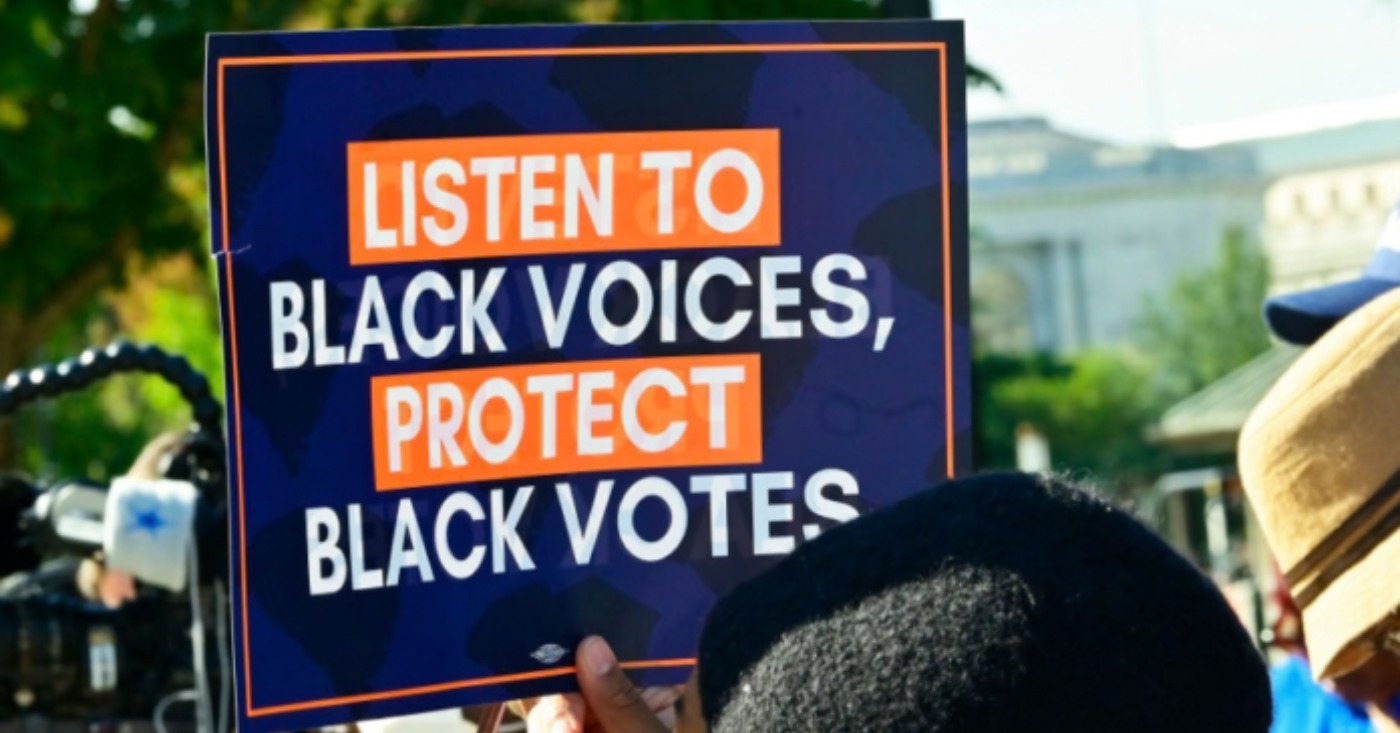
The NAACP is launching a voter protection hub ahead of the 2026 midterm elections as voting rights groups prepare for potential challenges at the polls.
Voters will be able to report allegations of intimidation and suppression by phone and through online submissions, while NAACP attorneys and legal volunteers investigate complaints and seek emergency court intervention when necessary.
According to The Washington Post, the hub is scheduled to launch October 24.
“We are ready,” NAACP General Counsel Kristen Clarke told The Washington Post. “We have an army of legal volunteers across the country and are prepared to activate and seek emergency relief on Election Day where necessary.”
The effort comes as organizations are also working to increase Black voter participation ahead of the midterms. BIN reported in September that the Congressional Black Caucus Institute launched its “SO VOTE” campaign, which plans to spend at least $4.5 million registering and mobilizing Black voters, young voters and rural voters.
The Associated Press reported that the campaign is targeting Georgia and Mississippi statewide, along with 16 congressional districts.
The NAACP is particularly focused on voter intimidation, changes to election rules and the impact of redistricting on Black voting power.
The organization filed a lawsuit against Justice Department Assistant Attorney General Harmeet Dhillon on Friday (October 2), seeking records about the department’s plans to deploy election monitors at polling places during the midterm elections.
“To be clear, there is no federal statute that gives the U.S. Department of Justice the right to send their so-called ‘election monitors’ to polling sites across the country,” Clarke said in a statement.
The NAACP’s voter protection hub will give voters a centralized way to report problems and connect with the organization’s legal team during the election.
The Black Information Network is your source for Black News! Get the latest news 24/7 on The Black Information Network. Listen now on the iHeartRadio app or click HEREto tune in live.
Based on reporting by Atlanta Daily World.
Art
Comedy and Loss Collide in Kevonstage’s ‘Grief Sucks’ at the Pageant
ST. LOUIS AMERICAN — Comedian KevOnStage brought his one-man show “Grief Sucks” to The Pageant, offering an experience that blended humor with the raw realities of loss. The show, rooted in his personal journey after the sudden death of his brother, manager, and business partner Jason Fredericks four years ago, gave the audience permission to laugh and cry, often at the same time.

When KevOnStage took the stage at The Pageant Sunday night, his house rules let everyone know what they were in for with his one-man show “Grief Sucks.”
“Do not judge yourself. Do not judge the jokes. Just laugh,” he said.
Even within his directions, were jokes.
He gave the audience permission to cry, but quietly – because Black people have a tendency to do things at full volume.
The hour that followed provided plenty of laughter. But underneath the humor were truths that anyone who has ever lost someone could feel deep in their chest.
The show was based on his experience of losing his brother, best friend, manager and business partner Jason Fredericks. He died suddenly of a heart attack four years ago at the age of 42.
Kev warned the audience to be mindful of their social media — both the wild posts that could end up being someone’s last and the intrusive ones people make after a loved one dies. And he gave people permission to laugh at the moments that feel too outrageous to say out loud — the ones that become inside jokes for families trying to survive the worst days of their lives.
“Grief is dark humor,” he said as he walked through the story of his brother’s death — a story he jokingly blamed on Nia Long.
He found a way to give permission to laugh at the outlandish moments that often serve as inside jokes. Those who have lived through some of the worst moments of their lives and not only found a way to talk about it, but to steal a laugh in the midst.
“Grief is dark humor,” he said as he walked through the story of his brother’s death — a story he jokingly blamed on Nia Long.
“I know that sounds crazy,” he said. “It’s not her fault — but it is her responsibility.”
It was a jarring moment, but it let the audience know exactly what kind of honesty they were in for.
He said his brother’s death was “proof that she is drop‑dead gorgeous.”
“Sometimes things are funny — and sometimes things are funny because you should not be laughing,” he said.
The show moved through a series of points about grief, each one backed by a story that made the room nod in recognition. He talked about how grief can twist ordinary moments — how it can make you jealous of people with siblings or irritated by strangers having a good day.
He explained how grief can twist even the simplest moments, how it can make you jealous of people with siblings, or irritated by strangers having a good day. He brilliantly compared grief to a rock stuck in your shoe. Sometimes it’s small and manageable. Other times its jagged and unbearable – but always there.
He also talked about the unfairness of grief — how the world doesn’t stop when your loved one dies, how people still go to Raising Cane’s, still pick up their kids, still laugh. And he talked about the heartbreak of realizing his brother never got to see things he would have loved, from TV shows to cultural moments. And that he was robbed of the opportunity to engage with him about them.
“He would have loved Sinners,” Kev said. “But he never got to see it.”
At one point, he paused to show a video of his brother telling him how proud he was. The room went quiet. It wasn’t the polite kind of silence – but the kind where you can hear someone in the back sniff. The crowd assured him that it was okay for him to take a beat. His voice shook as he pushed through. Those pauses made the audience lean in even more.
Kev made grief feel communal. He made people laugh at things they didn’t think they were allowed to laugh at. And he reminded everyone in the room that grief doesn’t make sense, doesn’t follow rules, and doesn’t care about timing. And most importantly, he drove home the point that it also doesn’t have to be carried alone.
There were moments when his emotions got the best of him. There was the video he shared of his brother telling Kev how proud he was of him that compelled him to take a beat. His voice quivered as he powered through. Those pauses made the audience connect with the show all the more. Grief Sucks wasn’t just comedy. It was catharsis. It was storytelling. It was a room full of people realizing they weren’t the only ones trying to make sense of loss.
KevOnStage gave them permission to feel all of it — and to laugh anyway.
Internet personality and standup comedian KevOnStage used the sudden and unexpected loss of his brother as the foundation for a one-man show that was funny, honest and a little dark – often at the same time.
Sunday night, he brought “Grief Sucks” to The Pageant. His barometer check
KevOnStage walked onto The Pageant stage Sunday night with a promise: that the next hour would be funny, honest and a little dark. And he delivered all three — often at the same time.
His one‑man show, Grief Sucks, was as relatable as it was funny. It was the kind of performance where the audience laughed hard, then caught themselves nodding in recognition. Because beneath every punchline was a truth that anyone who has lost someone could feel in their chest.
He opened with the kind of humor that only comes from someone who has lived through the worst days of their life and somehow found a way to talk about it. He told the crowd they had permission to cry, laugh, sit still, or just breathe — but to “cry quietly,” because, as he joked, Black folks tend to do everything at full volume.
Then he went straight into the story of losing his brother — not with soft edges, but with the kind of raw honesty that made the room go still. He explained how grief can twist even the simplest moments, how it can make you jealous of people with siblings, or irritated by strangers having a good day. He compared grief to a rock stuck in your shoe: sometimes small and manageable, sometimes jagged and unbearable, but always there.
And he didn’t shy away from the intrusive thoughts that come with loss — the ones people rarely admit out loud. He shared the moment he realized he had lived longer than his older brother ever got to, and how that fact sits heavy no matter how much time passes.
Kev’s storytelling is built on the kind of humor that comes from real life — the funeral home upcharges, the family dynamics, the dark jokes that slip out at the worst possible moments. He told a story about previewing his brother’s body with his wife and grandmother, and how one unexpected comment turned into an inside joke that has carried them through four years of grief.
He also talked about the unfairness of grief — how the world doesn’t stop when your loved one dies, how people still go to Raising Cane’s, still pick up their kids, still laugh. And he talked about the heartbreak of realizing his brother never got to see things he would have loved, from TV shows to cultural moments.
The most emotional part of the night came when he recounted the day his brother died — the phone calls, the confusion, the hope, and finally the moment his nephew said, “He’s gone,” while Kev was sitting in a middle seat on a United flight. He told it plainly, without theatrics, and the room held its breath.
But even in that story, he found a way to make people laugh — not at the pain, but at the absurdity of life continuing around you when your world has just shattered.
By the end of the show, KevOnStage had done something rare: he made grief feel communal. He made people laugh at things they didn’t think they were allowed to laugh at. And he reminded everyone in the room that grief doesn’t make sense, doesn’t follow rules, and doesn’t care about timing — but it also doesn’t have to be carried alone.
Grief Sucks wasn’t just comedy. It was catharsis. It was storytelling. It was a room full of people realizing they weren’t the only ones trying to make sense of loss.
And on a Sunday night at The Pageant, KevOnStage gave them permission to feel all of it — and to laugh anyway.
Based on reporting by St. Louis American.
Black Press
OP-ED: She’s Not Non-Compliant, She’s Hungry: Addressing Food Justice to Improve Breast Cancer Outcomes
CHICAGO DEFENDER — Food insecurity in Chicago’s South Side and surrounding suburbs disproportionately affects Black women with breast cancer, impacting their treatment and recovery.
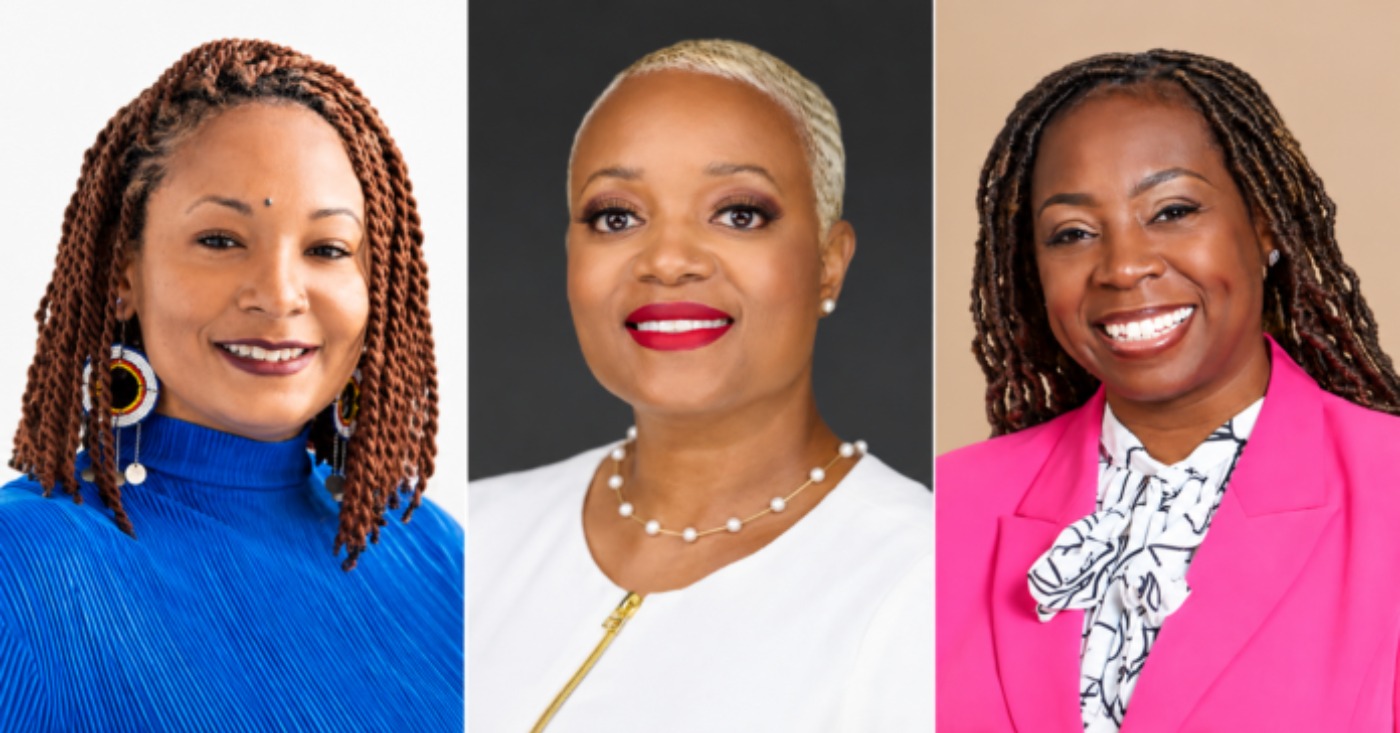
Here’s a transformational idea: everyone should have access to safe, healthy and affordable food.
If this idea doesn’t feel radical to you, then perhaps you haven’t spent much time in the Southside of Chicago and its adjoining suburbs.
Food insecurity is rampant in our neighborhoods. If you live in Washington Heights, you are practically guaranteed to experience lower food access than the average Chicagoan – with similar circumstances in the South Shore, West Englewood or West Pullman.
It has been clearly documented that “Food is Medicine.” In fact, according to countless scientific studies, good nutrition is critical during cancer treatment. It empowers your body to maintain muscle, rebuild damaged tissues and better withstand aggressive radiation or chemotherapy. A patient with access to nutritious food will experience fewer side effects, like fatigue and nausea, and will have less need for extra medicines. In short, good food improves a patient’s daily life.
Instead, though, a Black woman with breast cancer in our South Side neighborhoods or suburbs has the opposite experience. In fact, if “food is medicine,” then we are inarguably in a crisis, and it is disproportionately affecting Black women with breast cancer.
As co-authors of the Pinkprint and members of the Chicago Better Together Breast Cancer Disparities Think Tank, an initiative launched to address the disproportionate impact of breast cancer mortality on Black women in Chicago’s South Side and South Suburbs, we know that by combining data-informed strategies with community-driven advocacy and leadership, we will create equitable, sustainable outcomes for those most affected by breast cancer and the lack of access to nutritious foods in their communities.
Solutions start as local initiatives. We must pilot community-driven solutions in areas with the highest breast cancer mortality rates and limited access to nutritious food.
Existing local programs – food pantries, community fridges and even hospital-run delivery systems – are a critical piece of this local infrastructure. They are just a component, though, of the robust nutrition infrastructure the South Side lacks. In the long-term, our neighborhoods need clean, well-stocked grocery stores – and we must demand that our elected officials do everything they can to attract and retain these food corporations to invest in our communities.
This is just one item on their to-do list. Long-term solutions will include policy changes and targeted incentives at the city, state and federal levels. Just this spring, over 150,000 people in Illinois lost SNAP benefits, a devastating cut with ripple effects across families into entire neighborhoods. These cuts disproportionately affect people in the South Side of Chicago – not to mention, overwhelm food banks and other centers that serve as part of our social safety net. The Families Receiving Emergency Support for Hunger (FRESH) program in Illinois provides a one-time, automatic $400 cash payment per eligible household member to residents who lost their SNAP food benefits. This will help ease the immediate negative effects of these cuts and is much appreciated. But it is not a long-term solution.
When we started conversations in work groups about this project, we started with the idea that Black women deserve equitable access to quality breast cancer care. Any conversation about breast cancer care and goals for improved outcomes, must include a conversation about nutrition justice.
Nutrition justice is not just a transformational ideal: it is an idea that will literally transform our neighborhoods and the quality of life of every single person living in them. It will put grocery stores in empty storefronts; it will deliver food to a breast cancer patient going through chemotherapy.
Nutrition justice will help improve breast cancer outcomes for Black women on Chicago’s South Side. And Black women should not have to wait.
This op-ed is the second in a series focusing on eliminating breast cancer mortality in Black women on Chicago’s Southside. The authors are part of the Chicago Better Together Breast Cancer Disparities Think Tank, an initiative launched to address the disproportionate impact of breast cancer mortality on Black women in Chicago’s Southside and South Suburbs. Together with other community leaders, they have co-authored the Pinkprint, a strategic multistep plan and call-to-action on this critical issue.
The post She’s Not Non-compliant, She’s Hungry: Addressing Food Justice to Improve Breast Cancer Outcomes appeared first on Chicago Defender.
Based on reporting by Chicago Defender.
Black History
Pleasant Zion Missionary Baptist Church Celebrates 100 Years of Spiritual, Mind, Body, and Soul Ministries
LOUISIANA WEEKLY — Pleasant Zion Missionary Baptist Church, located at 3317 Toledano Street in uptown New Orleans, is celebrating its 100th anniversary with a Centennial Weekend on October 17-18.

The legacy of the African-American church in the United States is that of a refuge, a caring and welcoming institution, a port in the storm, that has fed African Americans spiritually, economically, mentally and physically, and has nurtured the souls of people of African ancestry throughout their existence in America.
Pleasant Zion Missionary Baptist Church has carried on that legacy for the past 100 years. Established in 1926, Pleasant Zion MBC, located at 3317 Toledano Street, is a cornerstone of faith in uptown New Orleans and a beacon of hope for the Hoffman Triangle/Central City neighborhood.
Pleasant Zion MBC continues its mission of faith, education and empowerment for future generations. The church celebrates its 100th anniversary with a forward-looking Centennial Weekend, October 17-18.
Throughout its long history, Pleasant Zion has served its community by providing religious training and cultural, educational and recreational activities for children and adults. For decades, PZMBC has worked with neighborhood leadership to address issues such as neighborhood blight, housing and safety concerns.
Many have sought Pastor Kenneth E. Thompson’s confidential, wise counsel and comfort.
Pleasant Zion Missionary Baptist Church’s Centennial Celebration focuses on youth. “Our Centennial is not just about looking back – it’s about investing in our youth and building the future of our community,” Pastor Thompson affirms.
For decades, PZMBC has worked with neighborhood leadership to address issues such as neighborhood blight, housing, and safety concerns, Pastor Thompson adds.
During the summer, PZMBC sponsored summer enrichment camps for children with a range of activities, including culinary arts, STEM, music and field trips to museums and Black historic sites such as Armstrong Park.
The church has provided free food baskets, placed homeless women in hotel rooms, and provided financial assistance to people at risk of eviction or homelessness.
“Throughout its long history, Pleasant Zion has served the needs of its community by providing religious training, cultural, educational and recreational activities for both children and adults.
This upcoming Centennial Celebration honors a century of spiritual leadership while investing in the next generation, uplifting youth voices, education and sacred music.
Special guests at the celebration include the famous Zion Harmonizers. The world-renowned gospel group celebrated 87 years in gospel music with a special anniversary performance in March 2026 at St. John Institutional Missionary Baptist Sanctuary.
The program also features acclaimed Bishop Tyrone Jefferson, Voices of SUNO and the NORD Choir.
This article originally published in the October 12, 2026 print edition of The Louisiana Weekly newspaper.
Based on reporting by Louisiana Weekly.
Black History
Cash for Moms: As Medicaid Cuts Loom, Cities Test a New Approach to Black Maternal Health
LOUISIANA WEEKLY — WORD IN BLACK — A maternal health crisis continues to disproportionately impact the Black community, with Black mothers experiencing significantly higher mortality rates during childbirth and their infants facing increased risks of prematurity and death. Data indicates Black moms die at three times the rate of white moms, and Black infants are about twice as likely to die as white infants in some states.

By now, there’s little question that a maternal health crisis is rocking the Black community. The data tells the story: Black moms are dying during childbirth at three times the rate of white moms, a disproportionately high percentage of Black children are born prematurely, and Black infants are about twice as likely to die as white infants in states like Louisiana.
But new data from a handful of pilot projects also suggests a potential solution that could significantly improve outcomes for Black mothers and their babies: cash payments, no strings attached.
Studies show the unrestricted money led to fewer preterm births, higher newborn birth weights, and fewer critical-care infant hospitalizations. It also reduced stress among new moms who would otherwise struggle to attend prenatal check-ups, pay for food and formula, or keep a roof over their heads.
“This makes so much sense to me,” says Tamara Mason, an official with the nonprofit March of Dimes who worked on an Atlanta project distributing money to low-income pregnant women. “Why isn’t everyone doing this?”
Sen. Cory Booker, a New Jersey Democrat, is among several sponsors of legislation that would provide direct financial aid to new mothers, similar to the expanded child tax credit in 2021. The credit sent monthly payments of up to $300 per child straight to most families’ bank accounts; experts credit it with lifting millions of children out of poverty.
When it expired, child poverty rose again.
“I believe that we need to, for moms, flood resources to them through things like the child tax credit,” Booker said during an August press briefing on the Black Maternal Health Momnibus Act. “We were able to cut child poverty virtually in half for our communities, and that actually does affect child outcomes.”
Those positive outcomes in part spurred the March of Dimes to launch trial programs providing universal basic income, or UBI, to pregnant women and new moms in two cities: Atlanta, which Bloomberg ranked as the most economically unequal large city in the country, and New Orleans, which March of Dimes gave an F grade.
No strings attached
In Atlanta, the Guaranteed Basic Income Program gave each participant $1,000 a month during pregnancy and her baby’s first year. Women most likely to live in poverty in that city are Black women of reproductive age; 25 pregnant women in two of the area’s highest-need ZIP codes received the cash.
March of Dimes ran the pilot through an Atlanta collective-impact partnership known as the collaborative. It is modeled on San Francisco’s Abundant Birth Project and, organizers say, rooted in an idea the Rev. Martin Luther King Jr. championed decades ago.
Funders Skeptical at First – Then All In
Mason said she spent months pitching foundations on the idea, which some considered outside her organization’s lane.
“I was honestly surprised that a couple of foundations,” Mason says. “Funders were like, ‘Why is March of Dimes in this space? You all are the birth defects people. You’re the preterm birth people.’”
The Community Foundation for Greater Atlanta signed on as the primary funder. The Liz Blake Giving Fund and the Jesse Parker Williams Foundation funded data gathering and evaluation Emory University conducted.
The nonprofit Center for Black Women’s Wellness handled recruitment, and more than 110 women applied for the 25 spots, Mason said. Applicants had to live in one of the two ZIP codes, earn no more than 200 percent of the federal poverty level, and be 12 to 28 weeks pregnant.
Cash, Diapers and a Network
Stipends were paid through a prepaid card, letting evaluators track spending without restricting it. Helping Mamas, a nonprofit focused on diaper insecurity, supplied 300 diapers and eight packs of wipes a month, plus a car seat and other essentials. The Georgia Black Doula Network encouraged, but didn’t require, participants to hire doulas.
Early results from Emory’s evaluation, as described by Mason, show a 20 percent decrease in financial stress and a 66 percent decrease in hopelessness, a figure she called striking. Prenatal outcomes trended better than average.
Mason was careful not to oversell what $1,000 a month can fix. Several participants lost housing; one or two dealt with domestic violence.
Even though GBI reduced financial stress, “it still is one piece of the puzzle,” Mason said.
New Orleans: Overcoming Crisis
March of Dimes runs a similar program in New Orleans, GBI Rx, offering pregnant patients in their first or second trimester $12,000, as a lump sum or $1,000 a month. Two partner medical clinics enroll patients for healthcare, and the payment card blocks cash withdrawals and spending on liquor and gambling.
In Louisiana, “we have a maternal and infant health crisis – specifically, a Black maternal and infant health crisis,” said Robin Gruenfeld, director of collective impact for March of Dimes in New Orleans. ”And it’s been that way for a long time.”
Black infants there died at about twice the rate of white infants from 2021 to 2023. Gruenfeld said Orleans Parish has the state’s lowest prenatal care utilization rate.
Gruenfeld said the program’s city seed money, federal pandemic relief funds, and foundation funding were “zeroed out” without notice. Most funds were later restored at a lower level, forcing organizers to scale down to 94 participants instead of the 100 planned. They also enrolled on a first-come, first-served basis.
Recipients spent lump sums on housing, cars and insurance. But spending priorities for the participants changed when the federal government stopped paying out SNAP food benefits during last fall’s federal shutdown.
“During that time, more than a quarter of the funds that we gave folks was going to groceries,” Gruenfeld said.
Several New Orleans city government officials are now weighing a program modeled on Michigan’s Rx Kids, which a study credits with nearly halving neonatal deaths in Flint, one of the poorest cities in the state.
“We are seeing policies pushed by the political will of predominantly Black women come into effect, and then also the backlash,” says Danielle Atkinson of Mothering Justice Action Fund, a nonprofit advocacy organization. “In Michigan, we have Rx Kids, which is extremely popular [and] the data on the impact is undeniable.”
But recent changes are endangering the success of such programs, particularly amid President Donald Trump’s hostility towards programs focused on diversity, equity and inclusion.
“We’re getting this pushback around identifying race and parental status as systemic areas of oppression,” Atkinson says. It remains to be seen, she says, “whether or not we are going to be able to prevail with the political power and the popular will of these issues, or the rhetoric and the history of racism in our country.”
Washington Looks Elsewhere
That includes the Republican-controlled Congress, which has shown little appetite for cash aid tied to pregnancy.
The Black Maternal Health Momnibus Act, which Booker reintroduced along with Democratic Reps. Lauren Underwood of Illinois and Alma Adams of North Carolina, bundles 14 bills on housing, nutrition, WIC and the perinatal workforce, but not direct cash.
Still, signs suggest the issue – providing cash aid to low-income mothers and their babies – may stay on the front burner as the midterm elections approach in November.
This month, former Vice President Kamala Harris and Michigan Senate nominee Abdul El-Sayed, both Democrats, hosted a Black maternal health roundtable in Detroit. Danielle Atkinson of Mothering Justice took part.
“Black mamas deserve access to quality healthcare that sees us, listens to us, and understands us at every step of the way,” Atkinson said afterward. “The responsibilities we carry do not end at pregnancy, nor do they disappear when we give birth and want to spend time with our newborn. They stay with us throughout all that we experience.”
Based on reporting by Louisiana Weekly.


Optimize Your Seating: Essential Household Setup Guide #shorts

Brake Pedal Test Drive: Smooth Stops for Your Truck! #shorts

Life Lessons Learned Through Adversity: My Journey #shorts

From Claflin Alum to ColorBlind Artist

Turning Abolitionist Design Research Into Real-World Business #shorts

Black Journalists: Community, Excellence, and Lifting Up #shorts

NFN Exclusive: Muslims in AI

NFN Live presents The State of the Westward

Alliance of Civil Rights Orgs launch Week of Action; National Black Man Voter Day set for Oct. 24

MC’ing a Gala: A Night of Love & Black Excellence #shorts

The Youngest American Killed in the Vietnam War

Passing for White, Fighting for Black America: The Courage of Walter White

OP-ED: Haiti TPS: Have We Lost Sense of Humanity?

NFL: Week Two Recap | Jalen Hurts did not fold; Caleb Williams exits game with injury

Remembering Chauncey Bailey as Student Journalists Face Threats to Truth-Telling

Peter Magubane: a Camera Against Apartheid

Mayor Lee Announces $1 Million Kaiser Permanente Grant for Pilot Program to Address Homelessness, Clean Up Public Spaces throughout Oakland

OP-ED: How Head Start Also Helps Parents

Community Action Group ‘Friends of Zakiya’ Ask Sheriff for Time

Poll: Becerra Widens His Lead Over Hilton; Californians Split on Wealth Tax
Optimize Your Seating: Essential Household Setup Guide #shorts
Brake Pedal Test Drive: Smooth Stops for Your Truck! #shorts
Life Lessons Learned Through Adversity: My Journey #shorts
From Claflin Alum to ColorBlind Artist
Turning Abolitionist Design Research Into Real-World Business #shorts
Black Journalists: Community, Excellence, and Lifting Up #shorts
NFN Exclusive: Muslims in AI
NFN Live presents The State of the Westward
MC’ing a Gala: A Night of Love & Black Excellence #shorts

Entrepreneurship Needs a Plan—and a Life Beyond Work #shorts
-
 BlackPressUSA1 week ago
Latinas Deserve Equal Pay. Unions Help Make It Happen.
-

 Black Press5 days ago
All Skinfolk Ain’t Kinfolk
-

 Black Press4 days ago
Oakland Awarded More than $14 Million in State Funding
-

 African American News and Issues2 days ago
Black History: Gladys West Mathematics Helped Make GPS Possible
-
 Black Press4 days ago
Jendayi Arrest Raises Community Concerns Regarding Sheriff’s Chain of Command
-
 Black Press4 days ago
Allen Temple Baptist Church Hosts Free Prostate Cancer Screenings on Oct. 17
