
Economy
On King Holiday Commemoration: 600 Black Legislators Resolved To Push Policies For Economic Justice
THE SEATTLE MEDIUM — It was three years ago that a group of national business leaders launched a movement called Black Wealth 2020 partially based on the economic vision articulated by Dr. Martin Luther King Jr.


By Hazel Trice Edney
(Trice Edney Wire) – It was three years ago that a group of national business leaders launched a movement called Black Wealth 2020 partially based on the economic vision articulated by Dr. Martin Luther King Jr.
King said in his final speech on April 3, 1968: “It’s all right to talk about streets flowing with milk and honey, but God has commanded us to be concerned about the slums down here and his children who can’t eat three square meals a day. It’s all right to talk about the new Jerusalem, but one day, God’s preacher must talk about the new New York, the new Atlanta, the new Philadelphia, the new Los Angeles, the new Memphis, Tennessee.”
As America commemorates another Martin Luther King Jr. National Birthday Holiday Jan. 21, an organization of Black legislators have adopted a resolution to begin spreading the Black Wealth 2020 principles and initiatives with an aim to grow the economic justice movement that King started in Memphis just before he was assassinated April 4, 1968.
The National Black Caucus of State Legislators (NBCSL), a 600-member group of local and state Black elected officials, has encouraged its members to form Black Wealth 2020 economic task forces and adopted a resolution to promote its economic agenda in 2019.
“State legislators can play a critical role in the sustainability of communities through policy,” said New York State Senator James Sanders Jr., who introduced and shepherded the resolution during the NBCSL’s 42nd Annual Legislative Conference that concluded Dec. 1. “This initiative aims to financially empower the Black community in the areas of home and business ownership as well as to broaden opportunities for Black financial institutions. Under those conditions, I believe we must do more than announce these goals aloud, but work to firmly cement them throughout America in the form of solid legislation, so they can truly flourish.”
This means the NBCSL, which represents 60 million people in 45 states, the U. S. Virgin Islands and the District of Columbia, will spend the next two years – and beyond – prioritizing policies that enhance Black economic growth through business ownership, homeownership and Black banking.
Sanders is chairman of the New York State Senate Banking Committee. He also leads the Senate Democratic Conference’s Task Force on Minority and Women-owned Business Enterprise.
Sanders continues, “As we approach Rev. Dr. Martin Luther King Jr. Day, let us remember that he was a pioneer in this area, planting roots with his ‘Poor Peoples Campaign,’ which propelled the economic justice movement begun in Memphis. I am proud to aid in the continuation of Dr. King’s vision. I look forward to working with my colleagues in government and also the private sector to further assist people of color.”
The resolution is posted in its entirety at NBCSL.org.
The passage of the resolution represents the next steps of a promise made by Rep. Greg Porter, NBCSL’s immediate past president, during his speech at the Black Wealth 2020 second anniversary luncheon last year. He called for unity behind the Black Wealth 2020 vision.
The backing of the legislators reinvigorates and expands the movement, says former National Bankers Association President Michael Grant, one of Black Wealth 2020’s founders and chief spokespersons.
“The National Black Caucus of State Legislators, through exemplary leadership of Representative Greg Porter and State Senator James Sanders, helped the Black Wealth 2020 coalition take a quantum leap forward with the passage of Resolution BED-19-21. The NBCSL connects Dr. Martin Luther King Jr.’s vision of economic justice to a modern day movement that is making wealth-building throughout the Diaspora one of our highest single priorities.”
Other Black Wealth 2020 founders are Ron Busby, president/CEO of the U.S. Black Chambers Inc. and Jim Winston, president of the National Organization of Black Owned Broadcasters.
“Whereas, the economic goals of Black wealth 2020 have historic roots, referencing to when Dr. Martin Luther King Jr. had launched the ‘Poor People’s Campaign’, an economic justice movement that had begun in Memphis; the founders of Black Wealth 2020 view their work as a continuum of Dr. King’s vision, with a unique contemporary strategy for sustainability,” states the resolution.
“Therefore, be it resolved, the National Black Caucus of State Legislators (NBCSL), encourages state policymakers and their membership to establish a Black Wealth 2020 economic task force designed to develop economic building blocks for the African-American population to addresses racial wealth gap.”
The NBCSL, aiming even higher with its goals to spread the initiatives, said it will send a copy of the resolution to the “President of the United States, the Vice President of the United States, members of the United States House of Representatives and the United States Senate, and other federal and state government officials as appropriate.”
At least a dozen other major Black organizations have either joined or expressed support for the Black Wealth 2020 economic initiatives. The goals seek to untangle a web of economic injustices including the following statistics outlined in the resolution:
- There are only 2.6 million Black-owned businesses in the United States, whereas the U.S. black population is estimated to be over 40 million, according to the National Black Chamber of Commerce.
- 27.6 percent of black applicants for conventional mortgage loans were denied in 2013 while White applicants were denied only 10.4 percent of the time, according to the National Association of Real Estate Brokers.
- The number of Black-owned banks operating ln the U.S. has been dropping steadily for the past 15 years and fell to 23 last year, the lowest level in recent history, according to the Federal Deposit Insurance Corp.
- The median wealth of White households is 20 times that of Black households.
Among the successful initiatives of Black Wealth 2020 in its third year are an agreement between the Bishops of the African American Episcopal Church and Black-owned banks and a credit card established by the Black-owned Liberty Black of New Orleans and the U. S. Black Chamber Inc. The NBCSL resolution points out that such initiatives will empower a nation where the pain of poverty and economic disparities are pervasive.
The resolution concludes: “Be it further resolved that the NBCSL urges state representatives to develop and implement state and community-based intervention programs aimed to address historical and systematic barriers to homeownership, small business and access to capital.”
This article originally appeared in The Seattle Medium.









Black Press
Mayor Lee Delivers 2026 State of the City Address: ‘Oakland Continues to Be on the Move’
To create a police force that better serves and protects Oakland, the city is working toward the goal of reaching 700 sworn police officers, she said. These steps include recruiting from Oakland, holding academies, reinstituting a cadet program, and increasing foot patrols.
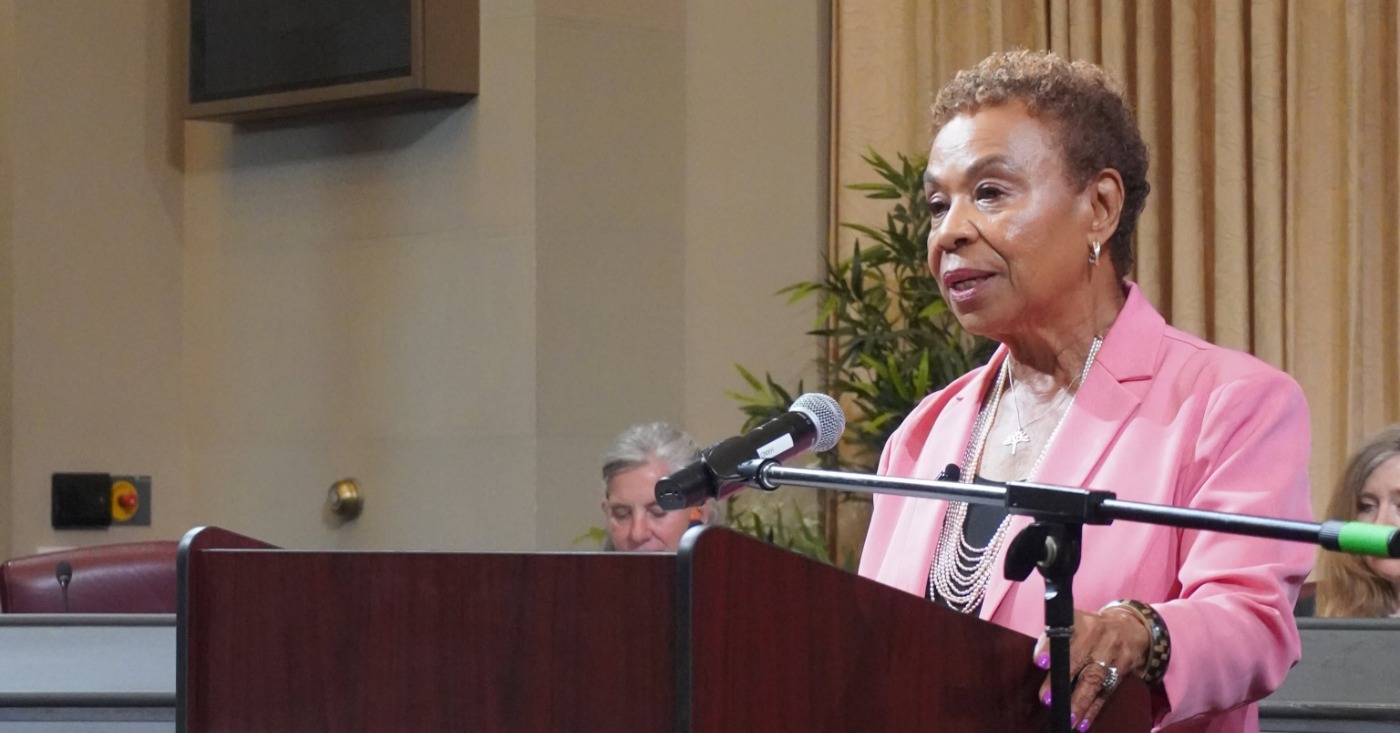
Mayor Barbara Lee, speaking this week to Oakland residents and elected leaders in City Council chambers, delivered the annual mayoral State of the City Address, highlighting the city’s accomplishments as well as the challenges Oakland is facing going forward.
Lee began her remarks praising city workers, who picketed outside City Hall before the meeting, and are currently negotiating with the city for a wage increase and ending understaffing that leaves many departments shorthanded.
“We are working very hard (not) just to get a contract, but to get a fair contract,” she said. “I know that our City Council and myself are working constantly toward that end.”
The mayor also praised Councilmember Carroll Fife for her legislation for a 45-day moratorium on data center construction, which passed unanimously at the council meeting Tuesday following Lee’s presentation.
Speaking bluntly, she said, “Oakland continues to be a city on the move, (but) I want to tell you the truth about the state of our city.”
“We have made real progress, and we still face real challenges.”
She said the city has balanced its budget but has a structural deficit, which is decreasing, and must operate within the context of federal funding cuts.
“Too many Oaklanders are unhoused, too many families are struggling with the cost of living, and too many neighborhoods still need basic services that they deserve, and too many people are living in fear,” Mayor Lee said.
“We’re not sweeping these realities under the rug,” she continued. “We are being intentional and transparent about how we must face these challenges, but we will not ignore our progress.”
Substantial progress includes:
• Bringing crime down;
• Building affordable and deeply affordable housing;
• Cleaning the streets and fixing the roads;
• Helping small businesses.
“We are bringing new investment to Oakland,” she said. “We’re making City Hall work better. There’s more to do, but make no mistake, Oakland is on the move.”
Speaking broadly about the city’s public safety initiatives, she said that crime continues to decline. Burglaries fell by 26%, and violent crime fell by 17%.
In recent years, homicides and shootings have fallen by double digits, and gun violence has dropped by more than 50% in the last 33 months.
“These aren’t just statistics: these are lives. These are families. These are people who never made it home,” Mayor Lee said.
She talked about what to expect now that federal court oversight of the Oakland Police Department ended last week after 23 years. “Ending federal oversight does not mean ending accountability; quite the opposite,” she said. “Accountability and civilian oversight must remain our standard. Community trust must be our standard.”
Mayor Lee also emphasized that Oakland remains a city of refuge.
“We do not work with ICE; we do not cooperate with ICE; our police do not cooperate with ICE; we will not be militarized,” she said.
The mayor also emphasized that investing in youth is a top priority of her administration and should be considered a public safety strategy.
“We advocated for almost $2 million to restore the mayor’s youth summer employment program,” she said. “We connected youth with Oakland businesses to develop skills that will support them for years to come, and that’s a big deal.”
To create a police force that better serves and protects Oakland, the city is working toward the goal of reaching 700 sworn police officers, she said. These steps include recruiting from Oakland, holding academies, reinstituting a cadet program, and increasing foot patrols.
The city also is strengthening other programs, including the Department of Violence Prevention and Ceasefire, she said. “We must have this comprehensive public safety strategy, because we must also prevent violence before it happens.”
Continuing, Lee said public safety is connected to unsanitary conditions in city neighborhoods.
“Illegal dumping is unacceptable, and it’s a moral disgrace,” she said. “No child should have to walk past piles of garbage on their way to school; no senior should have to live next to it; no small business should have to clean it up outside its door.”
She said the city is changing the way it fights illegal dumping, securing a $9.2 million investment to develop a new strategy. “We’re not just cleaning it up; we’re working to stop it before it starts. We have the three E’s – Eradication, enforcement, and education,” she said.
Focusing on the continuing crisis of Oakland’s unhoused residents, she said, “We consider housing a basic human right, and homelessness remains one of Okland’s greatest challenges.”
“There are two things we must do: keep people from becoming unsheltered and help people who are unsheltered get back into housing with services that they need,” Lee said.
Since 2024, homelessness in Oakland has fallen by 20%, she said. In the past year prevention programs helped keep 1,000 families in their homes, and over 1,300 affordable homes opened over the past two years.
Addressing community tensions over encampments, she said, “We should never have to choose between compassion for people experiencing homelessness and the health and safety of our neighborhoods.”
“A strong city has to deliver both,” she said. “That’s the work we’re advancing through Oakland’s new homelessness strategic action plan.”
Black Press
Marin County Supes Expand Small Business Options with Home Kitchen Pilot Program
“This will deliver immediate financial relief to entrepreneurs in areas like Marin City, West Marin and the Canal neighborhood, removing barriers right where economic opportunity is needed the most,” said Shannon Bell, consumer protection supervisor with Marin County Environmental Health Services, at the meeting.

The Marin County Board of Supervisors adopted a three-year pilot program that will allow cooks and food entrepreneurs to prepare and sell meals from their homes on Sept. 29
The Microenterprise Home Kitchen Operation program, or MEHKO, will establish a permitting process for small-scale home food businesses. California state law allows licenses if local governments opt in.
“This will deliver immediate financial relief to entrepreneurs in areas like Marin City, West Marin and the Canal neighborhood, removing barriers right where economic opportunity is needed the most,” said Shannon Bell, consumer protection supervisor with Marin County Environmental Health Services, at the meeting.
MEHKO licenses fill the gap between cottage food permits, which only apply to non-potentially hazardous foods like baked goods and jams, and full commercial kitchens.
Microenterprises can serve as commissaries for up to two mobile food operations; they require food to be prepared and served the same day. They are exempt from commercial facility requirements, such as industrial grease traps and commercial stove hoods.
The program allows takeout or on-site dining with strict limits of 30 meals per day, or 90 meals per week, and an annual sales cap of $100,000.
The pilot would begin March 1, 2027, and permits would be capped at 100 per year. Application fees are $725 with an annual renewal fee of $414, but fee waivers for a third of the permits are reserved for low-income communities.
After two years, supervisors will consider making the program permanent.
“By eliminating the need for commercial leases and expensive equipment, entrepreneurs can safely test their businesses and ideas with minimal financial risk,” Bell said. According to statewide data from the Cook Alliance, 85% of MEHKO operators are women, immigrants, and people of color, and over 70% rely on this income to support their families, she said.
Bell also said unpermitted sales are already happening in areas like the Canal.
Local Vendors Seek a Legal Path
Marina Palma advocates for San Rafael’s Canal neighborhood, which is home to a vulnerable community of over 13,000 low-income residents. About 84% are Latino and roughly half of all households spend more than 50% of their income on housing.
Palma told the board that the pandemic caused many Canal residents to lose their jobs, and that’s why the neighborhood has so many vendors selling food in public. Because they have no license, enforcement actions can be harsh.
“They have really high tickets of $600, and their food has been thrown away,” said Palma.
She said MEHKO would help vendors get an official license, but she questions whether vendors will need a Social Security number and be legally in the country.
According to the home-chef’s national nonprofit Cook Alliance, MEHKO applicants need no proof of citizenship nor a Social Security number to obtain a permit.
“I’m from Mexico, and I’m one of the mobile vendors,” said Elsie Vega through a Spanish translator. “I have two jobs. Everything is pricey — house, food, everything. I am here to work hard, to pay taxes. I don’t make enough money to pay the community kitchens.”
MEHKO license holders must pass inspection under the oversight of the Marin County Department of Environmental Health Services and comply with local zoning, parking and noise ordinances.
California authorized MEHKO programs in 2019. Seventeen counties have since adopted them, including Sonoma, San Mateo, Solano, Contra Costa, Alameda and Santa Clara counties.
Other commenters who spoke in favor of the program represented a range of food system and small business organizations. They included the Agricultural Institute of Marin, which operates nine Bay Area farmers markets, the University of California Cooperative Extension, the Cook Alliance, the West Marin Food Systems Group, which coordinates farm-to-school food access, and the Marin Small Business Development Center.
Black Press
OP-ED: Proposition 44 Would Put a Price on Trust
The danger in Proposition 44 is not only its 90 percent figure. It is that the meaning of “qualifying” spending will be worked out later. A clinic preparing a budget today may not know whether a navigator, health educator, transportation program, outreach worker, technology upgrade, or other patient-support service will be counted the way it expects. Yet the financial consequence of getting it wrong could be immediate.

Black Press
OP-ED: Proposition 40: It’s Time to Play Chess, Not Checkers
Proposition 40 would impose a one-time 5 percent tax on the wealth of Californians with more than $1 billion in assets. Most of that money would go toward health care, with the remainder supporting food assistance and education-related programs.

Black Press
OP-ED: How One State Invests in Fast-Track Training to Overcome Childcare Worker Shortages, Center Closures
BLACKPRESSUSA NEWSWIRE — “If North Carolina is going to produce the qualified workforce necessary to meet the demand for high-quality childcare services in a timely manner, the state must lean less heavily on higher education to train and prepare early childhood professionals and more heavily on strategies that are more accessible, affordable, flexible, and expeditious,” the report’s authors wrote.
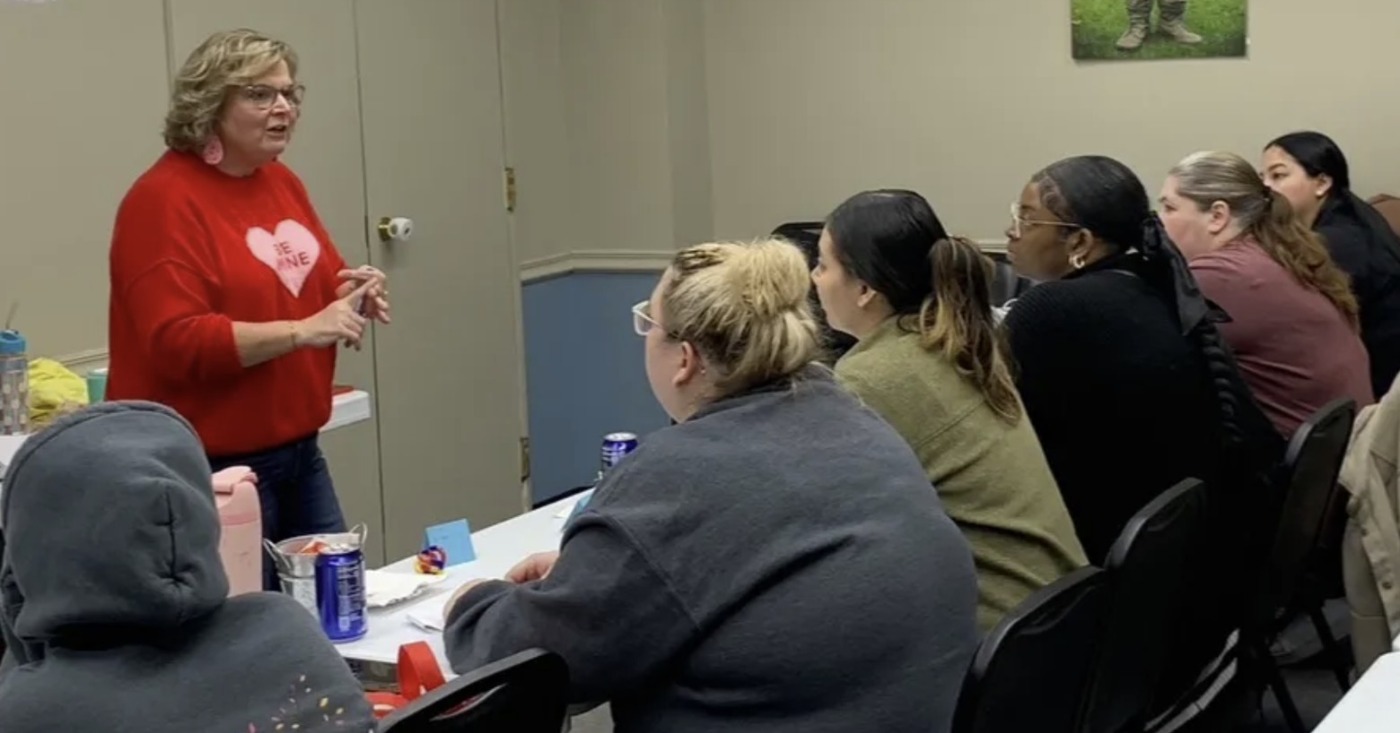
About a week after finishing the Early Childhood Workforce Ready Academy in Wayne County, North Carolina, Dominque McBride walked into Little Bulldogs Academy in Goldsboro.
She carried a packet filled with certifications — such as CPR, first aid, playground safety — that she earned while undergoing intensive training during the two-week academy in February 2024.
At the end of the interview, McBride walked out with a job.
Typically, that type of training can take months to a year to complete, said Shelly Willis, director of program coordination and evaluation with Partnership for Children of Wayne County, which offers the academy.
On top of that, students would have had to pay for the various certifications and classes and squeeze them in between jobs and their lives at home.
But McBride and more than 100 other people got the training for free over the past two years, thanks to grants from the Camber Foundation, according to Valerie Wallace, executive director of the Partnership for Children of Wayne County. She said the organization, which supports community projects in 41 eastern North Carolina counties, has pumped $145,000 into the childcare academies in Wayne and Johnston counties.
McBride said the academy prepared her for her first job in childcare, and made it easy to get all the required certifications and training in one place, in a short time.
“If I had to do it on my own, I think I would have been overwhelmed,” McBride told NC Health News.
Now, state legislators want to take that model and expand it across the state. They included $1.5 million in one-time funding in the state budget passed in July. The training support is part of a slate of efforts added to this year’s budget to tackle staffing shortages and long waitlists for childcare in North Carolina.
From March 2018 to June 2026, North Carolina has lost a net 1,072 childcare sites, according to the NC Early Care and Learning dashboard. Enrollment dropped by 28,183 children — or 11.5% — during that same time.
The NC Chamber touted such academies as a way to address chronic staffing shortages driving those closures in a February 2025 report.
“If North Carolina is going to produce the qualified workforce necessary to meet the demand for high-quality childcare services in a timely manner, the state must lean less heavily on higher education to train and prepare early childhood professionals and more heavily on strategies that are more accessible, affordable, flexible, and expeditious,” the report’s authors wrote.
‘At a crossroads’
The National Conference of State Legislatures also recently highlighted such academies for quick training to alleviate workforce shortages.
The recommendation is included in the report “Childcare at a Crossroads: A State Legislative Framework for Strengthening Childcare Systems,” released on July 27. The report was developed by a bipartisan work group of 13 state legislators from across the country that included North Carolina state Sen. Jim Burgin, R-Harnett.
The legislators wrote that childcare has become “one of the most urgent and complex challenges facing states.”
“It affects children’s development and well-being, parents’ ability to work, employers’ access to a stable workforce and the economic vitality of communities large and small,” they said in the report. “Rural and urban. Red and blue. No state is unaffected, and no ideology holds all the answers.
“As costs rise, workforce shortages persist and demand remains strong, state policymakers face important decisions,” the report’s authors continued. “The childcare system is at a crossroads, and decisions made now will shape how well systems meet the needs of families and economies in the years ahead.”
North Carolina has struggled to meet the need. Lack of childcare costs the state $5.65 billion every year in economic activity, according to a 2024 report from the U.S. Chamber of Commerce Foundation, the NC Chamber Foundation, and advocacy organization NC Child.
Since 2018, childcare employment in the state rose by just 1%, or 419 people, even as the state’s population grew by around a million people.
Where that growth has occurred has been uneven.
Small centers and family childcare homes make up most of the closures, according to research shared July 9 by Afton Partners, an Illinois-based consultant firm that specializes in several areas, including early education. The group presented the findings earlier in the year to members of the North Carolina Task Force on Child Care and Early Education.
Meanwhile, more large centers have opened, mainly in urban areas, according to the Afton research.
Many counties, including Wayne, have lost workers and childcare slots from 2018 to 2026.
In Wayne County, state data shows there are nine fewer childcare facilities than in 2018. Average monthly enrollment dropped by more than 1,000 kids during that same time. And average monthly employment is down by 420 workers.
The state faces a double whammy: demand for more childcare slots and a lack of workers.
The biggest problem in childcare is having qualified teachers, Burgin said as part of a panel discussion on the “Childcare at a Crossroads” report at the National Conference of State Legislatures conference in Chicago last month.
“We’ve made the restrictions so high that by the time that they get enough qualified people on board, those people will go find other jobs, usually in the school system,” he said.
He told the audience that North Carolina directed millions of dollars to tackling the childcare workforce issue in the state’s latest budget.
The bipartisan work group’s report highlighted North Carolina’s childcare academies, like the program in Wayne County.
Other efforts in the report included a high school student training program in South Dakota, scholarships and stipends for people pursuing childcare degrees in Delaware, and a pilot program in New Mexico that gives stipends to people in workforce training for childcare.
In West Virginia and Rhode Island, there are also apprenticeships that target the childcare work force.
Like some other states, North Carolina included in its recent budget stipends for graduates who stay with an employer for at least a year.
‘A huge step forward’
The N.C. Child Fatality Task Force has been recommending since 2024 that North Carolina support efforts to improve the childcare system, including increasing subsidies to childcare centers, especially in the wake of additional federal childcare stabilization grants that sunsetted as the COVID pandemic wound down.
Childcare funding was one of the four task force recommendations for this year.
In July, the General Assembly passed a budget with $97 million in federal funding to increase reimbursement rates to providers of subsidized childcare and to create a much-welcomed floor rate. The budget also transfers $16.8 million from the federal Temporary Assistance for Needy Families block grant to the state’s childcare subsidy program.
Creating a rate floor means that, for the first time, all facilities will get at least the statewide average for subsidized care. Without that base rate, subsidies have ranged widely across the state, which has made it difficult for some facilities to survive.
The state’s childcare subsidy program uses state and federal money to help pay for childcare for low- to moderate-income families who qualify. Families still have to cover a co-pay. The subsidy can be used for children through age 12, or up to age 18 for children with special needs.
While the state doesn’t set salaries for childcare workers, increasing the subsidy gives providers the flexibility to pay workers more.
Low pay has been an issue in attracting and maintaining childcare workers. Starting median hourly wages for childcare teachers in 2023 was $14 per hour, according to the 2023 North Carolina Child Care Workforce Study by Early Years (formerly Child Care Services Association.) That’s the same or less than entry-level jobs at retail stores such as Target and Walmart and fast food restaurants such as Five Guys and Whataburger.
“With our current economic situation and the prices of everything increasing, it is very difficult to stay in the field of childcare and make ends meet with the average pay offered,” McBride said in an email.
“It’s not only about attracting people to the field, but encouraging them to stay,” she added.
To quickly train childcare workers, legislators funneled $1.5 million in one-time funding to replicate childcare academies modeled after the program in Wayne County across the state. Two-thirds of that funding will cover tuition costs. The remaining $500,000 will pay for stipends of $500 for every student hired within three months of graduating and who stays employed for at least one year at the same childcare program.
“This funding for child care is a huge step forward in helping to stabilize North Carolina’s child care system,” Kella Hatcher, executive director of the Child Fatality Task Force, said in an email.
A model program
In Wayne County, Wallace and Willis with the Partnership for Children are hoping the increased subsidy rate, along with a new rate floor, will ease high turnover while the academies help train new childcare workers more quickly.
They’ve had about a dozen people sign up for each session, the most recent of which ran from Aug. 3 through Aug. 14. It was the first of three planned for this year under the Camber grant.
“Those may not seem like high numbers, but if you can put that many people to work, it makes a huge difference in a childcare,” said Wallace. “Our numbers are going to be fewer, but they’re mighty if we give these folks the necessary training that they need.”
Wallace said they’ve tweaked their academy a little bit every year to make it stronger and attract more people.
“We’ve learned with each academy that we’ve done, and last year we worked with the North Carolina Partnership for Children to try to get this to be aligned,” in anticipation of the state creating a pilot program, Wallace said. “So if people were doing it across the state, everybody was doing the same curriculum, and it was going to be consistent with what people were coming out of the academies with.”
They’re not sure if they’ll add more academy classes this year based on what was passed in the state budget. It depends on whether their program is considered aligned with the state plan. They could add up to three more sessions later in the fiscal year based on that state plan, Wallace said.
The training allows students like McBride to be hired immediately.
McBride, 29, was working for the Wayne County Department of Social Services when her mother saw a notice in 2024 about the free training to become a childcare worker. It came at a perfect time for McBride, who was disillusioned with the paperwork involved in her DSS job.
And she always wanted to teach and work with children, she said. In her now-former job at Little Bulldogs, she worked with the 2-year-olds.
“It can be very chaotic,” she said, describing children that age as wanting to be more autonomous but not quite ready for that. “But I enjoyed every bit of it.”
Every day, she saw the need for more childcare workers.
“We weren’t getting enough childcare teachers as much as we were getting kids,” McBride said. “We couldn’t keep up.”
Her work at Little Bulldogs inspired McBride to go back to school for a degree in early childhood education with a focus on special education. She now works with children on the autism spectrum at Action Behavior Center in Clayton.
She’s grateful for Wayne County’s childcare academy.
“It definitely helps you prepare,” she said. “The one thing that can deter you is feeling like you’re not equipped to do it.”
This article first appeared on North Carolina Health News and is republished here under a Creative Commons Attribution-NoDerivatives 4.0 International License.
Black Press
Latanya Orr Expands Vision After Goldman Sachs Program
CHICAGO CRUSADER — Chicago entrepreneur LaTanya Orr has completed the Goldman Sachs One Million Black Women: Black in Business program, an experience she states has refined her business growth strategies and deepened her commitment to supporting women entrepreneurs. Orr founded The FoundHERS Suite, a collaborative space for women business owners.

Chicago entrepreneur LaTanya Orr has graduated from the Goldman Sachs One Million Black Women: Black in Business program, a milestone she says has helped sharpen her approach to business growth while expanding her work supporting women entrepreneurs.
Orr, an author and business strategist, is the founder of The FoundHERS Suite, a collaborative workspace and entrepreneurial community designed to help women business owners develop their companies through education, connections and shared opportunities.
She participated in the Spring 2026 cohort of Goldman Sachs’ Black in Business program, which provides business education and resources to Black women sole proprietors. Orr said the experience strengthened her understanding of enterprise growth, financial stewardship and long-term business strategy.
“The program didn’t hand me a blueprint—it challenged me to rethink the one I already had,” Orr said. “It strengthened my thinking around enterprise, stewardship, and long-term impact while reaffirming the work I’ve been called to do.”
Her participation in the program came during a period of transition for The FoundHERS Suite. Earlier this year, an unexpected incident involving the building where the Suite operated forced the business to temporarily close its physical location.
Rather than abandon the concept, Orr said the interruption provided an opportunity to reassess how the organization could continue serving women entrepreneurs while she considered the future of the physical workspace.
Part of that evolution is BridgeWRX, Orr’s strategic advisory and thought leadership platform. The venture is designed to help women entrepreneurs move beyond developing brands and focus on building sustainable businesses through strategy, leadership development and intentional growth.
Orr emphasizes that BridgeWRX is not intended to replace The FoundHERS Suite. Instead, she sees it as an extension of the broader mission, providing additional ways for entrepreneurs to receive information, build relationships and strengthen their businesses while she explores the Suite’s next chapter.
Since completing the Goldman Sachs program, Orr has expanded that work through strategic advisory services, educational programs, publishing and community-centered initiatives.
Among those efforts is ShiftShop, a workshop series focused on practical business development. Another initiative, Gather & Shift, brings entrepreneurs together for networking, collaboration and shared learning.
Orr is also developing an editorial component to her work. Through The Bridge, her Substack publication, and HERspectives, a LinkedIn thought leadership series, she writes about entrepreneurship, leadership, business growth and the challenges established founders encounter as they attempt to move from operating individual businesses toward building larger enterprises.
Her developing BridgeWRX Leadership Library is expected to include books, tools and other resources drawn from more than two decades of Orr’s experience as an entrepreneur.
“I’ve come to realize that the assignment was always bigger than the building,” Orr said. “BridgeWRX allows me to extend the mission of The FoundHERS Suite in new ways while continuing to prepare for its next chapter. My passion has always been helping women discover what’s possible, build with intention, and create something that lasts.”
The Goldman Sachs One Million Black Women initiative was launched as part of the financial institution’s broader effort to invest in Black women and address economic disparities. Black in Business focuses specifically on Black women sole proprietors, providing participants with business education, access to resources and opportunities to develop strategies for growth.
For Orr, completing the program comes as she works to bring several parts of her entrepreneurial experience under a broader strategy.
Through BridgeWRX, she plans to continue offering advisory services, educational experiences, publishing and community programming. At the same time, Orr said she remains committed to The FoundHERS Suite and its original goal of creating opportunities for women entrepreneurs to connect and grow.
The result, she said, is an expanded vision centered not simply on operating a business, but on helping entrepreneurs create enterprises capable of producing long-term impact.
Based on reporting by Chicago Crusader.


WCCUSD Joins Statewide Organic School Food Purchasing Cooperative

Democrats, Community Groups Back Measure EE to Change How Oakland Is Governed

Four Tips to Help You Plan a Holiday “Staycation”

Veterans Housing Project Proposed for South Richmond

Mayor Lee Delivers 2026 State of the City Address: ‘Oakland Continues to Be on the Move’

Oakland Awarded More than $14 Million in State Funding

Jendayi Arrest Raises Community Concerns Regarding Sheriff’s Chain of Command

Marin County Supes Expand Small Business Options with Home Kitchen Pilot Program

Allen Temple Baptist Church Hosts Free Prostate Cancer Screenings on Oct. 17

AC Transit Labor Unions Back Director Joel Young

The Youngest American Killed in the Vietnam War

Latest Massacre in Haiti Reveals Cruelty U.S. Deportations

OPINION: Nolan Wells’ Death One of Several Signifying Racial Terror Lives on in U.S. South

Passing for White, Fighting for Black America: The Courage of Walter White

OP-ED: If AI Is the New Language of Power, Then NAN Wants Black Communities Fluent

OP-ED: Haiti TPS: Have We Lost Sense of Humanity?

OP-ED: How Does Your State Rank for Pre-K?

Henry O. Flipper: A Trailblazer at West Point and Beyond

Asm. Smallwood-Cuevas’s Bill Repealing ‘Racist’ CalWORKs ‘Man-in-the-House’ Rule Clears Legislature

NBA All-Star Damian Lillard Returns Home for 15th Annual Backpack Giveaway

Sherrell Dorsey on Tech, Black Innovation, and Impactful Businesses

Community-Centered Business: Adapting to Support a City in Need #shorts

The Conversation with Al McFarlane

Serve First: The Secret to Life and Business Success #shorts

Denise Upshaw – Founder, Black Houston Creative Network

Houston advocates breakdown Black voter fatigue

Digital Rearview Mirror Test: Blind Spots & Camera Views #shorts

HE SAID, HE SAID, HE SAID, Separating Fact, Fear, & Freedom w/ Allen Orr, FRI. 2.22.26 7PM EST

Hot Girl Walk at Sabathani Community Center | Ernestine Belton Playground | MSR

NEW INVESTIGATION INTO FEDERAL RESERVE GOVERNOR
-

 Black Press1 week ago
Zakiya Jendayi Arrested, Locked Out of Home by Sheriff’s Deputies
-

 Black Press1 week ago
A $2.1 Trillion Wellness Industry Never Built a Daily Practice for Black Children. So This Atlanta Family Did.
-
 BlackPressUSA6 days ago
Latinas Deserve Equal Pay. Unions Help Make It Happen.
-

 Art1 week ago
Montclair Brewery: Brewing Culture, Community, History
-

 Black History1 week ago
Listening as a Lifeline: A Doula’s Witness to Black Maternal Health
-

 Black Press1 week ago
COMMENTARY: But God!
