
Education
Oakland Post Salon: School Closings and FCMAT, the Powerful State Agency Operating Behind the Scenes
OAKLAND POST — The Oakland Post Community Assembly, along with parents and teachers at impacted schools, will host a community discussion about the school district plan to close dozens of schools over the next few years under the guidance of a non-elected state-funded agency, the Fiscal Crisis Management and Assistance Team (FCMAT), Sunday, Nov. 3, 1 p.m. to 3 p.m. at Geoffrey’s. Inner Circle, 410 14th St. in downtown Oakland.


By The Oakland Post
The Oakland Post Community Assembly, along with parents and teachers at impacted schools, will host a community discussion about the school district plan to close dozens of schools over the next few years under the guidance of a non-elected state-funded agency, the Fiscal Crisis Management and Assistance Team (FCMAT), Sunday, Nov. 3, 1 p.m. to 3 p.m. at Geoffrey’s. Inner Circle, 410 14th St. in downtown Oakland.
OUSD has already closed 15 schools since the state took over in 2003. This past school year, the district closed Roots Elementary. Now they plan to close up to 24 more schools, all serving flatlands students.
What role does FCMAT play in closing Oakland schools? How does FCMAT dominate school decision-making without public accountability?
Is there any evidence that closing schools save money, helps students in any way or leads to district financial stability and improved resources for students?
Is there an ideal or “right size” for schools?
Hear parents from three threatened schools talk about the closings and how they’re trying to reverse them.
Hear how FCMAT has been making decisions for Oakland schools since the state takeover in 2003.
Develop a plan of action.
To RSVP for the free event, go to https://cutt.ly/eehuh7n
For information call 510-359-1940.
This article originally appeared in Oakland Post.







Black History
“Blue Tsunami” Sweeps Georgia, Bottoms Makes History
MOREHOUSE COLLEGE – THE MAROON TIGER — A political shift described as a “Blue Tsunami” has transformed the landscape of Georgia leadership following the recent election. Keisha Lance Bottoms made history when the race was called on Nov. 3, becoming the first woman and the first Black person elected as governor of Georgia.

The race was called on Nov. 3 at 9:24 p.m., which is much earlier than most elections. The atmosphere of the Marriott Marquis located in downtown Atlanta was only a mere sample of the excitement statewide. The event hall could barely hold the guests as the line for access passes extended across the entire lobby floor. Everyone came in some of their best attire, sporting unmistakable blue diamond pins with the words, “Keisha Lance Bottoms for governor.”
Now, Bottoms will become Georgia’s first woman and first Black governor when she takes office in January, making her the first Black woman to serve as governor of any U.S. state.
She described her campaign as reaching every corner of the state, “from the red hills of Georgia to the Blue Ridge Mountains of the Piedmont,” as cameras crowded in to capture the moment.
Joining her onstage were her mother, her children and her husband, Derek Bottoms, whom she met while attending Georgia State University College of Law and married in October 1994.
Supporters who had campaigned alongside Bottoms for 578 days shed tears of joy at her election watch party. Among those near the stage were U.S. Sen. Raphael Warnock ‘91, D-Ga., the senior pastor of Ebenezer Baptist Church, and the Rev. Jamal Harrison Bryant ‘94, the senior pastor of New Birth Missionary Baptist Church.
Eight Black women, many firsts
In 2025, Black women experienced disproportionate employment losses as the Trump administration implemented federal workforce cuts and rolled back diversity, equity and inclusion initiatives.
The losses disproportionately affected Black women across the country. In 2026, Georgia voters elected eight Black women to statewide office, marking a historic shift in the state’s political leadership. The South had something to say.
Georgia’s eight major statewide executive offices are the governor, lieutenant governor, attorney general, secretary of state, agriculture commissioner, insurance commissioner, labor commissioner and state school superintendent.
When the newly elected officials take office in January, Black women will hold seven of Georgia’s eight statewide executive offices, a first for the state, with Lt. Gov.-elect Josh McLaurin holding the eighth seat.
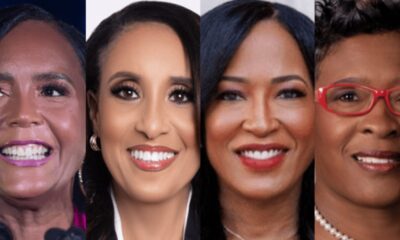
Several broke barriers of their own. Tanya Miller will become Georgia’s first elected woman attorney general. Penny Brown Reynolds, a former Fulton County judge, will become the first Black person elected Georgia secretary of state. Keisha Sean Waites, a former Atlanta City Council member, will become Georgia’s first Black woman insurance commissioner. Educator Lydia Powell will become its first Black woman state school superintendent, while Nikki Porcher will become its first Black woman labor commissioner.
Agriculture Commissioner-elect Katherine Juhan-Arnold founded Baby Katie’s Pharm & Kitchen, a nonprofit farm that provides fresh produce and agricultural education to underserved communities. Shelia Edwards, who won the District 5 race, will join Alicia Johnson as one of only two Black women on the Georgia Public Service Commission. Johnson became the first Black woman elected to a statewide partisan office outside the judiciary in Georgia after winning her commission seat in 2025.
“Georgia chose competence,” Brown Reynolds told The 19th. “We were not selected because we were Black women. I believe that we were selected because all of us bring something that Georgia desperately needs.”
Andra Gillespie, a political science professor at Emory University, told USA Today that the number of Black women elected to leadership positions in Georgia is unprecedented.
“Black women have definitely reached a point where they can not only run and be taken seriously for leadership positions in major parties,” she said.
The wins reached Congress too. State Rep. Jasmine Clark, D-Ga, became the first Black woman with a doctorate in science elected to Congress, winning Georgia’s 13th Congressional District seat, while U.S. Reps. Lucy McBath and Nikema Williams won reelection.
“Georgia has shown up”
Warnock said Georgia voters showed the power of organizing this election cycle and pledged to keep fighting for historically Black colleges and universities.
“I’m proud of Georgia. Georgia has shown up,” Warnock said. “Some 3 million of them early voted.”
He said churches played a key role in that turnout.
“What we saw, among other things, in this election cycle is the power of organizing, and the faith community has always been an important part of that,” he said.
When asked about the legislative priorities he plans to pursue with Keisha Lance Bottoms, Warnock highlighted his efforts to secure federal funding for historically Black colleges and universities.
Warnock pointed to a recent $97.1 million federal award supporting STEM programs at 10 historically Black colleges and universities and other minority-serving institutions, including Clark Atlanta University. His office has also reported securing more than $17 billion for HBCUs nationwide since he began his full Senate term.
With Governor-Elect Bottoms being an HBCU graduate of Florida A&M University, Georgia will have two HBCU alumni representing the people of the state.
“My own life is a testament to how these schools perform way above their weight,” he said. “And so I’ll continue to fight for them.”
His advice for current students was simple: “Morehouse gave me everything I needed to get ready,” he said. “I want the students to look at someone like me, and many others in various fields, and know that we sat in those same desks that they sit in. And so the sky is the limit.”
“Money doesn’t make you a success; character does”
Bryant said the win was personal, crediting Black men and Black churches for helping elect Bottoms.
“Super excited to know history was made, and to know that Black men supported a Black woman to get to this place,” he said.
The biggest hurdle, Bryant said, was getting Black churches involved and engaged, which he described as a return to the church’s tradition from the civil rights movement.
His advice for young men at Morehouse and across Georgia was direct.
“The takeaway lesson for all of us is money doesn’t make you a success,” Bryant said. “Character does.”
When the officials-elect take office in January, Black women will lead nearly every corner of Georgia’s executive branch. Bottoms announced her transition team Friday, Nov. 6. She and the seven other statewide officials-elect will be sworn in in January.
This site uses Akismet to reduce spam. Learn how your comment data is processed.
Based on reporting by Morehouse College – The Maroon Tiger.
Black History
“Blue Tsunami” Sweeps Georgia, Bottoms Makes History
MOREHOUSE COLLEGE – THE MAROON TIGER — A political shift described as a “Blue Tsunami” has transformed the landscape of Georgia leadership following the recent election. Keisha Lance Bottoms made history when the race was called on Nov. 3, becoming the first woman and the first Black person elected as governor of Georgia.

The race was called on Nov. 3 at 9:24 p.m., which is much earlier than most elections. The atmosphere of the Marriott Marquis located in downtown Atlanta was only a mere sample of the excitement statewide. The event hall could barely hold the guests as the line for access passes extended across the entire lobby floor. Everyone came in some of their best attire, sporting unmistakable blue diamond pins with the words, “Keisha Lance Bottoms for governor.”
Now, Bottoms will become Georgia’s first woman and first Black governor when she takes office in January, making her the first Black woman to serve as governor of any U.S. state.
She described her campaign as reaching every corner of the state, “from the red hills of Georgia to the Blue Ridge Mountains of the Piedmont,” as cameras crowded in to capture the moment.
Joining her onstage were her mother, her children and her husband, Derek Bottoms, whom she met while attending Georgia State University College of Law and married in October 1994.
Supporters who had campaigned alongside Bottoms for 578 days shed tears of joy at her election watch party. Among those near the stage were U.S. Sen. Raphael Warnock ‘91, D-Ga., the senior pastor of Ebenezer Baptist Church, and the Rev. Jamal Harrison Bryant ‘94, the senior pastor of New Birth Missionary Baptist Church.
Eight Black women, many firsts
In 2025, Black women experienced disproportionate employment losses as the Trump administration implemented federal workforce cuts and rolled back diversity, equity and inclusion initiatives.
The losses disproportionately affected Black women across the country. In 2026, Georgia voters elected eight Black women to statewide office, marking a historic shift in the state’s political leadership. The South had something to say.
Georgia’s eight major statewide executive offices are the governor, lieutenant governor, attorney general, secretary of state, agriculture commissioner, insurance commissioner, labor commissioner and state school superintendent.
When the newly elected officials take office in January, Black women will hold seven of Georgia’s eight statewide executive offices, a first for the state, with Lt. Gov.-elect Josh McLaurin holding the eighth seat.
Several broke barriers of their own. Tanya Miller will become Georgia’s first elected woman attorney general. Penny Brown Reynolds, a former Fulton County judge, will become the first Black person elected Georgia secretary of state. Keisha Sean Waites, a former Atlanta City Council member, will become Georgia’s first Black woman insurance commissioner. Educator Lydia Powell will become its first Black woman state school superintendent, while Nikki Porcher will become its first Black woman labor commissioner.
Agriculture Commissioner-elect Katherine Juhan-Arnold founded Baby Katie’s Pharm & Kitchen, a nonprofit farm that provides fresh produce and agricultural education to underserved communities. Shelia Edwards, who won the District 5 race, will join Alicia Johnson as one of only two Black women on the Georgia Public Service Commission. Johnson became the first Black woman elected to a statewide partisan office outside the judiciary in Georgia after winning her commission seat in 2025.
“Georgia chose competence,” Brown Reynolds told The 19th. “We were not selected because we were Black women. I believe that we were selected because all of us bring something that Georgia desperately needs.”
Andra Gillespie, a political science professor at Emory University, told USA Today that the number of Black women elected to leadership positions in Georgia is unprecedented.
“Black women have definitely reached a point where they can not only run and be taken seriously for leadership positions in major parties,” she said.
The wins reached Congress too. State Rep. Jasmine Clark, D-Ga, became the first Black woman with a doctorate in science elected to Congress, winning Georgia’s 13th Congressional District seat, while U.S. Reps. Lucy McBath and Nikema Williams won reelection.
“Georgia has shown up”
Warnock said Georgia voters showed the power of organizing this election cycle and pledged to keep fighting for historically Black colleges and universities.
“I’m proud of Georgia. Georgia has shown up,” Warnock said. “Some 3 million of them early voted.”
He said churches played a key role in that turnout.
“What we saw, among other things, in this election cycle is the power of organizing, and the faith community has always been an important part of that,” he said.
When asked about the legislative priorities he plans to pursue with Keisha Lance Bottoms, Warnock highlighted his efforts to secure federal funding for historically Black colleges and universities.
Warnock pointed to a recent $97.1 million federal award supporting STEM programs at 10 historically Black colleges and universities and other minority-serving institutions, including Clark Atlanta University. His office has also reported securing more than $17 billion for HBCUs nationwide since he began his full Senate term.
With Governor-Elect Bottoms being an HBCU graduate of Florida A&M University, Georgia will have two HBCU alumni representing the people of the state.
“My own life is a testament to how these schools perform way above their weight,” he said. “And so I’ll continue to fight for them.”
His advice for current students was simple: “Morehouse gave me everything I needed to get ready,” he said. “I want the students to look at someone like me, and many others in various fields, and know that we sat in those same desks that they sit in. And so the sky is the limit.”
“Money doesn’t make you a success; character does”
Bryant said the win was personal, crediting Black men and Black churches for helping elect Bottoms.
“Super excited to know history was made, and to know that Black men supported a Black woman to get to this place,” he said.
The biggest hurdle, Bryant said, was getting Black churches involved and engaged, which he described as a return to the church’s tradition from the civil rights movement.
His advice for young men at Morehouse and across Georgia was direct.
“The takeaway lesson for all of us is money doesn’t make you a success,” Bryant said. “Character does.”
When the officials-elect take office in January, Black women will lead nearly every corner of Georgia’s executive branch. Bottoms announced her transition team Friday, Nov. 6. She and the seven other statewide officials-elect will be sworn in in January.
This site uses Akismet to reduce spam. Learn how your comment data is processed.
Based on reporting by Morehouse College – The Maroon Tiger.
Black History
Don’t Pass the Torch. Expand the Circle.
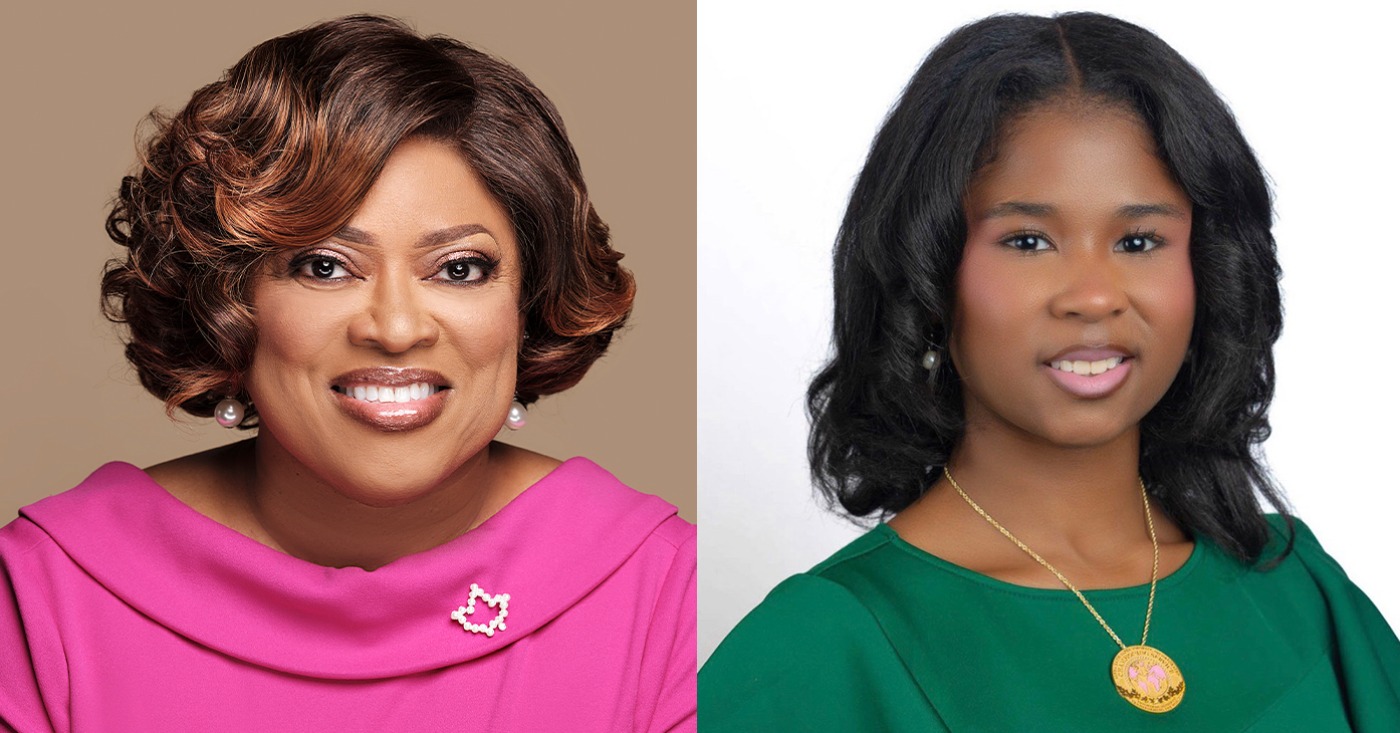
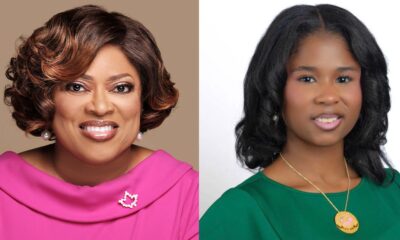
Alpha Kappa Alpha Sorority, Inc. is redefining mentorship by empowering undergraduate women to take active roles in high-level organizational governance. Instead of asking young leaders to wait their turn, the sorority is integrating students like Noah M.P. Harris into international boards and planning committees alongside seasoned veterans like Dr. Tonja L. Ringgold. This intergenerational model aims to combat professional burnout and systemic barriers by offering meaningful responsibility and guidance today, rather than in the distant future, to learn how this approach is transforming leadership. read more.
On Nov. 14, hundreds of undergraduate women gathering at Morgan State University in Baltimore for Alpha Kappa Alpha Sorority’s Undergraduate Leadership Institute will do more than listen to presentations. They will run the program. Graduate advisers will take seats in the back of the room.
This is intentional. Too many institutions invite young people to observe leadership without trusting them to exercise it. We believe the future of leadership depends not on one generation stepping aside for another, but on generations sharing responsibility now.
We have seen the difference from two vantage points.
For Dr. Ringgold, Morgan State is where that journey began. Initiated into Alpha Kappa Alpha’s Alpha Delta Chapter in 1982, she recently reunited with two sorority sisters who guided her as an undergraduate, including a former chapter president whose example still informs her leadership today. Forty-four years later, she returns as director of the sorority’s North Atlantic Region, keenly aware of what it means when someone invests in a young woman’s potential. The homecoming carries added significance: Alpha Delta, chartered in 1926, is celebrating its centennial; and the chapter that shaped her is still helping shape new leaders.
For Ms. Harris, leadership is not a distant destination. She is a Bowie State University senior and president of its Eta Chapter who, this summer, was elected Alpha Kappa Alpha’s International Second Vice President. As an undergraduate member of the sorority’s international governing board, she carries student perspectives into decisions affecting the organization. A 2025 Leadership Fellows experience encouraged her to seek that larger platform. To her, leadership is measured by the people she can serve, not simply the position she holds.
Our experiences challenge a familiar assumption: Young people must wait their turn. Founded in 1908 by Black college women, Alpha Kappa Alpha now counts more than 390,000 initiated members across more than 1,122 chapters. That reach brings a responsibility to open doors, not merely preserve tradition.
Deloitte’s 2026 global survey found that 76% of Gen Z respondents were interested in pursuing senior leadership roles eventually, although only 6% of surveyed Gen Z and millennials named leadership their primary career goal. Many cited burnout, excessive responsibility and work-life balance as concerns. Young people are not necessarily avoiding leadership. They are questioning the conditions under which it is exercised.
At a time when companies are pulling back on women’s advancement, Black women face persistent barriers. McKinsey and LeanIn.Org’s 2025 report found that among companies studied, only 60 Black women were promoted to manager for every 100 men. Telling young women to wait their turn cannot fix an unequal pathway to leadership.
Experience matters. Seasoned leaders carry institutional memory, hard-won judgment and relationships that take years to build. But experience cannot develop in a waiting room. Young leaders need meaningful assignments, honest guidance and room to make mistakes. Experienced leaders must also be prepared to reconsider familiar ways of doing things.
We see that exchange in our own relationship. Ms. Harris draws on Dr. Ringgold’s decades of sorority service and higher education experience. Dr. Ringgold listens when Ms. Harris speaks, recognizing that younger perspectives can challenge assumptions and reveal better approaches. Neither of us has all the answers. Both of us have something to contribute.
Our upcoming Undergraduate Leadership Institute will put that principle into practice. Undergraduate members will lead, with graduate members offering guidance and expertise. We’re taking the same approach in planning our 96th North Atlantic Regional Conference, scheduled for March 2027, where undergraduate counterparts will work alongside graduate vice chairs in operations, programming, social activities and logistics. They’ll help plan an event serving the entire region, not just their undergraduate peers.
That is the distinction between inclusion and influence. A seat at the table means little if the people invited cannot help determine what happens there.
Businesses, colleges, nonprofits and civic organizations can do the same. Pair mentorship with meaningful assignments. Involve emerging leaders in decisions before those decisions are final. Give them resources and room to grow. When they challenge a familiar practice, ask whether it still serves its purpose.
We should not ask experienced leaders to disappear or young leaders to wait. The goal isn’t to pass the torch and walk away. It’s to expand the circle of people empowered to lead and build stronger institutions together.
Dr. Tonja L. Ringgold is the North Atlantic Regional Director of Alpha Kappa Alpha Sorority, Incorporated. Noah M.P. Harris, a senior at Bowie State University, is the sorority’s International Second Vice President and president of its Eta Chapter.
Black Press
Kids on Campus: Success in Learning Together
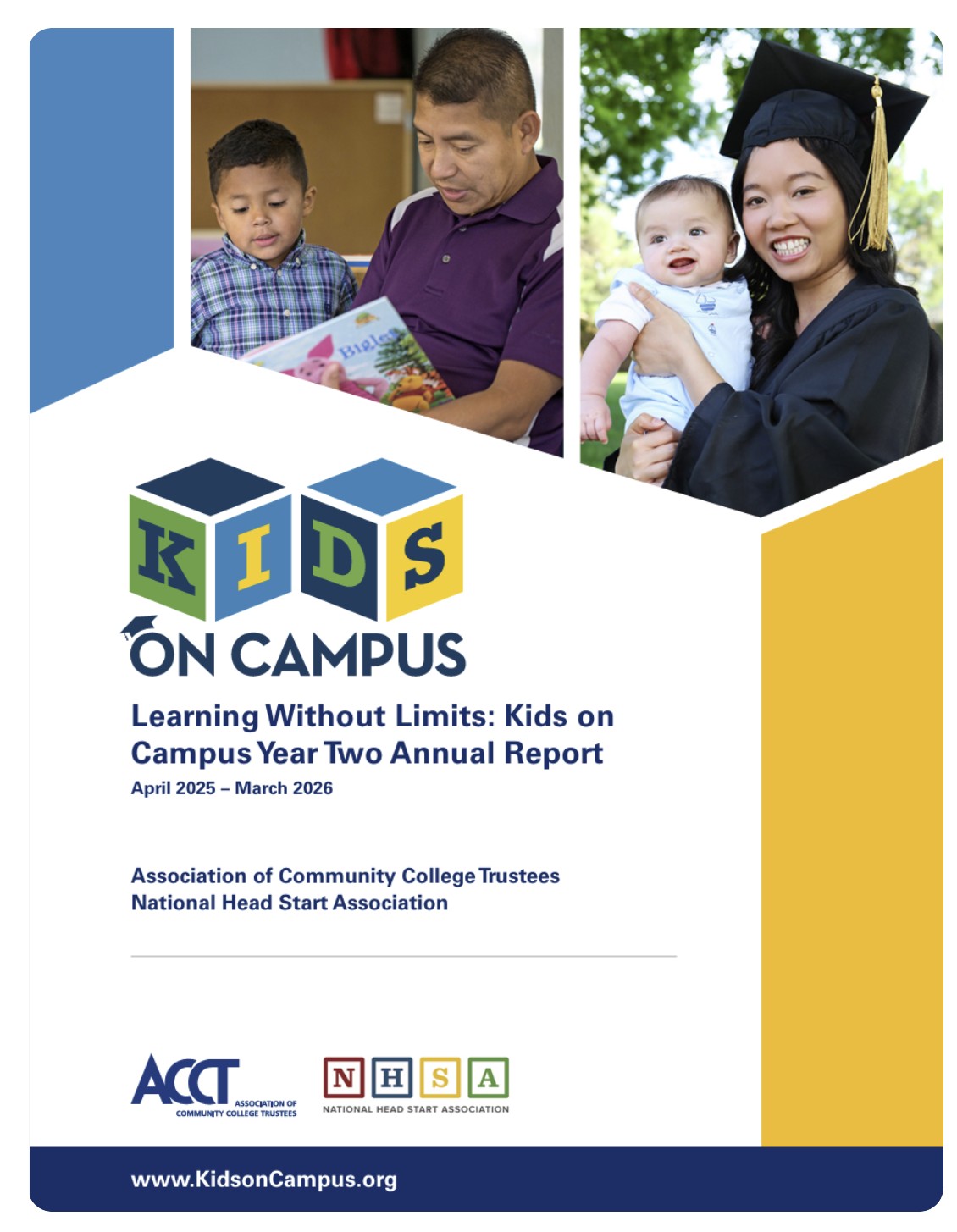
The Association of Community College Trustees and the National Head Start Association have released the second annual report for Kids on Campus, an initiative placing Head Start classrooms directly on college campuses. With nearly 20 percent of U.S. undergraduates raising children, the program addresses childcare barriers that often prevent degree completion. The project aims to establish 50 partnerships by 2030 to support two-generation economic mobility. The new report highlights the initiative’s expansion across 19 states and identifies key growth opportunities to help student parents succeed. Read more.

The Association of Community College Trustees (ACCT) and the National Head Start Association (NHSA) released the Year Two Annual Report of the Kids on Campus initiative, which advances the success of parenting students and supports the school readiness of young children from low-income backgrounds by expanding Head Start classrooms onto community college campuses. The five-year initiative aims to establish at least 50 such partnerships by 2030.
Nearly one in five undergraduates in the United States — approximately 3.14 million students — are parenting while pursuing their college education. For many, access to high-quality, affordable, and convenient child care remains one of the biggest barriers to completing their degree.
The initiative’s core philosophy is rooted in two of the most effective strategies for reducing poverty: providing high-quality early childhood education and increasing adult economic mobility through education, training, and workforce pathways. Together, these approaches support two generations simultaneously, strengthening children’s development while helping parents pursue long-term economic success.
“When we support parents, we uplift students,” says Francisco Solis, president of San Antonio College (TX), which has a long-standing partnership with Head Start. “When families thrive, our community thrives. This is the power of a two-generation approach.”
The annual report outlines the rationale behind ACCT and NHSA’s work, progress to date, next steps, and opportunities for community colleges and Head Start programs to engage with Kids on Campus.
As of March 2026, at the end of year two of the initiative:
- 110 community colleges and 130 Head Start programs have taken initial steps to connect and engage with Kids on Campus.
- Partners have identified 43 potential matches between community colleges and Head Start programs interested in exploring partnerships across 19 states.
Five new Kids on Campus partnerships have launched in California, Illinois, Massachusetts, Maryland, and Texas, with two additional partnerships in advanced stages of development in Texas.
“Before I found the Head Start on my college campus, it was extremely difficult,” says Cristina Medina, a student parent at Palo Alto College, one of the newest Kids on Campus launched sites. “I was on the edge of mentally and emotionally giving up because being a full-time mom while going to school and work was hard with no support.”
The initiative continues to grow nationwide through expanded partnerships, technical assistance, and collaborative efforts to strengthen on-campus child care and early childhood education opportunities for student parents and families.
The report profiles active partnerships and explores the benefits and barriers they face, financial considerations, model sustainability, advice from the field, and what is next for Kids on Campus.
To access the full report, go to kidsoncampus.org/annual-report.
ACCT and NHSA invite community colleges, Head Start programs, and philanthropic supporters interested in transforming outcomes for children and families to contact [email protected].
Kids on Campus is supported by ECMC Foundation, Imaginable Futures, Lumina Foundation, the Annie E. Casey Foundation, Trellis Foundation, Crimsonbridge Foundation, and Seldin Haring-Smith Foundation.
Association of Community College Trustees (ACCT) is a non-profit educational organization of governing boards, representing more than 6,500 elected and appointed trustees who govern over 1,000 community, technical, and junior colleges in the United States and beyond. ACCT fosters the principles and practices of exemplary governance while promoting high-quality and affordable higher education, cutting-edge workforce and development training, student success, and the opportunity for all individuals to achieve economic self-sufficiency and security. Visit www.acct.org for more information.
The National Head Start Association (NHSA) believes that every child, regardless of circumstances at birth, has the ability to succeed in school and in life. The opportunities offered by Head Start lead to healthier and empowered children and families and stronger, more vibrant communities. NHSA is the voice for more than 750,000 children, 250,000 staff, and more than 1,600 Head Start grant recipients in the United States. Visit nhsa.org or follow @NatlHeadStart to learn more.
Black History
MHU Commemorates ASCORE and Anniversary of Desegregation
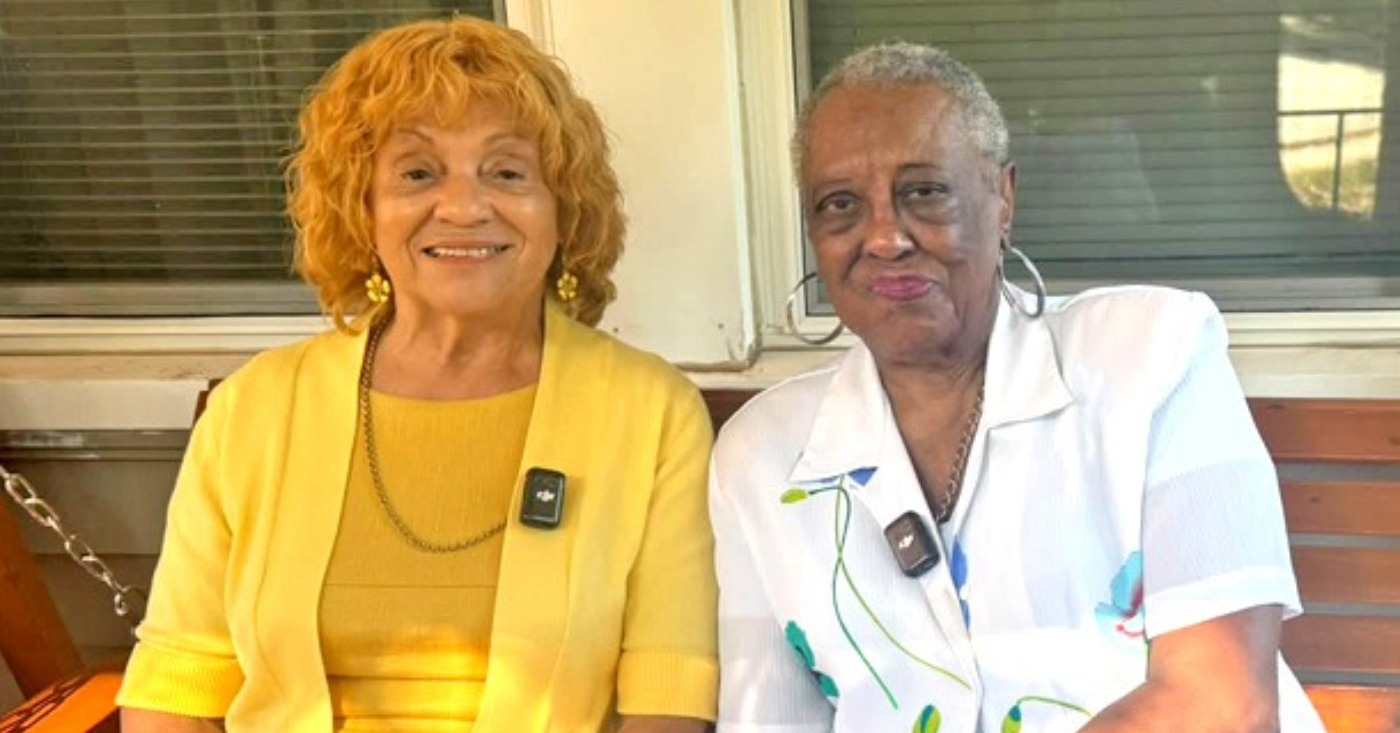
THE URBAN NEWS — UNC Asheville and Mars Hill University are collaborating to host a series of commemorative events marking the 65th anniversary of their desegregation. The programming honors Etta Mae Whitner Patterson and Oralene Anderson Graves Simmons, two former members of the Asheville Student Committee on Racial Equality (ASCORE) who became the first Black students at their respective institutions in 1961.
A week of events at UNC Asheville, Mars Hill University, and downtown Asheville.
In 1961, two young women broke the color barrier to become the first African American students at two Western North Carolina colleges: Etta Mae Whitner Patterson at UNC Asheville and Oralene Anderson Graves Simmons at Mars Hill University (then Mars Hill College).
Both women were students at Asheville’s Stephens-Lee High School, where they were members of the Asheville Student Committee on Racial Equality (ASCORE). Through nonviolent protest, ASCORE led efforts to desegregate many Asheville stores and businesses.
Patterson and Simmons, who later founded the Martin Luther King Jr. Association of Asheville and Buncombe County, have since received honorary doctorates from their alma maters in recognition of their achievements and lifelong service to their communities.
To commemorate ASCORE, honor the leadership of Etta Patterson and Oralene Simmons, and mark the 65th anniversary of the desegregation of UNC Asheville and Mars Hill University, UNC Asheville’s Department of History and Mars Hill University’s Liston B. Ramsey Center for Appalachian Studies invite the public to attend “Stories of ASCORE: Lessons in Courage, Desegregation, and Community Activism.”
The program will feature two panel discussions with Drs. Patterson and Simmons, along with other former members of ASCORE. Panelists will discuss how their experiences integrating Asheville’s businesses and institutions prepared them for their college careers, professional lives, and continued community activism.
The first panel discussion will take place at 6 p.m. on Tuesday, November 10, 2026, in the Blue Ridge Room of Highsmith Union at UNC Asheville. The event will feature a presentation by Dr. Patterson and a panel discussion with Dr. Simmons, Marvin Chambers, Jesse Ray, and Al Whitesides. The panel will be moderated by Deborah Miles, retired director of the former UNC Asheville Center for Diversity Education.
This event is sponsored by UNC Asheville’s Department of History and Africana Studies Program, with generous support from King and Pam Prather. A free visitor parking permit is required for the UNC Asheville event. Please visit the university’s parking website for instructions on obtaining a permit for the evening’s program.
The second panel discussion will take place at 5 p.m. on Thursday, November 12, 2026, in the Tony and Terry Floyd Conference Center in the Mars Hill University Campus Center. The event will feature Dr. Simmons, Annette Coleman, and Elizabeth Colton. The panel will be moderated by Jonathan McCoy, professor of history at Mars Hill University.
This event is sponsored by the Liston B. Ramsey Center for Appalachian Studies, with generous support from the university’s Provost’s Office.
In addition, at 12 noon on Wednesday, November 11, 2026, in Pack Square in downtown Asheville, Mayor Esther Manheimer and the Buncombe County Commission Chair will proclaim ASCORE Day and present honors to Etta Patterson and Oralene Simmons. Holly Jones of the North Carolina Governor’s Office will also participate in the ceremony.
For more information, contact Leila Weinstein at Mars Hill University ([email protected]) or Ellen Holmes Pearson at UNC Asheville ([email protected]).
Based on reporting by The Urban News.
Black History
Jason Driver Named St. Louis Public Library CEO
ST. LOUIS AMERICAN — The St. Louis Public Library has appointed Jason Driver as its next chief executive officer following a national search. Driver, a veteran administrator with 27 years of experience, currently leads the Kitsap Regional Library in Washington and previously served in several roles at the Chicago Public Library. He is scheduled to take over the 15-location system on January 4, succeeding longtime leader Waller McGuire. The appointment follows a period of notable activity for the system and recent management discussions in Driver’s current role. Read more.
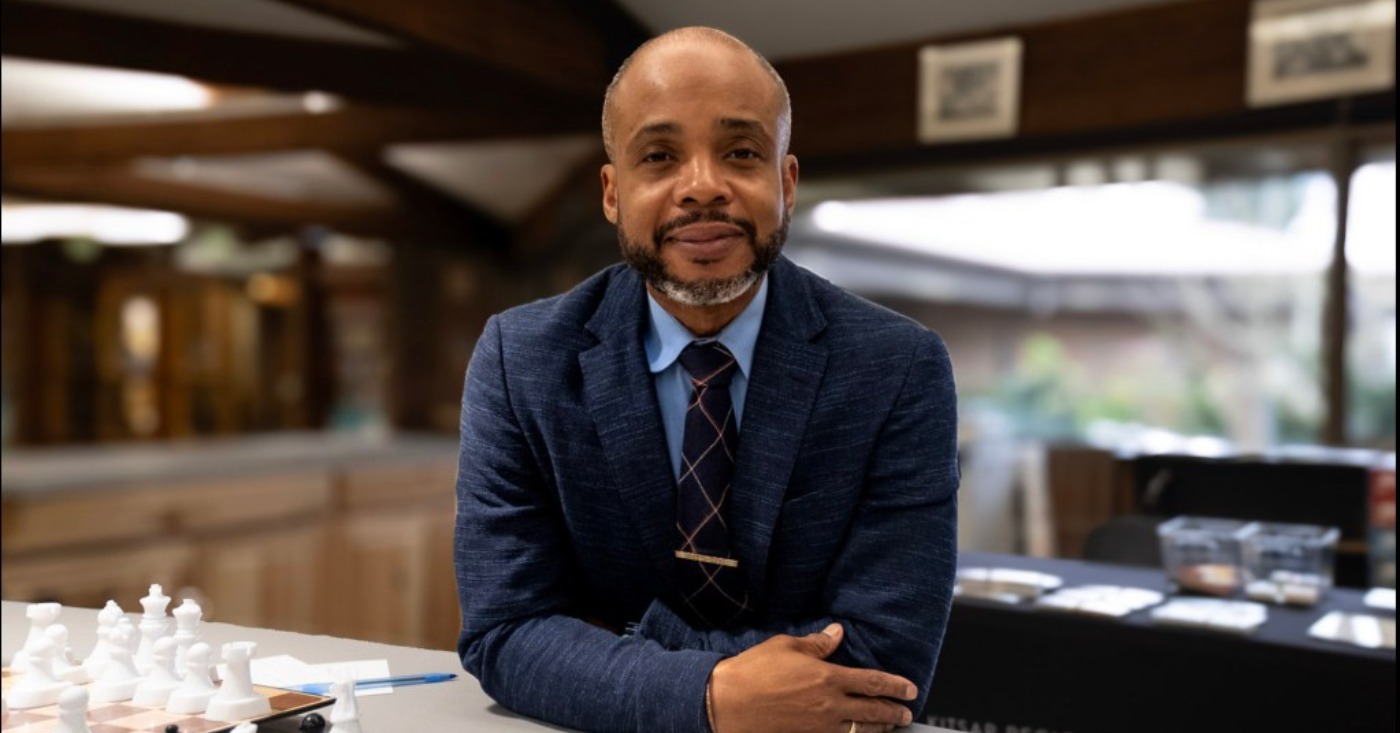
Jason Driver, a veteran library administrator with more than 27 years of experience, has been named the next chief executive officer of the St. Louis Public Library, taking over a 15-location system that serves more than 135,000 active cardholders.
Driver, who has led Kitsap Regional Library in the state of Washington since 2022, will begin his new position Jan. 4, succeeding Waller McGuire, who retired in October after 37 years with the St. Louis library system, including 22 years as its leader.
The appointment follows a national search and comes after the St. Louis system was named Missouri’s 2026 Library of the Year, in part for its response to the devastating May 2025 tornado. The library helped residents during the recovery, including through a tool-lending program established to assist with home repairs.
Driver told Sarah Fenske of St. Louis Magazine that he has no immediate plans to overhaul the system, which he described as a “well-oiled machine.”
“I’m a firm believer in one needing to follow before they can lead,” he said.
He plans to spend time learning from employees and the library board before deciding what changes might be needed.
Driver, a Chicago native, began his career working with young people in foster care through the Illinois Department of Children and Family Services. He later joined the Chicago Public Library, where he held positions ranging from children’s librarian and early literacy specialist to branch manager, regional director and district chief.
At Kitsap, Driver has overseen strategic planning, finances, communications and public services for a nine-branch system.
His selection follows several months of workplace controversy there, where union-represented employees questioned his management practices.
The Washington Public Employees Association raised concerns in May about communication, personnel decisions and branch closures. Union members later voted no confidence in Driver and called for his removal, according to reporting by Kitsap News Group.
A three-month independent investigation did not substantiate allegations of unlawful gender discrimination, retaliation or misconduct violating library policies. The Kitsap library board supported Driver’s continued leadership but acknowledged that communication, trust and workplace relationships needed improvement.
The board also said some employee concerns involving labor relations, collective bargaining and working conditions fell outside the investigation’s scope.
Driver told St. Louis Magazine he respected the union’s right to raise concerns and viewed the experience as an opportunity to improve communication.
“I definitely embrace the union to be able to have that pathway to speak out when there are things that they don’t agree with,” he said.
The St. Louis Public Library board independently confirmed the investigation’s findings with Kitsap trustees before hiring Driver, according to the St. Louis Business Journal.
“After a national search, the Board of Directors believes we have found in Jason an outstanding leader with the vision and experience to lead SLPL forward,” board President Nina North-Murphy said in a statement.
Driver will receive an annual salary of $240,000, the Business Journal reported.
Driver said returning to an urban library system was among the attractions of the St. Louis position. His background in social services, he said, helped prepare him to work with people from a wide range of circumstances.
“I felt like the background I had in social services really helped me to deal with some of the things we deal with in urban libraries,” he told Fenske.
He said libraries offer opportunities to serve people who might otherwise face barriers to accessing community resources.
“St. Louis is a wonderful city, it has a strong library core, and it certainly has a number of opportunities to dig in and help advance the mission and help the people of St. Louis,” Driver said.
The post Jason Driver named St. Louis Public Library CEO appeared first on St. Louis American.
Based on reporting by St. Louis American.


Black Veterans’ Fight for Equality…The Forgotten Cost of Service

“Blue Tsunami” Sweeps Georgia, Bottoms Makes History

“Blue Tsunami” Sweeps Georgia, Bottoms Makes History

OP-ED: And Then What?

OP-ED: Closing the Next Digital Divide — Communities of Color Must Have a Voice in the AI Future

Which Car Comfort Features Are Worth Paying For? #shorts

Choosing a Truck Bed? Test Your Gear Before You Buy #shorts

Black Resilience: The Powerful Story of George Wallace’s Redemption

From The Desk of The Editor 11/11/26

Credit Builder Loans Offer a Fresh Start #shorts

Practitioners of African Traditional Spirituality Offer Ancestral Reverence Ritual Oct. 31

Tamiko Armstead | 2026 Lifetime Achiever in Education

HISTORY MADE: Keisha Lance Bottoms Becomes First Black Woman Elected Governor in American History

OP-ED: The Black Church Writes AI’s Next Chapter

OP-ED: If the ‘Cornell 7’ Were Black Men at an HBCU — America Wouldn’t Be This Sympathetic

Inside 820 S. Michigan: New Book Captures the Lost World of Ebony and Jet

Kickstarter CEO Everette Taylor Shares Tips on Creating and Growing a Business

While Black Families Pay More for Power, Some Attorneys General Fight to Save High-Cost Coal

BLACK MEN VOTE: Mobilizing 100,000 Black Men Ahead of the Midterms 📱

NFN live presents 🎙️ THE ROAD TO BEYOND IWDM 50: WE CANNOT STOP NOW! 8-Week Podcast
Black Veterans’ Fight for Equality…The Forgotten Cost of Service
Which Car Comfort Features Are Worth Paying For? #shorts
Choosing a Truck Bed? Test Your Gear Before You Buy #shorts
Black Resilience: The Powerful Story of George Wallace’s Redemption
From The Desk of The Editor 11/11/26
Credit Builder Loans Offer a Fresh Start #shorts

Small Savings Build Lasting Financial Peace #shorts

Help Another Black Family Buy a Car—Leave a Review #shorts

Brett McNeal on Becoming a College AD and the State of Minneapolis Sports | Blacklight on Sports

Kern County Veterans Day Parade Honors Veterans in Downtown Bakersfield
-
 Black History1 week ago
HISTORY MADE: Keisha Lance Bottoms Becomes First Black Woman Elected Governor in American History
-
 Black History6 days ago
Keisha Lance Bottoms to Govern State Where Her Great-Great-Grandfather Was Enslaved
-
 Black History1 week ago
IN MEMORIAM: Marcia Ann Gillespie, Editor of Essence and Ms. Magazines, Dies at 82
-
 Black History4 days ago
Don’t Pass the Torch. Expand the Circle.
-
Black Press6 days ago
What It Actually Takes to Convert Potential Customers Quickly and Consistently
-
 Black Press6 days ago
Eight Black Women Win Georgia Statewide Offices
