
Featured
Headlines and Hotlines
Niele Anderson and Rodney Perry dive into the headlines demanding attention on the BlackPressUSA Morning Show. Get the context and conversation behind the news you need to know.


BlackPressUSA Morning Show: Host Niele Anderson is joined by Rodney Perry for a closer look at the headlines demanding attention.
Watch BlackPressUSA Morning Show for the headlines, the context, and the conversation behind the news.
#BlackPressUSA #MorningShow #BlackNews #NieleAnderson #RodneyPerry




Featured
Attend a Green Line Bus Rapid Transit Open House
See the Green Line BRT plans and share your feedback at an upcoming open house! Explore the proposed route and station designs.


See the plans. Ask questions. Share your feedback.
Attend a Green Line Bus Rapid Transit Open House session to explore the approved proposed route and get a first look at preliminary station designs.
📍 October 19: RUNG for Women | 5:00 PM – 7:00 PM
📍 October 22: Polish Heritage Center | 5:00 PM – 7:00 PM
💻 October 26: Virtual Open House (registration required)
Featured
HBCU Homecoming: A never-miss annual tradition
HBCU homecomings are more than just football games; they’re a vital annual tradition. Experience the unforgettable energy and community spirit!

Visit Our Website
Read more stories by our team
https://defendernetwork.com/category/news/opinion/
Sign-up for the Top 5 newsletter
Donate/ Support Our Work
Bakersfield News Observer
News Observer Weekly — October 14, 2026 | Top 5 Stories of the Week
L.A. County’s homelessness crisis escalates. This week on News Observer Weekly, Marcus and Nia tackle the top 5 stories impacting your community.

Seventy-three thousand people in Los Angeles County slept without a home last night. Maxine Waters’ number for fixing that is one trillion dollars. And Karen Bass’s number is control. She wants the city, not the county, deciding where L.A.’s housing money goes.
This week on News Observer Weekly, Marcus and Nia break down the five stories that mattered most to our readers — from Observer Group Newspapers, publishers of the Bakersfield News Observer, the Los Angeles News Observer and Valley’s News Observer, serving Kern County, Los Angeles, and the San Fernando and Antelope valleys.
ONE THING THIS WEEK
Monday, Oct. 19 is the last day to register to vote the regular way in Kern
County. Check your registration or register in two minutes at
registertovote.ca.gov. Miss it? Same-day registration is available in person
through Election Day, Nov. 3. Ballot already on the kitchen table? Sign and
date the envelope and drop it in one of Kern County’s 20 drop boxes, open 24
hours until 8 p.m. on Nov. 3. Lost ballot? Call and they’ll replace it.
Kern County Elections: 661-868-3590.
CHAPTERS
0:00 Cold open
0:40 Housing: Maxine Waters Calls for $1 Trillion Federal Housing Investment
3:03 Los Angeles: Mayor Bass Seeks Greater Control Over Homelessness Response as Black Press Raises Affordability Concerns
5:23 Kern County: Valadao vs. Villegas: Where the Candidates Stand on Health Care, Water, Immigration and the Economy
7:55 Sacramento: As Gov. Newsom’s Term Nears End, Advocacy Groups Urge Him to Commute Life Sentences
10:59 Bakersfield: Voting Is Sacred: Faith Leaders, Registrar Urge Kern County Residents to Make Their Voices Heard
13:23 What to do this week
THE FULL STORIES
Maxine Waters Calls for $1 Trillion Federal Housing Investment
Maxine Waters Calls for $1 Trillion Federal Housing Investment
2. Mayor Bass Seeks Greater Control Over Homelessness Response as Black Press Raises Affordability Concerns
3. Valadao vs. Villegas: Where the Candidates Stand on Health Care, Water, Immigration and the Economy
U.S. HOUSE OF REPRESENTATIVES: CALIFORNIA’S 22ND CONGRESSIONAL DISTRICT
4. As Gov. Newsom’s Term Nears End, Advocacy Groups Urge Him to Commute Life Sentences
As Gov. Newsom’s Term Nears End, Advocacy Groups Urge Him to Commute Life Sentences
5. Voting Is Sacred: Faith Leaders, Registrar Urge Kern County Residents to Make Their Voices Heard
Voting Is Sacred: Faith Leaders, Registrar Urge Kern County Residents to Make Their Voices Heard
Read everything at ognsc.com
Subscribe for the top five, every week.
#BlackPress #Bakersfield #LosAngeles #SanFernandoValley #AntelopeValley #BlackNews
Featured
Coach Tremaine Jackson Urgent Mindset- ‘Fourth and One’
Prairie View A&M coach Tremaine Jackson feels it’s been “fourth and one” every day since 2023. He explains their recent struggles and looks ahead to Homecoming.
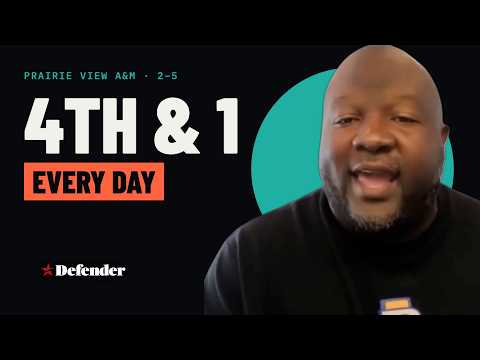
Defending SWAC champion Prairie View A&M is 2-5 after back-to-back losses to Mississippi Valley State (28-27) and Southern (28-14). On the Week 7 SWAC media call, head coach Tremaine Jackson explains why it’s been “fourth and one” for him every day since 2023.
Up next: Prairie View hosts Alcorn State for Homecoming on Saturday, Oct. 17.
#PrairieView #PVAMU #SWAC #HBCUFootball #TremaineJackson
Visit Our Website
Read more stories by our team
https://defendernetwork.com/category/news/opinion/
Sign-up for the Top 5 newsletter
Donate/ Support Our Work
Featured
Michael Jackson Returns to the Super Bowl Spotlight, Druski Heads to SNL, and Gas Drops Below $1!
MJ’s Super Bowl return, Druski’s SNL rumors, and gas prices hit 97 cents! Plus, T-Boz’s health and a $14M Jordan jersey sale. Tune in!

Michael Jackson Returns to the Super Bowl Spotlight, Druski Heads to SNL, and Gas Drops Below $1!
Michael Jackson’s legendary 1993 Super Bowl halftime performance is getting the documentary treatment, Druski is reportedly headed to Saturday Night Live, and a Georgia gas station price war sends prices tumbling to just 97 cents a gallon!
Plus, Chilli speaks out as T-Boz recovers from a sickle cell crisis, NYC moves to end horse-drawn carriage rides, and a Michael Jordan jersey reportedly sells for $14 million.
Join us on Black Press USA’s Morning Show as we break down the headlines, the culture, and the conversations making news.
Watch Monday through Friday, 8–9 AM ET.
#BlackPressUSA #MorningShow #BlackNews #MichaelJackson #Druski #TLC #MichaelJordan
Featured
Michael Jackson Returns to the Super Bowl Spotlight, Druski Heads to SNL, and Gas Drops Below $1! 📱
Michael Jackson’s Super Bowl return, Druski to SNL, and gas under $1! Plus, a Michael Jordan jersey sale and TLC updates on Black Press USA’s Morning Show.

https://www.youtube.com/watch?v=ZCznKoGDjnY
Michael Jackson Returns to the Super Bowl Spotlight, Druski Heads to SNL, and Gas Drops Below $1!
Michael Jackson’s legendary 1993 Super Bowl halftime performance is getting the documentary treatment, Druski is reportedly headed to Saturday Night Live, and a Georgia gas station price war sends prices tumbling to just 97 cents a gallon!
Plus, Chilli speaks out as T-Boz recovers from a sickle cell crisis, NYC moves to end horse-drawn carriage rides, and a Michael Jordan jersey reportedly sells for $14 million.
Join us on Black Press USA’s Morning Show as we break down the headlines, the culture, and the conversations making news.
Watch Monday through Friday, 8–9 AM ET.
#BlackPressUSA #MorningShow #BlackNews #MichaelJackson #Druski #TLC #MichaelJordan


Attend a Green Line Bus Rapid Transit Open House

VIN Check: Avoid Truck Recalls Before Buying! #shorts

Defender Parking Camera & Screen Features Explained #shorts

Find Black-Owned Banks & Credit Unions Easily #shorts

HBCU Homecoming: A never-miss annual tradition

News Observer Weekly — October 14, 2026 | Top 5 Stories of the Week

Coach Tremaine Jackson Urgent Mindset- ‘Fourth and One’

Michael Jackson Returns to the Super Bowl Spotlight, Druski Heads to SNL, and Gas Drops Below $1!

Michael Jackson Returns to the Super Bowl Spotlight, Druski Heads to SNL, and Gas Drops Below $1! 📱

Secure growth by funding business expansion without taking on bad debt

The Youngest American Killed in the Vietnam War

Passing for White, Fighting for Black America: The Courage of Walter White

OP-ED: Haiti TPS: Have We Lost Sense of Humanity?

OP-ED: How Does Your State Rank for Pre-K?

NFL: Week Two Recap | Jalen Hurts did not fold; Caleb Williams exits game with injury

Remembering Chauncey Bailey as Student Journalists Face Threats to Truth-Telling

Headlines and Hot Topics 📱

NEWSOM, KAMALA & 2028: THE POLITICAL CALCULUS BEGINS 📱

Peter Magubane: a Camera Against Apartheid

Obama Urges Democrats to make AI a Priority 📱
Attend a Green Line Bus Rapid Transit Open House
VIN Check: Avoid Truck Recalls Before Buying! #shorts
Defender Parking Camera & Screen Features Explained #shorts
Find Black-Owned Banks & Credit Unions Easily #shorts
HBCU Homecoming: A never-miss annual tradition
News Observer Weekly — October 14, 2026 | Top 5 Stories of the Week
Coach Tremaine Jackson Urgent Mindset- ‘Fourth and One’
Michael Jackson Returns to the Super Bowl Spotlight, Druski Heads to SNL, and Gas Drops Below $1!
Michael Jackson Returns to the Super Bowl Spotlight, Druski Heads to SNL, and Gas Drops Below $1! 📱

Sunset Loft – The Crystal
-

 Black Press1 week ago
A $2.1 Trillion Wellness Industry Never Built a Daily Practice for Black Children. So This Atlanta Family Did.
-
 BlackPressUSA7 days ago
Latinas Deserve Equal Pay. Unions Help Make It Happen.
-

 Art1 week ago
Montclair Brewery: Brewing Culture, Community, History
-

 Black Press2 days ago
All Skinfolk Ain’t Kinfolk
-

 Black Press1 week ago
COMMENTARY: But God!
-
 Black Press1 week ago
Safety Concerns at Southern University
