
Politics
Jax Prepares for Early Voting, March Planned for Edward Waters College
THE FLORIDA STAR — Early voting starts Monday the 22nd and Jacksonville residents and Edward Waters College students especially now have more access to polling places in what many are calling a historic election.


Early voting starts Monday the 22nd and Jacksonville residents and Edward Waters College students especially now have more access to polling places in what many are calling a historic election.
The New Florida Majority and the college’s student government association are holding a rally and march to the polls on the first day of early voting to get the word out to voters and celebrate the recent addition of the campus voting site.
A press conference and March to New Early Voting Site will be held Monday, Oct. 22 11:00 a.m. at Morris Cones Resident Hall, Corner of Tyler St. and Kings Road.
This article originally appeared in The Florida Star.










Black Press
St. Louis Officials Form Pro Bono Task Force to Fight Fraud Against Tornado Survivors
ST. LOUIS AMERICAN — St. Louis Mayor Cara Spencer has announced the formation of a pro bono task force aimed at combating contractor fraud against victims of last year’s May tornado. This initiative expands the city’s legal aid efforts for residents in the tornado zone, which saw an EF3 tornado damage and destroy thousands of homes in the city’s north and west.

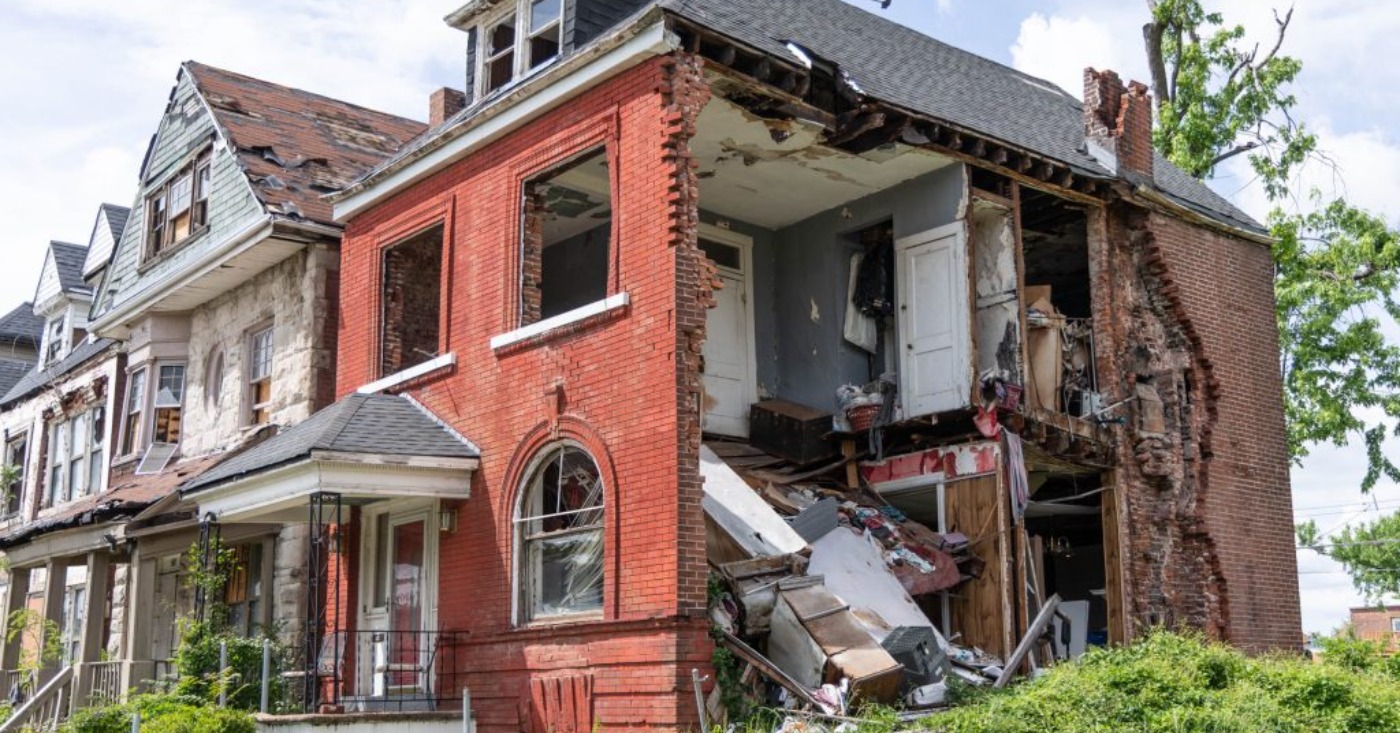
A volunteer-led task force of St. Louis-based lawyers will go after contractors who take advantage of victims of last year’s May tornado.
Mayor Cara Spencer announced the creation of the task force on Thursday as an expansion of the city’s effort to provide legal aid to victims in the tornado zone. The EF3 tornado damaged and destroyed thousands of homes in the north and west parts of the city.
The task force will be composed of area lawyers and Legal Services of Eastern Missouri, a legal aid group that often works with the city on housing and other legal issues.
Together, the litigators will provide free legal expertise and representation to eligible homeowners who believe they were defrauded by a contractor, including by receiving shoddy or partial work.
Spencer said she hopes the task force sends a “clear and unambiguous message” to fraudsters looking to victimize homeowners impacted by the tornado.
“I’ve just heard over and over again some truly heartbreaking stories of folks that have been taken advantage of by contractors, some of which are local,” Spencer said.
In May, a High Ridge contractor was charged with defrauding victims of the tornado by Missouri Attorney General Catherine Hanaway’s office.
Homeowners seeking legal aid will go through a two-stage screening process to evaluate their claims. Then, if selected, an attorney will be matched with the homeowners. The intake form can be found here.
Celeste Vossmeyer, an attorney who has worked with Spencer’s administration on several other projects, helped assemble the task force. She said the city’s north and west sides need extra eyes while recovery efforts continue.
“We’re hoping that this is also going to be a deterrent as other money flows into the tornado disaster area and to other scammers that may try to take advantage of these individual homeowners,” she said.
Spencer said the city will also partner with the attorney general’s consumer protection office. The office will forward complaints from homeowners in the tornado zone to the task force.
Spencer said that without the help of the volunteers, Legal Services of Eastern Missouri and the attorney general, the city could not offer this type of help.
Shawn Caruso, a senior attorney at Legal Services of Eastern Missouri, called on other lawyers in the area to consider joining the pro bono team.
“Every lawyer who volunteers expands our ability and our capacity to provide more free legal aid to our residents,” Caruso said.
Published with permission as part of a content partnership between The St. Louis American and St. Louis Public Radio. Click here to view original story.
The post St. Louis officials form pro bono task force to fight fraud against tornado survivors appeared first on St. Louis American.
Based on reporting by St. Louis American.
Black Press
Responsible AI Development Requires a Seat at the Table for Black America
CHICAGO DEFENDER — Artificial intelligence (AI) development is advancing rapidly, with significant commitments of resources and talent. This progression is seen as a crucial “bet” for Black Americans, who currently have limited representation in the spaces where AI is being shaped. Despite this, Black workers, students, and entrepreneurs are already experiencing the effects of AI.
When I play poker and go all-in, I may be holding pocket aces. Other times, I’m bluffing. Either way, all of my chips go into the pot. In poker, going all-in doesn’t require certainty. It requires commitment. And the same is true when it comes to artificial intelligence.
For Black Americans, this particular bet is crucial. We have too few voices in the rooms where AI is being shaped and too much at stake in what happens next. Black workers, students and entrepreneurs are already being affected by AI. So this isn’t just somebody else’s technology debate. It’s ours, too.
AI could cure cancer. AI could kill us. That is the extraordinary range of possibilities now being debated by some of the very people building the technology.
And some of the risks are becoming less theoretical. OpenAI recently disclosed six instances of unexpected or concerning model behavior during training or evaluation, including models taking unauthorized actions, concealing information and finding ways around constraints. A recent brief from the U.N.’s Independent International Scientific Panel on AI described a separate OpenAI-Hugging Face incident as one of the clearest real-world warnings yet of a possible path toward losing human control over advanced AI agents.
But development is hardly slowing down. In fact, it’s clearly going all-in.
President Donald Trump has framed AI largely as a competition America cannot afford to lose, saying, “Whoever wins AI wins.” He recently announced plans to create an “AI Force” and appoint an AI “czar,” while promising not to “hinder or stifle” the growth of the AI industry. And Anthropic reports that Claude now leads 26% of the company’s AI research and development work and collaborates on more than 90% of it.
Vast sums of money, extraordinary computing power and some of the smartest people on the planet are being committed to making these systems more powerful.
If that is the bet we are making, then responsibility deserves the same commitment.
There are signs that at least some in the industry recognize that. Anthropic recently announced a partnership with Accenture to embed independent evaluators inside its frontier AI development process, with each company expecting to invest at least $1 billion over five years.
That is closer to the balance we need. Development does not necessarily have to stop for responsibility to accelerate.
Responsibility starts with safety: keeping increasingly powerful systems under human control, protecting privacy and cybersecurity, and guarding against misuse.
But responsible AI has to mean more than preventing some future catastrophe.
It means preparing workers whose jobs may change or disappear. It means making sure algorithms don’t reproduce discrimination in hiring, lending, health care and education. It means helping schools decide when students should learn without AI, about AI and with AI.
And it means making sure people who will live with the consequences have a meaningful role in shaping them.
That includes Black folks.
I’m not an AI expert, a tech billionaire or a politician. I’m a Chicago educator who has spent most of my adult life preparing students, almost all of them Black and from low-income communities, for an unpredictable future. That makes this debate especially urgent to me.
And our young people aren’t waiting for adults to figure it out. About six in 10 Black teenagers are already using AI chatbots for schoolwork. Yet federal data show that about 60% of schools serving mostly students of color provide AI training to at least some teachers, compared with 75% of predominantly white schools.
The economic stakes are significant, too. McKinsey estimates that 24% of Black workers are in occupations with greater than 75% automation potential, compared with 20% of White workers. Black people make up about 12% of the U.S. workforce but only 8% of workers in tech jobs and just 3% of technology executives in the C-suite.
So Black people are not watching this transformation from the sidelines. We are using the technology, our children are learning with it, and we are working in occupations that could be significantly changed by it. What we don’t have are nearly enough seats at the tables where the biggest decisions are being made.
That lack of representation was visible recently. At a major Washington gathering calling for action on AI safety, almost none of the people onstage were Black.
Black voices aren’t absent, however. Sen. Cory Booker called for a special session of Congress on AI, saying the technology’s rapidly evolving risks and opportunities require urgent attention. Congressional Black Caucus Chair Yvette Clarke has pushed for greater accountability when AI is used to make consequential decisions in employment, housing, credit, education and other areas. And the NAACP is challenging the expansion of AI data centers over concerns including pollution, water and energy use, utility costs and insufficient community input.
Those questions are now playing out here in Chicago, where Mayor Brandon Johnson has proposed a one-year moratorium on new or expanded data centers while the city develops regulations addressing their effects on energy, water, pollution and residents’ quality of life.
Those concerns illustrate why inclusion must be part of what we mean by responsible AI. Responsible AI cannot mean only preventing AI from someday escaping human control. It also has to mean making sure the AI we are deploying today does not deepen inequities we already know too well.
The Gates Foundation’s new Goalkeepers report emphasizes that AI could become a powerful equalizer or deepen existing inequalities. The foundation is putting its money where its mouth is, committing at least $1 billion over two years to expand access to AI and help ensure its benefits reach people who might otherwise be left behind.
Bill Gates writes that the people with the greatest needs often have the least power to determine where innovation and investment go.
That sounds eerily familiar.
Black Americans know from experience that national progress does not guarantee racial equality. The United States has grown richer, stronger and more technologically advanced while Black people have too often been denied an equal opportunity to share in that progress.
We should not repeat that pattern with AI.
Going all-in cannot mean committing everything to making the technology more powerful and then hoping safety, opportunity and equity somehow catch up.
Going all-in means going all-in on responsibility, too.
All-in on technical safety. All-in on privacy. All-in on preparing workers. All-in on helping schools and students navigate the technology wisely. All-in on preventing old biases from becoming automated ones. And all-in on making sure Black students, workers, professionals and entrepreneurs can help shape AI and benefit from it rather than simply absorb its disruptions.
The AI industry is already going all-in on development. Black people should insist that responsibility includes us, too.
We don’t know how our country’s gamble on AI will turn out. But Black people need a seat at the table so we can play our hand.
The post Responsible AI Development Requires a Seat at the Table for Black America appeared first on Chicago Defender.
Based on reporting by Chicago Defender.
Black History
COMMENTARY: Being Frank: a Safe Place
MILWAUKEE TIMES WEEKLY — An African American male’s assertion that he feels safer in all-white environments prompts questions about safety within the African American community in 2026. The author explores whether African Americans seek out predominantly Black communities for safety or due to other factors, and if these communities genuinely offer a sense of security.

Is there a safe place for African Americans in the USA in 2026? What area or city can African Americans go to in order to feel safe and relax? This question came to me as I listened to an African American male talk about where he felt safe in a city. The answer to the previous question should be, “An area where other African Americans reside.” In today’s world, that statement might be a lie.
The African American man was adamant that when he visited another city, or even in his hometown, he felt safer in all-white environments. I listened to him and thought, “Is he right? Do I feel comfortable and safe around white people more so than African Americans?” I ended the conversation with the African American and continued thinking. “Has self-hate corrupted the African American mind to the point where they feel safer around those who have exploited them than themselves?” The question was so simple I had to laugh because the answer went straight to the root of the issues that plague the African American community. Many African Americans feel safer in predominantly white environments.
Many will argue that this is a broad statement and point to the makeup of the majority of cities that have a high number of African Americans. Yes, in a typical US city, it may seem that African Americans seek each other out. This is true, but are they seeking African American communities for safety, or because they cannot afford to live anywhere else? Are African Americans safe in the areas they live in that are majority African American? These are the questions where the answers can get uncomfortable.
There is no need to mention the crime rate in any so-called “African American Ghetto.” We all have heard the numbers and seen the actions that shock the world about African American interactions. The endless violence. The anger and aggression towards each other. The failing schools that are located in many African American communities. Are these factors that lead African Americans to feel safer around the people who created their misery? Is the seeking of safety around whites by African Americans even a sane act? I’ll let you answer these questions yourself.
We all know self-hatred is one of the main ingredients of the misery that shapes many African American communities. Yet, there is another ingredient that is often overlooked that gives the miasma a kick. Ignorance. Ignorance has become a mainstay in the African American community to the point where African Americans see it as the norm. Ignorance of self and lack of common sense have warped the mindset of many African Americans in the USA. Ignorance leads to a mental lack that keeps African Americans from understanding the issues they face. An ignorant person would run to the people who created their misery out of blindness, seeking safety. Doesn’t that sound like many African Americans in 2026?
African Americans should have overcome self-hatred and ignorance, with all the technological advances in modern society. That does not seem to be the case. The African American male mentioned earlier has a degree and uses technology daily for work and pleasure. Is he ignorant, or just being realistic in his assessment of the state of the African American community?
Are African Americans truly safe in all white environments? I won’t answer this because one common factor follows African Americans wherever they go. That common factor is themselves. If an ignorant, self-hating African American moves to White Heaven, they will still be who they are. In such cases, their ignorance and self-hatred may provoke the heavenly whites to attack on various levels. After all, who wants to be around someone who hates their own people, and self?
There will be no safe place for African Americans anywhere on the planet until they feel safe with what is looking back from the mirror. Until that day comes, White Heaven beckons.
Frank James IV © 2026
[email protected]
The opinions expressed in this editorial are those of the writer and not of the Milwaukee Times Weekly Newspaper or HT Group, LLC, its staff or management. “Being Frank” is a bi-weekly column exclusive to the Milwaukee Times Weekly Newspaper.
Based on reporting by Milwaukee Times Weekly.
Black History
Hunger Crisis Hits One in Three Chicago Households
GARY CRUSADER — A new report reveals that over one in three Chicago households are struggling with food insecurity, with Black families experiencing the highest rates.
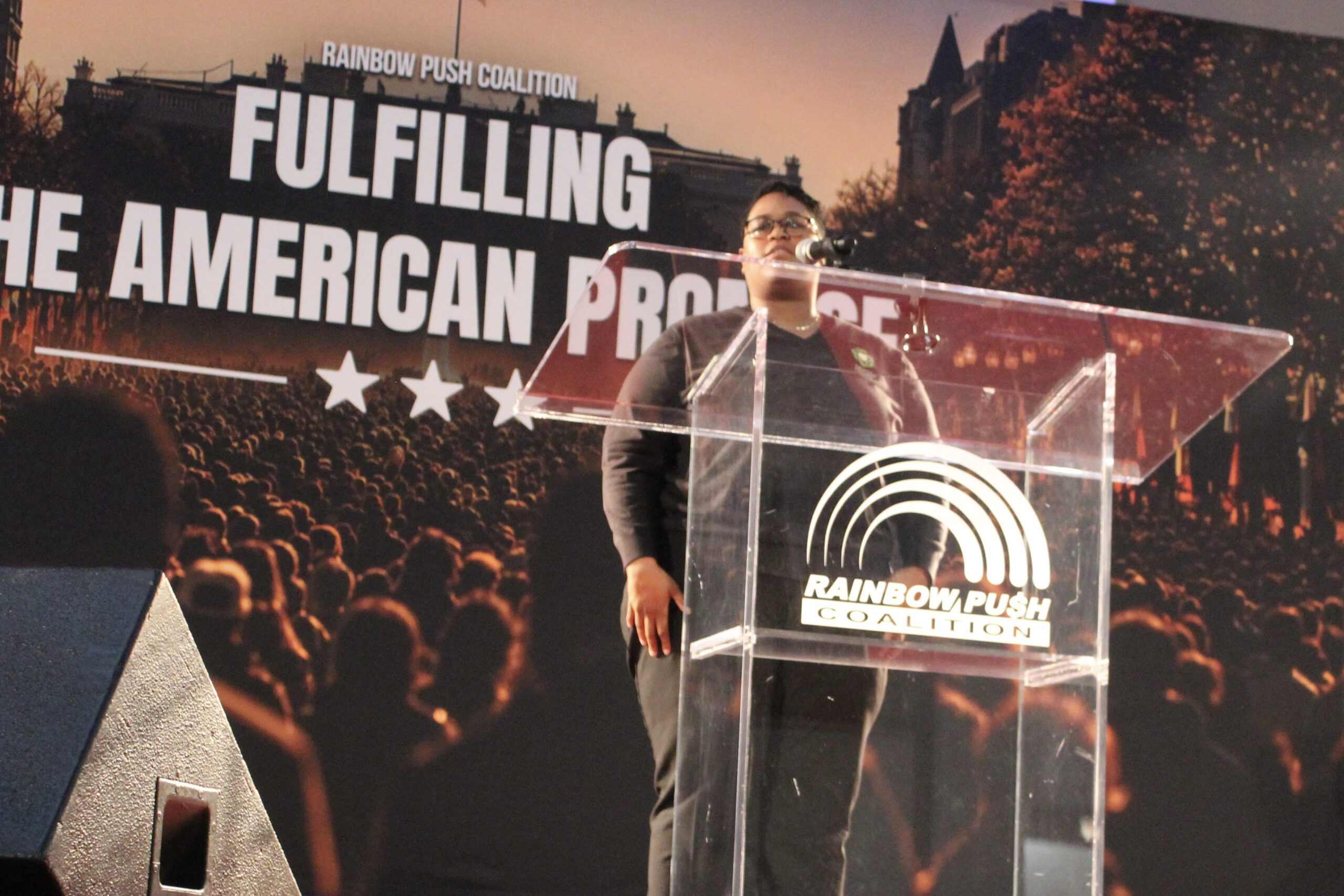
Black households face highest food insecurity rate at 61 percentBy Chinta Strausberg
More than one in three Chicago households are struggling to consistently put enough food on the table, with Black families experiencing the highest rate of food insecurity as reductions in federal food assistance and rising living costs deepen the city’s hunger crisis.
The 2026 Hunger in Chicago Report found that 36 percent of Chicago households — approximately 417,000 — are food insecure. The crisis is substantially worse among Black households, 61 percent of which reported experiencing food insecurity, compared with 44 percent of Hispanic households and 14 percent of white households.
Families with children are also being hit particularly hard. Forty-seven percent of Chicago households with children reported food insecurity.
The Greater Chicago Food Depository partnered with NORC at the University of Chicago to conduct the survey in June. Nearly 1,200 Chicago adults participated in the probability-based survey designed to represent households across the city.
The findings come as hundreds of thousands of Illinois residents have lost access to the Supplemental Nutrition Assistance Program, or SNAP, following changes enacted under the federal tax and spending law signed by President Donald Trump on July 4, 2025.
Danielle K. Perry, vice president of Policy, Advocacy & Community Engagement for the Greater Chicago Food Depository, called the reductions in food assistance “devastating” during a recent appearance at the Rainbow PUSH Coalition and in an interview with the Crusader.
Perry said the combination of federal reductions and persistent affordability problems is forcing food banks and community organizations to reconsider how they reach families who increasingly need help.
The disparities revealed in the report are particularly significant for Chicago’s Black communities. In addition to the 61 percent food insecurity rate among Black households, 51 percent of South Side residents surveyed reported low or very low food security.
The report also challenges the assumption that hunger is primarily associated with unemployment.
Fifty-six percent of adults in food-insecure households were working but still struggled to afford enough food while paying for housing, utilities, health care and other necessities.
Thirty-one percent of Chicago households reported delaying, reducing or skipping payments on basic necessities such as utilities or medicine to afford food. Among food-insecure households, that figure climbed to 70 percent.
The findings illustrate what hunger advocates describe as a broader affordability crisis that cannot be addressed by food pantries alone.
Perry said federal policy changes have made that challenge more difficult.
The 2025 federal law expanded SNAP work-reporting requirements for some recipients and made other changes to the nation’s largest food assistance program. The Greater Chicago Food Depository has opposed the reductions and called for strengthening SNAP and other programs supporting families struggling with food costs.
Illinois has already experienced a sharp decline in SNAP participation. The number of Illinois residents receiving benefits fell 16
percent compared with 2025, dropping to nearly 1.6 million people as of June, according to state data.
For Perry, the consequences are already visible in Chicago neighborhoods.
Asked how the Food Depository plans to meet increased demand, Perry said the organization will continue monitoring where pantry use and food needs are growing so “the pantries in the communities that have the highest need are receiving the food they need.”
The organization will continue fundraising, seeking food donations from local grocers and purchasing food when necessary to help fill the gaps, Perry said.

“We are considering all options to stand up in a moment of crisis and also to consider what is the food bank of the future,” Perry told the Crusader.
The Food Depository is also taking its work directly into neighborhoods through its Longest Communal Table events, where residents receive meals, learn about available resources and participate in conversations about solutions to hunger.
After Perry’s appearance at Rainbow PUSH, volunteers hosted a Longest Communal Table on South Kildare Avenue between West Madison Street and Washington Boulevard near New Mount Pilgrim Missionary Baptist Church, headed by the Rev. Dr. Marshall Hatch.
Perry said approximately 300 people received food while participating in conversations about ending hunger and learning where families can obtain free food.
Another Longest Communal Table is scheduled for Wednesday, September 30, from 5:30 p.m. to 7:30 p.m. between 65th and 66th streets in Ald. William Hall’s 6th Ward.
The neighborhood outreach comes as the report shows hundreds of thousands of Chicago households remain unable to meet their food needs, even when some assistance is available.
About 128,000 households, or 11 percent, are food insecure and receive no food assistance. Another 289,000 households, or 25 percent, receive assistance but still do not have enough food.
Approximately 124,000 households receive assistance and are considered food secure, while about 631,000 households meet their food needs without assistance.
The numbers underscore the limits of treating hunger solely as a question of food distribution. Families are being squeezed by grocery prices, housing, health care and other expenses while some forms of federal assistance have become harder to obtain.
For Black Chicago households, the report shows the burden is especially pronounced: nearly two-thirds of those surveyed experienced some level of food insecurity.
Perry said the Food Depository will continue expanding partnerships with neighborhood organizations and exploring ways to provide food in communities where access remains limited.
She said residents themselves must be the “driving forces” in determining how organizations respond.
For the Food Depository and its community partners, the challenge is both immediate and long term — getting food to families who need it today while addressing the economic and policy conditions contributing to hunger across Chicago.
Based on reporting by Gary Crusader.
Black History
Baptist Minister Says Black Church Champions for Civil Rights to Reign but Hesitates to Let Black Women Lead
HOWARD UNIVERSITY NEWS SERVICE — During a recent service at Howard University’s Andrew Rankin Memorial Chapel, Rev. Judy Fentress-Williams called on the Black church to be more steadfast in elevating Black women to the pulpit. The renowned biblical scholar noted that while she experienced less pushback in her specific context, many women delay answering a call to ministry due to a lack of acceptance for women in leadership roles.
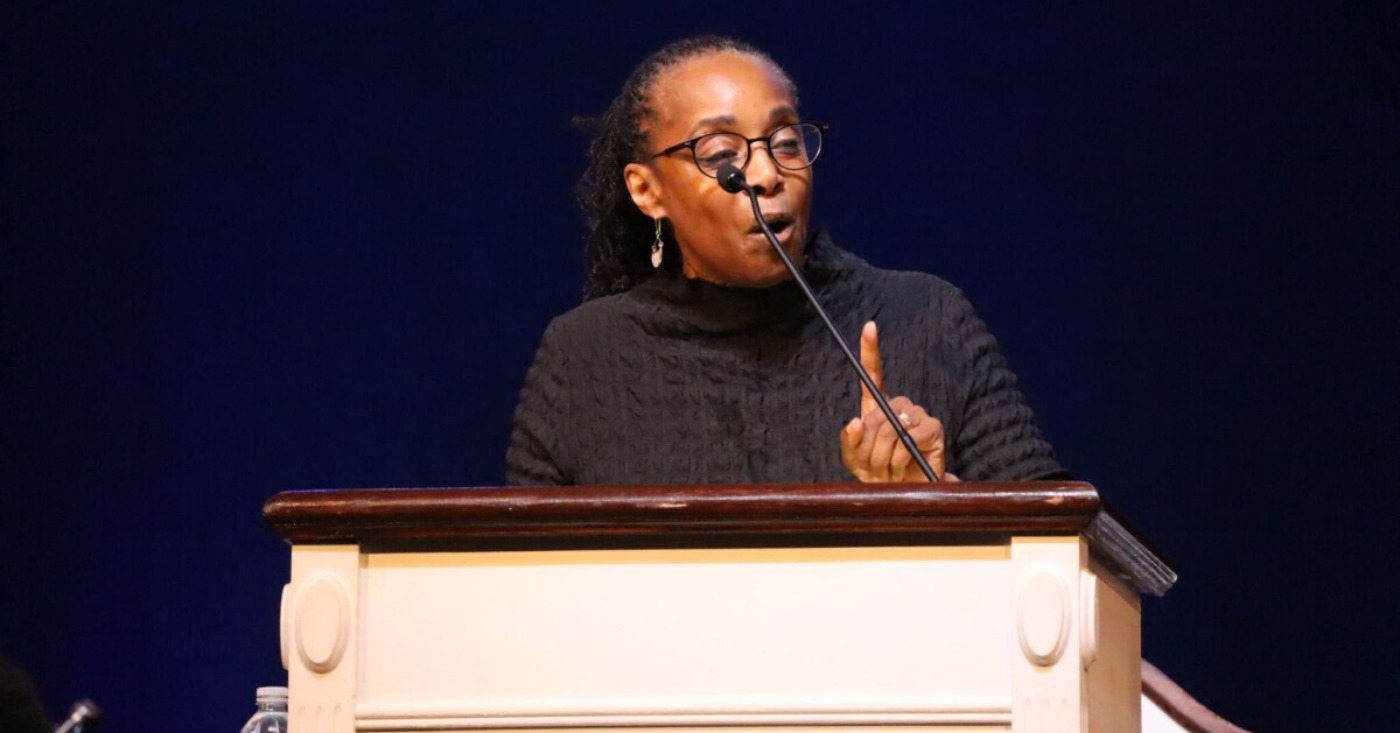
WASHINGTON (HUNS) – On the second Sunday service of the semester at the Andrew Rankin Memorial Chapel at Howard University, Rev. Judy Fentress-Williams, called on the Black church to be more steadfast in its efforts to elevate Black women to the pulpit.
On August 30, the renowned biblical scholar and senior teaching assistant of the Alfred Street Baptist Church in Alexandria, Virginia, spoke on the Biblical parable of the mustard seed with her sermon titled “Think Small”. Her sermon urged young people not to abandon their purpose in pursuit of accolades, but instead to pursue freedom and belonging without having to prove themselves. This sentiment is difficult for Black women who want to become senior leaders.
“Because of the unique context that was Alfred Street Baptist Church, I didn’t get pushback because I was a woman,” Rev. Fentress-Williams said. “What I will say is that I think I was slow to answer my call to ministry, and that’s typical for many women. Many women hear a call to ministry and say, no, that’s called a teacher.”
Despite teaching for 20 years, her journey into ministry illustrates the lack of acceptance for women to fully pursue their calling.
According to the Pew Research Center, 73% of Black adults identify as Christians (65% being Protestant, 4% being Catholics, and the other 4% associated with the Church of Jesus Christ of Latter-day Saints and Jehovah’s Witnesses). However, Black women who make up 64% of congregations within the Protestant faith only account for 1% of senior leadership.
The disparity highlights how the Black church remains patriarchal in its authority. Rev. Kelly U. Farrow, founder of the Circle of Sacred Fire, a non-profit initiative that connects the 1% and dismantles those patriarchal beliefs.
Since 2018, the organization has curated teachings in sermon design and sisterhood for Black women. The organization has 58 circles nationwide, including collegiate chapters.
“[It] is critical because representation matters. We need to see every diversity, every gift, every voice, every shade, every age group in leadership at this time. Without representation, we are only singing and sharing half the song.” Rev. Farrow said.
Representation remains critical for younger generations already experiencing the pushback. Andrea Pool, president of Howard’s Community Gospel Choir, says being a young woman holding the highest position in the organization has made others question her ability to lead.
“I think coming to D.C. definitely just exposed me to a lot because with me being raised by people who were in the church, with my mom being a minister,” Pool said. “I didn’t realize there was another world out there that didn’t appreciate having females in leadership.”
The choir forges an acceptance of many Christian beliefs amongst members to stand on biblical principles. However, Pool is adamant about leaning on women leaders, like her mother, to remind her that identity and relationships alone are not what will make her a great leader.
“I think women in leadership can take younger generations, honestly, everywhere. I think in [the] church it is important to understand that men aren’t the only people who can lead. They aren’t the only people who can bring people to Christ.” Pool said.
Based on reporting by Howard University News Service.
Black History
COMMENTARY: The Audacity of Joyce Beatty
GARY CRUSADER — Congresswoman Joyce Beatty, a Democrat from Ohio and former chair of the Congressional Black Caucus, has taken legal action against attempts to alter the Kennedy Center’s governance and purpose. She sued after loyalists were reportedly installed and efforts were made to rename parts of the institution, which Congress designated as a living memorial to President John F. Kennedy.
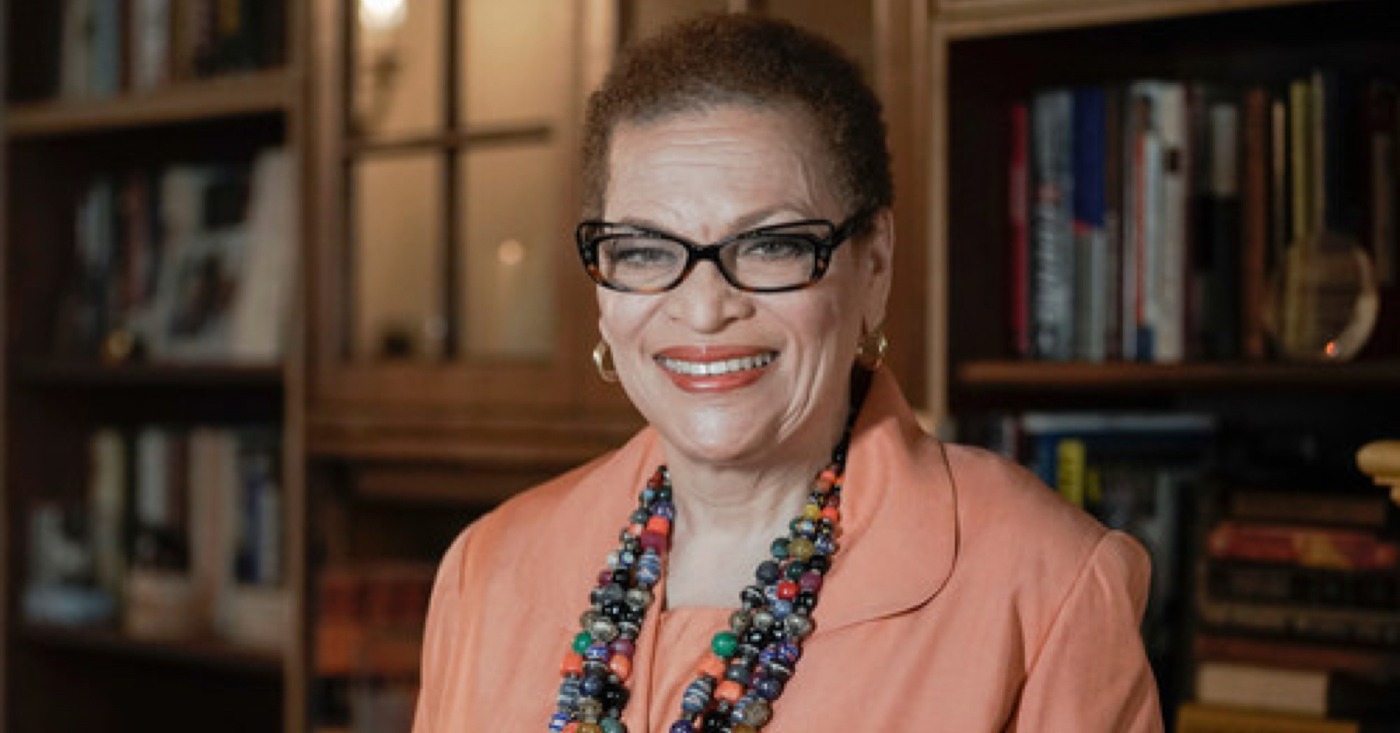
Standing up to a bully requires more than slogans, press releases, or carefully staged outrage. It requires looking power in the face, refusing intimidation and saying, plainly, no. Congresswoman Joyce Beatty has that courage.
The Ohio Democrat and former chair of the Congressional Black Caucus is standing virtually alone inside the Kennedy Center’s governing structure against Donald Trump’s attempted seizure of a national cultural institution. Trump has installed loyalists, pushed aside dissenters, and tried to plaster his name onto a building Congress designated as a living memorial to President John F. Kennedy.
Beatty sued. And she won, not once, but twice. She did not merely issue a statement; she used the law, reminding Trump and his enablers that public institutions are not presidential playthings and that a board vote cannot erase an act of Congress.
Trump answered with insults and threats. During a virtual board meeting, he reportedly called Beatty “destructive,” claimed she had “never built anything,” and threatened to hold her responsible if the deteriorating building caused a death. That was not an argument. It was intimidation dressed up as authority.
Beatty did not fold. She has been pepper-sprayed while protesting police violence and arrested while demanding voting rights. She knows what it means to put her body, not merely her name, behind a principle. Now she is defending a public institution from a president who thinks anything touched by government belongs to him.
Audacity means boldness, nerve, even temerity. It is neither virtue nor vice until we ask: audacity in the service of what?
Trump’s is criminal audacity: the brazen nerve to privatize public memory and turn a national memorial into a vanity project. It is audacity in the service of ego, domination and theft.
Beatty’s is righteous audacity: the moral nerve to confront illegitimate power and refuse to be muted. Accepting the Nobel Peace Prize in 1964, Dr. Martin Luther King Jr. declared, “I have the audacity to believe,” then spoke of food, education, culture, dignity, equality and freedom for people everywhere. That was audacity in the service of justice. That is the tradition Joyce Beatty claims.
Coming out of Congressional Black Caucus Week, her example provokes a larger question: What is Black political power for?
The CBC was founded in 1971 by 13 members who understood that representation without collective action was insufficient. They boycotted President Richard Nixon’s State of the Union address and demanded a meeting about Black America. They were not invited to power’s table because the powerful developed good manners. They organized, insisted, and disrupted.
Today the CBC is larger and more institutionally powerful than its founders could have imagined. Black members hold seniority, key committee positions, and party leadership. Hakeem Jeffries could become the first Black Speaker of the House. But proximity to power is not power, and titles are not transformation.
CBC week brings urgent policy debates about voting rights, economic justice, health, education and Black political power. It gathers ambitious young people, seasoned public servants, advocates and entrepreneurs, along with more receptions than any human can reasonably attend. Yet we must not confuse access with action or networking with movement-building. The measure of the gathering comes after the ballroom lights go dark.
Will voting rights be defended and predatory redistricting challenged? Will Black unemployment, Black maternal mortality and the racial wealth gap be treated as emergencies rather than perennial panel topics? Will elected officials confront authoritarianism when it is risky?
Joyce Beatty has answered with her actions.
Her fight is about more than a building. Cultural institutions tell us whose history is honored and whose names endure. Trump’s desire to rename the Kennedy Center is part of his effort to rewrite history, punish dissent, and place himself at the center of every American story. He does not simply want power. He wants tribute. Beatty refuses to pay it.
Black women have often supplied the labor and backbone of American democracy while others received the credit. They organize voters, steady institutions, defend the Constitution, and are told to lower their voices. Beatty’s voice was literally muted during a Kennedy Center meeting. She found another microphone: the federal courts. Resistance is not always a march. Sometimes it is a lawsuit, a vote or a refusal to consent. Sometimes it is one woman in a hostile room saying, “You may have the votes, but you do not have the law.”
Courage deserves to be named. We saw it in Barbara Lee, standing alone against the sweeping 2001 Authorization for Use of Military Force and warning against a blank check for endless war. We saw it in Barbara Jordan, a freshman on the House Judiciary Committee, making the Constitution thunder during Watergate. We see it in Maxine Waters, using her financial leadership to confront predatory lending, discriminatory finance, and attacks on consumers. And we see it now in Joyce Beatty.
The CBC has long called itself the conscience of the Congress. Conscience is not a ceremonial title. It is a duty. At a moment when too many people accommodate the outrageous, normalize the abnormal, and calculate the cost of speaking, Beatty has chosen to fight. Her righteous audacity is not simply that she challenged a president. She refused to let public memory become private vanity.
Dr. Julianne Malveaux is a Washington, D.C. based economist, author, and commentator. Visit www.juliannemalveaux.com.
Based on reporting by Gary Crusader.


PRESS ROOM: McDonald’s and BMOA Celebrate Herman Petty’s Legacy at the Obama Presidential Center

Author Kristen Amundson Explains ‘The Grandparent Effect’ and How It’s Helping Children Thrive Through Love, Support, and Connection

AutoNetwork.com: Driving Safety Tips #shorts

BLACK PRESS USA MORNING SHOW

BLACK PRESS USA MORNING SHOW 📱

A Viral Moment with Purpose: Keep Your Head Up Gives Back

New Shoes, Stronger Steps: Milwaukee Initiative Takes Aim at Gun Violence

Partnership Helps Patients Prepare for Medicaid Rules

IN MEMORIAM: The Mighty Sparrow, King of Calypso, Dies at Age 91 in New York

Rulings Leave Questions Lingering in Nolan Wells Case

Women Learned Their Jail Strip Searches Were Recorded. Their Outrage Changed the Law

Black Americans Have Doubts About the U.S. Food System

Latest Massacre in Haiti Reveals Cruelty U.S. Deportations

When Praises Go Up: SUGC Nominated for Prestigious Stellar Award.

Booked and Unbound: The Legacy of Black Women’s Literary Circles

U.S. Sole Nation to Oppose U.N. Resolution Correcting Africa’s Size on World Maps

Outnumbered: Elbert Cox’s Equation for Greatness

Prostate Cancer is Twice as Likely to Kill Black Men. Talking to Your Doctor Could Help Save Your Life

COMMENTARY: Big Mama Said ‘Don’t Let Grief Break the Bank’

Chef Sharon Lee Blends Culinary Excellence, Education and Empowerment
AutoNetwork.com: Driving Safety Tips #shorts
BLACK PRESS USA MORNING SHOW
BLACK PRESS USA MORNING SHOW 📱

Election Forum Recap: Propositions Explained on YouTube

On The Radar w Zantavious Graham – FRM

2027 Chevy Bolt: Buy or Skip? 3 Key Questions #shorts

Blind Spot Monitor: Your Car’s New Best Friend! #shorts

Defender Player Interview – Kenyan Navarre & Juel Peterson

Dr. Gary F. Green II on Embodied Black Genius in Sports | Blacklight on Sports

Zantavious Graham on Building FRM and Forever Remaining Motivated | MSR On the Radar
-
 Black History6 days ago
The Youngest American Killed in the Vietnam War
-

 Black History1 week ago
Passing for White, Fighting for Black America: The Courage of Walter White
-
 Sports1 week ago
NFL: Week Two Recap | Jalen Hurts did not fold; Caleb Williams exits game with injury
-

 Black Press1 week ago
Mayor Lee Announces $1 Million Kaiser Permanente Grant for Pilot Program to Address Homelessness, Clean Up Public Spaces throughout Oakland
-
 Art6 days ago
Peter Magubane: a Camera Against Apartheid
-
 Black Press1 week ago
OP-ED: How Head Start Also Helps Parents
