Connect with us

Health

Is World Without Tobacco By 2040 a Pipe Dream?

Published

on

This Tuesday, July 15, 2014 photo shows the tobacco in cigarettes in Philadelphia. A study ties a host of new diseases to smoking, and says an additional 60,000 to 120,000 deaths each year in the United States are probably due to tobacco use. The study by the American Cancer Society and several universities is published in the Thursday, Feb 12, 2015 edition of the New England Journal of Medicine. It looks beyond lung cancer, heart disease and other conditions already tied to smoking and adds breast cancer, prostate cancer and even routine infections to the list. (AP Photo/Matt Rourke)

This Tuesday, July 15, 2014 photo shows the tobacco in cigarettes in Philadelphia. (AP Photo/Matt Rourke)


(Capital OTC) – Tobacco sales should be drastically downsized by 2040 under strict recommendations from several public health researchers. They believe that a tobacco-free world is an attainable goal with enough political and diplomatic support in a matter of three decades.

The goal is to increase the pressure against the tobacco industry until less than 5 percent of the adults worldwide would smoke. This action has been sparked by the prediction that one billion people will die until the end of the century due to tobacco use if solutions for fighting this problem are not found.

The estimation shows that a tragic majority of these deaths will take place in countries with low and middle-income. Chief researcher Robert Beaglehole, professor at the University of Auckland in New Zealand, insists that the world cannot continue like this much longer, and the time has come for the damage caused by the tobacco industry to end.


READ MORE

Continue Reading
Advertisement
Comments

Black History

Cuts and Conversations Turns Barber Chairs into Space for Lifesaving Dialogue

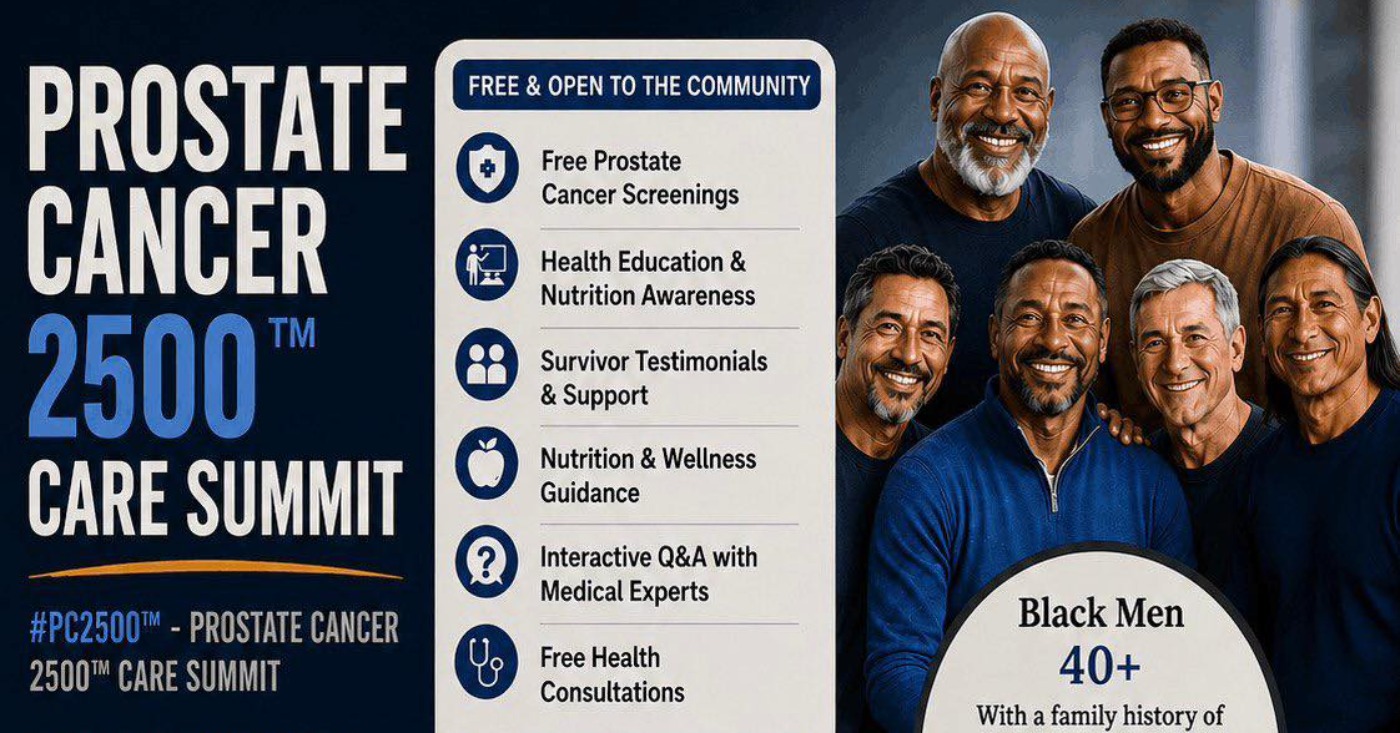
ALABAMA STATE UNIVERSITY – THE HORNET TRIBUNE — Alabama State University recently hosted “Cuts and Conversations,” an event that transformed barber chairs into a venue for vital dialogue about prostate cancer, a disease disproportionately affecting Black men.

Published

on

Photo courtesy The Hornet Tribune

The sound of clippers buzzed with a different kind of conversation Monday at 11 a.m. as Alabama State University students and staff listened to barbers, cancer survivors and health professionals discuss a disease that disproportionately affects Black men.

Cuts and Conversations, held Sept. 28 in the John Garrick Hardy Center Ballroom, used free haircuts and the familiarity of the barbershop to open conversations about prostate cancer, early detection, family history and men’s health.

Tanjula Petty, Ed.D., vice president for Institutional Effectiveness, Strategic Initiatives and Transformation, and Willie S. Rockward, Ph.D., dean of the College of Science, Technology, Engineering and Mathematics, opened the forum and welcomed those in attendance.

For Petty, the message came from experience.

“I’m not just speaking to you based on research,” she said. “I’m talking to you from a place of experience.”

Petty said she exercised regularly, ate well and considered herself healthy when a doctor told her she had cancer. She challenged students to take what they learned back to their fathers, grandfathers and uncles.

“It’s not all about genetics; you may be the first in your family to experience it,” Petty said. “People ask me all the time, ‘Who in your family was diagnosed?’ Nobody. I’m the first.”

According to the Centers for Disease Control and Prevention, Black men are more likely to develop prostate cancer than other men and are more than twice as likely to die from the disease. The American Cancer Society recommends that Black men begin discussing prostate cancer screening with a health care provider at age 45 or at 40 for men at higher risk because of family history.

Three prostate cancer survivors were recognized during the event: Andy Maxwell, Leroy Huffman and Dandrea Evans Sr. Evans and Huffman shared their experiences with those in attendance.

Evans was 44 when a routine doctor’s visit led to his prostate cancer diagnosis. He had no symptoms.

“Initially it was the worst news you could ever hear because I didn’t feel like I had cancer. I felt great,” he said.

Evans said he turned to his faith and made the decision “to trust God through the process and to live.” Four years later, he said he is cancer-free.

“The more you know, the more you’ll be prepared to deal with it and understand it a little bit better,” Evans said.

The five-year survival rate is greater than 99% for prostate cancer diagnosed at a localized or regional stage, according to the American Cancer Society. That rate falls to 38% when the cancer has spread to distant parts of the body.

Huffman has worked at Heritage Barber & Style Shop for about 26 years, has cut hair for 63 years.

“Awareness about prostate cancer is the best thing that Black men should do,” Huffman said.

His advice was simple.

“Age is not the key here. Life is,” Huffman said.

Dawna Nelson, Ph.D., an associate professor of social work, licensed master social worker, and principal investigator for the Cuts and Conversations research project, said the project grew from years of community health work and conversations with Heritage about the role barbershops already play in Black communities. When funding became available, the partnership trained barbers to speak with clients about prostate cancer, early detection, and family history.

Heritage owner Vladimir “Boo Man” Averett said the shop wanted to be part of that work, particularly because of Huffman’s experience.

“He gives conversation all the time to us younger barbers as well as our clients about get checked, get checked, get checked,” Averett said.

For Averett, the message comes down to five words.

“It’s not about wealth. It’s about health,” Averett said.

The partnership extended to student barbers.

Brittany Hollins, planning and evaluation specialist in the Office of Institutional Effectiveness, Strategic Initiatives, and Transformation, said organizers worked with Student Life and athletics to identify student barbers who were trained at Heritage to carry those conversations to their peers.

“They’re cutting hair, and they’re having these conversations,” Hollins said. “And so it’s Cuts and Conversations today.”

Hollins’ grandfather died a little more than a year ago after his prostate cancer progressed to Stage 4.

“It is not an easy task to have that loved one at home on hospice, and you are being tasked to give them that last dose of morphine, and then you realize there’s no pulse,” Hollins said.

Beyond the personal stories, the event connected students with cancer research and health resources.

Manoj K. Mishra, Ph.D., director of the university’s Cancer Research Center and professor of biology, said the center supports cancer research, trains students, and works to increase cancer awareness in the community.

Pastor Lee B. Walker Jr. and Terrance “Wolfgang” Baldwin hosted a live recording of the “Off the Cuff” podcast, continuing the discussion about prostate cancer awareness and Black men’s health.

Five Horizons Health Services, the Alabama Department of Public Health, the university’s Cancer Research Center and Health Services were represented. Five Horizons also provided free HIV and sexually transmitted infection testing.

For the students in the barber chairs, the conversations made the message immediate.

Freshman Jonathan Alexandre said events such as Cuts and Conversations can make it easier for young Black men to begin talking about their health.

Freshman Elijah Kidd, a computer engineering major from Pensacola, Florida, said cancer has already touched his family through his uncle.

“Really just cherish every moment you have, because you never know when it might end,” Kidd said.

Senior Xavier Moore, a double major in music education and music performance, said the setting allowed younger and older Black men to learn from one another.

“Your health comes first,” Moore said.

Student barber Mark Coaxum II, a biology major who plans to become a doctor, brought the message back to action.

“Knowing the probability is good, but getting tested is best, because whether you’re probable or not, you never know,” Coaxum said. “It could be you.”

Nelson said she hopes those conversations continue long after the barber chairs are gone.

“The barbershop is where these conversations start, but then the next day they’re in the gym, and then the day after that on the golf course, and in the boardroom, and most importantly, at a family dinner table amongst the father and the son,” Nelson said.

For students who may think prostate cancer is years away, Nelson left them with a reason to start talking now.

“You are a son. You are a nephew. You are a grandson,” she said. “And if you take the time to talk to your fathers and your uncles and all of the men in your life about this, you are potentially saving their life, and you’re also at the same time empowering yourself so that when your time does come, you have all the information you need to be able to make good health choices.”

Based on reporting by Alabama State University – The Hornet Tribune.


Continue Reading

Black Press

A $2.1 Trillion Wellness Industry Never Built a Daily Practice for Black Children. So This Atlanta Family Did.

BLACKPRESSUSA NEWSWIRE — As Black parents strive to raise resilient, confident, brilliant children within systems that too often underestimate them, an Atlanta-based company launches an app that delivers a five-minute daily wellness practice, backed by forty years of research, to help build the identity, confidence and self-worth their children carry into every room.

Published

on

A young Black girl in a school uniform meditates on her bedroom floor beside a phone running the Bright Crowns app.
A young girl starts her day with Bright Crowns, a daily wellness practice built for Black children. (Photo: Bright Crowns)

As Black parents strive to raise resilient, confident, brilliant children within systems that too often underestimate them, an Atlanta-based company launches an app that delivers a five-minute daily wellness practice, backed by forty years of research, to help build the identity, confidence, and self-worth their children carry into every room.

ATLANTA — October 6, 2026 — Every morning, Black children walk into classrooms and spaces that weren’t designed with them in mind. They carry a quiet, daily weight most adults never see. There is no shortage of national conversation about the challenges they face; there has been far less discussion about what actually helps. Yet the research has pointed to answers for decades: a grounded sense of who they are, the steadying power of breath, and the pride that comes from knowing their history and their own worth. What was missing was a way to deliver those answers to Black children, consistently and easily, every single day. Until now.

Bright Crowns, the first daily wellness practice built specifically for Black children, launched and is available now on the Apple App Store. The morning practice takes just five minutes and fits easily into a busy day.

“As much as we’d like to, we can’t always lighten the load our children carry each day,” said co-founder and CEO Tia Harley. “But we can help make them strong enough to carry it — with their heads held high.”

Here is what the Bright Crowns wellness practice delivers. Each morning, a child opens the app and hears a voice that sounds like home. The breath comes first, to help them settle and notice what they’re feeling. Then an affirmation that names who they are and the people they come from. Then the story of someone from Black history whose life is proof of the strength being built in them that day. A new figure every day, all year long, not just in February. Not a history lesson, but evidence of what they already carry inside. They start each day steady, certain, and ready for whatever it holds.

The arc is deliberate: Breathe. Belong. Become. That five-minute morning session is called Crown Time, and Bright Crowns doesn’t stop there. Its practices carry a child through the whole day. Crown Ready steadies a child before a hard test or a game. Crown Reset meets a big feeling the moment it rises. Crown Together is a weekend reflection a parent reads aloud. And Bedtime Crown carries them into sleep with folktales from the African diaspora. Instead of points or badges, children earn crowns drawn from real African kingdoms — an inheritance, not a reward. A badge says good job; a crown says this was always yours.

“Bright Crowns isn’t about making a child feel better for five minutes,” said Tia Harley. “It’s about giving them tools that compound: steadiness, identity, and resilience they carry long after the session ends, into the classroom, under pressure, and into rooms where they may be the only one.”

Built on joy. Backed by forty years of science. Husband-and-wife team David and Tia Harley built Bright Crowns out of love for their own children. Then they discovered that every piece of what they had built had already been supported by research. A landmark study in the journal Science found that a brief, culturally grounded practice measurably narrowed the racial achievement gap for Black students, without any change to the school itself. Research has since identified ethnic-racial identity as a key protective factor for Black youth mental health in the Annual Review of Clinical Psychology, and a meta-analysis of 76 mindfulness programs for young people found significant improvements in stress, attention, emotional regulation, and academic engagement. Psychologists have a name for what these build together: hardiness, the inner architecture that lets a person meet difficulty without breaking. It has been studied since 1979, when psychologist Suzanne Kobasa first identified it, and the research is clear that it is teachable, built through brief, consistent daily practice. “The research showed that while the school didn’t change,” Tia Harley said, “what those children carried into it did.”

A category built, not borrowed. Wellness has grown into one of the largest industries in the world, worth roughly $2.1 trillion in the U.S. alone, with apps for sleep, focus, breathing, and meditation. Yet when the Harleys went looking for a daily wellness practice built for their own Black children, they found none. What existed was generic: polished and useful, but spoken in voices and settings that never felt like home, and asking a Black child to set part of themselves aside just to belong there. “A Black child’s identity isn’t separate from their wellness. It’s part of it,” said Tia Harley. Bright Crowns wasn’t adapted for Black children after the fact. It was built with them in mind from the very beginning, the first of its kind, and one this community has long deserved.

David Harley, an award-winning creative director, began building a morning wellness routine at their family’s kitchen table, and he and Tia joined forces to grow it into what Bright Crowns is today. The two brought professional rigor to a labor of love: David, with two decades leading multicultural campaigns for major brands, and Tia, who led business development and partnerships at Google. They built Bright Crowns to a standard they’d trust with their own children. Then they used it with their two kids every morning for more than a year before it reached anyone else. “We built it for our children first,” Tia Harley said. “We watched them change: quicker to recover from tough moments, more willing to try hard things, holding their heads a little higher. Then we realized every Black family we knew needed the same thing.” The launch arrives as Black families across the country are thinking hard about how to prepare and educate their children in schools and spaces that weren’t always designed with them in mind. Bright Crowns speaks to the part that travels with a child into any classroom: the certainty of who they are.

Availability. Bright Crowns is available now on the Apple App Store with a free 7-day trial. Families who join by December 31, 2026 lock in the Founding Family rate of $69.99 for the first year; one subscription includes every child in the home. Learn more and download at hellobrightcrowns.com.

“Our children are already brilliant,” said co-founder and chief product officer David Harley. “We don’t teach them to survive. We teach them they were born to thrive. Their crowns are already on — we just help them remember.”

###

About Bright Crowns
Bright Crowns is a five-minute daily wellness practice built for Black children, available now on the Apple App Store. It is the first daily practice of its kind, grounded in decades of research on identity, mindfulness, and resilience. Founded by husband-and-wife team David and Tia Harley, parents of two, Bright Crowns pairs deep cultural fluency with the quality families expect and deserve. It helps Black children feel steady in themselves, certain of who they are, and ready to show the world what they’re made of. Learn more at hellobrightcrowns.com.

Media Contact
Tia Harley, Co-Founder
[email protected]
(404) 491-9637
Digital Press Kit: hellobrightcrowns.com/press
hellobrightcrowns.com


Continue Reading

Black History

Listening as a Lifeline: A Doula’s Witness to Black Maternal Health

OAKLAND POST — Maternal mortality and pregnancy-related mortality use different time frames and methods and are not interchangeable. Finalized 2024 CDC data recorded 649 maternal deaths nationally. The overall rate was 17.9 deaths per 100,000 live births, but for non-Hispanic Black women it was 44.8, compared with 14.2 for White women and 12.1 for Hispanic women.

Published

on

Antoinette Stewart-Eneh.

Word Count: 1058

Note: Client A, B & C, names are withheld for privacy; these accounts reflect my recollections as theirDoula.

Client A rocked her hips on a birthing ball, surrounded by pale wood and warm textiles in a softly lit Scandinavian-style office. I was her doula through a Southern California maternal health company combining nurse-led care, technology, and wraparound support.

She was a healthy Black woman in her thirties. Her baby girl was doing well; her partner took notes as we discussed labor and advocacy.

Then we turned to their chosen hospital. I knew it well—and remembered a phrase from another client’s experience: “Policy of Sovereignty.”

Client B had been told she needed a repeat cesarean as a precaution, though the reasoning was unclear. Her obstetrician, who performed her first cesarean two years earlier, had assured her throughout pregnancy that she was healthy, healed, and ready for a vaginal birth. We asked staff to review her chart, consult her obstetrician, and reconsider immediate surgery. Instead, they invoked the “Policy of Sovereignty.”

The physician on duty, we were told, had final authority, regardless of her established care plan. I asked whether an ultrasound or reassessing the baby’s position could offer clarity. Cesareans can be lifesaving. But were Client B’s history, informed consent, and circumstances guiding this decision—or was routine overriding individualized care? We kept asking for her obstetrician. Beneath every request was a deeper question: Was she being heard?

The Numbers Behind the Stories

Statistics arrive in clean columns. The experiences behind them do not.

Maternal mortality and pregnancy-related mortality use different time frames and methods and are not interchangeable. Finalized 2024 CDC data recorded 649 maternal deaths nationally. The overall rate was 17.9 deaths per 100,000 live births, but for non-Hispanic Black women it was 44.8, compared with 14.2 for White women and 12.1 for Hispanic women.

In California, Black birthing people experienced 56.5 pregnancy-related deaths per 100,000 live births during 2020–2022—3.8 times the White rate and four times the Asian rate.

As a doula serving Los Angeles and San Bernardino Counties, I see faces behind those numbers. I remember concerns raised softly, then firmly, then desperately. I am tired of watching Black families enter spaces meant to protect them, only to discover they must defend themselves while laboring, bleeding, trembling, or recovering.

Returning to Client A

Client A’s labor stretched nearly 48 hours. As her condition worsened, she, her partner, and I asked whether a cesarean should happen sooner. A provider questioned my place as a doula, then said she was next.

Six more hours passed.

She entered surgery visibly ill with a serious uterine infection, her baby malpositioned and stuck. Her partner later recalled the provider saying, “This baby would never have made it through the birth canal.”

Those words landed like a blow. Our urgency had been treated as ignorance. With Client B, we questioned why surgery was inevitable. With Client A, why it was delayed. Doula advocacy is not about one kind of birth. It is about informed consent, individualized care, and timely action. Hospital routine should never outweigh the person carrying the risk.

Survival Cannot Be the Standard

The Black maternal health crisis includes unequal care, untreated conditions, racial bias, delayed referrals, poor communication, and inadequate postpartum support. It is about birth plans respected only until a hospital becomes less busy and postpartum care that asks whether a mother survived, not whether she has what she needs to recover.

Survival cannot be the standard. Technology can support care, but it cannot replace human connection. An algorithm cannot detect fear in a patient’s eyes, and a mission statement alone cannot ensure adequate staffing or culturally responsive care.

The Story of Client C

Before I arrived, I heard the chaos through Client C’s phone. Staff struggled to locate her baby’s heartbeat on an external monitor as her fear and blood pressure rose. I pleaded for an internal electrode before surgery.

“There’s not enough time,” a nurse said.

“I would like to wait for my doula,” Client C called out.

But she was medicated, hurried through consent, and wheeled away while I listened.

In the operating room, after a shift change, another nurse placed an internal electrode and said, “The previous monitor wasn’t working.”

No one responded.

According to her father, the obstetrician avoided eye contact: “We need to move forward.”

Surgery may still have been necessary; that was not mine to determine. But if faulty equipment helped create the emergency, the family deserved acknowledgment and explanation—not silence. No family should have to wonder whether major surgery followed an unavoidable crisis or a machine failure no one recognized in time.

From Prevention to Accountability

After supporting nearly 100 families, I have learned that danger often begins before admission. I have urged clients to seek care—and heard why they feared returning: dismissed pain, harsh words, shame for asking questions.

Care cannot be holistic where Black families do not feel safe enough to speak or return. Representation matters, but providers of color cannot repair inequity alone. They need adequate staffing, mentorship, culturally responsive training, reliable equipment, and colleagues that are reflective of all the aforementioned. It’s not the Black providers job to care for just the Black patients, everyone should have the same goal.

The Momnibus Act, California’s Medi-Cal doula benefit, the Transforming Maternal Health Model and the Perinatal Equity Initiative require more than promises; they need sustained funding, reliable reimbursement and accountable implementation.

Birth should be sacred. Yet too many Black birthing people arrive carrying the burden of proving their pain is real. A doula can listen, educate, comfort, and advocate—but cannot repair a system that refuses to listen. The true measure of progress is what happens when a Black birthing person says, “Something is wrong.”

Are they believed? When equipment fails, is that failure acknowledged? Do families leave not merely alive, but safe, respected, supported, and whole?

Until those answers are consistently yes, California’s maternal health success story remains unfinished.

About the Author

Antoinette Stewart-Eneh is a mother of two, holistic maternal wellness advocate, and birth and postpartum doula who has supported families since 2019. She serves as program operations coordinator for Frontline Doulas, a volunteer client coordinator with the Joy in Birthing Foundation and a childbirth educator in South Los Angeles. She is studying to become a midwife and lactation educator.

Continue Reading

Black Press

CalAIM Helped Alfred Flores Rebuild His Life. Why Can’t More Californians Access Its Benefits?

BAKERSFIELD NEWS OBSERVER — “Under CalAIM, there has been this incredible ability to pay for certain things that are helpful to anyone experiencing homelessness,” said Margot Kushel, Professor of Medicine, UCSF Director of UCSF Benioff Homelessness and Housing Initiative. “We can pay for things like street medicine. We can pay for enhanced case management, housing tenancy support services to keep people in their housing, and things like first and last month’s rent to help people.”

Published

on

California’s largest Medi-Cal transformation—California Advancing and Innovating Medi-Cal, or CalAIM—was designed to connect residents experiencing homelessness, trauma, and chronic illness directly to health care and social services. The statewide initiative allows healthcare providers to bill Medi-Cal for intensive, field-based care coordination, bringing doctors, social workers, and housing navigators directly to unsheltered residents where they live.

CalAIM offers housing and health care support through Medi-Cal, but fragmented health-plan rules, administrative barriers and limited awareness can make those benefits difficult for vulnerable Californians to access.

Marion Apio reported this story while participating in the USC Annenberg Center for Health Journalism’s 2026 California Health Equity Fellowship.

By Marion Apio | California Local News Fellow

California’s largest Medi-Cal transformation—California Advancing and Innovating Medi-Cal, or CalAIM—was designed to connect residents experiencing homelessness, trauma, and chronic illness directly to health care and social services. The statewide initiative allows healthcare providers to bill Medi-Cal for intensive, field-based care coordination, bringing doctors, social workers, and housing navigators directly to unsheltered residents where they live.

Yet despite CalAIM’s ambitious promise to fund care outside clinic walls, health care providers say many unhoused Angelenos still face steep barriers to accessing these services. Health plans have not always been aligned on which services to offer, creating a patchwork of coverage across the state. For patients, those differences can mean delays in approvals, changes in available services or additional paperwork before care or housing assistance can move forward.

“Under CalAIM, there has been this incredible ability to pay for certain things that are helpful to anyone experiencing homelessness,” said Margot Kushel, Professor of Medicine, UCSF Director of UCSF Benioff Homelessness and Housing Initiative. “We can pay for things like street medicine. We can pay for enhanced case management, housing tenancy support services to keep people in their housing, and things like first and last month’s rent to help people.”

“Pathways to housing are highly effective, she added, “but we need more of them. The problem is not so much that it doesn’t work for the people it’s serving; it’s that it’s under-resourced for the people it’s serving, and most people don’t get it.”

Across Los Angeles County, community organizations and street medicine teams report spending significant hours navigating complex enrollment portals and billing hurdles that delay care for residents in critical need.

More than four years after California launched CalAIM to use Medi-Cal funding for nonmedical needs such as housing, food and case management, overall Medi-Cal enrollment has declined from about 15 million in 2023 to 13,910,180 in April 2026, according to the California Department of Health Care Services. CalAIM is not a separate insurance program and does not have its own enrollment or withdrawal process; people enroll in Medi-Cal and may qualify for CalAIM services based on their needs.

For 53-year-old Alfred Flores, connecting with a CalAIM-funded street medicine team along the Los Angeles River proved transformative.

Flores was only 17 when he first entered California’s prison system as an adult.

Raised around family members involved in gang life and without financial resources for a private legal defense, the young Flores cycled through juvenile halls and state prisons, including the California Institution for Men in Chino and a correctional facility in Delano.

“I was tried as an adult and we didn’t have any lawyers or nothing,” Flores said. “So, yeah, I was misjudged, you know. But it is what it is.”

Decades after his release, the consequences of incarceration lingered. Diagnosed with severe post-traumatic stress disorder, Flores struggled to navigate crowded public spaces and complex social service systems. Unhoused and contending with uncontrolled diabetes, his health rapidly deteriorated.

Flores’ path changed when he met Artie Vasquez, a community health worker and case manager with St. John’s Community Health. Vasquez helped Flores navigate and access medical care through case management services provided under CalAIM’s Enhanced Care Management benefit — and, just as importantly, helped him secure an apartment in Inglewood using Medi-Cal dollars.

Enhanced Care Management (ECM) — a Medi-Cal benefit that provides intensive, individualized care coordination for members with complex needs — pairs members with a care manager who coordinates physical, behavioral and social services, while Community Supports address needs such as housing instability, nutrition and chronic-condition management.

Artie Vasquez, a case manager with St. John’s Community Health, poses for a photo. Photo by Marion Apio

“I can go in and out of my house. I can shower whenever I want. Use the restroom whenever I want. It’s my house, you know,” Flores said.

Artie Vasquez, who overcame similar life challenges before becoming a case manager, said the program provides the scaffolding needed for individuals leaving incarceration to successfully transition back into society.

Medi-Cal covers close to 14 million residents statewide. In Los Angeles County, where over 70,000 people experience homelessness on any given night, connecting high-need populations to social safety nets remains an operational challenge.

CalAIM addresses these challenges through Community Supports, or non-medical interventions, such as move-in security deposits, housing navigation, and modifications to make housing accessible.

For frontline clinics, the growth in such services represents a massive shift in how care is delivered.

Christina Guevara, an Enhanced Care Management program manager at St. John’s Community Health has watched this safety-net infrastructure expand over six years.

In just the past three years, St. John’s CalAIM caseload has surged from under 1,000 patients to nearly 1,600, serving a community that is roughly 55% Latinos and White as well as 26% Black, according to Monica Cotom, director of CalAIM at St. John’s Community Health.

Guevara noted that language barriers, low health literacy, and a lack of support systems frequently cause low-income patients to drop out of care. She said that is especially true for older patients who may struggle to navigate complex medical instructions or question a doctor’s diagnosis.

In one instance, St. John’s case managers worked with an unhoused domestic violence survivor living in a shelter who avoided medical visits out of fear of being located by an abuser. Through biweekly phone calls, virtual support groups, and accompanied clinic visits, case managers helped the survivor secure permanent housing and reduce his hemoglobin A1C level from a dangerous 14% down to 7% over an 18-month period.

Yet, administrative breakdowns regularly interrupt patient care.

“The health plans have never been quite aligned for this program across the board, and so that’s been the barrier,” said Cotom. “We have to fluctuate with whatever the health plans need, and so that makes it hard.”

Because each Medi-Cal managed care plan operates with its own documentation requirements, billing systems, and approval rules, caseworkers must constantly adapt to conflicting administrative processes. For unhoused patients, these hurdles translate directly into real-world delays. For unhoused clients, bureaucratic errors can pause housing placements for months.

In Inglewood, city officials acknowledge that awareness remains a barrier.

Roberto Chavez, HUD programs manager for the City of Inglewood, called CalAIM an “untapped resource,”  and noted that municipal governments currently lack public education campaigns to connect eligible residents with the state program.

“Not too many people are aware of that,” Chavez said. “Again, that requires some education of the residents and people experiencing homelessness, as well as any staff that’s in charge of identifying resources.”

When asked what the city is doing to publicize CalAIM to unhoused residents, Chavez said the city relies on partner non-profits rather than municipal outreach.

“Nothing at the current moment,” Chavez said. “But we direct folks to the St. Margaret’s Center, and they make folks aware of the CalAIM program, as well as the South Bay Cities Council of Governments.”

Addressing why local agencies struggle to roll out CalAIM seamlessly, Kushel called it a nearly impossible task.

“When you’re frantically trying to plug up holes from 50 years of failed policies at every level of government in a wildly unequal country where there’s rampant income inequality … it’s also really an impossible task,” Kushel said, adding that local authorities are “trying to put fingers into sort of a leaking bucket, and it’s very hard to do that.”

A St. John’s Community Health medical assistant attends to an unhoused patient during a mobile clinic outreach in Los Angeles. Photo by Marion Apio

Ashley Watson was offered CalAIM services in June 2025 while living in her car in Los Angeles. Working with Stephanie Ortiz, a case manager, Watson secured several jobs to raise her monthly rental budget from $1,200 to $2,000. When bad credit led to apartment rental rejections, Ortiz assisted in securing a guarantor.

However, during the application process, an administrative error caused Watson’s Medi-Cal coverage to terminate unexpectedly. It took nearly a month of staff effort to restore her coverage before security deposit and move-in funding could be released. Watson moved into her apartment in November 2025 and officially graduated from the program in June 2026.

Mary Vargas, Community Supports program manager at St. John’s, said administrative gaps leave the most vulnerable clients behind.

“A lot of people don’t understand why and feel powerless in their own care,” Vargas said. “If you’re powerless, have a chronic condition, and are alone with no support, your health significantly declines.”

Guevara reported that rising fears around immigration status and potential scams have led members to decline home visits or ignore phone calls from case managers. To support clients facing these anxieties, St. John’s transitioned many in-person check-ins to virtual appointments.

DHCS acknowledged that some immigrant families are experiencing fear  about data-sharing with federal agencies that might use the information in enforcement actions. The department said it does not track whether people decline CalAIM services because of those concerns, but encouraged eligible Medi-Cal members to maintain their coverage and continue seeking care.

Photo by Marion Apio

Vasquez noted that individuals released from state prisons face delays of 30 to 90 days before their active Medi-Cal status is reinstated.

Those delays force clinics to rely on sliding-scale fees based on income –which many newly released participants do not have –while unhoused individuals without physical addresses often rely on family members’ addresses to keep their mail delivered and avoid losing coverage.


But for those who get past the hurdles and receive services, the results can be life changing.

Flores is now enrolled in online business and culinary arts classes through Coastline College, working toward his long-term goal of financial independence.

“Before, I didn’t know how to go about things, but now with my medication, my doctors, and my case manager who always calls to see if I’m doing okay, it has helped me a lot—and I can trust the system,” Flores said.

Continue Reading

Black Press

How Inglewood’s Homeless Seniors Are Finding Relief Through Housing and Trauma-Informed Care

BAKERSFIELD NEWS OBSERVER — For people like Gilbert Ramirez, the dangers of living on the street compound with age. Chronic illnesses become harder to manage, mobility declines and minor health problems can quickly escalate into medical emergencies without a stable place to recover or store medications. Increasingly, this vulnerable population includes seniors falling into homelessness for the first time after a lifetime of low-wage, physically demanding work.

Published

on

For some older adults, homelessness comes after decades of low-wage, physically demanding work, while others carry years of trauma that can complicate their path back to stable housing.

Marion Apio reported this story while participating in the USC Annenberg Center for Health Journalism’s 2026 California Health Equity Fellowship.

For 70-year-old Gilbert Ramirez, the intersection of medical care and supportive housing proved lifesaving.

First sent to prison at 25, Ramirez spent decades cycling through nine separate sentences and three decades of parole supervision before finally completing parole seven years ago.

“I’ve been told what to do, man, for all my adult life,” Ramirez said. “I had nine turns on one number, and finally they gave my life back. So now I’m a free citizen.”

While incarcerated, he and his wife separated. After returning to society, he lost his daughter to cancer, was shot, and was left partially paralyzed and unhoused.

Surviving on the street, Ramirez fell into a heavy fentanyl addiction. For seven years, severe, open wounds flared on both of his legs—wounds he had no way of healing while living unhoused.

As the infections worsened, his weight plummeted to 95 pounds.

Gilbert Ramirez’s wound during cleaning and treatment at the Los Angeles Inn in Inglewood. Photo by Marion Apio

Compounding challenges for seniors who are unhoused

For people like Ramirez, the dangers of living on the street compound with age. Chronic illnesses become harder to manage, mobility declines and minor health problems can quickly escalate into medical emergencies without a stable place to recover or store medications. Increasingly, this vulnerable population includes seniors falling into homelessness for the first time after a lifetime of low-wage, physically demanding work.

“We have a large proportion of seniors experiencing homelessness—about 43 percent who had never been homeless before after the age of 50,” said Margot Kushel, professor of medicine, UCSFDirector of UCSF Benioff Homelessness and Housing Initiative

Eight months ago, outreach workers with People Assisting The Homeless—a nonprofit housing and social services agency—moved Ramirez into the Los Angeles Inn in Inglewood. They did so under an L.A. County-led initiative that brings unsheltered residents indoors by placing them inmotels converted into interim housing. It also connects clients with wraparound healthcare and case management.The effort primarily receives funding through L.A. County’s Measure A sales tax, which aims to create a direct pipeline from street encampments to permanent housing.

Gilbert Ramirez’s legs during wound cleaning and treatment at the Los Angeles Inn in Inglewood. Photo by Marion Apio

By the time Ramirez connected with Carrie Kowalski last November, a senior physician assistant with Venice Family Clinic, the wounds on both of his legs were deep, painful, and itchy. Kowalski cleaned and wrapped the wounds and provided Ramirez with naloxone nasal spray—an emergency overdose reversal drug – along with fentanyl test strips and buprenorphine starter supplies, a medication used to treat opioid addiction.

“It’s good, I ain’t now underweight,” Ramirez said about the services he receives under Pathway Home. “They offer me medicine. They come and, you know, give you everything. Whatever I need—a doctor, food, a bed, water, and everything I never had before.”

From August 2023 to August 5, 2026, Pathway Homehad moved 2,361 people into interim housing, while 892 had moved into permanent housing, according to Los Angeles County. The county said the biggest barrier to moving people from interim to permanent housing is the shortage of affordable permanent homes.

Pathway Home’s mission is to reach encampments throughout L.A. County and link people to permanent housing, said Courtney Reed, associate director at PATH.

“We operate in what we call a trauma-informed care model,” Reed said.

Courtney Reed, associate director at People Assisting the Homeless, with her team at the Los Angeles Inn in Inglewood. Photo by Marion Apio

The Los Angeles County’s Pathway Home budget for fiscal year 2026-27 is $59.5 million. The funding includes $24.4 million from Measure A, $19.8 million in Measure H carryover, $13.8 million in state Encampment Resolution Fund carryover and $1.5 million from the county Department of Mental Health, according to information provided by the county in an email. In April 2024, the county also received a $51 million grant from the state of California to expand the Pathway Home program.

Countywide, the number of unhoused adults ages 55 and older rose nearly 5 percent, from 18,212 in 2025 to 19,104 in 2026, accounting for about 26% of the county’s 73,040 unhoused residents. Black residents continue to be disproportionately represented among the people experiencing homelessness, accounting for 21,822 people of the unhoused population within the Los Angeles Continuum of Care, according to the 2026 Greater Los Angeles Homeless Count.

A shortage of affordable housing has limited options for the unhoused in Inglewood

In Inglewood, Pathway Home teams have moved 54 people into temporary housing in motels, according to the mayor’s office. While experts call this placement critical for vulnerable seniors, city officials clarified Inglewood is strictly a logistical partner.

“We have no funding obligation, Pathway Home Initiative is funded by the County of Los Angeles,” said Roberto Chavez, Inglewood’s HUD programs manager. “The city is a partner.”

However, transitioning people into permanent housing has also become more difficult in Inglewood, where the city’s housing voucher program is frozen under a “designated shortfall” from the U.S. Department of Housing and Urban Development because federal funding failed to match local rent increases.

“The housing authority has spent its annual allocation, and HUD is monitoring our finances,” Chavez said. “The result is we’re not able to issue more vouchers to families to get housing.”

While homelessness continues to trend downward in Inglewood—where the unsheltered population dropped from a peak of 751 individuals in 2022 to 290 in 2026—countywide data masks a growing crisis among older and Black residents.

Challenges for seniors who are unhoused

By the time outreach workers connected with Jacqueline Thomas last November, the 67-year-old was hauling an oxygen tank across La Brea Avenue while managing a heart condition, chronic obstructive pulmonary disease, diabetes, and a daily regimen of 13 prescription pills—all while living out of her car.

Participants in the Pathway Home initiative gather at the Los Angeles Inn in Inglewood. Photo by Marion Apio

A 1976 graduate of Inglewood High School, Thomas’s life unraveled a decade ago after she lost her job. Faced with fixed income limits and rising housing costs across L.A. County, strain over rent money eventually frayed family ties, leading her to choose the streets over an unstable living situation.

For 10 years, Thomas parked her car outside businesses along La Brea Avenue to sleep. She let other unhoused neighbors stay inside with her for protection, but she could not avoid constant street harassment and theft. During one incident, someone stole $1,000 from her on the sidewalk.

A decade of exposure took a permanent toll on her body.

“All these health issues I have now, I didn’t have,” Thomas said. “I got them all out here in the streets.”

Six months after moving into a private room through Pathway Home, Thomas finally has reliable electricity to power her oxygen machine and blood pressure monitor, store her heart medication in a refrigerator, and manage her health.

Participants in the Pathway Home initiative gather at the Los Angeles Inn in Inglewood. Photo by Marion Apio

“Housing is an intervention to help with vascular problems—like leg swelling and open wounds from sleeping sitting up—because now our patients have a bed to elevate their legs and sleep,” said Kowalski, who has operated a mobile clinic van since December 2020. “From a medical standpoint, we can provide care, but housing is the key intervention to actually get people better.”

Homelessness advocates point to L.A. County’s high cost of living and the severe gap between fixed disability payments and local rents as key drivers fueling the region’s homelessness crisis.

In an emailed statement, the Inglewood Mayor’s Office cited the shelter operation at Hollywood Inn Suites, a converted motel on Century Boulevard, as a key local success in resolving encampments.

The city said its Pathway Home partnership with Los Angeles County housed 54 people who had been living on the streets. It is also exploring motel master leasing and said it would consider adding a homeless services coordinator, funded through Los Angeles County’s Measure A, in June 2026.

When discussing the types of housing initiatives like Pathway Home that place seniors into interim housing, Kushel emphasizes that a standard apartment is not enough since older adults need specific physical adaptations.

“A lot of the issues we’re having is just the physical design of whether there’s infrastructure for people who can’t climb stairs,” Kushel said. “There’s a physical design aspect like, are there grab bars, non-slip surfaces and night lights.”

For Ramirez and Thomas, moving off the streets into stable housing has allowed them to focus on long-term recovery, healthcare, and personal goals.

Gilbert Ramirez poses for a photo beside the Venice Family Clinic mobile van after receiving treatment and medication at the Los Angeles Inn in Inglewood. Photo by Marion Apio

Ramirez, who rides his bicycle up to 100 miles a week, said he is rebuilding his strength while gathering the medical records needed to secure a housing voucher for a local senior complex through Pathway.

His dream is to one day reunite with his 23 grandchildren and 12 great-grandchildren.

“I just want to be with my grandkids, raise my great-grandkids, and jam with them, you know what I mean?” Ramirez said. “Being out on the street was rough, just fighting all the time. But since I’ve been here, you know, it’s been all right. I’m home.”

For Thomas, months inside interim housing under Pathway Home have provided a secure environment to manage her health. With her medical needs finally managed and her daily living environment secure, she is now looking toward the future—hoping to acquire a computer and take tax preparation courses to build new job skills.

It is a sharp departure from her years spent struggling just to survive on the streets.

“I’m not a hopeless case,” Thomas said. “This is just my new way of living, and I’m adjusting to it.”

Marion Apio

Marion Apio is a multimedia journalist from Uganda currently based in Inglewood reporting for the Observer Group Newspaper of Southern California in Los Angeles. She pursued journalism to make information more accessible—especially for underserved communities like the one she grew up in. Her reporting focuses on access to basic resources necessary to advance human rights, education, health and with a strong interest in solutions journalism that highlights working models addressing community-level challenges.

She is a California Local News Fellow, USC California Health Equity Fellow and Widening the Pipeline Fellow with National Press Foundation. Marion has reported for Richmond Confidential, Oakland North, Bloomberg, and has also worked with the Investigative Reporting Program at UC Berkeley on issues related to journalist safety and human rights.

Continue Reading

Black Press

Street Medicine Brings Care to Unhoused Angelenos — But Housing Remains the Missing Prescription

BAKERSFIELD NEWS OBSERVER — Mobile street medicine teams treat the immediate health needs of the unhoused, but barriers to care, trauma, stigma and housing costs can leave the underlying causes of homelessness unresolved.

Published

on

By the time a street medicine team met Alfred Flores last June along the Los Angeles River , two spider bites on his back had swollen with infection, untreated for three days.

Marion Apio reported this story while participating in the USC Annenberg Center for Health Journalism’s 2026 California Health Equity Fellowship

 By the time a street medicine team met Alfred Flores last June along the Los Angeles River , two spider bites on his back had swollen with infection,untreated for three days.

Los Angeles News Observer

LA news from the Black press.

The stories Black Angelenos need, from people who live here. Free every Thursday.

Get the LANO Weekly

Free weekly newsletter. Unsubscribe anytime.

Divorced a year ago, the 53-year-old had been living along the riverbank for three years without a car or phone, making it difficult to connect with housing programs or reach a doctor as the infected wounds worsened with redness, heat, pus and pain.

On her weekly outreach along the L.A. River, Bukola Olusanya—a nurse practitioner and a street medicine provider with St. John’s Community Health—examined Flores on-site and wrote a prescription for antibiotics.

“My wound is infected,” Flores said in Spanish through an interpreter. “It is normal to be bitten by a spider in this area but I need help finding a home.”

Flores’s experience highlights the steep barriers to receiving housing support and providing medical care among people experiencing homelessness in Los Angeles. Many cannot access care because of physical or mental health conditions, or can’t connect to housing programs because they often lack a phone.

Traditional health care systems often require patients to have transportation, identification, a safe place to store medications and the ability to make follow-up appointments — barriers that can be difficult to overcome for people surviving on the streets.

Bukola Olusanya, a nurse practitioner, provides street-level medical care to an unsheltered patient at the L.A. River. (Photo by Marion Apio)

Street medicine helps people whatever their circumstances

Street medicine challenges the traditional notion that health care must begin inside a medical facility, extending services to those in non-traditional settings and in urgent need.

These teams shift the delivery model by bringing health care directly to patients on the streets, rather than waiting for them to seek treatment in hospitals or clinics. They provide critical care that can stabilize health conditions while helping patients connect with benefits, housing and other services.

Jessica Sanchez, director of the Street Medicine team at St. John’s Community Health, said the program receives about $500,000 annually from L.A. Care Health Plan, $365,000 from the Federal Health Resources and Services Administration and $100,000 from the Los Angeles County Department of Public Health. The team also bills Medi-Cal for eligible medical services, though not all patients are insured or eligible for reimbursement.

Sanchez said the program’s grants typically run for three to five years, providing funding stability. The “street medicine initiative is not currently facing a funding threat,” she said.

Since 2023, St. John’s Community Health—a network of non-profit, federally qualified health centers—has deployed a multidisciplinary street medicine unit in Los Angeles. The mobile vans are staffed by a nurse practitioner, a medical assistant, a health benefits counselor, a community health worker, a behavioral health clinician, a substance abuse counselor and a driver.

The teams provides primary care, behavioral health, and benefits enrollment on the streets, reducing administrative hurdles to head off medical emergencies and reach unsheltered patients.

Primary care and connections are what street medicine can do best

The teams work Monday through Friday and serve around 320 patients a month.

They treat acute wounds, manage chronic conditions like diabetes and hypertension, conduct field blood draws, dispense medications, and connect patients to housing resources through the Los Angeles Homeless Services Authority’s Coordinated Entry System.

“Three years ago when we had just started street medicine it was with one team and one provider,” Olusanya said. “But with the increasing demand—especially after COVID—the team doubled everything.”

Deploying two teams is not enough without building trust with unhoused patients, Olusanya said, a lesson she learned on the beat.

While street medicine often can stabilize chronic conditions on the pavement, clinicians stress that field care is a vital shield, not a permanent solution. Without a locked door or a refrigerator to store insulin, medical intervention only acts as a Band-Aid while patients remain trapped in what can be seemingly endless housing queues.

Tanny and Benwell Hernandez receive medication from the street medicine team at their temporary shelter. (Photo by Marion Apio)

Tanny Hernandez, 45, and her husband, Benwell Hernandez, 35, spent over three years living on the streets. They are now living in a temporary shelter in downtown Los Angeles.

Struggling to manage diabetes without refrigerated insulin

Until they encountered the St. John’s street medicine team, Tanny struggled to manage diabetes without a refrigerator to store her insulin, along with experiencing grand mal seizures and bone disease that forced her to use a wheelchair.

“My sugar levels were crazy—I mean, in the 400 range,” Tanny said. “I can’t be in direct sunlight, so I mean, everything was bad and it was going downhill.”

The American Diabetes Association recommends a premeal blood glucose target of 80 to 130 mg/dL for most nonpregnant adults with diabetes.

When unsheltered Angelenos seek traditional hospital care, they often face health struggles while navigating trauma from administrative hurdles and aggressive security in environments that can feel hostile rather than welcoming.

“While it may be tempting to think that mental health disorders or substance use cause homelessness, there is stronger evidence that the reverse is true,” said Kathryn Leifheit, an assistant professor of Health Policy and Management at the University of California, Los Angeles. “When people become homeless, housing insecurity causes severe mental strain that worsens health conditions over time.”

Homelessness remains at a crisis level in Southern California, mirroring national trends, Leifheit said. The insufficient supply of affordable housing puts many people at risk.

A rent increase can tip people already in crisis into homelessness, experts say

“When rents are high relative to incomes, any economic shock, life event, sudden illness or major bill can put someone at risk of becoming homeless,” Leifheit said.

Members of St. John’s street medicine team stand by their mobile clinic van before heading out on outreach in Los Angeles. Photo by Marion Apio

This crisis carries a stark racial dimension. Black residents make up less than 10% of Los Angeles County’s population but accounted for about one-third of people experiencing homelessness in the Los Angeles Continuum of Care’s 2026 count, according to the Los Angeles Homeless Services Authority. The Continuum of Care is a federally designated network that coordinates homeless services and housing programs.

The count identified 21,822 Black people experiencing homelessness. Street medicine is an important way to access care for unhoused people of color, with 25% of street medicine patients identifying as Black and 23% identifying as Latino, according to the California Health Care Foundation.

“Black Americans have much lower family wealth and they’re much less likely to own their house because of redlining,” said Margot Kushel, Director of the UC San Francisco Benioff Homelessness and Housing Initiative. She points as a key contributor to “generations and generations of anti-Black racism and other ways to extract Black Americans out of the home ownership market.”

Nurse Practitioner Olusanya provides street-level medical care to an unsheltered patient during a St. John’s Community Health mobile outreach. Photo by Marion Apio

When Rayshawn Whittenburg, a 20-year-old Black Angeleno, encountered Olusanya and her team, she had spent six months on the streets with a high-risk pregnancy.

She was under the team’s care before her newborn inhaled amniotic fluid at birth, sending the infant to neonatal intensive care for two weeks. The baby was later released from the hospital into the care of Whittenburg’s mother.

“A stark racial dimension” to homelessness for Black Angelenos

Whittenburg’s experience highlights the severe maternal health disparities documented across Los Angeles County, where Black mothers and infants experience disproportionately high rates of life-threatening complications and mortality. For those surviving on the street, homelessness adds severe environmental stress and care delays to an already perilous baseline.

Whittenburg said she returned to the streets after losing her interim housing placement at the Los Angeles Inn because she did not realize that failing to remain continuously at the shelter would cost her a bed.

“I really keep to myself most of the time,” Whittenburg said. “I don’t really like people because it’s always drama.”

St. John’s street medicine staff invite unsheltered residents to receive medical checkups during sidewalk outreach in Los Angeles. Photo by Marion Apio

Olusanya noted that unsheltered patients routinely face judgment from healthcare providers based on their appearance or assumptions about drug use – preconceived notions she pushes back against, as most of her patients are not on the street because of addiction.

“One huge misconception is that unhoused folks are also inherently dangerous,” said Carol Ross, assistant director of Santa Monica outreach for The People Concern, a nonprofit that provides housing and supportive services. “Statistically speaking, folks with serious mental illness are much more of a danger to themselves than to others.”

After seven years of sobriety, Teff Ejigu, 37, is back on the streets navigating severe health and housing challenges.

Ejigu, who describes himself as a political science graduate, said he became unhoused after past triggers contributed to a relapse. He lost his housing six months ago and currently lacks a phone and essential documents to access benefits or housing such as a state ID and Social Security card.

“You know, we can’t give up,” Ejigu said. “I’m hoping that after I get back on my feet, I’ll be able to use this place as a launching pad to restarting my career and getting back to school.”

Unsheltered patients wait for medical evaluation from St. John’s mobile clinic team in Los Angeles. Photo by Marion Apio

Navigating housing applications can be complicated and stressful

Beyond missing paperwork, navigating public benefit systems requires administrative literacy.

“There are resources out there, but you have to speak a special language to fill out all these forms,” Ross said. “People who don’t access public benefits have no idea how challenging it is. It’s like a full-time job.”

The main operational challenge for street medicine teams remains patient follow-up. Without phones or fixed addresses, patients are frequently lost to care, especially when encampments are cleared by the city. Olusanya said clinicians also encounter administrative barriers when trying to connect patients with services

Ross noted similar systemic limitations when patients face acute conditions, describing one unhoused individual struggling to receive cancer treatment—a case far more complex than treating a spider bite.

“In terms of getting folks connected to primary care, it works well, but there’s a lot of work to do in terms of linking people to higher levels of care,” Ross said.

Members of St. John’s street medicine team stand along the L.A. River after completing medical care rounds. Photo by Marion Apio

“There’s definitely a need to be sure that street medicine is age friendly, that it has the workforce trained to deal with the unique needs of older adults…” Kushel said.

Local leaders should foot the bill for more street medicine teams, providers say

Some providers say city and county leaders could do more to strengthen mobile street units and cut red tape for permanent housing placements.

The Inglewood mayor’s office said the city is using federal, state and local funding to support affordable and supportive housing, including project-based vouchers and permanent supportive housing.”

The city said it is tracking 600 affordable units in various stages of predevelopment and monitoring about 46 existing density-bonus affordable units.

Roberto Chavez, HUD programs manager for the City of Inglewood, said the city is not equipped or funded to deploy mobile medical responses directly.

“I don’t think the city is equipped to deploy those resources because that’s more a function of the county or the state,” Chavez said. “We don’t have street medicine workers. That’s not something we receive funding for.”

Chavez noted that federal funding constraints continue to impact municipal budgets as housing costs outpace federal allocations.

“Every year costs go up for housing, right, and so the budget authority that we’re allocated from the federal government is not keeping up with that allocation,” Chavez said.

Members of St. John’s street medicine team use a megaphone to mobilize patients during street outreach. Photo by Marion Apio

Off the streets, the next hurdle is going from temporary to permanent housing

The transition from temporary beds to permanent housing remains a challenge across the region. Across Los Angeles, the county identified the shortage of affordable permanent housing as the biggest barrier to moving people from interim to permanent housing.

“Healthcare is a human right. Just because somebody is living in an alley doesn’t mean that they don’t deserve to have a doctor who understands them,” said Ross.

“We only see some of them once or twice a week, so that’s the gap that we have,” Olusanya said of unhoused patients. “Cities have a bigger role to play. They have to provide the safety net that is needed by residents.” Health experts said when consistent clinical rapport and trust are established, street medicine can serve as a vital bridge to care.

Tanny Hernandez undergoes weekly follow-up care from St. John’s street medicine providers at her downtown transitional housing site. Photo by Marion Apio

“Street medicine doesn’t end homelessness. It is trying to keep people alive and safe while they’re homeless,” Kushel said. The street medicine team continues to care for Tanny and Benwell Hernandez, who live in temporary housing in downtown Los Angeles through the Inside Safe program. When Tanny cannot reach a pharmacy, the team delivers her medication directly to her door.

Regular health care “saved us,” one newly housed patient says

Benwell is studying to become a peer educator while the couple works to secure permanent housing. Still, their future remains uncertain.

Tanny said her biggest fear is waiting in temporary housing for six months only to end up back on the street.

Unlike patients living on the riverbank or sidewalk, Tanny can now benefit from reliable follow-up care because she now has a fixed address.

“We were at the point of giving up, but this program saved us,” Tanny said. “With what they do for me, my whole body—like my internal system—feels like it’s slowly getting better.”

Marion Apio

Marion Apio is a multimedia journalist from Uganda currently based in Inglewood reporting for the Observer Group Newspaper of Southern California in Los Angeles. She pursued journalism to make information more accessible—especially for underserved communities like the one she grew up in. Her reporting focuses on access to basic resources necessary to advance human rights, education, health and with a strong interest in solutions journalism that highlights working models addressing community-level challenges.

She is a California Local News Fellow, USC California Health Equity Fellow and Widening the Pipeline Fellow with National Press Foundation. Marion has reported for Richmond Confidential, Oakland North, Bloomberg, and has also worked with the Investigative Reporting Program at UC Berkeley on issues related to journalist safety and human rights.

Continue Reading

SIGN UP TO RECEIVE NEWS UPDATES IN YOUR INBOX

Subscribe

* indicates required

Like BlackPressUSA on Facebook

Advertisement

Advertise on BlackPressUSA

advertise with blackpressusa.com

Latest News