
Education
I Worked on Indiana’s ESSA Plan. This Is What I Learned.

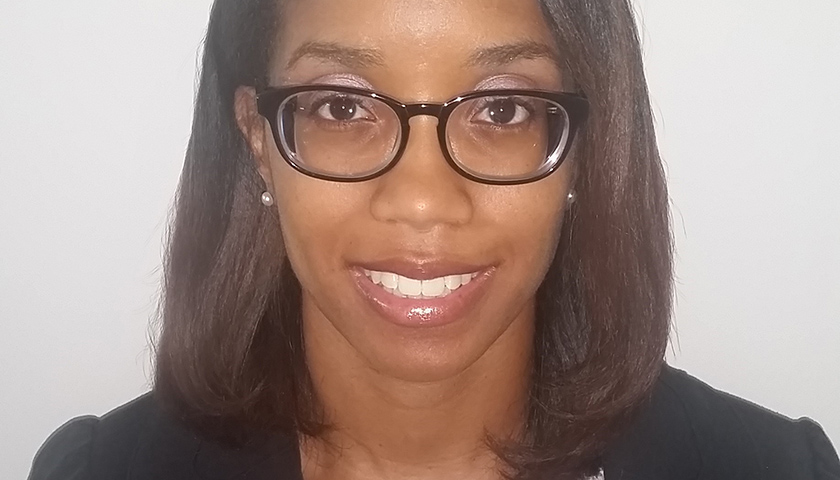
By Shawnta S. Barnes (NNPA/ESSA Guest Columnist)
Back in May, I traveled to Chicago and saw “Hamilton: An American Musical” about founding father Alexander Hamilton. During Act II, Hamilton’s adversary Aaron Burr was upset, because he was excluded from “the room where it happens.” He wanted to be involved in the important decisions, the policy decisions. Knowing my 18-month Teach Plus Policy Fellowship was coming to an end on June 23 and after reflecting upon my fellow education blogger David McGuire’s piece “The Silent Black Voice in Education,” I wanted to make sure I took advantage of any opportunity to be in the room where it happens, so I put my name on a list to be part of one of Indiana’s Every Student Succeeds Act (ESSA) working groups. I was excited to later learn I was selected as a member of one of the technical working groups.
ESSA is the reauthorization of the 1965 Elementary and Secondary Education Act (ESEA) and replaces No Child Left Behind (NCLB). Each state is tasked with submitting a plan to the U.S. Department of Education detailing how ESSA requirements will be implemented in its schools. Before Indiana’s plan was drafted, the Indiana Department of Education (IDOE) took measures to ensure voices from around the state were heard. Community meetings were held across the state in each of Indiana’s congressional districts. The IDOE created five technical working groups: accountability, assessment, educator effectiveness, school improvement, and student supports. I was part of the student supports group. In May and June, the groups made recommendations for the plan and in July the groups will have the opportunity to read through the section they worked on and provide comments.
On Friday, June 30, the IDOE released its first draft of the state’s ESSA plan. In addition to the working groups, the public also has the opportunity to provide feedback. After feedback is considered, the plan will be submitted to Governor Holcomb for review. The IDOE plans to submit the final version to the U.S. Department of Education on September 18, 2017.
Towards the end of the song, “The Room Where It Happens” Alexander Hamilton tells Burr:
When you got skin in the game, you stay in the game
But you don’t get a win unless you play in the game
Oh, you get love for it, you get hate for it
You get nothing if you
Wait for it, wait for it, wait
I definitely have skin in the game; I’m a parent and an educator. If you are part of our community, you have skin in the game, because the plan implemented under ESSA will shape our community’s children, our future leaders. A few have asked, “Why do you even want to get involved? It won’t matter.” One key point I learned during my policy fellowship is when policy is shaped and decisions are made, it takes collaboration and compromise and you won’t get everything you want. If you don’t participate or “play in the game,” you won’t be able to move the needle. You won’t be able to make any change.
Learn more about the Every Student Succeeds Act at nnpa.org/essa.
Don’t just wait around and see what happens. If you would like to get involved, go to https://www.doe.in.gov/essa to read Indiana’s ESSA plan draft.
Shawnta S. Barnes is a literacy coach for Indianapolis Public Schools, an adjunct instructor at Indiana University Purdue University Indianapolis School of Education, and a 2016-2017 Teach Plus Teaching Policy Fellow. Previously, Barnes taught English grades 6-9 and has been an elementary English language learner teacher.









Art
OP-ED: Is Creativity a Superpower in Early Education?
BLACKPRESSUSA NEWSWIRE — “This is not anything new, knowing that play is so critical to children, whether it’s dramatic play, building play, creative arts play or physical play,” said Hoisington, a STEM expert who taught preschool for decades. “But as soon as they hit kindergarten and first grade, there’s this dichotomy that sets in. Play is something you get to do after you do the learning when, in fact, we know that play is an incredible vehicle for learning.”
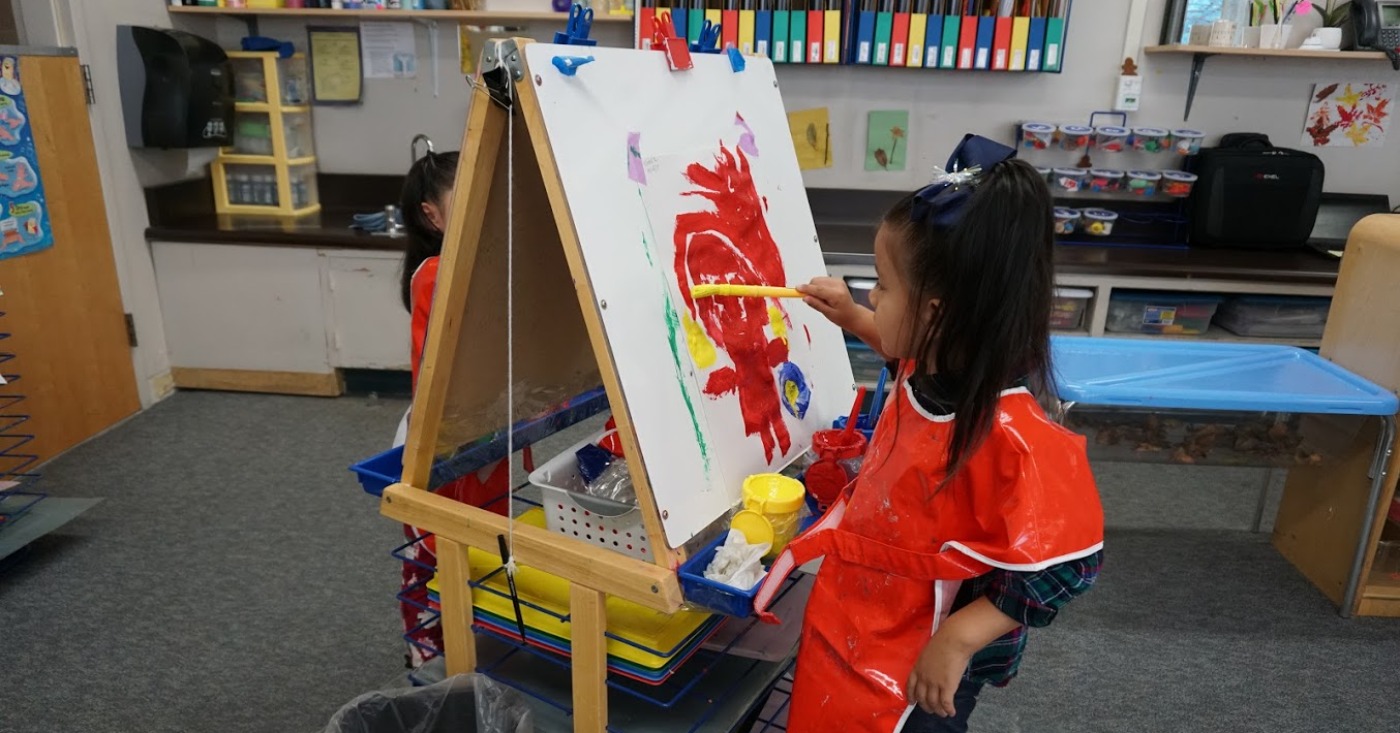
Singing the ABC song. Learning the days of the week from a nursery rhyme. Making a finger-painted collage of little handprints.
Arts education has always been center stage in early education because little children are naturally creative, filled with wonder and the burning desire to express themselves. Arts and crafts not only help nurture a child’s natural imagination, they also boost small motor skills, sharpen hand-eye coordination and feed the insatiable need to play.
“Children don’t just play, they learn fundamental skills through play,” said Daniel Mendoza, a California visual artist and specialist in early childhood education art practices. “Children are in a creative mindset all the time.”
While this may well be as true for teenagers as it is for toddlers, there is far more time and space allotted for playfulness in the early grades, when the crucial role of play in particular and creativity in general has long been a matter of common sense.
“Really, I’m just a common-sense professor, and somehow it became rogue,” said Kathryn Hirsh-Pasek, a professor of psychology at Temple University and an expert in the key role of play in learning. “What if we taught children the way we know the brain learns?”
Bringing joy back into the classroom is also what motivates Cindy Hoisington, an early childhood expert who specializes in reaching out to children from historically marginalized communities at the Education Development Center (EDC), a national education nonprofit.
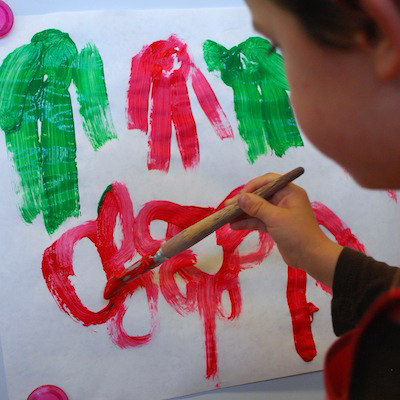
“This is not anything new, knowing that play is so critical to children, whether it’s dramatic play, building play, creative arts play or physical play,” said Hoisington, a STEM expert who taught preschool for decades. “But as soon as they hit kindergarten and first grade, there’s this dichotomy that sets in. Play is something you get to do after you do the learning when, in fact, we know that play is an incredible vehicle for learning.”
Play, some experts suggest, may be the superpower of the young. A growing body of research suggests that play may even be a way to help close achievement gaps. One report, analyzing 26 studies from 18 countries, found that in communities from Rwanda to Ethiopia, children got higher learning boosts in literacy, motor skills and social-emotional development when attending child care centers that use a mix of instruction and free play as opposed to those focused solely on academics.
“Children are so naturally, intuitively ready with their curiosity, their motivation to explore the world and everything in it, to the point where that’s why the twos are so terrible, because you’re constantly chasing after them,” said Hoisington, who helps evaluate digital media for PBS. “Science, for instance, tends to have a bad rap as this dry body of knowledge that we have to learn, but really it’s a process of exploration that is very much integral with play.”
Tapping into that spirit of discovery with hands-on experiences is often best, experts say. Curiosity burns brightest in the early years, so letting kids loose to investigate the world is part of building a rich, play-based learning environment.
“Where young children are free to investigate by observing, touching and acting on the objects in their world,” said Deborah Stipek, an expert in early childhood at Stanford University. “This is how they learn about the world — for example, that some objects float and some sink. Through their own experimentation and observation, they may even arrive at hypotheses about the qualities that differentiate the two.”
From “The Wheels on the Bus” to “Baby Shark,” kiddos love to sing and love to learn, so why not teach through music? Singing the “Old MacDonald had a Farm” song can be educational, experts say, as well as a ritual for community building. Children can take turns deciding on which animal to pick, which builds vocabulary as well as sharing skills.
“Young children learn best by doing,” said Stipek. “Counting objects is better than counting dots on a worksheet because they can move the objects to help them keep track of how many they have counted. Worksheets are not all bad. They can provide opportunities to practice and consolidate skills. But children don’t develop new skills doing worksheets, and they are typically not nearly as engaging and fun.”
Tracing the alphabet in shaving cream or making tin-foil sculptures may seem like basic exercises, but they often teach sophisticated concepts. Playing make-believe games can teach numerous skills at once. Pretend restaurants need someone to write a menu, calculate a bill and greet diners, fostering literacy, numeracy and special-emotional learning all in one game, Hoisington notes.
Songs are a clever way to remember stuff because they make memorization easy and fun for little ones. Melodies and rhymes make the most of our limited working memory to help children embed basic facts into their long-term memory, bolstering depth of cognition.
“I still sing the ABC song in my head sometimes, if I want to know which letter comes before which letter,” admits Hoisington.
What’s often missed in the discussion of the role of play is that older children also need time for creativity and free play, as well as the arts. While there is much talk about the need to engage students, there is little focus on low-hanging fruit like increasing time for arts, sports and recess. Putting too much emphasis on academic skills in isolation undercuts the love of learning, some warn.
“Kids try to buck it, but certainly by first grade we’ve started to ruin them,” said Hirsh-Pasek. “We pound the curiosity right out of kids.”
Mendoza firmly believes teachers should be guides to adventure instead of taskmasters.
“You don’t have to be a dictator,” as he puts it, “you can be a Sherpa.”
So, why doesn’t the role of play get more respect in education? Why do we emphasize test scores over deep learning?
“We got to this place because people are scared,” said Hirsh-Pasek. “They’re feeling like they’re losing control, and they want to make sure their kid is ahead. We push it younger and younger and younger, and as we do that, we’re creating a situation where our kids are anxious wrecks and the parents are anxious wrecks.”
Some experts suggest that children need more time for play and creativity in the wake of the pandemic, not less. Credit: Lillian Mongeau / EdSource
Too few teachers and parents are aware that play helps build the architecture of the growing brain, experts say.
“Play is not frivolous; it enhances brain structure and function and promotes executive function (i.e., the process of learning, rather than the content), which allow us to pursue goals and ignore distractions,” as an American Academy of Pediatrics report put it. “When play and safe, stable, nurturing relationships are missing in a child’s life, toxic stress can disrupt the development of executive function and the learning of prosocial behavior; in the presence of childhood adversity, play becomes even more important.”
Some experts fear that the laser focus on falling test scores in recent years has led to a decrease in playful learning. They suggest that children need more time for play in the wake of the pandemic, not less. Amid the crisis of chronic absenteeism, engaging students on a compelling level may be more vital than ever.
Creativity is the secret formula, experts say, in a world where machines will always compute faster than humans. Drill and kill won’t help children master high-level intellectual inquiry and conceptual analysis.
“You have to ask yourself, what’s it going to take to outsmart the robots?” as Hirsh-Pasek put it. “We need kids who don’t just memorize and take tests well, which AI will do better than our kids ever will. We need kids to be explorers and problem solvers.”
Black History
COMMENTARY: BIG MAMA SAID: Don’t Throw Away the Gift Just Because It Came Wrapped Wrong
TEXAS METRO NEWS — Journalist and mentor Terry Allen reflects on the profound wisdom of his grandmother, Lucille “Big Mama” Allen, who believed that a person’s mistakes do not represent their total identity. Allen argues that many behavioral issues seen in young men are actually symptoms of undeveloped gifts that have been applied to the wrong environments.

Big Mama had a way of seeing something in you before you could see it in yourself.
My grandmother, Lucille “Big Mama” Allen, came from a generation that believed in correction. I grew up in a household where somebody might tell you, “Go get me a switch.” You knew what that meant.
But age has taught me something: correction without direction can stop behavior, but it doesn’t always develop the person.
Sometimes what we call a young man’s problem is really an undeveloped gift.
ADVERTISEMENT
I learned that through mentoring.
I once worked with a young man who was gambling and running numbers. Now, I wasn’t going to celebrate the behavior. Wrong is wrong. But I also refused to believe his mistakes represented the totality of who he was.
I looked underneath the behavior.
This young brother understood numbers. He understood money, calculation and risk. His gift wasn’t gambling. His gift was his mind. So I introduced him to another image: Mansa Musa, the legendary African ruler whose name became synonymous with extraordinary wealth, commerce and economic power. to The message was simple: You already have something inside you. Now what are you going to do with it? That young man redirected his abilities. What had been operating in the wrong environment found purpose through education, accounting and legitimate business. Today, he has built a leading Bookkeeping firm in California’s East Bay.
That is what mentoring can do. It is also why I created programs like City MenTor and why, for 25 years, City Men Cook has celebrated fathers, mentors and men who show up. Mentoring isn’t creating somebody in our image. It is helping somebody recognize what God already placed inside them. I thnaks GOd for allys ike Pastor Keith Lofton who helpe me keep the programs grunded in Faith.
ADVERTISEMENT
Scripture tells us to “fan into flame the gift of God.” — 2 Timothy 1:6.
Somebody reading this has a gift that survived mistakes, disappointment, rejection, bad decisions and maybe even your own attempts to bury it.
But it survived.Now comes the question Big Mama might ask
Baby, if God restored your gift, who are you using it to restore?
Don’t just celebrate your comeback. Reach back. Find somebody whose gift came wrapped wrong—and help them unwrap it.
ADVERTISEMENT
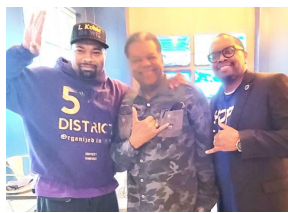
Big Mama said: Don’t throw away the gift. Redirect it. Develop it. Then give it away.
Terry Allen is an NABJ award-winning Journalist, DEI expert, PR professional, and – Vice President at FocusPR, founder of the charity City Men Cook, and Dallas Chapter President of NBPRS.org
Based on reporting by Texas Metro News.
Black Press
Ancestral Responsibility: Young Native Voters Fight Political Invisibility
NORTH DALLAS GAZETTE — Native American communities are mobilizing ahead of the November election to challenge long-standing systemic barriers and political invisibility. Recent data from the First Nations Development Institute refutes media narratives regarding Native voting patterns, showing that a majority of self-identified Native voters supported Kamala Harris in the 2024 election.
A mobilization is unfolding across tribal nations ahead of the November election. Driven by real data and a rising wave of young organizers, Native American voters are challenging systemic barriers to political power.
For generations, Native Americans have been treated as an invisible constituency in public life. Michael Roberts, president and CEO of the First Nations Development Institute, said that misrepresentations about native voters have clouded media narratives over recent years. Following the 2024 presidential election, relying on flawed national exit poll data, media placed some blame on Native Americans for the political shift.
“So while the media was trying to find a brown boogeyman on why Mr. Trump was in office … we had real data to show just the opposite,” noted Roberts.
A First Nations sample of 500 to 1,000 self-identified native voters revealed that 57 percent voted for Kamala Harris.
Roberts said the data showed attitudes reflective of the general public. Native voters are deeply concerned with inflation, the economy, affordability, and housing access. Yet they are also uniquely driven by tribal sovereignty, native languages, and cultural traditions. These cultural issues often drive them to the polls more than everyday pocketbook concerns.
Politically, Native Americans are not a monolith. With 475 tribes spread across 38 states and territories, traditional party lines are difficult to find. Roberts noted that analysts cannot view native voters through a simple black-and-white, Republican-or-Democrat lens.
Despite their potential to swing critical regions like Michigan and Alaska, native communities are largely ignored by major campaigns. First Nations data indicates that 50 percent or more of native voters have never been contacted by election campaigns. And nonprofit groups representing these communities remain severely underfunded.
Systemic barriers compound the neglect. Melissa Rogers, a professor of politics and policy at Claremont Graduate University, said upwards of 50 percent of native populations live within 20 miles of tribal homelands, debunking the myth of a sharp urban-rural Indian divide. Yet sadly, voting costs and distance barriers remain high on tribal lands.
Many reservations are so rural that residents must travel to distant county seats to collect mail or to register and vote. In Nevada, Duck Valley Reservation residents historically faced a 100-mile one-way drive to the Elko County seat just to cast a ballot or register in person.
Rogers noted that academic research shows tribal voting surges when registration and polling places are established directly on tribal lands.
Alternative options like mail-in voting face severe trust issues due to recent political attacks. Additionally, strict voter identification laws disproportionately disenfranchise native voters who often lack traditional physical addresses or state driver’s licenses.
In North Dakota, where the native vote is vital to a current Senate race, the state abruptly disallowed non-traditional addresses and post office boxes. Rogers warned that restrictive ballot deadlines, such as Arizona’s requirement that ballots arrive by election night, threaten to disenfranchise voters on the Navajo Nation due to slow rural mail delivery.
A historical skepticism remains, tied to past trauma. Rogers said federal government workers knocking on doors historically meant taking children, land, and resources from native households. The distrust extends to the census, which has long undercounted reservation populations.
A new crisis unfolds as federal proposals threaten to eliminate the American Indian and Alaska Native racial designations from official counts. Policy and funding decisions rely on these figures. Rogers warned that excluding native counts would devastate federal tribes.
In response, Native Organizers Alliance Executive Director Judith LeBlanc, a citizen of the Caddo Tribe of Oklahoma, said a national survey of 16,000 native people showed a fierce commitment to cultural continuity and essential human services.
When Congress pushed to try to make Big Cyprus into a wilderness area, which would have destroyed 11 traditional villages, burial grounds and medicine collection areas, her organization stood up for the rights of natives.
They also stood up for the rights of nature, and with the help of environmental groups, were able to document and mitigate the damage done by Alligator Alcatraz.
The organization’s surveys are fueling a new urgency among young voters. In Maine, Sage Phillips, co-coordinator of the Wabanaki Policy Youth Initiative, is leading youth to register voters, educate elders, and lobby the state house.
Wabanaki youth are pressuring candidates in gubernatorial, congressional, and local races to amend the 1980 Maine Indian Land Claims Settlement Act, which currently blocks local tribes from accessing beneficial federal laws.
Activists say the movement is about fulfilling an ancestral responsibility to protect sovereignty, lands, and future generations. But, the final hurdle rests on the integrity of the polling places themselves.
Over the last decade, targeted attacks on the voting system have made access significantly harder, Rogers said.
For information regarding local polling place availability, hours of operation, and rules ensuring a secure voting environment, citizens should check with official county election authorities and state election boards.
Ensuring that future elections remain open, equitable, and free of intimidation is critical for all citizens—especially American Indian voters.
The post Ancestral Responsibility: Young Native Voters Fight Political Invisibility appeared first on North Dallas Gazette.
Based on reporting by North Dallas Gazette.
Art
Kickstarter CEO Everette Taylor Shares Tips on Creating and Growing a Business
HOWARD UNIVERSITY NEWS SERVICE — Everette Taylor, the CEO of the global crowdfunding platform Kickstarter, recently visited Howard University to serve as the inaugural guest for the Cathy Hughes School of Communications’ new speaker series. Addressing students at the Founders Library, Taylor emphasized that the future of business belongs to those who are bold enough to take risks.
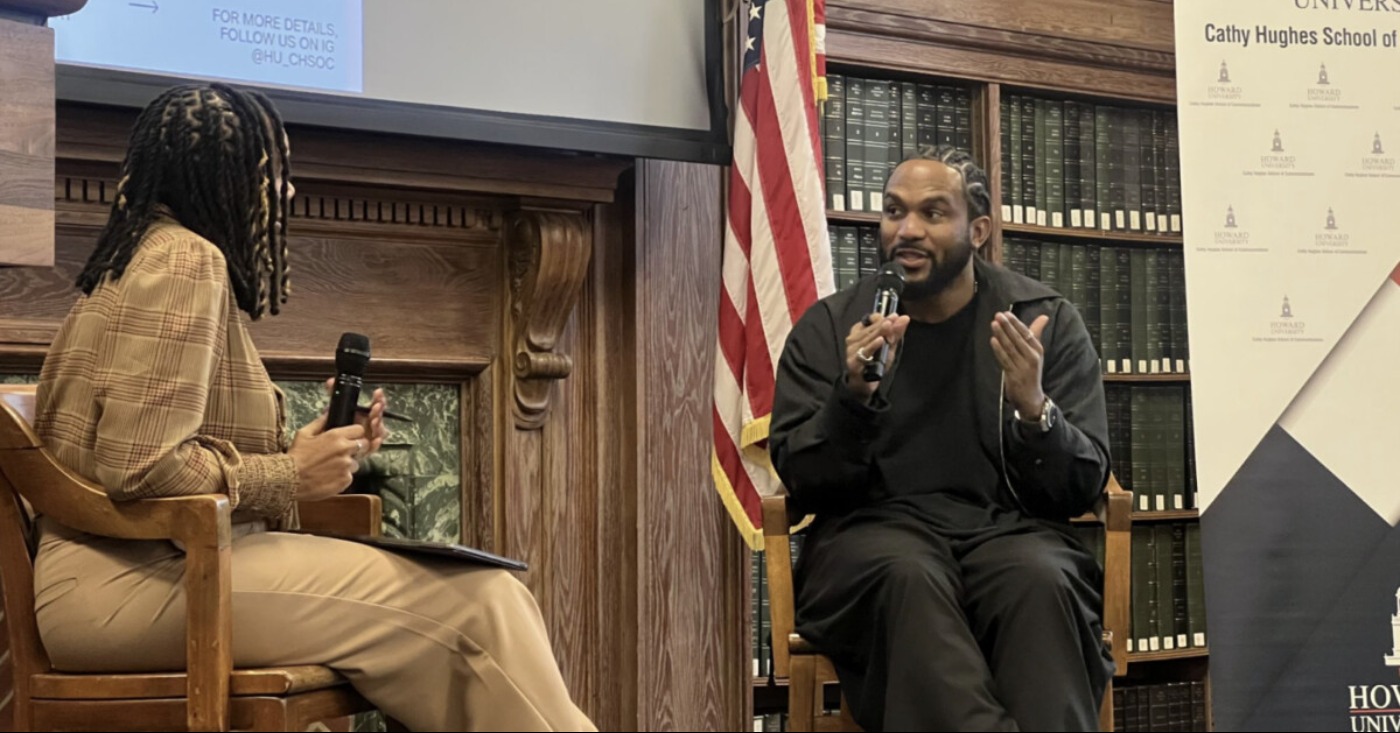
WASHINGTON (HUNS) — “The future belongs to creators who are bold,” Everette Taylor, CEO of crowdfunding platform Kickstarter, told students at Howard University during a recent visit.
As Taylor discussed his journey, he tested the boldness of students by inviting them to share their ideas during an impromptu pitch session at the Cathy Hughes School of Communications’ new speaker series in the Browsing Room of Founders Library. The inaugural speaker then shocked one group of students by pledging to invest in their thesis film, paying forward the opportunities that have lifted him as he struggled to pursue his dreams.
Taylor grew up in a low-income neighborhood in Richmond, Virginia, where he frequently encountered gang violence and drug dealing amid periods of homelessness.
Not feeling as if he conformed to conventional ideas of success, he eventually found inspiration in Jay-Z who balanced being an artist and an entrepreneur. Similarly, Taylor carved his own route, launching and growing various businesses.
He gained enough recognition to land on the 2018 Forbes’ 30 Under 30 list in marketing and advertising. In 2022, Forbes also named him as one of the top 50 most entrepreneurial CMOs when he was chief marketing officer of Artsy, an online art gallery and marketplace. That same year he took over Kickstarter, and the company reported a year-over-year revenue increase of 50% in the first quarter of 2026.
Taylor encouraged the audience through his story, but he also gave practical advice to help students who share his zeal to create and grow their business.
He explained that his mentor, Artsy CEO Mike Steib, helped him make the transition from being a CMO to becoming CEO at Kickstarter.
“These opportunities I don’t take for granted,” Taylor said, adding that Steib was “the first leader I had to take me under his wing.”
When he began his position at Kickstarter, Taylor said, “I had zero imposter syndrome, because I felt like I was ready for it, and it was because this person invested in me over the past few years.”
“A lot of my journey was me just hustling and being bold enough to ask for what I want, but I also need people to give me an opportunity.”
This idea of giving people opportunity impacts his business philosophy, as Taylor estimates that the number of African American employees grew exponentially since he’s been in leadership.
“Kickstarter was I think less than 2% Black, and at our peak I had gotten it to 20-something percent Black,” Taylor said.
Even then, Taylor also saw a need for representing other perspectives. “We still serve people globally, so we need people from different countries and cultures,” he said. “If you’re building a global company, it’s important to build a diverse base of people.”
“I always want to impact more lives, and that always leads to more results.”
Everette Taylor, CEO of Kickstarter
With the success Taylor had after becoming CEO of Kickstarter, he also found a need to prioritize his health.
“This is the first year that I’ve started the year with zero business goals,” he said. “For the first time, my goals have been centered around my health.”
He cites the illness of a friend who appeared to be healthy. Seeing his friend, who is also a successful entrepreneur, endure illness pushed him to prioritize his health.
“Business, I can do that in my sleep, but for me right now I’m so much more focused on setting goals for myself, and I know that’s going to impact the work that I do by feeling healthier and being a better version of myself.”
Samantha Housen, a sophomore public relations major and interior design minor from Harlem, attended the event to gain knowledge to grow her non-profit and for-profit businesses.
“I’m here because I want to explore more of the details of entrepreneurship from an actual professional,” Housen said, and to “see how his mindset could help me in my entrepreneurship.”
“My biggest takeaway is that I’m bold, and it’s OK to be bold,” she said. “I very much have the authority to do whatever I seek to do.”
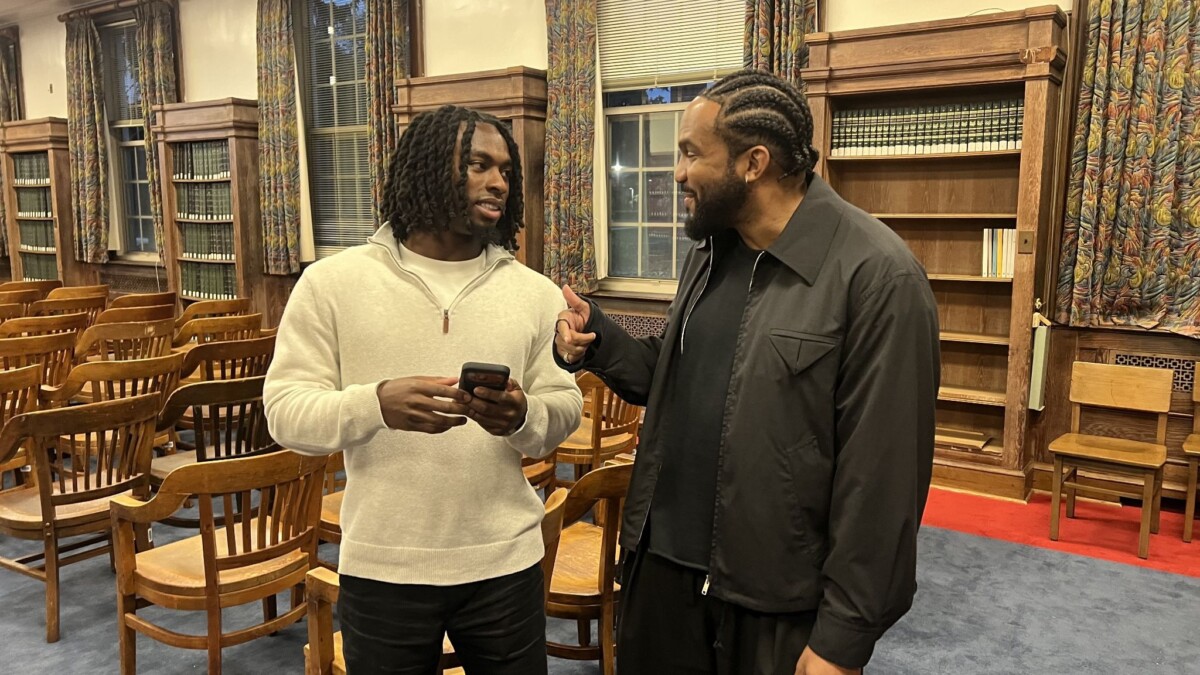
Kimberly Moffitt, Ph.D., dean of the Cathy Hughes School of Communications and host of the event, said she was excited about the speaker series.
“It’s because of students,” Moffitt said. “They felt like they weren’t hearing enough from people who are already post-graduation and successful. They wanted to hear those voices. So, this is an opportunity for me to bring folks to campus so they could reach out, talk and interact with folks that they aspire to be like or will be inspired by.”
Moffitt was excited for students to see someone who looked like them and carried themselves authentically in a position of high acclaim.
“He is showing you a different path, and letting you know that it’s OK to be who you are and show up in that space and not have to apologize,” Moffitt said of Taylor.
Moffitt also wants to encourage students to make the most of the speaker series. She gives details on upcoming speakers and the importance of hearing these people tell their stories.
“Those of you who want to be in TV and film, those jobs are different now,” she said. “You have to hustle in a different way.”
“I need our students to think about entrepreneurship in all that they do,” Moffitt added. “I want students to leave with that so that they have it in their back pocket should they need to draw on it.”
After the event. Taylor explained why boldness is essential to his success at Kickstarter.
“It’s for the grind and the ambition — not settling for status quo and mediocrity, and really going for it,” he said. “I always want to impact more lives, and that always leads to more results.”
Solomon Goins is a reporter for HUNewsService.com.
Based on reporting by Howard University News Service.
Black History
Federal Agents Search Ilhan Omar’s Home Just 22 Days Before Election
WASHINGTON INFORMER — Federal agents searched the D.C.-area home of Rep. Ilhan Omar (D-Minn.) on Monday, 22 days before Election Day. This extraordinary step involved executing a criminal search warrant against a sitting member of Congress.

Federal agents searched the D.C.-area home of Rep. Ilhan Omar (D-Minn.) on Monday, taking the extraordinary step of executing a criminal search warrant against a sitting member of Congress just 22 days before Election Day, as the Trump administration investigates allegations involving her family’s immigration records.
The search immediately drew accusations of political intimidation from Omar’s supporters, who pointed to President Donald Trump’s repeated attacks on the Minnesota congresswoman and questioned the timing of an investigation targeting one of his most outspoken critics.
“Representative Omar is a dedicated public servant and a true ally for working families, and Donald Trump has done nothing but use racist tropes and stereotypes to attack her,” said Joel Payne, MoveOn’s chief communications officer. “Now, he’s abusing his power to physically intimidate and harass her.”
A Justice Department spokeswoman acknowledged that Homeland Security Investigations agents, part of Immigration and Customs Enforcement, searched a District residence as part of an ongoing federal criminal investigation.
The spokeswoman declined to provide additional information or publicly identify the person under investigation.
According to published reports, the warrant identified possible violations involving false statements, immigration document fraud and conspiracy. Federal investigators have also examined questions concerning Omar’s finances, campaign funds and interactions with foreign citizens.
No criminal charges against the congresswoman were identified, but Monday’s search occurred less than four weeks before voters decided whether to return Omar to Congress.
The investigation follows months of public accusations from senior Trump administration officials, including Vice President JD Vance, who previously claimed that Omar committed immigration fraud.
In an interview with conservative commentator Benny Johnson, Vance asserted, without publicly presenting evidence, that the administration believed Omar had broken immigration laws. He also said he and White House deputy chief of staff Stephen Miller had discussed how to pursue the allegations.
“What are the legal remedies now that we know that she’s committed immigration fraud?” Vance asked during the interview. “How do you go after her? How do you investigate her?”
Omar has repeatedly rejected the accusations, including claims that she married her brother to facilitate immigration fraud. Her office dismissed Vance’s allegations in March as fabricated and defamatory.
Questions about the investigation intensified in August when Immigration and Customs Enforcement refused to release records sought under the Freedom of Information Act concerning allegations surrounding Omar’s 2009 marriage to Ahmed Nur Said Elmi.
The agency cited an exemption allowing law enforcement authorities to withhold records when disclosure could interfere with enforcement proceedings. The refusal did not establish that Omar committed fraud or, at the time, confirmed that she was personally under investigation.
Omar, who came to the United States as a refugee from Somalia, was elected to Congress in 2018 and became one of the first two Muslim women to serve in the House. She represents Minnesota’s 5th Congressional District, which includes Minneapolis, and has frequently challenged Trump over immigration enforcement, civil rights, and his administration’s treatment of immigrant communities.
Her confrontations with the administration have made her a recurring target of the president’s political attacks. The criminal investigation also follows a frightening incident earlier this year in which Omar was physically attacked during a public appearance.
On Jan. 27, a man attacked Omar during a town hall meeting at the National Urban League’s Twin Cities headquarters in Minneapolis. The incident prompted condemnation from the National Coalition on Black Civic Participation and its Black Women’s Roundtable, which demanded accountability and warned against political violence.
“We are shocked and extremely disturbed by the attack on Rep. Ilhan Omar yesterday while she attempted to address the critical issues and chaos swirling around in Minneapolis,” Melanie L. Campbell, president and CEO of the coalition and national convener of the Black Women’s Roundtable, said in a Jan. 28 statement.
Campbell praised Omar for continuing to speak out despite threats against her.
“We believe that NO public official should be threatened or physically attacked, especially when they are serving in the best interests of their constituents,” Campbell said. “Political violence and intimidation have no place in our democracy.”
MoveOn, the progressive advocacy organization, accused Trump of using federal law enforcement to intimidate a political opponent and urged voters to respond at the ballot box.
“On Nov. 3rd, we get our chance to fight back and hold him and his corrupt administration accountable,” Payne said.
Based on reporting by Washington Informer.
Black Press
OP-ED: She’s Not Non-Compliant, She’s Hungry: Addressing Food Justice to Improve Breast Cancer Outcomes
CHICAGO DEFENDER — Food insecurity in Chicago’s South Side and surrounding suburbs disproportionately affects Black women with breast cancer, impacting their treatment and recovery.
Here’s a transformational idea: everyone should have access to safe, healthy and affordable food.
If this idea doesn’t feel radical to you, then perhaps you haven’t spent much time in the Southside of Chicago and its adjoining suburbs.
Food insecurity is rampant in our neighborhoods. If you live in Washington Heights, you are practically guaranteed to experience lower food access than the average Chicagoan – with similar circumstances in the South Shore, West Englewood or West Pullman.
It has been clearly documented that “Food is Medicine.” In fact, according to countless scientific studies, good nutrition is critical during cancer treatment. It empowers your body to maintain muscle, rebuild damaged tissues and better withstand aggressive radiation or chemotherapy. A patient with access to nutritious food will experience fewer side effects, like fatigue and nausea, and will have less need for extra medicines. In short, good food improves a patient’s daily life.
Instead, though, a Black woman with breast cancer in our South Side neighborhoods or suburbs has the opposite experience. In fact, if “food is medicine,” then we are inarguably in a crisis, and it is disproportionately affecting Black women with breast cancer.
As co-authors of the Pinkprint and members of the Chicago Better Together Breast Cancer Disparities Think Tank, an initiative launched to address the disproportionate impact of breast cancer mortality on Black women in Chicago’s South Side and South Suburbs, we know that by combining data-informed strategies with community-driven advocacy and leadership, we will create equitable, sustainable outcomes for those most affected by breast cancer and the lack of access to nutritious foods in their communities.
Solutions start as local initiatives. We must pilot community-driven solutions in areas with the highest breast cancer mortality rates and limited access to nutritious food.
Existing local programs – food pantries, community fridges and even hospital-run delivery systems – are a critical piece of this local infrastructure. They are just a component, though, of the robust nutrition infrastructure the South Side lacks. In the long-term, our neighborhoods need clean, well-stocked grocery stores – and we must demand that our elected officials do everything they can to attract and retain these food corporations to invest in our communities.
This is just one item on their to-do list. Long-term solutions will include policy changes and targeted incentives at the city, state and federal levels. Just this spring, over 150,000 people in Illinois lost SNAP benefits, a devastating cut with ripple effects across families into entire neighborhoods. These cuts disproportionately affect people in the South Side of Chicago – not to mention, overwhelm food banks and other centers that serve as part of our social safety net. The Families Receiving Emergency Support for Hunger (FRESH) program in Illinois provides a one-time, automatic $400 cash payment per eligible household member to residents who lost their SNAP food benefits. This will help ease the immediate negative effects of these cuts and is much appreciated. But it is not a long-term solution.
When we started conversations in work groups about this project, we started with the idea that Black women deserve equitable access to quality breast cancer care. Any conversation about breast cancer care and goals for improved outcomes, must include a conversation about nutrition justice.
Nutrition justice is not just a transformational ideal: it is an idea that will literally transform our neighborhoods and the quality of life of every single person living in them. It will put grocery stores in empty storefronts; it will deliver food to a breast cancer patient going through chemotherapy.
Nutrition justice will help improve breast cancer outcomes for Black women on Chicago’s South Side. And Black women should not have to wait.
This op-ed is the second in a series focusing on eliminating breast cancer mortality in Black women on Chicago’s Southside. The authors are part of the Chicago Better Together Breast Cancer Disparities Think Tank, an initiative launched to address the disproportionate impact of breast cancer mortality on Black women in Chicago’s Southside and South Suburbs. Together with other community leaders, they have co-authored the Pinkprint, a strategic multistep plan and call-to-action on this critical issue.
The post She’s Not Non-compliant, She’s Hungry: Addressing Food Justice to Improve Breast Cancer Outcomes appeared first on Chicago Defender.
Based on reporting by Chicago Defender.


Tamra Nicole redefines dress for successDefender Network

What’s On Your News Feed? How to Spot Election Misinformation

Yolanda Green Barnes – You’re Not Starting Over

Serve First: B3’s Founding Principle for Success #shorts

Rakim at City Winery STL

Minneapolis Community Demands Better: A Call to Action #shorts

Terresa Hardaway-Blackbird Revolt, Black Garnet Books-Putting Black Liberation Into Daily Practice

Terresa Hardaway on Blackbird Revolt, Black Garnet Books and Design Justice | On The Radar | MSR

Can You See Clearly in Bright Sunlight? Check These 2 Reflections #shorts

Master Your State: 5 Keys to Well-being #shorts

OP-ED: Haiti TPS: Have We Lost Sense of Humanity?

Remembering Chauncey Bailey as Student Journalists Face Threats to Truth-Telling

All Skinfolk Ain’t Kinfolk

Rulings Leave Questions Lingering in Nolan Wells Case

Poll: Becerra Widens His Lead Over Hilton; Californians Split on Wealth Tax

Latinas Deserve Equal Pay. Unions Help Make It Happen.

Zakiya Jendayi Arrested, Locked Out of Home by Sheriff’s Deputies

COMMENTARY: The Audacity of Joyce Beatty

Why Black Artists Struggle to Sell Tours

A $2.1 Trillion Wellness Industry Never Built a Daily Practice for Black Children. So This Atlanta Family Did.
Tamra Nicole redefines dress for successDefender Network
What’s On Your News Feed? How to Spot Election Misinformation
Yolanda Green Barnes – You’re Not Starting Over
Serve First: B3’s Founding Principle for Success #shorts
Rakim at City Winery STL
Minneapolis Community Demands Better: A Call to Action #shorts
Terresa Hardaway-Blackbird Revolt, Black Garnet Books-Putting Black Liberation Into Daily Practice
Terresa Hardaway on Blackbird Revolt, Black Garnet Books and Design Justice | On The Radar | MSR
Can You See Clearly in Bright Sunlight? Check These 2 Reflections #shorts
Master Your State: 5 Keys to Well-being #shorts
-
 Black Press1 week ago
Oakland Awarded More than $14 Million in State Funding
-

 Black Press1 week ago
Jendayi Arrest Raises Community Concerns Regarding Sheriff’s Chain of Command
-

 African American News and Issues1 week ago
Black History: Gladys West Mathematics Helped Make GPS Possible
-

 Black History5 days ago
OP-ED: The Black Church Writes AI’s Next Chapter
-

 Featured3 days ago
Tamiko Armstead | 2026 Lifetime Achiever in Education
-
 Black Press1 week ago
Democrats, Community Groups Back Measure EE to Change How Oakland Is Governed
