
Black Press
How the 2024 Olympic Games are Aiming to Be More Sustainable
CINCINNATI HERALD — The 2024 Paris Olympics are prioritizing sustainability, using renewable energy and recycled materials to reduce their carbon footprint. Major sporting events like the Olympics need to adapt to climate change and its impact on athletes and fans. The Paris Games aim to set an example for promoting sustainability and influencing global audiences to embrace eco-friendly practices.


By Brian P. McCullough, University of Michigan | The Cincinnati Herald
Europe is in the midst of a heat wave, and while Olympic athletes in Paris for the 2024 Summer Games might be spared the worst of it, the weather will still be hot.
As global temperatures have risen, major sporting events like the Olympics and FIFA World Cup have had to adapt to high heat and extreme storms to keep athletes and fans safe and allow the games to go on.
Olympic organizers have moved events such as marathons to early mornings and even to cooler cities. FIFA, the governing body for world soccer, pushed the 2022 Men’s World Cup back from its usual time in June to late November so it could be held in Qatar.
The heat risks and the environmental impact of major sporting events have led some people to question whether these events should be held at all. But as someone who studies sport management and sustainability in an area I coined “sport ecology,” I believe that radical approach misses the benefits, including the Olympics’ ability to promote sustainable actions to the public worldwide.
How rising global heat affects the Olympics
Sports have good reason for caring about sustainability: Climate change can put athletes’ and fans’ health at risk and even put the future of some sports in doubt.
Winter sports face the greatest threats from climate change as temperatures rise and precipitation changes, dramatically shortening winter sports seasons in many areas. In 2022, the Beijing Winter Games had to artificially create snow so it could have ski runs at all. The International Olympic Committee has delayed its decision to select Winter Games host cities for 2030 and beyond because of the uncertainty of winter sports.
In the summer, global warming fuels extreme heat and storms that can affect the quality of the competition and the health of the athletes and spectators.
Major sport federations and leagues, as well as the Olympics, have responded to the risks by delaying competitions to cooler times of day or year, implementing water breaks and offering more player substitutions.
Organizers of the Tokyo Summer Games, held amid a fierce heat wave in 2021, had preemptively moved the marathon to Sapporo, more than 500 miles north of Tokyo, so athletes could run in cooler weather. They also delayed competitions during the Games to avoid extreme heat and excessive rain.
Olympic progress toward sustainability
Any large event like the Olympics can produce vast carbon emissions through its construction, transportation needs and energy use.
That impact, and the risks it creates for sports and their athletes, are why sustainability has been a pillar of the Olympic charter since 1996 and is a focus of its planning for the future. In 2012, the London Olympics pioneered a new international certification standard, ISO2012, which provides guidelines for any large event to make more sustainable choices, from construction to catering.
The organizers plan to power the events’ operations with 100% renewable energy from wind and solar. They are using existing venues when possible, had new ones built with low-carbon concrete and recycled materials, and brought in thousands of seats made of recycled plastic.
All furniture and temporary buildings approved for the Games also must have a contractually guaranteed second life, rather than going into a landfill. All of the competition venues are on public transportation, allowing for fewer vehicles in the streets. Even the food is targeted for a 50% emissions cut compared with the average meal by increasing the use of plant-based foods. The Paralympics will use the same venues and housing in the weeks that follow.
That doesn’t mean the 2024 Olympics won’t have a large carbon footprint, however, particularly as many spectators and athletes arrive by plane. But the organizers are aiming for the construction and operations emissions to be half those of the London and Rio Games in 2012 and 2016.
World’s fair of sustainability
The Paris Olympic Games is an example of what large sporting events can do to reduce their impact on the environment and promote sustainability solutions to a global audience. Spectators will experience sustainability firsthand, and organizers will promote the Games’ sustainability efforts.
Such campaigns can influence people’s everyday behaviors and even increase their advocacy for sustainability in their home communities.
Suggestions to reduce the scale and size of sports events or even eliminate commercialized sports, ending spectator sports as we know them, overlook the ability of sports to influence and change human behavior.
Sustainability efforts at the Paris Games.
Sustainability is a constantly evolving process of learning from the past to improve for the future.
The 2024 Olympics’ strategies, building on those used in previous events, and what Paris learns in carrying them out, will also help in planning for future events, including the 2028 Summer Games in Los Angeles.
In essence, the Olympic Games, the largest sporting event in the world, is a sports sustainability world fair. It highlights what is possible for a sporting event through collaborations with international corporations to reduce its environmental impact. And it influences others to follow suit, whether that is other sporting events, leagues and federations or spectators from around the world.
This article is republished from The Conversation, a nonprofit, independent news organization bringing you facts and trustworthy analysis to help you make sense of our complex world. It was written by: Brian P. McCullough, University of Michigan.
Brian P. McCullough received funding from the Olympic Studies Center in 2018.







Black Press
Author Kristen Amundson Explains ‘The Grandparent Effect’ and How It’s Helping Children Thrive Through Love, Support, and Connection
Author Kristen Amundson’s new book, “The Grandparent Effect,” explores the evolving role of grandparents in children’s lives. Amundson, former president and CEO of the National Association of State Boards of Education, highlights how longer lifespans and changing family dynamics make grandparents increasingly important for support, connection, and boosting children’s confidence. Her work details how involved grandparents experience health benefits and have adapted to recent challenges, including pandemic support. The book also addresses potential challenges like respecting parental boundaries. Read more to learn about the valuable insights for 21st-century grandparents.


Kristen Amundson has devoted her professional life to supporting students and parents throughout the education system. Previously, she authored “81 Questions for Parents” and “Unfinished Learning: Parents, Schools, and COVID School Closures.”
Amundson, the former president and CEO of the National Association of State Boards of Education, is now turning her attention to grandparents. Her new book is titled “The Grandparent Effect: Helping Children Thrive Through Love, Support, and Connection,” and is published by Bloomsbury.
Amundson explains that grandparents have become increasingly important in children’s lives due to longer lifespans and changing family dynamics. Originally, grandparents were important for children’s survival, particularly at a time when families were large and mothers needed extra caregiving support. Because mothers often turned to their mothers for this help, the positive impact on children was often called the “Grandmother Effect.”
Today, many more grandfathers are involved with their grandchildren. Amundson prefers to talk about the “Grandparent Effect” and notes that these caregivers also support reading and writing, boost confidence, and encourage grandchildren’s interests. She notes that those involved grandparents experience health benefits themselves (“if you have to get on the ground with an infant and take a child to the park, you are moving around and that’s good exercise!”).

The book provides an overview of how the role of grandparents has evolved over time, explaining that until the 19th century grandparents often lived close to their grandchildren and worked together on farms. She describes how the Industrial Revolution led to families splitting up, with children moving to cities for factory work while grandparents remained on farms, resulting in grandparents becoming poorer over time.
“There are many examples of how grandparents have adapted during recent challenges, including providing support during the pandemic through in-person care when possible or using technology like FaceTime and Zoom when physically distant, and taking on roles like ‘granny nannies’ to help with childcare and education needs,” she says.
Amundson tells the story of a grandmother who took the time to become certified in dyslexia training and taught her family members, including her granddaughter and grandson.
But with these added roles come some possible hiccups along the way. She emphasizes that grandparents need to remember they are no longer in charge like they were with their own children, and parents have the right to set rules that grandparents should respect. Amundson illustrates this point with examples about discipline and food choices, noting that grandparents should follow the parents’ guidelines rather than overruling them (except for maybe allowing an extra cookie).
“I know of a situation where grandparents crossing boundaries affected family dynamics when they took their grandchild to the emergency room without involving the parents, which later led to a temporary timeout for the grandparents.”
Amundson’s book also includes examples of ways grandparents advocate for the next generation, such as Texas grandmothers who speak out on state legislation.
Other grandparents participate in a self-help group supporting custodial grandparents who care for children whose parents are dealing with substance use issues or are incarcerated. The group provides practical support including educational seminars, college application assistance, and simple activities like Halloween decorations to help children feel included.
Amundson’s book is a valuable and enjoyable resource for grandparents who are navigating the excitement and joy of their senior status in the 21st century.
Black Press
A Viral Moment with Purpose: Keep Your Head Up Gives Back
JACKSONVILLE FREE PRESS — An encouraging exchange between Jacksonville Editor Lynn Jones and Jaguars Coach Liam Coen quickly went viral, gaining national and international attention. The Jacksonville Free Press transformed this moment into an opportunity, creating “Keep Your Head Up” T-shirts.

What began as a few encouraging words to Jacksonville Jaguars Head Coach Liam Coen has grown into a community message – and a way to help nurture the next generation of journalists.
Earlier this year, Jacksonville Editor Lynn Jones offered spontaneous encouragement, telling him to ‘keep your head up’ and ‘keep it going.’ The exchange quickly went viral, gaining national and international attention across television sports programs, podcasts, social media and online video platforms.
The Jacksonville Free Press turned the unexpected attention into an opportunity to give back, creating “Keep Your Head Up” T-shirts inspired by Jones’ words. Hundreds of shirts have since been sold, with proceeds benefiting the Jacksonville Free Press Journalism Fund, which supports efforts to nurture, encourage and develop future journalists.
For Hammock and Bolden, the words extend beyond football. They said the message also serves as a reminder to their families to remain positive and keep moving forward through life’s victories and setbacks.
The shirts have allowed a fleeting viral moment to produce a more lasting impact. Proceeds from sales are helping support a fund focused on creating opportunities for aspiring journalists and encouraging young people to learn the importance of storytelling, community news and documenting history.
Based on reporting by Jacksonville Free Press.
Black Press
New Shoes, Stronger Steps: Milwaukee Initiative Takes Aim at Gun Violence
MILWAUKEE TIMES WEEKLY — The “Stompin’ Out Gun Violence” initiative is using sought-after sneakers to engage young people with a message about preventing gun violence. Led by the Latroy V. Harris Initiative, “I Will Not Die to Gun Violence,” the program provides free shoes in Milwaukee while fostering conversations aimed at a safer future.
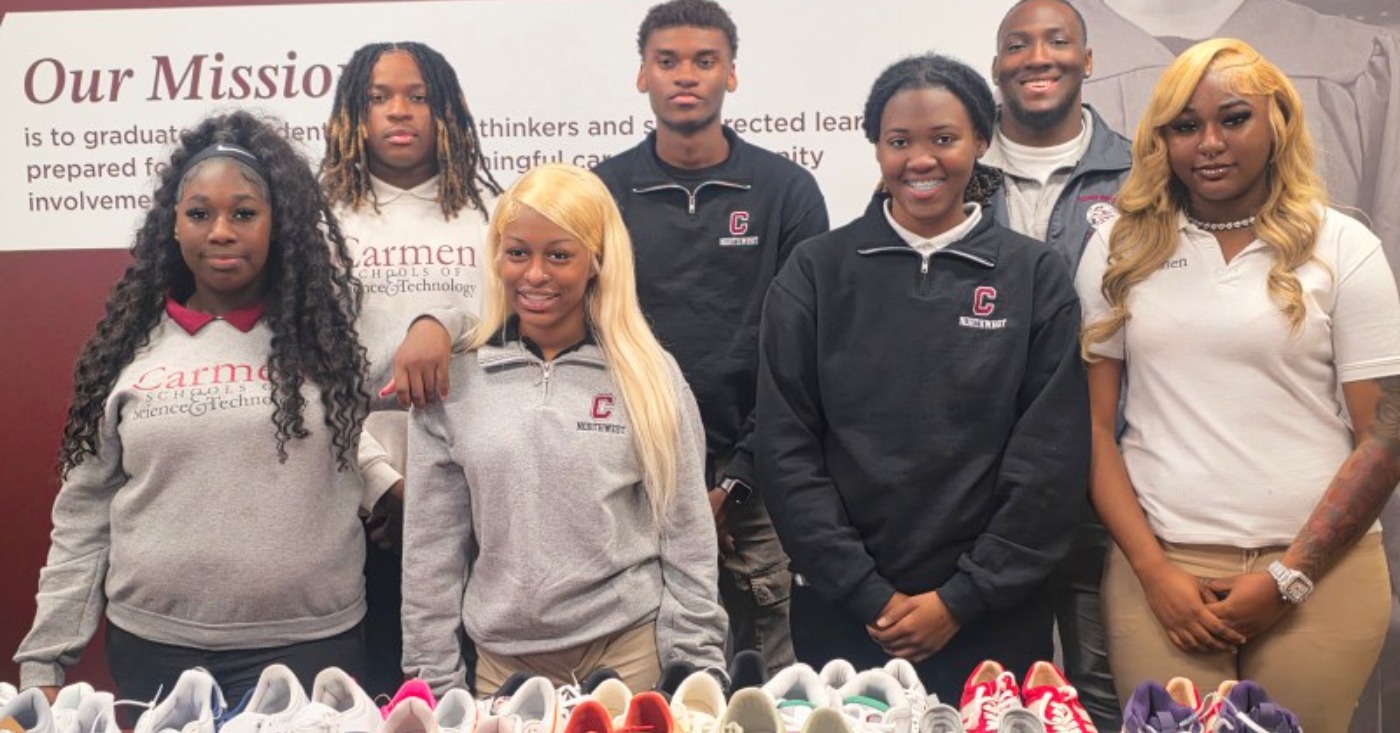
“Stompin’ Out Gun Violence” uses sought-after sneakers to open the door to a life-saving message for young people.
A new pair of shoes can do more than complete an outfit—it can help a young person step toward a safer future. That is the idea behind “Stompin’ Out Gun Violence,” a traveling shoe giveaway led by the Latroy V. Harris Initiative, “I Will Not Die to Gun Violence.”
Founder Monte Mabra says the work comes with no paycheck. Its reward is measured instead in smiles, gratitude, and the chance to turn a potentially negative outcome into a positive one. By pairing free shoes with conversations about gun violence, organizers hope to reach young people with a message that stays with them long after the event ends.
“I like what Monte is doing to change the course of violent crime,” said Michael F. Hupy of personal injury law firm Hupy and Abraham, S.C. and leading sponsor “The shoes carry them in the door, and the message follows them out.”
Students at Carmen School of Science and Technology, 3215 Dr. Martin Luther King Jr. Drive, received Nike, Adidas, and Jordans. Principal Miller said she looks forward to next year and to continuing to build a relationship with the Latroy V. Harris Initiative.
The initiative honors Latroy V. Harris, who was lost to gun violence on Dec. 15, 2025. His family and loved ones are keeping his memory alive by working to prevent other families from experiencing the same loss.
The campaign’s next stop is Bruce Elementary School on Sept. 30. Organizers plan to give away shoes, gun- and domestic-violence awareness and prevention coloring books, and educational books.
For the young people reached by the initiative, each pair of shoes carries more than a brand name. It carries a reminder: their lives matter, their futures are worth protecting, and every step away from violence counts.


Based on reporting by Milwaukee Times Weekly.
Black Press
Partnership Helps Patients Prepare for Medicaid Rules
ST. LOUIS AMERICAN — Affinia Healthcare and Employment Connection have partnered to assist patients in securing employment, training, or volunteer opportunities. This collaboration comes as new Medicaid work requirements are set to begin on January 1, 2027. These requirements will mandate certain adults to meet work, education, or community service criteria to maintain their coverage, though some exemptions may apply.

Affinia Healthcare and Employment Connection are teaming up to help patients find jobs, training or volunteer opportunities as new Medicaid work requirements approach.
Beginning Jan. 1, 2027, certain adults will have to meet work, education or community service requirements to keep their coverage. Some patients may qualify for exemptions.
Patients seeking assistance can call Affinia Healthcare at 314-814-8700 and ask about the partnership. Affinia’s outreach team can help connect them with Employment Connection.
The post Partnership helps patients prepare for Medicaid rules appeared first on St. Louis American.
Based on reporting by St. Louis American.
Black History
IN MEMORIAM: The Mighty Sparrow, King of Calypso, Dies at Age 91 in New York
NEW YORK CARIB NEWS — Slinger Francisco, widely known as the Mighty Sparrow, died on Sunday, September 27, in New York at the age of 91. The legendary calypso artist passed peacefully after a brief illness, surrounded by loved ones. Born in Grand Roy, Grenada, in 1935, he moved to Trinidad as a child, where he developed his distinctive style.
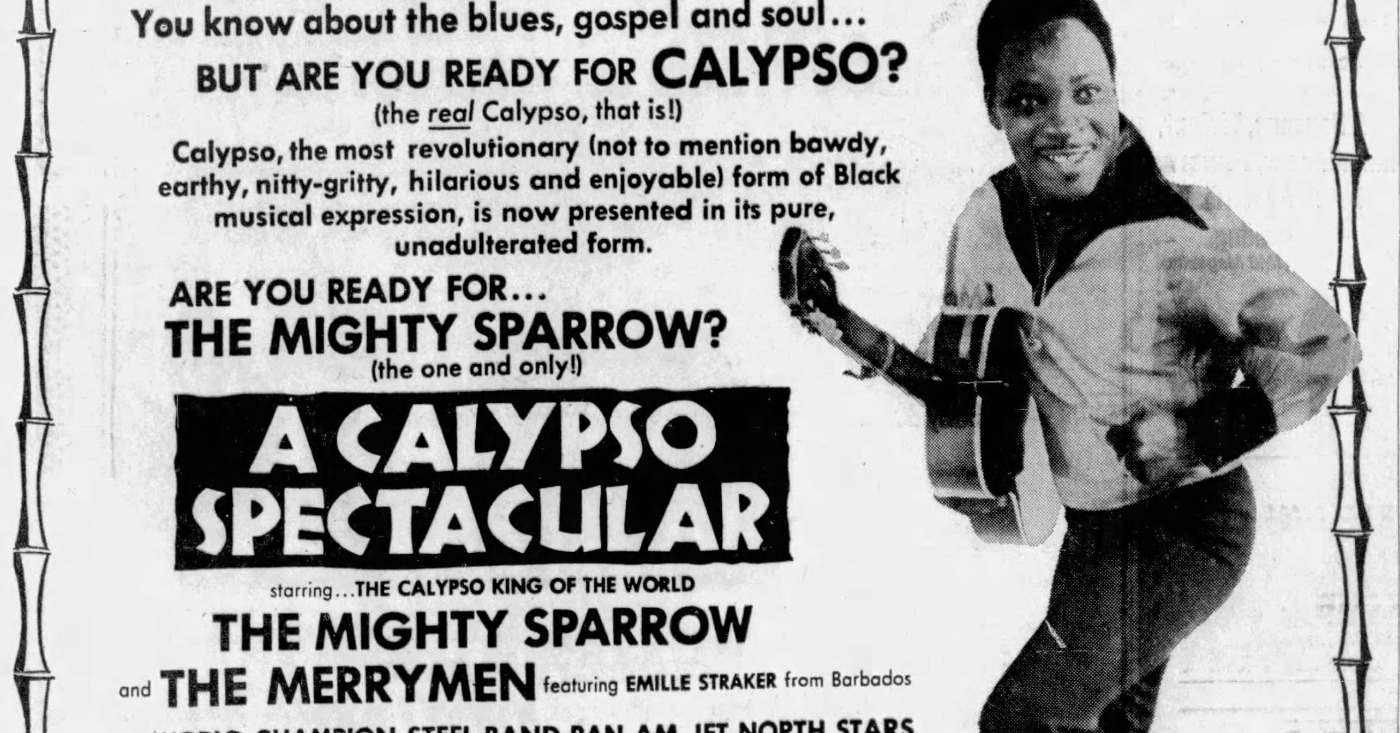

NEW YORK — For anyone raised in the Caribbean, or in a Brooklyn, Bronx, or Queens household where the radio stayed tuned to home, there was never a time without the Mighty Sparrow. His voice was simply part of the furniture of our lives: at Carnival, at weddings, at Sunday lunch, in the car on the way to JFK. On Sunday, that voice went quiet.
Slinger Francisco, known to the world as the Mighty Sparrow, died Sunday, September 27, in New York. He was 91. His family said he passed peacefully after a brief illness, with loved ones at his bedside.
He was born in Grand Roy, Grenada, in 1935, and was still a small child when his family moved to Trinidad. Port of Spain made him. Its yards, its rum shops and its calypso tents gave him his rhythm and his sharp tongue. He sang in a church choir as a boy, but the city had a louder music, and by his late teens he was performing under the name that would become a title.
The breakthrough came in 1956 with “Jean and Dinah,” his mischievous farewell to the American servicemen leaving Trinidad after the war years. The song swept Carnival, winning him both the Road March and the Calypso King crown. It introduced a young performer who could be funny and fearless at once, who could make an entire nation laugh at itself and then think hard about what it had just laughed at.
He was fearless offstage too. A year after that first crown, he refused to compete over the paltry prize money offered to calypsonians, a stand that helped push the art form toward the respect and the pay its practitioners deserved.
Over six decades, he recorded hundreds of songs. He could turn a love story, a boast or a bit of bedroom comedy into a hit, but he was just as formidable when the subject was power. “Dan Is the Man in the Van” took apart a colonial schooling that taught Caribbean children nonsense about themselves. “Congo Man,” “Mr. Walker,” “The Lizard” and “Both of Them” became standards sung by people who had never set foot in a calypso tent. Long before anyone printed it on a poster, audiences had already crowned him the Calypso King of the World.
For New York’s Caribbean community, Sparrow was never just a visiting star. He made this city his home for many years and played its biggest rooms, including Madison Square Garden, before crowds of immigrants who heard in his voice the islands they had left behind. A Sparrow show here was less a concert than a homecoming.
Trinidad and Tobago honored him with the Trinity Cross, then its highest national award, and generations of calypsonians and soca artists have named him as the standard they measured themselves against. Fans called him “Birdie,” and the affection in that nickname said everything.
Tributes are already pouring in from across the region and the diaspora, and they will keep coming for weeks. But perhaps the truest tribute is the simplest one: somewhere tonight, in Port of Spain, St. George’s, Flatbush and beyond, someone is putting on a Sparrow record, turning it up, and singing along.
Based on reporting by New York Carib News.
Black History
Rulings Leave Questions Lingering in Nolan Wells Case
CHICAGO CRUSADER — The Crusader’s ongoing “Lynchings By Suicide” investigation began after Demartravion “Trey” Reed, a 21-year-old Delta State University student, was found hanging from a tree on the Cleveland, Miss., campus on Sept. 15, 2025. The state medical examiner ruled Reed’s death a suicide within days, a finding his family continues to dispute.

A grand jury declines charges in the Nolan Wells case, a Jackson man pleads not guilty in Tasia Fortune’s hanging death, and a Maryland suicide ruling lands on raw nerves.
A Mississippi grand jury has declined to charge anyone in the death of Nolan Xavier Wells, the 18-year-old Black college football player who disappeared during a July Fourth boat trip with a group of white friends and was found dead two days later off Horn Island. His parents rejected the decision on Sept. 22, telling reporters they do not believe their son simply drowned and vowing to keep fighting for answers.
The grand jury’s report was made public late on Sept. 21, the same week a Jackson man pleaded not guilty to murder in the hanging death of Tasia Fortune and Maryland officials ruled that a Black man found hanging from a tree in Prince George’s County died by suicide.
All three cases now join the Crusader’s ongoing “Lynchings By Suicide” investigation, which began after Demartravion “Trey” Reed, a 21-year-old Delta State University student, was found hanging from a tree on the Cleveland, Miss., campus on Sept. 15, 2025. The state medical examiner ruled Reed’s death a suicide within days, a finding his family continues to dispute.
Nolan Wells: ‘We’ll Never Stop’
Wells, a wide receiver at Southwest Mississippi Community College, went to Horn Island, a barrier island reachable only by boat, with high school friends on July 4. When the group returned to the mainland that afternoon, Wells was not with them. A park ranger found his body in the water off the island on July 6.
Investigators have long said Wells chose to stay behind. His family never believed it, and an independent autopsy that attorney Ben Crump released in July at the NAACP National Convention in Chicago found an unexplained area of discoloration at the back of Wells’ head and ruled the cause of death undetermined.
The grand jury, which heard from 43 witnesses, found Wells’ death “consistent with drowning.” Jackson County District Attorney Angel Myers McIlrath said there is “absolutely no evidence” that race played a role, according to NBC News. The state medical examiner, however, also ruled the cause and manner of death undetermined.
“Elmore and I do not believe that Nolan simply and accidentally drowned,” Christine Wonsley, Wells’ mother, said, according to CNN. His father, Elmore Wonsley, reminded supporters that his son is “not a hashtag, he’s our son.”
Crump said the district attorney wants the public to accept “We’ll never know,” while the family answers, “We’ll never stop.” The family is asking the U.S. Department of Justice to investigate and demanding release of the full case file and the state’s autopsy report. Mississippi has no statute of limitations on homicide.
Tasia Fortune: An Arrest, Not an Ending
Fortune, a 29-year-old mother of four, was found Aug. 3 hanging from a tree behind a vacant house on Road of Remembrance in west Jackson. From the start, her family insisted she did not take her own life.
After the state medical examiner ruled her death a homicide on Sept.10, Jackson police arrested Jarques “Jock” Ratliff, 51, the next day as he walked along Capitol Street and charged him with murder. Ratliff is African American, as was Fortune, according to Mississippi Today. Police said the two knew each other but have not said how.
Ratliff pleaded not guilty on Sept. 14 and was denied bond as a flight risk. His attorney, Toney Baldwin, called him “a pillar of the community” and said his client made no confession.
Jackson Police Chief RaShall Brackney called the arrest “not the conclusion” and said more arrests are expected. “We understand this case is being viewed through a broader lens, a global lens,” Brackney said, according to ABC News.
Christy Spivey, Fortune’s mother, said that when police told her about the arrest, “I just started crying and told them ‘thank you, thank you, thank you.’”
Activists want more. Byron Brumfield of Medgar Evers Reloaded: A Mission and a Movement said Ratliff “should be charged with a hate crime also, just like anybody else,” according to WLOX. Ward 3 Jackson City Councilman Kenneth Stokes has asked U.S. Attorney Baxter Kruger’s office for federal assistance.
Prince George’s County: A Ruling in Hours
In Upper Marlboro, Md., a Black man was found hanging from a tree outside a business on D’Arcy Road on the morning of Sept. 20. Within hours, the state medical examiner ruled his death a suicide with no other signs of trauma. He has not been publicly identified.
Police Chief George Nader said the man’s family agrees with the ruling. Relatives asked that his name be withheld and said the public attention had made his death “more unbearable,” according to the Maryland Daily Record.
County Executive Aisha Braveboy urged residents not to share images or spread speculation online. “This is a tragedy. A person is dead,” Braveboy said, according to WUSA9.
A Pattern the Crusader HasTracked
Mississippi is where Emmett Till, a 14-year-old Chicago boy, was abducted and murdered in 1955, and where Mack Charles Parker was dragged from a Poplarville jail and lynched in 1959.
In February, JULIAN, the civil rights organization founded by attorney Jill Collen Jefferson, released “A Crimson Record,” a report documenting more than 70 suspected modern-day lynchings across seven Southern states since 2000. The report calls the federal Emmett Till Anti-Lynching Act, signed in 2022, “toothless.”
The Wells family is pressing for a federal investigation. Jackson police have promised more arrests in Fortune’s killing, and activists are calling for hate crime charges. More than a year after Trey Reed was found on the Delta State campus, his family is still waiting on answers of its own.
Across these cases, families and advocates have made the same demand: release the grand jury findings, the autopsy reports and the evidence behind every ruling.
Based on reporting by Chicago Crusader.


Cancer Has No Gender | Men and Women, This Conversation Is for You

PRESS ROOM: McDonald’s and BMOA Celebrate Herman Petty’s Legacy at the Obama Presidential Center

The Power of Local Activism

Asthma & Air Quality: A Direct Link

Kids & Air Pollution: A Hidden Danger

Climate Change’s Mental Health Impact

Climate Change: A Non-Partisan Issue

LIVE! — ASK ALMA! TUES. 9.29.26 7PM EST

Author Kristen Amundson Explains ‘The Grandparent Effect’ and How It’s Helping Children Thrive Through Love, Support, and Connection

AutoNetwork.com: Driving Safety Tips #shorts

Women Learned Their Jail Strip Searches Were Recorded. Their Outrage Changed the Law

Black Americans Have Doubts About the U.S. Food System

Latest Massacre in Haiti Reveals Cruelty U.S. Deportations

When Praises Go Up: SUGC Nominated for Prestigious Stellar Award.

Booked and Unbound: The Legacy of Black Women’s Literary Circles

U.S. Sole Nation to Oppose U.N. Resolution Correcting Africa’s Size on World Maps

Outnumbered: Elbert Cox’s Equation for Greatness

Prostate Cancer is Twice as Likely to Kill Black Men. Talking to Your Doctor Could Help Save Your Life

COMMENTARY: Big Mama Said ‘Don’t Let Grief Break the Bank’

Chef Sharon Lee Blends Culinary Excellence, Education and Empowerment
Cancer Has No Gender | Men and Women, This Conversation Is for You
The Power of Local Activism
Asthma & Air Quality: A Direct Link
Kids & Air Pollution: A Hidden Danger
Climate Change’s Mental Health Impact
Climate Change: A Non-Partisan Issue
LIVE! — ASK ALMA! TUES. 9.29.26 7PM EST
AutoNetwork.com: Driving Safety Tips #shorts

BLACK PRESS USA MORNING SHOW

BLACK PRESS USA MORNING SHOW 📱
-

 Black History7 days ago
The Youngest American Killed in the Vietnam War
-

 Black History1 week ago
Passing for White, Fighting for Black America: The Courage of Walter White
-

 Sports1 week ago
NFL: Week Two Recap | Jalen Hurts did not fold; Caleb Williams exits game with injury
-
 Black Press1 week ago
Mayor Lee Announces $1 Million Kaiser Permanente Grant for Pilot Program to Address Homelessness, Clean Up Public Spaces throughout Oakland
-

 Art7 days ago
Peter Magubane: a Camera Against Apartheid
-
 Black History2 days ago
Remembering Chauncey Bailey as Student Journalists Face Threats to Truth-Telling
