
Christopher G. Cox
Growing Lack of Affordable Housing Leaves Low-Income Families with Few Options
NNPA NEWSWIRE — “For every 100 extremely low-income households, there are only 29 adequate, affordable, and available rental units. That means two parents who both work minimum-wage jobs might wait years to find a safe, affordable place to live with their two kids,” the report states.


By Christopher G. Cox, Publisher and Managing Editor, www.realesavvy.com
A recent study by the Urban Institute reports that in communities across the nation home prices and rents are exceeding the reach of an increasing number of households.
“For every 100 extremely low-income households, there are only 29 adequate, affordable, and available rental units. That means two parents who both work minimum-wage jobs might wait years to find a safe, affordable place to live with their two kids,” the report states.
According to Michael Washburn, president at Exit Realty of the Carolinas, based in Charleston, S.C, there are a number of troubling factors that contribute to this problem.
“Rules and regulations that govern where and how housing developments can be built,” Washburn said, “vary widely from one municipality to another. Government and the private sector have to come together to streamline the process of building homes and apartments,” he adds.
One possible solution to dealing with this problem, says Washburn, is offering developers property tax incentives that make it possible to reduce the cost of land acquisition. Another more long-term answer is expanding public transportation. Modern light rail systems enable residents to have a reliable, economical commute from areas where housing is more affordable to areas where their jobs might be located.
“It doesn’t help much to have an affordable rent,” Washburn said, “if you have to buy a car and pay all the costs associated with buying gas, maintenance and insurance.”
This growing lack of affordable housing is particularly acute in Charlotte, NC, said LaWana Mayfield, who represents District 3 on Charlotte’s City Council, because of rapid population growth fueled largely by individuals who have relocated from high-cost-of-living cities hoping to find a more affordable lifestyle.
Mayfield also notes that the hosting the national nominating conventions of the nation’s two major political parties puts a city in the national and international spotlight, spurring massive growth and sudden attention that can be disruptive. Charlotte hosted the Democratic National Convention in 2012 and has been selected as the site for the Republican National Convention in 2020.
Other important factors contributing to the lack of affordable housing, said Mayfield, are the expanding wage gap between corporate executives and their employees and the ongoing assault on labor unions, which for decades helped to insure wage growth and better working conditions for their members.
Despite these external historical factors, Mayfield strongly believes there is an important role for personable responsibility when weighing the many elements that go into purchasing a home.
“Home buyers need to take the time to do the research on an area where they are considering buying and understand the current market trends,” she said. “We are bombarded in the media with the idea that we should spend money, but it’s important to understand the long-term impact of your investment for both your family and your community.”
Mayfield emphasizes that just because a buyer qualifies for a mortgage at a certain level, does not mean that obtaining that budget-stretching mortgage is the best decision in the long run. “Just because you can pay it,” she adds, “does not mean you should.
“For example,” she continues, “suppose a couple qualifies for a $500,000 mortgage. Rather than buying a home for that amount, they might do better to buy a house that costs $150,000 and spend $50,000 fixing it up. That would give them more financial flexibility to consider other investments or to cope with an unanticipated event such as the loss of a job.”













Black History
Only Time Will Tell Whether Opportunity Zones Live up to Their Promise
NNPA NEWSWIRE — Opportunity Zones were created as a component of the federal Tax Cuts and Jobs Act passed in December of 2017. Their purpose is to encourage investment in economically distressed communities by making it possible for investors to receive preferential tax treatment for investments made in businesses operating within nearly 9,000 Zones that have designated in every state in the U.S., as well as in the District of Columbia and five U.S. territories.

By Christopher G. Cox, publisher and managing editor, www.realesavvy.com
The potential for Opportunity Zones to reinvigorate thousands of communities throughout the United States is regularly praised by civic leaders and politicians, including President Trump during his State of the Union Address.
While Opportunity Zones clearly hold significant promise for attracting investment in otherwise neglected neighborhoods, it is still too soon to say they will be an unqualified success, according to Venroy July, a Baltimore-based attorney and partner with Miles & Stockbridge.
“I think Opportunity Zones are good, but you are not going to see if they live up to their real potential until later in the cycle,” July said. The first investors to take advantage of this tax-saving opportunity, according to July, will be wealthy individuals who want to make major investments in “super attractive” projects.
“It will take time to see if capital goes into the next layer of projects and into areas that are not as attractive,” July added. “Once we get into the second and third layer investments, we’ll begin to see the true potential of what Opportunity Zones can accomplish.”
Opportunity Zones were created as a component of the federal Tax Cuts and Jobs Act passed in December of 2017. Their purpose is to encourage investment in economically distressed communities by making it possible for investors to receive preferential tax treatment for investments made in businesses operating within nearly 9,000 Zones that have designated in every state in the U.S., as well as in the District of Columbia and five U.S. territories.
An example of a Baltimore-area Opportunity Zone that July is familiar with is Yard 56, which is converting a former industrial site into a 20-acre, mixed-use project. In its first phase, expected to open this year, Yard 56 will have a retail center, grocery store and fitness facility, among other shops and restaurants.
Plans for Phase II include a variety of office spaces, residential units, more retail stores, and a hotel. Located near the Johns Hopkins Bayview medical campus, Yard 56 is being developed by P. David Bramble, principal with MCB Real Estate LLC, and his partner Peter Pinkard.
One frequently voiced concern, even among the staunchest supporters of Opportunity Zones, is the potential they have for causing gentrification in communities that see a sudden infusion of investment capital.
“Gentrification is going to happen as a result of investment in Opportunity Zones,” July predicts. “Early investors are not going to be looking to do small investment projects; they will be looking to participate in huge projects that will be very capital intensive. If you put a big project in these neighborhoods that have been historically underinvested, in some cases the communities are going to be overwhelmed,” he added.
July believes the real power of Opportunity Zones will be seen when smaller investments of several hundred thousand dollars, as opposed to tens of millions of dollars, create a significant benefit by “building on what is already in neighborhoods.” He would like to see minority participation in such projects pursued by churches, fraternities, sororities and other organizations that can pool their resources and invest in their own communities.
“There is already a trust relationship within these organizations,” July notes. “If they plan strategically, members can put together a well-thought-out plan for urban renewal in the communities where they live, without bringing about displacement. Such investments can actually enhance these communities, while also helping to create generational wealth for African Americans and others.”
Business
Bloomberg’s Greenwood Initiative Aims to Create One Million New Black Homeowners
NNPA NEWSWIRE — According to Steve Benjamin, mayor of Columbia, South Carolina, and a spokesman for the Bloomberg Campaign, “Mike doesn’t just talk about ideas; he actually gets things done. When he was mayor of New York City, he focused not only on creating more homeowners, but also on making sure that there was more affordable housing. In his 12 years as mayor he created and retained more than 175,000 units of affordable housing. That is something he is particularly proud of.”

By Christopher G. Cox, publisher and managing editor, www.realesavvy.com
One key component of Democratic Presidential Candidate Michael Bloomberg’s Greenwood Initiative calls for the creation of one million new Black homeowners by providing down-payment assistance; getting millions of dollars banked and recognized by credit scoring companies; enforcing fair lending laws; reducing foreclosure evictions; and increasing the supply of affordable housing.
According to Steve Benjamin, mayor of Columbia, South Carolina, and a spokesman for the Bloomberg Campaign, “Mike doesn’t just talk about ideas; he actually gets things done. When he was mayor of New York City, he focused not only on creating more homeowners, but also on making sure that there was more affordable housing. In his 12 years as mayor he created and retained more than 175,000 units of affordable housing. That is something he is particularly proud of.”
Others components of the Greenwood Initiative, unveiled in Tulsa, Oklahoma, as a way to deliver “economic justice” for Black America, include creating 100,000 new Black-owned businesses; committing $70 billion in funding and technical support to revitalize 100 of the nation’s most disadvantaged communities; reinvigorating the Civil Rights Division of the Justice Department; and requiring more transparency from employers in their hiring, pay, lending and procurement procedures.
Bloomberg also pledges to reduce housing segregation; require implicit bias training for police, teachers and federal contractors; and to expand and protect voting rights.
Addressing the goal of increasing Black homeownership, Benjamin discussed Bloomberg’s intention to make better and wider use of Community Development Block Grant (CDBG) funds, which are available in communities throughout the U.S.
“What we’ve been doing right here in Columbia,” Benjamin noted, “is using CDBG dollars as leverage working with larger banks.” He explained that these federal funds can lower the cost of a loan by boosting the down payment to 20 percent of the mortgage amount.
“Basically, coming to a bank with a proposition that we will provide down payment assistance that will equate to 20 percent of the mortgage makes the loan financing much more attractive for both the borrower and the lender,” he adds. “If you put down five percent you get one rate, if you put down 10 percent you get another rate, if you put down 20 percent, you get the primo rate.”
Benjamin points out that Columbia piloted a homeownership program 15 years ago working with six or seven banks that has grown to a mortgage loan portfolio of about $130 million dollars.
“We have loans of from $100,000 up to a quarter of a million dollars and it has been incredibly popular, not just creating affordable housing, but also creating more available workforce housing,” said Benjamin. This category of housing, he explains, makes it possible for school teachers and police officers to actually live in the communities where they work.
“It’s a wonderful way to forge a public/private partnership that benefits people every single day,” Benjamin said. Communities start dealing with a number of important social consequences when they are able to encourage officers who police a community every day to actually live in their communities, he added.
“Mike realizes that homeownership is the gateway to the middle class,” notes Benjamin. “The reality is that the entire American middle class was created in the mid-20th century by giving people mortgages to buy homes. So, we’re talking about doing those same things that were done 70 or 80 years ago, but this time focusing on Black America. Ultimately, this is really about trying to create generational wealth for Black homeowners.”
Black History
Community Reinvestment Act Changes Expected to Benefit Low- and Moderate-Income Communities
NNPA NEWSWIRE — The Community Reinvestment Act was enacted in 1977 as a direct response to redlining, an unethical practice whereby banks and other lending institutions made it extremely difficult, if not impossible, for residents of poor, inner-city communities to borrow money, get a mortgage, take out insurance or access other financial services. Redlining did not take into consideration an individual’s qualifications or creditworthiness.

Proposed Changes to the Community Reinvestment Act (CRA)
By Christopher G. Cox, publisher and managing editor, www.realesavvy.com
Proposed changes to the Community Reinvestment Act (CRA) could lead to greatly enhanced investment in low- and moderate-income (LMI) communities around the country, according to Grovetta N. Gardineer, senior deputy comptroller for Bank Supervision Policy with the Office of the Comptroller of the Currency (OCC).
The OCC is soliciting comments on a proposal to modernize the CRA by clarifying what counts, updating where activity counts, measuring performance more objectively, and making reporting more timely and transparent.
“The CRA has a very noble goal of making sure banks meet their responsibility for lending, investing in and servicing communities where they do business, with a focus on low- and moderate-income individuals and areas,” Gardineer said. “The statute remains a noble goal, but the implementation is outdated and, in many ways, ineffective.”
The CRA was enacted in 1977 as a direct response to redlining, an unethical practice whereby banks and other lending institutions made it extremely difficult, if not impossible, for residents of poor, inner-city communities to borrow money, get a mortgage, take out insurance or access other financial services. Redlining did not take into consideration an individual’s qualifications or creditworthiness.
Gardineer explains that a primary reason the CRA needs updating is because the banking industry has changed fundamentally in the more than 40 years since it was implemented. “Among other things,” Gardineer adds, “we did not have the internet in 1977, and interstate branching was not available.
“Banks were limited to where they had branches or where their home office was located, so they had a completely geographical approach,” she continued. “With all of the tremendous technological advancements in recent years, banks now offer products and services across the country regardless of geography.”
The OCC hopes stakeholders will carefully review the proposed changes and submit comments so that a final rule can be issued in the first half of 2020.
Noting that the new CRA rules would fight displacement and harmful gentrification – a high priority in many minority communities – Gardineer points out that the OCC is making a concerted effort to work closely with such organizations as the NAACP and the National Urban League.
To that end, OCC has invested the time to meet with thousands of concerned individuals “discussing the issues that need to be addressed.” Meetings are currently scheduled with Derrick Johnson, president and CEO of the NAACP, and Marc Morial, president and CEO of the National Urban League. Another recent outreach effort to solicit public input included an Atlanta bus tour with Ambassador Andrew Young.
There are still too many underserved communities in the U.S. that are “CRA desserts,” Gardiner notes. “No matter what their geographical footprint, we want banks to be able to offer a broad array of services to communities and individuals throughout the nation.
“Given the wide spectrum of individuals who we know will benefit from this rule making process,” Gardiner said, “it is particularly important to the Comptroller to make sure that we spread a wide net, that we make ourselves available and that we share our vision.
“We have really worked hard over the past two years,” she concluded, “closing a loophole that allowed wealthy people to get CRA credit for investing in LMI areas. That is not what CRA was ever intended to do. And that is being directly responsive to some of the feedback we have been receiving.”
Black History
Real Estate Investors Benefit as Competition Eases Hard Money Lending Terms
NNPA NEWSWIRE — For about the last 10 years, more and more institutional investors have begun to recognize that there are many financially savvy borrowers with sound investment plans. This has led to increased lending competition which allows investors to find loans requiring 8-12 percent interest and one to three points, as opposed to tougher terms in the immediate wake of the crash.

Evolution of Hard Money Lending
By Christopher G. Cox, managing editor and publisher of www.realesavvy.com
In the wake of the housing crash that shook the U.S. economy in the mid- to late 2000s, real estate investors had few borrowing options as financial institutions severely tightened lending practices. According to Nathan Trunfio, president of Lending for Pennsylvania-based Direct Lending Partners (DLP), this led to the rise of so-called hard money lending, where those willing to make real estate loans could demand returns of 15-20 percent and four to five points.
As a result of the bursting of the housing bubble, there were a lot of properties that needed to be foreclosed on, Trunfio said. “They were foreclosed on, but people were still in them or banks were holding them on their books and they needed to find a way to dispose of them,” he continued.
This created opportunities for investors to buy low, Trunfio explained. Many of these properties needed to be renovated and banks did not have the infrastructure to handle the renovations themselves. “Real estate investors needed a source of capital,” he said, “so they would turn to hard money loans, which were largely based on the value of the asset.”
Although the term “hard money lending” is still in common use, this lending practice has evolved to show a softer side. Trunfio notes that for many years a hard money loan was viewed as a “bad news loan,” one associated with some sort of “distressed situation where someone needs to pull equity out of a property.” These loans, he continued, typically reflected “some type of turmoil or big need that isn’t necessarily going to result in a good situation.”
In the current lending environment, Trunfio said, people are looking to utilize a loan for the purpose of “navigating a business plan on a piece of real estate.”
“I call it soft money,” Trunfio notes, “because the approach that is taken is a combination of the analysis of the strength of a real estate investor and the asset. We are in the business of providing short-term bridge loans to experienced real estate investors.”
Asked why a borrower would seek one of DLP’s bridge loans as opposed to a more traditional loan from a bank, credit union or other lending institution, Trunfio says there are a number of reasons. “The main reason,” he notes, “is that nowadays banks have credit policies that are too tight. They can’t move quickly enough, and they won’t lend on an asset that needs renovation, or that needs a tenant, or something along those lines.”
Trunfio notes that DLP works with a wide array of investors from singular individuals and small teams to organizations of 20-50 people. “Our loans are to real estate investors – I call them serial investors – who invest in real estate as a way to make their money, whether it’s a primary or secondary focus.”
For about the last 10 years, Trunfio said, more and more institutional investors have begun to recognize that there are many financially savvy borrowers with sound investment plans. This has led to increased lending competition which allows investors to find loans requiring 8-12 percent interest and one to three points, as opposed to tougher terms in the immediate wake of the crash.
“Hard money has evolved into opportunistic money for real estate investors,” said Trunfio, “which helps the economy in a number of ways by providing more housing where there is currently a housing shortage.”
Business
COMMENTARY: Pros and Cons of Modular vs Site-Built Homes
NNPA NEWSWIRE — “Over the last 20 years,” said Maria Coutts, president of The Coutts Group and a senior officer of the Pennsylvania Builders Association, “the customization of modular homes has a consistent record of matching site-built homes and meeting customer demand, largely due to the use of computer-aided design.

Improvements in Modular Homes Make Them a Competitive Alternative to Site-Built Homes
Christopher G. Cox, Publisher and Managing Editor, www.realesavvy.com
For many decades the preferred homebuilding method has been to assemble all the construction materials on site and build from the ground up, usually over a period of about six or more months. This is still the method used to construct some 90 percent of homes being built today.
A completely different method of offsite homebuilding — modular construction — has also been around for many decades, but has not gained much traction until recently.
“Over the last 20 years,” said Maria Coutts, president of The Coutts Group and a senior officer of the Pennsylvania Builders Association, “the customization of modular homes has a consistent record of matching site-built homes and meeting customer demand, largely due to the use of computer-aided design.
“The use of overhead cranes also allows modular structures to be as wide and as high as desired,” Coutts adds.
In modern modular construction, modules are manufactured in a climate-controlled factory environment. “This decreases the possibility of the materials being exposed to rain, snow and wind,” Coutts explains. “Prolonged exposure to these elements can lead to warping, mold and nail pops throughout the home. Also, squeaky floors and steps can be an issue if it is raining or snowing during a site build,” Coutts said.
Jeff Holdren, district sales manager, western territories, for North Carolina-based Holmes Building Systems, agrees with Coutts that quality control is greatly enhanced with modular building. “Actually, if you think about it,” Holdren said, “a modular home is a lot stronger structure. You have to be able to pick it up, put it on a transport and wind tunnel test it to 60 miles an hour.”
Both Coutts and Holdren point to the relative speed of construction of modular versus site-built homes. “The time a site builder might be involved in the construction process,” said Coutts, “is tremendous and with modular this time is cut in half.” Holdren concurs, noting, “A home can be finished within 120 days from the time we start.
“Many of the homes featured on the television series ‘Extreme Home Makeover’ are modular homes because of the speed required by the production schedule,” Holdren adds.
Coutts and Holdren also agree that the public at large is not aware of the many advantages of modular construction.
“Modular homes are much better than when I started in 2002, 17 years ago,” Holdren said. He attributes the lack of growth in part to the failure of his industry to better educate the public. “We do not do a great job of educating people. There is still a general perception that a modular home is inferior,” he notes.
Coutts is optimistic that this is changing. “Site-built construction has been the standard for so long that consumers don’t always research both sides, pro and con, of these two styles. As the concepts and practices of modular construction are becoming more popular with the general public, more consumers are becoming very receptive to this building practice,” she said.
Perhaps as a sign of things to come, Coutts notes that modular construction has gained much more of a foothold in Europe than it has in the U.S. “Modular construction will eventually increase in use similar to the northern European countries of Denmark, Sweden and Germany,” said Coutts, “where it accounts for 20 to 85 percent of total annual builds.”
Business
State Housing Finance Agencies Boost Hopes for Finding Affordable Homes, Apartments
NNPA NEWSWIRE — According to Stockton Williams, executive director of the National Council of State Housing Agencies (NCSHA), in 2017 alone, state HFAs provided $28 billion to finance affordable homeownership for more than 152,000 households, 26 percent of which were minority-headed households.
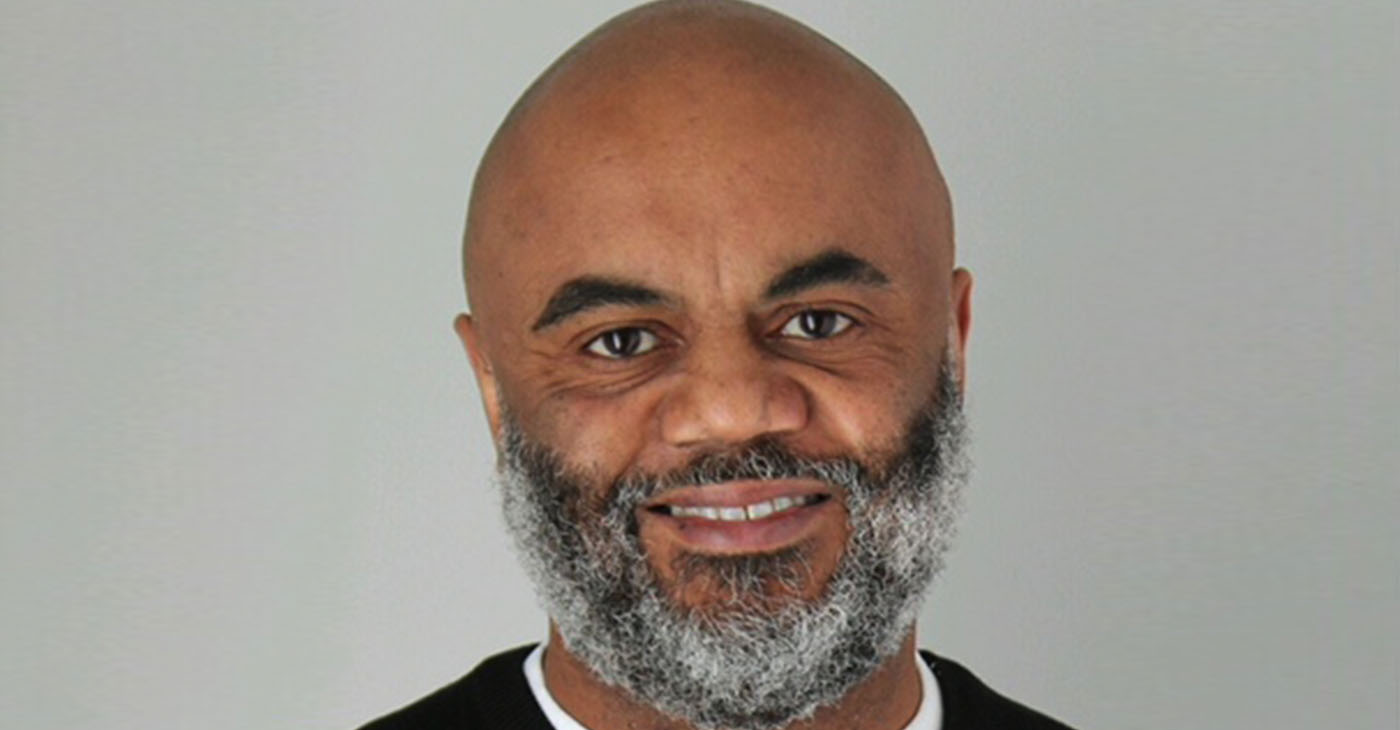
Christopher G. Cox, www.realesavvy.com, NNPA Newswire Contributor
Every state in the U.S., as well as in Puerto Rico and the U.S. Virgin Islands, has a Housing Finance Agency (HFA) that provides low- and moderate-income individuals and families with the opportunity to find a home or apartment that meets their budget and quality-of-life needs.
According to Stockton Williams, executive director of the National Council of State Housing Agencies (NCSHA), in 2017 alone, state HFAs provided $28 billion to finance affordable homeownership for more than 152,000 households, 26 percent of which were minority-headed households.
The NCSHA was created by the state agencies more than 40 years ago, Williams said, to help share best practices. “HFAs are constantly learning from each other,” Williams adds, “not only sharing best practices, but solving emerging challenges on a collaborative basis. NCSHA facilitates these exchanges and augments them with additional analysis and support.”
Some of the state HFA practices that NCSHA helps to promote are careful underwriting of borrowers, close oversight of lenders, proactive loan servicing and counseling assistance to borrowers who need it, Williams noted.
“A 2018 study,” according to Williams, “found that state HFA loans were much less likely to experience defaults or foreclosures than loans from other sources to similar borrowers.
“According to the study,” he continued, “not only are HFAs more likely to require full documentation and careful underwriting, they also serve as a third-party monitor on lenders originating loans through a state program, creating an additional incentive for careful screening by the lender.”
Like other state housing finance agencies, the North Carolina HFA (NCFHA), which began operating in 1973, serves the broad mandate of providing affordable housing opportunities for state residents whose needs are not being met by the market, explains Connie Helmlinger, manager of public relations and marketing for the NCHFA.
The work of her agency, Helmlinger notes, is divided into two main areas: providing assistance with home ownership and with rental housing.
“We have helped more than 115,000 individuals and families purchase homes,” she said. “We do that by offering mortgages with competitive rates and down payment assistance for buyers.”
The NCHFA offers a variety of assistance programs that seek to help low- and moderate-income homebuyers in such categories as first-time buyers, military veterans, senior citizens and people with disabilities. Detailed information about such programs as NC Home Advantage Mortgage, NC Home Advantage Tax Credit and NC IST Home Advantage, and how potential buyers can qualify for them, can be found at www.ncfha.com
Most of NCFHA’s work is done in association with partners, including local governments, nonprofit organizations and private developers. “One of our self-help programs,” Helmlinger says, “is working with Habitat for Humanity. They take the money we provide and roll that into their own money to provide better mortgages for people who buy their homes.”
Helmlinger notes that the NCHFA does not work directly with buyers — except for being involved in final approvals and underwriting — but works directly with lenders after buyers have contacted a loan officer about applying for one of their assistance programs.
“The money is coming from us,” says Helmlinger, “but it’s the lender that is managing the whole process.”


FTC Chair Praises Trump, NYC Calls for Target Boycott, and Jason Lee Removed as Vice Mayor 📱

FTC Chair Praises Trump, NYC Calls for Target Boycott, and Jason Lee Removed as Vice Mayor

Black History: Gladys West Mathematics Helped Make GPS Possible

Richmond’s Secret Bank: The True Reformers Story #shorts

7 USB-C Ports + Wireless Charging: Power Up Your Family #shorts

Urban League, AT&T Expand Digital Skills and Laptop Access in St. Louis

Attend a Green Line Bus Rapid Transit Open House

VIN Check: Avoid Truck Recalls Before Buying! #shorts

Defender Parking Camera & Screen Features Explained #shorts

Find Black-Owned Banks & Credit Unions Easily #shorts

The Youngest American Killed in the Vietnam War

Passing for White, Fighting for Black America: The Courage of Walter White

OP-ED: Haiti TPS: Have We Lost Sense of Humanity?

OP-ED: How Does Your State Rank for Pre-K?

NFL: Week Two Recap | Jalen Hurts did not fold; Caleb Williams exits game with injury

Remembering Chauncey Bailey as Student Journalists Face Threats to Truth-Telling

Headlines and Hot Topics 📱

Peter Magubane: a Camera Against Apartheid

Obama Urges Democrats to make AI a Priority 📱

The Conversation with Al McFarlane 📱
FTC Chair Praises Trump, NYC Calls for Target Boycott, and Jason Lee Removed as Vice Mayor 📱
FTC Chair Praises Trump, NYC Calls for Target Boycott, and Jason Lee Removed as Vice Mayor
Black History: Gladys West Mathematics Helped Make GPS Possible
Richmond’s Secret Bank: The True Reformers Story #shorts
7 USB-C Ports + Wireless Charging: Power Up Your Family #shorts
Urban League, AT&T Expand Digital Skills and Laptop Access in St. Louis
Attend a Green Line Bus Rapid Transit Open House
VIN Check: Avoid Truck Recalls Before Buying! #shorts
Defender Parking Camera & Screen Features Explained #shorts
Find Black-Owned Banks & Credit Unions Easily #shorts
-

 Black Press1 week ago
A $2.1 Trillion Wellness Industry Never Built a Daily Practice for Black Children. So This Atlanta Family Did.
-
 BlackPressUSA1 week ago
Latinas Deserve Equal Pay. Unions Help Make It Happen.
-

 Art1 week ago
Montclair Brewery: Brewing Culture, Community, History
-

 Black Press3 days ago
All Skinfolk Ain’t Kinfolk
-

 Black Press1 week ago
COMMENTARY: But God!
-

 Black Press1 week ago
Safety Concerns at Southern University
