
Business
Court Mulls Legality of Firing for Pot Use Off Job

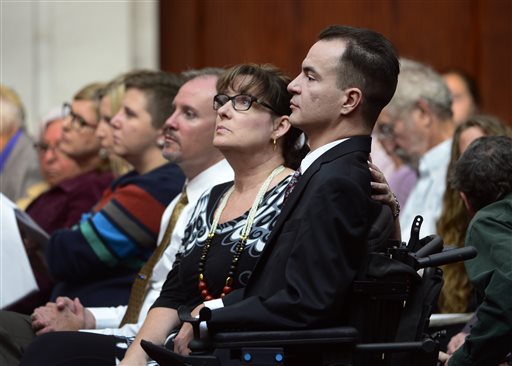
Brandon Coats, a quadriplegic medical marijuana patient who was fired by the Dish Network after failing a drug test more than four years ago, right, waits for the proceedings to begin with his mother, Donna Scharfenberg, at the Colorado Supreme Court in Denver on Tuesday, Sept. 30, 2014. Coats’ case highlights the clash between state laws that are increasingly accepting of marijuana use and employers’ drug-free policies that won’t tolerate it. (AP Photo/The Denver Post, Kathryn Scott Osler, Pool)
SADIE GURMAN, Associated Press
DENVER (AP) — Pot may be legal in Colorado, but you can still be fired for using it.
Now, the state’s highest court is considering whether workers’ off-duty use of medical marijuana is protected under state law.
Colorado’s Supreme Court on Tuesday heard arguments in a case involving Brandon Coats, a quadriplegic medical marijuana patient who was fired by the Dish Network after failing a drug test in 2010.
Coats said he never got high at work. But pot’s intoxicating chemical, THC, can stay in the system for weeks.
Coats says his pot smoking is allowed under a little-known state law intended to protect employees from being fired for legal activities off the clock. But the company argues that because pot remains illegal at the federal level, medical marijuana isn’t covered by the state law.
The case is being watched closely around the country and could have big implications for pot smokers in the first state to legalize recreational sales of the drug. Though the Colorado case involves medical marijuana, the court’s decision could also affect how companies treat employees who use the drug recreationally.
Tuesday’s arguments highlighted the clash between state laws that are increasingly accepting of marijuana use and employers’ drug-free policies that won’t tolerate it.
“This case need not be an endorsement or an indictment of medical marijuana” but a chance to set standards for employee conduct, Dish attorney Meghan Martinez told the justices, who could rule in the coming weeks or months. “It’s a zero-tolerance policy. It doesn’t matter if he was impaired or not.”
Coats, 35, was paralyzed in a car crash as a teenager and has been a medical marijuana patient since 2009, when he discovered that pot helped calm violent muscle spasms. Coats was a telephone operator with Dish for three years before he failed a random drug test in 2010 and was fired. He said he told his supervisors in advance that he probably would fail the test.
Coats’ case comes to the justices after a trial court judge and Colorado’s appeals court upheld his firing, saying pot can’t be considered lawful if it is outlawed at the federal level.
“We’re getting very confused and mixed messages from everywhere,” Coats’ attorney, Michael Evans, told justices.
He asked the court to issue a narrow ruling that would apply to people like Coats: those in nonhazardous jobs who are not impaired at work and whose employers don’t have federal contracts that could be jeopardized.
Twenty-three states and Washington, D.C., allow medical marijuana. Colorado and Washington state also now allow recreational sales, though court cases so far have involved medical patients.
Colorado’s constitution specifically says that employers don’t have to amend their policies to accommodate employees’ marijuana use. But Arizona law says workers can’t be punished for lawfully using medical marijuana unless it would jeopardize an employer’s federal contract.
State Supreme Courts in California, Montana and Washington state have all ruled against fired patients. A lawsuit filed by a physician assistant in New Mexico who said she was fired for using medical marijuana, which helps with her post-traumatic stress disorder, is still pending.
Denver labor and employment attorney Vance Knapp said a Coats win “would turn employment policies into chaos.” Other states with lawful-activity laws could see them challenged as a result.
Coats, who has been unable to find steady work because of his marijuana use, said after the hearing that he was hopeful he would prevail. At the very least, he said, the court will offer clarity on the issue.
“I’m not going to be able to get a job in the near future, so if I can fight the fight and hopefully change that, that’s what I am going to do,” he said.
___
Follow Sadie Gurman on Twitter at https://twitter.com/sgurman
Copyright 2014 The Associated Press. All rights reserved. This material may not be published, broadcast, rewritten or redistributed.













Black History
Jamika Phillips: Software Engineer Turned Manicurist Entrepreneur
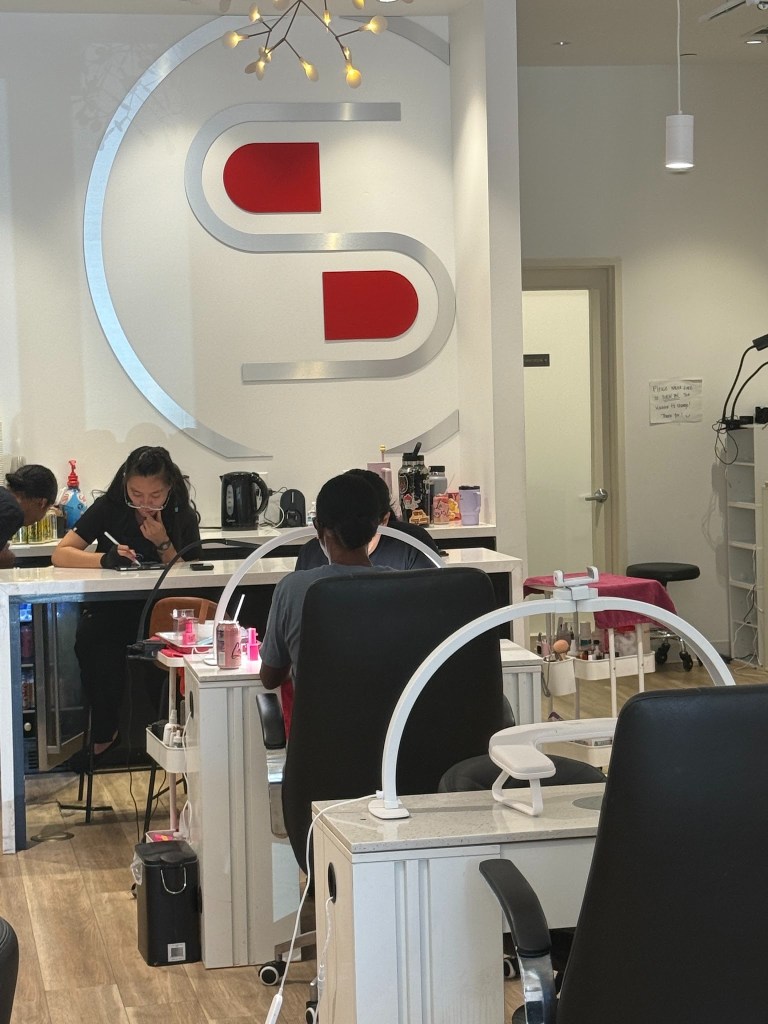
HOUSTON DEFENDER — Jamika Phillips transformed a two-decade-old dream into Shades The Nail Bar, a Sienna-area salon she opened in January 2022. Phillips, who spent over 20 years in software engineering and global process management, envisioned a nail salon that fosters community, quality care, and client education, aspiring to be the “Cheers” of nail salons.

For Jamika Phillips, getting your nails done should feel like more than another appointment squeezed onto an already crowded calendar.
She wanted a place where the person doing your nails knows your name, remembers what you drink, what colors you like, and maybe even what was happening in your life the last time you sat in their chair.
“I kind of wanted to be the ‘Cheers’ of nail salons,” Phillips said. “I wanted clients to be able to have a community where they could come and know their nail techs, know that they were getting quality care with their nails, and know that we would give them education.”
That vision became Shades The Nail Bar, the Sienna-area salon Phillips opened in January 2022 after leaving a career that had nothing to do with the beauty industry.
A dream decades in the making
Phillips spent more than 20 years in corporate America, working in software engineering and global process management. Her background is in computer science, but the idea of owning a nail salon wouldn’t go away.
“I have notes back from probably 2000 where I would think about the names of the salons that I wanted,” Phillips said. “I still have these pages, and I look back at them and thank God for them every day.”
While still working full time, Phillips enrolled in manicurist school, working her corporate job during the day and attending classes at night and on Saturdays until she earned her license.
“I would work from 9 to 5. I would go to school from 5 to 9 Monday through Friday, on Saturdays from like 8 to 2,” she recalled.
“There were a lot of people that said, ‘Are you sure you want to do this?’…’ `There’s a lot of competition’… ‘Typically, not a lot of Black people own nail salons.’ I refused to let that stop me.”
Jamika Phillips
After moving to Houston with her husband, Phillips prepared to open a salon in the city. She had signed a letter of intent and was about a week away from signing a lease when the COVID-19 pandemic hit.
“I thank God I did not sign the lease,” Phillips said.
The setback redirected her closer to home. While driving through Sienna, where her family lives, Phillips spotted an available space, pulled over, and called the number. The space was available. Shades The Nail Bar was on its way.
Creating a different kind of nail salon

Phillips knew she was entering a crowded industry, but she also saw an opportunity as a Black woman entering a business where few salon owners looked like her.
“There were a lot of people that said, ‘Are you sure you want to do this?’” she said. “There’s a lot of competition. There are nail salons every two miles from each other. Typically, not a lot of Black people own nail salons.”
Instead of discouraging her, Phillips said the skepticism became “ammunition” to keep going.
“Black women spend tons of money in the nail care industry,” Phillips said. “So it was something that I said, we got to do this.”
Even the name Shades was intentional.
“I wanted shades to represent not just the nail polish colors, but I wanted it to represent different shades of nail technicians as well as clientele,” she said.
Today, her staff includes Black, Hispanic, and Asian nail technicians, reflecting the diverse community the business serves.
The salon is also acrylic-free, offering alternatives including builder gel, polygel, and Gel-X. Phillips researches products and often tries them herself before introducing them to clients.
“I’m always looking at new ways to make Shades different.”
Those differences extend beyond nail services. Shades offers complimentary beverages, cleans clients’ rings during appointments, and emphasizes sanitation and nail health.
@shadesthenailbar 50 looks GOOD on you, Lolita! 🥂✨💅🏾 We had the pleasure of being part of Lolita’s 50th birthday celebration, and hearing her share her experience at Shades made it even sweeter. ❤️ There’s something special about celebrating a milestone with a little self-care, beautiful nails, and GOOD energy. Thank you, Lolita, for choosing Shades to be part of such a special birthday. Here’s to 50 and FABULOUS! 🎂✨ Celebrating something special? Come celebrate with us. Book now at ShadesTheNailBar.com 📍 9101 Sienna Crossing Dr., Suite 160 Missouri City, TX 77459 #ShadesTheNailBar#50thBirthday#BirthdayNails#MissouriCityNails#SiennaTX#HoustonNails#BirthdayCelebration♬ original sound – Shades The Nail Bar
But Phillips said its biggest distinction is the relationships.
“We’ve seen them have babies. We’ve seen them lose their babies. We’ve seen them lose their parents. We’ve seen marriages, divorces,” Phillips said. “I mean, we are there for them.”
Staff members send cards and cookies during important moments and often know a regular client’s preferred drink before the client asks.
“We really do try to build and bond a relationship with our clientele so that they know that, hey, we are here for them,” Phillips said.
Shades also supports local schools, churches, and Fort Bend-area charitable efforts.
Corporate lessons meet entrepreneurship
Phillips may have traded software engineering for nail polish, but she didn’t leave her corporate experience behind. She said the leadership, teamwork, and organizational skills she developed during more than two decades in corporate America became the foundation for running Shades.
“I can’t say that I was an entrepreneur by trade,” she said. “A lot of those things — the leadership, the teamwork, the organizational skills — all those things were built over my corporate career.”
Entrepreneurship brought its own lessons, from finding vendors who understood her vision to keeping detailed financial records, building the right team, and maintaining strong customer service.
Phillips credits her husband and children with supporting her through missed family dinners and soccer games. She also credits mentor LeeVera Smith, a business adviser with the Small Business Development Center, with helping her develop the business plan that became Shades’ foundation.
“Jamika is one of those people who wants to learn everything to bring her customers the best experience,” Smith said. “I’m supposed to be her mentor, but I learn so much from her.”
Phillips’ girlfriends also pitched in, proofreading her website, organizing supplies, offering feedback, and talking her through the inevitable difficult days.
Because Phillips knows better than most that dreams don’t always arrive on schedule. Sometimes they sit quietly in notebooks for 20 years before you finally decide it’s time to bet on yourself.
Based on reporting by Houston Defender.
Art
Inside 820 S. Michigan: New Book Captures the Lost World of Ebony and Jet
CHICAGO DEFENDER — A new photography book offers a rare look inside the former Johnson Publishing Company headquarters at 820 S. Michigan Ave., the longtime home of Ebony and Jet magazines. Titled 820 Ebony/Jet: Visions of the Johnson Publishing Company, an American Icon, the book features photographs by Barbara Karant documenting the building’s interiors.

A new photography book is giving readers a rare look inside one of the most important buildings in Black media history.
820 Ebony/Jet: Visions of the Johnson Publishing Company, an American Icon, published Tuesday by MW Editions, features photographs by Chicago photographer Barbara Karant documenting the former Johnson Publishing Company headquarters at 820 S. Michigan Ave., the longtime home of Ebony and Jet magazines. Pasted markdown
The 240-page book preserves the building’s striking interiors, many of which no longer exist in their original form, while also examining the larger cultural legacy of Johnson Publishing Company and its influence on Black media, design, photography and American culture.
Designed by architect John W. Moutoussamy and completed in 1972, the building was the first, and remains the only, high-rise in downtown Chicago designed by an African American architect. Built for publisher John H. Johnson, the headquarters became a physical expression of the ambition and influence of one of the nation’s most important Black-owned media companies.
While the building’s exterior reflected Moutoussamy’s restrained modernist style, the inside told a very different story.
Designers Arthur Elrod and William Raiser filled the headquarters with bold colors, geometric patterns, mirrored surfaces, rich textures and dramatic materials across 11 floors. The result was a workplace that looked unlike the traditional corporate offices of its era. Pasted markdown
Karant began photographing the building after Johnson Publishing sold the property in 2010 and relocated in 2012. Between 2013 and 2015, and again in 2018, she documented the largely vacant interiors after employees and much of the furniture had been removed.
What remained were the colors, patterns and architectural details that had helped define the company’s visual identity.
Her photographs capture spaces ranging from the cafeteria’s orange, purple and gold designs to Eunice Johnson’s cream-and-honey office, mirrored dressing rooms and the executive floor’s expansive views of Lake Michigan and Grant Park. Pasted markdown
Among the building’s most memorable spaces was the famed Ebony Test Kitchen.
Known for its vivid colors, psychedelic patterns and distinctive cabinetry, the kitchen became a visual reflection of Ebony magazine’s influence on food, lifestyle and Black culture. Karant photographed the kitchen as part of the larger architectural story of the headquarters. Pasted markdown
“The building was almost like a portrait of Johnson Publishing Company itself,” Karant said. “Even after the people and furnishings were gone, the colors, patterns, textures and spaces still conveyed the creativity, confidence and extraordinary cultural presence of the company.”
The photographs have taken on even greater significance because much of what Karant documented has since disappeared.
Following the building’s conversion, substantial portions of the original interiors were removed. The Ebony Test Kitchen was dismantled and preserved separately, making Karant’s images one of the most extensive visual records of how the headquarters looked during Johnson Publishing Company’s decades on Michigan Avenue. Pasted markdown
The book also includes photographs of sculptor Richard Hunt’s Expansive Construction, a work commissioned for the building’s lobby, as well as images of the company’s in-house photography studio and archival views of the original interiors.
But 820 Ebony/Jet goes beyond architecture.
The book includes a foreword by photography historian Deborah Willis, six scholarly essays and personal reflections from former Johnson Publishing Company employees. Together, the contributions explore the company’s role in Black visual representation, media, photography, art and design, while offering firsthand accounts of what it was like to work inside the building. Pasted markdown
For generations, Ebony and Jet helped shape how Black America saw itself and how the country saw Black America.
The magazines documented everything from politics and the civil rights movement to fashion, entertainment, family life and culture. Johnson Publishing Company also became an influential force in photography, beauty, design and popular culture.
That legacy extended well beyond the pages of its magazines.
The new book examines Johnson Publishing Company’s continuing influence on artists including Theaster Gates, Hank Willis Thomas, Kwame Brathwaite, Lorna Simpson, Martine Syms and David Hartt. Pasted markdown
For Chicago, the book serves as both an architectural record and a cultural archive. It preserves a place where Black entrepreneurship, media, art and design converged at a scale rarely seen before or since.
820 Ebony/Jet: Visions of the Johnson Publishing Company, an American Icon is available now from MW Editions. The hardcover volume includes 150 photographs and is priced at $65. Pasted markdown
Karant is also scheduled to present the book during Modernism Week at the Palm Springs Art Museum on Feb. 15, 2027, where she will discuss the connection between the Johnson Publishing Company headquarters and the design legacy of Arthur Elrod and William Raiser.
The post Inside 820 S. Michigan: New Book Captures the Lost World of Ebony and Jet appeared first on Chicago Defender.
Based on reporting by Chicago Defender.
Black Press
While Black Families Pay More for Power, Some Attorneys General Fight to Save High-Cost Coal
OUR WEEKLY LOS ANGELES / OUR WEEKLY ANTELOPE VALLEY — Black families are disproportionately affected by rising electricity costs nationwide, with residential prices projected to increase. Low-income households spend three times more of their income on energy, and Black households spend 43 percent more than white households, according to the American Council for an Energy-Efficient Economy.

Families across the country are opening their monthly utility bills with a growing sense of dread. Groceries cost more. Rent costs more. Now electricity has become one more expense pushing household budgets to the breaking point, and for many in the Black community – as usual – the squeeze is being felt hardest of all.
Residential electricity prices are expected to average more than 18 cents per kilowatt-hour in 2026, about 5 percent higher than last year, according to the U.S. Energy Information Administration. At the same time, demand for power is climbing fast as the nation adds data centers, factories, and other large energy users. And consumers remain exposed to a market rattled by global conflict and swings in fuel prices.
These costs do not land on everyone equally. For a family with little left over at the end of the month, even a modest jump in the light bill means less for food, transportation or medicine. Low-income households spend three times more of their income on energy than other households, and Black households spend 43 percent more than white households, according to the American Council for an Energy-Efficient Economy.
The question every public official should be asking, then, is simple: How does America add the reliable electricity it needs while keeping costs down for the families least able to absorb them?
Instead, a group of state attorneys general has chosen a very different fight.
In November 2024, Texas Attorney General Ken Paxton sued three of the nation’s largest asset managers, BlackRock, State Street and Vanguard, and was joined by a coalition of other states. The lawsuit claims the firms bought up large stakes in major coal producers and then used their influence as shareholders to pressure those companies to cut production in pursuit of climate goals. The attorneys general argue this restricted coal supply, raised coal prices and, in the end, raised electricity prices for consumers.
Paxton and his colleagues have presented the case as a way to bring down power bills. But when Paxton’s office announced its settlement with Vanguard, it billed the deal as an agreement “to protect the coal industry.” That wording tells us a great deal about whose interests are really at the center of this case.
Attorneys general have only so much time, staff, and money. Every hour spent on litigation against investment firms is an hour not spent on the problems that actually drive up household energy costs: transmission bottlenecks, permitting delays, an aging grid, energy efficiency and the shortage of new power generation.
There is actually an even deeper problem with making coal the centerpiece of an affordability strategy. Coal has been losing ground in the marketplace for decades.
Around 1990, coal supplied more than half of the nation’s electricity. By 2025, its share had fallen to about 17 percent. Most of that decline came from competition, chiefly cheaper natural gas, along with the growth of renewable energy and tougher environmental rules. In the first three months of 2026 alone, coal plant output fell 11 percent from a year earlier, while renewable generation grew. And this summer, Lazard’s annual analysis found renewables remain the lowest-cost option for new power plants, even as existing plants have become more competitive and continue to provide real value to the grid.
Coal’s decline did not begin with Wall Street, investment policies or the climate movement. It is the result of decades of change in America’s energy economy. Where a coal plant remains affordable and necessary to keep the lights on, utilities should keep running it. But keeping a useful plant open is very different from treating the survival of an entire industry as public policy. If other sources can provide power more cheaply, government has no business shielding coal from that competition.
For Black communities, the cost of coal does not stop at the utility bill. Burning coal produces air pollution and coal ash that must be managed, and the Environmental Protection Agency notes that coal ash contains contaminants like mercury, cadmium, and arsenic. A landmark NAACP study found that the roughly 6 million people living near coal plants had lower average incomes than the nation as a whole, and that people of color made up a majority of those living near the worst polluters. Too many of our neighborhoods carry both burdens at once: high energy bills and a greater share of the pollution. Any policy that claims to help consumers should account for both sides of that ledger.
The truth is that families do not much care whether the power running their refrigerator comes from a coal plant, a natural gas facility, or a wind farm. They care that it is there when they need it and that they can afford to pay for it.
Critics of environmental policy often complain that government should not pick winners and losers in energy markets. That principle should apply evenly. Financial firms should not be allowed to break antitrust laws in pursuit of climate goals. But government should be just as cautious about using its power to guarantee coal a permanent place in the market. Coal, natural gas, nuclear, wind, solar, battery storage, and new technologies should all compete on cost, reliability, and what the grid needs.
The real challenge before the nation is building enough reliable power, and building it quickly. Clinging to coal’s past, especially through the courts, does nothing to solve that.
At a time when so many Americans are struggling just to pay bills, it is fair to ask why state officials are pouring so much energy into protecting one industry. Attorneys general should be working to make power more plentiful and more affordable. Families facing economic hardships deserve more than to be invoked as props in a political fight between government officials and some of the world’s largest financial institutions.
Based on reporting by Our Weekly Los Angeles / Our Weekly Antelope Valley.
Black History
Beyond the Job Search: DC Black MBA Invests in Helping Black Women Reclaim Their Next Chapter
WASHINGTON INFORMER — Black women in the Washington metropolitan region are facing employment challenges, with revised data showing approximately 251,000 job losses between January and August 2025. This accounts for over half of all female employment losses during that period, despite Black women making up only 14.1% of the female workforce.
For Black women across the Washington metropolitan region, the changing employment landscape is about more than a paycheck. It can mean reassessing a career, redefining success and deciding what comes next.
The numbers underscore the challenge. Revised employment data show that approximately 251,000 Black women lost jobs between January and August 2025, accounting for more than half of the employment losses among women during that period, despite Black women representing just 14.1% of the female workforce. By the end of 2025, there were 113,000 fewer Black women employed than at the beginning of the year.
The impact has been particularly significant in the DMV, where federal employment has long provided economic stability and career opportunities for Black professionals. Maryland alone lost approximately 25,000 federal jobs in 2025, according to state employment data.
For DC Black MBA, those realities call for support that extends beyond helping women find their next job.
“I am focused on doing more and providing as many opportunities as possible for Black women to invest in themselves both professionally and personally,” said Dr. Carletta S. Hurt, president of the DC Black MBA. “We know that when Black women proceed and prosper, everyone benefits.”
That commitment is behind Leading with Intention by Investing in Self, a three-part, in-person workshop series hosted by DC Black MBA in partnership with Blu Topaz Inc. Educational Consulting.
The series builds on the chapter’s August Women’s Symposium, MastHERpiece: Designing a Life with Intention, which challenged women to see themselves as architects of their careers, wealth, wellness and impact. The new workshops take that conversation a step further, asking women to consider where they can work next and who they want to become next.
The series opens Oct. 22 with “Recalibrating Your Compass,” led by Geraldine P. White, Founder and CEO of Identity & Impact. White will guide participants through questions of identity, direction and purpose.
“You can be proud of what you’ve built and ready for something different. Both can be true,” White said. “Investing in yourself includes giving yourself permission to revisit an earlier definition of success and consider what you want your next chapter to make possible.”

On Oct. 29, Tonya Camille, creator of Me in the Making and Unstuck & Inspired, will lead “Successful, But Stuck: How High-Achieving Professionals Reconnect, Realign & Move Forward.”
Her interactive workshop will help women identify fears, limiting beliefs and recurring patterns that may prevent them from moving forward, while developing a concrete next step. “You can’t change what you won’t acknowledge, and you can’t transform what you’re unwilling to confront,” Camille said.
The series concludes Nov. 5 with nonprofit leader, author and consultant Tokiwa T. Smith leading “Rest is Revolutionary.”Her session challenges a familiar expectation placed upon Black women: that achievement and service to others must come at the expense of themselves.

Smith said Black women must recognize that prioritizing themselves, setting boundaries and making room for joy are not signs of diminished ambition. “I believe we thrive when we engage in self-care and community care,” Smith said.
For Hurt, the goal is to create space for Black women to move beyond reacting to an uncertain economy and begin intentionally determining what comes next.
A job loss can require a new résumé. A changing workplace may demand new skills. However, a life transition can also become an invitation to reconsider purpose, boundaries, entrepreneurship, leadership, rest and the meaning of success itself.
For more information, visit the DC Black MBA website (www.dcblackmbaa.org)/.
Based on reporting by Washington Informer.
Black History
Can Black Houston Create a Black Tech Corridor?
HOUSTON DEFENDER — Black professionals remain significantly underrepresented in the American technology sector, holding only 7.4% of high-tech jobs despite making up 12.7% of the U.S. workforce in 2025. This disparity is even wider for Black women, who constitute less than 3% of the tech workforce.

For years, technology has been one of America’s fastest-growing economic sectors—and one where Black professionals remain significantly underrepresented.
In 2025, Black workers made up 12.7% of the U.S. workforce, according to the U.S. Bureau of Labor Statistics, but only 7.4% of the high-tech workforce, according to the U.S. Equal Employment Opportunity Commission. Their share of high-tech employment had remained essentially stagnant since 2005. Black workers also represented just 5.7% of high-tech managers.
For Black women, the gap is even wider. A 2023 Kapor Foundation report found Black women represented less than 3% of the tech workforce, with even fewer in decision-making and ownership roles.
So, instead of waiting for the broader technology industry to solve its representation problem, could Black Houston build something of its own?
The answer: Yes—but not simply by drawing a line on a map.
Houston has the pieces
Dr. Reagan Flowers, founder of C-STEM and Education Consulting Services, believes Houston already possesses many of the building blocks needed for a Black Tech Corridor.
“What I have not seen is the intentionality to connect, capitalize, and organize assets into an ecosystem where Black Houstonians can create, own, and scale technology companies and participate meaningfully in the wealth those companies generate,” said Flowers.
She contends Houston already offers examples of what a technology ecosystem can look like.
The Texas Medical Center’s innovation infrastructure demonstrates the power of institutional partnerships, specialized facilities, and venture funding. The Ion District demonstrates how universities, corporations, entrepreneurs, real estate, and capital can converge. TXRX Labs shows the value of community-accessible maker and technical-skills infrastructure.
Flowers argues Black Houston can learn from all three without simply copying them. The goal, she said, should be a hybrid public-private-community ownership model.
Third Ward makes sense
If there is a geographic spine for such an ecosystem, Flowers points to Third Ward—particularly Emancipation Avenue. Its location is difficult to ignore.
Third Ward sits near Texas Southern University, the University of Houston, and Houston Community College, and connects to Midtown, the Ion District, and the Texas Medical Center.
UH already has a commercialization platform that takes innovations through invention, prototyping, licensing, venture creation, investor connections, and market expansion. Its Technology Bridge provides a large innovation park with laboratories, offices, and space for technology companies.
“To the west is Rice’s Ion District,” shared Flowers. “To the southwest is the Texas Medical Center and its health-tech commercialization engine.”
In other words, Black Houston would not have to build an ecosystem from scratch.
“The pieces are already on the board,” said Flowers. “They have not been organized around Black technology ownership and wealth creation.”
Is there already one?
Parts of a Black tech ecosystem clearly exist. Houston has Black technology professionals, Black-owned startups, STEM nonprofits, workforce development programs, minority business organizations, Black founders and investors, universities that produce diverse talent, and historically Black fraternities and sororities that support innovation.

But Kara Branch, founder and CEO of Black Girls Do Engineer, cautions against defining success by geography alone.
“I think the conversation needs to be bigger than creating a physical ‘corridor,’” said Branch. “A successful technology ecosystem should be measured by what it produces for the community—not simply where it is located or who occupies the space.”
Loretta Williams Gurnell, founder and CEO of SUPERGirls SHINE Foundation, agrees.
“I believe we have one, yet a successful Black tech corridor cannot simply be viewed as a geographic location. It must function as an ecosystem,” offered Gurnell.
That ecosystem would connect K-12 STEM education, colleges and universities, workforce development, entrepreneurs, startups, corporations, investors, innovation hubs, government, faith communities, and civic organizations.
The objective: Create a seamless pathway from classroom to career to entrepreneurship.
Ownership is the point
Why does Black Houston need a Black-centered technology ecosystem? Because access doesn’t automatically equal ownership.
“As AI, automation, cybersecurity, data analytics, robotics, and emerging technologies continue reshaping the economy, we must ask: Who is building the technology? Who owns the companies? Who owns the intellectual property? Who receives the investment capital? Who benefits economically?” pondered Gurnell.
Those questions matter because technology increasingly drives wealth creation.
Laolu Davies-Yemitan, founding principal of Five Woods Realty, similarly argues that participation alone is insufficient.

“If the Black community is going to capture a meaningful share of the wealth generated by the next generation of technological innovation, the pathway must increasingly include ownership—ownership of companies, intellectual property, real estate, investment capital, and the institutions that support entrepreneurial growth,”
– Laolu Davies-Yemitan, founding principal of Five Woods Realty
“If the Black community is going to capture a meaningful share of the wealth generated by the next generation of technological innovation, the pathway must increasingly include ownership—ownership of companies, intellectual property, real estate, investment capital, and the institutions that support entrepreneurial growth,” shared Davies-Yemitan.
Real barriers
Building the corridor—or innovation district—will not be easy. Capital is perhaps the biggest obstacle. Black founders receive a disproportionately small share of venture funding, making it harder to scale companies, hire workers, and conduct research.
Then there is fragmentation. Houston has organizations doing valuable work in STEM education, entrepreneurship, workforce development, and innovation, but many operate independently rather than as parts of a coordinated ecosystem.

Talent pipelines also require attention. Young people in underserved communities can face limited exposure to STEM, limited access to technology resources, mentorship, and professional networks, and limited knowledge of technology careers. Gurnell’s philosophy is straightforward: Exposure creates aspiration; information drives preparation; preparation creates access.
Digital inequity remains another challenge, including disparities in broadband access, devices, digital literacy, and training in advanced technology. And then there’s social capital.
“Deals are made through trusted relationships,” Gurnell said. “Therefore, those relationships have to be exposed, nurtured, and strengthened.”
Branch adds another warning: Houston cannot confuse activity with impact.
“There can be a lot of panels, events, programs, announcements, and conversations,” she said. “But doing the work means consistently showing up after the spotlight is gone.”
Build talent before buildings
That may be the most important lesson.
“The conversation should not begin with buildings,” said Gurnell. “It should begin with talent.”
That means investing in early STEM exposure, workforce readiness, mentorship, entrepreneurship, capital access, and collaboration among nonprofits, corporations, universities, philanthropies, government, and industry.
Branch points to Black Girls Do Engineer’s STEMXUS EdTech infrastructure as an example of building rather than merely discussing solutions.
“We don’t want a young person to simply hear that engineering, technology, or innovation are possible careers,” Branch said. “We want them to build something, solve a problem, use the technology, meet professionals, develop skills, and understand what their next step can be.”
Branch’s litmus test asks, did someone gain a skill, get a job, launch a business, discover a career, or secure capital or customers? Did a family gain access to opportunity?
From corridor to economy
Flowers suggests thinking beyond a traditional corridor and toward a Black Innovation District; one that connects Third Ward, TSU, UH, and HCC with the Ion, TMC, and Houston’s manufacturing and maker infrastructure.
Rather than competing with Houston’s existing innovation centers, it could become connective tissue between those institutions and Black Houston.
“The pieces are already on the board. They have not been organized around Black technology ownership and wealth creation.”
Dr. Reagan Flowers
Gurnell envisions additional benefits.
“The greatest opportunity before us is not simply creating a Black tech corridor,” Gurnell said. “It is creating a Black innovation economy.”
The infrastructure for such a corridor/economy exists. The question is whether Black Houston can summon the intentionality, investment, collaboration, and ownership required to make it happen.
Based on reporting by Houston Defender.
Black History
OPINION: Black Capitalism Re-Analyzed: June 5, 1971 – Huey Newton
SF BAY VIEW — Huey P. Newton, writing on June 5, 1971, reaffirmed the Black Panther Party’s foundational stance against capitalist robbery within the Black community, a position held since October 1966. While acknowledging that many have proposed Black capitalism as a solution, Newton asserted that the community’s general acceptance of the concept does not stem from an affinity for capitalism itself.
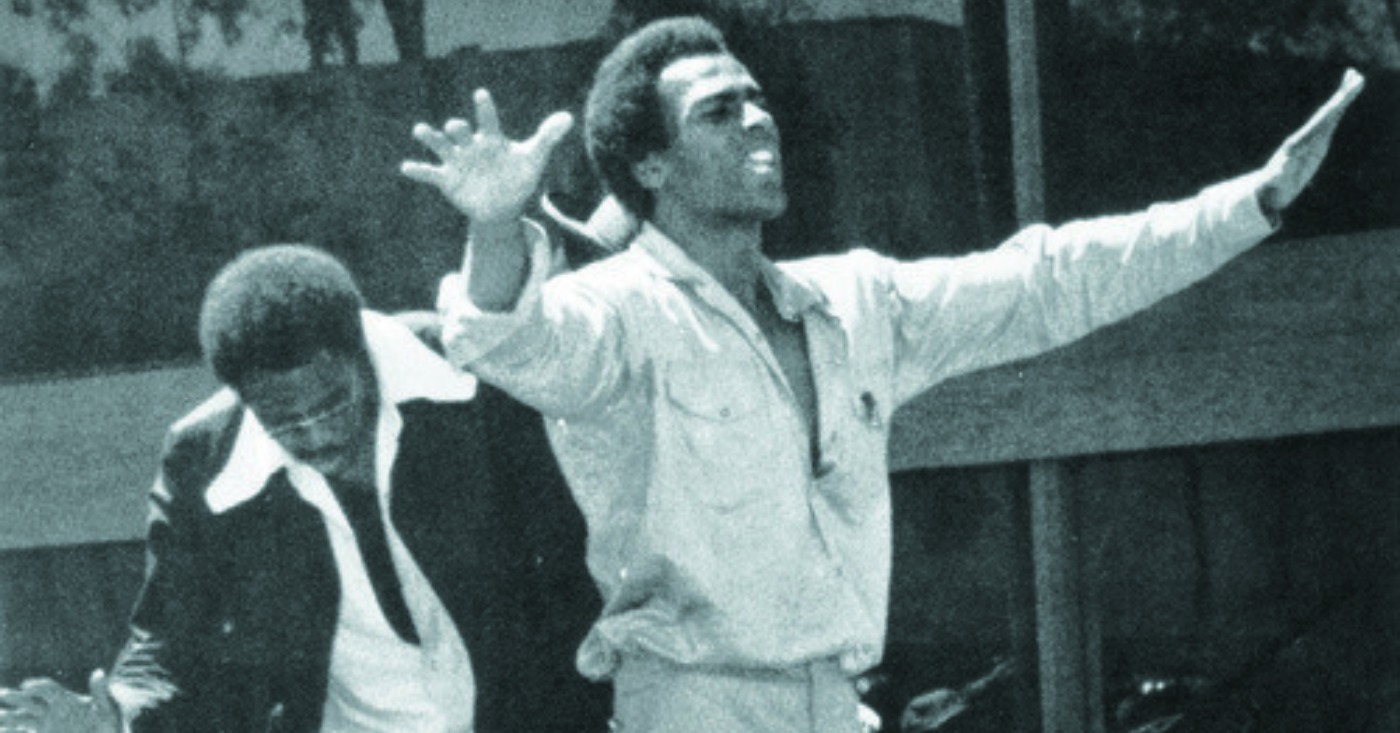
“We want an end to the robbery by the CAPITALISTS of our Black community.” That was our position in October 1966 and it is still our position … However, many people have offered the community Black capitalism as a solution to our problems. We recognize that people in the Black community have no general dislike for the concept of Black capitalism, but this is not because they are in love with capitalism. Not at all.”
The Black Panther Party, as we begin to carry out the original vision of the Party. When we coined the expression “All Power to the People,” we had in mind emphasizing the word “Power,” for we recognize that the will to power is the basic drive of man. But it is incorrect to seek power over people. We have been subjected to the dehumanizing power of exploitation and racism for hundreds of years; and the Black community has its own will to power also. What we seek, however, is not power over people, but the power to control our own destiny. For us the true definition of power is not in terms of how many people you can control. To us power is, first of all, the ability to define phenomena, and secondly the ability to make these phenomena act in a desired manner.
We see then that power has a dual character and that we cannot simply identify and define phenomena without acting, for to do so is to become an armchair philosopher. And when Bobby and I left Merritt College to organize brothers on the block, we did so because the college students were too content to sit around and analyze without acting. On the other hand, power includes action, for it is making phenomena perform in the desired manner. But action without thinking and theory is also incorrect. If the social forces at work in the community have not been correctly analyzed and defined, how can you control them in such a way that they act in a desired manner? So the Black Panther Party has always merged theory and practice in such a way as to serve the true interests of the community.

In merging theory with practice, we recognized that it was necessary to develop a theory which was valid for more than one time and place. We wanted to develop a system of thinking which was good anywhere, thus it had to be rather abstract. Yet our theory would relate to a concrete analysis of concrete conditions so that our actions would always be relevant and profitable to the people. Yet, at the same time, it had to advance their thinking so that they would move toward a transformation of their situation of exploitation and oppression. We have always insisted on good theory and good practice, but we have not always been successful in carrying this through.
‘When the Black Panther Party defected from the Black community, we became, for a while, revolutionary cultists. One of the primary characteristics of a revolutionary cultist is that he despises everyone who has not reached his level of consciousness, or the level of consciousness that he thinks he has reached, instead of acting to bring the people to that level. In that way the revolutionary cultist becomes divided from the people; he defects from the community. Instead of serving the people as a vanguard, he becomes a hero. Heroes engage in very courageous actions sometimes, and they often make great sacrifices, including the supreme sacrifice, but they are still isolated from the people. Their courageous actions and sacrifices do not lead the people to a higher level of consciousness, nor do they produce fundamental changes in the exploitation and oppression of the people. A vanguard, however, will guide the people onto higher levels of consciousness and that way bring them to the point where they will take sterner actions in their own interests and against those who continue to oppress them. As I’ve said previously, revolution is a process, not a conclusion. A true revolutionist will not only take courageous actions, he will also try to advance the people in such a manner that they will transform their situation. That I, by delivering power to the people the true revolutionist will help them define the social phenomena in their community and lead them to the point where they will seize the time and make these phenomena act in a desired manner.
Therefore, as revolutionaries we must recognize the difference between what the people can do and what they will do. They can do anything they desire to do, but they will only take those actions which are consistent with their level of consciousness and their understanding of the situation. When we raise their consciousness, they will understand even more fully what they in fact can do, and they will move on the situation in a courageous manner. This is merging your theory with your practices. Point 3 of the original Ten-Point Program of the Black Panther Party is “We want an end to the robbery by the CAPITALISTS of our Black Community.”
That was our position in October 1966 and it is still our position. We recognize that capitalism is no solution to the problems we face in our communities. Capitalist exploitation is one of the basic causes of our problem. It is the goal of the Black Panther Party to negate capitalism in our communities and in the oppressed communities throughout the world.
However, many people have offered the community Black capitalism as a solution to our problems. We recognize that people in the Black community have no general dislike for the concept of Black capitalism, but this is not because they are in love with capitalism. Not at all. The idea of Black capitalism has come to mean to many people Black control of another one of the institutions in the community. We see within this characteristic the seeds of the negation of Black capitalism and all capitalism in general. What we must do then is increase the positive qualities until they dominate the negative and therefore transform the situation.
In the past the Black Panther Party took a counter revolutionary position with our blanket condemnation of Black capitalism. Our strategy should have been to analyze the positive and negative qualities of this phenomenon before making any condemnation. Even though we recognized, and correctly so, that capitalism is no solution or answer, we did not make a truly dialectical analysis of the situation. We recognized that in order to bring the people to the level of consciousness where they would seize the time, it would be necessary to serve their interests in survival by developing programs which would help them to meet their daily needs. For a long time we have had such programs not only for survival but for organizational purposes. Now we not only have a breakfast program for schoolchildren, we have clothing programs, we have health clinics which provide free medical and dental services, we have programs for prisoners and their families, and we are opening clothing and shoe factories to provide for more of the needs of the community.In a way our new position has the simplicity and completeness of a mathematical formula.
When the Black capitalist contributes to the survival programs and makes a contribution to the community, the community will give him their support and thus strengthen his business. If he does not make any contribution to the survival of the community, the people will not support him and his enterprise will wither away because of his own negligence. By supporting the community, however, he will be helping to build the political machine that will eventually negate his exploitation of the community, but also negate his being exploited and victimized by corporate capitalism.
So we will heighten the contradiction between the Black community and corporate capitalism, while at the same time reducing the contradiction between the Black capitalist and the Black community. In this way Black capitalism will be transformed from a relationship of exploitation of the community to a relationship of service to the community, which will contribute to the survival of everyone.
Original publication: Huey P. Newton, “Black Capitalism Re-Analyzed,” The Black Panther: Intercommunal News Service, June 5, 1971 (supplement). Archival scan: https:// cdn.filepicker.io/api/file/Mum1pt7RZ6jYSUs1kh2v?fit=max
The post BLACK CAPITALISM RE-ANALYZED I: JUNE 5, 1971- HUEY NEWTON appeared first on San Francisco Bay View.
Based on reporting by SF Bay View.


Federal Agents Search Ilhan Omar’s Home Just 22 Days Before Election

‘We Are Ready’: NAACP Launches Voter Protection Hub Ahead of Midterms

Comedy and Loss Collide in Kevonstage’s ‘Grief Sucks’ at the Pageant

OP-ED: She’s Not Non-Compliant, She’s Hungry: Addressing Food Justice to Improve Breast Cancer Outcomes

Pleasant Zion Missionary Baptist Church Celebrates 100 Years of Spiritual, Mind, Body, and Soul Ministries

Cash for Moms: As Medicaid Cuts Loom, Cities Test a New Approach to Black Maternal Health

Jamika Phillips: Software Engineer Turned Manicurist Entrepreneur

Inside 820 S. Michigan: New Book Captures the Lost World of Ebony and Jet

OP-ED: If the ‘Cornell 7’ Were Black Men at an HBCU — America Wouldn’t Be This Sympathetic

While Black Families Pay More for Power, Some Attorneys General Fight to Save High-Cost Coal

The Youngest American Killed in the Vietnam War

Passing for White, Fighting for Black America: The Courage of Walter White

OP-ED: Haiti TPS: Have We Lost Sense of Humanity?

OP-ED: How Does Your State Rank for Pre-K?

NFL: Week Two Recap | Jalen Hurts did not fold; Caleb Williams exits game with injury

Remembering Chauncey Bailey as Student Journalists Face Threats to Truth-Telling

Obama Urges Democrats to make AI a Priority 📱

Peter Magubane: a Camera Against Apartheid

Mayor Lee Announces $1 Million Kaiser Permanente Grant for Pilot Program to Address Homelessness, Clean Up Public Spaces throughout Oakland

OP-ED: How Head Start Also Helps Parents

62 Years of Telling Our Stories: Honoring the Legacy, Celebrating the Future.

Finding Community: Minneapolis Black Experience After George Floyd #shorts

How a Nonprofit Is Building a Grassroots Movement Incubator #shorts

First Black Woman Manager at KARE 11: My Journey #shorts

Building a Flexible, Community-Led Space for Protest Support #shorts

Called to Do This: Overcoming Doubt and Finding Family #shorts

Black-Owned Banks: Community Lending is Our Business #shorts

LeBrent Speed on Building the B3 Project | MSR On the Radar

Towing Assistance Features on This Truck Explained #shorts

Keg House Commons: Black Ownership Brings New Life to the Historic Schmidt Keg House in St. Paul
-
 BlackPressUSA1 week ago
Latinas Deserve Equal Pay. Unions Help Make It Happen.
-

 Black Press4 days ago
All Skinfolk Ain’t Kinfolk
-

 Art1 week ago
Montclair Brewery: Brewing Culture, Community, History
-

 Black Press1 week ago
COMMENTARY: But God!
-

 Black Press1 week ago
Master P Encourages Norwood Elementary Students to Dream Big, Work Hard
-

 Black Press1 week ago
Safety Concerns at Southern University
