
Environment
County making progress with Sativa Water takeover
WAVE NEWSPAPERS — The county Board of Supervisors has voted to pour more resources into Sativa Water District after the county Public Works Department identified the extent of challenges facing Sativa and the level of support required to stabilize the water system and begin providing a more reliable source of clean and clear water to its customers in Willowbrook and Compton until a long-term service provider can take over.


By Wave Staff Report
COMPTON — The county Board of Supervisors has voted to pour more resources into Sativa Water District after the county Public Works Department identified the extent of challenges facing Sativa and the level of support required to stabilize the water system and begin providing a more reliable source of clean and clear water to its customers in Willowbrook and Compton until a long-term service provider can take over.
“Having access to clean and clear water is a basic human right, and one that we are committed to providing Sativa’s customers,” said Supervisor Mark Ridley-Thomas, who pushed for state officials to appoint Public Works as Sativa’s interim administrator in October after decades of mismanagement by the water district’s previous leadership caused episodes of brown water flowing from taps.
“No one said this would be easy. But we are committed to course-correcting and making sure Sativa customers are in good hands for the long-term.”
“L.A. County has officially taken over the troubled Sativa Water District and is starting the hard work of fixing the broken infrastructure and finances that were left behind,” Supervisor Janice Hahn added. “As the interim administrator, we are committed to making every investment necessary to ensure the water coming out of residents’ taps is clean, clear, and safe to drink.”
“This has truly been a community effort and I want to recognize the Board of Supervisors for standing with me from the very beginning of this journey,” said Assemblyman Mike Gipson, who championed the legislation required to transfer control of Sativa to the Los Angeles County.
He and Assemblymembers Richard Bloom, Wendy Carrillo, Laura Friedman, Eduardo Garcia and Sydney Kamlager-Dove all participated in a recent tour of Sativa headquarters which Assembly Speaker Anthony Rendon helped facilitate.
The Board approved a motion by Ridley-Thomas and Hahn to establish a fund for continuing to operate Sativa, potentially through mid-2021. After conducting a comprehensive assessment of Sativa’s 70-year-old water system, Public Works estimated the cost of serving the water district until a permanent operator is in place could reach $13.8 million, of which $5.7 million will be offset by Sativa’s revenue and state grants.
Public Works expects to identify a long-term service provider early next year, but state regulators could take as long as two years to approve the transition.
In the meantime, Public Works Director Mark Pestrella said, “L.A. County is committed to supplying safe, clean and reliable water to the residents of Willowbrook and Compton.”
Sativa customer Elizabeth Hicks is grateful, saying, “Sativa is improving under the supervision of the county’s Public Works agency. They accomplished within six months a major task that the previous administration couldn’t accomplish in 30 years — we are seeing clear water coming out of our faucets.”
“Having access to clean and clear water is a basic human right, and one that we are committed to providing Sativa’s customers.”
— County Supervisor Mark Ridley-Thomas













Black Press
Students from Stonecrest Help Families Grow Food
THE CHAMPION NEWSPAPER — Two Georgia college students from Stonecrest are utilizing agriculture, technology, and community education to help families across Georgia grow their own food, even without traditional farming spaces. Mason Wright, a Morris Brown College student and founder of Plant It Georgia Vertical Institute, and Kosey Henley, a University of Georgia student, developed a mobile agricultural laboratory.
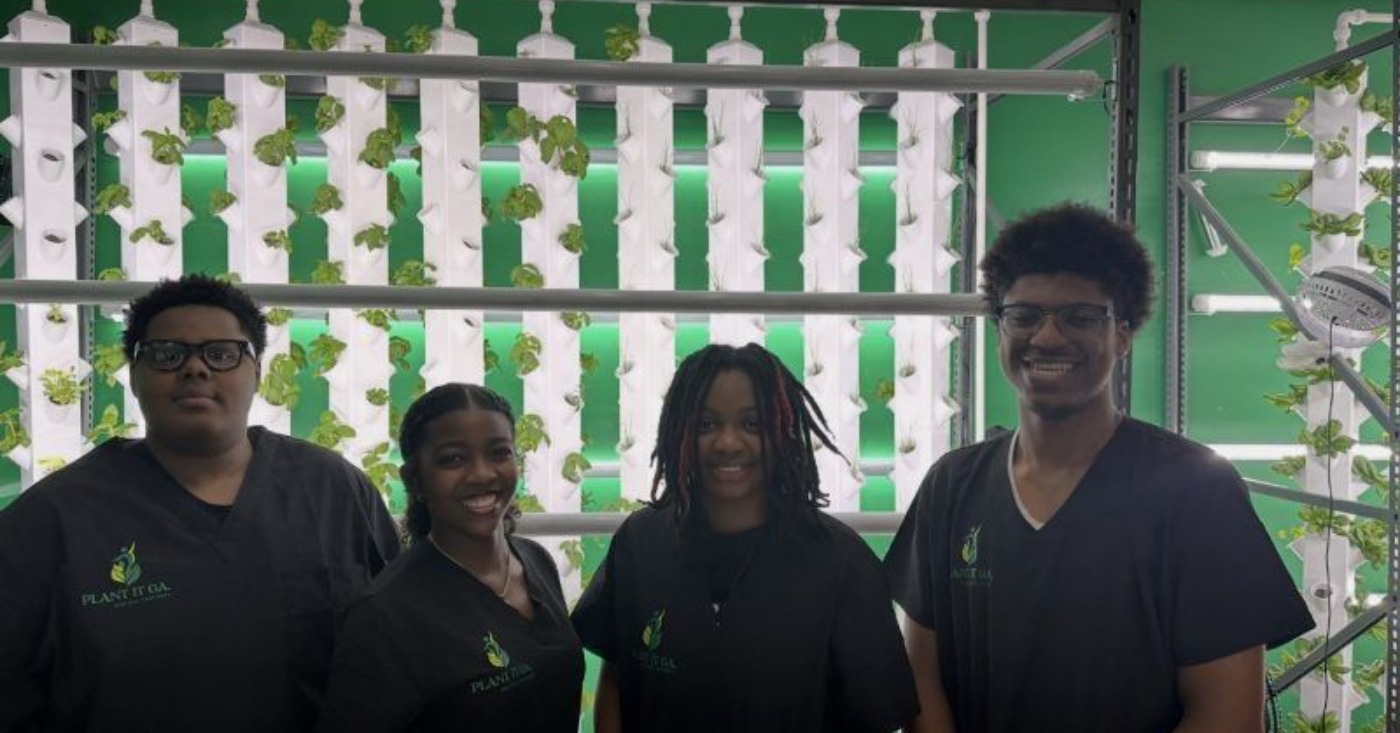
Two Georgia college students from Stonecrest are combining agriculture, technology, and community education to help families throughout Georgia grow their own food — even those without access to traditional growing spaces and equipment.
The two students recently completed the first prototype of Plant It Georgia’s mobile agricultural laboratory, which they said is an enclosed trailer equipped to introduce young people and families to growing food without relying on traditional farmland.
Mason Wright—a youth entrepreneur and a student at Morris Brown College—is the founder of Plant It Georgia Vertical Institute. The institute is an “educational initiative created to train young people in vertical farming, hydroponics, and other modern agricultural technologies,” according to Wright. Kosey Henley, a student at the University of Georgia, worked alongside Wright on the mobile lab.

The students said the idea came in response to an obstacle challenging many communities: transportation. Instead of requiring students to travel to the Plant It Georgia Vertical Institute, the program can take its lessons and growing systems directly into neighborhoods, schools, recreation centers, and other community spaces to teach students and their families about growing food in urban communities.
Inside the prototype, visitors will find hydroponic growing channels, lighting, and other equipment that show them how plants can grow in controlled environments. The laboratory aims to support hands-on lessons covering seed germination, water circulation, plant nutrition, lighting, harvesting, and the technology used to manage indoor crops, according to Wright.
The project comes as Georgia and the nation face an aging agricultural workforce.
According to the U.S. Department of Agriculture’s 2022 Census of Agriculture, Georgia had 63,492 agricultural producers, but only 4,770 were younger than 35. Nationally, the USDA counted 296,480 producers younger than 35, approximately 9 percent of all U.S. producers.
At the Plant It Georgia Vertical Institute, students are taught that farming does not always require acres of open land or heavy machinery. Vertical farming allows crops to grow upward in stacked systems while hydroponics uses nutrient-rich water instead of soil to feed the plants. These tactics make food production possible in classrooms, buildings, trailers, and densely populated urban communities, according to Wright.
Plant It Georgia’s growing systems can cultivate lettuce, tomatoes, collard greens, peppers, and a variety of culinary herbs, according to the news release. Students are taught the entire growing process — from placing seeds into starter materials and monitoring water and nutrients to caring for mature plants and harvesting fresh produce.
The program also introduces participants to careers connected to agricultural technology, plant science, environmental sustainability, food systems, and entrepreneurship.
Wright’s role as a Morris Brown College student and founder represents the connection between HBCU leadership, entrepreneurship, and community service, according to a news release. Wright also made headlines for opening Mason’s Super Dogs in Stonecrest in 2020 — which he now also operates on the Atlanta Beltline’s Eastside Trail. Henley brings another important academic connection through the University of Georgia, one of the state’s leading institutions in agriculture and agricultural research, according to the news release.
For event locations and more information, follow Plant It Georgia on Instagram (@plantitGA).
13 total views
Based on reporting by The Champion Newspaper.
Black Press
Neighborhood Empowerment Day in Deep East Oakland Brings Community Together After Recent Tragedy
Hosted by the 40×40 Council, the free, family-friendly resource fair featured health and wellness services, workshops, children’s activities, food, giveaways and local Black-owned businesses. Residents also connected with community organizations working to strengthen East Oakland.

Families, residents and community organizations gathered at the Parker Community Resource Center on Saturday, Sept. 12, for the 40×40 Neighborhood Empowerment Day, transforming the site of a recent tragedy into a space for healing, resources, connection and joy.
Hosted by the 40×40 Council, the free, family-friendly resource fair featured health and wellness services, workshops, children’s activities, food, giveaways and local Black-owned businesses. Residents also connected with community organizations working to strengthen East Oakland.
The gathering came six weeks after a fatal shooting occurred at the Ney Avenue center on July 31. The violence happened shortly before 9 a.m. on the campus of the adult education center and claimed the life of 25-year-old Kimarii McLemore. A second person was injured.
McLemore was attending what was supposed to be her final day in an adult education carpentry class. The shooting deeply affected her family and traumatized students, staff members and residents who had viewed the center as a safe place where community members could pursue education, career training and a better future.
Neighborhood Empowerment Day offered residents an opportunity to return to the center in a spirit of unity and reclaim the space as an important neighborhood resource.
“Reclaiming the space after a tragedy means creating opportunities for people to gather, connect, experience joy and feel a sense of community once again,” said Tim Zenor-Davis, program manager at Roots Community Health. “After a trauma occurs, we see what happened, we acknowledge its impact, and we are continuing to show up.”
Throughout the afternoon, children and families participated in activities while residents received information about health, wellness and other community services. The event also gave local entrepreneurs and service providers an opportunity to connect with the community.
Complimentary meals included grilled burgers and tacos while a DJ played popular music.
Guests received blood pressure and eye-sight checks. A space to exercise on yoga mats was provided while headphones with guided meditation offered a moment to slow down and reflect.
The 40×40 Council includes the Black Cultural Zone, Brotherhood of Elders Network, East Oakland Youth Development Center and Roots Community Health. Together, the organizations have worked to address community violence and the deeper systemic conditions that have affected generations of East Oakland residents.
The council’s work has extended beyond responding to individual tragedies. As part of the broader Rise East initiative, the collaborative has focused on reversing decades of economic disinvestment, systemic poverty, health disparities and the displacement of Black legacy residents.
The 40×40 area stretches from Seminary Avenue to the San Leandro border and from MacArthur Boulevard to the Bay. More than 30,000 Black residents live within the area, which contains Oakland’s largest concentration of Black residents.
Organizers said the area has continued to demonstrate resilience despite experiencing community violence, declining investment and a significant life-expectancy gap compared with wealthier parts of the region.
The council seeks to help reshape East Oakland into a vibrant, multigenerational community where Black residents can remain, return, heal, prosper and build power.
Black Press
Neighborhood Empowerment Day in Deep East Oakland Brings Community Together After Recent Tragedy
Hosted by the 40×40 Council, the free, family-friendly resource fair featured health and wellness services, workshops, children’s activities, food, giveaways and local Black-owned businesses. Residents also connected with community organizations working to strengthen East Oakland.

Families, residents and community organizations gathered at the Parker Community Resource Center on Saturday, Sept. 12, for the 40×40 Neighborhood Empowerment Day, transforming the site of a recent tragedy into a space for healing, resources, connection and joy.
Hosted by the 40×40 Council, the free, family-friendly resource fair featured health and wellness services, workshops, children’s activities, food, giveaways and local Black-owned businesses. Residents also connected with community organizations working to strengthen East Oakland.
The gathering came six weeks after a fatal shooting occurred at the Ney Avenue center on July 31. The violence happened shortly before 9 a.m. on the campus of the adult education center and claimed the life of 25-year-old Kimarii McLemore. A second person was injured.
McLemore was attending what was supposed to be her final day in an adult education carpentry class. The shooting deeply affected her family and traumatized students, staff members and residents who had viewed the center as a safe place where community members could pursue education, career training and a better future.
Neighborhood Empowerment Day offered residents an opportunity to return to the center in a spirit of unity and reclaim the space as an important neighborhood resource.
“Reclaiming the space after a tragedy means creating opportunities for people to gather, connect, experience joy and feel a sense of community once again,” said Tim Zenor-Davis, program manager at Roots Community Health. “After a trauma occurs, we see what happened, we acknowledge its impact, and we are continuing to show up.”
Throughout the afternoon, children and families participated in activities while residents received information about health, wellness and other community services. The event also gave local entrepreneurs and service providers an opportunity to connect with the community.
Complimentary meals included grilled burgers and tacos while a DJ played popular music.
Guests received blood pressure and eye-sight checks. A space to exercise on yoga mats was provided while headphones with guided meditation offered a moment to slow down and reflect.
The 40×40 Council includes the Black Cultural Zone, Brotherhood of Elders Network, East Oakland Youth Development Center and Roots Community Health. Together, the organizations have worked to address community violence and the deeper systemic conditions that have affected generations of East Oakland residents.
The council’s work has extended beyond responding to individual tragedies. As part of the broader Rise East initiative, the collaborative has focused on reversing decades of economic disinvestment, systemic poverty, health disparities and the displacement of Black legacy residents.
The 40×40 area stretches from Seminary Avenue to the San Leandro border and from MacArthur Boulevard to the Bay. More than 30,000 Black residents live within the area, which contains Oakland’s largest concentration of Black residents.
Organizers said the area has continued to demonstrate resilience despite experiencing community violence, declining investment and a significant life-expectancy gap compared with wealthier parts of the region.
The council seeks to help reshape East Oakland into a vibrant, multigenerational community where Black residents can remain, return, heal, prosper and build power.
Black Press
Oakland Launches Aerbits Program to Identify, Report Abandoned Trash
“Aerbits, which was approved by the Privacy Advisory Commission, uses modern technology and best practices to help our crews clear trash faster and more efficiently, while our targeted outreach and enforcement strategies address the root causes of dumping. Together, we are going to get the job done.”

On Tuesday, the City of Oakland launched Aerbits, an innovative new program that deploys AI-assisted aerial imaging technology to proactively detect and report abandoned trash on streets and sidewalks – to support timely and effective removal of illegal dumping.
By shifting from a reactive, complaint-based system to data-driven proactive detection, the City can deploy cleanup resources faster, more efficiently, and more equitably to the areas in greatest need.
Approved by both the Privacy Advisory Commission and the Oakland City Council, Aerbits is the latest addition to Oakland’s comprehensive strategy to eliminate illegal dumping from the Town.
“Oakland residents and businesses deserve clean streets and today we are one step closer to a safer, cleaner, and greener Oakland,” said Mayor Barbara Lee. “Our strategy strengthens eradication, education, and enforcement efforts across every neighborhood.
“Aerbits, which was approved by the Privacy Advisory Commission, uses modern technology and best practices to help our crews clear trash faster and more efficiently, while our targeted outreach and enforcement strategies address the root causes of dumping. Together, we are going to get the job done.”
The impacts of illegal dumping on Oakland are profound, disproportionately burdening historically disinvested communities while threatening public health, safety, and economic vitality.
The City is united in taking action to remedy it – with the mayor, Council, administration, Public Works Department, community groups and more coming together to make change.
In May, the City Council approved the Illegal Dumping Expenditures Action Plan, which approves and funds multiple actions – including Aerbits – to help remedy illegal dumping.
This past June, Oakland secured $9.2 million from the Crankstart Foundation to scale up operations like Aerbits and break the cycle of illegal dumping across Oakland.
The Aerbits aerial imaging system photographs public rights-of-way to pinpoint exact locations, estimate waste volumes, and classify types of debris. This enables City dispatchers to understand the problem and efficiently deploy the appropriate crew and equipment to each site.
Built with privacy at its core, the technology contains no facial recognition, no license plate readers, and uses no personally identifying information. Aerbits takes pictures of trash – not of people.
“I founded Aerbits because I saw a major gap in the data that was available to City crews on the streets, and I wanted our children to have a cleaner environment” said Aerbits Founder Brian Johnson.
“Aerbits enables cleanups to be timelier, more effective, and more equitable. By providing real-time comprehensive data, automating the creation of work orders, and improving closure of cleared tickets, we are removing the problems that occur when relying primarily on a complaint-based system,” he said.
Aerbits is the latest milestone in the series of actions the City is taking to implement the City Council-approved Illegal Dumping Expenditures Action Plan. Recent actions taken by the City include:
- Stricter Enforcement: Enacted a new Illegal Dumping Enforcement Ordinance increasing penalties and holding vehicle owners responsible; hired additional Environmental Enforcement Officers equipped with updated citation technology; and worked alongside State Senator Jesse Arreguin on legislation that allows the City to boot vehicles tied to repeat dumping offences.
- Community Resources: Reinstated the popular “Bulky Block Parties” offering residents free, convenient ways to get rid of bulky waste, alongside expanded public education campaigns.
- Expanded Fleet Equipment: Obtained new heavy-duty Lightning Loader trucks that allow us to clean up more volumes of debris faster than ever before.
Rebecca Kaplan is a former City Councilmember-at-large for the City of Oakland.
Black Press
Goldi-Locs and Two (or Three) Bears in the Forest in California Hills
OAKLAND POST — My husband has anticipated 99% of our needs – tents, saws, canopies, batteries, shovels, rakes, axes, picks, etc., and Goldi-Locs instructs and reminds us how to get from step A to B, but there is nothing like the experience you gain on your own. Meaning: you don’t how to do it until you do it. No matter what you read, what somebody says, until you do it, you don’t know.
It is my belief that the mice set us up. That’s how the bear(s) knew where to go.
On a mountain in Butte County, a wide-ranging crew of Black people have embarked on a mission of land stewardship.
That means if you want that country cottage, you have to build it yourself.
When we first saw the land after our veteran land steward – let’s call her Goldi-Locs for her long locs that are the gold of California hills – asked for help putting up a fence to ward off potential trespassers. What had been lavish green hills of Douglas fir were now covered with dark spires like burnt matches pushing into the sky.
Up close, moss and ferns edged out from the bases of blackened tree stumps. A lizard skittered by, the only sign of life. No birds. No squirrels. No mice.
And no bears.
Fast forward five years, and FEMA has done all it will do to clear burned trees. The remaining trees are dead and have to be logged and milled.
The most urgent work is to clear the dirt access roads clogged with dead trees. For shelter while we, I mean, they do that, we bought an old trailer that has seen better days but suits our needs.
My husband has anticipated 99% of our needs – tents, saws, canopies, batteries, shovels, rakes, axes, picks, etc., and Goldi-Locs instructs and reminds us how to get from step A to B, but there is nothing like the experience you gain on your own. Meaning: you don’t how to do it until you do it. No matter what you read, what somebody says, until you do it, you don’t know.
So, I thought I knew what I was doing. It was my job to assist with the cooking and set-up. And the break-down. There are cupboards in the trailer and a refrigerator, so I stored a couple of unopened boxes of spaghetti and an unopened bottle of olive oil, salt (Lawry’s of course), pepper, garlic powder and dried Italian herbs in the cupboard. In the refrigerator, which seals closed like any normal refrigerator I (accidently) left a box of butter.
Two weeks later, we get a call in Oakland from Goldi-Locs that the door of the trailer was hanging off its hinge, visible from her trailer uphill and 150 yards west of ours.
She said she would enlist the help of another (male) neighbor, to investigate.
An hour later, we got the report: No one was in the cabin, but a bear – or bears – had been. Outside, a torn box of spaghetti with just one or two remaining stiff strands lay in the dirt. Inside, the salt, pepper, herbs and garlic oil were an aromatic mess on the floor, while coffee grounds were scattered over the counter (After-dinner coffee?).
Paw prints led to the bathroom and beyond a single, muddy paw print marked the duvet on our bed.
Besides claw marks in the cupboard, and a swipe of dirt on the front and side of the refrigerator, there was no major damage.
Goldi-Locs and G. cleaned up the worst of it and were able to get the door up on the hinge and lock it. The trailer remained unmolested until our return.
In the meantime, some sleuthing – as Nancy Drew would put it – had been done. Visitors to the mountain confessed that they had previously prepared a vegetarian meal of – that’s right– pasta in a red sauce with sautéed garlic, onions, and Lawry’s and Italian herbs.
They ate outdoors. The scent filled the air. Mice have returned to the forest. They know how to get under, over and into trailers. Easy-peasy. They managed to get a little of the Italian meal. The bears wanted some. The mice shrugged their little shoulders and said, “we got everything but the crumbs, but over in the next yard, they have everything you need to MAKE IT YOURSELVES.”
So, it was Yogi, ‘smarter than the average bear, according to himself – and no doubt accompanied by Boo-Boo (the Fool), lumbered over to our unoccupied trailer and gently opened the door. The spaghetti in one cupboard, seasonings in the other, olive oil and look out- butter for bread in the refrigerator.
Yes, everything they needed. The whole recipe, or so the trifling mice said, having omitted fresh onion and bell pepper. The mice had left out the most important part – how to get the job done. Yogi had been given no information on pots, turning on the stove, boiling water, etc.
Disappointed, it was time for a nap, but the bed was neither hard, nor soft, but too small and as their cave was more comfortable, Yogi was of the mind to head home, maybe go fishing on the way in that nice stream up the hill.
Boo-Boo (the Fool), however, was of the mind to spitefully take do what bears do in the woods, but Yogi reminded him that, as it is their forest it is wise not to do that where you eat.
But when Yogi is not around, evidence shows that Boo-Boo routinely returns to the scene of the crime and leaves a little something in the middle of the path to the outhouse. Just because.
The mischievous mice have yet to be apprehended.
Auto
Gubernatorial Candidate Steve Hilton Blasts California New Tire Rules; Newsom Hits Back
Newsom defended the regulations Aug. 19, citing the commission’s projected savings for consumers. “I think it was a good choice,” said Newsom. “Save a billion dollars a year in fuel. Talk about an affordability agenda, that makes sense to me.”

Republican gubernatorial candidate Steve Hilton is criticizing California’s new replacement-tire efficiency standards, arguing they will limit consumer choice and increase costs for drivers.
Gov. Gavin Newsom, however, says the regulations will save consumers money.
Hilton protested the standards Aug. 20 outside the California Energy Commission in Sacramento, where he and supporters chanted, “Hands off our tires.” The commission unanimously approved the regulations Aug. 17, making California the first state to adopt energy-efficiency standards for replacement tires.
“We are done with these bureaucrats and these politicians in our state, making everything so insanely expensive,” Hilton said at the protest.
Hilton said that, if elected governor, he would eliminate or defund the Energy Commission. His opposition to the tire standards is part of his broader criticism of California’s high cost of living.
Newsom defended the regulations Aug. 19, citing the commission’s projected savings for consumers.
“I think it was a good choice,” said Newsom. “Save a billion dollars a year in fuel. Talk about an affordability agenda, that makes sense to me.”
The Replacement Tire Efficiency Program sets limits on rolling resistance, which measures how much energy a tire requires to move along a road. Tires with lower rolling resistance can improve a gasoline-powered vehicle’s fuel economy or extend an electric vehicle’s driving range.
The first phase will take effect in 2029, setting a maximum rolling resistance of 9.1 newtons per kilonewton. A stricter limit of 7.2 newtons per kilonewton will take effect in 2033.
The Energy Commission says the standards will ensure that replacement tires are, on average, at least as energy efficient as those installed on new vehicles. The agency estimates the regulations will save Californians nearly $1 billion annually in gasoline and electricity costs while reducing carbon dioxide emissions by two million metric tons a year.
Some tire manufacturers, however, have raised concerns about the effect on prices and product availability. Goodyear estimates that about 70% of replacement tires currently sold in California would not meet the 2033 standard and argues that the regulations could increase costs for consumers.
The Energy Commission estimates the standards will add about $1.50 to the cost of each tire during the first phase and $6.50 per tire beginning in 2033. The commission projects that a driver with a gasoline-powered vehicle could save about $179 in fuel costs over the life of a set of tires meeting the 2033 standard.
The regulations exempt several specialty products, including competition, winter, used, retreaded, motorcycle and certain off-road tires.


NEW INVESTIGATION INTO FEDERAL RESERVE GOVERNOR

NEW INVESTIGATION INTO FEDERAL RESERVE GOVERNOR 📱

2024 Luxury SUV: Price, MPG & Fuel Cost Analysis #shorts

Ballot Breakdown Your Vote Explained by Expert

All Skinfolk Ain’t Kinfolk

All Skinfolk Ain’t Kinfolk

Banking Black: A Smart Strategy for Your Money #shorts

All Skinfolk Ain’t Kinfolk

Car Seat Comfort: Rear Space vs. Front Seat Support #shorts

395 HP Turbo 6-Cyl: Smooth Power for Merging & Passing! #shorts

The Youngest American Killed in the Vietnam War

Latest Massacre in Haiti Reveals Cruelty U.S. Deportations

OPINION: Nolan Wells’ Death One of Several Signifying Racial Terror Lives on in U.S. South

Passing for White, Fighting for Black America: The Courage of Walter White

OP-ED: Haiti TPS: Have We Lost Sense of Humanity?

OP-ED: If AI Is the New Language of Power, Then NAN Wants Black Communities Fluent

OP-ED: How Does Your State Rank for Pre-K?

Henry O. Flipper: A Trailblazer at West Point and Beyond

Asm. Smallwood-Cuevas’s Bill Repealing ‘Racist’ CalWORKs ‘Man-in-the-House’ Rule Clears Legislature

NBA All-Star Damian Lillard Returns Home for 15th Annual Backpack Giveaway
NEW INVESTIGATION INTO FEDERAL RESERVE GOVERNOR
NEW INVESTIGATION INTO FEDERAL RESERVE GOVERNOR 📱
2024 Luxury SUV: Price, MPG & Fuel Cost Analysis #shorts
Ballot Breakdown Your Vote Explained by Expert
Banking Black: A Smart Strategy for Your Money #shorts
Car Seat Comfort: Rear Space vs. Front Seat Support #shorts
395 HP Turbo 6-Cyl: Smooth Power for Merging & Passing! #shorts

Nearly 1 in 4 Third Ward voters in ‘suspense.’ Here’s why you can still vote

HBCU Homecoming: A never-miss annual tradition

Jamika Phillips, Founder of Shades The Nail Bar
-

 Black Press1 week ago
Zakiya Jendayi Arrested, Locked Out of Home by Sheriff’s Deputies
-

 Black Press1 week ago
A $2.1 Trillion Wellness Industry Never Built a Daily Practice for Black Children. So This Atlanta Family Did.
-

 BlackPressUSA5 days ago
Latinas Deserve Equal Pay. Unions Help Make It Happen.
-

 Art7 days ago
Montclair Brewery: Brewing Culture, Community, History
-

 Black History1 week ago
Listening as a Lifeline: A Doula’s Witness to Black Maternal Health
-

 Black Press7 days ago
COMMENTARY: But God!
