Black History
Country Rap Tunes: Three Houston Artists That Are Pushing Musical Boundaries

In 1962, Ray Charles began to flex the power of his contract with ABC-Paramount by exercising his “full artistic freedom” clause. His first step was to record the music he had grown up listening to but there was strong pushback from the label. Executives let Charles know that he was moving into a genre where fans wouldn’t appreciate him. They also let him know that his already established large fanbase didn’t want to hear him perform a new style.
Charles still pushed forward and released Modern Sounds in Country and Western Music, a two-volume ode to the music of his childhood. While genres like country, pop, and rock & roll (as well as many others) can trace their roots back to African American culture, much of the African gets left by the wayside when the style is embraced by America. The results are: artists that come from the lineage that birthed the music get locked out and defined by race while their counterparts get the freedom to explore. In other words, black artists do black music and other artists do whatever they want. It’s why there is a stretch to classify certain artists while letting others experiment. Miley Cyrus, Justin Timberlake, Kidd Rock, Justin Bieber, Post Malone, and Machine Gun Kelly can introduce themselves to the public performing traditionally black genres and easily switch to another without question. K-pop artists can do their best New Edition rendition and garner success without true homage being paid to the original creators. Country Music, a musical style that at one time had morphed into anti-rap now produces artists that are heavily influenced by Hip-Hop. Now Hip-Hop celebrates its 50th anniversary and the fact that rap can be seen being performed by all types of people all over the globe shows the inclusiveness of the music birthed from the struggle of young black and brown youth.
Meanwhile there was backlash on whether Beyoncé should perform country music.
And while artists like Darius Rucker, Charley Pride, and Gary Clark Jr. helped to ease the appearance of black artists in the world of country, many black artists are still looked at as outsiders. K. Michelle, a singer that grew up on country music, still faced criticism when she decided to stop performing R&B and move completely into country. The singer told The Shade Room, “I really be feeling like I have to fight my people to sing my music” which led her to the belief that if she is going to have to fight, she’d rather fight for something that can inspire the younger generation. She’s achieving success, appearing on a tribute album to one of her favorite childhood groups, The Judds, and singing alongside Jelly Roll for their well-praised performance of “Love Can Build A Bridge.” The song from the tribute album is a stirring, gospel-tinged ode to The Judds, sung by a black artist known for R&B and a white country artist known for singing and rapping.
This is not a slight against Jelly Roll, whose acceptance speech for new artists was timely and moving. Often if a non-black artist performs traditionally black music, they receive the brunt of the criticism. Sometimes that criticism is warranted. Sometimes not. Ultimately, the problem isn’t just why is this non-black artist performing the music, but rather, why aren’t black artists supported enough to take risks in different styles of music? It’s just taking time to point out that we easily define Jelly Roll as a rapper/singer that can do country, gospel, or whatever else while at the same time jumping through hoops to pigeonhole Rod Wave. A Google search of Rod quickly leads to “What type of music does Rod Wave perform?” and the results are a mix usually ending with some version of Trap-N-B, Trap R&B, Trap Soul, Soul Trap, Hip-Hop & R&B.
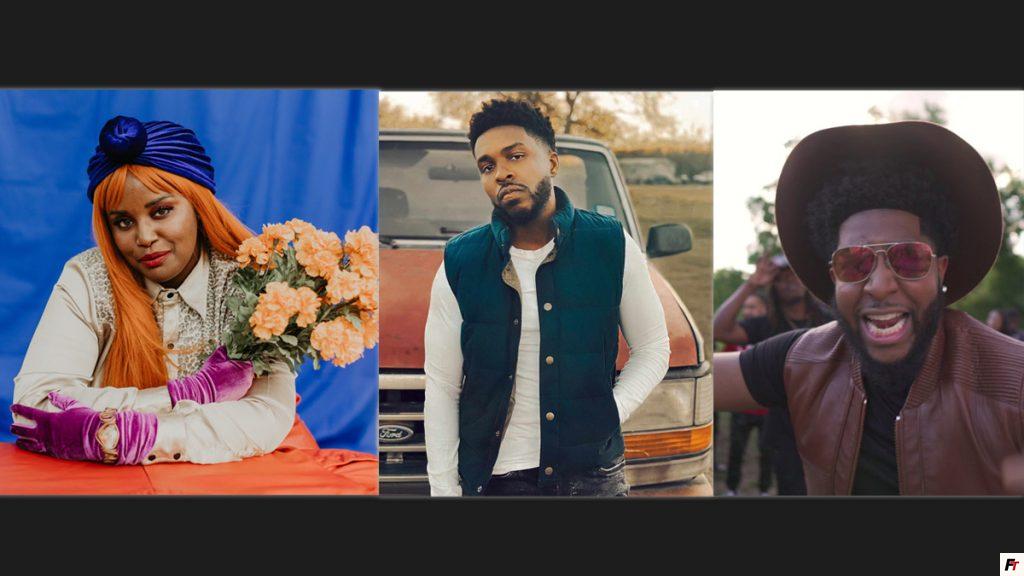
Are things changing? Maybe. Lil Yachty dropped a rock album. d4vd has taken over TikTok with his genre-bending styles and, if he is not experimental enough for you, Teezo Touchdown takes it even further. Hopefully K Michelle will achieve success in the world of country. Her performance at the CMAs appeared to have far less backlash than Beyoncé. That could be because of changing attitudes, falling ratings for awards shows, or the fact that Beyoncé alone is going to draw attention, and therefore, more backlash…or it could be that we are starting to see black artists given the grace to try out new styles. I don’t have the answers, but I can point out three artists in Houston that are taking the risk. Like Ray Charles, they are embracing the music they love without being overpowered by the thought it won’t be accepted. Hopefully more will embrace them.
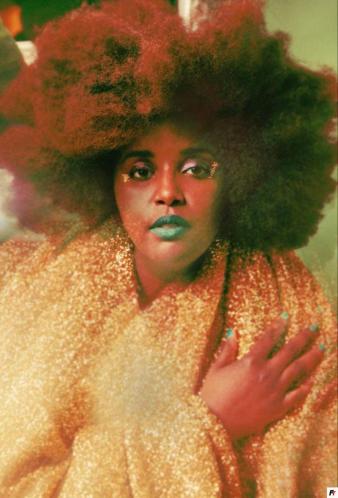
Kam Franklin
Kam Franklin
Franklin is the lead singer of The Suffers, a band that dabbles in everything from Ska to Blues to Rock. As the lead, she is just as eclectic as her band, putting her hands in singing, producing, modeling, acting, writing, and activism. Kam is preparing the release of her solo album but has still managed to put out “Gulf Coast America,” a visual EP telling the stories of people living in Houston. She has led the Bayou City Comeback Chorus, a collection of artists she chose to create an album with about social justice. All of this is done while still being the frontwoman and touring with her band. There is no way to pigeonhole her because she will do whatever music she feels like doing in the moment. She has provided one of my favorite hooks on a rap song (“The Lord Don’t Like Ugly” by Rob Gullatte), hosted and performed alongside Gary Clark Jr. and Paul Wall for their Red Bull Sound Clash, and created “A Bitch Didn’t Listen,” a country song about using too much weed. If you are looking for variety and someone that will always unapologetically be themselves, then look no further than Kam Franklin.
Norman North
Norman North
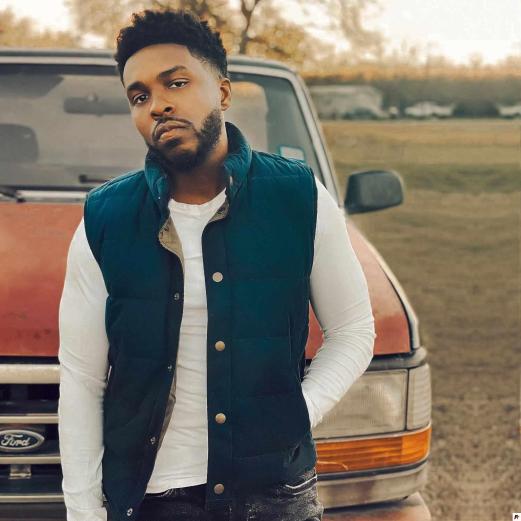
Norman North has already made a name for himself under his producer/rap moniker DJ Chose. His singles “THICK,” “Minor SetBack,” and “Where She At” have helped propel him onto the charts as well as all over TikTok. DJ Chose is known for his club music but, after the death of his mother, he temporarily lost the want to party and make music. While he couldn’t listen to party music, he found himself falling in love with country and started trying out the genre himself. After practicing he put an EP online under his real name and was eventually signed to a country music label. Not as DJ Chose but as Norman North. Now he straddles the line between both, continuing to release music as DJ Chose and tour with artists like Kevin Gates, but also recently releasing his country album, Place I Don’t Belong. He describes it as “a musical reminder that we are complex, and we don’t belong in boxes or stereotypes.”
Trilly Polk
Trilly Polk
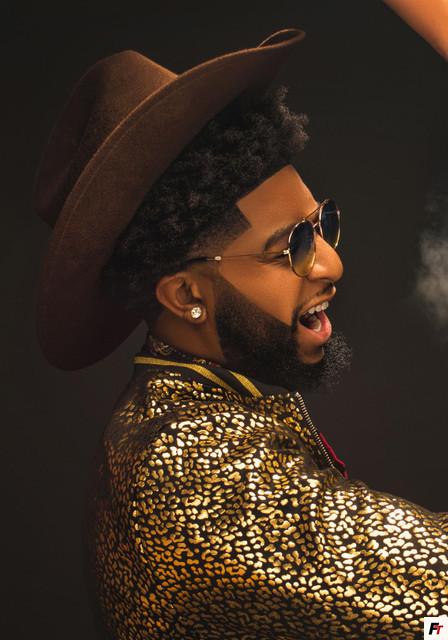
Known as Mr. Bow-Tie Shiny Shoes, the Port Arthur native who spent his days in Missouri City, is hard to miss. Dressed impeccably from his cowboy hat to shiny boots, his sing-song style embodies artists like Chalie Boy. His style is an ode to Houston rap, country, and zydeco with call & response hooks led by his booming, preacher-like voice. His unmistakable look has helped him to become an ambassador for a few brands but don’t let his look take away from his music. Albums like The Trilly Ghost and The Legacy of Bow-Tie & Shiny Shoes have helped him to amass a fanbase that gives him the freedom to make more tracks like “Country Soul.” Be on the lookout for Bow-Tie & Shiny Shoes 3 and more from Trilly Polk.
The post Country Rap Tunes: Three Houston Artists That Are Pushing Musical Boundaries appeared first on Forward Times.