
Black History
Burying The Past And Building The Future In Post-Apartheid South Africa
SAN DIEGO VOICE AND VIEWPOINT — Much like the United States, South Africa was shaped by more than three centuries of colonialism, slavery, violent racial conflicts and racial segregation. Started in 1948 and known as apartheid, the violent system of legal segregation finally ended in the early ‘90s in part because of the anti-Apartheid movement in the United States and across the world. The system was brutal, and it was enforced with all the coercive machinery of the state, including government-sanctioned death squads that tortured and killed scores of anti-apartheid activists.


With the recent deaths in 2021 of South African Anglican Bishop Desmond Tutu on Dec. 26 and Frederik Willem (F.W.) de Klerk on Nov. 11, three of the men that laid the foundation to transform South African society are no longer able to see the result of their work – and the growing disillusionment over the lack of progress.
By Alma Diamond, New York University
The deaths of Tutu and de Klerk evoked the dark days after Nelson Mandela died in 2013, when hundreds of thousands of South Africans traveled from across the country, spending hours and sometimes days in long queues to pay their final respects.
As a 32-year-old, native South African, I once believed that giants like Mandela and Tutu – de Klerk’s role was always questionable – had entrusted us with a new South Africa. As a legal theorist, I now see instead that they left us merely with an invitation to make that dream into reality.
Their lasting legacy is a deep and abiding commitment to the rule of law that belongs to all South Africans equally. I wonder how long that legacy can survive alongside extreme inequality.
Past Injustices
Back in the early 1980s, a grassroots movement took hold throughout the United States. It was part of an international effort, energized by unrest on college campuses, to end one of the most racist regimes in modern-day history.
Much like the United States, South Africa was shaped by more than three centuries of colonialism, slavery, violent racial conflicts and racial segregation. Started in 1948 and known as apartheid, the violent system of legal segregation finally ended in the early ‘90s in part because of the anti-Apartheid movement in the United States and across the world. The system was brutal, and it was enforced with all the coercive machinery of the state, including government-sanctioned death squads that tortured and killed scores of anti-apartheid activists.
Among those killed was Stephen Biko. The founder of the Black Consciousness Movement, Biko was found dead after being tortured while in police custody. His murder in 1977 sparked an international outcry.
The moment of racial reckoning hit its zenith in 1990 when the South African government released Mandela, the leader of the African National Congress, from prison after serving 27 years. Convicted of acts of sabotage against the South African government, Mandela was punished for his unrelenting efforts to gain full citizenship rights for nonwhite South Africans then ruled over by the white minority.
Atlanta Mayor Andrew Young, third from right, his wife Jean second from right, Ozell Sutton, fourth from right, and former Atlanta Mayor Maynard Jackson fourth from left, join arms as they participate in an Alpha Phi Alpha Fraternity “Free South Africa” march in downtown Atlanta, Aug. 11, 1985. Several hundred people walked from a downtown hotel down Auburn Ave. to the Martin Luther King Jr. Center. Three men at far left and woman at far right are unidentified. (AP Photo/Ric Feld)
But apartheid’s prominent place in racial justice history is not only because of its status as a crime against humanity, but also how it came to an end. Apartheid wasn’t eliminated after a widely predicted violent civil war, but rather in a legally negotiated, largely peaceful, constitutional transition. Ultimately, the dismantling of apartheid came by the hands of South Africans.
With the transition came international acclaim and three Nobel Peace Prizes. The first was awarded in 1984 to the Anglican Archbishop of Cape Town, Tutu, “for his role as a unifying leader figure in the non-violent campaign to resolve the problem of apartheid in South Africa.”
The other two went to Mandela and de Klerk, the last president under apartheid, both in 1993, “for their work for the peaceful termination of the apartheid regime, and for laying the foundations for a new democratic South Africa.”
Unlike Mandela and Tutu, de Klerk remains a divisive figure. Indeed, both Mandela and Tutu were critical of him. During negotiations to end apartheid, de Klerk infamously told one of his cabinet members that “We are basically the liquidators of this firm.” It wasn’t until 2020 and while he was on his death bed that de Klerk unequivocally renounced apartheid – for the first time.
Reckoning
Tutu and Mandela recognized the need to deal – explicitly and purposefully – with the injustices of the past. To that end, the transitional South African Constitution included a section of “National Unity and Reconciliation.” The final constitution, one of the most progressive in the world, explicitly states that South Africans “recognize the injustices of the past” and commit the government to “establish a society based on democratic values, social justice and fundamental human rights.”

The South African Truth and Reconciliation Commission, known as the TRC, represented a concerted institutional effort at such healing. It was established by legislation in 1995 to “establish the truth in relation to past events … in order to prevent repetition of such acts in the future.”
Over the course of four years of public hearings, perpetrators came forward and confessed, victims told their stories and reports were made public.
Acknowledging the past has its merits. Legal scholars such as New York University Law Professor Peggy Cooper Davis suggests that the United States is in need of a similar process of collectively facing the truth in its own reconciliation about “group-based cruelties.”
But in the end, South African reconciliation was never merely about burying the past, it was about building a future. As South African historian Jacob Dlamini has argued in his book, “Native Nostalgia”, we remember the past so that we can imagine alternative futures.
That future remains elusive.
Present inequality
The wealth gap in South Africa is one of the highest in the world and remains largely unchanged since the end of apartheid.
For most Black South Africans, the reality of life remains on the margins of an economy set up to serve a class of privileged few. White unemployment is around 9%, Black unemployment is 36.5%. Income in the country remains “heavily racialized”: White South Africans earn, on average, three times more than Black South Africans.
An uncertain future
Widespread student protests in 2015 have been characterized by some as the first sign of a profound disillusionment with the new South Africa. Similar disillusionment was visible in widespread riots in 2021.
It is in this crucial moment of disillusionment that South Africans are left to fend on their own without the leadership of our founding fathers.
They did not, we see now, leave behind a transformed South Africa.
As Tutu said in his foreword to the TRC report in 1998: “The past, it has been said, is another country. The way its stories are told and the way they are heard change as the years go by. The spotlight gyrates, exposing old lies and illuminating new truths.”
He then explained: “The future, too, is another country. And we can do no more than lay at its feet the small wisdoms we have been able to garner out of our present experience.”
Tutu’s lesson to South Africans was that by accounting for the past, we are also becoming accountable to the future. Ultimately, reconciliation lies in the much harder work of committing to a just future – a task that remains unfinished.
Alma Diamond, Candidate, Doctor of Juridical Science, New York University
This article is republished from The Conversation under a Creative Commons license. Read the original article.
The post Burying The Past And Building The Future In Post-Apartheid South Africa appeared first on The San Diego Voice & Viewpoint.
This article originally appeared in San Diego Voice and Viewpoint.




Black History
Black Barbershops Have Long Given Neighborhood Politics a Place to Unfold.
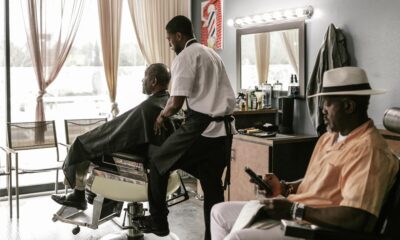
BLACKPRESSUSA NEWSWIRE — For generations, Black barbershops have served as more than just places for grooming; they have functioned as essential hubs for political debate, neighborhood news, and civic connection. During the era of segregation, these community-owned spaces provided a rare environment where Black residents could gather freely to discuss matters affecting their daily lives.

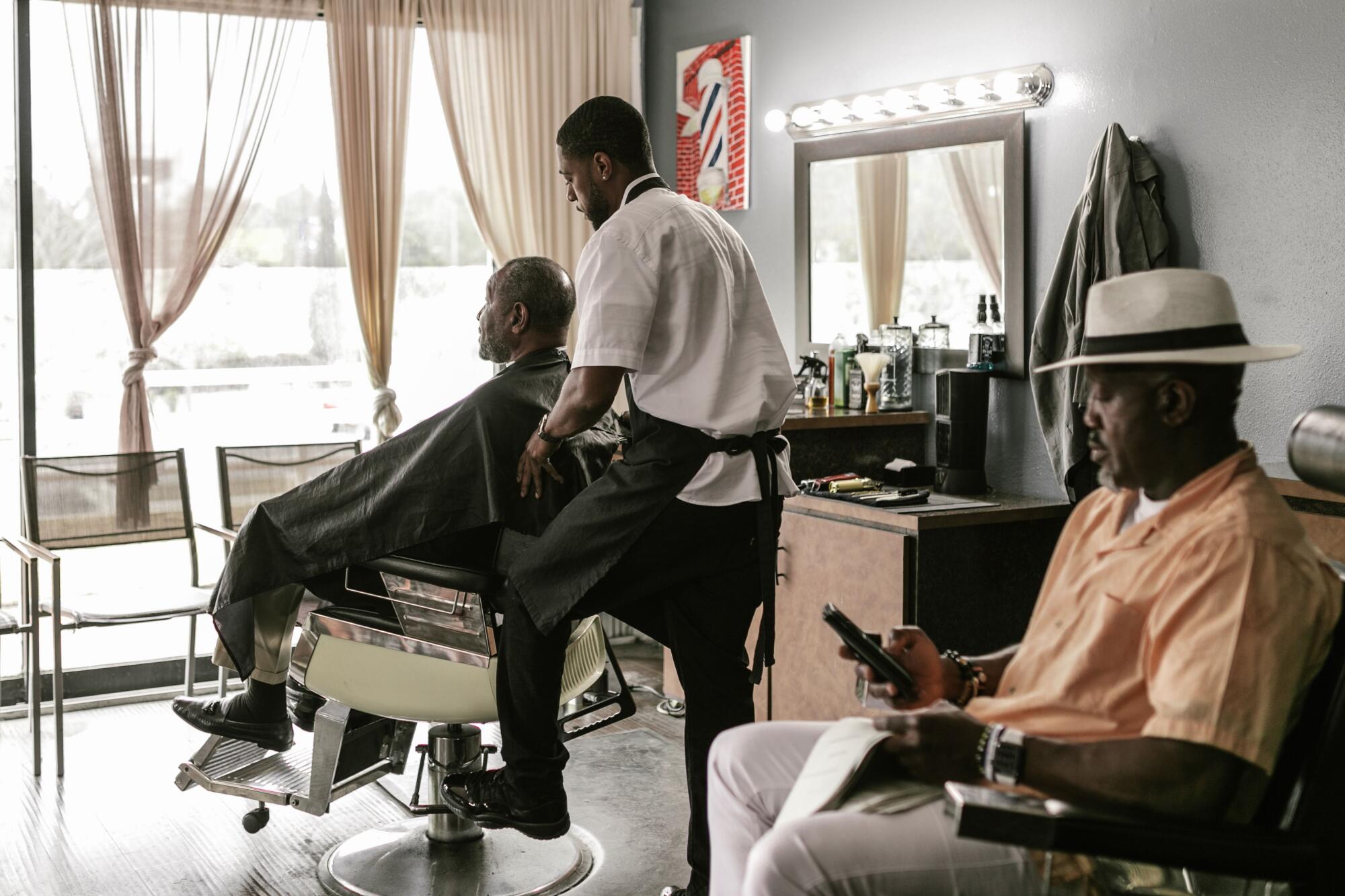
Black barbershops offer space for political debate, neighborhood news, and civic ties. The black barbershop also preserves local stories often missing from official records.
A haircut might bring you through the door. A conversation about a school closing, a city election, or a struggling business might keep you there. Inside a neighborhood shop, people can challenge opinions without needing a microphone.
A familiar storefront can hold decades of public life. Studying its past reveals people who earned a living, debated decisions, and helped neighbors interpret events.
Why Have Black Barbershops Been Important to Their Communities?
An African American barbershop has often combined a practical service with a gathering place. Under segregation, Black residents faced barriers in many public settings. Community-owned shops could offer more room for conversation and connection.
The National Museum of African American History and Culture describes barber and beauty shopsas places where customers discuss matters affecting their lives. Regular visits built relationships across generations.
Barbers often knew which families needed help or which businesses had opened. Waiting customers heard different viewpoints.
The importance of the shop came from trust built over many ordinary visits. A young customer might meet an older neighbor who understood the area’s past. Such relationships gave local conversations staying power and helped turn a routine appointment into a shared community experience.
How Did Black Barbershops Become Places for Political Discussion?
Politics often started with questions about rent, schools, jobs, or fair treatment. Customers connected those problems to elected leaders.
A University of Chicago report examined conversations inside a South Side Chicago shop. Researchers found that patrons debated:
- Political power
- Economic choices
- Leadership
They also disagreed with one another. A black barbershop did not require agreement. Customers could test ideas against those of neighbors.
Some shops supported voter registration and civic groups through personal relationships. Notices on counters or conversations with regulars could bring public issues into daily life. Yet lively debate was not the same as organized activism, and each shop had its own culture.
Black Barbers Built Businesses That Reached Beyond Haircuts
Enslaved and free Black men worked as barbers when many trades were restricted. Ownership later gave some black barbers a path toward greater financial independence, even under unfair laws.
Alonzo Herndon offers one example. According to the Georgia Historical Society, he operated Atlanta barbershops, including the Crystal Palace, and later built a major insurance business. His shops served white customers, reflecting segregation and unequal access.
Herndon’s success was unusual. Black business owners could still turn skilled work into jobs and property. Not all black companies grew large. Neighborhood shops kept commerce local.
Owners also faced rent, competition, and the challenge of building a steady customer base. Their business records can reveal how Black enterprise survived major shifts in the local economy.
Photographs and Newspapers Reveal Neighborhood History
Shop photos show storefront signs, neighboring businesses, clothing, and names painted on windows. Those clues help date images.
City directories can connect a shop name to an address, while maps show whether its block later changed. Each clue adds a piece to neighborhood history without requiring a famous owner or landmark.
Next, try the Library of Congress’s Chronicling America resources. Historic newspapers hold:
- Ads
- Openings
- Local events
- Owners’ names
Older records may use dated language. A useful starting checklist includes:
- Shop names and former street addresses
- Advertisements and business listings
- Photographs with dates or handwritten notes
- Local reporting about civic meetings
Compare records. An ad can confirm a shop’s address, not what customers discussed. Good neighborhood history separates documented facts from personal memories.
Customers’ Memories Fill Gaps in the Public Record
Customers may remember an owner’s nickname. Former barbers can explain busy hours or changes after a nearby factory closed.
Ask about routines and memorable events. Distinguish firsthand knowledge from secondhand stories.
When possible, interview more than one person. Different memories may show how workers and customers experienced the same event.
A recording can be useful, but permission comes first. Explain whether an interview will be shared publicly, kept privately, or donated to a library. Take note of:
- The date
- Place
- Speaker’s preferred name
Differences between memories are clues worth checking, not reasons to dismiss an account.
Modern Grooming Changes, but the Community Role Remains
Today’s African American barbershop operates amid appointment apps and new grooming services.
Some men also explore treatments beyond conventional haircuts. Many who are comparing long-term hair reduction with other grooming choices can learn more here.
A shop’s social value goes beyond its services. Many black barbers still:
- Listen to customers
- Pass along local information
- Create space for people of different generations to meet
The work of black business owners remains part of the wider story of black companies and community investment.
Frequently Asked Questions
How Can You Tell Whether an Old Barbershop Moved?
Start with city directories from several years. Match the owner’s name, phone number, and shop name at each address.
Property records or historical maps may show whether a street was renamed or a building was replaced. Moves may reflect development or shifting customers. Record each address and source.
Can You Share a Historic Barbershop Photo Online?
Owning a print does not guarantee copyright. Identify the:
- Photographer
- Date
- Source collection
A library may allow research access while limiting reuse. Copyright rules can vary by image and age, so avoid assuming that an old photo is free to publish.
Ask about permission when rights remain unclear. Credit the photographer and people pictured when their names are known. Respect requests from families who prefer sensitive images to remain private.
How Can You Preserve a Shop’s History After It Closes?
Collect photos, business cards, notices, and interviews. Label digital files and protect originals.
A local library, historical society, or community archive may help preserve the collection. Include the stories of workers and customers, not only the owner.
Public access can keep a vanished storefront connected to the people who remember it. A short exhibit or digital collection can help younger residents discover that history.
Keep the Black Barbershop Story Alive
A black barbershop can hold pieces of a town’s political, economic, and cultural history. Preserving those pieces starts with listening carefully and checking the record.
Continue exploring our other guides and articles for more stories about Black history, local businesses, and the communities they serve.
Content provided through ContentManagerIO.
Black History
California Legislative Black Caucus Grows to 14, Women Hold 12 Seats
SAN DIEGO VOICE & VIEWPOINT — SAN DIEGO VOICE & VIEWPOINT — The California Legislative Black Caucus (CLBC) is preparing for a historic expansion following the Nov. 3 general election, with its membership set to grow from 12 to 14 members. This shift marks a significant milestone for political representation in the state, as Black women are expected to hold 12 of the 14 seats in the upcoming legislative session.
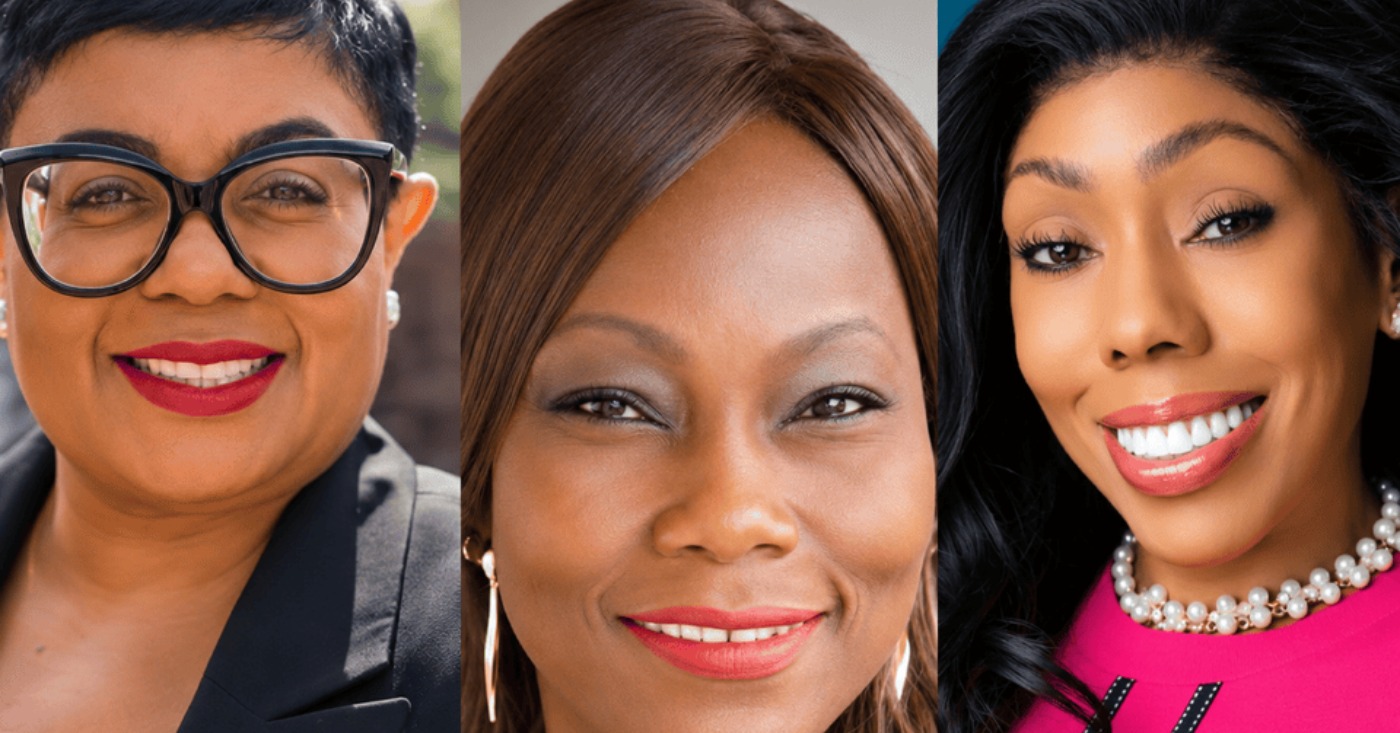
The California Legislative Black Caucus (CLBC) is preparing for a historic expansion, growing from 12 to 14 members following the Nov. 3 general election.
Black women are expected to hold 12 of the caucus’s 14 seats. The shift marks a significant milestone for Black women’s political representation in California and creates new opportunities to influence legislation, state resources and public policy.
Three incoming assemblymembers — Ayanna Davis (D-Compton), Jackie Elward (D-Rohnert Park) and Paula Swift (D-Westminster) — are expected to join the caucus when the new legislative session begins. Their victories, coupled with the departure of longtime Assemblymember Mike Gipson (D-Carson), will reshape the caucus’s membership and further elevate the role of Black women in the Legislature.
Davis, who won the 65th Assembly District seat representing Compton and surrounding communities, previously served on the Compton Unified School District Board of Education. An educator and former school principal with the Los Angeles Unified School District, Davis has focused much of her public service on education and opportunities for children and families. She will succeed Gipson, who is leaving the Legislature because of term limits.
Elward, who won the 12th Assembly District race in the North Bay, is a first-generation immigrant from the Democratic Republic of Congo. An educator, labor organizer and former mayor of Rohnert Park, she became the first Black woman elected to the city’s council in 2020. Her local government experience included policy related to affordable housing, homelessness and environmental justice, among other issues.
Swift defeated Republican incumbent Tri Ta in the 70th Assembly District race in Orange County. An educator and small business owner with a doctorate in Organizational Change and Leadership from the University of Southern California, Swift brings experience across nonprofit, government and private-sector organizations.
Although Davis replaces Gipson, Elward and Swift add two seats to the caucus, bringing its membership to 14. With all three incoming members being women, the caucus will move from nine women among its current 12 members to 12 women among next session’s 14 members.
The achievement builds on a milestone reached at the beginning of the 2025-26 legislative session, when women first became the majority of the CLBC. At that time, nine of the 12 members were Black women, the highest number in the organization’s history.
For LaNiece Jones, state president and CEO of Black Women Organized for Political Action (BWOPA-CA), the election results reflect generations of organizing and advocacy that have helped create opportunities for Black women in politics.
“We are celebrating an exciting moment for Black women’s political leadership across California. From local and regional offices to statewide leadership, these victories represent generations of Black women who have organized, advocated, mentored and opened doors for others to follow,” Jones told California Black Media (CBM).
Jones emphasized that electoral victories must translate into tangible improvements for Black communities.
“Winning elections is an important milestone, but building and sustaining political power is the greater mission. Representation must translate into meaningful influence, equitable policies, expanded opportunities, and tangible improvements in the lives of Black women, families, and our communities,” she said.
Jones also pointed to persistent barriers facing Black women seeking political leadership, including campaign financing, access to political networks, institutional support and opportunities for advancement.
The challenges extend beyond electoral politics, according to Black women leaders.
The 2025 State of Black Women in California Report, published by the California Black Women’s Collective Empowerment Institute (CBWCEI), founded by Kellie Todd Griffin, documents persistent disparities in economic opportunity and social outcomes for Black women. Its findings reinforce the importance of ensuring that increased political representation addresses issues such as economic mobility, housing stability, health care and opportunities for Black women and girls.
“The number of Black women elected to public office across California in 2026 represents more than electoral victories.” said Todd Griffin, who is also president and CEO of CBWCEI.
“From city halls and school boards to the State Capitol and beyond, Black women are claiming their rightful place at decision-making tables,” continued Todd Griffin. “Every victory expands representation, strengthens our communities, and opens doors for the next generation of leaders. When Black women lead, California’s democracy grows stronger.”
The caucus is also preparing for a leadership transition. State Sen. Dr. Akilah Weber Pierson (D-San Diego), its outgoing chair, will pass the leadership position to Assemblymember Corey Jackson (D-Moreno Valley) for the 2027-28 legislative session.
In August, the caucus announced its incoming executive leadership team. State Sen. Laura Richardson (D-Inglewood) will serve as vice chair, Assemblymember LaShae Sharp-Collins (D-San Diego) as secretary, and Assemblymember Mia Bonta (D-Oakland) as treasurer.
Reflecting on her tenure, Weber Pierson said she was proud of the caucus’s work both inside and outside the Capitol.
“Serving as chair of the California Legislative Black Caucus has been an incredible honor. I am proud of the difference we have made not only through legislation, but by showing up in our communities and creating meaningful change for Black Californians,” Weber Pierson said in the caucus’s August announcement.
Founded in 1967, the CLBC was established to give Black lawmakers a unified voice in California government. Over nearly six decades, the caucus has helped advance legislation addressing racial equality, economic security, health care and criminal justice.
For BWOPA-CA, which has spent more than five decades developing Black women leaders and strengthening civic participation, the moment represents both progress and responsibility.
“Our success is not measured simply by how many seats we win, but by how many doors we open, how much opportunity we create, and how effectively we use our collective power to advance our communities,” Jones said.
Based on reporting by San Diego Voice & Viewpoint.
Black History
Ramon G. Griffin: A Morehouse Man on a Mission
WASHINGTON INFORMER — Ramon G. Griffin, an African-American history instructor at Thurgood Marshall Academy Public Charter School in Southeast D.C., was recently named the 2027 D.C. Teacher of the Year.
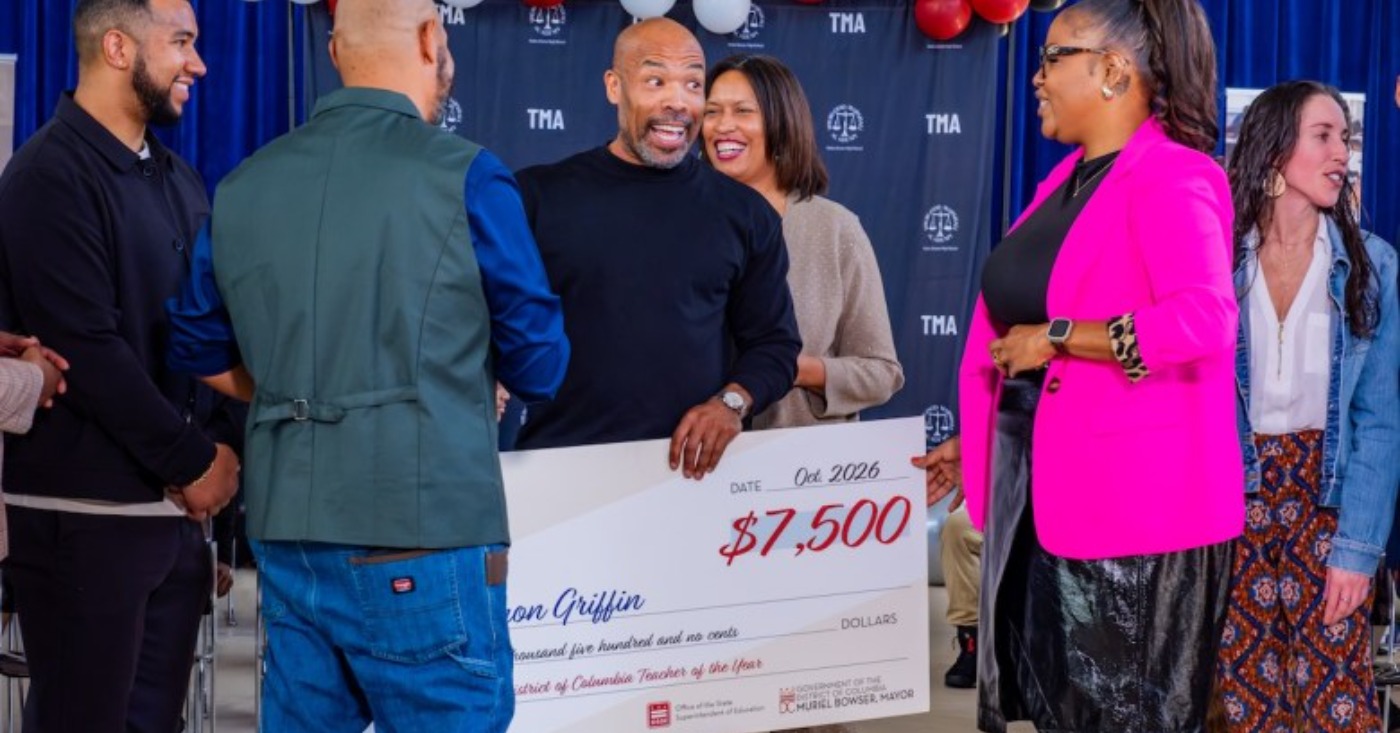
Shortly after becoming 2027 D.C. Teacher of the Year, Ramon G. Griffin appeared on WHUR 96.3 FM, where his story reached thousands of listeners, including a mother who he said later wrote him a two-page letter in request of guidance for her teenage son.
“I look forward to reaching out to her and assisting her in that process and that goal,” said Griffin, an African-American history instructor at Thurgood Marshall Academy Public Charter School in Southeast. “The meaning of this Teacher of the Year award is that I am able to have a voice and representation on a larger scale so that others can be inspired and so that I can help individuals. It’s my objective to work more closely with young teachers to aid them in their skill set, to make sure our children are being educated properly and effectively.”
On Oct. 26, D.C. Mayor Muriel Bowser — flanked by D.C. State Superintendent Dr. Antoinette Mitchell, Ward 8 D.C. State Board of Education Representative Dr. LaJoy Johnson Law, and others — announced Griffin as 2027 D.C. Teacher of the Year during what several students, faculty and staff at Thurgood Marshall Academy PCS thought was an assembly organized in celebration of the school’s 100% college acceptance rate since its inception.
“In my spirit, I can honestly say I knew I won,” Griffin told The Informer. “When she switched it up and said ‘I’m here for a teacher,’ the first thing that came to mind was that this may be it. Then she stated a quote from a documentary that was done on me last year, and she stated where I originate from, and I said I’m about to be awarded D.C. Teacher of the Year. That’s when it set in.”
Griffin, a self-described griot, has 13 years of teaching under his belt, seven of which have been at Thurgood Marshall Academy PCS. That’s where he currently serves as an instructor of AP African-American Studies and African American History through Film and Music. Both courses, he told The Informer, allow him to engage students in storytelling.
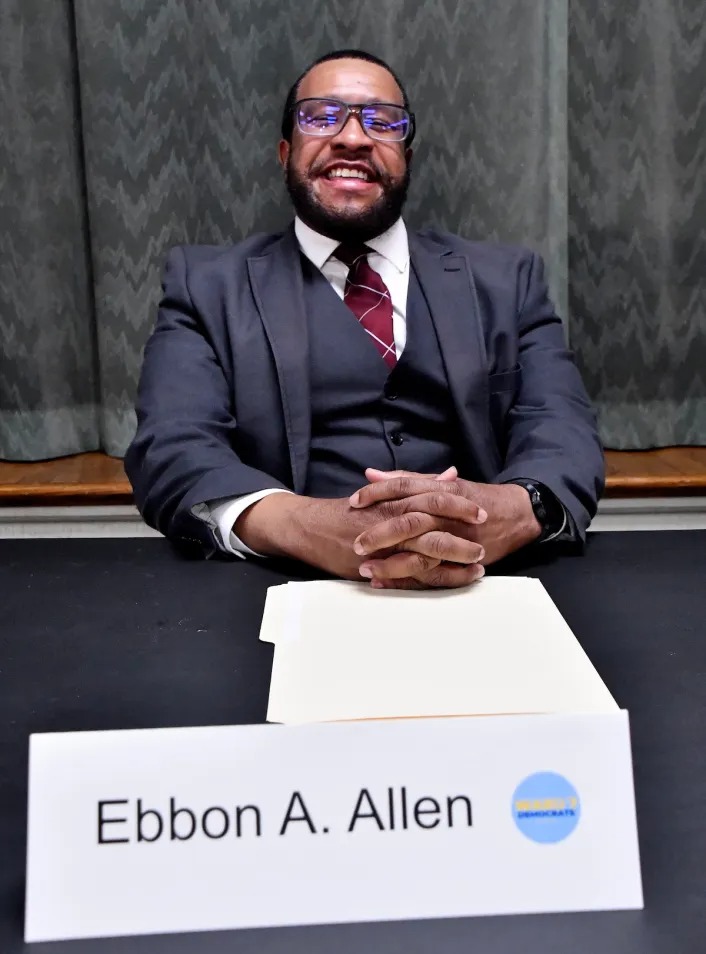
Within a couple of months, Griffin’s endeavor to shape the minds of youth continues when Thurgood Marshall Academy PCS hosts yet another “Morehouse Day.” This event, held at several District schools, connects male students with members of the Morehouse Alumni Association Washington, DC Chapter, many of whom graduated from District public and public charter schools before pursuing higher education.
“We have Morehouse men who come in: those who are elders to me, those who were there during my tenure and those who are younger,” said Griffin, a member of Morehouse’s Class of 1998 and key influence in at least three Thurgood Marshall Academy PCS alumni’s matriculation to the HBCU. “What it shows is that we as Black men are not what they portray in the news. We’re not about bringing each other down. We’re about standing out, building, and making sure that our race is looked upon proudly, not for others, but for self and for the next generation.”
An Inside Look: ‘Morehouse Day’ at Thurgood Marshall Academy PCS
The upcoming “Morehouse Day” at Thurgood Marshall Academy PCS is scheduled to take place on Jan. 15, which would’ve been the 98th birthday of Morehouse alumnus the Rev. Dr. Martin Luther King Jr. This intergenerational gathering also happens around the same time that Howard University men’s basketball team plays its home game against Morehouse College.
For Morehouse alumnus and “Morehouse Day” brainchild Ebbon Allen, it was a perfect storm that only Griffin could help make happen.
“Before we even knew that Ramon was going to be awarded and honored, we’ve been on ‘Morehouse Day’ as teammates for the last two years,” Allen told The Informer. “We definitely had a meeting within the last two or three months to designate ‘Morehouse Day’ for MLK’s birthday weekend. Ramon just shows the epitome of a Morehouse man: well-versed, well-traveled, and definitely educated.”
Speaking more about his fellow Morehouse alumnus, Allen said that Griffin has long put in the work to boost college enrollment among young Black men.
“He’s had a lot of young men going to attend Morehouse College,” Allen told The Informer. “We’re still trying to work on a pipeline to send more young men from Thurgood Marshall Academy down to Atlanta.”
Since the inception of “Morehouse Day” in 2021, Allen and other members of the Morehouse Alumni Association Washington, DC Chapter have spoken to more than 2,000 young men attending: Calvin Coolidge High School; Dunbar High School; Eastern Senior High School; Friendship Technology Preparatory High School; H.D. Woodson High School; Kelly Miller Middle School; and Ron Brown College Preparatory High School.
The upcoming “Morehouse Day” at Thurgood Marshall Academy PCS will be the second seminar of its kind on school grounds. Allen said that students will delve into violence prevention, entrepreneurship, college and career readiness, and the scholarship application process. His goal, he said, centers on providing them space to imagine how to achieve their dreams.
“We wanted young Black men to understand that they can learn about self-advocacy and learn the value of being a Black male in today’s society,” Allen told The Informer. “There’s going to be a new [mayoral] administration so our young men need to get well-versed and become well-educated about their rights and the opportunities to create a space of learning about strong advocacy.”
Allen, who followed in his three uncles’ footsteps to attend Morehouse College, credited the HBCU with exposing him to the different caliber of Black men. He told The Informer that, like him and other Morehouse men, Griffin has embedded in him a passion for working hard and laying a foundation for those coming after him.
“Ramon Griffin sets the bar for other Black male educators about how much of an impact and difference they can make,” Allen told The Informer. “By coming to Thurgood Marshall Academy in Southeast Washington, D.C., he’ll make more young Black men…find out what it takes to get back in a positive light. You don’t always have to be an entertainer. You don’t always have to be in athletics, but you can take an education pathway and still be awarded for your service, commitment and dedication.”
Out of the Mouths of Babes
C’khai Morgan, a senior at Thurgood Marshall Academy PCS, said he counts Morehouse College among his top choices for business management and human resource management, thanks to Griffin.
“He literally embodies the meaning of a Morehouse Man,” C’khai told The Informer. “You go in any classroom he ever had, you’re going to see something Morehouse. You catch him on a good day, he’s probably wearing a Morehouse sweater.”
C’khai, who also applied to Fayetteville State University, North Carolina Agricultural & Technical State University, and Temple University in Philadelphia, was a student in Griffin’s AP African-American Studies course last school year. On his way to scoring a 4 on the Advanced Placement exam and clinching college credits, he participated in Thurgood Marshall Academy PCS’ “My Brother’s Keeper” program, where he got to learn more about the man he now regards as an uncle.
“I started seeing a different side of Mr. Griffin that I never heard of,” C’khai said. “He always wants the best for somebody, but other students who lack maturity or just lack the understanding of his purpose would be like ‘Mr. Griffin be trying hard. He be pressed to get somebody in trouble.’ It reminded me that you can’t let somebody else’s opinions refer to someone as such.”
Students who take Griffin’s African-American History through Film and Music course take a trip through the Jim Crow, the Great Migration, and Harlem Renaissance, among other time periods, to understand how the blues genre originated from Africa, came into form during enslavement, and traveled with African Americans who moved into northern U.S. cities.
Although Griffin has a curriculum, he often deviates from it, as Thurgood Marshall Academy PCS student Kailani Marshall noted, by recounting his family history. She told The Informer about learning African-American history through stories of Griffin’s grandmother who migrated from Mississippi to Detroit, where he was born and raised.
“He makes sure that students actually retain the information and it’s entertaining as well,” said Kailani, a senior who hopes to study sociology either at Georgetown University, Howard University, Spelman College, or Temple University. “I can’t say that about a lot of classes. The way he teaches really allows students to understand topics fully.”
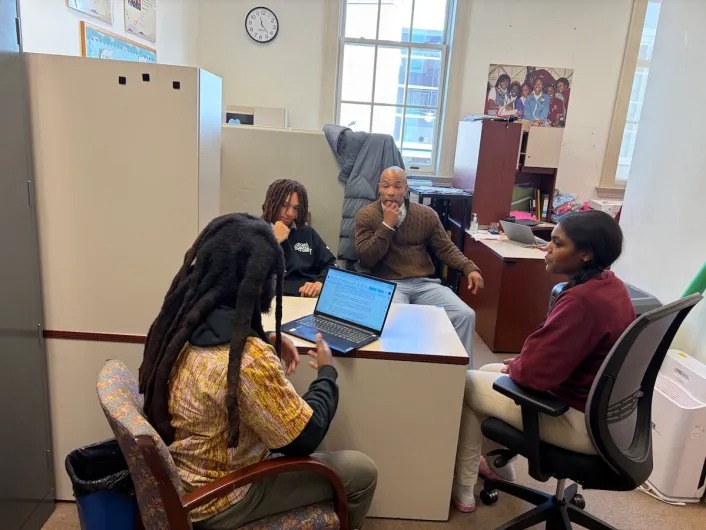
During her junior year, Kailani took Griffin’s AP African-American Studies and African-American History through Film and Music courses. She, too, scored a 4 on her AP exam, due to what she called Griffin’s demand for excellence.
“You can’t be mediocre. It’s not an option,” Kailani said about Griffin. “He’s passionate about instilling confidence and success into students. You can’t say that about a lot of teachers. He really is one of the few teachers who actually care for their students and care for their future.”
During Griffin’s first year of teaching AP African-American Studies at Thurgood Marshall Academy PCS, 87.5% of his students passed the AP exam. This feat follows other achievements at Dunbar High School, where he directed climate and culture, and at Kingman Academy Public Charter School, where he served as a founding member.
Even with Thurgood Marshall Academy PCS’ 100% college acceptance rate, Griffin acknowledged that it takes great effort to earn a bachelor’s degree. That’s what he said he emphasizes to his students as he shares his coming-of-age story and integrates writing and math enrichment into his assignments.
“You don’t want to be a 20-year-old counting on your fingers. You don’t want to be a 20-year-old starting a sentence and ending it at the end of the page with one period,” Griffin said. “You just have to put in the work, and I give them examples of times during my high school years and during my college years. Whatever you want in life, you can have. You definitely will accomplish it, but you have to have a plan. It’s not going to be given to you.”
Based on reporting by Washington Informer.
Black History
Wichita’s Only Black-Owned Bookstore Seeks $90,000 to Secure Its Future
COMMUNITY VOICE (KS) — Left on Read, believed to be the only Black-owned bookstore in Kansas, has launched a $90,000 fundraising campaign to secure its long-term future. Owner Dr. Latasha Eley Kelly initiated the “Support Left on Read: Books, Community, & Connection” appeal in October to address significant financial hurdles.
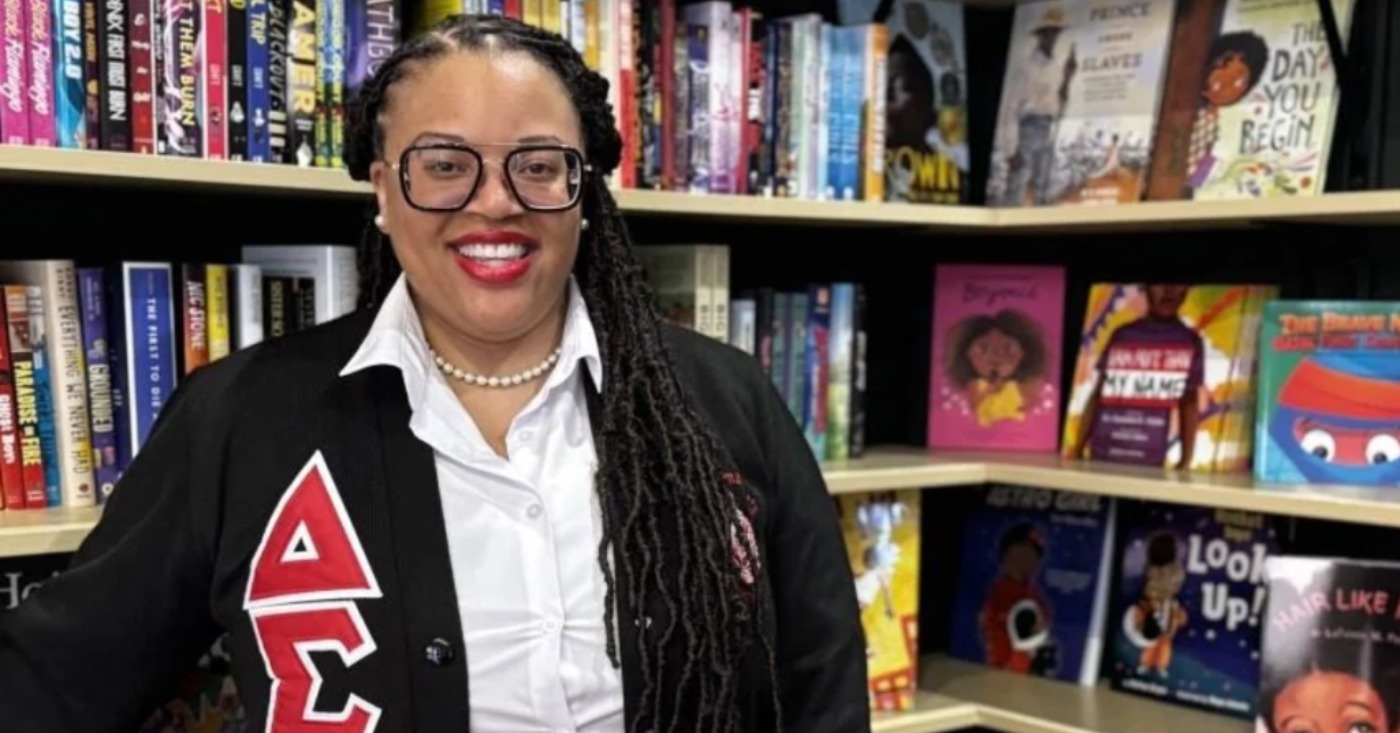
As Left on Read prepares to celebrate its second anniversary on Nov. 30, the bookstore is confronting financial challenges that have prompted owner Dr. Latasha Eley Kelly to launch a $90,000 fundraising campaign to sustain its operations.
The independent bookstore, believed to be the only Black-owned bookstore in Kansas, has become a destination for readers, authors and community gatherings since opening in 2024. But unexpected funding losses, rising operating expenses, and the costs of relocating have strained its finances.
Kelly launched the Support Left on Read: Books, Community, & Connection campaign in October, seeking contributions to cover operating expenses, staffing, inventory and community programming.
A recent snapshot of the GoFundMe campaign showed $14,410 raised from 183 donations, approximately 17% of the $90,000 goal.
Financial Setbacks Prompt Appeal
One of the bookstore’s financial challenges stems from the unexpected loss of grant funding supporting TMBP Media, one of Kelly’s interconnected business ventures. The media operation, The Millennial Black Professor and Left on Read share resources, making the funding loss significant for the bookstore.
In an October interview with KSNW-TV, Kelly also cited increasing operating and staffing costs and the need to establish more reliable revenue sources.
The bookstore relocated from its original downtown location at 612 E. Douglas Ave. to Revolutsia, a small-business development at 2721 E. Central Ave. Kelly described the move as unexpected and credited Mike Ramsey of Bokeh Development with helping facilitate the transition.
To help support the business, Kelly has continued teaching and pursuing consulting, speaking, and instructional opportunities.
The fundraising effort is designed to address immediate expenses while building a more sustainable financial structure. The bookstore has not announced plans to close, but the appeal underscores the financial pressures threatening its long-term viability.
More Than a Place to Buy Books

When Left on Read opened Nov. 30, 2024, Kelly envisioned a bookstore where African-American authors and other historically underrepresented writers would receive the visibility often missing from mainstream retail spaces.
Its selection includes fiction, nonfiction, children’s literature, poetry and history, with particular attention to Black authors and experiences.
Beyond book sales, Left on Read hosts author appearances, reading groups, cultural discussions and activities connecting local entrepreneurs with customers. The bookstore also provides space for The Blackprint, an initiative highlighting Black-owned businesses and their products.
Those activities have helped establish Left on Read as a cultural gathering place, but maintaining that role requires resources beyond revenue from book purchases alone.
Anniversary Campaign Focuses on Financial Stability
The bookstore’s annual 11.30 Campaign takes its name from its Nov. 30 opening date. While the first anniversary campaign encouraged smaller contributions to support the growing business, this year’s appeal focuses on strengthening its financial foundation.
Kelly is asking supporters to contribute financially, purchase books, recommend the store to others, and help spread awareness of the campaign.
The anniversary celebration will also feature several events intended to bring customers and community members into the bookstore.
Anniversary Celebration Events
Left on Read has scheduled the following activities from Nov. 20 through Nov. 22:
- Friday, Nov. 20, 6–7 p.m. — Malcolm Lynch’s Soulful Little Christmas Tour makes a stop at Left on Read.
- Saturday, Nov. 21, noon–1 p.m. — Launch of a free community library in partnership with a local service organization.
- Saturday, Nov. 21, noon–3 p.m. — Lemonade tasting featuring Tre’s Squeeze, presented in partnership with The Blackprint. Attendees can also purchase Squeeze Into Your Dreams by founder Tre Glasper.
- Saturday, Nov. 21, 2–4 p.m. — Public book club discussion of Children of Blood and Bone, covering chapters 1–28.
- Sunday, Nov. 22 — Ponder This at Build and Rebuild. Those purchasing tickets at Left on Read have a chance to win a Ponder This T-shirt and a bookstore gift card.
The events offer residents opportunities to experience the bookstore’s community programming while supporting a business working to overcome financial difficulties.
Community Support Could Determine What’s Next
For independent bookstores, balancing retail sales with the costs of staffing, inventory and community programming can be difficult. Left on Read faces those challenges while also working to maintain a space dedicated to Black literature, culture and entrepreneurship.
The fundraising campaign offers Wichita residents and businesses a chance to help preserve a locally owned institution that offers more than books.
Although the campaign’s outcome remains uncertain, the stakes extend beyond the bookstore’s balance sheet. Its future will determine whether Wichita continues to have a dedicated retail space where Black authors, readers and entrepreneurs are at the center of the experience.
How to Help: Supporters can donate through the 11.30 Campaign at bit.ly/supportleftonread, purchase books at leftonreadbookstore.com, or visit the store at 2721 E. Central Ave., Suite 121, Wichita.
The post Wichita’s Only Black-Owned Bookstore Seeks $90,000 to Secure Its Future appeared first on The Community Voice.
Based on reporting by Community Voice (KS).
Black History
Carolyn Hugley Could Become Georgia’s First Black Woman House Speaker
ATLANTA DAILY WORLD — Georgia House Democrats have selected State Representative Carolyn Hugley as their nominee for speaker, positioning the Columbus legislator to potentially become the first Black woman to lead the chamber. The nomination follows a shift in party control for the first time in over two decades.
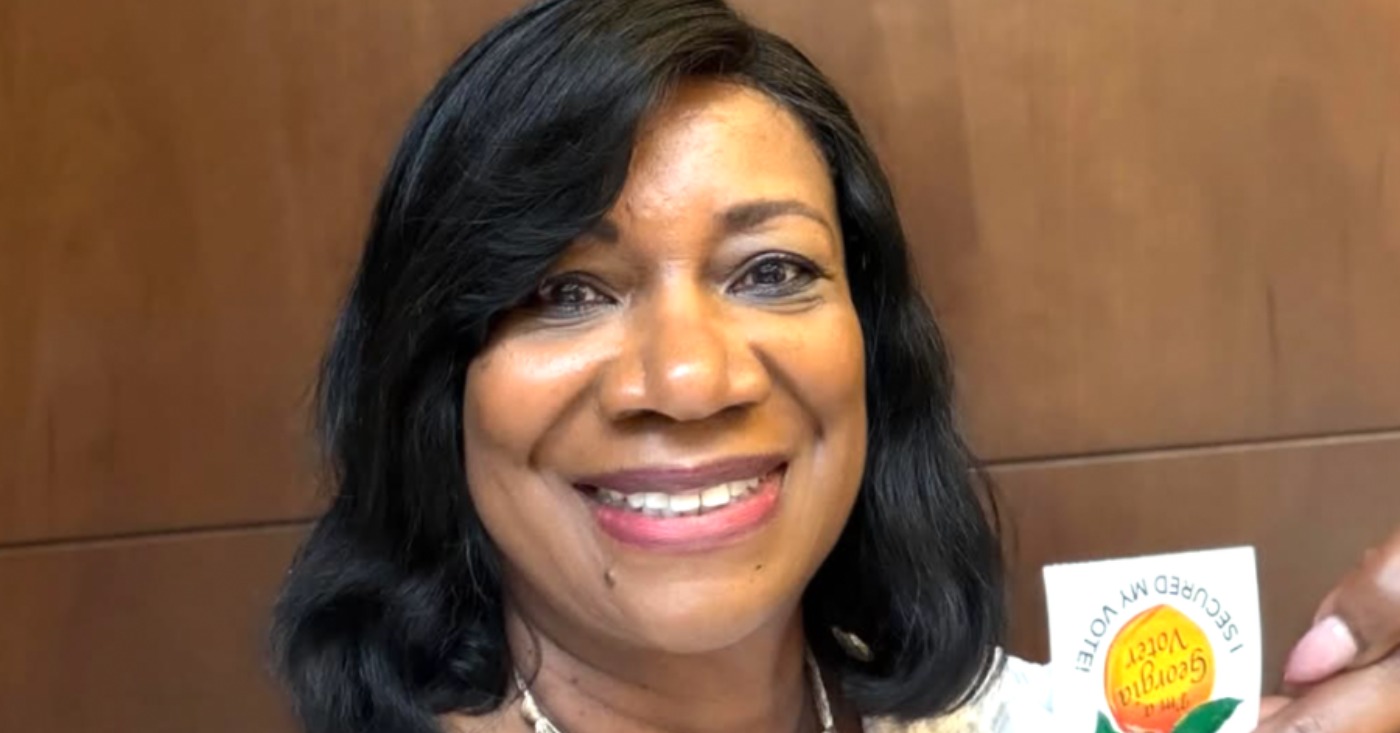
Georgia House Democrats have selected State Rep. Carolyn Hugley as their nominee for speaker, positioning her to become the first Black woman to hold the position.
According to CBS News Atlanta, Hugley, a Democrat representing Columbus, was chosen Thursday (November 12) after her party secured control of the House for the first time in more than two decades. The full chamber is scheduled to vote on her nomination January 11, 2027.
Hugley, who has served in the Georgia General Assembly since 1993, currently holds the position of House minority leader, CBS News Atlanta reported. If elected, she would succeed Republican Jon Burns, who has led the chamber since 2023.
During her time in the legislature, Hugley became the first Black lawmaker to serve as House minority whip, a position she held from 2003 to 2018, according to her website. She has also chaired the Legislative and Congressional Reapportionment Committee and the Women’s Legislative Caucus.
Her legislative work has included sponsoring bills addressing bullying, anti-stalking protections and protections for veterans’ widows, according to her official state biography.
Speaking at a press conference at the state Capitol Thursday, Hugley said Democrats must deliver on the opportunity Georgia voters had given them.
“We cannot settle for business as usual after all the what we’ve done to get here,” she said, according to Georgia Public Broadcasting. “We didn’t come this far to settle into new titles and new offices and get that new letterhead. We’re here because Georgia has given us the opportunity to deliver for them.”
Hugley’s potential election would also bring greater representation to one of the state’s most powerful political positions, which has historically been held by white men. The Courier News emphasized the significance of a Black woman from the Chattahoochee Valley reaching that level of leadership, particularly for young Black girls who rarely see people who look like them in positions of political power.
Republicans will retain control of the state Senate, meaning Democrats will need to work across party lines to advance their legislative agenda.
The Black Information Network is your source for Black News! Get the latest news 24/7 on The Black Information Network. Listen now on the iHeartRadio app or click HEREto tune in live.
The post Carolyn Hugley Could Become Georgia’s First Black Woman House Speaker appeared first on Atlanta Daily World.
Based on reporting by Atlanta Daily World.
Art
BOO REVIEW: Upcoming Book Revisits Dr. King’s 1957 Visit to St. Paul
MINNESOTA SPOKESMAN-RECORDER — A new book by researcher Jeff Olson titled “Gathering at the Rivers: Martin Luther King Jr. and Civil Rights in Minnesota” will chronicle the historic first visit of Dr. King to the state.
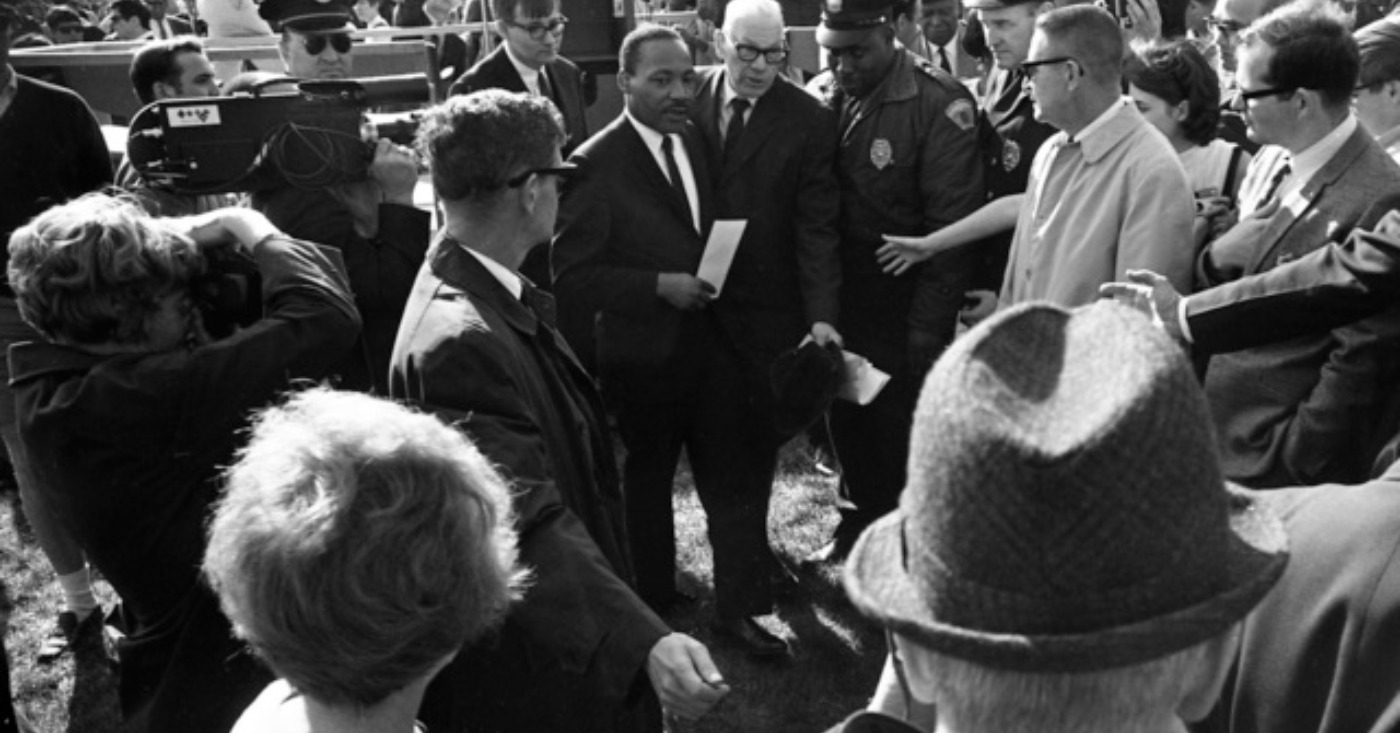
New Book Will Tell the Story of Dr. King’s First Visit to Minnesota and St. Paul’s Civil Rights Pioneers
“Gathering at the Rivers: Martin Luther King Jr. and Civil Rights in Minnesota,” by researcher Jeff Olson, will chronicle King’s Jan. 21, 1957, sermon at Gloria Dei Lutheran Church in St. Paul, his first Minnesota visit, just after the Montgomery Bus Boycott. The Rev. Dr. Floyd Massey Jr. of Pilgrim Baptist Church helped bring King to the state and hosted a reception at his Rondo home. The book’s “Twenty Treasures” chapter profiles figures including Roy Wilkins, Dred Scott, Cap Wigington, Nellie Francis, Nellie Stone Johnson and MSR founder Cecil Newman. Afton Press plans a late 2027 or early 2028 release and is seeking donor support for the $100,000 project.
On Jan. 21, 1957, the Rev. Dr. Martin Luther King Jr. stepped into the pulpit at Gloria Dei Lutheran Church in St. Paul on his first visit to Minnesota. Nearly 70 years later, a book from Minnesota publisher Afton Press aims to tell the story of that night and of the people and places that shaped it.
“Gathering at the Rivers: Martin Luther King Jr. and Civil Rights in Minnesota,” by researcher and author Jeff Olson, is in the early stages of publishing, with a release planned for late 2027 or early 2028. Former St. Paul Mayor Melvin Carter III, the city’s first Black mayor, is writing the foreword.
The book frames the visit as a turning point. King, who had turned 28 just days earlier, was fresh off the Montgomery Bus Boycott and stepping into a national leadership role. In St. Paul, Olson writes, King found himself in the hometown roots of two of his biggest supporters: NAACP leader Roy Wilkins, who grew up in St. Paul’s Frogtown neighborhood, and Ralph Helstein, president of the United Packinghouse Workers of America. Both organizations gave major support to the boycott.

The visit itself came together through local clergy. According to the book, the Rev. Dr. Floyd Massey Jr., pastor of Pilgrim Baptist Church and program chair of the Minnesota Pastors Conference, played a central role in bringing King to the state. After King’s evening sermon at Gloria Dei, Massey and his wife, Ethel, hosted a reception for him at their home in the Rondo neighborhood.
At the heart of the book is a chapter Olson calls the “Twenty Treasures of Civil Rights in Saint Paul,” profiles of the people, places and institutions that made the city fertile ground for King’s message. The list stretches from Dred Scott, who married Harriet Robinson at Fort Snelling in 1837 and later took his fight for freedom to the U.S. Supreme Court, to Pilgrim Baptist Church, founded in 1863 as Minnesota’s first Black church.
It includes architect Clarence “Cap” Wigington, who Olson notes was the nation’s first Black municipal architect; Nellie Francis, who led the campaign for Minnesota’s 1921 anti-lynching law; attorney Frederick McGhee; labor and civil rights leader Nellie Stone Johnson; and Carl Rowan, whose civil rights reporting for the Minneapolis Tribune won national journalism honors in the 1950s. It also includes Cecil Newman, who founded the Minneapolis Spokesman and St. Paul Recorder in 1934 and led the papers until 1976.
Olson argues that these civil rights firsts are striking given Minnesota’s small Black population at the time, compared with states and cities whose Black communities were many times larger.
Olson said he became fascinated by the research because he kept uncovering stories that had gone untold.
Ian Graham Leask, Afton Press’ publisher, told the MSR the book matters at a time when literacy rates are declining. A book that shows readers from marginalized communities the history of the very streets they walk today could give schools and institutions a way to spark engagement, he said, especially because the story has never been told this way before.
Bringing the book to print is expected to cost about $100,000, Leask said, and Afton Press is open to support from donors.
Afton Press has a long record of publishing Minnesota stories about people, places and events, including “Overcoming: The Autobiography of W. Harry Davis” (2002), the memoir of the prominent Black civic leader from Minneapolis.
Olson is the author of several books on hockey history and of “Kindred Spirits,” about the conservation work of Theodore Roosevelt and John Muir.
For more information or to support the book, visit https://aftonpress.com/. You can also contact Afton directly at [email protected] or 651-436-8443.
Jasmine McBride welcomes reader responses at[email protected].
Jasmine McBride is an Editor at the Minnesota Spokesman-Recorder More by Jasmine McBride
Based on reporting by Minnesota Spokesman-Recorder.


Derrick “Delite” Stevens on 40 Years in Radio, MC Skat Kat & Twin Cities Hip-Hop

Car Buying Checklist: 6 Steps to Shop Smarter #shorts

Chevy Tahoe Entry Test: Is the Driver’s Grab Handle Awkward? #shorts

Las Vegas GP: Ferrari Struggles During Qualifying; Verstappen Captures Pole

NBA: 3 Teams Flying Under the Radar in the East

How Sick Must America Get Before Saying Enough to RFK

Tahoe 6.2L EcoTec3 V8: Surprising Acceleration in a Full-Size SUV #shorts

From The Desk of The Editor 11/18/26

Black Barbershops Have Long Given Neighborhood Politics a Place to Unfold.
REBROADCAST! — HE SAID, HE SAID, HE SAID: “RUTHLESS!: Love Shouldn’t Hurt,” — FRI. 11.20.26 7PM EST

HISTORY MADE: Keisha Lance Bottoms Becomes First Black Woman Elected Governor in American History

Secretary of State Shirley Weber Pushes Back Against DOJ Demands Over California Voter Rolls

Retirement Triggers Doctor to Pen Book for Young Audience

Capturing Black Life’s Beauty

Multi-Faith Leaders Representing 10 Million People Launch National Anti-Authoritarian Initiative

Christianity’s Racial History

Hundreds of Black Christian Leaders Arriving in Israel for Martin Luther King-Inspired Mission

Oakland Honors 60 Years of the Black Panther Party at the All Power to the People Gala

Message from the Associate Editor: Blindness, Hurts, Cops

Michael Shiner: The Enslaved Man Who Wrote His Way into American History
Derrick “Delite” Stevens on 40 Years in Radio, MC Skat Kat & Twin Cities Hip-Hop
Car Buying Checklist: 6 Steps to Shop Smarter #shorts
Chevy Tahoe Entry Test: Is the Driver’s Grab Handle Awkward? #shorts
How Sick Must America Get Before Saying Enough to RFK
Tahoe 6.2L EcoTec3 V8: Surprising Acceleration in a Full-Size SUV #shorts
From The Desk of The Editor 11/18/26

London Brown finds purpose beyond Hollywood

Super Cruise: Hands-Free Driving for 3 Years #shorts

Pickup Truck Review: Which Truck Fits You Best? #shorts

Tahoe Max Trailering Package: Check These Towing Details #shorts
-
 Black Press1 week ago
OP-ED: Closing the Next Digital Divide — Communities of Color Must Have a Voice in the AI Future
-

 Black History1 week ago
New NAACP Report Warns AI Could Deepen Health Disparities in Black Communities
-

 Black Press5 days ago
COMMENTARY: Thank You, Trump, for Making America Great Again!
-

 Black History1 week ago
“Blue Tsunami” Sweeps Georgia, Bottoms Makes History
-

 Black Press4 days ago
Black Men Encouraged to Start Prostate Cancer Screening at 45
-

 Black Press1 week ago
OP-ED: And Then What?
