
News
Bridging the gap between academic research and commercial drug development


Academic research can reach commercial drug development more effectively when promising discoveries are coupled with rigorous validation and crystal-clear development pathways. Close collaboration among researchers, biotechnology companies, and pharmaceutical organizations can move scientific findings from the confines of the lab to promising therapeutic candidates.
However, turning a great discovery into a potential treatment calls for more than demonstrating scientific merit. Researchers must also address practical challenges such as funding or regulatory requirements. By aligning academic innovation with pharmaceutical industry needs, research teams can help shorten the pathway without sacrificing quality.
Why Is Translational Research so Vital in Drug Development?
Translational research helps connect fundamental scientific discoveries with more practical applications in the field of medicine. Academic laboratories often do the following:
- Uncover promising biological mechanisms
- Pinpoint potential drug targets
- Develop new approaches to treating disease
Moving those findings toward a usable therapy requires additional work. After all, it’s important to establish whether or not the discovery can withstand the practical demands of drug development.
Reproducibility is non-negotiable. Researchers need reliable experimental methods and clearly defined endpoints. It should be possible to independently evaluate the data.
Commercial organizations also need confidence that a promising result can be scaled up and incorporated into a structured development program. Early collaboration can go a long way toward working out technical or regulatory challenges before investing substantial resources.
How Exactly Does Academic Research Become a Commercial Drug?
Moving a discovery into commercial development involves several stages between an initial laboratory finding and a potential therapeutic product. Preclinical validation can help determine whether a candidate demonstrates:
- Sufficient activity
- Selectivity, safety
- Other characteristics to justify further investment
Protocol translation also has a sizable part to play. Experimental procedures developed in an academic laboratory may need to be standardized or adapted for environments with different equipment and personnel. Specific quality requirements and documentation standards also make a difference.
Crystal-clear protocols make it far easier for development teams to reproduce experiments and compare results across two or more studies.
Specialized partners can provide additional expertise during this transition. For instance, assay development and validation services can help establish reliable analytical methods to evaluate biological activity and measure relevant experimental endpoints. They can also produce more consistent data and bolster development decisions later on.
What Challenges Can Slow Down Drug Development?
One major challenge is the gap between academic and commercial priorities. Academic research may focus on generating new knowledge, while commercial drug development must also consider the following:
- Scalability and reproducibility
- Intellectual property
- Regulatory expectations
- Manufacturing requirements
- Potential clinical applications
Funding can create yet another gap before commercialization. A discovery may show significant scientific promise but require much more investment before it becomes a development candidate.
Research and Drug Development Should Work in Sync
By bridging common gaps between research and commercial drug development, it’s possible to create a product in record time without the usual pitfalls. Establishing validation and development milestones can help researchers and commercial partners determine when other resources are justified.
From tech and sports to world news and educational content, you can always rely on our coverage. Don’t wait to sign up for our newsletter.





car reviews
FDIC Study: African American Banks Disappearing Rapidly #shorts
A new FDIC study reveals a staggering decline in African American banks, with over half disappearing in under two decades. Watch to learn about this equity crisis.

Alarming research shows a drastic decline in African American Minority Depository Institutions (MDIs). From 48 in 2001 to just 23 by 2018, more than half vanished in under two decades. This trend raises serious concerns about financial equity. #AutoNetwork
🔗 Watch the full video: https://youtu.be/JjNiyzGQjnA
#BankingCrisis #FinancialEquity #MinorityBanks #EconomicJustice #FDIC
car reviews
Car Buying Tip: Check Windshield Glare & Interior Space! #shorts
Don’t sign the papers until you check for windshield glare and cabin comfort. Watch our essential car-buying tips before your next test drive!

Before buying, test your car’s head-up display and check for windshield glare in sunlight. Interior space is also a big plus, especially for crew cabs.
🔗 Watch the full video: https://youtu.be/6sLjUP3UQfY
#AutoNetwork #CarBuying #CarTips #HeadUpDisplay #CarInterior
Black History
OP-ED: The Black Church Writes AI’s Next Chapter
BLACKPRESSUSA NEWSWIRE — I implore my fellow faith leaders to use these tools. Start now and use them with wisdom. We count on each and every one of you to make sure our communities help write the next chapter of this story. This rapid change is not as unfamiliar as it may sound. My first understanding of AI came from using a calculator for the first time in grade school. We did not call it AI, but it was a tool that helped me work through mathematical equations hours more efficiently.

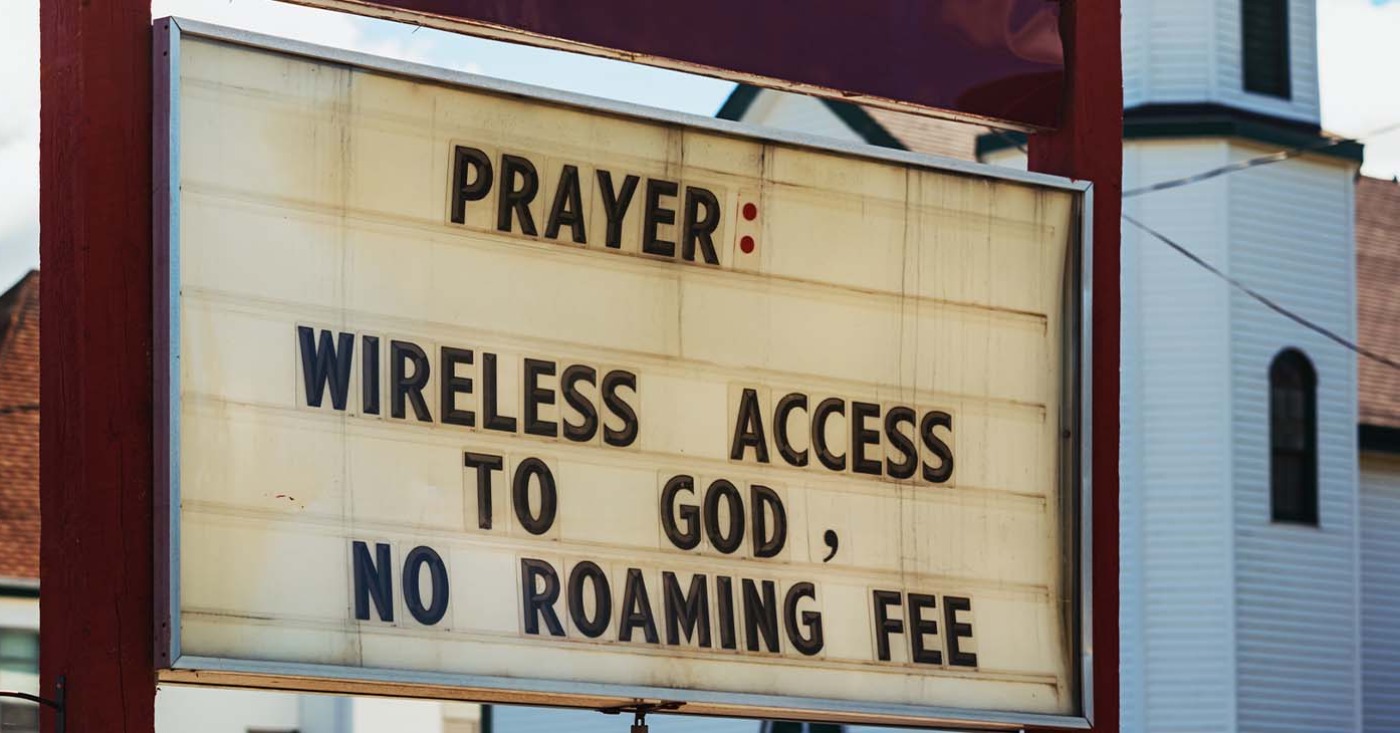
For generations, the Black church has stood strong in our communities through every historical change this country has experienced. During the civil rights movement and in recent times, faith leaders have helped uplift Black sanctuaries to register voters, keep food pantries open for people in need, and sit with families in hospital rooms in their most desperate moments. When our people faced new trials, they could always look to our faith leaders and the church to lean in to help us be included in these transformative changes.
Artificial intelligence is the latest revolutionary change to impact our society, and much like other transformations before us, underserved communities often get left behind.
I was recently featured in a report entitled “Faith, Community & AI” and it found that people send ChatGPT more than 70 million messages a week about religion. Nearly 22 million involve studying sacred texts, and 16 million ask about religious practices and holy days. Our members make up part of those numbers. They bring questions of faith to these tools every day.
Pastors have noticed, and according to a September 2025 Lifeway Research survey of 1,003 Protestant pastors, 42 percent said they use or experiment with AI in ministry. I count myself among them.
I write my sermons by hand, through prayer and study. When I finish a draft, I ask ChatGPT this question: “Where might this sermon become unclear or difficult to follow for someone early in their walk of faith?” It shows me gaps in my preparation, like where I incorrectly assumed everyone would know the context of who the Pharisees were. Then, change comes from my own pen, not the robot. The tool helps me reach the person in the back pew while the message still comes from me.
If I could have my wish, our whole community would take a similar posture. We must use these tools, understand them, and most importantly be present to help shape them if we want to be included in the coming change.
I implore my fellow faith leaders to use these tools. Start now and use them with wisdom. We count on each and every one of you to make sure our communities help write the next chapter of this story. This rapid change is not as unfamiliar as it may sound. My first understanding of AI came from using a calculator for the first time in grade school. We did not call it AI, but it was a tool that helped me work through mathematical equations hours more efficiently.
It starts with training; there is no involvement without understanding. Free AI trainings have begun in our churches and community centers across the nation. Every faith leader should sign up and, when possible, encourage members of your congregations to join you. By learning how to use AI, we can better understand what it can do, make up our own minds about its impact, and have a say in how it shapes our communities.”
Next, we must be at the tables where the builders of these tools make decisions. Presence is the first step toward understanding, and that gap is only bridged through a coordinated effort. How can any tool serve a community well if that community is not part of the conversation? Our traditions, needs, and concerns must be accounted for, and Black faith leaders are already making that happen. OpenAI’s recent Faith report states plainly that AI should never become an arbiter of religious truth. I fully intend to hold the company to its word, and the most effective way I can do that is from inside.
I will close with this––we must diligently protect what only the church can give. A believer in Seoul, Korea quoted in the report warned, “if you pour every struggle into a private chat, your pastor and your friends may never learn you need help.” A chatbot will not sit with a grieving family or pray with you at two in the morning. As we adopt this technology, it is up to us to ensure it keeps people connected to each other and to their church.
Rev. Dr. Adolphus Lacey is senior pastor of Bethany Baptist Church in Brooklyn, New York.
Featured
St. Louis Celebrates Excellence at The St. Louis American’s 39th Annual Salute to Education Gala
St. Louis came together at Union Station to honor the future leaders and educators shaping our community. Relive the magic of our 39th annual Salute Gala!

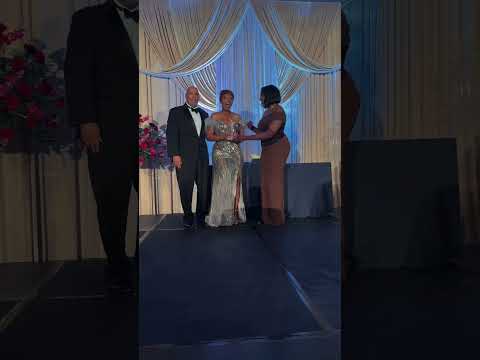
Thank you, St. Louis! ❤️
To everyone who came out and celebrated with The St. Louis American at the 39th Annual Salute to Excellence in Education Scholarship and Awards Gala at St. Louis Union Station, thank you for making the night unforgettable.
We celebrated excellence, education, community and the people helping shape the future of St. Louis. Your support continues a legacy that has honored educators and students for nearly four decades.
We appreciate every honoree, sponsor, supporter and guest who helped make Salute 39 special.
#Salute39 #STLAmerican #StLouis #ExcellenceInEducation #BlackExcellence

‘I’m here to stand up for democracy’ says Kenneth Petty at the ‘No Kings: Vote Early’ protest on the Tamm Bridge in St. Louis, Missouri, Saturday Oct. 17, 2026.
This is the fourth national “No Kings” protests since President Trump second presidential term. Indivisible called on people throughout the country to mobilize neighbors and communities to vote early in the mid-term election. Over 3,000 “No Kings” protest our taking place today.
📷 Dawn Suggs | St. Louis American
#VoteEarly #UnlockTheBallot #ProtectDemocracy #STL #stlamerican
car reviews
Optimize Your Seating: Essential Household Setup Guide #shorts
Maximize your space with these simple seating optimization tips. Learn how to arrange your layout for better accessibility and flow in any room.
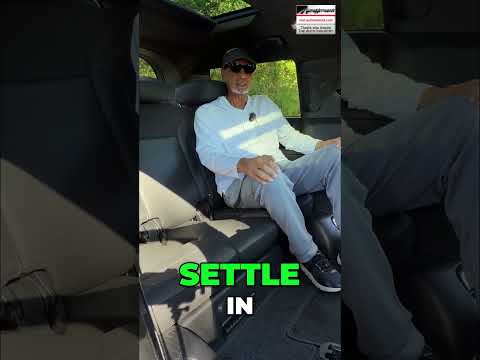
Optimize your space! Count seating positions and test accessibility for smooth entry/exit. Consider your most frequent carry-ons for a practical fit. Perfect for any household. #AutoNetwork
🔗 Watch the full video: https://youtu.be/8HFPFmqpCdg
#SeatingArrangement #HomeOrganization #SpaceSaving #PracticalTips


FDIC Study: African American Banks Disappearing Rapidly #shorts

Car Buying Tip: Check Windshield Glare & Interior Space! #shorts

OP-ED: The Black Church Writes AI’s Next Chapter

St. Louis Celebrates Excellence at The St. Louis American’s 39th Annual Salute to Education Gala

‘No King: Vote Early’ protest for democracy in St. Louis

Optimize Your Seating: Essential Household Setup Guide #shorts

Brake Pedal Test Drive: Smooth Stops for Your Truck! #shorts

Life Lessons Learned Through Adversity: My Journey #shorts

From Claflin Alum to ColorBlind Artist

Turning Abolitionist Design Research Into Real-World Business #shorts

The Youngest American Killed in the Vietnam War

Passing for White, Fighting for Black America: The Courage of Walter White

OP-ED: Haiti TPS: Have We Lost Sense of Humanity?

NFL: Week Two Recap | Jalen Hurts did not fold; Caleb Williams exits game with injury

Remembering Chauncey Bailey as Student Journalists Face Threats to Truth-Telling

Peter Magubane: a Camera Against Apartheid

Mayor Lee Announces $1 Million Kaiser Permanente Grant for Pilot Program to Address Homelessness, Clean Up Public Spaces throughout Oakland

OP-ED: How Head Start Also Helps Parents

Poll: Becerra Widens His Lead Over Hilton; Californians Split on Wealth Tax

Community Action Group ‘Friends of Zakiya’ Ask Sheriff for Time
FDIC Study: African American Banks Disappearing Rapidly #shorts
Car Buying Tip: Check Windshield Glare & Interior Space! #shorts
St. Louis Celebrates Excellence at The St. Louis American’s 39th Annual Salute to Education Gala
‘No King: Vote Early’ protest for democracy in St. Louis
Optimize Your Seating: Essential Household Setup Guide #shorts
Brake Pedal Test Drive: Smooth Stops for Your Truck! #shorts
Life Lessons Learned Through Adversity: My Journey #shorts
From Claflin Alum to ColorBlind Artist
Turning Abolitionist Design Research Into Real-World Business #shorts

Black Journalists: Community, Excellence, and Lifting Up #shorts
-

 Black Press6 days ago
All Skinfolk Ain’t Kinfolk
-

 Black Press5 days ago
Oakland Awarded More than $14 Million in State Funding
-
 Black Press5 days ago
Jendayi Arrest Raises Community Concerns Regarding Sheriff’s Chain of Command
-
 African American News and Issues3 days ago
Black History: Gladys West Mathematics Helped Make GPS Possible
-
 Black Press5 days ago
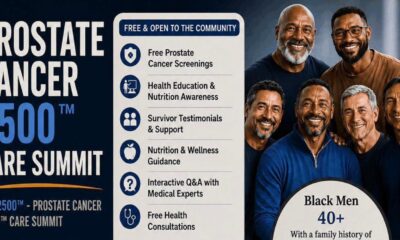
Allen Temple Baptist Church Hosts Free Prostate Cancer Screenings on Oct. 17
-
 Black Press5 days ago
Democrats, Community Groups Back Measure EE to Change How Oakland Is Governed
