
AboutThatCar.com
AUTO REVIEW: 2019 Mazda CX-3
NNPA NEWSWIRE — The CX-3 was rated at 27 mpg in the city, 32 mpg on the highway and 29 mpg combined. I stopped to gas up a few miles before I crossed into Indiana. I didn’t have a full tank of fuel when I left and the smaller the vehicle the smaller the gas tank; 11.9 gallons on the all-wheel-drive version, which is what I had.

By Frank S. Washington, AboutThatCar.com
CHICAGO – The 2019 Mazda CX-3 is a small crossover. It was so small it could do a good imitation of a big hatchback. We drove one to Chicago to scope out the auto show.
On the way we encountered ice and sleet, then rain and then something akin to fog. The point is Mazda’s CX-3 handled it all relatively well.
It was powered by a 2.0-liter four-cylinder engine that made 148 horsepower and 146 pound-feet of torque. It was mated to a six-speed automatic transmission with a manual shift mode and a sport mode. You don’t want to use the latter on an Interstate. It burns more gasoline because of the higher revolutions due to the gearing.
The CX-3 was rated at 27 mpg in the city, 32 mpg on the highway and 29 mpg combined. I stopped to gas up a few miles before I crossed into Indiana. I didn’t have a full tank of fuel when I left and the smaller the vehicle the smaller the gas tank; 11.9 gallons on the all-wheel-drive version, which is what I had.
The power was adequate. I didn’t run away from anybody but I was not trying to. This Mazda CX-3 cruised nicely. I set the adaptive cruise control at 76. When I needed to pass, the CX-3 responded smartly.
Overall, the CX-3 handled well. But this drive was not much of a test. The run from Detroit to here is basically flat and straight with a few rises and gentle curves as I-94 dipped around the southern end of Lake Michigan.
The bottom line was the utility vehicle went where I steered it without any exertion on my part. It handled well too. But again this interstate was not very challenging. However, there was some wind noise as well as road nose depending on the road surface.
On highway trips, even short ones like this four-hour drive, music is critical to an interesting trip rather than a boring ride. I used the CX-3’s satellite radio for most the trip. But towards the end I used the Bluetooth connection to stream from my phone and its Pandora app.
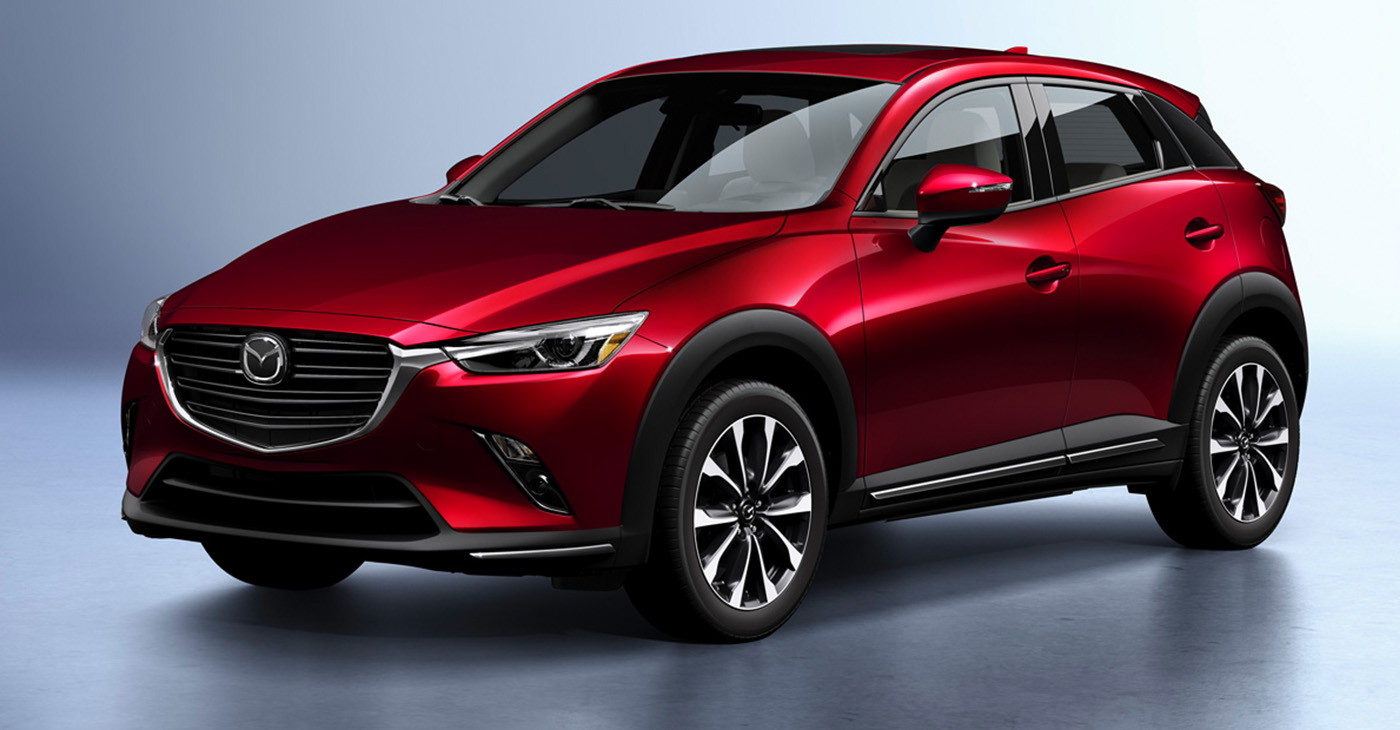
Mazda made some incremental changes to the CX-3 but they did not alter the KODO design language that is curved fenders over the wheel wells, a long hood and a short rump.
But they did give the CX-3 a new grille, a new color for the Grand Touring trim line which I had, black piano exterior accents, chrome accents, LED taillights and 18-inch alloy wheels.
Inside the CX-3 got an electronic parking brake as standard with auto hold, a reconfigured center console that was a bigger than the old one, a new rear-seat arm rest, a front passenger seat manual lifter, red vent surrounds and high gloss piping.
I was impressed with some of the equipment. The 2019 CX-3 had a power driver’s seat. It also had adaptive cruise control, adaptive LED headlights, heated front seats and a heated steering wheel.
The CX-3 Grand Touring was stuffed with stuff. It had blind spot monitoring, advanced smart city brake, lane departure warning, keyless entry and push button start stop and rear cross traffic alert. There was also a moon roof.
It was just a few years ago that this sort of equipment was exclusive to luxury vehicles.
The seats had been redesigned, they were comfortable and supportive. My only quibble so far was that there didn’t look like there was that much room in the rear.
I spent most of my time here traveling along Lake Shore Drive. It is a wolf in sheep’s clothing. It looks like a boulevard in some places when it is actually a rally racecourse in disguise.
The lanes are narrow, after decades they installed a low separator between north and south bound traffic. Hit it at the right (make that the wrong) angle and you’re going to sail over it into oncoming traffic. The curves are abrupt. And if you pay more attention to the lake than you do the pavement, you’ll end up in the water or on the beach.
This is no place for amateurs, drivers must be experienced at acceleration, braking and steering. You go into a sharp curve too fast you’ll end up in the wrong lane. The road surface is very good but there are some dips that can disrupt your equilibrium. In a phrase, it is a great drive.
Three of us were going to attend the Charity Preview for the auto show here in the CX-3. I told the person who would likely be in the back seat that it was kind of close and she refused so we took her sister’s car.
I had checked the rear seat when I returned to the Motor City and she was right. There was plenty of headroom but legroom was lacking. And that was after I moved the front passenger seat forward a bit.
However, I was pleasantly surprised. The CX-3 had a decent cargo space: 9.6 cu. ft. with the rear seats up and 41.7 cu. ft. with them folded.
The instrument layout as with most Mazda products was clean. It had tri-dial climate controls. Most of the other equipment could be controlled from the touch infotainment screen and the mouse on the center console.
As tested it was $29,625, which at first I thought was a little pricey. But then I went back over the CX-3 equipment and thought that it is a small crossover with plenty of stuff. Things like all-wheel-drive, a heated steering wheel, blind spot monitoring and lane departure alert made it well worth the price.
Frank S. Washington is editor of AboutThatCar.com













AboutThatCar.com
AUTO REVIEW: 2021 Land Rover Discovery R Dynamic S
NNPA NEWSWIRE — It was an easy and comfortable drive. The front seats had captain’s armrest. Of course, they were heated and cooled. Turning on the Discovery R was like starting up a computer. We had to set or reset it features like those heated seats. That can be a nuisance if you’ve got a lot of errands to run.

By Frank S. Washington
DETROIT – In our view the most impressive thing about the Land Rover Discovery was under the hood.
Our Discovery R Dynamic S had a 3.0-liter straight six that made 355 horsepower and 369 pound-feet of torque. It was mated to an eight-speed automatic transmission with paddle shifters.
This combination got 18 mpg in the city, 24 mpg on the highway and 21 mpg combined. It still had the heft of a Land Rover, but this new edition was sleeker.
Yes, it had the clamshell hood, but there were new LED headlights with daytime running lights with sweeping front and rear turn signals.
At the rear, the New Discovery featured new LED lights, which were joined across the back by a new black panel.
It was an easy and comfortable drive. The front seats had captain’s armrest. Of course, they were heated and cooled. Turning on the Discovery R was like starting up a computer. We had to set or reset it features like those heated seats. That can be a nuisance if you’ve got a lot of errands to run.
There were two moonroofs. One was over the front seats., while the other was over the third row, which all Discoveries have. The second as well as the third-row seats were power or electrified as Land Rover termed it. So was the liftgate.
The redesigned center console housed a 48 percent larger 11.4-inch, full HD touchscreen, which had a fast and intuitive interface.
There was a new-look four-spoke steering wheel with hidden-until-lit switches and metal gearshift paddles with a tactile electronic gear selector.
On the 12.3-inch Interactive Driver Display, the New Discovery provides high-definition 3D mapping, leaving the central touchscreen free to control other applications. The high-resolution digital instruments can be configured to show a pair of conventional dials, full-screen 3D navigation guidance or a combination of the two, allowing drivers to customize the view to suit their preference. Since we knew where we were, we did not need to use it.
Connectivity was provided by a dual-sim technology, with two LTE modems enabling the system to conduct multiple functions at the same time – such as streaming media and downloading Software-Over-The-Air updates.
Land Rover SOTA technology allows owners to update as many as forty-four individual electronic modules, without the inconvenience of visiting a retailer.
Our test vehicle could tow up to 8,300 lbs. Our only problem was we didn’t have the 2021 Land Rover Discovery R Dynamic long enough to tow anything or download any updates.
Still, we were impressed with it and the $73,255 sticker seemed reasonable for what you get.
Frank S. Washington is editor of AboutThatCar.com00
AboutThatCar.com
AUTO REVIEW: 2020 Land Rover Defender
AUTONETWORK ON BLACK PRESS USA – It was an intriguing mix of ruggedness and luxury and performance that worked. The air suspension took all the bounce out of the ride. Although this Defender was tame at low speeds, step on the accelerator with authority and it took off. And the interior was a mix of grained leather and woven textile fibers that looked like suede. Land Rover said this material paid homage to early canvas topped Defenders.

AboutThatCar.com
By Frank S. Washington, NNPA Newswire Contributor
DETROIT – The Land Rover Defender is one a handful of iconic automobiles. It is more than 70 years old and once more it has been redesigned.
Designers transferred Defender style elements to the new vehicle for the 21st century. That sounds like hype and indeed we did take it straight out of the rather lengthy press kit. But it is true.
We saw a Defender, it had to be more than 20 years old, and our vehicle had some of the same design cues: Alpine light windows in the roof, a side hinged tailgate, flat sides, and an externally mounted spare wheel on the back, even though there was no spare tire, but our test vehicle did have one. And that old slogger had a snorkel for wading through deep water. For the record, our test vehicle could drive through almost three feet of water.
The Defender has kept its geometric form. Its headlamps had LED daytime running lights embedded in the housing. The fenders were sculpted, the wheel arches were squared, and the shoulders were pronounced.
At the rear, the geometric forms of the distinctive high-tech taillights harmonize perfectly with the front-end design. The sheerness of the rear vertically maintains the short overhang for a superior departure angle while maximizing interior space and accentuating the vehicle’s strong shoulder section.
Get this: The Defender is the first Land Rover with an optional factory-fitted Satin Protective Film which delivers enhanced design and durability. The PU-based wrap is applied to external bodywork and gives the standard metallic paint a rich and contemporary satin finish, showing the sophisticated surfacing of the exterior design in the best possible light. This durable wrap meets rigorous standards and has been developed for the highest performance in extreme conditions.
The film can be removed at any time, making it significantly quicker to repair than standard paint finishes. It is available with Indus Silver, Gondwana Stone and Pangea Green paint options, is solvent free and contains no volatile organic compounds. That’s what Land Rover said.
We had the Defender 110 SE, there is a Defender 90 with a little shorter wheelbase on the way. It may be on sale by the time you read this.
Our test vehicle was powered by a 3.0-liter V6 that made 395 horsepower and 406 pound-feet of torque. The engine was mated to an eight-speed automatic transmission with a dual speed transfer box.
It had driving and off-road modes, hill decent controls, an air suspension and 20-inch wheels and that spare tire mounted to the liftgate was not a donut. And the Defender was body on frame construction.
It was an intriguing mix of ruggedness and luxury and performance that worked. The air suspension took all the bounce out of the ride. Although this Defender was tame at low speeds, step on the accelerator with authority and it took off. And the interior was a mix of grained leather and woven textile fibers that looked like suede. Land Rover said this material paid homage to early canvas topped Defenders.
Make no mistake, the Defender looked slick, drove smoothly, rode nicely, and had plenty of oomph but it is one of the most renowned off-road vehicles in the world. It is a 4X4 body on frame sport utility, not crossover.
It had short front and rear overhangs for easy approach and departure angles, it was engineered to withstand extreme temperature, there was configurable terrain response modes, a locking center differential and active rear and locking differentials. It could even flash an image of the undercarriage while wading through water.
A maximum payload of 1,984-lbs, a static roof capacity of up to 661-lbs, a dynamic roof load of 370-lbs, a towing capacity of 8,201-lbs and it could wade through 35.4-inches of water.
Our only beef with the test vehicle was that it didn’t have running boards of some sort. We had to grab hold of something to pull ourselves up into it and stretch our leg down until we touched ground to climb out of it.
But that was a matter of how Land Rover had configured this model. The Defender can be equipped with 170 different accessories. Our test vehicle had a panoramic roof that would open.
When we first got in our Defender, we noticed the digital instrument layout. The grained leather was plush, the woven fabric as we said looked suede and felt like alcantra.
The new Defender had a premium infotainment system with an intuitive interface, featuring over-the-air software updates which could be accessed remotely. There was a 10-inch touchscreen with standard Apple CarPlay® and Android Auto™.
Our Defender 110 had seating for five; a third row is available. We had the SE, which was one of five trim levels. Option combinations are almost endless. We had the driver assist package that included adaptive cruise control with stop and go, the cold climate package that included a heated steering wheel and heated washer jets, advanced off-road package that included configurable terrain response and the off-road package that included an electronic differential, off-road tires and a domestic plug.
A tow hitch, 14-way heated and cooled front seats and satellite radio and the glass roof were individual options. As tested the total came to $72,180 including freight charges.
We think it is safe to say that the icon continues.
Frank S. Washington is editor of AboutThatCar.com.
AboutThatCar.com
AUTO REVIEW: 2021 Acura TLX
NNPA NEWSWIRE — This is significant news. Every premium and luxury automaker should be on alert. Acura has always made top quality vehicles briming with customer loyalty. And now they plan to shoulder their way upstream in the market segment. They’ve already started with the next generation of the RDX compact SUV. It is the bestselling vehicle in the segment.
By Frank S. Washington, AboutThatCar.com
WEST BLOOMFIELD TOWNSHIP, MI – In a classic bury the lead presentation, it was not until the end of telling us about the 2021 Acura TLX, that one of the presenters said, “we’re moving up market.”
This is significant news. Every premium and luxury automaker should be on alert. Acura has always made top quality vehicles briming with customer loyalty. And now they plan to shoulder their way upstream in the market segment.
They’ve already started with the next generation of the RDX compact SUV. It is the bestselling vehicle in the segment.
Now Acura is aiming the TLX sedan at the entry level luxury and premium sport sedan segment.
They started by replacing the TLX engine. The entry level powerplant now is a 2.0-liter dual overhead cam, direct-injected, turbocharged four-cylinder mated to a 10-speed automatic transmission with manual shift capability.
It made 272 horsepower and 280 lb.-ft. of torque. That is 66 more horsepower and 98 more pound-feet of torque than the engine it replaced. What’s more, peak torque was delivered between 1,600 and 4,500 rpm. That translates into plenty of power at just about any speed.
The new Acura TLX had an EPA rating of 22 mpg in the city, 31 mpg on the highway and 25 mpg combined. There are four trim lines of the 2021 TLX: the TLX, the Tech, the A-Spec, and the Advance
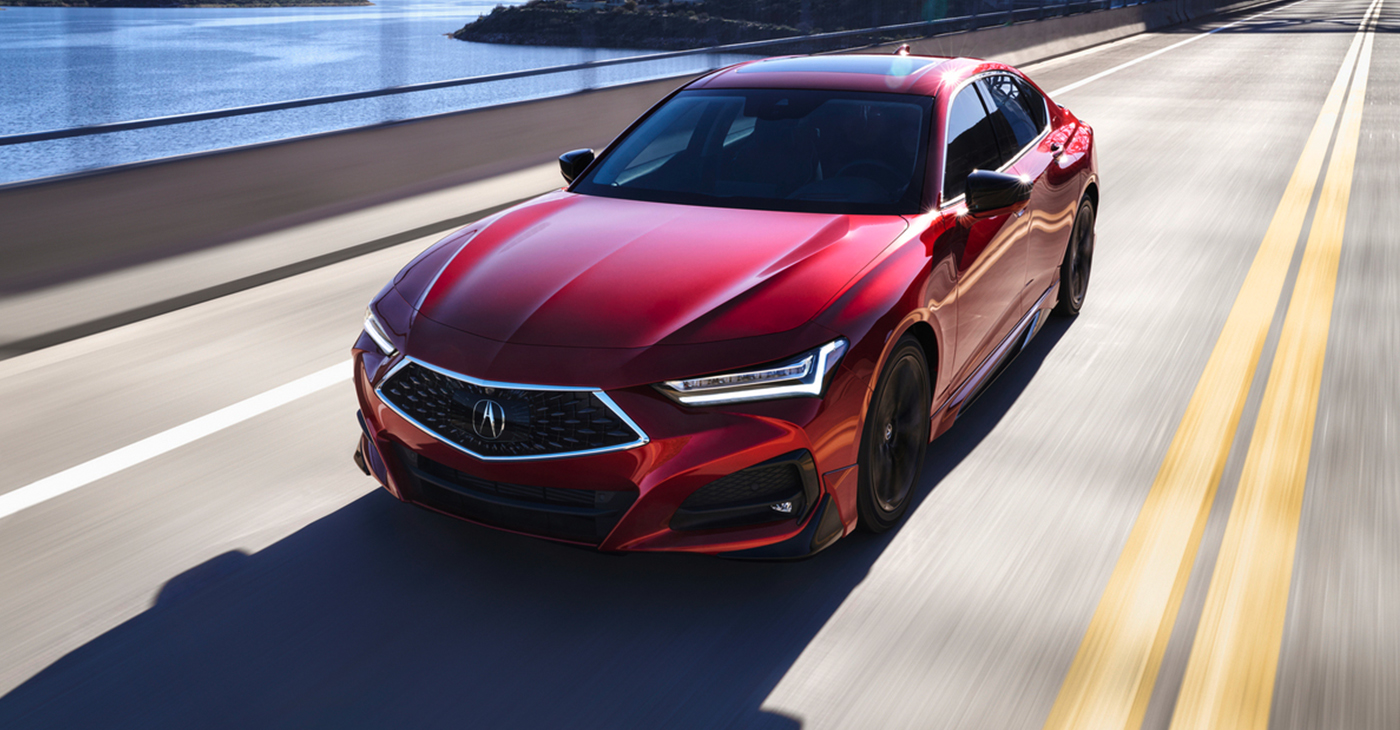
The new TLX was lower than the model it replaced. Acura said the car’s sporty performance intentions are conveyed through its low and wide stance, long dash-to-axle ratio, expansive hood, tapered greenhouse and pronounced rear haunches.
The new TLX had a 3.7-inch longer wheelbase, a 2.2-inch wider body with wider front and rear tracks, +1.2 inches, and +1.6 inches, respectively, a lower roof by a half inch and an extended dash-to-axle dimension of plus 7.8 inches.
The car was a bit bigger, but it also got better. Body rigidity was improved by 50 percent. Damper torsion got better by 15 percent in the front and by 90 percent in the rear. Floor bending improved 30 percent in the front and damper bending by 133 percent.
They switched from struts in the front suspension to a double wishbone for improved handling. It did not go unnoticed on a winding route on the streets of these suburbs.
There were a bunch of swells and curves. But we were impressed that the Acura TLX held its track. Steering was easy, the flat bottom steering wheel felt good in our hands. This route didn’t have a straightaway that was more than 3 miles long. In other words, there was a lot of braking and turning; we could not and did not let the car run wild.
We did note that the car was comfortable. The controls were centered in the dash, yet they were focused on the driver. We thought the sedan had a high hip point; it didn’t feel like we were being swallowed by the Acura TLX.
It had a floating infotainment screen set far back atop the dash. We had to lean forward to see if it was a touch screen; it wasn’t. Because of Covid-19 protocols we didn’t have drive partners. Thus, we were at the mercy of the navigation system.
When the system got confused, things were not simple. We could not connect our smartphone so we could use Google Maps, it was difficult to use the touch pad to reprogram the navigation system. In frustration, we turned the car off and the system rebooted itself.
One of the things we noticed and asked about was the engine; we thought it a tad loud. But someone told us that was done by design. They wanted to give the car some grunt for enthusiasts. We think they should make that optional as in a switch to turn on some sort of echo exhaust.
Our test cars had Acura’s all-wheel drive system. It could send up to 70 percent of the TLX’s torque to the rear wheels and 100 percent of the torque from side to side.
On the top-of-the line Advance, one presenter told us that in the interior metal is metal and wood is wood. In other words, these materials were not simulated. This trim line had 19-inch machine finished aluminum alloy wheels. And there was a 17-speaker, 16-channel, 700-watt audio system.
There was a touchpad interface that controlled the 10.2-inch center display screen. The car had Apple CarPlay and Android Auto. It also had over the air updates. There were 27 themes of ambient interior lighting.
Safety technology included collision mitigation, forward collision warning, adaptive cruise control with low-speed follow, lane keeping assist, road departure mitigation, traffic sign recognition, driver attention monitor, pedestrian detection, and traffic jam assist.
Base pricing started at $37,500 for the TLX and topped out at $46,300 for the Advance. And those prices were for front-wheel drive.
Frank S. Washington is editor of AboutThatCar.com
AboutThatCar.com
AUTONETWORK ON BLACKPRESSUSA: 2020 Nissan Sentra SR
NNPA NEWSWIRE — It is hard to believe that the Nissan Sentra has been around for almost 40 years. And over that time, it has evolved. Because of its new platform, the new generation was two inches lower and two inches wider. That gave it a presence that most compact cars in the past just did not have.
By Frank S. Washington, NNPA Newswire Contributor
DETROIT – We did not get as much seat time in the 2020 Nissan Sentra as we would have liked thanks to the lock-down brought about by the coronavirus.
But we did spend enough time to come away with an opinion about the car – it is big in a good way. We do not mean physical size but the 2020 Nissan Sentra drove big. That is not bad for a compact car and a new chassis did not hurt.
Nissan made what it called extensive upgrades to the Sentra’s platform. The most important was a new independent rear suspension. This opened rear seat room; enough to accommodate a six-footer.
We did not climb in the back seat during our really short time behind the wheel. But we did note the openness of the back seat and we did not need to sit in it to tell that it was spacious and comfortable.
To handle the bigger dimensions of the 2020 Nissan Sentra, the car got more oomph under the hood.
For 2020, the Sentra’s engine was bumped up from a 1.8-liter four cylinder to a 2.0-liter four cylinder. Horsepower increased to 149 which was a 20 percent improvement over the previous model. And more importantly, torque was improved 17 percent to 146 pound-feet.
This engine provided more than enough power for the day in day out routine of driving. We found it responsive and more than powerful enough. About the only thing we did not like was the continuously variable transmission or CVT. But it was not just this one, we do not like them period.
Still, for a CVT the Sentra’s was not bad. The car’s acceleration, a weak point for most CVTs, was enhanced with a D-mode step shift program that simulated shifts, giving the Sentry a more natural acceleration feel without holding a high rpm constant, letting rpms build as speed builds. The D-step logic control helps provide enhanced drivability with a stable, natural and crisp shift feel.
We had to concentrate on the drivetrain to make sure the Sentra had a CVT. That is how well the Xtronic transmission worked. Fuel economy was 29 mpg city, 39 mpg highway and 33 mpg combined for the S and SV grades and 28 mpg city, 37 mpg highway and 32 mpg combined for the SR grade which is the trim line we test drove.
It is hard to believe that the Nissan Sentra has been around for almost 40 years. And over that time, it has evolved. Because of its new platform, the new generation was two inches lower and two inches wider. That gave it a presence that most compact cars in the past just did not have.
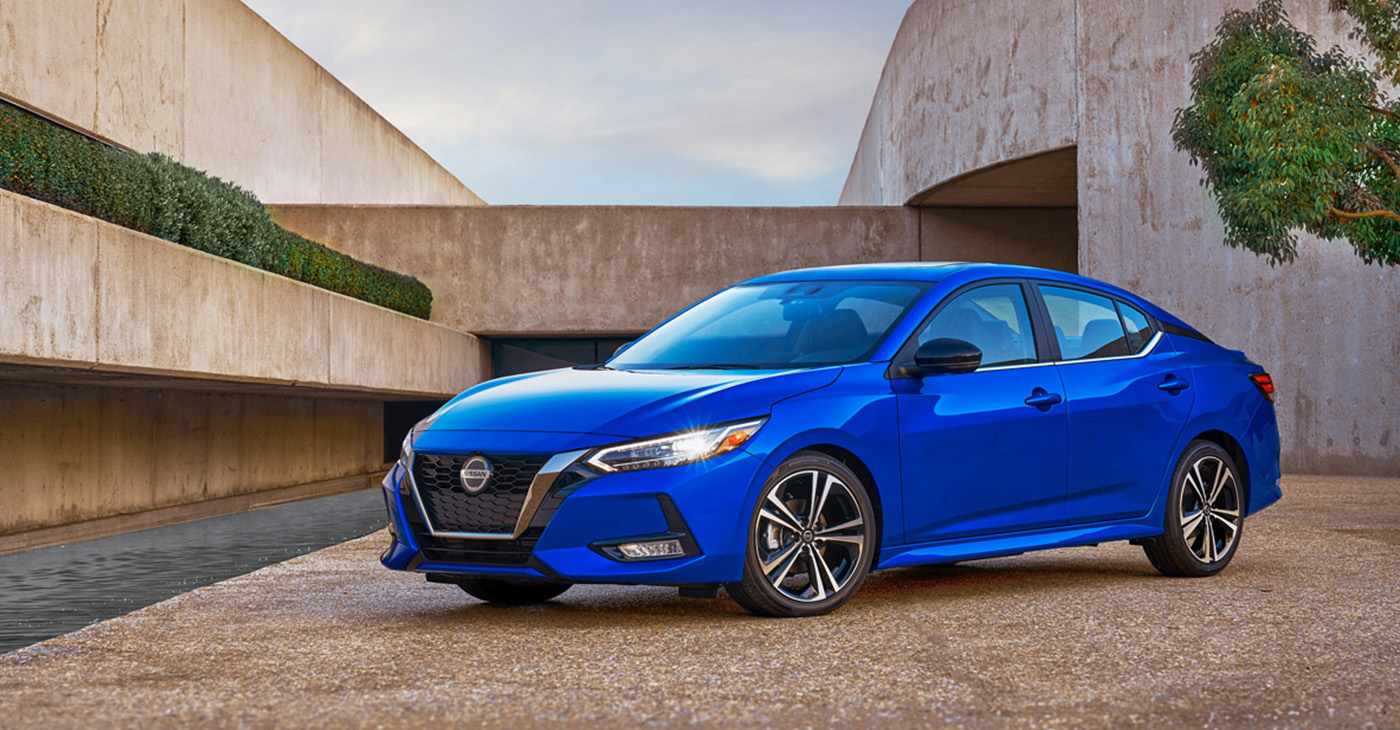
The press material said the Sentra’s premium presence of the exterior was highlighted by Nissan’s signature V-motion grille, available thin LED headlamps and floating roof. Designers used sharp creases that blended into the muscular body sides. The rear had a lower roofline and wider shoulders, with wheels flush to the body enhancing the strong stance.
We had the top of the line SR, thus, it had LED lights all round: headlights, rear lights, DRLs and fog lamps. Our test car had a two-tone paint job, rear spoiler, 18-inch alloy wheels and black heated exterior mirrors.
We thought the heated front seats and the heated steering wheel on our test model especially noteworthy. The test vehicle had leatherette seats front and rear. There was a six-way power driver’s seat with a two-way power lumbar support.
There were extra things that you would not expect like automatic dimming mirrors, an around view monitor and a quilt pattern interior with orange stitching.
The 2020 Nissan Sentra SR was a lot of car for what we thought was very reasonable $25,325 as tested.
Frank S. Washington is editor of AboutThatCar.com
AboutThatCar.com
AUTONETWORK: 2019 Lexus NX 300h
NNPA NEWSWIRE — This combination had an EPA rating of 33 mpg in the city, 30 mpg on the highway and 31 mpg combined. We thought that was a little on the low side. But 30 mpg is the magic number for fuel efficiency and the Lexus NX Hybrid topped it across the board.
By Frank S. Washington, AboutThatCar.com
DETROIT – The Lexus NX 300h is yet another hybrid from the luxury automaker.
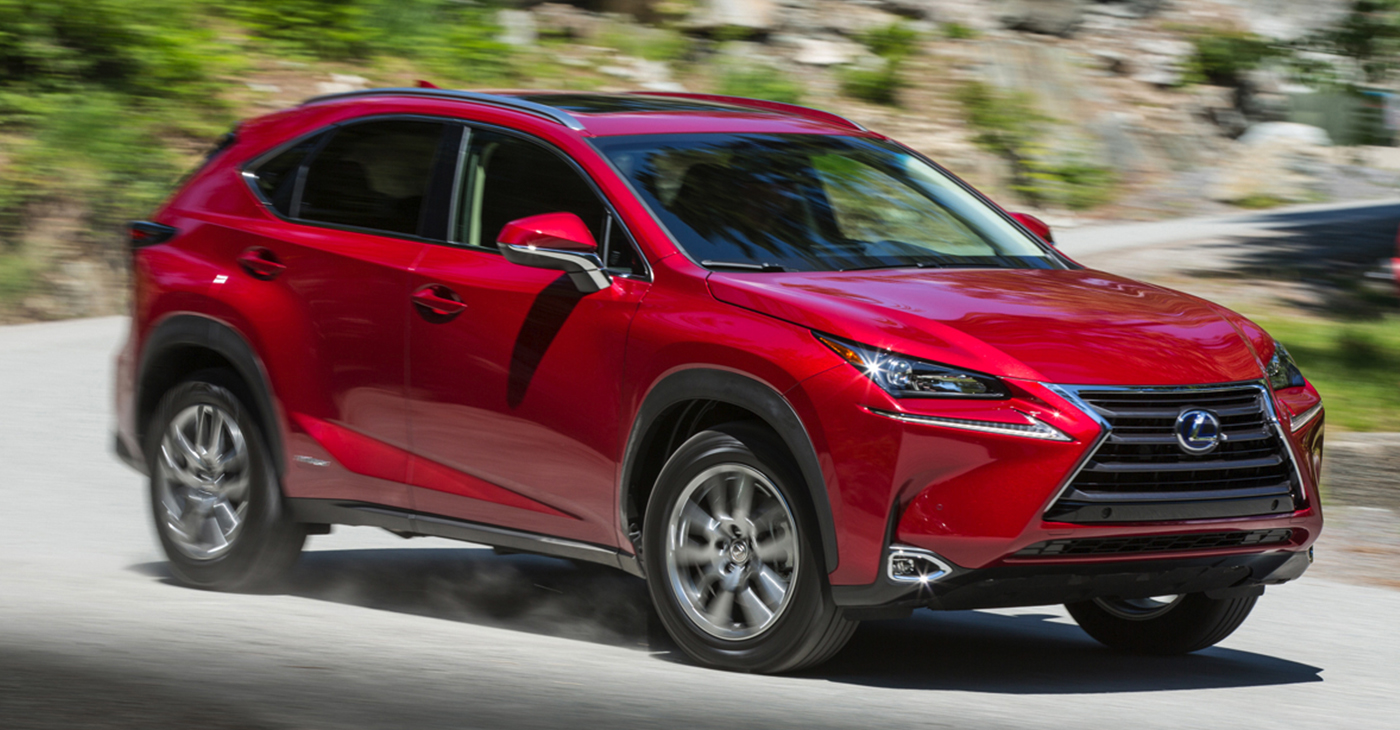
This one combines the output of a 2.5-liter four-cylinder gasoline engine and what Lexus called a small high torque electric motor. Power can shift between the gas engine and the electric motor or they can operate in tandem. Combined they supply 194 horsepower to the NX 300h.
Transferring that power to the pavement is an electrically controlled continuously variable transmission or ECVT. We don’t know if there is any advantage to this type of transmission versus a regular CVT. But it seemed to convey a little more oomph to the pavement under normal conditions.
This combination had an EPA rating of 33 mpg in the city, 30 mpg on the highway and 31 mpg combined. We thought that was a little on the low side. But 30 mpg is the magic number for fuel efficiency and the Lexus NX Hybrid topped it across the board.
As most who are familiar with hybrid systems know, regenerative braking changed the electric motor into a generator that captured the kinetic energy of the wheels when the brakes were applied. Then it was stored in the nickel-metal hydride (NiMH) hybrid battery pack.
In EV drive mode, under certain conditions, the NX 300h can run solely on the electric motor for up to 1 mile at lower speeds (below approximately 25 mph). We tried this by driving around the block, well several blocks. The crossover hybrid stayed in electric mode but when we got to 25 mph, the gasoline engine kicked in just like Lexus said.
Lexus also said a Hybrid System Indicator and fuel consumption indicator, located in a 4.2-inch TFT screen, help coach the driver to operate the vehicle as economically as possible. Never saw it, never looked for it, ergo we never paid any attention.
But we did notice that all the instruments were digital. The speedometer and the power gauge; all the numbers were digital, but they were inside a three-dimensional ring. Thus, they looked analogue. It was a nice illusion.
The all-wheel-drive system (with intelligence) was standard. Instead of transfer gears and a driveshaft to the rear wheels, the system employed a second, independent electric motor to drive the rear wheels when needed to help maintain optimal traction. Since thank goodness winter was not upon us at the time of the test drive, this feature was not needed. And our test vehicle did sport the optional 18-inch wheels.
We climbed into the 2019 Lexus NX 300h and found the interior busy but nicely done. The floating infotainment screen was set back atop the dash; almost like it was on a downward slope. There was a cascaded look. The vents were next, followed by the climate control gauges and temperature setting.
The center-stack dropped down abruptly and there were the audio controls, the gear shifter beneath and the drive mode selector which was a dial. We were intrigued by the CD player; most of them have gone to the automotive obsolete museum. We checked it out and found it provided excellent sounds.
Farther back on the console was the Lexus haptic pad. Lexus called it the remote touch interface (RTI), which uses a touchpad with palm rest in the center of the console. The RTI helps the driver access various functions while staying focused on the road. The front-seat passenger can also easily operate the RTI.
It is a control mouse and can be unnerving for first time users. Inside the center console were 2 USB jacks, a 12V socket and an auxiliary jack grouped closely together.
The slightest slivers of dark wood trim were on the dash and the doors. And the NX Hybrid had a power tilt and telescoping steering wheel. It was heated as well. The rear seats also were power tilting and there was a power liftgate.
The rear seats were firm but bordered on being hard. There was plenty of headroom as well as legroom. They could also flip down in addition to tilting.
There was a 360-degree surround view camera with overhead view. The NX Hybrid had Lexus’ safety package that included lane departure warning and correction and collision warning. It had a navigation system, Enform app suite, rearview camera with cross traffic alert, a moonroof and premium LED daytime running lights.
A smart key with push button start and lock and unlock, power folding outside mirrors, Apple CarPlay and Amazon Alexa capability were part of the creature comforts. And of course, there were heated and cooled front seats.
The base price of the 2019 Lexus NX 300h was $38,735 Add a lengthy list of options, a $1,025 freight charge and our test vehicle had a sticker of $49,354.
Frank S. Washington is editor of AboutThatCar.com
AboutThatCar.com
AUTO REVIEW: 2019 Subaru Forester
NNPA NEWSWIRE — The vehicle seems to have had just about every creature comfort: stop/start, automatic lock and unlock, eyesight driver-assist technology, torque vectoring, Bluetooth, a navigation system, heated front seats, power driver’s seat, satellite radio, voice controls, it had dual 2.1 USB jacks in the rear, plus one more in the front and an auxiliary jack and 12V socket.


By Frank S. Washington, AboutThatCar.com, NNPA Newswire Contributor
DETROIT – Even before my week test driving the 2019 Subaru Forester was up my opinion had been reached. It was very satisfying to the point of being a very impressive midsize crossover that delivered on a number of levels.
Under the hood was a 2.5-liter Boxer engine, meaning horizontally opposed four-cylinder that made 182 horsepower and 176-pound feet of torque at 4,400 rpm.
The Forester had an EPA rating of 26 mpg in the city, 33 mpg on the highway and 29 mpg combined.
This new engine provided more than enough oomph in day-to-day driving. I really don’t care for CVTs but this one was not bad. Acceleration was good and it was fairly quiet, for a continuously variable transmission.
The first driving characteristic I noticed about the Forester was its handling. It was Go-Kart precise. Just the slightest turn of the wheel and the midsize crossover went in the direction the wheel was turned. Reaction time to driver input was almost instant.
Styling was new for 2019 too. Subaru said it was more rugged. The exterior had shoulder lines that followed around the pillars to emphasize height and strength. Prominent wheel arches emphasized the standard Symmetrical All-Wheel Drive system’s functionality. Subaru is one of the few manufactures that make all-wheel-drive standard.
The front, side and rear under guards were also standard on all models, with color finish according to trim line. New LED headlights were standard on all models. The wheelbase was increased to 105.1 in. from 103.9 in., with the gain benefitting rear seat legroom, which is now 39.4-in., a 1.4-in. increase.
I got into the rear seats and found them comfortable. There was plenty of headspace, hip room and I think three people could sit in the back seat in relative comfort. And because the Forester sits deceptively high, the drive tunnel was not that much of an intrusion into the interior space.
What’s more, the moonroof was larger than most I’ve seen.
Subaru’s signature hexagonal grille incorporated active grille shutters, which optimize aerodynamics to help reduce fuel consumption. Wider rear door openings and a steep C-pillar angle make ingress/egress and installing a child seat easier. All Forester models feature lower body side cladding, which helps protect against mud, rocks and other road debris.
My only complaint was that the frame for the C-pillar glass was light gray while the rest of the interior was black. I could see it out of the corner of my eye, and it was distracting. I thought it was a vehicle in my blind spot at first, and then I thought it was somebody in the street and after I discovered what it was it was still disconcerting.
As Subaru said, there was outstanding outward visibility. Strategically designed pillars and generous glass area ensure an excellent all-around view from inside, and all models feature a standard rear vision camera. But they need to dump that light gray frame for the C pillar window.
Anyway, that was my only gripe. And I believe that is a choice of interior color. The cargo space was upped during the redesign to 76.1 cu. ft. with the rear seats folded. The automatic lift gate width was 51.3 inches. This Subaru Limited trim also had roof rails with integrated tie-down hooks.
I thought the interior was really nice. It was soft black leather with gray stitching. It was particularly nice around the front door panels; so supple that it felt like a thick cloth.
The instruments were black with white numerals reversed out. And the vehicle seems to have had just about every creature comfort: stop/start, automatic lock and unlock, eyesight driver-assist technology, torque vectoring, Bluetooth, a navigation system, heated front seats, power driver’s seat, satellite radio, voice controls, it had dual 2.1 USB jacks in the rear, plus one more in the front and an auxiliary jack and 12V socket.
It had its own Wi-Fi hotspot, lane departure alert and assist, blind spot alert, rear view camera with cross-traffic alert, a navigation system, Apple CarPlay, Android Auto, cloud apps, streaming capability, ride modes, and adaptive cruise control. And there was a pod atop the dash that gave you average mpg; mine was 22.9, then mpg in real time, range, interior and exterior temperature, the lock and the climate control reading.
The 2019 Subaru Forester was a great vehicle with great handling, a very good ride, good gas mileage and good interior space with what they called a panoramic sunroof. The sticker I thought was astoundingly low, $33,465.
Frank S. Washington is editor of AboutThatCar.com


Black-Owned Banks: FDIC Data Reveals Shocking Truth #shorts

2026 Defender 130X: Is The $110k SUV Worth It? #shorts

Mastering the Used Car Market ep11

2026 Defender 130 X Is It Worth $110,110 for Your Family?

“Money, Power, and Respect,” (SEIU) President April Verrett

Car Takeoff Hesitation? Daylight Test Drive Guide #shorts

Your Vote Matters…Protect Your Freedoms!

The Black Bank That Survived the 1893 Panic #shorts

Why A Black Bank Started From A House #shorts

Defender ONE-on-ONE: U.S. Rep. Christian Menefee

Latest Massacre in Haiti Reveals Cruelty U.S. Deportations

The Youngest American Killed in the Vietnam War

OPINION: Nolan Wells’ Death One of Several Signifying Racial Terror Lives on in U.S. South

Passing for White, Fighting for Black America: The Courage of Walter White

OP-ED: Haiti TPS: Have We Lost Sense of Humanity?

OP-ED: If AI Is the New Language of Power, Then NAN Wants Black Communities Fluent

OP-ED: How Does Your State Rank for Pre-K?

Henry O. Flipper: A Trailblazer at West Point and Beyond

NFL: NFC Preview | The Rams will NOT make the Super Bowl

Asm. Smallwood-Cuevas’s Bill Repealing ‘Racist’ CalWORKs ‘Man-in-the-House’ Rule Clears Legislature
Black-Owned Banks: FDIC Data Reveals Shocking Truth #shorts
2026 Defender 130X: Is The $110k SUV Worth It? #shorts
Mastering the Used Car Market ep11
2026 Defender 130 X Is It Worth $110,110 for Your Family?
“Money, Power, and Respect,” (SEIU) President April Verrett
Car Takeoff Hesitation? Daylight Test Drive Guide #shorts
Your Vote Matters…Protect Your Freedoms!
The Black Bank That Survived the 1893 Panic #shorts
Why A Black Bank Started From A House #shorts
Defender ONE-on-ONE: U.S. Rep. Christian Menefee
-

 Black Press5 days ago
A $2.1 Trillion Wellness Industry Never Built a Daily Practice for Black Children. So This Atlanta Family Did.
-

 Black Press7 days ago
Zakiya Jendayi Arrested, Locked Out of Home by Sheriff’s Deputies
-

 Black History7 days ago
Listening as a Lifeline: A Doula’s Witness to Black Maternal Health
-

 BlackPressUSA3 days ago
Latinas Deserve Equal Pay. Unions Help Make It Happen.
-

 Black Press5 days ago
COMMENTARY: But God!
-

 Black Press7 days ago
‘We Don’t Talk Trash — We Pick Up Trash!’
