
Politics
Amid Trump Bombast, Quiet Ben Carson Rises in GOP 2016 Field


In this Sept. 11, 2015 file photo, Republican presidential candidate Ben Carson speaks in St. Louis. Carson has moved into the top tier of the 2016 presidential race as quietly as Donald Trump crashed the party with bombast, and he’ll join the billionaire real-estate mogul as a focus of attention at the GOP’s second debate. (AP Photo/Sid Hastings, File)
STEVE PEOPLES, Associated Press
LOS ANGELES (AP) — Amid all the bombast in the Republican race for president, Ben Carson comes across more like a whisper.
He is, in some ways, the anti-Trump — a gentle candidate who lets his record as a renowned brain surgeon speak for itself. The bragging about his resume and place in the polls, on the rare occasions it comes, is delivered with none of the superlatives that Donald Trump can’t seem to go without.
Yet the 63-year-old Republican, the only African-American seeking the White House in 2016 — has tapped into the same wave of anti-establishment outrage fueling the billionaire realty TV star’s rise.
“The likelihood of someone like me getting through this process and making it to president is virtually impossible,” Carson told The Associated Press in a recent interview. “I just have to be myself. And if being myself resonates with the American people, then they will choose me.
“And if it doesn’t,” he said, “they will choose somebody else.”
Like Trump, Carson was dismissed early as a gaffe-prone novice lacking a national profile and any significant political network. But he appears to be connecting with Republican voters at a rate that even his closest aides didn’t predict.
Heading into Wednesday night’s second debate of the GOP contest, Carson finds himself alongside Trump atop the field.
A New York Times/CBS News poll released Tuesday shows Carson favored by 23 percent of likely Republican primary voters compared to Trump’s 27 percent. Former Florida Gov. Jeb Bush and Wisconsin Gov. Scott Walker, meanwhile, have plummeted to 6 percent and 2 percent respectively.
It should be noted the poll found that 63 percent said they could change their minds before the primaries begin with the Iowa caucuses in February.
Yet it was just one of several in recent days that feature the political rookies Trump and Carson leading a field of veterans of elected office, offering the clearest example yet that Republican voters have deep frustrations with the political establishment.
It shows in Carson’s fundraising, too. His campaign says it has raised $5 million so far this month, adding to the $9 million it pulled in during July and August — a strong performance at what is typically one of the hardest times for candidates to raise money.
Wednesday night offers Carson a new chance to build on that momentum. A stage full of Republican candidates will face off at the Reagan Presidential Library for the party’s second formal debate. Carson emerged from the first as a surprise success, his popularity fueled by his nice-guy image on a night when his competitors came out swinging.
Yet he remains rough around the edges and has little experience with issues beyond health care and business, particularly foreign policy in an election where international affairs are a major part of the discussion.
“He’s memorized every nerve in the body, he can memorize the top 12 terrorists in the world,” said Carson campaign manager Barry Bennett, dismissing any concerns.
His team hopes to use any additional airtime he’ll get Wednesday night to highlight Carson’s biography.
He rose from the streets of inner-city Detroit to be head of pediatric neurosurgery at Baltimore’s Johns Hopkins Hospital. The story inspired a television movie and gives Carson unique standing in a Republican Party often criticized as the party of older, wealthy, white men.
Carson briefly focused on race late last week by touring Ferguson, Missouri, the St. Louis suburb hit by rioting after a white police officer shot a black teen. After the tour, however, Carson condemned the “Black Lives Matter” movement and said the nation should “de-emphasize race” and instead “emphasize respect.”
A religious conservative, Carson said he’d prefer the movement change its name to “All black lives matter” — to include the unborn children of black women who have abortions. Better yet, he said, the group would change its name to simply, “All lives matter.”
He’s expected to focus on party unity on the debate stage after declining to respond to his competitors’ jabs in recent days.
“Trump will be Trump, Ben will be Ben, and the contrast couldn’t be clearer,” Bennett said.
In contrast to other campaigns, no one has been playing Trump during Carson’s debate preparation sessions, which are somewhat unusual. Bennett described an all-day “knowledge session” Monday in which experts delivered presentations on various domestic and foreign policy topics.
“They don’t pepper him with questions, he peppers them,” the campaign manager said.
And while Carson doesn’t focus on race, his campaign suggests his status as the only African-American in the contest is a political asset.
“In a crowd of 17 candidates, it is important that you can differentiate yourself in as many ways as possible,” Bennett said. “He’s soft-spoken, he’s African-American and he’s a doctor.”
The campaign has begun running TV ads in Iowa and New Hampshire promoting Carson’s biography. And it’s looking to expand a paid staff of 80 now divided between the campaign’s suburban Washington headquarters and early voting states across the country.
The political establishment remains skeptical of his chances, but Carson doesn’t seem to mind.
“My whole life people have told me you can’t do this, no one’s ever done this before, this is impossible,” he said. “I don’t even get charged up until I hear those words.”
___
Follow Steve Peoples on Twitter at: https://twitter.com/sppeoples
Copyright 2015 The Associated Press. All rights reserved. This material may not be published, broadcast, rewritten or redistributed.





Black Press
Becerra Hosts Meet-and-Greet With Black Leaders in L.A.
Democratic gubernatorial candidate Xavier Becerra recently met with Black elected officials and community leaders in South Los Angeles to outline his platform for California’s future. Introduced by L.A. County Supervisor Holly Mitchell, Becerra detailed his priorities for expanding affordable housing, protecting healthcare access, and defending diversity and inclusion initiatives. The discussion addressed immediate challenges such as homelessness accountability, the impact of federal funding cuts, and the rising role of artificial intelligence in public life. Read more to learn how Becerra plans to address these issues.
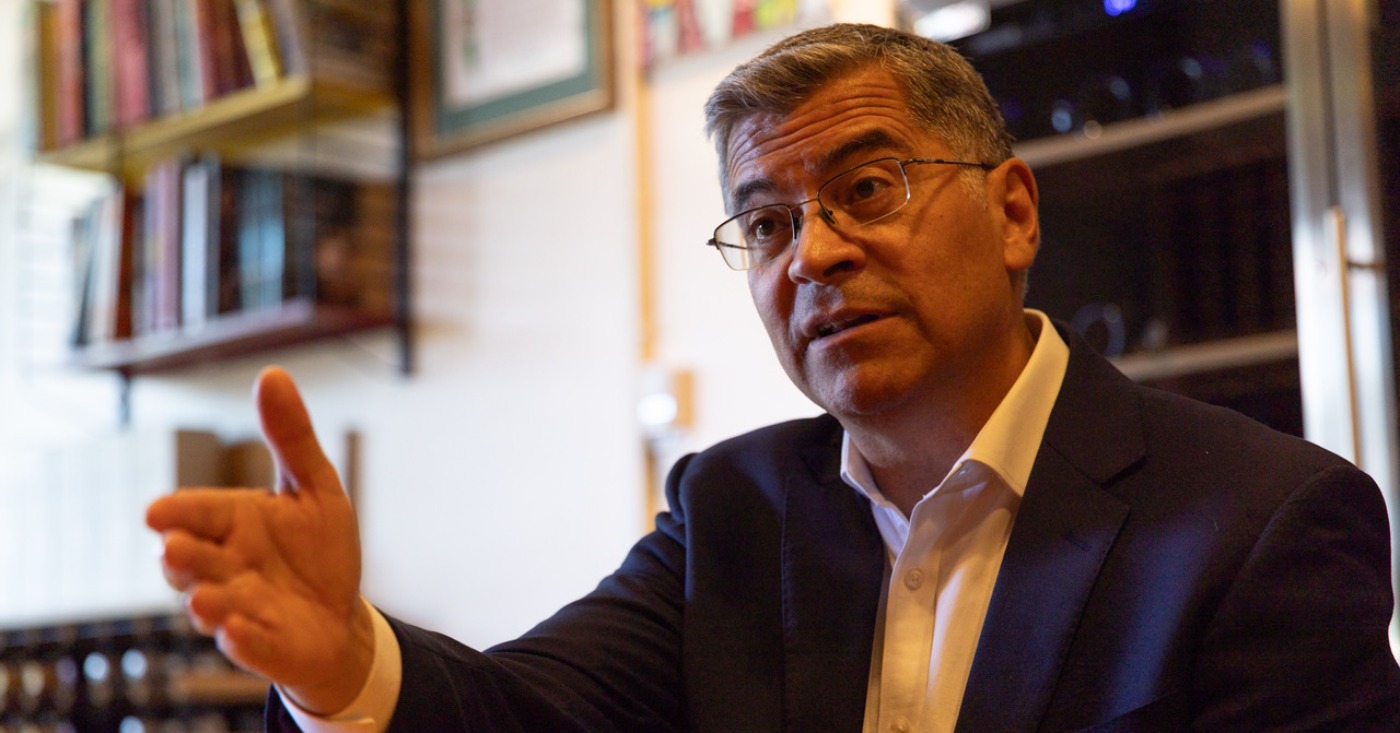
Democratic gubernatorial candidate Xavier Becerra outlined his priorities for housing, health care, education and civil rights during an Oct. 15 meeting with Black elected officials and community leaders in South Los Angeles.
Los Angeles County Supervisor Holly Mitchell introduced Becerra, citing his experience in the Legislature, Congress and federal government.
“We need people who have walked where we have walked and understand the communities that we all live in, come from, and represent,” Mitchell said.
Becerra pledged to defend diversity, equity and inclusion programs against federal opposition and criticized voter identification requirements as barriers to voting.
“If there’s a fight for that diversity, that strength, that inclusion, that equity, count me in, and let me use the governor’s office to make it clear,” he said.
Identifying housing and health care as immediate priorities, Becerra said more than 40,000 housing units are awaiting financing. He cited Proposition 1, a housing bond measure on November’s ballot, as a potential funding source.
“Prop 1 would give us the money to help start getting those moving,” he said. “And the more you build, the more you relieve the pressure, the demand for housing, which means you can probably see the price stabilize as well.”
On homelessness, he demanded measurable results from cities and counties receiving state funding.
“We will demand accountability when it comes to homelessness,” he said. “I’m not willing to let $1 from the state, from taxpayers, go to a city or a county unless they can show me how they’re going to use the dollar and what the results will be.”
He advocated temporary shelter, mental health and substance use treatment, and intervention before families lose their homes.
Becerra warned that federal Medicaid cuts could leave millions without coverage and threaten hospitals and clinics.
“If these families lose their insurance and still go in for care, now the doctors and the hospitals won’t get paid,” he said. “I want to make sure neither the patients nor the providers feel like Trump’s cuts are going to undermine our health care system.”
He said he is consulting providers and insurers but offered no financing plan.
Addressing surveillance and artificial intelligence, Becerra urged safeguards against discriminatory tracking and dangerous technology, including possible government authority to shut down unsafe AI systems.
“Once you give up your privacy, you can’t get it back,” he said.
He also criticized federal immigration enforcement and advocated comprehensive immigration reform, citing uncertainty for families and employers dependent on immigrant labor.
On education, Becerra supported expanded early childhood learning, tutoring, stronger academic standards and experienced teachers in underperforming schools. He opposed directing public education funding toward for-profit private schools.
“Keep your taxpayer dollars in our public community schools,” he said. “Don’t let those tax dollars go to for-profit private schools first, because it’s already tough enough as it is.”
He said schools must address learning gaps early rather than advancing students without grade-level skills.
“Too many of our kids are starting even kindergarten, and they’re not ready to learn,” he said. “And is it surprising that by the third grade they’re not reading or doing math at grade level?”
He also urged districts to assign skilled teachers to schools with the greatest needs, working with unions to address compensation.
Black History
COMMENTARY: Bring on the Positive Calvary
SEATTLE MEDIUM — Dr. E. Faye Williams addresses the exhaustion many Americans feel following two years of political hostility, corruption, and systemic bigotry.
(Trice Edney Wire)—Like Amy Acton, candidate for Governor in Ohio and Dr. Abdul El-sayed for U.S. Senate in Michigan, the Positive Calvary really is coming soon! Aren’t we all tired of the negative past two years we’ve experienced in the U.S.? Aren’t we tired of the atrocious accusations being thrown around, the filthy language, lies, unending corruption, hatred, racism, sexism, Islamophobia, and bigotry of all kinds. This election season has been worse than ever! I’m sick and tired of women’s names being dragged through the mud—as mine, and others have been out of hate and jealousy. I’m tired of so many people being reluctant to support women. Let’s be the ones to stop this
I’m ready to hear in detail what candidates are ready to do to win the upcoming elections and give help to the people in need—and there are a lot of things from which to choose!
My prayer is that candidates will stop bickering and just tell us what they’re planning to do to help to bring us out of this abysmal situation we’re in now. Instead of spending so much time being shocked by what the highest elected man in the land is saying and doing, let’s concentrate on how to put up guard rails for him when we vote We already know more than enough about what he has said and done. Let’s pledge to elect leaders who’ve shown they care about the people they campaign to represent. There are a lot of good candidates out there who are being overshadowed by the bickering
Let’s not leave everything to elected leaders. As community activists, Get Out the Vote workers, religious leaders and all the good people around us. Show the way to a better nation to all around us. Let’s concentrate on what we are going to do to help people in need. Let’s work on plans to make their lives better. Let’s pledge to get along with our neighbors at home, and our neighbors in Canada, our friends in Ukraine and stop being led by someone who hangs out with those set on disrupting our system of democracy. Ignore the wrecking balls who are more interested in tearing down monuments and praising themselves, supporting evil with lies and unbelievable positions on good people, those who are destroying our military and using government and our taxes on evil things.
Let’s call out corruption, but don’t participate in it. Let us ignore lies about good candidates at all levels. Let’s support the left out. Jamie Davis, a Black man in Louisiana, is a leading candidate for the U.S. Senate. We don’t have to live in Louisiana or be a Democrat or a farmer to support him when you see how much trouble the person running against him is dealing with something people don’t want.
We can vote across party lines when that candidate has expressed the good things she/he will work for when elected. Never mind that in this case she has an R after her name. I know Monique Appeaning in Louisiana who worked in my campaign for Congress when she was a very young woman. I missed winning by a few votes to become the first Black woman to represent my home state in Congress. Forty years later, there has still been no Black woman in the Louisiana delegation. Monique has chosen to pick up the challenge and give my hope life so that other young Black women can have hope in refusing to allow any good thing to be beyond their reach
You know right from wrong, so don’t be afraid to vote for what’s right in a few days. Always promote good. Dr. Abdul El-Sayed and Amy Acton deserve your vote if you are in Ohio or Michigan. Yes, you know right from wrong, so do what’s right wherever you are.
Based on reporting by Seattle Medium.
Black History
Metro Detroit Faith Leaders Call out Islamophobia in Michigan Senate Race
MICHIGAN CHRONICLE — Faith leaders from diverse religious backgrounds gathered Thursday at the downtown Detroit United Methodist Church to denounce the rise of Islamophobic rhetoric in Michigan’s U.S. Senate race. Clergy members, including representatives from Christian, Jewish, and Muslim traditions, expressed concern over religious identity being used as a weapon in the final weeks before the general election.
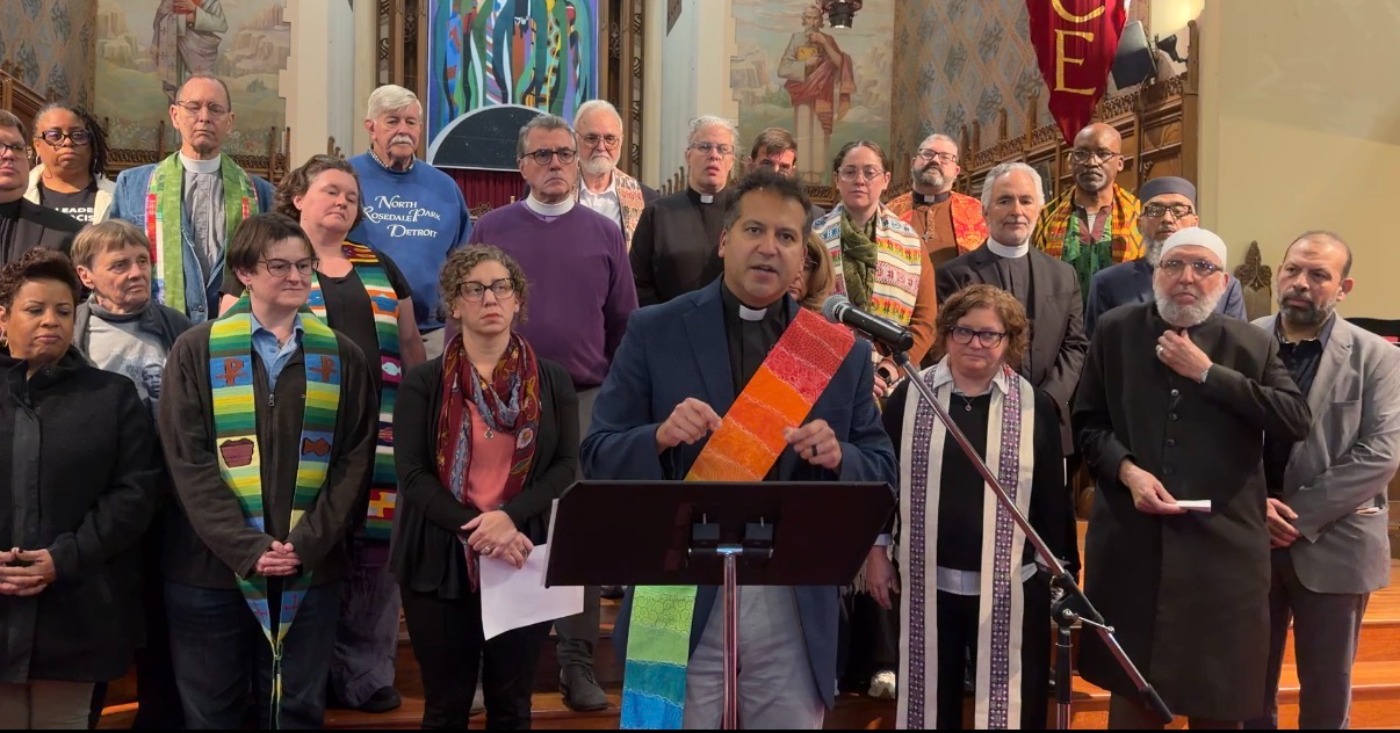
Faith leaders of different religions came together Thursday afternoon inside the downtown Detroit United Methodist Church to oppose Islamophobic rhetoric that’s ramped up ahead of the Nov. 3 general election.
“In the final weeks of Michigan’s U.S. Senate race, we have watched religious identity used as a weapon,” said Rev. Paul Perez, who leads the downtown Detroit church.
Perez and other faith leaders said at the press conference they weren’t endorsing a candidate, but compassion and understanding as Michigan voters decide who to send to the U.S. Senate.
Democratic nominee Abdul El-Sayed would be the first Muslim ever elected to the U.S. Senate. His identity is being used by supporters of Rogers’ campaign to cast doubt on his loyalty to the U.S. Constitution.
Earlier this month, El-Sayed’s Republican opponent, former U.S. Rep. Mike Rogers agreed with a social media post calling El-Sayed a terrorist.
“The charge of dual loyalty has been thrown at Jews for generations,” says Rabbi Alana Alpert, of Ferndale’s Congregation T’chiyah. “When we hear it aimed at our Muslim neighbors we recognize it. And we will not let it be used against anyone.”
At an El-Sayed event Thursday at the Wayne State Fieldhouse, an ant-Muslim activist Cam Higby interrupted his rally as El-Sayed began his remarks.
“Why do you take money from members of the Muslim Brotherhood?” Higby shouted before being escorted out of the gymnasium.
TV and digital ads echo the charge against El-Sayed that he is connected to designated terrorist organizations, which he has denied. He has disavowed and condemned Hamas, the military group controlling Gaza, and the Muslim Brotherhood, a decentralized movement with a long history in Egypt.
While tweets from his half-sister suggest she and her mother had sympathetic attitudes toward the organization, no evidence has been produced that points to El-Sayed being affiliated with the Muslim Brotherhood.
In an interview with Michigan Chronicle, Higby said he doesn’t believe Muslims belong in America. That sentiment is often found in online replies and comments from accounts run by conservative Christians.
sd Democratic voters have also expressed skepticism about El-Sayed’s faith.
Ahead of the primary election, Farmington Hills School Board member Angie Smith caused an uproar online after she told Michigan Chronicle she wasn’t sure whether El-Sayed could represent everybody.
“Don’t come out speaking only Arabic; don’t come out with your Arabic music on; represent everyone,” Smith said.
She later apologized for the comments.
At Thursday’s press conference, Imam Steve Mustapha Elturk of Warren’s Islamic Organization of North America, shared a story about how he eventually earned the trust of new neighbors who feared his congregation was bringing Sharia law when they arrived.
“When a person’s faith is treated as evidence for disloyalty, every Muslim family hears that message. Our children hear it. They come home from school and ask, ‘Are we really American?,’” Elturk said. I want to answer them today from this pulpit surrounded by our Christian and Jewish brothers and sisters, yes, we are Americans. Yes, we are Americans. Our faith is protected by the same Constitution that protects every other faith.”
Pastor Louis Forsythe II of Detroit’s Pleasant Grove Baptist Church, said that liberation of Christians, Jewish and Muslims are tied together.
“The Black church knows what it means to have our loyalty questioned,” Forsythe said. “We know what it means to be told we are less than full citizens. We are called un-American for demanding the rights of the Constitution promised us.
“Our faith carried us through that, and it was the faith of others standing beside us that helped bend this nation toward justice. Dr. Martin Luther King Jr. wrote from a Birmingham jail that injustice anywhere is a threat to justice everywhere.”
Based on reporting by Michigan Chronicle.
Black Press
Lawmakers Back Push Against Military Sexual Assault
CHICAGO CRUSADER — Illinois lawmakers and Cook County officials are pledging support for a Chicago-area veterans advocate seeking stronger protections for service members who experience sexual assault. State Rep. La Shawn K.
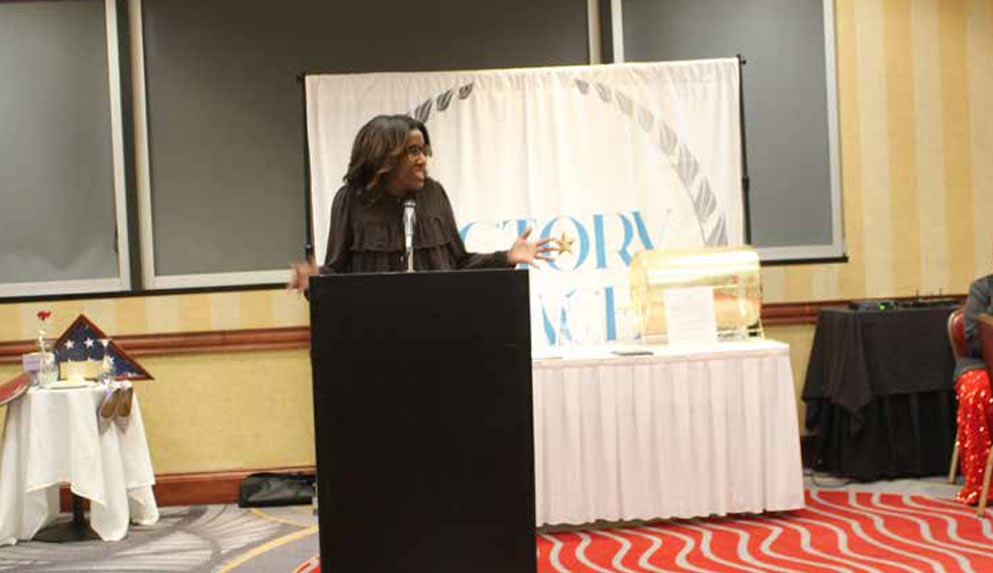
Illinois lawmakers are pledging support for a Chicago-area veterans advocate seeking stronger protections and accountability for service members who experience sexual assault, as new Pentagon data shows declines in estimated assaults but advocates warn that fear of reporting remains a serious concern.
State Rep. La Shawn K. Ford (D-8th), U.S. Reps. Danny K. Davis (D-7th) and Jonathan Jackson (D-1st), and Cook County Commissioner Donna Miller (6th) have expressed support for Dr. Renee Dickerson, an Air Force veteran, sexual assault survivor and founder and CEO of Victory Place, NFP.
Dickerson is a co-national organizer of the Million Women Veterans March on Washington, which she said is scheduled for October 27, 2027. The effort, known as “Dishonored Valor,” is being organized by National Women Veterans United, the International Association of Military Women of Color and Victory Place. Its policy priorities include military sexual trauma prevention, justice and accountability, mental health care, housing, economic equity and institutional transparency.
Ford and Miller were among veterans and supporters who attended a recent Victory Place fundraiser at the DoubleTree by Hilton in Alsip. Miller, whose father served in Vietnam, chairs the Cook County Board’s Veterans Committee.
“Sexual assault in the military is not a problem of the past. It is still happening to women and men who volunteered to serve our country,” Ford said. “Too many survivors carry that trauma home with them without the care and justice they deserve.”
Ford said he plans to help convene veterans, behavioral health professionals, educators and community partners in Illinois before the Washington march to identify state policies that could complement federal reforms.
“Those who served deserve to be safe while serving and supported when they come home,” Ford said.
Davis said he is committed to working with Dickerson’s group. He also urged voters concerned about federal policy to participate in the November 3 election.
“If people want change in this country, if they want progressive thought and progressive ideas to be actualized, then every chance that they get to put the more progressive people in decision-making places, that is the most effective way to do it,” Davis said.
Dickerson’s campaign comes as the military continues to confront sexual assault and questions about whether survivors trust the reporting system.
The Pentagon’s Fiscal Year 2025 Annual Report on Sexual Assault in the Military estimated that 20,492 active-duty service members experienced unwanted sexual contact, down from 29,061 in fiscal 2023. The estimated rate among active-duty women fell from 6.8% to 4.3%, while the rate among men declined from 1.3% to 1.0%. The Pentagon also estimated that 33% of affected service members reported an assault to military authorities, up from 25% in 2023.
Protect Our Defenders, a national advocacy organization focused on military sexual assault and harassment, cautioned that the lower estimates should not end scrutiny of the system. The organization said it continues to hear concerns from service members about fear of reporting and access to survivor protections and has criticized changes to prevention and response programs.
One case cited by the organization involves Army Maj. Blaine McGraw, an obstetrician-gynecologist facing a general court-martial at Fort Hood, Texas. According to the Army, McGraw pleaded not guilty in August to nine charges encompassing 272 specifications involving 93 alleged victims. The allegations include sexual assault and abusive sexual contact, indecent recording, assault consummated by battery and other offenses. He is presumed innocent unless proven guilty. His trial is scheduled to begin March 30, 2027.
Dickerson said her advocacy is rooted in her own experience with military sexual trauma. She said the superior who raped her was never charged, an experience that has fueled her work with veterans and their families dealing with trauma.
Through Victory Place and the Million Women Veterans March, Dickerson said she intends to press for policy changes and greater accountability for survivors who believe military systems failed them.
“I am proud to stand with Dr. Dickerson and the Million Women Veterans March,” Ford said.
Based on reporting by Chicago Crusader.
Black Press
Message from the Associate Editor: Blindness, Hurts, Cops
HOUSTON DEFENDER — Reports regarding Philadelphia Eagles quarterback Jalen Hurts have raised serious concerns about the treatment of Black athletes after it was revealed he played through a medical emergency. According to team reports, Hurts was hospitalized until 4 a.m. with a blood clot prior to a Week 5 game in London, yet he was allowed to play the entire game and endure international flights.
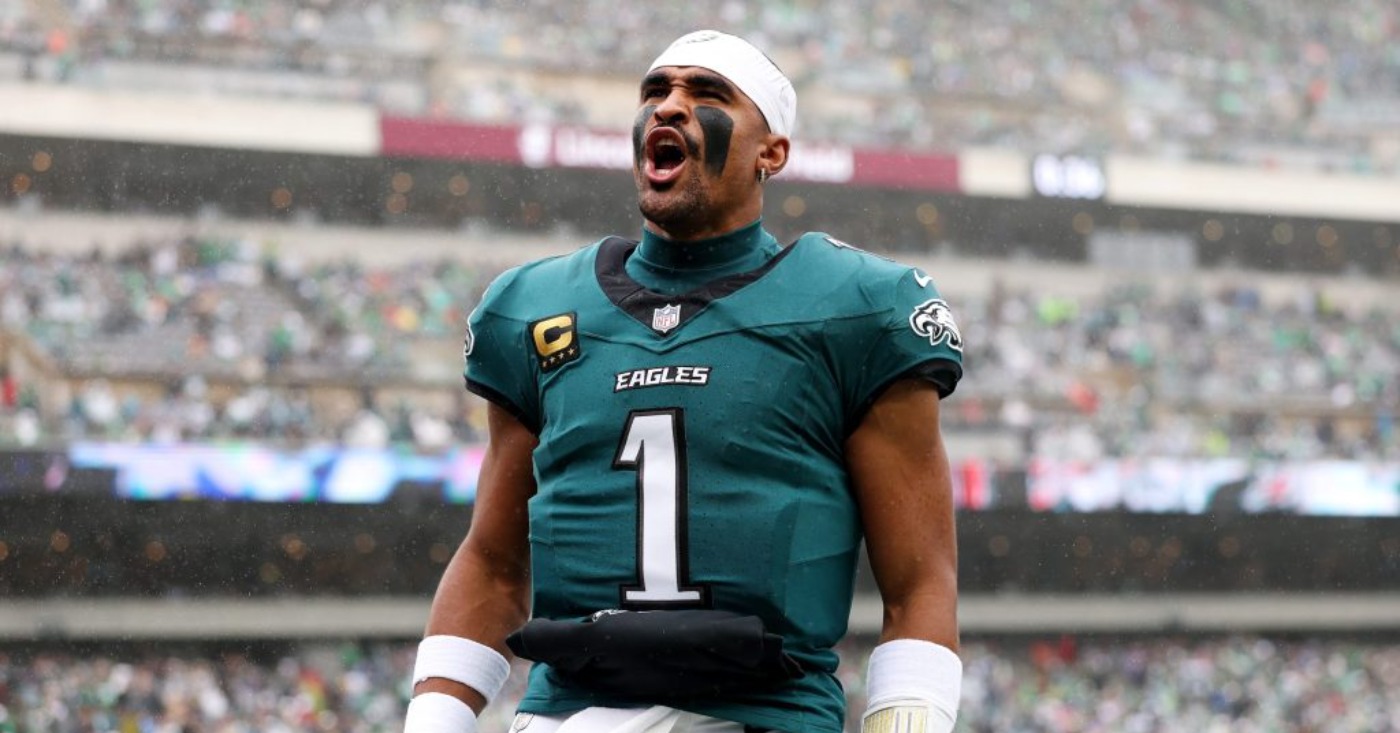
The Jalen Hurts saga hurts
The disturbing reports surrounding Philadelphia Eagles quarterback, Houston-born Jalen Hurts, raise a troubling question: How much is a Black athlete’s life worth when winning is on the line? According to reports, the Eagles knew Hurts had a blood clot after he was hospitalized until 4 a.m. before the team’s Week 5 game against Jacksonville in London. Nevertheless, he played the entire game and endured international flights before doctors discovered the clot had progressed to deep vein thrombosis and bilateral pulmonary emboli. He was placed on blood thinners and injured reserve (out for the season). Sports medicine physician Jesse Morse warned that migrating clots could cause a fatal pulmonary blockage, heart attack, or stroke. Pulmonologist Matthew Gordon acknowledged that blood clots can be catastrophic or fatal. Beyond the medical questions, this episode reflects a disturbing American tradition: Treating Black bodies as expendable commodities. From slavery to exploitative labor practices and generations of dangerous sports, Black people have repeatedly been expected to sacrifice their well-being for others’ profits. The NFL’s predominantly Black workforce is literally “fieldhands” making their wealthy “owners” wealthier, giving serious plantation vibes. What’s crazy is, Hurts could have died. And if he had, the Eagles would have simply put another Black body to work and kept it moving.
Blind by choice
Recently, a Black woman conservative social media influencer was physically removed from a Ken Paxton voter event. And as she fought back tears, after being “dog-walked” out of the building, she kept asking, “Why?” She told her followers that she has been a faithful supporter of Donald Trump and the entire Republican ticket. She said she not only voted for Trump and crew, but also organized and volunteered for them on various campaigns. Before she got to the event, she went live on social media, bubbling with excitement about supporting Paxton, which is crazy, because no one is excited about supporting Paxton. But her MAGA-fest was abruptly ended as her live-stream followers saw her suddenly teary-eyed, being led out of the event space. “And there’s no one I can talk to about this,” she asked her exit escort, dumbfounded. She then shared with her MAGA followers, “Someone just came up to me and said Ken Paxton’s campaign manager wanted me to leave… I drove two hours to get here, and I have done nothing but support everyone on the Republican side. And this is how I get treated? I cannot believe the disrespect that I was just given.” Blackfolk in the comments section couldn’t believe that soul sister couldn’t understand what was happening. But you, if she’s been willing to play blind and support one of the most anti-Black regimes in history, and organize for a party that has gone out of its way to disrespect every ounce of Black existence, then I can understand why she couldn’t see their disrespect of her Blackness. But since she’s already given her soul to anti-Blackness, you best believe she’s still voting for Paxton. In fact, she literally said so.
Mecklenburg racist police competitions
It’s old news by now that several Charlotte-Mecklenburg cops sent text messages to each other, degrading Black people with the N-word and racist jokes, celebrating their open competition to see which racist-ass officer could pull over, harass, and even inflict the most bodily harm on Black motorists. Their Klan-ish fun and games had zero to do with Black people breaking the law. It was just white cops making a sport out of terrorizing Black people, using the authority of the state and their literal license to kill to torture Black people emotionally and physically. And they used Flock cameras to help them with their fun and games. But what’s older news is the fact that these are the very actions Blackfolk have been pointing out from cops for centuries. These six cops got caught via text messages. But police in every city and state routinely take this same approach to law enforcement.
Based on reporting by Houston Defender.
Black Press
A Legacy of Service, a Future of Hope: North Carolina Juvenile Services Association Commemorates 60 Years of Empowering Youth
THE CAROLINIAN — The North Carolina Juvenile Services Association (NCJSA) recently celebrated its 60th anniversary at a diamond anniversary conference in Greensboro, marking six decades of transformation in the state’s approach to youth justice. Founded in 1966, the organization was established by dedicated practitioners who sought to move juvenile rehabilitation away from the adult correction system.
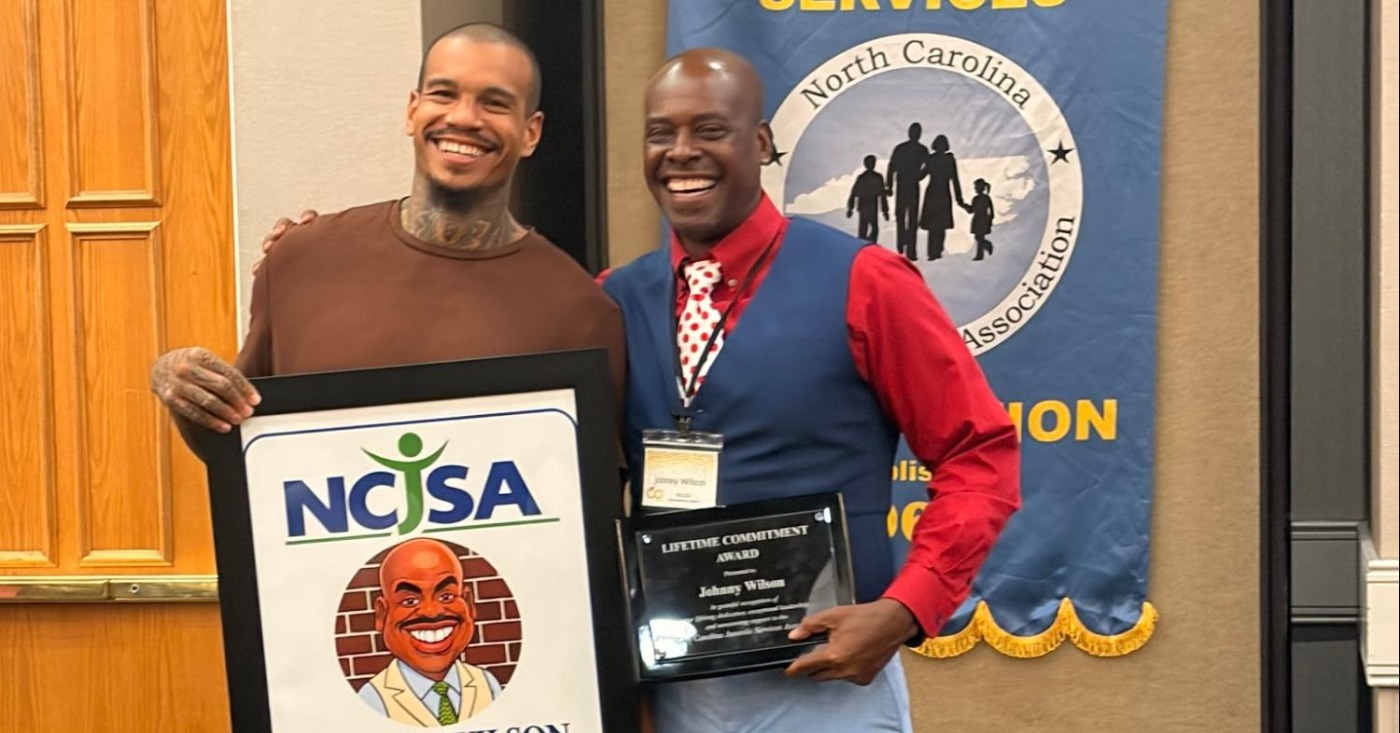
Greensboro, NC — When the North Carolina Juvenile Services Association (NCJSA) first organized in 1966, juvenile rehabilitation was largely indistinguishable from adult correction. Young offenders were often held in adult facilities, supervised by adult parole officers, and met with rigid punitive measures rather than developmental care. Six decades later, hundreds of frontline practitioners, community advocates, and statewide leaders gathered at the Embassy Suites in Greensboro from October 14–16, 2026, to celebrate sixty years of groundbreaking advocacy, service, and youth empowerment under the banner: “A Legacy of Service, A Future of Hope.”
The three-day diamond anniversary conference reflected both the historic evolution of juvenile justice across North Carolina and the urgent, modern challenges we face today. From youth mental health and social media exploitation to adult court transfer laws and systemic racial disparities, this important conference created a safe space for essential conversations.
Opening the historical retrospective, longtime leaders Pamela Stokes, Eastern Area Manager for the N.C. Department of Public Safety (NCDPS) Division of Juvenile Justice and Delinquency Prevention (DJJDP), and Johnny Wilson, President and CEO of Fayetteville Urban Ministry, walked attendees through the timeline of change.
Stokes detailed how juvenile justice advocates broke away from the adult probation system in 1966 to build specialized juvenile training, establish community youth homes, and eliminate the warehouse penal approach for minors. By 1997, NCJSA formally received its 501(c)(3) nonprofit status, continually expanding its network from court counselors to include clinicians, educators, and grassroots diversion specialists. “Rather than a single founding figure, the NCJSA was a group of dedicated people who collectively formed together to ask: What are we going to do to help our children?” Stokes noted, emphasizing that early pioneers recognized children needed rehabilitation, family support, and genuine guidance rather than adult incarceration.
The dialogue throughout the opening sessions remained uncompromisingly honest. Johnny Wilson challenged the room to recognize that what society often labels as “badness” in a child is frequently untreated trauma. Wilson, drawing on decades of community intervention, urged attendees to confront the blind spots in youth service, “Who is mentoring your child when the adults aren’t looking? Mentorship is repetition and consistent relationship. When one child is impacted by the justice system, the entire family is impacted. We have to be the voice for the voiceless and hope for the hopeless.”
Wilson pointed out that while nearly two-thirds of high school students report having an adult at school they can talk to, too many youth still feel unsafe at home and in their communities, leading them toward risky street influences and firearm possession as a misguided shield. He stressed that authentic diversion must bridge safety, accountability, and development before a child ever reaches a courtroom desk.
This protective sentiment was further echoed in a critical digital safety session on internet crimes against children. Law enforcement presenters highlighted the explosion of digital exploitation, online grooming, extortion, and non-consensual artificial intelligence imagery targeting minors, noting a 1,000% statewide increase in related investigations since 2019. Law enforcement and child protection experts urged workers to act swiftly in preserving evidence, report via the National Center for Missing & Exploited Children via MissingKids.org, CyberTipline, and the SBI, and remember above all else: “The child is the victim, not the offender.”
Another powerful keynote on policy and data briefing by Deputy Secretary William “Billy” Lassiter of the NCDPS Division of Juvenile Justice shared vital metrics shaping the state’s current juvenile justice landscape, alongside a recorded welcome address from Governor Josh Stein. Lassiter delivered welcome news: overall juvenile crime complaints across North Carolina experienced a significant decline over the past year—marking nearly 2,000 fewer youth entering the system. However, Lassiter and state analysts pointed to complex systemic dynamics beneath the topline numbers: There has been disproportionate minority contact. Deep racial disparities persist across North Carolina’s system. While African American youth make up approximately 21% of the state’s juvenile population, they accounted for over 21,000 of the complaints filed last year, compared to roughly 8,000 for white youth. Lassiter emphasized that disparities are most severe at the system’s entry and exit points (referrals and secure detention), urging practitioners and lawmakers to directly address these inequities with targeted community resources.
A major concern is the adult transfer burden. Following the implementation of recent statutory changes, including House Bill 834, which directs 16- and 17-year-olds facing Class A through E felonies into adult court, juvenile detention centers are increasingly filled with adult-transferred youth awaiting trial. Lassiter reported that these youths now make up 60% to 70% of daily detention beds, with an average length of stay reaching 276 days, compared to just 25 days for youth under juvenile jurisdiction. Strikingly, approximately 60% of transferred homicide/murder charges against juveniles are eventually dismissed due to accessory or bystander involvement rather than principal culpability.
As we know as a community, there are intensive mental health needs. More than 99% of youth held in Youth Development Centers (YDCs) have at least one mental health diagnosis, averaging nearly five distinct diagnoses per child. In response, NCDPS recently broke ground on a specialized, 10-bed juvenile crisis unit in partnership with New Hope Treatment Centers, set to open on November 1 to provide intensive stabilization and eliminate long, draining emergency room waits.
Finally, Lassiter highlighted North Carolina’s upcoming $451 million settlement from Meta, structured in $45 million annual distributions over nine years, intended to curb screen addiction, fund crisis lines like 988, and expand outdoor and community-based Juvenile Crime Prevention Council (JCPC) programs.
Celebration was central to the diamond anniversary and the overall mood of the conference. Despite such a serious subject matter, there was also a solid focus on fun and celebration. The association paid tribute to its founding and lifetime members, including pioneers like Jane Steinberg, Renee Walker, and Judy Juliet, whose early service paved the path for today’s statewide continuum.
NCJSA presented several prestigious awards. In a special tribute, the NCJSA Board and Fayetteville Urban Ministry surprised Johnny Wilson with lifetime honors for his steadfast leadership, faith-driven advocacy, and deep commitment to North Carolina’s children and families since joining the association in 2006.
The conference closed with a resounding call to sustain both youth and the professionals who care for them. Keynote reflections framed the transition from mere bureaucratic compliance to genuine human connection, urging attendees to practice self-care and mutual support. Using the metaphor of an airplane’s oxygen mask, speakers reminded caseworkers, court counselors, and facility staff not to leave their own oxygen masks on the floor while rushing to save others, “We cannot serve our children and families effectively if we are operating on empty. To reach year 61 and beyond, we must see each other, celebrate our small victories, heal our own spirits, and remember our ‘why.’”
As attendees stood with linked arms across the ballroom, the message of NCJSA’s 60th anniversary was unmistakable: the past six decades prove that prevention, compassion, and community-centered intervention work. For North Carolina’s youth, the next sixty years will depend on sustaining the people and programs who refuse to give up on their promise.
Based on reporting by The Carolinian.


20 Years of California Climate Law: Gov. Newsom and Former Gov. Schwarzenegger Lead Milestone Celebration

Becerra Hosts Meet-and-Greet With Black Leaders in L.A.

Early Childhood Nonprofit Celebrates a Century of Success

2027 Rose Queen announced

Jordan Coleman uncovers Houston food hidden gems

Williams Arena EMPTY vs PACKED: The HUGE Difference Gophers Need! #shorts

How to Grow a Business Without Giving Up Stability #shorts

Together Building Back Better

Homecoming Ends in Gunfire Outside FAMU: 12 Hurt, Six of Them Children
COMMENTARY: Bring on the Positive Calvary

OP-ED: Haiti TPS: Have We Lost Sense of Humanity?

All Skinfolk Ain’t Kinfolk

Rulings Leave Questions Lingering in Nolan Wells Case

Latinas Deserve Equal Pay. Unions Help Make It Happen.

Why Black Artists Struggle to Sell Tours

Zakiya Jendayi Arrested, Locked Out of Home by Sheriff’s Deputies

COMMENTARY: The Audacity of Joyce Beatty

A $2.1 Trillion Wellness Industry Never Built a Daily Practice for Black Children. So This Atlanta Family Did.

Oakland Awarded More than $14 Million in State Funding

OP-ED: Washington Has a Chance to Save Veterans’ Lives
2027 Rose Queen announced
Jordan Coleman uncovers Houston food hidden gems
Williams Arena EMPTY vs PACKED: The HUGE Difference Gophers Need! #shorts
How to Grow a Business Without Giving Up Stability #shorts

East Side Shoutout! Sports Talk & Guest Invite! #shorts

Black Girl Walk in the Rain at George Floyd Square | Protect Your Peace | MSR

Stop Overpaying for Car Insurance: Compare 3–5 Quotes #shorts

A $50K SUV Becomes $66K—Are the Options Worth It? #shorts

Dr. Charles Drew – Blood Banking and Preservation

15 Years Together: The Surprising Joy of Discovering Your Partner #shorts
-

 Featured1 week ago
Tamiko Armstead | 2026 Lifetime Achiever in Education
-
 Black History1 week ago
Practitioners of African Traditional Spirituality Offer Ancestral Reverence Ritual Oct. 31
-
 Art1 week ago
Kickstarter CEO Everette Taylor Shares Tips on Creating and Growing a Business
-

 Black History1 week ago
Columbus’s Oldest Businesses Still Open: 10 That Have Lasted 75+ Years
-
 Black History1 week ago
COMMENTARY: BIG MAMA SAID: Don’t Throw Away the Gift Just Because It Came Wrapped Wrong
-

 Black Press1 week ago
Black Household Wealth Plummeted 25% in Three Years, New Data Shows
