
Greene County Democrat
Alabama Hospital Association highlights importance of expanding Medicaid
GREENE COUNTY DEMOCRAT — “In Greene County because we are a poor county, one in three patients do not have any insurance, which means we provide an average of $100,000 in uncompensated care per month. Expanding Medicaid under the Affordable Care Act would help people in our county whose earn less than 138% of poverty (approximately $20,000 annual for a family of four) to secure affordable health insurance coverage,” said Dr. Marcia Pugh, Administrator of the Greene County Health System.


By: John Zippert, Co-Publisher, Greene County Democrat
The Alabama Hospital Association, a statewide trade organization representing 100 hospitals in the state is launching the ALhealthmatters campaign highlighting the importance of expanding Medicaid. The Association says, “If Alabama expands Medicaid, almost 300,000 uninsured Alabamians would receive health insurance coverage, an estimated 30,000 jobs would be created, and $28 billion in new economic activity would be generated.” Alabama would also save millions of dollars on current state services. “On average, almost one out of every 10 hospital patients does not have health insurance, resulting in more than $530 million annually in uncompensated care,” said Danne Howard, executive vice president and chief policy officer of the Alabama Hospital Association. “Currently, 75 percent of Alabama’s hospitals are operating in the red, meaning the dollars they receive for caring for patients are not enough to cover the cost of that care. Expanding Medicaid would be a significant investment in the state’s fragile health care infrastructure and would help maintain access to care for everyone.”
“In Greene County because we are a poor county. One in three patients do not have any insurance, which means we provide an average of $100,000 in uncompensated care per month. Expanding Medicaid under the Affordable Care Act would help people in our county whose earn less than 138% of poverty (approximately $20,000 annual for a family of four) to secure affordable health insurance coverage,” said Dr. Marcia Pugh, Administrator of the Greene County Health System. Howard adds that hospitals and other healthcare providers are a critical piece of the state’s infrastructure. “Alabama’s hospitals employ about 90,000 individuals and indirectly support another 96,000 jobs,” she said. “Not only are they often one of the largest employers in their communities, but hospitals also have a huge economic impact on their local economy. Statewide, the annual economic impact of Alabama hospitals is nearly $20 billion, not to mention the pivotal role access to quality health care plays in recruiting and keeping new businesses.”
The Alabama Hospital Association statement indicates the importance of expanding Medicaid but does not endorse the state’s Democratic political candidates who support Medicaid expansion.
Walt Maddox, Democratic candidate for Governor, in the November election, says, “I will expand Medicaid for Alabama during the first hour of the first day that I am Governor. We will find the resources to pay our part of the costs to pay for this critical life-saving service from our people.” Incumbent Gov. Kay Ivey has not expanded Medicaid and does not intend to because of cost. State Senator Hank Sanders said, “ It is clear that on the one issue of expanding Medicaid, there is a clear distinction between the candidates for Governor on the ballot in November.
Democratic candidate Walt Maddox will expand Medicaid and help save lives in Alabama as well as expand our economy in every county, while Kay Ivey will continue to oppose this program for narrow political reasons.” Since 2010 when Medicaid expansion has been available under the Affordable Care Act, Alabama has lost $7 billion in Federal support under the program.
For the first three years of the program, there was no cost to the states to participate. This has increased by 2.5% a year until it reached the maximum 10% this fiscal year. In addition in coming years beginning in 2020, the disproportionate share reimbursement rate payment to rural hospitals will decline because the program assumes coverage for low-income people in the state by Medicaid expansion under the ACA. Rural hospitals in states like Alabama, that have not expanded Medicaid, will begin to take a “double-whammy” for not expanding Medicaid – more patients without insurance coupled with lower reimbursement rates.
Howard notes that a recent study showed that hospitals in expansion states were 84 percent less likely to close than hospitals in non-expansion states. “Alabama has had 12 hospitals close since 2011, and more are on the verge of closing if something doesn’t change,” she added. “Plus, the economic impact in other states has been tremendous; Louisiana has added 19,000 jobs; nearly 50 percent of new enrollees in Ohio have been able to receive mental health and substance abuse treatment, and the state has seen a 17-percent drop in emergency department use; Kentucky has seen an increase in state revenues of $300 million.”
The AHA study says, “Investing in the rural healthcare infrastructure is critical as Alabama works to improve rural prosperity. Alabama’s rural hospitals are an anchor in their communities‒creating jobs, providing critical care, and supporting other industries. “When a rural hospital closes, other mainstays in the community often follow local pharmacies, physicians, banks, and grocery stores to name a few. When a rural hospital closes, it’s very difficult to attract new business.”
Throughout the next few months, hospitals will be talking with business, civic and government leaders to stress the importance of expanding Medicaid in Alabama and to share quantitative results of the positive impact it is having in other states. For more information on the impact Medicaid expansion could have in Alabama, visit: www.alhealthmatters.com.











BlackPressUSA
Newswire: Sewell supports extension of bilateral pause in Israel-Palestine war
GREENE COUNTY DEMOCRAT — “This pause in violence is set to expire tomorrow, and it is our fervent hope that negotiations can continue and extend the current pause in hostilities and continue the release of those held hostage by Hamas,” the letter to Biden read. “We urge you to use your immense influence and the full power of your office to continue negotiations and extend the bilateral pause beyond tomorrow so that both sides can build towards a bilateral ceasefire and, ultimately, a two-state solution.”
By Patrick Darrington, Alabama Political Reporter
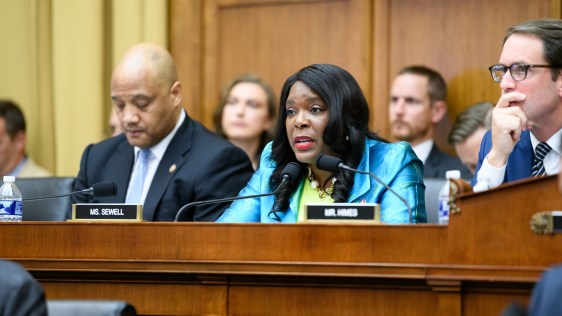
U.S. Congresswoman Rep. Terri Sewell, D-Selma, has signed onto a letter calling for a bilateral ceasefire in the Israel-Palestine war.
Rep. Troy Carter, D-LA led the letter, and it calls on President Joe Biden to use his power to broker a bilateral ceasefire as Israel continues its offensive in Gaza. Along with Sewell, 10 other Democratic House members also signed onto the letter.
Sewell’s communication director, Christopher Kosteva, talked to APR and clarified Sewell’s position. According to Kosteva, Sewell believes in a bilateral pause that would lead to a bilateral ceasefire. The congresswoman does not believe in a unilateral ceasefire on the part of Israel or calls for Israel to stop fighting Hamas without a bilateral deal.
Sewell supports Israel’s “right to self-defense” against Hamas, Kosteva stated. Sewell is the first, and only, Alabama congressperson to publicly support a call for a pause or potential ceasefire of any kind.
“This pause in violence is set to expire tomorrow, and it is our fervent hope that negotiations can continue and extend the current pause in hostilities and continue the release of those held hostage by Hamas,” the letter to Biden read. “We urge you to use your immense influence and the full power of your office to continue negotiations and extend the bilateral pause beyond tomorrow so that both sides can build towards a bilateral ceasefire and, ultimately, a two-state solution.”
On Nov. 23 a temporary ceasefire was agreed to that halted the bombing and fighting so that a hostage exchange could take place between Israel and Hamas. The ceasefire was extended until two days ago as negotiations fell apart and Israel has resumed its bombing campaign.
Despite the Biden administration claiming to be using its power behind the scenes to fuel an extended pause in fighting and stress civilian casualties, they continue to supply Israel with more arms and weapons.
On Oct. 7, the militant wing of Hamas launched an attack on Israel that killed hundreds of civilians including women and children. The approximate death toll is around 1,200 and Hamas has been accused of committing war crimes during the attack.
Since Israel’s indiscriminate bombing campaign began in Gaza over 15,200 Palestinian people have been killed including 6,150 children. Hospitals, schools, refugee camps and ambulances have been deliberately targeted with airstrikes by Israel. Israel has been accused by human rights organizations of committing collective punishment, a war crime.
WVTM reported, a few days prior to Sewell signing onto the letter, that students at the University of Alabama at Birmingham were calling for the congresswoman to support a permanent ceasefire during a temporary pause in fighting. Included in the article is a Palestinian student, Rozana Kafineh, who said she was heartbroken to see her country go through the war.
“A temporary [ceasefire is not enough],” Abdo Mutlaq told WVTM. “You can pause a video game. You can pause the video, but you can’t pause genocide.”
The full letter can be read on line.
This article originally appeared in The Greene County Democrat.
BlackPressUSA
School board holds work session with school principals highlighting scholars’ Road Map to Academic Success
The Greene County Board of Education met in regular session, Monday, October 16, 2023 with all board members in attendance. Prior to the meeting the board held a work session, in the Central Office at 3:00 pm, with the principal of each school presenting her plans for student academic success. Summaries of these plans are presented following the report on school board actions.
The board approved the following personnel items recommended by Superintendent Dr. Corey Jones.
Resignations: David Peterson III, Mechanic, effective October 6, 2023; Elroy Skinner, Math Teacher, Robert Brown Middle, effective June 30, 2024; Dr. Sharron D. Martin, Literacy Coach, Robert Brown Middle, effective September 30, 2023; Toneshia Bullock, Custodian, Robert Brown Middle, effective September 14, 2023.
Employment Robert Brown Middle School: Carlene Garnett, Long-term sub, effective August 18, 2023.
TEAMS Contracts: Victoria Moore – Greene County High, effective August 1, 2023;
Kaneeda Coleman – Greene County High; Dr. Dutchess Jones – Greene County High; Elroy Skinner – Robert Brown Middle.
Supplemental Contracts Robert Brown Middle School: Quentin Walton, Head Boys Basketball; Henry Miles, Assistant Boys Basketball; Quentin Walton, Head Girls Basketball; Jkia Carpenter, Assistant Girls Basketball; Tyneshia Fulgham, Cheerleader Sponsor.
The Administrative items approved by the board are as follows, with board member Robert Davis abstaining on the contract with Corey Morton.
* Contract between Greene County Board and Corey Morton to serve as technology assistant to provide technical support for the district.
* Agreement between Greene County Board and MSSI Staffing Agency to provide a Speech Language Pathologist for FY 2023-2024.
* Quote in the amount of $71,465 from Bagby for elevator modernization at Robert Brown Middle.
* Proposal from Bailey Education Group, LLC in the amount of $45,000 to provide professional development and on-site consultation for teachers and administrators.
Payment of all bills, claims, and payroll. (Financial Report for September and October will be provided at November’s board meeting.)
Principals Presentations at Board’s Work Session
Eutaw Primary School Principal Brittany Harris began with the school’s Motto: Every Child, Every Day. Her presentation included the following:
* Three Tiers of Classroom Instruction: Tier1 – Core Instruction; Tier 2 – Targeted Intervention; Tier 3 – Intensive Intervention.
* Small Group Instruction: Small Group times are embedded into the Master Schedule. Educators must provide small group instruction to scholars, including Reading and Math Interventionists.
* Coaching Support Reading: Kindergarten Team – Four Weeks Mini Coaching Cycle; First Grade – Six Weeks Coaching Cycle; Second Grade Team – Six Weeks Coaching Cycle; Third Grade – Four Weeks Mini Coaching Cycle.
Principal Harris noted that a Math coaching Cycle is currently being modeled and will begin when completed.
* Educators have analyzed scholars’ beginning of the year data. Data meetings are held during Extended Planning Times.
* Professional Development include: S.P.I.R.E; ARI/OMI; ENVISION; I-READY and LETRS.
* Academic Programs: After-School Tutorial with 155 scholars enrolled; Saturday School with 17 enrolled.
* Parent meetings are held monthly.
* Promoting Literacy: Book Vending Machine – scholars awarded with books for exhibiting excellent behavior.
* Popping Sight words Challenge – Scholars reading 109 sight words correctly are awarded a prize.
Next Steps include: Literacy Night; Math Night; and Benchmark Celebrations.
Robert Brown Middle School Principal Tammy Anderson opened her presentation with RBMS Mission and Motto: Mission is to provide a positive, safe, healthy, nursing and respectful environment in which scholars can learn and become productive members of society.Motto: The Harder We work, the Smarter We Get. She elaborated on the following:
* Building Relationships: Administration Team, Faculty, Staff, Central Office, Board Members and Community Stakeholders; Teacher/Student/Parent Involvement; Join all relationships to ensure all students succeed.
* Behavioral Plan: One-on One Counseling Sessions; Mental Health Coordinator on site and referrals; Good Character Plan with incentives; Peer tutoring; Full Support (4th – 8th Grades Administrative Team).
* Reconstructing Greene County’s Future Generation of Leaders.
Greene County High School Principal Andrea Perry opened her presentation with scholars’ ACT Data 2023 in Math and Reading and then discussed the following Next Steps.
Math: 45.72 % – In Need of Support; 29.64 % – Close; 16.05 % – Ready; 8.58 % – Exceeding 24.63 %- Proficient.
Reading: 36.04 % – In Need of Support; 33.58 % – Close; 17.29 % – Ready; 13.09 %- Exceeding.
Next Steps:
The Math Specialist will support and work closely with math educators
* Educators will participate in Instructional Rounds where they observe their colleagues and offer feedback
* The administrators will do walk-throughs and visit classrooms on a daily basis
* The district will observe classrooms, mentor, and support educators
* Educators will participated in on-going embedded Professional Development
* Scholars will work on Pathway from I-Ready Benchmark Assessment at a minimum of thirty minutes per week.
* Alabama Rural Learning Accelerator (ARLA) will collaborate and work with math teachers 1st and 2nd periods to help improve ninth grade math skills. Educators from UAB will work virtually with scholars for four days a week and face-to-face once a week. Power hours will be offered once a week during homeroom. Power hour is also intervention for the ninth graders.
* We will analyze data from Pre-ACT. Our focus will be on scholars who are closed and in need of support. Those scholars will participate in ACT Prep, Math and Reading Intervention, and After-School Tutoring. ACT Consultants will be working with scholars throughout the school year.
* Educators will implement ACT Bellringers (Mastery Prep) every day.
* Math educators will implement intervention time the last fifteen minutes of each class period. Educators will work with small groups.
* The PE educators will allow students to work on IXL one day out of the week.
* IXL ( I EXCEL)is a program that helps high school students at all levels learn math, reading, and english more effectively. IXL stands for Innovation, Excellence, and Leadership.
* All eleventh graders will have a free online ACT Prep account from the ALSDE
* Incentives will be provided for scholars who benchmark on ACT and WorkKeys.
* Students will also attend After School tutorial to focus on ACT standards.
* ACT BootCamp will also be offered one Saturday out of the month.
* ACT Practice test will be administered throughout the school year.
Superintendent Dr. Jones’ report highlighted many of the points presented in the principals’ presentation, for example Saturday School and the Book Vending Machine at EPS. RBMS will hold Conflict Resolution Workshops for 7th and 8th grade scholars. GCHS chartered a Science National Honor Society. He also noted that the CSFO Ms. Marquita Lennon would not present a financial report at this meeting. “We are in closeout at this time. The October and November financial reports will be presented at the next board meeting,” he said.
This article originally appeared in The Greene County Democrat.
Black History
Alabama New South Alliance Endorses Straight Democratic Ticket for November 8th Election
NNPA NEWSWIRE — Several statewide candidates on the Democratic ticket came to explain their reasons for running and answer questions. Anita Kelly, candidate for Place 5 on the Alabama Supreme Court said,” I have had 18 years’ experience as a judge in Montgomery and my Republican opponent has none. He was the lawyer for the Republican Party in Birmingham and was a delegate to the RNC for Trump in 2016 and 2020.” Kelly urged voters to go to her website and that of her opponent and see who had the best record for Alabama.

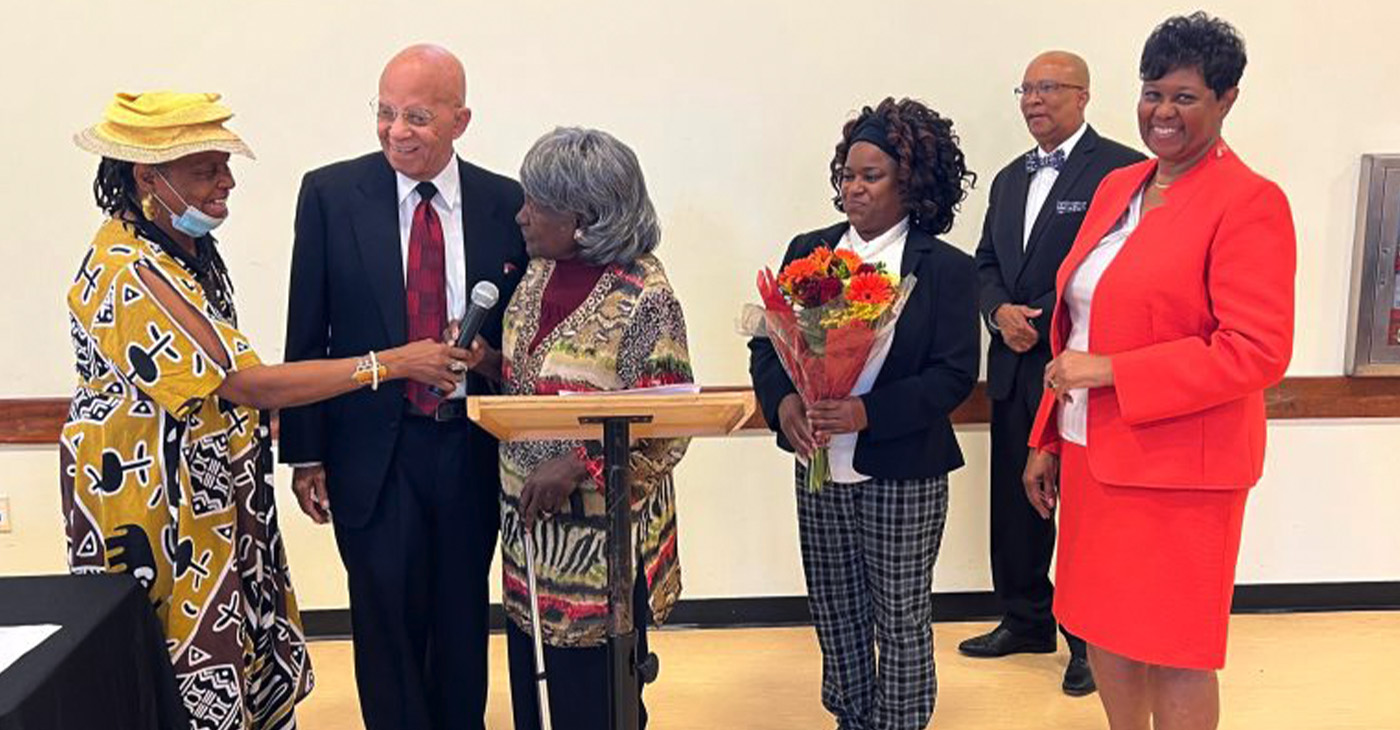
The group also reviewed the ten amendments to the Alabama Constitution, which are on the upcoming November ballot, and made recommendations for the statewide membership to follow.
Several statewide candidates on the Democratic ticket came to explain their reasons for running and answer questions. Anita Kelly, candidate for Place 5 on the Alabama Supreme Court said,” I have had 18 years’ experience as a judge in Montgomery and my Republican opponent has none. He was the lawyer for the Republican Party in Birmingham and was a delegate to the RNC for Trump in 2016 and 2020.” Kelly urged voters to go to her website and that of her opponent and see who had the best record for Alabama.
Kelly pointed out that all nine of Alabama’s Supreme Court Justices, who are elected statewide, are white Republicans, two are women and seven are men, none are Black, in a state that has a 27% Black population.” I am hoping to be elected to influence the Alabama Supreme Court in a positive way for all Alabamians,” said Kelly. She also indicated that she had very limited financial support and had not been able to purchase TV time. The lack of financial support from the state and national Democratic party was a similar lament that all the statewide Democratic candidates expressed.
Pamela Lafitte of Mobile, who is running for Secretary of State said she wanted to restore early and curbside voting that had been taken away as part of her efforts to expand voting rights. The Secretary of State’s main role is in running elections and maintaining statewide records. Lafitte indicated that she too was underfunded and wanted more support from the state and national parties.
Will Boyd, candidate for U. S. Senate to fill the seat vacated by Senator Richard Shelby gave short remarks and said he was optimistic, going into the final stretch of the election, that he and other Democratic candidates could win in November. He said,” We must have a great turnout of Black voters across the state, including 324,000 who did not vote in the last election, the 300,000 new voters, who have registered since the 2020 election, and the support of ‘Doug Jones white voters, who have a more progressive view of state politics.” Boyd said his campaign was trying to motivate these voters with limited finances.
Congresswoman Terri Sewell, running for re-election in the 7th Congressional District, Lin Veasey running as the Democratic candidate in the 3rd Congressional District, Curtis Travis, running for House District 72, including Greene and Hale counties, also came to speak to the ANSA Convention.
Dr. Richard Arrington, former Mayor of Birmingham, and first President of ANSC was the luncheon speaker. He gave a resounding defense of voting as the most powerful non-violent strategy that Black people must make positive change and move society in a progressive direction. He said, “A strong Black vote can put starch in the backs of politicians, even him and create the conditions to elect a Black man to the White House.”
He said, “We can’t stop working. We can’t stop fighting. Slavery is dead but it is not yet buried. We might have to pass the plate and dig the grave, because his kinfolks won’t bury him.”
On the ten amendments to be on the Statewide ballot, ANSC recommends voting No on Amendment One, which would limit the power of judges to fix bail for a dozen crimes in addition to capital murder and lead to long waits in jail for Black people charged with lesser offenses like burglary.
On Amendment 2, which would allow use of public funds from state and local government for expansion of WIFI and broadband, ANSC recommends Yes.
On Amendment 3 and 4, which deal with additional limitations on the Governor commuting death sentences and disallow the Legislature from changing election laws within six months of an election, ANSC recommends a NO vote.
On Amendments 5-10, ANSC recommends a YES vote. These amendments deal with taxation and local matters. Amendment 10 would accept the recompiled 1901 Alabama Constitution, and removal of racially discriminatory language. There are some concerns that the recompiled Constitution does not strengthen the right to public education in the state, in ways that it should, but ANSC felt that this could be remedied by additional clarifying amendments in future years.
This article originally appeared in The Greene County Democrat.
Black History
Yolanda Flowers, Democratic Candidate for Alabama Governor Holds Rally in Greene County
GREENE COUNTY DEMOCRAT — “My platform includes more funding for education, adopting a lottery for education and other measures to raise teacher salaries and provide teacher assistants in every classroom to give more personal attention to students,” said Yolanda Flowers, the first Black candidate of a major party for Governor of Alabama. “I support better health care including the expansion of Medicaid, which Governor Ivey has failed to act on in seven years. I believe in a woman’s right to choose and better reproductive care in the state. I am for reforming the criminal justice system that has hurt too many young Black people. I want to end voter suppression and increase the chance to vote for all people in Alabama, especially Black people who have been hurt in the past. Overall, I want to make Alabama a better place for all the people who live here.”
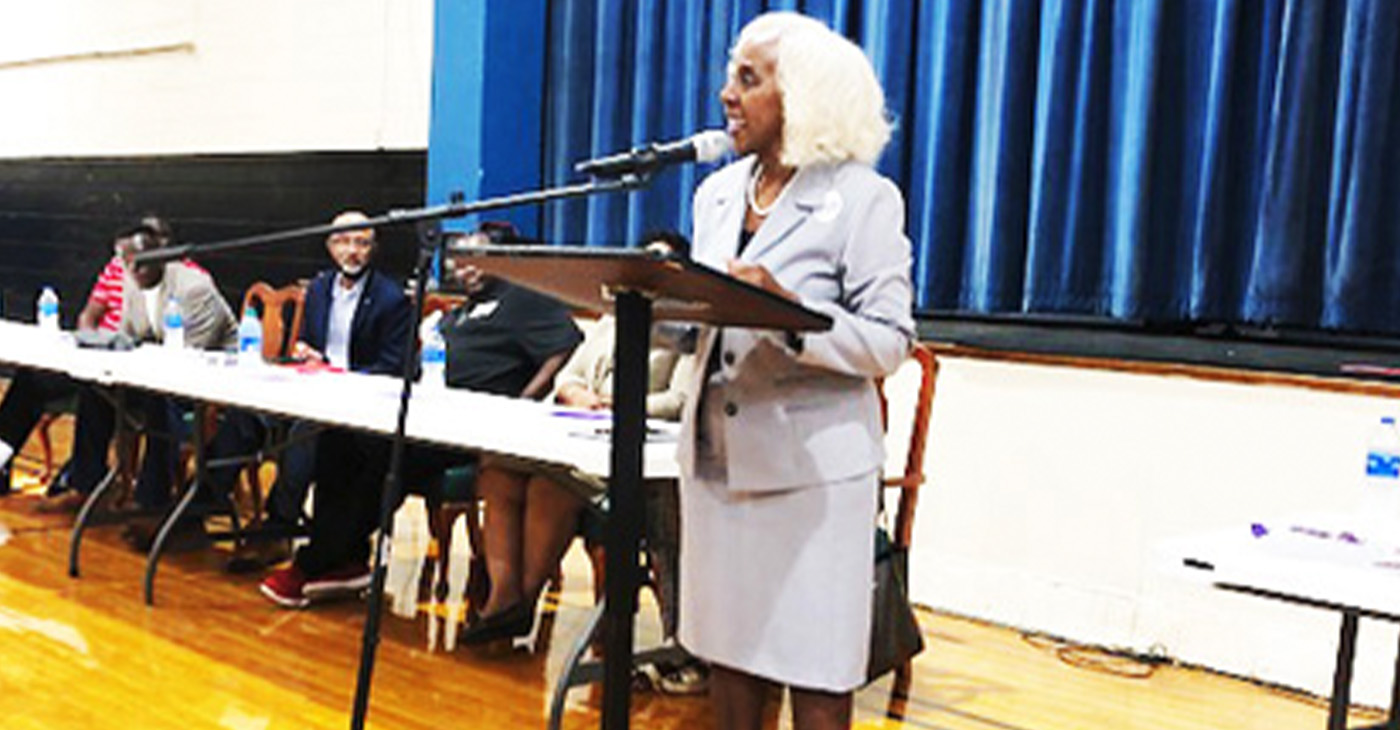
By John Zippert, Co-Publisher | Green County Democrat
Yolanda Flowers, the first Black candidate of a major party for Governor of Alabama, was the guest speaker at a rally Sunday at the Robert H. Young Community Center in Eutaw. Flowers is running against incumbent Governor Kay Ivey in the November 8, 2022, General Election.
The rally was sponsored by the Greene County Democratic Executive Committee to introduce people in the Alabama Black Belt to “the next Governor of Alabama,” Lorenzo French, Chair of the Democratic Executive Committee said the rally was an historic occasion to support the Flowers for Governor campaign. Naomi Val Goodson Cyrus served as Mistress of Order and main cheerleader for the rally. There were also musical tributes by Loretta Webb Wilson and her daughter, Lauren and Rev. Kendrick Howell, Pastor of Little Zion Baptist Church in Tishabee, Alabama.
Greetings at the meeting were brought by Commission Chair Allen Turner, Latasha Johnson, Mayor of Eutaw and Spiver Gordon, civil rights leader. All stressed the importance of campaigning on the phone, door-to-door and attending meetings and rallies to get voters to turnout to vote in the coming election on November 8, 2022. Absentee ballots are available now at the Clerk of Court’s Office, for people who will not be able to get to the polls in November.
Flowers was introduced by Tony Humphries, Vice Chair of the Tuscaloosa Democratic Party who reviewed her education and work history as a teacher and speech pathologist in Tennessee and Alabama public school systems. She is the mother of 3 children, 12 grandchildren and 5 great grandchildren.
Flowers in her speech said she was aware that many people to do not know that she and other candidates, including Will Boyd for U. S. Senate and Pamela Lafitte for Secretary of State, are running on the Democratic Party ticket in the November election. She mentioned there are also ten (10) Constitutional Amendments on the ballot for voters in November.
Flowers said, “I am running because Alabama is a rich state, but poverty is too high. We need better education, health care and criminal justice reforms for the people of Alabama.”
She said, “My platform includes more funding for education, adopting a lottery for education and other measures to raise teacher salaries, and provide teacher assistants in every classroom to give more personal attention to students. I support better health care including the expansion of Medicaid, which Governor Ivey has failed to act on in seven years. I believe in a woman’s right to choose and better reproductive care in the state. I am for reforming the criminal justice system that has hurt too many young Black people. I want to end voter suppression and increase the chance to vote for all people in Alabama, especially Black people who have been hurt in the past. Overall, I want to make Alabama a better place for all the people who live here.”
Flowers indicated that she had very limited financial resources to support her campaign, which hampered her ability to reach voters. Lorenzo French presented her a check for $1,000 from the Greene County Democratic Executive Committee and challenged the other 67 county committees to match Greene County’s efforts. French raised an additional $750 from persons at the rally to support the Flowers campaign.
Responding to the financial challenge, Rev. Kendrick Howell said each Black church in Greene County should raise $500 for the Flowers campaign.
Several ministers who were present at the meeting met after the rally to plan how to reach the 75 churches in Greene County with the message to contribute to Flowers campaign.
Closing out the rally, Johnnie Knott, former Circuit Clerk, and current State Democratic Executive Committee member representing House District 72 (Greene County) said “The best thing for voters to do was to put one ‘x’ on their ballot on November 8 and vote the straight Democratic ticket, which would elect Yolanda Flowers and all the other Democratic candidates, including local candidates in Greene County.”
Several speakers at the rally noted that many of the local candidates, running with Flowers on the Democratic ticket, did not attend the rally, including the Sheriff, county commission and school board candidates. “We need more preachers, teachers and elected officials to come to meetings like this rally, to get the message out so we will have a great turnout for November 8th,” said Spiver Gordon.
For more information on the Yolanda Flowers campaign, she invited people to go to her website: https://www.yolandaforgovernor.com. Persons who want to contribute to her campaign may use her CashApp at: $yolanda4governor, to make donations.
This article originally appeared in The Greene County Democrat.
Black History
Federation files motion on behalf of Black Farmers, to intervene in Texas lawsuit, which blocks $4 billion debt relief in Section 1005 of the American Rescue Plan
GREENE COUNTY DEMOCRAT — “The USDA has a documented history of discriminating against Black people and communities of color. The federal government’s attempt to rectify this injustice should be applauded, not stopped,” said Damon Hewitt, president and executive director of the Lawyers’ Committee for Civil Rights Under Law. “If this critical assistance is not provided soon, Black farmers and other farmers of color who have struggled to overcome decades of discrimination and the economic impacts of the global pandemic will face the threat of losing their land and their livelihoods.”

Greene County Democrat
East Point, GA — After decades of longstanding racism in the United States Department of Agriculture’s (USDA) loan programs, Black farmers stand to lose their farms, land and livelihoods after a temporary injunction halted an estimated $4 billion in debt relief passed by Congress as part of the American Rescue Act. The Lawyers’ Committee for Civil Rights Under Law, Public Counsel, and pro bono counsel Winston & Strawn LLP, filed an intervention motion on behalf of the Federation of Southern Cooperatives/Land Assistance Fund (the Federation). The motion was filed in the United States District Court for the Northern District of Texas in Miller v. Vilsack.
Section 1005 of the American Rescue Plan, signed into law on March 11, 2021, was designed to provide debt relief to Black farmers, and other farmers of color, who have long suffered at the hands of the USDA’s harmful discrimination. The USDA’s long documented and acknowledged racist policies of denying and delaying loans prevented Black farmers from operating successful farm businesses, forcing foreclosures and continuing the shameful legacy of Black land loss in the United States.
In Miller v. Vilsack, five White Texas farmers filed a lawsuit against the USDA alleging that loan forgiveness payments violate the U.S. Constitution. This case is one of many ongoing lawsuits involving Section 1005 in other jurisdictions, including Florida, where a federal court issued a preliminary injunction against the program. Plaintiffs specifically argued that Section 1005 of the American Rescue Plan of 2021 (“ARPA”) violates the equal protection rights promised under the Constitution for farmers and ranchers who stand eligible for USDA loans but do not qualify for debt relief under the program.
“The USDA has a documented history of discriminating against Black people and communities of color. The federal government’s attempt to rectify this injustice should be applauded, not stopped,” said Damon Hewitt, president and executive director of the Lawyers’ Committee for Civil Rights Under Law. “If this critical assistance is not provided soon, Black farmers and other farmers of color who have struggled to overcome decades of discrimination and the economic impacts of the global pandemic will face the threat of losing their land and their livelihoods.”
Farmer declarations included in the intervention cite multiple instances of discrimination, including:
- Misplaced loan paperwork and approval delays of more than two years
- Inability to sell equipment to repay loans due to vandalism at the auction house in the form of racist graffiti on the tractors up for bid
- Loan paperwork being filed on time but funds chronically arriving too late for planting season
- Inaccurate advice about whether FSA loans could be restructured, and
- Receiving loan funds weeks later in the season than White farmers in the same area, providing them with an unfair advantage in planting and harvesting a profitable crop.
Encountering years of unfair loan terms, mistreatment by the USDA, and discrimination at every turn, Black farmers are now currently less than 1% of all farmers in the country. This has not always been the case. In 1920, one out of every seven farms were owned by a Black farmer, but the number of Black farmers in America has dropped significantly — plummeting by 98% over the past century.
“The Federation was encouraged by USDA’s and Congress’s attempt to address the disproportionate impact of the debt burden that farmers of color face because of historic and on-going race-based discrimination in agricultural credit,” said Cornelius Blanding, Executive Director of the Federation of Southern Cooperatives/Land Assistance Fund. “Black farmers have always honored their commitments to their communities and our nation; our hope is that the Department will be allowed to honor its commitment to our farmers and other farmers of color.”
A temporary injunction against the program stands in the way of critical debt relief for those who need it the most. Without debt relief, these farmers face losing their land, livelihoods and equipment, while also bearing the additional financial burden of the farming costs they’ve taken on in anticipation of debt forgiveness. Today’s intervention positions The Federation to vigorously defend Section 1005 and ensure that the narratives of Black farmers are heard as this debt relief is critical to their survival.
For more information on this lawsuit intervention, or to discuss other issues with discrimination and land loss, contact Attorney Dania Davy at the Federation office at: [email protected] or call 404-765-0991.
This article originally appeared in The Greene County Democrat.
BlackPressUSA
Alabama to receive $940 million incentive payments, over two years, if the state expands Medicaid under the American Rescue Plan
THE GREENE COUNTY DEMOCRAT – Jane Adams, Executive Director of Cover Alabama, a coalition of organizations supporting Medicaid Expansion says, “This is the very best time for Alabama to expand Medicaid because the Federal government is offering incentives to expand the program and because the state has been limited by the coronavirus pandemic from removing people from the Medicaid rolls. The State is carrying over a million people on its Medicaid rolls and will be receiving the 5% incentive payment for anyone treated that is covered by Medicaid.”
The State of Alabama is eligible to receive $940 million in incentive payments, over two years, if it expands Medicaid to serve people making up to 138% of poverty wages, under provisions of the $1.9 Trillion American Rescue Plan, passed by Congress and signed by President Biden on March 11.
The American Rescue Plan contains funding for $1,400 stimulus checks, $300 weekly supplementary unemployment benefits, child tax credits, and many other provisions to help people deal with the health and financial crisis brought on by the coronavirus pandemic.
The Plan also contains a financial incentive for the 12 states, mostly in the South, that have not agreed to expand Medicaid under the Affordable Care Act. The incentive comes in the form of a five (5%) increase in the Federal matching assistance percentage (FMAP) paid by HHS for all current Medicaid recipients for two years. Alabama currently receives a FMAP of 78% which would rise to 83%, if the state expands Medicaid for 300,000 or more working poor people who make too much to qualify for Medicaid and too little to purchase insurance on the ACA exchanges.
The 5% increase in FMAP would yield the State of Alabama, $940 million in increased government healthcare support for all current Medicaid recipients, e.g., children, seniors in nursing homes, pregnant women, the disabled and others over the next two years.
This $940 million could be used by the State of Alabama to cover the initial cost of initiating healthcare coverage for the working poor, people who make below 138% of the poverty level.
The State of Alabama would receive 90% reimbursement for all people covered by Medicaid expansion. The State would be able to shift some expenses it is currently paying for the disabled, prisoners and others to the Medicaid Expansion Program, saving more in the state budget toward the cost of healthcare for the people of the state.
Medicaid expansion also creates an estimated 30,000 new jobs, mostly in healthcare fields and generates additional sales and income tax revenues to help the state maintain the program after the two years of incentives are reduced. In most states that have adopted Medicaid Expansion, the program has paid for and sustained itself.
Jane Adams, Executive Director of Cover Alabama, a coalition of organizations supporting Medicaid Expansion says, “This is the very best time for Alabama to expand Medicaid because the Federal government is offering incentives to expand the program and because the state has been limited by the coronavirus pandemic from removing people from the Medicaid rolls. The State is carrying over a million people on its Medicaid rolls and will be receiving the 5% incentive payment for anyone treated that is covered by Medicaid.”
“In Alabama, the decision to expand Medicaid falls to Governor Kay Ivey. She can expand Medicaid as soon as she decides it is beneficial to the state to do so. She does not need action by the State Legislature and she can develop an amended state budget based on the promised revenues and incentives,” said Adams.
Johnny Ford of Tuskegee, the Co-chair of the SOS Movement for Justice and Democracy Health Committee said, “Now is the time to get Medicaid Expansion. I do not care if we call it ‘Iveycare’ or whatever but the Governor must agree and help the working poor to get health insurance coverage, as we work our way out of this pandemic. The program creates jobs, helps keep hospitals open and it will pay for itself plus President Biden is giving incentives for the state to adopt the program.”
“Governor Ivey’s objection to expanding Medicaid was that funds were not available to start the program but the funds are there now. There should be no more excuses. Call, write or email Governor Ivey and let her know you support Medicaid Expansion,” said John Zippert, SOS Health Committee Co-chair.
This article originally appeared in The Greene County Democrat.


WCCUSD Joins Statewide Organic School Food Purchasing Cooperative

Democrats, Community Groups Back Measure EE to Change How Oakland Is Governed

Four Tips to Help You Plan a Holiday “Staycation”

Veterans Housing Project Proposed for South Richmond

Mayor Lee Delivers 2026 State of the City Address: ‘Oakland Continues to Be on the Move’

Oakland Awarded More than $14 Million in State Funding

Jendayi Arrest Raises Community Concerns Regarding Sheriff’s Chain of Command

Marin County Supes Expand Small Business Options with Home Kitchen Pilot Program

Allen Temple Baptist Church Hosts Free Prostate Cancer Screenings on Oct. 17

AC Transit Labor Unions Back Director Joel Young

The Youngest American Killed in the Vietnam War

Latest Massacre in Haiti Reveals Cruelty U.S. Deportations

OPINION: Nolan Wells’ Death One of Several Signifying Racial Terror Lives on in U.S. South

Passing for White, Fighting for Black America: The Courage of Walter White

OP-ED: If AI Is the New Language of Power, Then NAN Wants Black Communities Fluent

OP-ED: Haiti TPS: Have We Lost Sense of Humanity?

OP-ED: How Does Your State Rank for Pre-K?

Henry O. Flipper: A Trailblazer at West Point and Beyond

Asm. Smallwood-Cuevas’s Bill Repealing ‘Racist’ CalWORKs ‘Man-in-the-House’ Rule Clears Legislature

NBA All-Star Damian Lillard Returns Home for 15th Annual Backpack Giveaway

Sherrell Dorsey on Tech, Black Innovation, and Impactful Businesses

Community-Centered Business: Adapting to Support a City in Need #shorts

The Conversation with Al McFarlane

Serve First: The Secret to Life and Business Success #shorts

Denise Upshaw – Founder, Black Houston Creative Network

Houston advocates breakdown Black voter fatigue

Digital Rearview Mirror Test: Blind Spots & Camera Views #shorts

HE SAID, HE SAID, HE SAID, Separating Fact, Fear, & Freedom w/ Allen Orr, FRI. 2.22.26 7PM EST

Hot Girl Walk at Sabathani Community Center | Ernestine Belton Playground | MSR

NEW INVESTIGATION INTO FEDERAL RESERVE GOVERNOR
-

 Black Press1 week ago
Zakiya Jendayi Arrested, Locked Out of Home by Sheriff’s Deputies
-

 Black Press1 week ago
A $2.1 Trillion Wellness Industry Never Built a Daily Practice for Black Children. So This Atlanta Family Did.
-
 BlackPressUSA6 days ago
Latinas Deserve Equal Pay. Unions Help Make It Happen.
-

 Art1 week ago
Montclair Brewery: Brewing Culture, Community, History
-

 Black History1 week ago
Listening as a Lifeline: A Doula’s Witness to Black Maternal Health
-

 Black Press1 week ago
COMMENTARY: But God!
