
Economy
Historically Black Colleges give graduates a wage boost
LOUISIANA WEEKLY — Increased wages were strongest for the elite HBCUs: Hampton, Howard, Morehouse, Spelman and Xavier. But the effect persisted 10 years after graduation for graduates of all 59 HBCUs – more than half of the 100 or so HBCUs in the nation – that were included in the sample. Other HBCUs were not included because of lack of data.


By Gregory N. Price
(Special from theconversation.com) — In 2010, two economists claimed that graduates of Historically Black Colleges and Universities, or HBCUs, suffer a “wage penalty” – that is, they earn relatively less than they would had they gone to a non-HBCU.
In an early draft of the paper, the economists – one from Harvard and the other from MIT – argued that while HBCUs may have served a useful purpose back in the 1970s, they were now, by some measures, serving to “retard black progress.” The reason why, they suggested, is that traditionally white institutions may have gotten better at educating Black students and that there might be value in “cross-racial connections” when it came time to get a job.
The paper, which relied on data from the 1950s through the early 2000s, generated negative headlines for HBCUs. For instance, The Wall Street Journal called HBCUs “academically inferior.” The New York Times warned readers about the “declining payoff from black colleges.”
As a scholar who has researched HBCUs, my colleagues and I have found contrary evidence: Students who went to HBCUs do not suffer a relative wage penalty. In fact, we found that they typically and on average earn more than similar students who went to non-HBCUs. Our findings are based on comparing HBCUs to other schools with a sizable Black student population.
Producers of black doctors, engineers
Largely established to serve Black people after the Civil War and in the Jim Crow era of racial segregation, HBCUs were the only higher education option for many Black Americans up through the mid-1960s during the push for integration. Since then, HBCUs have served a declining share of Black students. For instance, HBCUs served 17.3 percent of Black college students in 1980, but by 2015 the figure had fallen to 8.5 percent.
HBCUs have been in a constant struggle for their financial survival because of declining enrollment, among other things. In fact, some college finance experts predict that many HBCUs will disappear in the next 20 years.
HBCUs currently serve about 298,000 students and rank among the highest producers of black doctors. HBCUs also play an outsized role in the production of Black graduates in science, technology, engineering and mathematics, or STEM.
A wage premium
Our study included 1,364 nonprofit colleges and universities, both public and private, that award at least a baccalaureate degree.
Increased wages were strongest for the elite HBCUs: Hampton, Howard, Morehouse, Spelman and Xavier. But the effect persisted 10 years after graduation for graduates of all 59 HBCUs – more than half of the 100 or so HBCUs in the nation – that were included in the sample. Other HBCUs were not included because of lack of data.
And it wasn’t a small amount of money, either. In our study, we found that HBCU students from the elite universities earn 32 percent more six years after attendance than students with similar characteristics who attended other colleges and universities.
But before anyone celebrates our findings as a clear victory for HBCUs, a few caveats are in order.
Penalties exist
First, all HBCU graduates don’t earn more than all non-HBCU graduates all the time. In fact, much like Freyer and Greenstone did a decade ago, we found that early in their careers – extending to six years after graduation – typical HBCU graduates do in fact suffer a wage penalty.
The HBCU study in 2010 found grads earned 20 percent less than peers from other colleges in the 1990s, although it’s not known how long after graduation this occurred.
We found that there’s an 11 percent wage penalty after six years but then it disappears after 10 years, and in fact turns into an advantage. So while typical HBCU graduates may be earning less money than non-HBCU graduates in their late 20s, by their early 30s, they are earning more.
We also found that the wage advantage for HBCUs remained no matter what the major. In my view as an economist, the relative gains for HBCU attendees after six years suggest, that on average, HBCU graduates are better able to find jobs that match their skill and capabilities.
Demographic factors
Just what is it that makes HBCUs more effective as escalators for labor market earnings and income mobility? Earlier research my colleagues and I conducted at Howard University found that a high proportion of Black students in a college or university serves as a boost to Black identity and self-esteem. That boost, we found, translates into labor market skill acquisition that results in an earnings advantage.
Given the history of HBCUs receiving unequal resources, our results suggest that government and philanthropy could consider more funding for HBCUs. That could enable them to be even more successful at what they do, particularly when it comes to enabling students from households that earn the least money to move up economically.
Gregory Pine is Professor, Economics, University of New Orleans.
This article originally published in the September 16, 2019 print edition of The Louisiana Weekly newspaper.
This article originally appeared in The Louisiana Weekly.







Black Press
Black Household Wealth Plummeted 25% in Three Years, New Data Shows
MICHIGAN CHRONICLE — A new analysis of Federal Reserve data reveals that median wealth for Black households dropped 25% between 2022 and 2025, falling from $49,100 to $36,800. This decline occurred while White, Hispanic, and Asian households experienced increases in their median net worth, further widening the national racial wealth gap.


Median wealth among Black households fell 25% between 2022 and 2025, widening the racial wealth gap even as White, Hispanic, and Asian households saw their median net worth increase, according to a new analysis of Federal Reserve data.
Center for Economic and Policy Research (CEPR) director of race and economic justice, Algernon Austin, shared in an analysis published Tuesday (October 13) that median wealth among Black households fell from $49,100 in 2022 to $36,800 in 2025, a 25% decline.
In comparison, median wealth reached $332,100 for White households, $79,600 for Hispanic households, and $677,600 for Asian households in 2025, according to CEPR.
While Black households lost wealth, these groups saw their median wealth increase between 2022 and 2025. In 2025, Black households’ median wealth was $179,100 below the national median, up from a $162,000 gap in 2022.
Austin’s analysis suggests declining home, vehicle, and retirement account values contributed to the drop. The share of Black households with nonfinancial assets also declined from 81% to 78.4%.
The findings come as broader household wealth gains slowed and financial strain increased.Reuters reported earlier this month that the Federal Reserve’s latest Survey of Consumer Finances found the share of families spending at least 40% of their income on debt payments rose from 6.5% in 2022 to 8.6% in 2025.
The latest findings add to longstanding concerns about the racial wealth gap. A 2017 report by Prosperity Now and the Institute for Policy Studies projected that median Black household wealth could reach zero by 2053 if existing trends continued, raising questions about the long-term financial security of Black families.
That figure was a projection based on trends at the time, not a confirmed outcome.
The Black Information Network is your source for Black News! Get the latest news 24/7 on The Black Information Network. Listen now on the iHeartRadio app or click HEREto tune in live.
Based on reporting by Michigan Chronicle.
Art
Kickstarter CEO Everette Taylor Shares Tips on Creating and Growing a Business
HOWARD UNIVERSITY NEWS SERVICE — Everette Taylor, the CEO of the global crowdfunding platform Kickstarter, recently visited Howard University to serve as the inaugural guest for the Cathy Hughes School of Communications’ new speaker series. Addressing students at the Founders Library, Taylor emphasized that the future of business belongs to those who are bold enough to take risks.
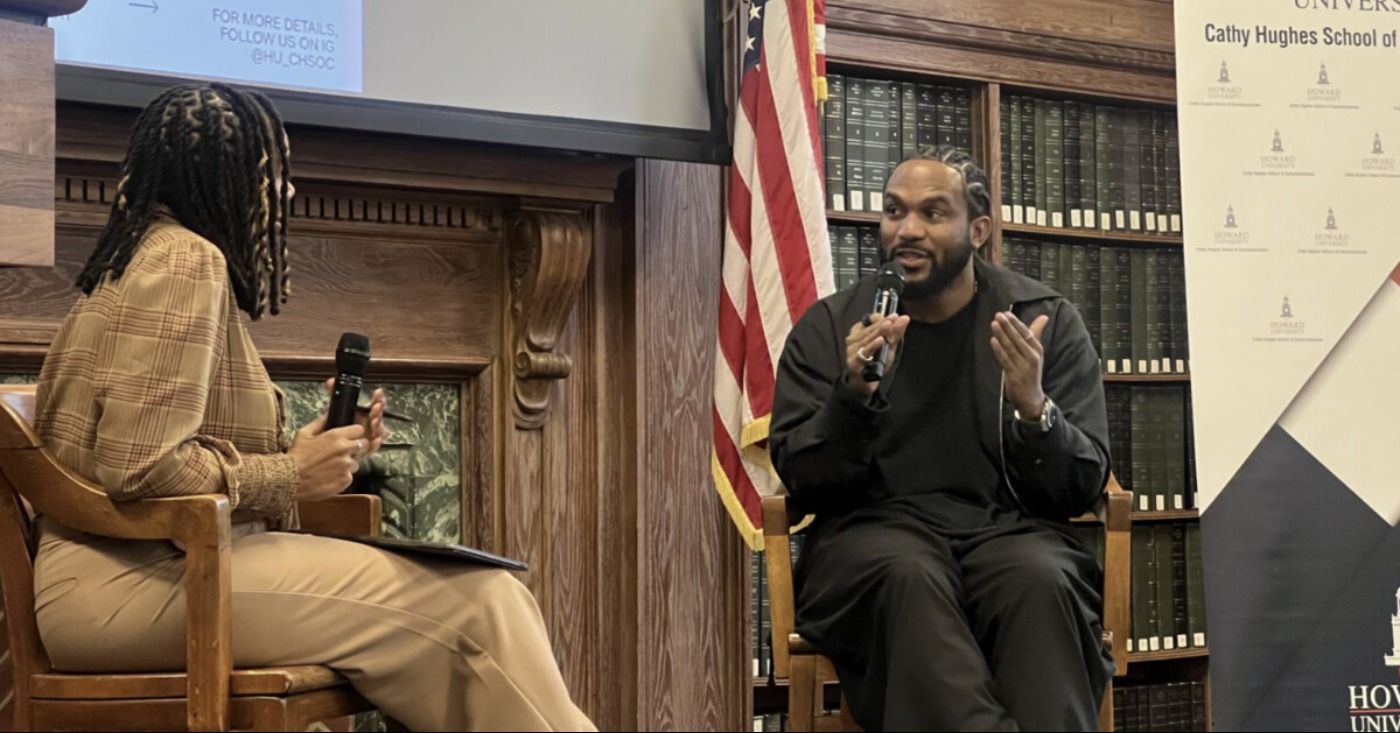
WASHINGTON (HUNS) — “The future belongs to creators who are bold,” Everette Taylor, CEO of crowdfunding platform Kickstarter, told students at Howard University during a recent visit.
As Taylor discussed his journey, he tested the boldness of students by inviting them to share their ideas during an impromptu pitch session at the Cathy Hughes School of Communications’ new speaker series in the Browsing Room of Founders Library. The inaugural speaker then shocked one group of students by pledging to invest in their thesis film, paying forward the opportunities that have lifted him as he struggled to pursue his dreams.
Taylor grew up in a low-income neighborhood in Richmond, Virginia, where he frequently encountered gang violence and drug dealing amid periods of homelessness.
Not feeling as if he conformed to conventional ideas of success, he eventually found inspiration in Jay-Z who balanced being an artist and an entrepreneur. Similarly, Taylor carved his own route, launching and growing various businesses.
He gained enough recognition to land on the 2018 Forbes’ 30 Under 30 list in marketing and advertising. In 2022, Forbes also named him as one of the top 50 most entrepreneurial CMOs when he was chief marketing officer of Artsy, an online art gallery and marketplace. That same year he took over Kickstarter, and the company reported a year-over-year revenue increase of 50% in the first quarter of 2026.
Taylor encouraged the audience through his story, but he also gave practical advice to help students who share his zeal to create and grow their business.
He explained that his mentor, Artsy CEO Mike Steib, helped him make the transition from being a CMO to becoming CEO at Kickstarter.
“These opportunities I don’t take for granted,” Taylor said, adding that Steib was “the first leader I had to take me under his wing.”
When he began his position at Kickstarter, Taylor said, “I had zero imposter syndrome, because I felt like I was ready for it, and it was because this person invested in me over the past few years.”
“A lot of my journey was me just hustling and being bold enough to ask for what I want, but I also need people to give me an opportunity.”
This idea of giving people opportunity impacts his business philosophy, as Taylor estimates that the number of African American employees grew exponentially since he’s been in leadership.
“Kickstarter was I think less than 2% Black, and at our peak I had gotten it to 20-something percent Black,” Taylor said.
Even then, Taylor also saw a need for representing other perspectives. “We still serve people globally, so we need people from different countries and cultures,” he said. “If you’re building a global company, it’s important to build a diverse base of people.”
“I always want to impact more lives, and that always leads to more results.”
Everette Taylor, CEO of Kickstarter
With the success Taylor had after becoming CEO of Kickstarter, he also found a need to prioritize his health.
“This is the first year that I’ve started the year with zero business goals,” he said. “For the first time, my goals have been centered around my health.”
He cites the illness of a friend who appeared to be healthy. Seeing his friend, who is also a successful entrepreneur, endure illness pushed him to prioritize his health.
“Business, I can do that in my sleep, but for me right now I’m so much more focused on setting goals for myself, and I know that’s going to impact the work that I do by feeling healthier and being a better version of myself.”
Samantha Housen, a sophomore public relations major and interior design minor from Harlem, attended the event to gain knowledge to grow her non-profit and for-profit businesses.
“I’m here because I want to explore more of the details of entrepreneurship from an actual professional,” Housen said, and to “see how his mindset could help me in my entrepreneurship.”
“My biggest takeaway is that I’m bold, and it’s OK to be bold,” she said. “I very much have the authority to do whatever I seek to do.”
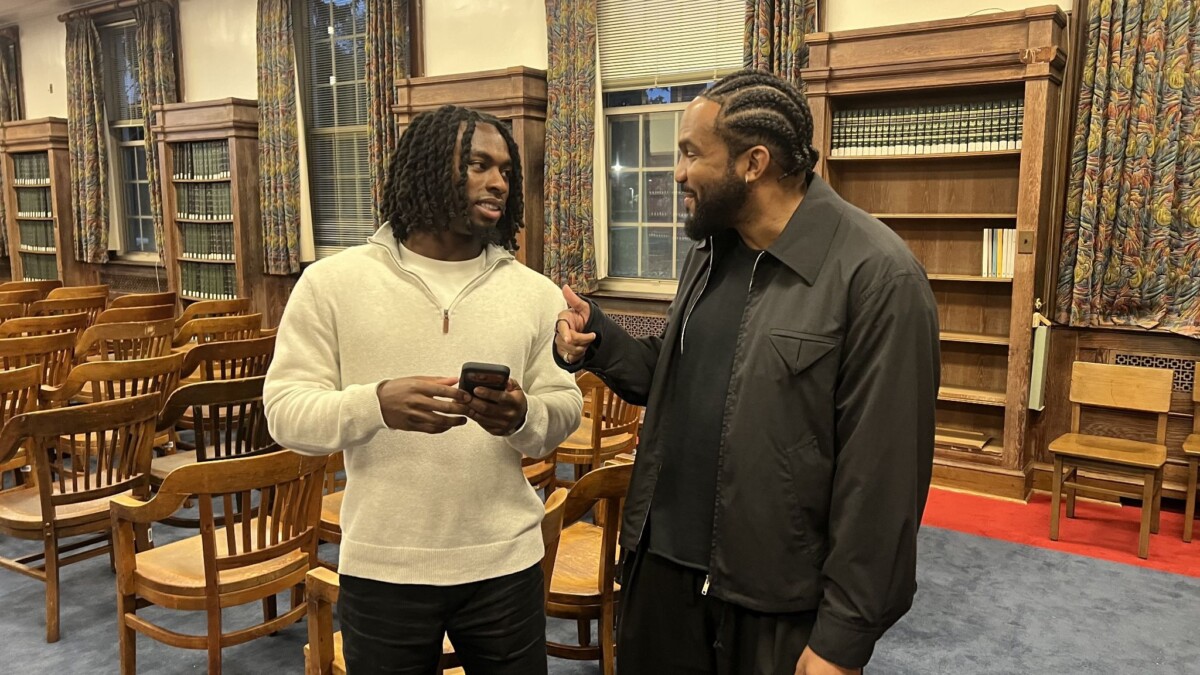
Kimberly Moffitt, Ph.D., dean of the Cathy Hughes School of Communications and host of the event, said she was excited about the speaker series.
“It’s because of students,” Moffitt said. “They felt like they weren’t hearing enough from people who are already post-graduation and successful. They wanted to hear those voices. So, this is an opportunity for me to bring folks to campus so they could reach out, talk and interact with folks that they aspire to be like or will be inspired by.”
Moffitt was excited for students to see someone who looked like them and carried themselves authentically in a position of high acclaim.
“He is showing you a different path, and letting you know that it’s OK to be who you are and show up in that space and not have to apologize,” Moffitt said of Taylor.
Moffitt also wants to encourage students to make the most of the speaker series. She gives details on upcoming speakers and the importance of hearing these people tell their stories.
“Those of you who want to be in TV and film, those jobs are different now,” she said. “You have to hustle in a different way.”
“I need our students to think about entrepreneurship in all that they do,” Moffitt added. “I want students to leave with that so that they have it in their back pocket should they need to draw on it.”
After the event. Taylor explained why boldness is essential to his success at Kickstarter.
“It’s for the grind and the ambition — not settling for status quo and mediocrity, and really going for it,” he said. “I always want to impact more lives, and that always leads to more results.”
Solomon Goins is a reporter for HUNewsService.com.
Based on reporting by Howard University News Service.
Black Press
OP-ED: She’s Not Non-Compliant, She’s Hungry: Addressing Food Justice to Improve Breast Cancer Outcomes
CHICAGO DEFENDER — Food insecurity in Chicago’s South Side and surrounding suburbs disproportionately affects Black women with breast cancer, impacting their treatment and recovery.
Here’s a transformational idea: everyone should have access to safe, healthy and affordable food.
If this idea doesn’t feel radical to you, then perhaps you haven’t spent much time in the Southside of Chicago and its adjoining suburbs.
Food insecurity is rampant in our neighborhoods. If you live in Washington Heights, you are practically guaranteed to experience lower food access than the average Chicagoan – with similar circumstances in the South Shore, West Englewood or West Pullman.
It has been clearly documented that “Food is Medicine.” In fact, according to countless scientific studies, good nutrition is critical during cancer treatment. It empowers your body to maintain muscle, rebuild damaged tissues and better withstand aggressive radiation or chemotherapy. A patient with access to nutritious food will experience fewer side effects, like fatigue and nausea, and will have less need for extra medicines. In short, good food improves a patient’s daily life.
Instead, though, a Black woman with breast cancer in our South Side neighborhoods or suburbs has the opposite experience. In fact, if “food is medicine,” then we are inarguably in a crisis, and it is disproportionately affecting Black women with breast cancer.
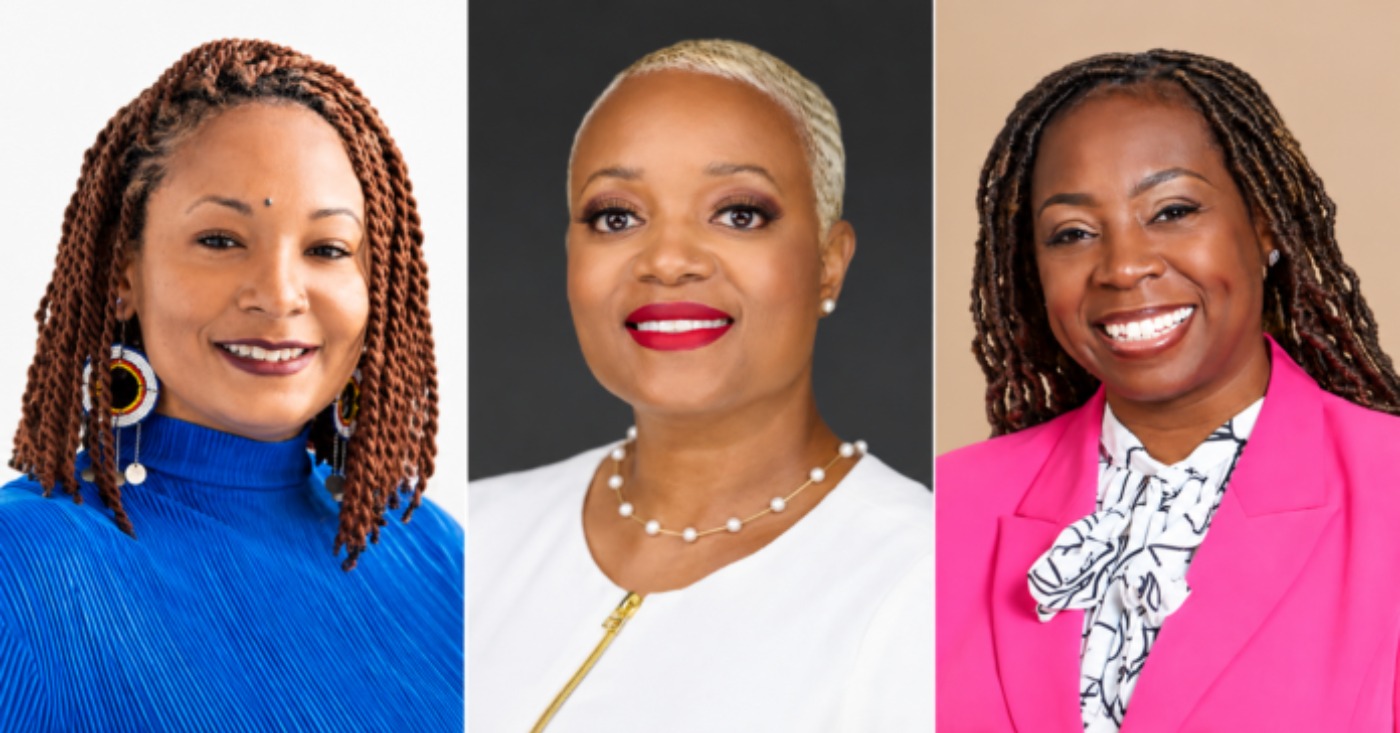
As co-authors of the Pinkprint and members of the Chicago Better Together Breast Cancer Disparities Think Tank, an initiative launched to address the disproportionate impact of breast cancer mortality on Black women in Chicago’s South Side and South Suburbs, we know that by combining data-informed strategies with community-driven advocacy and leadership, we will create equitable, sustainable outcomes for those most affected by breast cancer and the lack of access to nutritious foods in their communities.
Solutions start as local initiatives. We must pilot community-driven solutions in areas with the highest breast cancer mortality rates and limited access to nutritious food.
Existing local programs – food pantries, community fridges and even hospital-run delivery systems – are a critical piece of this local infrastructure. They are just a component, though, of the robust nutrition infrastructure the South Side lacks. In the long-term, our neighborhoods need clean, well-stocked grocery stores – and we must demand that our elected officials do everything they can to attract and retain these food corporations to invest in our communities.
This is just one item on their to-do list. Long-term solutions will include policy changes and targeted incentives at the city, state and federal levels. Just this spring, over 150,000 people in Illinois lost SNAP benefits, a devastating cut with ripple effects across families into entire neighborhoods. These cuts disproportionately affect people in the South Side of Chicago – not to mention, overwhelm food banks and other centers that serve as part of our social safety net. The Families Receiving Emergency Support for Hunger (FRESH) program in Illinois provides a one-time, automatic $400 cash payment per eligible household member to residents who lost their SNAP food benefits. This will help ease the immediate negative effects of these cuts and is much appreciated. But it is not a long-term solution.
When we started conversations in work groups about this project, we started with the idea that Black women deserve equitable access to quality breast cancer care. Any conversation about breast cancer care and goals for improved outcomes, must include a conversation about nutrition justice.
Nutrition justice is not just a transformational ideal: it is an idea that will literally transform our neighborhoods and the quality of life of every single person living in them. It will put grocery stores in empty storefronts; it will deliver food to a breast cancer patient going through chemotherapy.
Nutrition justice will help improve breast cancer outcomes for Black women on Chicago’s South Side. And Black women should not have to wait.
This op-ed is the second in a series focusing on eliminating breast cancer mortality in Black women on Chicago’s Southside. The authors are part of the Chicago Better Together Breast Cancer Disparities Think Tank, an initiative launched to address the disproportionate impact of breast cancer mortality on Black women in Chicago’s Southside and South Suburbs. Together with other community leaders, they have co-authored the Pinkprint, a strategic multistep plan and call-to-action on this critical issue.
The post She’s Not Non-compliant, She’s Hungry: Addressing Food Justice to Improve Breast Cancer Outcomes appeared first on Chicago Defender.
Based on reporting by Chicago Defender.
Black History
Cash for Moms: As Medicaid Cuts Loom, Cities Test a New Approach to Black Maternal Health
LOUISIANA WEEKLY — WORD IN BLACK — A maternal health crisis continues to disproportionately impact the Black community, with Black mothers experiencing significantly higher mortality rates during childbirth and their infants facing increased risks of prematurity and death. Data indicates Black moms die at three times the rate of white moms, and Black infants are about twice as likely to die as white infants in some states.

By now, there’s little question that a maternal health crisis is rocking the Black community. The data tells the story: Black moms are dying during childbirth at three times the rate of white moms, a disproportionately high percentage of Black children are born prematurely, and Black infants are about twice as likely to die as white infants in states like Louisiana.
But new data from a handful of pilot projects also suggests a potential solution that could significantly improve outcomes for Black mothers and their babies: cash payments, no strings attached.
Studies show the unrestricted money led to fewer preterm births, higher newborn birth weights, and fewer critical-care infant hospitalizations. It also reduced stress among new moms who would otherwise struggle to attend prenatal check-ups, pay for food and formula, or keep a roof over their heads.
“This makes so much sense to me,” says Tamara Mason, an official with the nonprofit March of Dimes who worked on an Atlanta project distributing money to low-income pregnant women. “Why isn’t everyone doing this?”
Sen. Cory Booker, a New Jersey Democrat, is among several sponsors of legislation that would provide direct financial aid to new mothers, similar to the expanded child tax credit in 2021. The credit sent monthly payments of up to $300 per child straight to most families’ bank accounts; experts credit it with lifting millions of children out of poverty.
When it expired, child poverty rose again.
“I believe that we need to, for moms, flood resources to them through things like the child tax credit,” Booker said during an August press briefing on the Black Maternal Health Momnibus Act. “We were able to cut child poverty virtually in half for our communities, and that actually does affect child outcomes.”
Those positive outcomes in part spurred the March of Dimes to launch trial programs providing universal basic income, or UBI, to pregnant women and new moms in two cities: Atlanta, which Bloomberg ranked as the most economically unequal large city in the country, and New Orleans, which March of Dimes gave an F grade.
No strings attached
In Atlanta, the Guaranteed Basic Income Program gave each participant $1,000 a month during pregnancy and her baby’s first year. Women most likely to live in poverty in that city are Black women of reproductive age; 25 pregnant women in two of the area’s highest-need ZIP codes received the cash.
March of Dimes ran the pilot through an Atlanta collective-impact partnership known as the collaborative. It is modeled on San Francisco’s Abundant Birth Project and, organizers say, rooted in an idea the Rev. Martin Luther King Jr. championed decades ago.
Funders Skeptical at First – Then All In
Mason said she spent months pitching foundations on the idea, which some considered outside her organization’s lane.
“I was honestly surprised that a couple of foundations,” Mason says. “Funders were like, ‘Why is March of Dimes in this space? You all are the birth defects people. You’re the preterm birth people.’”
The Community Foundation for Greater Atlanta signed on as the primary funder. The Liz Blake Giving Fund and the Jesse Parker Williams Foundation funded data gathering and evaluation Emory University conducted.
The nonprofit Center for Black Women’s Wellness handled recruitment, and more than 110 women applied for the 25 spots, Mason said. Applicants had to live in one of the two ZIP codes, earn no more than 200 percent of the federal poverty level, and be 12 to 28 weeks pregnant.
Cash, Diapers and a Network
Stipends were paid through a prepaid card, letting evaluators track spending without restricting it. Helping Mamas, a nonprofit focused on diaper insecurity, supplied 300 diapers and eight packs of wipes a month, plus a car seat and other essentials. The Georgia Black Doula Network encouraged, but didn’t require, participants to hire doulas.
Early results from Emory’s evaluation, as described by Mason, show a 20 percent decrease in financial stress and a 66 percent decrease in hopelessness, a figure she called striking. Prenatal outcomes trended better than average.
Mason was careful not to oversell what $1,000 a month can fix. Several participants lost housing; one or two dealt with domestic violence.
Even though GBI reduced financial stress, “it still is one piece of the puzzle,” Mason said.
New Orleans: Overcoming Crisis
March of Dimes runs a similar program in New Orleans, GBI Rx, offering pregnant patients in their first or second trimester $12,000, as a lump sum or $1,000 a month. Two partner medical clinics enroll patients for healthcare, and the payment card blocks cash withdrawals and spending on liquor and gambling.
In Louisiana, “we have a maternal and infant health crisis – specifically, a Black maternal and infant health crisis,” said Robin Gruenfeld, director of collective impact for March of Dimes in New Orleans. ”And it’s been that way for a long time.”
Black infants there died at about twice the rate of white infants from 2021 to 2023. Gruenfeld said Orleans Parish has the state’s lowest prenatal care utilization rate.
Gruenfeld said the program’s city seed money, federal pandemic relief funds, and foundation funding were “zeroed out” without notice. Most funds were later restored at a lower level, forcing organizers to scale down to 94 participants instead of the 100 planned. They also enrolled on a first-come, first-served basis.
Recipients spent lump sums on housing, cars and insurance. But spending priorities for the participants changed when the federal government stopped paying out SNAP food benefits during last fall’s federal shutdown.
“During that time, more than a quarter of the funds that we gave folks was going to groceries,” Gruenfeld said.
Several New Orleans city government officials are now weighing a program modeled on Michigan’s Rx Kids, which a study credits with nearly halving neonatal deaths in Flint, one of the poorest cities in the state.
“We are seeing policies pushed by the political will of predominantly Black women come into effect, and then also the backlash,” says Danielle Atkinson of Mothering Justice Action Fund, a nonprofit advocacy organization. “In Michigan, we have Rx Kids, which is extremely popular [and] the data on the impact is undeniable.”
But recent changes are endangering the success of such programs, particularly amid President Donald Trump’s hostility towards programs focused on diversity, equity and inclusion.
“We’re getting this pushback around identifying race and parental status as systemic areas of oppression,” Atkinson says. It remains to be seen, she says, “whether or not we are going to be able to prevail with the political power and the popular will of these issues, or the rhetoric and the history of racism in our country.”
Washington Looks Elsewhere
That includes the Republican-controlled Congress, which has shown little appetite for cash aid tied to pregnancy.
The Black Maternal Health Momnibus Act, which Booker reintroduced along with Democratic Reps. Lauren Underwood of Illinois and Alma Adams of North Carolina, bundles 14 bills on housing, nutrition, WIC and the perinatal workforce, but not direct cash.
Still, signs suggest the issue – providing cash aid to low-income mothers and their babies – may stay on the front burner as the midterm elections approach in November.
This month, former Vice President Kamala Harris and Michigan Senate nominee Abdul El-Sayed, both Democrats, hosted a Black maternal health roundtable in Detroit. Danielle Atkinson of Mothering Justice took part.
“Black mamas deserve access to quality healthcare that sees us, listens to us, and understands us at every step of the way,” Atkinson said afterward. “The responsibilities we carry do not end at pregnancy, nor do they disappear when we give birth and want to spend time with our newborn. They stay with us throughout all that we experience.”
Based on reporting by Louisiana Weekly.
Black Press
While Black Families Pay More for Power, Some Attorneys General Fight to Save High-Cost Coal
OUR WEEKLY LOS ANGELES / OUR WEEKLY ANTELOPE VALLEY — Black families are disproportionately affected by rising electricity costs nationwide, with residential prices projected to increase. Low-income households spend three times more of their income on energy, and Black households spend 43 percent more than white households, according to the American Council for an Energy-Efficient Economy.

Families across the country are opening their monthly utility bills with a growing sense of dread. Groceries cost more. Rent costs more. Now electricity has become one more expense pushing household budgets to the breaking point, and for many in the Black community – as usual – the squeeze is being felt hardest of all.
Residential electricity prices are expected to average more than 18 cents per kilowatt-hour in 2026, about 5 percent higher than last year, according to the U.S. Energy Information Administration. At the same time, demand for power is climbing fast as the nation adds data centers, factories, and other large energy users. And consumers remain exposed to a market rattled by global conflict and swings in fuel prices.
These costs do not land on everyone equally. For a family with little left over at the end of the month, even a modest jump in the light bill means less for food, transportation or medicine. Low-income households spend three times more of their income on energy than other households, and Black households spend 43 percent more than white households, according to the American Council for an Energy-Efficient Economy.
The question every public official should be asking, then, is simple: How does America add the reliable electricity it needs while keeping costs down for the families least able to absorb them?
Instead, a group of state attorneys general has chosen a very different fight.
In November 2024, Texas Attorney General Ken Paxton sued three of the nation’s largest asset managers, BlackRock, State Street and Vanguard, and was joined by a coalition of other states. The lawsuit claims the firms bought up large stakes in major coal producers and then used their influence as shareholders to pressure those companies to cut production in pursuit of climate goals. The attorneys general argue this restricted coal supply, raised coal prices and, in the end, raised electricity prices for consumers.
Paxton and his colleagues have presented the case as a way to bring down power bills. But when Paxton’s office announced its settlement with Vanguard, it billed the deal as an agreement “to protect the coal industry.” That wording tells us a great deal about whose interests are really at the center of this case.
Attorneys general have only so much time, staff, and money. Every hour spent on litigation against investment firms is an hour not spent on the problems that actually drive up household energy costs: transmission bottlenecks, permitting delays, an aging grid, energy efficiency and the shortage of new power generation.
There is actually an even deeper problem with making coal the centerpiece of an affordability strategy. Coal has been losing ground in the marketplace for decades.
Around 1990, coal supplied more than half of the nation’s electricity. By 2025, its share had fallen to about 17 percent. Most of that decline came from competition, chiefly cheaper natural gas, along with the growth of renewable energy and tougher environmental rules. In the first three months of 2026 alone, coal plant output fell 11 percent from a year earlier, while renewable generation grew. And this summer, Lazard’s annual analysis found renewables remain the lowest-cost option for new power plants, even as existing plants have become more competitive and continue to provide real value to the grid.
Coal’s decline did not begin with Wall Street, investment policies or the climate movement. It is the result of decades of change in America’s energy economy. Where a coal plant remains affordable and necessary to keep the lights on, utilities should keep running it. But keeping a useful plant open is very different from treating the survival of an entire industry as public policy. If other sources can provide power more cheaply, government has no business shielding coal from that competition.
For Black communities, the cost of coal does not stop at the utility bill. Burning coal produces air pollution and coal ash that must be managed, and the Environmental Protection Agency notes that coal ash contains contaminants like mercury, cadmium, and arsenic. A landmark NAACP study found that the roughly 6 million people living near coal plants had lower average incomes than the nation as a whole, and that people of color made up a majority of those living near the worst polluters. Too many of our neighborhoods carry both burdens at once: high energy bills and a greater share of the pollution. Any policy that claims to help consumers should account for both sides of that ledger.
The truth is that families do not much care whether the power running their refrigerator comes from a coal plant, a natural gas facility, or a wind farm. They care that it is there when they need it and that they can afford to pay for it.
Critics of environmental policy often complain that government should not pick winners and losers in energy markets. That principle should apply evenly. Financial firms should not be allowed to break antitrust laws in pursuit of climate goals. But government should be just as cautious about using its power to guarantee coal a permanent place in the market. Coal, natural gas, nuclear, wind, solar, battery storage, and new technologies should all compete on cost, reliability, and what the grid needs.
The real challenge before the nation is building enough reliable power, and building it quickly. Clinging to coal’s past, especially through the courts, does nothing to solve that.
At a time when so many Americans are struggling just to pay bills, it is fair to ask why state officials are pouring so much energy into protecting one industry. Attorneys general should be working to make power more plentiful and more affordable. Families facing economic hardships deserve more than to be invoked as props in a political fight between government officials and some of the world’s largest financial institutions.
Based on reporting by Our Weekly Los Angeles / Our Weekly Antelope Valley.
Black History
Beyond the Job Search: DC Black MBA Invests in Helping Black Women Reclaim Their Next Chapter
WASHINGTON INFORMER — Black women in the Washington metropolitan region are facing employment challenges, with revised data showing approximately 251,000 job losses between January and August 2025. This accounts for over half of all female employment losses during that period, despite Black women making up only 14.1% of the female workforce.
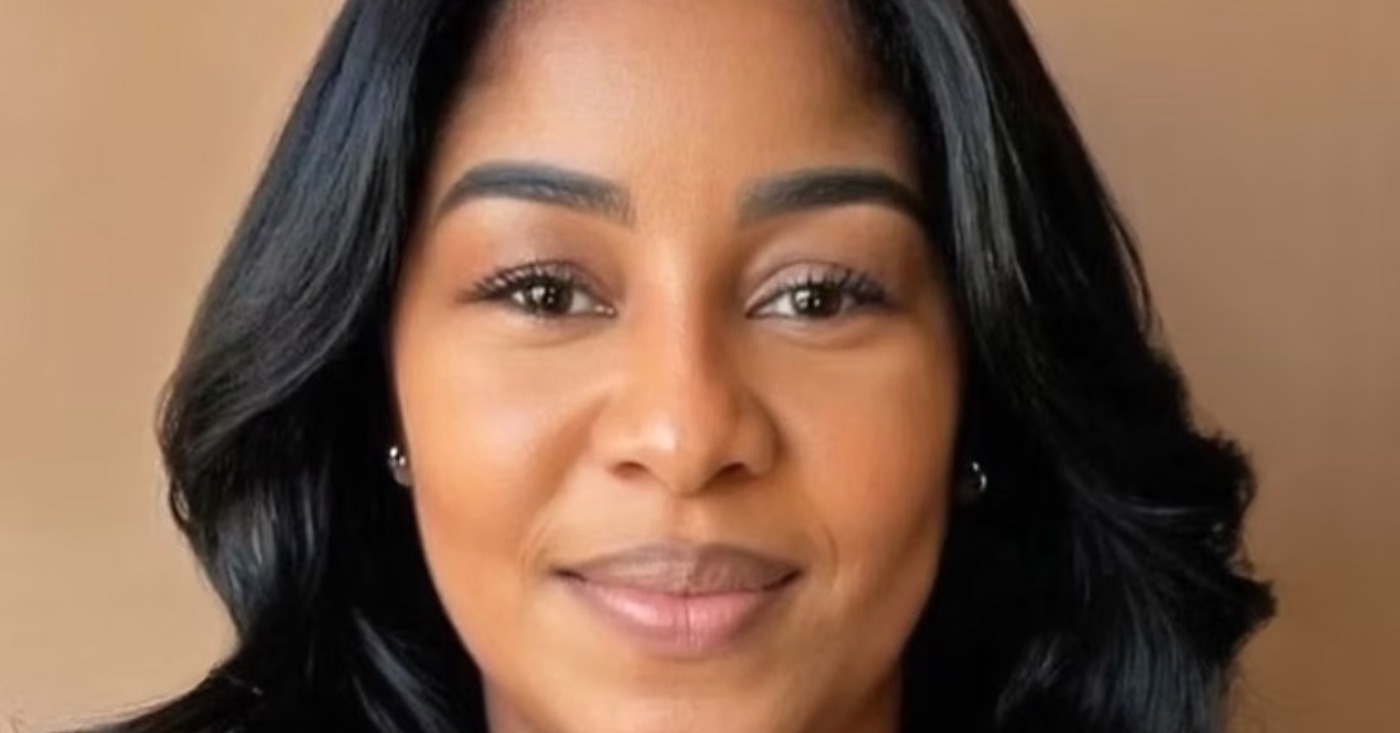
For Black women across the Washington metropolitan region, the changing employment landscape is about more than a paycheck. It can mean reassessing a career, redefining success and deciding what comes next.
The numbers underscore the challenge. Revised employment data show that approximately 251,000 Black women lost jobs between January and August 2025, accounting for more than half of the employment losses among women during that period, despite Black women representing just 14.1% of the female workforce. By the end of 2025, there were 113,000 fewer Black women employed than at the beginning of the year.
The impact has been particularly significant in the DMV, where federal employment has long provided economic stability and career opportunities for Black professionals. Maryland alone lost approximately 25,000 federal jobs in 2025, according to state employment data.
For DC Black MBA, those realities call for support that extends beyond helping women find their next job.
“I am focused on doing more and providing as many opportunities as possible for Black women to invest in themselves both professionally and personally,” said Dr. Carletta S. Hurt, president of the DC Black MBA. “We know that when Black women proceed and prosper, everyone benefits.”
That commitment is behind Leading with Intention by Investing in Self, a three-part, in-person workshop series hosted by DC Black MBA in partnership with Blu Topaz Inc. Educational Consulting.
The series builds on the chapter’s August Women’s Symposium, MastHERpiece: Designing a Life with Intention, which challenged women to see themselves as architects of their careers, wealth, wellness and impact. The new workshops take that conversation a step further, asking women to consider where they can work next and who they want to become next.
The series opens Oct. 22 with “Recalibrating Your Compass,” led by Geraldine P. White, Founder and CEO of Identity & Impact. White will guide participants through questions of identity, direction and purpose.
“You can be proud of what you’ve built and ready for something different. Both can be true,” White said. “Investing in yourself includes giving yourself permission to revisit an earlier definition of success and consider what you want your next chapter to make possible.”

On Oct. 29, Tonya Camille, creator of Me in the Making and Unstuck & Inspired, will lead “Successful, But Stuck: How High-Achieving Professionals Reconnect, Realign & Move Forward.”
Her interactive workshop will help women identify fears, limiting beliefs and recurring patterns that may prevent them from moving forward, while developing a concrete next step. “You can’t change what you won’t acknowledge, and you can’t transform what you’re unwilling to confront,” Camille said.
The series concludes Nov. 5 with nonprofit leader, author and consultant Tokiwa T. Smith leading “Rest is Revolutionary.”Her session challenges a familiar expectation placed upon Black women: that achievement and service to others must come at the expense of themselves.

Smith said Black women must recognize that prioritizing themselves, setting boundaries and making room for joy are not signs of diminished ambition. “I believe we thrive when we engage in self-care and community care,” Smith said.
For Hurt, the goal is to create space for Black women to move beyond reacting to an uncertain economy and begin intentionally determining what comes next.
A job loss can require a new résumé. A changing workplace may demand new skills. However, a life transition can also become an invitation to reconsider purpose, boundaries, entrepreneurship, leadership, rest and the meaning of success itself.
For more information, visit the DC Black MBA website (www.dcblackmbaa.org)/.
Based on reporting by Washington Informer.


NFL Round-Up: Caleb Williams strikes back, Panthers, Browns and Titans secure victories

Birmingham on Pace for Fewest Homicides in 75 Years

Ancestral Responsibility: Young Native Voters Fight Political Invisibility

Black Household Wealth Plummeted 25% in Three Years, New Data Shows

Kickstarter CEO Everette Taylor Shares Tips on Creating and Growing a Business

HBCU Football Roundup: Homecoming Wins for Howard, Tennessee State and Jackson State

Luxury SUV: Heated Seats & Captain’s Chairs Review #shorts

Black-Owned Banks: Compliance to Community Business #shorts

FDIC Study: African American Banks Disappearing Rapidly #shorts

Car Buying Tip: Check Windshield Glare & Interior Space! #shorts

The Youngest American Killed in the Vietnam War

Passing for White, Fighting for Black America: The Courage of Walter White

OP-ED: Haiti TPS: Have We Lost Sense of Humanity?
NFL: Week Two Recap | Jalen Hurts did not fold; Caleb Williams exits game with injury

Remembering Chauncey Bailey as Student Journalists Face Threats to Truth-Telling

Peter Magubane: a Camera Against Apartheid

Mayor Lee Announces $1 Million Kaiser Permanente Grant for Pilot Program to Address Homelessness, Clean Up Public Spaces throughout Oakland

OP-ED: How Head Start Also Helps Parents

Poll: Becerra Widens His Lead Over Hilton; Californians Split on Wealth Tax

Community Action Group ‘Friends of Zakiya’ Ask Sheriff for Time
Luxury SUV: Heated Seats & Captain’s Chairs Review #shorts
Black-Owned Banks: Compliance to Community Business #shorts
FDIC Study: African American Banks Disappearing Rapidly #shorts
Car Buying Tip: Check Windshield Glare & Interior Space! #shorts

St. Louis Celebrates Excellence at The St. Louis American’s 39th Annual Salute to Education Gala

‘No King: Vote Early’ protest for democracy in St. Louis

Optimize Your Seating: Essential Household Setup Guide #shorts

Brake Pedal Test Drive: Smooth Stops for Your Truck! #shorts

Life Lessons Learned Through Adversity: My Journey #shorts

From Claflin Alum to ColorBlind Artist
-

 Black Press6 days ago
All Skinfolk Ain’t Kinfolk
-

 Black Press5 days ago
Oakland Awarded More than $14 Million in State Funding
-

 Black Press5 days ago
Jendayi Arrest Raises Community Concerns Regarding Sheriff’s Chain of Command
-

 African American News and Issues4 days ago
Black History: Gladys West Mathematics Helped Make GPS Possible
-

 Black Press5 days ago
Allen Temple Baptist Church Hosts Free Prostate Cancer Screenings on Oct. 17
-
 Black Press5 days ago
Democrats, Community Groups Back Measure EE to Change How Oakland Is Governed
