
Business
Black Chicago Fights to Save Historic EBONY Building from Developers


By Erick Johnson (Chicago Crusader/NNPA Member)
Downtown Chicago is set to explode with construction. In the next several years, the city that gave birth to the skyscraper will have a new look. A new generation of glitzy skyscrapers will sprout up all over the city, dramatically altering its famous skyline with bold new designs and soaring to greater heights.
The most fertile ground for the newest crop of high-rises is on South Michigan Ave., where, in the last several years, powerful developers have been harvesting plans to capitalize on one of the wealthiest residential districts in the city.
After intense meetings with residents and historic preservation officials, developers are moving forward with ambitious and jaw-dropping plans to plant mega-size buildings that would transform a relatively quiet residential district into a bustling neighborhood full of retail shops and post-new condominiums.
For developers, it’s a race to the top in a battle to build the biggest and best skyscraper as large as the ego of a high-powered business mogul.
Sitting amidst these dreams is a small, but well-known 11-story building that’s been vacant for nearly seven years. Known to many visitors around the country as the “EBONY/Jet building,” for decades, it was the corporate headquarters of the Johnson Publishing Company. In its glory days, it was the engine behind EBONY and Jet magazines that sat on millions of coffee tables in the homes of Black America. Once a proud symbol of achievement, the once Black-owned building still stands on one of the most prominent streets in America. It’s now empty and perhaps the most vulnerable building to hungry developers.
In several years, the EBONY/Jet building will be wedged between two fresh skyscrapers. To the north of it will be the 620-foot “Essex on the Park” skyscraper, which officially broke ground on Jan. 19. When completed, the skyscraper overlooking Grant Park and Lake Michigan will have 479 luxury rental apartments. The deal also includes rehabbing and expanding the neighboring Essex Inn Hotel to 271 guest rooms.
Two blocks south of the EBONY/Jet building will be an 86-story glass skyscraper that will resemble a stack of giant ice cubes. Reportedly named the Jahn Tower, it will have 506 units; 308 will be condominiums. There is the 515-foot tower at 1326 S. Michigan and the planned twin skyscrapers on Indiana Ave., which at 76 stories high, will be third tallest building south of the Willis Tower.
And this is just the South Loop. Skyscrapers are going up on the North Side, too.
As the city experiences a boom in new skyscrapers, the house that EBONY/Jet founder John H. Johnson built remains a decaying relic that’s up for sale as hungry developers push the limits of their projects into unchartered waters. The buzzards of urban progress are closing in while the EBONY/Jet building stands increasingly vulnerable to extinction as space grows tight on South Michigan Ave. and demands for bigger, stylish skyscrapers climb to greater proportions.
For the EBONY/Jet building, an edifice whose history and important contributions to Black America has inspired generations for decades, the warning signs are there.
With its EBONY/Jet marquee still beaming at the top, it’s a valuable piece of real estate that’s stuck in the past. Its uncertain future depends on what happens in the present, in trending neighborhoods and in corporate America, where big buildings are in and smaller ones are out. Sitting on prime real estate where the demand for multi-million dollar skyscrapers is showing no signs of slowing down, the EBONY/Jet building will meet the wrecking ball if developers seeking to make the next statement on Michigan Ave. have their way.
On Feb. 2, Mayor Rahm Emanuel announced that the building would be considered for preliminary landmark status by the Commission on Chicago Landmarks—a nine-member group that has granted similar status over the years to over 370 historic sites in Chicago, including the homes of writers Gwendolyn Brooks, Lorraine Hansberry and Richard Wright. The group’s latest move capped a month of researching and writing a preliminary report about the history of the EBONY/Jet building.
“My father started Johnson Publishing Company to inform, empower and uplift the African-American community,” Linda Johnson Rice, chairman of Johnson Publishing Company and chairman emeritus of Ebony Media Holdings, said in a statement. “With my mother Eunice by his side, they built an iconic brand. I am thrilled that the building housed our company for so many years and is being considered for landmark status. It’s a true testament to the hard work of my parents and all the people who called Johnson Publishing Company home for decades.”
A member with the city’s Historic Preservation Division whose staff sits on the city’s Landmark Commission said the group could take up to nine months to decide whether the EBONY/Jet building should be an official Chicago landmark.
The commission has seven requirements for landmark designation. Some of the criteria require prospective buildings to have architectural, cultural historic impact on Chicago, the State of Illinois or the U.S. Another criterion says the building must identify with a person or persons who significantly contributed to the city, state or country. For landmark approval, a building must meet at least two of seven criteria, which the EBONY/Jet building seems to do.
If the EBONY/Jet building becomes a Chicago landmark, developers cannot demolish the structure. However, developers can remove the Ebony Jet sign that sits on top of the building since it’s not considered a feature of historic significance, a historic preservation staff member told the “Chicago Crusader.” Also, the interior of the EBONY/Jet building is not part of the designation because the art and furnishings were moved to Johnson Publication’s current home at 200 South Michigan where the company rents a floor. Developers can gut the interior and use the building for a different purpose.
The new owner of the EBONY/Jet building could receive tax credits that could help pay for construction costs that were spent on converting the building to a new purpose.
In 2016, the storied original “Chicago Defender” building at 3435 Indiana Ave., was restored 28 years after it was designated a Chicago landmark. However, the building in the city’s historic Bronzeville neighborhood remains empty. The Defender is now located on the city’s prominent Martin Luther King Drive.
While the EBONY/Jet building is important to Black history, there are questions about its age compared to other Chicago landmarks. Most Chicago landmarks were built in the 1800s, 1900s and early 20th century. While many are over 100 years old, the EBONY/Jet building has stood for only 46 years. It would be the “newest landmark” among the city’s historic structures. With landmark designation, the building will be harder to sell to developers who usually aim to tear down structures to make way for bigger ones, especially in high-profile areas like Michigan Avenue.
Without a buyer, the EBONY/Jet building could sit vacant for a long time as time and neglect takes its toll on the structure. Too small of an office building by today’s standards, the building will face heavy competition from the handful of residential skyscrapers that will be built just blocks away.
Located across from picturesque Grant Park, the EBONY/Jet building was built in 1971 for $8 million or $46 million by in today’s dollars. It was a stunning achievement for John H. Johnson, who became the only Black business executive on tony Michigan Avenue. An insurance salesman who worked at the Supreme Life Insurance building in Bronzeville, Johnson used his mother’s furniture for collateral to borrow $500 to build his media empire.
When it opened, then-Mayor Richard J. Daley closed Michigan Avenue as part of the festivities. Over the years, the who’s who of Black America passed through the building’s doors, from actress Diahann Carroll to boxer Muhammad Ali.
Designed by renowned Black architect John Warren Moutoussamy, the 110,000 sq. ft. building won praise for its bold colors and interior design. Today, the building still has a unique driveway that allowed Johnson to drive into the basement parking lot—a feature granted by then-Mayor Daley. In 1982, Johnson became the first Black man on Forbes’ 400 wealthiest Americans list. At one point in his life, Johnson had an estimated wealth of $600 million—a number much higher when adjusted for inflation.
Johnson died in 2005, and his viewing in the building’s lobby drew hundreds of mourners. Cash-strapped Johnson Publishing sold the building to neighboring Columbia College for $8 million in a deal, but many believed the building was worth much more. Johnson Publishing Company moved several blocks north before selling off its media empire to a small investment firm in 2016.
Columbia College planned to turn the building into a library, but those plans never materialized. Last year, the school put the EBONY/Jet building on the market. With soaring real estate values on Michigan Avenue, the cost of purchasing the EBONY/Jet building will be out of reach for most Black business owners.
Sources told the Crusader that a handful of developers were interested in tearing the EBONY/Jet building down before it was given preliminary landmark status. One interested developer wants to turn the building into residential apartments. In fact, one week before city officials announced preliminary landmark status of the EBONY/Jet building, they also announced that the Essex Inn Hotel would be given similar designation. In 2014, the Essex Inn was purchased by the Oxford Capital Group, which is rehabbing and expanding the hotel as part of a plan to build a skyscraper between it and the East-West University building that’s next door to the EBONY/Jet building.
Alderman Sophia King (4th) submitted the application to give landmark status to the EBONY/Jet building. When she was appointed interim alderman by the mayor last year, King inherited one of the city’s wealthiest wards and most diverse segments of the city.
The Crusader contacted King for comments for this story, but as of press time, the newspaper had not received a response.
The Chicago Crusader is a member publication of the National Newspaper Publishers Association. Learn more about becoming a member at www.nnpa.org.












Black History
PRESS ROOM: Mississippi Congressman Bennie Thompson to Speak at Oakland Post/El Mundo and Post News Group 64th Anniversary Celebration
POST NEWS GROUP — The anniversary fundraising luncheon, to be held at Scott’s Restaurant in Jack London Square, will also celebrate the 200th anniversary of the founding of the Freedom’s Journal, the first Black newspaper, published March 16, 1827, in New York.
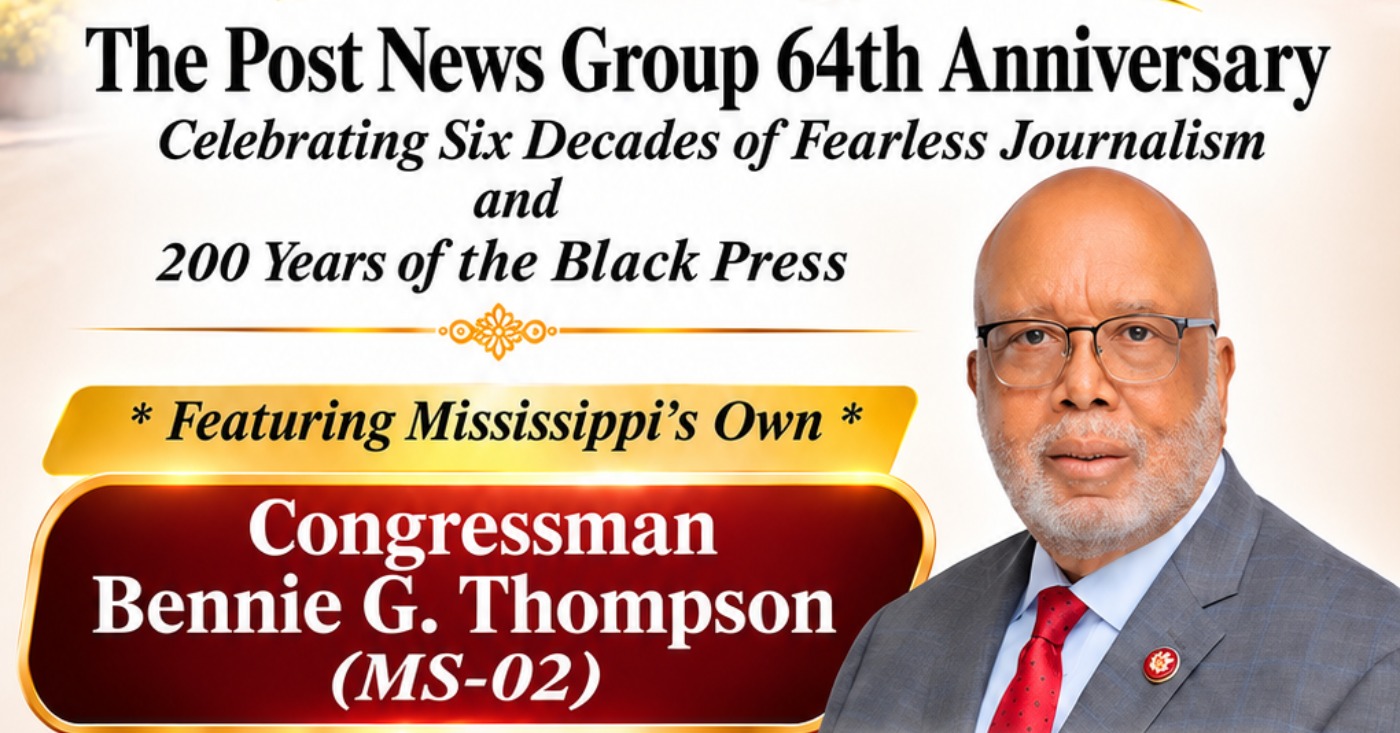
Mississippi Congressman Bennie G. Thompson will be the keynote speaker at the 64th Anniversary Celebration of the Oakland Post/El Mundo and the Post News Group on Feb. 12, 2027.
The anniversary fundraising luncheon, to be held at Scott’s Restaurant in Jack London Square, will also celebrate the 200th anniversary of the founding of the Freedom’s Journal, the first Black newspaper, published March 16, 1827, in New York.
More details on the anniversary celebration will be announced soon.
(The Oakland Post was founded in 1963 by Thomas L. Berkley and his wife, Velda. Paul and Gay Plair Cobb purchased the Post newspapers in 2004.)
The Cobbs’ connection to Thompson goes back decades. After a brief home libation ceremony with “Roots” writer Alex Haley and civil rights activist Beni Ivey in 1973, the Cobbs moved to the South to continue their work in the civil rights, voter education, and political development movements.
As national field director of the Southern Elections Fund (SEF), Paul Cobb helped raise funds, register voters, and politically organize with the late Julian Bond and John Lewis when Bennie Thompson ran for mayor of Bolton, Mississippi, in 1973.
After two terms as mayor, Thompson served on the Hinds County Board of Supervisors in the 1980s before being elected to represent Mississippi’s 2nd congressional district in 1993. A Democrat, he has served as chair of the Committee on Homeland Security from 2007 to 2011 and from 2019 to 2023.
Thompson was appointed chair of the Jan. 6th Congressional Committee by Nancy Pelosi in 2021 and will likely be appointed chair of the Homeland Security Committee, which oversees issues concerning immigration and ICE agents.
In an interview on NPR, Thompson praised Scott Colom’s recent Senate victory, pointing out that Colom is the first Black U.S. senator elected from Mississippi since Reconstruction.
For more information, visit: https://postnewsgroup64th.eventbrite.com
Art
The Afrikan Restoration Project Marks 60 Years of Kwanzaa With New Book and Expanded Focus
THE AFRIKAN RESTORATION PROJECT FOR IMMEDIATE RELEASE | November 24, 2026 Media contact: Shujaa Baker | [email protected] | (949) 257-7133 | Media Kit – https://bit.ly/3X2tSlz The Afrikan Restoration Project Marks 60 Yea

The Afrikan Restoration Project Marks 60 Years of Kwanzaa With New Book and Expanded Focus
Events in San Diego, Detroit, and online will honor the holiday’s origins and prepare for the next sixty years of the Nguzo Saba.
The Afrikan Restoration Project (TARP) announces its 2026 Kwanzaa anniversary season, Dec. 26–Jan. 1, marking sixty years of the African American and Pan-African holiday first observed in Los Angeles in 1966. Under the theme “Celebrating the First Sixty Years of Kwanzaa… and the Next!” the programs share an expanded understanding of the Kwanzaa creation story and thoughtfully promote year-round practice of the Nguzo Saba (Seven Principles).
Central to the celebration is the worldwide debut of the new book titled “Kwanzaa – FOR KIDS (and everybody else!),” written by Shujaa Baker, illustrated by Thad Lavalais, and based on the firsthand accounts of Kinamo and Karama Damu about the first Kwanzaa. The book traces how ten-year-old Kinamo’s questions about African holidays in 1965 inspired the creation of Kwanzaa while recounting the children’s experiences leading up to the first celebrations in 1966. Learn more at kwanzaaforkids.org.
60th Anniversary Events
Dec. 26 | San Diego | 1–4:30 p.m. PT — WorldBeat Cultural Center, Balboa Park. The children’s Kwanzaa Camp celebration and book debut features Karama Damu, a participant in the first Children’s Kwanzaa, along with a Kwanzaa Essentials lesson and lessons from the new book, art, music, drumming, and dance. Instructional content by Imagiread.
Dec. 26 | San Diego | 6–9 p.m. PT — WorldBeat Cultural Center. Umoja (Unity) Night program celebrating the First Sixty Years of Kwanzaa… and the Next! recognizes the first sixty years of Kwanzaa and the work ahead to teach the Nguzo Saba more broadly
Dec. 27 | Detroit | 2–5 p.m. ET — Charles H. Wright Museum of African American History. The Kujichagulia (Self-Determination) program explores Kwanzaa’s past, present, and future, and the role of self-determination in Elevating Blackness.
Dec. 29 | Online | 5–7 p.m. PT — Kwanzaa Then and Now: Celebrating the First Sixty Years and Preparing for the Next. TARP introduces its new book and announces the return of its study group on Jan. 10, 2027 – examining Ujamaa (Cooperative Economics) in the age of AI and robotics.
TARP is merging our work to promote African culture, S.T.E.M., manufacturing, and principled daily practice into a new online program called The Elevating Blackness Online Academy. Launching on December 5th, this site offers educational resources that build character, including curricula for Kwanzaa – FOR KIDS, the STEM ’n ’Nem children’s book series, and partner content.
Visit https://elevatingblackness.com for more info. (For beta test access – TESTER / Innovationary2026!).
TARP also invites public discussion of three position statements on Kwanzaa’s origins, the responsibilities of the next sixty years, and the daily practice of the Seven Principles found here.
Event details and registration: https://kwanzaa.org/events.html and https://tarpie.org/events. Contact Shujaa Baker for interviews, the media kit, and high-resolution images. See tarpie.org for full details.
About The Afrikan Restoration Project
TARP is an African-centered educational and cultural development initiative advancing cultural knowledge, practical capabilities, and principled community development through publications, programming, and collaborative education.
Black Press
Native American Health Center Connects 140 Community Members to Career Opportunities During Native American Heritage Month
The Native American Health Center recently hosted its Career Connect job fair at the Flicker Building and Cultural Center in Oakland, welcoming 140 community members in honor of Native American Heritage Month. Organized through the federally funded Strong Native Workforce Program, the event aimed to promote economic stability by connecting American Indian, Alaska Native, and Native Hawaiian residents with local career pathways. A diverse group of employers from the healthcare, technology, and government sectors attended to provide attendees with information regarding job openings and professional training programs. Read more.
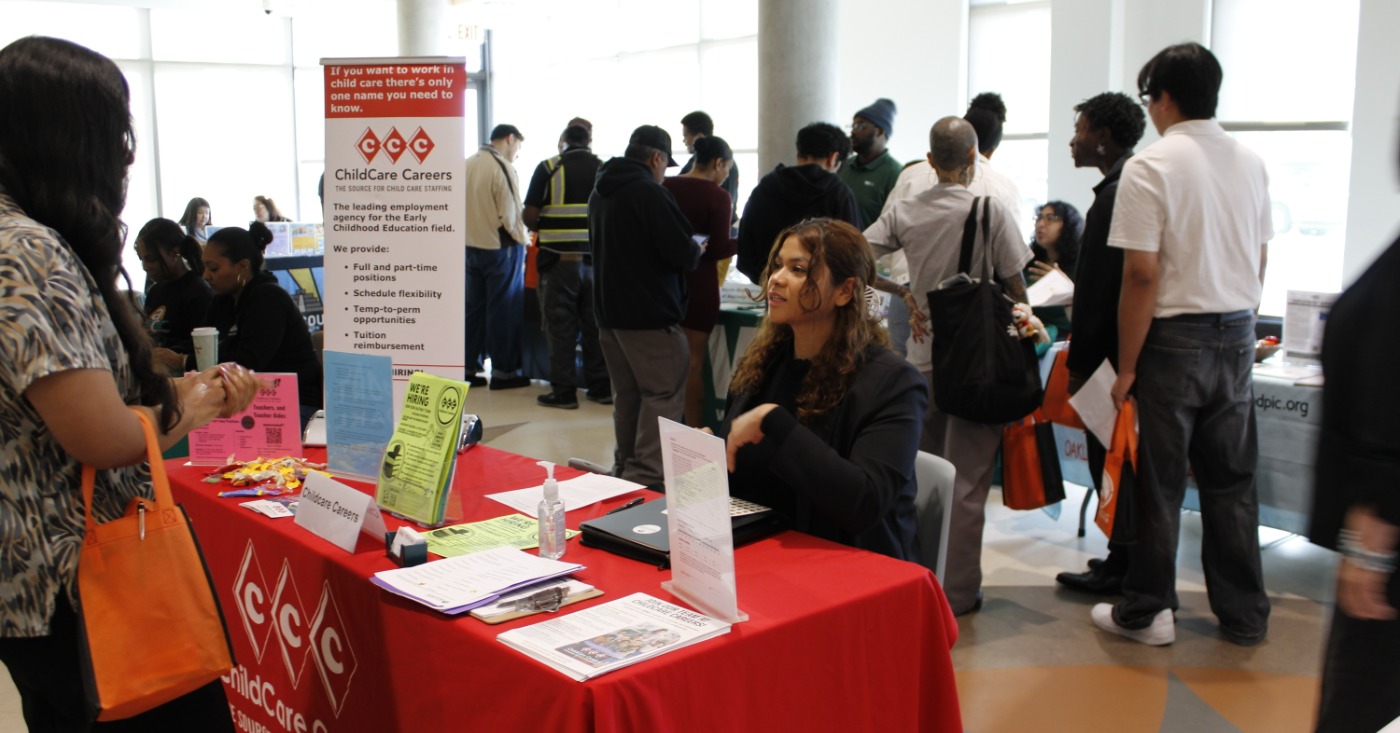
In celebration of Native American Heritage Month, the Native American Health Center (NAHC) welcomed 140 community members to its Career Connect: Community Job & Career Fair on Friday, Nov. 6.
Held at NAHC’s Flicker Building and Cultural Center in Oakland, the event connected American Indian, Alaska Native, Native Hawaiian, and other community members with employers, career pathways, workforce development programs, and family resources throughout the San Francisco Bay Area.
The event was organized through NAHC’s Strong Native Workforce Program, a federally funded initiative supported by the U.S. Department of Labor through the Workforce Innovation and Opportunity Act (WIOA). The program helps Native community members pursue meaningful employment and long-term economic stability through career counseling, job placement assistance, skills training, and supportive services.
The Career Connect Job Fair was coordinated with support from Gallo Advantage Consulting, a Native American woman-owned consulting firm specializing in strategic planning, community engagement, and workforce development. Working alongside NAHC, the firm supported employer outreach, event coordination, and partnerships with local businesses and community organizations.
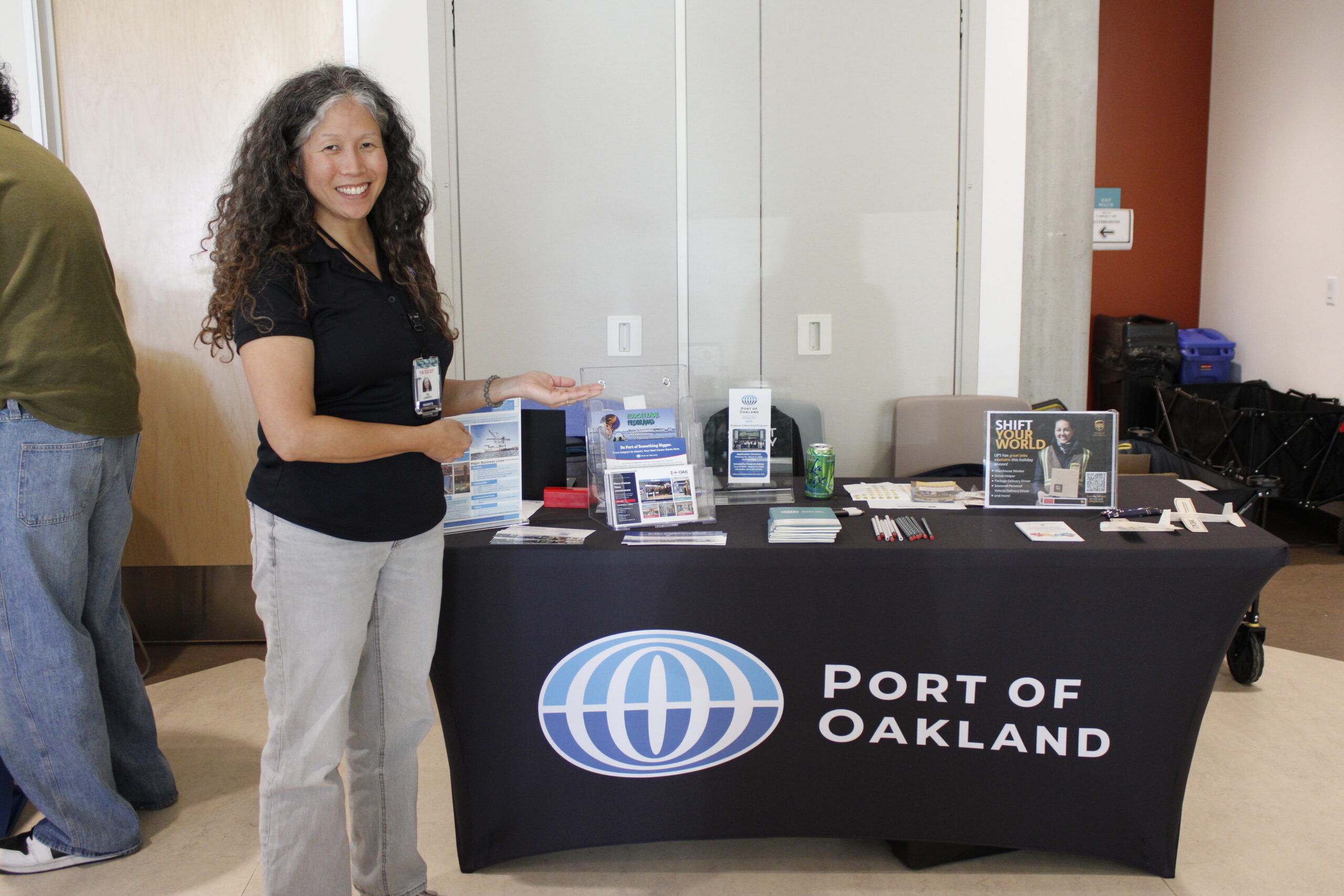
“Native American Heritage Month is an opportunity to celebrate the strength, resilience, and contributions of our communities while investing in their future,” said Natalie Aguilera, CEO of NAHC. “Employment is an important part of health and well-being, providing economic stability, purpose, and opportunities for individuals and families to thrive. Through our Strong Native Workforce Program and events like Career Connect, we are helping community members build meaningful careers and create stronger futures for generations to come. We are grateful to the employers and community partners who joined us in this effort.”
The job fair featured employers across healthcare, technology, government, transportation, education, and other industries. Participating organizations included Cisco Systems, the City of Oakland, East Bay Regional Park District, Kaiser Permanente, Port of Oakland, Sutter Health, Balance Staffing, MANOS Homecare, Inc., Childcare Careers, AC Transit, Samuel Merritt University, Waste Management of Alameda County, Inc., CareBuilders at Home – East Bay, East Bay Municipal Utility District, Patelco Credit Union, and Code Tenderloin.
Workforce development and community partners who shared their resources with participants included the Oakland Private Industry Council, Lao Family Community Development, The Unity Council, West Oakland Jobs Resource Center, Friendship House Association of American Indians of San Francisco, the Washoe Tribe of Nevada and California’s Alameda County Native TANF Program, as well as NAHC’s own Community Wellness Department.
Throughout the event, attendees connected with employers, explored job openings, and learned about apprenticeships, certification programs, training opportunities, and community resources.
Held during Native American Heritage Month, Career Connect highlighted the importance of investing in Native communities through education, employment, and economic opportunity. The event demonstrated the value of bringing employers and community organizations together to support career advancement and build a stronger Native workforce.
About Native American Health Center
Founded in 1972, the Native American Health Center (NAHC) is a nonprofit community health center serving American Indians, Alaska Natives, and surrounding communities throughout the San Francisco Bay Area. NAHC provides culturally responsive healthcare, behavioral health services, and community wellness programs, including workforce development initiatives that support employment and economic opportunity. All individuals are welcome at NAHC. NAHC provides care for 15,000 members annually. NAHC employs almost 300 staff across 17 sites in three counties: Alameda, San Francisco, Contra Costa.
For more information, visit www.nativehealth.org.
About Gallo Advantage Consulting
Gallo Advantage Consulting is a Native American woman-owned consulting firm specializing in strategic planning, community engagement, workforce development, and partnership development. The firm works with public agencies, nonprofits, and community organizations to strengthen programs, build partnerships, and expand opportunities for the communities they serve.
For more information, visit www.galloadvantage.com
Black Press
City Council Hearing Shines a Light on Failures of City’s Prompt Payment Policy
Oakland’s Finance and Management Committee recently held a hearing to address systemic failures in the city’s Prompt Payment Policy, which mandates that vendors be paid within 20 business days. Despite official reports claiming a 96% success rate, local business leaders and Councilmember Janani Ramachandran argue the data ignores the struggles of small firms and nonprofits. Many contractors reported waiting months or even a year for compensation, forcing some to take out loans to survive. Community leaders are now demanding greater accountability for department heads to ensure the city’s business community remains viable. Read more.
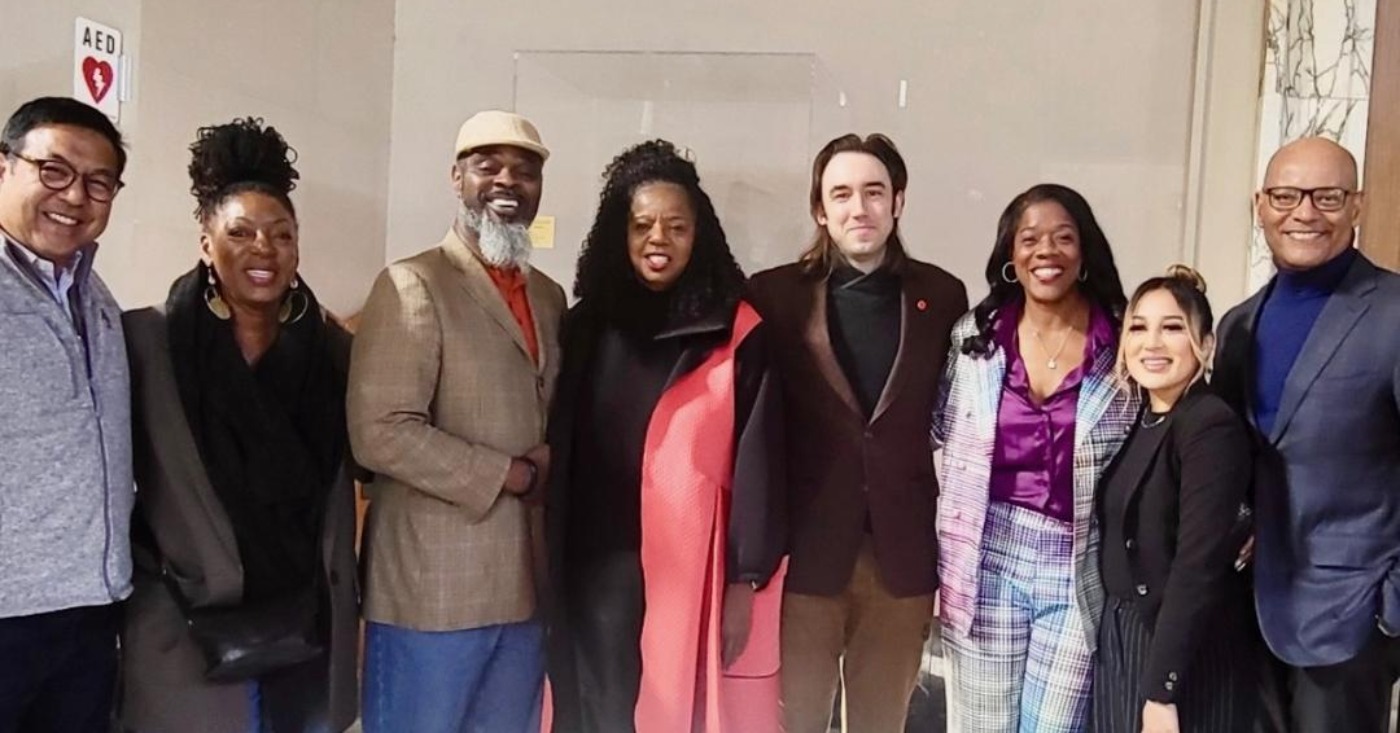
For years, many small businesses and nonprofits have not been paid on time
A City Council hearing this week shined a light on the shortcomings of the implementation of Oakland’s Prompt Payment Policy, which requires the city to pay vendors and consultants within 20 business days for work done for the city.
The hearing, led by Councilmember Janani Ramachandran at the City Council’s Finance and Management Committee on Tuesday, was a discussion of the track record of implementation of the Prompt Payment Policy, which was enacted in 2008 as part of the Oakland Municipal Code to ensure that local vendors are paid promptly and to “increase local business contracting opportunities with the city,” according to a city report.
In 2014, the ordinance was extended to cover local grant recipients.
Ensuring that this policy lives up to its promise is a crucial part of the city’s pledge in the wake of the findings of a Disparity Study in 2024 to end decades of discrimination preventing Black-owned, women-owned, and other small local businesses from obtaining contracts in their own hometown.
“Small businesses are the lifeblood of our city: timely payment is critical for small businesses and nonprofit organizations that provide direct services to our youth and young adults that are typically underfunded and rely on predictable cash flow to sustain operations,” said Ramachandran in a memo requesting a report from city staff on the implementation of the Prompt Payment Policy.
Many small businesses and nonprofits have complained loudly for years that they have not been paid on time. Though the city has produced a report that says over the past five years 96% of vendors were paid promptly, there are concerns that the report did not focus sufficiently on the treatment of small businesses and nonprofits.
In addition, the report did not cover whether subcontractors are paid promptly. A vast majority of the city’s contracts go to a handful of large “prime” contracts, and many small companies perform work as subcontractors of the larger firms.
Speakers at Tuesday’s hearing reported that small companies and nonprofits have not been paid for months or for as long as year, forcing them to take out loans or go out of business while waiting to be reimbursed for costs for employees and resources for work already completed.
City staff did acknowledge that at present the city does not track whether “prime” contactors pay their subcontractors on time.
Speaking at the hearing, Councilmember Ken Houston said that the failure to pay on time has been an issue in the city for at least 15 years.
Cathy Adams, president and CEO of the Oakland African American Chamber of Commerce and representing the Oakland Business Coalition and city’s multi-cultural chambers of commerce, said, “Our small businesses deserve to be paid on time for work they have already performed.”
“(The staff report) does not tell the whole story because the city does not track payment to subcontractors,” she said. “Our (small) businesses cannot operate on promises. They have employees to pay, insurance to maintain, suppliers to compensate, and families dependent on them. When payments are delayed, businesses suffer. Some may not survive.
“Accountability requires prime contractors to pay their subcontractors promptly with clear payment requirements written into every contract (with the city),” she said.
In a statement to the Oakland Post, Adams said, “The City must conduct a comprehensive audit of every department to identify operational failures, inadequate staffing performance, and breakdowns in management oversight.”
“Department heads must be held accountable, and employees who consistently fail to perform their responsibilities must face corrective action, including termination when warranted,” she continued. “Our businesses deserve to be paid promptly for work performed. We are not asking for special treatment; we are demanding fair treatment.”
“Under Mayor Barbara Lee’s leadership, Oakland is moving in the right direction, but we cannot allow bureaucratic failures to undermine our business community,” Adams said.
Black History
Black Barbershops Have Long Given Neighborhood Politics a Place to Unfold.
BLACKPRESSUSA NEWSWIRE — For generations, Black barbershops have served as more than just places for grooming; they have functioned as essential hubs for political debate, neighborhood news, and civic connection. During the era of segregation, these community-owned spaces provided a rare environment where Black residents could gather freely to discuss matters affecting their daily lives.
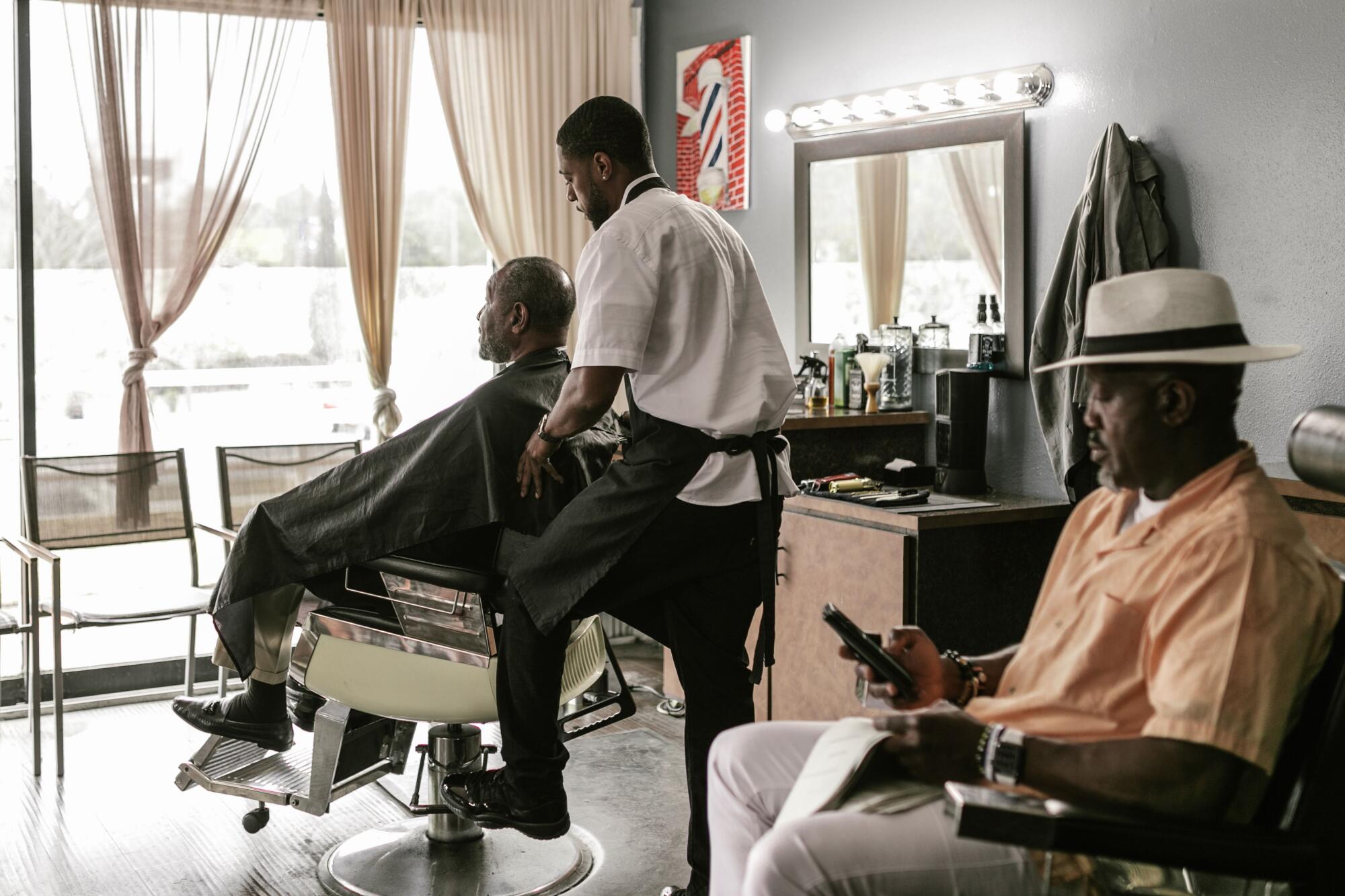
Black barbershops offer space for political debate, neighborhood news, and civic ties. The black barbershop also preserves local stories often missing from official records.
A haircut might bring you through the door. A conversation about a school closing, a city election, or a struggling business might keep you there. Inside a neighborhood shop, people can challenge opinions without needing a microphone.
A familiar storefront can hold decades of public life. Studying its past reveals people who earned a living, debated decisions, and helped neighbors interpret events.
Why Have Black Barbershops Been Important to Their Communities?
An African American barbershop has often combined a practical service with a gathering place. Under segregation, Black residents faced barriers in many public settings. Community-owned shops could offer more room for conversation and connection.
The National Museum of African American History and Culture describes barber and beauty shopsas places where customers discuss matters affecting their lives. Regular visits built relationships across generations.
Barbers often knew which families needed help or which businesses had opened. Waiting customers heard different viewpoints.
The importance of the shop came from trust built over many ordinary visits. A young customer might meet an older neighbor who understood the area’s past. Such relationships gave local conversations staying power and helped turn a routine appointment into a shared community experience.
How Did Black Barbershops Become Places for Political Discussion?
Politics often started with questions about rent, schools, jobs, or fair treatment. Customers connected those problems to elected leaders.
A University of Chicago report examined conversations inside a South Side Chicago shop. Researchers found that patrons debated:
- Political power
- Economic choices
- Leadership
They also disagreed with one another. A black barbershop did not require agreement. Customers could test ideas against those of neighbors.
Some shops supported voter registration and civic groups through personal relationships. Notices on counters or conversations with regulars could bring public issues into daily life. Yet lively debate was not the same as organized activism, and each shop had its own culture.
Black Barbers Built Businesses That Reached Beyond Haircuts
Enslaved and free Black men worked as barbers when many trades were restricted. Ownership later gave some black barbers a path toward greater financial independence, even under unfair laws.
Alonzo Herndon offers one example. According to the Georgia Historical Society, he operated Atlanta barbershops, including the Crystal Palace, and later built a major insurance business. His shops served white customers, reflecting segregation and unequal access.
Herndon’s success was unusual. Black business owners could still turn skilled work into jobs and property. Not all black companies grew large. Neighborhood shops kept commerce local.
Owners also faced rent, competition, and the challenge of building a steady customer base. Their business records can reveal how Black enterprise survived major shifts in the local economy.
Photographs and Newspapers Reveal Neighborhood History
Shop photos show storefront signs, neighboring businesses, clothing, and names painted on windows. Those clues help date images.
City directories can connect a shop name to an address, while maps show whether its block later changed. Each clue adds a piece to neighborhood history without requiring a famous owner or landmark.
Next, try the Library of Congress’s Chronicling America resources. Historic newspapers hold:
- Ads
- Openings
- Local events
- Owners’ names
Older records may use dated language. A useful starting checklist includes:
- Shop names and former street addresses
- Advertisements and business listings
- Photographs with dates or handwritten notes
- Local reporting about civic meetings
Compare records. An ad can confirm a shop’s address, not what customers discussed. Good neighborhood history separates documented facts from personal memories.
Customers’ Memories Fill Gaps in the Public Record
Customers may remember an owner’s nickname. Former barbers can explain busy hours or changes after a nearby factory closed.
Ask about routines and memorable events. Distinguish firsthand knowledge from secondhand stories.
When possible, interview more than one person. Different memories may show how workers and customers experienced the same event.
A recording can be useful, but permission comes first. Explain whether an interview will be shared publicly, kept privately, or donated to a library. Take note of:
- The date
- Place
- Speaker’s preferred name
Differences between memories are clues worth checking, not reasons to dismiss an account.
Modern Grooming Changes, but the Community Role Remains
Today’s African American barbershop operates amid appointment apps and new grooming services.
Some men also explore treatments beyond conventional haircuts. Many who are comparing long-term hair reduction with other grooming choices can learn more here.
A shop’s social value goes beyond its services. Many black barbers still:
- Listen to customers
- Pass along local information
- Create space for people of different generations to meet
The work of black business owners remains part of the wider story of black companies and community investment.
Frequently Asked Questions
How Can You Tell Whether an Old Barbershop Moved?
Start with city directories from several years. Match the owner’s name, phone number, and shop name at each address.
Property records or historical maps may show whether a street was renamed or a building was replaced. Moves may reflect development or shifting customers. Record each address and source.
Can You Share a Historic Barbershop Photo Online?
Owning a print does not guarantee copyright. Identify the:
- Photographer
- Date
- Source collection
A library may allow research access while limiting reuse. Copyright rules can vary by image and age, so avoid assuming that an old photo is free to publish.
Ask about permission when rights remain unclear. Credit the photographer and people pictured when their names are known. Respect requests from families who prefer sensitive images to remain private.
How Can You Preserve a Shop’s History After It Closes?
Collect photos, business cards, notices, and interviews. Label digital files and protect originals.
A local library, historical society, or community archive may help preserve the collection. Include the stories of workers and customers, not only the owner.
Public access can keep a vanished storefront connected to the people who remember it. A short exhibit or digital collection can help younger residents discover that history.
Keep the Black Barbershop Story Alive
A black barbershop can hold pieces of a town’s political, economic, and cultural history. Preserving those pieces starts with listening carefully and checking the record.
Continue exploring our other guides and articles for more stories about Black history, local businesses, and the communities they serve.
Content provided through ContentManagerIO.
Black Press
COMMENTARY: Money Matters — AI Can Help Your Small Business — But Is It Helping Your Bottom Line?
CHICAGO DEFENDER — Artificial intelligence has transitioned from a science fiction concept to a common resource for researching topics and developing content. While small businesses face increasing pressure to adopt these tools to save time and reduce expenses, experts warn that speed does not always guarantee accuracy.
Not long ago, most of us associated artificial intelligence with science fiction movies or technology companies in Silicon Valley. Today, its emergence in our everyday lives and business operations is impossible to ignore.
From organizing ideas and researching topics to developing content, AI has become an increasingly useful resource. But just because it can produce an answer in seconds doesn’t mean it’s always the right answer.
There’s growing pressure for small businesses to embrace AI. Everywhere you turn, another tool promises to save time, reduce expenses, attract customers or improve productivity, emerges.
But before jumping on the bandwagon, business owners should ask an important question:
Is this technology going to help my business make money, save money, or operate more efficiently?
After all, that’s what business decisions should ultimately come down to.
AI is rapidly becoming part of the small-business landscape in Michigan and across the country. A recent survey of 70 Michigan small businesses participating in Goldman Sachs’ 10,000 Small Businesses program found that 86% use AI, although many are still experimenting with its capabilities.
Clearly, interest is growing. But adoption doesn’t necessarily translate into profitability.
For small-business owners, every dollar counts. Whether investing in employees, marketing, equipment, or technology, you need to understand what you’re getting in return. AI should be no different.
Consider the possibilities. Small businesses can use AI to develop marketing campaigns, generate social media content, draft customer communications, conduct research, and streamline administrative tasks.
For an entrepreneur wearing multiple hats, those capabilities can be valuable.
Imagine reclaiming several hours each week that could instead be spent developing new business, strengthening customer relationships or pursuing sales opportunities.
Time is money, particularly when you’re running a small business.
However, purchasing an AI subscription doesn’t automatically improve your bottom line. Business owners need to evaluate its actual return on investment.
How much time is it saving? Is it reducing expenses? Helping generate sales? Improving customer retention? Making employees more productive?
Those are the measurements that matter.
A recent Federal Reserve survey found that while 46% of employer firms reported using AI, only 7% of those using it said the technology was fully integrated into their business processes. Many companies are still figuring out how to translate AI into measurable results.
My recommendation is to start small.
Identify one area where your business is spending too much time or money. Find an AI tool that might address the challenge. Test it, monitor the results and determine whether the investment makes financial sense.
You don’t need multiple subscriptions or an overhaul of your entire operation to get started.
There’s another consideration: AI is a tool, not a replacement for sound business judgment.
Accuracy, privacy and security matter. Be careful about sharing confidential customer information or proprietary business data. Always review AI-generated information before using it in customer communications or important business decisions.
A faster process isn’t necessarily better if it creates mistakes or damages customer relationships.
There’s also a competitive consideration.
Small businesses have traditionally distinguished themselves through personal service, flexibility, creativity and relationships. Those advantages shouldn’t be sacrificed in the pursuit of automation.
If every business uses AI to produce the same generic marketing messages, what makes one company stand out?
The answer should still be its people, its service and its ability to connect with customers.
AI can help develop the message, but you provide the personality. It can organize information, but you provide the judgment. It can make your operation more efficient, but you determine where the human touch remains essential.
Ultimately, AI could help level the playing field by giving smaller companies access to capabilities that once required larger budgets and bigger teams. That’s an opportunity worth exploring.
But don’t confuse keeping up with technology with running a better business.
Before investing in another AI platform, set clear objectives and decide how you’ll measure success. If it isn’t saving time, reducing costs, improving service, or contributing to revenue growth, reconsider whether you need it.
Artificial intelligence may be changing the way we do business, but the fundamentals haven’t changed. You still need customers, revenue, sound expense management, and smart investment decisions.
At the end of the day, the best technology isn’t necessarily the newest or most expensive. It’s the technology that delivers a measurable return on your investment.
That’s not just smart technology adoption. That’s smart business.
We invite readers, business owners and future entrepreneurs to follow along, ask questions and engage. If you have story ideas or questions, email Lee at [email protected] or visit leegroupinnovation.com.
The post Money Matters: AI Can Help Your Small Business—But Is It Helping Your Bottom Line? appeared first on Chicago Defender.
Based on reporting by Chicago Defender.


Iowa’s State Black and Brown Caucus Demand Investigation into Lead Azine Detonation

Iowa’s State Black and Brown Caucus Demand Investigation into Lead Azine Detonation

COMMENTARY: The Judicial System Silenced Jendayi by Using the Penal Codes and Locking Her Up in Jail

PRESS ROOM: Mississippi Congressman Bennie Thompson to Speak at Oakland Post/El Mundo and Post News Group 64th Anniversary Celebration

OP-ED: More Sleep and Lower Blood Pressure — An Overlooked Connection

Harlem Neighbors Feed Neighbors, Senator Cleare’s Thanksgiving Giveaway Brings Hope to the Table

D’Angelos Svenkeson on Football, Faith and Building the Future of Rondo | Blacklight on Sports
Shop Black, Shop Local: The REAL Black Friday! – Hell’s Kitchen DC: In the Spotlight with Roz White

Public EV Charging: Plan Your Routes Before You Buy #shorts

The Unisex Sweatshirt That Helps You Protect Your Peace #shorts

HISTORY MADE: Keisha Lance Bottoms Becomes First Black Woman Elected Governor in American History

Multi-Faith Leaders Representing 10 Million People Launch National Anti-Authoritarian Initiative

Christianity’s Racial History

Hundreds of Black Christian Leaders Arriving in Israel for Martin Luther King-Inspired Mission

Michael Shiner: The Enslaved Man Who Wrote His Way into American History

Keisha Lance Bottoms to Govern State Where Her Great-Great-Grandfather Was Enslaved

Don’t Pass the Torch. Expand the Circle.

DOJ Fights to Keep Rep. Ilhan Omar’s Search Warrant Sealed: Report

OP-ED: Closing the Next Digital Divide — Communities of Color Must Have a Voice in the AI Future

COMMENTARY: Thank You, Trump, for Making America Great Again!
D’Angelos Svenkeson on Football, Faith and Building the Future of Rondo | Blacklight on Sports
Public EV Charging: Plan Your Routes Before You Buy #shorts
The Unisex Sweatshirt That Helps You Protect Your Peace #shorts

Killing Me Softly: The Story Sampling Should Remember #shorts

MC Scat Cat: Why Fans Still Remember the Iconic Character #shorts

How This Bag Business Turns Community Into Collaboration #shorts

Minnesota Hip-Hop in 1979: Finding Music on KMOJ #shorts

Set Boundaries, Choose Yourself: The Mind the Crown Lifestyle #shorts

Recording at Prince’s Paisley Park Led to a No. 1 Hit #shorts

The Green Book: How Black Families Traveled Safely #shorts
-

 Black History7 days ago
Black Barbershops Have Long Given Neighborhood Politics a Place to Unfold.
-
 Featured7 days ago
How Sick Must America Get Before Saying Enough to RFK
-

 Black History1 week ago
OP-ED: Black voters made history. They laid the groundwork for a Third Reconstruction.
-

 Black History5 days ago
Hoodoo Heritage Month Celebrates Origins of African American Folk Medicine
-

 Featured1 week ago
ALASKA FLIPS BLUE, WAYMO HITS THE BRAKES & CAMILLE TUCKER JOINS US! 📱
-

 Black History4 days ago
PRESS ROOM: Donalds Transition Website Now Open to All Floridians Who Want to Serve
