
Environment
Department of Health Joins Hurricane Exercise to Prep for Upcoming Storm Season
THE WESTSIDE GAZETTE — According to the Federal Emergency Management Agency, Emergency Support Function #8 (Public Health and Medical Services) co-ordinates health and medical services in response to a disaster, emergency, or incident that may lead to a public health, medical, behavioral, or human service emergency.

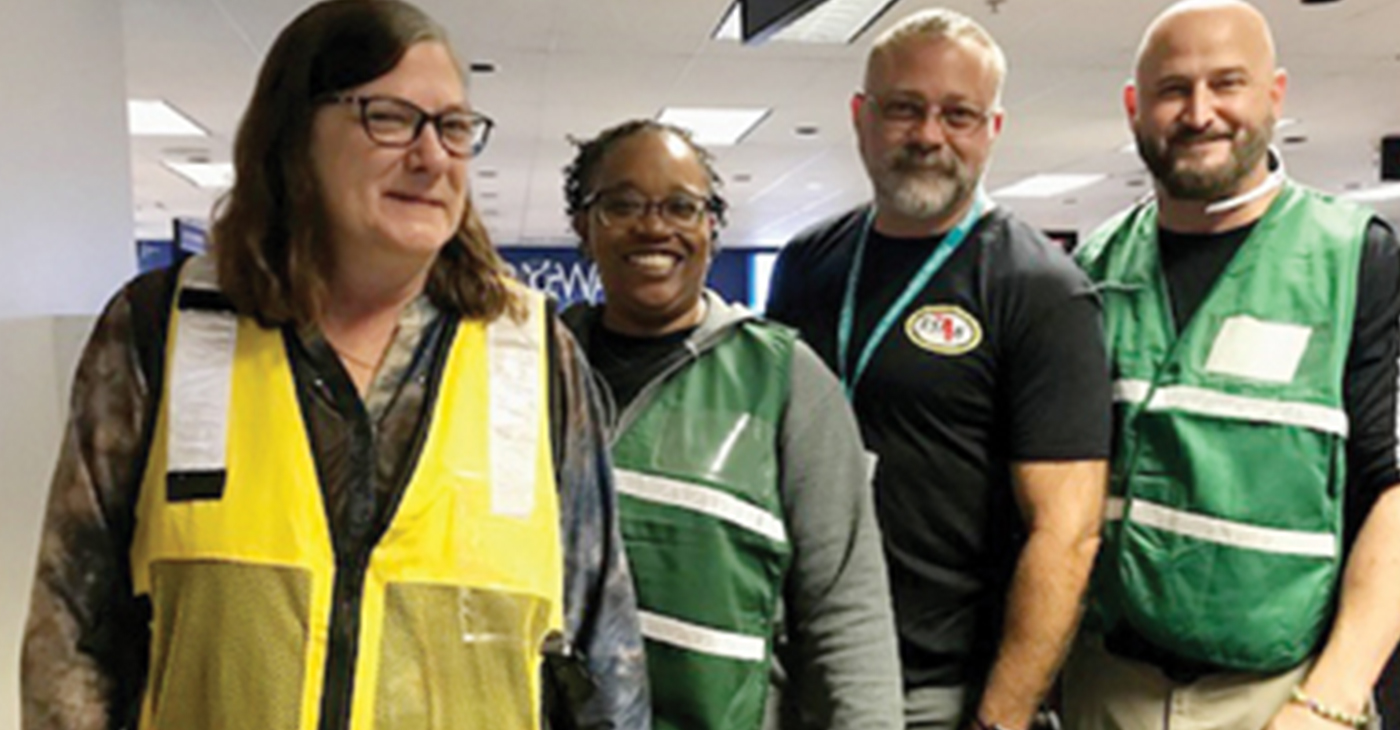
By Sallie James
The May 9th hurricane exercise centered around the fictitious “Hurricane Smith,” a made-up storm that made landfall as a Category 3 hurricane in Tampa Bay on May 6th. Under the exercise narrative, Broward’s Emergency Operations Center (EOC) was activated at 8 a.m. on May 9th due to heavy rain and high winds that caused widespread flooding and damage to the South Florida region.
The storm spawned several tornadoes, caused a breach in the dike surrounding Lake Okeechobee, and required the opening of several shelters. Emergency responders, which also include the Florida Department of Health (DOH), had to figure out what to do, when to do it and how to get it done.
Did you know the DOH is responsible for medical management and staffing the county’s special needs shelters and coordinating the delivery of medical care in an emergency? During an emergency, the DOH works side by side with first responders like police, fire rescue and hospitals to coordinate resources such as ambulances, hospital beds and other medical resources and services.
Although every scenario associated with the mock “Hurricane Smith” was fictitious, the focus and intensity of the exercise at the EOC was not: More than 200 emergency responders had to think on their feet during the four-hour drill that included an unplanned computer glitch that affected the ability to transmit electronic messages and forced employees from 25 agencies to revert to the use of paper messages and talk face-to-face to arrange services and find solutions to help people in need.
Hurricane Season 2019 began June 1st and ends November 30.
“We are health and medical and so anytime there is an incident in the county that could overburden the healthcare system, we get involved,” explained Terri Sudden, Director of Public Health Preparedness for the DOH in Broward County. “If there were a train with multiple injuries, a plane crash or bad accident on I-95 with numerous fatalities, we would respond.”
According to the Federal Emergency Management Agency, Emergency Support Function #8 (Public Health and Medical Services) co-ordinates health and medical services in response to a disaster, emergency, or incident that may lead to a public health, medical, behavioral, or human service emergency.
Exercises like the Hurricane Smith scenario provide an opportunity for emergency responders to practice what they know and learn to ask when they don’t know the answer so they can be prepared when a real event occurs, Sudden said.
“Our job is to exercise those plans and make sure they work and tweak them so they work better,” Sudden noted. “It’s a training exercise to test how resourceful someone can be. You basically do whatever you need to do to be responsive to whatever the need is. It’s also about relationships so you get to know the people at other tables. It gives familiarity as to where everybody is located at the EOC.”
Tracy Jackson, Director of Broward County’s Emergency Management Division, said the hurricane exercise allowed participants to practice their responses and then evaluate them with no adverse consequences.
“We get the opportunity without the stress of a real incident to practice the skills we need,” Jackson said at the end of the exercise. “It gives us the chance to troubleshoot things that work and things that don’t work as well. It also gives us a chance to get input from our partners.”
Jackson opened the exercise by emphasizing the importance of teamwork.
“We can’t over-emphasize how important it is for us to be unified,” Jackson said. “More than 1.9 million people outside this room are depending on the decisions you are going to make.”
Jackson told participants they would have to make decisions even though they might not have enough information and warned there would be no guarantee of success. He urged them to soldier on.
“Our confidence is high in you and in us,” Jackson said.
Participants from across the county sat in chairs at long tables equipped with phones and computers. Drill monitors walked the room, wearing vests that bore names like “evaluator” (they record how projects were accomplished) and “controller” (they provided “injects” or scenarios for the exercise and made sure it maintained its pace).
Participants were instructed to do their best to resolve whatever problems they were given. They made phone-calls, consulted with representatives from other cities and agencies and figured out solutions for complicated problems.
DOH employee James Turchetta, Cities Readiness Coordinator, served as a controller during the exercise and kept his team busy with an array of jarring incidents. His team members were resourceful and determined. They found answers.
“I think overall it went great,” Turchetta said. Jackson’s assessment was similar.
“We are happy with the information we gained, the observations we made and the opportunity to improve,” Jackson said.
For more information about how you can be better prepared for emergencies, visit: https://broward.floridahealth.gov/programs-and-services/emergency-preparedness-and-response/personal-and-family-preparedness/index.html
This article originally appeared in The Westside Gazette.











Black Press
While Black Families Pay More for Power, Some Attorneys General Fight to Save High-Cost Coal
OUR WEEKLY LOS ANGELES / OUR WEEKLY ANTELOPE VALLEY — Black families are disproportionately affected by rising electricity costs nationwide, with residential prices projected to increase. Low-income households spend three times more of their income on energy, and Black households spend 43 percent more than white households, according to the American Council for an Energy-Efficient Economy.

Families across the country are opening their monthly utility bills with a growing sense of dread. Groceries cost more. Rent costs more. Now electricity has become one more expense pushing household budgets to the breaking point, and for many in the Black community – as usual – the squeeze is being felt hardest of all.
Residential electricity prices are expected to average more than 18 cents per kilowatt-hour in 2026, about 5 percent higher than last year, according to the U.S. Energy Information Administration. At the same time, demand for power is climbing fast as the nation adds data centers, factories, and other large energy users. And consumers remain exposed to a market rattled by global conflict and swings in fuel prices.
These costs do not land on everyone equally. For a family with little left over at the end of the month, even a modest jump in the light bill means less for food, transportation or medicine. Low-income households spend three times more of their income on energy than other households, and Black households spend 43 percent more than white households, according to the American Council for an Energy-Efficient Economy.
The question every public official should be asking, then, is simple: How does America add the reliable electricity it needs while keeping costs down for the families least able to absorb them?
Instead, a group of state attorneys general has chosen a very different fight.
In November 2024, Texas Attorney General Ken Paxton sued three of the nation’s largest asset managers, BlackRock, State Street and Vanguard, and was joined by a coalition of other states. The lawsuit claims the firms bought up large stakes in major coal producers and then used their influence as shareholders to pressure those companies to cut production in pursuit of climate goals. The attorneys general argue this restricted coal supply, raised coal prices and, in the end, raised electricity prices for consumers.
Paxton and his colleagues have presented the case as a way to bring down power bills. But when Paxton’s office announced its settlement with Vanguard, it billed the deal as an agreement “to protect the coal industry.” That wording tells us a great deal about whose interests are really at the center of this case.
Attorneys general have only so much time, staff, and money. Every hour spent on litigation against investment firms is an hour not spent on the problems that actually drive up household energy costs: transmission bottlenecks, permitting delays, an aging grid, energy efficiency and the shortage of new power generation.
There is actually an even deeper problem with making coal the centerpiece of an affordability strategy. Coal has been losing ground in the marketplace for decades.
Around 1990, coal supplied more than half of the nation’s electricity. By 2025, its share had fallen to about 17 percent. Most of that decline came from competition, chiefly cheaper natural gas, along with the growth of renewable energy and tougher environmental rules. In the first three months of 2026 alone, coal plant output fell 11 percent from a year earlier, while renewable generation grew. And this summer, Lazard’s annual analysis found renewables remain the lowest-cost option for new power plants, even as existing plants have become more competitive and continue to provide real value to the grid.
Coal’s decline did not begin with Wall Street, investment policies or the climate movement. It is the result of decades of change in America’s energy economy. Where a coal plant remains affordable and necessary to keep the lights on, utilities should keep running it. But keeping a useful plant open is very different from treating the survival of an entire industry as public policy. If other sources can provide power more cheaply, government has no business shielding coal from that competition.
For Black communities, the cost of coal does not stop at the utility bill. Burning coal produces air pollution and coal ash that must be managed, and the Environmental Protection Agency notes that coal ash contains contaminants like mercury, cadmium, and arsenic. A landmark NAACP study found that the roughly 6 million people living near coal plants had lower average incomes than the nation as a whole, and that people of color made up a majority of those living near the worst polluters. Too many of our neighborhoods carry both burdens at once: high energy bills and a greater share of the pollution. Any policy that claims to help consumers should account for both sides of that ledger.
The truth is that families do not much care whether the power running their refrigerator comes from a coal plant, a natural gas facility, or a wind farm. They care that it is there when they need it and that they can afford to pay for it.
Critics of environmental policy often complain that government should not pick winners and losers in energy markets. That principle should apply evenly. Financial firms should not be allowed to break antitrust laws in pursuit of climate goals. But government should be just as cautious about using its power to guarantee coal a permanent place in the market. Coal, natural gas, nuclear, wind, solar, battery storage, and new technologies should all compete on cost, reliability, and what the grid needs.
The real challenge before the nation is building enough reliable power, and building it quickly. Clinging to coal’s past, especially through the courts, does nothing to solve that.
At a time when so many Americans are struggling just to pay bills, it is fair to ask why state officials are pouring so much energy into protecting one industry. Attorneys general should be working to make power more plentiful and more affordable. Families facing economic hardships deserve more than to be invoked as props in a political fight between government officials and some of the world’s largest financial institutions.
Based on reporting by Our Weekly Los Angeles / Our Weekly Antelope Valley.
Black Press
Students from Stonecrest Help Families Grow Food
THE CHAMPION NEWSPAPER — Two Georgia college students from Stonecrest are utilizing agriculture, technology, and community education to help families across Georgia grow their own food, even without traditional farming spaces. Mason Wright, a Morris Brown College student and founder of Plant It Georgia Vertical Institute, and Kosey Henley, a University of Georgia student, developed a mobile agricultural laboratory.
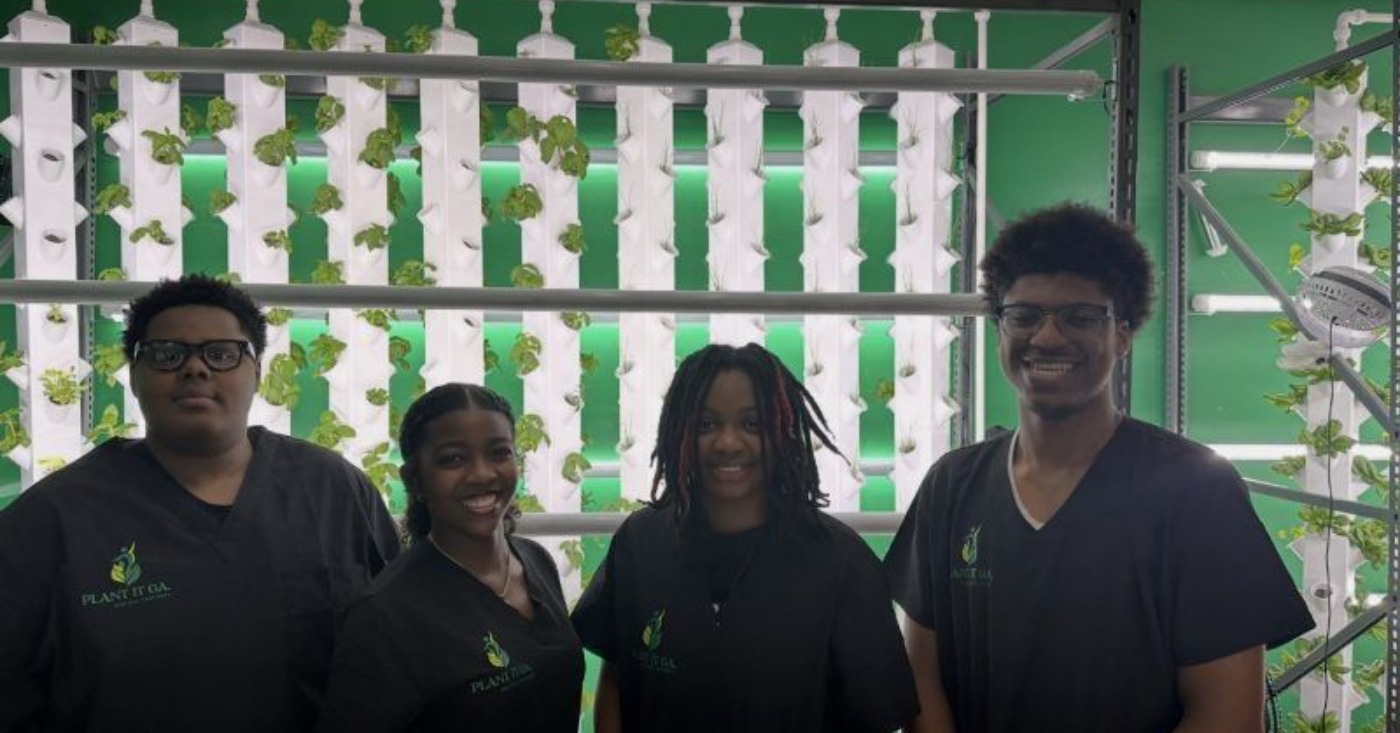
Two Georgia college students from Stonecrest are combining agriculture, technology, and community education to help families throughout Georgia grow their own food — even those without access to traditional growing spaces and equipment.
The two students recently completed the first prototype of Plant It Georgia’s mobile agricultural laboratory, which they said is an enclosed trailer equipped to introduce young people and families to growing food without relying on traditional farmland.
Mason Wright—a youth entrepreneur and a student at Morris Brown College—is the founder of Plant It Georgia Vertical Institute. The institute is an “educational initiative created to train young people in vertical farming, hydroponics, and other modern agricultural technologies,” according to Wright. Kosey Henley, a student at the University of Georgia, worked alongside Wright on the mobile lab.

The students said the idea came in response to an obstacle challenging many communities: transportation. Instead of requiring students to travel to the Plant It Georgia Vertical Institute, the program can take its lessons and growing systems directly into neighborhoods, schools, recreation centers, and other community spaces to teach students and their families about growing food in urban communities.
Inside the prototype, visitors will find hydroponic growing channels, lighting, and other equipment that show them how plants can grow in controlled environments. The laboratory aims to support hands-on lessons covering seed germination, water circulation, plant nutrition, lighting, harvesting, and the technology used to manage indoor crops, according to Wright.
The project comes as Georgia and the nation face an aging agricultural workforce.
According to the U.S. Department of Agriculture’s 2022 Census of Agriculture, Georgia had 63,492 agricultural producers, but only 4,770 were younger than 35. Nationally, the USDA counted 296,480 producers younger than 35, approximately 9 percent of all U.S. producers.
At the Plant It Georgia Vertical Institute, students are taught that farming does not always require acres of open land or heavy machinery. Vertical farming allows crops to grow upward in stacked systems while hydroponics uses nutrient-rich water instead of soil to feed the plants. These tactics make food production possible in classrooms, buildings, trailers, and densely populated urban communities, according to Wright.
Plant It Georgia’s growing systems can cultivate lettuce, tomatoes, collard greens, peppers, and a variety of culinary herbs, according to the news release. Students are taught the entire growing process — from placing seeds into starter materials and monitoring water and nutrients to caring for mature plants and harvesting fresh produce.
The program also introduces participants to careers connected to agricultural technology, plant science, environmental sustainability, food systems, and entrepreneurship.
Wright’s role as a Morris Brown College student and founder represents the connection between HBCU leadership, entrepreneurship, and community service, according to a news release. Wright also made headlines for opening Mason’s Super Dogs in Stonecrest in 2020 — which he now also operates on the Atlanta Beltline’s Eastside Trail. Henley brings another important academic connection through the University of Georgia, one of the state’s leading institutions in agriculture and agricultural research, according to the news release.
For event locations and more information, follow Plant It Georgia on Instagram (@plantitGA).
13 total views
Based on reporting by The Champion Newspaper.
Black Press
Neighborhood Empowerment Day in Deep East Oakland Brings Community Together After Recent Tragedy
Hosted by the 40×40 Council, the free, family-friendly resource fair featured health and wellness services, workshops, children’s activities, food, giveaways and local Black-owned businesses. Residents also connected with community organizations working to strengthen East Oakland.
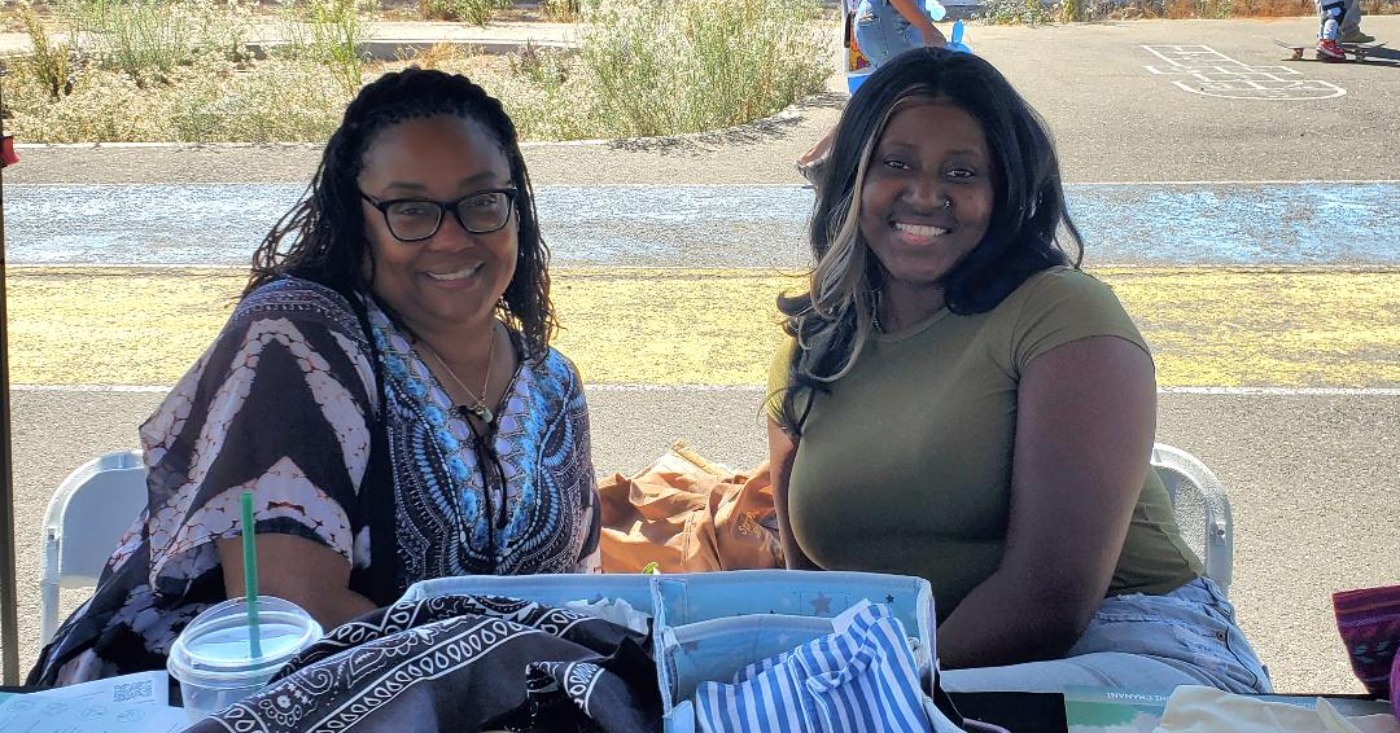
Families, residents and community organizations gathered at the Parker Community Resource Center on Saturday, Sept. 12, for the 40×40 Neighborhood Empowerment Day, transforming the site of a recent tragedy into a space for healing, resources, connection and joy.
Hosted by the 40×40 Council, the free, family-friendly resource fair featured health and wellness services, workshops, children’s activities, food, giveaways and local Black-owned businesses. Residents also connected with community organizations working to strengthen East Oakland.
The gathering came six weeks after a fatal shooting occurred at the Ney Avenue center on July 31. The violence happened shortly before 9 a.m. on the campus of the adult education center and claimed the life of 25-year-old Kimarii McLemore. A second person was injured.
McLemore was attending what was supposed to be her final day in an adult education carpentry class. The shooting deeply affected her family and traumatized students, staff members and residents who had viewed the center as a safe place where community members could pursue education, career training and a better future.
Neighborhood Empowerment Day offered residents an opportunity to return to the center in a spirit of unity and reclaim the space as an important neighborhood resource.
“Reclaiming the space after a tragedy means creating opportunities for people to gather, connect, experience joy and feel a sense of community once again,” said Tim Zenor-Davis, program manager at Roots Community Health. “After a trauma occurs, we see what happened, we acknowledge its impact, and we are continuing to show up.”
Throughout the afternoon, children and families participated in activities while residents received information about health, wellness and other community services. The event also gave local entrepreneurs and service providers an opportunity to connect with the community.
Complimentary meals included grilled burgers and tacos while a DJ played popular music.
Guests received blood pressure and eye-sight checks. A space to exercise on yoga mats was provided while headphones with guided meditation offered a moment to slow down and reflect.
The 40×40 Council includes the Black Cultural Zone, Brotherhood of Elders Network, East Oakland Youth Development Center and Roots Community Health. Together, the organizations have worked to address community violence and the deeper systemic conditions that have affected generations of East Oakland residents.
The council’s work has extended beyond responding to individual tragedies. As part of the broader Rise East initiative, the collaborative has focused on reversing decades of economic disinvestment, systemic poverty, health disparities and the displacement of Black legacy residents.
The 40×40 area stretches from Seminary Avenue to the San Leandro border and from MacArthur Boulevard to the Bay. More than 30,000 Black residents live within the area, which contains Oakland’s largest concentration of Black residents.
Organizers said the area has continued to demonstrate resilience despite experiencing community violence, declining investment and a significant life-expectancy gap compared with wealthier parts of the region.
The council seeks to help reshape East Oakland into a vibrant, multigenerational community where Black residents can remain, return, heal, prosper and build power.
Black Press
Neighborhood Empowerment Day in Deep East Oakland Brings Community Together After Recent Tragedy
Hosted by the 40×40 Council, the free, family-friendly resource fair featured health and wellness services, workshops, children’s activities, food, giveaways and local Black-owned businesses. Residents also connected with community organizations working to strengthen East Oakland.
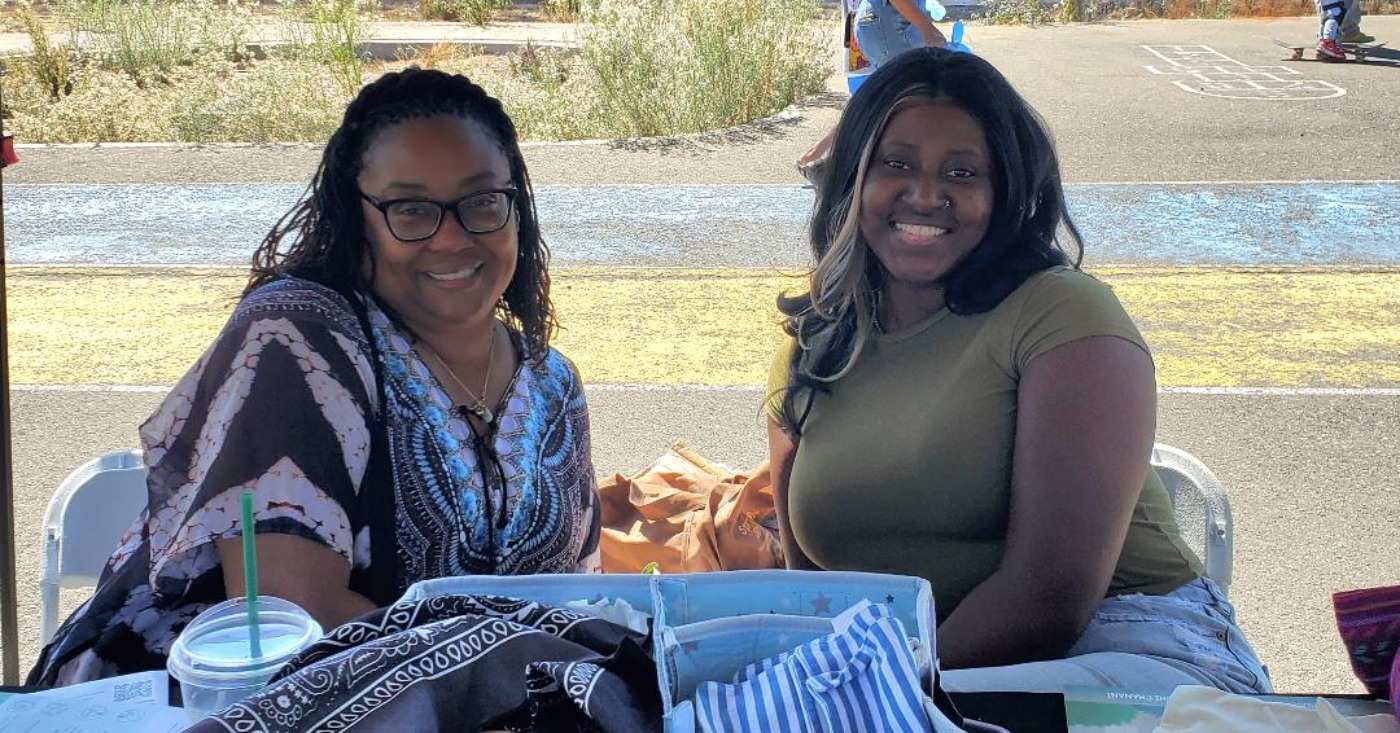
Families, residents and community organizations gathered at the Parker Community Resource Center on Saturday, Sept. 12, for the 40×40 Neighborhood Empowerment Day, transforming the site of a recent tragedy into a space for healing, resources, connection and joy.
Hosted by the 40×40 Council, the free, family-friendly resource fair featured health and wellness services, workshops, children’s activities, food, giveaways and local Black-owned businesses. Residents also connected with community organizations working to strengthen East Oakland.
The gathering came six weeks after a fatal shooting occurred at the Ney Avenue center on July 31. The violence happened shortly before 9 a.m. on the campus of the adult education center and claimed the life of 25-year-old Kimarii McLemore. A second person was injured.
McLemore was attending what was supposed to be her final day in an adult education carpentry class. The shooting deeply affected her family and traumatized students, staff members and residents who had viewed the center as a safe place where community members could pursue education, career training and a better future.
Neighborhood Empowerment Day offered residents an opportunity to return to the center in a spirit of unity and reclaim the space as an important neighborhood resource.
“Reclaiming the space after a tragedy means creating opportunities for people to gather, connect, experience joy and feel a sense of community once again,” said Tim Zenor-Davis, program manager at Roots Community Health. “After a trauma occurs, we see what happened, we acknowledge its impact, and we are continuing to show up.”
Throughout the afternoon, children and families participated in activities while residents received information about health, wellness and other community services. The event also gave local entrepreneurs and service providers an opportunity to connect with the community.
Complimentary meals included grilled burgers and tacos while a DJ played popular music.
Guests received blood pressure and eye-sight checks. A space to exercise on yoga mats was provided while headphones with guided meditation offered a moment to slow down and reflect.
The 40×40 Council includes the Black Cultural Zone, Brotherhood of Elders Network, East Oakland Youth Development Center and Roots Community Health. Together, the organizations have worked to address community violence and the deeper systemic conditions that have affected generations of East Oakland residents.
The council’s work has extended beyond responding to individual tragedies. As part of the broader Rise East initiative, the collaborative has focused on reversing decades of economic disinvestment, systemic poverty, health disparities and the displacement of Black legacy residents.
The 40×40 area stretches from Seminary Avenue to the San Leandro border and from MacArthur Boulevard to the Bay. More than 30,000 Black residents live within the area, which contains Oakland’s largest concentration of Black residents.
Organizers said the area has continued to demonstrate resilience despite experiencing community violence, declining investment and a significant life-expectancy gap compared with wealthier parts of the region.
The council seeks to help reshape East Oakland into a vibrant, multigenerational community where Black residents can remain, return, heal, prosper and build power.
Black Press
Oakland Launches Aerbits Program to Identify, Report Abandoned Trash
“Aerbits, which was approved by the Privacy Advisory Commission, uses modern technology and best practices to help our crews clear trash faster and more efficiently, while our targeted outreach and enforcement strategies address the root causes of dumping. Together, we are going to get the job done.”
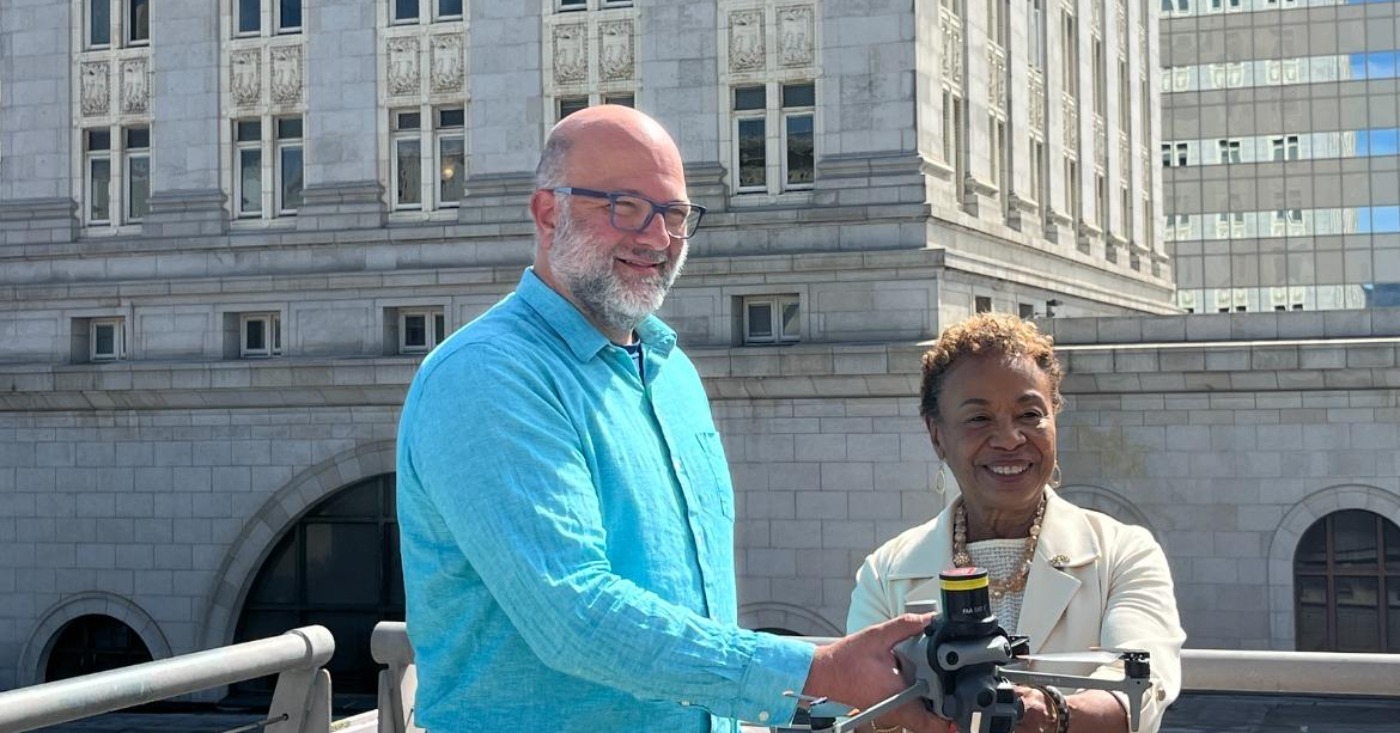
On Tuesday, the City of Oakland launched Aerbits, an innovative new program that deploys AI-assisted aerial imaging technology to proactively detect and report abandoned trash on streets and sidewalks – to support timely and effective removal of illegal dumping.
By shifting from a reactive, complaint-based system to data-driven proactive detection, the City can deploy cleanup resources faster, more efficiently, and more equitably to the areas in greatest need.
Approved by both the Privacy Advisory Commission and the Oakland City Council, Aerbits is the latest addition to Oakland’s comprehensive strategy to eliminate illegal dumping from the Town.
“Oakland residents and businesses deserve clean streets and today we are one step closer to a safer, cleaner, and greener Oakland,” said Mayor Barbara Lee. “Our strategy strengthens eradication, education, and enforcement efforts across every neighborhood.
“Aerbits, which was approved by the Privacy Advisory Commission, uses modern technology and best practices to help our crews clear trash faster and more efficiently, while our targeted outreach and enforcement strategies address the root causes of dumping. Together, we are going to get the job done.”
The impacts of illegal dumping on Oakland are profound, disproportionately burdening historically disinvested communities while threatening public health, safety, and economic vitality.
The City is united in taking action to remedy it – with the mayor, Council, administration, Public Works Department, community groups and more coming together to make change.
In May, the City Council approved the Illegal Dumping Expenditures Action Plan, which approves and funds multiple actions – including Aerbits – to help remedy illegal dumping.
This past June, Oakland secured $9.2 million from the Crankstart Foundation to scale up operations like Aerbits and break the cycle of illegal dumping across Oakland.
The Aerbits aerial imaging system photographs public rights-of-way to pinpoint exact locations, estimate waste volumes, and classify types of debris. This enables City dispatchers to understand the problem and efficiently deploy the appropriate crew and equipment to each site.
Built with privacy at its core, the technology contains no facial recognition, no license plate readers, and uses no personally identifying information. Aerbits takes pictures of trash – not of people.
“I founded Aerbits because I saw a major gap in the data that was available to City crews on the streets, and I wanted our children to have a cleaner environment” said Aerbits Founder Brian Johnson.
“Aerbits enables cleanups to be timelier, more effective, and more equitable. By providing real-time comprehensive data, automating the creation of work orders, and improving closure of cleared tickets, we are removing the problems that occur when relying primarily on a complaint-based system,” he said.
Aerbits is the latest milestone in the series of actions the City is taking to implement the City Council-approved Illegal Dumping Expenditures Action Plan. Recent actions taken by the City include:
- Stricter Enforcement: Enacted a new Illegal Dumping Enforcement Ordinance increasing penalties and holding vehicle owners responsible; hired additional Environmental Enforcement Officers equipped with updated citation technology; and worked alongside State Senator Jesse Arreguin on legislation that allows the City to boot vehicles tied to repeat dumping offences.
- Community Resources: Reinstated the popular “Bulky Block Parties” offering residents free, convenient ways to get rid of bulky waste, alongside expanded public education campaigns.
- Expanded Fleet Equipment: Obtained new heavy-duty Lightning Loader trucks that allow us to clean up more volumes of debris faster than ever before.
Rebecca Kaplan is a former City Councilmember-at-large for the City of Oakland.
Black Press
Goldi-Locs and Two (or Three) Bears in the Forest in California Hills
OAKLAND POST — My husband has anticipated 99% of our needs – tents, saws, canopies, batteries, shovels, rakes, axes, picks, etc., and Goldi-Locs instructs and reminds us how to get from step A to B, but there is nothing like the experience you gain on your own. Meaning: you don’t how to do it until you do it. No matter what you read, what somebody says, until you do it, you don’t know.
It is my belief that the mice set us up. That’s how the bear(s) knew where to go.
On a mountain in Butte County, a wide-ranging crew of Black people have embarked on a mission of land stewardship.
That means if you want that country cottage, you have to build it yourself.
When we first saw the land after our veteran land steward – let’s call her Goldi-Locs for her long locs that are the gold of California hills – asked for help putting up a fence to ward off potential trespassers. What had been lavish green hills of Douglas fir were now covered with dark spires like burnt matches pushing into the sky.
Up close, moss and ferns edged out from the bases of blackened tree stumps. A lizard skittered by, the only sign of life. No birds. No squirrels. No mice.
And no bears.
Fast forward five years, and FEMA has done all it will do to clear burned trees. The remaining trees are dead and have to be logged and milled.
The most urgent work is to clear the dirt access roads clogged with dead trees. For shelter while we, I mean, they do that, we bought an old trailer that has seen better days but suits our needs.
My husband has anticipated 99% of our needs – tents, saws, canopies, batteries, shovels, rakes, axes, picks, etc., and Goldi-Locs instructs and reminds us how to get from step A to B, but there is nothing like the experience you gain on your own. Meaning: you don’t how to do it until you do it. No matter what you read, what somebody says, until you do it, you don’t know.
So, I thought I knew what I was doing. It was my job to assist with the cooking and set-up. And the break-down. There are cupboards in the trailer and a refrigerator, so I stored a couple of unopened boxes of spaghetti and an unopened bottle of olive oil, salt (Lawry’s of course), pepper, garlic powder and dried Italian herbs in the cupboard. In the refrigerator, which seals closed like any normal refrigerator I (accidently) left a box of butter.
Two weeks later, we get a call in Oakland from Goldi-Locs that the door of the trailer was hanging off its hinge, visible from her trailer uphill and 150 yards west of ours.
She said she would enlist the help of another (male) neighbor, to investigate.
An hour later, we got the report: No one was in the cabin, but a bear – or bears – had been. Outside, a torn box of spaghetti with just one or two remaining stiff strands lay in the dirt. Inside, the salt, pepper, herbs and garlic oil were an aromatic mess on the floor, while coffee grounds were scattered over the counter (After-dinner coffee?).
Paw prints led to the bathroom and beyond a single, muddy paw print marked the duvet on our bed.
Besides claw marks in the cupboard, and a swipe of dirt on the front and side of the refrigerator, there was no major damage.
Goldi-Locs and G. cleaned up the worst of it and were able to get the door up on the hinge and lock it. The trailer remained unmolested until our return.
In the meantime, some sleuthing – as Nancy Drew would put it – had been done. Visitors to the mountain confessed that they had previously prepared a vegetarian meal of – that’s right– pasta in a red sauce with sautéed garlic, onions, and Lawry’s and Italian herbs.
They ate outdoors. The scent filled the air. Mice have returned to the forest. They know how to get under, over and into trailers. Easy-peasy. They managed to get a little of the Italian meal. The bears wanted some. The mice shrugged their little shoulders and said, “we got everything but the crumbs, but over in the next yard, they have everything you need to MAKE IT YOURSELVES.”
So, it was Yogi, ‘smarter than the average bear, according to himself – and no doubt accompanied by Boo-Boo (the Fool), lumbered over to our unoccupied trailer and gently opened the door. The spaghetti in one cupboard, seasonings in the other, olive oil and look out- butter for bread in the refrigerator.
Yes, everything they needed. The whole recipe, or so the trifling mice said, having omitted fresh onion and bell pepper. The mice had left out the most important part – how to get the job done. Yogi had been given no information on pots, turning on the stove, boiling water, etc.
Disappointed, it was time for a nap, but the bed was neither hard, nor soft, but too small and as their cave was more comfortable, Yogi was of the mind to head home, maybe go fishing on the way in that nice stream up the hill.
Boo-Boo (the Fool), however, was of the mind to spitefully take do what bears do in the woods, but Yogi reminded him that, as it is their forest it is wise not to do that where you eat.
But when Yogi is not around, evidence shows that Boo-Boo routinely returns to the scene of the crime and leaves a little something in the middle of the path to the outhouse. Just because.
The mischievous mice have yet to be apprehended.


OP-ED: The Black Church Writes AI’s Next Chapter

St. Louis Celebrates Excellence at The St. Louis American’s 39th Annual Salute to Education Gala

‘No King: Vote Early’ protest for democracy in St. Louis

Optimize Your Seating: Essential Household Setup Guide #shorts

Brake Pedal Test Drive: Smooth Stops for Your Truck! #shorts

Life Lessons Learned Through Adversity: My Journey #shorts

From Claflin Alum to ColorBlind Artist

Turning Abolitionist Design Research Into Real-World Business #shorts

Black Journalists: Community, Excellence, and Lifting Up #shorts

NFN Exclusive: Muslims in AI

The Youngest American Killed in the Vietnam War

Passing for White, Fighting for Black America: The Courage of Walter White

OP-ED: Haiti TPS: Have We Lost Sense of Humanity?

NFL: Week Two Recap | Jalen Hurts did not fold; Caleb Williams exits game with injury

Remembering Chauncey Bailey as Student Journalists Face Threats to Truth-Telling

Peter Magubane: a Camera Against Apartheid

Mayor Lee Announces $1 Million Kaiser Permanente Grant for Pilot Program to Address Homelessness, Clean Up Public Spaces throughout Oakland

OP-ED: How Head Start Also Helps Parents

Poll: Becerra Widens His Lead Over Hilton; Californians Split on Wealth Tax

Community Action Group ‘Friends of Zakiya’ Ask Sheriff for Time
St. Louis Celebrates Excellence at The St. Louis American’s 39th Annual Salute to Education Gala
‘No King: Vote Early’ protest for democracy in St. Louis
Optimize Your Seating: Essential Household Setup Guide #shorts
Brake Pedal Test Drive: Smooth Stops for Your Truck! #shorts
Life Lessons Learned Through Adversity: My Journey #shorts
From Claflin Alum to ColorBlind Artist
Turning Abolitionist Design Research Into Real-World Business #shorts
Black Journalists: Community, Excellence, and Lifting Up #shorts
NFN Exclusive: Muslims in AI

NFN Live presents The State of the Westward
-

 BlackPressUSA1 week ago
Latinas Deserve Equal Pay. Unions Help Make It Happen.
-

 Black Press5 days ago
All Skinfolk Ain’t Kinfolk
-

 Black Press5 days ago
Oakland Awarded More than $14 Million in State Funding
-
 Black Press5 days ago
Jendayi Arrest Raises Community Concerns Regarding Sheriff’s Chain of Command
-
 African American News and Issues3 days ago
Black History: Gladys West Mathematics Helped Make GPS Possible
-

 Black Press5 days ago
Allen Temple Baptist Church Hosts Free Prostate Cancer Screenings on Oct. 17
