
Food
Milwaukee County Executive Chris Abele and Milwaukee County Parks Announce New Concessions this Summer
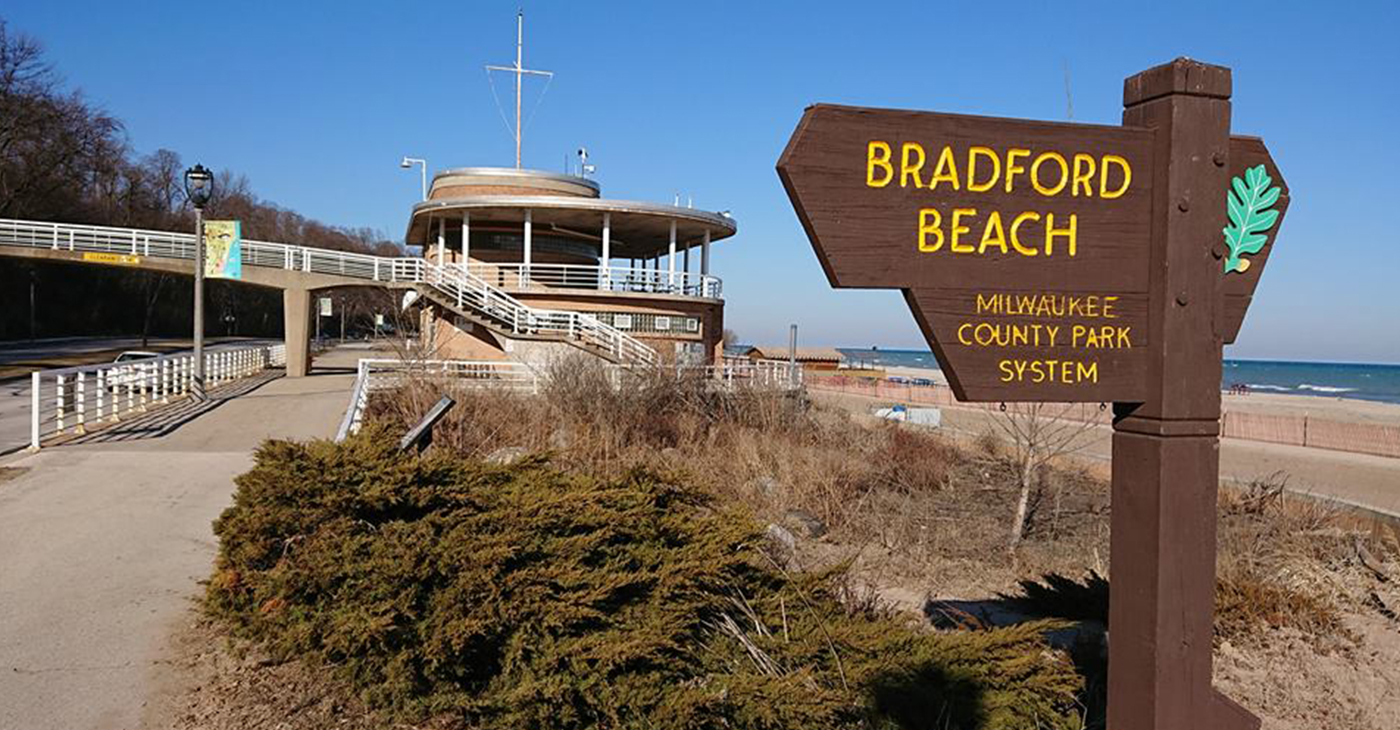
MILWAUKEE COURIER — Milwaukee County Executive Chris Abele and Milwaukee County Parks on April 16 announced a new food and beverage partnership at Bradford Beach this summer with CCH Management LLC (The Dock). Pending approval from the Milwaukee County Board of Supervisors, The Dock will operate the food and beverage concessions at Bradford Beach, inclusive of the beach tiki huts and special events.

By Urban Media News
Milwaukee County Executive Chris Abele and Milwaukee County Parks on April 16 announced a new food and beverage partnership at Bradford Beach this summer with CCH Management LLC (The Dock). Pending approval from the Milwaukee County Board of Supervisors, The Dock will operate the food and beverage concessions at Bradford Beach, inclusive of the beach tiki huts and special events.
“Residents and tourists that come to Milwaukee County beaches will have a variety of options to dine and drink along the water this summer,” said Milwaukee County Executive Chris Abele. “The Dock partnership at Bradford Beach will bring even more visitors and economic impact to the community, and I look forward to seeing what great options are in store for us this summer.”
The menu at the Dock Bradford Beach is expected to include: tempura fish tacos, yellowfin tuna steak and grass-fed burgers, as well as a kids menu. The Dock will also sell beer, wine and cocktails.
Milwaukee County Parks will enter into a five-year contract agreement with The Dock, with three options to extend the term for an additional year. The Dock also currently operates a beachside restaurant at Montrose Beach in Chicago.
The partnership will include a profit-sharing agreement as well as the establishment of a Parks Improvement Fund that will be used to maintain and enhance the Bradford pavilion and beach. Enhancements proposed for 2019 and 2020 include additional seating, bar deck extensions, live music and European beer garden style shade umbrellas.
The Dock will be joined at Bradford Beach by Volley Life, who will organize volleyball leagues and tournaments at Bradford Beach.
A new vendor agreement will also be soon announced for the operation of the Northpoint Custard Stand.
Milwaukee County Parks is an amazing network of trails, parks, historic attractions, golf courses, beaches, beer gardens & nature. The ‘emerald necklace’ of park land that wraps around the county includes 140 miles of trails, 157 parks and parkways, 15 golf courses, hundreds of playgrounds, athletic fields, and picnic sites, as well as the Mitchell Parks Domes and Boerner Botanical Gardens.
This article originally appeared in the Milwaukee Courier.








Black Press
OP-ED: She’s Not Non-Compliant, She’s Hungry: Addressing Food Justice to Improve Breast Cancer Outcomes
CHICAGO DEFENDER — Food insecurity in Chicago’s South Side and surrounding suburbs disproportionately affects Black women with breast cancer, impacting their treatment and recovery.
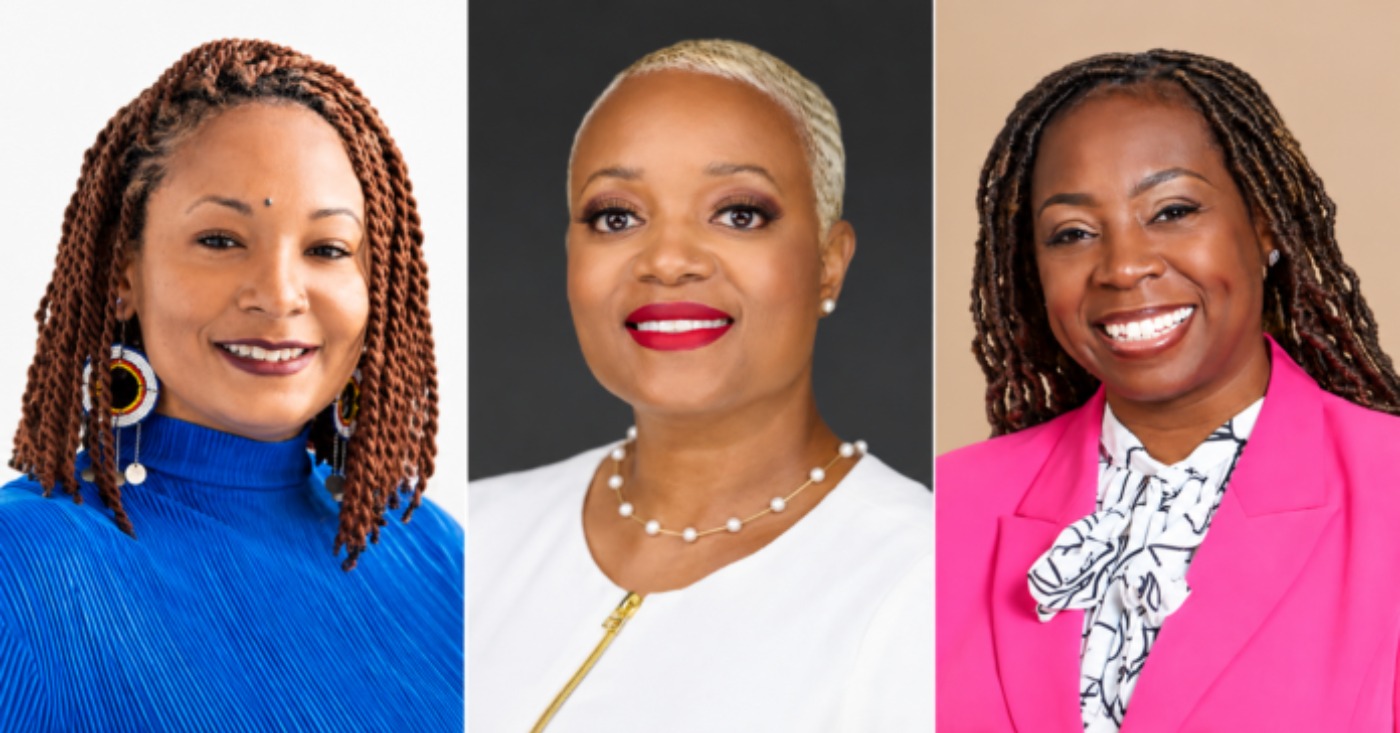
Here’s a transformational idea: everyone should have access to safe, healthy and affordable food.
If this idea doesn’t feel radical to you, then perhaps you haven’t spent much time in the Southside of Chicago and its adjoining suburbs.
Food insecurity is rampant in our neighborhoods. If you live in Washington Heights, you are practically guaranteed to experience lower food access than the average Chicagoan – with similar circumstances in the South Shore, West Englewood or West Pullman.
It has been clearly documented that “Food is Medicine.” In fact, according to countless scientific studies, good nutrition is critical during cancer treatment. It empowers your body to maintain muscle, rebuild damaged tissues and better withstand aggressive radiation or chemotherapy. A patient with access to nutritious food will experience fewer side effects, like fatigue and nausea, and will have less need for extra medicines. In short, good food improves a patient’s daily life.
Instead, though, a Black woman with breast cancer in our South Side neighborhoods or suburbs has the opposite experience. In fact, if “food is medicine,” then we are inarguably in a crisis, and it is disproportionately affecting Black women with breast cancer.
As co-authors of the Pinkprint and members of the Chicago Better Together Breast Cancer Disparities Think Tank, an initiative launched to address the disproportionate impact of breast cancer mortality on Black women in Chicago’s South Side and South Suburbs, we know that by combining data-informed strategies with community-driven advocacy and leadership, we will create equitable, sustainable outcomes for those most affected by breast cancer and the lack of access to nutritious foods in their communities.
Solutions start as local initiatives. We must pilot community-driven solutions in areas with the highest breast cancer mortality rates and limited access to nutritious food.
Existing local programs – food pantries, community fridges and even hospital-run delivery systems – are a critical piece of this local infrastructure. They are just a component, though, of the robust nutrition infrastructure the South Side lacks. In the long-term, our neighborhoods need clean, well-stocked grocery stores – and we must demand that our elected officials do everything they can to attract and retain these food corporations to invest in our communities.
This is just one item on their to-do list. Long-term solutions will include policy changes and targeted incentives at the city, state and federal levels. Just this spring, over 150,000 people in Illinois lost SNAP benefits, a devastating cut with ripple effects across families into entire neighborhoods. These cuts disproportionately affect people in the South Side of Chicago – not to mention, overwhelm food banks and other centers that serve as part of our social safety net. The Families Receiving Emergency Support for Hunger (FRESH) program in Illinois provides a one-time, automatic $400 cash payment per eligible household member to residents who lost their SNAP food benefits. This will help ease the immediate negative effects of these cuts and is much appreciated. But it is not a long-term solution.
When we started conversations in work groups about this project, we started with the idea that Black women deserve equitable access to quality breast cancer care. Any conversation about breast cancer care and goals for improved outcomes, must include a conversation about nutrition justice.
Nutrition justice is not just a transformational ideal: it is an idea that will literally transform our neighborhoods and the quality of life of every single person living in them. It will put grocery stores in empty storefronts; it will deliver food to a breast cancer patient going through chemotherapy.
Nutrition justice will help improve breast cancer outcomes for Black women on Chicago’s South Side. And Black women should not have to wait.
This op-ed is the second in a series focusing on eliminating breast cancer mortality in Black women on Chicago’s Southside. The authors are part of the Chicago Better Together Breast Cancer Disparities Think Tank, an initiative launched to address the disproportionate impact of breast cancer mortality on Black women in Chicago’s Southside and South Suburbs. Together with other community leaders, they have co-authored the Pinkprint, a strategic multistep plan and call-to-action on this critical issue.
The post She’s Not Non-compliant, She’s Hungry: Addressing Food Justice to Improve Breast Cancer Outcomes appeared first on Chicago Defender.
Based on reporting by Chicago Defender.
Black Press
WCCUSD Joins Statewide Organic School Food Purchasing Cooperative
Other districts involved include: Alameda USD, Albany USD, Berkeley USD, Capistrano USD, Cupertino Union SD, Hayward USD, Laguna Beach USD, Lagunitas Elementary SD, Mt. Diablo USD, North Monterey County USD, Pajaro Valley USD, San Leandro USD, San Ramon Valley USD, Santa Clara USD, Sausalito Marin City SD, Tahoe-Truckee USD and West Contra Costa USD.
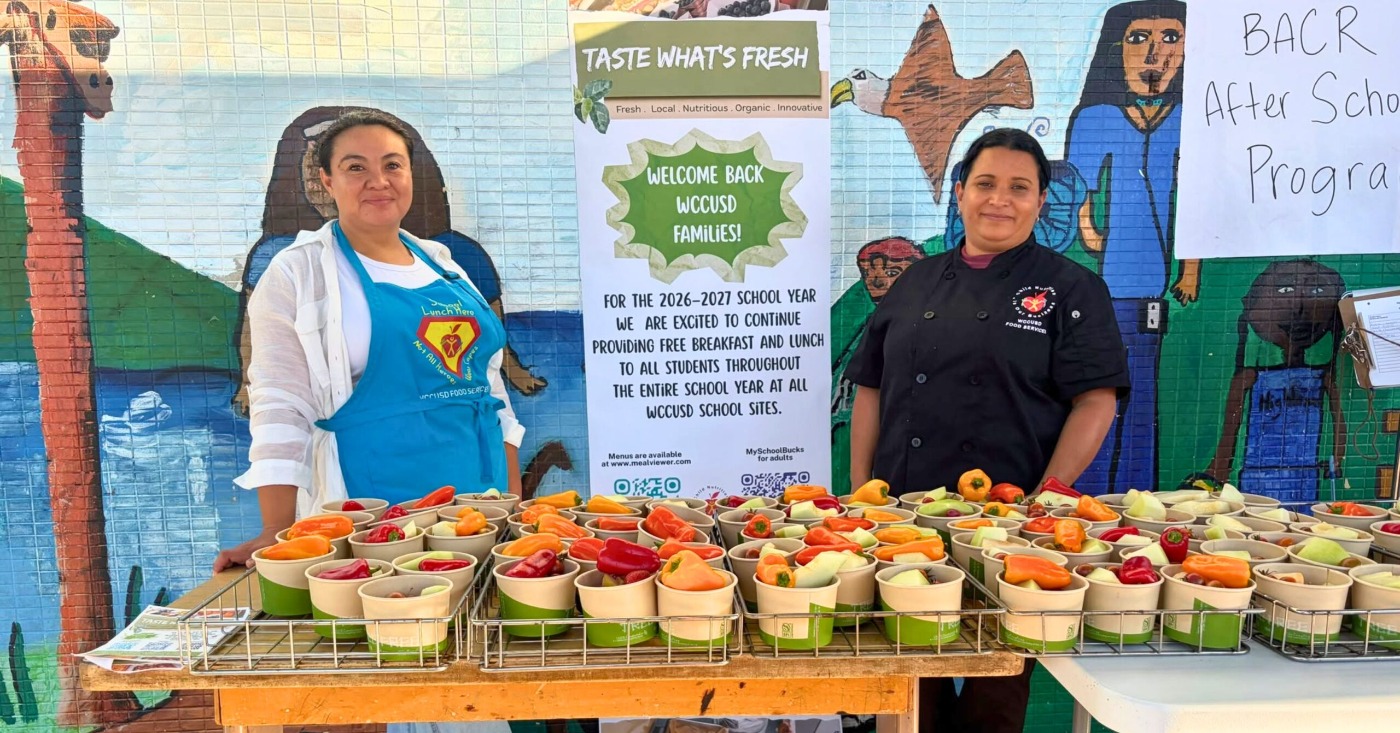
Seventeen California public school districts, including West Contra Costa Unified (WCCUSD), have joined a purchasing cooperative to pool their buying power and expand access to organic food in school meals.
The nonprofit Conscious Kitchen recently announced the launch of the Conscious Organic School Food Purchasing Cooperative. Its founding districts serve more than 300,000 students combined.
The cooperative partnered with food distributors UNFI and Sysco to expand the organic products available to participating districts. Combining schools’ purchasing demand helps distributors plan with suppliers while creating more dependable markets for organic farmers and food makers, according to Conscious Kitchen.
Other eligible California school districts can access the cooperative’s products and pricing through its existing contracts without conducting their own bids. Mt. Diablo Unified School District serves as the lead district for the cooperative’s grocery bid.
Other districts involved include: Alameda USD, Albany USD, Berkeley USD, Capistrano USD, Cupertino Union SD, Hayward USD, Laguna Beach USD, Lagunitas Elementary SD, Mt. Diablo USD, North Monterey County USD, Pajaro Valley USD, San Leandro USD, San Ramon Valley USD, Santa Clara USD, Sausalito Marin City SD, Tahoe-Truckee USD and West Contra Costa USD.
Barbara Jellison, WCCUSD’s executive director of food services, said the cooperative builds on years of work bringing fresh, organic food into school kitchens.
“The next challenge has always been how to make that possible for more districts,” Jellison said. “The Co-op gives schools a way to take what we have learned and move it to a completely different scale.”
Black Press
Marin County Supes Expand Small Business Options with Home Kitchen Pilot Program
“This will deliver immediate financial relief to entrepreneurs in areas like Marin City, West Marin and the Canal neighborhood, removing barriers right where economic opportunity is needed the most,” said Shannon Bell, consumer protection supervisor with Marin County Environmental Health Services, at the meeting.
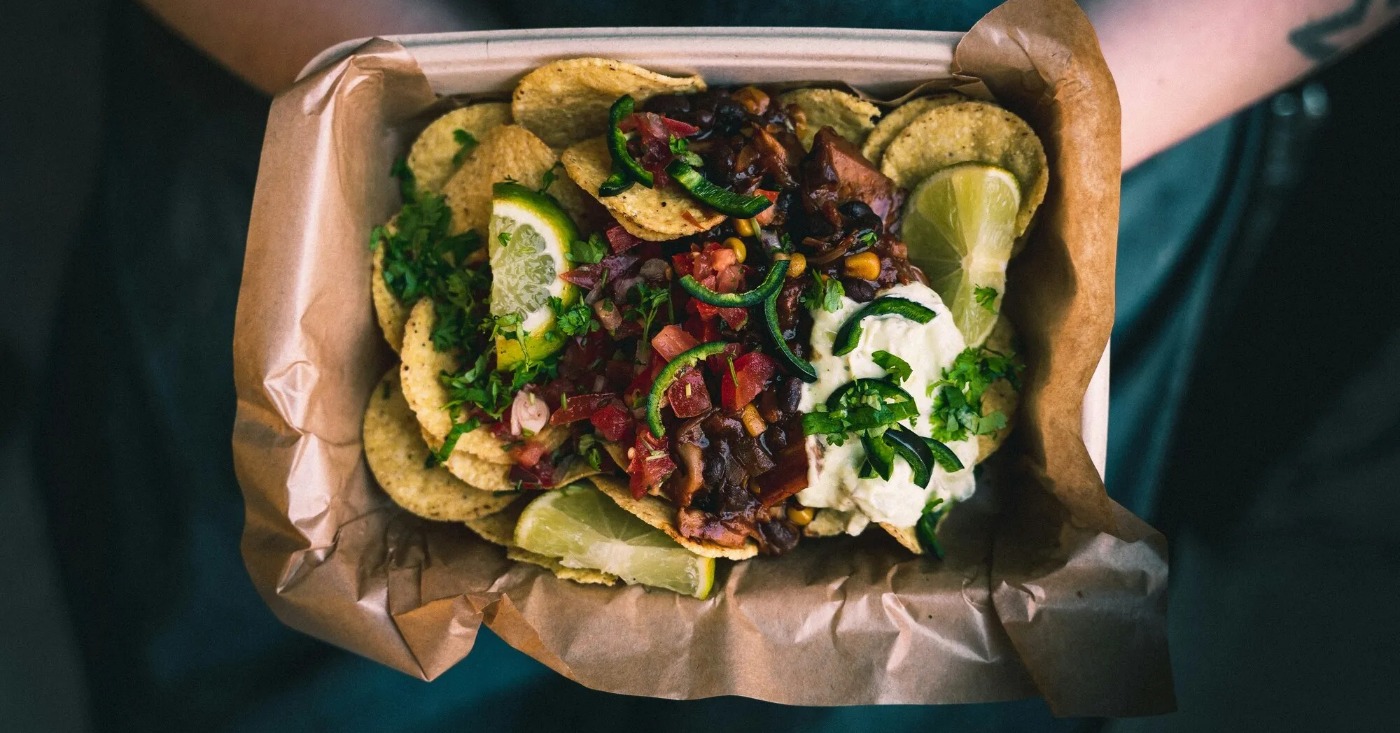
The Marin County Board of Supervisors adopted a three-year pilot program that will allow cooks and food entrepreneurs to prepare and sell meals from their homes on Sept. 29
The Microenterprise Home Kitchen Operation program, or MEHKO, will establish a permitting process for small-scale home food businesses. California state law allows licenses if local governments opt in.
“This will deliver immediate financial relief to entrepreneurs in areas like Marin City, West Marin and the Canal neighborhood, removing barriers right where economic opportunity is needed the most,” said Shannon Bell, consumer protection supervisor with Marin County Environmental Health Services, at the meeting.
MEHKO licenses fill the gap between cottage food permits, which only apply to non-potentially hazardous foods like baked goods and jams, and full commercial kitchens.
Microenterprises can serve as commissaries for up to two mobile food operations; they require food to be prepared and served the same day. They are exempt from commercial facility requirements, such as industrial grease traps and commercial stove hoods.
The program allows takeout or on-site dining with strict limits of 30 meals per day, or 90 meals per week, and an annual sales cap of $100,000.
The pilot would begin March 1, 2027, and permits would be capped at 100 per year. Application fees are $725 with an annual renewal fee of $414, but fee waivers for a third of the permits are reserved for low-income communities.
After two years, supervisors will consider making the program permanent.
“By eliminating the need for commercial leases and expensive equipment, entrepreneurs can safely test their businesses and ideas with minimal financial risk,” Bell said. According to statewide data from the Cook Alliance, 85% of MEHKO operators are women, immigrants, and people of color, and over 70% rely on this income to support their families, she said.
Bell also said unpermitted sales are already happening in areas like the Canal.
Local Vendors Seek a Legal Path
Marina Palma advocates for San Rafael’s Canal neighborhood, which is home to a vulnerable community of over 13,000 low-income residents. About 84% are Latino and roughly half of all households spend more than 50% of their income on housing.
Palma told the board that the pandemic caused many Canal residents to lose their jobs, and that’s why the neighborhood has so many vendors selling food in public. Because they have no license, enforcement actions can be harsh.
“They have really high tickets of $600, and their food has been thrown away,” said Palma.
She said MEHKO would help vendors get an official license, but she questions whether vendors will need a Social Security number and be legally in the country.
According to the home-chef’s national nonprofit Cook Alliance, MEHKO applicants need no proof of citizenship nor a Social Security number to obtain a permit.
“I’m from Mexico, and I’m one of the mobile vendors,” said Elsie Vega through a Spanish translator. “I have two jobs. Everything is pricey — house, food, everything. I am here to work hard, to pay taxes. I don’t make enough money to pay the community kitchens.”
MEHKO license holders must pass inspection under the oversight of the Marin County Department of Environmental Health Services and comply with local zoning, parking and noise ordinances.
California authorized MEHKO programs in 2019. Seventeen counties have since adopted them, including Sonoma, San Mateo, Solano, Contra Costa, Alameda and Santa Clara counties.
Other commenters who spoke in favor of the program represented a range of food system and small business organizations. They included the Agricultural Institute of Marin, which operates nine Bay Area farmers markets, the University of California Cooperative Extension, the Cook Alliance, the West Marin Food Systems Group, which coordinates farm-to-school food access, and the Marin Small Business Development Center.
Black Press
Locals Can Get Locally Grown Produce Delivered Through Urban Tilth
The standard price is $50 per week, which Urban Tilth says reflects the true cost of fresh, sustainably sourced, locally grown produce. Urban Tilth offers a subsidized “Food for All” price of $15 per week for individuals and families with extremely limited financial resources. Both options provide the same produce and service.
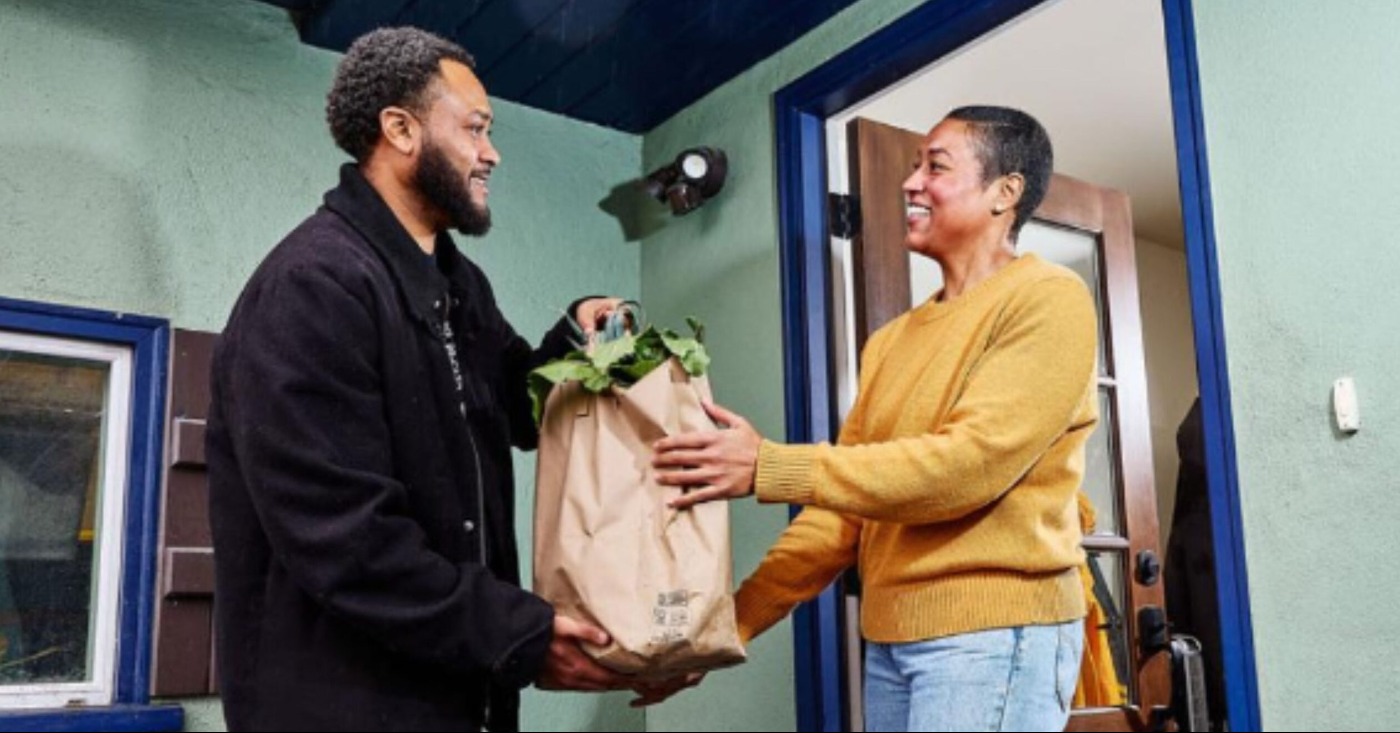
West County residents can receive locally grown produce through Urban Tilth’s Farm to Table Community Supported Agriculture (CSA) program, with home delivery and pickup options available.
Contra Costa County Supervisor John Gioia highlighted the program in his newsletter, pointing out that his district office in El Cerrito serves as a pickup location.
Weekly or bi-weekly subscriptions include seasonal greens, vegetables, fruits and herbs. Produce comes from Urban Tilth’s North Richmond Farm and farms within 200 miles of Richmond, including small family farms and those owned by BIPOC, women and LGBTQIA+ growers.
Subscriptions also support hands-on job training for local youth and volunteer opportunities.
The standard price is $50 per week, which Urban Tilth says reflects the true cost of fresh, sustainably sourced, locally grown produce. A subsidized “Food for All” price of $15 per week is available for individuals and families with extremely limited financial resources. Both options provide the same produce and service.
Gioia’s office is located at 11780 San Pablo Ave., Suite D, in El Cerrito. To sign up or learn more about pickup and delivery options, visit urbantilth.org/heal/csa.
Black Press
Students from Stonecrest Help Families Grow Food
THE CHAMPION NEWSPAPER — Two Georgia college students from Stonecrest are utilizing agriculture, technology, and community education to help families across Georgia grow their own food, even without traditional farming spaces. Mason Wright, a Morris Brown College student and founder of Plant It Georgia Vertical Institute, and Kosey Henley, a University of Georgia student, developed a mobile agricultural laboratory.
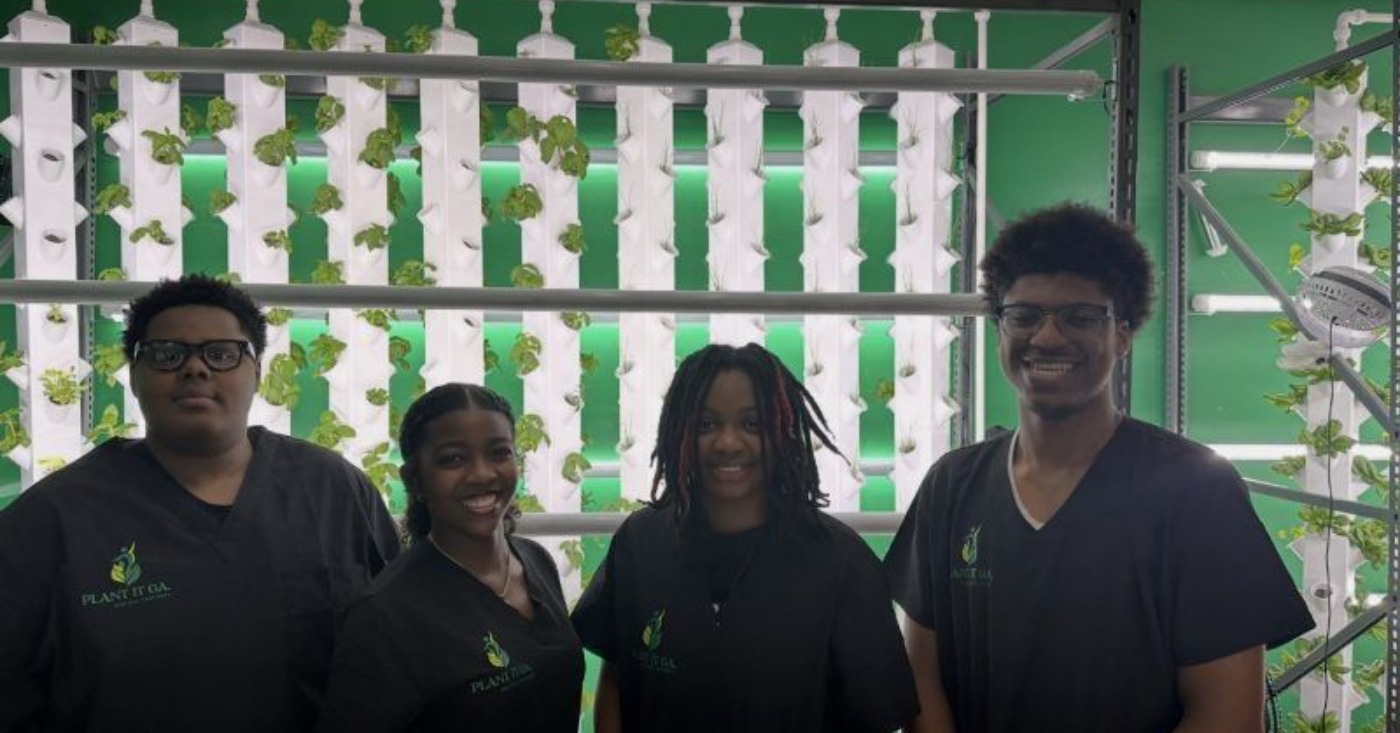
Two Georgia college students from Stonecrest are combining agriculture, technology, and community education to help families throughout Georgia grow their own food — even those without access to traditional growing spaces and equipment.
The two students recently completed the first prototype of Plant It Georgia’s mobile agricultural laboratory, which they said is an enclosed trailer equipped to introduce young people and families to growing food without relying on traditional farmland.
Mason Wright—a youth entrepreneur and a student at Morris Brown College—is the founder of Plant It Georgia Vertical Institute. The institute is an “educational initiative created to train young people in vertical farming, hydroponics, and other modern agricultural technologies,” according to Wright. Kosey Henley, a student at the University of Georgia, worked alongside Wright on the mobile lab.

The students said the idea came in response to an obstacle challenging many communities: transportation. Instead of requiring students to travel to the Plant It Georgia Vertical Institute, the program can take its lessons and growing systems directly into neighborhoods, schools, recreation centers, and other community spaces to teach students and their families about growing food in urban communities.
Inside the prototype, visitors will find hydroponic growing channels, lighting, and other equipment that show them how plants can grow in controlled environments. The laboratory aims to support hands-on lessons covering seed germination, water circulation, plant nutrition, lighting, harvesting, and the technology used to manage indoor crops, according to Wright.
The project comes as Georgia and the nation face an aging agricultural workforce.
According to the U.S. Department of Agriculture’s 2022 Census of Agriculture, Georgia had 63,492 agricultural producers, but only 4,770 were younger than 35. Nationally, the USDA counted 296,480 producers younger than 35, approximately 9 percent of all U.S. producers.
At the Plant It Georgia Vertical Institute, students are taught that farming does not always require acres of open land or heavy machinery. Vertical farming allows crops to grow upward in stacked systems while hydroponics uses nutrient-rich water instead of soil to feed the plants. These tactics make food production possible in classrooms, buildings, trailers, and densely populated urban communities, according to Wright.
Plant It Georgia’s growing systems can cultivate lettuce, tomatoes, collard greens, peppers, and a variety of culinary herbs, according to the news release. Students are taught the entire growing process — from placing seeds into starter materials and monitoring water and nutrients to caring for mature plants and harvesting fresh produce.
The program also introduces participants to careers connected to agricultural technology, plant science, environmental sustainability, food systems, and entrepreneurship.
Wright’s role as a Morris Brown College student and founder represents the connection between HBCU leadership, entrepreneurship, and community service, according to a news release. Wright also made headlines for opening Mason’s Super Dogs in Stonecrest in 2020 — which he now also operates on the Atlanta Beltline’s Eastside Trail. Henley brings another important academic connection through the University of Georgia, one of the state’s leading institutions in agriculture and agricultural research, according to the news release.
For event locations and more information, follow Plant It Georgia on Instagram (@plantitGA).
13 total views
Based on reporting by The Champion Newspaper.
Art
Montclair Brewery: Brewing Culture, Community, History
THE POSITIVE COMMUNITY — Montclair Brewery, located in Montclair, New Jersey, has evolved beyond a craft beer destination into a community gathering place. Founded by husband-and-wife team Leo and Denise Sawadogo, the brewery connects its beers to African, Caribbean, and African American history and culture.
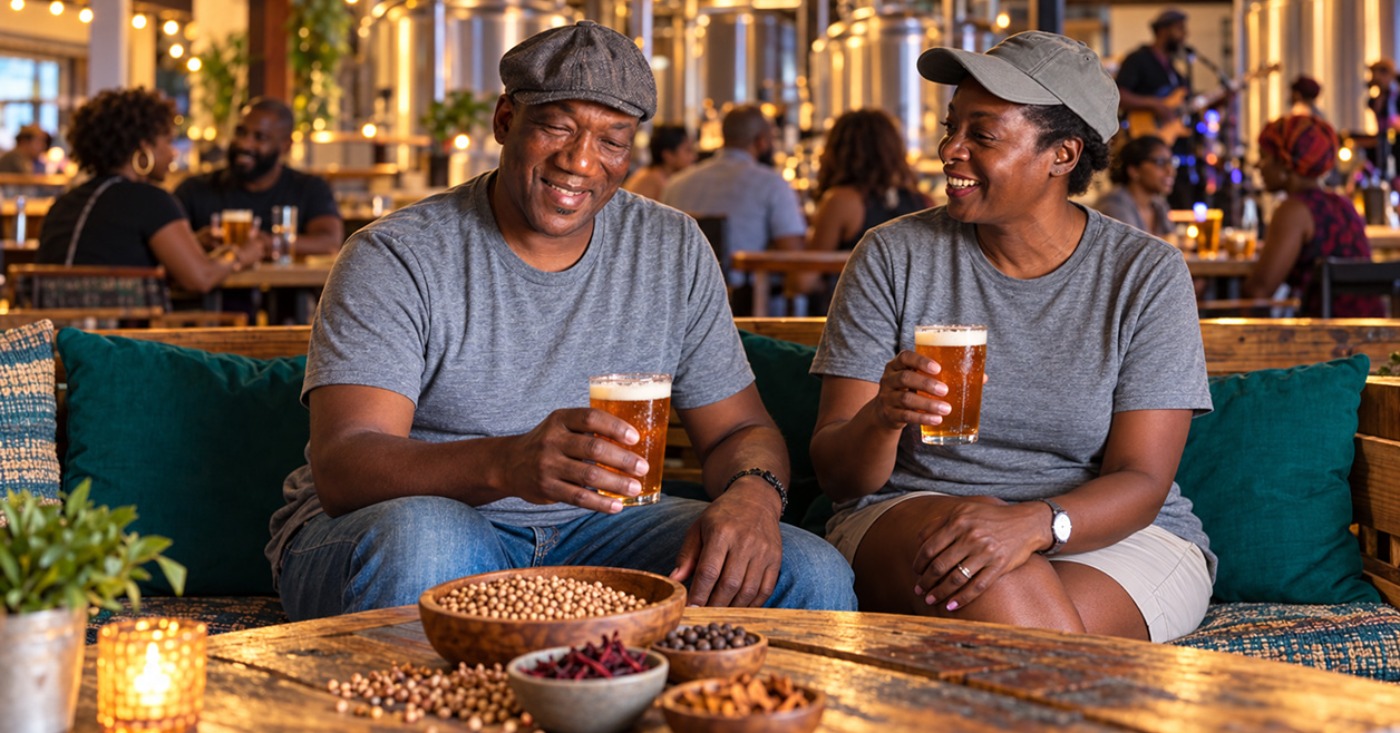
Montclair Brewery has become much more than a place to enjoy a craft beer. Located on Walnut Street in Montclair, New Jersey, the family-owned microbrewery has developed into a gathering place where beer, music, culture, history and community come together. Founded by husband-and-wife team Leo and Denise Sawadogo, the brewery has established a distinctive identity by connecting its beers to African, Caribbean and African American history and culture.
The story began with Leo Sawadogo’s passion for home brewing. Originally from Burkina Faso in West Africa, Leo grew up watching his mother brew traditional beverages using grains, herbs and spices. Brewing was part of his cultural experience long before craft beer became a major American trend. After years of making beer at home and sharing it with friends and family, Leo and Denise began imagining how they could transform that passion into a business. The company was established in 2014, and after years of planning and nearly a year of construction, Montclair Brewery opened its doors in October 2018.
The brewery represented an important milestone for Montclair because it became the town’s first microbrewery. But its significance extended beyond being a new business. Leo and Denise brought together two different cultural backgrounds: Leo’s West African heritage and Denise’s Jamaican roots. Those influences became part of the brewery’s personality and, importantly, part of the beers themselves. Instead of treating culture as something separate from the business, the couple made it an essential ingredient in their approach to brewing.
One of the brewery’s most distinctive traditions is its annual Black History Month beer series. These beers are often inspired by prominent figures, historical events and cultural traditions. Over the years, the brewery has created beers honoring people such as Harriet Tubman, Larry Doby, Maya Angelou, Chadwick Boseman and journalist Gil Noble. The brewery has also used its beers to celebrate African heritage and important moments in Black history. In 2026, for example, its series included beers inspired by Patrice Lumumba and Larry Doby.
The story behind each beer is almost as important as the beer itself. Montclair Brewery demonstrates how food and beverages can become vehicles for storytelling. A beer named for Larry Doby can introduce customers to the history of the baseball pioneer who broke the American League’s color barrier and later made Montclair his home. A beer inspired by Patrice Lumumba can encourage people to learn about African independence and the history of the Democratic Republic of Congo. In this way, the brewery turns a visit to a taproom into an opportunity for cultural discovery.
Montclair Brewery has also connected its business to local history. One example is the Howe House, one of Montclair’s historic homes associated with the town’s African American history. The brewery created a Belgian-style ale honoring James Howe and committed a portion of sales from the beer toward efforts to preserve the historic property. This illustrates a larger philosophy behind the brewery: its identity is not simply based on selling beer, but on using the business as a platform to recognize people, places and stories that deserve greater attention.
The brewery’s importance also comes from its role as a community gathering place. Its taproom offers indoor and outdoor seating and hosts a variety of events and activities. Music, entertainment, cultural programs and community gatherings have helped make the brewery part of Montclair’s social landscape. During the COVID-19 pandemic, when gathering in public spaces became difficult, the brewery adapted its business model by shifting toward bottling and outdoor operations. Its ability to adapt helped it survive a period that was devastating for many small businesses.
Another important part of Montclair Brewery’s story is representation within the craft-beer industry. Black-owned breweries remain a small portion of the American craft-brewing landscape, making the visibility of businesses like Montclair Brewery particularly significant. Denise has also become an important voice for women in the brewing industry, while Leo’s background and approach have helped challenge traditional ideas about who a brewer is supposed to be. Together, they demonstrate that the craft-beer industry can reflect a much broader range of cultures and experiences.
The brewery’s success has also allowed its reach to extend beyond Montclair. Its beers have received attention from regional and national media, and the company has participated in collaborations with other breweries and cultural organizations. One collaboration celebrated the 50th anniversary of hip-hop with the legendary DJ duo Awesome 2. Other beers have incorporated ingredients such as baobab fruit, sorghum and spices connected to African and Caribbean traditions. These collaborations and unusual ingredients help distinguish Montclair Brewery from breweries whose identities are based primarily on conventional beer styles.
Ultimately, Montclair Brewery represents an example of how a small business can become part of the cultural fabric of a community. Leo and Denise Sawadogo created a brewery from a personal passion, but they built something larger than a place to drink. Their beers tell stories about Africa, the Caribbean, Black America and Montclair itself. The brewery demonstrates that entrepreneurship can preserve history, celebrate culture and bring people together. In Montclair, every pint can become part of a larger conversation about heritage, creativity, community and the continuing evolution of Black-owned businesses in America.
Based on reporting by The Positive Community.


Life Lessons Learned Through Adversity: My Journey #shorts

From Claflin Alum to ColorBlind Artist

Turning Abolitionist Design Research Into Real-World Business #shorts

Black Journalists: Community, Excellence, and Lifting Up #shorts

NFN Exclusive: Muslims in AI

NFN Live presents The State of the Westward

Alliance of Civil Rights Orgs launch Week of Action; National Black Man Voter Day set for Oct. 24

MC’ing a Gala: A Night of Love & Black Excellence #shorts

Entrepreneurship Needs a Plan—and a Life Beyond Work #shorts

Towing Limits Explained: Match Your Trailer to Your Vehicle #shorts

The Youngest American Killed in the Vietnam War

Passing for White, Fighting for Black America: The Courage of Walter White

OP-ED: Haiti TPS: Have We Lost Sense of Humanity?

NFL: Week Two Recap | Jalen Hurts did not fold; Caleb Williams exits game with injury

Remembering Chauncey Bailey as Student Journalists Face Threats to Truth-Telling

Obama Urges Democrats to make AI a Priority 📱

Peter Magubane: a Camera Against Apartheid

Mayor Lee Announces $1 Million Kaiser Permanente Grant for Pilot Program to Address Homelessness, Clean Up Public Spaces throughout Oakland

OP-ED: How Head Start Also Helps Parents

Community Action Group ‘Friends of Zakiya’ Ask Sheriff for Time
Life Lessons Learned Through Adversity: My Journey #shorts
From Claflin Alum to ColorBlind Artist
Turning Abolitionist Design Research Into Real-World Business #shorts
Black Journalists: Community, Excellence, and Lifting Up #shorts
NFN Exclusive: Muslims in AI
NFN Live presents The State of the Westward
MC’ing a Gala: A Night of Love & Black Excellence #shorts
Entrepreneurship Needs a Plan—and a Life Beyond Work #shorts
Towing Limits Explained: Match Your Trailer to Your Vehicle #shorts

Black Woman Makes History at KARE 11 #shorts
-

 BlackPressUSA1 week ago
Latinas Deserve Equal Pay. Unions Help Make It Happen.
-

 Black Press4 days ago
All Skinfolk Ain’t Kinfolk
-

 Black Press3 days ago
Oakland Awarded More than $14 Million in State Funding
-

 Featured1 week ago
Headlines and Hot Topics with Rodney Perry 📱
-

 African American News and Issues2 days ago
Black History: Gladys West Mathematics Helped Make GPS Possible
-
 Black Press4 days ago
Jendayi Arrest Raises Community Concerns Regarding Sheriff’s Chain of Command
