
Black History
A Five Hundred Year-Old Shared History
NNPA NEWSWIRE — “From the moment when Europeans took their slaves from a race different from their own, which many of them considered inferior to other human races, and assimilation with whom they all regarded with horror, they assumed that slavery would be eternal,” historian Winthrop D. Jordan wrote in his dissertation, “White Over Black: American Attitudes Toward the Negro.”


The National Newspaper Publishers Association (NNPA) has launched a global news feature series on the history, contemporary realities and implications of the transatlantic slave trade.
(Read the entire series: Part 1, Part 2, Part 3, Part 4, Part 5, Part 6, Part 7, Part 8, Part 9, Part 10, Part 11)
By Stacy M. Brown, NNPA Newswire Correspondent
@StacyBrownMedia
“It started with slave ships… There are more records of slave ships than one would dream. It seems inconceivable until you reflect that for 200 years ships sailed carrying cargo of slaves. How can man be nonviolent… in the face of the… violence that we’ve been experiencing for the past (500) years is actually doing our people a disservice in fact, it’s a crime, it’s a crime.” — Public Enemy- “Can’t Truss It.”
The transatlantic slave trade is often regarded as the first system of globalization and lasted from the 16th century through much of the 19th century. Slavery, and the global political, socio-economic and banking systems that supported it, constitutes one of the greatest tragedies in the history of humanity both in terms of scale and duration.
The transatlantic slave trade was the largest mass deportation of humans in history and a determining factor in the world economy of the 18th century where millions of Africans were torn from their homes, deported to the American continent and sold as slaves, according to the United Nations Educational, Scientific and Cultural Organization – or UNESCO.
The transatlantic slave trade that began about 500 years ago connected the economies of three continents with Spain, Portugal, the Netherlands, England and France acting as the primary trading countries.
“The transatlantic slave trade transformed the Americas,” wrote Dr. Alan Rice, a Reader in American Cultural Studies at the University of Central Lancashire in Preston in the United Kingdom.
“Three factors combined to cause this transformation. Large amounts of land had been seized from Native Americans and were not being used,” Rice said. “Europeans were looking for somewhere to invest their money and very cheap labor was available in the form of enslaved Africans [thus] the Americas became a booming new economy.”
The transatlantic slave trade also formed an essential bridge between Europe’s New World and its Asia trade and, as such, it was a crucial element in the development of the global economy in the 18th century, Professor Robert Harms wrote for Yale University’s “Global Yale.”
Harms, a professor of History at Yale and chair of the Council on African Studies continued:
“There was one basic economic fact – little noticed by historians – that provides the key to the relationship between the direct trade and the circuit trade.
“When a French ship arrived in the New World with a load of slaves to be bartered for sugar, the value of the slaves equaled about twice as much sugar as the ship could carry back to France. For that reason, the most common form of slave contract called for fifty percent of the sugar to be delivered immediately and the remainder to be delivered a year later.
“The second delivery carried no interest penalty, and so the slave sellers were in effect giving the buyers an interest-free loan.”
In total, UNESCO estimates that between 25 to 30 million people — men, women and children — were deported from their homes and sold as slaves in the different slave trading systems.
More than half – 17 million – were deported and sold during the transatlantic slave trade, a figure that UNESCO historians said doesn’t include those who died aboard the ships and during the course of wars and raids connected to the slave.
The trade proceeded in three steps. The ships left Western Europe for Africa loaded with goods which were to be exchanged for slaves.
Upon their arrival in Africa, the captains traded their merchandise for captive slaves. Weapons and gun powder were the most important commodities but textiles, pearls and other manufactured goods, as well as rum, were also in high demand.
The exchange could last from one week to several months.
The second step was the crossing of the Atlantic. Africans were transported to America to be sold throughout the continent.
The third step connected America to Europe.
The slave traders brought back mostly agricultural products, produced by the slaves. The main product was sugar, followed by cotton, coffee, tobacco and rice.
The circuit lasted approximately eighteen months and, in order to be able to transport the maximum number of slaves, the ship’s steerage was frequently removed, historians said.
Many researchers are convinced that the slave trade had more to do with economics than racism. “Slavery was not born of racism, rather racism was the consequence of slavery,” historian Eric Williams wrote in his study, “Capitalism & Slavery.”
“Unfree labor in the New World was brown, white, black, and yellow; Catholic, Protestant, and pagan. The origin of Negro slavery? The reason was economic, not racial, it had to do not with the color of the laborer, but the cheapness of the labor,” Williams said.
Also, contrary to “the popular portrayal of African slaves as primitive, ignorant and stupid, the reality is that not only were Africans skilled laborers, they were also experts in tropical agriculture,” said editor and social media and communications expert, Michael Roberts.
In a dissertation for op-ed news earlier this year, Roberts said, Africans were well-suited for plantation agriculture in the Caribbean and South America.
Also, the high immunity of Africans to malaria and yellow fever, compared to white Europeans and the indigenous peoples of the Caribbean and South America, meant Africans were more suitable for tropical labor.
“While Native Americans’ labor were initially used, Africans were the final solution to the acute labor problem in the New World,” Roberts said.
“The slave trade was one of the most important business enterprises of the 17th century. The undisputed fact is that the nation states of Europe stabilized themselves and developed their economies mainly at the expense of millions of Black African people,” he said.
During the 16th Century, when Europeans first made regular contact, West Africa had highly developed civilizations and Africans were keen to trade their gold, silver, copper, Ivory and spices for European pots, pans, cloth and guns.
However, Europeans soon became more interested in exploiting the people of Africa and forcing them into slave labor.
Most of the slaves were taken from the West coast, but some were kidnapped further inland from the interior.
“The biggest lesson to be learned from this dark and evil chapter in human history is that exploiting fellow humans for cheap labor never pays off in the long run,” said Pablo Solomon, an internationally recognized artist and designer who’s been featured in 29 books and in newspapers, magazines, television, radio and film.
“The acts of using fellow humans as beasts of burden to save a few bucks always ends up costing more in the long run both in real money and in societal decay,” Solomon said.
“Any rationalization of misusing fellow humans is both evil and ignorant,” he said.
One aspect of the transatlantic slave trade that would greatly enhance its understanding is that the English began to enslave and export Irish persons to the Caribbean in the time of Oliver Cromwell, said Heather Miller, an educator and writer with expertise in the teaching of reading and writing, who holds graduate degrees from Harvard and MIT.
Cromwell was known for his campaign in Ireland that centered on ethnic cleansing and the transportation of slave labor to the Barbados.
“Irish enslaved persons worked alongside African enslaved persons in the Caribbean,” Miller said.
However, historians generally agree that the most cruel and exploitative people have been the African.
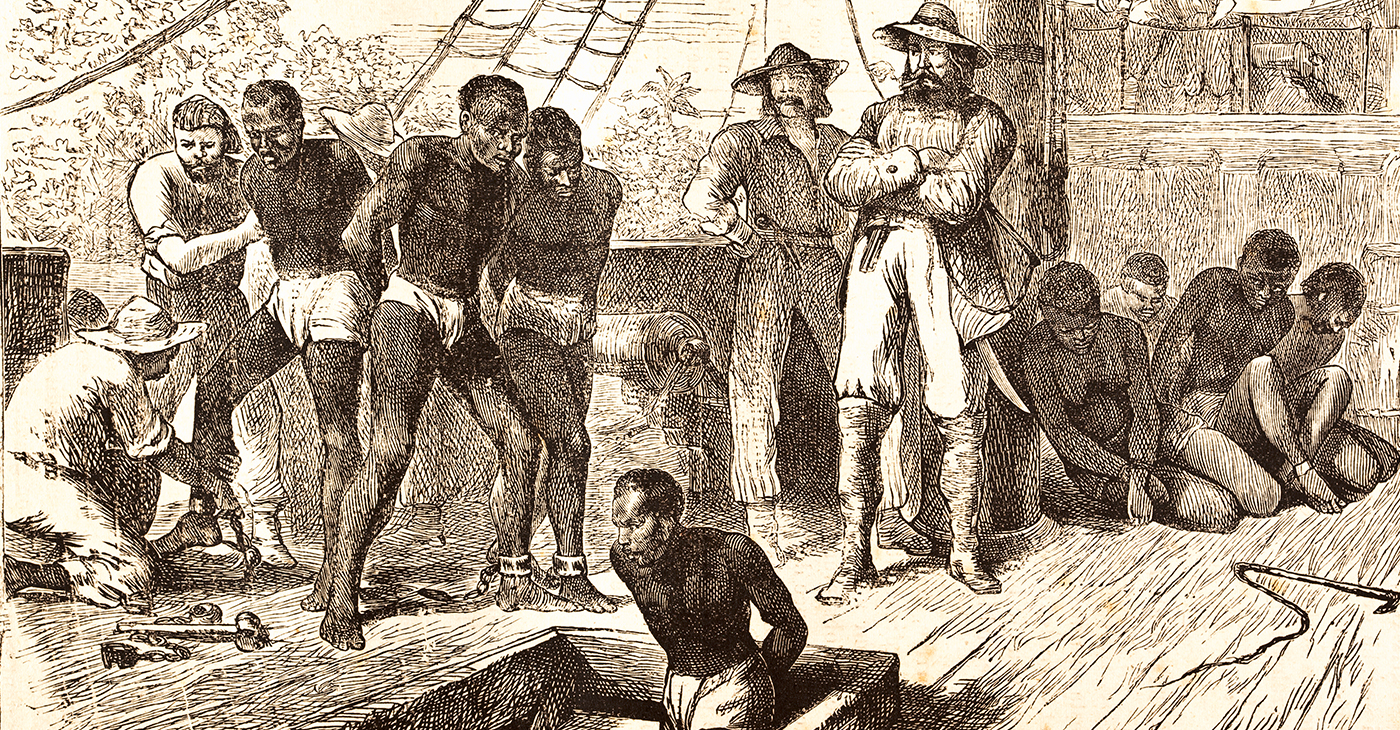
(Photo: iStockphoto / NNPA)
“From the moment when Europeans took their slaves from a race different from their own, which many of them considered inferior to other human races, and assimilation with whom they all regarded with horror, they assumed that slavery would be eternal,” historian Winthrop D. Jordan wrote in his dissertation, “White Over Black: American Attitudes Toward the Negro.”
While tribal leaders assisted in the capturing of some African slaves, its without any doubt that foreigners were overwhelming the most egregious in their pursuit of men, women and children who would be placed in the horrors of forced labor and inhumane treatment.
The transatlantic slave trade would become the largest forced migration in history.
It started at the beginning of the sixteenth century and, until the mid-17th century, Spanish America and Portuguese Brazil were the major slave markets for European slave traders.
The Dutch participation in the transatlantic slave trade started in the 1630s and ended at the beginning of the nineteenth century, according to Henk den Heijer, professor emeritus in Maritime History at the Leiden University in the Netherlands.
During that period, the Dutch shipped 600,000 Africans to the colonies in the New World.
“Initially, the Dutch were against slavery which was considered to be a catholic heresy. This antislavery point of view can be easily explained,” den Heijer said.
“Dutch seafarers first ventured across the Atlantic without the intention of enslaving anyone. They were mainly interested in the trade in Atlantic products like salt, sugar, wax and dye wood. At the beginning of the 17th century, however, the Dutch established small plantation colonies on the coast of Guyana, the area between the Orinoco and Amazon rivers,” he said.
“Most of the early settlements were populated with Dutch colonists and a few indigenous slaves. The Dutch embraced the slave trade and slavery on a large scale for the first time in Brazil.”
The slave trade also brought a great deal of wealth to the British ports that were involved.
Researchers noted the count of slaves and slave ships that came through the main British ports in 1771, when the average working person earned $35 in British currency per year and a single slave in good condition could be sold in the Caribbean for $25.
Liverpool had 107 ships and transported 29,250 slaves, historians noted.
London had 58 ships carrying 8,136 slaves while Bristol had 23 ships that transported 8,810 slaves.
Additionally, researchers said Lancaster had 4 ships that transported 950 slaves.
From 1791 to 1807, British ships carried 52 percent of all slaves taken from Africa while, from 1791 to 1800, British ships delivered 398,719 slaves to the Americas.
While it was the British who stood as the most progressive couriers of whatever was transported through the sea, many other countries chartered ships and descended upon African nations to capture slaves.
Ships sailed to Africa loaded with guns, tools, textiles and other manufactured goods and crews with guns went ashore to capture slaves and purchase slaves from tribal leaders.
Slave ships spent months travelling to different parts of the coast, according to historians who described the devastation on a webpage titled The Transatlantic Slave Trade.
Captives were often in poor health from the physical and mental abuse they suffered.
The air in the hold was foul and putrid, according to historians.
From the lack of sanitation, there was a constant threat of disease. Epidemics of fever, dysentery and smallpox were frequent. Captives endured these conditions for months. In good weather the captives were brought on deck in midmorning and forced to exercise.
They were fed twice a day and those refusing to eat were force-fed.
Those who died were thrown overboard. The combination of disease, inadequate food, rebellion and punishment took a heavy toll on captives and crew.
Surviving records suggest that until the 1750s, one in five Africans on board ship died.
At least two million Africans – 10 to 15 percent – died during the infamous “Middle Passage” across the Atlantic.
Some European governments, such as the British and French, introduced laws to control conditions on board. They reduced the numbers of people allowed on board and required a surgeon to be carried.
The principal reason for taking action was concern for the crew, not the captives, historians said.
The surgeons, often unqualified, were paid head-money to keep captives alive. By about 1800 records show that the number of Africans who died had declined to about one in 18.
When enslaved Africans arrived in the Americas, they were often alone, separated from their family and community, unable to communicate with those around them.
“When we arrived, many merchants and planters came on board and examined us. We were then taken to the merchant’s yard, where we were all pent up together like sheep in a fold,” according to a published description from “The Interesting Narrative of the Life of Olaudah Equiano.”
“On a signal the buyers rushed forward and chose those slaves they liked best.”
Sold, branded and issued with a new name, the enslaved Africans were separated and stripped of their identity.
In a deliberate process, meant to break their will power and make them totally passive and subservient, the enslaved Africans were “seasoned,” which meant that, for a period of two to three years, they were trained to endure their work and conditions – obey or receive the lash.
It was mental and physical torture.
“The anniversary of the Transatlantic Slave Trade needs to be marked in some way, not celebrated, but recognized and memorialized because of the effects this decision had then that still affects the world today,” said Dr. Jannette Dates, dean emerita at the School of Communications at Howard University in Washington, D.C.
“The Black Press continues to play its historic role in keeping issues of significance to African Americans in the forefront for black people’s awareness, knowledge and better understanding of our history,” Dr. Dates said.



Black History
Remembering Moses Newson and the Power of the Black Press During the Civil Rights Movement
ATLANTA DAILY WORLD — Moses J. Newson, a pioneering journalist who spent decades documenting the American Civil Rights Movement for the Black press, died on November 17 at his home in Baltimore at the age of 99. His daughter confirmed that he passed away from natural causes.

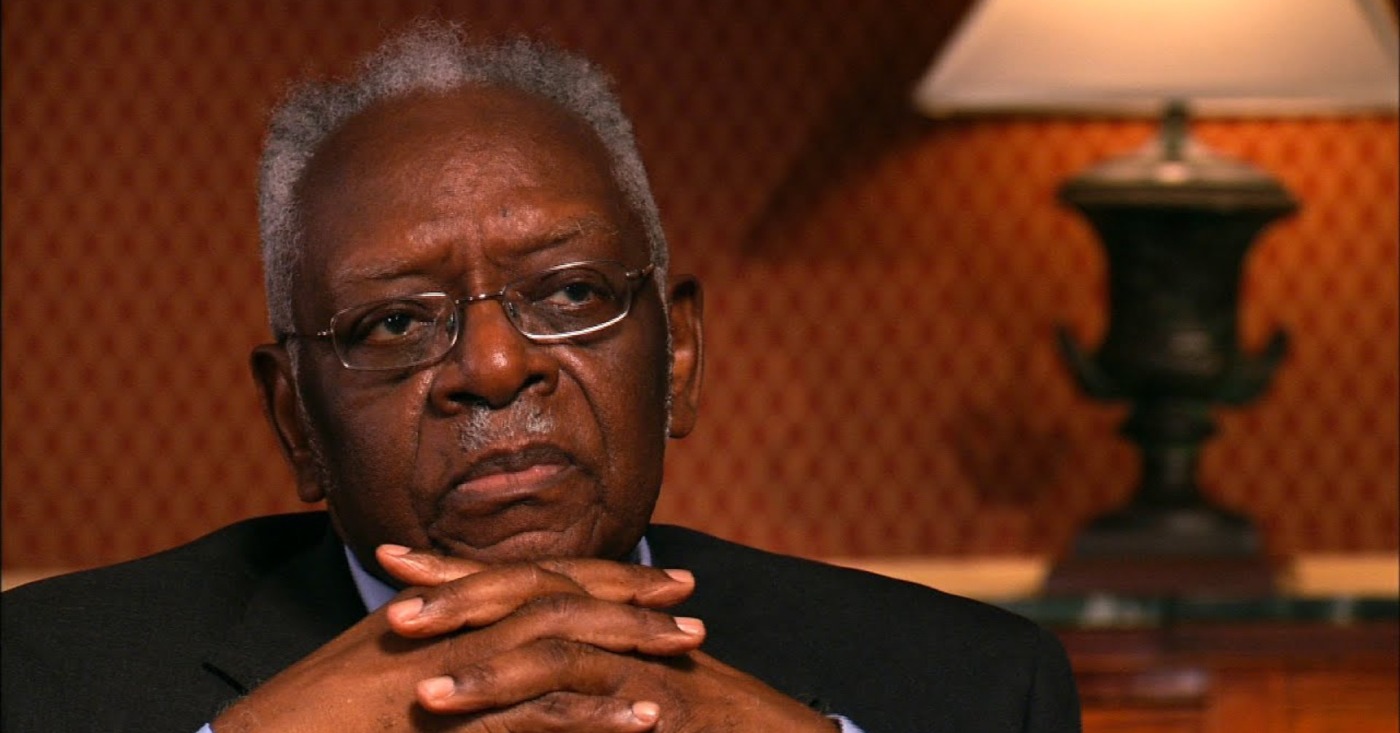
Moses J. Newson, a pioneering Black journalist whose reporting documented some of the most defining moments of the Civil Rights Movement, died November 17 at his Baltimore home. He was 99.
His daughter, Shawn Newson, confirmed to Journal-isms that he died of natural causes.
Throughout his career, Newson documented the struggle for racial equality from the front lines, bearing witness to events that challenged segregation and transformed American society. His work reflected the critical role of the Black press during an era when racial injustice frequently received inadequate coverage from mainstream news organizations.
Born February 5, 1927, in Fruitland Park, Florida, Newson pursued journalism after serving in the United States Navy. He studied at Storer College and Lincoln University in Missouri before beginning his newspaper career at the Tri-State Defender in Memphis in 1952.
His early assignments included coverage of school desegregation and the murder of Emmett Till in 1955, a case that helped galvanize the national Civil Rights Movement.
Newson joined the Baltimore Afro-American in 1957, covering the integration of Central High School in Little Rock, Arkansas, during his first assignment with the newspaper.
Four years later, he placed himself in considerable danger while covering the Freedom Rides, organized to challenge segregation in interstate transportation.
Newson survived the infamous attack on a Freedom Riders bus in Anniston, Alabama, in 1961. Despite the personal danger he encountered, he continued documenting the movement, providing readers with firsthand accounts of the resistance to racial integration.
His reporting also included the integration of the University of Mississippi in 1962 and the 1963 March on Washington. In 1968, he interviewed the Rev. Dr. Martin Luther King Jr. during preparations for the Poor People’s Campaign, shortly before King’s assassination.
Newson spent 21 years with the Baltimore Afro-American, rising from reporter to city editor and ultimately executive editor. He spent the final decade of his newspaper career overseeing editorial operations before transitioning into federal public affairs in 1978.
In 2014, the National Association of Black Journalists inducted Newson into its Hall of Fame, recognizing his contributions to journalism and his extraordinary record of civil rights coverage.
His experiences were also documented through the Civil Rights History Project, a collaboration between the Library of Congress and the Smithsonian Institution’s National Museum of African American History and Culture.
Newson’s family plans to honor his life with a private ceremony in February, when he would have celebrated his 100th birthday.
His death marks the loss of a journalist who witnessed history at extraordinary personal risk. His reporting remains part of the permanent record of America’s struggle for racial equality and a reminder of the indispensable role Black newspapers played in bringing that struggle to the nation’s attention.
The post Remembering Moses Newson and the Power of the Black Press During the Civil Rights Movement appeared first on Atlanta Daily World.
Based on reporting by Atlanta Daily World.
Black History
An HBCU Is Training Doulas to Help Combat Childbirth Risks
THE CAROLINIAN — North Carolina Central University is addressing the critical maternal health crisis in rural communities by training a new workforce of birth doulas. Through its Rural Health Hub in Enfield, the historically Black university is developing a network of trained birth workers to support mothers in Eastern North Carolina.
For many expectant mothers in rural communities, preparing for childbirth involves more than prenatal appointments and planning for a new baby. Limited access to maternity care, long travel distances, and unequal health outcomes can make pregnancy an especially difficult experience.
North Carolina Central University is working to address some of those challenges by training community-based birth doulas who can provide support to mothers before, during, and after childbirth.
Through its Rural Health Hub in Enfield, North Carolina, the historically Black university is developing a network of trained birth workers to improve maternal health outcomes in rural Eastern North Carolina, where access to maternity services remains limited.
The initiative comes at a time when Black women continue to experience disproportionately high rates of pregnancy-related deaths. According to North Carolina’s Maternal Mortality Review Committee, Black women in the state were 1.7 times more likely than white women to die from pregnancy-related causes between 2018 and 2021. The committee also found that nearly nine out of 10 pregnancy-related deaths reviewed were preventable.
The disparities are particularly concerning in rural communities, where some expectant mothers must travel an hour or more to reach hospitals offering labor and delivery services.
NCCU’s Community-Based Birth Doula Training Program, launched in December 2025, aims to address those gaps by preparing women who already live in underserved communities to support families navigating pregnancy and childbirth.
The program recruits participants from northeastern North Carolina counties, including Halifax, Northampton, Edgecombe, Nash, Bertie, Warren, and Martin.
Rather than bringing outside professionals into these communities, the university is investing in residents who understand the challenges families face and can build relationships with mothers in their own neighborhoods.
Dr. Undi Hoffler, director of the Community-Based Doula Program, emphasized the importance of developing a workforce rooted in the communities it serves.
“It’s important that our doulas come from these communities,” Hoffler said in an interview published by NCCU. “They’re building relationships with families they know. That’s how you build trust.”
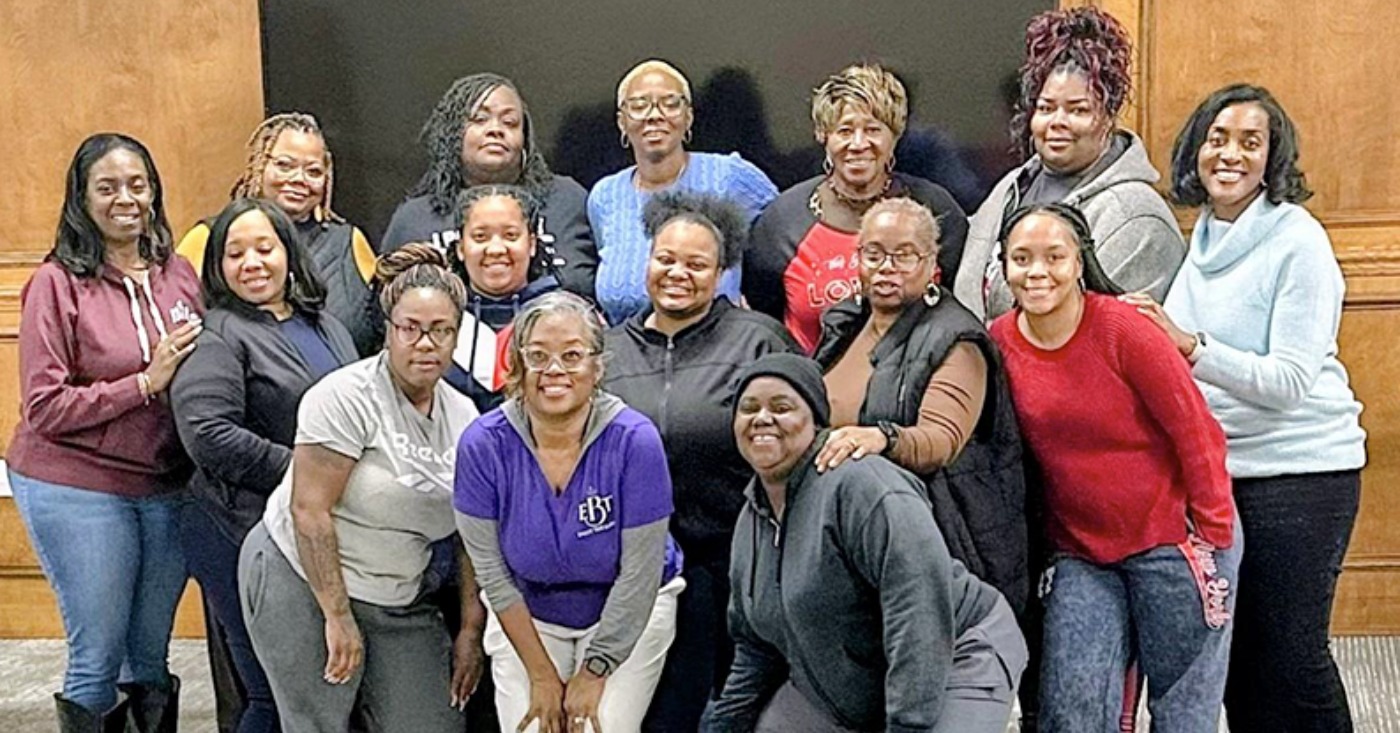
The program’s first training cohort included 12 women who completed a three-day in-person training in December 2025. Participants received scholarships covering training, certification, and materials. The university also provides continued mentorship and assistance as trainees work toward professional certification through DONA International.
The initiative continued into 2026. A training workshop held in October brought together 14 women for three days of instruction at the Rural Health Hub in Enfield, according to NC Newsline’s Nov. 16 report.
During training, participants learn about pregnancy, anatomy, labor and delivery, postpartum recovery, and how to recognize situations that require medical attention. They also receive instruction on helping mothers communicate their concerns, understand available options, and advocate for themselves during medical appointments and childbirth.
A doula is a trained professional who provides emotional, physical, and informational support throughout pregnancy, labor, and the postpartum period. Unlike physicians, nurses, and midwives, doulas do not provide medical treatment or deliver babies. Instead, they serve as an additional source of support for mothers and their families.
That distinction is important in communities where mothers may have limited access to consistent support throughout their pregnancies.
For Rose Lewis, a member of the program’s first cohort, the decision to become a doula grew out of years of working with families and recognizing gaps in maternal support.
Lewis, a Nash County resident and community health worker, said she frequently encountered families who needed assistance accessing health services and other resources. Through that work, she began noticing how much support was available after a baby arrived compared with the resources offered during pregnancy.
“I kept seeing resources for after the baby gets here,” Lewis said in an interview with NCCU. “But what about the support leading up to birth?”
Her interest in the work also became personal after a woman connected to her extended family died during childbirth and her own daughter experienced a high-risk pregnancy.
Lewis now hopes to help other mothers feel informed and supported throughout their birthing experiences.
“When you’re informed, you can advocate for yourself,” she said.
Another trainee, Taya Partin of Edgecombe County, shared an experience involving a pregnant client who expressed fear that she might not survive childbirth. Partin recalled helping the woman manage her concerns and feel more prepared for the delivery process.
The experience illustrates the emotional support doulas can provide to mothers who may feel overwhelmed or uncertain during pregnancy.
Research has associated continuous labor support with positive childbirth outcomes, including fewer cesarean deliveries and improved birth experiences. However, doulas are not substitutes for medical professionals or emergency maternity care. Their role is to complement existing healthcare services by providing consistent support and helping mothers navigate the process.
For NCCU, the program represents an opportunity to connect higher education with a public health issue affecting communities throughout North Carolina.
The university’s Rural Health Hub is also working to strengthen relationships among healthcare providers, community organizations and local families. Its broader mission focuses on improving health access, workforce development and community-centered research in underserved areas.
The long-term vision for the doula initiative is to establish a stronger network of trained birth workers throughout rural Eastern North Carolina, helping ensure that mothers have access to support regardless of where they live.
As maternal health disparities continue to affect Black women across the state, NCCU’s work demonstrates how HBCUs can contribute to solutions beyond traditional classroom instruction.
Through community-based training, mentorship and partnerships, the university is preparing women to become advocates and support systems for mothers during one of the most important periods of their lives.
For the families these doulas serve, the goal is simple: no mother should have to navigate pregnancy and childbirth feeling alone, unheard or unsupported.
Based on reporting by The Carolinian.
Art
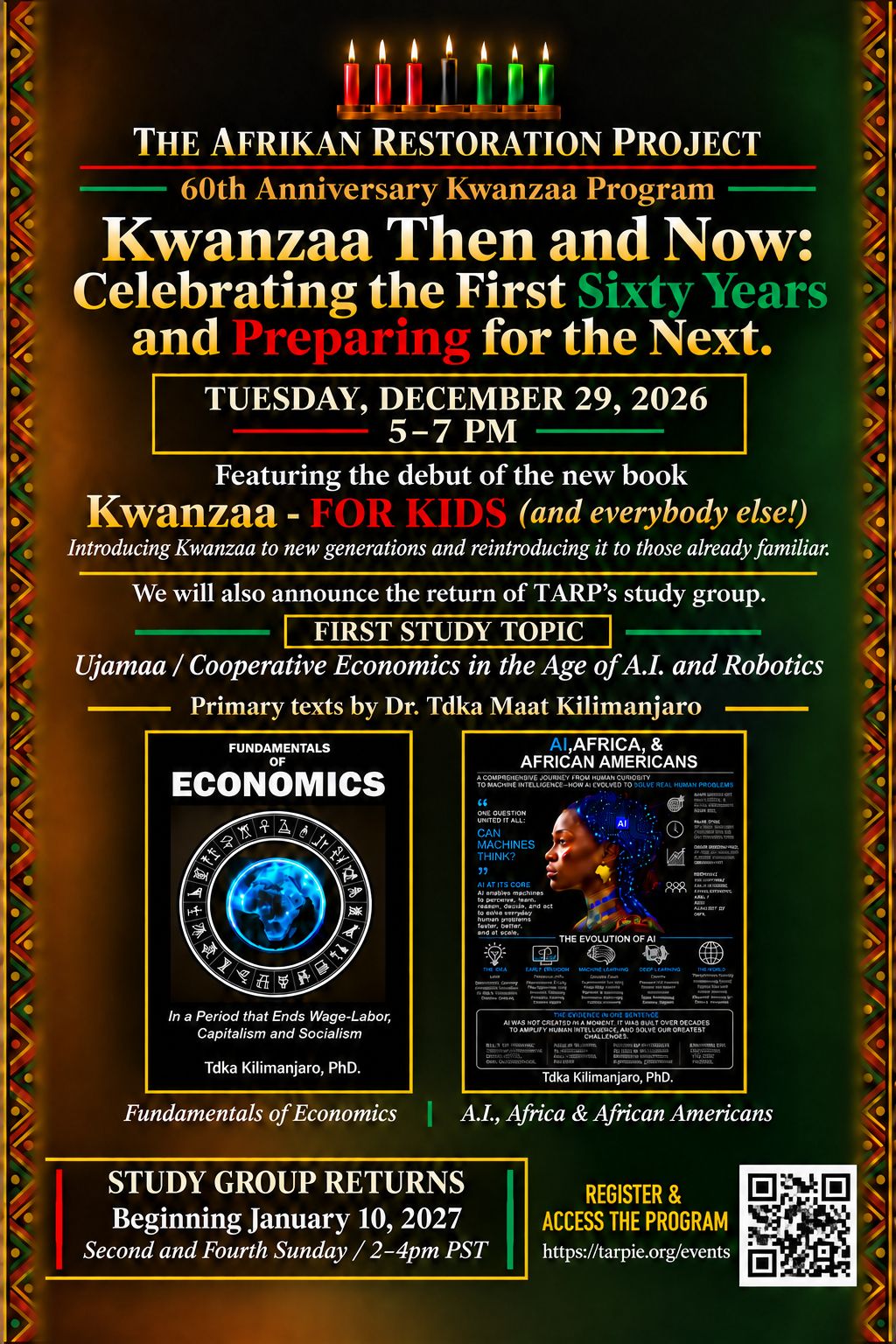
The Afrikan Restoration Project Marks 60 Years of Kwanzaa With New Book and Expanded Focus
THE AFRIKAN RESTORATION PROJECT FOR IMMEDIATE RELEASE | November 24, 2026 Media contact: Shujaa Baker | [email protected] | (949) 257-7133 | Media Kit – https://bit.ly/3X2tSlz The Afrikan Restoration Project Marks 60 Yea
The Afrikan Restoration Project Marks 60 Years of Kwanzaa With New Book and Expanded Focus
Events in San Diego, Detroit, and online will honor the holiday’s origins and prepare for the next sixty years of the Nguzo Saba.
The Afrikan Restoration Project (TARP) announces its 2026 Kwanzaa anniversary season, Dec. 26–Jan. 1, marking sixty years of the African American and Pan-African holiday first observed in Los Angeles in 1966. Under the theme “Celebrating the First Sixty Years of Kwanzaa… and the Next!” the programs share an expanded understanding of the Kwanzaa creation story and thoughtfully promote year-round practice of the Nguzo Saba (Seven Principles).
Central to the celebration is the worldwide debut of the new book titled “Kwanzaa – FOR KIDS (and everybody else!),” written by Shujaa Baker, illustrated by Thad Lavalais, and based on the firsthand accounts of Kinamo and Karama Damu about the first Kwanzaa. The book traces how ten-year-old Kinamo’s questions about African holidays in 1965 inspired the creation of Kwanzaa while recounting the children’s experiences leading up to the first celebrations in 1966. Learn more at kwanzaaforkids.org.
60th Anniversary Events
Dec. 26 | San Diego | 1–4:30 p.m. PT — WorldBeat Cultural Center, Balboa Park. The children’s Kwanzaa Camp celebration and book debut features Karama Damu, a participant in the first Children’s Kwanzaa, along with a Kwanzaa Essentials lesson and lessons from the new book, art, music, drumming, and dance. Instructional content by Imagiread.
Dec. 26 | San Diego | 6–9 p.m. PT — WorldBeat Cultural Center. Umoja (Unity) Night program celebrating the First Sixty Years of Kwanzaa… and the Next! recognizes the first sixty years of Kwanzaa and the work ahead to teach the Nguzo Saba more broadly
Dec. 27 | Detroit | 2–5 p.m. ET — Charles H. Wright Museum of African American History. The Kujichagulia (Self-Determination) program explores Kwanzaa’s past, present, and future, and the role of self-determination in Elevating Blackness.
Dec. 29 | Online | 5–7 p.m. PT — Kwanzaa Then and Now: Celebrating the First Sixty Years and Preparing for the Next. TARP introduces its new book and announces the return of its study group on Jan. 10, 2027 – examining Ujamaa (Cooperative Economics) in the age of AI and robotics.
TARP is merging our work to promote African culture, S.T.E.M., manufacturing, and principled daily practice into a new online program called The Elevating Blackness Online Academy. Launching on December 5th, this site offers educational resources that build character, including curricula for Kwanzaa – FOR KIDS, the STEM ’n ’Nem children’s book series, and partner content.
Visit https://elevatingblackness.com for more info. (For beta test access – TESTER / Innovationary2026!).
TARP also invites public discussion of three position statements on Kwanzaa’s origins, the responsibilities of the next sixty years, and the daily practice of the Seven Principles found here.
Event details and registration: https://kwanzaa.org/events.html and https://tarpie.org/events. Contact Shujaa Baker for interviews, the media kit, and high-resolution images. See tarpie.org for full details.
About The Afrikan Restoration Project
TARP is an African-centered educational and cultural development initiative advancing cultural knowledge, practical capabilities, and principled community development through publications, programming, and collaborative education.
Black History
IN MEMORIAM: Claude T. Everhart, San Francisco’s First Black Deputy Mayor, Dies at 73
Claude T. Everhart, the first African American deputy mayor of San Francisco and a dedicated community advocate for five decades, passed away on October 27 at the age of 73. A former member of the Black Panther Party, Everhart rose from community organizing to serve as chief of staff for Mayor Art Agnos, where he helped lead the city through the aftermath of the 1989 Loma Prieta earthquake. His career spanned significant roles in youth development and municipal policy. Visit BlackPressUSA.com to read more.
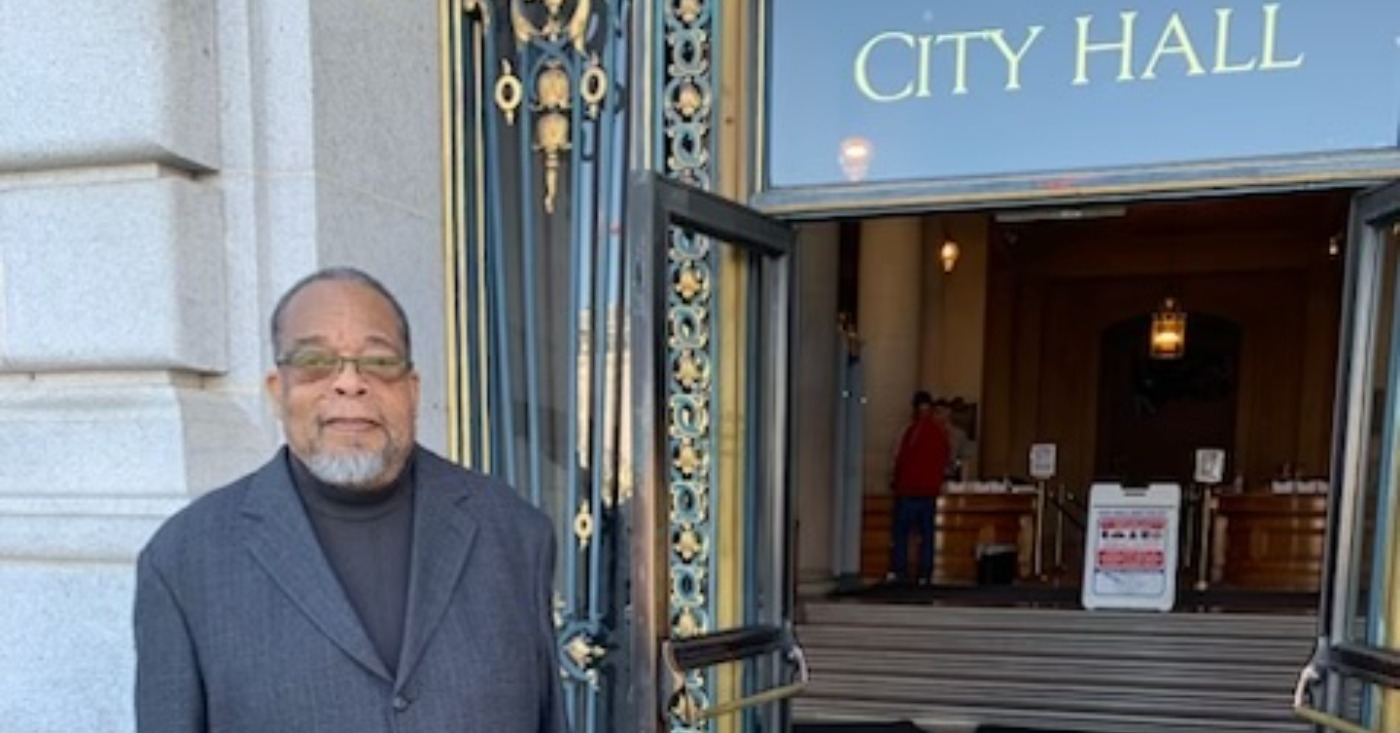
Claude T. Everhart, first African American deputy mayor and chief of staff to former San Francisco Mayor Art Agnos who served working families and communities of color for 50 years, died on Oct 27 in Oakland. He was 73.
“Claude Everhart was… He was the engine room of our administration’s most significant efforts to improve the lives of our city’s most underserved populations San Francisco has lost a true champion of the people, and I have lost a very dear friend and a trusted partner,” Agnos said in a statement.
Born in San Francisco in 1952, Everhart graduated from Lowell High in ’70. As a student, he was involved in the Black Panther Party, participating in various demonstrations, the San Francisco State College strike, and the Party’s Free Breakfast Program.
As a teen, he led the Oceanview–Merced–Ingleside Community Organization, created summer jobs for youth, and opened a group home as an alternative to incarceration.
In 1974, he became the first executive director of Young Community Developers (YCD) The program was founded by a group of young Black activists who pushed City Hall for funding to train residents for jobs at the Hunters Point Naval Shipyard.
More than 50 years later, YCD is still providing job readiness training, reentry services for formerly incarcerated adults, and youth programming, and Everhart remained on the board into recent years.
Everhart joined Agnos’ staff in 1976, became his chief of staff and then executive deputy mayor when Agnos was elected mayor in 1988.
In that role, he was part of the leadership team that led San Francisco through the October 17, 1989, Loma Prieta earthquake (the city’s worst since 1906). The administration rebuilt the damaged infrastructure and decided to take down the quake-damaged Embarcadero Freeway, thereby opening the waterfront. They would not move the unhoused people displaced from the damaged shelters until new housing was available, and they created “Beyond Shelter,” which became a nationally recognized network of multi-service centers for the unhoused.
He took a few unpopular stands on behalf of the disadvantaged. He fought against the homeporting of the USS Missouri at Hunters Point on grounds of gentrification, demanded a full clean-up of the yard, and pushed for investigations and redress in the wake of allegations of racial discrimination in both the Police and Fire Departments.
He was instrumental in setting up the Mayor’s Office of Youth and Children’s Services, helped to divest the city’s retirement system from South Africa, brought a supermarket to Hunters Point, and worked to increase city contracting with minority-owned businesses.
He later served as a VP at Waste Management of Alameda County and as a political consultant to several people, including former Oakland Mayor Elihu Harris and San Francisco Assessor Doris Ward.
His legacy lives on through Jelani House (the family recovery and counseling program named for his late son), of which he was a board member and at the Ella Hill Hutch Community Center in the Fillmore, a long-standing youth and community center with a mural on the building in his honor.
Everhart is predeceased by his son Jelani. He is survived by his wife of 51 years, Sandra, and daughter, Maisha.
A memorial service will be held on Nov 23 at 11 a.m. at Jones Memorial UMC, 1975 Post St., San Francisco, CA 94115. In lieu of flowers, the family asks that donations be made to Young Community Developers and Jelani House.
Darolyn Davis is the president and CEO of D&A Communications.

Black History
‘We’re Committed to Delivering the Change that the American People Deserve’
House Speaker-designate Hakeem Jeffries recently outlined a legislative vision for the 120th Congress, emphasizing a commitment to affordability and government accountability. As the first Black congressman set to take up the Speaker’s gavel, Jeffries appeared alongside historic leadership selections Katherine Clark and Pete Aguilar to address the economic struggles facing American families. The Democratic nominee pledged to combat rising costs for groceries, housing, and healthcare while promising to address systemic corruption. Jeffries further detailed his strategy for representing diverse communities across the nation. Read more.
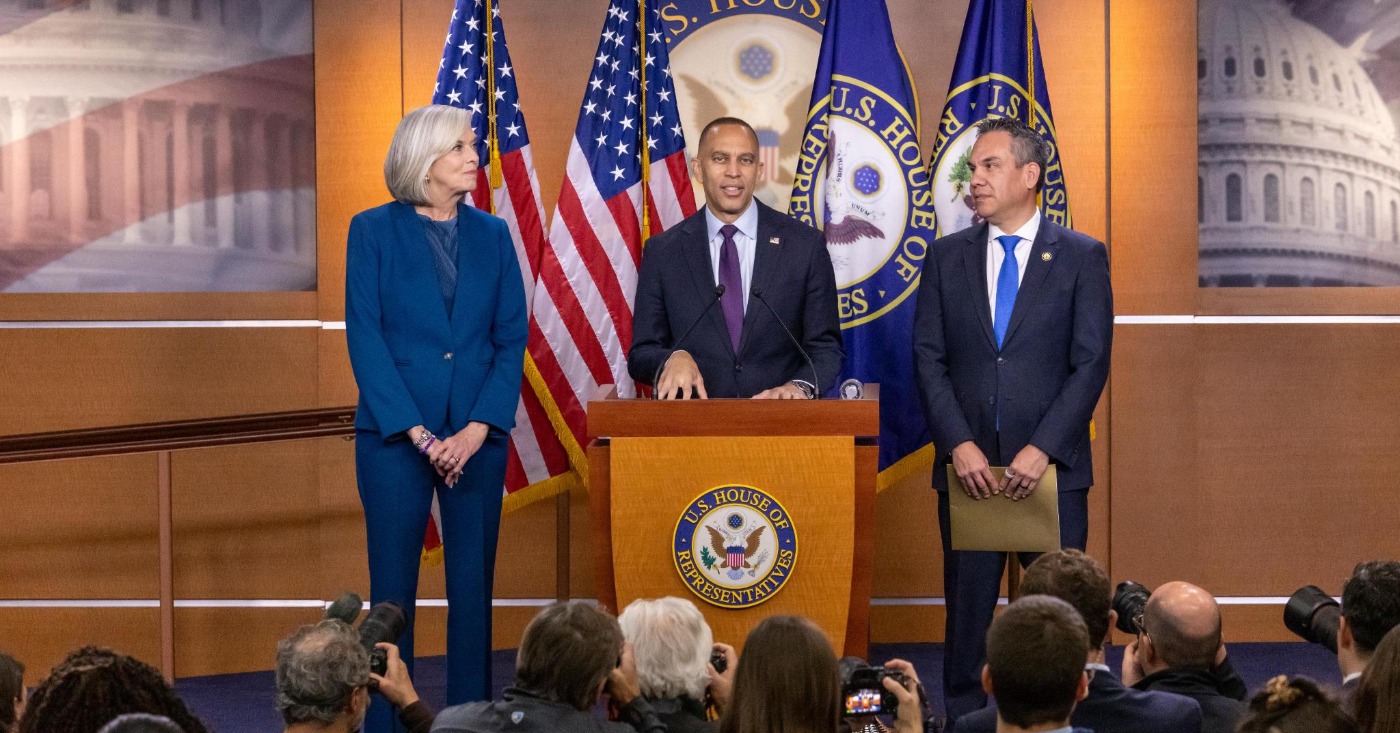
Hakeem Jeffriesto become the first Black congressman to take up the Speaker’s gavel
House Speaker-designate Hakeem Jeffries held a press conference where he emphasized that House Democrats are committed to delivering on their vision of affordability and accountability for the American people in the 120th Congress.
His remarks are shared below.
“It’s a high honor and a distinct privilege to stand before the American people today as the Democratic nominee to be the next Speaker of the United States House of Representatives. It’s a particular honor to stand with two amazing leaders, patriots, colleagues and friends. Katherine Clark, the Democratic Leader, the Majority Leader in the 120th Congress, a historic elevation, and Pete Aguilar, the next Majority Whip of the 120th Congress, also a historic elevation.
“We collectively know as House Democrats that life is way too expensive here in the United States of America. There are far too many people in this country who are working hard, they’re playing by the rules, but they can’t thrive and they can barely survive. That’s not acceptable here in this great country, the wealthiest country in the history of the world. We know the American people are struggling. We know millions of people are drowning in this failed Republican economy, and House Democrats are committed to turning things around.
“Our message to the American people who are struggling in this failed economy is a simple one. We hear you. We see you. We feel you. And House Democrats are committed to making life better for you. We’re going to fight for an affordable America. We’re going to fight to lower the high cost of groceries and gas and housing.
We’re going to fight to make healthcare affordable for every single American. And we’re going to fight to make sure that, in the face of the unprecedented corruption, chaos and cruelty visited upon the American people, that House Democrats will hold the crooks accountable, not for partisan reasons, but for patriotic ones, because the American people deserve better.
The 120th Congress is going to be the most diverse in America’s history. And we know that what brings people together are the challenges that Americans of every walk of life are experiencing. Our commitment is that we’re going to fight hard to make life better for everyone.
We’re going to fight for small-town America. We’re going to fight for urban America. We’re going to fight for rural America. We’re going to fight for the heartland of America. We’re going to fight for Black and brown communities all across America.
The people of this country are demanding bold, dramatic and transformational change. The status quo is unacceptable. And we’re committed to delivering, in a meaningful way, the type of change that the American people deserve so that everyone in this country can live an affordable life, a comfortable life and a good life.
U.S. Rep. Hakeem Jeffries’ media relations office is the source of this report.
Black History
PRESS ROOM: Governor-Elect Byron Donalds Announces Leadership Team for 2027 One Florida Inauguration
BLACKPRESSUSA NEWSWIRE — Under the theme “One Florida: A Celebration of the Florida Dream,” the inauguration will honor Florida’s rich history, celebrate the people and communities that make our state extraordinary, and look ahead to a future of opportunity for every Floridian.
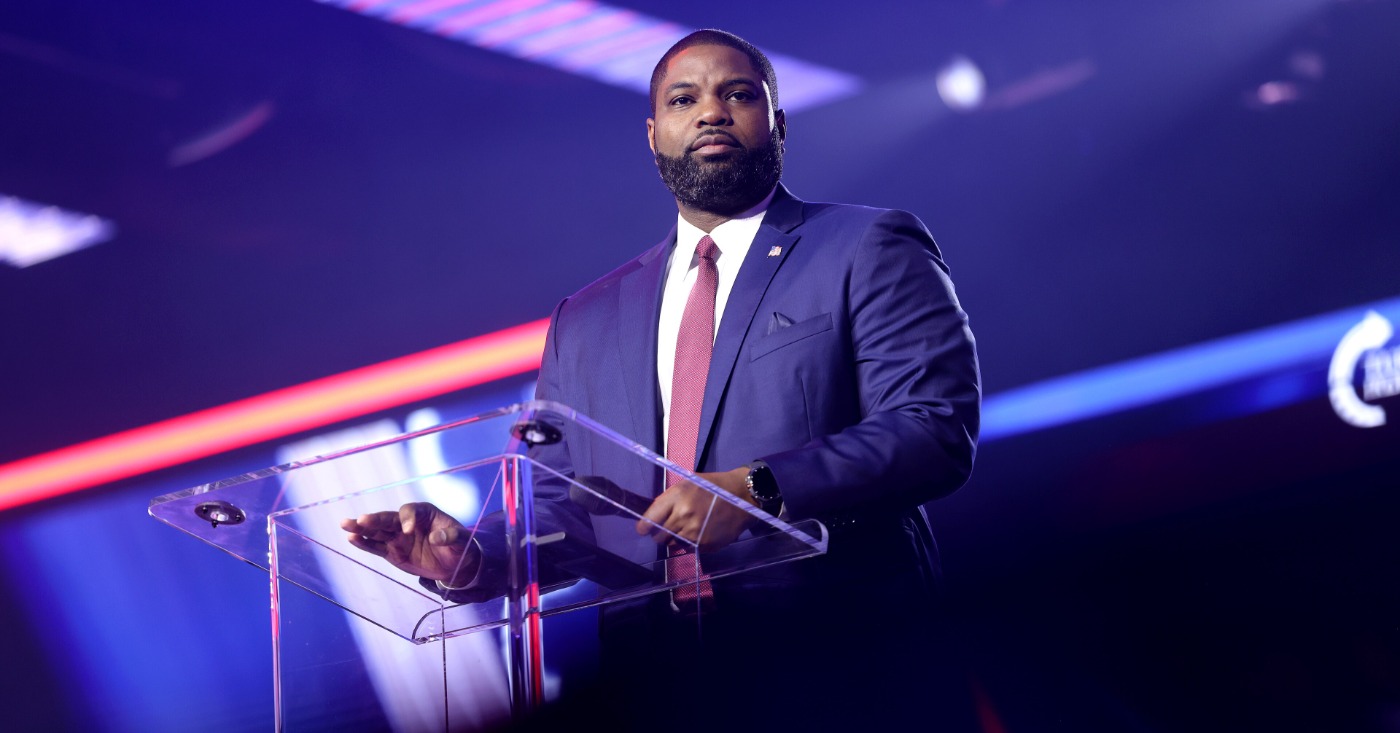
Erika Donalds to Serve as Inaugural Chair; Cindy Gil-Avila Named Honorary Co-Chair
Governor-elect Byron Donalds today announced the leadership team for the 2027 Florida Inauguration, which will mark the swearing-in of Governor-elect Donalds and Lieutenant Governor-elect Bryan Ávila on January 5, 2027.
Under the theme “One Florida: A Celebration of the Florida Dream,” the inauguration will honor Florida’s rich history, celebrate the people and communities that make our state extraordinary, and look ahead to a future of opportunity for every Floridian.
Erika Donalds will serve as Inaugural Chair, Cindy Gil-Avila as Honorary Co-Chair, and Ed Miyagishima as Executive Director. They will be joined by an experienced leadership team responsible for planning inaugural events, coordinating statewide outreach, and creating meaningful opportunities for Floridians to participate in this special moment in our state’s history.
Reflecting the spirit of One Florida, the leadership team brings together individuals with different backgrounds, experiences, and political perspectives, united by a shared commitment to Florida and its future.
Governor-elect Byron Donalds said:
“The opportunity to serve the people of Florida is an extraordinary honor, and one I will never take for granted. This inauguration isn’t just about a new administration. It’s about celebrating the people, communities, and shared aspirations that make Florida such a special place to call home. I’m grateful to Erika, Cindy, and this outstanding team for helping us create a celebration that reflects the spirit of One Florida and welcomes Floridians from every corner of our great state.”
Lieutenant Governor-elect Bryan Ávila said:
“I’m grateful to everyone who has stepped forward to help make this occasion meaningful for Floridians across our state. As we prepare for this new chapter, I look forward to celebrating the traditions that unite us, the communities that strengthen us, and the opportunities we can create together for the next generation.”
Inaugural Chair Erika Donalds said:
“I’m deeply honored to help bring this celebration to life. Florida is a remarkable place, not simply because of its beauty or opportunity, but because of its people — hardworking families, entrepreneurs, educators, first responders, and neighbors who make our communities strong. We want this inauguration to reflect the very best of Florida: the traditions we cherish, the communities we call home, and the hope we share for our children and grandchildren. Above all, we want every Floridian to feel that this is their celebration, because the Florida Dream belongs to all of us.”
2027 One Florida Inaugural Leadership Team
- Erika Donalds — Inaugural Chair
- Cindy Gil-Avila — Honorary Co-Chair
- Ed Miyagishima — Executive Director
- Danielle Alvarez — Senior Advisor
- Bobby DuBose — Senior Advisor
- Brad Herold — Senior Advisor
- Amanda Emmons — Deputy Executive Director, Donor Operations
- Julia Friedland — Deputy Executive Director, Communications
- Yen Le — Deputy Executive Director, External Outreach
- Megan McKinley — Deputy Executive Director, Donor Relations
About the Inaugural Leadership Team
Erika Donalds — Inaugural Chair
Erika Donalds is an education entrepreneur, nonprofit founder, and former elected school board member with a longstanding commitment to expanding educational opportunity for Florida families. She founded the Education Freedom Foundation and OptimaEd and has helped establish six classical charter schools. Her public service includes the Collier County School Board, the Florida Constitution Revision Commission, and the Florida Gulf Coast University Board of Trustees.
Cindy Gil-Avila — Honorary Co-Chair
Cindy Gil-Avila is an entrepreneur and leadership development professional with more than 15 years of experience helping individuals and organizations thrive. She founded Capability Growth Associates, where she focuses on developing leaders, strengthening workplace cultures, and helping organizations reach their potential. Originally from Bogotá, Colombia, she lives in Miami Springs with her husband, Lieutenant Governor-elect Bryan Ávila, and their two children. She brings a passion for family, community, and service to her role as Honorary Co-Chair of the 2027 One Florida Inauguration.
Ed Miyagishima — Executive Director
Ed Miyagishima brings extensive experience in government operations, protocol, and major event planning. His federal service spans three presidential administrations and includes coordinating official visits and major events. He previously served as Florida’s Director of Protocol and International Affairs under Governor Rick Scott and as Senior Advisor for Campaign Operations for Byron Donalds for Governor.
Danielle Alvarez — Senior Advisor
Danielle Alvarez will serve as Senior Advisor to Governor-elect Byron Donalds’ Inauguration, having advised his campaign since its launch. A Partner at Mercury, Alvarez most recently served as Senior Advisor to President Trump at the White House and on his winning 2024 campaign. She previously served as RNC Communications Director, and served in Governor Rick Scott’s administration.
Bobby DuBose — Senior Advisor
Bobby DuBose is a former Florida House Democratic Leader and longtime public servant from Fort Lauderdale. He represented his community in the Florida House of Representatives from 2014 to 2022, serving as Democratic Leader from 2020 to 2022. He previously served as a Fort Lauderdale city commissioner and vice mayor and is a graduate of the University of Florida.
Brad Herold — Senior Advisor
Brad Herold is a partner at Something Else Strategies and an experienced political and communications strategist. He served as Senior Advisor to Governor-elect Donalds’ 2026 campaign, managed Ron DeSantis’ 2018 gubernatorial campaign, and previously served as Executive Director of the Republican Party of Florida.
Amanda Emmons — Deputy Executive Director, Donor Operations
Amanda Emmons brings experience in fundraising operations and organizational management. She helped lead the finance team for Byron Donalds for Governor and previously served as Finance Director for U.S. Senator Kelly Loeffler’s Senate campaign. She is President of ANE Strategies LLC and resides in Jupiter, Florida.
Julia Friedland — Deputy Executive Director, Communications
Julia Friedland is a Vice President at Mercury with extensive experience in government, public affairs, and strategic communications. She previously served in Governor Ron DeSantis’ press office, as Director of Development and Partnerships for SelectFlorida, and in communications leadership roles with the Republican Party of Florida and Republican National Committee.
Yen Le — Deputy Executive Director, External Outreach
Yen Le brings experience in statewide outreach, coalition engagement, and organizational leadership. She served as Political Director for Byron Donalds’ gubernatorial campaign and previously held leadership roles with Senator Marco Rubio’s campaign, the Republican National Committee, and the Republican Party of Florida. She also worked with the Florida Senate and in the private sector.
Megan McKinley — Deputy Executive Director, Donor Relations
Megan McKinley is a Tallahassee native with extensive experience in fundraising and political finance. She served as Finance Director for Byron Donalds for Governor and previously held finance roles for Senator Marco Rubio, Senator Tim Scott, and the National Republican Senatorial Committee. She is a graduate of the University of Georgia.
One Florida: A Celebration of the Florida Dream
One Florida is a tribute to the people who have built this state and the generations who will shape its future.
From the Panhandle to the Keys, from our largest cities to our smallest towns, every community and every Floridian has a place in the story of our state.
The 2027 inauguration will celebrate the people, traditions, and opportunities that make Florida extraordinary, while honoring the responsibility of public service and looking ahead with gratitude, optimism, and a renewed commitment to the Florida Dream.
Additional announcements, including the members of the One Florida Inaugural Committee, event details, and opportunities for public participation, will be shared in the coming weeks.
For updates, visit onefloridainauguration.com.


Minnesota Hip-Hop in 1979: Finding Music on KMOJ #shorts

Set Boundaries, Choose Yourself: The Mind the Crown Lifestyle #shorts

Recording at Prince’s Paisley Park Led to a No. 1 Hit #shorts

The Green Book: How Black Families Traveled Safely #shorts
2027 Cadillac VISTIQ Is This $96,271 SUV Quiet Enough?

The Hidden Costs of Buying: Protect Your Budget and Peace of Mind #shorts

2027 Chevy Tahoe High Country: Is $96,575 Worth It? #shorts
Actress Heather Alicia Simms on Broadway and Caribbean Theater

Playfessionals: Building Real Community for Twin Cities Professionals | MSR On the Radar

Minnesota Hip-Hop’s First First Avenue Shows in 1983 #shorts

HISTORY MADE: Keisha Lance Bottoms Becomes First Black Woman Elected Governor in American History

Multi-Faith Leaders Representing 10 Million People Launch National Anti-Authoritarian Initiative

Christianity’s Racial History

Hundreds of Black Christian Leaders Arriving in Israel for Martin Luther King-Inspired Mission

Michael Shiner: The Enslaved Man Who Wrote His Way into American History

Keisha Lance Bottoms to Govern State Where Her Great-Great-Grandfather Was Enslaved

Don’t Pass the Torch. Expand the Circle.

DOJ Fights to Keep Rep. Ilhan Omar’s Search Warrant Sealed: Report

OP-ED: Closing the Next Digital Divide — Communities of Color Must Have a Voice in the AI Future

Five Hospitals Said No! Who Will Help Annette Henry Recover?
Minnesota Hip-Hop in 1979: Finding Music on KMOJ #shorts
Set Boundaries, Choose Yourself: The Mind the Crown Lifestyle #shorts
Recording at Prince’s Paisley Park Led to a No. 1 Hit #shorts
The Green Book: How Black Families Traveled Safely #shorts
The Hidden Costs of Buying: Protect Your Budget and Peace of Mind #shorts
2027 Chevy Tahoe High Country: Is $96,575 Worth It? #shorts
Playfessionals: Building Real Community for Twin Cities Professionals | MSR On the Radar
Minnesota Hip-Hop’s First First Avenue Shows in 1983 #shorts

Free Shipping at $85—Plus Big Plans for Wholesale and Expansion #shorts

Where Would You Charge Your EV: At Home or in Public? #shorts
-

 Black Press1 week ago
Black Men Encouraged to Start Prostate Cancer Screening at 45
-
 Black History6 days ago
Black Barbershops Have Long Given Neighborhood Politics a Place to Unfold.
-
 Black Press1 week ago
Computational Thinking and Young Children: It’s Not What You Might Think!
-
 Black History1 week ago
Debunking the Myth That Europeans Alone Plotted Africa
-

 Black Press1 week ago
Alonzo Mourning’s Affordable Senior Housing
-
 Black History1 week ago
Wichita’s Only Black-Owned Bookstore Seeks $90,000 to Secure Its Future
