
Art
Blacks Are Beautiful, Brilliant and Stupendous on Broadway by Linda Armstrong
HARLEM COMMUNITY NEWSPAPERS — Black cast members are delivering soul-stirring performances across 28 current Broadway productions. These shows highlight the grace, talent, and soul-rejuvenating abilities of Black actors on the Great White Way. Audiences can experience moments of pure delight in musicals such as “Ragtime,” “MJ: The Musical,” “The Lion King,” and “Hadestown,” where Black performers are notably featured.

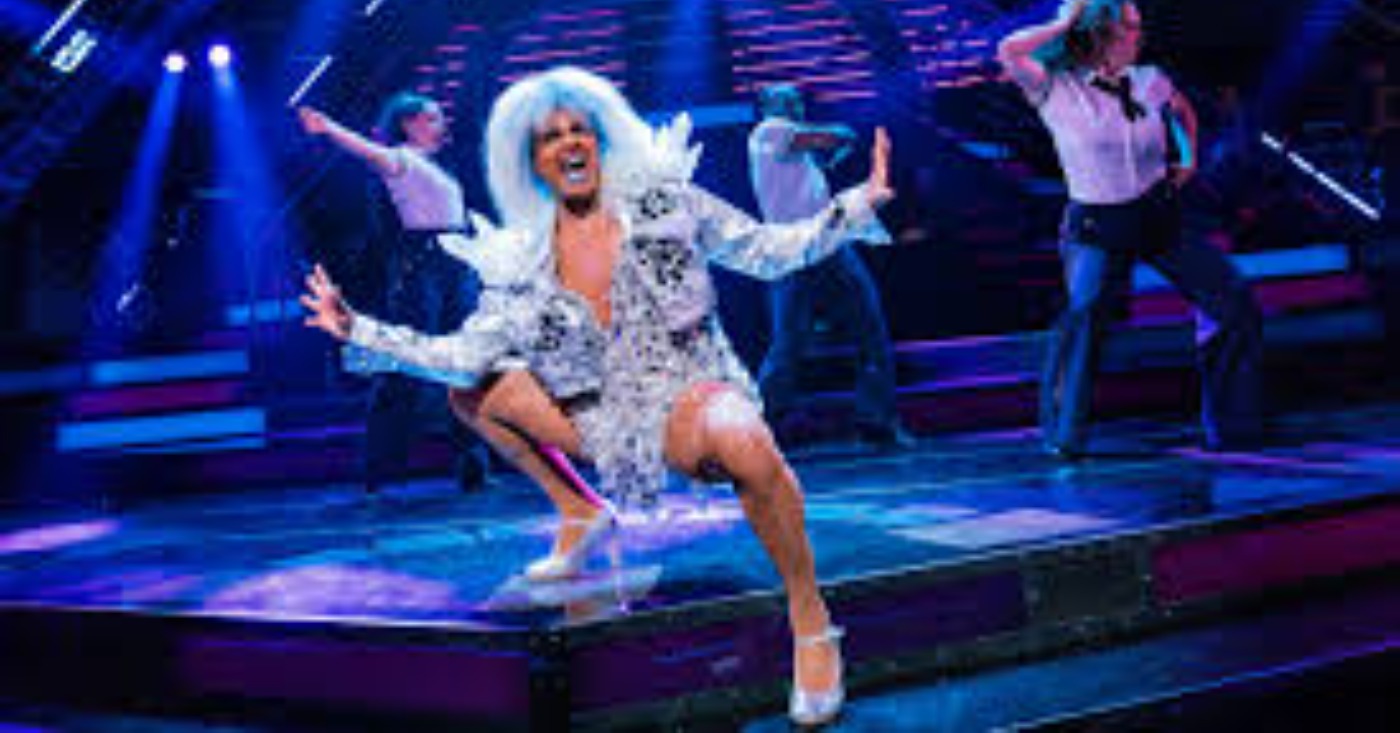
Black cast members are blessing audiences with soul-stirring performances on Broadway. There are currently 28 productions that are splendidly spotlighting our grace, talent, and soul-rejuvenating abilities on the Great White Way. Moments of pure delight await you whether you go to experience “Ragtime”, “MJ: The Musical”, “The Lion King”, or “Hadestown.” It blesses my soul every time I look at a Broadway stage and see us being spectacular!
“& Juliet” playing at the Stephen Sondheim Theatre asks what would happen next if Juliet didn’t end it all over Romeo? She gets a second chance at life and loves her way. It stars Gianna Harris (Juliet) and features Mackenzie Meadows (Lady Capulet/Nell); Zalah Vallien (Judith); Darien Daah Van Rensalier (Augustine); and Michael Ivan Carrier (Thomas).
“Aladdin,” playing at the New Amsterdam Theatre, is Disney’s movie come to life and tells the story of Aladdin, a poor boy, falling in love with Princess Jasmine. The musical features Michael James Scott (the Genie); JC Montgomery (Sultan); and Dennis Stowe (Jafar).
“The Book of Mormon,” playing at the Eugene O’Neill Theatre, is a musical about the Mormon faith. Derrick Williams (the General); Jacques C. Smith (Mafala Hatimbi), and Sydney Quildon (Nabulungi).
“Buena Vista Social Club,” playing at the Schoenfeld Theatre, is inspired by true events and shows you the heart of Cuba, telling the story of the legends who lived and created the musical sounds of Havana. The cast features Natalie Venetia Belcon (Omara); Chris Myers (Juan De Marcos); Jaleel Battles Jr. (Young Ibrahim); Isa Antonetti (Young Omara); Leonardo Reyna (Young Ruben); Da’Von T. Moody (Compay); Ashley De La Rosa (Young Haydee); Mel Seme (Ibrahim); and Jainardo Batiste Sterling (Ruben).
“CATS: The Jellicle Ball,” playing at the Broadhurst Theatre only through August 8th, is Andrew Lloyd Webber’s “CATS” reimagined, and the Jellicle Cats are having a Ball. It is Broadway meets runway, a purrrfect time. This production has an amazing cast which features Andre De Shields (Old Deuteronomy); Bebe Nicole Simpson (Demeter); Dava Huesca (Rumpleteazer); Dudney Joseph Jr. (Munkustrap); Garnet Williams (Bombalurina); Jonathan Burke (Mungojerrie); Junior La Beija (Gus); Nora Schell (Bustopher Jones); Primo Thee Ballerino (Tumblebrutus); Robert “Silk” Mason (Magical Mister Mistoffelees); Sydney James Harcourt (Rum Tum Tugger); Teddy Wilson Jr. (Sillabub) and “Tempress” Chasity Moore (Grizabella).
“Chicago,” playing at the Ambassador Theatre, tells the delightful, sexy stories of the women of Murderess Row. It features Jacqueline B. Arnold (Matron “Mama” Morton); Sean Samuels (Martin Harrison); and James T. Lane (Harry/The Jury).
“Death Becomes Her,” playing at the Lunt Fontanne Theatre, is a musical comedy based on the 1992 film of the same name, about two women who want to stay young and work out an unholy alliance to stay beautiful, so of course it backfires. It stars Michelle Williams (Viola Van Horn) and features Taurean Everett (Chagall).
“Death of a Salesman,” playing at the Winter Garden Theatre, tells the compelling story of salesman Willy Loman. It features K. Todd Freeman (Charley); Michael Benjamin Washington (Bernard); and Karl Green (Young Bernard).
“The Great Gatsby,” playing at The Broadway Theatre, is an amazing musical telling of the classic novel by F. Scott Fitzgerald. It features China Anne McClain (Daisy Buchanan) and Corbin Bleu (Nick Carraway).
“Hadestown,” playing at the Walter Kerr Theatre, tells the myth of Orpheus trying to overcome Hades and return to his love. The cast stars J. Harrison Ghee (Hermes); Gary Dourdan (Hades); Jordan Tyson (Eurydice); John-Michael Lyles (Orpheus) and features Khori Michelle Petinaud (Fate).
“Hamilton,” playing at the Richard Rodgers Theatre, is a beloved musical that focuses on the life of Alexander Hamilton. The cast stars Marcus John (Alexander Hamilton), and features Lencia Kebede (Angelica Schuyler); Donald Webber Jr. (Aaron Burr); Simon Longnight (Marquis de Lafayette/Thomas Jefferson); Isaiah Johnson (George Washington); Wallace Smith (Hercules Mulligan/James Madison) and Amina Faye (Peggy Schuyler/Maria Reynolds).
“Harry Potter and the Cursed Child” playing at the Lyric Theatre tells an engaging story of Harry Potter and other students at Hogwarts. It’s a magical time at the theatre! It features Rachel Christopher (Hermione Granger).
“Just In Time,” playing at Circle In The Square Theatre, is about the life of singer Bobby Darin. It features Lance Roberts (Ahmet Kirshner).
“The Lion King,” playing at the Minskoff Theatre, is the beloved Disney musical that brings the movie version of the same name to glorious life with lifelike puppets, a captivating storyline, powerful, meaningful songs, and helps one appreciate the circle of life. It stars L. Steven Taylor (Mufasa); Sidney Nicole Wilson (Sarabi); Pearl Khwezi (Nala); and Bonita Hamilton (Shenzi).
“The Lost Boys” will be playing at the Palace Theatre with previews beginning March 27. The new musical tells the story of Lucy and her two teenage sons as they move to a sunny coastal community in search of a new start, only to discover that it has a terrifying secret. The cast features Dean Maupin (Paul) and Maria Wirries (Star).
“MJ The Musical,” playing at the Neil Simon Theatre, tells the story of Michael Jackson’s life and features 25 of his biggest hits. The cast stars Matte Martinez (MJ) and features Brandon Lee Harris (Michael); Antoine L. Smith (Joseph Jackson/Rob); Sasha Allen (Katherine Jackson); Christopher Sean Cooper Jr. and Jackson Robert Vann alternate as Little Michael; Blake Channing Taylor (Little Marlon); Matthew Frederick Harris (Tito Jackson/Quincy Jones); Michael Andreaus (Berry Gordy/Nick); Lloyd A. Boyd III (Randy Jackson); John Edwards (Jackie Jackson); Nick T. Daly (Jermaine Jackson); and Brion Marquis Taylor (Marlon Jackson).
“Moulin Rouge” is playing at the Al Hirschfeld Theatre. As Bohemians and Aristocrats mingle, this musical celebrates truth, beauty, freedom, and love. It features Andre Ward (Toulouse-Lautrec); Rayven Bailey (Arabia) and Donnie Hammond (La Chocolat).
“Oh Mary,” playing at the Lyceum Theatre, is a dark comedy about a miserable, suffocated Mary Todd Lincoln in the weeks prior to Abraham Lincoln’s assassination. It stars Phillip James Brannon ( Mary’s Husband).
“The Outsiders,” playing at the Jacobs Theatre, is a musical that tells the story of the haves and the have-nots as poor and rich kids clash. It features Runako Campbell (Ace); and Alejandro MullerDahlberg (Steve).
“Paranormal Activity” will play starting August 14 at the August Wilson Theatre; it tells the story of James and Lou who move from Chicago to London to escape their past, but they soon discover that places aren’t haunted, people are. The play stars Travis A.Knight (James).
“Ragtime” playing at Lincoln Center’s Vivian Beaumont Theater tells the incredibly musical story of three families going after the American Dream, it shows racism against Blacks and prejudice against immigrants in this country and features a brilliant Black cast including Joshua Henry (Coalhouse Walker Jr.); Nichelle Lewis (Sarah); John Clay III (Booker T. Washington); and Caleb Stallings (Coalhouse Walker III).
“The Rocky Horror Show,” playing at Studio 54, is a sexy, fun cult classic musical. It encourages audience participation. It features Amber Gray (Riff Raff); Michaela Jae Rodriguez (Columbia) and Boy Radio (Phantom).
“Schmigadoon!” playing at the Nederlander Theatre is a hilarious musical comedy about a couple living in a musical as they try to find love. It features Ayaan Diop (Carson) and Isabelle McCalla (Emma Tate).
“Six” is playing at the Brooks Atkinson Theatre. A British pop musical, it goes into the lives of the six ex-wives of King Henry VIII. The cast features Khalia Wilcoxon (Catherine of Aragon) and Olivia Donalson (Anna of Cleves).
“Stranger Things: The First Shadow,” playing at the Marquis Theatre, is based on the Netflix TV show; the story captivates on Broadway. The production stars Ayana Cymone (Patty Newby) and features Zoe Sage (Sue Anderson) and Jennie Harney-Fleming (Patty’s Mom).
“Two Strangers (Carry A Cake Across New York) playing at the Longacre Theatre, tells the story of Dougal, a Brit who comes to New York for his father’s wedding and meets Robin, the sister of the bride. They reveal deep truths about themselves as they run errands for the bride. The play stars Christiani Pitts (Robin).
“Titanique,” playing at the St. James Theatre, is a delightful musical comedy about the Titanic and Celine Dion’s remembrance as a passenger on the doomed voyage. The production stars Deborah Cox (Unsinkable Molly Brown) and features Layton Williams (The Seaman, Iceberg).
“Wicked,” playing at the Gershwin Theatre, tells the story of the wicked witch and Glinda in a way you have never heard before and will not soon forget. It utilizes Black actors in ensemble, swing, and understudy roles.
Actors are people who I believe bless audiences with their vast gifts. They can educate, enlighten, and inspire us on so many levels. Black actors on Broadway are doing a magnificent job in every performance, giving their hearts and souls to the work. With all that they willingly and happily share with Broadway audiences—their talent, their strength, their heart- please make it your business to share your presence. Go and see a Broadway show; let them know you truly appreciate them and care. Every one of us needs to feel supported.
Based on reporting by Harlem Community Newspapers.








Art
Houston’s ‘call Me Mother’ Exhibit Opens Today, Spotlighting Black Maternal Health
AFRICAN-AMERICAN NEWS AND ISSUES – DALLAS — The Health Museum in Houston today opens “The Call Me Mother Experience,” an exhibition spotlighting Black maternal health through art and personal storytelling. Curated by Houston’s first Black poet laureate, Deborah D.E.E.P. Mouton, the project originated from her own poem written during a miscarriage.
HOUSTON — A new exhibition opening Sunday, Oct. 4, at The Health Museum is bringing Black maternal health into public view through art and personal storytelling.
The Call Me Mother Experience will be on display through Feb. 28, 2027. The museum lists a preview reception today from 3 to 5 p.m. at 1515 Hermann Drive, with tickets priced at $5 for members and $15 for nonmembers.
A personal story becomes a community conversation
According to the museum, founder, curator and lead artist Deborah D.E.E.P. Mouton developed the project from a poem she wrote during a miscarriage. The installation combines films, recorded interviews, visual artwork and contributions created with community members.
Mouton, Houston’s first Black poet laureate, discussed the exhibition and her connection to its subject in an Oct. 1 appearance on KPRC’s Houston Life. The station described the project as addressing the unequal burden of pregnancy-related illness and death faced by Black women in Harris County.
An announcement distributed by the Call Me Mother Experience says the initiative will also reach community locations and faith-based organizations across Greater Houston. Those additional settings are intended to extend the conversation beyond a museum visit.
What visitors can expect
The museum says reception guests can explore the exhibit, hear the curator and meet participating artists. Reception admission includes general museum entry; refreshments are available while supplies last.
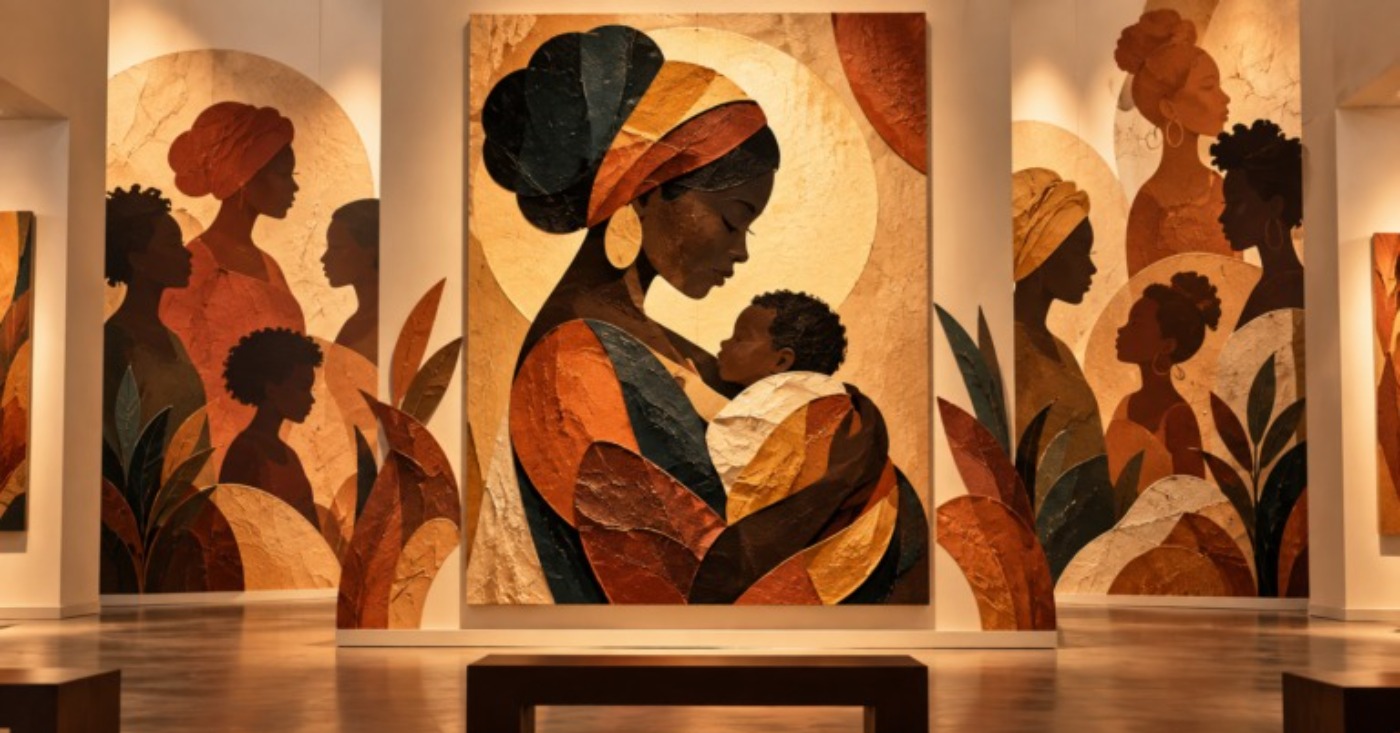
The featured image accompanying this article is an original illustrative concept, not a photograph of the exhibition or its artwork.
Sources and visitor information:The Health Museum exhibition listing; preview reception details and tickets; KPRC Houston Life; organizer announcement.
The post Houston’s ‘Call Me Mother’ Exhibit Opens Today, Spotlighting Black Maternal Health appeared first on African American News and Issues.
Based on reporting by African-American News and Issues – Dallas.
Art
Montclair Brewery: Brewing Culture, Community, History
THE POSITIVE COMMUNITY — Montclair Brewery, located in Montclair, New Jersey, has evolved beyond a craft beer destination into a community gathering place. Founded by husband-and-wife team Leo and Denise Sawadogo, the brewery connects its beers to African, Caribbean, and African American history and culture.
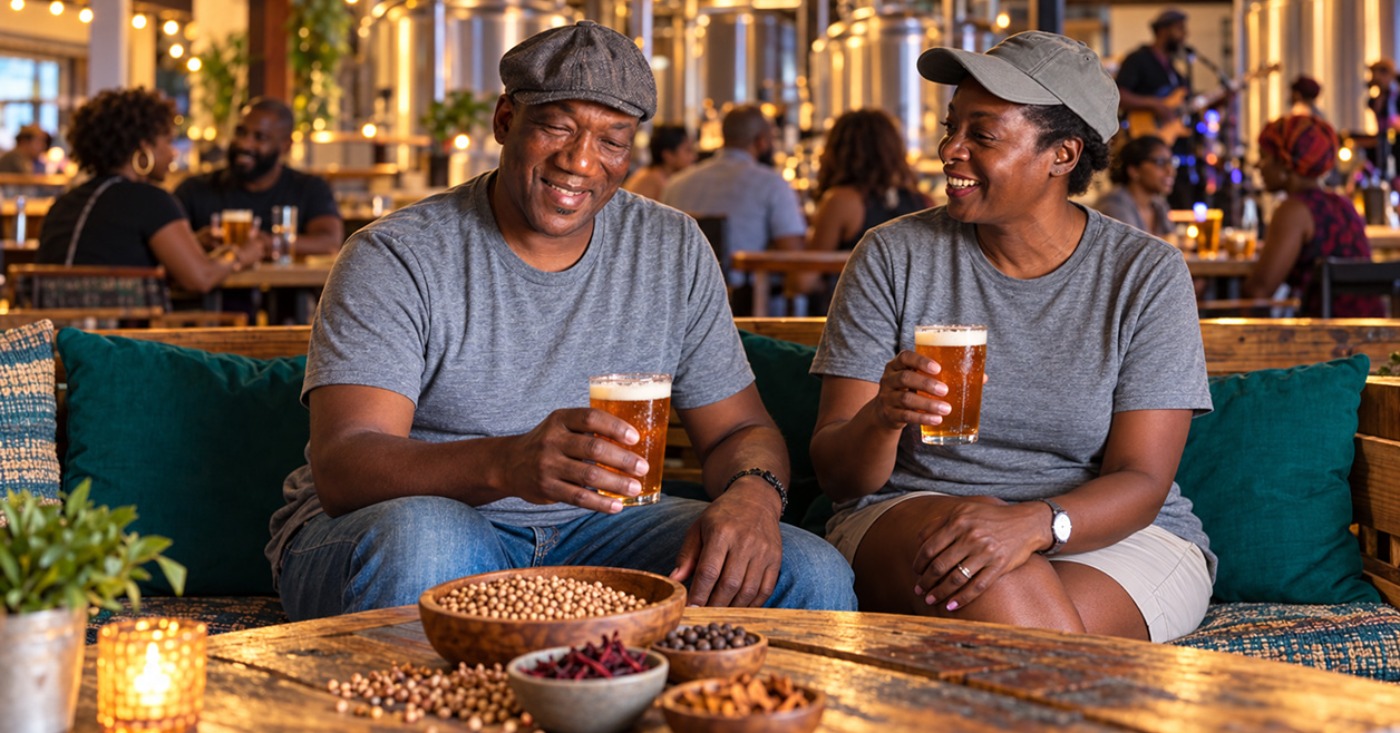
Montclair Brewery has become much more than a place to enjoy a craft beer. Located on Walnut Street in Montclair, New Jersey, the family-owned microbrewery has developed into a gathering place where beer, music, culture, history and community come together. Founded by husband-and-wife team Leo and Denise Sawadogo, the brewery has established a distinctive identity by connecting its beers to African, Caribbean and African American history and culture.
The story began with Leo Sawadogo’s passion for home brewing. Originally from Burkina Faso in West Africa, Leo grew up watching his mother brew traditional beverages using grains, herbs and spices. Brewing was part of his cultural experience long before craft beer became a major American trend. After years of making beer at home and sharing it with friends and family, Leo and Denise began imagining how they could transform that passion into a business. The company was established in 2014, and after years of planning and nearly a year of construction, Montclair Brewery opened its doors in October 2018.
The brewery represented an important milestone for Montclair because it became the town’s first microbrewery. But its significance extended beyond being a new business. Leo and Denise brought together two different cultural backgrounds: Leo’s West African heritage and Denise’s Jamaican roots. Those influences became part of the brewery’s personality and, importantly, part of the beers themselves. Instead of treating culture as something separate from the business, the couple made it an essential ingredient in their approach to brewing.
One of the brewery’s most distinctive traditions is its annual Black History Month beer series. These beers are often inspired by prominent figures, historical events and cultural traditions. Over the years, the brewery has created beers honoring people such as Harriet Tubman, Larry Doby, Maya Angelou, Chadwick Boseman and journalist Gil Noble. The brewery has also used its beers to celebrate African heritage and important moments in Black history. In 2026, for example, its series included beers inspired by Patrice Lumumba and Larry Doby.
The story behind each beer is almost as important as the beer itself. Montclair Brewery demonstrates how food and beverages can become vehicles for storytelling. A beer named for Larry Doby can introduce customers to the history of the baseball pioneer who broke the American League’s color barrier and later made Montclair his home. A beer inspired by Patrice Lumumba can encourage people to learn about African independence and the history of the Democratic Republic of Congo. In this way, the brewery turns a visit to a taproom into an opportunity for cultural discovery.
Montclair Brewery has also connected its business to local history. One example is the Howe House, one of Montclair’s historic homes associated with the town’s African American history. The brewery created a Belgian-style ale honoring James Howe and committed a portion of sales from the beer toward efforts to preserve the historic property. This illustrates a larger philosophy behind the brewery: its identity is not simply based on selling beer, but on using the business as a platform to recognize people, places and stories that deserve greater attention.
The brewery’s importance also comes from its role as a community gathering place. Its taproom offers indoor and outdoor seating and hosts a variety of events and activities. Music, entertainment, cultural programs and community gatherings have helped make the brewery part of Montclair’s social landscape. During the COVID-19 pandemic, when gathering in public spaces became difficult, the brewery adapted its business model by shifting toward bottling and outdoor operations. Its ability to adapt helped it survive a period that was devastating for many small businesses.
Another important part of Montclair Brewery’s story is representation within the craft-beer industry. Black-owned breweries remain a small portion of the American craft-brewing landscape, making the visibility of businesses like Montclair Brewery particularly significant. Denise has also become an important voice for women in the brewing industry, while Leo’s background and approach have helped challenge traditional ideas about who a brewer is supposed to be. Together, they demonstrate that the craft-beer industry can reflect a much broader range of cultures and experiences.
The brewery’s success has also allowed its reach to extend beyond Montclair. Its beers have received attention from regional and national media, and the company has participated in collaborations with other breweries and cultural organizations. One collaboration celebrated the 50th anniversary of hip-hop with the legendary DJ duo Awesome 2. Other beers have incorporated ingredients such as baobab fruit, sorghum and spices connected to African and Caribbean traditions. These collaborations and unusual ingredients help distinguish Montclair Brewery from breweries whose identities are based primarily on conventional beer styles.
Ultimately, Montclair Brewery represents an example of how a small business can become part of the cultural fabric of a community. Leo and Denise Sawadogo created a brewery from a personal passion, but they built something larger than a place to drink. Their beers tell stories about Africa, the Caribbean, Black America and Montclair itself. The brewery demonstrates that entrepreneurship can preserve history, celebrate culture and bring people together. In Montclair, every pint can become part of a larger conversation about heritage, creativity, community and the continuing evolution of Black-owned businesses in America.
Based on reporting by The Positive Community.
Art
From Ma Rainey to AI: New Technology Amplifies an Old Fight over Artist Control
HOWARD UNIVERSITY NEWS SERVICE — August Wilson’s “Ma Rainey’s Black Bottom” explores Ma Rainey’s struggle for control over her music during a 1920s recording session, highlighting conflicts over art, money, and power dynamics between musicians and business interests. Round House Theatre’s production, running through October 18 in Bethesda, Maryland, stages this historical fight, drawing parallels to contemporary issues.
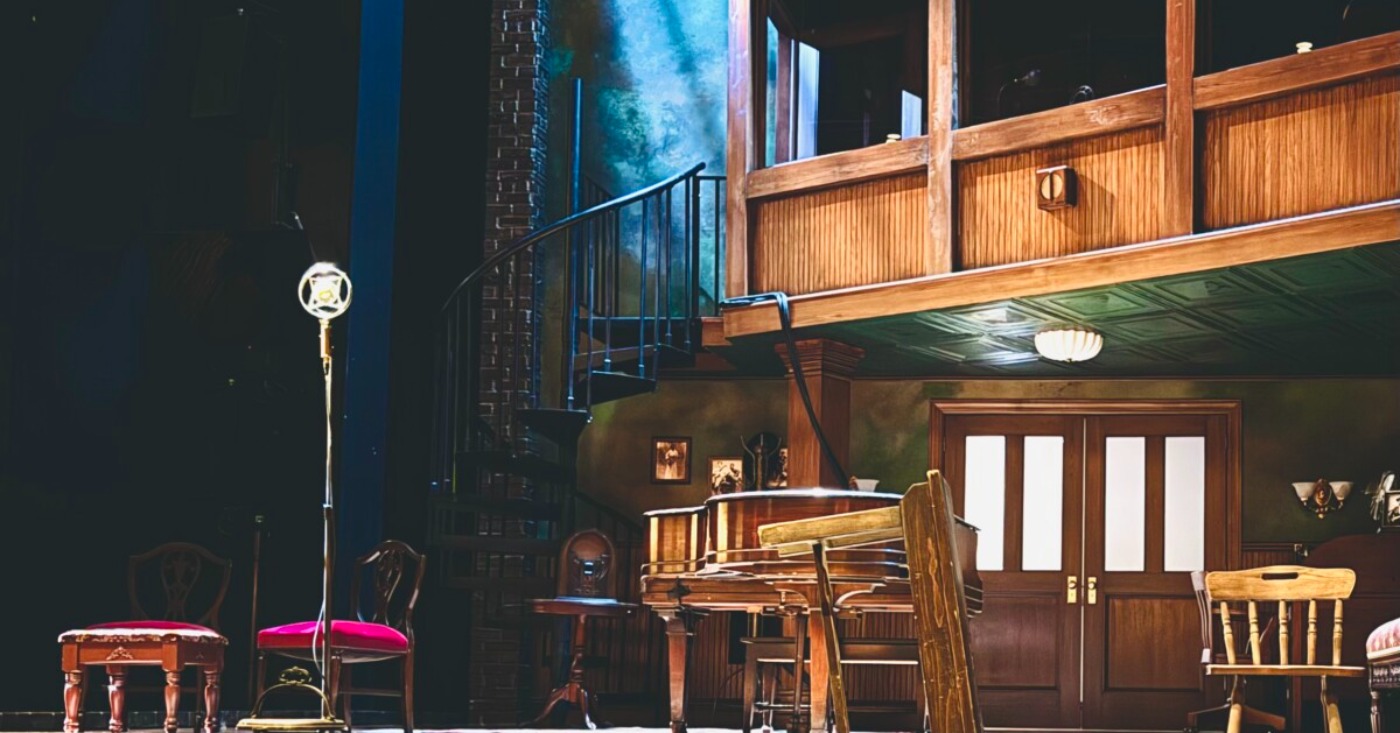
In August Wilson’s “Ma Rainey’s Black Bottom,” Ma Rainey fights to control what happens to her music once she enters the recording studio. Today, musicians are confronting a new question: What happens when artificial intelligence can profit from the identity attached to their music?
Round House Theatre’s production of “Ma Rainey’s Black Bottom,” which runs through Oct. 18 in Bethesda, Maryland, brings an older struggle over artistic control to the stage. Set during a recording session in 1920s Chicago, Wilson’s play follows Ma and her band as conflicts over art, money and control expose the imbalance between the musicians creating the work and the people conducting the business around it. That same question of who can profit from an artist’s value is now being tested in a very different setting nearly a century later.
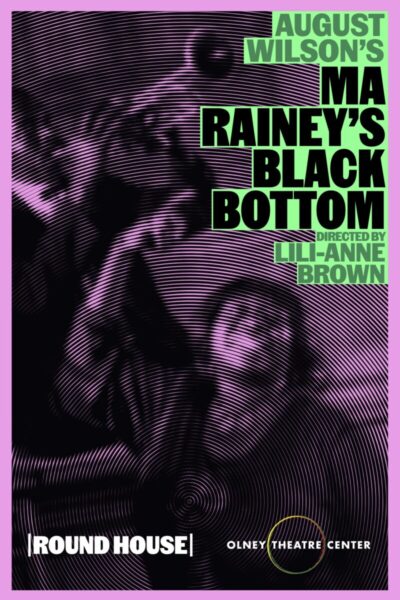
Musicians Jason Isbell, David Lowery, Guy Forsyth and Eduardo Calle filed a class-action lawsuit on Aug. 31 against AI music company Suno. They allege that the company commercially exploits artists through an AI system capable of generating music imitating artists’ identities and styles without permission. Suno disputes the allegations.
The U.S. Copyright Office has also studied AI-generated digital replicas and recommended federal legislation to address gaps in protections against unauthorized replicas of a person’s voice or appearance. Its broader AI inquiry received more than 10,000 public comments.
For Nicole Michelle Haskins, who portrays Ma Rainey in the Round House production, the struggle over power begins with understanding Ma as more than a demanding recording star.
“She is the only advocate she has,” Haskins said. “The choices presented to her are to surrender or fight. Ma chooses to fight.”
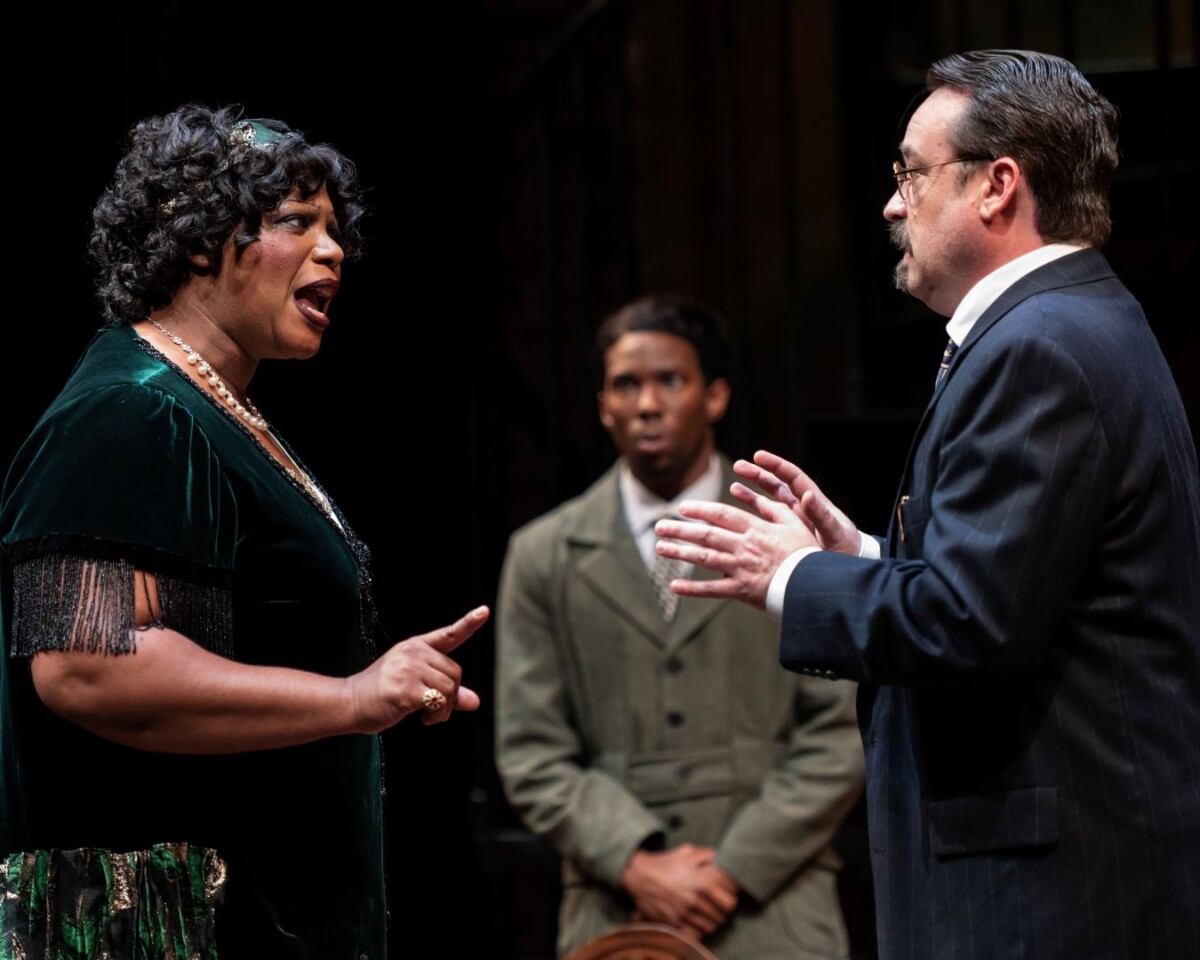
Haskins said Ma enters the recording studio knowing the value that she brings, even as the people around her repeatedly challenge her decisions. She exercises her leverage and pushes back when others attempt to dictate how the session will proceed.
The real Gertrude “Ma” Rainey was one of the earliest Black women to record blues commercially. Between 1923 and 1928, she made more than 100 recordings for Paramount Records, according to the Smithsonian.
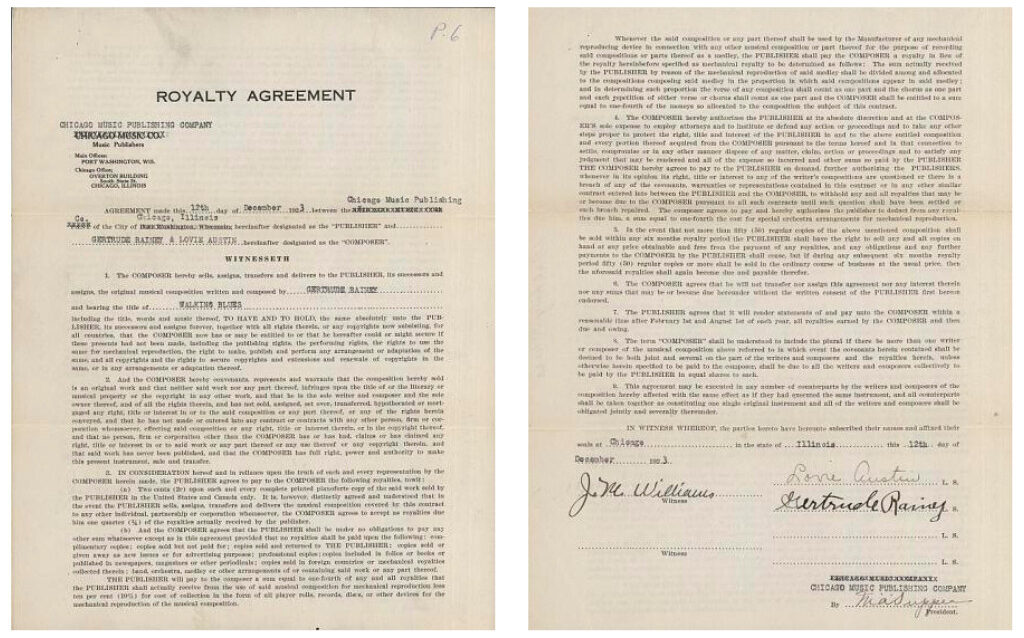
One surviving agreement shows how at least part of that business worked. A Dec. 12, 1923, royalty agreement for “Walking Blues,” signed by Rainey and composer Lovie Austin, provided them two cents for each printed piano copy sold in the United States and Canada. They were also entitled to one-fourth of the royalties the publisher received from mechanical reproductions, minus a 10% collection cost.
For Haskins, portraying a character negotiating those relationships does not feel entirely removed from being an artist today.
“The life that I live as an artist is not that dissimilar from the world that August Wilson has written,” Haskins said.
The technology surrounding artists, however, has changed dramatically.
The scale of AI-generated music has grown quickly. In July, streaming service Deezer said it was receiving about 90,000 fully AI-generated tracks a day, more than half of its daily uploads. Those tracks accounted for less than 3% of all streams.
The lawsuit against Suno is not primarily a traditional copyright case about whether an AI-generated song copied a particular recording. Instead, the musicians rely largely on state right-of-publicity laws, which concern the commercial use of a person’s identity.
According to the complaint, users can enter musicians’ names and use them as a retrieval key for AI-generated music drawing on characteristics associated with those artists. The plaintiffs argue that an output does not have to copy a specific song or perfectly reproduce an artist’s voice for the artist’s commercial identity to be exploited.
Suno disputes that characterization of its technology. The company has said it does not use artists’ names as training metadata and does not permit users to prompt its system for specific artists. Suno says references to artists are filtered and redirected toward descriptions of musical characteristics. Its own prompting guide, for example, encourages users to describe features such as tempo, vocals and instrumentation, using phrases like “bright pop track,” “110 BPM,” “female vocals” and a “big synth hook.”
The Suno dispute centers on more than ownership of a particular song or recording. It raises the question of whether an artist’s name, likeness and other identifying characteristics can be used commercially to generate new music without permission.
Haskins resists describing that underlying conflict as merely contemporary.
“I don’t think they feel contemporary,” Haskins said of Ma’s concerns. “I think they feel worldly.”
For Haskins, AI is one setting for a larger struggle over who has power over creative work. She said the problem of Black people being separated from control of things they created has existed far longer than the technology now raising those questions. The Library of Congress notes that early record companies sometimes used white performers to record music associated with Black artists rather than hire the Black performers themselves, while Black musicians remained rare on early commercial recordings.
“It just hasn’t stopped happening,” she said.
That interpretation shapes the way Haskins portrays Ma’s fight for control. She pointed to a brief moment in the second act when Ma’s manager attempts to steer her toward a different song. Ma refuses and proceeds with the recording she intends to make.
Haskins said the moment stands out precisely because Ma does not need a dramatic confrontation to establish who has the final say.
“She’s not demanding control. She’s not asserting control,” Haskins said. “She is simply positioning herself in correct order.”
La Tetra Metts-Owens is a reporter forHUNewsService.com. She covers Prince George’s County and theater.
Based on reporting by Howard University News Service.
Art
Mothership Sirius B: Atlanta’s Immersive Afrofuturist Art Exhibit Decodes The Past and Future for Black Americans

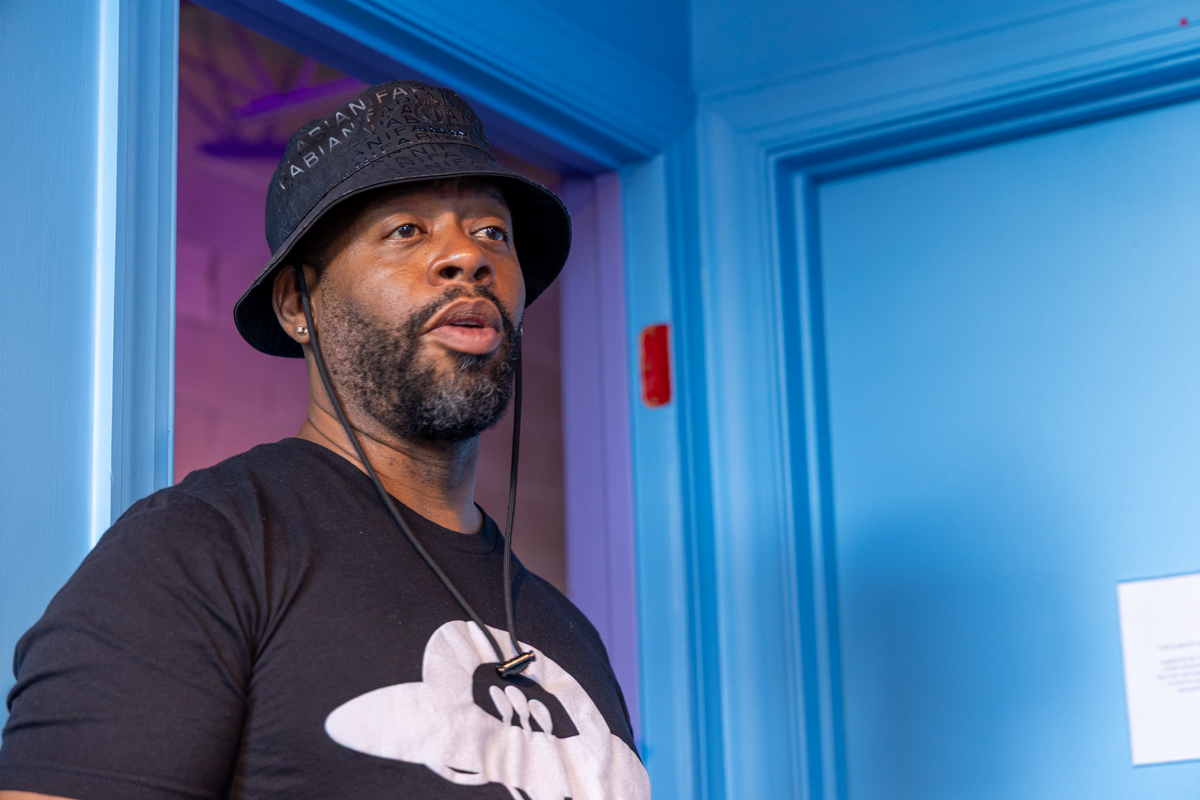
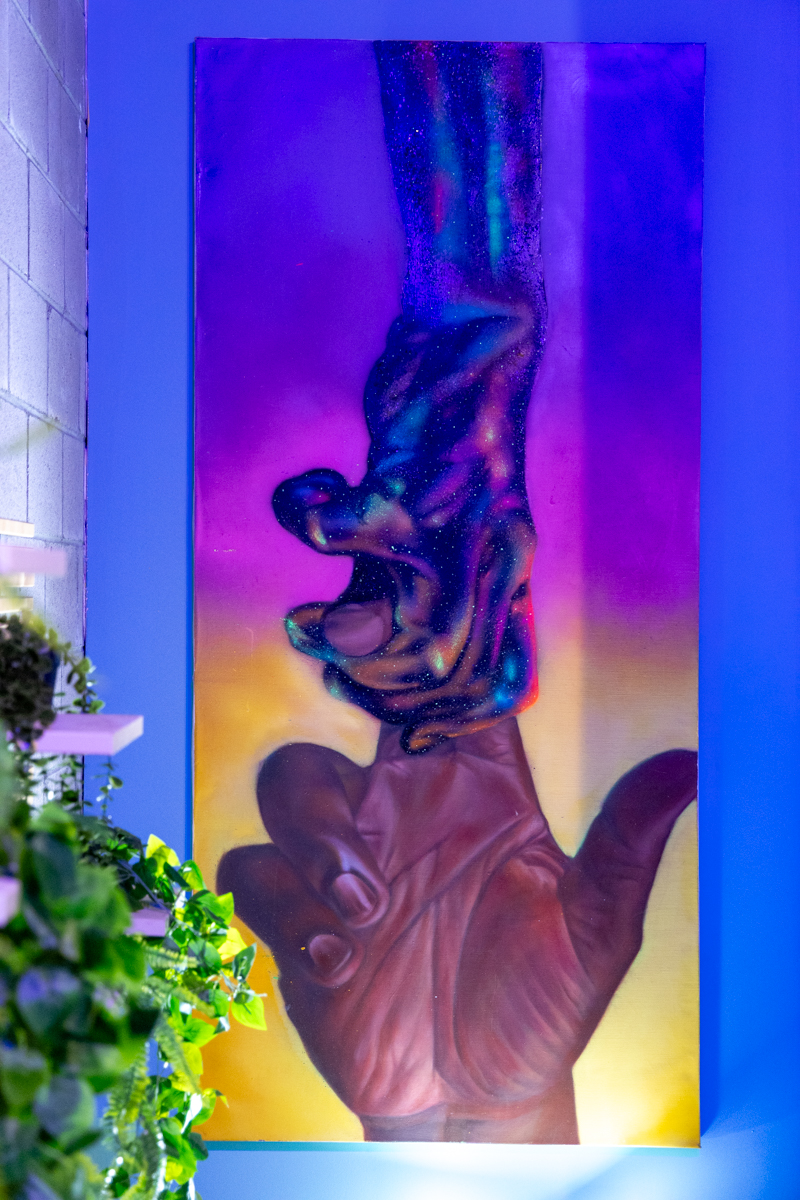
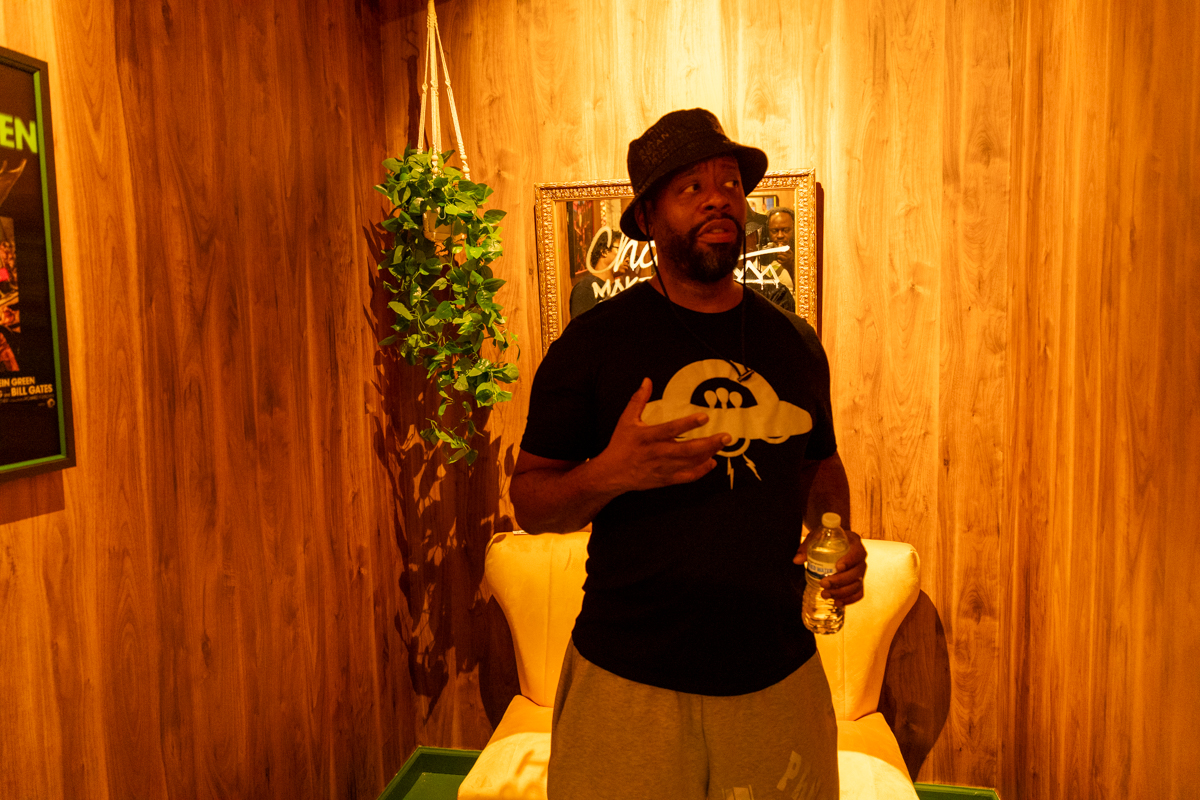
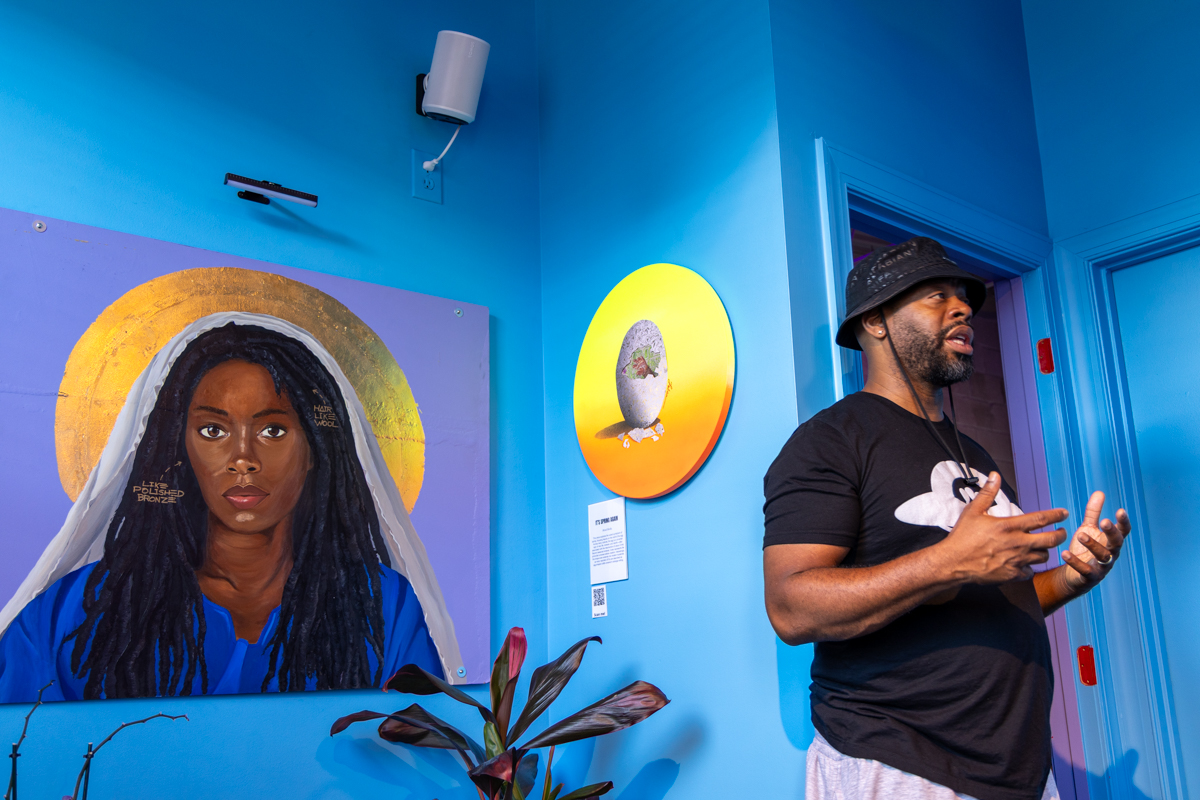
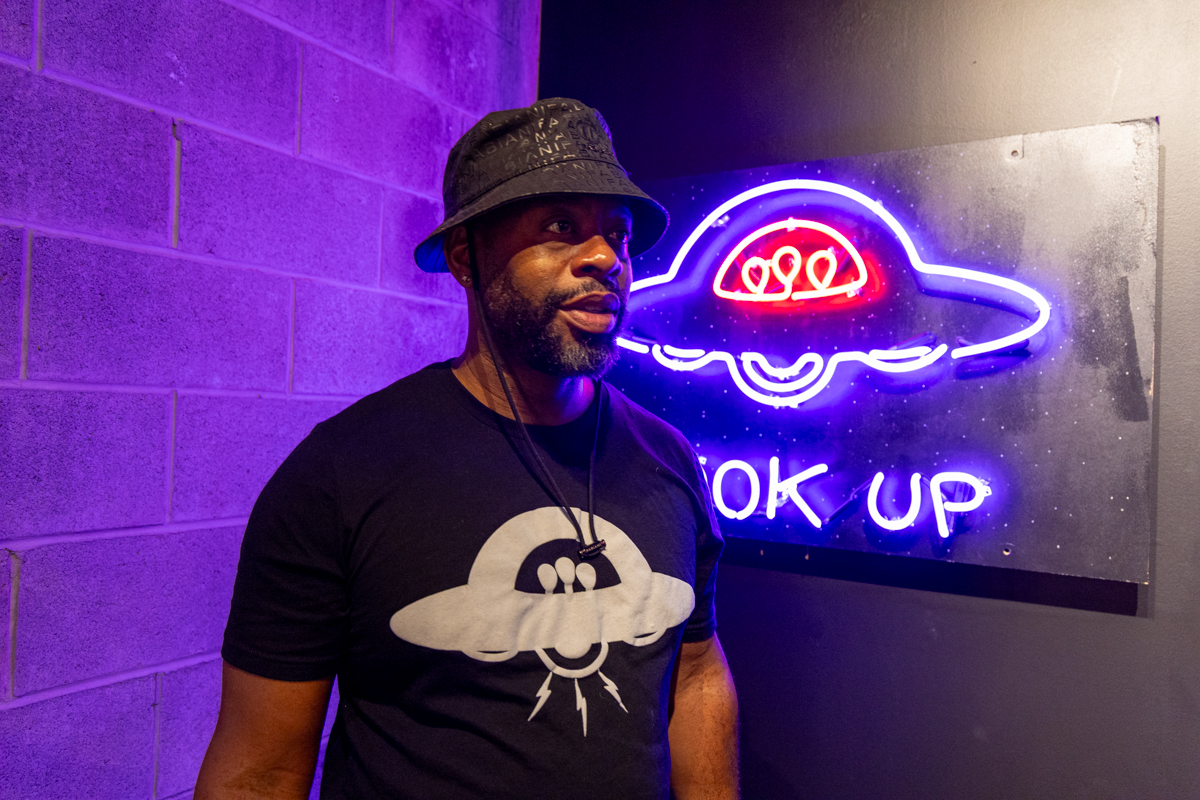
Who decides what the future looks like? For generations, science fiction and pop culture have handed us the answer. Artist Fabian Williams opened Mothership Sirius B, a three-story immersive art installation, to offer a different one.
Atlanta Students Help Shape the Exhibit
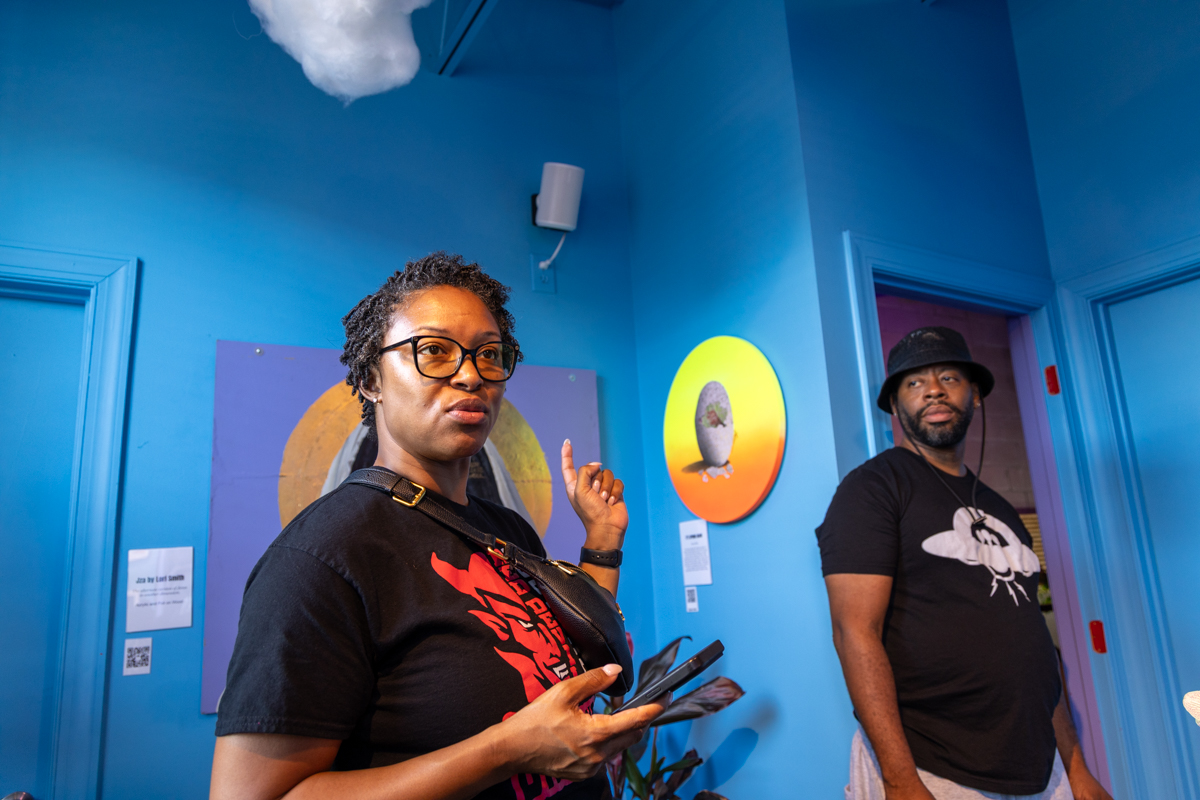
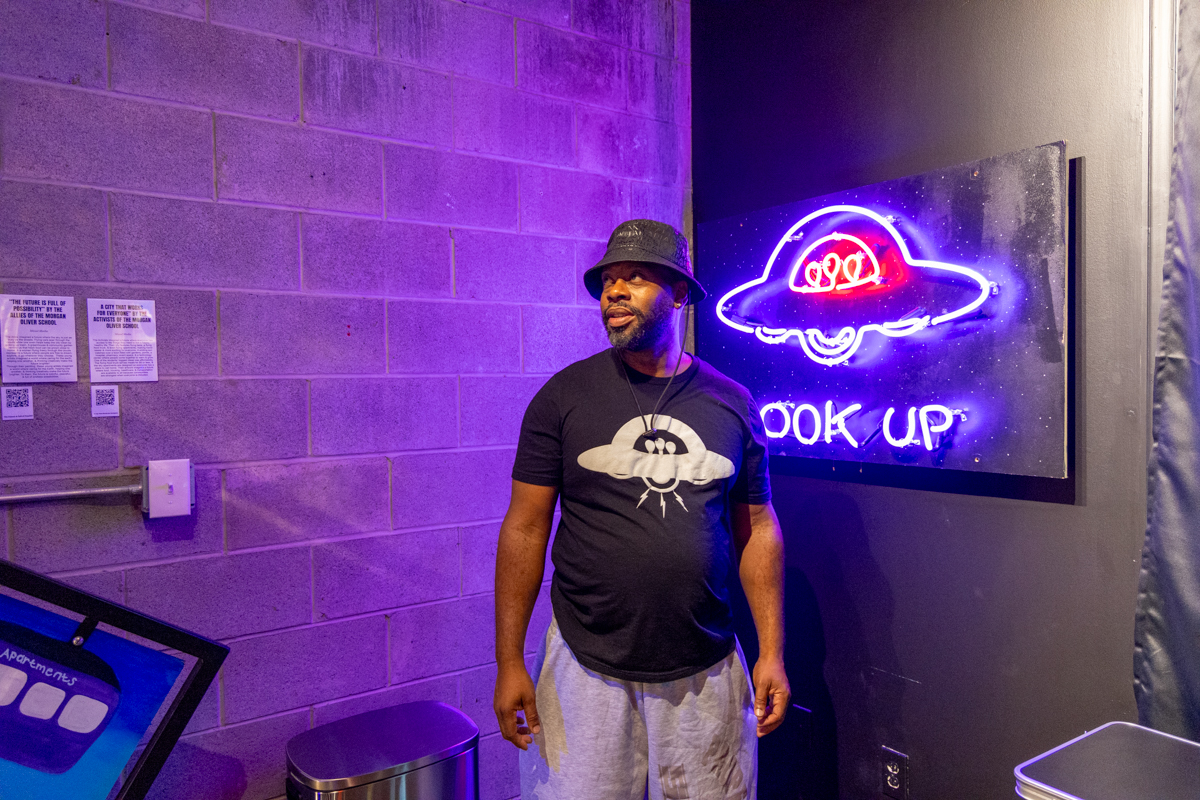
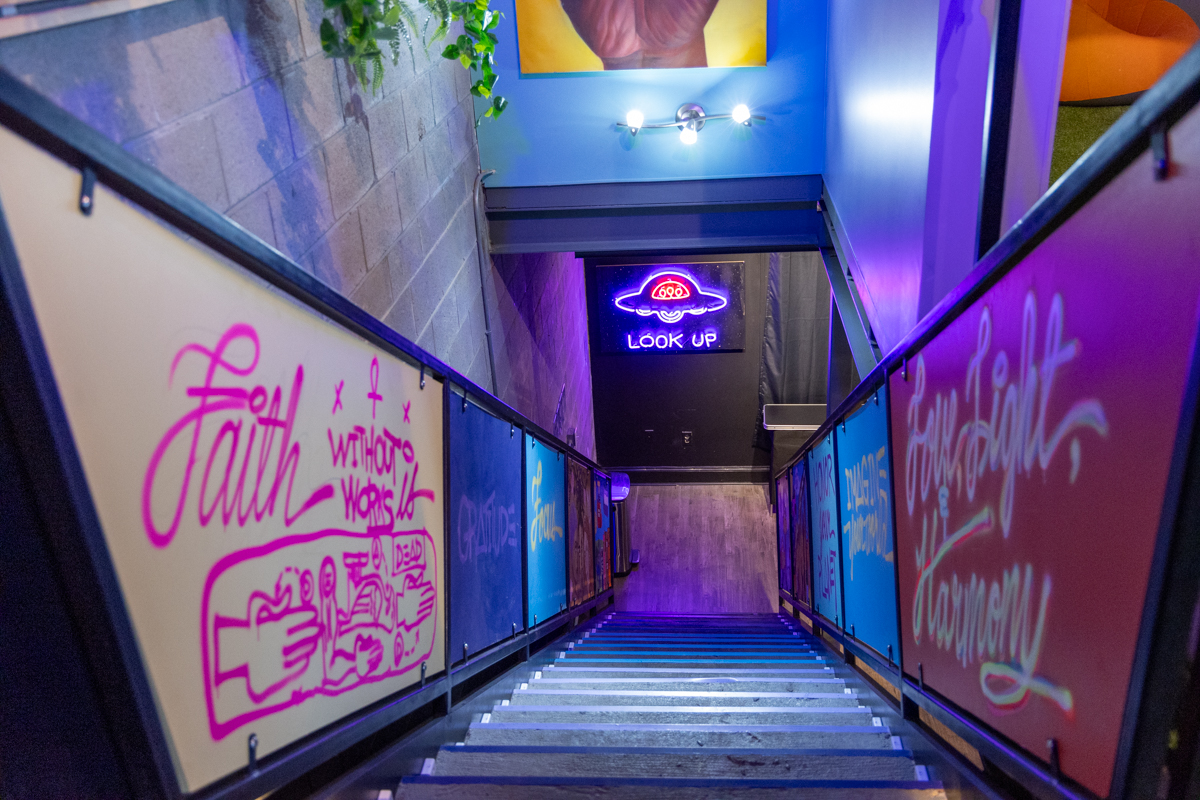
Inside the art installation at 12 Jackson St in Atlanta, the project’s community roots are what set it apart. Students from Morgan Oliver School, Maynard Jackson High School, and Georgia Tech created original artwork that runs through the whole show. It all leads to the Future Lab, a room built for conversation, creativity, and imagining what comes next together.
Williams also sat down with many of the students to ask what kind of future they want to build. Their answers give a real look at how Atlanta’s next generation pictures its city. The Mayor’s Office of Cultural Affairs, led by Adriane Jefferson, is a confirmed institutional partner.
What “Sirius B” Means
The exhibit covers six decades across its three floors, and the name carries the idea behind it. Sirius A and B form a double star system that can’t be seen with the naked eye. According to a story Afrofuturist thinkers often cite, the Dogon people of Mali knew of it centuries before Western astronomers confirmed it. For those thinkers, it shows that Black communities have always held knowledge about the future that mainstream culture was too narrow to notice. Williams puts it this way: the vessel “was always there.”
Pop Culture, Black Empowerment, and Political Commentary
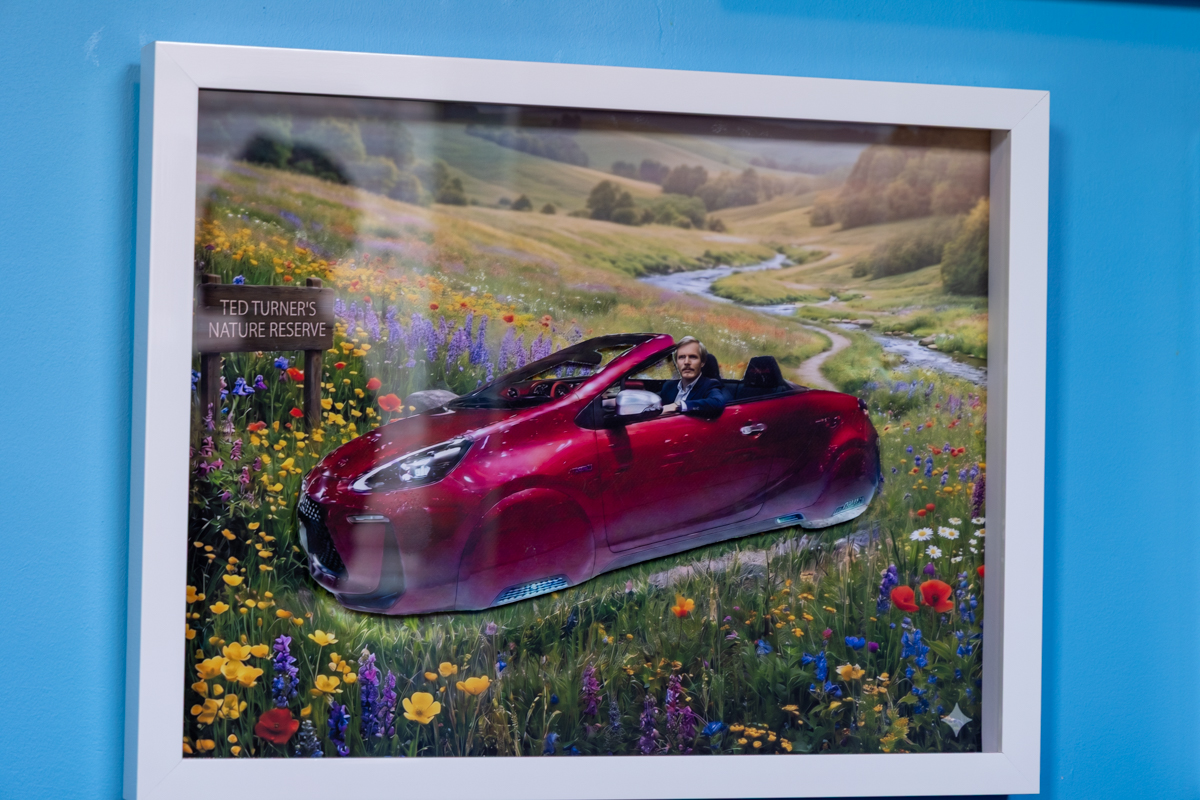
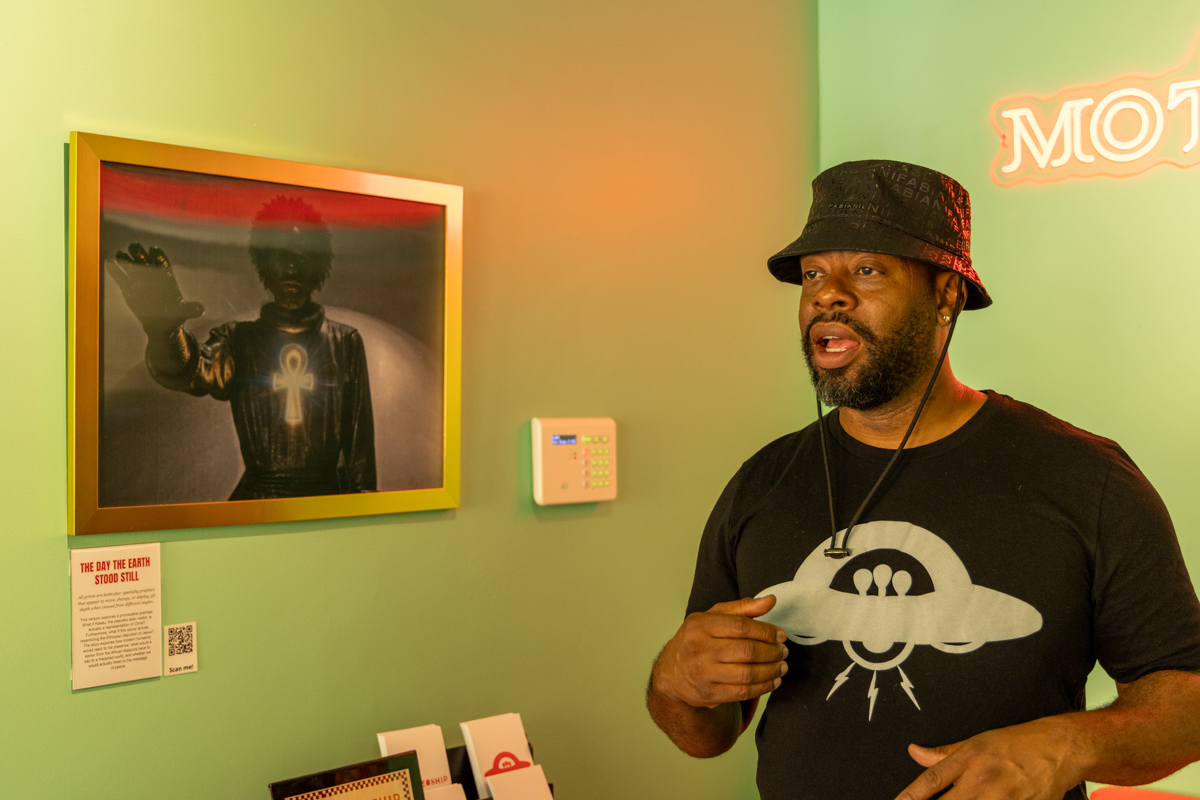
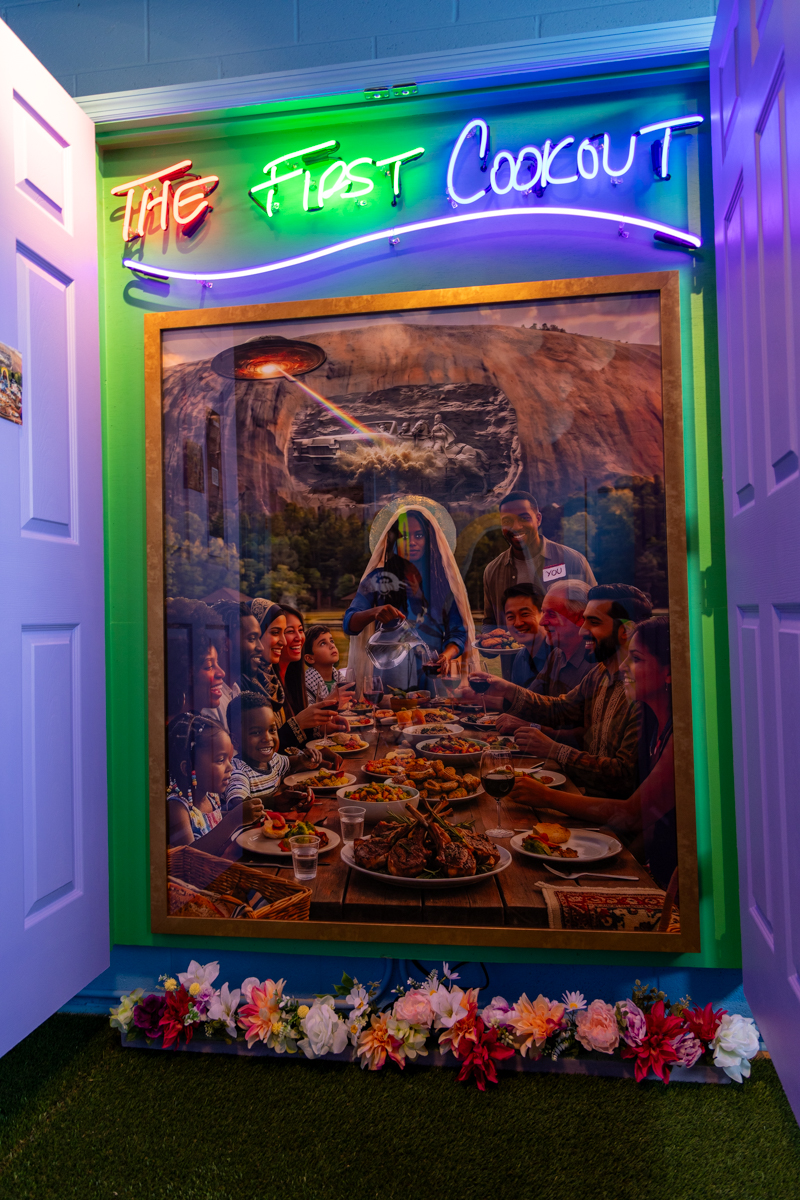
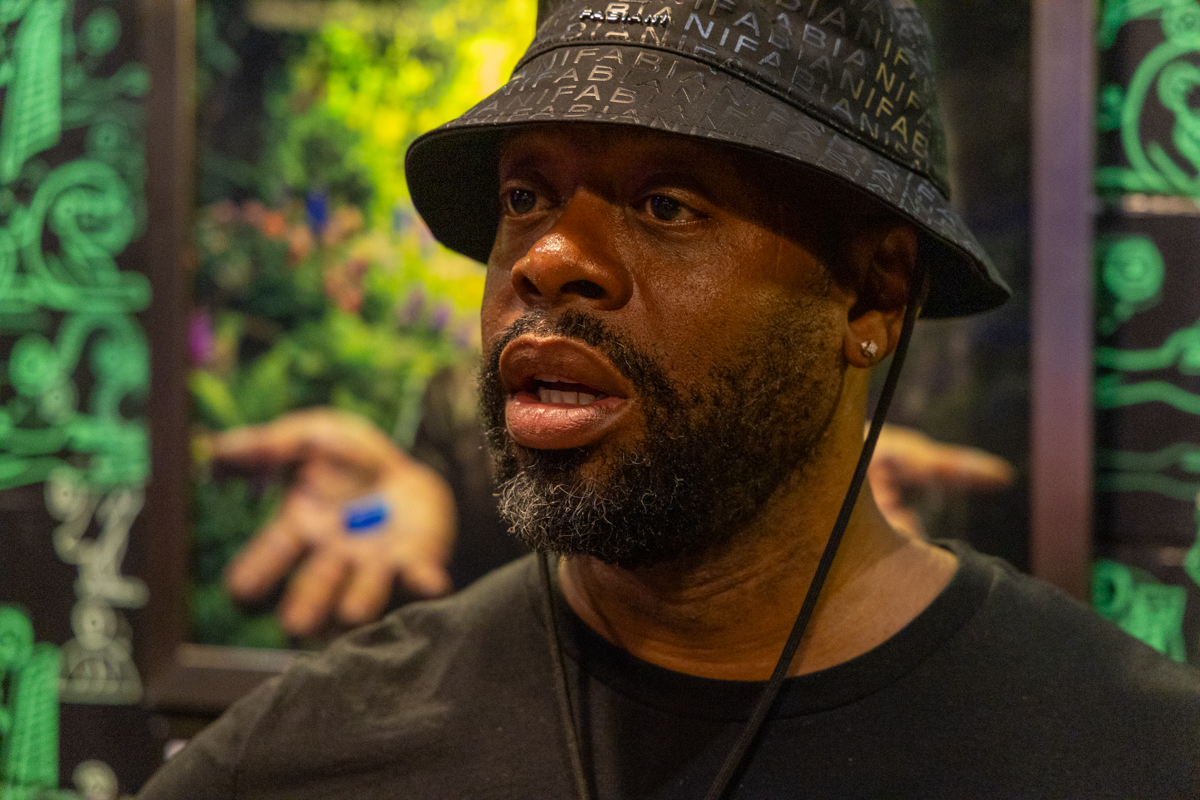
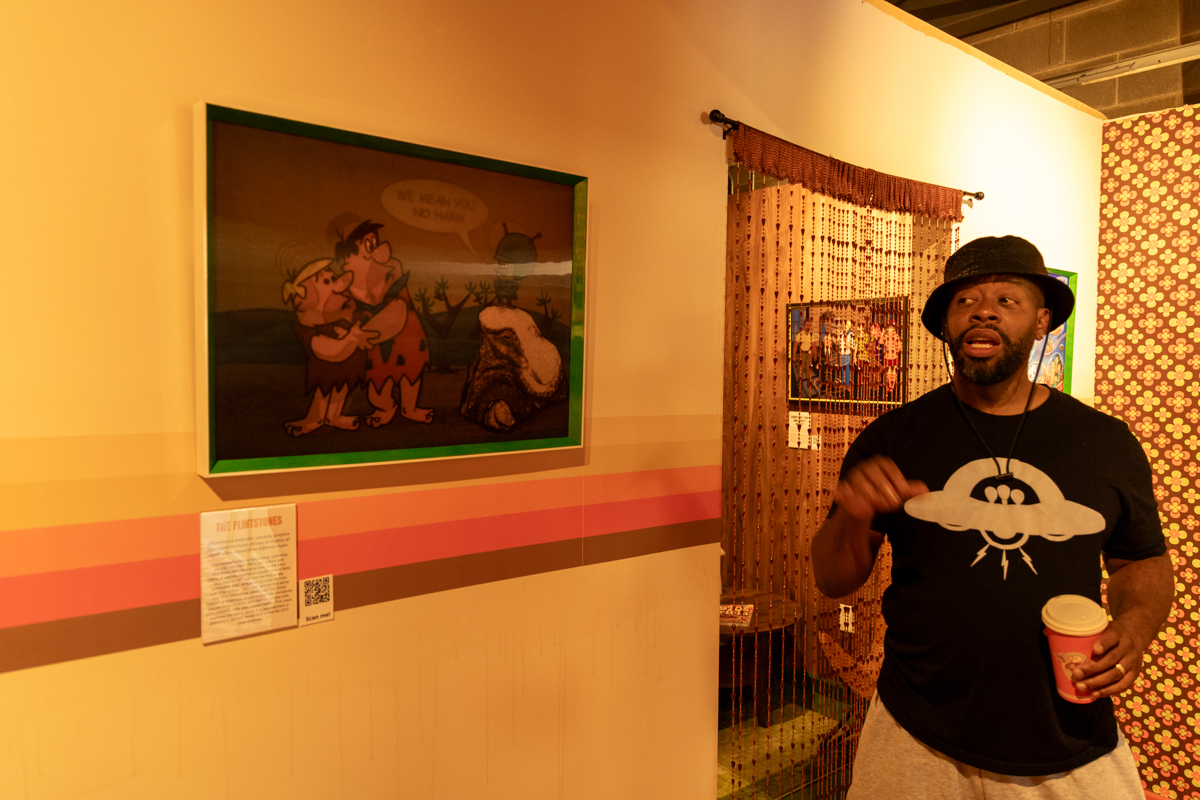
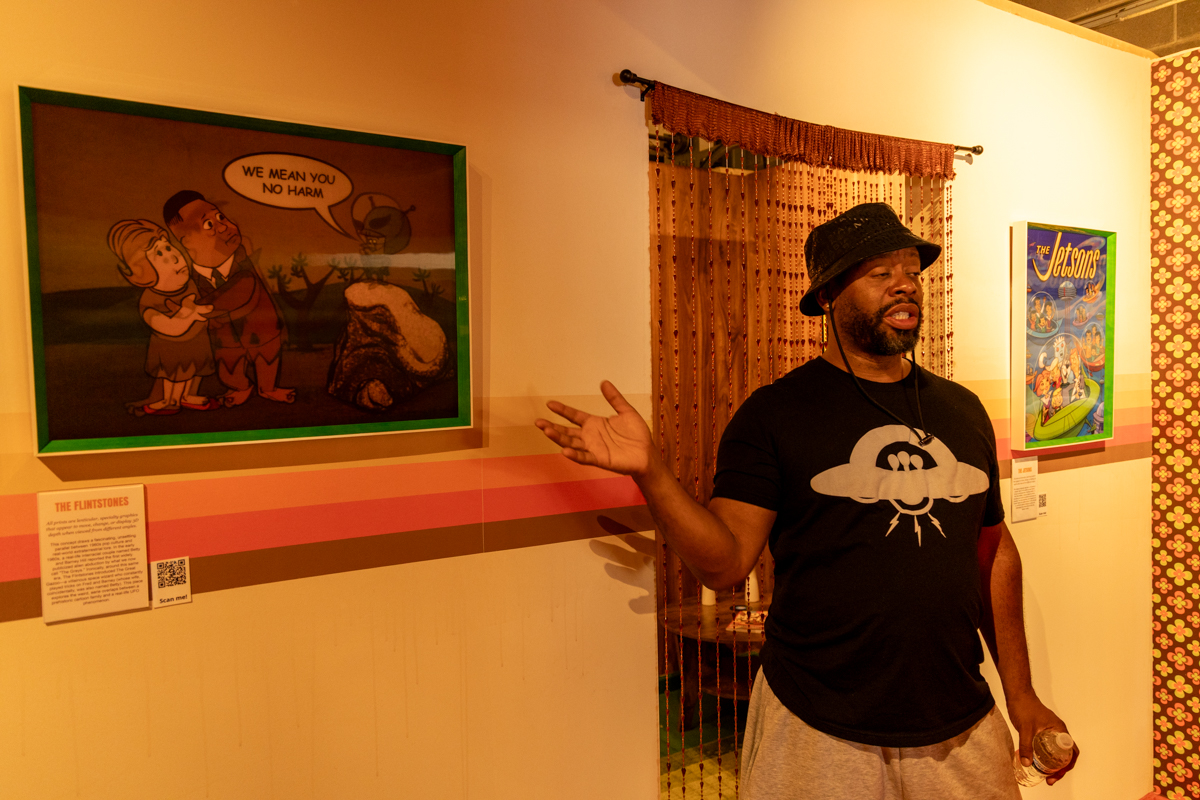
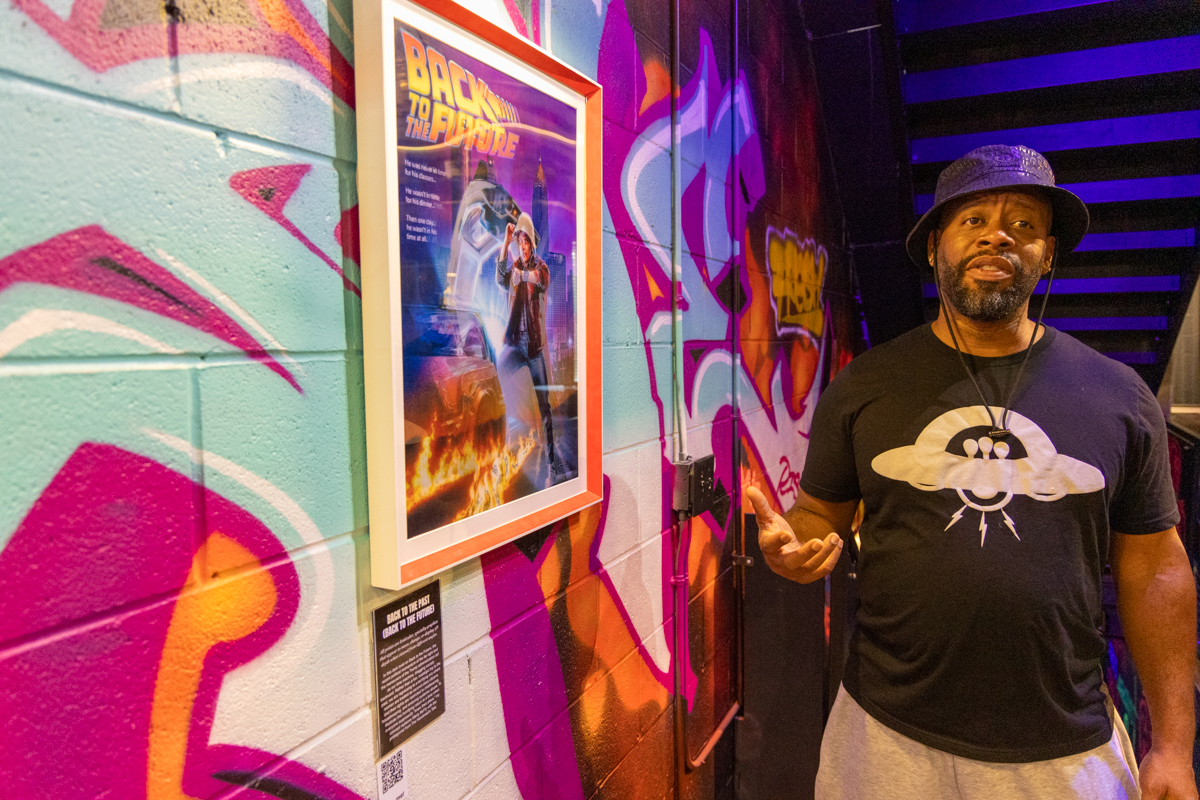
The work plays pop culture against themes of Black empowerment, and it doesn’t hide its disdain for President Donald J. Trump. Many pieces use lenticular printing, so the image changes as you move. A familiar original shifts into Williams’ own take.
Inside the Exhibit, Floor by Floor
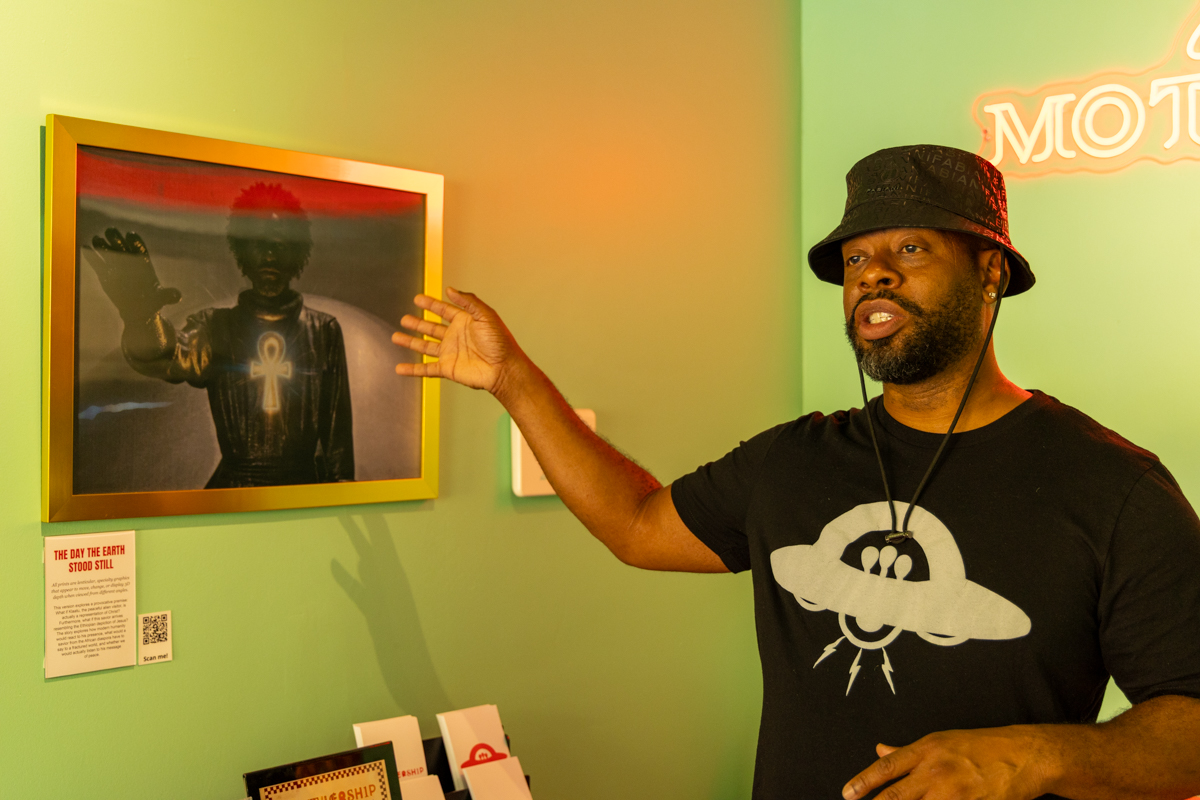
First floor: America in the 1950s. Mint green walls and checkerboard linoleum set the scene. The art draws on posters for “The Twilight Zone,” “Planet of the Apes,” and “Soylent Green,” which expose the fears and false assumptions white Americans held about Black Americans.
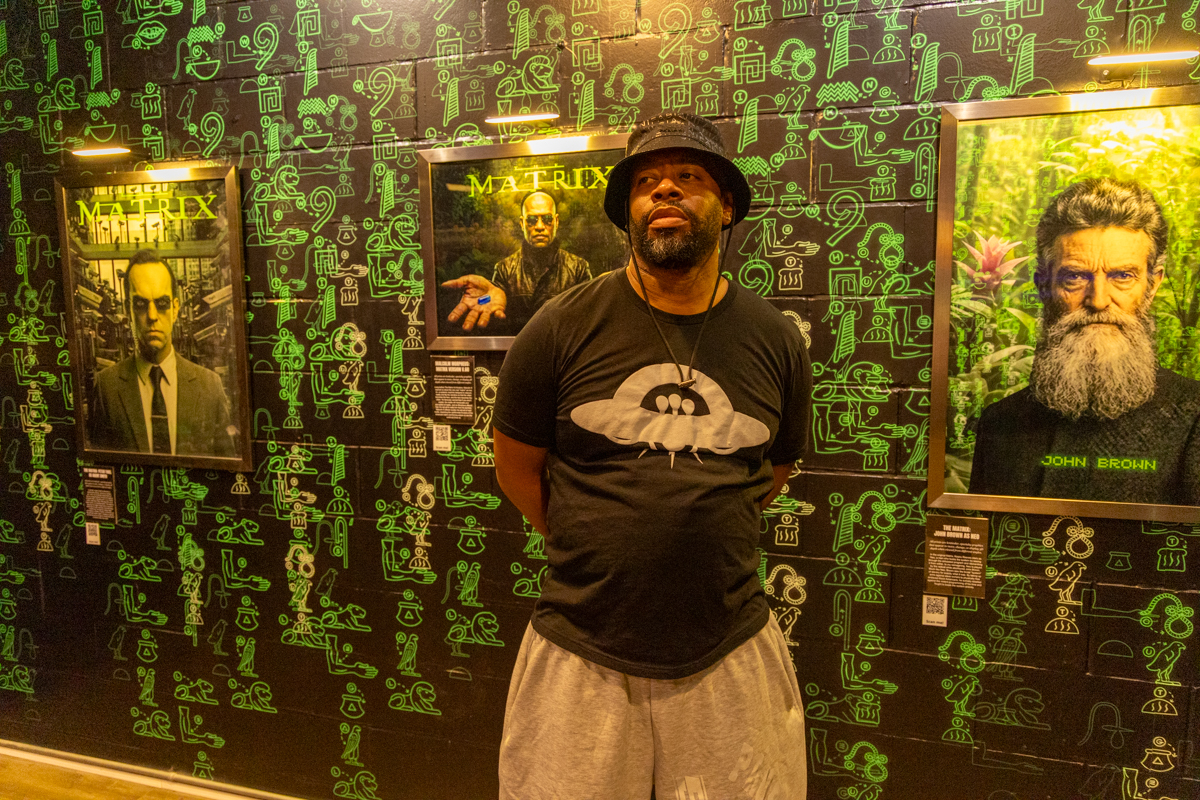
Second floor: the 1980s and 1990s. This level looks at the privatization of public life. The centerpiece of the 1990s section is “Malcolm Morpheus: Matrix Version v.68,” a lenticular print that flips between Morpheus from “The Matrix,” palms open with a red pill and a blue pill, and Malcolm X in the same pose. The wall text says Malcolm X “offered society the red pill of hard truths.”
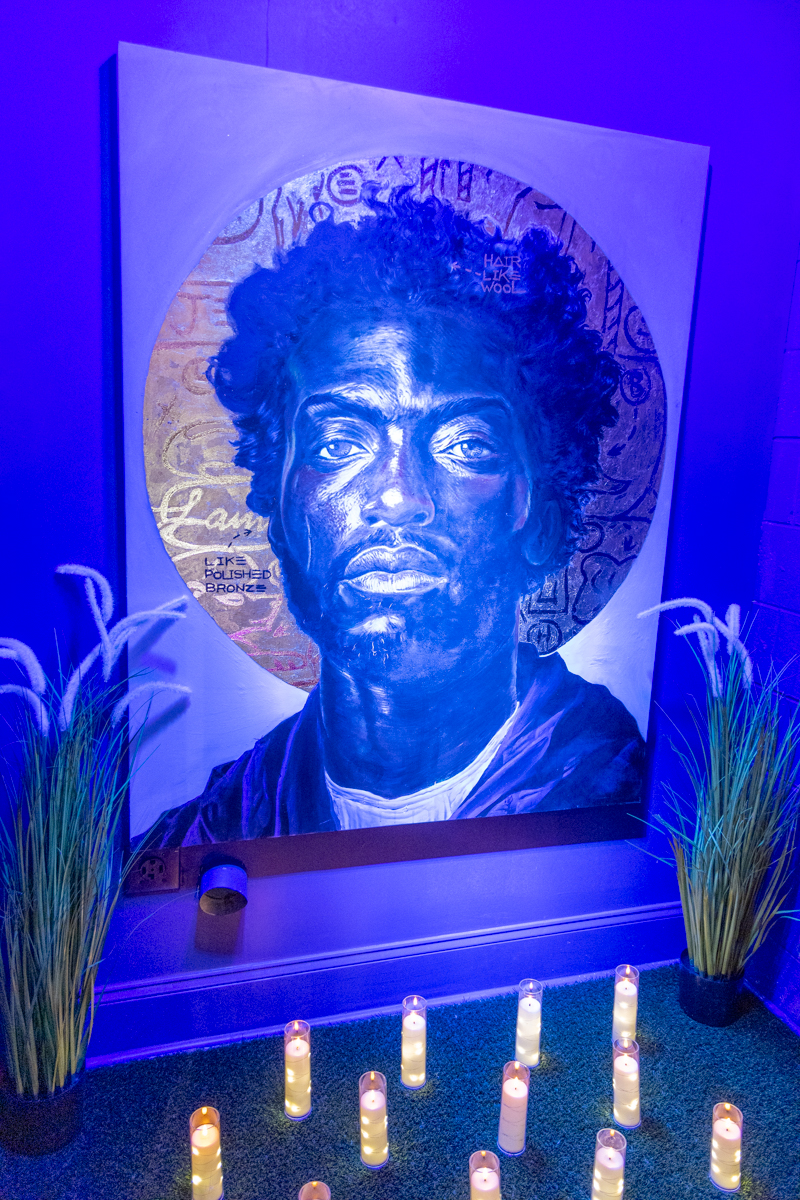
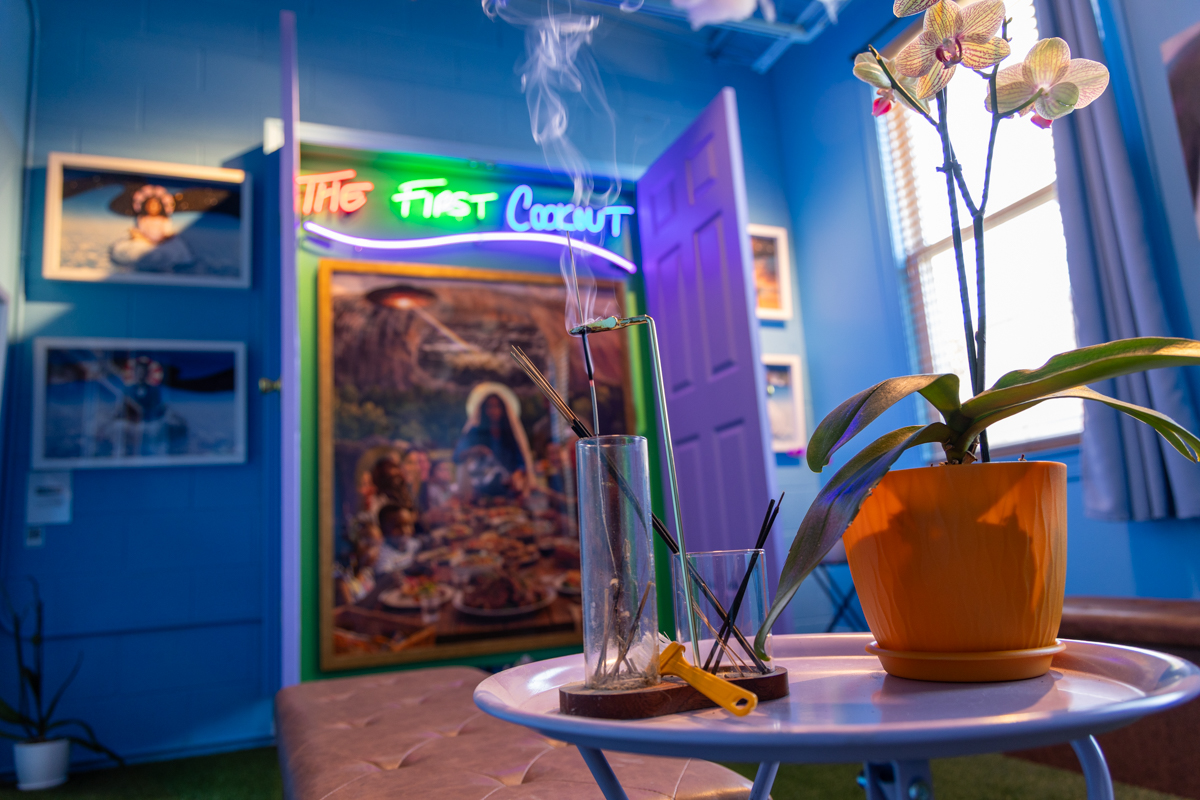
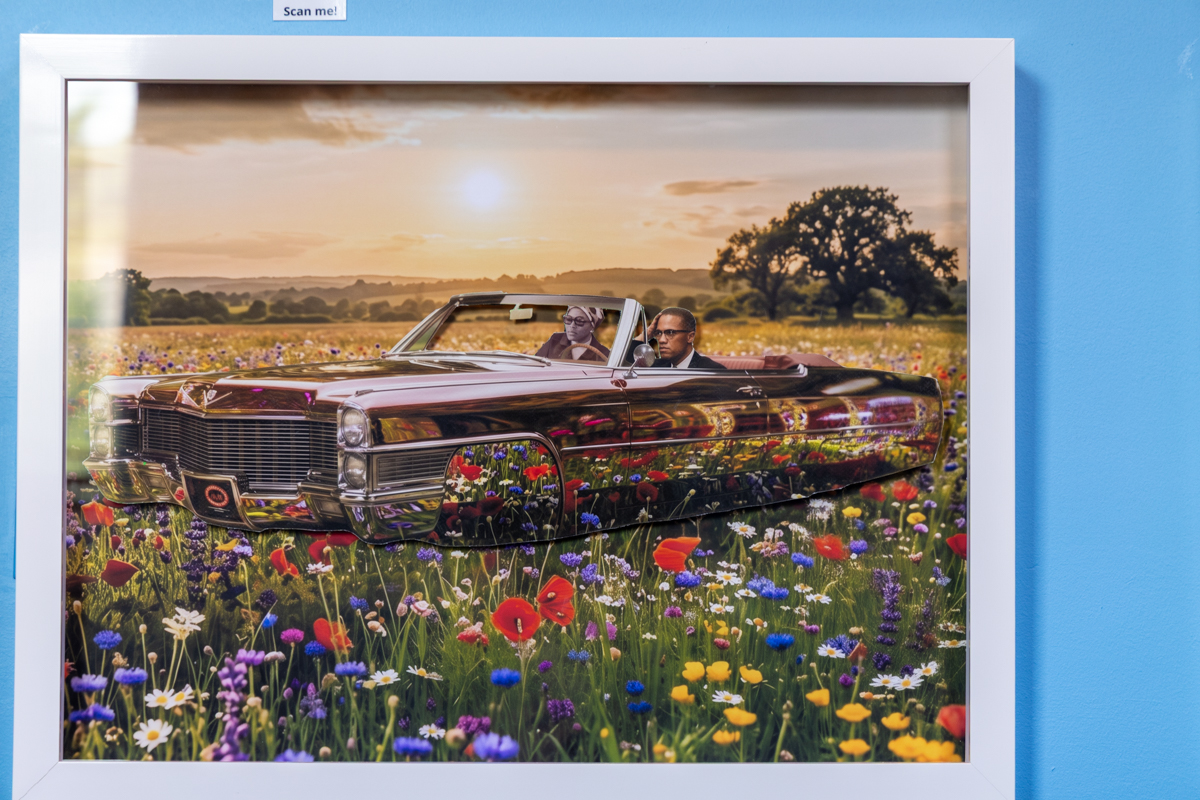
Third floor: Black Jesus and the Future Lab. A huge painting of Black Jesus greets you on arrival. The first room off the hallway, the Garden of Jza, breaks from Williams’ usual style. Its collages show civil rights figures, including Jimmy Carter, Martin Luther King Jr., and Malcolm X, alongside their spouses, drifting through peaceful landscapes in vintage cars.
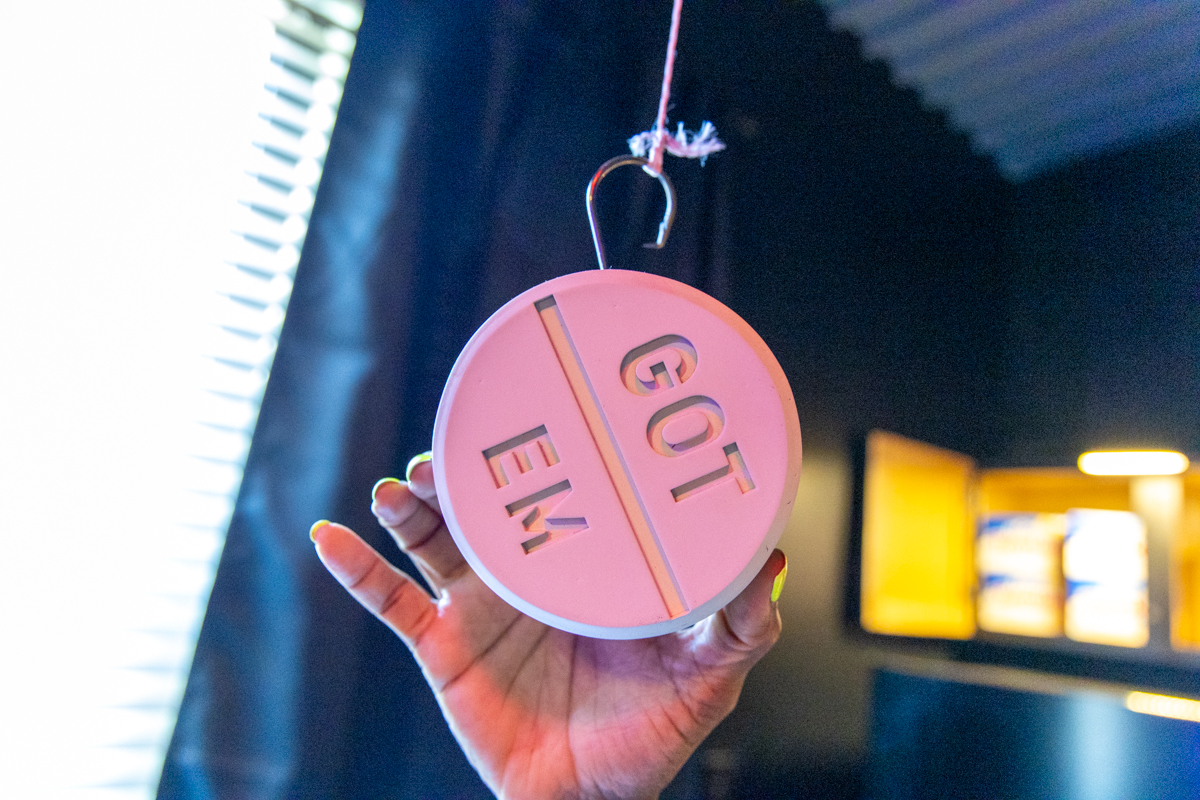
The Future Lab is a lounge-style think tank with bean bag seating, curated music, and a black-lit “aether room.” Visitors are invited to write their hopes and prayers for the future on sticky notes and leave them behind.
Tickets and Admission
- General admission: $20 per person, includes one drink ticket
- RSVP without a drink: $15
- Children ages 5 to 16: $10
- Children under 5: $5
Buy tickets through Eventbrite at isawmothership.com. To support the exhibition, you can donate through Satellite Collective at secure.givelively.org/donate/satellite-collective-inc/mothership-atl.
-
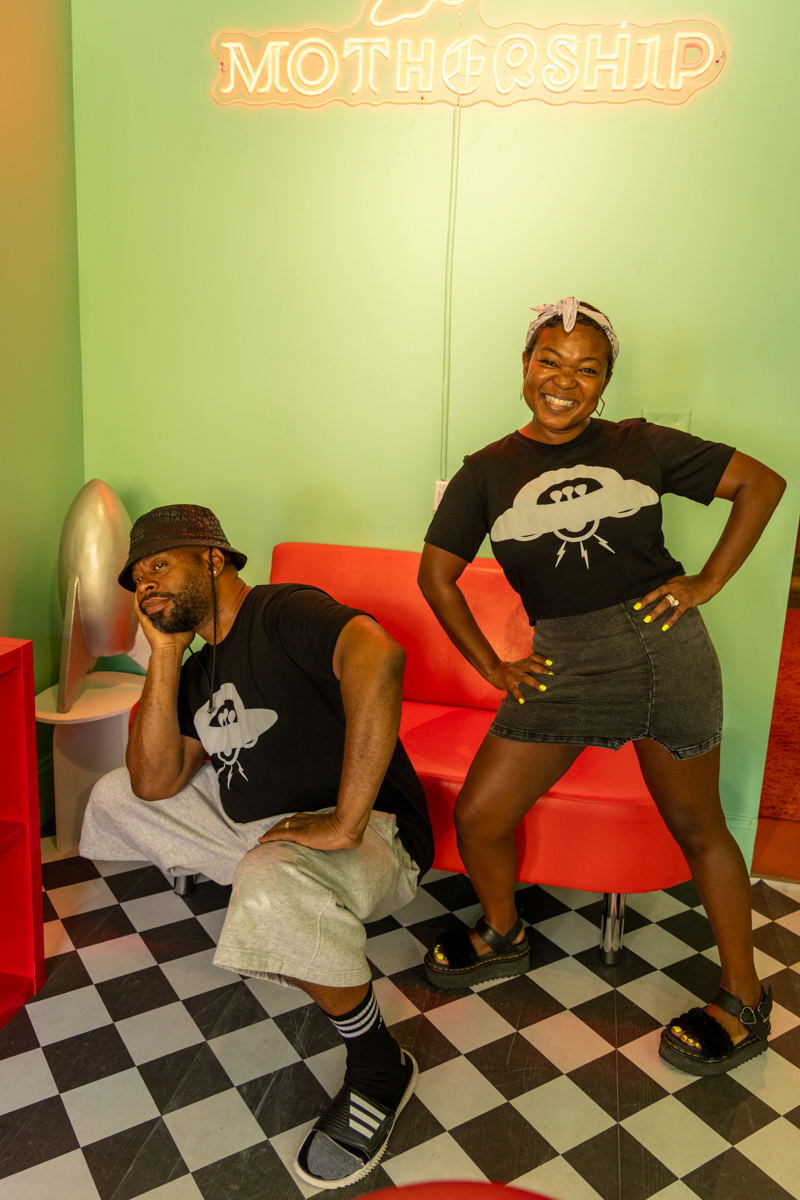
- (Photo: Itoro N. Umontuen/Black Press USA)
-
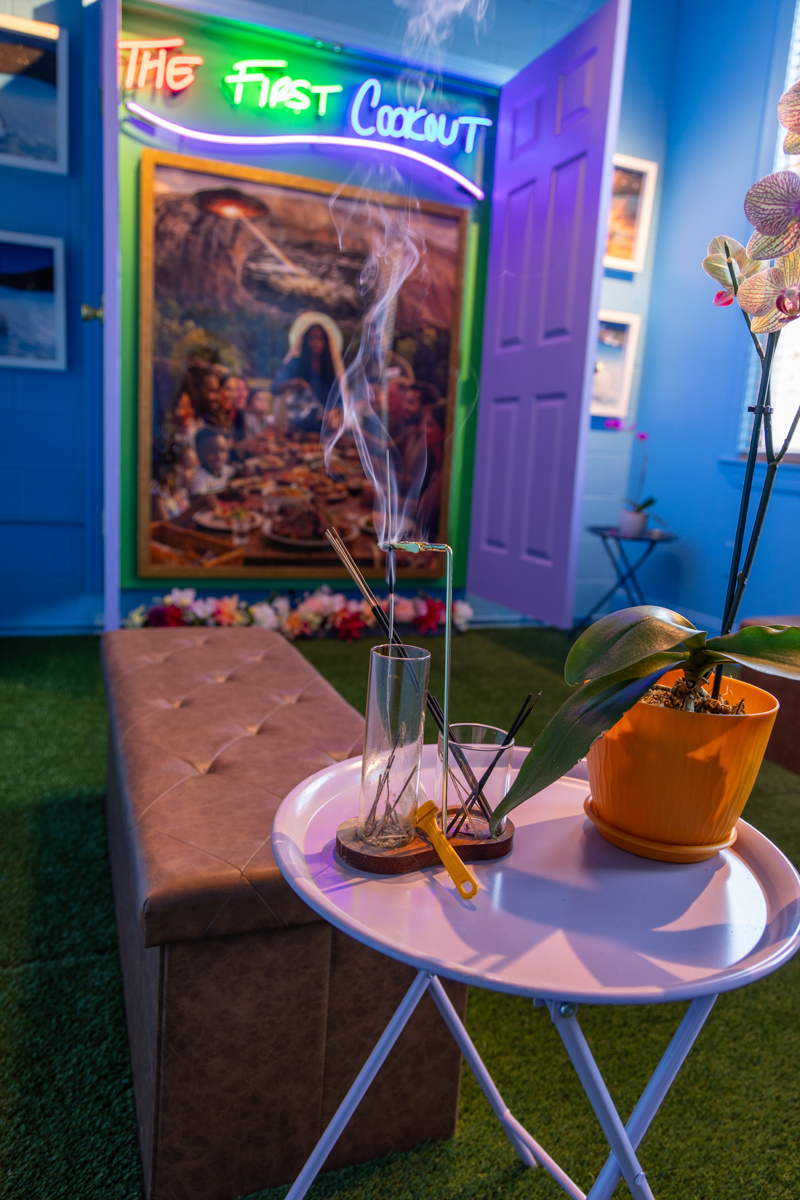
- (Photo: Itoro N. Umontuen/Black Press USA)
-
- (Photo: Itoro N. Umontuen/Black Press USA)
-
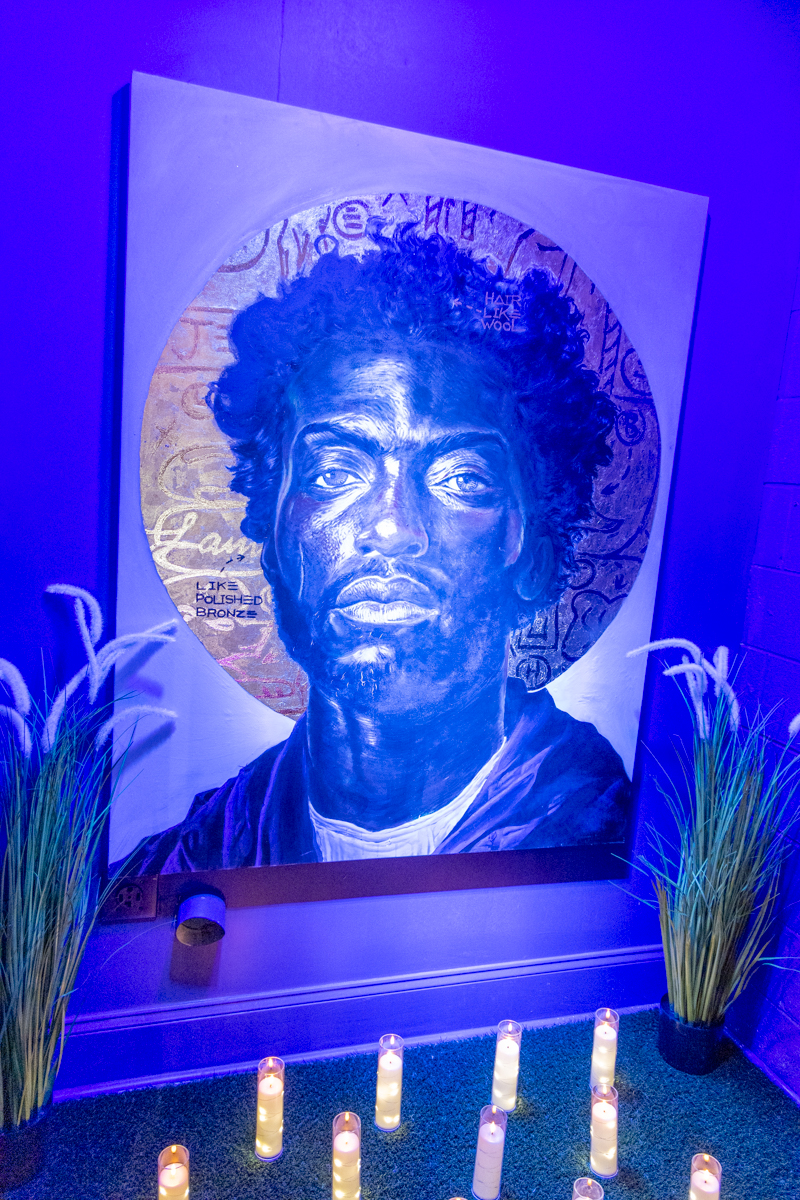
- (Photo: Itoro N. Umontuen/Black Press USA)
-
- (Photo: Itoro N. Umontuen/Black Press USA)
-
- (Photo: Itoro N. Umontuen/Black Press USA)
-
- (Photo: Itoro N. Umontuen/Black Press USA)
-
- (Photo: Itoro N. Umontuen/Black Press USA)
-
- (Photo: Itoro N. Umontuen/Black Press USA)
-
- (Photo: Itoro N. Umontuen/Black Press USA)
-
- (Photo: Itoro N. Umontuen/Black Press USA)
-
- (Photo: Itoro N. Umontuen/Black Press USA)
-
- (Photo: Itoro N. Umontuen/Black Press USA)
-

- (Photo: Itoro N. Umontuen/Black Press USA)
-

- (Photo: Itoro N. Umontuen/Black Press USA)
-
- (Photo: Itoro N. Umontuen/Black Press USA)
-
- (Photo: Itoro N. Umontuen/Black Press USA)
-
- (Photo: Itoro N. Umontuen/Black Press USA)
-
- (Photo: Itoro N. Umontuen/Black Press USA)
-
- (Photo: Itoro N. Umontuen/Black Press USA)
-
- (Photo: Itoro N. Umontuen/Black Press USA)
-
- (Photo: Itoro N. Umontuen/Black Press USA)
-
- (Photo: Itoro N. Umontuen/Black Press USA)
-
- (Photo: Itoro N. Umontuen/Black Press USA)
-
- (Photo: Itoro N. Umontuen/Black Press USA)
-
- (Photo: Itoro N. Umontuen/Black Press USA)
-
- (Photo: Itoro N. Umontuen/Black Press USA)
-
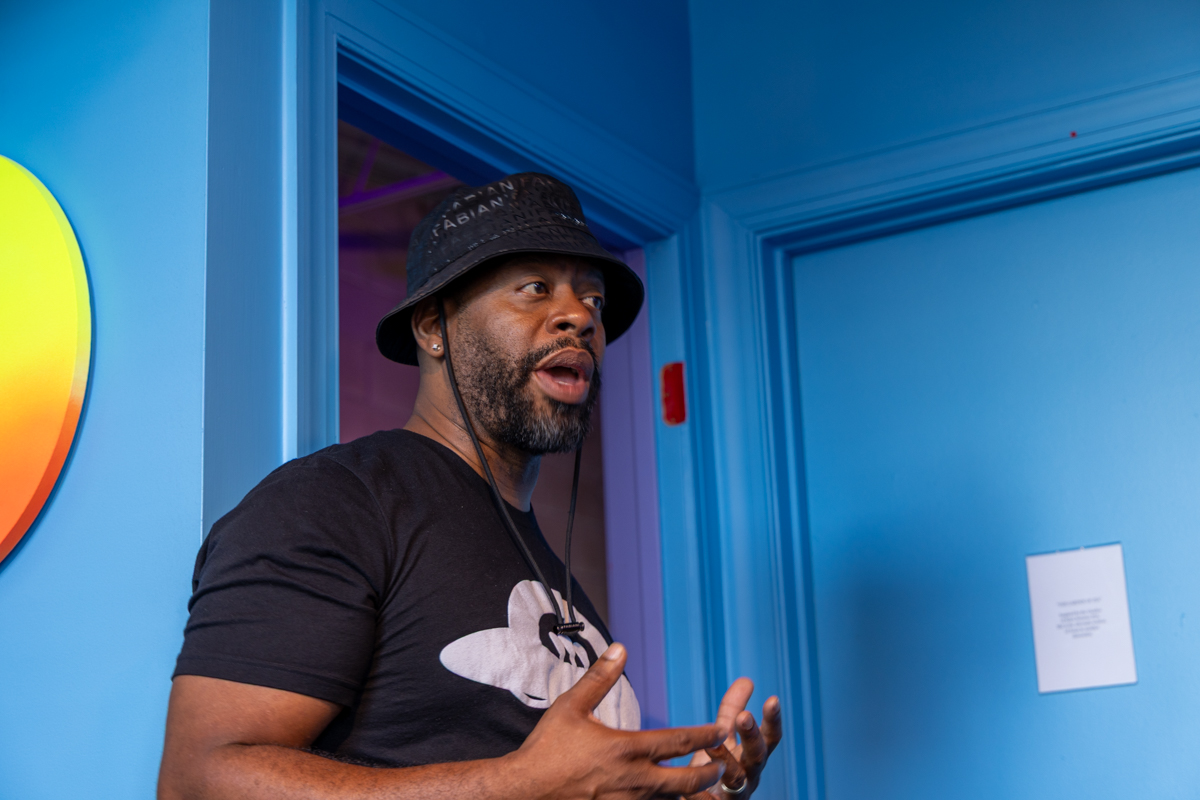
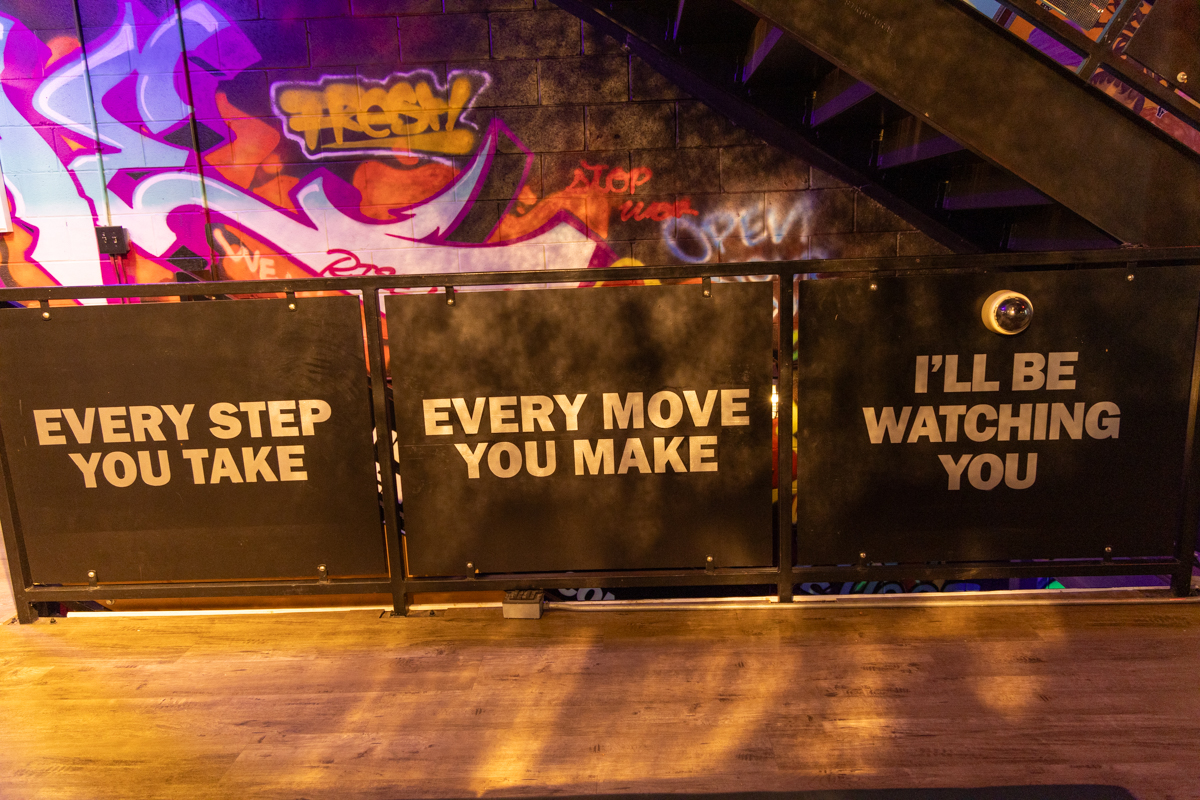
- Fabian Williams delivers a presentation inside his art installation, Mothership Sirius B in Atlanta, Georgia. (Photo: Itoro N. Umontuen/Black Press USA)
Art
BLACspace Cooperative Invites Bay Area to Experience Oakland’s Black Cultural Ecosystem Through a BLAC Map Tour + Party
BLACspace Cooperative invites the Bay Area to experience Oakland’s Black cultural ecosystem through its BLAC Map Tour + Party on October 2. Presented as part of the Museum of the African Diaspora’s Nexus: SF/Bay Area Black Art Week, the event offers a guided field trip through creative and cultural spaces, followed by a celebration. Guests will explore the people and places shaping Black arts and culture across Oakland. The tour highlights BLACspace’s interactive guide to spaces stewarded by its members. Read more to learn about this unique event.
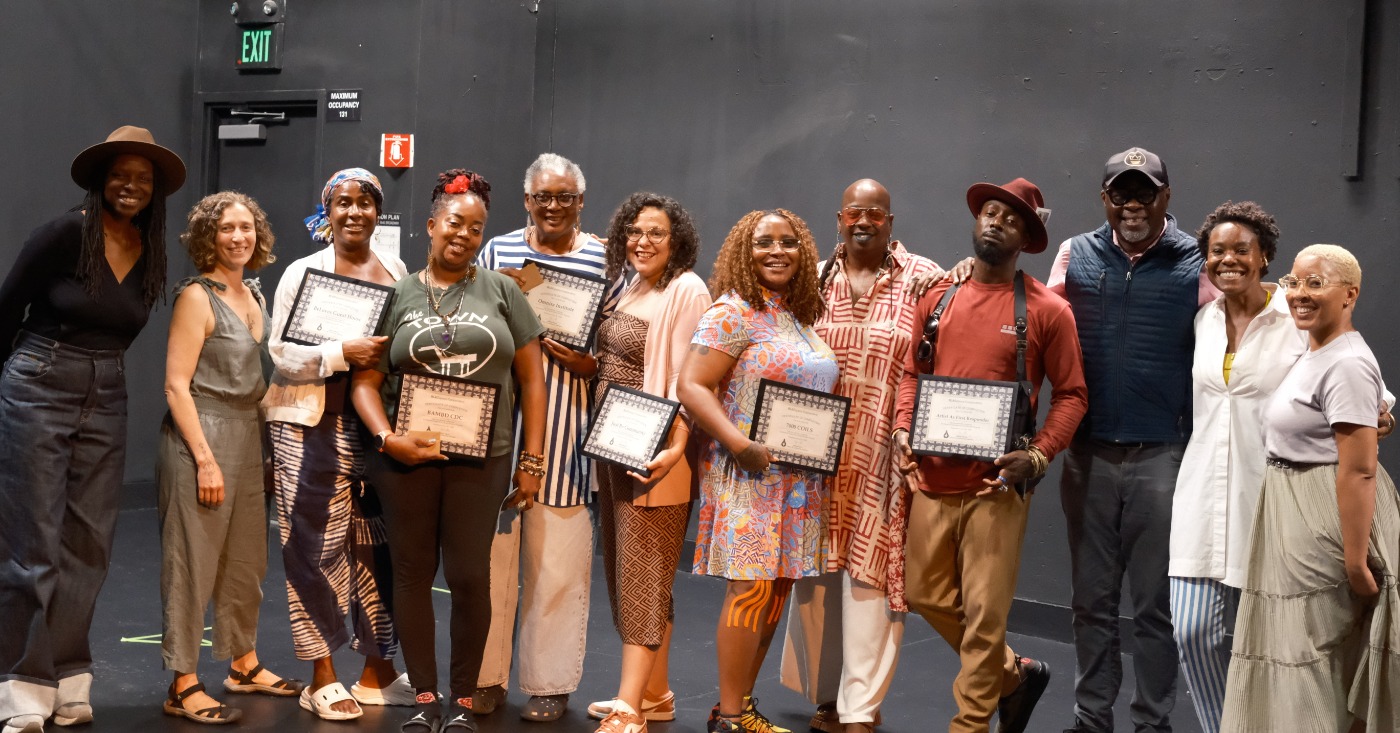
Presented as part of MoAD’s Nexus: SF/Bay Area Black Art Week, the October 2 experience takes guests inside the spaces, practices, and relationships that keep Black arts and culture rooted in Oakland
What does Oakland’s Black cultural ecosystem look like from the inside?
On Friday, October 2, BLACspace Cooperative will bring its BLAC Map to life with The BLAC Map Tour + Party, a two-part experience connecting artists, cultural workers, community partners, funders, and arts lovers with the people and places shaping Black arts and culture across Oakland and the greater Bay Area.
Presented as part of the Museum of the African Diaspora’s Nexus: SF/Bay Area Black Art Week, the day begins at MoAD at 685 Mission St. at 12 noon with a guided field trip through creative and cultural spaces connected to the BLACspace ecosystem.
Guests will travel together by bus from San Francisco to Oakland, stepping inside studios, cultural hubs, creative businesses, and gathering places while experiencing artist talks, exhibitions, film, music, movement, ancestral practice, and opportunities for conversation.
The Tour is an extension of The BLAC Map of Oakland, BLACspace’s interactive guide to creative and cultural spaces stewarded by members of its ecosystem. The map makes visible a network of people and places working to keep Black culture rooted in a city where displacement, rising costs, and shrinking arts funding continue to threaten cultural permanence.
“We call this work Cultural Reforestation,” said Zakiya Harris, Vision and Leadership steward of BLACspace Cooperative. “It’s about repairing, replenishing, and rooting Black arts and culture where it has been displaced, and creating the conditions for our cultural ecosystem to remain for generations to come.”
The Tour will move through several Bay Area cultural spaces, including Minnesota Street Project, The Barn, B-Love’s Guest House, Koo Labs Production & Design Center, BAM House, and BlaQyard, with experiences featuring members and collaborators across the BLACspace ecosystem.
At 5 p.m., the field trip gives way to The BLAC Map Party, a celebration of the ecosystem the Tour spent the day exploring. The evening invites the wider community to gather for music, food, art, cultural activations, an opening Ring Shout ceremony, and connection among Black artists, cultural workers, organizations, and the people who support their work.
The experience reflects BLACspace’s larger belief that the future of Black arts and culture requires cooperation.
As a Black arts and culture-promoting cooperative, BLACspace brings together artists, cultural workers, creative businesses, and organizations to share resources, relationships, knowledge, and stewardship.
Through membership, holistic business coaching, mutual aid, consulting, storytelling, and advocacy for cultural spaces, the cooperative is building infrastructure intended to strengthen Oakland’s Black cultural economy for the long term.
EVENT INFORMATION
The BLAC Map Tour + Party
Friday, Oct. 2
BLAC Map Tour: 12–5 p.m.
Begins at the Museum of the African Diaspora (MoAD)
685 Mission St., San Francisco
BLAC Map Party: 5–8 p.m.
Oakland, California
Party location provided to confirmed RSVP guests.
Tickets, RSVP information, and additional event details are available through BLACspace Cooperative at ABOUT BLACSPACE COOPERATIVE
About BLACspace Cooperative:
BLACspace Cooperative connects and cultivates an ecosystem of artists, cultural workers, creative businesses, and organizations shaping Black arts and culture. Through holistic business coaching, values-aligned consulting, shared stewardship, and advocacy for cultural spaces, BLACspace works to create the conditions for its ecosystem to remain rooted and thrive.
Its work is grounded in Cultural Reforestation: strengthening what is here, restoring what has been displaced, and building toward cultural permanence in Oakland and beyond for the next 100 years.
Adéniké Amin is the storytelling steward for BLACspace Cooperative. For media and other information, please reach out to [email protected]
Art
Peter Magubane: a Camera Against Apartheid
THE POSITIVE COMMUNITY — Peter Magubane, a pioneering South African photographer, dedicated his life to documenting the realities of apartheid. Born in 1932, Magubane began his career at Drum magazine in 1954, initially as a driver before becoming a photographer.
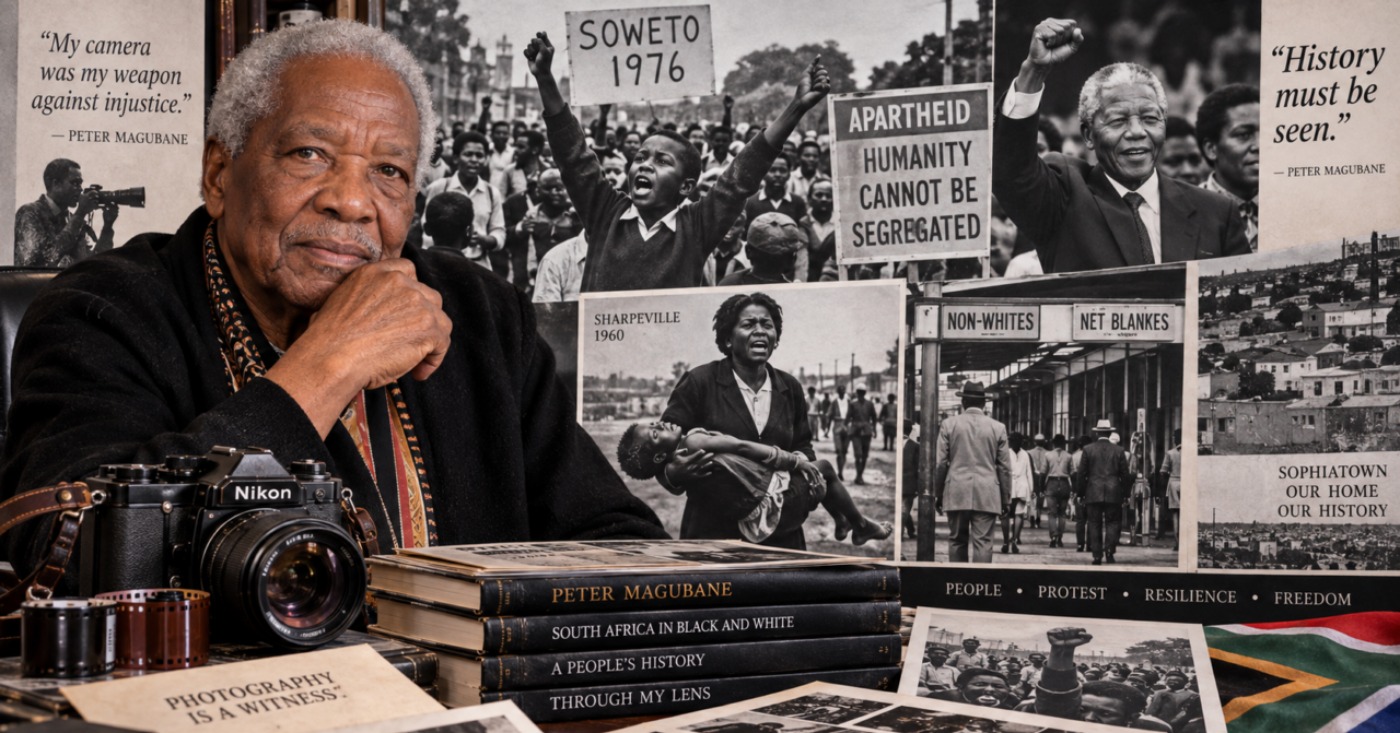
Peter Magubane was more than a photographer. He was a witness, storyteller, historian and courageous chronicler of one of the most turbulent periods in South African history. Born on January 18, 1932, in Vrededorp, Johannesburg, and raised in Sophiatown, Magubane discovered photography as a young boy after receiving a Kodak Brownie camera. That simple camera would eventually become his instrument for documenting the lives, struggles and determination of Black South Africans. He died on January 1, 2024, at the age of 91, leaving behind one of the most important photographic archives of South Africa’s apartheid era.
Magubane’s professional journey began at Drum magazine in 1954. He initially worked as a driver and messenger, but his ambition was to become a photographer. Under the mentorship of Drum’s legendary chief photographer Jürgen Schadeberg, Magubane developed his skills and began photographing major political and social events. His first significant assignment involved covering the 1955 African National Congress convention. From that point forward, photography became his way of documenting a country undergoing enormous change.
The South Africa that Magubane photographed was governed by apartheid, a system that legally enforced racial segregation and discrimination. For Black South Africans, everyday life was shaped by restrictions on where they could live, work and travel. Magubane did not limit himself to photographing politicians or famous leaders. He photographed ordinary people—children, workers, families and communities—giving the outside world a visual record of what apartheid meant in everyday life.
One of the defining moments of Magubane’s career came in 1960, when he photographed the aftermath of the Sharpeville Massacre. His photographs helped bring international attention to the violence surrounding resistance to apartheid. He also photographed the 1956 women’s anti-pass march, the Rivonia Trial involving Nelson Mandela and other activists, and numerous other events that became part of South Africa’s historical record.
Magubane paid an enormous personal price for his work. In 1969, he was arrested while photographing protesters outside Pretoria Central Prison. He was subsequently held in solitary confinement for 586 days. After his release, the apartheid government placed him under a banning order that severely restricted his ability to work and move freely. Yet the restrictions did not convince him to abandon photography. Instead, they demonstrated just how powerful the authorities believed his photographs could be.
In 1976, Magubane documented the Soweto Uprising, when thousands of Black students protested against the apartheid government’s education policies. His photographs captured young people confronting police violence and became some of the most internationally recognized images of the uprising. Despite the danger, Magubane continued photographing what was happening around him. His work transformed individual moments of protest into permanent historical evidence that could not easily be erased.
His creativity was matched by his determination to get the picture. Because authorities restricted photographers and attempted to prevent journalists from documenting certain events, Magubane sometimes concealed his camera in unusual places, including a hollowed-out Bible, bread and other objects. These methods allowed him to continue working when openly carrying a camera could attract police attention. His photographs demonstrated that documentary photography sometimes requires not only technical ability but extraordinary courage and resourcefulness.
After Nelson Mandela was released from prison in 1990, Magubane entered another important chapter of his career. He became Mandela’s official photographer and documented the transition toward democracy, including significant moments surrounding South Africa’s first democratic election and the Truth and Reconciliation Commission. The photographer who had spent decades documenting resistance now had the opportunity to photograph a country moving toward a new political era.
Magubane’s legacy extends far beyond the individual photographs he made. He published numerous books, exhibited internationally and received major honors, including an honorary Doctor of Literature from the University of Cape Town in 2010. His photographs remain part of the historical record because they show not only the brutality of apartheid but also the humanity, resilience and determination of the people who lived through it.
Peter Magubane ultimately demonstrated the extraordinary power of photography. He understood that a photograph can preserve a moment long after the people who witnessed it are gone. His camera recorded injustice, resistance, suffering, courage and eventually freedom. For photographers today, his life offers an enduring lesson: photography is not simply about making beautiful pictures—it can also be about seeing clearly, standing close to history and making sure that important stories are never forgotten. Magubane’s photographs gave South Africa a visual memory, and his life’s work reminds every photographer that sometimes the most important picture is the one that history needs someone brave enough to make.
Based on reporting by The Positive Community.


Why A Black Bank Started From A House #shorts

Defender ONE-on-ONE: U.S. Rep. Christian Menefee

How To Manage Conflict at Work

How To Overcome Financial Setbacks and Win

How To Overcome Financial Setbacks and Win

Sports Talk: Texans vs Cowboys

Car Warranty Explained: Battery, Maintenance & Roadside #shorts

Social Media Success through Songs

2026 Voting Guide: Every Candidate and Proposition Explained!

From The Desk of The Editor 10/07/26

Latest Massacre in Haiti Reveals Cruelty U.S. Deportations

The Youngest American Killed in the Vietnam War

Booked and Unbound: The Legacy of Black Women’s Literary Circles

Passing for White, Fighting for Black America: The Courage of Walter White

OPINION: Nolan Wells’ Death One of Several Signifying Racial Terror Lives on in U.S. South

Prostate Cancer is Twice as Likely to Kill Black Men. Talking to Your Doctor Could Help Save Your Life

OP-ED: Haiti TPS: Have We Lost Sense of Humanity?

OP-ED: If AI Is the New Language of Power, Then NAN Wants Black Communities Fluent

OP-ED: How Does Your State Rank for Pre-K?

Henry O. Flipper: A Trailblazer at West Point and Beyond
Why A Black Bank Started From A House #shorts
Defender ONE-on-ONE: U.S. Rep. Christian Menefee
How To Manage Conflict at Work
How To Overcome Financial Setbacks and Win
How To Overcome Financial Setbacks and Win
Sports Talk: Texans vs Cowboys
Car Warranty Explained: Battery, Maintenance & Roadside #shorts
Social Media Success through Songs
2026 Voting Guide: Every Candidate and Proposition Explained!
From The Desk of The Editor 10/07/26
-
 Black Press1 week ago
OP-ED: Haiti TPS: Have We Lost Sense of Humanity?
-

 Black History1 week ago
Why Black Artists Struggle to Sell Tours
-

 Auto1 week ago
Consumers and States Awarded $694 Million After Predatory Auto Lender Settles Lawsuit
-

 Black Press1 week ago
COMMENTARY: Property Is Power! What Is a Gift of Equity and What Could It Mean for Black America?
-

 Black Press1 week ago
TILGHMAN: Why Parents of Children with IEPs Should Know Their School Bus Driver
-

 Art1 week ago
From Ma Rainey to AI: New Technology Amplifies an Old Fight over Artist Control
