
Black Press
Millions of People Have Lost SNAP Benefits Due to Trump Overhaul
TEXAS METRO NEWS — Changes implemented by the Trump administration to the Supplemental Nutrition Assistance Program (SNAP) have resulted in an estimated 4 million people losing benefits. These changes, part of a bill passed last July, include new work requirements for various groups, such as parents of children over 14, former foster children, veterans, and individuals aged 55 to 64.


As part of last year’s Big, Beautiful Bill, Trump made significant changes to the work requirements and funding structure for SNAP benefits.
AI guess President Donald Trump’s primary goal is to ensure more Americans are broke, sick, and hungry. An estimated 4 million people have lost Supplemental Nutrition Assistance Program (SNAP) benefits as a result of changes the Trump administration made to the program.
NPR reports that SNAP has seen a rapid decline in enrollment and participation since Trump’s “Big, beautiful, bill” became law last July. The law implemented new work requirements for anyone with a child over 14, former foster children, veterans, and even people aged 55 to 64. What makes the changes particularly cruel is the fact that most people on SNAP already work in part-time, low-income jobs. It’s just hard to make that new 80-hour monthly threshold on a part-time job. I say that as someone who also works part-time in a job where I’m contractually limited to under 40 hours a month.
Starsky Wilson, the president of the Children’s Defense Fund, told NPR that the speed of the tax law’s impact has shocked him. “We’re upset about how quickly this has happened,” Wilson told NPR. “There are some supports that are still slated to go away later this year. So there could be an even greater sense of desperation among children and their families as we come to the end of this year.”
As if the work requirements weren’t already having an adverse impact, the Trump administration is set to implement changes to SNAP’s funding model this October. The federal government is now requiring states to allocate millions in additional funding to keep SNAP up and running. If a state can’t afford to provide the extra funding, there’s a real chance SNAP may stop being available in that state. There simply aren’t enough food banks or supplemental government programs to help mitigate the impact of SNAP completely disappearing.
“ There’s no replacement for SNAP if a state gets rid of it,” Wilson told NPR.
The Trump administration’s SNAP overhaul couldn’t have come at a worse time. Wage growth already wasn’t keeping pace with inflation; the job market has become a parody of itself over the last three years, and housing affordability is only worsening. Yet that didn’t stop Trump from launching a war with Iran that has had a profoundly negative impact on the American economy.
Gas prices continue to hover around $4 and above, housing prices have hit their highest level in decades, and more people are going into debt to afford groceries. If this is the strain facing what would traditionally be considered the middle class, you can only imagine how hard it’s been for the working poor who can’t even rely on SNAP benefits anymore to make ends meet.
What makes this all so insulting is that we have the money; there’s no need for people to suffer. We’ve got billions of dollars to fight an unnecessary war in Iran, subsidize Israel’s campaign in Gaza, and potentially give to people who attempted an insurrection, but feeding hungry kids is a bridge too far. Tell me again how this administration is putting America first.
Millions Of People Have Lost SNAP Benefits Due To Trump Overhaul was originally published on newsone.com
Based on reporting by Texas Metro News.








Black Press
OUSD Receives State Review of District Finances; Outlines Progress Since January
The Fiscal Crisis and Management Assistance Team has released a Fiscal Health Risk Analysis for the Oakland Unified School District, labeling the district at high risk for insolvency based on January data. Despite this designation, the Alameda County Office of Education recently noted that OUSD has produced a materially stronger budget submission than in previous years. Superintendent Dr. Denise Saddler stated that the district is actively working to balance its budget and address specific state findings to ensure long-term stability. Find out more about the district’s recovery plan and the challenges facing other California schools by reading more.

Alameda County Office of Education has called the budget ‘a materially stronger submission than the district has filed in recent years’
Caption: Dr. Denise Saddler. Courtesy photo.
The Fiscal Crisis and Management Assistance Team (FCMAT), the state-funded nonprofit in charge of advocating for budget cuts and school closures in local school districts, on Thursday released its Fiscal Health Risk Analysis (FHRA) of Oakland Unified School District.
FCMAT initiated the review after the Alameda County Superintendent of. Schools issued a ‘Notice of Going Concern’ last April. Basing its analysis on the district’s 2025-26 Second Interim Report which reflects financial data as of Jan. 31, FCMAT rated the district’s risk for fiscal insolvency as “high.”
But a later review of the district’s financial reports demonstrated faith in OUSD to turn things around. In its Sept. 15 letter conditionally approving the district’s budget, the Alameda County Office of Education called the budget “a materially stronger submission” than the district has filed in recent years.”
The County Office of Education noted that closing a structural deficit requires staff to bring forward hard choices, that the Board make them, and staff to carry them out. The county found all three appear to be happening in OUSD. The district is rebuilding the reserves it needs to remain stable, and it still has challenging work ahead.
The district’s progress reflects difficult choices by the Board of Education and staff. In June, the board adopted one plan for the district’s financial recovery and approved the 2026-27 budget.
Emphasizing how much progress the district has made in the last few years, OUSD Superintendent Dr. Denise Saddler said, “We are working to balance our budget and fund the programs that show results for our children. FCMAT’s findings are part of that work, and we will address the findings in the report.”
Oakland is not alone under state scrutiny. This year, FCMAT also rated 11 other districts, including San Francisco, Los Angeles, Antioch,
Burbank, Saddleback Valley, Petaluma, San Ysidro, Rincon Valley Union, Pleasanton, Santa Rosa, and Pacifica as high risk for fiscal insolvency.
Those districts range from a 2,600-student elementary district to the second-largest school system in the nation. Across these districts, FCMAT found many of the same pressures: compensation growing faster than revenues, rising special education costs, declining enrollment, and budgets that count on reductions not yet named.
That pattern points to the challenge facing public schools across California, and Oakland Unified intends to help lead the response, according to a district press statement.
California districts are navigating the challenges of a rapidly changing state and an evolving educational landscape. As one of California’s most diverse urban school districts, Oakland Unified faces these pressures with a distinct responsibility to the students, families, and communities it serves. While standing in solidarity with districts statewide, according to OUSD.
Oakland Unified remains steadfast in its commitment to educational equity, innovation, and student achievement, demonstrating that even in the face of significant challenges, its mission to provide every student with a high-quality education remains unwavering, the district said.
Black History
IN MEMORIAM: United Farm Workers Union Icon Dolores Huerta, 96
Dolores Huerta, the legendary labor leader and co-founder of the United Farm Workers, has passed away at age 96 due to complications from cancer. A pioneering civil rights activist, Huerta was instrumental in securing collective bargaining rights for migrant workers and popularized the rallying cry “Si se puede.” From her early days as a community organizer in Stockton to receiving the Presidential Medal of Freedom, her decades of advocacy transformed the American labor movement and inspired generations of activists to fight for social justice. Learn more about her life and legacy.

Dolores Huerta, a community organizer known most for her work to support fair wages and justice for migrant workers, passed away in her Bakersfield home on Wednesday from complications of cancer. She was 96.
Accolades poured in from across the nation.
“I cannot imagine a world without Dolores Huerta, and it is with deep sadness that I mourn the passing of my dear friend and legendary leader,” said Oakland Mayor Barbara Lee who met Huerta in the 1970s. “She understood how race, gender, poverty, and economic inequality intersect, pushing for a women’s movement inclusive of Black women and women of color. And she never separated the struggle for farmworkers from reproductive freedom and other civil rights and human rights.”
Former Berkeley mayor and current state assembly member Jesse Arreguin, who was mentored by Huerta said on Instagram that she was “always driven by a deep sense of justice and fairness, she transformed this state and this nation, changing the lives of farm workers and advancing the rights of all people.”
Former Vice President Kamala Harris called Huerta a “pioneering labor leader and legendary civil rights activist.
“Amidst the struggle of the movement, her rallying cry, ‘Si se puede,’ was a call to stay in the fight,” Harris wrote.
Organizing was a family trait. Born on April 10, 1930, in Dawson, New Mexico, Huerta was the daughter of a traveling coal miner whose reputation as a fiery union leader followed him to the New Mexico Legislature. After moving to Stockton, her mother held two jobs to support her children and went on strike with her cannery union in 1937.
After graduation from Stockton High School, Huerta attended University of the Pacific‘s Stockton College (later San Joaquin Delta College) where she received a teacher’s certificate.
But when the children of farm workers came to school hungry and needing shoes, she quit, believing she could do more for them organizing farm workers and joined the Community Service Organization (CSO).
By the late 1950s, she was organizing other CSO chapters and working as a lobbyist, speaking before the state Legislature, as well as teaching citizenship classes and supporting voter registration drives.
Over the next few years, she was part of several union efforts, co-founding the National Farm Workers’ Association (NFWA) with Cesar Chavez and Gilbert Padilla in 1962.
She became the UFW’s main negotiator, leading to favorable contract for grape workers in 1970. In the years that followed, there were successful boycotts of lettuce, wine and table grapes. In 1975, she helped ensure farm workers’ rights to collective bargaining with the California Agricultural Labor Relations Act.
In 1988, while protesting George H.W. Bush’s candidacy for president in San Francisco, Huerta was severely beaten by a police officer, leading a five-year leave of absence from UFW. She returned to work after Chavez’s death in 1993.
The recipient of numerous awards, Huerta used the $100,000 gift for receiving the Puffin/Nation Award for Creative Citizenship in 2002 to create the Dolores Huerta Foundation, which funds full-time organizers to go to neighborhoods and teach residents how to collaborate with government and community groups to exercise self-determination.
She received the Presidential Medal of Freedom in 2012 and was made a member of the Order of the Aztec Eagle, the highest award given to foreigners by the Republic of Mexico.
Huerta was married twice and is survived by seven children.
Wikipedia, the Associated Press and other online reports are the source of this story.
Black Press
Home Nursing Visits Provide Wide-Ranging Benefits for Mothers, Young Children
Researchers at the University of Chicago led by Nobel Laureate James Heckman found that the Nurse-Family Partnership program significantly improves the lives of first-time mothers with limited incomes. By utilizing registered nurses for home visits from pregnancy until age 2, the program fosters stronger social, emotional, and academic development in children while reducing maternal anxiety. A long-term analysis of 1,138 participants reveals lasting cognitive benefits and healthier home environments for families. Discover how these early interventions impact specific developmental milestones as children reach adolescence and read more.

This story was originally published by EdSource.
Children born to first-time mothers with limited incomes who received home nursing visits showed increased mental health, stronger social and emotional development and academic gains, according to researchers who analyzed the impact of the Nurse-Family Partnership program, one of the largest home visiting programs in the country.
Researchers also found the program reduces anxiety and improves the parenting skills of mothers. It also has a positive impact on home environments and behavior skills in children, researchers found. Researchers said the benefits of the program “warrant continued and increased investment.”
The Nurse-Family Partnership program utilizes trained registered nurses who work closely with families during pregnancy and up to age 2. The nurses teach them to maintain proper health, develop parenting skills and establish work and family goals.
The research team that conducted the analysis was led by James Heckman, a Nobel Laureate in economics and professor and director of the Center for Economics of Human Development at the University of Chicago. The study was titled “Nurse-Family Partnership: Parental education and early health result in better child outcomes.”
“This study of Nurse-Family Partnership (NFP) shows that parenting early in life very much matters, and that voluntary programs that work closely with parents to strengthen parenting skills and provide early health can make a difference,” the study states. Researchers analyzed information on the health and well-being of mothers and children from pregnancy up to age 12. The study includes a sample size of 1,138 participants. The study analyzed outcomes for children who participated in the program, compared to children who were not part of the program but received some services at the same ages.
A family’s participation in the Nurse-Family Partnership program ends when a child turns 2 but the study found long-term benefits. For instance, the study found that young boys who participated in the program scored higher than peers that did not participate in the program on reading and math assessments, as 12-year-olds, the age when they were last assessed. Researchers said this academic achievement could be attributed, in large part, to the program’s impact — seen as early as age 6 — on cognitive skills, such as a child’s ability to understand, reason, learn and remember.
While the study found the program improved cognitive skills for both boys and girls at age 6, it did not find any significant effect on reading and math achievement for 12-year-old girls who participated in the program. Researchers did not directly address reasons for this in the study.
During home visits, nurses help to promote healthy eating, prenatal care and eliminating the use of tobacco, alcohol and illegal drugs, the study states. After delivery, nurses help to foster strong parenting skills and show new moms how to interact with their children. For example, parents are encouraged to read to their children. Mothers are also given advice on goal setting in areas such as work, school and family planning.
The study divided its analysis into five categories: child health, family environments, child cognition (thinking, learning, understanding), social and emotional development (behaviors and attitudes) and achievement scores on math and reading. For example, The Peabody Picture Vocabulary Test, which measures what experts in the field call English receptive language skills. That refers to words young children can identify and understand when they hear them.
Other key findings in the study include:
- Improved birth weight for infant boys. Boys were healthier at the time of delivery. If left untreated, low birth weight is associated with developmental problems that can persist as a child grows.
- Healthier home environments, parenting attitudes and maternal mental health “significantly improved” among participating mothers for boys and girls by age 2. Mothers of young girls specifically experienced less anxiety, more self-control, higher self-esteem and greater emotional stability, the study states. Under the same categories for boys, results show “mixed.”
- Girls showed more improvement in social and emotional skills, the ability to manage and understand emotions. They specifically improved in areas such as warmth and sensitivity.
- By age 6, both boys and girls who participated in the program showed better cognitive skills, such as thinking, reading, memory and learning.
- Long-term benefits of the program were more evident for boys than girls. For example, by age 12 boys outperformed peers who were not a part of the program in reading and math achievement. Study states “much weaker long-term effects” for girls.
- Positive effects overall were associated with the program’s impact on mothers’ health and early investment in young children.
Black Press
Former Trustee Alena Maunder Seeks Reelection to Sausalito Marin City School District Board
Alena Maunder, a third-generation Marin City resident and registered nurse with over 20 years of healthcare experience, is seeking reelection to the Sausalito Marin City School District Board. Having previously served as a trustee from 2020 to 2024, Maunder highlights her background in governance, fiscal oversight, and community advocacy as key qualifications for the role. Her platform focuses on academic excellence, mental health supports, and special education. She remains committed to fostering stronger relationships between families and educators to ensure student success. Read more about her campaign priorities.
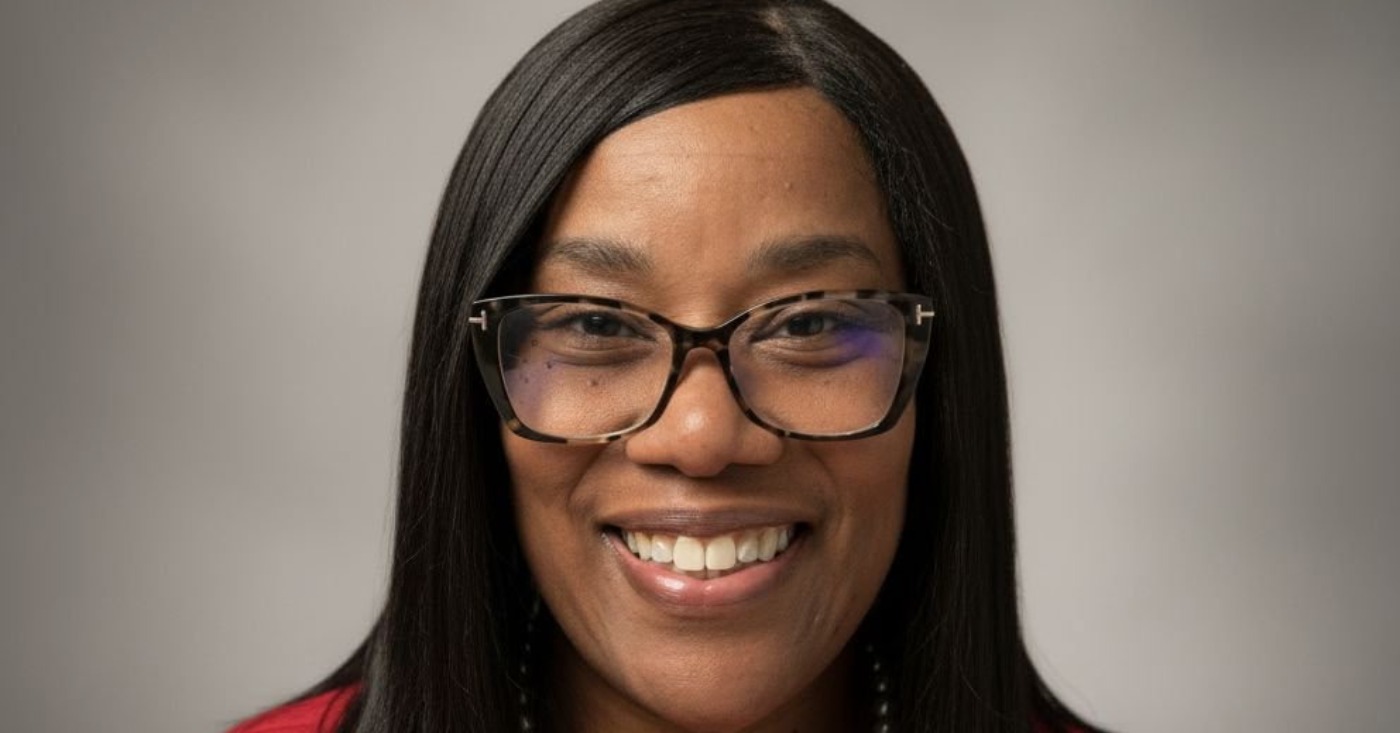
Alena Maunder is a third-generation Marin City resident, parent, community advocate, and former Sausalito Marin City School District Trustee who served from 2020 to 2024.
Professionally, Alena is a registered nurse with more than 20 years of healthcare experience and nine years in leadership. She holds degrees in Psychology and Nursing, as well as a Master of Science in Nursing.
With school board experience, she brings a strong understanding of governance, fiscal oversight, accountability, and the importance of stable district leadership.
Alena has also remained actively involved in Marin City through community service, youth programs, and initiatives focused on strengthening opportunities and resources for children and families.
Maunder is seeking to return to the Board to continue advocating for academic excellence, fiscal responsibility, strong special education and mental-health supports, and meaningful community engagement. She is committed to strengthening relationships among students, educators, families, and the Marin City and Sausalito communities while ensuring every student has the opportunity to succeed.
Her campaign reflects her commitment to “Experienced Leadership. Students First.”
Learn more at www.electalenasmcsd.com.
Black Press
Becerra Urges Black Leaders to Turn Out the Vote in Record Numbers
Former U.S. Secretary of Health Xavier Becerra recently visited Oakland to meet with prominent Black leaders just one week before the upcoming November election. Joined by Oakland Mayor Barbara Lee and Sacramento Observer Publisher Larry Lee, Becerra emphasized the importance of high voter turnout at Oakstop, a local Black-owned business. The meeting focused on community protection and collective efforts to support California’s diverse populations as the campaign for the governorship enters its final days. Visit our website to read more.
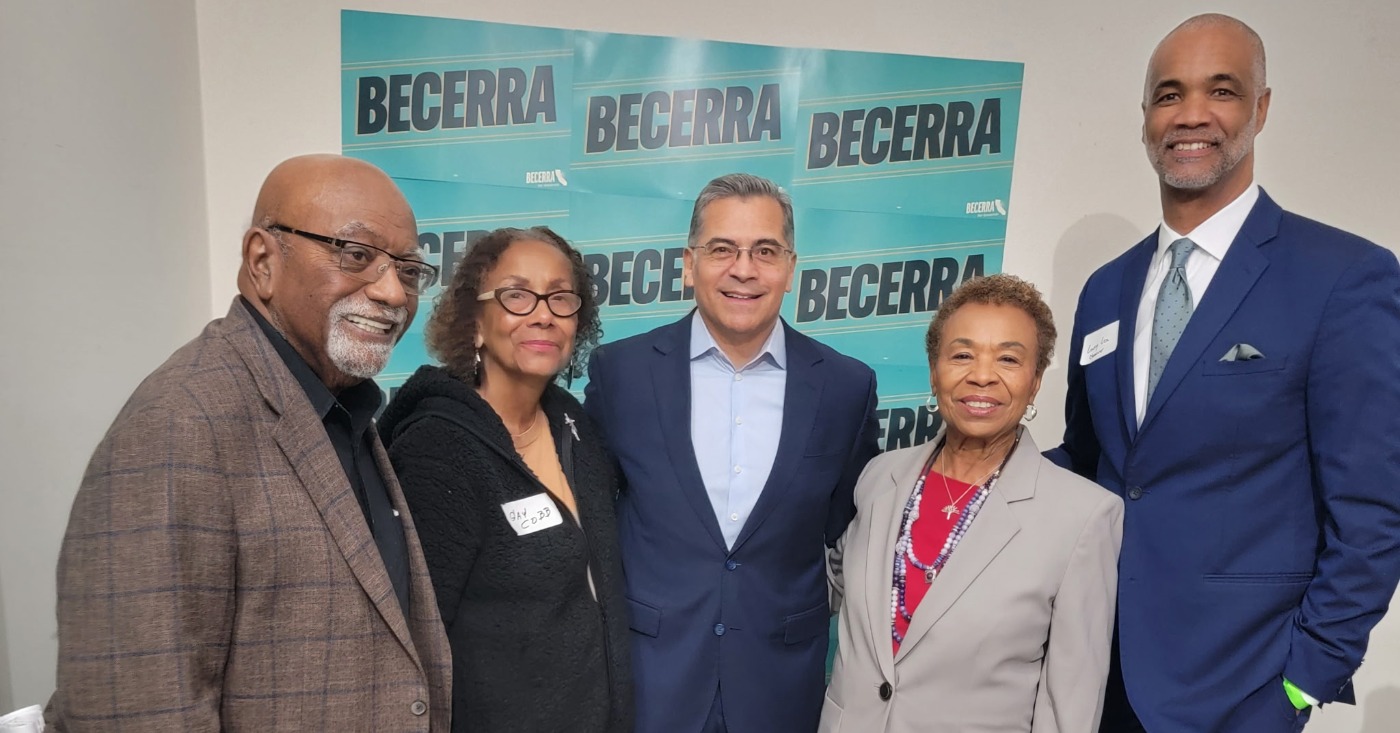
Becerra Urges Black Leaders to Turn Out the Vote in Record Numbers
A week before the Nov. 3 election where he hopes to succeed Gov. Gavin Newsom as the next democratic governor, former U.S. Secretary of Health Xavier Becerra (center) stopped in Oakland to meet with Black leaders. Welcomed by Oakland Mayor Barbara Lee (center right), who is seeking reelection herself, Becerra said he was proud to stand with Black leaders in Oakland as Election Day grows closer. “Thank you to the elected officials, faith leaders, civic and community leaders who joined us at Oakstop, a Black-owned business that supports local entrepreneurs, artists, and community organizations. This election is about protecting all of California’s communities,” he said. “Let’s finish together.” They were joined by constituents Paul and Gay Cobb (left) and Sacramento Observer Publisher Larry Lee (right). Photo by Jonathan ‘Fitness’ Jones.
Black Press
20 Years of California Climate Law: Gov. Newsom and Former Gov. Schwarzenegger Lead Milestone Celebration
Gov. Gavin Newsom and former Gov. Arnold Schwarzenegger recently gathered at the California Economic Summit to mark the 20th anniversary of the Global Warming Solutions Act. The bipartisan celebration highlighted how the landmark law established a framework for reducing greenhouse gas emissions through the state’s cap-and-invest program. While the governors credited these policies with fostering clean-energy innovation and driving economic growth, critics continue to raise concerns regarding the impact of environmental regulations on energy affordability for residents. Read more to learn about the state’s climate milestones.

California Gov. Gavin Newsom and former Gov. Arnold Schwarzenegger celebrated two decades of the state’s landmark climate law on Wednesday, Oct. 14, highlighting California’s efforts to reduce greenhouse gas emissions while growing its economy and expanding clean-energy investment.
The Democratic governor and Republican former governor appeared together at the 15th annual California Economic Summit in Long Beach to mark the 20th anniversary of Assembly Bill 32, the Global Warming Solutions Act, which Schwarzenegger signed in September 2006. The law established a framework for reducing California’s greenhouse gas emissions and helped lay the groundwork for the state’s cap-and-invest program.
“We’ve shown the world what a state can accomplish,” Schwarzenegger said, highlighting California’s climate leadership.
Newsom credited Schwarzenegger’s decision to sign AB 32 with helping create the state’s cap-and-invest program, which requires companies to reduce their emissions, purchase allowances, or fund projects that offset pollution. Revenue from the program supports climate initiatives, affordable housing and transportation projects, as well as electricity bill credits for residents.
Newsom said California has reinvested $16 billion to offset residents’ electricity costs since the program began and expects to receive another $8 billion over the next four years.
He also argued that predictable climate policies encourage businesses to invest in California’s clean-energy economy, pointing to Tesla as an example of the opportunities the state’s regulatory framework created.
“There’s no Elon Musk without what Gov. Schwarzenegger did because there would be no Tesla,” Newsom said.
Schwarzenegger agreed that long-term policy certainty helps attract investment, arguing that California’s climate initiatives demonstrate that environmental protections and economic development can advance together.
The state extended its cap-and-invest program through 2045 last year, giving businesses a longer-term framework for planning investments and meeting emissions requirements.
However, California’s approach continues to face criticism over energy affordability and regulatory costs. Wayne Winegarden, a senior fellow at the Pacific Research Institute, argued that assessments of the state’s climate policies should better account for the high energy costs Californians face. Critics have also questioned how much of the state’s economic growth can be directly attributed to its environmental regulations.
The governors’ joint appearance underscored their shared support for climate action despite their political differences. Schwarzenegger has criticized Newsom’s support for Proposition 50, the 2025 redistricting measure that temporarily allowed California lawmakers to redraw congressional districts.
The anniversary comes as California continues to pursue emissions reductions and clean-energy investment while facing questions about the cost of its climate policies for households and businesses.


OUSD Receives State Review of District Finances; Outlines Progress Since January

IN MEMORIAM: United Farm Workers Union Icon Dolores Huerta, 96

Home Nursing Visits Provide Wide-Ranging Benefits for Mothers, Young Children

Trump as a Distraction…Focus on the Ballot and 2028

Kids Escape City Chaos for Camp Paradise #shorts

Don’t Name Things After Me If I Can’t Enjoy Them! #shorts

EVs Cost Less Than Half as Much to Fuel—Check Your Local Savings #shorts

Multi-Faith Leaders Representing 10 Million People Launch National Anti-Authoritarian Initiative

Multi-Faith Leaders Representing 10 Million People Launch National Anti-Authoritarian Initiative

Former Trustee Alena Maunder Seeks Reelection to Sausalito Marin City School District Board

All Skinfolk Ain’t Kinfolk

Practitioners of African Traditional Spirituality Offer Ancestral Reverence Ritual Oct. 31

Latinas Deserve Equal Pay. Unions Help Make It Happen.

A $2.1 Trillion Wellness Industry Never Built a Daily Practice for Black Children. So This Atlanta Family Did.

Zakiya Jendayi Arrested, Locked Out of Home by Sheriff’s Deputies

Oakland Awarded More than $14 Million in State Funding

Tamiko Armstead | 2026 Lifetime Achiever in Education

Montclair Brewery: Brewing Culture, Community, History

Listening as a Lifeline: A Doula’s Witness to Black Maternal Health

Should You Have to Pay to Hear the Gospel?
Trump as a Distraction…Focus on the Ballot and 2028
Kids Escape City Chaos for Camp Paradise #shorts
Don’t Name Things After Me If I Can’t Enjoy Them! #shorts
EVs Cost Less Than Half as Much to Fuel—Check Your Local Savings #shorts

Unity is Power: Building Success Against All Odds! #shorts

Cómo publicar su DBA en el condado de Kern o Los Ángeles desde su teléfono

The Buckner Family on Building Moltron Builders Together | On The Radar | Powered by JPMorganChase

Test the Third Row Before You Buy This SUV #shorts

From ‘Why Not Us?’ to Reimagining North Commons #shorts

Publish your DBA from your phone in 5 minutes (Kern & LA County) #shorts
-

 Art7 days ago
Capturing Black Life’s Beauty
-

 Black Press1 week ago
Secretary of State Shirley Weber Pushes Back Against DOJ Demands Over California Voter Rolls
-

 Black History7 days ago
Retirement Triggers Doctor to Pen Book for Young Audience
-

 Black History1 week ago
Oakland Honors 60 Years of the Black Panther Party at the All Power to the People Gala
-

 Black Press7 days ago
Fatigue, Bloating, and Inflammation: Spotting the Subtle Signs of MASLD
-

 Black Press7 days ago
When Your Faith Is Put to the Test
