
Featured
NFL: AFC Preview | Baltimore Ravens will represent the AFC in the Super Bowl


Even though two games were played, the first NFL Sunday of the 2026 campaign is upon us. Happy NFL Sunday to those who celebrate! There are teams that have made huge changes with Super Bowl aspirations. Meanwhile, other teams are retooling their rosters. Let’s take a preview into the 2026 NFL Season!
Division Winners
AFC EAST – Buffalo Bills
AFC NORTH – Baltimore Ravens
AFC SOUTH – Houston Texans
AFC WEST – Denver Broncos
Wild Cards — Los Angeles Chargers, New England Patriots, Kansas City Chiefs
AFC Champion – Baltimore Ravens
The Buffalo Bills are a team that longingly desires a trip to the Super Bowl. After a crushing loss to the Denver Broncos, they fired head coach Sean McDermott and elevated offensive coordinator Joe Brady to the top spot. They acquired wide receiver DJ Moore in the hopes of solving their issue of lacking a number one receiver. Bradley Chubb, 30, became the latest veteran edge rusher signed who has discovered the fountain of youth. C.J. Gardner-Johnson gave the Bills a dependable safety alongside Cole Bishop.
The key for the Bills this year is Josh Allen not turning the ball over and shrinking in key moments during the playoffs. In the loss to the Broncos, Allen threw two interceptions.
Super Bowl or Bust
The Baltimore Ravens have been invigorated by management’s decision to jettison former head coach John Harbaugh. Baltimore has hired Jesse Minter, the former Los Angeles Chargers defensive coordinator, replacing Harbaugh after eighteen years. Minter brought quarterback coach Declan Doyle from the Chicago Bears to serve as his offensive coordinator. He frequently has one-on-one time with star quarterback Lamar Jackson during training camp. Lamar has taken to Doyle’s hard coaching style and the belief that he must go through his progressions before making plays with his feet.
The major key for the Ravens’ success is Jackson’s health, and the defense must become formidable again. Adding pass rusher Trey Hendrickson could pay dividends.
Houston has the defense and what else?
Quarterback CJ Stroud has to take the next step in his development if the Houston Texans are going to be a real Super Bowl contender. What is clear, if Stroud has a great season, he will most certainly cash in north of potentially $60 million because he’s eligible for a contract extension. However, if he throws for less than 4,000 yards and Houston does not win a playoff game, Stroud’s future in H-Town will likely be in doubt.
The Texans defense plays with an aggression and mean streak that hasn’t been seen since the Legion of Boom and the 2000s Ravens defenses. Danielle Hunter and Will Anderson Jr. are the best defensive ends in the NFL. They added Reed Blankenship, joining Calen Bullock in the back end of the secondary.
The Broncos are nearly complete
Lastly, the Denver Broncos would have played in Super Bowl LX had starting quarterback Bo Nix not gotten injured with a fractured ankle in the AFC Championship game. In the divisional round, Nix threw for 279 yards and three touchdowns against the Buffalo Bills.
Nix benefits from an offensive line that is cohesive and elite. They’re able to run the ball when necessary, deploy the screen game, and keep Nix clean. The fact that the Broncos do not have key playmakers beyond Courtland Sutton at wide receiver is a concern. Marvin Mims will have to step up in this area.
Full Division Predictions
AFC East: Buffalo Bills, New England Patriots, New York Jets, Miami Dolphins
AFC North: Baltimore Ravens, Pittsburgh Steelers, Cincinnati Bengals, Cleveland Browns
AFC South: Houston Texans, Jacksonville Jaguars, Indianapolis Colts, Tennessee Titans
AFC West: Denver Broncos, Los Angeles Chargers, Kansas City Chiefs, Las Vegas Raiders
AFC Champions
This year’s AFC Champion will be the Baltimore Ravens. The vibes in Charm City point to a win-now team. If Lamar Jackson stays healthy, Derrick Henry keeps churning out key yards, and the defense regains its intimidating edge, the Ravens will be bound for Southern California.







Black History
“Blue Tsunami” Sweeps Georgia, Bottoms Makes History
MOREHOUSE COLLEGE – THE MAROON TIGER — A political shift described as a “Blue Tsunami” has transformed the landscape of Georgia leadership following the recent election. Keisha Lance Bottoms made history when the race was called on Nov. 3, becoming the first woman and the first Black person elected as governor of Georgia.

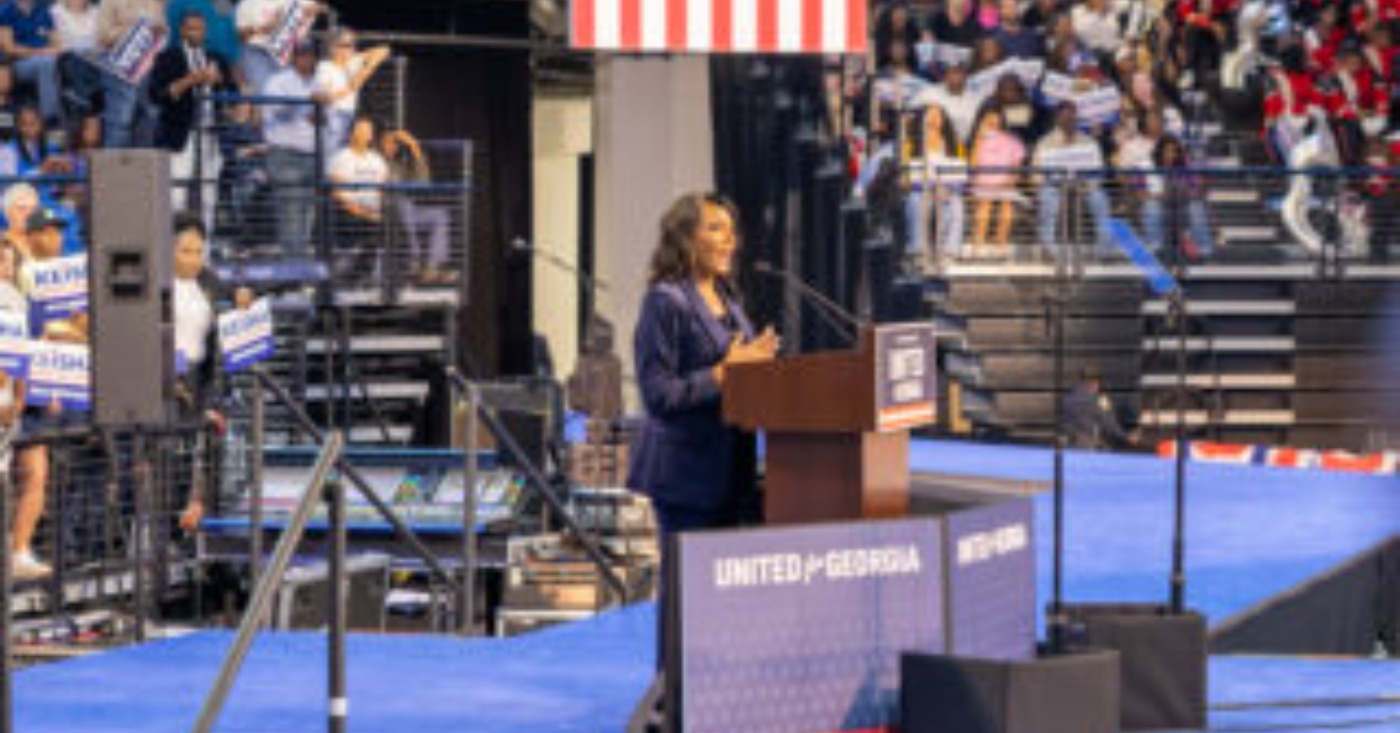
The race was called on Nov. 3 at 9:24 p.m., which is much earlier than most elections. The atmosphere of the Marriott Marquis located in downtown Atlanta was only a mere sample of the excitement statewide. The event hall could barely hold the guests as the line for access passes extended across the entire lobby floor. Everyone came in some of their best attire, sporting unmistakable blue diamond pins with the words, “Keisha Lance Bottoms for governor.”
Now, Bottoms will become Georgia’s first woman and first Black governor when she takes office in January, making her the first Black woman to serve as governor of any U.S. state.
She described her campaign as reaching every corner of the state, “from the red hills of Georgia to the Blue Ridge Mountains of the Piedmont,” as cameras crowded in to capture the moment.
Joining her onstage were her mother, her children and her husband, Derek Bottoms, whom she met while attending Georgia State University College of Law and married in October 1994.
Supporters who had campaigned alongside Bottoms for 578 days shed tears of joy at her election watch party. Among those near the stage were U.S. Sen. Raphael Warnock ‘91, D-Ga., the senior pastor of Ebenezer Baptist Church, and the Rev. Jamal Harrison Bryant ‘94, the senior pastor of New Birth Missionary Baptist Church.
Eight Black women, many firsts
In 2025, Black women experienced disproportionate employment losses as the Trump administration implemented federal workforce cuts and rolled back diversity, equity and inclusion initiatives.
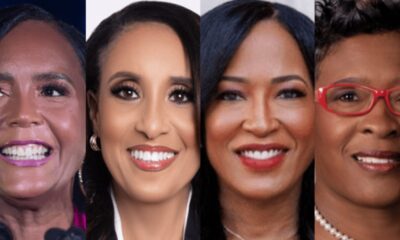
The losses disproportionately affected Black women across the country. In 2026, Georgia voters elected eight Black women to statewide office, marking a historic shift in the state’s political leadership. The South had something to say.
Georgia’s eight major statewide executive offices are the governor, lieutenant governor, attorney general, secretary of state, agriculture commissioner, insurance commissioner, labor commissioner and state school superintendent.
When the newly elected officials take office in January, Black women will hold seven of Georgia’s eight statewide executive offices, a first for the state, with Lt. Gov.-elect Josh McLaurin holding the eighth seat.
Several broke barriers of their own. Tanya Miller will become Georgia’s first elected woman attorney general. Penny Brown Reynolds, a former Fulton County judge, will become the first Black person elected Georgia secretary of state. Keisha Sean Waites, a former Atlanta City Council member, will become Georgia’s first Black woman insurance commissioner. Educator Lydia Powell will become its first Black woman state school superintendent, while Nikki Porcher will become its first Black woman labor commissioner.
Agriculture Commissioner-elect Katherine Juhan-Arnold founded Baby Katie’s Pharm & Kitchen, a nonprofit farm that provides fresh produce and agricultural education to underserved communities. Shelia Edwards, who won the District 5 race, will join Alicia Johnson as one of only two Black women on the Georgia Public Service Commission. Johnson became the first Black woman elected to a statewide partisan office outside the judiciary in Georgia after winning her commission seat in 2025.
“Georgia chose competence,” Brown Reynolds told The 19th. “We were not selected because we were Black women. I believe that we were selected because all of us bring something that Georgia desperately needs.”
Andra Gillespie, a political science professor at Emory University, told USA Today that the number of Black women elected to leadership positions in Georgia is unprecedented.
“Black women have definitely reached a point where they can not only run and be taken seriously for leadership positions in major parties,” she said.
The wins reached Congress too. State Rep. Jasmine Clark, D-Ga, became the first Black woman with a doctorate in science elected to Congress, winning Georgia’s 13th Congressional District seat, while U.S. Reps. Lucy McBath and Nikema Williams won reelection.
“Georgia has shown up”
Warnock said Georgia voters showed the power of organizing this election cycle and pledged to keep fighting for historically Black colleges and universities.
“I’m proud of Georgia. Georgia has shown up,” Warnock said. “Some 3 million of them early voted.”
He said churches played a key role in that turnout.
“What we saw, among other things, in this election cycle is the power of organizing, and the faith community has always been an important part of that,” he said.
When asked about the legislative priorities he plans to pursue with Keisha Lance Bottoms, Warnock highlighted his efforts to secure federal funding for historically Black colleges and universities.
Warnock pointed to a recent $97.1 million federal award supporting STEM programs at 10 historically Black colleges and universities and other minority-serving institutions, including Clark Atlanta University. His office has also reported securing more than $17 billion for HBCUs nationwide since he began his full Senate term.
With Governor-Elect Bottoms being an HBCU graduate of Florida A&M University, Georgia will have two HBCU alumni representing the people of the state.
“My own life is a testament to how these schools perform way above their weight,” he said. “And so I’ll continue to fight for them.”
His advice for current students was simple: “Morehouse gave me everything I needed to get ready,” he said. “I want the students to look at someone like me, and many others in various fields, and know that we sat in those same desks that they sit in. And so the sky is the limit.”
“Money doesn’t make you a success; character does”
Bryant said the win was personal, crediting Black men and Black churches for helping elect Bottoms.
“Super excited to know history was made, and to know that Black men supported a Black woman to get to this place,” he said.
The biggest hurdle, Bryant said, was getting Black churches involved and engaged, which he described as a return to the church’s tradition from the civil rights movement.
His advice for young men at Morehouse and across Georgia was direct.
“The takeaway lesson for all of us is money doesn’t make you a success,” Bryant said. “Character does.”
When the officials-elect take office in January, Black women will lead nearly every corner of Georgia’s executive branch. Bottoms announced her transition team Friday, Nov. 6. She and the seven other statewide officials-elect will be sworn in in January.
This site uses Akismet to reduce spam. Learn how your comment data is processed.
Based on reporting by Morehouse College – The Maroon Tiger.
Black History
“Blue Tsunami” Sweeps Georgia, Bottoms Makes History
MOREHOUSE COLLEGE – THE MAROON TIGER — A political shift described as a “Blue Tsunami” has transformed the landscape of Georgia leadership following the recent election. Keisha Lance Bottoms made history when the race was called on Nov. 3, becoming the first woman and the first Black person elected as governor of Georgia.
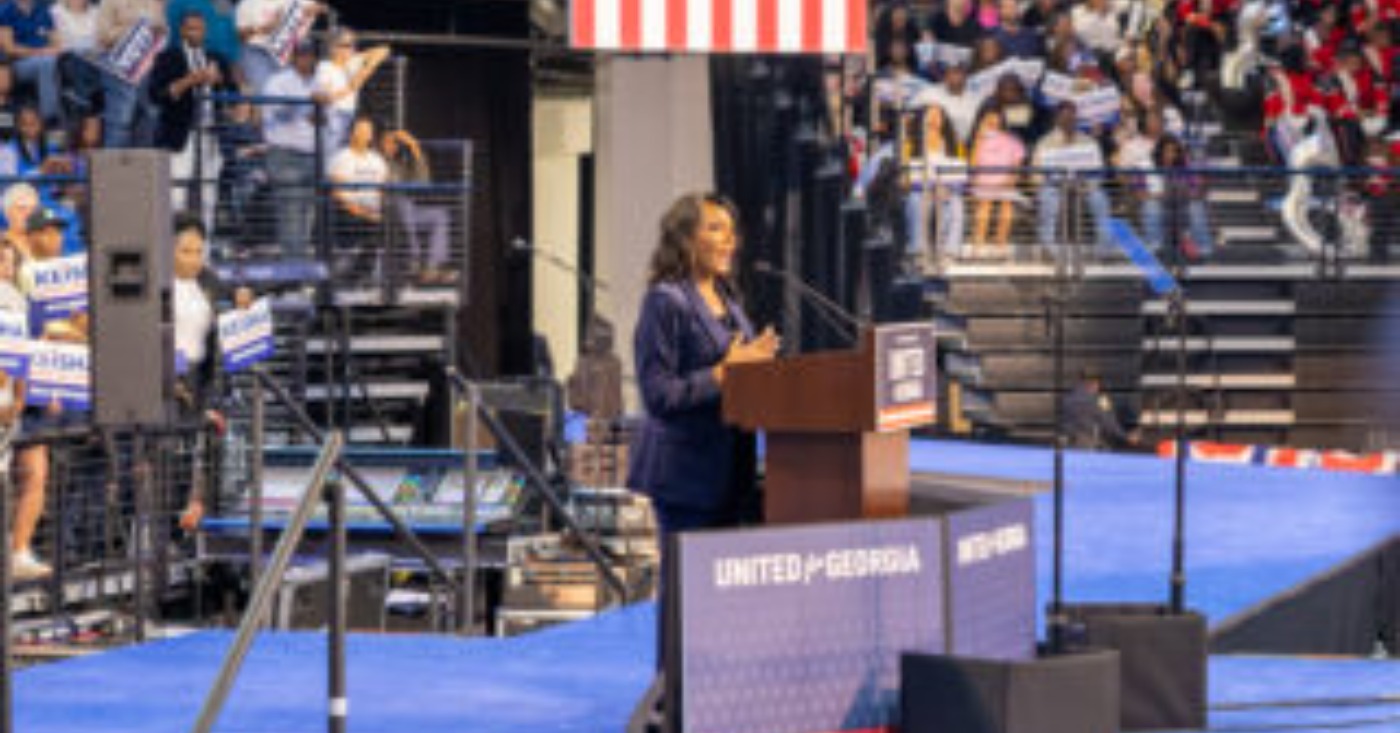
The race was called on Nov. 3 at 9:24 p.m., which is much earlier than most elections. The atmosphere of the Marriott Marquis located in downtown Atlanta was only a mere sample of the excitement statewide. The event hall could barely hold the guests as the line for access passes extended across the entire lobby floor. Everyone came in some of their best attire, sporting unmistakable blue diamond pins with the words, “Keisha Lance Bottoms for governor.”
Now, Bottoms will become Georgia’s first woman and first Black governor when she takes office in January, making her the first Black woman to serve as governor of any U.S. state.
She described her campaign as reaching every corner of the state, “from the red hills of Georgia to the Blue Ridge Mountains of the Piedmont,” as cameras crowded in to capture the moment.
Joining her onstage were her mother, her children and her husband, Derek Bottoms, whom she met while attending Georgia State University College of Law and married in October 1994.
Supporters who had campaigned alongside Bottoms for 578 days shed tears of joy at her election watch party. Among those near the stage were U.S. Sen. Raphael Warnock ‘91, D-Ga., the senior pastor of Ebenezer Baptist Church, and the Rev. Jamal Harrison Bryant ‘94, the senior pastor of New Birth Missionary Baptist Church.
Eight Black women, many firsts
In 2025, Black women experienced disproportionate employment losses as the Trump administration implemented federal workforce cuts and rolled back diversity, equity and inclusion initiatives.
The losses disproportionately affected Black women across the country. In 2026, Georgia voters elected eight Black women to statewide office, marking a historic shift in the state’s political leadership. The South had something to say.
Georgia’s eight major statewide executive offices are the governor, lieutenant governor, attorney general, secretary of state, agriculture commissioner, insurance commissioner, labor commissioner and state school superintendent.
When the newly elected officials take office in January, Black women will hold seven of Georgia’s eight statewide executive offices, a first for the state, with Lt. Gov.-elect Josh McLaurin holding the eighth seat.
Several broke barriers of their own. Tanya Miller will become Georgia’s first elected woman attorney general. Penny Brown Reynolds, a former Fulton County judge, will become the first Black person elected Georgia secretary of state. Keisha Sean Waites, a former Atlanta City Council member, will become Georgia’s first Black woman insurance commissioner. Educator Lydia Powell will become its first Black woman state school superintendent, while Nikki Porcher will become its first Black woman labor commissioner.
Agriculture Commissioner-elect Katherine Juhan-Arnold founded Baby Katie’s Pharm & Kitchen, a nonprofit farm that provides fresh produce and agricultural education to underserved communities. Shelia Edwards, who won the District 5 race, will join Alicia Johnson as one of only two Black women on the Georgia Public Service Commission. Johnson became the first Black woman elected to a statewide partisan office outside the judiciary in Georgia after winning her commission seat in 2025.
“Georgia chose competence,” Brown Reynolds told The 19th. “We were not selected because we were Black women. I believe that we were selected because all of us bring something that Georgia desperately needs.”
Andra Gillespie, a political science professor at Emory University, told USA Today that the number of Black women elected to leadership positions in Georgia is unprecedented.
“Black women have definitely reached a point where they can not only run and be taken seriously for leadership positions in major parties,” she said.
The wins reached Congress too. State Rep. Jasmine Clark, D-Ga, became the first Black woman with a doctorate in science elected to Congress, winning Georgia’s 13th Congressional District seat, while U.S. Reps. Lucy McBath and Nikema Williams won reelection.
“Georgia has shown up”
Warnock said Georgia voters showed the power of organizing this election cycle and pledged to keep fighting for historically Black colleges and universities.
“I’m proud of Georgia. Georgia has shown up,” Warnock said. “Some 3 million of them early voted.”
He said churches played a key role in that turnout.
“What we saw, among other things, in this election cycle is the power of organizing, and the faith community has always been an important part of that,” he said.
When asked about the legislative priorities he plans to pursue with Keisha Lance Bottoms, Warnock highlighted his efforts to secure federal funding for historically Black colleges and universities.
Warnock pointed to a recent $97.1 million federal award supporting STEM programs at 10 historically Black colleges and universities and other minority-serving institutions, including Clark Atlanta University. His office has also reported securing more than $17 billion for HBCUs nationwide since he began his full Senate term.
With Governor-Elect Bottoms being an HBCU graduate of Florida A&M University, Georgia will have two HBCU alumni representing the people of the state.
“My own life is a testament to how these schools perform way above their weight,” he said. “And so I’ll continue to fight for them.”
His advice for current students was simple: “Morehouse gave me everything I needed to get ready,” he said. “I want the students to look at someone like me, and many others in various fields, and know that we sat in those same desks that they sit in. And so the sky is the limit.”
“Money doesn’t make you a success; character does”
Bryant said the win was personal, crediting Black men and Black churches for helping elect Bottoms.
“Super excited to know history was made, and to know that Black men supported a Black woman to get to this place,” he said.
The biggest hurdle, Bryant said, was getting Black churches involved and engaged, which he described as a return to the church’s tradition from the civil rights movement.
His advice for young men at Morehouse and across Georgia was direct.
“The takeaway lesson for all of us is money doesn’t make you a success,” Bryant said. “Character does.”
When the officials-elect take office in January, Black women will lead nearly every corner of Georgia’s executive branch. Bottoms announced her transition team Friday, Nov. 6. She and the seven other statewide officials-elect will be sworn in in January.
This site uses Akismet to reduce spam. Learn how your comment data is processed.
Based on reporting by Morehouse College – The Maroon Tiger.
Black Press
OP-ED: And Then What?
BLACKPRESSUSA NEWSWIRE — Last week, Democrats regained control of both houses of Congress, flipping at least 43 House seats and seven Senate seats. We flipped five governorships; 500 legislative seats took districts that have been red for a generation and turned them blue, and there are even more races left to be called.

The historic Blue Tsunami we all witnessed across this country provided a clear mandate for Democrats and a clear demonstration that Americans want our elected officials focused on fixing the real problems they face every day instead of promoting a meaningless culture war that has zero impact on our lives while corporate fat cats pick our pockets to line their own.
But, that being said, I can’t help but remember the words of Young Jeezy: And then what?
Look, I’m as blown away by the election results as anyone.
Last week, Democrats regained control of both houses of Congress, flipping at least 43 seats in the House and seven in the Senate. We flipped five governorships; 500 legislative seats took districts that have been red for a generation and turned them blue, and there are even more races left to be called.
According to The New York Times, the Black voter share grew dramatically. In Alabama, it went from 22% in 2024 to 26% in 2026. In Mississippi, it went from 30% in 2024 to 33% in 2026; in South Carolina, it went from 21% in 2024 to 24% in 2026. In Louisiana, it went from 27% in 2024 to 30% in 2026, and in Georgia, it went from 29% in 2024 to 32% in 2026.
That’s a three- to four-percent growth in all of those states, and even in states like Michigan, Illinois, and New York, where there was no measurable change, that’s compared to a presidential year, which, in and of itself, is absolutely huge.
In North Carolina, Senator-elect Roy Cooper got more votes from early voting than Michael Whatley got in total, and the same thing happened in Texas and Georgia. So, yes, I’m pretty excited.
But I’m also a realist because I know progress isn’t permanent and things can change in a heartbeat, especially if you don’t keep your eye on the ball. I know that we need to protect this electoral progress, so we can’t afford to mismanage our politics, our policies, or the promises we made on the campaign trail.
We can’t afford to mismanage the broad coalition that propelled us to a historic election night.
That’s what the Republicans did, and we see what it got them.
In 1967, Dr. King spoke at a similar moment, saying we had to choose between chaos and community, and in 2005, Young Jeezy asked the same question: “And then what?”
Our “what” is simple:
- We have to lower the cost of living.
- We have to save affordable healthcare.
- We have to hold the crooks who’ve been running this country for the past two years accountable for their crimes.
Does that mean we launch a campaign of retribution that gets us bogged down in some neverending impeachment fight? Of course not.
We stand up against corruption while working for the people because they need our help more than they need political payback.
We choose community because we know too well what chaos looks like.
It looks like skyrocketing foreclosure rates and car repossessions. It looks like more than half of Americans are forced to rely on credit cards to pay for basic needs like groceries, rent and utilities, student debt has jumped since the Trump administration reversed course on Biden repayment and forgiveness plans and an unconstitutional war that costs us record-high diesel prices and fertilizer costs, along with 16 unnecessary American deaths.
It looks like Americans are having to take out loans to pay for groceries even though they’re making six figures, and affordable housing is sitting vacant because folks still can’t afford it, particularly with the dramatic cuts to SNAP and Medicaid we saw in Trump’s “Big Ugly Bill.”
According to the Federal Reserve, the net worth of Black households is down 25%. That’s chaos.
We choose community. We choose raising the minimum wage, tackling price gouging, expanding voting rights, and putting back the subsidies that helped you pay for health insurance. We chose standing up for each other.
Young Jeezy asked the question, “And then what?” Community is the answer, and it’s time to get to work.
Black Press
OP-ED: Closing the Next Digital Divide — Communities of Color Must Have a Voice in the AI Future
As artificial intelligence reshapes the global economy, leaders are warning that communities of color risk falling behind if they lack access to critical training. Following the push to bridge the pandemic-era digital divide, new initiatives like the AI Fluency Initiative in Houston are providing practical exposure to these tools for small business owners and students. Ensuring Black and Brown communities are not the last to benefit from this technological transformation requires a combination of literacy programs and developer accountability to prepare workers for an evolving landscape. Read more.
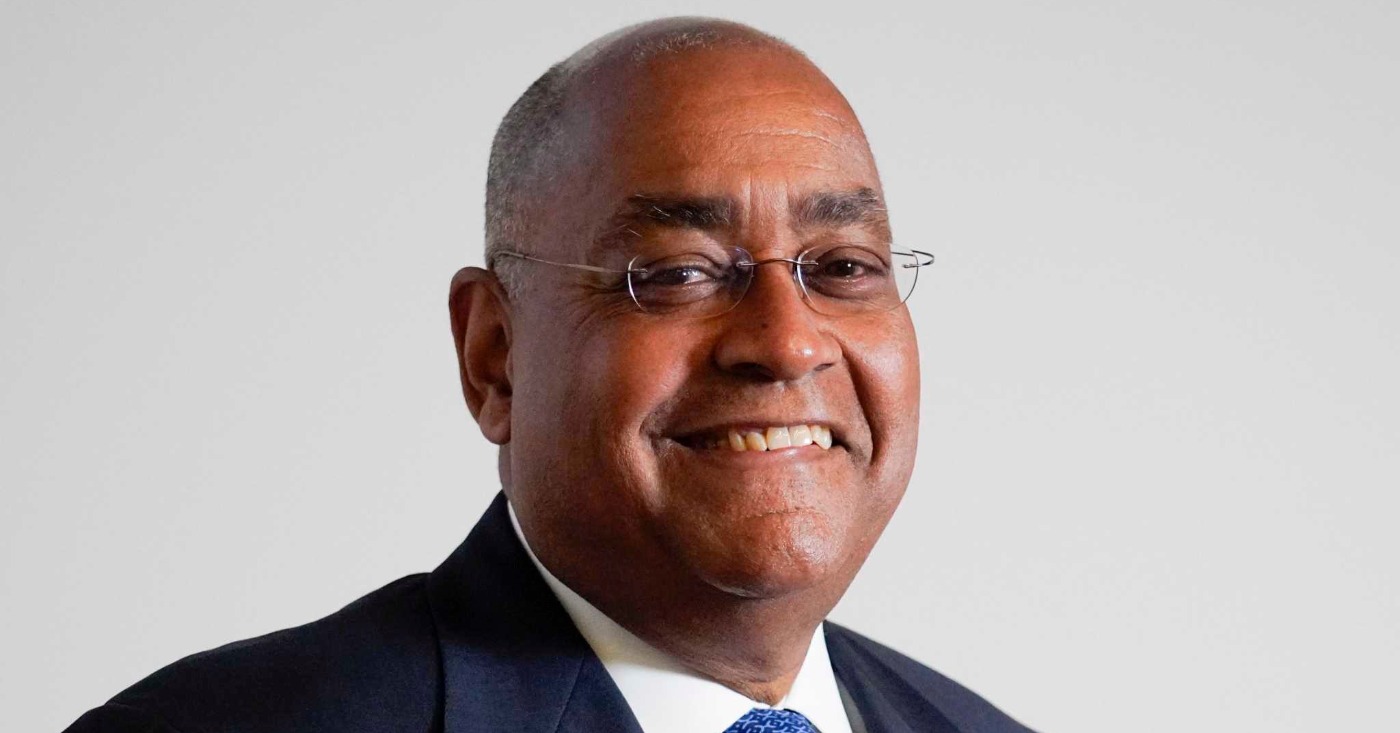
Technology has long shaped who has access to opportunity. As artificial intelligence begins reshaping our workplaces, schools, and daily lives, we must ensure communities of color are not left catching up once again.
In 2020, the pandemic risked widening a digital divide that has put people of color at a disadvantage for years. Access to the technologies that are shaping the world should be available to all. When the internet emerged as the technology of note, children needed access for their education. Adults needed access to find work and succeed in their jobs. Increasingly, upward mobility and economic opportunity depend on having the skills to use the tools transforming our economy.
In Harris County, we worked to make sure our residents were not on the wrong side of that vast digital divide. Through the Office of Broadband, we distributed thousands of hotspots, established more than 100 public Wi-Fi locations, and invested in infrastructure to increase internet availability for under-resourced families.
Today, another divide is emerging. In 2020, the challenge was whether families could get online. Now, communities need to learn to navigate a world increasingly influenced by AI or risk being left behind. More than access, responsible AI requires thinking critically about the technology, its outputs, and the companies behind it. AI literacy builds a foundation for that reflection. We cannot allow Black and Brown communities to be the last to benefit from another technological transformation.
That is why I was proud to partner with Reverend Al Sharpton and the National Action Network (NAN) in September to bring the AI Fluency Initiative to Houston. The program seeks to provide people with practical exposure to AI and show how these tools can be used in jobs, education, small business, and more. Open to the public, programs like this give residents the knowledge to participate in a changing economy and shape the systems developing around them.
Technology companies also have a role to play in making information accessible. OpenAI partnered with NAN on AI literacy in Houston and has supported practical training across the country through OpenAI Academy. Local businesses, older adults, and educators are among the groups the company has targeted through these efforts. This kind of engagement matters. The organizations building AI tools must equip communities with the skills and confidence to use them effectively. When people understand its capabilities and limitations, AI can help them address problems they are already facing.
Entrepreneurs like Kaija Pack are already putting that potential into practice here in Texas. As she built Break Life Houston, she leveraged ChatGPT to develop business strategies and expand her customer base, ultimately growing her business enough to open a second location.
Small business owners like Kaija should understand how AI can help them compete. Workers should understand how it may change their industries. Students should learn how to use these tools responsibly. Communities should understand AI so they can have a meaningful voice when decisions about the technology affect them.
This principle has guided much of my public service. Earlier this year, Commissioner Lesley Briones and I championed Harris County’s first worker Consultation Policy because workers deserve a say in the choices that will impact their livelihoods. Those voices are amplified when we understand their means of empowerment.
AI literacy is a path to that understanding. A seat at the table is most powerful when people have the knowledge they need to advocate for themselves.
Understanding includes risks as well as opportunities. We need to learn how to use these tools safely, and developers have the responsibility to build safety into their systems. OpenAI, for example, has invested in external testing, safeguards, and publicly documented standards for model behavior. Developers should pair innovation with accountability.
Closing the AI divide will be a collaborative effort. Harris County already has networks like our Digital Navigators that connect residents with technology and digital skills. We should build on initiatives like these and make practical AI education accessible at a greater scale.
Too often, people of color have been asked to adapt to new systems after they were built and the rules were already written. With AI, we have an opportunity to be involved from the outset.
The future should not simply happen to us. We should have a hand in shaping it.
Featured
Black Resilience: The Powerful Story of George Wallace’s Redemption
How did a staunch segregationist end up in a Black church? Explore the transformative power of Black resilience in this week’s episode of From the Desk of the Editor.


What brought George Wallace, a staunch segregationist, into Black churches? From the Desk of the Editor revisits that moment and reflects on what it reveals about Black resilience. Watch this week’s episode now!
#BlackHistory #BlackResilience #FromTheDeskOfTheEditor #VoiceAndViewpoint
Featured
From The Desk of The Editor 11/11/26
This week’s editorial explores the nobility of Black veterans and the path forward following the recent election results. Join us for a candid conversation.

0:00 – Intro
10:00 – Reading this week’s editorial
20:00 – Respect of Black Veterans
30:00 – Blacks have been so noble under adverse conditions.
40:00 – The Heritage Group have accepted it’s a blue wave, so now we have 2 years to re-group.
50:00 – People used to come together and have conversations.
60:00 – Outro


“Blue Tsunami” Sweeps Georgia, Bottoms Makes History

“Blue Tsunami” Sweeps Georgia, Bottoms Makes History

OP-ED: And Then What?

OP-ED: Closing the Next Digital Divide — Communities of Color Must Have a Voice in the AI Future

Which Car Comfort Features Are Worth Paying For? #shorts

Choosing a Truck Bed? Test Your Gear Before You Buy #shorts

Black Resilience: The Powerful Story of George Wallace’s Redemption

From The Desk of The Editor 11/11/26

Credit Builder Loans Offer a Fresh Start #shorts

Small Savings Build Lasting Financial Peace #shorts

Practitioners of African Traditional Spirituality Offer Ancestral Reverence Ritual Oct. 31

Tamiko Armstead | 2026 Lifetime Achiever in Education

HISTORY MADE: Keisha Lance Bottoms Becomes First Black Woman Elected Governor in American History

OP-ED: The Black Church Writes AI’s Next Chapter

OP-ED: If the ‘Cornell 7’ Were Black Men at an HBCU — America Wouldn’t Be This Sympathetic

Inside 820 S. Michigan: New Book Captures the Lost World of Ebony and Jet

Kickstarter CEO Everette Taylor Shares Tips on Creating and Growing a Business

While Black Families Pay More for Power, Some Attorneys General Fight to Save High-Cost Coal

BLACK MEN VOTE: Mobilizing 100,000 Black Men Ahead of the Midterms 📱

NFN live presents 🎙️ THE ROAD TO BEYOND IWDM 50: WE CANNOT STOP NOW! 8-Week Podcast
Which Car Comfort Features Are Worth Paying For? #shorts
Choosing a Truck Bed? Test Your Gear Before You Buy #shorts
Black Resilience: The Powerful Story of George Wallace’s Redemption
From The Desk of The Editor 11/11/26
Credit Builder Loans Offer a Fresh Start #shorts
Small Savings Build Lasting Financial Peace #shorts

Help Another Black Family Buy a Car—Leave a Review #shorts

Brett McNeal on Becoming a College AD and the State of Minneapolis Sports | Blacklight on Sports

Kern County Veterans Day Parade Honors Veterans in Downtown Bakersfield

How Fleet Purchases Build Black Community Wealth #shorts
-
 Black History1 week ago
HISTORY MADE: Keisha Lance Bottoms Becomes First Black Woman Elected Governor in American History
-
 Black History6 days ago
Keisha Lance Bottoms to Govern State Where Her Great-Great-Grandfather Was Enslaved
-
 Black History1 week ago
IN MEMORIAM: Marcia Ann Gillespie, Editor of Essence and Ms. Magazines, Dies at 82
-
 Black History4 days ago
Don’t Pass the Torch. Expand the Circle.
-
 Black Press6 days ago
Eight Black Women Win Georgia Statewide Offices
-
Black Press6 days ago
What It Actually Takes to Convert Potential Customers Quickly and Consistently
