
racism
'When They See Us:' Central Park Five vs. Scottsboro Boys
SAN ANTONIO OBSERVER — History is like a pendulum. It swings back and forth between narratives and many times those narratives swing back around. No other metaphor rings true than looking at African American history. Then and now, experiences are reborn and relived through perpetual rhetoric in America. From Emmitt Till to Trayvon Martin- both teenage Black boys, both visiting relatives when killed, both posthumously villainized and sparked a movement.


By Fernando Rover Jr.
History is like a pendulum. It swings back and forth between narratives and many times those narratives swing back around.
No other metaphor rings true than looking at African American history. Then and now, experiences are reborn and relived through perpetual rhetoric in America. From Emmitt Till to Trayvon Martin- both teenage Black boys, both visiting relatives when killed, both posthumously villainized and sparked a movement.
Despite their experiences being fifty years apart, how their deaths left Black America has not changed.
That is what makes discussing Central Park Five so important and so painful.
On May 31st Academy Award nominated director Ava DuVernay released her critically acclaimed miniseries When They See Us. The multi-part miniseries tracks the story of the five young Black boys in New York who were accused of gang raping a white woman jogging through Central Park. From the first accusation, to imprisonment, to release, and finally, acquittal, DuVernay assures that we witness the psychological impact this had on these boys beyond social and cultural persecution.
Much of the reception surrounding When They See Us has been strong and controversial. Many having to take breaks when viewing the series and many news outlets voicing their support of the avant-garde director taking on such difficult subject matter. The 46-year-old California native is no stranger to such subject matter, having created films on topics such as the March on Selma and the 13th Amendment and Mass Incarceration.
Upon viewing and learning about Central Park Five, it becomes necessary to revisit the story of the Scottsboro Boys.
In 1931, nine African American boys ranging from ages 13 to 20 were falsely accused of raping two white women on a train. No other evidence, other than the women’s testimony, was used to show these Black boys were guilty of such a heinous crime. Beyond the crime and trial, the Scottsboro Boys were stripped of their humanity and were not given a fair trial, despite being American citizens.
The similarities between Scottsboro Boys and Central Park Five is not one of coincidence. It is one of African American experiences in a perpetual context. Much conversations surrounding the miniseries have been about how so many years later, after the impact of being falsely accused had on the five boys, this story is still relevant? What does this say about the Scottsboro Boys case in which many of them were given 75-99 years in prison and dying before receiving any recognition?
One thing that still stands. History, like a pendulum, swings back and forth between narratives. Which direction will the narrative swing next?
This article originally appeared in the San Antonio Observer.











California
The utility deal with Newsom is heating up, and Black households are left footing the bill.
BLACKPRESSUSA—A secret Sacramento deal would protect Southern California Edison’s profits while Black ratepayers across California absorb the cost—and the governor holds the only pen that matters.


By James Farr | OPINION CONTRIBUTOR
You Gonna Let My Good Air Out?
By late afternoon in August, the west-facing wall of the house in Oak Park has been collecting sun for three hours. The glass holds it. The drywall holds it. The air inside stops moving around two o’clock and doesn’t start again. Shades pulled. Fan running. The house baking anyway.
Outside, somebody pulled two chairs off the porch into whatever patch of shade the eave still throws. That is where the fellowshipping happens. A fire survivor who relocated from Altadena to Sacramento described it this way, now living through their second Central Valley summer: conversation flows, somebody goes in for something cold, a screen door opens, somebody hollers—where are those fans? The screen door closes. The only thing hotter than an Oak Park August afternoon is the grease at Fixins Soul Kitchen, about a mile up the road. Southern California Edison records another profitable quarter.
The Governor’s Mansion sits a few minutes north on H Street. The Capitol dome rises just beyond that. In every Black house, in every Black neighborhood, in every Black community around the way from both of them, somebody is telling somebody, you are going to let my good air out.
Summer in California’s inland communities carries a specific weight for Black households. It is an economic event. Groceries up. Gas up. Elders on fixed incomes are holding the weight of everybody around them on a cost of living that stopped making sense years ago. People with the smallest margins pay the premium the hardest.
In August, California’s governor is moving to make it worse.
Nineteen Dead. One Profitable Quarter.
On Jan. 7, 2025, a transmission tower owned and operated by Southern California Edison ignited what became the Eaton Fire. The tower was out of service. SCE had performed no maintenance. The Los Angeles County Fire Department confirmed SCE equipment as the cause.
Nineteen people died. More than 9,400 structures burned—approximately 6,900 of them homes—across Altadena and Pasadena. Altadena carries one of the largest concentrations of Black homeownership in Los Angeles County and in the country. Generational wealth built across decades, gone in a single night. Photographs. Deeds. The furniture somebody’s grandmother brought from the South. Gone.
Pedro Pizarro, chief executive of Edison International, the parent company of Southern California Edison, received $16.5 million in compensation in the year that followed. Edison International profits rose. The utilities are not struggling. They arrived in Sacramento profitable, compensated, and asking for more.
Into that same Sacramento, Gov. Gavin Newsom moves to give it to them.
No Bill. No Hearing. No Shame.
No bill exists in print. No bill number to look up. No public hearing to attend. No formal text to read.
What exists are discussions between the governor’s office, investor-owned utility companies, and sympathetic legislators—moving through the final 30 days of session. The proposals would cap what insurance companies can recover from utilities after paying survivor claims, eliminate or gut non-economic damages, and place broader limits on wildfire liability overall. Non-economic damages cover recovery for pain, trauma, lost photographs, and the destruction of irreplaceable generational wealth. The proposals make that pathway harder to walk.
State Sen. Sasha Perez represents the 25th District, which includes Altadena. Her second day in office was the day the Eaton Fire started. She spoke on Conversation Live: Altadena Forward, hosted by James Farr on KBLA Talk 1580. When the Los Angeles Times reported that utility companies threatened to cut California state programs unless the Legislature complied, Perez named what she saw.
“What I found particularly disgusting is over the last two days, the LA Times released an article with the utility company saying that if the Legislature was not to take action around these proposals, that they are going to cut California state programs so that they could give more profits to shareholders instead of trying to improve the lives of Californians and trying to make their equipment more safe,” Perez said. “It is utterly unacceptable. All they care about is their bottom line, which is giving profits to their shareholders.”
Newsom holds the pen. The clock runs regardless.
The System Behind the System
Chris Holden spent years in the California State Assembly and served as mayor of Pasadena. He now leads LA Fire Justice. His interview with Tavis Smiley on KBLA Talk 1580 was identified on air as editorial content independent of that sponsorship relationship. What Holden describes is not complicated. Utilities profit from infrastructure they bury underground and bill ratepayers for. Equipment they own outright and must maintain themselves generates nothing. The incentive runs one direction. The out-of-service SCE tower that started the Eaton Fire lived in the second category. SCE owned it. SCE neglected it. Nineteen people died inside that neglect.
California’s three investor-owned utilities—SCE, Pacific Gas & Electric (PG&E), and San Diego Gas & Electric (SDG&E)—serve roughly 75 to 80 percent of the state’s electricity customers, according to the California Public Utilities Commission. Municipal utilities, including the Los Angeles Department of Water and Power (LADWP), Pasadena Water and Power, and Sacramento Municipal Utility District, serve the rest. Municipal utilities have not burned down communities. Holden raises restructuring the investor-owned utility model as a serious legislative option. Sacramento has not explored it.
Meanwhile, Perez launched a year-long investigation into State Farm after Altadena and Palisades residents flooded her office with complaints about delayed and denied claims—violations of existing California law confirmed by the California Department of Insurance. She introduced legislation to impose interest penalties on late-paying insurers and require timely loss estimates for survivors. “These are bills that should have been passed years ago,” Perez said. “The fact that the industry has gotten away with this for so long is pretty shocking.”
Utilities and insurers share no formal agreement. They share something more durable—a mandate to protect shareholder profit and a lobbying apparatus powerful enough to keep Sacramento from making that mandate inconvenient. Newsom controls the pen. The math is not complicated.
This Is Not a California Story
The template taking shape in Sacramento does not stay in Sacramento. Cap liability. Restrict insurer recourse—gut non-economic damages. Draft the legislation without public participation and move it through in the final weeks of session before opposition can organize. The utility industry operates nationally. Its lobbying apparatus operates nationally. What it tests in California it deploys everywhere else.
Gas prices hit Black households in Chicago the same way they hit Black households in Riverside. Groceries that haven’t flattened cost the same in Atlanta as they do in Stockton. The people absorbing the cost of this model live everywhere this readership lives.
In East Los Angeles, a warehouse operated by Lineage Logistics—one of the world’s largest temperature-controlled supply chain companies—caught fire and burned for multiple days in the Boyle Heights neighborhood. The facility released ammonia, the chemical refrigerant stored in large quantities in cold storage operations at that industrial scale, along with thick, toxic smoke that hung over the surrounding area long after the flames died down. Boyle Heights residents sheltered in place. Burning eyes. Respiratory irritation. The particular helplessness of watching a corporation’s building poison your air while you wait for someone in authority to tell you how bad it actually is. The stench reached Altadena, twelve to fifteen miles north, where fire survivors already carrying heightened environmental sensitivity said they smelled it for days. Lineage Logistics owned the building. The neighborhood did not store the ammonia. The neighborhood did not choose the location. The neighborhood absorbed the cost—and that connection runs from Boyle Heights to Altadena to Oak Park to every community in this country where industry gets placed close enough to profit and far enough from accountability.
When corporations cause harm, who pays? The man who wants to answer that question from 1600 Pennsylvania Ave. holds the pen in Sacramento right now.
The Pen. The Whiteout. The White House.
Perez took office Jan. 6, 2025. The fire started the next morning. Since then she has fought secret utility legislation, investigated State Farm’s violations of existing law, introduced accountability measures the insurance industry blocked for years, and represented a community absorbing the worst loss it has ever known—all before completing her second year in office. She does it inside a Capitol where utilities hold financial leverage over the legislators who regulate them.
Gavin Newsom calls his political brand Forward. He has built his governorship, his national profile, and his argument to the country around that word. Forward assumes momentum. It assumes progress. It assumes the people in its path are moving with it.
The survivors in Altadena are still rebuilding. Ratepayers across inland California still pay bills that rise. The man who controls accountability for those bills reaches for a bigger pen in a bigger house. Newsom holds the whiteout. He decides what gets erased from the record of who caused this harm and what survivors can recover. That is a leadership story. And the country he wants to lead deserves to read it before he gets there.
Disclosure: Chris Holden leads LA Fire Justice, which sponsors programming on KBLA Talk 1580. His interview with Tavis Smiley, conducted on that platform, was identified on air as editorial content independent of that relationship.
Black Press
Trial Judge Recused from Karmelo Anthony Case
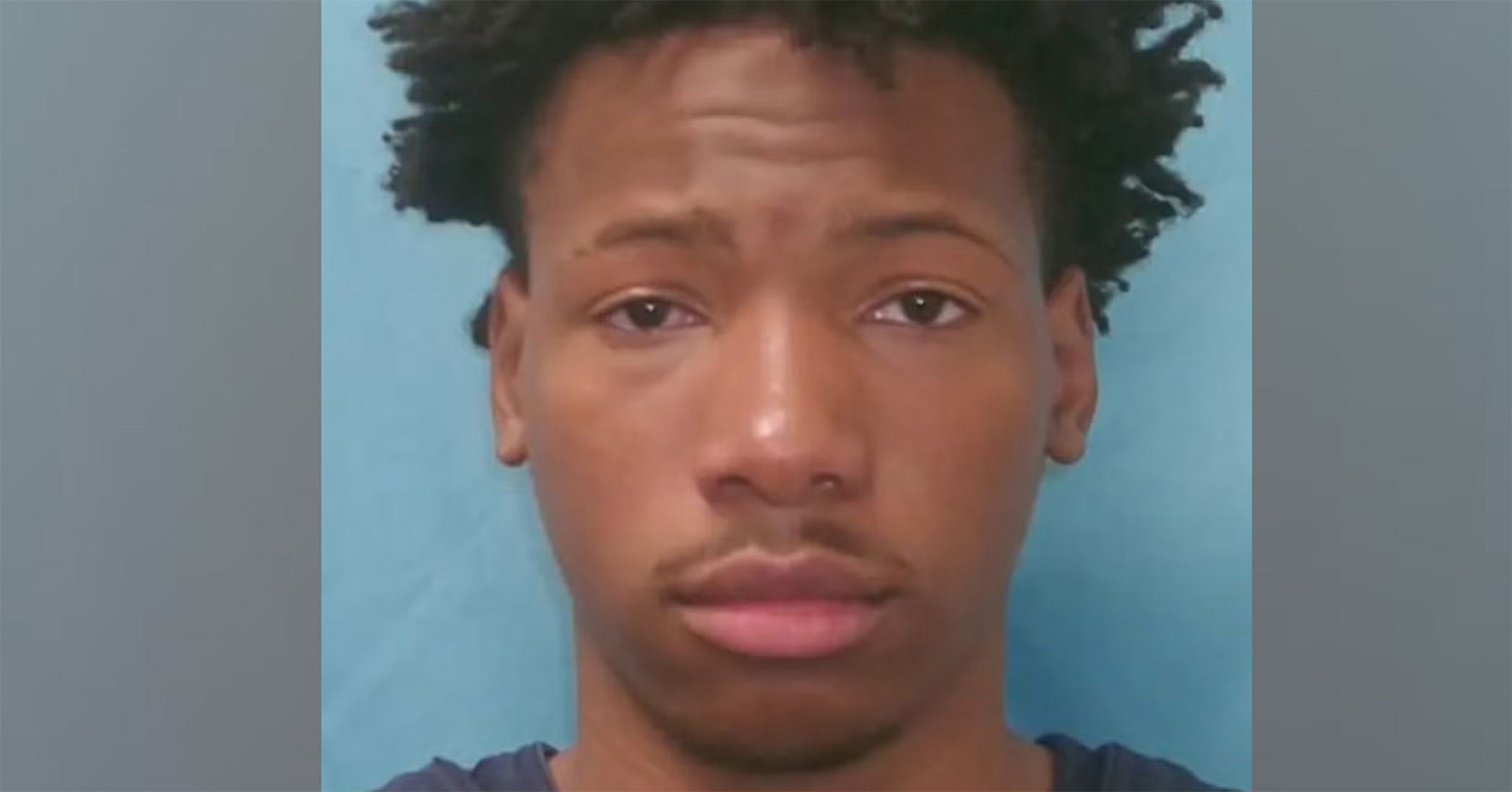
BLACKPRESSUSA—The judge who presided over Karmelo Anthony’s murder trial has been recused as Anthony’s attorneys prepare to argue that courtroom restrictions and other alleged errors denied him a fair trial.

By Emilie St. John
The trial judge who presided over the Karmelo Anthony trial has been recused from the matter in a ruling issued on August 19.
ABC News reported that Roach imposed a gag order in the case and barred any electronics from the courtroom during the proceedings due to the attention it had garnered.
During the Wednesday hearing, defense attorney Russell Wilson argued that Roach “gave public comment about an impending proceeding,” which should be an “automatic recusal,” according to ABC Dallas affiliate WFAA.
Prosecutor Bill Wirskye argued that Roach did nothing wrong and alleged a “concerted effort from social media and influencers to disrupt” the high-profile trial, according to WFAA.
Judge Sid Harle granted the defense motion to recuse Judge John Roach from any further matters in the Anthony case.
Judge Harle is no stranger to high-profile cases, having presided over the prosecution of a police officer charged in connection with the 2022 mass shooting at Robb Elementary School in Uvalde.
The Collin County District Attorney’s Office continues to defend its handling of the case by issuing a statement to NBC 5 DFW.
“The defendant’s new lawyers have filed a motion containing several inaccurate characterizations of the trial proceedings. The entire prosecution team and I conducted this trial ethically and in full compliance with the court’s rulings and any agreements with defense counsel. We look forward to addressing these claims thoroughly in a court of law in the coming weeks. The jury heard extensive evidence over the course of the trial and returned a unanimous verdict. We remain confident in that verdict and the fairness of the proceedings.”
Anthony’s new legal team, made up of appellate, civil rights, and criminal defense attorneys, was retained following Anthony’s conviction.
“Our responsibility is to determine whether a legal error occurred and to ensure that every issue supported by the record is fully and vigorously presented on appeal,” the team said in a statement.
“We recognize the profound loss suffered by one young man’s family and the uncertainty facing another, and we extend our respect to everyone whose lives have been forever changed by these events,” the release reads.
Anthony was charged with the stabbing death of Austin Metcalf during a track meet in Frisco, Texas, on April 2, 2025. Anthony has long maintained it was an act of self-defense.
Several witnesses testified that Anthony was asked to leave the tent about 15 times. Some witnesses recalled Anthony saying, “Touch me and see what happens,” during the altercation. Another witness quoted Metcalf as telling Anthony, “I’m not going to fight you.”
Witnesses also recounted that Metcalf shoved or nudged Anthony, who was sitting on the bleachers, before Anthony stabbed him with a pocket knife, according to ABC News. The blade perforated Metcalf’s right ventricle, and he was pronounced dead after being transported to an area hospital.
Anthony was convicted on June 9 of the murder of Austin Metcalf and sentenced to 35 years in prison.
Commentary
OP-ED: Who Speaks for the Target Boycott?
BLACKPRESS OP-ED—Target’s rollback of key diversity initiatives sparked multiple boycott campaigns, competing claims of leadership and a broader debate over Black consumer power. The reporting documents what the public conversation compressed.

By Jame Farr
“What you about to witness is my thoughts. Just my thoughts, man—right or wrong. Just by what I was feelin’ at the time” ~Jay-Z
Can He Live?
Not long ago, I found myself asking a different question.
I wasn’t asking whether Jay-Z could still sell out stadiums or build another billion-dollar business. I was asking whether a Black man could reach extraordinary success without every business decision becoming a referendum on whether he’s still “for the culture.”
That question stayed with me after I wrote about the 30th anniversary of Reasonable Doubt. Part of that conversation centered on Target. The exclusive Reasonable Doubt vinyl release through Target reignited criticism already surrounding the retailer’s retreat from diversity, equity, and inclusion commitments. The record wasn’t the issue. The symbolism was.
I left that column still thinking. Not because I had the answer. Because I wasn’t convinced we were asking the right questions.
This column isn’t about Jay-Z. It’s about what happened after one of America’s largest retailers announced changes to its diversity, equity, and inclusion initiatives on Jan. 24, 2025. It’s about the boycott movement that followed, the people who organized it, and the competing public narratives about who started it, who led it, and who, if anyone, could declare it over. Those questions deserve reporting.
Target announced it was ending several long-standing diversity initiatives, including its three-year diversity goals and the Racial Equity Action and Change (REACH) program. The company also announced changes affecting supplier initiatives and participation in outside diversity-focused evaluations, describing the decision as part of a broader business strategy responding to a changing political and business environment. Reuters and the Associated Press reported that Target had joined a growing list of major corporations reassessing diversity initiatives amid shifting political and legal pressures, placing the retailer alongside Walmart, Amazon, and Meta.
The reaction was immediate. Outside Target’s Minneapolis headquarters, consumers, community leaders, and civil rights advocates challenged the company’s decision. Demonstrations began within days as questions surfaced about whether commitments made after George Floyd’s murder were quietly being abandoned. What began as a dispute over corporate policy quickly became something larger. It became a question of trust.
Who Called It?
“I’m good on any MLK Boulevard.”
That’s the shorthand for what Target once represented to many Black consumers. A retailer that showed up where we live, invested in what we build, and treated Black spending power as something worth respecting—not just extracting. The company built a reputation for investing in Black-owned brands, Black designers, and Black entrepreneurs. Those relationships mattered because they created opportunities beyond shelf space. Target’s January 2025 announcement prompted many consumers to ask whether those commitments had changed—or only the language surrounding them.
The reporting does not support a single origin story. Instead, it documents multiple organizing efforts that emerge over time, led by different organizations, clergy, and community advocates, responding to the same corporate decision through different strategies. Too much of the public conversation compressed separate efforts into a single storyline. The reporting tells a more complicated story. That’s where this investigation begins.
Within days of Target’s Jan. 24, 2025, announcement, the conversation moved beyond disappointment into organized consumer action. The Associated Press documented that civil rights leaders gathered outside Target’s Minneapolis headquarters on Jan. 30 to announce a boycott beginning Feb. 1, the first day of Black History Month. That reporting identified Nekima Levy Armstrong and Jaylani Hussein among the organizers and described a strategy that encouraged consumers not simply to avoid Target but to redirect their spending toward Black-owned businesses. That distinction matters.
As the months unfolded, another campaign entered the national conversation. Rev. Jamal Bryant launched what became known as the Target Fast, calling on participants to refrain from shopping at Target during the 40 days of Lent while intentionally supporting Black-owned businesses. The Associated Press documented both the religious framework and the campaign’s publicly stated objectives. Faith leaders, grassroots organizers, and civil rights advocates were all organizing—sometimes in parallel, sometimes overlapping, never quite the same movement.
That distinction later became one of the most important findings in this reporting. More than a year later, Capital B Atlanta reported that Levy Armstrong, Monique Cullars-Doty, and Hussein publicly maintained that the boycott they helped organize after Target’s January 2025 announcement was separate from Bryant’s later Target Fast. According to that reporting, Bryant’s decision to conclude the Target Fast did not end the independently organized boycott they believed remained active. Bryant publicly announced the conclusion of the Target Fast in March 2026, pointing to negotiations and commitments that, in his view, represented meaningful progress. The Minnesota organizers publicly viewed the matter differently.
This column does not choose between those positions. It is preserving them. That is the difference between opinion and reporting.
Who Ate?
Perhaps that’s where the public conversation drifted furthest from the reporting. A movement involving multiple organizers became, in many discussions, a story about a single face. A layered chronology became a simplified narrative.
As organizers continued pressing their respective strategies, another question quietly emerged beneath the headlines. Was any of it working?
That question proved far more difficult to answer than social media often suggested. Target continued reporting quarterly earnings. Investors watched comparable sales, customer traffic, and future guidance. Supporters of the boycott pointed to declining performance as evidence that consumer pressure was making a difference. Others argued inflation, changing shopping habits, and broader retail conditions made it impossible to attribute those results to any single factor. The reporting does not settle that debate. It documents that the debate exists. And sometimes that is the more honest place for journalism to stand.
Target maintained that its decisions reflected an evolving business strategy. By April 2026, the company reported fulfilling its previously announced commitment to invest $2 billion with Black-owned businesses—a claim independently corroborated by Word in Black, which reported that Dr. Jamal Harrison Bryant, Tamika Mallory, and Nina Turner briefed reporters at the National Press Club on March 11, 2026, with Bryant stating, “We asked for four things more than a year ago; we got three of them.” Black Dollar Index analysis, however, raised a significant counter-question: Tier 2 supplier spend – where many smaller and Black-owned firms operate—collapsed 66% over two years, with Tier 1 spend also declining. That data complicates what “fulfillment” means in practice and serves as a reminder that the public conversation continued compressing a more complicated story.
Throughout 2025 and into 2026, analysts, investors, and consumers closely watched quarterly earnings, comparable sales, and customer traffic. Reporting cited declining sales during portions of that period while also pointing to broader pressures, including inflation, changing consumer spending, and increased retail competition.
One consistent theme across the reporting was the call to redirect spending toward Black-owned businesses. That objective appeared across multiple organizing efforts, even when organizers differed over strategy, leadership or duration. The aspiration was clear. What the reporting did not consistently provide was comprehensive data measuring the long-term economic impact of redirected consumer spending or documenting how much of that economic activity remained within Black-owned enterprises. It reflects the limits of what could be independently verified.
The conversation itself was changing. What began as a discussion about Target’s diversity commitments increasingly became a discussion about expectations. What should Black consumers expect from corporations that publicly invest in Black communities? What obligations do corporations assume after embracing diversity initiatives? The reporting supports a more measured conclusion. Multiple leaders, organizations and campaigns emerged in response to the same corporate decision. Some efforts overlapped. Others diverged. Even after one highly visible campaign concluded, other organizers publicly maintained that their work continued. That is not a contradiction. It is the reporting.
The Family
The story became larger than Target. Larger than a boycott. Larger than any one organizer.
Target’s Jan. 24, 2025, announcement sparked a national conversation about corporate diversity commitments, Black consumer purchasing power, and corporate accountability. That conversation produced multiple organizing efforts, overlapping campaigns, and differing public accounts concerning leadership, strategy, and duration. The reporting preserves those distinctions. It does not support reducing a complex movement to a single organizer, a single campaign, or a single ending.
Consumers reconsidered where they spent their money. Community leaders debated strategy. Civil rights advocates organized. Faith leaders mobilized. Black-owned media documented perspectives that often differed from national business coverage. Financial analysts tracked earnings and consumer trends. Together, those reporting streams tell a broader story than quarterly earnings or corporate statements alone—documenting the intersection of corporate policy, consumer activism, and Black economic participation.
Some questions remain. How should corporate commitments to diversity be measured over time? What standards should determine whether those commitments have been fulfilled? What lasting economic impact did redirected consumer spending have on Black-owned businesses? The reporting assembled for this investigation identifies those questions. It does not fully answer them.
Journalism carries an obligation to distinguish between what can be verified and what remains unresolved. Credibility lives in that distinction. It is established by acknowledging where the verified reporting ends, not by filling gaps with assumptions.
That is where this reporting concludes.
Nobody wins when the family feuds.
Op-Ed
OP-ED: The Black August Legacy
Black people fight fascism. Black August tells the story of those freedom fighters who used every tool available.


We Resist Fascism Every Day
By Monifa Bandele
“..the definition of fascism is: a police state wherein the political ascendancy is tied into and protects the interests of the upper class—characterized by militarism, racism, and imperialism…” ~ George Jackson
Federal troops on the streets of Washington DC and throughout the United States. Relentless attacks on Black political power. Public education dismantled. Attacks on organized labor. Books banned. Black history erased. Healthcare pulled from millions of people. Criminalizing protestors. Record high numbers of people killed by police. ICE raids. George Jackson stated it clearly 54 years ago, “…fascism is here…”
Black people in America have to tell our own history, especially now, as the entire project of telling the truth is under attack. The radical right-wing forces in the United States government are determined to crush our movements, criminalize our leaders, gut our hard-won voting rights protections, eliminate the holidays and commemorations we fought hard for, and edit our history right out of the textbooks. We refused to be erased. We will fight to protect and expand the days and months dedicated to naming and celebrating all Black history.
Black August is a month that commemorates and recommits our communities to radical resistance. It honors the life, leadership, and legacy of George Jackson, murdered by prison guards in August of 1971. It also demands that we free our political prisoners and celebrate our freedom fighters often erased from the pages of mainstream media and dialogue about Black history. Founded 46 years ago by Khatari Goulden and other activists held prisoner in California’s prison system, the month is a time to reflect and learn about the legacies of Black revolutionaries and rededicate ourselves to the protracted struggles against white supremacy, colonialism, capitalism, and imperialism. In 1979, the Black August Organizing Committee, through revolutionary leaders like Mama Ayanna Mashana, brought Black August to communities beyond the prison walls to commemorate how we resist oppression every day as part of a continuum of freedom fighting.
This year’s Black August will serve as an anchor for the coming months, which will inevitably require our resistance. In August, we will host a lecture series called Black August Sessions that will eventually become a permanent educational and cultural resource. The objective is not simply to document Black August but to create a living archive that continues advancing the work of the movement throughout the year.
Black people know fascism. We are the descendants of generations of people whose lives and movements were controlled by violent, ruthless, state-sanctioned institutions. We had no legal authority over our own bodies. By law, we could not vote, protest, learn, have families, or live free. We did not have the basic rights afforded human beings. Through military agents of the government and white slavers backed by the laws of the nation, any opposition to our oppression, attempts to end our enslavement, or organized political dissent to white supremacists’ rule over our bodies was violently and brutally suppressed. We remember that even post-chattel slavery, after we defeated the old systems, new institutions sprang up to continue the project of our forced labor, subjugation, and mass incarceration. We remember because our parents and grandparents lived through it. We remember because 1965 wasn’t that long ago. And, we remember because the fights continue as the institutions that force or exploit our labor continue. We remember because the state is still killing us.
Black people fight fascism. Black August tells the story of those freedom fighters who used every tool available. It celebrates the births of Mutulu Shakur (August 1950) and Marcus Garvey (August 1887). It tells the story of the Nat Turner Rebellions (August 1831) and the Haitian Revolution (August 1791) to the Watts Uprisings (1965) and the beginnings of the Attica Rebellion at the Manhattan House of Detention (August 1971). It acknowledges the Ferguson Rebellion (2014), salutes the Montgomery Boat Brawl (August 2023), and tells the story of a people who refuse oppression and demand freedom by any means necessary.
Black people refuse to concede the future. We just witnessed widespread racist gerrymandering and the politically motivated and unconstitutional gutting of the Voting Rights Act, which Black people made possible to secure our political participation. Now is not the time to give up or give in to these attacks on our rights. Black people have always carried the fight for human rights, social and racial justice, and freedom while being under constant attack. Whether it is the FBI’s COINTELPRO campaign of the 50s, 60s, and 70s, where Black leaders and organizations were identified as threats to America and targeted for death and distraction, or last month’s “Cuba Report” by Marco Rubio, where Black-led organizations, authors, and leaders are being criminalized as domestic terrorists, we fight on. We affirm our right to vote, self-defense, and collective self-determination. Our movement is multi-issue. Our movement is rooted in local organizing and international solidarity. Our movement knows that electoral justice demands accountability, interventions, dismantling, and building something new. Our movement is made for this moment because we keep our eyes on the future.
Black people survived fascism. We are here because we are vigilant about protecting our voices, physical movement, political activism, communities, and families. We are here because we fight for our very existence every single day. The Harriet Tubman Combahee River Raid, the Black Panther Party, the Deacons for Self Defense, the Republic of New Afrika, Revolutionary Action Movement (RAM), the Black Liberation Army, and so many more organizations and actions that refused subjugation. Through generational trauma, we remember fascism. And every day, through generational power, we survived because we resisted.
Black August is a revolutionary, unapologetic love letter to our freedom fighters and a reminder that Black people, since our arrival in America, have resisted fascism every day. In 2026, it is a call to resist. Each day that we fight back against fascism’s encroachment on our rights, each day of August, and each day beyond, is an action in the legacy of Black August.

Monifa Bandele
Monifa Bandele is on the leadership team for the Policy Table for the Movement for Black Lives (M4BL), where she represents the ecosystem member, the Malcolm X Grassroots Movement. Over the past decade, she led campaigns to free U.S.-held political prisoners and the launch of two historic and successful legal cases against police misconduct (Daniels v. NYC and Floyd v. NYC). As a member of the steering committee for the New York-based Coalition for Police Reform (CPR), Monifa worked to successfully pass landmark police accountability and transparency legislation, including the Community Safety Act, the Right to Know Act, the Repeal CRL 50-a bill, the Special Prosecutor, and the New York STAT Act. Monifa was a contributing writer to M4BL’s Vision for Black Lives and the BREATHE Act.
Disclaimer: The views and opinions expressed in this article do not necessarily reflect the official policy or position of BlackPressUSA.com or the National Newspaper Publishers Association.

By Emilie St. John
(Contributor)
Karmelo Anthony will return to court this month in his first step to overturn his murder conviction.
Anthony was found guilty last month in the stabbing death of Austin Metcalf and sentenced to 35 years in prison. His new legal team has filed motions seeking the recusal of State District Judge John Roach Jr. from overseeing the appeals process.
Two hearings have been scheduled on the motion for Aug. 19 and 20 in the Collin County Courthouse in McKinney, Texas, according to Fox4 News.
On July 14, Senior Judge Sid L. Harle of the 226th District Court was assigned to preside over the defense’s motion to recuse Collin County Judge John Roach. The assignment took effect immediately and authorized Harle to handle all matters related to the recusal request, the filing read.
The Collin County District Attorney’s Office continues to defend its handling of the case by issuing a statement to NBC 5 DFW.
“The defendant’s new lawyers have filed a motion containing several inaccurate characterizations of the trial proceedings. The entire prosecution team and I conducted this trial ethically and in full compliance with the Court’s rulings and any agreements with defense counsel. We look forward to addressing these claims thoroughly in a Court of law in the coming weeks. The jury heard extensive evidence over the course of the trial and returned a unanimous verdict. We remain confident in that verdict and the fairness of the proceedings.”
Anthony’s new legal team, made up of appellate, civil rights, and criminal defense attorneys, was retained following Anthony’s conviction.
“Our responsibility is to determine whether a legal error occurred and to ensure that every issue supported by the record is fully and vigorously presented on appeal,” the team said in a statement.
“We recognize the profound loss suffered by one young man’s family and the uncertainty facing another, and we extend our respect to everyone whose lives have been forever changed by these events,” the release reads.
Anthony was charged with the stabbing death of Austin Metcalf during a track meet in Frisco, Texas, April 2, 2025. Anthony has long maintained it was an act of self-defense.
The attorneys are representing Anthony pro bono. The nearly 200-page notice of appeal seeks a new trial because his Sixth Amendment right to a public trial was violated.
“The cumulative and practical effect of these provisions was to exclude members of the public from proceedings at every stage,” the filing reads.
The filing also focused on an alleged “handshake deal” that kept Anthony from taking the stand in his defense.
The defense filing said the agreement was that the jury would not hear that Metcalf and his twin brother had been accused of racism and bullying in the past. In exchange, they also would not see Anthony’s cellphone records or his school disciplinary record, according to court documents reported by the Dallas Morning News.
Anthony’s former defense attorney, Mike Howard, said the defense relied heavily on that deal. The team chose not to ask certain questions of witnesses or call on a separate expert witness based on that agreement. It also abandoned plans to introduce testimony and evidence about the allegations against Metcalf and his brother.
Appellate attorney Russell Wilson is now handling post-trial proceedings and Anthony’s appeal. He recently sat down for an interview, stating, “The court committed multiple errors during the June murder trial, preventing him from receiving a fair trial.”
“You know, we file motions that we expect to prevail on, but we understand that there’s two sides to every story. And at the end of the day, it’ll be a judge that has to make these decisions, but we feel confident in the positions that we’re taking,” Wilson said during an interview with WFAA. “There were substantial issues that we thought a reviewing court needed to look at. We thought these were constitutional irregularities, and we could have them addressed now. And so, we put them into a motion for a new trial.”
Bree West, a former Dallas County Assistant District Attorney, found it startling that so little time was given to Anthony’s team for such a serious “life or death” situation.
“I do think that it’s really challenging that potentially a court decided that you have 10 minutes to make that level of decision when it has the potential of being life-altering,” said West during an interview with Fox 4 News.
Judge Harle is no stranger to high-profile cases, having presided over the prosecution of a police officer charged in connection with the 2022 mass shooting at Robb Elementary School in Uvalde.
Anthony was convicted on June 9 of the murder of Austin Metcalf and sentenced to 35 years in prison.
Black History
OP-ED: From Selma to South Los Angeles: An Unsung Voting Rights Foot Soldier Says the Fight Isn’t Over
BLACKPRESSUSA OP-ED : Leatha Davis was a teenager when she marched in Selma, survived violent attacks and testified in a federal case that helped clear the way for the Selma-to-Montgomery march. Now 81, she says the fight for voting rights is not over, and neither is the responsibility to vote.


More than 60 years after marching for voting rights, Leatha Davis says the sacrifices of Selma still carry a warning for a generation at risk of disengaging.
By Stephen Oduntan
(Updated Jul 31)
More than six decades after risking her life in the fight for voting rights, 81-year-old Leatha Davis still remembers the sound of billy clubs striking peaceful demonstrators, the screams of marchers under attack, and the sacrifices that defined the Civil Rights Movement.
Today, as recent Supreme Court decisions have narrowed key protections under the Voting Rights Act and battles over congressional redistricting continue, Davis believes the struggle she joined as a teenager is far from over. But she worries the greatest threat is not only the legal battles over voting rights—it is also the growing number of people who choose not to exercise them.
“It makes me really angry when I think about we did all of that and people stay at home and don’t try to vote,” Davis said. “Every vote counts.”
For Davis, those debates are deeply personal.
She joined the movement in the days surrounding Bloody Sunday, when Alabama state troopers brutally attacked peaceful demonstrators attempting to cross the Edmund Pettus Bridge in Selma with billy clubs, tear gas, cattle prods, and attack dogs.
“We thought John Lewis was dead,” Davis recalled. “They beat him to the ground. And if you ran to help him, they cracked you upside the head too. It was horrific.”
Days later, Davis marched carrying a sign reading “One Man, One Vote.” During the demonstrations, she said she was struck with a cattle prod. She later testified under her maiden name, Leatha Mae Stover, in the landmark federal case Williams v. Wallace, describing before U.S. District Judge Frank M. Johnson Jr. the violence peaceful demonstrators had endured. Johnson’s ruling allowed the Selma-to-Montgomery march to proceed.
The trauma of those days has never left her. Davis said she still has nightmares about Bloody Sunday and hopes to walk across the Edmund Pettus Bridge one more time before she dies. “I’m going to walk across that bridge one day before I die,” she said.
“We were the foot soldiers,” Davis said.
“And we’ve been forgotten.”
Born into a sharecropping family in rural Alabama, Davis said she was picking cotton from sunrise to sunset by the age of five. After months of labor, her father would haul the family’s harvest to the white landowner.
“He’d tell my father he only broke even,” Davis recalled. “For all the work we did, he only gave my father three dollars and a one-gallon bucket of syrup.”
Watching her father remain trapped in poverty convinced Davis there was no future in sharecropping.
But economic exploitation was only part of life under Jim Crow. Black residents were expected to lower their eyes, answer “yes sir” and “no sir,” and accept humiliation as a way of life. Refusing, Davis said, could invite violence—or worse.
Davis said the lessons that shaped her activism began even earlier, listening to her grandmother describe life just after slavery.
“My grandmother used to say she was born the third year after slavery ended,” Davis recalled. “That’s how she told her age.”
Those experiences taught her that the struggle for voting rights was never just about casting a ballot.
It was about dignity.
It was about freedom.
“When I marched,” Davis said, “I wasn’t just marching so I could vote. I was marching because I wanted to be free.”
As the Selma-to-Montgomery march approached, Davis wanted her younger brother to march beside her and asked her father for permission.
“No,” he said. “One is enough.”
Only years later did she understand why.
“That means he didn’t know whether I would come back or not,” she said.
Today, Davis worries many younger Americans have never been taught those stories or the sacrifices behind the right to vote.
“We have lost a generation of people who don’t care because they were never told,” Davis said. “What they did to us was unspeakable. We lost some lives. It hurt.”
Voting rights advocates say Davis’ concern reflects a challenge they encounter across the country.
Eric Hall, co-founder of Black Lives Matter Birmingham and a voting rights organizer in Alabama, said many younger Black voters question whether voting still makes a difference.
“We don’t have a voter registration problem,” Hall said. “We have a voter participation problem.”
Hall said many young people believe the political system no longer works for them, but organizers remind them that “the sacrifice of the people was about getting those rights. Today it’s about keeping those rights.”
Hall said organizers across Alabama are working to reconnect younger voters with the stories of civil rights foot soldiers like Davis, arguing that understanding those sacrifices is essential to protecting voting rights today.
The Rev. Dr. James M. Thomas, president of the NAACP San Fernando Valley Branch, said younger Americans often see the sacrifices of the Civil Rights Movement through a different lens.
“I don’t think they do,” Thomas said when asked whether younger generations understand what civil rights foot soldiers endured. “They’re looking at older generations and asking, ‘What have you done with the vote?’ That’s the question young people ask.”
Still, Thomas urged people not to disengage.
“Vote in the name of your ancestors,” Thomas said. “Even if you feel like you have nobody to vote for, still vote. Someone your ancestors knew died because they wanted to give you the right to vote.”
For Davis, preserving those stories is as important as preserving the vote itself. She believes thousands of ordinary people helped build the Civil Rights Movement, even if history rarely remembers their names.
“We were the foot soldiers,” Davis said.
“And we’ve been forgotten.”
Professor Marcus Hunter, a sociologist at UCLA, said Davis’ story demonstrates why ordinary people like her remain central to understanding the Civil Rights Movement.
“History often remembers the microphone and forgets the multitude,” Hunter said. “Dr. King and John Lewis were essential leaders, but movements are built by thousands of people whose names never appear in textbooks. Preserving the stories of foot soldiers restores the true architecture of social change and reminds us that democracy is made by participation, not spectatorship.”
More than six decades after Selma, Davis remains convinced that change begins with ordinary people willing to act.
“I can’t change the world,” she said. “But I can make a difference where I stand. And I’ve done that.”


134 Black-Owned Banks Founded: See How Many Remain Today! #shorts

Dr. Earleen Patterson’s 30 Year Legacy of Education and Service at SIUE

Latinas Deserve Equal Pay. Unions Help Make It Happen.

Defender ONE-on-ONE: U.S. Rep. Christian Menefee

Unlock Your Best Auto Loan: Ask These Questions! #shorts

News Observer Weekly — October 7, 2026 | Top 5 Stories of the Week

Atlas Family Comfort: Worth the Extra Cash? #shorts

Antron Brown Takes His Impact Beyond the Racetrack

Headlines and Hot Topics with Rodney Perry

Headlines and Hot Topics with Rodney Perry 📱

Latest Massacre in Haiti Reveals Cruelty U.S. Deportations

The Youngest American Killed in the Vietnam War

Booked and Unbound: The Legacy of Black Women’s Literary Circles

Passing for White, Fighting for Black America: The Courage of Walter White

Prostate Cancer is Twice as Likely to Kill Black Men. Talking to Your Doctor Could Help Save Your Life

OPINION: Nolan Wells’ Death One of Several Signifying Racial Terror Lives on in U.S. South

OP-ED: If AI Is the New Language of Power, Then NAN Wants Black Communities Fluent

OP-ED: Haiti TPS: Have We Lost Sense of Humanity?

OP-ED: How Does Your State Rank for Pre-K?

Henry O. Flipper: A Trailblazer at West Point and Beyond
134 Black-Owned Banks Founded: See How Many Remain Today! #shorts
Dr. Earleen Patterson’s 30 Year Legacy of Education and Service at SIUE
Defender ONE-on-ONE: U.S. Rep. Christian Menefee
Unlock Your Best Auto Loan: Ask These Questions! #shorts
News Observer Weekly — October 7, 2026 | Top 5 Stories of the Week
Atlas Family Comfort: Worth the Extra Cash? #shorts
Antron Brown Takes His Impact Beyond the Racetrack
Headlines and Hot Topics with Rodney Perry
Headlines and Hot Topics with Rodney Perry 📱

Jamal’s Take: Cowboys’ Epic Comeback Win and Dak’s Dominance Against Houston
-
 Black Press1 week ago
OP-ED: Haiti TPS: Have We Lost Sense of Humanity?
-

 Black History1 week ago
Rulings Leave Questions Lingering in Nolan Wells Case
-
 Black History1 week ago
Baptist Minister Says Black Church Champions for Civil Rights to Reign but Hesitates to Let Black Women Lead
-

 Black History1 week ago
Why Black Artists Struggle to Sell Tours
-

 Black Press1 week ago
A Viral Moment with Purpose: Keep Your Head Up Gives Back
-
 Black Press1 week ago
Responsible AI Development Requires a Seat at the Table for Black America
