
Commentary
OP-ED: Who Speaks for the Target Boycott?
BLACKPRESS OP-ED—Target’s rollback of key diversity initiatives sparked multiple boycott campaigns, competing claims of leadership and a broader debate over Black consumer power. The reporting documents what the public conversation compressed.


By Jame Farr
“What you about to witness is my thoughts. Just my thoughts, man—right or wrong. Just by what I was feelin’ at the time” ~Jay-Z
Can He Live?
Not long ago, I found myself asking a different question.
I wasn’t asking whether Jay-Z could still sell out stadiums or build another billion-dollar business. I was asking whether a Black man could reach extraordinary success without every business decision becoming a referendum on whether he’s still “for the culture.”
That question stayed with me after I wrote about the 30th anniversary of Reasonable Doubt. Part of that conversation centered on Target. The exclusive Reasonable Doubt vinyl release through Target reignited criticism already surrounding the retailer’s retreat from diversity, equity, and inclusion commitments. The record wasn’t the issue. The symbolism was.
I left that column still thinking. Not because I had the answer. Because I wasn’t convinced we were asking the right questions.
This column isn’t about Jay-Z. It’s about what happened after one of America’s largest retailers announced changes to its diversity, equity, and inclusion initiatives on Jan. 24, 2025. It’s about the boycott movement that followed, the people who organized it, and the competing public narratives about who started it, who led it, and who, if anyone, could declare it over. Those questions deserve reporting.
Target announced it was ending several long-standing diversity initiatives, including its three-year diversity goals and the Racial Equity Action and Change (REACH) program. The company also announced changes affecting supplier initiatives and participation in outside diversity-focused evaluations, describing the decision as part of a broader business strategy responding to a changing political and business environment. Reuters and the Associated Press reported that Target had joined a growing list of major corporations reassessing diversity initiatives amid shifting political and legal pressures, placing the retailer alongside Walmart, Amazon, and Meta.
The reaction was immediate. Outside Target’s Minneapolis headquarters, consumers, community leaders, and civil rights advocates challenged the company’s decision. Demonstrations began within days as questions surfaced about whether commitments made after George Floyd’s murder were quietly being abandoned. What began as a dispute over corporate policy quickly became something larger. It became a question of trust.
Who Called It?
“I’m good on any MLK Boulevard.”
That’s the shorthand for what Target once represented to many Black consumers. A retailer that showed up where we live, invested in what we build, and treated Black spending power as something worth respecting—not just extracting. The company built a reputation for investing in Black-owned brands, Black designers, and Black entrepreneurs. Those relationships mattered because they created opportunities beyond shelf space. Target’s January 2025 announcement prompted many consumers to ask whether those commitments had changed—or only the language surrounding them.
The reporting does not support a single origin story. Instead, it documents multiple organizing efforts that emerge over time, led by different organizations, clergy, and community advocates, responding to the same corporate decision through different strategies. Too much of the public conversation compressed separate efforts into a single storyline. The reporting tells a more complicated story. That’s where this investigation begins.
Within days of Target’s Jan. 24, 2025, announcement, the conversation moved beyond disappointment into organized consumer action. The Associated Press documented that civil rights leaders gathered outside Target’s Minneapolis headquarters on Jan. 30 to announce a boycott beginning Feb. 1, the first day of Black History Month. That reporting identified Nekima Levy Armstrong and Jaylani Hussein among the organizers and described a strategy that encouraged consumers not simply to avoid Target but to redirect their spending toward Black-owned businesses. That distinction matters.
As the months unfolded, another campaign entered the national conversation. Rev. Jamal Bryant launched what became known as the Target Fast, calling on participants to refrain from shopping at Target during the 40 days of Lent while intentionally supporting Black-owned businesses. The Associated Press documented both the religious framework and the campaign’s publicly stated objectives. Faith leaders, grassroots organizers, and civil rights advocates were all organizing—sometimes in parallel, sometimes overlapping, never quite the same movement.
That distinction later became one of the most important findings in this reporting. More than a year later, Capital B Atlanta reported that Levy Armstrong, Monique Cullars-Doty, and Hussein publicly maintained that the boycott they helped organize after Target’s January 2025 announcement was separate from Bryant’s later Target Fast. According to that reporting, Bryant’s decision to conclude the Target Fast did not end the independently organized boycott they believed remained active. Bryant publicly announced the conclusion of the Target Fast in March 2026, pointing to negotiations and commitments that, in his view, represented meaningful progress. The Minnesota organizers publicly viewed the matter differently.
This column does not choose between those positions. It is preserving them. That is the difference between opinion and reporting.
Who Ate?
Perhaps that’s where the public conversation drifted furthest from the reporting. A movement involving multiple organizers became, in many discussions, a story about a single face. A layered chronology became a simplified narrative.
As organizers continued pressing their respective strategies, another question quietly emerged beneath the headlines. Was any of it working?
That question proved far more difficult to answer than social media often suggested. Target continued reporting quarterly earnings. Investors watched comparable sales, customer traffic, and future guidance. Supporters of the boycott pointed to declining performance as evidence that consumer pressure was making a difference. Others argued inflation, changing shopping habits, and broader retail conditions made it impossible to attribute those results to any single factor. The reporting does not settle that debate. It documents that the debate exists. And sometimes that is the more honest place for journalism to stand.
Target maintained that its decisions reflected an evolving business strategy. By April 2026, the company reported fulfilling its previously announced commitment to invest $2 billion with Black-owned businesses—a claim independently corroborated by Word in Black, which reported that Dr. Jamal Harrison Bryant, Tamika Mallory, and Nina Turner briefed reporters at the National Press Club on March 11, 2026, with Bryant stating, “We asked for four things more than a year ago; we got three of them.” Black Dollar Index analysis, however, raised a significant counter-question: Tier 2 supplier spend – where many smaller and Black-owned firms operate—collapsed 66% over two years, with Tier 1 spend also declining. That data complicates what “fulfillment” means in practice and serves as a reminder that the public conversation continued compressing a more complicated story.
Throughout 2025 and into 2026, analysts, investors, and consumers closely watched quarterly earnings, comparable sales, and customer traffic. Reporting cited declining sales during portions of that period while also pointing to broader pressures, including inflation, changing consumer spending, and increased retail competition.
One consistent theme across the reporting was the call to redirect spending toward Black-owned businesses. That objective appeared across multiple organizing efforts, even when organizers differed over strategy, leadership or duration. The aspiration was clear. What the reporting did not consistently provide was comprehensive data measuring the long-term economic impact of redirected consumer spending or documenting how much of that economic activity remained within Black-owned enterprises. It reflects the limits of what could be independently verified.
The conversation itself was changing. What began as a discussion about Target’s diversity commitments increasingly became a discussion about expectations. What should Black consumers expect from corporations that publicly invest in Black communities? What obligations do corporations assume after embracing diversity initiatives? The reporting supports a more measured conclusion. Multiple leaders, organizations and campaigns emerged in response to the same corporate decision. Some efforts overlapped. Others diverged. Even after one highly visible campaign concluded, other organizers publicly maintained that their work continued. That is not a contradiction. It is the reporting.
The Family
The story became larger than Target. Larger than a boycott. Larger than any one organizer.
Target’s Jan. 24, 2025, announcement sparked a national conversation about corporate diversity commitments, Black consumer purchasing power, and corporate accountability. That conversation produced multiple organizing efforts, overlapping campaigns, and differing public accounts concerning leadership, strategy, and duration. The reporting preserves those distinctions. It does not support reducing a complex movement to a single organizer, a single campaign, or a single ending.
Consumers reconsidered where they spent their money. Community leaders debated strategy. Civil rights advocates organized. Faith leaders mobilized. Black-owned media documented perspectives that often differed from national business coverage. Financial analysts tracked earnings and consumer trends. Together, those reporting streams tell a broader story than quarterly earnings or corporate statements alone—documenting the intersection of corporate policy, consumer activism, and Black economic participation.
Some questions remain. How should corporate commitments to diversity be measured over time? What standards should determine whether those commitments have been fulfilled? What lasting economic impact did redirected consumer spending have on Black-owned businesses? The reporting assembled for this investigation identifies those questions. It does not fully answer them.
Journalism carries an obligation to distinguish between what can be verified and what remains unresolved. Credibility lives in that distinction. It is established by acknowledging where the verified reporting ends, not by filling gaps with assumptions.
That is where this reporting concludes.
Nobody wins when the family feuds.








By Fred Redmond
Everywhere you look, everything costs too much. Families are stretching every paycheck to cover soaring grocery bills. Too many are struggling to make rent. Child care, health care and gas bills continue to strain household budgets. Working people are doing everything right, yet too many are still falling behind.
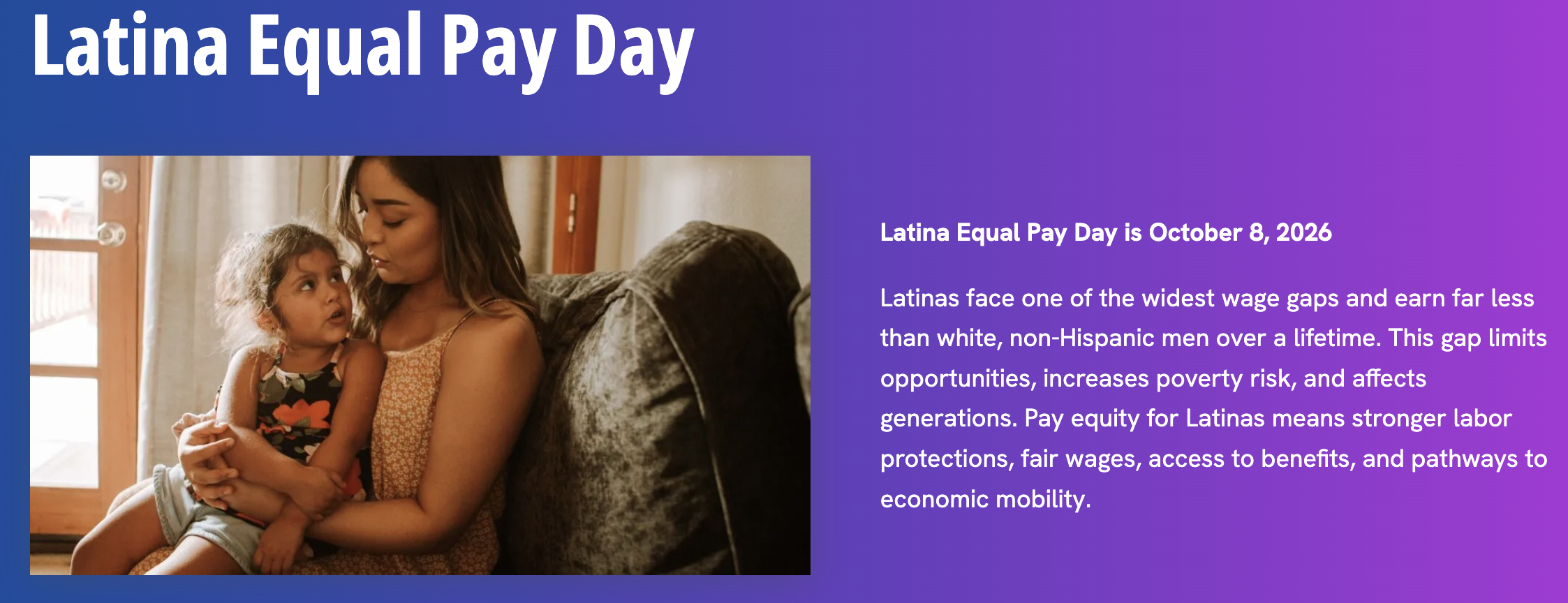
For Latina workers, this crisis is compounded by a persistent and unjust pay gap. That’s why we observe Latina Equal Pay Day on Oct. 8 this year. It brings attention to the fact that among full-time, year-round workers, Latinas earned just 60 cents in 2025 for every dollar earned by white men. That wage gap isn’t just a statistic—it means smaller paychecks, fewer opportunities to build wealth, less financial security and harder choices about how to provide for their families.
Latinas deserve equal pay for equal work. Full stop. Anything less hurts working families and weakens our economy. A union contract can help level the playing field.
The evidence is clear. Hispanic workers overall receive a large wage boost from union membership, with a 16.4% wage premium compared with nonunion Latino workers. Latinas in a union earn about $15,288 more per year than Latinas who are not in a union. Most importantly, union contracts also help narrow the gender pay gap: Women working full time in union jobs earn 86.2 cents for every dollar earned by men who are union members—a significantly smaller gap than among nonunion workers.
Negotiated contracts replace arbitrary decisions with clear wage scales, transparent pay systems and enforceable workplace standards. Instead of leaving pay to bias or favoritism, union contracts establish fair standards that workers can enforce.
A report from the Economic Policy Institute finds that strengthening workers’ rights to organize and increasing union density would significantly reduce racial wage gaps while strengthening our economy and our democracy. Communities with higher union membership invest more in public education, are more likely to expand access to health care and provide stronger unemployment protections when people lose their jobs.
Our labor movement has always understood that civil rights and workers’ rights are inseparable. Dr. Martin Luther King Jr. recognized that truth when he stood with striking sanitation workers in Memphis, Tennessee. Today, we carry that legacy forward by fighting for workplaces where every worker is respected, protected and paid fairly.
Latina Equal Pay Day should not simply remind us how far we still have to go. It should remind us that we already know how to make progress. Progress happens when workers organize. It happens when we bargain together. And it happens when we stand in solidarity with one another. That’s why we must elect leaders who will fight to protect workers’ rights, strengthen unions and defend our democracy.
We must recommit ourselves to building an economy where every worker is valued, every paycheck reflects the dignity of work and every Latina receives the equal pay she has long deserved. Because when Latinas are paid fairly, every family can afford to build a better future.
Fred Redmond, the highest-ranking African American labor official in history, is the secretary-treasurer of the AFL-CIO, the nation’s largest labor federation representing 65 unions and nearly 15 million workers.
Black Press
Should You Have to Pay to Hear the Gospel?
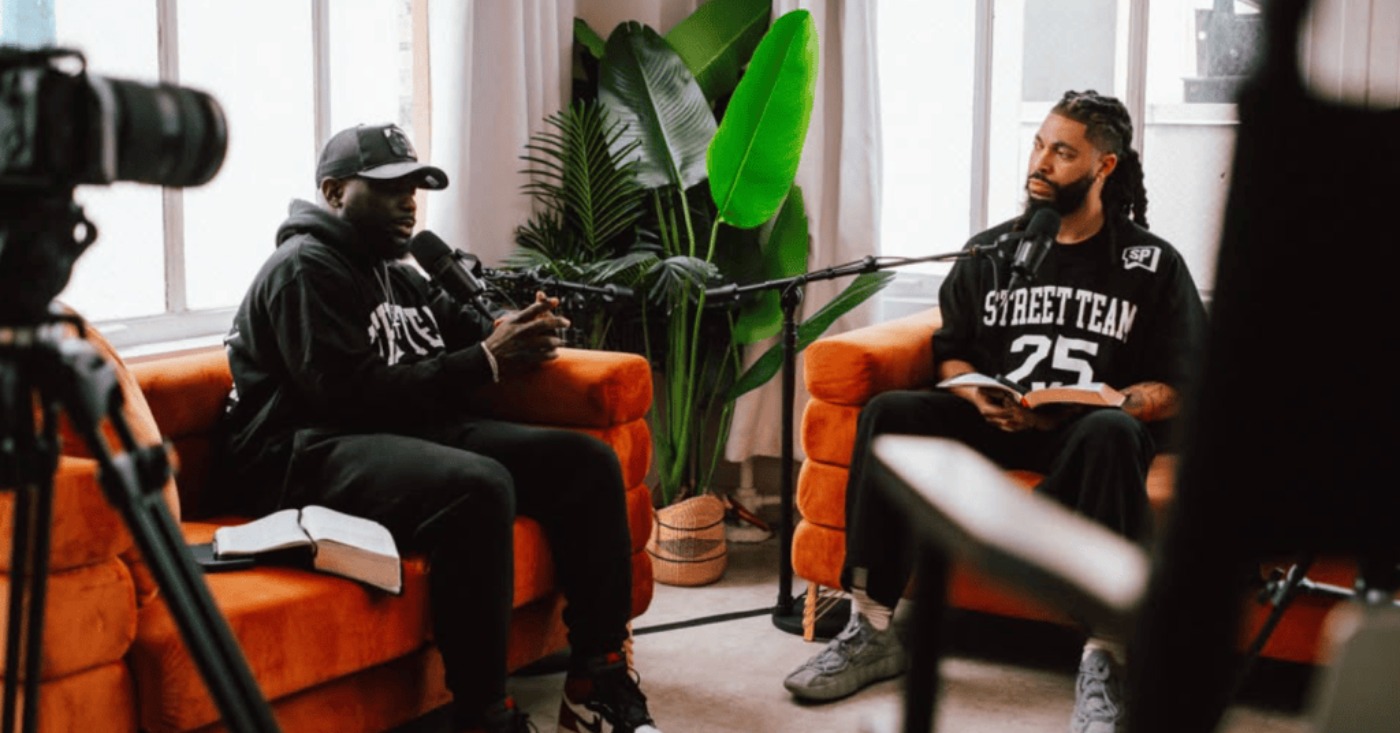
ST. LOUIS AMERICAN — Pastor Philip Anthony Mitchell of Atlanta’s 2819 CHURCH and Tim Timberlake of Celebration Church in Jacksonville, Florida, are at the center of a social media debate. The controversy stems from ticket prices for their “Street Preachers” podcast tour, with general admission tickets reportedly costing around $60 and VIP options up to $200.

For generations, the Black church has passed the offering plate to keep the lights on, pay the preacher, help the poor and carry the Gospel beyond its walls. But what happens when the preacher leaves the sanctuary, takes a popular Christian podcast on tour — and charges admission?
That question has placed Pastor Philip Anthony Mitchell, founder and lead pastor of Atlanta’s fast-growing 2819 CHURCH, at the center of a heated social media debate.
Mitchell and Tim Timberlake, senior pastor of Celebration Church in Jacksonville, Florida, host “Street Preachers,” which its official website describes as a “raw, unfiltered podcast” committed to spreading the Gospel.
‘A brood of vipers’
The controversy began after ticket prices for the podcast’s 2026 tour circulated online. General admission tickets reportedly cost about $60 before fees, with premium options, including a VIP meet-and-greet package, priced at $200. Critics questioned whether ministers should charge people to hear the Gospel.
Others defended the pastors, arguing that Christian events require venues, transportation, security, equipment and staff.
Mitchell answered critics from the pulpit last month, calling them “a brood of vipers.” He said the podcast is a separate, personal project and that neither his church nor Timberlake’s is bankrolling it.
“Now we have decided to go on a tour to take the gospel to cities, and because that’s not funded by 2819, and it’s not funded by Celebration Church, Tim and I gotta do that with our own pockets,” Mitchell said. “It’s why there is tickets. We have to pay for venues and security and productions and staff from our own pockets.”
Mitchell called some critics “ignorant” and said they did not know that a child was healed through faith during one of the events.
“And you want to complain about a 60 ticket?” he said. “So hate on!”
Worship service vs. media event
Mitchell maintains that “Street Preachers” is an independently produced podcast tour, not a worship service, and that ticket revenue helps cover production costs.
Yet the presence of pastors, Scripture and Gospel language makes the distinction less clear to some believers.
The official tour website lists all eight 2026 stops as sold out. Promotional material announcing additional dates promised, “Better ticket options. Same Gospel. Same move of God.”
Corporate prayer gathering
The language gets to the heart of the dispute. Some Christians argue that no one should be kept outside because they cannot afford a ticket. Others say the Gospel remains free even when people pay for the venue and experience surrounding its presentation.
The paid podcast tour, however, is not Mitchell’s only large-scale gathering. On Oct. 10, 2819 CHURCH will host “ACCESS — That Powerful Hour of Prayer” at AT&T Stadium in Arlington, Texas. Admission is free.
2819 CHURCH has said 80,000 free tickets were claimed before registration reopened.
The contrast raises another question: What makes one Gospel-centered event a ministry supported by donors and another a production supported by customers?
Unfiltered preaching, youth appeal
Mitchell’s congregation, composed largely of young Black adults, grew from fewer than 200 weekly worshippers in 2023 to about 6,000, according to the church. Some worshippers arrive before sunrise to secure a place inside.
His appeal rests partly in an intense, vulnerable and raw preaching style.
“I’m preaching without watering that down, without filtering out things that we think might be too controversial,” Mitchell told The Associated Press.
That visibility has also brought scrutiny of his theology, associations, travel, security and the businesses surrounding his ministry.
But the controversy reaches beyond Mitchell and Timberlake. Christian music concerts charge admission. Seminaries charge tuition. Religious publishers sell Bibles, books and devotionals. Churches pay musicians, media teams and guest preachers. Money becomes particularly uncomfortable, however, when an event is presented simultaneously as ministry and entertainment.
Ministry vs. entertainment
Supporters should not assume every dollar collected becomes personal profit. Critics, however, question whether lower-cost seats, sponsored tickets or free admission for people who cannot pay should be part of a Gospel-centered event.
The Black church always has required resources for ministry. It also has carried a sacred responsibility to make room for people with little or nothing to give.
The sold-out “Street Preachers” tour shows people are willing to pay to attend. The free ACCESS gathering offers a different model. The challenge is preserving that open door as Christian ministry increasingly adopts the machinery — and economics — of popular entertainment.
The post Should you have to pay to hear the Gospel? appeared first on St. Louis American.
Based on reporting by St. Louis American.
Black Press
NCCU Ramping up for the 89th Ultimate Homecoming Experience
NORTH CAROLINA CENTRAL UNIVERSITY – CAMPUS ECHO — N.C. Central University is preparing for its 89th Ultimate Homecoming Experience, a week-long celebration. Thousands of students, family, friends, and alumni are expected to gather on campus for festivities including the Homecoming Countdown, parade, Miss and Mister NCCU Coronation, concerts, and the football game.
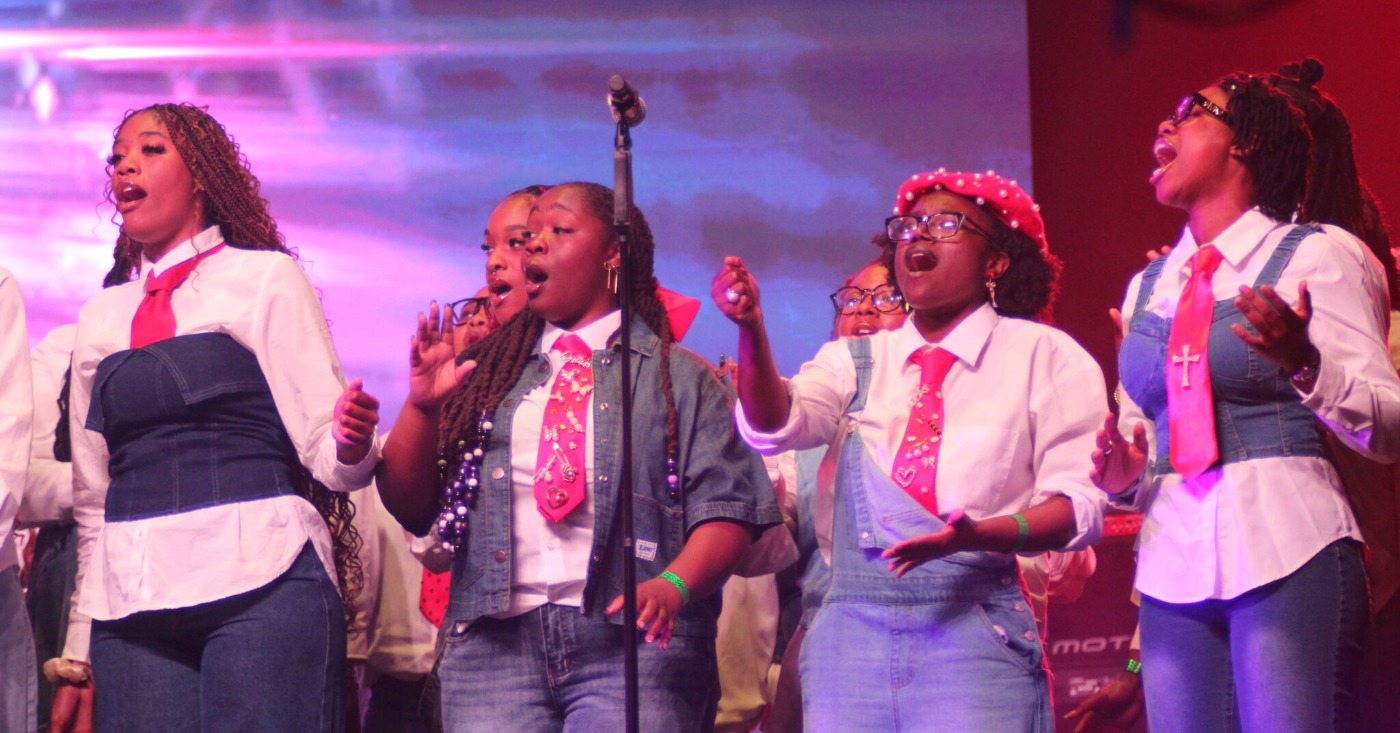
This Saturday N.C. Central University will kick off its 89th Ultimate Homecoming Experience — a week-long celebration bringing thousands of students, family, friends and alumni to campus.
This year’s festivities include the Homecoming Countdown, parade, Miss and Mister NCCU Coronation, concerts and the football game.
The number of visitors to the football game on Saturday, Oct. 10 is expected to reach at least 10,000 — O’Kelly Riddick Stadium’s capacity, with NCCU’s recent enrollment increase of more than 10,000 students.
The Eagles will face William & Mary after playing against the Campbell University’s Fighting Camels on Oct 3.
Students are already expressing excitement for the upcoming festivities.
“I’m excited for homecoming because I can meet alumni and go outside and party with my fellow eagles,” Digital Filmmaking junior Rhese Gardner said. “I’m also really looking forward to the Greek Bowl because there’s a lot going on.”
He added that even though he’s disappointed this semester’s Oil Spill was canceled, he’s still excited for the other events like the parade and concerts.
Here is a list of the week’s on-campus events:
- Oct. 3 – Homecoming Countdown
- Oct. 4 – Gospel Concert
- Oct. 5 – Coronation of Miss and Mister NCCU
- Oct. 6 – 10:40 Break
- Oct. 6 – Homecoming Experience Showcase
- Oct. 7 – Fried Chicken Wednesday
- Oct. 7 – Festival Block Party
- Oct. 7 – Late Night Breakfast
- Oct. 8 – Back to the Nest Young Alumni Mixer
- Oct. 8 – Old School Greek Stroll Off
- Oct. 8 – Hip-Hop Concert
- Oct. 9 – Step Show
- Oct. 10 – Football Game
The post NCCU ramping up for the 89th Ultimate Homecoming Experience first appeared on Campus Echo Online.
Based on reporting by North Carolina Central University – Campus Echo.
Black History
Ghana’s Ministry of Foreign Affairs Publishes Global Circle’s Vatican Reparations Call in Special Edition Alongside Heads of State
GLOBAL CIRCLE FOR REPARATIONS AND HEALING — Ghana’s Ministry of Foreign Affairs has published the Global Circle for Reparations and Healing’s submission, “From Accra to the Vatican,” in a special edition of The Ghanaian Envoy. This marks the first time a sovereign state has incorporated the Reparations Presentment to the Holy See into its official record. The 175-page edition, titled “Creating A New World,” also documents Ghana’s campaign that led to UN Resolution A/RES/80/250, which recognized the trafficking and enslavement of Africans as the gravest crime against humanity.
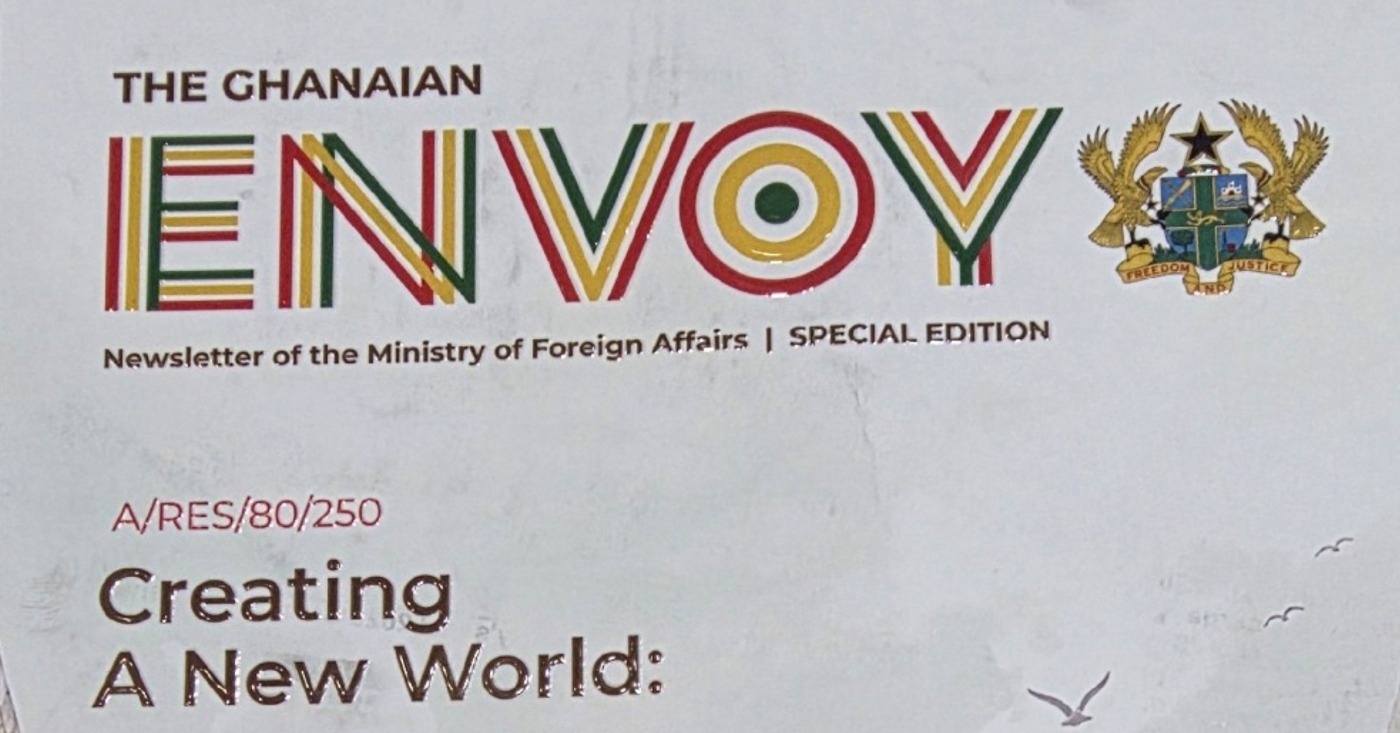
“From Accra to the Vatican” appears in The Ghanaian Envoy Special Edition on UN Resolution A/RES/80/250 — the first time a sovereign state has carried the Reparations Presentment to the Holy See into its official record
ACCRA, Ghana / CHICAGO, Illinois — October 7, 2026 — The Global Circle for Reparations and Healing today announced that its submission to Ghana’s Ministry of Foreign Affairs, “From Accra to the Vatican: A Call for a Global Plan of Action on Catholic Church Redress”, has been published in the Special Edition of The Ghanaian Envoy, the official newsletter of the Ministry of Foreign Affairs of the Republic of Ghana. The 175-page edition, titled “Creating A New World,” documents the Ghana-led campaign that culminated on March 25, 2026, in United Nations General Assembly Resolution A/RES/80/250, which declared the trafficking of enslaved Africans and the racialized chattel enslavement of Africans the gravest crime against humanity.
The Global Circle’s submission, authored by Co-Convener Kamm Howard, appears in Part V of the edition, “What Repair Must Now Mean,” at page 161. It shares the volume with statements by President John Dramani Mahama of Ghana, President Joseph Nyuma Boakai Sr. of Liberia, President Netumbo Nandi-Ndaitwah of Namibia, President Bassirou Diomaye Diakhar Faye of Senegal, President Carlos Manuel Vila Nova of São Tomé and Príncipe, President Emmanuel Macron of France, Prime Minister Mia Amor Mottley of Barbados, United Nations Secretary-General António Guterres, Foreign Minister Samuel Okudzeto Ablakwa, African Union Commissioner Amma Twum-Amoah, CARICOM Reparations Commission Chair Sir Hilary Beckles, Nobel Laureate Wole Soyinka, Dr. Julius Garvey, and Congressional Black Caucus Executive Director Vincent Evans, among others.
The submission traces the Global Circle’s delivery of the Reparations Presentment to the Holy See in Vatican City on July 18, 2022, the document’s subsequent use by the former Vice President of Costa Rica and the Vice President of Colombia in their engagements with Pope Francis, and the partial response contained in Pope Leo XIV’s May 2026 encyclical Magnifica Humanitas. It argues that while three of the Presentment’s seven demands have entered the Church’s official language in diluted form, four remain wholly unmet: rescission of the papal bulls that authorized African enslavement, the Church’s call upon other offending Western nations to make redress, the establishment of a joint Vatican–African Diaspora–African Papal Commission on Reparations and Healing, and a substantial financial commitment to repair. The submission asks Ghana to adopt the Presentment as the reference instrument for a Vatican track within the Accra Next Steps Commitments and to convene a first meeting of Global African reparationists toward a collective response.
“For four years the Presentment has been a civil society document carried by civil society hands,” said Kamm Howard, Co-Convener of the Global Circle and Commissioner of the National African American Reparations Commission. “Ghana has now placed it in the official record of a sovereign state, in a volume that opens with a President’s address to the General Assembly and closes by asking what repair must mean. That is not a courtesy. It is a signal to every government, every reparations commission, and every African Catholic that the claim against the Holy See belongs on the state agenda, and that the state which broke the deadlock at the United Nations is prepared to see it there.”
The significance of the publication extends beyond the Vatican file. The Presentment was created as a legal claims instrument by Howard in 2014 and first delivered to corporations and institutions in the United States, where it secured significant concessions. Its appearance in a foreign ministry’s official publication, translated and distributed in English, French, Portuguese, Spanish, and Italian, establishes the reparations presentment as a recognized instrument of international reparatory diplomacy, one that other states and descendant communities can adopt without drafting a new framework of their own. The Global Circle has described this catalytic potential as the “N’namba Effect,” after the Evanston, Illinois, reparations initiative – led by N’nanba Robin Rue Simmons – that gave municipalities across the United States the model, permission, and courage to act.
“The Vatican told us in 2022 that it moves in fifteen-year increments,” Howard added. “Ghana has just demonstrated at the United Nations that a determined state can compress that timeline to a single vote. We are asking Ghana to do for the Church what it did for the General Assembly, and we are asking Global Africa to organize behind that ask with one document, one voice, and one set of demands.”
The Global Circle has written to President Mahama and Foreign Minister Ablakwa to express its gratitude and to propose that its Vatican and Interreligious Actors Working Group lead the first meeting on a collective Vatican response under the auspices of the Government of Ghana. The Global Circle has also formally advised the Congressional Black Caucus of the publication in connection with its pending request that the Caucus recognize the Presentment as the foundational document for reparations engagement with the Roman Catholic Church and join the Government of Ghana in this global call to action.
###
About the Global Circle for Reparations and Healing
The Global Circle for Reparations and Healing was convened in 2022 to help build united global reparations front across Africa and its worldwide diaspora. In July 2022 the Global Circle delivered the Reparations Presentment to the Holy See in Vatican City. It co-organized Accra Summit I in August 2022 with the Government of Ghana and the Africa Transitional Justice Legacy Fund, and led the organization of Accra Summit II: Centering Healing Across Global Africa in March 2025 in partnership with the African Union. The Reparations Presentment to the Holy See is available in English, French, Italian, Portuguese, and Spanish at gcrh.org.
Media Contact
Global Circle for Reparations and Healing
Kamm Howard, Co-Convenor
[email protected] 773 520 0369
gcrh.org
Black Press
OP-ED: Proposition 44 Would Put a Price on Trust
The danger in Proposition 44 is not only its 90 percent figure. It is that the meaning of “qualifying” spending will be worked out later. A clinic preparing a budget today may not know whether a navigator, health educator, transportation program, outreach worker, technology upgrade, or other patient-support service will be counted the way it expects. Yet the financial consequence of getting it wrong could be immediate.

Black Press
OP-ED: Proposition 40: It’s Time to Play Chess, Not Checkers
Proposition 40 would impose a one-time 5 percent tax on the wealth of Californians with more than $1 billion in assets. Most of that money would go toward health care, with the remainder supporting food assistance and education-related programs.



Why A Black Bank Started From A House #shorts

Defender ONE-on-ONE: U.S. Rep. Christian Menefee

How To Manage Conflict at Work

How To Overcome Financial Setbacks and Win

How To Overcome Financial Setbacks and Win

Sports Talk: Texans vs Cowboys

Car Warranty Explained: Battery, Maintenance & Roadside #shorts

Social Media Success through Songs

2026 Voting Guide: Every Candidate and Proposition Explained!

From The Desk of The Editor 10/07/26

Latest Massacre in Haiti Reveals Cruelty U.S. Deportations

The Youngest American Killed in the Vietnam War

Booked and Unbound: The Legacy of Black Women’s Literary Circles

Passing for White, Fighting for Black America: The Courage of Walter White

OPINION: Nolan Wells’ Death One of Several Signifying Racial Terror Lives on in U.S. South

Prostate Cancer is Twice as Likely to Kill Black Men. Talking to Your Doctor Could Help Save Your Life

OP-ED: Haiti TPS: Have We Lost Sense of Humanity?

OP-ED: If AI Is the New Language of Power, Then NAN Wants Black Communities Fluent

OP-ED: How Does Your State Rank for Pre-K?

Henry O. Flipper: A Trailblazer at West Point and Beyond
Why A Black Bank Started From A House #shorts
Defender ONE-on-ONE: U.S. Rep. Christian Menefee
How To Manage Conflict at Work
How To Overcome Financial Setbacks and Win
How To Overcome Financial Setbacks and Win
Sports Talk: Texans vs Cowboys
Car Warranty Explained: Battery, Maintenance & Roadside #shorts
Social Media Success through Songs
2026 Voting Guide: Every Candidate and Proposition Explained!
From The Desk of The Editor 10/07/26
-
 Black Press1 week ago
OP-ED: Haiti TPS: Have We Lost Sense of Humanity?
-
 Black History1 week ago
Why Black Artists Struggle to Sell Tours
-

 Auto1 week ago
Consumers and States Awarded $694 Million After Predatory Auto Lender Settles Lawsuit
-
 Black Press1 week ago
COMMENTARY: Property Is Power! What Is a Gift of Equity and What Could It Mean for Black America?
-

 Black Press1 week ago
TILGHMAN: Why Parents of Children with IEPs Should Know Their School Bus Driver
-

 Art1 week ago
From Ma Rainey to AI: New Technology Amplifies an Old Fight over Artist Control
